Lessons in eagle ecology part 2

Hot off the press from the team who brought you Eagles Could Eat Children (see here), this month’s lesson is all about Why Eagles Don’t Nest on Grouse Moors.
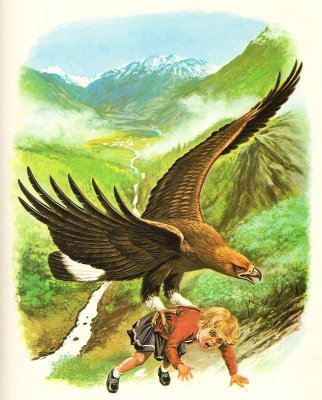
Contrary to the endless scientific papers that show unequivocally that eagles (and lots of other raptor species) are absent from many upland grouse moor areas in the UK due to high levels of persecution, the Scottish Gamekeepers Association has today informed us of the real reason they’re absent:

Many grouse moors do not have the isolated nesting habitat which is required by eagles so it should come as no surprise they don’t nest there“.

Strange then, that there are ‘many’ (see quote below) unoccupied eagle nesting territories in Scotland where eagles are known to have bred historically, and that these old nest sites just happen to be on land that is managed for red grouse shooting! Here’s a quote from the Golden Eagle Conservation Framework Report that was published by Scottish Natural Heritage in 2008 (available here) –

The most serious failures to meet favourable conservation status tests were in Natural Heritage Zones in the central and eastern Highlands where less than half of all known territories were occupied. Based on the production of young golden eagles, the populations in these regions should be expanding markedly, but instead they continue to decline (there was a loss of 15 occupied territories between 1992 and 2003, and 86 vacant territories by 2003). This indicates, in the absence of any evidence for emigration, that survival of subadult and/or adult birds is low“.

It’s also strange that before the sentence about ‘many grouse moors do not have the isolated nesting habitat required by eagles’, the SGA tells us this: “A large portion of all eagles fledging takes place on grouse moors across Scotland“. Eh? How can that be, if the habitat ‘isn’t there’?

The SGA article continues with some name-calling (and this from the group who have recently complained to the Scottish Government about how they were being portrayed!) and then some partly-accurate but mostly inaccurate information about siblicide amongst eaglets, before getting in another dig at the Irish Golden Eagle Reintroduction Project (yawn). This all builds up to a grand finale where we’re told:

If you were to read all the media reports you could be forgiven for thinking that raptors only breed safely on reserves. The truth is there are possibly 500’000 raptors in the UK and 350’000 of them will be breeding successfully on land used for game sport shooting of some kind. This fact is completely ignored by those attempting to take the moral high ground“.

Hmm, I’d be really interested to see the data that this “fact” is based upon. Especially in light of the recently published scientific paper (see here) that shows, again unequivocally, that peregrines nesting on grouse moors in northern England are 50% less successful than peregrines that breed on non-grouse moor habitat.

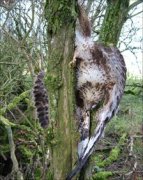
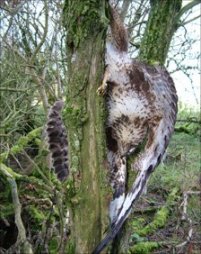
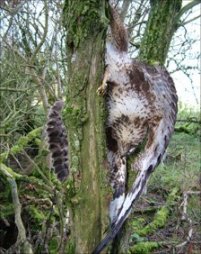
Interestingly, the SGA article makes no comment about the poisoned buzzard and poisoned bait that was found on Glenlochy Estate and was reported in the media two days ago (see here). The SGA wouldn’t be trying to deflect attention from yet another disgusting and illegal poisoning incident, would they?

SGA article here

RSPB ‘may have been brainwashing children in schools’

We didn’t think it was possible to top the recent claim by the Scottish Gamekeepers Association that eagles might eat children (see here). How wrong we were. Their latest considered opinion is that the RSPB  ‘may have been brainwashing children in schools’.

This claim follows the article in the Telegraph last week where it was reported that Scottish landowners were upset about a cartoon in an RSPB kids magazine (see here). It’s not clear who wrote the latest SGA tirade, but we’re assuming it’s a view held by the organisation as a whole, seeing that it’s published on their website.

The article accuses the RSPB of ‘sponging off children’ and discusses ‘the incredible success raptors have enjoyed in the countryside since the cessation of DDT’. It also accuses the RSPB of ‘poisoning young minds’. An ironic choice of verb.

To learn more about the evil RSPB, read the full article on the SGA website here

Meanwhile, south of the border, Mark Avery continues his series about what he calls ‘the raptor haters’ on his blog. This month it’s well-known ‘countryman’ Robin Page. Well worth a read (here).

Elaine Murray MSP keeps up pressure for greater powers for SSPCA

Back in February 2011 when the Wildlife & Natural Environment (Scotland) Bill was still being debated, Peter Peacock MSP put forward an amendment that would provide greater powers for the Scottish Society for the Prevention of Cruelty to Animals (SSPCA) inspectors to investigate a wider suite of wildlife crimes (see here). The SSPCA currently has limited powers that only allows it to investigate certain types of wildlife crime (see here).

Given the concern over public spending cuts that will affect police resources, and the on-going concerns of getting police to even attend wildlife crime incidents (see here for info from SSPCA and RSPB, and info here from OneKind, page 12), Peter Peacock MSP proposed that if increased powers were given to the SSPCA, then perhaps more wildlife crimes (and especially raptor persecution incidents) might stand a better chance of being investigated more effectively.

The Environment Minister at the time (Roseanna Cunningham MSP) said that the proposed amendment raised significant issues of accountability – which seemed a fairly weak argument given that the SSPCA is already empowered to investigate some animal welfare incidents – but she did say that she thought the amendment could be considered, after public consultation, in a future Criminal Justice Bill.

Seven months later and some MSPs may have hoped/wished this proposal was long dead and buried. Not so! Enter stage right Elaine Murray MSP, who lodged the following motion in the Scottish Parliament late last week:

S4M-00932 Elaine Murray: First Dog-fighting Conviction under the Animal Health and Welfare (Scotland) Act 2006—That the Scottish Parliament congratulates the Scottish Society for the Prevention of Cruelty to Animals (SSPCA) on obtaining the first successful conviction for animal fighting under the Animal Health and Welfare (Scotland) Act 2006; notes that two brothers received jail sentences of four and six months for being involved in dog fighting involving pit bull terrier-type dogs; regrets that the perpetrators have only received a ban from keeping dogs for five years; notes that the SSPCA were able to achieve this conviction using powers conferred under the act to search and enter homes under warrant to retrieve evidence, and believes that the granting of similar powers to the SSPCA with regard to the investigation of wildlife crime should be considered.

This proposal seems to me to be a complete no-brainer. The SSPCA has been a reporting agency to the Crown for more than 100 years. They are highly effective – in 2009-2010, the SSPCA reported nearly 200 cases for prosecution to the Crown Office and Procurator Fiscal Service. Surely any sensible individual or organisation, who was committed to cracking down on wildlife crime, would support the proposal to widen the powers of these very productive and experienced investigators? Apparently the Scottish Gamekeepers Association doesn’t agree (see here on page 11).

Well done Elaine Murray MSP for keeping up the pressure – it will be interesting to see how this proposal develops over the coming months.

SGA extends pointless rant about sea eagles

Last week the SGA wrote to the Scottish Government about the threat of sea eagles eating children. The Scottish Government effectively told them to sod off, although not using those exact words, of course. The letter (or at least the snippets that we were privy to) caused astonishment around the world – a common response was, “What’s wrong with these people?” 

However, not to be deterred, the SGA is still pursuing answers to its earlier questions. In an ill-disguised attack on the RSPB, Bert Burnett switches from the ‘eagle might eat child’ approach (although he doesn’t discount it entirely), and instead focuses on what he calls the “considerable direct damage being done to farmed stock by these eagles“. What considerable direct damage?, you may ask. It’d be a good question. Claims of this nature have been made before, notably by sheep farmers on the west coast (see here). However, several scientific studies later, the evidence demonstrated that sea eagles have a ‘minimal impact’ on lamb survival (see here), although when the results didn’t go their way then the crofters claimed the study was rigged (see here and here). Has Bert Burnett got new evidence to back up his claim of ‘considerable direct damage’? If he has, he needs to share it. Put up or shut up, Bert.

Bert’s latest rant is accompanied by two emails from some random individuals. I’m not sure why they were included. I wish he’d shared the following message, which was posted on the SGA Facebook page in response to their ‘eagle could eat baby’ story:

If a sea eagle introduced by the RSPB carried off and ate a human baby, would the RSPB be guilty of murder? I think so.” Priceless.

To read the SGA’s latest rant about sea eagles, click here.

“Alarmist nonsense from the SGA”, says RSPB

Just in case there was any doubt, the RSPB says that the SGA’s concern over whether a sea eagle could differentiate between a child and its natural prey, is “alarmist nonsense”.

Bert Burnett of the SGA is reported by the BBC to have said: “Some might think this is gamekeepers making a fuss for some obscure reason. That’s not the case. It is a genuine concern felt by other people out there other than gamekeepers“. He didn’t elaborate about who these ‘other people’ are and whether or not they have game-shooting interests.

Don’t worry about being misunderstood Bert, I’m sure everyone can work out what the agenda is.

BBC news story here, including the response from the Scottish Government.

SGA turns up the hysteria on sea eagles

A couple of weeks ago a clergyman in Perthshire reported being ‘attacked’ by one of the recently reintroduced sea eagles – his story received widespread coverage in the national press (eg see here, here, and perhaps the best one here, where the clergyman hints that sea eagles could attack and kill a baby in a pram!).

Today, the Scottish Gamekeeper’s Association has joined in with the hysteria and says it has called for a public enquiry into the impact of reintroduced species (see here). The SGA has apparently written to the Scottish Environment Minister, and asked: “Will these very large creatures differentiate between a small child and more natural quarry?” – see BBC news article here.

Wow. This sort of propaganda was common about 100 years ago when people didn’t know any better. Is it any wonder that raptors continue to be illegally poisoned and shot in this country when the industry figureheads are still spouting this nonsense?

What next? A call for licences to ‘manage’ [kill] sea eagles?

SGA call for buzzard, badger and raven culls (again)

The following article was published in the 10 August 2011 edition of Country Life:

The Scottish Gamekeepers’ Association (SGA) is renewing calls for licences to control buzzards. In a survey of some 950 gamekeepers across Britain, 76% said buzzards had a detrimental effect on game birds and 63% said they had a negative effect on wildlife. Sparrowhawks and goshawks were considered a similar nuisance, but marsh harriers, merlins, barn owls and ospreys were viewed more benignly, and the majority of keepers said kestrels and red kites had little or no adverse effect. More than 70% said badgers are a serious problem and the figure for pine martens was even higher on those estates that have them. Charles Nodder, political advisor of the National Gamekeepers’ Organisation, commented: “The idea that keepered land is a raptor desert is nonsense. But keepers understand the countryside and there is a clear indication that certain species are prevalent and having a deleterious effect on wildlife”.

The SGA came close to getting buzzard-control licensing in 2009, but incidents of raptor poisoning – including that of a golden eagle – weakened the case. SGA chairman Alex Hogg says: “We’ve lost the plot when it comes to the control of buzzards, badgers and ravens. Their populations need to be properly assessed each year and, if necessary, action should be taken to redress the balance. There’s no doubt buzzards have changed their predatory habits in the past 30 years. ‘Rogue’ buzzards have learned to predate chicks – and not just game birds: I saw one take three lapwing chicks. We don’t want to shoot every buzzard in Britain, we just want to control the rogue ones, but birds of prey are ‘sexy’ birds and nobody wants to take the first step to control them”.

The encouraging aspect of the survey was the spread and volume of wildlife; 83% of shoots reported the presence of lapwings, 75% had skylarks and 79% cuckoos. The geographic area covered – 1.3 million hectares (3.2 million acres) – is significant, too: five times that of the area of designated nature reserves, more than 13 times that of the RSPB reserves and nearly 60% of national parks.

The ‘survey’ referred to in the article was the ‘survey’ we discussed here on 21 July 2011. Since then, the report has been made public. You can read it, along with an interesting and entertaining discussion about its credibility, here.

It’s just ‘a few rogues’

One of the most significant barriers to ‘sorting out’ the widespread illegal persecution of raptors in Scotland is getting anyone to accept responsibility for these crimes. Previous analyses by the RSPB have shown an irrefutable link between illegally-killed raptors and the game-shooting industry (e.g. see here). Time and time again, scientific peer-reviewed studies have also shown the incontrovertible relationship between areas that are ‘missing’ breeding raptors such as golden eagles and hen harriers, and areas managed as sporting grouse moors (e.g. take a look at the government-funded Conservation Framework Reports for the golden eagle and hen harrier as a starter).

Despite the long-standing and highly-regarded body of evidence, the game-shooting industry continues to refuse responsibility. The latest article in the Scotsman (see here) provides a perfect example of this.

It’s a handful of “rogue estates” carrying out poisonings, say the gamekeepers. It’s a “handful of estates” says David Hendry of the Cardney Estate. It’s “a minority” says Susan Davies of Scottish Natural Heritage. It’s a “tiny minority” according to the SGA response to the article on their Facebook page.

It’s an interesting choice of words isn’t it? The term ‘rogue’ is often used in a jocular sense in today’s society – “Oh, he’s just a loveable rogue”, meaning yes an individual is bending the rules but he’s not doing any real harm, he’s alright really. The term ‘rogue’ is also used to infer just one or two individuals (e.g. it was a rogue crocodile, or it was a rogue tiger that attacked the man), as is the term ‘a handful’. What is a handful? One or two? Not more than five? Not more than ten? The term ‘minority’ (depending on the context) refers to less than the majority.

Do any of these words adequately describe the extent of illegal raptor persecution on Scottish sporting estates, or are they just words used to deflect the increasingly obvious conclusion that illegal raptor persecution is endemic across many sporting estates? Let’s look at the stats.

This blog has been accused of using out-of-date information to create the false illusion of widespread raptor persecution. It’s a valid criticism in some ways as our Named Estates page dates back to incidents that were recorded in 1979. Actually it only includes one record from 1979 but to be fair the list does include a lot of reported incidents from the 1980s and 1990s. These early reported incidents were only used to illustrate the historical nature of illegal raptor persecution – i.e. it’s been going on for decades, but to be completely upfront we have since indicated which of those estates are known to have since changed hands (and thus potentially changed their ‘management’ practices). So, let’s just look at reported incidents from the last two years – that is, from January 2009 to March 2011, the most up-to-date figures available in the public domain.

During this period, twenty-six named locations have been identified as places where dead raptors have been reportedly found in suspicious circumstances. Most were poisoned but ‘a handful’ were shot or trapped and one (on Logie Estate) was found dead but the cause of death remains unknown. Of these 26 locations, 14 were on named estates: Auch Estate, Edradynate Estate, Farr and Kyllachy Estate, Glenbuchat Estate, Glenogil Estate, Invercauld Estate, *Leadhills Estate, Logie Estate, Millden Estate, Mountquhanie Estate, *Moy Estate, *Redmyre Estate, *Skibo Estate, Strathspey Estate. The remaining 12 locations were un-named and may or may not involve estates: eight in 2010 and four between Jan/Mar 2011. Of course, just because an illegally poisoned, shot or trapped dead raptor is discovered at a location doesn’t necessarily implicate the estate owner, shooting tenant or gamekeeper. It could just be a series of unfortunate coincidences, even though in the Scotsman article David Hendry of Cardney Estate admits that “there are a number of estates using poison still.” On only four of the above estates have gamekeepers been convicted for related crimes (Leadhills, Moy, Redmyre and Skibo).

If we expand the search to the previous five years (2006-2011 – as this is still relatively recent), then obviously the list grows:

*Birthwood Farm, *BlythFarm, *Cabrach Estate, Clova Estate, Dawyck Estate, Dinnet & Kinord Estate, Dunecht Estate, *Frogden Farm, *Glenbuchat Estate, Glenfeshie Estate, Glenogil Estate, Glen Turret Estate, *Innes House Estate. (The ones with an asterisk indicate a conviction during this period).  In addition, a further six un-named locations are reported.

If we remove from this expanded list those estates that were already included in the two-year analysis (i.e. Glenbuchat, Glenogil) then we are left with a total of 25 different estates where dead raptors have been reportedly discovered in suspicious circumstances in the last five years. Add to these the 18 un-named locations and you get a running total of 43 different locations, assuming that all of the un-named locations were different to the named locations.

Forty-three. Is that ‘a minority’? Well yes, in the strictest sense it is because there are hundreds of shooting estates in Scotland. The exact number seems hard to pinpoint but it’s certainly at least in the low hundreds, which means that 43 is a minority in this context. But is it a ‘tiny minority’? Is it ‘a few rogues’? Is it ‘a handful’? No it isn’t. It’s a lot more than that and the game-shooting industry is being disingenuous if it continues to peddle this rural myth. But of course they’ll continue to peddle it because they want us to believe that they’re a law-abiding industry who just happen to want licences to be allowed to legally kill ‘just a few rogue’ raptors.

And what of the locations that haven’t been reported but can be implied by the ‘missing’ breeding raptors reported in the scientific papers? How many of these locations are there? Who knows. One thing is for sure – if the landowners and gamekeepers won’t admit responsibility for the incidents we do know about, they sure as hell aren’t going to admit to the ones we don’t know about! The representative bodies all say they’re working hard behind the scenes to get the ‘rogues’ to stop, but they’ve been saying that for a long, long time and here we are in 2011 and the killing continues up and down the country, with the exception of ‘a handful’ of decent estates who proactively welcome breeding raptors. Why does it continue? Because the majority know they can get away with it, just as they have been doing for the past 50+ years.

Masters of spin

A news article (here) has appeared on the SGA website this morning claiming that “Gamekeepers are the unsung heroes of conservation“. Let’s look at the ‘evidence’ produced to back up this claim.

It apparently comes in the form of a new report by “independent” charity GWCT, detailing the results of a UK-wide gamekeeper survey. Earlier this year, gamekeepers were asked to write down what species were found on their shoots. It’s not clear what scientific field surveys, if any, were conducted, because the GWCT report has not yet been published. Let’s give them the benefit of the doubt and assume that scientifically-rigorous transects were repeated across the shooting lands to support these ‘scientific’ findings.

According to the SGA website, “over 80% of respondents reported having kestrels, buzzards, sparrowhawks, barn and tawny owls on their patch.” The article doesn’t say if these were dead or alive. It also doesn’t say how many reported having golden eagles, white-tailed eagles, hen harriers, goshawks, red kites, short-eared owls or peregrines on their patch, which would have been far more interesting. We’ll have to wait for the publication of the report.

The article continues – “The area of land managed by gamekeepers who took part in the survey (1,337,454 ha) is five times the total area of all Britain’s National Nature Reserves (255,789 ha) and 13 times the total area of all RSPB reserves (101,581 ha).” SGA chairman, Alex Hogg interprets this as: “It’s clear that there’s more wildlife on the land managed by keepers in Britain than on all the nature reserves and special protection areas put together.” Erm, I don’t think that’s clear at all, Alex. What these figures show, if they are accurate, is that gamekeepers ‘manage’ five times the total area of NNRs and RSPB Reserves (which is a worrying statistic in itself). What the figures do not show is a comparison of wildlife density between these managed areas. Unless of course gamekeepers have been conducting their scientifically-rigorous transects across NNRs and RSPB Reserves as well. Again, we’ll have to wait for the publication of the report.

The article goes on to disclose the ‘informal’ working relationship between gamekeepers and the law enforcement agencies and generally tells us all what great guys (“heroes“) the UK’s gamekeepers are. Most sensible people will look at the annual raptor persecution statistics and the annual convictions of gamekeepers for wildlife crime offences, and make up their minds about how ‘heroic’ some of these keepers are. It’s a shame, because undoubtedly there are a handful of truly ‘good guys’ in the industry, but as we keep seeing, there are an awful lot who repeatedly bring the industry into disrepute by their criminal activities.

An article about the forthcoming report appeared in The Telegraph (here). Written by Environment Correspondent Louise Gray, it’s littered with inaccuracies including, “A number of gamekeepers have even been imprisoned for illegally poisoning rare birds of prey“. Er, no they haven’t.

A note of interest – the “independent” charity GWCT who organised this survey (see here for a recent post on this so-called ‘independence’) has listed William Powell amongst its list of “dedicated supporters and corporate partners” (sponsors?) at this year’s CLA Game Fair (see here). Would this be the same William Powell (Gunmakers) that was sold to Mark Osborne in January 2008?

Reintroductions “a threat to biodiversity”

An astonishing display of ignorance was on show in The Telegraph this week. The group calling themselves the Veterinary Association of Wildlife Management (VAWM) has claimed that the reintroduction of native species, formerly wiped out by persecution (e.g. sea eagle and red kite) are “potential man-made threats to biodiversity“. Really?  Methinks someone at the VAWM needs to read up on the Convention of Biological Diversity.

The VAWM, formerly known as Vets for Hunting (hmm, another group with a PR-induced name change – sound familiar?), also claim that the UK’s population of red kites was ‘threatening songbird species’. Ha ha ha ha ha ha ha ha ha ha ha ha ha ha ha ha! Perhaps VAWM spokesman Dr Lewis Thomas (a retired veterinary pathologist) should swap his rusty old scalpel for a shiny pair of binoculars. Ignorance is no excuse. Telegraph article here.

Interestingly, according to their facebook page, the Scottish Gamekeepers Association agrees with the VAWM’s sentiments on reintroductions. And this from a group whose members routinely rear and release millions of non-native gamebirds into our countryside every year, without any accountability for the environmental damage this may cause. Amazing.

Meanwhile, back in the real world of conservation, RSPB Scotland has secured major funding from the Heritage Lottery Fund to extend their fantastic sea eagle reintroduction project for another year (see here).