Police investigate suspicious death of tenth red kite in North Yorkshire

RKHarrogateNorth Yorkshire Police are investigating the suspicious death of yet another red kite – the tenth red kite to have been either shot or found dead in suspicious circumstances in North Yorkshire in the last few months.

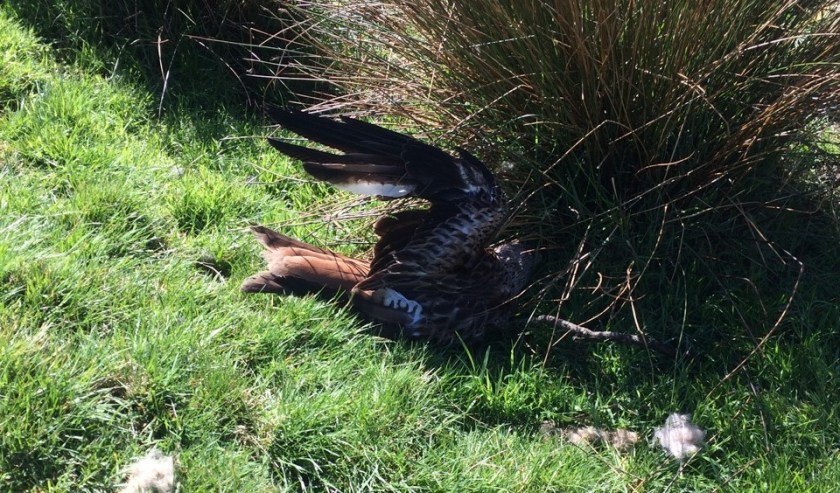
The latest victim was found at Timble Ings near Harrogate, just a short distance from Blubberhouse Moor where another red kite was found shot and critically injured a few weeks ago (see here).

Although the cause of death of this latest red kite has not yet been established, it’s not difficult to see why North Yorkshire Police are treating it as suspicious at this stage. The eastern side of the Yorkshire Dales National Park and the adjoining Nidderdale AONB are notorious black spots for illegal raptor persecution, particularly for hen harriers (see here) and red kites (see here). The area is dominated by driven grouse moors.

Article on the latest dead red kite can be read in the Harrogate Advertiser here

UPDATE 5.30pm: North Yorkshire Police have now confirmed this red kite had been shot. Well done to them for putting out a quick statement and appeal for information (here).

E-petition to ban driven grouse shooting can be signed here

The ‘secrets of the Angus Glens’ that Countryfile forgot to mention

On Sunday evening, Countryfile included a piece about the grouse moors of Invermark Estate in the Angus Glens and how it was “a haven for wildlife”.

It can be viewed on iPlayer here for the next 28 days (starts at 22 mins in).

Inane, vacuous and unquestioning, this piece was heralded in previews as ‘uncovering the secrets of the glen’.

Invermark is only one of several grouse moor estates in the Angus Glens. Here are some secrets of the wider Angus Glens that weren’t mentioned on Countryfile:

2004 May, near Edzell: long-eared owl and two short-eared owls starved to death in crow cage trap.  No prosecution.

2004 May, Invermark Estate: peregrine nest destroyed. No prosecution.

2006 March, Glenogil Estate: poisoned rabbit bait (Carbofuran). No prosecution.

2006 April, Easter Ogil: poisoned buzzard (Alphachloralose). No prosecution.

2006 April, Easter Ogil: poisoned tawny owl (Alphachloralose). No prosecution.

2006 May, Glenogil Estate: poisoned rabbit bait (Carbofuran). No prosecution.

2006 June, Glenogil Estate: poisoned woodpigeon bait (Carbofuran). No prosecution.

2006 June, Glenogil Estate: Traces of Carbofuran found in estate vehicles & on equipment during police search. No prosecution. Estate owner had £107k withdrawn from his farm subsidy payments. This was being appealed, but it is not known how this was resolved.

2006 July, Millden Estate; poisoned sheepdog (Lindane). No prosecution.

2007 November, Glenogil Estate: Disappearance of radio-tagged white-tailed eagle ‘Bird N’ coincides with tip off to police that bird allegedly been shot. No further transmissions or sightings of the bird.

2008 May, ‘Nr Noranside’: poisoned white-tailed eagle ‘White G’ (Carbofuran, Isophenfos, Bendiocarb). No prosecution.

2008 May, ‘Nr Noranside’: poisoned buzzard (Bendiocarb). No prosecution.

2008 May, ‘Nr Noranside’: poisoned mountain hare bait (Carbofuran, Isophenfos, Bendiocarb). No prosecution.

2008 May, Glenogil Estate: 32 x poisoned meat baits on fenceposts (Carbofuran, Isophenfos, Bendiocarb). No prosecution.

2008 October, ‘Glenogil Estate: poisoned meat bait on fencepost (Carbofuran). No prosecution.

2009 March, Glenogil Estate: poisoned buzzard (Carbofuran). No prosecution.

2009 March, Glenogil Estate: poisoned buzzard (Carbofuran). No prosecution.

2009 April, Millden Estate: poisoned buzzard (Alphachloralose). No prosecution.

2009 July, Millden Estate: poisoned golden eagle ‘Alma’ (Carbofuran). No prosecution.

2009 August, Glenogil Estate: poisoned white-tailed eagle “89” (Carbofuran). No prosecution.

2010 May, ‘Nr Noranside’: poisoned red kite (Carbofuran). No prosecution.

2010 September, Glenogil Estate: poisoned buzzard (Chloralose). No prosecution.

2010 October, Glenogil Estate: poisoned buzzard (Carbofuran). No prosecution.

2010 October, Glenogil Estate: poisoned pigeon bait (Carbofuran). No prosecution.

2010 October, Glenogil Estate: poisoned pigeon bait (Carbofuran). No prosecution.

2011 February, Airlie Estate: buzzard caught in illegal crow trap. (see below)

2011 March, Airlie Estate: 3 x buzzard caught in illegal crow trap. Prosecution (!) but dropped after statement from suspect given to SSPCA deemed inadmissible.

2011 April, Millden Estate: shot buzzard. No prosecution.

2012 April, ‘Nr Noranside’: Remains of buzzard found beside pheasant pen. Suspicious death.

2011 June, Rottal & Tarabuckle Estate: dead kestrel inside crow cage trap. No prosecution.

2012 February, ‘Nr Edzell’: spring-trapped buzzard. No prosecution.

2012 February, ‘Nr Bridgend’: remains of buzzard found under a rock. Suspicious death.

2012 May, Millden Estate: satellite-tagged golden eagle seemingly caught in spring trap, then apparently uplifted overnight and dumped on Deeside with two broken legs & left to die. No prosecution.

2012 May, Glen Esk: disappearance of sat-tagged red kite. No further transmissions or sightings of bird.

2013 January, Invermark Estate: white-tailed eagle nest tree felled. No prosecution.

2013 June, Glen Ogil: shot buzzard. No prosecution.

2013 July, Glen Moy: illegal hawk trap. No prosecution.

2013 September, nr Edzell: unset spring trap next to bait. No prosecution.

2013 November, Glen Lethnot: poisoned golden eagle ‘Fearnan’. No prosecution.

2014 August & September, Glenogil Estate: alleged snare offences. Prosecution of gamekeeper underway (currently ongoing).

2014 October, Nathro: shot buzzard. Prosecution? Unknown.

And some more secrets of the Angus Glens that weren’t mentioned:

No breeding hen harriers on the grouse moors of the Angus Glens since 2006 (see here).

Mountain hare massacre on the grouse moors of the Angus Glens (see here).

Angus Glens gamekeeper facing trial for alleged pole-trapping offences (see here).

Mark Avery has written an alternative and more accurate Countryfile script (see here) than the one that was aired on Sunday evening.

Plenty of people on social media have been asking when Countryfile will do a piece on illegal raptor persecution. To be fair, they did one in 2014 (we blogged about it here) and it was fairly well balanced, but this then begs the question why Countryfile researchers hadn’t done their homework for this latest episode.

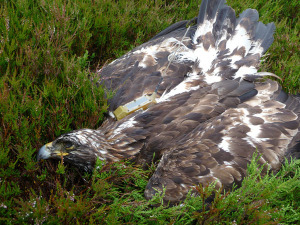
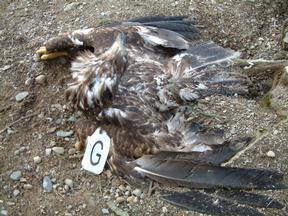
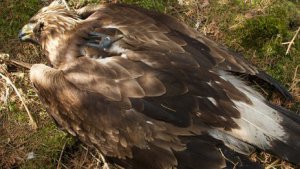
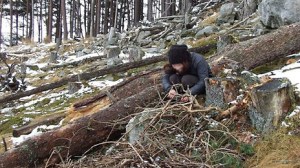
Had they done so, here are some of the images they would have found from those ‘wildlife haven’ grouse moors of the Angus Glens. From the top down, an illegally poisoned golden eagle, another illegally poisoned golden eagle, an illegally poisoned white-tailed eagle, an illegally trapped golden eagle that was then dumped in a layby with two broken legs and left to die, the nest tree of a white-tailed eagle that was illegally chainsawed to the ground, and a pile of rotting shot mountain hares. The grouse moors of the Angus Glens a wildlife haven? Hardly. They’re notorious wildlife crime scenes.

Petition to ban driven grouse shooting here
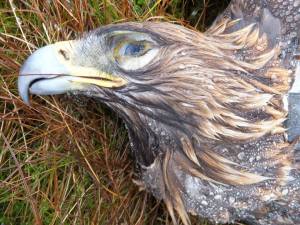
Fearnan

alma

whiteg

deeside eagle

wtenesttree

mountain-hare-cull-angus-glens-large-copy

More raptor persecution at Moy

Moy chicksPolice Scotland has issued an appeal for information following the discovery of disturbed and abandoned buzzard and goshawk nests in the Moy Forest near Tomatin in the Scottish Highlands.
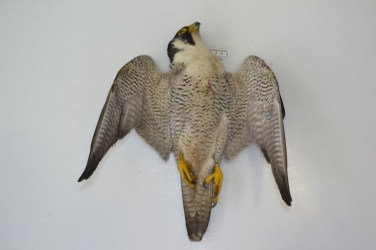
During May this year, one goshawk and four buzzard nests have been abandoned in suspicious circumstances, with some evidence of illegal disturbance. These nests were being monitored by staff from Forestry Enterprise Scotland.

Further details and an appeal for information here

This area is no stranger to illegal raptor persecution. In 2010, a 20-year old gamekeeper employed by Moy Estate was convicted for possession of a dead red kite that was found in the back of his vehicle. It had two broken legs and it’s head had been smashed in.

During the police raid on the grouse moors of Moy Estate, the following was also found:

  • The remains of a further two dead red kites.
  • A red kite’s severed leg, along with wing tags that had been fitted to a sateliite-tracked red kite, hidden in holes covered with moss.
  • Six baited spring traps illegally set in the open.
  • A trapped hen harrier (still alive) caught in an illegally set spring trap.
  • A poisoned bait.
  • Four leg rings previously fitted to golden eagle chicks found in the possession of a gamekeeper.

No charges were brought against anybody for these additional crimes.

Our previous blogs on Moy can be read here.

Moy is also home of the annual Highland Game Fair, regularly attended by certain MSPs, Scottish Land & Estates and the Scottish Gamekeepers’ Association to ‘celebrate’ the activities of the game-shooting industry.

The petition to ban driven grouse shooting can be found here

Red kite shot & critically injured next to grouse moor in North Yorkshire

North Yorkshire Police are appealing for information after the discovery of yet another illegally shot red kite that was found at the weekend.

Press release as follows:

Police are urging members of the public to support them in the fight against red kite persecution, after another bird was found shot last weekend.

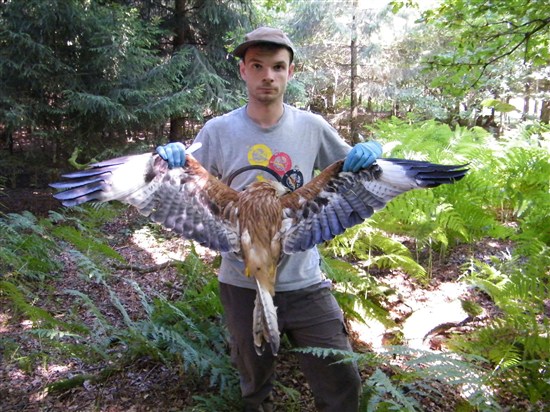
On the morning of Sunday 22 May, a walker on Hall Lane, Blubberhouses, found an injured red kite, in distress and unable to fly. They contacted a wildlife charity, and the bird was taken to a specialist avian vet in Harrogate.

RK_Blubberhouses

Examination revealed the bird had been shot and had a shattered wing. Sadly, its injury was so severe, it had to be euthanised. The shooting may have taken place a few days before the bird was found.

In the last two months, five red kites in North Yorkshire have been shot or died in circumstances that suggest poisoning, as well as three further afield in the region.

Of those eight red kites, five have been shot. One, found near Malton, was rehabilitated and released back to the wild, but the other four were so badly injured they had to be euthanised by a vet. The three suspected poisoned birds are being examined by the Wildlife Incident Investigation Scheme.

PC Gareth Jones, Wildlife Crime Co-ordinator at North Yorkshire Police, said: “Red kites were persecuted into virtual extinction in the UK, but in recent years they have been re-introduced through breeding programmes at a number of locations nationally. In Yorkshire, they have spread from their release site at Harewood House, and are now breeding over a large area. Red kites are scavengers, and normally eat carrion, their favourite food being rats and rabbits.

“Red kites are magnificent birds than can be regularly seen soaring over our area, bringing pleasure to many people. They are a Schedule 1 bird and as such are afforded special protection under the Wildlife and Countryside Act. I am personally saddened by the scale of persecution of these birds – it has to stop, and I would ask for anyone who can help this investigation to get in touch.”

Anyone with information that could assist the investigation is asked to contact North Yorkshire Police on 101, select option 2 and ask for PC Gareth Jones, or email gareth.jones1237@northyorkshire.pnn.police.uk. You can also contact Crimestoppers anonymously on 0800 555 111.

END

Well done North Yorks Police for getting this information out so quickly – kite found on Sunday, press release out the following day, including a photograph, and with additional context about other recent red kite deaths to put this crime in to perspective. That’s excellent work.

The injured kite was found at the edge of Nidderdale AONB, just to the east of the Yorkshire Dales National Park. This is driven grouse-shooting country – check out the tell-tale rectangular strips of burnt heather on the map – and it’s also a well-known black spot for the illegal poisoning of red kites. Oh, and satellite-tagged hen harriers also ‘mysteriously’ disappear here.

Over 38,000 people have now signed the petition calling for a ban on driven grouse shooting. Please add your name HERE

Blubberhouses map - Copy

More raptor poisonings in Co Antrim, Northern Ireland

Peregrine GlenwherryLast month we blogged about a dead peregrine that had been found at a well known persecution hotspot on 11th April 2016 (see here). Laboratory tests have now confirmed this peregrine was poisoned with the banned pesticide Carbofuran.
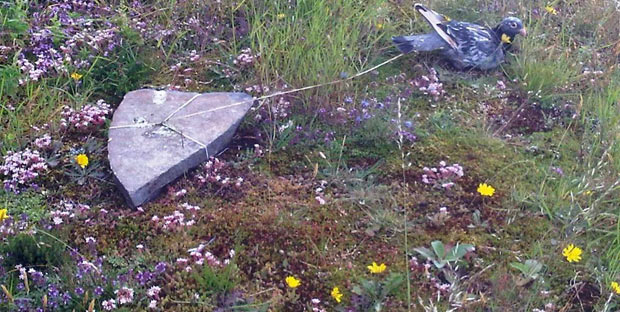
A further two poisoned raptors have now been reported in Co Antrim: a buzzard found in woodland in Glenarm on 15th March 2016 (lab results confirm Carbofuran poisoning) and a second buzzard, also found near Glenarm on 29th March 2016 (lab tests confirm Alphachloralose poisoning).

Media coverage here, here, here.

Well done to PSNI Wildlife Liaison Officer Emma Meredith, who pressed for a quick turnaround on these lab results. This is a major step forward in the fight against raptor persecution in Northern Ireland, where previous lab results and subsequent police appeals have taken far, far too long (e.g. see here).

A further step forward in tackling raptor persecution in NI was announced in March (here) with the launch of a multi-agency initiative, Operation Raptor. With the news of these latest three poisoning victims, they’ve got their work cut out.

Pigeon racing man fined for storing banned poison Carbofuran

A Cumbrian man from the world of pigeon racing has been convicted for the illegal storage of the banned poison Carbofuran.

Keith Mingins, 58, of Main Street, Frizington, Cumbria, pled guilty at Workington Magistrates Court on 29th April 2016, following the discovery of Carbofuran at his pigeon lofts during a police raid in April 2015.

Mingin’s defence was that he had been given the poison by his father in law (who has since died), he didn’t know what it was but he used it anyway, to poison rats, apparently.

He was fined £300 for the illegal storage and ordered to pay costs and a victim surcharge amounting to £115.

Article in North West Evening Mail here.

It’s an interesting one. We wonder what triggered the police raid in the first place? (They would have to have grounds to justify a search of his premises, they can’t just turn up on a whim). And how many times have we heard the defence that someone who was in possession of a banned poison had been given it by someone who had since died? And just how plausible is it that someone gives you a poison, you don’t bother to find out what it is, but decide to use it all the same?

The pathetic fine makes us wonder whether the court received any background information about Carbofuran (banned 15 years ago in 2001) and how it is still commonly used to poison birds of prey and how some pigeon racing men are known to target birds of prey? We are in no way suggesting that’s what Keith Mingins did, but a wider perspective in these cases should help inform the magistrate prior to sentencing.

Frizington has been a hotspot for the attempted poisoning of peregrines over the years. At least twice in 2009, and also in previous years, live pigeons smeared with banned poisons (Carbofuran and Aldicarb) have been found tethered at a quarry (a known peregrine breeding site) at Rowrah, Frizington (see here). In 2010 a peregrine was found dead in ‘suspicious circumstances’ at an allotment in Frizington, although the cause of death is not known (see here).

Let’s hope the publicity of Keith Mingins’ conviction (if not his lame punishment) for storing a banned poison will act as a deterrent for anyone else in the area who may have some Carbofuran or another banned poison stashed away and who may be thinking about using it.

Well done to Cumbria Police, NWCU and Natural England for a successful prosecution.

Pigeon racing men convicted of poisoning peregrines & sparrowhawks

Four men associated with a pigeon racing club in County Waterford, Ireland, have been convicted of illegally poisoning peregrines and sparrowhawks, and other associated wildlife crimes.

The convictions are the result of surveillance and investigation by conservation rangers from the Irish Republic’s National Parks & Wildlife Service at three quarries in March and April 2014: Cappagh Quarry, Keereen Quarry and Carroll’s Cross Quarry. Live pigeon baits, smeared with poison and tied to stones or stakes had been found on a number of occasions at the top of the quarry cliffs, designed to lure in raptors. Four poisoned peregrines and two poisoned sparrowhawks had also been found.

pigeon poison wales 2012

On March 9th 2016 at Dungarvan District Court, the following individuals were convicted:

Stephen O’Brien, of 58 Congress Villas, Dungarvan, was convicted of 20 offences, including the use of a live decoy on five separate dates. He was fined 1500 Euros for each of the five dates (7,500 Euros in total) and the other 15 charges were recorded as ‘proven’.

Kevin Crotty (Chairman of Dungarvan Premier Pigeon Club) of 16 Lismore Avenue, Dungarvan, was convicted of 10 offences on five separate dates. He was fined 600 Euros for two offences and the remaining eight charges were recorded as ‘proven’.

John Crotty, of 23 Congress Villas, Dungarvan, was convicted of four offences. He was fined 700 Euros for one offence and the remaining three charges were recorded as ‘proven’.

Christopher O’Brien, of 79 Congress Villas, Dungarvan, was convicted of obstructing an Authorised Person during a search of his premises and with the illegal possession of protected wild finches. He was convicted of 16 offences. He was fined 700 Euros for one offence and the remaining 15 charges were recorded as ‘proven’. He was also ordered to forfeit a stuffed peregrine that had been found at his house.

The National Parks & Wildlife Service believes raptor persecution is a significant problem in Co Waterford and said peregrines had been a particular target, resulting in reduced breeding success. They encourage farmers and members of the public to report suspicious incidents, in confidence, to: Tel (01) 888 3242 or email nature.conservation@ahg.gov.ie

The photo shows a live pigeon decoy, smeared in poison and tied to a rock in a similar poisoning case in Wales in 2012 (photographer unknown).

Increase in raptor persecution crimes in 2015

The Partnership for Action against Wildlife Crime (PAW Scotland) has just published the ‘official’ 2015 raptor persecution data, including their annual persecution hotspot maps.

The PAW Scotland press release can be read here and the hotspot maps can be accessed here.

20 crimes against birds of prey were recorded in 2015, which is an increase on the 18 recorded in 2014. The 2015 crimes included six poisoning incidents, five shootings, five disturbance incidents, three trapping or attempted trapping offences and one case of chick theft. The victims included red kite, peregrine, buzzard, goshawk, osprey and hen harrier. Surprisingly, golden eagle isn’t included in the list. We’ll discuss that below.

Having read the press release and looked at the hotspot maps, four things jumped out at us.

First is the increase in recorded raptor persecution incidents in 2015. It’s only a slight increase, from 18 to 20 recorded crimes, but nevertheless it is still an increase. This is important to note, especially in light of a recent statement made by Tim (Kim) Baynes of the Scottish Moorland Group (funded by the landowners’ lobby group Scottish Land & Estates). In December 2015, in response to the publication of the RSPB’s 20-year raptor persecution review, Kim said this:

Bird of prey deaths……have fallen dramatically over the last five years in particular“.

At the time, Kim didn’t back up this claim with any evidence and as the 2015 data have now been published, it’s clear why he didn’t. Basically, the evidence wasn’t there. As Head of RSPB Scotland’s Investigation team Ian Thomson says in the latest PAW Scotland press release:

These latest figures make it readily apparent that claims of a decline in the illegal killing of raptors are wholly without foundation“.

This time, Kim isn’t claiming that there has been a decline but he still tries to diminish the problem by saying “annual variations [in the number of reported persecution crimes] are now very small“. Another way of putting it, Kim, would be to say that no progress has been made!

The second thing to jump out at us is perhaps the most concerning of all, and that’s the withholding of data relating to a quarter of the recorded 2015 crimes. If you read the PAW Scotland press release, you’ll notice the following caveat written in the ‘Notes to Editors’ section:

Further details of 5 of the 20 bird of prey crimes recorded in 2015 are currently withheld for police operational reasons. It has therefore not been possible to include the locations of these incidents on the hotspot maps‘.

So here’s one of the maps purporting to show all types of raptor persecution crimes recorded over a three-year period in Scotland (2013-2015). Only it doesn’t show them all, as 25% are missing. Not only are 25% missing, but also missing are details of poisoned baits (no victims present) that were recorded during this period – for some reason they’ve been placed on a separate map. So when you look at this map, ignore the misleading title. It isn’t a map of ‘All Recorded Bird of Prey Crimes Scotland – 2013-2015’, it’s a map of SOME Recorded Bird of Prey Crimes 2013-2015, just the ones we’re allowed to know about.

ALL Raptor crimes 2013 to 2015

The purpose of publishing these annual hotspot maps and their associated data is, according to the PAW Scotland website, ‘to allow all the partner organisations to enter into meaningful discussions and work together to eradicate bad or illegal practices in Scotland‘. Presumably, because the maps and data are also placed in the public domain, the purpose is also to increase transparency and thus public confidence. What is the point of publishing a proportion of the data and withholding the rest? It just makes a mockery of the whole process. Why bother publishing at all?

The caveat in the ‘Notes to Editors’ section goes on to say:

The [withheld] incidents are, however, included in the figures provided in the summary tables accompanying the maps. The maps and background data will be updated, where possible, in future publications‘.

Sounds promising, but when you actually look at the summary tables you find large sections still marked as ‘withheld’:

Confirmed poisonings 2015

ALL raptor crimes 2015

These ‘withheld’ incidents, shrouded in secrecy, make it virtually impossible to cross reference known reported persecution crimes with those being touted as the ‘officially recorded’ crimes, which closes off any opportunity to scrutinise these ‘official’ data to ensure that incidents have not been ‘missed’ or ‘forgotten’ (we’re being kind). In other words, we are expected to accept and trust the ‘official’ data from Police Scotland as being accurate. Sorry, but having seen Police Scotland’s shambolic handling of some wildlife crime incidents we have limited confidence in their ability, either intentionally or unintentionally, to get this right.

This leads us nicely on to the third thing to jump out at us. As mentioned above, we were surprised not to see golden eagle listed as one of the 2015 victims. According to our sources, a traditional golden eagle eyrie was burnt out in 2015 – we blogged about it here. Why wasn’t this incident included in the 2015 PAW data? Or was it included and it was categorised in the ‘withheld’ category? Who knows. Do you see what we mean about the difficulty of cross-referencing known incidents?

The fourth thing to jump out was an entry in Table 5c (see above). The second line down tells us that a red kite was poisoned in Tayside in January 2015. That’s news to us. Does anybody remember seeing anything in the media about this crime? Any appeal for information? Any warning to the public that deadly poison was being used in the area? No, thought not.

The reticence of the police to publicise some of these crimes is deeply concerning, and especially when that suppression extends to details of crimes in ‘official’ reports that are supposed to demonstrate openness and transparency. Ask yourselves, in whose interest is it to keep these crimes under wraps?

Ross-shire Massacre: two years on

nothingSo, it’s been two years since 22 dead birds of prey were discovered in a small area around Conon Bridge in the Highlands. It was one of the most significant illegal raptor persecution crimes ever uncovered in the UK.

Are we any closer to finding the culprit(s)? Of course not. Here’s what we do know:

  1. 22 dead raptors (16 red kites + 6 buzzards) were found in the same small area over a period of weeks in March/April 2014.
  2. Sixteen of those raptors were later confirmed poisoned: 12 red kites + 4 buzzards.
  3. No cause of death has been given for the other six victims.
  4. The poison used was a banned substance.
  5. Nobody has been arrested.
  6. Nobody has been charged.
  7. Nobody has been convicted.

According to a ridiculous Police Scotland press statement, these birds “were most likely not targeted deliberately but instead were the victims of pest control measures“. Quite how they’d know this without having spoken to a known culprit is anybody’s guess (see here) and until they do, that’s all their conclusion can be, a guess.

The police are still withholding the name of the poison used – we’re told this is ‘for operational purposes’. We’re also told that this is still ‘a live investigation’.

What it actually is is a shambles and it has been from the start.

The first six dead birds were discovered between 18-24 March 2014 and poisoning was immediately suspected. The police put out a press statement on 25th March (here) but at that stage they hadn’t conducted a proper search, so by telling the world about this suspected crime they gave the culprit(s) every opportunity to hide any remaining evidence. A thorough police search didn’t take place until 9th April (see here) – three weeks after the discovery of the first dead birds. Unsurprisingly, no evidence to link the crime to a suspect was found.

Two years on and we’re no closer to seeing justice prevail. It’s just another unsolved raptor-killing crime amongst hundreds of others.

Previous blogs on the Ross-shire Massacre here

Crown Office drops prosecution against Glenogil Estate gamekeeper

Snared fox dead alt, Glenogil Estate, Credit OneKindRegular blog readers will know we’ve been following the case of Scottish gamekeeper William Curr, who had been charged last year with alleged snaring offences on Glenogil Estate in the Angus Glens, said to have occurred in September 2014 (see here, here, here and here).

The charges related to allegations that several snares had not been checked (as they are required to be) within a 24-hour period of being set, after a field officer from the charity OneKind had discovered a dead snared deer, a dead snared fox and another snared fox that was still alive but had to be euthanised at the scene due to the extent of its horrific injuries (see OneKind photo).

For a harrowing description of what was found on Glenogil Estate, including a confrontation with the Head Gamekeeper, read this blog on the OneKind website.

Curr’s trial was due to start on 9th May but last week (10 March) the Crown Office informed the court that it was not going to proceed. OneKind has not yet been able to ascertain the reason for this decision, and in fact may never find out because the Crown Office is under no obligation to explain.

Accountability and transparency, anybody?

To quote from the OneKind blog:

OneKind is mystified by the dropping of this case, given the eye witness evidence, the horrific video footage and the detailed follow-up investigation carried out by the Scottish SPCA. This was a shocking incident where at least six people, including gamekeepers, witnessed the terror and pain of a live fox as the wire noose of a snare sliced into its abdomen. Had our research officer not been on the estate on that particular day, who knows how much longer the fox would have continued to suffer?

To put this dreadful story in the wider context: snares are still legal in Scotland and the rest of the UK. It is simply intolerable that the suffering this fox endured should be considered legally acceptable. The video footage is utterly harrowing and illustrates an animal which is clearly distressed, both physically and mentally. OneKind has long called for an outright ban on all snares and sadly we feel these calls have been justified by this case.

OneKind will seek an explanation for the failure of the Scottish justice system to bring this animal welfare case to court“.

The reason we’ve been so interested in this case is because the alleged offences occurred on the Glenogil Estate, one of several grouse shooting estates in the Angus Glens where wildlife crime incidents keep cropping up but have never resulted in a successful prosecution. For example, here are some incidents reported from in and around Glenogil over the last ten years:

2006 March: poisoned rabbit bait (Carbofuran). Listed as ‘Glenogil’ in RSPB annual report. No prosecution.

2006 April: poisoned buzzard (Alphachloralose). Listed as ‘Glenogil’ in RSPB annual report. No prosecution.

2006 April: poisoned tawny owl (Alphachloralose). Listed as ‘Glenogil’ in RSPB annual report. No prosecution.

2006 May: poisoned rabbit bait (Carbofuran). Listed as ‘Glenogil’ in RSPB annual report. No prosecution.

2006 June: poisoned woodpigeon bait (Carbofuran). Listed as ‘Glenogil’ in RSPB annual report. No prosecution.

2006 June: Traces of Carbofuran found in estate vehicles & on equipment during police search. Not listed in 2006 RSPB annual report but reported here. (Now former) estate owner John Dodd had £107k withdrawn from his farm subsidy payments as a result. This was being appealed but it is not known how this was resolved. Also a write up in RSPB 2007 annual report. No prosecution.

2007 November, Glenogil Estate: Disappearance of radio-tagged white-tailed eagle ‘Bird N’ coincides with tip off to police that bird been shot. No further transmissions or sightings of the bird. Not listed in RSPB annual report but reported here. No prosecution.

2008 May: poisoned white-tailed eagle ‘White G’ (Carbofuran, Isophenfos, Bendiocarb). Listed as ‘Nr Noranside’ in RSPB annual report. No prosecution.

2008 May: poisoned buzzard (Bendiocarb). Listed as ‘Nr Noranside’ in RSPB annual report. No prosecution.

2008 May: poisoned mountain hare bait (Carbofuran, Isophenfos, Bendiocarb). Listed as ‘Nr Noranside’ in RSPB annual report. No prosecution.

2008 May: 32 x poisoned meat baits on fenceposts (Carbofuran, Isophenfos, Bendiocarb). Listed as ‘Nr Noranside’ in RSPB annual report. No prosecution.

2008 October: poisoned meat bait on fencepost (Carbofuran). Listed as ‘Nr Noranside’ in RSPB annual report. No prosecution.

2009 March: poisoned buzzard (Carbofuran). Listed as ‘Glenogil’ in RSPB annual report. No prosecution.

2009 March: poisoned buzzard (Carbofuran). Listed as ‘Glenogil’ in RSPB annual report. No prosecution.

2009 August: poisoned white-tailed eagle “89” (Carbofuran). Listed as ‘Glenogil’ in RSPB annual report. No prosecution.

2010 May: poisoned red kite (Carbofuran). Listed as ‘Nr Noranside’ in RSPB annual report. No prosecution.

2010 September: poisoned buzzard (Chloralose). Listed as ‘Glenogil’ in RSPB annual report. No prosecution.

2010 October: poisoned buzzard (Carbofuran). Listed as ‘Glenogil’ in RSPB annual report. No prosecution.

2010 October: poisoned pigeon bait (Carbofuran). Listed as ‘Glenogil’ in RSPB annual report. No prosecution.

2010 October: poisoned pigeon bait (Carbofuran). Listed as ‘Glenogil’ in RSPB annual report. No prosecution.

2012 April: Remains of buzzard found beside pheasant pen. Listed as ‘Nr Noranside’ in RSPB annual report. No prosecution.

2014 June: shot buzzard. Listed as ‘Glenogil’ in RSPB annual report. No prosecution.