RED KITE SHOT AND POISONED IN DURHAM RAPTOR CRIME SPOT
The protected bird of prey was found dead, hanging in a tree near Stanhope Burn, in the North Pennines Area of Outstanding Natural Beauty
The Weardale area has become a hotspot for raptor persecution
Police and partners want members of the public to report dead birds of prey and generate more information on raptor persecution in the area
A Red Kite found dead in Stanhope has been confirmed as having been both shot and poisoned, once again highlighting the area’s serious problem with bird of prey persecution.
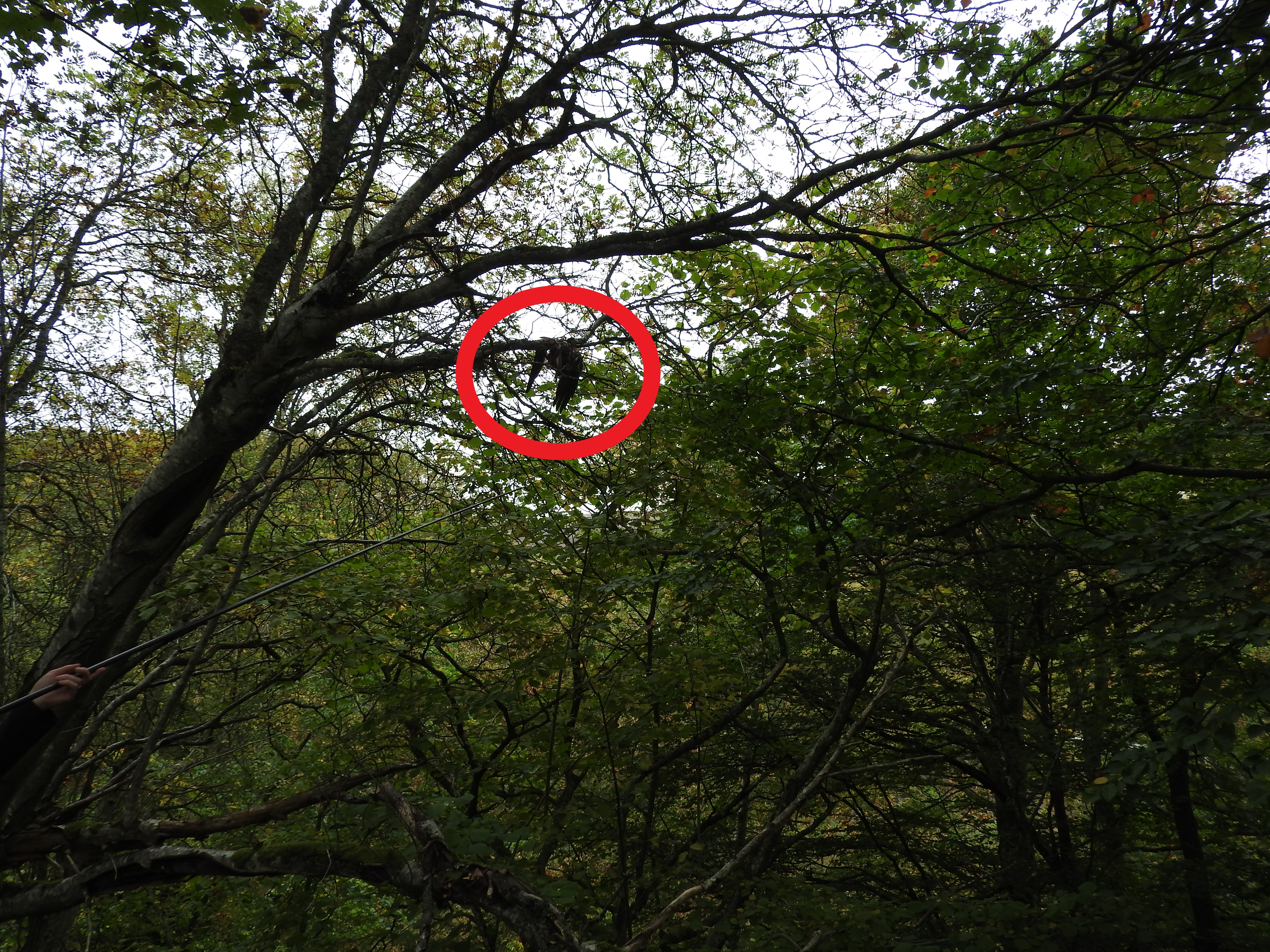
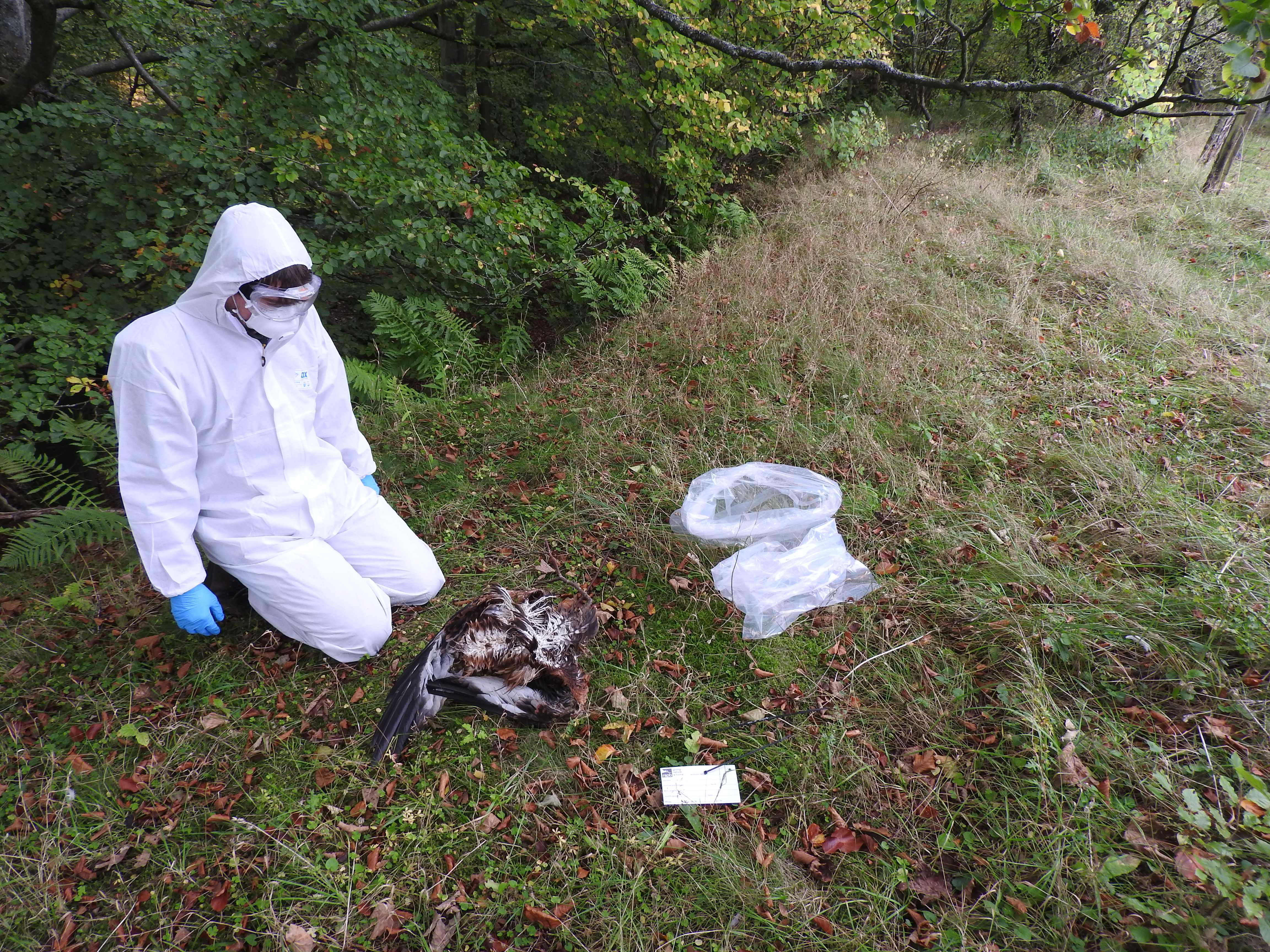
The protected bird of prey was discovered hanging in a tree by a member of the public in October 2022. The bird’s body was x-rayed and found to contain pieces of shot revealing that the bird had been shot at some point in its life. But when the bird was sent for official toxicology examination, the body was found to contain the highly toxic pesticides carbofuran and bendiocarb – which were confirmed by testing to be the cause of death. Both these substances are frequently seen in bird of prey poisoning cases despite being banned for legal use in the UK for many years.
Illegally shot & poisoned red kite hanging in a tree near Stanhope in the North Pennines AONB, October 2022. Photo: RSPB
Investigator collecting the shot & poisoned red kite near Stanhope, Oct 2022. Photo: RSPB
Red Kites are graceful birds with long wings and a distinctive forked tail. Forty years ago their numbers were limited to a small population in Wales due to illegal persecution, until successful reintroduction programmes in the 1980s and 90s brought them back from the brink. However persecution remains a threat, even today. Like all birds of prey, they are legally protected in the UK, punishable by jail and/or an unlimited fine.
Last month (May 23), police and partners carried out searches of land and buildings the area, in connection with the incident.
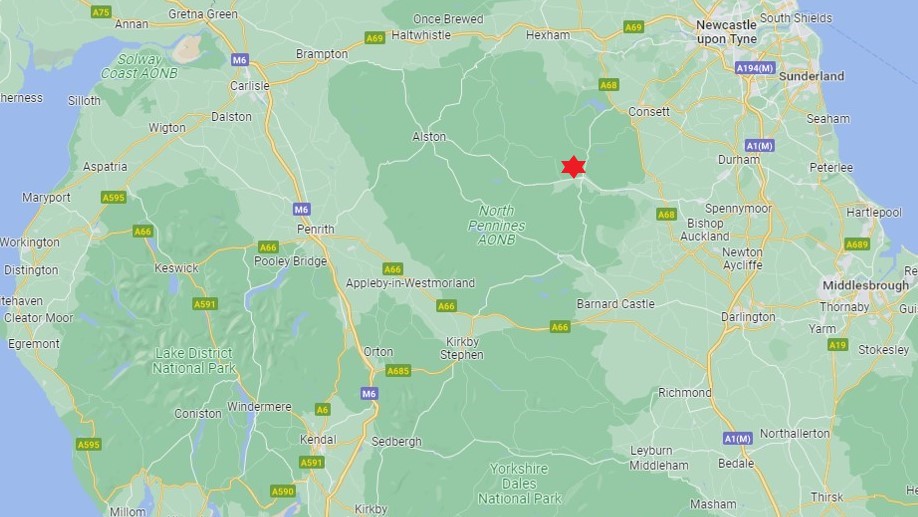
Red star indicates approximate location of latest crime in the North Pennines AONB
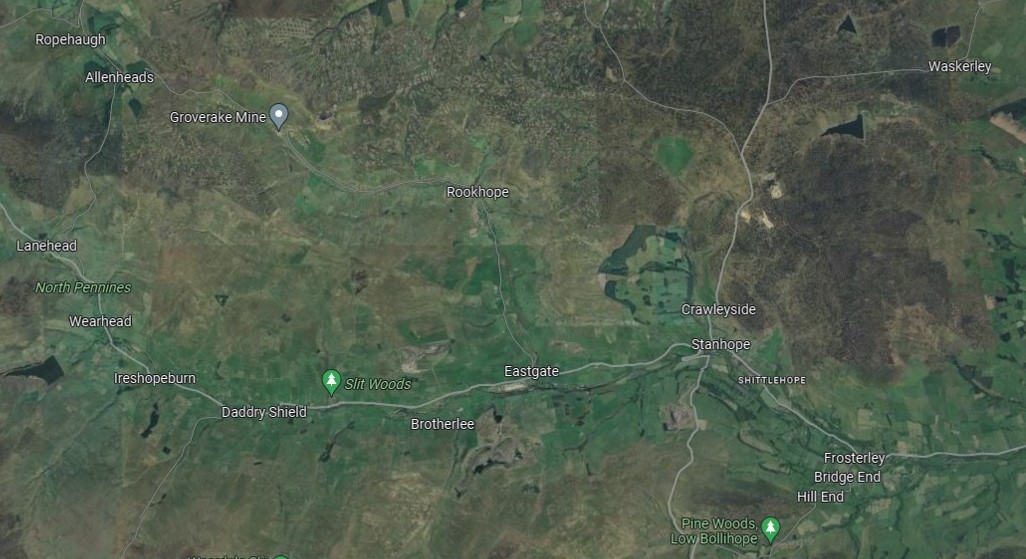
Stanhope Burn, to the NW of Stanhope, is next to moorland managed for driven grouse shooting
This is the latest of a series of crimes involving birds of prey being illegally killed in this part of the North Pennines Area of Outstanding Natural Beauty (AONB).
In 2020, two GPS satellite-tagged Red Kites disappeared in the Edmundbyers area in suspicious circumstances [Ed: see here]. Both tags – fitted as part of a species monitoring scheme by Friends of Red Kites, who monitor the red kite population in North-east England – had been transmitting as expected until they suddenly stopped. Neither bird, nor their usually very reliable tags, have been seen since.
In 2021, a Red Kite was found poisoned by carbofuran and bendiocarb, also in the Edmundbyers area.
The following year, police together with partner agencies conducted a raid on nearby grouse moor estates in Durham and Northumberland, following previous incidents and intelligence related to bird of prey killing in the area [Ed: see here].
And in March 2023, a Red Kite was found shot, but still alive, on a grouse moor in Edmundbyers [Ed: see here]. Luckily, after care by local vets and a specialist rehabilitator, the bird recovered and was released back into the wild [Ed: see here].
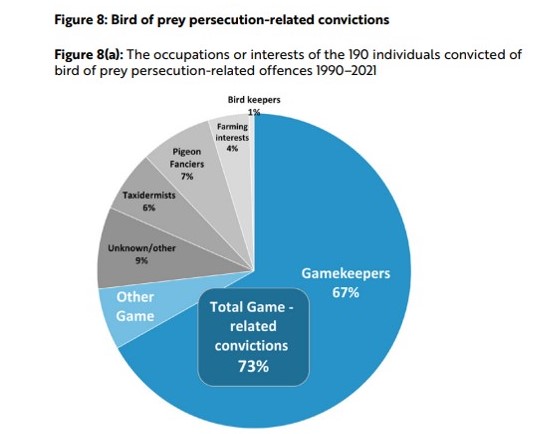
The RSPB’s Birdcrime report, published last autumn, revealed that over two-thirds (71%) of all confirmed raptor persecution incidents in 2021 related to land managed for gamebird shooting. And since 1990, 67% of those convicted of these crimes have been gamekeepers.
Data from RSPB’s Birdcrime Report (2021)
Mark Thomas, RSPB Head of Investigations, said: “We are concerned about a spate of concentrated raptor crimes which is rendering the Weardale grouse moors a hotspot for the illegal killing of birds of prey. As such, we are concentrating our efforts of detection on this area, in the hope of catching anyone targeting protected birds such as Red Kites, which should be breeding successfully in this area. But we critically need the public to be our eyes and ears and report potential crimes to ourselves and the police.
“The fact that bird of prey persecution continues against the public interest makes it clear that additional regulation for grouse moors is necessary. We believe all grouse moors and their owners or sporting tenants must be licensed, as is happening in Scotland, to provide a meaningful deterrent to the illegal killing birds of prey. Ultimately this could mean the loss the licence to shoot grouse, if the Police are satisfied that wildlife crimes against raptors are occurring on a particular landholding. Law-abiding estates should have nothing to fear from this approach”.
PC David Williamson of Durham Constabulary said: “The illegal killing of birds of prey unfortunately is continuing in our rural areas. It is unacceptable that anyone should think they can ignore the law and kill these birds by poisoning, shooting, trapping or nest destruction and disturbance. I am sure that people in our community will know who is committing these offences and I would urge anyone with any information to report this. Durham Constabulary will continue to work with our partners to tackle this criminal activity, investigate any reports and prosecute offenders”.
If you notice a dead or injured bird of prey in suspicious circumstances, call the police on 101 and fill in the RSPB’s online reporting form HERE.
If you have information about anyone killing birds of prey which you wish to report anonymously, call the RSPB’s confidential Raptor Crime Hotline on 0300 999 0101.
The Scottish Government has finally published its response to the recommendations made in its commissioned review of increasing investigatory powers for the Scottish SPCA to help tackle wildlife crime, including raptor persecution. It’s good news!
Here’s the Government statement:
Scottish Government Response to Taskforce Report on SSPCA Powers
In response to the independent Scottish Society for the Prevention of Cruelty to Animals (SSPCA) Taskforce report, the Scottish Government is proposing to bring forward provisions to allow for a limited extension of the Scottish SPCA’s current powers to investigate wildlife crime.
We are grateful to the SSPCA Taskforce for conducting the review and producing their final report and we agree with the recommendation that further partnership working between the SSPCA and Police Scotland should be taken forward. Having considered the report in detail, we also propose that further limited powers for SSPCA inspectors should be provided.
Our proposal is to provide SSPCA inspectors with additional powers to search, examine and seize evidence in connection with specified wildlife crime offences under Part 1 of the Wildlife and Countryside Act 1981 and certain offences in the Wildlife Management and Muirburn (Scotland) Bill 2023. These powers would only be given to an inspector appointed under section 49(2)(a) of the Animal Health and Welfare (Scotland) Act 2006 and each inspector would be separately and individually authorised by the Scottish Government in connection with the new powers. All inspectors would be required to undertake specified training prior to being given authorisation to exercise the new powers. Authorisations could be withdrawn at the discretion of the Scottish Government.
In addition to the additional training requirements, protocols will be established between the SSPCA and Police Scotland to ensure effective partnership working and that Police Scotland have primacy over cases and offences under the Wildlife and Countryside Act 1981 and the Wildlife Management and Muirburn (Scotland) Bill 2023.
It is intended that an important limitation would be placed on the exercise of these powers, namely that the additional powers could only be exercised when an inspector is already responding to a case using their existing powers under the 2006 Act.
This has been a long-running issue and we believe that the approach we are proposing represents a balanced compromise. It will allow SSPCA inspectors who are already on the spot, investigating potential animal welfare offences under their existing powers, to seize and secure evidence of related wildlife crimes without delay and potential loss of that evidence. The proposal would not however lead to SSPCA becoming an alternative wildlife crime enforcement agency. Police Scotland would retain primacy as the enforcement body for all wildlife crime and the public should continue to report those crimes to Police Scotland.
Following further consultation with stakeholders the proposed changes will be brought forward as an amendment at Stage 2 of the Wildlife Management and Muirburn (Scotland) Bill 2023. The Bill is currently before the Parliament and we welcome more evidence on this being provided at Stage 1.
ENDS
This is a surprisingly good outcome, given where we were the last time the Government made a decision on the issue back in May 2017, when increased investigatory powers were ‘ruled out’, apparently ‘on legal advice’ (see here).
I don’t know what that ‘legal advice’ was in 2017 – my own view is that this was just a convenient excuse at the time, because the law hasn’t changed since then but now increased powers are suddenly possible? Hmm.
The proposed new powers are limited, yes, but they’re a good starting point.
Had these powers been in place previously then I dare say we might have seen a better outcome in a number of wildlife crime cases where the SSPCA were already on scene investigating alleged animal welfare offences but were not permitted to collect evidence of further wildlife crimes that were staring them in the face – e.g. the illegally-set spring traps on a grouse moor on the Invercauld Estate in the Cairngorms National Park (see here) and the carcasses of nine shot raptors found in bags in and around the grouse moors of Millden Estate in the Angus Glens (see here).
I’m not sure whether the Scottish Government is proposing yet another consultation on this issue (‘Following further consultation with stakeholders the proposed changes will be brought forward as an amendment at Stage 2 of the Wildlife Management and Muirburn (Scotland) Bill 2023‘) – surely to God we don’t need another bloody consultation – I’ve lost track of the number of consultations on this issue – we know where every organisation stands and none of them have changed their minds, or are likely to do so now. The general position is that the game shooting lobby don’t want the SSPCA to have increased investigatory powers (gosh, can’t think why) and the conservation organisations do want them to have increased powers.
Let’s see what happens between now and Stage 2 of the Wildlife and Muirburn (Scotland) Bill when the Government’s proposals will be debated. Stage 2 is expected to begin in the autumn.
For now, well done and thanks to everyone who has campaigned on this issue for the last 13 years, and thanks especially to Mark Ruskell MSP (Scottish Greens) who has championed the cause for many years.
This is not everything we wanted but nevertheless it’s a big win.
UPDATE 21.30hrs: Reaction to proposed new investigatory powers for Scottish SPCA to help tackle wildlife crime (here)
The Scottish Government has finally published its commissioned review on increasing the Scottish SPCA’s investigatory powers to enable the organisation to help tackle wildlife crime, and particularly raptor persecution.
Buzzard killed after eating poisoned rabbit bait. Photo: NIRSG
As a quick recap for new blog readers, the SSPCA’s current powers (under animal welfare legislation) limits their investigations to cases that involve a live animal in distress (including some wildlife crimes). The proposed new powers would allow them to also investigate wildlife crimes under the Wildlife & Countryside Act legislation, e.g. where the victim is already dead, and also incidents where a victim may not be present (e.g. if an illegally-set pole trap or a poisoned bait was discovered). See here for further detail.
The review taskforce, launched in July 2022 and chaired by Susan Davies FRSB, was established after 11 long years of political can-kicking on this issue by the SNP, only because the Scottish Greens insisted on its inclusion in the historic Bute House Agreement, the power-sharing policy document published by the two parties in 2021.
The 13-page published review, which was submitted to the Scottish Government in October last year, can be read/downloaded here:
I haven’t read the review in detail yet but the main recommendation is that the Scottish SPCA NOT be given increased powers due to the lack of support for this provision from Police Scotland, the Crown Office and the National Wildlife Crime Unit (NWCU).
I’ll comment on that when the Scottish Government has published its own response to the review, which it previously said (here) would be published at the same time as the review was published, but I haven’t seen the Government’s response yet.
I think it’s prudent to wait to see the Government’s response before making any comment, although I’ve previously been critical of the apparent bias in favour of game-shooting industry organisations being invited to contribute to the review (all of whom are opposed to increased powers for the SSPCA), whereas opportunities for conservation organisations were apparently limited (see here and here).
Increased powers for the SSPCA is due to be debated at Stage 2 of the Wildlife & Muirburn (Scotland) Bill in the autumn, so this is far from over.
This issue has now been running for the last 12 years – here is the timeline of this sorry saga:
February 2011: Increased powers for the SSPCA was first suggested by MSP Peter Peacock as an amendment during the Wildlife & Natural Environment (Scotland) Bill debates. The then Environment Minister Roseanna Cunningham rejected it as an amendment but suggested a public consultation was in order.
September 2011: Seven months later Elaine Murray MSP (Scottish Labour) lodged a parliamentary motion that further powers for the SSPCA should be considered.
November 2011: Elaine Murray MSP (Scottish Labour) formalised the question in a P&Q session and the next Environment Minister, Stewart Stevenson MSP, then promised that the consultation would happen ‘in the first half of 2012’.
September 2012: Nine months later and nothing had happened so I asked Paul Wheelhouse MSP, as the new Environment Minister, when the consultation would take place. The response, in October 2012, was:
“The consultation has been delayed by resource pressures but will be brought forward in the near future”.
July 2013: Ten months later and still no sign so I asked the Environment Minister (still Paul Wheelhouse) again. In August 2013, this was the response:
“We regret that resource pressures did further delay the public consultation on the extension of SSPCA powers. However, I can confirm that the consultation document will be published later this year”.
September 2013: At a meeting of the PAW Executive Group, Minister Wheelhouse said this:
“The consultation on new powers for the SSPCA will be published in October 2013“.
January 2014: In response to one of this blog’s readers who wrote to the Minister (still Paul Wheelhouse) to ask why the consultation had not yet been published:
“We very much regret that resource pressures have caused further delays to the consultation to gain views on the extension of SSPCA powers. It will be published in the near future“.
31 March 2014: Public consultation launched.
1 September 2014: Consultation closed.
26 October 2014: I published my analysis of the consultation responses here.
22 January 2015: Analysis of consultation responses published by Scottish Government. 233 responses (although 7,256 responses if online petition included – see here).
I was told a decision would come from the new Environment Minister, Dr Aileen McLeod MSP, “in due course”.
1 September 2015: One year after the consultation closed and still nothing.
25 February 2016: In response to a question posed by the Rural Affairs, Climate Change & Environment Committee, Environment Minister Dr Aileen McLeod said: “I have some further matters to clarify with the SSPCA, however I do hope to be able to report on the Scottish Government’s position on this issue shortly“.
May 2016: Dr Aileen McLeod fails to get re-elected and loses her position as Environment Minister. Roseanna Cunningham is promoted to a newly-created position of Cabinet Secretary for the Environment.
12 May 2016: Mark Ruskell MSP (Scottish Greens) submits the following Parliamentary question:
Question S5W-00030 – To ask the Scottish Government when it will announce its decision regarding extending the powers of the Scottish SPCA to tackle wildlife crime.
26 May 2016: Cabinet Secretary Roseanna Cunningham responds with this:
A decision on whether to extend the investigatory powers of the Scottish SPCA will be announced in due course.
1 September 2016: Two years after the consultation closed and still nothing.
9 January 2017: Mark Ruskell MSP (Scottish Greens) submits the following Parliamentary question:
Question S5W-05982 – To ask the Scottish Government by what date it will publish its response to the consultation on the extension of wildlife crime investigative powers for inspectors in the Scottish SPCA.
17 January 2017: Cabinet Secretary Roseanna Cunningham responds:
A decision on whether to extend the investigatory powers of the Scottish Society for the Prevention of Cruelty to Animals will be announced in the first half of 2017.
31 May 2017: Cabinet Secretary Roseanna Cunningham rejects an extension of powers for the SSPCA ‘based on legal advice’ and instead announces, as an alternative, a pilot scheme of Special Constables for the Cairngorms National Park (here). It later emerged in 2018 that this pilot scheme was also an alternative to the Government’s 2016 manifesto pledge to establish a Wildlife Crime Investigation Unit as part of Police Scotland – a pledge on which it had now reneged (see here).
November 2019: The pilot scheme of Special Constables in the Cairngorms National Park was an absolute failure as a grand total of zero wildlife crimes were recorded by the Special Constables but plenty were reported by others (see here).
June 2020: Mark Ruskell (Scottish Greens) proposed further powers for the SSPCA at Stage 2 of the Animals and Wildlife Bill. The latest Environment Minister, Mairi Gougeon persuaded him to withdraw the proposed amendment on the basis that she’d consider establishing a taskforce to convene ‘this summer’ to consider increased powers (see here).
December 2020: Mark Ruskell (Scottish Greens) submits two Parliamentary questions asking about the status of the taskforce and who is serving on it (see here).
January 2021: New Environment Minister Ben Macpherson says the taskforce has not yet been appointed but that it is “expected to be established later this year“ (see here).
September 2021: In the 2021 to 2022 Programme for Government it was announced that the ‘independent taskforce [Ed: still to be appointed] will report before the end of 2022’ (see here).
May 3 2022: In an interview with Max Wiszniewski of the REVIVE coalition for grouse moor reform, new Environment Minister Mairi McAllan said: “It’s imminent and I wish I could tell you today but we are just finalising the last few points for the membership but I’m hoping to be able to make an announcement about that in the next few weeks“ (see here).
1 July 2022: Scottish Government announces Susan Davies has been appointed to lead the taskforce review and will ‘publish a report later this year’ (see here).
27December 2022: A Scottish Government spokesperson tells Scotsman journalist the taskforce has completed its review and its findings will be published ‘within weeks’ (see here).
31 January 2023: An FoI response from the Scottish Government to this blog’s author reveals the Taskforce’s review was submitted to the Scottish Government on 22nd October 2022 and will be published ‘prior to summer 2023’.
1 February 2023: Wildlife crime: key conservation organisations ‘excluded’ from Scottish Government’s review on increasing SSPCA powers (here).
7 February 2023: Scottish Government tells journalist from The Scotsman that it will provide a response at the same time the Taskforce review on SSPCA powers is published (here).
7 March 2023: More detail provided on why key conservation organisations were excluded from Scottish Government’s review on increasing SSPCA powers (here).
21 June 2023: Scottish Government publishes its commissioned review on SSPCA powers.
UPDATE 27th June 2023: New investigatory powers for SSPCA proposed by Scottish Government (here)
Police Scotland has issued the following press statement:
RAVEN FOUND DEAD IN ABERDEENSHIRE
An investigation is under way after a raven was found dead in an area of the Invercauld Estate in Aberdeenshire.
On Friday, 12 May 2023, game keepers at the Estate contacted police after they found a dead raven next to a number of broken eggs. Officers attended and removed the bird and the egg shells.
The egg shell and matter has been analysed and has tested positive for pesticide. Officers are awaiting toxicology results for the raven.
Constable Hannah Corbett said: “We take wildlife crime extremely seriously and a number of lines of inquiry are being followed up. However, I would like to appeal to the local community for any information they may have about this matter. Did you see anything suspicious, have you overheard anyone talking about this? Any small piece of information could prove significant in investigating the cruel and callous death of the raven. Please do contact us.”
Anyone with information is asked to call Police Scotland via 101, quoting incident number 1307 of 12 May 2023. Alternatively, you can contact Crimestoppers on 0800 555 111 where information can be given anonymously.
ENDS
Many of you will know that one part of Invercauld Estate is currently serving a three-year General Licence restriction, imposed by NatureScot after the discovery of an illegally poisoned golden eagle and illegal poisoned baits on an estate grouse moor in March 2021 (see here).
It’s not yet clear on which area of Invercauld Estate the latest poisoned baits were discovered – it’s a massive grouse-shooting estate that covers a large area of the Cairngorms National Park. It’ll be interesting to find out if these baits were found on the same shooting ‘beat’ as before or on another shooting ‘beat’ managed by a different party on a different part of the estate.
I applaud Police Scotland’s decision to publicise the discovery of the poisoned baits – not least to warn members of the public who might venture into the National Park and on to the estate with children and dogs, putting them at potential risk of great harm.
The early publicity is a welcome change to what had become a standard practice of complete silence from Police Scotland on raptor poisoning crimes (e.g. here, here, here).
In April 2023, Barry Nicolle, 67, a wildfowl collector from Dumfries & Galloway, pleaded guilty to 14 charges relating to the poisoning of red kites with banned pesticides, which included the placing of poisonous baits out in the countryside (see here and here).
This morning he was sentenced at Dumfries Sheriff Court and was given a monumentally inadequate community service order – to complete 216 hours of unpaid work within 12 months.
The RSPB has issued the following press release:
DUMFRIES-SHIRE MAN GIVEN COMMUNITY PAYBACK ORDER FOR ‘SERIOUS’ BIRD POISONING OFFENCES
A Dumfries and Galloway wildfowl collector was today (19 May 2023) sentenced to 216 hours of community payback at Dumfries Sheriff Court, after being convicted of multiple charges relating to the use of illegal poisons to target protected wildlife.
At a previous hearing, Barry Nicolle (67) plead guilty to 14 charges, including the illegal poisoning of five Red Kites and 10 Rooks, the placing of poison baits out in open countryside and the possession of banned pesticides.
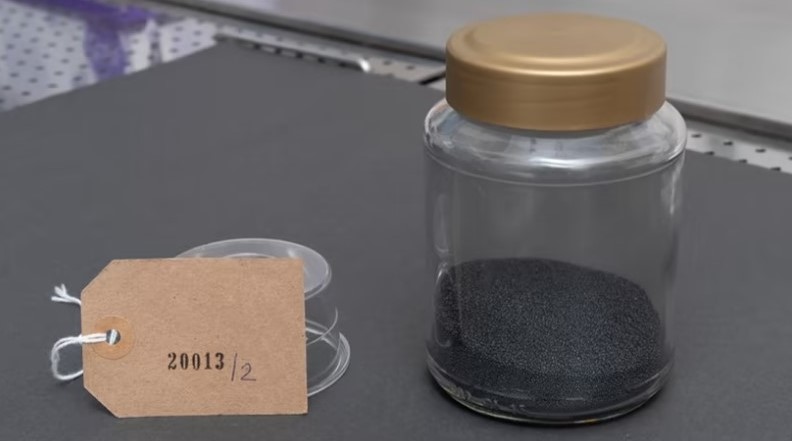
A container of the banned poison Aldicarb, found at Nicolle’s house. Photo: Crown Office
Speaking in court today, the Sherriff said the crimes were serious enough to cross the threshold for prison to be considered, however given that the individual had no previous convictions, in light of his age, and due to sentencing guidelines regarding custodial penalties of less than 12 months, a community order was served.
The case dates back to spring 2019, when several dead Red Kites were found by members of the public in the Springholm area, between Dumfries and Castle Douglas. Toxicology tests by the Science and Advice for Scottish Agriculture government laboratory revealed that all had died after consuming meat laced with poison. More victims were identified over the following months, including a number of Rooks found poisoned in the playground of the local primary school. One kite found killed was lying adjacent to the body of a Mandarin Duck used as a bait and found to have been laced with the same banned pesticide that killed the kite.
Mandarin Ducks are not a native species in Scotland, and the use of this exotic species as a bait drew Police Scotland’s attention to Nicolle who kept a large collection of exotic ducks and geese in an enclosure next to his house. During the execution of a search warrant at his premises in February 2020, police officers found quantities of aldicarb and bendiocarb, both illegal poisons, and both of which had been detected in the victims. Officers also found a Larsen trap being used illegally adjacent to Nicolle’s duck ponds. Nicolle was subsequently arrested and charged.
Ian Thomson, RSPB Scotland’s Head of Investigations, said: “We welcome today’s conviction of a Mr Nicolle for multiple offences linked to the illegal poisoning of Red Kites and Rooks around the village of Springholm. The placing of poison baits out in the open is illegal, dangerous and indiscriminate. It is exceedingly fortunate that Mr Nicolle’s repeated actions did not result in serious injury to a young child.
“The investigation of this case was an excellent example of partnership working. We would particularly like to thank Police Scotland, notably wildlife crime officer PC John Cowan, for their dogged determination to identify the perpetrator of these offences and to see them face justice, and to Procurators Fiscal from the Crown Office’s Wildlife and Environmental Crime Unit, for their diligent work in securing a conviction in such a complex case.”
Red Kites became extinct in Scotland in the 19th century due to persecution, but have been reintroduced in four areas, including Galloway. The reintroduction project here ran from 2001-04. Now, of an established Scottish population of around 450 pairs, Dumfries & Galloway contains about a third of these, making it the most important area of the country for these birds and their future conservation. In addition, the Galloway Red Kite Trail is a significant local tourist route, with over 100,000 visitors coming to the area to see the kites and contributing £8.2 million to the local economy between 2003-2015.
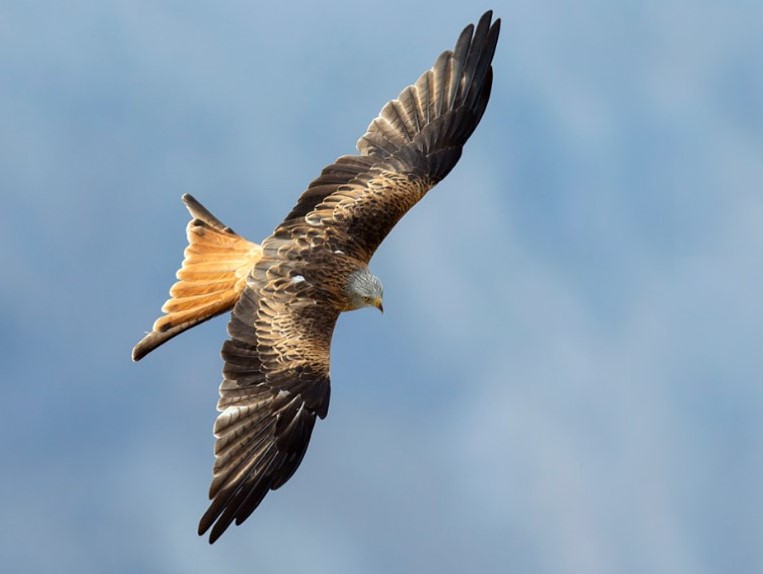
Red kite. Photo: Dick Forsman
Detective Inspector Dean Little, Senior Investigating Officer at Police Scotland, said: “Wildlife crime can be complex to investigate and difficult to prove in court. In this case local officers on the ground were able to promptly gather evidence and work with a number of partners who utilised specialist forensic methods to build a case against Nicolle.
“Scotland’s wildlife is one of its greatest attractions, which is especially true in our local area. Nicolle’s reckless use of illegal poison was not only selfish and damaging to the birds it killed, but also posed a risk to the environment and members of the public who came across them.
“I would like to thank the numerous partners who assisted in this case and members of the public who provided information and assisted police enquiries. Crimes against nature are not unpunishable and we welcome the sentencing today of Nicolle which shows our continued commitment to investigate wildlife crime and bring perpetrators to court.”
ENDS
Given the extent and seriousness of Nicolle’s crimes, I just can’t believe how lenient the Sheriff has been, although obviously he is constrained by sentencing guidelines.
It’s a complete replication of what happened when gamekeeper Alan Wilson was sentenced for his multiple offences at Longformacus in the Scottish Borders in 2019 (see here). Wilson also avoided jail, also avoided a fine and was just given a community payback order of 225 hours. It’s as though the Sheriffs in these cases are considering the offences as individual offences instead of looking at them as a cumulative pattern, which would easily then pass the custody threshold and exceed the 12 months limit.
Unfortunately, Nicolle committed his crimes prior to the enactment of the new Animals & Wildlife (Penalties, Protections & Powers) (Scotland) Act 2020; legislation that was introduced to increase the penalties available for certain wildlife crimes, including those under Section 1(1)(a) of the Wildlife & Countryside Act – ‘Intentionally, or recklessly, killing, injuring, or taking a wild bird‘.
Although, as we saw in a recent test case of this new legislation (the sentencing of a gamekeeper on Moy Estate for raptor-killing), it won’t necessarily lead to a significant punishment (see here).
I feel incredibly sorry for the multi-agency investigators in the latest case, who have clearly worked hard to bring a successful prosecution against Nicolle. In my opinion this pathetic sentence doesn’t reflect their efforts, doesn’t act as a deterrent for others, and certainly doesn’t reflect the seriousness of Nicolle’s crimes, which he knowingly committed, repeatedly, over a period of months.
Despite his conviction, this is a bad day for wildlife crime fighters.
UPDATE: The Crown Office has published the following statement, which provides a few more details:
MAN SENTENCED FOR POISONING WILD BIRDS
A 67-year-old waterfowl enthusiast has been sentenced for killing multiple birds of prey and other birds.
Barry Nicolle, who runs an exotic wildfowl breeding farm in Dumfries and Galloway, has been given a Community Payback Order and ordered to carry out 216 hours of unpaid work after pleading guilty at Dumfries Sheriff Court to the indiscriminate use of banned poisons, which killed five red kites and ten rooks.
This believed to be the first Scottish conviction in which multiple birds of prey have been killed with poison.
He also pled guilty to possession of several highly toxic pesticides, using a crow trap illegally and an air weapon licensing offence.
Between May 2019 and February 2020 Nicolle laced bait including mandarin duckling and a mallard duck with banned pesticides. He also placed poisoned bread on fence posts around his land which is about 150m (164 yards) from Springholm Primary School.
All of this was done to attract and kill scavengers in a bid to protect his own collection of exotic and ornamental waterfowl from a perceived threat.
Speaking after the sentencing, Fiona Caldwell, who leads on wildlife and environmental crime for the Crown Office and Procurator Fiscal Service (COPFS) said:
“Barry Nicolle’s actions led to the illegal killing of multiple Red Kite’s and Rooks.
“The laying of bait laced with poisons was shockingly irresponsible and Nicolle has shown an utter disregard for the wildlife laws which serve to protect these species.
“I would like to thank Police Scotland, RSPB Scotland, the Scottish SPCA, the SRUC Veterinary Investigation Centre and SASA for their part in investigating and gathering evidence of these repugnant offences.
“The law protects wild birds and those who seek to poison them or possess stocks of illegal poison can be assured that the Procurator Fiscal will continue to prosecute such cases and ensure that offenders face the consequences of their actions.”
The court heard that numerous reports of suspicious deaths of red kites in the Kirkpatrick Durham and Springholm areas were made to Police Scotland, RSPB and the Scottish SPCA Inspectors by members of the public.
Springholm is at the heart of the breeding red kite population’s range in South West Scotland making it a key area of the country for these birds and their future conservation.
Several red kite were found lying motionless on the ground in a distressed state and had to be euthanised. The ten poisoned rooks were found on the grounds of Springholm Primary School.
Subsequent post-mortem examinations by Scotland’s Rural College (SRUC) Veterinary Investigation Centre and toxicology analysis by the Science and Advice for Scottish Agriculture (SASA) Chemistry Branch established a pattern and cause of death linked to a banned Carbofuran based pesticide called Aldicarb.
All the deaths centred around Nicolle’s property and as a result of these enquiries police applied for and were granted a warrant to search Wickerty Snook.
On the morning of 4 February 2020 police wildlife officers, along with an RSPB investigator, a SASA scientist and others executed the warrant.
During the search of Nicolle’s home, the poisons Aldicarb, Bendiocarb and Phostoxin, which contains aluminium phosphide, were found.
Poisoned bait and traps, including an untagged and therefore illegal Larsen trap, were found on his land.
The Cairngorms National Park Authority (CNPA) is advertising a three-year, full time position for a Raptor Conservation Officer, to deliver the actions laid out in the National Park’s latest Partnership Plan (2022-2027) aimed at increasing the home range, occupation and breeding success of golden eagle, hen harrier, merlin and peregrine across the National Park.
This is a promising move by the CNPA, who have previously faced severe criticism for not dealing effectively with ongoing raptor persecution in some areas of the Park, notably on land that’s managed for intensive driven grouse shooting (e.g. see here & here).
Crimes against birds of prey, especially those that take place within the Cairngorms National Park, are often high profile, and quite rightly so. For example the recent poisoning of a golden eagle on a grouse moor within the Park (here) and the poisoning of a white-tailed eagle on another grouse moor within the Park (here) generated widespread outrage and media coverage, as did the sighting of a young golden eagle flying around a grouse moor in the Park with a spring trap clamped to its leg/foot (here).
Last year, the CNPA stated its intention to address intensive gamebird management within the Park as part of its Partnership Plan (here), which was seen as a good move by many of us who know that raptor persecution is disproportionately associated with land managed for gamebird shooting. That, combined with the creation of this new Raptor Conservation Officer post, is indicative of things moving in the right direction.
Make no mistake though, this new post will be a challenging one. There are some fantastic estates in the Cairngorms National Park who have been hosting and protecting breeding raptors (e.g. golden eagles, white-tailed eagles, hen harriers) for some time now, but there are also other estates that stubbornly refuse to tolerate these species and still behave as though it’s the 1890s.
The post is full time for three years, attracting a salary between £33,652 – £40,362. The closing date for applications is Sunday 30th April at 23.59hrs.
A detailed job description and list of essential attributes is provided here:
A poisoned red kite found in Lincolnshire in 2020 led to a multi-agency raid of two properties in March 2021 where suspected poisons were seized and sent for analysis (see here and here).
Last month, Lincolnshire Police issued the following statement in relation to this investigation:
‘A man has been charged with possession of an item for the purpose of killing a wild bird.
Jamie Harrison, aged 53, of Paulette Court, Spalding, has received a postal charge for possession of a poisonous substance for the purpose of killing a wild bird.
Harrison was interviewed after a warrant was executed in Spalding, in March 2021.
He is due to appear at Boston Magistrates’ Court, later this month.
Our Rural Crime Action Team was formed as part of Chief Constable Chris Haward’s pledge to provide a focus on targeting offences that affect our rural communities’.
No further details are available but I understand the next court hearing will be in June.
Well done to Lincolnshire Police’s Rural Crime Action Team and all the agencies involved in this investigation (NWCU, Natural England, RSPB).
As criminal proceedings are now underway, comments won’t be posted until the case concludes. Thanks for your understanding.
Further to yesterday’s breaking news (here) that wildfowl collector Barry Nicolle had pleaded guilty to multiple wildlife crimes relating to the illegal poisoning of red kites in south west Scotland, Police Scotland has issued the following statement:
Man convicted of killing 15 birds, including five red kites, in Dumfries & Galloway Area
A 67-year-old man has been convicted of killing raptors and other wild birds in the Stewarty area of Dumfries and Galloway between 2019 and 2020.
Barry Nicolle admitted numerous charges at Dumfries Sheriff Court today (Wednesday, 5 April, 2023). He is due to be sentenced on Friday, 19 May, 2023.
The charges related to the reckless use of illegal poison resulting in the deaths of 15 birds, including five red kites. They were recovered within a mile radius of Nicolle’s address, some just a few hundred yards from his property.
A poisoned red kite. Photographer: unknown
Robust policing work in conjunction with forensic science found these birds had not died naturally and had in fact been poisoned with banned substances, including Aldicarb and Bendiocarb.
Wildlife Officer, Police Constable John Cowan, said: “Extensive policing work involving a number of partners, along with forensic science, enabled us to build a case against Nicolle who had been killing protected birds over a number of years.
“Not only was there a risk to the rural environment, but also to members of the public handling poisoned birds some of which were found near a primary school.
“Police Scotland and the partners we work with treat all types of wildlife crime very seriously and this conviction is a strong message that those who poison wild and protected birds will be robustly investigated.
“I would also like to thank the public who provided information that assisted our enquiries. This is vital to our work in combatting wildlife crime.
“I would encourage anyone who comes across a protected dead bird or animal to report it to us. Likewise if you have information about wildlife crime please get in touch via 101.”
ENDS
UPDATE 19th May 2023: Monumentally inadequate sentence for Barry Nicolle, serial red kite poisoner in Dumfries & Galloway (here).
Barry Nicolle, a wildfowl collector in south west Scotland, has pleaded guilty to 14 charges this morning at Dumfries Sheriff Court in relation to the illegal poisoning of red kites in the area.
Red kite. Photo: Dick Forsman
Nicolle’s guilty pleas relate to the poisoning of four red kites, placing out poisoned baits, possession of illegal poisons and illegal trap use, according to Ian Thomson, Head of Investigations at RSPB Scotland.
Police Scotland led a multi-agency investigation, assisted by the RSPB, after a number of poisoned red kites were discovered in the area between 2018-2020 (see here, here, here and here for previous blogs).
Nicolle is due to be sentenced on 19th May 2023.
I expect full details of the case will be published post-sentencing.
UPDATE 6th April 2023: Police Scotland statement on conviction of red kite poisoner Barry Nicolle (here)
UPDATE 19th May 2023: Monumentally inadequate sentence for Barry Nicolle, serial red kite poisoner in Dumfries & Galloway (here).
Earlier this year, criminal gamekeeper Paul Allen was sentenced for multiple wildlife, poisons and firearms offences committed on the Shaftesbury Estate in Dorset in 2021 (see here).
He first came to the attention of the police after a member of the public discovered a dead red kite on the estate in November 2020. Tests revealed it contained the poison Bendiocarb and this triggered a multi-agency raid in March 2021 led by Dorset Police’s (now former) wildlife crime officer Claire Dinsdale.
The poisoned red kite found on the Shaftesbury Estate by Dorset resident Johanna Dollerson
Officers found the corpses of six dead buzzards by a pen behind the gamekeeper’s house (tests later showed they had all been shot, including one that was was estimated to have been shot in the last 24hrs). Officers also found the remains (bones) of at least three more buzzards on a bonfire.
A loaded shotgun was found propped up behind a kitchen door (!) and 55 rounds of ammunition were found in a shed. Both the gun and the ammunition should have been inside a locked, specifically-designed gun cabinet, by law. The gun and the ammunition were not covered by Allen’s firearms certificate.
Officers also found a number of dangerous, and banned, chemicals, including two bottles of Strychnine, two containers of Cymag and a packet of Ficam W (Bendiocarb) in various locations, including in a vehicle used by Allen.
Some of you may also recall that Allen was initially charged with killing the red kite, but court records showed that this charge, along with two others, was subsequently dropped minutes before the hearing (see here), probably as some kind of bargaining agreement between the lawyers.
Allen was sentenced in February 2023 and escaped a custodial sentence due to his personal circumstances (see here).
If you recall, the Shaftesbury Estate was also where a young satellite-tagged poisoned white-tailed eagle was found dead, a year later, in January 2022. Tests revealed the eagle’s liver contained seven times the lethal dose of the rodenticide Brodifacoum but Dorset Police refused to conduct a search of the estate, despite already running an investigation into gamekeeper Paul Allen’s crimes on the same estate(!), and they still haven’t provided a credible explanation for that appalling decision (see here).
Now new details have emerged about what was found during the investigation into gamekeeper Allen, thanks to Guy Shorrock, a member of the PAW Forensics Working Group and a former Senior Investigator at RSPB. Guy has written a guest blog for Wild Justice to demonstrate how the Raptor Forensics Fund, initiated by Wild Justice in 2020, has been used to help bring a number of criminal gamekeepers to court.
In that guest blog, Guy discusses the forensic testing undertaken on a ‘cut open’ dead rat that had been found next to the red kite’s corpse. Tests revealed it, too, contained the poison Bendiocarb – in other words, it had been placed as a poisoned bait. Forensic testing also confirmed that the kite had consumed part of a brown rat. You don’t have to be Poirot to piece it all together but even though Allen’s vehicle contained multiple pots of Bendiocarb, this still isn’t sufficient evidence to demonstrate without reasonable doubt that he was responsible for placing the poisoned bait that killed that red kite. This is a very good example of just how high the criminal burden of proof is and why so many prosecutions against gamekeepers have failed.
What has also been revealed is that in addition to being poisoned by Bendiocarb, that red kite also contained NINE times the lethal level of the rodenticide Brodifacoum in its system!! Sound familiar? The dead white-tailed eagle, found on the same estate a year later, contained seven times the lethal dose. To me, this makes Dorset Police’s decision not to search the Shaftesbury Estate even more non-sensical than previously thought.
Wild Justice has asked its legal team to examine Dorset Police’s botched handling of the poisoned white-tailed eagle case and expects to have more news on that in due course.
Meanwhile, I’d really encourage you to read Guy’s guest blog on Wild Justice’s website (here), published this morning, for a fascinating insight into the pain-staking forensic work that goes in to prosecuting those who continue to kill raptors.
The Raptor Forensics Fund, initiated by Wild Justice and supported by donations from the Northern England Raptor Forum, Tayside & Fife Raptor Study Group, Devon Birds, and a number of generous individuals who wish to remain anonymous, is now running low (because it’s been used so often!). Wild Justice intends to top up the fund shortly. If you’d like to donate to Wild Justice’s work, please click here. Thank you.





 Raptor Persecution UK