Yesterday it was announced that Robbie Douglas-Miller OBE has been appointed as a Parliamentary Under Secretary of State in the Department for Environment, Food and Rural Affairs (DEFRA).
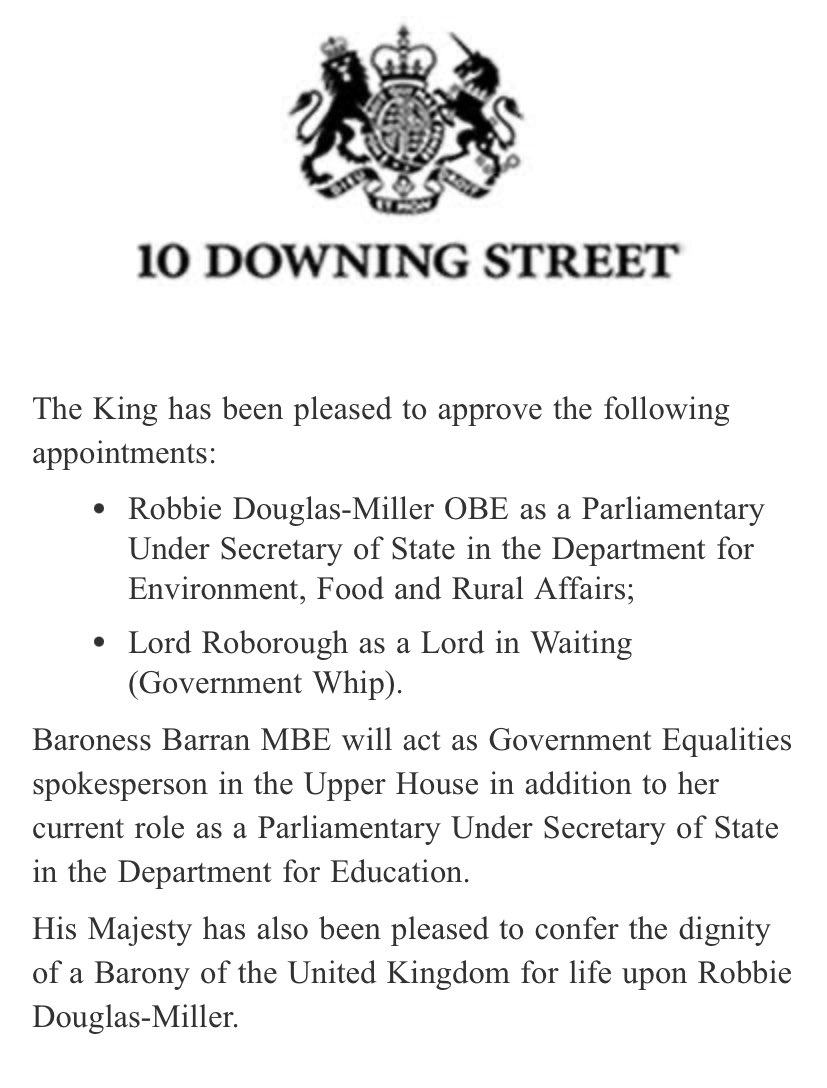
Eh? So an unelected billionaire who likes to wear a crown has conferred a Barony on some other bloke which then allows that other unelected bloke to be given a Ministerial role in DEFRA, which has been approved by the unelected billionaire who likes to wear a crown, and we’re all supposed to accept this is a functional democracy? Good grief.
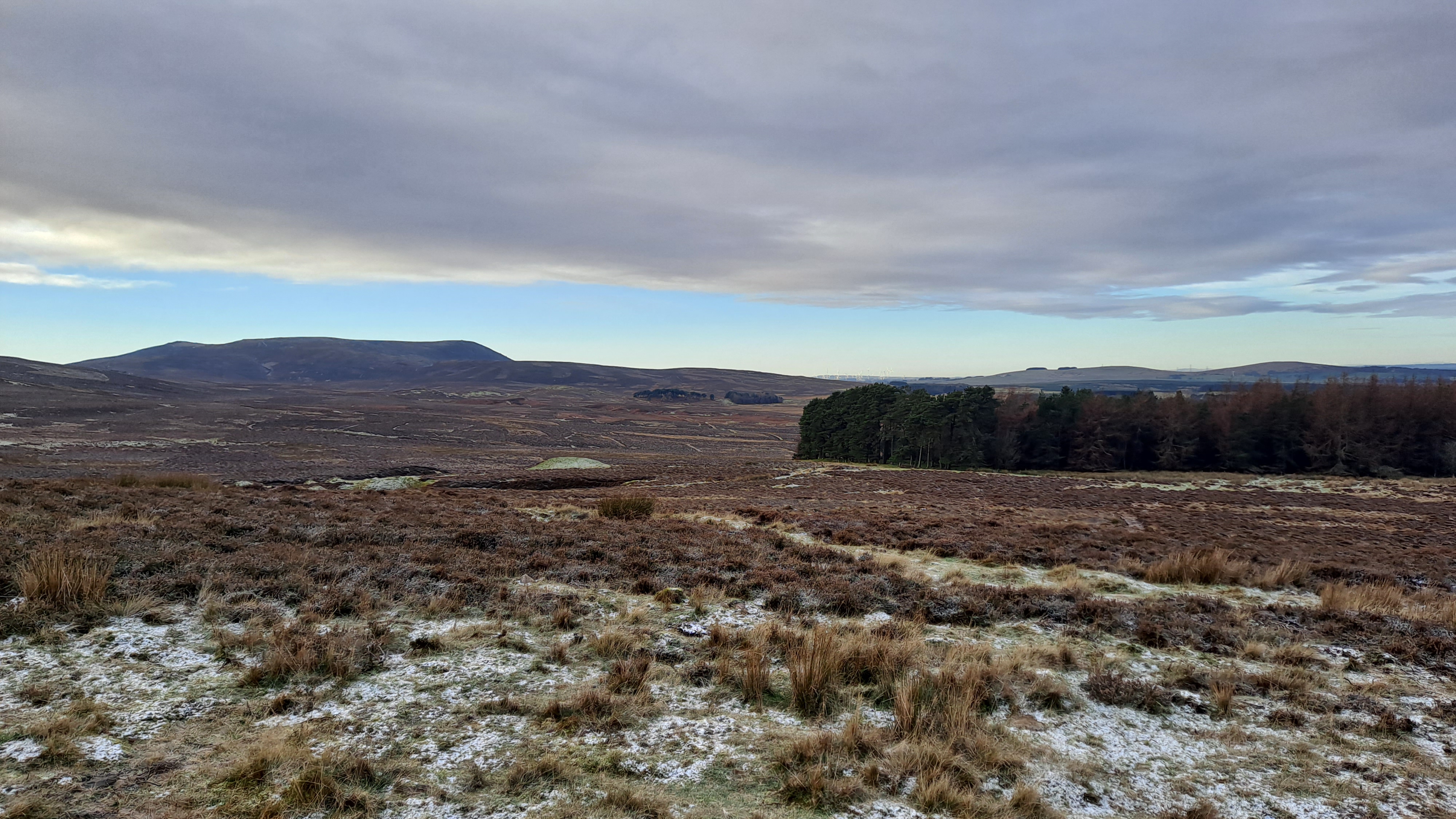
That new unelected DEFRA Environment Minister, Baron Douglas-Miller, is believed to be the same Robbie Douglas-Miller who just happens to be the sole director of Moorfoot Capital Management Ltd which owns a grouse moor (Hopes Estate) in the Lammermuirs in south Scotland. Along with Lord Benyon, that’ll now be two grouse moor-owning Environment Ministers in DEFRA.
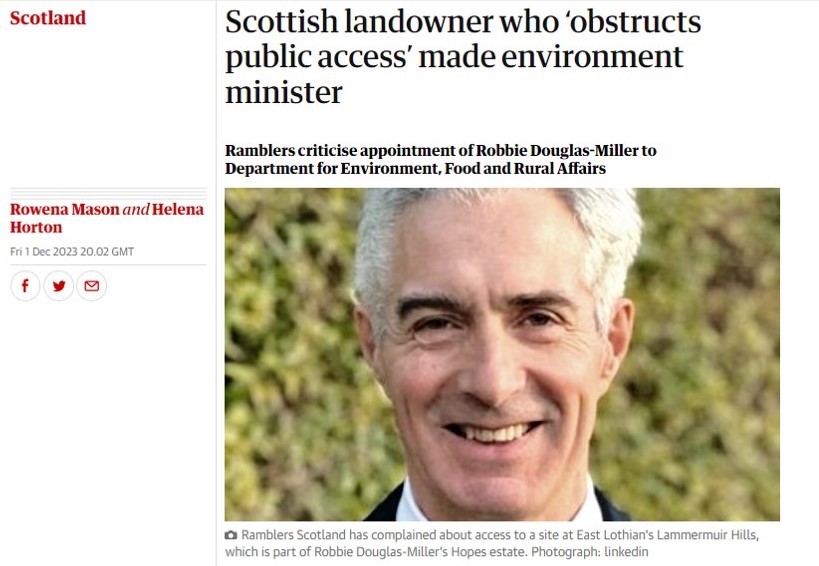
Douglas-Miller has, according to this article in the Guardian, been accused of ‘obstructing public access‘ by ‘apparently making it difficult for walkers to access a site East Lothian’s Lammermuir Hills, which is part of his Hopes Estate‘.
It’s not the first time access issues have been raised at Hopes Estate. In 2017, fieldworkers from the Scottish Raptor Study Group published two scientific papers about their long-term monitoring of merlins on grouse moors in the Lammermuirs and how that came to an abrupt end in 2015 after they were suddenly refused vehicular access, having previously enjoyed a good cooperative relationship with landowners and gamekeepers for many years. They believed that the relationship breakdown was a result of them highlighting some of the intensification of management practices on those grouse moors. Their study area covered several estates including the Hopes Estate (see here and here).
It’s worth noting that none of these grouse moor management practices were unlawful (at the time), and indeed the fieldworkers did not find any evidence of illegal raptor persecution, but their criticism of the increased use of bridge (rail) traps that were catching / killing non-target species such as dippers, merlin and ring ouzels, and the killing of mountain hares that were then dumped in stink pits was an issue of concern to them.
The Hopes Estate had achieved accreditation in 2013/14 under the Wildlife Estates Scotland (WES) scheme, which is administered by landowners’ lobby group Scottish Land & Estates and was chaired for several years by Robbie Douglas-Miller.
Estates that are awarded accreditation under the WES scheme have to meet certain criteria, including:
- Commitment to best practice
- Adoption of game and wildlife management plans that underpin best practice
- Maintaining species and habitats records
- Conservation and collaborative work
- Integration with other land management activities (such as farming, forestry and tourism)
- Social, economic and cultural aspects (such as employment, community engagement and communications)
The WES scheme was first piloted in 2011 and was believed to be in response to MSP Peter Peacock’s call in 2010 for an estate licensing scheme to combat ongoing raptor persecution (see here). The scheme was then rolled out fully in 2013 but not without some healthy scepticism of it being a greenwashing exercise (see here).
Since then, in general, I think it’s probably been a good thing for estates to aspire to, although a number of estates in the WES scheme have had wildlife crime incidents recorded on their land, e.g. Invercauld Estate (see here and pay attention to the letter written by the estate to the then Environment Minister where the estate quoted its membership of the WES scheme as an example of its apparently good stewardship. Of course, this estate is now currently serving a three-year General Licence restriction after further evidence of wildlife crime was uncovered there, including what Police Scotland described as the ‘deliberate’ poisoning of a golden eagle – here).
In addition, the WES-accredited Newlands Estate in Dumfriesshire saw one of its gamekeepers convicted for killing a buzzard after he threw rocks at it before repeatedly stamping on it (see here and here). To be fair, when challenged about the estate’s WES accreditation in light of the gamekeeper’s conviction, WES stated that the estate’s accreditation had been ‘suspended’ (note, not revoked, see here) although for how long, who knows?
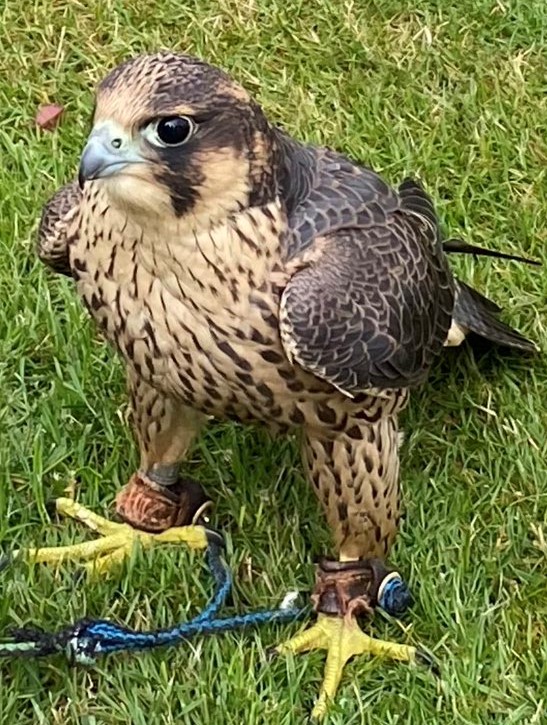
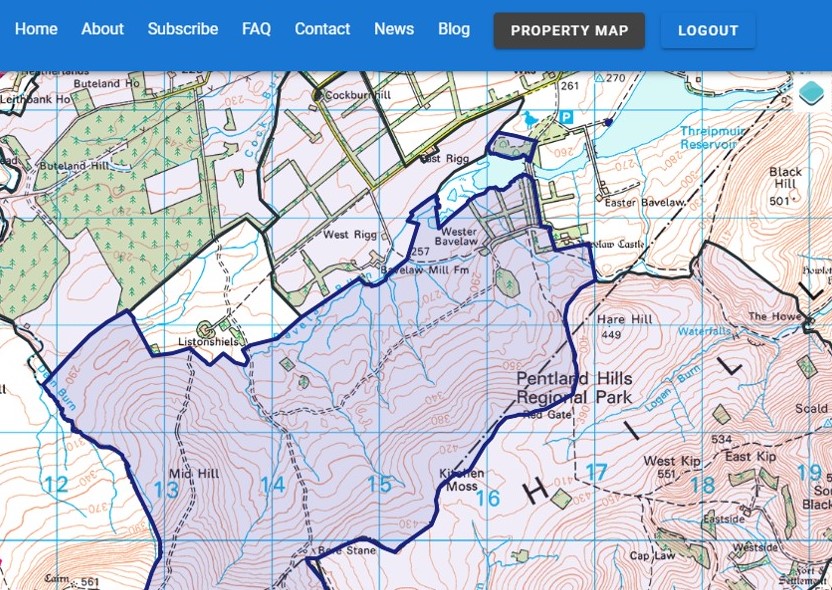
And just this week, another WES-accredited estate is at the centre of a police investigation after a dead peregrine was found in a baited illegal pole trap in the Pentlands (see here). The Police Scotland appeal for information stated that the dead peregrine ‘was found around 100 yards from a public path on the edge of a small woodland south of Wester Bavelaw on Thursday, 23 November, 2023′.
According to Andy Wightman’s Who Owns Scotland website this ‘small woodland south of Wester Bavelaw’ appears to be on the Bavelaw Estate:
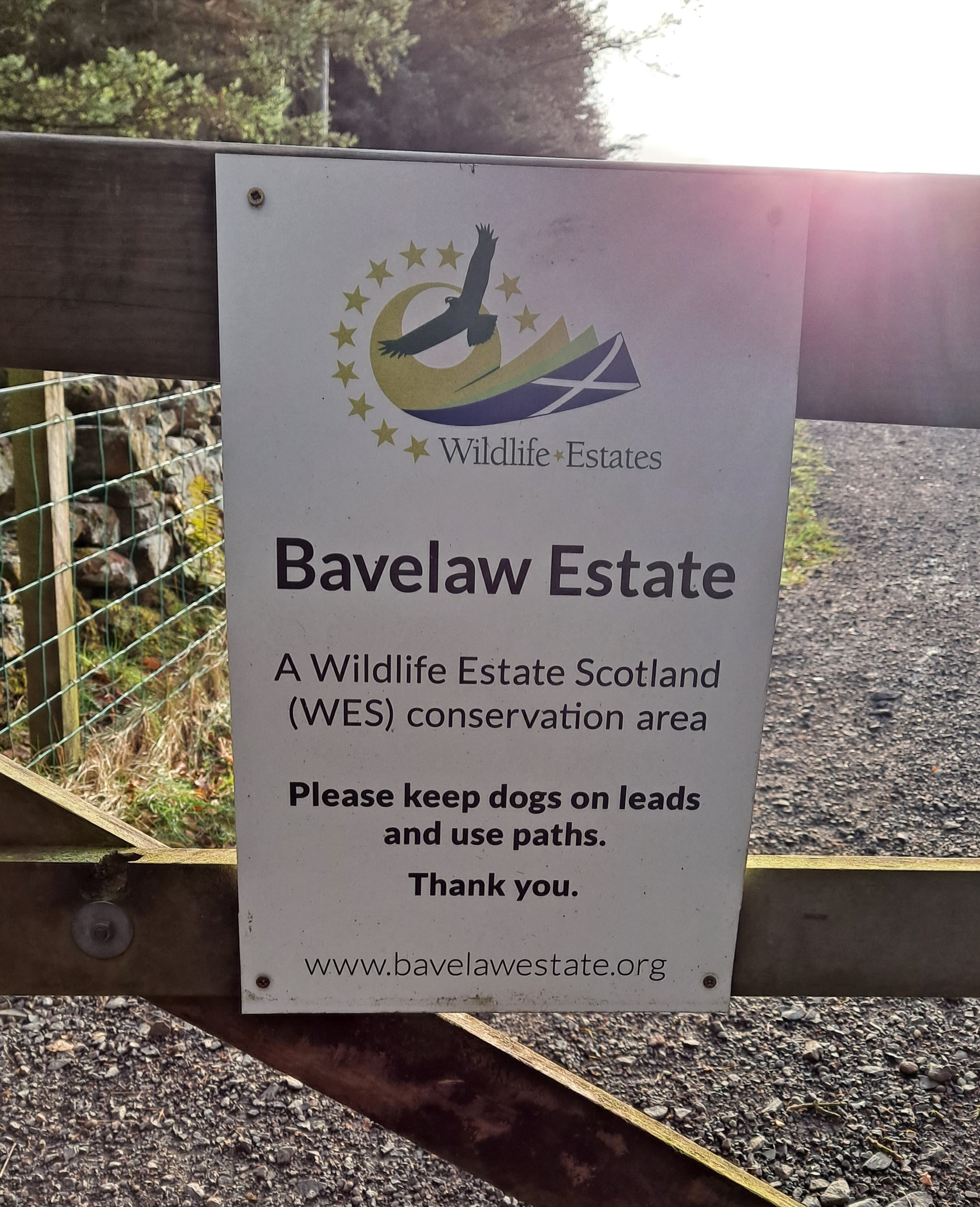
The Bavelaw Estate, according to its own website, is a WES-accredited estate and says this about it:
‘Over the last five years, The estate have enhanced habitat across the board, including planting over 50 ha of mixed native woodland, peatland restoration, the creation of wetland areas, including wader scrapes and ponds, restoration of riparian habitats and heather and bracken swiping as well as connecting wildlife corridors. Additionally, restoring 7,861 sq Km of public access paths.
The assessor was extremely impressed with the integrated management direction the Estate is taking and specifically referenced the undeniable passion and enthusiasm for nature that both the landowner and his employees have‘.
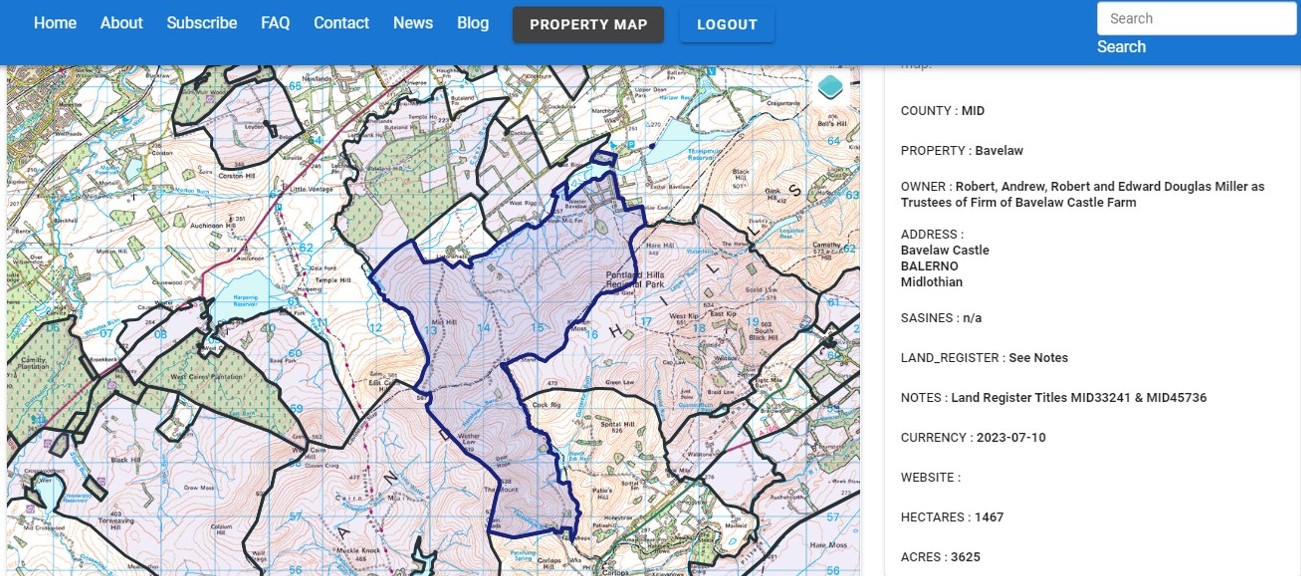
Interestingly, and again according to Andy Wightman’s Who Owns Scotland website (data collected 10 July 2023), Bavelaw Estate is owned by Robert, Andrew, Robert and Edward Douglas-Miller as Trustees of Firm of Bavelaw Castle Farm:
Now, to be absolutely clear and for the avoidance of doubt, there is no suggestion whatsoever that Robbie Douglas-Miller, or his relatives, or indeed anyone associated with Bavelaw Estate is responsible for, or had any knowledge of, the setting and baiting of that illegal pole trap that killed the peregrine. The police investigation is ongoing and we’ll just have to wait and see whether the police appeal for information brings forward any witnesses and whether the forensic analysis identifies a suspect.
I genuinely expect Robbie Douglas-Miller will have been as horrified as the rest of us and will be eager to know who set that illegal trap, and who might also be responsible for other incidents of raptor persecution / wildlife crime in the area, e.g. the illegally poisoned peregrine found about half a mile away in 2018 (here), the suspicious disappearance of golden eagle Fred a few kilometres away in 2018 (here) the merlin nest that was shot out in 2017 (here) and the raven shot on its nest in 2016 (here).
Nevertheless, it appears that a heinous wildlife crime has been detected on another WES-accredited estate, and that the apparent new DEFRA Environment Minister is a co-Trustee of the company that owns the estate.
As an aside, I was interested to see the game-shooting lobby was very quick to deny that the pole-trapped peregrine had anything to do with grouse shooting – indeed, MSP Rachael Hamilton even stated as much in the Chamber during Thursday’s parliamentary debate on the Wildlife Management Bill (“…there is clearly no link to a grouse moor management…“, here). How does she know?!
There is driven grouse shooting on neighbouring land to Bavelaw and Bavelaw was once a prominent grouse shooting estate itself (the lines of grouse butts are marked on the OS map) but it is believed that Bavelaw is currently managed as a sheep farm, although there is evidence that muirburn takes place but it doesn’t look like the intensive muirburn typically associated with a driven grouse moor:
What’s really interesting then, is why the Bavelaw Estate was a signatory on a recent letter sent to Environment Minister Gillian Martin where nearly 400 rural businesses expressed their concern that a grouse moor licensing scheme would be detrimental to their interests (see here). You can’t have it both ways – either there’s a link to grouse shooting or there isn’t.
I really don’t know what to make of Robbie Douglas-Miller’s appointment as an Environment Minister in DEFRA. What can a prominent grouse moor owner, member of Scottish Land & Estates and a former GWCT Director bring to the policy table? Perhaps he’ll use his experience of chairing the WES scheme in Scotland to try and impart some sense to the appalling and unregulated mismanagement of England’s grouse moors? Although given SLE’s open-mouthed hysteria about the proposed grouse moor licensing scheme in Scotland, that doesn’t seem likely.
UPDATE 7th December 2023: More information emerges on new, unelected DEFRA minister (here)