Case against Bleasdale Estate gamekeeper collapses as RSPB video evidence ruled inadmissible

We’ve been reporting on the case against Bleasdale Estate gamekeeper James Hartley since September 2017 (see here, here, here, here for previous posts).

Mr Hartley faced 9 charges as follows:

  1. Disturbing the nesting site of a Schedule 1 wild bird (13/04/2016)
  2. Killing a Schedule 1 wild bird (13/04/2016)
  3. Killing a Schedule 1 wild bird (14/04/2016)
  4. Setting trap / gin / snare etc. to cause injury to a wild bird (between 13-14/04/2016)
  5. Taking a Schedule 1 wild bird (14/04/2016)
  6. Possessing a live / dead Schedule 1 wild bird or its parts (14/04/2016)
  7. Possessing an article capable of being used to commit a summary offence under section 1 to 13 or 15 to 17 (13/04/2016)
  8. Possessing an article capable of being used to commit a summary offence under section 1 to 13 or 15 to 17 (between 12/04/2016 – 27/04/2016)
  9. Causing unnecessary suffering to a protected animal – Animal Welfare Act 2006 (between 14/04/2016 – 15/04/2016)

The case collapsed last week after District Judge Goodwin ruled the RSPB video evidence inadmissible at a hearing at Preston Magistrates Court on 28 March 2018.

Reporting restrictions imposed early on in the case prevented us from blogging in detail until the case had concluded. We’re now able to report what happened.

This blog is the first in a series about this case. In this one, we set out the Crown’s case against Mr Hartley, and the defence’s skeleton argument against the admissibility of the video evidence.

Here are the details of the case as presented to the court by the Crown Prosecution Service (barrister: Mr Yip):

On the 11th April 2016 RSPB Investigations Officer [name redacted], in the presence of RSPB Investigations Officer [name redacted], installed a covert video camera pointed towards a peregrine falcon nest site within the boundary of Bleasdale Game Estate in the Forest of Bowland.
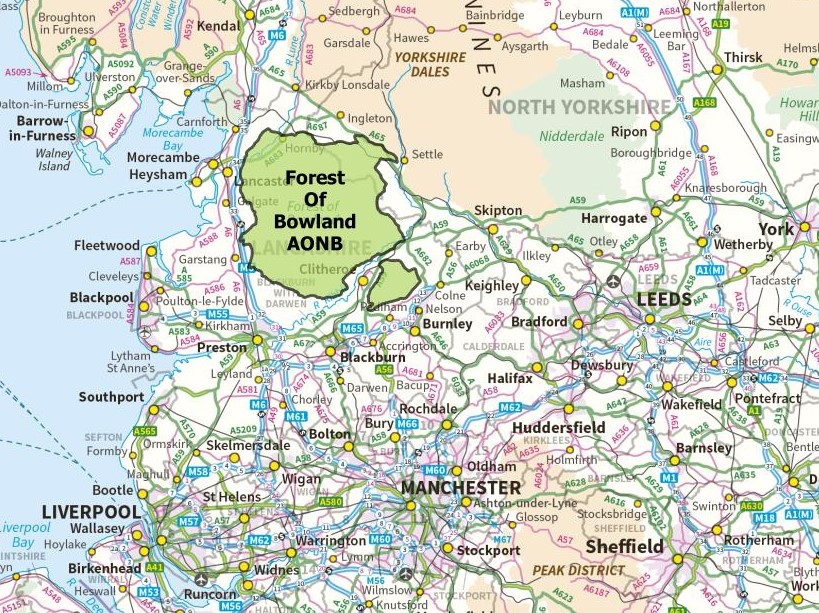
The red star denotes the location of the Bleasdale Estate:

The Bleasdale Estate is owned by Jeremy Duckworth. Mr Duckworth describes the upper moorland as managed for grouse shooting and he employs one gamekeeper for this area, that being the defendant James Hartley.

It is the Crown’s case that the covert camera captured footage which revealed incidents on the 13 and 14 April 2016 where the nest site and birds were interfered with.

The Crown say that a number of clips show that on 13th April 2016 at 19.53hrs an incubating peregrine leaves the nest scrape. This is immediately followed by what appears to be four shotgun discharges. A few minutes later at 19.57hrs a person wearing a camouflage suit and in possession of a hammer attends the nest site for a number of minutes before leaving.

The following morning, 14th April 2016 at 10.29hrs, a peregrine, believed to be the male parent, lands on the edge of the nest ledge and walks in to the nest scrape area. The bird becomes trapped all day in what the Crown say is a spring trap. At 20.25hrs the peregrine is still present. At 23.12hrs a person with a torch visits the site. It is the Crown’s case that the inference is this person had removed the peregrine and the trap as the bird was no longer present the following day.

On 21st April 2016 a number of officers from Lancashire Constabulary and the RSPB attended the nest site area and recovered four eggs and some feathers.

On 26th April 2016 a search warrant was executed and a search was conducted at the defendant’s home address and outbuildings. A green bag containing a number of items was seized from an outbuilding. Forensic DNA analysis from Dr Lucy Webster provides extremely strong support to the proposition that two of the items within this exhibit, an orange handled knife and a wooden handled hammer have been in contact with peregrine falcon.

Between 17.37hrs and 19.11hrs on 24th May 2016 the defendant was interviewed under caution when he declined to answer any questions put to him.

Between 13.16hrs and 13.50hrs on 2nd November 2016 the defendant was interviewed under caution for the second time when he declined to answer any questions put to him.

END

Here is the skeleton argument presented to the court by the defence (barrister: Mr Justin Rouse QC):

The defence seek to exclude the video footage obtained by [RSPB Investigator, name redacted] and the items recovered in the search on the 21 April 2016 under s78 Police & Criminal Evidence Act [PACE] 1984.

S78 PACE provides as follows:

‘…..In any proceedings the court may refuse to allow evidence on which the prosecution proposes to rely to be given if it appears to the court, that, having regard to all the circumstances, including the circumstances in which the evidence was obtained, the admission of the evidence would have such an adverse effect on the fairness of the proceedings that the court ought not to admit it’.

The defence submit that the RSPB have sought to circumvent the provisions of RIPA 2000 [Regulation of Investigatory Powers Act 2000] together with s93 of the Police Act 1997; that they have breached Code B of PACE 1984; that RSPB Investigator [name redacted] was not a data handler for the purposes of the Data Protection Act 1998; that the RSPB chose not to voluntarily adopt the Surveillance Camera Code and/or that the police were bound by that code and that the RSPB were trespassing on the land unlawfully, having failed to seek the permission of the landowner.

END

The full details of the defence’s legal argument will be published in a second blog, along with the judge’s commentary on each of the components of the defence’s argument. For those of us interested in such details it was a fascinating and well-presented argument. And therein lies the crux of this case. In our opinion, the court’s ruling on the video evidence was inevitable, not necessarily because of the strength of the defence’s legal argument, but because of the weakness in the prosecution’s counter-argument against it.

For those of us who sat in the public gallery to observe the legal argument hearing on 14 March 2018, it became apparent, very quickly, that the outcome of this case (and thus, supposed ‘justice’) would be determined by the amount of money available to pay for legal representation.

The representative for the defence was the highly-regarded Mr Justin Rouse QC. We have no idea who paid for his time and expertise (e.g. the defendant? His family? His employer? A representative membership body, e.g. National Gamekeepers Org or BASC?) but whoever it was will no doubt consider it money well spent. It was very clear that Mr Rouse (or his junior) had probably spent a long time in preparation for this case: his presentation was meticulous and thoroughly organised, with every aspect labelled and referenced in a bundle of documents that he’d provided to the judge. On every single point he raised, he was able to tell the judge on which page she should be looking. He was calm, measured and in complete control. A bit of a masterclass.

In contrast, the representative for the prosecution was Mr Yip, who turned up completely unprepared. He arrived without his bundle of evidential documents, muttering something about having left them behind, so he was unable to look up the detail of points raised by the judge. At one point Mr Rouse passed over his own copy of the evidential documents to Mr Yip, to try and help him out. The judge asked Mr Yip several questions about the video evidence and asked to see it (she was particularly interested in the angle of the covert camera and how wide a view it was able to record – a crucial element in deciding whether this was ‘directional’ surveillance, as detailed in RIPA 2000). Astonishingly, Mr Yip told the court he hadn’t seen the video evidence and he didn’t have a copy with him. He was able to produce a couple of still photos from the video but when the judge asked him to point out the position of the nest in the photos, he was unable to do so.

It has been reported on social media that the RSPB “failed to support” this case by “declining” to attend court on 14 March 2018 to answer questions raised by the judge during the legal argument hearing. What utter nonsense. The statement is categorically untrue and is a false claim being made by a group with a long-held and well-documented grudge against the RSPB, presumably with the intention of portraying the RSPB in a bad light. What actually happened was Mr Yip declined to call the RSPB as a witness during that hearing, even after being prompted by the judge, and nor did he ask for an adjournment to allow for him to call an RSPB witness at a later hearing. His reason for this decision is not known (to us) and it proved to be catastrophic for the prosecution’s case.

We think it is fair comment to describe Mr Yip as being ill-prepared for the hearing. However, there may be many reasons for that, beyond his control. It isn’t unusual for the financially-squeezed and under-resourced CPS to drop cases on lawyers at the last minute so for all we know Mr Yip might not have ‘seen’ this case until the night before the hearing. If that is what had happened, it would partly explain the gulf in quality between Mr Rouse’s and Mr Yip’s presentations. That being said, if Mr Yip had not had adequate time to prepare, he could probably have called for an adjournment.

His poor performance did not go unnoticed by the judge and in her ruling delivered to the court on 28 March her criticism was evident. More on this subject in the second blog.

Putting aside for a moment the legal arguments and the standard of presentation, the bottom line is that yet another case of alleged raptor persecution, caught on covert camera, has failed on a technicality (or in this case, several technicalities).

Although the identity of the alleged perpetrator in the Bleasdale case has not been tried and tested in court, there’s no getting away from the fact that the CPS believed the video footage to show that two peregrines appear to have been illegally killed at a nest site on the Bleasdale Estate in 2016. The unidentified perpetrator of this alleged crime will not face justice. Given the catalogue of failed cases under similar circumstances (i.e. covert video footage ruled inadmissible on a technicality), the perpetrators of these crimes have been given yet more impetus to continue, as the chances of successful prosecution these days are almost nil.

No doubt the grouse-shooting industry will jump on this result as an excuse to vilify the RSPB and its approach to investigating raptor persecution crimes. But when the RSPB publishes the video footage of this latest incident, the public will be in a position to judge for itself whether or not the RSPB’s actions were discreditable. Whether the grouse shooting industry likes it or not, public opinion, not court convictions, will ultimately be the deciding factor in addressing the ongoing illegal killing of birds of prey.

UPDATE 13 April 2018: Why the video evidence was ruled inadmissible in the Bleasdale Estate case (here)

UPDATE 16 April 2018: Why other evidence was also ruled inadmissible in the Bleasdale Estate case (here)

UPDATE 16 April 2018: Grouse-shooting industry’s reaction to the failed Bleasdale Estate case (here)

UPDATE 8 August 2018: Peregrine persecution on a grouse moor: Bleasdale video footage finally released (here)

Man charged with stealing eagle & osprey eggs from nests

From DevonLive news, 6 April 2018:

A man has been charged with a number of offences against the Wildlife and Countryside Act 1981, in relation to the taking of and disturbing of protected birds, their nests and eggs.

Jason North, aged 49, from Plymouth has been charged with 14 offences including the disturbance of Schedule 1 birds at or near the nest and the taking of eggs.

These include rare species such as Golden Eagle and Osprey in Scotland.

Further offences relate to nest disturbance and the taking of eggs of rare Devon birds namely Hobby, Peregrine Falcon and Little-Ringed Plover from sites on Dartmoor, Devon.

These offences are alleged to have taken place in Devon and Scotland during 2016.

Mr North is due before Plymouth Magistrates court on 3 May.

ENDS

Thanks to Police Wildlife Crime Officer Josh Marshall from Devon & Cornwall Police for alerting us to this case. Great partnership working between the Police, RSPB & CPS to get this case to court.

Case against Bleasdale Estate gamekeeper James Hartley: part 4

Legal proceedings continued today in the case against James Hartley, a gamekeeper from the Bleasdale Estate in Bowland who is accused of a number of offences in relation to the alleged killing of two peregrines in April 2016 (see first court report for details here). Mr Hartley has pleaded not guilty to the alleged offences.

A case management hearing earlier this month focused on legal argument relating to the admissibilty of evidence.

Today at Preston Magistrates Court, District Judge Goodwin delivered judgement on the admissibility of evidence specific to this case.

Due to reporting restrictions imposed at a previous hearing, until the case concludes we are unable to publish the specifics of the legal argument, or even comment on today’s admissibility ruling.

A further hearing has been scheduled for 10 April 2018.

PLEASE NOTE: given the legal sensitivity surrounding this case we won’t be accepting comments on this particular blog post. Thanks.

Peregrine confirmed poisoned in North Wales

From North Wales Police Rural Crime Team:

Case against Bleasdale Estate gamekeeper James Hartley: part 3

Legal proceedings continued yesterday in the case against James Hartley, a gamekeeper from the Bleasdale Estate in Bowland who is accused of a number of offences in relation to the alleged killing of two peregrines in April 2016 (see first court report for details here). Mr Hartley has pleaded not guilty to the alleged offences.

Yesterday’s case management hearing focused on legal argument relating to the admissibilty of evidence. Due to reporting restrictions imposed by District Judge Goodwin at a previous hearing, we are unable to publish the specifics of the legal argument until the case concludes.

District Judge Goodwin reserved judgement at yesterday’s hearing and is expected to deliver judgement to the court on 26 March 2018.

PLEASE NOTE: given the sensitivity of this case we won’t be accepting comments on this particular blog post. Thanks.

National peregrine survey results: illegal persecution on grouse moors affecting distribution

Periodically there are synchronised national surveys for a number of raptor species in the UK, which help to build a picture of national and regional population trends.

In 2014 a national peregrine survey was undertaken, to follow up on the previous survey completed in 2002. The results of the 2014 survey were published yesterday in the journal Bird Study.

The full paper can be read here

A press release from the BTO (whose scientists led the study) can be read here

If you read beyond the superficial headline (‘World’s fastest bird making a comeback’) you’ll see that although peregrines are doing fantastically well in the lowlands and in many urban environments, all is not well for peregrines in the uplands, and particularly in areas intensively managed for driven grouse shooting.

This will come as no surprise to regular blog readers. It’s not exactly news to learn that illegal persecution on driven grouse moors is affecting the distribution and abundance of peregrines on a national scale, just as it is affecting the national popuation of golden eagles and hen harriers.

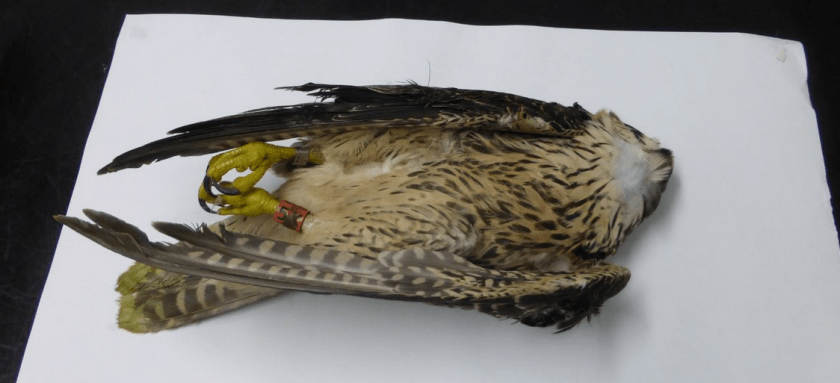
Photo of a dead peregrine that was found shot next to a grouse moor in the Peak District National Park in 2016 [RSPB photo]

An excellent paper by Arjun Amar and colleagues, published in 2011, examined 1081 peregrine nest histories across northern England between 1980-2006 and found that productivity of peregrines on grouse moors was 50% lower than pairs breeding on non-grouse moor habitat. This was attributed to illegal persecution rather than to prey constraints.

Another paper by the North East Scotland Raptor Study Group, published in 2014, demonstrated an on-going decline in the breeding population of peregrines on driven grouse moors on the eastern side of the Cairngorms National Park, a trend that has persisted since 1991.

Anecdotal information suggests a continuing decline in the number of breeding peregrines on the driven grouse moors of Bowland in Lancashire.

And last year, further information was published by the Peak District Bird of Prey Initiative documenting the continuing decline of breeding peregrines in the Dark Peak area of the Peak District National Park, an area dominated by driven grouse moors.

The results of the 2014 national peregrine survey don’t tell us anything we didn’t already know, they simply confirm what has been known for years.

The question is, what, if anything, will the statutory authorities do about it? Continued wilful blindness is no longer an option.

Diverting attention from the illegal killing of peregrines on grouse moors

One of the many criticisms about the proposed reintroduction of hen harriers to southern England is that if a population does manage to become established, the grouse-shooting industry will use it to divert attention from the on-going eradication of this species on intensively managed driven grouse moors. ‘Look, hen harriers are doing just fine in the lowlands, the species’ conservation status has improved, everything’s fine, there’s nothing to worry about anymore’.

If you don’t think that that’s what will happen, just take a look at this letter from the Countryside Alliance, published in The Times yesterday:

PEREGRINE’S SUCCESS

Sir, your report that the peregrine falcon is “now seeking sanctuary in cities as it comes under threat” fails to provide vital context (“Prized peregrine falcons falling prey to greed“, News, Jan 9). The peregrine falcon population reached a low of about 150 pairs in the 1960s as a result of the impact of toxic agricultural chemicals such as DDT in the food chain as well as illegal persecution. However, improved legislation and protection has helped the peregrine falcon to expand its range and numbers. The latest estimates place the number of peregrines at a historic high of 1,500 pairs, and has led to the peregrine having its conservation status declared “secure”. The species, like other raptors such as the buzzard and red kite, is an undoubted conservation success.

ENDS

No mention then, of how illegal persecution on the north of England grouse moors is suppressing local peregrine populations (see here).

No mention then, of how the preliminary results of the 2014 national peregrine survey show a sharp decrease in peregrine occupation in the UK’s uplands, especially in areas intensively managed for driven grouse shooting (see here).

No mention then, of how illegal persecution has led to the continuing decline of peregrines in the grouse moor areas of north east Scotland, particularly on the eastern side of the Cairngorms National Park (see here).

No mention then, of how illegal persecution has led to the continuing decline of the peregrine’s breeding population on the grouse moors of Bowland.

No mention then, of how illegal persecution has led to the continuing decline of the peregrine’s breeding population on the grouse moors of the Dark Peak in the Peak District National Park (see here).

Funny, that.

Photo of a dead peregrine that was found shot next to a grouse moor in the Peak District National Park in 2016 (RSPB photo)

Case against Bleasdale Estate gamekeeper James Hartley: part 2

Today we attended Preston Magistrates Court in anticipation of listening to a case hearing in relation to the prosecution of James Hartley, a gamekeeper from the Bleasdale Estate in Bowland who is accused of a number of offences in relation to the alleged killing of two peregrines in April 2016 (see first court report for details here).

Photo by RPUK

Mr Hartley has pleaded not guilty to the alleged offences and today’s hearing had been initiated for the court to hear legal arguments from both the prosecution and defence before the onset of a potential trial.

At some point between the first hearing in September 2017 and today’s hearing, this case has been elevated to be heard by a District Judge rather than by magistrates. We don’t know the reason for this.

Legal arguments were not heard in court today, and a further date for those arguments to be heard has been set for 14th March 2018.

In addition, defence barrister Justin Rouse QC requested that District Judge Goodwin direct, under the Contempt of Court Act 1981, Section 4(2), “no publication of preliminary interests“, due to what he described as “inappropriate reporting of the previous hearing“. No details of the alleged inappropriate reporting were given in court.

District Judge Goodwin agreed with Mr Rouse’s concerns and, in the interest of avoiding the substantial risk of prejudicing the case, she directed that “nothing pertaining to the legal arguments may be published prior to the conclusion of this case“.

At the end of today’s hearing we asked District Judge Goodwin for clarification on this point and she told us that as of today we may not publish anything about the specific legal arguments that are due to be heard on 14th March (although we can report on these legal arguments at the conclusion of this case), but we were free to report that today’s hearing took place and we are free to report on the trial (if it proceeds) as long as that reporting is fair and accurate – the usual caveats for reporting on legal proceedings.

Given this direction from District Judge Goodwin, we will not be publishing any blog readers’ comments on this particular case until it has concluded.

Depending on the outcome of the legal arguments to be heard on 14th March 2018, and District Judge Goodwin’s judgement (which she said would be ‘reserved’ – which means she won’t make a judgement on the day of the hearing but will take time to consider the legal position and announce her judgement at a later date), a preliminary trial date has been set for 23 April 2018 and is expected to conclude on 30 April 2018.

New report reveals widespread raptor persecution in Northern Ireland

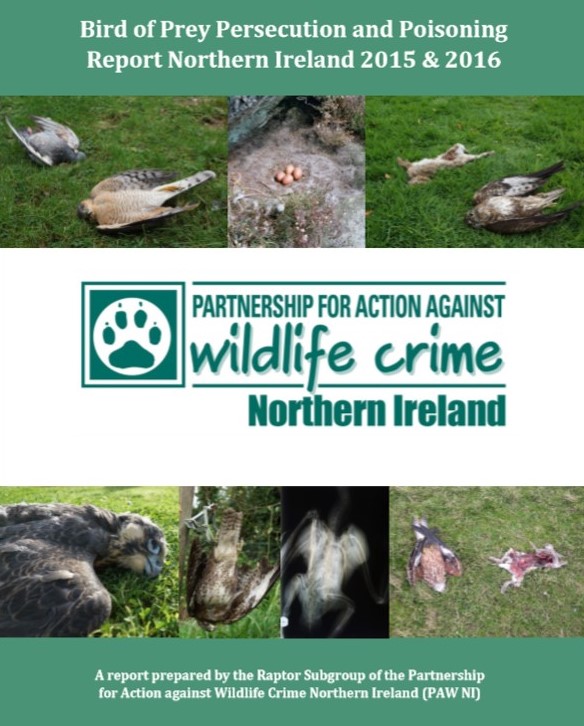
The Partnership for Action against Wildlife Crime Northern Ireland (PAW NI) has today published its latest report on bird of prey persecution 2015-2016.

The report reveals that there were five confirmed illegal persecution incidents reported in 2015 and a further six in 2016, involving the killing of 12 protected birds of prey in Northern Ireland (6 x buzzards, 5 x peregrines, 1 x sparrowhawk). As with every other annual raptor persecution report these figures are probably just the tip of the iceberg.

The report’s lead author, Dr Eimear Rooney (Raptor Officer for the Northern Ireland Raptor Study Group) commented: “This latest persecution report helps us all to understand the scale and distribution of the problem. It is particularly shocking to see new areas appear on the hot-spot maps, showing the issue of raptor persecution to be widespread. It is heart-breaking to think of the deaths of these protected birds but it is particularly shocking to see the continued usage of highly toxic Carbofuran. The PAW NI group will continue to take action to tackle raptor persecution and it is encouraging to see all the partners proactively working together on this report.”

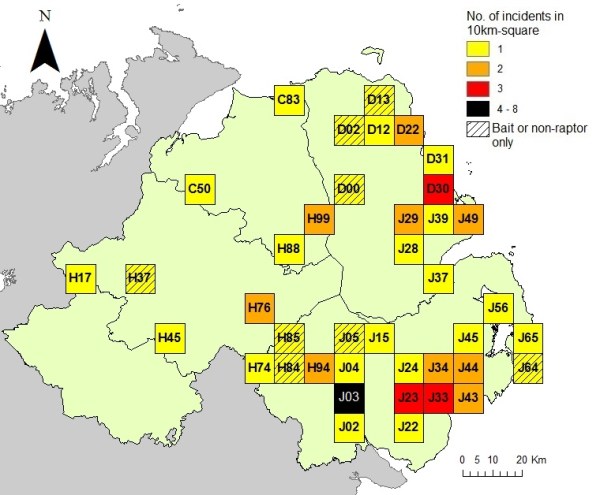
Hotspot map of confirmed incidents of raptor persecution, and poisoned baits & wildlife, reported in Northern Ireland from January 2009-December 2016.

Download the PAW NI report here

Read the PAW NI press release here

On the subject of illegal raptor persecution in Northern Ireland, a 13-year old boy named Dara MacAnulty is doing a 45km sponsored trek in January 2018 to help raise funds for a new raptor satellite-tagging project in Northern Ireland.

Dara is a pretty special young man, passionate about the environment, especially raptors, and he has an exceptional talent for expressing his thoughts – have a read of his blog and you’ll be constantly questioning how a thirteen year old can possibly write so well!

Dara’s fundraising project is off to a good start but he needs more support. If you’ve got a few quid to spare, please consider supporting his efforts HERE. Thanks.

Peregrine found shot in Cambridge

Police are appealing for information after the discovery of a shot peregrine on the outskirts of Cambridge.

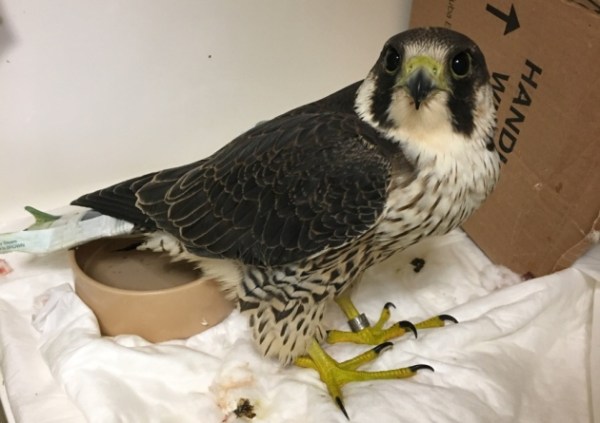
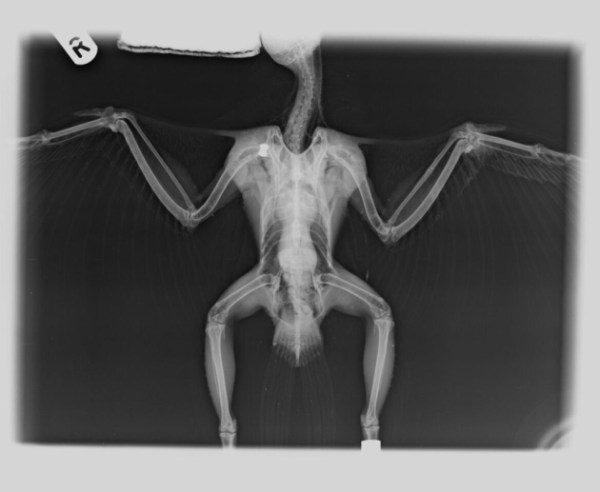
The young bird was discovered injured on 18 September 2017 and was reported to the Raptor Foundation. A veterinary x-ray revealed a pellet from an air rifle lodged in its shoulder and a metal fragment also lodged in its wing, preventing the bird from flying. Vets believe the bird could have been shot up to 10-14 days earlier based on its low weight.

Information from the peregrine’s leg ring revealed this bird fledged from a nest on the outskirts of Cambridge earlier this year.

The peregrine is currently receiving expert care at the Raptor Foundation but it’s not yet known whether it will recover sufficiently to be released back to the wild.

PC Alun Bradshaw of Cambridgeshire Police is urging anyone with information to come forward. Tel 101 and use incident reference number CF0539270917.

Media coverage:

Cambridge Independent News here

BBC News here

RSPB Investigations blog here

ITV news here