The Untouchables strike again: yet another illegally-killed hen harrier

HH Laurie CampbellHere we go again….a female hen harrier has been found dead on moorland near Muirkirk in south west Scotland.

The body was found on Tuesday evening close to a nest containing two live chicks. The cause of death? Police Scotland aren’t saying, surprise surprise.

Det Inspector Graham Duncan of Kilmarnock CID said: “Whilst at this time we cannot divulge how the bird was killed, we do believe it was the result of a criminal act and we need to establish why this has happened“.

For god’s sake, why can’t they say how it was killed? It was probably shot – what’s the point of hiding it, other than to appease an influential landowner? They’ll probably tell us it’s for ‘tactical’ purposes, but they know fine well, as we all do, that the chance of anyone being brought to justice for this crime is zero.

It’s just another example of what appears to be one massive cover-up job.

And what’s that about needing to establish why it’s happened? Is he for real? Perhaps he’d like to read the following article, published in the Herald in 2008(!!) about the illegal killing of hen harriers in the Muirkirk area:

Saturday 22 November 2008

‘Pathetic’ response to disappearing hen harriers: Government failing to stop landowners’ illegal killings.

By Rob Edwards, Environment Editor, Herald Scotland

One of Scotland’s premier birds of prey is facing almost terminal decline because government measures meant to protect it from persecution are failing.

The hen harrier, which used to be a familiar feature of the moorlands, is disappearing so fast that experts fear for its future, and have castigated the government’s wildlife agency, Scottish Natural Heritage (SNH), for its “pathetic” response.

Scottish environment minister Michael Russell has said he is “horrified” by the decline. SNH has defended itself by promising renewed action to crack down on wildlife crime and encourage better behaviour by landowners.

The plight of the hen harrier is nowhere better illustrated than across a vast swathe of southwest Scotland between Kilmarnock, New Cumnock and the M74. The area, known as Muirkirk and North Lowther Uplands, was declared a Special Protection Area in 2003 because of the richness of its hen harrier population.

In the 1990s the area supported 29 breeding females as part of one of the largest populations in Britain. By 2004, however, the number of breeding pairs had dropped to 21. The latest counts have found no more than 14 pairs.

Worse are the statistics for the number of young that the birds have successfully managed to fledge. The figure has plummeted from 44 in 2004 to just five in 2008.

Across Scotland, the number of home ranges occupied by hen harriers has fallen from 417 in 2004 to 264 in 2007, and the number of successfully fledged young from 630 to 383.

The figures were provided to the Sunday Herald by Scottish Raptor Study Groups, a network of dedicated experts who regularly monitors birds of prey across the country. They have few doubts over who is to blame.

Kenneth Sludden, secretary of the South Strathclyde Raptor Study Group, ascribes the “alarming” and “almost terminal” decline in Muirkirk and North Lowther mainly to “a concerted cull of raptors by gamekeepers, condoned by factors and landowners”.

He pointed out that SNH had a statutory duty to protect the birds in the area, and accused it of abjectly failing to do so. “The response from SNH management is cosmetic, condescending and pathetically inadequate,” he said.

According to Sludden, landowners were paid £100,000 or more of taxpayers’ money to help conserve hen harrier habitat. But he said the payments were having little effect, and that the monitoring of the work they were meant to fund was “haphazard, and at worse non-existent”.

Meetings with landowners had “descended into farce” after one apologised for arriving late because he had been “shooting a couple of hen harriers”, Sludden said. A gamekeeper also allegedly expressed hatred for the birds, describing them as “rats with wings”.

SNH’s local area manager, Ross Johnston, said he shared Sludden’s concern about the drop in the number of hen harriers. He promised to work with all those involved to develop a “local action plan” for Muirkirk and North Lowther.

“This will focus on raising awareness of the issues, funding positive action to help the hen harriers, carrying out surveillance, and conducting crime-analysis work and enforcement,” he said.

Environment minister Michael Russell said: “I was horrified to hear about the apparent decline in hen harrier numbers at Muirkirk and would be interested to hear more details about potential reasons as to why this has happened.”

The Royal Society for the Protection of Birds (RSPB) pointed out that across Scotland the hen harrier population was significantly lower than habitat and food supply suggested it ought be. “Human interference, especially illegal killing, is known to be the main factor causing this,” said RSPB Scotland’s Duncan Orr-Ewing.

“The Scottish government, SNH, the police and other agencies must redouble their efforts to identify and prosecute the culprits – while encouraging good land management practice.”

So there we have it. Six years on, it’s the same old story, in the same old area, and absolutely NOTHING has changed. The current Environment Minister, Paul Wheelhouse, is just as appalled as Mike Russell was, and yet…..and yet…and yet…it’s the same old platitudes, same old promises, and the killing goes on and The Untouchables are still evading justice.

Great, isn’t it?

Article about the latest killing can be read on the BBC here.

If you want to make a stand against the illegal killing of hen harriers, please consider signing this e-petition to get driven grouse shooting banned (sign here) and make plans to attend one of the public protests against hen harrier persecution taking place on 10th August (see here).

Photo of the hen harrier by Laurie Campbell.

Alleged ‘coordinated hunt & shooting’ of a hen harrier on a Scottish grouse moor

News has emerged today of an incident that allegedly took place on a grouse moor in the Cairngorms National Park, Aberdeenshire, over a year ago.

According to an RSPB press release, on May 30th 2013, two witnesses contacted Police Scotland about what they described as a “coordinated hunt” of a male hen harrier, which ended with the bird allegedly being shot.

‘They explained watching for almost three hours as two individuals, armed with shotguns, criss-crossed the moor, with at least one other individual directing them by radio from his vehicle to the location of where the bird was seen perched’.

Police Scotland launched an ‘investigation’ but apparently insufficient evidence meant that nobody has been charged.

Read the RSPB press release here.

Article about this incident in The Herald here.

It’s all so depressingly familiar.

The ‘investigation’ probably went something like this:

Police Officer: “Have you been shooting at hen harriers?”

Gamekeeper: “No comment”.

Police Officer: “Ok thanks, sorry to have troubled you”.

The Scottish Gamekeepers’ Association has issued a statement about this alleged incident – it’s exactly what you would expect from them – read it here. Apparently the alleged incident never happened and it’s unfair for the RSPB to blame gamekeepers for killing raptors blah blah blah.

Meanwhile, we’re still waiting to hear whether another gamekeeper, who allegedly killed a hen harrier in Aberdeenshire a year ago, will face prosecution. We blogged about his case being reported to the Crown in January this year (see here). It seems the Crown is taking its time to decide whether to proceed, which is quite surprising when you consider that hen harrier persecution is supposedly a wildlife crime priority. Seven months from the time of the alleged incident to report it to the Fiscal? Another five months (& counting) for the Fiscal to decide whether to proceed with a prosecution? Yep, it’s a real priority, isn’t it? Time is running out though – the Fiscal has until mid-July to decide what to do…

If, like us, you’re sick of all the denials, and all the failed ‘investigations’, and all the incidents that The Untouchables keep getting away with, you can sign this petition to ban driven grouse shooting (background info here, sign it here) and you can make plans to take part in one of several peaceful protests against hen harrier persecution – see here for info.

UPDATE 17 August 2016: Coordinated hunt & shooting of a hen harrier in 2013 – location revealed (here)

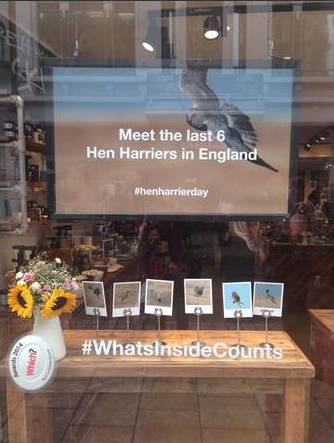
Crikey! England has three active hen harrier nests!

Here’s some good news for a change – England has three active hen harrier nests this year!

Yes, it’s frankly absurd that a miserly three active nests can cause such celebration, especially when you put it in to context (it’s still less than 1% of the potential English population estimate of 330 pairs) but what the hell, three is three and it’s one more than last year, and we all need something to celebrate.

Two of the nests are reported to be on the United Utilities Estate in Bowland, Lancashire, following a two-year absence. The location of the third nest has not been revealed, probably for obvious security reasons.

The success of these nests is still a long way from certain – one is at the egg stage, one has young chicks and the status of the third has not yet been reported, but it looks like everything possible is being done to promote success with 24/7 nest watches, remote cameras and even a spot of diversionary feeding, all in partnership with the RSPB, local landowner, local council and Natural England.

IF any chicks manage to fledge, and that is a capitalised IF, there will be further concerns for the fate of those dispersing youngsters, especially if they decide to fly towards the grouse moors of Yorkshire where many that have gone before them have un-mysteriously ‘disappeared’….but for now, let’s just enjoy the palpable excitement of Blanaid Denman, the RSPB’s Skydancer Project Officer, as she explains the discovery of this year’s nests – read her excellent blog here.

And a big well done to Blanaid and her team, who have had to put up with so much undeserved criticism over the last few years, notably from one particular organisation that should know better.

If you’re new to this blog and you’re wondering why there are only three active hen harrier nests in England when there is the potential for over 300, click here to read some previous blog entries that explain why.

If you want to know what people are doing about this obscene situation (and more to the point, what YOU can do about it), we suggest you read this (and consider signing the petition) and this (and consider turning out to support these protests). Thanks!

Hen harrier photo by Gordon Langsbury.

Want to see what an intensively driven grouse moor looks like?

Then look no further than Chris Townsend’s latest blog about the Eastern Highlands, complete with photographs, here.

As Chris says, “A savaged, stripped, blasted land“.

East Highlands Devastation Chris Townsend

Meanwhile, the Scottish Moorland Group (part of Scottish Land & Estates and chaired by Mr Leadhills himself, Andrew Hopetoun), has submitted a briefing note in preparation for a forthcoming meeting of the Scottish Parliament’s Rural Affairs, Climate Change and Environment Committee. This meeting will take place on Wednesday 4th June and will be discussing the newly-published report from the Land Reform Review Group (we blogged about it here), which places some focus on the future of Scotland’s massive sporting estates.

According to the Scottish Moorland Group’s briefing note, Scottish grouse moors provide the following:

  • Land-based businesses working with nature to contribute more to Scotland’s prosperity; and
  • Responsible stewardship of Scotland’s natural resources delivering more benefits to Scotland’s people.

Yes, that’s really what it says. In fact there are seven whole pages of this guff. You can read it for yourself (pages 23-30): RACCE_Meeting_Papers_04_06_2014

Funnily enough, there’s no mention of the rampant and illegal killing of raptors that has been taking place for decades on these moors, so much so that it is having a population-level impact on several species, especially the golden eagle and the hen harrier. You don’t get population-level effects from a few one-off poisoning incidents – it has to be killing on an industrial scale to have this sort of effect….

New e-petition: ban driven grouse shooting in England

It’s been coming for some time, and now all patience has finally evaporated.

Mark Avery has launched a new e-petition today, calling for a complete ban on driven grouse shooting in England after it has led to the near-extinction of the Hen Harrier as a breeding species in the English uplands.

Hen harrier

We are 100% in support of this e-petition, especially as some of ‘our’ Hen Harriers are known to travel across the political boundary down into England, and vice-versa. It doesn’t matter where you live, be it Scotland, England, Wales, Northern Ireland or the Irish Republic, this issue affects all of our Hen Harriers.

The petition is cleverly timed, too, with the petition’s closing date designed to coincide with the election of the next national government. That’s smart.

Here are Mark’s thoughts on why this e-petition has been created:

Dear friends

I have just launched an e-petition on the No 10 website calling for a ban on driven grouse shooting in England. At the moment it only has me signed up to it so it needs a bit of support. I’m not really very keen on banning things so it has taken a lot of thought to launch this petition. However, after 60 years of complete legal protection, the Hen Harrier is rarer than it was (in England at least) when it got that protection! And after at least a couple of decades of talking about solutions with the moorland community, in which I played a part for a while, the Hen Harrier is almost extinct in England. There are times when one can reach an understanding with ‘the other side’ but this doesn’t appear to be one of them. The systematic, illegal, wholesale removal of a protected bird from our countryside is a disgrace.

Of course, I would be rather surprised if this e-petition led to the banning of driven grouse shooting but I hope it will highlight the issues around this land use (which are far wider than a protected bird of prey) and make it easier for some sort of sensible solution to emerge. But if grouse shooting were banned, we really wouldn’t miss it at all. You are the first to hear of this e-petition – I will be giving it plenty of publicity over the next 12 months. Please don’t sign the e-petition if you don’t have some sympathy with it – that would be wrong. And I’m not going to know, whether any of you have signed it or not – unless, of course, the number of signatures remains at just the one.

If I can add another 9,999 signatures in the next 365 days then the government,  perhaps a different government, will have to respond. If I can add 99,999 signatures, then the issue may be debated in parliament (it would be interesting to hear what Nigel Farage would say!).

Dr Mark Avery

To sign this e-petition, please click HERE

Well done and thank you, Mark, for taking the initiative.

Photo of the nesting Hen Harrier by Mark Hamblin.

Hen Harrier Day: 10th August 2014

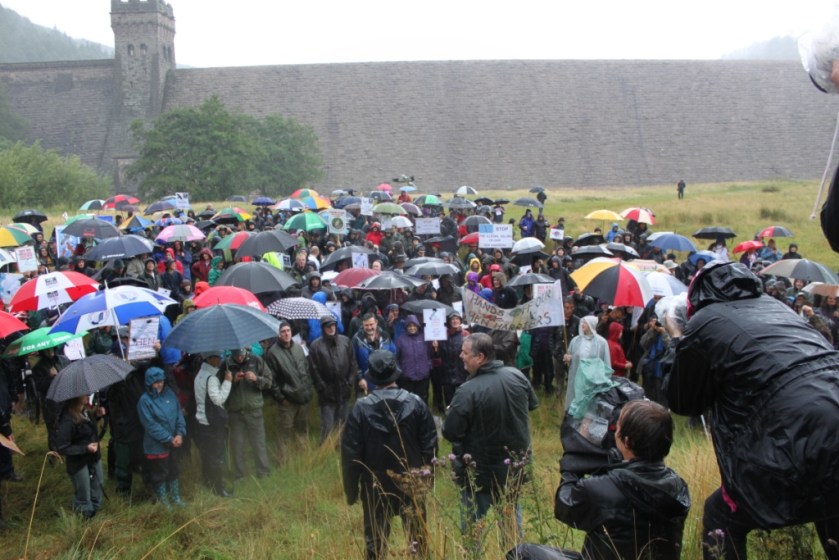
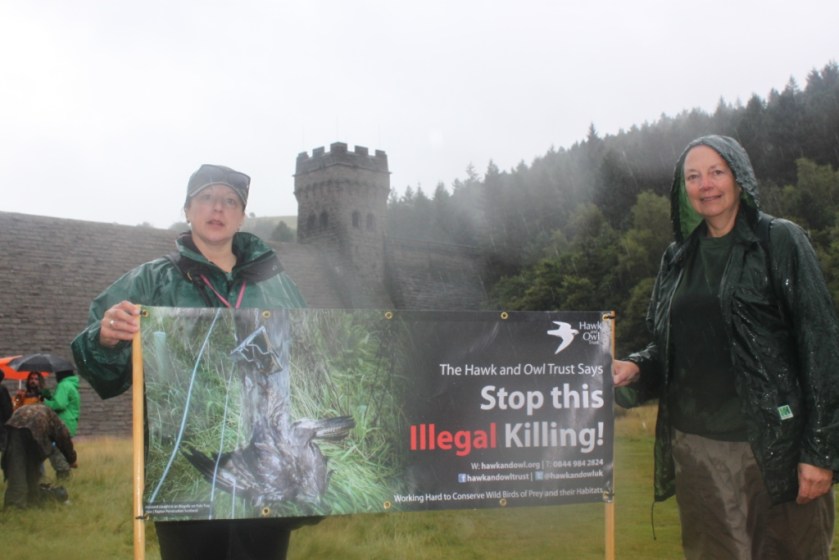
Hen-Harrier-Day-2014cThe concept of Hen Harrier Day was inspired last year by Alan Tilmouth (you can read about it on his blog, here). And it was an inspired move – basically for conservationists to take back the so-called ‘Glorious 12th’ (the opening of the grouse- shooting season) and celebrate this beautiful bird that has virtually been ‘cleansed’ from the grouse moors of northern England (and most grouse moors in Scotland, too).

Last year, Hen Harrier Day was celebrated by hundreds of people using the #HenHarrier hash tag on Twitter and other social media. This year, the campaign is going to be even more visible with a series of planned public protests in the northern uplands.

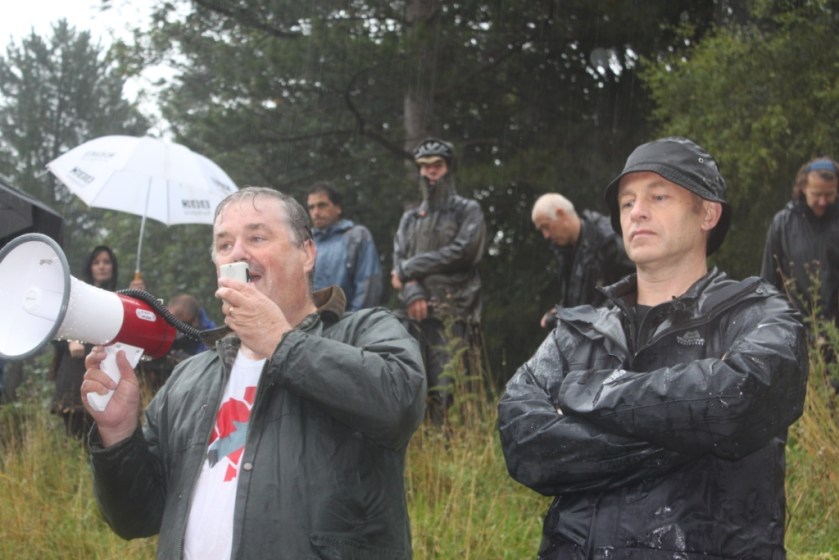
The newly-formed campaign group Birders Against Wildlife Crime (BAWC – of whom Alan Tilmouth is a founding member) has joined forces with Mark Avery to organise four legal, peaceful and media-friendly public protests in four counties where grouse-shooting is a dominant force: Derbyshire, Yorkshire, Cumbria and Northumberland.

The date for the protests has been set as Sunday 10th August 2014. This date was chosen in preference to the inglorious 12th (which falls on a Tues this year) to enable more people to attend.

According to Mark Avery, so far over 200 people have emailed to say they’d like to be involved. This is a fantastic opportunity to make a lot of noise about a subject that has received relatively little media attention in relation to the severity of the situation. The Hen Harrier has virtually been wiped out as a breeding species from England, and is in serious decline in large areas of Scotland (predominantly those areas used for driven grouse shooting).

Enough is enough and it’s time to fight back.

For further information, check out the Hen Harrier Day campaign on the BAWC website here and read today’s BAWC blog with some background info about the campaign here

To express an interest in taking part and to receive updates about the protests, please email Mark Avery: mark@markavery.info

Ross-shire Massacre: local farmers ‘have nothing to hide’

A farmer whose properties have been raided by police as part of the investigation into the Ross-shire Massacre has given an exclusive interview to the BBC (see here).

Ewan Macdonald, on whose land several of the poisoned birds were found, is claiming that he and the local farming community have nothing to hide. The report states that the police have not found anything to link Mr Macdonald to the crimes.

RK5

Mr Macdonald runs his farms in partnership with his brother, Shaun. In 2007, Shaun Macdonald was runner-up in the NFU Scotland Farming & Conservation Award, for ‘superb conservation efforts’, sponsored by the RSPB (see here).

Mr Macdonald is calling for an action group comprising landowners, police and RSPB, ‘to investigate the killings’. He suggests that there could be an innocent explanation for the deaths, such as a virus, or somebody feeding meat to the birds of prey which they do not realise has been contaminated.

Hmm. Interestingly, a number of prominent people from within the game-shooting industry have been making almost identical claims on social media in recent days.

Although the police have not yet publicly named the poison involved, it’s not that difficult to make an educated guess as to its identity, given the speed with which these birds died. An article in the Guardian last week (here) reported that a combination of poisons had been used, and also referred to “baits”. That pretty much rules out a ‘virus’ and unintentional feeding of accidentally contaminated meat then, eh?

Meanwhile, in another region of La-La Land, there are more denials about the extent of raptor persecution in Scotland. A row has broken out following Duncan Orr-Ewing’s (RSPB Scotland) comments in Holyrood magazine about persecution levels being comparable to those of the Victorian era (see earlier blog on this here).

McAdam 1In a BBC News article (here), Doug McAdam, CEO of the landowners’ organisation Scottish Land & Estates seems to have taken on the role of the headmaster: “For Mr Orr Ewing to suggest that wildlife crime is returning to Victorian levels is both irresponsible and untrue. He ought to know better“.

Then in a quite astonishing piece of spin, he goes on to say: “Official statistics in recent years have seen, overall, a downward trend in raptor persecution – even at some points demonstrating record low levels of poisoning incidents“.

Conveniently, by using the words ‘official statistics’ and ‘overall’, he has neatly side-stepped the fact that poisoning incidents doubled in 2013, and had the ‘official statistics’ included the discovery of poisoned baits, then the 36 pre-prepared Carbofuran baits found hidden on Leadhills Estate last year would have pushed the ‘official’ figure somewhat higher.

There’s also some waffle from Adam Smith of the GWCT (Scotland), who claims that “for a variety of reasons hen harriers may not be distributed right across the habitats which are suitable for them [i.e. grouse moors], but their national recovery is clear“.

What Mr Smith conveniently ‘forgot’ to mention was that the government’s own commissioned report on hen harrier conservation (published in 2011) demonstrated unequivocally that illegal persecution was the main reason this species isn’t present on large swathes of suitable habitat (i.e. grouse moors), and oh, the results from the latest national survey (conducted in 2010) show a 20% population decline (in Scotland) from the previous survey in 2004 (see here).

And finally, there’s a quote from Des Thompson of SNH. Surely as a member of the Scottish Government’s statutory conservation agency he’d be wanting to make sure that everyone knows that the damning, copious evidence was indisputable, right? Ah…..(we can’t be bothered to type it out – read the BBC article  if you’re interested in his opinion).

For any of you who’ve had a gut-full of the on-going persecution of our raptors, the game-shooting industry’s on-going denial of any involvement, and the authorities’ on-going and almost complete failure to address the situation, you might be interested in this post on Mark Avery’s blog. Hope to see many of you on or around 12th August 2014.

Raptor poisoning incidents doubled in 2013

The Partnership for Action against Wildlife Crime (PAW Scotland) has published the latest ‘official’ maps showing the distribution of reported raptor persecution incidents in Scotland during 2013.

Remember 2013? That was the government’s much heralded Year of Natural Scotland.

How disgraceful then, to see that reported incidents of raptor poisoning in 2013 doubled from the previous year. The victims this time around included a golden eagle, a red kite and four buzzards. And these were just the ones that were discovered – how many went undiscovered?

Not only did the reported poisoning incidents double, but other methods of illegal persecution were also reported, including disturbance, nest destruction, shooting and trapping, and these incidents numbered nearly three times the number of reported poisoning incidents.

It is clear, once again, that despite all the claims to the contrary, the illegal persecution of birds of prey in Scotland is still taking place with impunity. This has been vividly illustrated by the unfolding news from Ross-shire this week that at least 11 raptors have been found dead, including at least 8 red kites, all strongly suspected to be the victims of illegal poisoning. We fully expect this figure to rise…

This year, for the first time, the maps are now not just restricted to showing reported poisoning incidents; also included are the other types of persecution. This approach has to be applauded, especially as there is a real concern that the raptor killers are changing tactics in an attempt to show that the game-shooting industry is cleaning up its act (i.e. if they can keep poisoning figures low, they can point to this as an indication that persecution is dropping because they know that poisoning is the only method that is regularly mapped and monitored). Not any more, so well done to the Environment Minister for ensuring the other methods are also now ‘officially’ mapped and monitored.

However, the new and improved maps are still not showing the full picture.

For example, the recorded incidents shown on the new maps are limited to those where a dead or dying raptor has also been discovered:

The maps DO NOT show incidents where other birds/animals have been found poisoned with banned substances that have been categorised by SASA as ‘abuse’. Why not?

The maps DO NOT show incidents where an illegally-set trap has been found without an injured or dead raptor in/on it. Why not?

The maps DO NOT show the locations where satellite-tracked raptors have ‘mysteriously disappeared’ without trace. Why not?

But most significantly of all, the maps DO NOT show incidents where poisoned baits have been discovered, and have been categorised by SASA as ‘abuse’, unless a poisoned raptor was also found at the scene. Why not?

In our view, this is the most serious of all the omissions. The Scottish Government explains this away by saying that if there isn’t a dead/dying raptor at the scene then the discovery of poisoned baits can’t be classified as ‘raptor persecution’. Eh? Everybody knows that these poisons are routinely used to target birds of prey. To deliberately leave them off these poisoning maps is astonishing. In whose interest is it to exclude these incidents?

A good example of this sort of incident came last year when a massive stash of pre-prepared poisoned baits was found inside two game bags in woodland next to a grouse moor on Leadhills estate. Leadhills has a long and sorry history of poisoned baits and poisoned raptors having been found there, dating back several decades. A Leadhills gamekeeper was convicted in 2010 for er, laying out a poisoned bait on the moor. There were 36 baits in total in the 2013 stash; chopped up into bite-size pieces and sprinkled with Carbofuran. What on earth does the Government think those baits were going to be used for if not for poisoning raptors?

We think this particular stash of pre-prepared poisoned baits is the largest ever discovered in Scotland. The Leadhills baits are not included in the latest maps. Why? Because no poisoned raptors were found at the scene. Probably because the police failed to conduct any level of search when they turned up, in marked vehicles, to collect the baits.

If we, the BBC and Project Raptor had not reported on that incident, nobody would be any the wiser to it today. The police failed to issue a press release and now we find that the incident has been excluded from the ‘official’ poisoning maps. There’s now no doubt at all that the incident will also be excluded from the Scottish Government’s ‘official’ raptor persecution report that they’ll publish later this year.

‘Discovery of a massive stash of poisoned baits on a sporting estate? Where? When? Nope, we can’t find it in the ‘official’ statistics, you must be mistaken, it can’t have happened’.

Compare this approach with that used by the government/police to report on drug seizures. They regularly report on the recovery of big stashes of heroin, whether the heroin has actually found its way onto the street or not. They don’t say, ‘Oh, we can’t include that in our official stats because we didn’t find a junkie laying next to the stash”, do they? No, it all gets recorded as part of their official drug crimes statistics. What’s so different about the discovery of big stashes of banned poisons that are known to be used to illegally target birds of prey?

So, all in all then, situation normal in Scotland. Reported poisoning incidents have doubled from the previous year, other methods of killing raptors are being utilised with disturbing regularity, the game-shooting industry is still trying to spin the story into something positive (Doug McAdam is quoted in the Scotsman article as saying: ‘Good progress has been made on reducing illegal poisoning incidents’!!), the Scottish Government is still trying to spin the story into something positive (by comparing the 2013 figures with  figures from 2009 [the highest reported poisoning figures in 20 years] rather than focusing on the doubling of reported incidents from 2012 to 2013) and the ‘official’ statistics are still not showing the full scale of the problem.

See you all same place, same time, next year, when, judging by the recent Ross-shire news, once again we’ll be reporting that raptor poisoning incidents have increased over the last year. The only surprise will be by how much.

To view the ‘official’ maps on the PAW Scotland website see here.

Article in the Scotsman ‘Birds of prey spared poison – to be stamped to death’ – see here.

Article on BBC website ‘Number of birds of prey poisoned in Scotland doubles’ – see here.

Article on STV news ‘Rise in number of birds of prey illegally poisoned ‘very worrying” – see here.

DEFRA ignores 10,000+ voices calling for grouse moor licensing

Bowland Betty2
Bowland Betty, a young satellite-tracked hen harrier found shot dead on a North Yorks grouse moor in 2012

Thousands of you will have received a message in your inbox this morning from DEFRA. Thousands of you will not have been the tiniest bit surprised by the content of the message.

DEFRA’s message was one they were forced to send because the e-petition calling for the licensing of grouse moors and gamekeepers had reached the 10,000 signature trigger mark (see here). Thanks to e-petition rules, they were compelled to issue a response. They needn’t have bothered.

For those who haven’t read DEFRA’s response to the e-petition, you can find it here.

In a nutshell, DEFRA thinks that conservation policies for birds of prey are working well (er….Hen Harriers??!) and thus they have no intention of restricting sport shooting in England.

In other words, get lost you plebs and leave us and our chums to get on with our fun.

Their response really shouldn’t come as any surprise to anybody who has been following the Westminster government’s wildlife policies of late. Badgers, buzzards, bees, fracking….

Was it worth our time and effort to sign the petition? Yes, it absolutely was. Anything that raises public awareness of the raptor persecution issue is well worth the time taken to type your name in a box and click ‘send’. Awareness- raising over the next 14 months will be particularly important as England approaches the next General Election in 2015….

Well done again to John Armitage (who started the e-petition) and to the 10,000+ of you prepared to stand alongside him. Onward..

SGA Chairman claims he was “stitched up” by Channel 4 News

Mod Game coverbRemember last month when Channel 4 News did a piece on raptor persecution on grouse moors in Scotland? The one where SGA Chairman Alex Hogg was asked whether gamekeepers were poisoning, shooting and trapping birds of prey and he replied:

No they aren’t. We would dispute that“.

Yes, THAT programme (see here and here for previous blogs).

Well according to the monthly game keeping rag Modern Gamekeeping, Hogg reckons Channel 4 News stitched him up.

According to the article, Hogg said that during a one-hour interview he was asked the question of whether gamekeepers were killing raptors at least half a dozen times. “By the time the interviewer asked it the last time, I was so annoyed I just said ‘No’ and didn’t give a reason“.

Sounds like he stitched himself up, telling a blatant lie that he must have known was going to be challenged with irrefutable evidence that gamekeepers have been convicted for illegally killing raptors, including members of his own organisation.

He also complains about being interviewed last (after Ian Thomson of RSPB Scotland, Dominic Dyer of Care for the Wild, and Logan Steele of the Scottish Raptor Study Group), and therefore having to respond to ‘claims’ [aka given facts] made by the other interviewees, and not being allowed to talk about waders [and presumably the unproven, non-evidenced claims that raptors are wiping them out and therefore keepers should be able to cull raptors].

He also says, “There were also a lot of figures used that were not official figures held by the police or the Scottish Government“. Really? The figures used were based on scientific evidence and official court records, accepted by every person and organisation in the country except for those with a vested interest in the grouse-shooting industry.

He goes on to argue that the finished programme was “extreme”, designed to provoke an emotional response from the public, and didn’t fairly represent what he was trying to say. How you can misrepresent, “No they aren’t. We would dispute that” in response to a simple question of whether gamekeepers are persecuting raptors is a mystery. Did he mean to say, ‘Yes, we are illegally killing raptors’?

All the Hogg nonsense aside, there is a particularly interesting paragraph in the article, presumably written by the rag’s editor. It reads:

Presenter Cordelia Lynch then quoted RSPB figures to claim that hen harriers were ‘close to extinction’ on the grounds that none had bred last year in England – ignoring the fact that the bird is categorised as ‘Least Concern’ worldwide with a global population of more than 1,300,000 and its major threat is stated to be ‘habitat loss’. It is also said to be ‘highly vulnerable to the impacts of potential wind energy developments’ (source: BTO)“.

Now, this claim of the species being classified as ‘Least Concern’ is often trotted out by those trying to downplay the seriousness of the species’ conservation status in the UK. It is an accurate statement in as much as this is what is written on the species’ IUCN Red List entry (from where the quote is taken), with the addition of one important statement conveniently left out by the Modern Gamekeeping editor – under the heading ‘Major Threats’:

“Persecution is an important threat locally, notably on game preserves in Scotland (del Hoyo et al. 1994)”.

The species’ IUCN listing is fine to use if you want to stick to a species’ global conservation status and ignore its European and UK conservation status. If you look at the IUCN global status for the three wader species that Hogg and friends are up in arms about, their listings also give little cause for concern:

Lapwing – listed as Least Concern. Estimated population c. 5,200,000-10,000,000 individuals. Major threats include land use intensification, pollution and hunting. [Note, no mention of raptors being a major threat].

Curlew – listed as Near Threatened. Estimated population c. 77,000-1,065,000 individuals. Major threats include afforestation, agricultural intensification and hunting. [Note, no mention of raptors being a major threat].

Golden Plover – listed as Least Concern. No population estimate given. Major threats include cultivation and afforestation, severe weather conditions and hunting. [Note, no mention of raptors being a major threat].

So, on the basis of suggesting that the hen harrier’s conservation status is of ‘least concern’ on a global scale [and therefore why all the fuss of losing an entire breeding population in England?], the statement is equally as applicable to those three wader species, right? We shouldn’t be concerned about any of them because on a global scale they’re all doing just fine, right?

Wrong.

Fortunately, government and non-governmental organisations are a lot more clued in and understand the concept, and importance, of national, regional and local biodiversity. Indeed, the Westminster and Scottish Governments have a statutory responsibility for ensuring that national biodiversity targets are met and maintained (although you wouldn’t know it by their continuing failure to address illegal raptor persecution). Rather than use the broad-based IUCN Red List as guidance, they look to more detailed and relevant assessments such as the UK ‘Birds of Conservation Concern’ scientific review (see here). In this document, the hen harrier and lapwing are red listed, and the golden plover and curlew are amber listed.

It’s quite telling, isn’t it, that those with a vested interest in grouse-shooting should continue to not only deny their involvement in the catastrophic loss of an entire breeding population (hen harriers in England), but also continue to downplay its conservation significance.