RSPB Investigations Team: 1; Countryside Alliance: 0

Last October, the Countryside Alliance launched a scathing attack on the RSPB’s latest annual Birdcrime Report (Birdcrime 2013). The link to their article has mysteriously ‘disappeared’ from their website, so here’s a copy we took:

Thursday, 30 October 2014, Countryside Alliance website:

Countryside Alliance Director for Shooting Adrian Blackmore writes: The RSPB’s Birdcrime Report for 2013, which was published on Thursday 30th October 2014, provides a summary of the offences against wildlife legislation that were reported to the RSPB in 2013. It should be noted that in 2009, the RSPB took the decision to focus on bird crime that affected species of high conservation concern, and crime that it regarded as serious and organized. The figures supplied do not therefore give a total figure for wild bird crime in the UK in 2013, and they are not comparable with figures provided for years prior to 2009.

As is becoming increasingly the case, the report makes sweeping allegations against the shooting community, and grouse shooting in particular – allegations that are not consistent with the evidence provided. It claims that activity on grouse moors is having a serious impact on some of our most charismatic upland birds, and that current measures have failed to find a solution. The report claims that “over the years, a steady stream of grouse moor gamekeepers have been prosecuted for raptor persecution crimes”, and lists each of the offences for which those gamekeepers have been found guilty between 2001 and 2013. Over that 13 year period, 20 gamekeepers employed on grouse moors (an average of 1.5 per year) are shown as having been prosecuted, but according to the RSPB’s birdcrime reports for each of those years, the total number of individual prosecutions involving wild birds totalled 526 individuals. Given that grouse moor keepers therefore represent a mere 4% of those prosecuted in the courts, one can only wonder why the RSPB should choose not to focus on the occupations of the other 96%.

The RSPB also states in the report that “it believes it is the shooting industry as a whole, not individual gamekeepers, that is primarily responsible for raptor persecution in the UK”. It has therefore repeated its call for: political parties to introduce licensing of driven grouse shooting after the election; the introduction of an offence of vicarious liability in England; increasing the penalties available to courts for wildlife offences; and for game shooting to be regulated with an option to withdraw the ‘right’ of an individual to shoot game or businesses to supply shooting services for a fixed period following conviction for a wildlife or environmental offence.

For the third year running, the RSPB has included a piece of research in its Birdcrime Report that is intentionally misleading. Both the 2011 and 2012 reports covered in detail a research paper which claimed that peregrines on or close to intensive grouse moor areas bred much less successfully than those in other habitats, and that persecution was the reason for this. That same research paper is covered again in the 2013 Birdcrime report. The research in question used data from 1990 – 2006 and at the time it was published a representation was made to the National Wildlife Crime Unit which resulted in a caveat being circulated to all Police Wildlife Crime Officers in the UK explaining that the data used in the paper was out of date, and that in using such information there was danger that the research paper suggested a current situation. For the RSPB is well aware of that caveat, and to include this once again makes a complete mockery of its previously stated belief that reliable data are essential to monitoring the extent of wildlife crime.

Summary of statistics

341 reported incidents of illegal persecution in 2013 – a reduction of 24% since 2012 when there were 446 reported incidents, and well below the previous 4 year average of 573.

164 reported incidents of the shooting and destruction of Birds of Prey which included the confirmed shooting of 49 individual birds of which only 7 took place in counties associated with grouse shooting in the North of England.

74 reports of poisoning incidents involving the confirmed poisoning of 58 Birds of Prey of which only 2 occurred in counties in the North of England where grouse shooting occurs.

In total, there were 125 confirmed incidents of illegal persecution against Birds of Prey in 2013. Just 18 of those occurred in counties in the North of England where grouse shooting takes place, and none of those have been linked to grouse shooting.

Of the 32 individual prosecutions involving wild birds in 2013, only 6 individuals were game keepers, and one of those was found not guilty. Therefore, of those prosecuted, only 16% were gamekeepers and only 6% of the 32 cases involved birds (buzzards) that had been killed. Only one of the cases concerned an upland keeper employed by an estate with grouse shooting interests, and that case did not involve the destruction of a bird of prey.

Of the 14 incidents of nest robberies reported in 2013, only 3 were confirmed, one of which involved the robbery of at least 50 little tern nests.

There is no evidence to support the RSPB’s allegation of persecution of birds of prey by those involved in grouse shooting. The RSPB’s Birdcrime Reports show that between 2001 and 2013 there were 526 individual prosecutions involving wild birds, and according to its 2013 report only 20 of those individuals (4%) were actually gamekeepers employed on grouse moors.

Land managed for grouse shooting accounts for just 1/5th of the uplands of England and Wales.

The populations of almost all our birds of prey are at their highest levels since record began, and only the hen harrier and the white-tailed eagle are red listed as species of conservation concern.

REPORTED INCIDENTS IN 2013

In 2013, the RSPB received 341 reported incidents of wild bird crime in the UK, the lowest figure since 2009. This represents a reduction of 24% since 2012 when there were 446 reported incidents, and well below the previous 4 year average of 573.

SHOOTING INCIDENTS

As in previous years, the, the most commonly reported offence in 2013 was the shooting and destruction of birds of prey, with 164 reported incidents in 2013. Of these, the shooting of 49 birds of prey are shown in the report as being confirmed, of which 7 were in counties of the North of England where grouse shooting takes place. The remaining 23 incidents that were confirmed in England occurred elsewhere.

POISON ABUSE INCIDENTS

During 2013 there were 74 reports of poisoning incidents involving the confirmed poisoning of 58 Birds of Prey of which only 2 occurred in counties in the North of England where grouse shooting takes place:

ILLEGAL TRAPPING AND NEST DESTRUCTION

There were 18 confirmed incidents of illegal trapping of birds of prey in 2013, and no confirmed cases of nest destructions, compared to 2012 when there had been 10 incidents of nests being destroyed. Although this figure of 18 is an improvement on that for 2012, it is still above the previous 4 year average of 14 incidents.

WILD BIRD RELATED PROSECUTIONS

In 2013 there were 32 individual prosecutions involving wild birds. Only 6 of those individuals were game keepers, and one of those was found not guilty. Therefore, of those prosecuted, only 16% were gamekeepers and only 6% of the 32 cases involved birds (buzzards) that had been killed. Only one of the cases concerned an upland keeper employed by an estate with grouse shooting interests, and that case did not involve the destruction of a bird of prey:

CONCLUSION

It is clear from its 2013 Birdcrime Report that the RSPB is continuing in its efforts to promote an anti-shooting agenda, especially against driven grouse shooting. It has less to do with aconcern about birds and more about ideology and a political agenda. Like reports of recent years, the 2013 Birdcrime Report is deliberately misleading, and many readers will invariably take at face value the claims and accusations that have been made. Many of these are serious, and made without the necessary evidence with which to substantiate them.

ENDS

The reason, perhaps, this article has mysteriously ‘disappeared’ from the CA’s website can probably be explained by the following…..

The Countryside Alliance used this article to lodge a complaint against the RSPB with the Charity Commission. The CA’s claim was based on this:

The report [Birdcrime 2013] makes sweeping allegations against the shooting community, and grouse shooting in particular – allegations that are not consistent with the evidence provided [in Birdcrime 2013]”.

The Charity Commission was obliged to investigate the CA’s complaint that the RSPB had ‘mis-used’ data and had made ‘un-founded allegations’ and they have now issued their verdict – they have rejected every single complaint made by the Countryside Alliance against the RSPB.

Strangely, although the Charity Commission’s response letter was sent to the CA on 7th January 2015, the findings have not appeared on the CA’s website. Can’t think why. Anyway, here’s a copy for those who want to read it – it’s really rather good:

Charity Commission response to Countryside Alliance complaint re RSPB Jan 2015

Not to be deterred by making yet another ‘embarrassing blunder‘, this week the Countryside Alliance wrote a response to the sentencing of goshawk-bludgeoning gamekeeper George Mutch, sent to jail for four months for his raptor-killing crimes. The CA’s response starts off well, condemning Mutch’s actions, but then it all goes badly wrong. According to the CA, it’s the RSPB’s ‘wider policy’ that is driving the continued illegal persecution of raptors!

You couldn’t make this stuff up. Why is it so hard for the game-shooting industry to take responsibility for their actions instead of continually trying (and failing) to discredit the RSPB? Is it because they have no intention whatsoever of addressing the widespread criminality within their ranks and so they churn out all this anti-RSPB rhetoric as a distraction technique? Nothing to do with the RSPB being so effective at exposing and documenting the game-shooting industry’s crimes, of course.

Expect more ludicrous attacks on the RSPB over the coming weeks and months….a predictable response from an industry unable, or unwilling, to self-regulate and undoubtedly feeling the pressure of scrutiny and demand for change from an increasingly well-informed public.

The link to the CA’s latest absurd accusation can be found here, but just in case it also mysteriously ‘disappears’, here’s the full text. Enjoy!

Countryside Alliance website

16th January 2015

‘Shooting, livelihoods and raptors’

The illegal killing of birds of prey is about the most selfish crime it is possible to commit because even if there are short term benefits for the preservation of game (and those benefits are as likely to be perceived as real) they will always be outweighed by the long term damage to the shooting industry as a whole.

That is why the Alliance has no hesitation in condemning an Aberdeenshire gamekeeper who was sentenced to four months in prison earlier this week for four offences including the killing of a goshawk.

Raptors as a whole may be the biggest success story in British birds with numbers having increased hugely as a result of legal protection and reintroduction, but some species remain rare and killing them for the sake of providing more birds to shoot is never going to be anything but a political and PR disaster.

The RSPB collected the evidence which convicted that gamekeeper and was understandably pleased with the outcome of the case. Whilst its actions in relation to individual cases like this are entirely justified the Society must, however, consider whether its wider policy is actually helping to perpetuate, rather than reduce, illegal persecution.

This might sound a strange statement, but it is worth considering the RSPB’s own history and how other wildlife conflicts have been resolved. The RSPB was founded by a group of women appalled by the trade in exotic feathers for ladies’ hats. Its first campaign was not aimed at prosecuting the people killing birds, but at removing the causes of persecution, which in that case was the high value of feathers. By reducing demand for rare birds it removed the economic imperative for persecution.

One argument might be to simply ban shooting and with it one of the main reasons someone might have for killing a raptor. However, that policy would create far greater conflict and remove the many positive environmental, economic and social benefits of shooting which far outweigh the negatives of any associated raptor killing.

Another, we would argue far more logical, approach would be to consider the causes of any illegal raptor killing and how the drivers for that activity could be removed. In two areas in particular the RSPB seems unwilling to consider proposals which tackle the causes of persecution, as well as persecution itself.

Firstly by refusing to endorse proposals for hen harrier ‘brood management’ which would give assurances to upland keepers that colonies of hen harriers could not make their moors unviable and their jobs redundant. And secondly by opposing absolutely any management, even non-lethal, of the burgeoning buzzard population even if they are having a significant economic impact on game shooting.

We are not suggesting that these management practices must take place, but surely an agreement that they could be used where absolutely necessary to protect livelihoods would make it less likely that people would make the wrong decision about illegal killing?

END

Useful guide to aid harrier identification (author unknown)

HH ID guide

UPDATE: Have just been told this is the creative genius of @YOLObirder

Status of hen harriers in Scotland

The plight of the English hen harrier population has been well-documented, spiralling to near breeding extinction in recent years thanks to the criminals within the grouse-shooting industry who continue to show a zero tolerance policy for this species when it tries to nest on their grossly mis-managed grouse moors.

But what of the Scottish population? There hasn’t been as much focus on this, and some of what has been written has been immensely misleading.

One common misconception is that ‘Scottish hen harriers are doing ok, because there are hundreds of them as opposed to the single-figure breeding attempts in England, right?’ This false declaration is usually trotted out by representatives of the grouse-shooting industry, presumably in an attempt to cover up what is actually happening on many Scottish grouse moors.

Take the GWCT for example. They have a web page, written in 2014, called The Status of Hen Harriers in Scotland (see here). They paint a rosy picture and say that in 2004, hen harriers were nationally in favourable conservation status in Scotland, based on the results of the 2004 national hen harrier survey. The 2004 survey did indeed show an increase in the overall hen harrier breeding population (since the previous national survey in 1998), although this national increase masked the finer details of local scale: those increases were restricted solely to areas in the west and far north (i.e. areas without driven grouse moors) whereas breeders in the east and south (i.e. areas of intensively-managed grouse moors) had suffered significant declines. Sound familiar? It should – it’s exactly the same scenario for the golden eagle (e.g. see here).

Not only did the GWCT article fail to acknowledge the 2004 regional declines associated with driven grouse moors, but it also glossed over the results of the more recent 2010 national survey. Why? Well, perhaps because the 2010 national survey showed an overall decline of 20% in the Scottish hen harrier breeding population, and the species was only considered to be in favourable conservation status in five of 20 Scottish regions. Unsurprisingly, none of those five regions are in areas managed for driven grouse shooting.

For those of you who prefer to source your information from a more reliable authority, you’d do well to read this article, written by one of Scotland’s foremost hen harrier experts.

For an even more detailed view, the standard work to consult is the 2011 Hen Harrier Conservation Framework, written by leading scientists in the field. This report has since been updated although we’re still waiting for SNH to publish it, more than a year since it was submitted.

This report sets out very clearly what the main issue is: Illegal persecution is the biggest single factor affecting hen harriers and it is having a dramatic impact on the population, not only in northern England but also in Scotland:

  • The potential national hen harrier population in Scotland is estimated (conservatively) to be within the range 1467-1790 pairs.
  • The current national hen harrier population in Scotland as recorded during the most recent (2010) national survey is 505 pairs, more than a 20% decline from the numbers recorded during the 2004 national survey.
  • In Scotland, the hen harrier has a favourable conservation status in only five of 20 regions.
  • Two main constraints were identified: illegal persecution, and in one region, prey shortages.
  • The species is particularly unsuccessful in the Central Highlands, Cairngorm Massif, Northeast Glens, Western Southern Uplands and the Border Hills. There is strong evidence in these grouse moor regions that illegal persecution is causing the failure of a majority of breeding attempts.

The next national hen harrier survey will take place in 2016. We look forward to seeing the results.

In October 2014, a new five-year project was launched, ‘aiming to achieve a secure and sustainable future’ for hen harriers in northern England and parts of Scotland (we blogged about it here). The project website has just been launched (see here) – just an outline at the moment but more detail will be added as the work gets underway. Take a look at the map they’ve published showing the status of breeding hen harriers in seven Special Protection Areas (SPAs) in Scotland and northern England. These SPAs were designated specifically for hen harriers. Not one of them is functioning as it should.

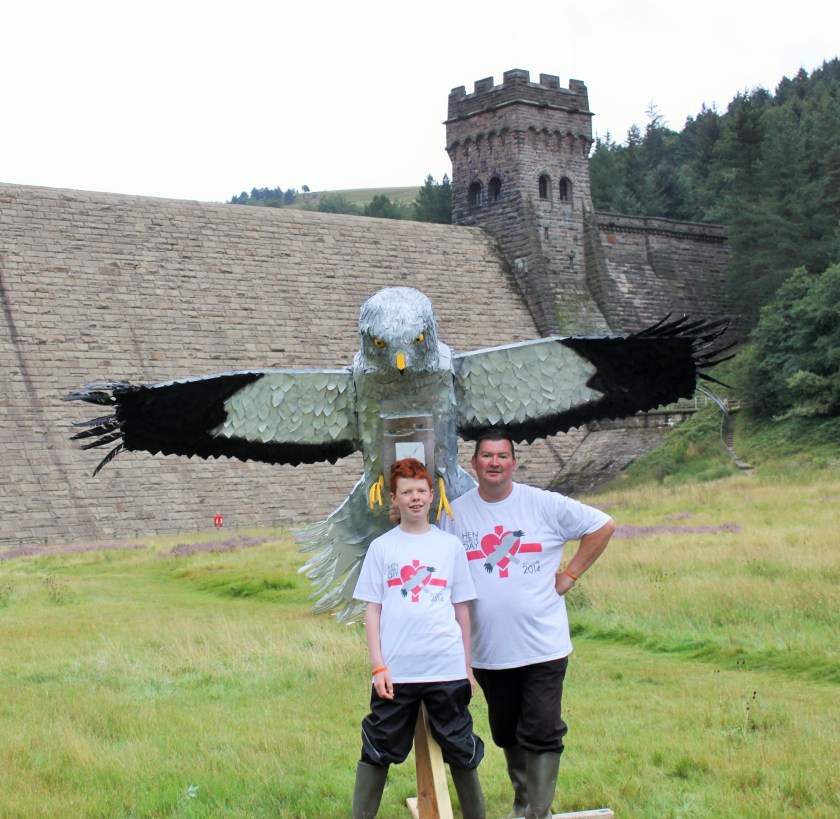
2014 saw the launch of the first Hen Harrier Day, initiated by the campaign group Birders Against Wildlife Crime, which included a large social media campaign and a number of public demonstrations in England. Unfortunately, Scotland missed a trick by not holding its own demonstration, although a number of us did travel to demos in Northumberland and Derbyshire to show solidarity and support. This was appropriate given that ‘English’ hen harriers regularly visit Scotland, and ‘Scottish’ hen harriers regularly visit England. They also visit Northern Ireland, the Irish Republic, the Isle of Man and Wales, and vice versa. We shouldn’t view the hen harrier issue as just an English problem, because it isn’t; it’s a problem throughout these isles and we need to stand united against it.

Hen Harrier Day will take place again this year (Sunday 9th August) and this time there will be Scotland-based demonstrations. We’re not directly involved in the organisation of these events but we’ll post information here as plans develop.

HH Day orig2

“Vicious killers”

vicious killersSometimes, we despair.

This is one of those times.

From yesterday’s Farming Life, written by Dan Kinney:

At last I see some green shoot of common sense about hen harriers, that most vicious of raptors which, when hunting, quarter moorland like pointers or setters, a mere couple of feet above the heather……..”

Full article here

We could mock the author, we could bemoan the lack of education, we could laugh at the 19th Century attitude, we could try to reason against the prejudice. We could do all these things, but the most useful thing we can do is to join the Golden Eagle Trust, a charitable organisation dedicated to the restoration of Ireland’s lost birds. This is the group behind the successful reintroduction to the Irish Republic of the golden eagle, the white-tailed eagle and the red kite, and who are working hard to protect other species, including the beleaguered hen harrier.

Twenty Euros will pay for a year’s membership and help this small team to continue their vitally important work. And God knows it’s needed. Please support them and buy your membership online here

Photo from Peter McAllister (@petermc0104)

News round up

news 2There’s been a lot of interesting articles in the news media over the last few days. Unfortunately we’ve been too busy to blog about these in details so here’s a quick round up:

Balmoral’s nature award dismissed as a PR stunt

Balmoral, the Queen’s estate in Aberdeenshire, has won a “coveted award” (according to SLE) that recognises ‘exceptional work on game and wildlife management’. The estate has received accreditation under the Wildlife Estates Scotland’ (WES) banner – a scheme that was set up by Scottish landowners’ representative body Scottish Land & Estates in 2010, suspiciously timed to coincide with the Scottish Government’s then consideration of introducing estate licensing under the WANE Act (we blogged about it here).

However, WES has been described by environmentalists as “a mutual admiration society” and “little more than a public relations campaign that lacks credibility”. Balmoral’s award is difficult to understand given that five natural features on the estate (ancient Caledonian pine forest, bog woodland, blanket bog, dry heaths and wet heathland) have been categorised as being in ‘unfavourable condition’ by SNH.

Full story on Rob Edward’s website here.

If Prince William wants to be a conservationist then he must stop shooting

Simon Barnes has written an excellent piece in the Independent about Prince William’s recent statement on his visit to the US about zero tolerance on international wildlife crime, particularly elephant & rhino poaching. Barnes puts in to words what many of us are thinking – that if Prince William wants to be a credible ambassador for wildlife conservation (which would obviously be a good thing) then he must first address the criminality associated with driven grouse shooting in the UK (a pursuit in which he and other Royals participate). Full story in the Independent here.

Sporting estates criticised for failing wildlife in the Cairngorms

The Cairngorms National Park Authority has been reviewing moorland management practices within the Park and has highlighted many issues with which it’s unhappy. These issues are largely associated with the type of intensive management implemented by landowners to increase the number of grouse that can be shot each season. They include the illegal killing of birds of prey (an issue on which the CNPA spoke out against earlier this year, see here), the mass culling of mountain hares, bulldozing too many hill tracks, erecting fences across hillsides, and poorly managed heather burning.

The CNPA is concerned about the cumulative effects of these practices and their effect on wildlife within the Park. Grouse moor management is a dominant land use within the park, currently covering 44% of the land area. The CNPA suggests that this figure may need to be reduced in order to protect wildlife.

Full story, including a link to the CNPA’s report, on Rob Edward’s website here.

Britain would be big enough for the hen harrier and the grouse if it weren’t for politics

Charles Moore (not to be confused with Charlie Moores from Birders Against Wildlife Crime) has written a dull piece in the Telegraph which is basically just him slating the RSPB (yawn) and essentially claiming that hen harriers would be doing just fine if only the RSPB would leave the discussion re: brood management / shut up / go away. Interestingly, he cites some comments from a former RSPB employee (Alex Stoddart) to try and justify his criticism of the RSPB. He ‘forgot’ to mention that said former RSPB employee just happens to now work as the Ass Director of the Scottish Association for Country Sports (SACS) and who seems to have a bag of chips and a bottle of ketchup on his shoulder when it comes to the RSPB and other conservation charities – see here.

Unsurprisingly, it turns out that Charles Moore likes a spot of grouse shooting – another fact he ‘forgot’ to mention in his article.

For anyone interested, Martin Harper (Conservation Director RSPB) has responded to Moore’s criticisms here.

Hare coursers’ cars are crushed after being seized by a court

An article on the Cambridge News website informs us that police seized two cars that were being used by hare coursers and that the vehicles have now been crushed after being confiscated by the court. Wouldn’t it be great if this tactic was applied to the vehicles of raptor killers….there’d be a few Landrovers and quad bikes heading for the crusher…

Groups call for an end to the vilification of the hen harrier

BirdWatch Ireland and the Irish Raptor Study Group have joined forces to call for an end to the “continuing vilification” of the hen harrier.

These conservation groups say they are deeply concerned over mounting pressures from the farming community to lift a ban on afforestation within the designated Special Protection Area (SPA) network for hen harriers.

They said: “Recent comments by the Minister of State at the Department of Agriculture, Tom Hayes, indicated support for further afforestation in these protected areas, which would be an environmental disaster and have a devastating effect on the national hen harrier population, which is already in decline“.

Full story in the Irish Examiner here.

A recent parliamentary question and answer session on this subject can be read here.

Last year, Councillor John Sheahan of Limerick County Council caused public uproar when he called for ‘open season’ on hen harriers if restrictions in Hen Harrier SPAs were not lifted (see here).

The hen harrier is a species of high conservation concern in Ireland (just as it is elsewhere in the UK) and is fully protected under regional, national and international legislation.

Hen harrier photograph by Gordon Langsbury

Last night’s Landward programme: putting lipstick on a pig

Last night’s BBC 2 (Scotland) Landward programme was all about driven grouse shooting. The programme had been billed as follows:

‘Grouse shooting brings millions of pounds into the Scottish rural economy, yet it is controversial. Dougie Vipond and Sarah Mack go on a shoot to see the sport first-hand, while Euan McIlwriath investigates the impact of grouse moors on the environment’.

On that basis, we expected a well-balanced programme exploring the detail of those ‘controversies’ with input from both ‘sides’. What we got was a BBC whitewash with a quite astonishing level of presentational bias. Not what we expected from a team who are all-too-familiar with raptor persecution, especially after their programme a couple of years ago which produced the classic Alex Hogg quote lie: “Professional gamekeepers do not poison raptors“.

You only have to look at the line-up of interviewees on last night’s programme to see that something was amiss:

Robert Jamieson, owner of gunmakers James Crockhart & Son, Blairgowrie.

Andrew Farquharson, owner of Finzean Estate, Aberdeenshire.

Allan ‘Hedge’ Shand, head gamekeeper of Finzean Estate.

Charlie Thorburn, gungog trainer from Mordor Gundogs.

Robert Rattray, sporting letting agent from CKD Galbraith.

Robbie Kernahan from SNH’s licensing department.

Tim (Kim) Baynes, Moorland Group Director, Scottish Land & Estates.

How many of these individuals would you expect to provide a fully comprehensive commentary on the dirty realities of driven grouse shooting? It’s almost as if the programme had been written and directed by the SGA!

We heard about the history of driven grouse shooting, how it’s the ‘Sport of Kings’, how much a decent gun would cost, how it’s a key part of the Scottish rural economy, how good it is for supporting rural jobs and how it’s still considered a ‘prestigious field sport’. You’d expect as much from people with a vested interest in maintaining this filthy industry. But what about the other side of the story?

We did hear about habitat management on the Finzean Estate (from the estate owner and his head gamekeeper) and we were told that this is an award-winning estate because it won this year’s Golden Plover Award for Moorland Managagement. What wasn’t said was that this award was given by two industry organisations –  The Heather Trust and GWCT – two organisations who clearly don’t have a vested interest in promoting driven grouse shooting. Ahem.

But we didn’t hear anything about the environmental implications of driven grouse moor management, such as the effects of intensive heather burning, building tracks across the moorland, putting in car parks on the moors, installing grouse butts on the moors, the increased risk of flooding resulting from grouse moor management, the wholesale (legal) indiscriminate slaughter of hundreds of thousands of native creatures that could conceivably eat an egg or a grouse, including foxes, stoats, weasels, crows etc, nor the unregulated massacring of mountain hares for no good reason whatsoever (see here here and here). Why not?

And what about raptor persecution? Well, poisoning did get a brief mention, although there was no indication about the scale of illegal killing associated with driven grouse moors in Scotland (and northern England). Why not?

The head gamekeeper was asked what predators he had on the hill at Finzean, presumably in an attempt to show that this estate was predator-friendly. He mentioned foxes and hoodies, but ‘forgot’ to mention that they’re not tolerated and are routinely killed year-round, as they are on all driven grouse moors. He also mentioned a few raptor species, including merlin, ‘eagles’ and peregrine. Now that was interesting. Finzean does indeed have some raptor species, including a pair of red kites and golden eagles. But there’s having eagles and then there’s having eagles. The Finzean eagles aren’t doing very well. Their breeding attempts are routinely unsuccessful and there is a suspiciously regular turn-over of breeding birds at this site. Why is that? Golden eagles tend to be relatively sedentary once they’ve settled in a breeding territory, and only rarely do they move or change partner. The odd turn-over event is to be expected – if one of the pair dies (natural mortality) or if a nearby ‘superior’ breeding site becomes available – but these events are relatively rare and certainly couldn’t be described as a ‘regular’ behaviour, and yet territorial eagles are turning over with regularity at Finzean. Hmm.

And what about hen harriers? Why didn’t the presenter ask about those? We would have liked to have heard the head keeper’s comments on that. Finzean did used to have breeding hen harriers, but they’re not there any more and haven’t been for some time. Why not?

There was a short piece on the new restriction on General Licences that SNH may choose to use if they believe, on the balance of probabilities, that illegal raptor persecution has taken place. However, there was no mention of the ‘get-out clause‘ that would allow an estate to simply by-pass the imposed restriction and get an individual licence instead.

All in all then, a pretty god-awful, poorly-researched programme that failed to highlight the on-going environmental concerns associated with driven grouse shooting, and instead tried to portray it as something it really isn’t. You can put lipstick on a pig, but it’s still a pig.

As it’s the awards season, we might have to consider starting our own – the Lip-sticked Pig Awards for Grouse Moor Management. This programme would be a contender for best documentary of the year.

If you missed the programme, you can watch it in BBC iPlayer for the next 29 days here

Last night’s Countryfile

Last night’s Countryfile featured a section on raptor persecution and was actually fairly well balanced, in terms of the amount of air time given to both ‘sides’ of the debate.

First up was Bob Elliot, the RSPB’s Head of Investigations. He talked about the effect of persecution on certain raptor populations and the need for better legislation, vicarious liability, estate licensing and greater penalties for those convicted of illegally killing raptors. It was a well-delivered performance.

The presenter, Tom Heap, claimed that there is “some evidence that vicarious liability has reduced the illegal killings of birds of prey” in Scotland. Rubbish. That’s what the landowners would like everyone to believe because then it makes it more difficult for the Government to introduce even further measures against them. As the (now former) Environment Minister Paul Wheelhouse said recently, there isn’t any evidence to suggest that vicarious liability  has reduced raptor persecution. Indeed, the latest Government statistics show that raptor killing is actually back on the increase in Scotland, which demonstrates that so far, vicarious liability is not having the deterrent effect that we’d all like.

Next we heard from a poor guy whose dog had died after it had minimal contact with a poisoned bait whilst out on a walk on a Yorkshire moor. This was followed by North Yorkshire Police Wildlife Crime Officer Gareth Jones, who discussed another poisoning incident he’d investigated that involved a poisoned fox, crow and two red kites.  This was a bit strange because he mentioned that a local gamekeeper had put out a poisoned rabbit bait to target a fox that had been eating his pheasant poults and that the keeeper hadn’t intended to kill the kites, only the fox. But then we heard that there wasn’t enough evidence to make a ‘definitive link’ to the culprit and so there wasn’t a prosecution. Eh? If the keeper had admitted putting out the bait to target a fox, surely that’s the link? If the keeper hadn’t admitted targeting the fox, how did the Police know the kites hadn’t been deliberately targeted? Very odd.

Duncan Thomas BASCNext up was Duncan Thomas from BASC. What he had to say was quite interesting, but not as interesting as what he didn’t say (or maybe he did say and it was just edited out). For context, it’s worth bearing in mind that before joining the BASC payroll, Mr Thomas was a Police Wildlife Crime Liaison Officer with Lancashire Constabulary, and his patch included the Forest of Bowland, a well-known raptor persecution hotspot.

We were told that he’d been involved with game-bird shooting at Bowland for 20 years and he was filmed waxing lyrical about one of this year’s successful hen harrier nests in Bowland. But no mention of the ‘disappearance’ of two of the nest’s sat-tagged fledglings, Sky and Hope, both vanishing without trace on the Bowland moors just a few weeks after fledging (see here and here).

When asked about the RSPB’s call for game-shooting leaders to acknowledge the role of gamekeepers in raptor persecution, Mr Thomas said:

I think that some of the press releases are quite unfair and they don’t represent a true and accurate picture of what goes on here. If you show me direct evidence that leads to the conviction of a gamekeeper for doing that then those people are not welcome within our community. All the shooting organisations, their stance is very clear, we would expel them from any of our organisations“.

So here we have a former police officer claiming that the only convincing measure of criminal activity is a conviction! On this basis, the UK should be considered as a virtually crime-free zone. All those murders, rapes, assaults, burglaries etc for which nobody has been convicted simply didn’t happen because, er, there weren’t any convictions.

Oh, and all that guff about convicted gamekeepers not being welcome….that’s simply untrue. A classic example is the gamekeeper who was convicted for having a banned poison in his vehicle, home and pheasant pen, and yet went on to enjoy the support of the National Gamekeepers’ Organisation who helped him to apply successfully for licenses to destroy buzzard nests and eggs to protect his pheasants!

Mr Thomas was then asked how he felt “when the RSPB seems to be tarring the whole shooting industry“. He said:

Frustrated. And angry. The RSPB appears to be using some EXTREMELY isolated cases to colour us all bad“.

Hmm. Those ‘extremely isolated’ cases actually amount to over 100 gamekeepers convicted of raptor persecution between 1990 – 2010. Not what we’d call ‘extremely isolated’. Our definition of ‘extremely isolated’ would be if, say, a District Nurse had been convicted. There she was, trundling over the uplands on her way to see another patient when she decided to pull over, whip out a shotgun from her medical bag and take a pop at a passing hen harrier. If that had ever happened, then it would clearly be seen as an ‘extremely isolated’ incident and not at all indicative as being representative of her entire profession. But over 100 gamekeepers? Well, those facts speak for themselves. In fact, in the last four years alone, a further 27 gamekeepers have been convicted of wildlife crimes, and at least a further five cases are currently pending. Knowing how difficult it is to actually secure a conviction for wildlife crime, these can only be considered the tip of the iceberg. Here are the latest 27:

Feb 2011: Gamekeeper Connor Patterson convicted of causing animal fights between dogs, foxes and badgers.

May 2011: Gamekeeper Ivan Mark Crane convicted of using an illegal trap.

May 2011: Gamekeeper Ivan Peter Crane convicted of using an illegal trap.

May 2011: Gamekeeper Dean Barr convicted of being in possession of a banned poison.

May 2011: Gamekeeper James Rolfe convicted of being in possession of a dead red kite.

June 2011: Gamekeeper Glenn Brown convicted of using an illegal trap.

October 2011: Gamekeeper Craig Barrie convicted of illegal possession & control of a wild bird

Dec 2011: Gamekeeper Christopher John Carter convicted of causing a fight between two dogs and a fox.

Dec 2011: Gamekeeper Luke James Byrne convicted of causing three animal fights and possession of three dead wild birds (heron, cormorant, buzzard).

Jan 2012: Gamekeeper David Whitefield convicted of poisoning 4 buzzards.

Jan 2012: Gamekeeper Cyril McLachlan convicted of possessing a banned poison.

April 2012: Gamekeeper Robert Christie convicted of illegal use of a trap.

June 2012: Gamekeeper Jonathan Smith Graham convicted of illegal use of a trap.

Sept 2012: Gamekeeper Tom McKellar convicted of possessing a banned poison.

Nov 2012: Gamekeeper Bill Scobie convicted of possessing and using a banned poison.

Jan 2013: Gamekeeper Robert Hebblewhite convicted of poisoning buzzards.

Feb 2013: Gamekeeper Shaun Allanson convicted of illegal use of a trap.

Feb 2013: Gamekeeper (un-named) cautioned for illegal use of a trap.

May 2013: Gamekeeper Brian Petrie convicted for trapping offences.

June 2013: Gamekeeper Peter Bell convicted for poisoning a buzzard.

July 2013: Gamekeeper Colin Burne convicted for trapping then battering to death 2 buzzards.

Sept 2013: Gamekeeper Andrew Knights convicted for storing banned poisons.

Dec 2013: Gamekeeper Wayne Priday convicted for setting an illegal trap.

Feb 2014 Gamekeeper Ryan Waite convicted for setting an illegal trap.

May 2014 Gamekeeper Derek Sanderson convicted for storing five banned poisons.

July 2014 Gamekeeper Mark Stevens convicted for setting illegal traps.

October 2014 Gamekeeper Allen Lambert convicted for poisoning 11 raptors, illegal storage and use of pesticides & possession of a poisoner’s kit.

The final contributor to the Countryfile piece was Amanda Anderson of the Moorland Association, discussing DEFRA’s proposed Hen Harrier Recovery Plan and the ridiculous ‘brood management’ scheme, which we believe is nothing more than legalised persecution. We are supposed to believe that the Moorland Association loves hen harriers (ahem) and that the recovery plan would help prevent hen harriers “eating themselves out of house and home“. Good god. Somebody send her on a basic ecology course, please.

This episode of Countryfile is available on BBCiPlayer for 29 days here.

The petition to ban driven grouse shooting is here.

Disingenuous SGA uses flawed analysis to misrepresent raptor crime data

There’s a shockingly poorly-researched article in today’s Telegraph, penned by Scottish journalist, Auslan Cramb.

He claims that ‘Wind turbines have killed more birds of prey than persecution‘ this year. The basis of his flawed claim is his analysis of the latest SASA data, covering the period Jan-June 2014.

Cramb states that, “Four raptors were killed by turbines between January and June. Over the same period, two birds were confirmed to have been poisoned or shot“.

Dear God. Let’s just have a closer look at the SASA data, shall we?

March 2014: Dead peregrine found in Strathclyde – Carbofuran poisoning.

April 2014: Dead peregrine found nr Stirling – [shot on the nest].

April 2014: Dead buzzard found in Fife. Poisoned [“banned poison” not named by police].

June 2014: Dead hen harrier found in Muirkirk – [shot].

That’s four confirmed illegal killings in the report. Can’t Mr Cramb count? There’s also a further entry:

January 2014: Dead rook, rabbit bait & hare bait (Carbofuran) found in Strathclyde. Not a raptor, granted, but its misleading not to mention this incident especially as Carbofuran-laced baits are routinely used to kill raptors. This incident is no less serious than a poisoned raptor.

But what’s missing from the SASA report? According to our research, the following:

January 2014: 1 dead bird [species unidentified] & suspected poison bait, South Lanarkshire.

March 2014: 16 red kites poisoned in Ross-shire [“banned poison” not named by police].

March 2014: 6 buzzards poisoned in Ross-shire [“banned poison” not named by police].

April 2014: 1 dead buzzard, allegedly shot, bludgeoned and stamped on, Dumfries & Galloway. A criminal trial is underway.

That makes a total of 27 confirmed illegally-killed raptors between Jan-June 2014, plus one rook and one unidentified bird.

Now, it’s quite possible that Mr Cramb is unaware of some of those additional persecution incidents (although if he was a half-decent journalist he would have done some homework – information about all of those crimes can be found on this blog).

However, it is inconceivable that the 22 raptors poisoned in the Ross-shire Massacre in March this year escaped his attention. He’s a journalist – it’s his job to keep abreast of the news.

Sure, the 22 poisoned raptors are not listed in the SASA report because mysteriously, SASA has chosen to exclude them, probably at the request of Police Scotland – we blogged about this exclusion here and the ramifications of their secrecy just keep coming, as evidenced here), but it’s very poor journalism for him to have excluded them from his analysis on windfarm deaths vs persecution deaths.

Cramb’s poor research skills are one thing. However, his flawed analysis appears to have been readily accepted by the Scottish Gamekeepers’ Association, and used by them to misrepresent the truth about raptor persecution stats. In the article, Cramb says this of the SGA:

A spokesman for the SGA said the report revealed the truth behind the “prejudice” aimed at landowners and farmers which painted the shooting industry as “guilty until proven innocent“.

He added: “It is important the public can understand for themselves the true picture regarding wildlife crime.

“After the appalling finger-pointing at the shooting and farming industries following Conon Bridge this year by the highly politicised conservation movement, we will be interested to see if those groups now call for the same licensing measures against the government-backed wind farm industry”‘.

So, the SGA have accepted Cramb’s analysis even though they are fully aware that the 22 illegally-poisoned raptors at Conon Bridge are not included in his results. They can’t deny knowledge of the Ross-shire Massacre because the SGA spokesman even mentioned it in his quote!

We would argue that the SGA is being disingenuous, readily accepting Cramb’s flawed analysis because it suits their agenda to keep denying the extent of raptor persecution crimes in Scotland. That’s outrageous. Why is this organisation still allowed to sit on the PAW Scotland Raptor Group, whose objective is to raise awareness of raptor persecution, not to deny it? They’re a disgrace.

Telegraph article here

UPDATE 3rd November 2014: RSPB Scotland has also blogged about this here

Killing with impunity: Birdcrime 2013 published

Birdcrime 2013The RSPB has published its latest annual report on crimes against birds in the UK in 2013.

Their press release here.

The killing goes on, with impunity.

76 individual birds & other animals were confirmed illegally poisoned in 2013. This is more than double the figure from 2012 (29 confirmed victims).

Poisoning victims in 2013 included 30 buzzards, 20 red kites, 1 golden eagle and 1 white-tailed eagle.

68 confirmed incidents involved the shooting or destruction of birds of prey. Victims included two hen harriers, two marsh harriers and 5 peregrines.

These are just the confirmed incidents. A total of 338 incidents were reported to the RSPB in 2013, with North Yorkshire once again being the worst location. There’s also a worrying number of incidents from Powys in South Wales, seemingly relating to poisoned baits.

Birdcrime 2013 is a thoroughly depressing read. The RSPB calls on the shooting industry, again, to clean up its act. Judging by the contents of this report, that’s a seemingly futile request.

Well done and thanks to the RSPB for not only compiling these thorough statistics but importantly, for sharing them in the public domain.

Download Birdcrime 2013: Birdcrime 2013

Hen harrier Bowland Betty, found shot dead on a grouse moor in North Yorkshire. (Photo by Natural England).

Bowland Betty