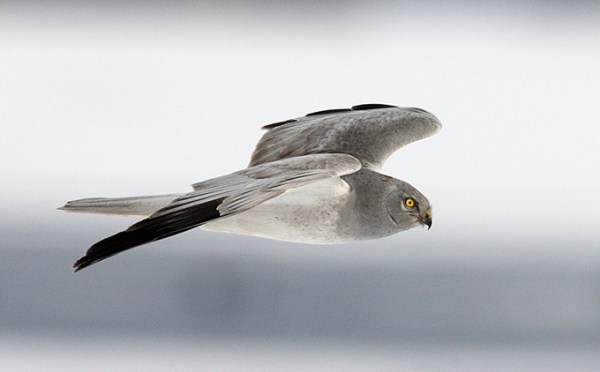
Further to blogs about ‘missing’ satellite-tagged hen harrier ‘John’, who disappeared on a grouse moor in the Yorkshire Dales National Park in early October (see here and here), North Yorkshire Police has just issued the following appeal for information:
North Yorkshire Police is appealing for information following the loss of a hen harrier on Threshfield Moor.
John, a sub-adult hen harrier, fledged in Northumberland in 2016. He was fitted with a satellite tag in July 2016 by a hen harrier expert from Natural England. This was John’s second outward migration – he wintered in the same approximate area of Yorkshire in 2016/17, returned to Scotland and the Borders in spring/summer 2017, then back to Yorkshire in September 2017. His tag stopped transmitting on 1 October 2017 in the Threshfield Moor area of North Yorkshire. A search of the area has been carried out but no trace of the bird or equipment has been found.
Natural England reported John’s disappearance to North Yorkshire Police and is working closely with wildlife crime officers, local landowners, and the Yorkshire Dales National Park Authority.
The loss of another juvenile hen harrier brings the total to six within fourteen months across northern England – and is a serious blow to the small English hen harrier population. Interference with hen harriers is a criminal offence.
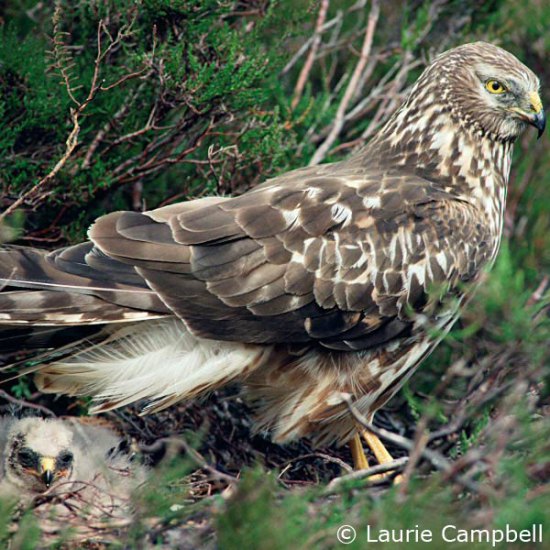
[Photo by RPUK]
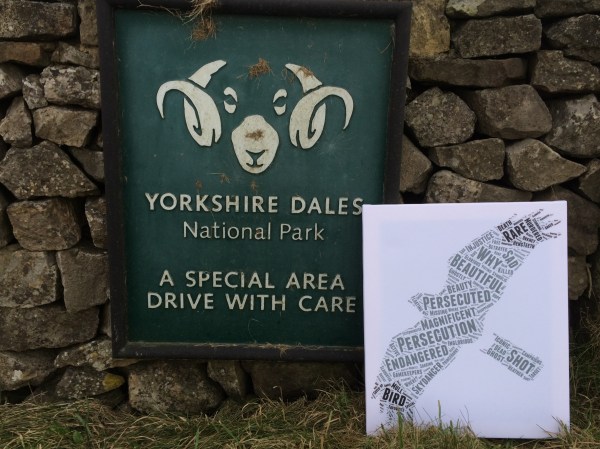
Sergeant Stuart Grainger, of North Yorkshire Police’s Rural Taskforce, said : “Those responsible for bird of prey persecution, either directly or indirectly, should be ashamed – these birds belong to everyone and are part of our natural heritage. It is a disgrace that these beautiful birds appear to be relentlessly destroyed. The fate of this particular hen harrier remains unsolved at this time, but we are appealing for any information to assist the investigation.”
Rob Cooke, a Director at Natural England, said: “The sudden disappearance of the hen harrier, John, is a matter of grave concern. We urge anyone with information to get in touch with North Yorkshire Police.”
David Butterworth, Chief Executive of the Yorkshire Dales National Park Authority, said: “It is highly likely that a crime has taken place on Threshfield Moor. The spotlight is once again on the Yorkshire Dales as a black hole for raptors. This does no one any good. With colleagues in the Ranger service, I am doing all I can to support North Yorkshire Police. Any leads which the police might have had in the six weeks since this hen harrier disappeared have come to nothing, but we should not give up – someone must know something. I urge that person to contact the police.”
Anyone with any information which could help police with their enquiries should contact North Yorkshire Police on 101 – or you can ring Crimestoppers anonymously on 0800 555 111 to discuss this incident or to discuss any other information regarding alleged persecution of birds of prey. Please quote reference number 12170208338 when passing information.
ENDS
Here’s a map we’ve created showing the location of Threshfield Moor, south west of Grassington within the Yorkshire Dales National Park:
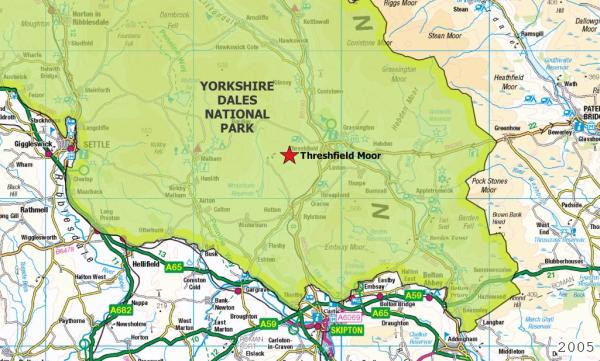
Threshfield grouse moor is believed to be owned by Mark Hancock, who is married to Heather Hancock, former Chief Executive of the Yorkshire Dales National Park Authority and currently Chair of the Food Standards Agency (see Mark Avery’s blog here for some background). Mr Hancock has reportedly been undertaking “a huge amount of work” to improve this moor’s habitat and environment, especially for birds (see here).
Top marks to North Yorkshire Police for providing such a detailed appeal for information and full credit to Police Sgt Stuart Grainger and Chief Exec David Butterworth (Yorkshire Dales National Park Authority) for their strongly-worded statements.
Let’s see how many organisations from the grouse-shooting industry also issue strongly-worded statements in response to this Police appeal.
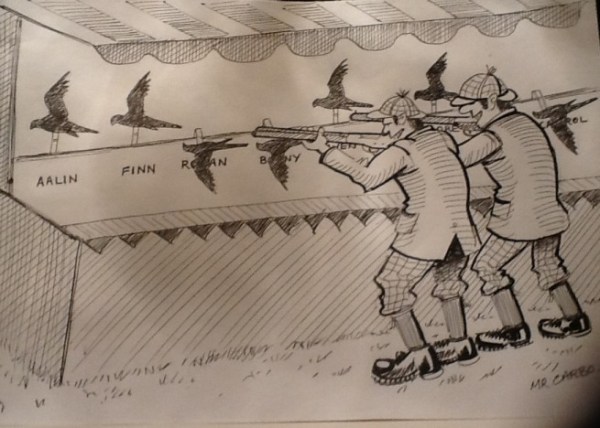
Hen Harrier John was one of the class of 2016. Here’s what’s happened to the rest of his cohort:
Hen harrier Elwood – ‘disappeared’ in the Monadhliaths just a few weeks after fledging, presumed dead (Aug ’16).
Hen harrier Brian – ‘disappeared’ in the Cairngorms National Park just a few weeks after fledging, presumed dead (Aug ’16).
Hen harrier Donald – missing in northern France, presumed dead (Autumn ’16).
Hen harrier Hermione – found dead on Mull, believed to have died from natural causes (Sep ’16).
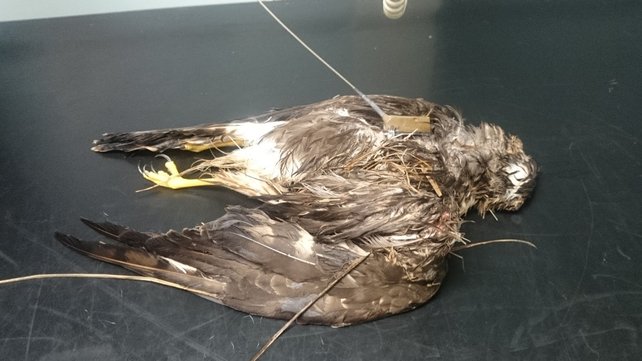
Hen harrier Rowan – found dead in Yorkshire Dales National Park. He’d been shot (Oct ’16).
Hen harrier Tarras – ‘disappeared’ in the Peak District National Park, presumed dead (Oct ’16).
Hen harrier Beater – missing in Scottish Borders, presumed dead (Nov ’16).
Hen harrier Bonny – ‘disappeared’ in the North Pennines, presumed dead (Dec ’16)
Hen harrier Mick – ‘disappeared’ in the Yorkshire Dales National Park, presumed dead (Dec ’16).
Hen harrier Carroll – found dead in Northumberland, PM revealed a parasitic disease & two shotgun pellets (Jan ’17).
Hen harrier John – ‘disappeared’ in the Yorkshire Dales National Park, presumed dead (Oct ’17)
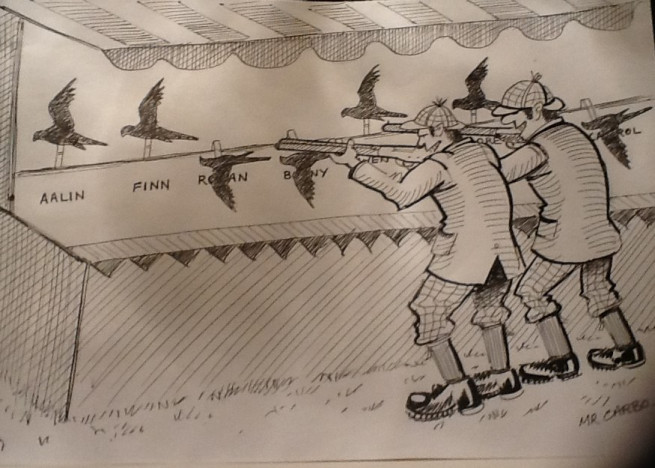
Eleven down, six to go (Aalin, DeeCee, Finn, Harriet, Wendy, Sorrel).