“I couldn’t let those words go to waste” – Finn Wilde

I couldn’t let those words go to waste“, writes 15 year old Findlay Wilde.

If you want to know what he’s talking about, and how you can get involved, have a read of Finn’s blog HERE

Hen harrier brood meddling: Natural England delays release of information

Two days ago we blogged about how Natural England has delayed the release of information about the proposed reintroduction of hen harriers to southern England (see here).

Today, we’re blogging about how Natural England has delayed the release of information about the proposed hen harrier brood meddling scheme.

Anyone seeing a pattern emerging here?

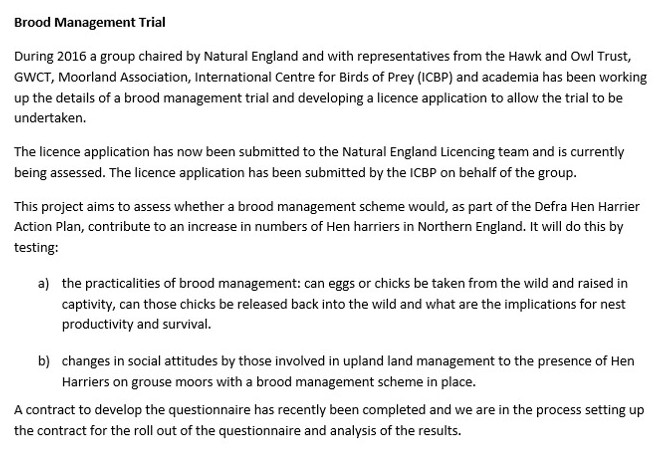
So, hen harrier brood meddling. As with the proposed southern reintroduction, brood meddling is one of six ‘action’ points of DEFRA’s Hen Harrier Inaction Plan, launched in January 2016.

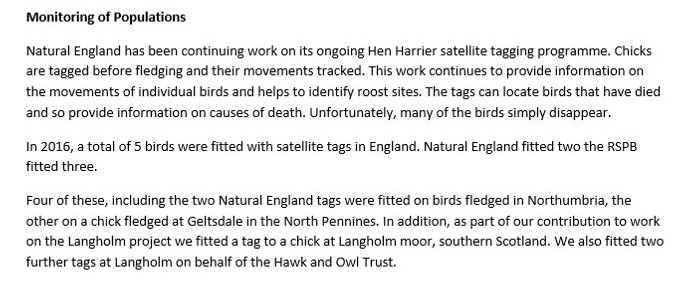
As with everything-hen-harrier, Natural England has been reluctant to provide any information about the brood meddling scheme unless it’s been forced to do so under a series of FoI requests. Here’s what we’ve managed to drag out of them so far:

14 November 2016: Hen harrier brood management working group: what they’ve got planned (here)

15 November 2016: More brood meddling revelations (here)

16 November 2016: Brood meddling: the role of the International Centre for Birds of Prey (here)

22 November 2016: Brood meddling: the proposed social science study (here)

That information was released almost a year ago. Since then, despite repeated requests for information, Natural England has gone all secret squirrel and refused to tell us anything more about this highly controversial project.

In February 2017 we submitted another FoI asking for an update on brood meddling. NE responded in March 2017 telling us that the  information was being withheld “as it would prejudice the process of determining the licence application and potentially the quality of that licence”. They also told us, “The discussions are confidential up until the point the licence application has been determined. Once this has happened then details of the licence are available to the public”. 

We knew, from reading the minutes of an NE Board Meeting, that the brood meddling licence application (from Natural England to, er, Natural England!) had been submitted by March 2017. We didn’t understand how releasing more updates about the brood meddling scheme would “prejudice” the internal licensing process but nevertheless we gave NE the benefit of the doubt and didn’t submit another FoI for a few months.

At the end of May 2017 we submitted another FoI asking for an update on the brood meddling scheme. NE refused to provide any information because the brood meddling licence application was still being considered. NE said:

“‘The application you refer to is still being determined. I’m afraid that we do not have an estimate of when it will be”.

In early July 2017 we submitted another FoI asking for an update on the brood meddling scheme. NE refused to provide any information because the brood meddling licence application was still being considered. NE said:

I can confirm that the licence application is still being determined and we do not have an estimate of when it will be“.

In early October 2017 we submitted another FoI asking for an update on the brood meddling scheme. NE has just responded with this:

Ah, right. Natural England is now saying it needs extra time to prepare its response “because of the complexity/voluminous nature of the request“. Are they taking the piss?! It’s only “voluminous” because NE has refused to release any information for almost a year!!

Mind you, NE’s interpretation of “voluminous” is probably very different to ours. Remember, this is the organisation that told us it couldn’t release information about the number of successful hen harrier breeding attempts in England in 2017 (n = 3) because apparently it needed a super computer to “quality assure and analyse” the data!

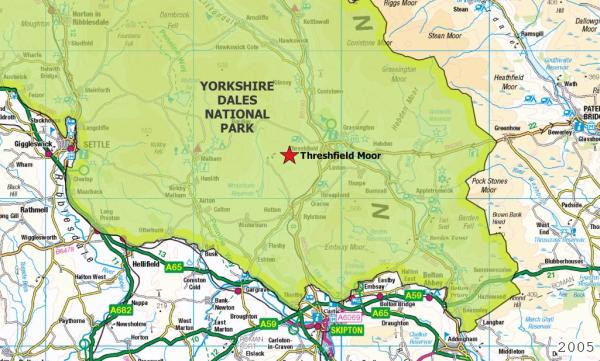
It’s fine. We’ve waited all year so what’s another month between friends? We can wait until the end of November and who knows, by then NE might have also responded to our requested Internal Review of its refusal to release hen harrier satellite tag data, and it might also have managed to tell us something (anything) about the latest ‘missing’ sat-tagged hen harrier that recently vanished on a grouse moor in the Yorkshire Dales National Park.

“We have more Spoonbills breeding in Yorkshire than we do Hen Harriers”

Two months ago we learned that Natural England could no longer use the long-held excuse of an impending PhD submission as reason to withhold hen harrier satellite tag data (see here) so we started to ask for the release of these 15-year-old data.

Many blog readers also took the time to contact Natural England about this (well done) and the following correspondence has been sent to us by blog reader Mike Whitehouse, detailing his exchange of views with Natural England. It’s well worth a read as an example of Natural England’s obstructive tactics and the subsequent exasperation felt by many of us.

The start point of this correspondence is shortly after Natural England released some (very) limited information, which told us how many sat tagged hen harriers were ‘missing, fate unknown’ (43 of 59 hen harriers sat tagged between 2007-2017) but, crucially, no details about the habitat types in which they’d disappeared or whether there was any suspicious geographical clustering of final tag signals.

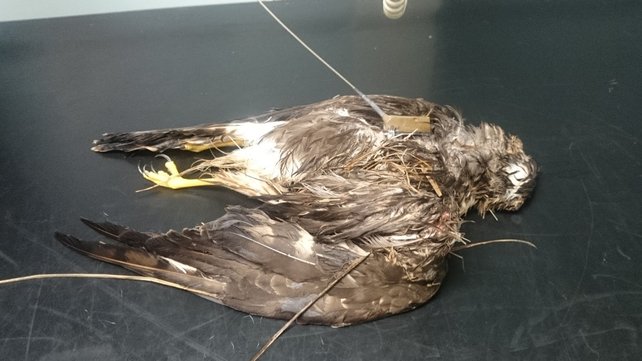
Photo: a dead satellite-tagged hen harrier. A post-mortem revealed it had been shot.

Mike’s email to Natural England, dated 21 Sept 2017:

Good evening Natural England,

At last a smidgeon of data – limited but nonetheless welcome. Amazing what a bit of pressure can achieve isn’t it?

In your notes you say that “Hen Harriers currently breed on heather moorland in the uplands across the UK. Your patch is England and as you know full well there are no breeding Hen Harriers at all on the heather moorland in England that is reserved for grouse shooting.

There are hardly any breeding pairs anywhere in the rest of England. It is time for you to get a move on if you do not want to be reporting on exactly the same number of Hen Harriers in England as there are Dodos. Not a good advertisement for NE and all of its efforts and funding. This issue is becoming high profile and fence sitting is not going to be comfortable for you.

As you are aware there is pressure on you to give details showing the locations of the missing Hen Harriers so it is clear whether or not they disappeared in suspicious clusters in or around shooting moorland.

Just for the record, I have just spent the last 3 days in the northern Yorkshire Dales (Swaledale, Wensleydale and Arkengarthdale), I have traversed exactly the upper Heather Moorland that you refer to and I failed to see any raptors whatsoever in 3 days but several hundred Red Grouse mainly waiting on or around the roads and tracks.

How is the Hen Harrier Action Plan going and do you have any targets to see high numbers of Hen Harriers that you can report on?

I would apreciate a reply.

Mike

Natural England’s reply to Mike, dated 29 Sept 2017:

Mike’s reply to Natural England, dated 30 Sept 2017:

Thank you for your timely but disappointing response.

We are both aware that NE is just playing with words and that since NE started to tag Hen Harriers in 2002 they have been in terminal decline with just 3 successful nests in 2017. We have more spoonbills breeding in Yorkshire than we do Hen Harriers and that is despite the vast ranges of heather moorland available for Hen Harriers in our National Parks.

My last email to you was not intended as an FOI request although it was interpreted as such. Fine by me.

I would like to make a formal request for information on this occasion however.

Would you please let me know from your overall collected database since 2002 how many tags (both radio and satellite technology) stopped transmitting whilst:-

  1. Within the current boundaries of the Yorkshire Dales National Park.
  2. Within the boundaries of the Peak District National Park.
  3. Within the boundaries of the North York Moors National Park.

I look forward to hearing from you in a similarly timely fashion.

Regards, Mike

Natural England’s response to Mike, dated 20 Oct 2017:

[NB: We’ve cut NE’s response short to save space and because the rest of it is virtually identical to previous generic responses sent out by NE that we’ve already blogged about here].

Mike’s response to Natural England, dated 20 Oct 2017:

Dear Natural England,

Your response is absolutely bonkers and you know it is.

I have read your letter which by now, I assume, is a standard reply for anyone having the temerity to seek information from a public body such as yours. Some of us want to use the requested information constructively to help protect the Hen Harrier population in England. I wanted the information so that I could effectively lobby the 3 National Parks to get consolidated action to halt criminality on grouse moors. A laudable, if slightly ambitious aim.

You will of course be aware of the recent news from the Yorkshire Dales National Park regarding the missing/shot, but tagged, hen harrier. Time is not on their side. You are fiddling (quite literally), whilst Rome burns.

Let me challenge some of the nonsense in your reply:-

  1. “Disclosure is in effect a disclosure to the world”. Yes of course it is. What a good idea to get more people onside in an effort to stop people with guns breaking the law.
  2. “We are withholding this information as we consider its release endangers Hen Harriers”. There were 3 breeding pairs this year none of which were in the 3 National Parks referenced. It is guns, traps and poisons that endanger the remaining Hen Harriers that have the temerity to fly into our National Parks. I would argue that lack of information endangers them more.
  3. “Natural England believes in openness and transparency”. You patently do not!
  4. “More detailed information is being withheld….having said this and following a number of further enquiries we are reviewing our approach”. We are not going away. 100,000 signed the penultimate petition to Parliament and the new petition will need a response from the Minister soon. You are getting yourselves on the wrong side – time to be brave.
  5. “The academics need a ‘safe space'”. I assume you were trying to resort to irony here. It is Hen Harriers that need a safe space. The heather moorland of England should be that safe space.
  6. “We feel there is little public interest in releasing this information”. You could not be more wrong. See 1,2,3,4 and 5 above. Your current and future post bag will clearly show that this issue is not going away.

There are very many complex arguments. I think it is simple. If people with guns stopped shooting, poisoning and trapping Hen Harriers there would be more of them – there could hardly be less. I have been lucky to see Hen Harriers in the Yorkshire Dales National Park. I believe my family, their children and all visitors should have the chance or the right to this privilege. We, the general public, have rights too.

Mike

ENDS

It’s fascinating that Natural England is refusing to even release the fairly non-detailed info Mike requested about how many tagged hen harriers went ‘missing’ within the boundaries of those three National Parks. How does withholding that information ‘endanger hen harriers’? Answer – it doesn’t.

And actually, in its haste to just issue a blanket refusal, Natural England hasn’t realised that this information is already available in the limited info NE released earlier in October.

We’re not bothering to look at radio-tagged hen harriers because, as previously discussed, the technology was too poor to draw any reasonable conclusions. Instead, we’re just looking at satellite-tagged hen harriers (2007-2017).

With this in mind, here are the answers to Mike’s questions:

  1. How many satellite-tagged hen harriers stopped transmitting whilst within the current boundaries of the Yorkshire Dales National Park? Answer – 11 (actually it’s now 12 if we include the latest victim that NE is refusing to discuss).
  2. How many satellite-tagged hen harriers stopped transmitting whilst within boundary of the Peak District National Park? Answer – 1.
  3. How many satellite-tagged hen harriers stopped transmitting whilst within the boundary of the North York Moors National Park? Answer – 1.

This doesn’t include information on the number of hen harriers that have been found dead (confirmed as illegally persecuted) within these three National Parks and neither does it include information about ‘missing’ hen harriers that were satellite-tagged by the RSPB.

Still, not to worry. Natural England reports that work on the Hen Harrier Inaction Plan is “progressing as expected“.

Yep, isn’t it just.

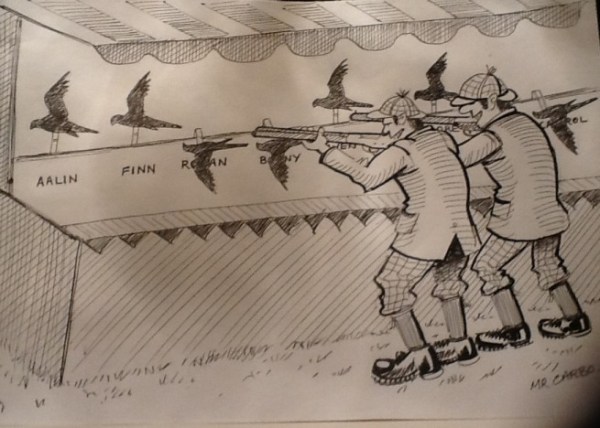
Cartoon by Gerard Hobley

Hen harrier reintroduction to southern England: Natural England delays release of information

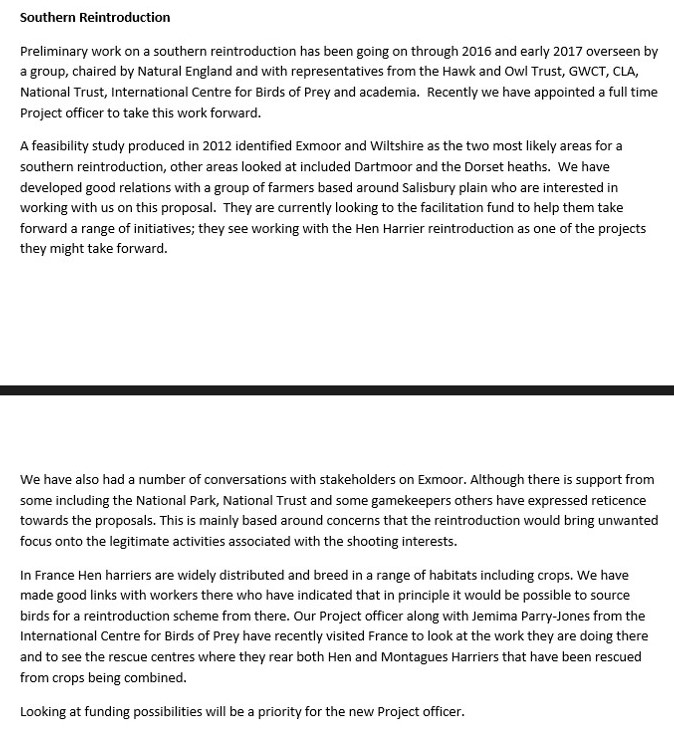
One of the six action points in DEFRA’s Hen Harrier Inaction Plan is to ‘reintroduce’ hen harriers to southern England:

As regular blog readers will know, finding out information about this ‘let’s divert attention from illegal persecution on driven grouse moors’ scheme has been as difficult as finding breeding hen harriers on driven grouse moors. Natural England has been reluctant to share its plans with the general public and all the information we’ve gleaned so far has come from 11 months of submitting FoI requests.

Here’s what we know to date:

28 Nov 2016: Hen harrier reintroduction to southern England: an update (here)

3 Jan 2017: Hen harrier reintroduction to southern England: the feasibility/scoping report (here)

8 Jan 2017: Hen harrier reintroduction to southern England: the project group and their timeline (here)

9 Jan 2017: Hen harrier reintroduction to southern England: who’s funding it? (here)

9 Jan 2017: Hen harrier reintroduction to southern England: a bonkers proposal for Exmoor National Park (here)

12 Jan 2017: Hen harrier reintroduction to southern England: Wiltshire (here)

14 Feb 2017: Leaked email reveals Natural England’s views on Hen Harrier Action Plan (here)

23 Feb 2017: Hen harrier reintroduction to southern England: donor countries (here)

19 July 2017: Hen harrier reintroduction to southern England: new project manager appointed (here)

20 July 2017: Hen harrier reintroduction to southern England: Dartmoor as potential new release site (here)

20 July 2017: Hen harrier reintroduction to southern England: revised costs (here)

21 July 2017: Hen harrier reintroduction to southern England: project team visits France (here)

15 Aug 2017: Natural England Board making up justification for hen harrier southern reintroduction (here)

You’ll notice a four month gap in the above list (March/April/May/June 2017). This was because Natural England suddenly refused to release any further information, claiming it would “prejudice” the licensing process for the proposed brood meddling scheme. We challenged this, as the southern reintroduction project has nothing to do with the brood meddling scheme further north and so project details should be available for public scrutiny. Natural England had to agree and did release more information in July.

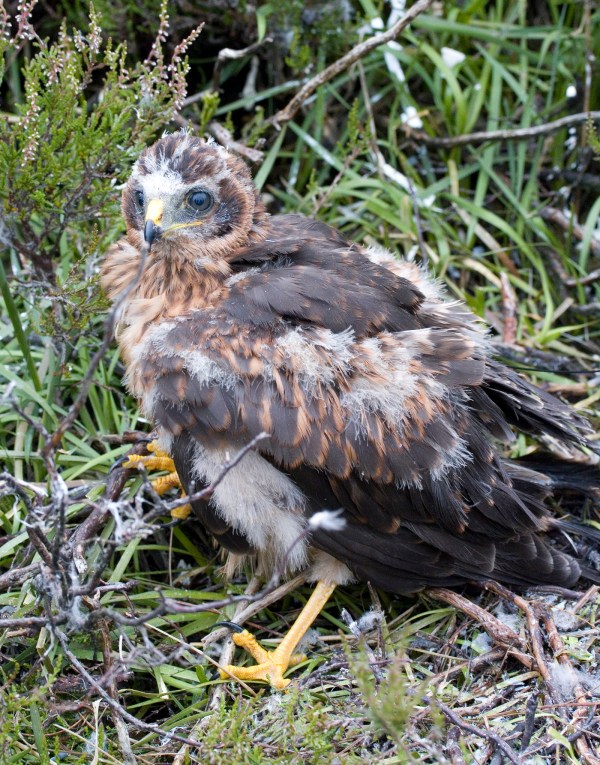
Photo of a hen harrier by Robin Newlin

In early October 2017, we submitted yet another FoI to ask for another update on the southern reintroduction project. Natural England has just replied, but instead of just sending through the relevant documents, we got this:

We regret that we must extend the time limit for responding by a further 20 working days to 27 November 2017, because of the complexity/voluminous nature of the request“.

Blimey! The southern reintroduction team must have been very very very busy between July and Oct if Natural England views this request as ‘complex and voluminous’! If we were cynics, we might not believe Natural England and we might think that Natural England is just being deliberately obstructive because it doesn’t like the criticism it’s receiving from us, and from others, on its mishandling of all-things-hen-harrier.

Guess we’ll find out at the end of November whether our cynicism is justified or not, when the ‘complex and voluminous’ paperwork is released.

‘No further comment’ from Natural England on latest missing hen harrier

Last week we blogged about a North Yorkshire Police search for a satellite-tagged hen harrier that had ‘disappeared’ on a grouse moor in the Yorkshire Dales National Park (see here).

We asked Natural England, on Twitter, when they would be making a statement about this. They didn’t respond.

So we emailed them. Here’s the response:

All we can tell you at this stage is that this situation is the subject of a police investigation. We are assisting North Yorkshire Police and cannot comment further“.

Bizarrely, Natural England then sent another response a short time later:

We have notified the police and other key stakeholders about a Hen Harrier that has stopped transmitting as we always do. We do not release proactive press statements unless we have evidence of a persecution [sic] and this is currently still an on-going investigation. Due to the transmission cycle of the tag we cannot be sure that the location of the last fix was where the tag actually stopped working. The tags only transmit for 10 hours in 58“.

Marvellous. So, no information about which hen harrier this is, where and when it was satellite-tagged, whether public funds had been used to pay for the tag, the date of the tag’s last transmission, and the name of the grouse moor where it ‘disappeared’.

It’s not clear why this information is being withheld. Understandably, if there was an impending police search, the information should not be made public so as not to jeopardise that search. But in this case, the police search had already taken place, which incidentally would have been a complete waste of time had the harrier been illegally killed on that grouse moor because, as per the NE protocol, Natural England had already sought the landowner’s permission for a police search to take place!

Photo of a police search on an unnamed grouse moor in the Yorkshire Dales National Park. Posted by North Yorks Police on Twitter, 15 Oct 2017.

Is there any other area of crime where the permission of a potential suspect is sought prior to a police search? “Oh, hi John, it’s the Police here. We have reason to believe your property is being used as a dealer’s crack den, mind if we pop round later this afternoon for a look? Would 2pm be convenient? Give you time to clear up and remove any potentially incriminating evidence before we get there”.

And what’s this about Natural England not releasing press statements “unless there’s evidence of a persecution” [sic]? That’s simply not true. Earlier this year Natural England issued a press statement about hen harrier Mick, another satellite-tagged hen harrier that ‘disappeared’ on a grouse moor in the Yorkshire Dales National Park (see here). There was no direct evidence of persecution in that case either, as Natural England lists Mick as ‘Missing, fate unknown’ in the long list of ‘missing’ sat-tagged hen harriers (44 of 59 now listed as ‘Missing, fate unknown’: that’s a massive 74.5%). It looks like Natural England is just making up its media protocol as it goes along.

Now, compare and contrast Natural England’s current attitude to releasing information about ‘missing’ hen harriers with the RSPB’s approach. Here’s what the RSPB published when one of its satellite-tagged hen harriers, Calluna, ‘disappeared’ on a grouse moor in the Cairngorms National Park on 12th August this year.

Why isn’t Natural England being this transparent? Who is Natural England shielding? How is Natural England’s silence helping hen harrier conservation?

UPDATE:

16 November 2017: Hen harrier ‘missing’ on grouse moor in Yorkshire Dales National Park is ‘John’ – see here

Satellite-tagged hen harrier ‘disappears’ on Yorkshire Dales National Park grouse moor

North Yorkshire Police have today been searching an unnamed grouse moor in the Yorkshire Dales National Park for a ‘missing’ satellite-tagged hen harrier:

Here’s a map of Craven District in North Yorkshire (outlined in red), covering part of the Yorkshire Dales National Park and nestled inbetween the Bowland and Nidderdale Areas of Outstanding Natural Beauty – all raptor persecution hotspots:

It’s good to see North Yorkshire Police out in force to conduct this search. We’ll await an official press release from North Yorkshire Police and Natural England for the details about this particular satellite-tagged hen harrier.

UPDATES:

23 October 2017: ‘No further comment’ from Natural England on latest missing hen harrier – see here

16 November 2017: Hen harrier missing on grouse moor in Yorkshire Dales National Park is ‘John’ – see here

The Natural England Hen Harrier satellite tag cover up: part 2

Last month we blogged about how Natural England is continuing to withhold information about the last known locations of 43 hen harriers that were satellite-tagged between 2007 – 2017 and that are listed by Natural England as ‘Missing, fate unknown’. Natural England’s explanation for what might have happened to these ‘missing’ hen harriers included a suggestion that they could have died on their backs, thus preventing the tag from transmitting further data. Unbelievably, Natural England did NOT suggest that illegal persecution on driven grouse moors might be a contributory factor in these disappearances (see here). This is plainly absurd. We know that Natural England acknowledges illegal persecution on driven grouse moors is the main cause of this species’ catastrophic decline, otherwise why instigate, as part of the Hen Harrier Action Plan, the controversial brood meddling scheme on, er driven grouse moors?

Photo: a dead, satellite-tagged hen harrier. A post-mortem revealed it had been shot.

We argued that Natural England has a duty to release this information as the tags (and their data) have been paid for by us, the tax-payers, as part of a 15-year study on hen harrier dispersal, a project for which the public has seen no meaningful output/results. We also argued that by continuing to withhold these data, Natural England is either being incompetent or being deliberately obstructive, or both. The intention is clearly to shield the criminals within the driven grouse shooting industry.

We suggested that at the very least, Natural England could publish a map showing the locations and habitat type of where these 43 ‘missing, fate unknown’ hen harriers went off the radar, at such a resolution that it wouldn’t compromise sensitive nest/roost site locations. By doing this, we might be able to detect some patterns to see whether these hen harriers disappeared at random locations across the landscape (which you’d expect if the birds had died on their backs of natural causes) or, rather like satellite-tagged golden eagles, they disappeared in suspicious clusters in certain grouse moor areas.

We encouraged blog readers to submit formal FoI requests to Natural England to ask for the release of these data. Many of you did – well done, and thank you. Over the last week or so, Natural England has been sending out a generic response to these requests, as follows:

Needless to say, we don’t accept this explanation.

Fist of all Natural England claims not to hold the maps. Eh? Are they trying to tell us that after 15 years of study, nobody, not even the PhD student that was supposed to be analysing these data (and who, we were told at various conferences over the years, was ‘on the verge’ of submitting his thesis), has ever bothered to map the last known locations of these ‘missing’ hen harriers?!! And even if that is the case (which seems highly implausible), all Natural England has to do to generate such a map is to input the location of the last known sat tag signals in to a simple GIS programme and voila! There’s the map! This would take an undergrad less than five minutes to complete.

Natural England then claims that the release of these data would ‘endanger hen harriers’. Er, these hen harriers are already dead (probably)! NE claims that the data would ‘compromise the locations of sensitive breeding and roosting sites’. Not if the data were released at such a low resolution that the actual sites couldn’t be identified.

Natural England then argues that the data are ‘intended to be used to collaborate with highly respected academics’ (and who might they be?) and that these academics need ‘a safe space to do the research’. Eh? How would releasing partial, low resolution data threaten the academics’ ‘safe space’ (whatever that may be)?

We could go on. However, let’s cut to the chase.

The bottom line is that we disagree with Natural England’s reasons for continuing to withhold the data and we intend to challenge them on it. The next step in this process is to complain to Natural England about this response and ask Natural England to undertake an ‘internal review’. Natural England then has a duty to ask another member of staff to review NE’s original response.

If the internal review results in the same decision (i.e. that NE will continue to withhold the data), then the next step after that will be to submit an official complaint to the Information Commissioner.

However, before we can complain to the Information Commissioner, we have to exhaust the official route of complaining to NE and asking for an internal review.

So, if you’ve received one of these letters (as above) from Natural England, we’d encourage you to write back to them and say you find NE’s original response unsatisfactory (and explain why), and ask for a formal internal review.

Thank you.

Raptor persecution in the Peak District National Park: last night’s programme

The BBC’s Inside Out programme last night featured an excellent piece on driven grouse shooting and its association with illegal raptor persecution in the Peak District National Park.

If you missed it, it’s available to watch on BBC iPlayer here for the next 29 days.

There were some great quotes, that we’ll record here for posterity:

Tim Birch (Derbyshire Wildlife Trust): “People love this place. And it is a national disgrace that we do not have the kind of birds of prey that should belong back in this landscape“.

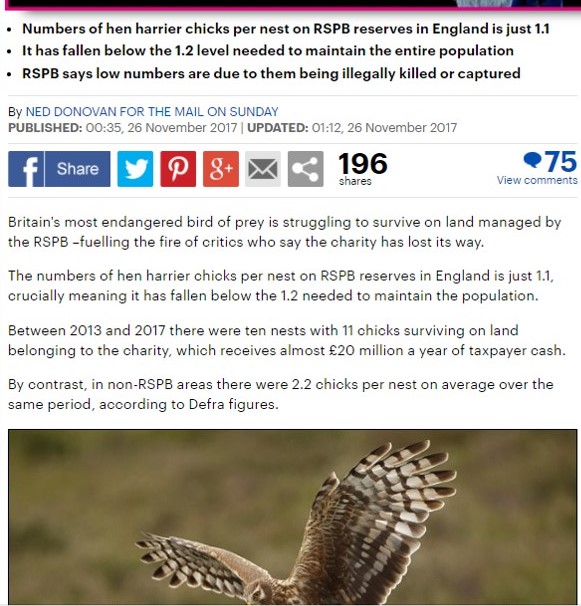
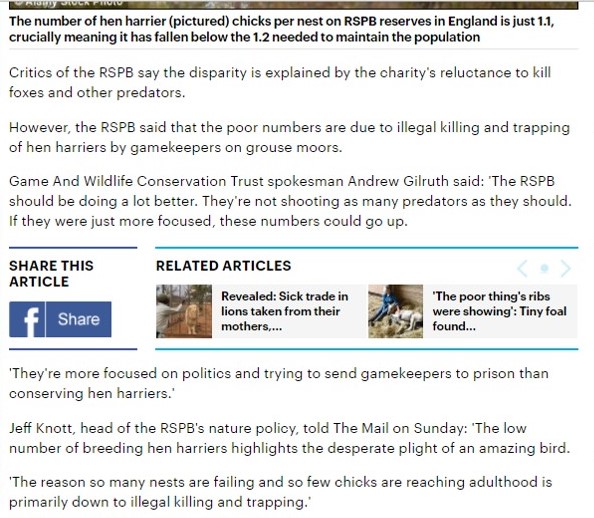
Mistress of the understatement, Blanaid Denman (RSPB Skydancer Project): “Six years ago in 2011 there were four successful [hen harrier] nests in England. This year there were three. So I think it’s safe to say things are not going very well“.

Mark Avery (talking about driven grouse shooting): “More and more people are becoming aware of the problems and agitated about what’s happening in our National Parks“.

Andy Beer (Midlands Director, National Trust) talking about the NT’s advertisement for a new tenant on the Hope Woodlands & Park Hall Estate following the imminent removal of their current tenant:We won’t settle for a partner who we can’t have 100% confidence in. We haven’t been prescriptive in our tender about whether it should be driven grouse shooting or not, but certainly very intensive forms of land use are difficult to square with our outcomes, including increasing numbers of birds of prey“.

The current shooting tenant at Hope Woodlands & Park Hall Estate (believed to be Mark Osborne) apparently declined to comment about the removal of the shooting lease.

Steve Bloomfield (Director of Operations, BASC), talking about raptor persecution: “We’ve seen people that have broken the law. There’s always a minority in any profession that brings it in to disrepute, and we want to get rid of them from our profession“. Fine words, but what action, exactly, has BASC ever taken to oust the criminals from the grouse shooting industry? Perhaps if BASC spent more time focusing on that instead of campaigning with the Countryside Alliance to get Chris Packham silenced (e.g. here, here, here), or if the BASC Chairman (in his capacity as a lawyer) hadn’t defended the right of a gamekeeper to keep his firearms certificates even though the keeper was known to have placed poisons in an underground stash on a grouse moor (here), Steve Bloomfield’s statement might be more credible.

Surprisingly, the Moorland Association, which represents grouse moor owners, did not make an appearance in this film, but apparently told the BBC it “fully supports efforts to encourage numbers of hen harriers“. Really? Is this the same Moorland Association whose Director said last year,

If we let the hen harrier in, we will soon have nothing else. That is why we need this brood management plan“.

One other interviewee worthy of mention here was a chap called Ian Gregory, listed as ‘grouse shooting spokesman’. We don’t know if this is the same Ian Gregory as the Ian Gregory from You Forgot the Birds but judging by the poor quality of his comments in last night’s film, it may well be.

Commenting on footage of a Moscar Estate gamekeeper trying to release a badger from a snare by shooting at the snare, Ian Gregory said:

In these pictures we’re seeing a badger being released from a trap which was intended for foxes. Foxes are a nightmare for ground-nesting birds and that’s the reason that gamekeepers try to reduce the number of foxes that we have“.

Apart from revealing his woeful ignorance of ecological food webs, Ian Gregory forgot to mention that snares must never be set on runs where there is evidence of regular recent use by non-target species such as badgers, as they may be caught or injured by the snare. And, according to BASC’s Code of Best Practice, ‘Knowledge of the tracks, trails and signs of both target and non-target species [i.e. badgers] is essential. If you are not competent in identifying the tracks, trails and signs of non-target species, you must not set snares‘.

As an aside, it’s worth reading former Police Wildlife Crime Officer Alan Stewart’s blog about the CPS’s decision not to prosecute the Moscar Estate gamekeepers, here.

Ian Gregory had more unsubstantiated tosh to impart to the viewer. Talking about hen harriers, he said:

There is a problem about their populations in the UK. Some of that may be down to illegal activity but it’s also down to the pressure of human beings wanting more places for recreation, more countryside for recreation, more for their homes, so it’s not just a question of persecution, this is a much more complicated issue“.

Ah, so the demand for new housing on driven grouse moors is responsible for the catastophic decline of breeding hen harriers in England? And the scientific evidence for that claim is…..where, exactly? We had a look in the Conservation Framework for Hen Harriers which set out very clearly that illegal persecution was the biggest single factor affecting the hen harrier population’s chance of survival. Funnily enough, new housing estates being built on grouse moors didn’t feature.

All in all, this was an excellent film by the BBC’s Inside Out film and even more members of the public will now be aware of the disgraceful activities of the grouse shooting industry.

If you haven’t already done so, please consider signing this new e-petition calling for a ban on driven grouse shooting. PLEASE SIGN HERE.

Raptor persecution in Peak District National Park – BBC 1 this evening

Tonight’s BBC’s Inside Out programme will feature an investigation in to raptor persecution that’s taking place in the Peak District National Park.

This is a regional programme (BBC East Midlands) starting at 7.30pm but will be available on iPlayer shortly afterwards (see here).

To coincide with this programme, the Derbyshire Wildlife Trust has today called the low number of raptors in the National Park “a national disgrace” and blamed activities relating to the driven grouse shooting industry (see BBC news article here).

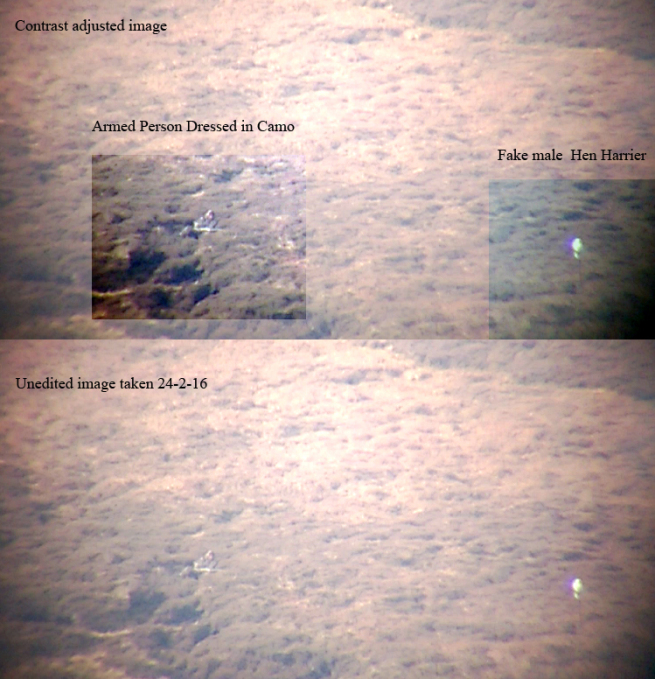
The article also mentions the footage that we published in April 2016 appearing to show an armed man sitting close to a hen harrier decoy on a National Trust-leased grouse moor within the National Park. This resulted in the National Trust terminating the grouse shooting lease four years early and searching for a new tenant. The National Trust has come under increasing public pressure not to lease the moor for grouse shooting and the campaigners are expected to be included in tonight’s Inside Out programme.

Part of the Peak District National Park (mostly the grouse moors of the Dark Peak area) has been recognised as a raptor persecution hotspot for many years (e.g. see RSPB ‘Peak Malpractice‘ reports here and here). As a result of the ongoing concerns, in 2011 the National Park began hosting a Bird of Prey Initiative where ‘partners’ are supposed to have been ‘collaborating’ to increase bird of prey populations. It has failed miserably. In 2015 it was announced that none of the project targets had been met (here) but that the Iniative was going to continue with “renewed commitment” and “new rigour and energy“. Strangely, we haven’t heard any more results from this so-called partnership initiative since then, although Rhodri Thomas, an ecologist with the Peak District National Park Authority gave a very honest presentation at the Sheffield raptor conference in September 2016. His opening words were:

Has the Initiative worked? Well, we’ve not met the targets that we’d set for 2015, we’ve not met them by a fairly substantial amount in some cases, so I think the answer from that point of view is a fairly clear no“.

Meanwhile, cases of confirmed illegal raptor persecution have continued to emerge (e.g. a shot peregrine that was found critically injured next to a Peak District grouse moor in September 2016. It didn’t survive its injuries).

Don’t forget – BBC 1 (East Midlands) Inside Out tonight at 7.30pm.

Sticking with the Peak District National Park and alleged wildlife crime, did anyone see yesterday’s news that the Crown Prosecution Service has decided there will no charges relating to the alleged snaring of badgers that was filmed by the Hunt Investigation Team on the Moscar Estate earlier this year? Interesting.

Also of interest, to us, was the name of the spokesman for Moscar Estate who was cited in the article: Ian Gregory. Surely not the same Ian Gregory of You Forgot the Birds notoriety?

The Natural England hen harrier satellite tag cover up

Last week we blogged about how Natural England has been withholding 15 years worth of hen harrier tagging data, most of it paid for with public funds, and we encouraged blog readers to email them and ask for the data to be released without further delay (see here).

Specifically, we wanted to find out how many satellite-tagged hen harriers have ‘disappeared’ on grouse moors in England and whether those disappearances occured in non-random clusters on specific grouse moors, much like the suspicious clustering of ‘missing’ satellite-tagged golden eagles in certain grouse moor areas of Scotland.

We know that many of you did email Natural England (thank you) and yesterday (Mon 18 Sept 2017) they caved in and released some more data. Unfortunately, they’ve only released part of the data they hold. And of the information they did release, their interpretation of it is, frankly, scandalous. Natural England are either grossly incompetent or are being deliberately obstructive in an attempt to shield the criminal grouse moor managers from the spotlight. Actually, looking at the evidence, we think they’re being both incompetent and deliberately obstructive. See what you think.

Here’s what they released yesterday:

A spreadsheet showing the number of hen harriers they tagged between 2002 and 2017. This is an updated version of the spreadsheet they published in 2014. It shows a total of 158 harriers were tagged: 99 with radio tags and 59 with satellite tags. Download the spreadsheet here: hen-harrier-tracking-data-2002-onwards

Accompanying this spreadsheet is some inaccurate explanatory text and three maps. We know that both the text and the maps are inaccurate because the explanatory text says that “Fig 2 shows the movement of birds obtained from the satellite tracking data covering 158 birds” when actually only 59 birds have been satellite-tagged. Figure 2 is also supposed to show the movement of satellite-tagged hen harriers but it doesn’t include any tag data from the continent, and we know from the spreadsheet that at least one sat tagged hen harrier was defintely recorded in Spain (McPedro) and two other birds were recorded in France. However, these international locations ARE shown in Fig 3, which is supposed to be a combination of the data from Figs 1 & 2. That’s just sheer incompetence.

We can largely ignore these maps because (a) we know they’re inaccurate but, more importantly, (b) they’ve been produced at such a low scale as to render them virtually useless. They do show that some tagged hen harriers wander widely across political boundaries but that’s not new information.

What we’re more interested in is the updated spreadsheet.

The updated spreadsheet shows how many of these tagged hen harriers are ‘missing, fate unknown’. 86 of the 99 radio tagged harriers are in this category (that’s 86.8%). Radio tags were used during the early years of the study, prior to the availability of satellite tags. Natural England quite rightly points out that, due to the limitation of this technology, not much can be surmised about the birds’ fates. If the bird moves out of range of the hand-held tracking receiver (which has a limited line-of-sight range of a few kms), then there’s no way of knowing whether the radio tagged bird is alive or dead. That’s fair comment, and it’s why many research studies switched over to using geographically unconstrained satellite tags in the late 2000s.

So let’s ignore the radio tagged hen harriers and instead concentrate on the ones that were satellite-tagged between 2007 and 2017. There were 59 satellite-tagged hen harriers during this period, and of these, 43 are listed as ‘missing, fate unknown’. That’s a very high 72.8%. Natural England provides some explanatory notes about what might have happened to these harriers:

Natural England, are you for real? This is the sort of half-arsed spin we’d expect from Dr Charlotte Tan, Professor of Grouse Moor Managementology at the GWCT. Are we seriously expected to believe that the 43 missing sat tagged hen harriers have all died of natural causes, lying on their backs, thus rendering their tags incapable of charging and transmitting further data? Sure, that might have happened in a handful of cases, but in 43 out of 43 cases? Come on!

It’s scandalous that Natural England excludes ANY explanation for these missing harriers that might just involve illegal persecution, especially when they’ve previously admitted that their own tagging research found “Compelling evidence that persecution continues, both during and after the breeding season” and “Persecution continues to limit Hen Harrier recovery in England” (Natural England, 2008, A Future for the Hen Harrier in England?).

Now, had Natural England published a map showing the locations of where these 43 ‘missing, fate unknown’ hen harriers went off the radar, we might be able to detect some patterns to see whether they disappeared at random locations across the landscape (which you’d expect if the birds had died on their backs of natural causes) or, rather like satellite-tagged golden eagles, they disappeared in suspicious clusters in certain grouse moor areas.

That Natural England haven’t provided this level of detail is very telling indeed. They’ve got the information and it would only take a matter of minutes to upload those data on to a map that would have sufficient resolution to identify suspicious geographical clustering but that wouldn’t compromise sensitive site details.

It is quite clear to us that Natural England are involved in a cover-up job, designed to protect those hen harrier-killing grouse moor managers from any hint of suspicion. Sorry, Natural England, but we won’t allow you to continue to mislead like this.

We’d urge blog readers to write again to Natural England and ask for the release of this information. This time we recommend sending the email as a formal FoI request as opposed to a more informal general enquiry (which Natural England can easily swerve, as above). Emails please to: foi@naturalengland.org.uk

In the words of Chris Packham:

Update 6 October 2017: The Natural England Hen Harrier satellite tag cover up: part 2 (see here).