Gunman filmed at hen harrier nest site with decoy eagle owl

The RSPB Investigations Team has published a blog this afternoon detailing an incident that was witnessed by a Natural England fieldworker at a hen harrier nest site in Cumbria during the breeding season.

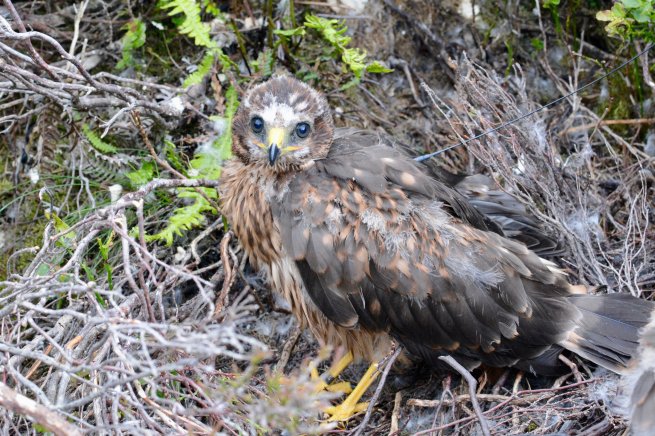
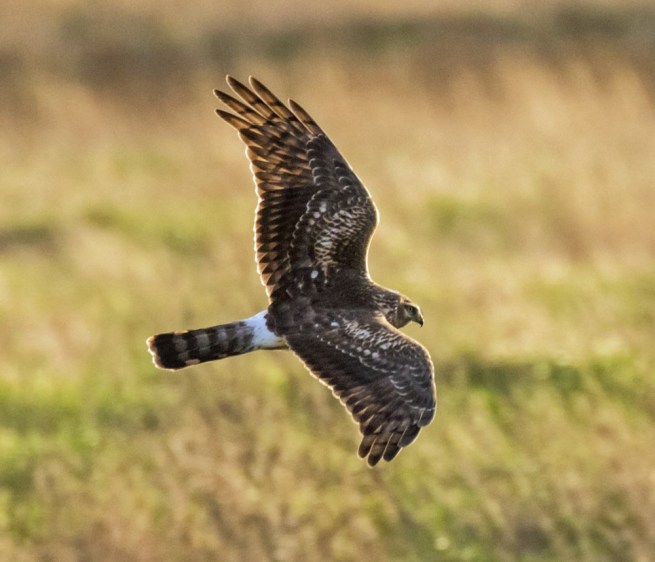
[Hen harrier, photo by Frank Burns]

The full blog can be read here but the pertinent part is reproduced as follows:

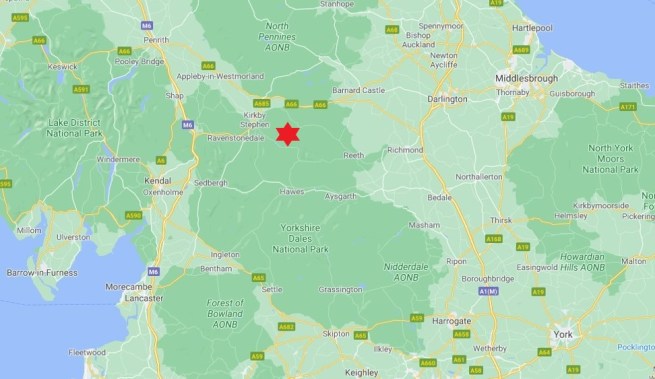
‘We understand that a Natural England fieldworker was monitoring a hen harrier nest on moorland near Whernside, Cumbria, when he saw a man wearing camouflage carrying a firearm and a live bird of prey, believed to be an eagle owl about 300m from the hen harrier nesting area. He tethered the bird and sat a short distance away with his gun. In the circumstances there seems little doubt the intention was to draw in raptors, presumably the hen harriers, to shoot them. The use of a tethered live bird as a decoy to kill or take a wild bird is in itself illegal, but a method that seems to be increasingly used for targeting raptors. This was no doubt a highly stressful situation, we understand the fieldworker took some video footage and made himself visible. This eventually had the desired effect, and the suspect, realising he was under observation, left. It was reported to the police but due to evidential issues around establishing the identity of the suspect, it was not possible to take the matter forward to court. The RSPB would like to place on record our thanks to Cumbria Constabulary and the CPS for their determined efforts to progress this investigation. We firmly consider that this incident and the video should now be put in the public domain’.

Now, putting this news out late on a Friday afternoon isn’t helpful to anyone (apart from Natural England and the criminals within the grouse shooting industry who may hope that it’ll all blow over by Monday).

It won’t.

There is a lot to say about this incident as well as about Natural England’s continuing pisspoor conduct on all things hen harrier.

We’ll be coming back to it on Monday morning.

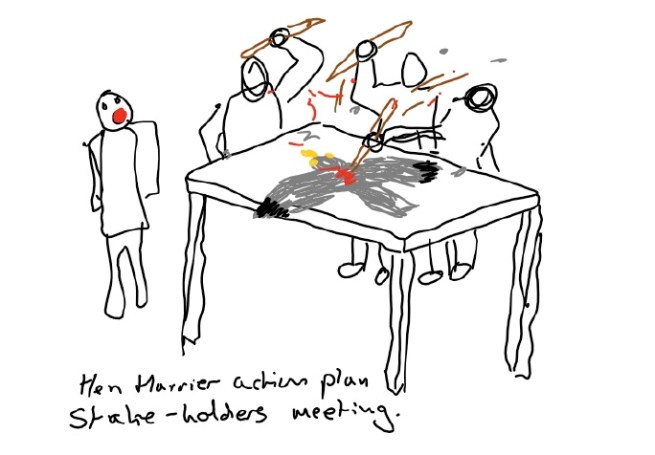
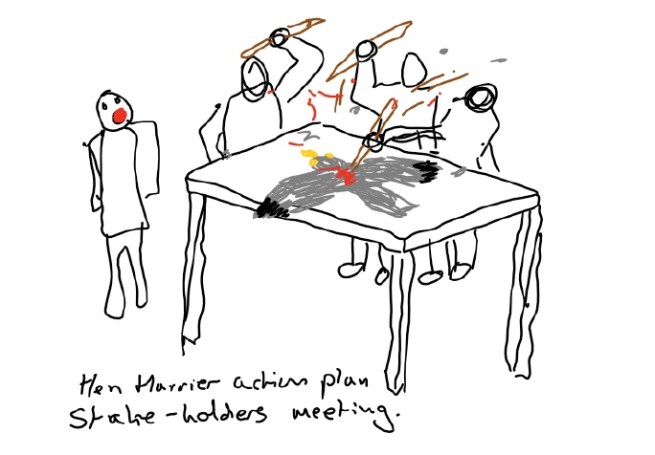
[Cartoon by Gerard Hobley]

UPDATE 15 September 2020: More on that gunman filmed with a decoy owl near hen harrier nest site on Whernside (here)

UPDATE 20 January 2021: Confirmation that hen harrier brood meddling estate was under police investigation (here)

Does BASC know its arse from its elbow?

Does BASC (the British Association for Shooting, and, ahem, conservation) know its arse from its elbow?

It certainly can’t tell the difference between a merlin and a lanner falcon (see here) and now it seems to be struggling to tell the difference between a buzzard and a hen harrier!

You know, if you’re going to profess to love a bird of prey, it helps your credibility if you’re first able to identify it. Otherwise it just looks like you’re pretending.

In this latest outpouring of proclaimed love from BASC for Britain’s most persecuted bird of prey, it is claimed that,

More grouse moors have embraced the hen harrier brood management scheme this year as confidence in the project grows‘.

Hmm. But not everything is as it seems. Standby for what we’re told is imminent breaking news that puts this alleged ’embracement’ in a totally different light…….

Four of this year’s satellite-tagged hen harriers already dead or ‘missing’

Earlier today delusional Natural England issued a press statement (along with two organisations that have zero credibility when it comes to hen harrier conservation, the Moorland Association and GWCT) proclaiming this year’s hen harrier breeding season was a ‘wonderful result’ (see here).

The RSPB published its own view, separately (here), pointing out, as if it was necessary, that illegal persecution continues to be ‘the most serious threat’ to hen harrier conservation.

Meanwhile, Natural England, having been justifiably criticised today for publishing inaccurate and ambiguous information about hen harriers (e.g. see here) has quietly updated its spreadsheet on the number of satellite-tagged hen harriers and their fates (see here).

Natural England has fitted satellite tags to 23 of this year’s cohort of 60, but according to the data, four of those 23 are already either dead or ‘missing, fate unknown’.

Here are the details of the four:

Tag #57266, female, Harriet, tagged in Yorkshire Dales on 4 June 2020. Last known fix in Cumbria (actually in the Yorkshire Dales National Park, grid ref NY770031) on 25 July 2020. Listed as ‘missing fate unknown’.

Tag #201118, female, unnamed, tagged in Northumberland (site 1) on 15 June 2020. Last known fix on 9 July 2020 in Northumberland, ‘site confidential nr goshawk nest’. Listed as ‘missing fate unknown’.

Tag #201126, male, unnamed, tagged in Northumberland (site 2) on 15 June 2020. Last known fix on 6 July 2020 in Northumberland, ‘site confidential nr goshawk and peregrine nest sites’. ‘Remains of bird and tag recovered near the nest site post-fledging – most likely avian predation’.

Tag #201119, male, Solo, tagged in Lancashire on 31 July 2020. Last known fix on 14 August 2020 in Lancashire ‘in nest area (confidential)’. Listed as ‘missing, fate unknown’.

It’s not known how many of the three ‘missing, fate unknown’ hen harriers are being investigated as suspicious incidents by the police and without knowing the details or circumstances of the disappearances, it would be unwise to speculate at the moment. We’re not aware of any appeals for information in any of these three cases. We’ll be asking the respective police forces for information on each of them so that the running total of ‘43 dead or missing hen harriers in the last two years‘ can be updated if necessary.

It’s also worth pointing out that one of the ‘missing, fate unknown’ birds was fitted with a Lotek tag rather than the usual MTI tag….we’ve blogged about the apparent unreliability of this tag type previously (see here) and another blog will be published shortly with even more damning commentary on its suitability for tracking hen harriers.

Perhaps the biggest question to ask right now is why Natural England (and its ‘partners’ in the grouse shooting industry) failed to mention in this morning’s press statement the disappearances of three of this year’s cohort?

Can we trust anything Natural England tells us about hen harriers?

Multi-award-winning author Gill Lewis has neatly summarised the view of many of us with this rather telling cartoon:


‘Illegal persecution remains most serious threat to hen harriers’ – RSPB statement on 2020 breeding season

Following the news earlier today that deluded Natural England thinks the 2020 hen harrier breeding season was a ‘wonderful result’ (see here), the RSPB has now issued a statement:

‘The news that 60 hen harrier chicks have fledged in England this year is encouraging, and testament to the crucial monitoring from raptor workers. However, while 24 nests monitored is an improvement on the 7 nests in 2017, there is enough habitat and prey to support more than 12 times this year’s total. The science is clear that illegal persecution remains the most serious threat to this species  –  since 2018, 43 hen harriers are known to have been killed or “gone missing”, after fledging. The sad reality for those who passionately protect these birds is that some of this years’ fledglings risk being killed. If this painfully slow recovery is to gather pace, and these beautiful and enigmatic birds are to become as common across our landscapes as they should be, the illegal persecution must stop’.

It’s now pretty clear why the RSPB didn’t sign up to the laughably optimistic joint press statement from Natural England, GWCT and the Moorland Association.


Deluded Natural England claims 2020 hen harrier breeding season a ‘wonderful result’

Natural England has announced that a total of 19 hen harrier nests were successful in England this year.

Strangely, Natural England didn’t mention the number of hen harriers that have disappeared in suspicious circumstances this year, or those that members of the public witnessed being shot (see here).

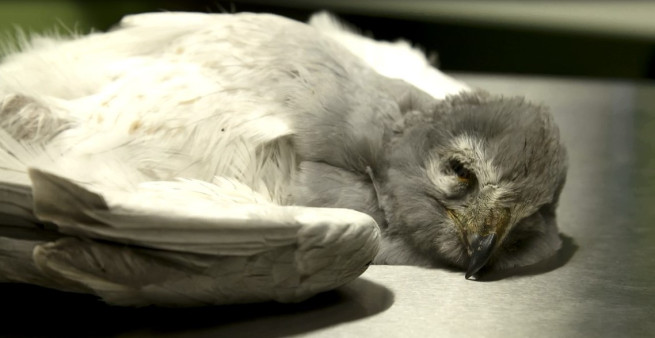
[A dead hen harrier that was caught in an illegally-set trap on a Scottish grouse moor – see here. Nobody was prosecuted for this barbaric crime. Photo by Ruth Tingay]

With a straight face, Natural England’s Chairman Tony Juniper has declared this year’s hen harrier breeding season a ‘wonderful result’ (since when has a 5% success rate been ‘wonderful’?) and, along with his good old pals from the grouse shooting industry (the very industry responsible for this species’ appalling conservation status), has issued a joint press release as follows:

A record-breaking year for hen harrier breeding

Natural England has recorded the best year for hen harrier breeding in England since Natural England’s Hen Harrier Recovery Project was established in 2002, with 60 chicks fledged from 19 nests across Northumberland, Yorkshire Dales, Cumbria and Lancashire in early summer 2020.

The success has been down to a number of factors including high numbers of voles which are a key food source, good weather, and strong partnership working between Natural England, RSPB, Forestry Commission, the Moorland Association, United Utilities, the National Trust, and others.

Hen harriers were once found across upland and lowland Britain including throughout many English counties, however after 1830 it became an exceptionally rare breeding bird in England due to raptor persecution, which was then made illegal in 1954. The hen harrier is now one of England’s rarest birds of prey.

Hen harriers are one of our most distinctive birds, with a characteristic owl-like face and stiff facial feathers that direct sound toward their ears to enable them to hunt more effectively.

Tony Juniper, Chairman of Natural England, said:

“2020 has seen the best breeding season for England’s hen harriers in years and I thank all those who’ve helped achieve this wonderful result, including landowners and managers, campaigners, conservation groups, police officers and our own Natural England staff and volunteers.

“Despite the great progress there is though no cause for complacency. Too many birds still go missing in unexplained circumstances and I urge anyone who is still engaged in the persecution of these magnificent creatures to cease at once.

“Hen harriers remain critically endangered in England and there is a long way to go before the population returns to what it should be.”

This year’s success means that 141 hen harrier chicks have fledged over the past three years alone. Natural England’s Hen Harrier Recovery Project was established in 2002 to monitor hen harriers and work towards improving their numbers in England.

Although persecution is thought to be the main factor limiting hen harrier numbers in England, other factors including the suitability of local habitats and food availability are also significant in some areas.

Natural England is involved in a number of initiatives to help ensure hen harriers recover including through Defra’s hen harrier joint action plan.

These include:

  • satellite tracking to improve understanding of the bird’s movements and behaviour;
  • supporting wildlife friendly habitat management in the uplands; and,
  • working with a range of partners to protect the current population and extend its range across England.

Dr Adam Smith of the Game & Wildlife Conservation Trust (GWCT), said:

“This is a very promising result for a pragmatic conservation project. Management options for bird of prey conservation rather than just legal enforcement is very forward thinking approach. The GWCT has studied the very real tension between harrier conservation and grouse shooting for over 30 years. Until this managed approach was adopted – at no small risk to the reputations of all involved – there was a damaging deadlock.

“If this trend can be maintained and hen harrier conservation status further improved, whilst supporting the red grouse management that best delivers our unique heather uplands, it will be a real breakthrough for practical, working conservation.”

Amanda Anderson, Director of the Moorland Association, added:

“Yet again, it has been a fantastic year for hen harriers and we have now seen significant increases in successful nests and chick numbers for three years running as part of the hen harrier Recovery Plan which includes the innovative Brood Management Scheme trial.

“Twelve of the nests reported today are on land managed for grouse shooting and this reflects a genuine commitment from moor owners and managers to work with others and help rebuild the harrier population.”

Hen harriers lay 4-6 eggs during late April–May, with incubation lasting 30 days. Hen harrier chicks then fledge in 28-32 days. Both females and males attend the young, with the males providing food which is often passed mid-air to the female in a distinctive display of ‘throw and catch’.

A high proportion of this year’s chicks have been fitted with satellite tags, which will allow Natural England to monitor the progress of the birds as they move away from their nest areas.

ENDS

What this press statement amounts to is nothing more than a cynical ploy to disguise the tragic reality of this species’ downfall at the hands of the driven grouse shooting industry.

It’s hard to know where to start with this latest piece of deliberately crafted propaganda. Isn’t it interesting though, that the only other organisations quoted are the GWCT and the Moorland Association? Where’s the RSPB quote? The Police? Forestry Commission, United Utilities, National Trust, and the ‘others’ that were mentioned as ‘partners’ by Tony Juniper (presumably he means the Northern England Raptor Forum)? Weren’t they asked? Or were they invited to comment but refused to have any part in this conservation sham?

And then there’s the actual results – 19 successful nests in the whole of England is nothing like a ‘wonderful result’. It’s bloody pitiful – just 5% of the potential English breeding population estimate of 330 pairs. The fact it’s been the ‘best breeding season since 2002’ says an awful lot about how long and how severely this species has been a victim of illegal persecution, doesn’t it?

And then there’s Tony Juniper telling us, ‘Persecution is thought to be the main factor limiting hen harrier numbers in England…’ No, Tony, it’s not thought to be the main factor, it’s known to be the main factor and has been known for many, many years. Natural England’s own data have been used to evidence this time and time and time again! [see update 14 Sept below]

It’s hardly worth dissecting the quotes from GWCT and the Moorland Association. It could be argued that these organisations have about as much credibility on hen harrier conservation as the Kremlin has on the destruction of its stockpiles of Novichok.

It is worth noting though that back in 2002, the very same year that Natural England first implemented its so-called ‘Hen Harrier Recovery Project’, that the then Chairman of the GWCT’s Scottish Committee and later Vice Chair of the national GWCT was proposing an opt-out from the European Birds Directive to enable grouse moor owners to cull hen harriers that threatened red grouse stocks for shooting (see here). Perhaps today’s quote from the GWCT, talking about ‘management options’ for birds of prey, is a more carefully-worded version of the same principle?

It’s also worth noting that in this latest press statement, both the Moorland Association and GWCT appear to be keen that the grouse shooting industry deserves recognition for this ‘record-breaking season’. Yes, the industry does deserve recognition, but only for keeping the English hen harrier population at such a critically low level for so many years.

It’s funny, isn’t it, that the industry wants credit when hen harriers are allowed to breed on a grouse moor but it refuses to accept any responsibility for the hundreds of vacant breeding territories right across the English (and Scottish) uplands, nor responsibility for the suspicious disappearance of at least 72% of satellite-tagged hen harriers that are, according to Natural England’s own data, presumed to have been illegally killed on grouse moors.

Talking about disappearing and illegally killed hen harriers is something the Natural England press statement doesn’t do. Why not? Well, because if it admitted that at least 43 hen harriers have disappeared in suspicious circumstances (or been found illegally killed) on or close to driven grouse moors in the last two years alone (see here), then it would be blindingly obvious to anyone with an ounce of common sense that the 19 successful hen harrier nests recorded in 2020 are totally irrelevant to the conservation recovery of this species if those recently-fledged young birds are subsequently shot, poisoned or trapped on grouse moors. Which, long experience has shown, is what will happen to many of them, probably before Xmas.

UPDATE 10.30hrs: ‘Illegal persecution remains most serious threat to hen harriers’ – RSPB statement on 2020 breeding season (here)

UPDATE 19.00hrs: Four of this year’s satellite-tagged hen harriers already dead or ‘missing’ (here)

UPDATE 12 September 2020: Northern England Raptor Forum statement on 2020 hen harrier breeding season (here)

UPDATE 14 September 2020: It’s been pointed out to us that we’ve wrongly attributed the quote, “Persecution is thought to be the main factor limiting hen harrier numbers in England…” to Tony Juniper. Our mistake. It is, though, still a quote attributable to Natural England, of which Tony Juniper is Chair.

Update on parliamentary motion on ‘disappearances of birds of prey over driven grouse moors’

Three weeks ago we reported that Alex Rowley MSP (Scottish Labour) had lodged a parliamentary motion relating to the ‘disappearances of birds of prey over driven grouse moors’ (see here).

This motion was triggered not only by the suspicious disappearance of satellite-tagged golden eagle Tom, who vanished in to thin air during lockdown in May this year, along with his fully-functioning satellite tag, with his last known location being on a driven grouse moor in Strathbraan, a well-known raptor persecution hotspot (see here), but also the suspicious disappearance of seven other satellite-tagged golden eagles in the same area, the disappearance of another satellite-tagged hen harrier on another Scottish driven grouse moor (here), the illegal poisoning of a satellite-tagged white-tailed eagle found dead on another Scottish grouse moor (here), and the 43 hen harriers that have either gone missing or have been killed in the UK in the last two years, mostly on or close to driven grouse moors (here).

A quick check today on the progress of this parliamentary motion has revealed it has full cross-party support, with MSPs from all parties signing up:

There are 26 supporters to date, from Scottish Labour, SNP, the Greens, the Lib Dems, an independent, and, surprisingly, the Conservatives. Well done Peter Chapman MSP (Scottish Conservatives, NE Scotland) for being the sole supporter (so far) from this party.

The motion needs four more supporters before it reaches the threshold of 30 MSPs from at least two different political parties to qualify for a Parliamentary debate.

Parliamentary motions are ‘live’ for six weeks before they’re culled (if they haven’t attracted sufficient support) so this one still has about three weeks to run.

If your MSP is not listed, please consider dropping them an email and encourage them to support this motion. If they refuse, it’d be interesting to hear their explanations. NB: Ministers and Cabinet Secretaries are not eligible to support these motions.

If you’re unsure about who your elected representatives are, you can find them here.

Thank you

Hen harriers establish breeding population on Isle of Lewis

It’s not often there’s a good news story about the hen harrier, a species that suffers acute levels of persecution on many driven grouse moors across Scotland and England, so much so that the UK hen harrier population is in decline.

So there’s welcome news from the Isle of Lewis in the Outer Hebrides, where the RSPB’s Conservation Manager Robin Reid has reported the establishment of a small new breeding population, estimated to be ‘over ten breeding pairs’.

If you want to find out why hen harriers were considered a rare species on Lewis until recent years, why conservationists think they’re breeding there now, and what threats they may face on this island, you can read Robin’s blog here.

[Young hen harriers from a nest on Lewis, photo via RSPB Scotland]


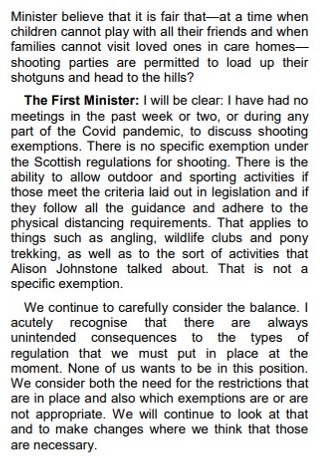
Chris Packham in conversation with Alison Johnstone MSP

Yesterday evening Chris Packham was in conversation with Alison Johnstone MSP of the Scottish Greens, talking about the future of driven grouse shooting in Scotland.

This took place as part of the joint e-action campaign by Wild Justice, RSPB and Hen Harrier Action to encourage UK voters to contact their elected representatives principally about tackling the ongoing illegal killing of birds of prey on driven grouse moors. Yesterday the total soared past 100,000 emails.

This conversation between Chris and Alison is well worth a listen.

Here are some highlights:

Chris Packham:A 100,000 emails, Alison, what has this meant to elected representatives who’ve come in, opened their computer inbox and sat down and seen them?

Alison Johnstone:It’s left elected representatives like myself in no doubt whatsoever as to the strength of public feeling.

We know that people want action, they’re absolutely sick to the back teeth of hearing that another bird of prey has been persecuted. This afternoon I went in to my Parliamentary inbox and I would say every couple of minutes I’m receiving one of these emails.

In Parliament during the week, one of my colleagues said, ‘Oh, could you..’ (I would say not a Green colleague of course), one of my colleagues laughingly said, ‘Oh, could you not do anything to stop those emails coming in?’ And I said, ‘You know, I’d really like to claim credit for that fabulous campaign but that’s down to the RSPB, Wild Justice and Hen Harrier Action’. But there is no doubt at all the message is getting across loud and clear, so great work!

Incidentally, Alison’s colleague Mark Ruskell MSP tweeted this morning that he’d received ‘well over 500 emails’ from his own constituents on this topic:

Alison Johnstone: ‘I think the Scottish Government is beginning to understand now that this is actually a vote winner for them.

If they listened to what really concerns people in Scotland, the fact that they’ve received so many emails in recent days about the persecution of birds of prey, when you think about all the other challenges we’re currently facing with Covid 19 pandemic, with the potential of a looming no-deal Brexit, but people still want them to protect the environment, I think that says a lot‘.

The conversation, which also included issues such as the Werritty Review and Alison’s recent success at securing protection for mountain hares (here) but the Scottish Government’s subsequent ‘dragging of feet’ to enact it (here) can be watched in full below (if you can’t access it go to Chris’s social media pages to find the recording):

The e-action currently stands at over 117,000. It closes on tomorrow (Monday 31st Aug) at midnight. As Alison and other politicians have said, every single email counts so please consider joining in if you haven’t already – CLICK HERE.

Thank you

100,000 e-actions sent to politicians urging action on grouse moor reform!

Brilliant news!

The e-action campaign to urge politicians across the UK to take action on grouse moor reform has passed the 100,000 mark!

This campaign was launched just three weeks ago on Hen Harrier Day by Wild Justice, RSPB and Hen Harrier Action and the response from the general public has been phenomenal. Massive thanks to everyone who has joined in.

Wild Justice has written a blog (here) outlining what will happen next. Information will be published via the Wild Justice newsletter so if you haven’t yet signed up for that here’s how to subscribe.

The e-action is open until Monday evening so there’s still time to take part and get your local politician involved – see here.

Chris Packham was live with Iolo Williams as the counter passed the 100,000 mark earlier this afternoon. You can watch a recording here:

This evening at 8pm Chris will be talking to Alison Johnstone MSP of the Scottish Greens. You can watch live on Chris’s twitter and Facebook pages.

Thanks again to everyone who has contributed to this effort – change only happens when people stand up together.

Lamb euthanised after stepping on illegally-set spring trap in North York Moors National Park

A lamb has been euthanised after being found in the North York Moors National Park with an illegally-set spring-trap attached to its leg.

The lamb was discovered on 8th August 2020 and was seen by a vet, who reported a nasty bone infection tracking up the lamb’s leg from the trap injury. A decision was taken to euthanise the stricken animal.

The use of this type of spring trap (a Fenn trap) became subject to new regulations in April this year as it is no longer considered humane for killing stoats. Gamekeepers have been urged to stop using them altogether in most situations and switch to a trap with a different design (e.g. see here and here).

Nevertheless, even if the operator of this particular trap had a defence for its lawful use, it would appear that it had still been set illegally if this lamb had managed to get its leg caught in it. Spring traps have to be placed inside a tunnel (artificial or natural) with excluders at each end to prevent non-target species entering the tunnel and getting caught.

Of course, even though the police are investigating this incident the chance of anyone being prosecuted is absolutely zero because it would be virtually impossible to determine who had set the trap. Even if there was a lawful requirement for the trap operator to have an identifying tag on the trap (which there isn’t), the police would still have enormous difficulty finding sufficient evidence to demonstrate it had been set by the operator and not by a third party.

What the police can do, though, is to visit the landowners in this area and ‘give them advice’ about the lawful use of traps.

Interestingly, this lamb was found on land close to Hutton-le-Hole, which is remarkably close to where the suspected poisoned sparrowhawk was reported a few days ago (here) and where a satellite-tagged hen harrier ‘disappeared’ in 2018 (see here).

Anyone with information about any of these cases, please contact PC Jez Walmsley at Malton Police Station on 101.