The Yorkshire Dales Bird of Prey ‘Partnership’ has published its latest evidence report documenting the status of raptors and details of confirmed illegal persecution incidents between 2022-2023.
I wrote about the establishment of this so-called ‘partnership’ in 2022 (see here) and again in June 2023 when the RSPB walked out, citing familiar problems with the involvement of the Moorland Association (see here).
Photo by Ruth Tingay
The latest report suffers from the same issues as previous reports, being data-poor for most species (making it impossible to evaluate the status of many breeding raptors) and in this report there seems to be some misleading detail about the apparent ‘success’ of breeding hen harriers in the area, which I’m pretty sure includes data from brood meddled nests where the chicks were removed from the wild, reared in captivity and then released elsewhere, so not quite the natural success that readers are being led to believe.
The report does however include details of the many confirmed and suspected ongoing incidents of hen harrier persecution in this area, which led to the police executing a search warrant on an unnamed grouse moor in the Yorkshire Dales National Park around the same time this report was published (see here).
It was also interesting to read about the disappearance of a young satellite-tagged white-tagged eagle (originally from the Isle of Wight reintroduction problem) in March 2022 – I don’t think I’d read about that before.
To summarise, birds of prey are still being found killed and many are still ‘disappearing’ in this grouse moor-dominated National Park and it’s not clear to me what this so-called ‘partnership’ has achieved.
As David Butterworth, Chief Executive of the Yorkshire Dales National Park Authority said in December 2023 (here) when he was responding to the RSPB’s 2022 BirdCrime Report:
“We are currently preparing a new evidence report on bird of prey populations in the National Park on behalf of the Yorkshire Dales Bird of Prey Partnership. We hope this report will be published in the coming weeks. Sadly all of this will count for little whilst the persecution of Birds of Prey continues“.
Press release from North Yorkshire Police (18 April 2024):
HEN HARRIER OPERATION ON THE HUNT FOR SUSPECTS IN THE YORKSHIRE DALES
On Wednesday, (17 April 2024), a National Harrier Task Force operation was held at an undisclosed location in the Yorkshire Dales.
Our Rural Task Force deployed with the National Wildlife Crime Unit on a warrant to search land and premises that are suspected to be linked to the illegal killing of Hen Harriers and the theft of satellite tags.
Photo supplied by North Yorkshire Police
Photo supplied by North Yorkshire Police
Police Sergeant David Lund, of the Rural Task Force, said:
“The searches were conducted by dedicated police officers and staff who used detection dogs, drones, radio tracking and metal detectors.
“We are pushing the boundaries with new tactics and equipment as well as with innovative new partnerships. This includes the use of wildlife crime detection dogs and drones.
“With these additional assets, we are able to expand our search parameters significantly which will strengthen our chance of bringing perpetrators to justice.
“We want to send a strong message that the persecution of Hen Harriers will not be tolerated in North Yorkshire.”
The investigation is ongoing and North Yorkshire Police’s Rural Task Force are appealing for anyone with information about suspected offending to get in touch.
If you can help, please make a report via the North Yorkshire Police website or by calling 101, option 4, and speak to the Force Control Room.
Alternatively, contact Crimestoppers anonymously on 0800 555 111 or make an online report.
ENDS
This is very encouraging and well done to North Yorkshire Police for publicising what looks to be an enthusiastic search effort.
The location hasn’t been disclosed but from the photos provided by the police it’s quite clear this is a grouse moor (muirburn strips in the background and a medicated grit tray and marker to the right of the officer holding the metal detector) and it wouldn’t be difficult to make an educated guess about which estate this is.
It’s also not clear whether the search warrant was granted on the basis of a new, yet-to-be-reported recent hen harrier persecution incident or whether it was based on previous evidence of widespread hen harrier persecution in the Yorkshire Dales National Park – e.g. at least 24 of the 123 hen harriers known to have ‘disappeared’ in suspicious circumstances or been illegally killed in the UK since 2018, took place in the Yorkshire Dales National Park, with a number of them clustered around one particular area – see here.
Further to yesterday’s blog which provided a broad overview of the status of the Hen Harrier in the UK and the Isle of Man after the 2022/2023 national survey, today’s blog focuses specifically on Scotland.
The RSPB published a Scotland-specific press release, as follows:
HEN HARRIER SURVEY GIVES CAUSE FOR OPTIMISM, BUT BIRD STILL FACING THREATS
Numbers of Hen Harrier, one of Scotland’s rarest birds of prey, are on the increase, but recovery still has some way to go according to a new survey.
Results of the 2023 Hen Harrier survey have been released, which show how populations of Hen Harriers are faring throughout the UK and Isle of Man, but it’s a mixed picture, with some populations doing better than in previous years, while others are in decline.
The results give some cause for optimism – the Scottish population is estimated to be 529 territorial pairs, up by 15 per cent since the last survey in 2016. Seventy-seven per cent of the UK and Isle of Man population of Hen Harriers breed in Scotland.
However, in 2023 Hen Harriers were still far less abundant or widespread than they should be. The population of Scottish Hen Harriers is currently less than a third of its potential, with 16 per cent fewer birds than twenty years ago, and numbers breeding on grouse moors continue to decline.
The west Highlands, Hebrides and Orkney continued to provide a home for the majority of Scotland’s breeding harriers. The population remains low on parts of the mainland, where human persecution continues to be a constraint on their numbers, as evidenced by satellite-tagged Hen Harriers continuing to disappear, mainly in areas managed for grouse shooting.
For the first time since national Hen Harrier surveys began, the Hebrides held the second largest population in Scotland, with an estimated 110 territorial pairs – a huge 125 per cent increase since 2016. Much of this is the result of an expanding population on Lewis since 2016.
There was also a significant increase of 69 per cent in the East Highlands, due to steady increases in two large areas where significant habitat restoration programmes are taking place and with benefits for all wildlife.
Orkney and the North Highlands showed increases of 15 per cent and 12 per cent respectively, while the West Highlands showed a modest decline of five per cent.
Sadly, the Southern Uplands saw a very steep 32 per cent decline. Four Special Protection Areas (SPAs) are designated by NatureScot for this species in the south of Scotland, and they now only breed on one, community-owned land at Langholm.
Duncan Orr-Ewing, Head of Species and Land Management for RSPB Scotland, said:
“The results of the latest Hen Harrier survey show there is cause for optimism, and some encouraging signs of population recovery in parts of Scotland, particularly the Western Isles, which we hope to see continue.
“Sadly, Hen Harrier persecution continues. Just last month, a satellite-tagged Hen Harrier disappeared in the Angus Glens. The illegal killing associated with intensive grouse moor management must stop. We are calling on Police Scotland to ensure all satellite tagged raptors disappearing in suspicious circumstances be recorded as a crime.
“With the passing of the Wildlife Management and Muirburn Bill by the Scottish Parliament, all grouse shooting in Scotland will require a licence, which can be revoked if there is evidence of raptor persecution and other forms of wildlife crime, that is linked to a particular landholding.
“In our view the passing of the Wildlife Management and Muirburn (Scotland) Bill should provide a significant deterrent to wildlife crime, and we should now expect now to see Hen Harrier populations on grouse moors increasing. The Bill also contains important changes to the law with regards burning on moorland which should improve nesting habitats for Hen Harriers.”
The Bill, which was recently passed by the Scottish Parliament, was the result of more than two decades of campaigning by RSPB Scotland and others to tackle wildlife crime.
Eileen Stuart, NatureScot’s Deputy Director of Nature and Climate Change, said:
“It is encouraging to see an overall increase in the population of one of our most spectacular raptors, however we need this recovery to be sustained in the long-term to meet biodiversity goals.
“We are pleased that Scotland remains a stronghold for Hen Harriers but persecution is still limiting populations in some areas and we anticipate that the Wildlife Management and Muirburn Bill recently passed by the Scottish Parliament will help address this.
“We must also not lose sight of other factors which can affect the species, including changes in forestry and agricultural management and potentially climate change as unpredictable weather can affect breeding performance.”
The Hen Harrier survey was carried out across the UK in 2023 as a nationwide partnership between the RSPB, NatureScot, Natural Resource Wales, Natural England, Department of Agriculture, Environment and Rural Affairs-Northern Ireland, the Scottish Raptor Study Group, the Northern Ireland Raptor Study Group, Northern England Raptor Forum and Manx BirdLife, with the support of many volunteers, landowners, land managers and farmers.
ENDS
Superficially, the overall moderate increase in Scotland’s Hen Harrier population looks encouraging, but just as with the earlier Golden Eagle national survey (here), the overall results mask significant regional differences indicating that illegal persecution is still a major constraint on population expansion in some areas.
It’s very telling that the most significant increases for Hen Harriers, just like Golden Eagles, are in regions that are not dominated by intensive driven grouse shooting, especially the Hebrides. And in the Eastern Highlands, which is partly a grouse-moor dominated landscape, the increase is largely down to the rewilding management being undertaken by Wildland and the Mar Lodge Estate.
Wildland is a collection of estates in the Cairngorms and Sutherland, many of them former grouse moors, bought by the Polvsen family and being managed with an impressive vision for conservation. Wildland is also a pivotal partner in the wider conservation project called Cairngorms Connect (see website here) which ambitiously aims to restore ecological processes, habitats and species across an enormous area of the Cairngorms National Park.
The Mar Lodge Estate is managed by the National Trust for Scotland who bought the estate in 1996 and subsequently decided to stop muirburning. Hen Harriers began recolonising the estate in 2016 (see here). This is now a significant location for breeding Hen Harriers in the eastern Cairngorms – I’ve got more to say about it in the context of the wider Eastern Cairngorms Moorland Partnership but that’ll have to be in a separate blog.
It’s also worth noting that the former grouse moor at Langholm, now the community-owned Tarras Valley Nature Reserve, is the only SPA (Special Protection Area) of four in the Southern Uplands designated for Hen Harriers where Hen Harriers are breeding successfully.
The continuing absence of breeding Hen Harriers on many Scottish grouse moors shouldn’t be a surprise to anyone (e.g. see here) and it’ll be interesting to see whether the new Wildlife Management & Muirburn (Scotland) Bill will have an effect. Monitoring of Hen Harriers (as well as Golden Eagles, Peregrines and Merlins) will be used to assess the efficacy of this new legislation at five-yearly intervals. Given that the current national population of Hen Harriers in Scotland is still under a third of the country’s expected carrying capacity for this species, there is much scope for expansion into these grouse moor areas and that should happen if the threat of an estate losing its grouse moor licence is sufficient deterrent for gamekeepers to stop killing these birds.
The next national Hen Harrier survey, in approx 6-7 years time, will be very telling indeed.
Yesterday the RSPB published a press release (see below) about the status of the Hen Harrier across the UK and Isle of Man following the national Hen Harrier survey conducted in 2023 (UK-wide) and 2022 (Isle of Man).
This press release provides a UK-wide overview (as well as the Isle of Man). I’ll publish a Scotland-specific press release later today.
Unfortunately, the peer-reviewed scientific paper that provides a much more in depth analysis of the figures than a summarising press release, is not yet available.
Hen harrier photo by Ian Poxton
Here’s the RSPB press release summarising the survey results across the UK and Isle of Man:
HEN HARRIER SURVEY RESULTS2023: NUMBERS IMPROVE, BUT MUCH MORE TO BE DONE
Numbers of one of the UK’s rarest birds of prey, the Hen Harrier, are increasing across the UK, but their future still hangs in the balance according to a new survey.
Results of the 2023 Hen Harrier survey have been released, which show how populations of Hen Harriers are faring throughout the UK and Isle of Man, but it’s a mixed picture, with some populations doing better than in previous years, while others are in decline.
The results give some cause for optimism – the UK and Isle of Man population is estimated to be 691 territorial pairs, of which 653 are found in UK. This is a 20% increase from the 545 pairs recorded in the last survey in 2016 and also arrests the trend of decline shown since the 2004 survey, when 749 pairs were recorded.
However, Hen Harriers remain far less abundant or widespread than they should be, and the new population estimate represents only a quarter of the potential population their ideal habitat can support.
Across all four countries of the UK, there is huge variation between populations. England has seen the biggest increase since 2016. Natural England data shows there were 54 Hen Harrier breeding attempts by 50 territorial pairs in 2023 – a substantial 1,150% increase from just the four pairs recorded in 2016.
But while the 2023 figures may look encouraging, Hen Harriers remain absent from large parts of England, including the Peak District and North York Moors – where there are substantial areas of their ideal habitat per 100km sq.
Katie-Jo Luxton, the RSPB’s executive director of global conservation said:
“While there have been encouraging signs since 2016 a closer look shows there’s much more to be done to address the differences across the UK. For example, England has seen the biggest increase, which is welcome news, but the starting point was shockingly low, and well below where we would expect healthy populations of these birds to be given the habitat available to them.
“The work we and others have been doing to restore these populations is incredibly important, and we need to make sure it continues and that we step up our efforts to tackle the illegal killing of birds of prey.”
Disappearances and persecution of satellite-tagged birds shows illegal persecution continues to hamper population recovery. Combined Natural England and RSPB data shows a shocking 32 satellite-tagged Hen Harriers vanished or were confirmed as being illegally killed in England in 2023 – the highest recorded number of Hen Harriers killed or suspiciously disappeared in one year. [Ed: Actually it’s 33 satellite-tagged hen harriers, not 32 – the figure was updated in January 2024 after Natural England released more data: see here].
There was a mixed picture for Hen Harriers in Scotland. The overall population was estimated at 529 territorial pairs, up by 15% since 2016, giving Scotland 77% of the UK and Isle of Man population.
The west Highlands, Hebrides and Orkney continued to provide a home for the majority of Scotland’s breeding harriers. The population remains low on parts of the mainland, where persecution continues to be a likely constraint on their numbers, as evidenced by satellite-tagged Hen Harriers continuing to disappear, mainly in areas managed for grouse shooting.
Elsewhere, the 2023 survey recorded 40 territorial pairs in Wales, up from 35 in 2016. More than half of the Hen Harrier pairs were in the two Special Protected Areas (SPAs) designated for breeding harriers, Berwyn in Northeast Wales and Migneint-Arenig-Dduallt in the northwest.
Northern Ireland recorded only 34 territorial pairs in 2023, a decrease of about 26% which is linked to loss of habitat, increasingly poor habitat quality, and a range of disturbances, a decline which mirrors the 33% population decrease within the Republic of Ireland seen in 2022.
In the Isle of Man, a total of 38 territorial pairs were recorded last year, the highest count since 2004 when the Manx breeding population peaked at 57 pairs.
Simon Wotton, RSPB senior conservation scientist added:
“As the results of the 2023 survey show, the UK has seen an increase in Hen Harriers, which is very welcome, but the overall population is still well below where it should be.
“The reasons for Hen Harriers continuing to be far below their potential population are complex, but one of the primary causes is that continuing illegal killing, typically associated with intensive grouse moor management, is stifling their full recovery.
“With the UK population at around a quarter of its estimated potential, there so much more to do to secure a meaningful recovery. The recent Wildlife Management and Muirburn Bill includes specific monitoring and reporting of Hen Harrier populations on grouse moors in Scotland to the Scottish Parliament and will be an important step in assessing progress with their recovery in these areas.”
The Scottish Government recently passed the Wildlife Management and Muirburn (Scotland) Bill which will introduce licencing for grouse shooting in Scotland, alongside measures to protect the habitats Hen Harriers need to thrive.
The RSPB hopes the success in Scotland will lead to similar legislation in England, and that and landscape restoration in Wales and Northern Ireland lead to a brighter future for Hen Harriers in the UK.
ENDS
A couple of blogs written in response to these findings are worth a read: Mark Avery (here) and Mike Shurmer, RSPB Head of Species (here).
More on the Scotland-specific results shortly…
UPDATE 10th April 2024: Breeding Hen Harriers continue to decline on Scottish grouse moors (here)
For anyone who still wants to pretend that the grouse shooting industry isn’t responsible for the systematic extermination of hen harriers on grouse moors across the UK, here’s the latest catalogue of crime that suggests otherwise.
[This male hen harrier died in 2019 after his leg was almost severed in an illegally set trap that had been placed next to his nest on a Scottish grouse moor (see here). Photo by Ruth Tingay]
This is the blog I now publish after every reported killing or suspicious disappearance.
“They disappear in the same way political dissidents in authoritarian dictatorships have disappeared” (Stephen Barlow, 22 January 2021).
Today the list has been updated to include the most recently reported victim, a satellite-tagged hen harrier called ‘Shalimar’ that disappeared in suspicious circumstances on a grouse moor in the Angus Glens on 15 February 2024 (here).
I’ve been compiling this list only since 2018 because that is the year that the grouse shooting industry ‘leaders’ would have us believe that the criminal persecution of hen harriers had stopped and that these birds were being welcomed back on to the UK’s grouse moors (see here).
This assertion was made shortly before the publication of a devastating new scientific paper that demonstrated that 72% of satellite-tagged hen harriers were confirmed or considered likely to have been illegally killed, and this was ten times more likely to occur over areas of land managed for grouse shooting relative to other land uses (see here). Incidentally, a further scientific paper published in 2023 by scientists at the RSPB, utilising even more recent data, echoed these results – see here).
2018 was also the year that Natural England issued a licence to begin a hen harrier brood meddling trial on grouse moors in northern England. For new blog readers, hen harrier brood meddling is a conservation sham sanctioned by DEFRA as part of its ludicrous ‘Hen Harrier Action Plan‘ and carried out by Natural England (NE), in cahoots with the very industry responsible for the species’ catastrophic decline in England. For more background see here and for a critical evaluation of the trial after 5 years see this report by Wild Justice.
Brood meddling has been described as a sort of ‘gentleman’s agreement’ by commentator Stephen Welch:
“I don’t get it, I thought the idea of that scheme was some kind of trade off – a gentleman’s agreement that the birds would be left in peace if they were moved from grouse moors at a certain density. It seems that one party is not keeping their side of the bargain“.
With at least 123 hen harriers gone since 2018, and 27 of those being brood meddled birds, there is no question that the grouse shooting industry is simply taking the piss. Meanwhile, Natural England pretends that ‘partnership working’ is the way to go and DEFRA Ministers remain silent.
*n/a – no hen harriers were brood meddled in 2018
‘Partnership working’ according to Natural England appears to include authorising the removal of hen harrier chicks from a grouse moor already under investigation by the police for suspected raptor persecution (here) and accepting a £75k ‘donation’ from representatives of the grouse shooting industry that prevents Natural England from criticising them or the sham brood meddling trial (see here). This is in addition to a £10k ‘donation’ that Natural England accepted, under the same terms, in 2021 (here).
Thankfully, the Scottish Government has finally decided to act by introducing a grouse moor licensing scheme under the Wildlife Management & Muirburn (Scotland) Bill. This new legislation, due to be voted on by the Scottish Parliament today, will mean that grouse shooting estates will have their licences suspended/revoked if, on the balance of probability, it is shown that any new raptor persecution crimes are linked with grouse moor management on that estate.
So here’s the latest gruesome list. Note that the majority of these birds (but not all) were fitted with satellite tags. How many more [untagged] harriers have been killed?
February 2018: Hen harrier Saorsa ‘disappeared’ in the Angus Glens in Scotland (here). The Scottish Gamekeepers Association later published wholly inaccurate information claiming the bird had been re-sighted. The RSPB dismissed this as “completely false” (here).
5 February 2018: Hen harrier Marc ‘disappeared’ on a grouse moor in Durham (here).
9 February 2018: Hen harrier Aalin ‘disappeared’ on a grouse moor in Wales (here).
March 2018: Hen harrier Blue ‘disappeared’ in the Lake District National Park (here).
March 2018: Hen harrier Finn ‘disappeared’ near Moffat in Scotland (here).
18 April 2018: Hen harrier Lia ‘disappeared’ in Wales and her corpse was retrieved in a field in May 2018. Cause of death was unconfirmed but police treating death as suspicious (here).
8 August 2018: Hen harrier Hilma ‘disappeared’ on a grouse moor in Northumberland (here).
16 August 2018: Hen harrier Athena ‘disappeared’ on a grouse moor in Scotland (here).
26 August 2018: Hen Harrier Octavia ‘disappeared’ on a grouse moor in the Peak District National Park (here).
29 August 2018: Hen harrier Margot ‘disappeared’ on a grouse moor in Scotland (here).
29 August 2018: Hen Harrier Heulwen ‘disappeared’ on a grouse moor in Wales (here).
3 September 2018: Hen harrier Stelmaria ‘disappeared’ on a grouse moor in Scotland (here).
24 September 2018: Hen harrier Heather ‘disappeared’ on a grouse moor in Scotland (here).
2 October 2018: Hen harrier Mabel ‘disappeared’ on a grouse moor on the edge of the Yorkshire Dales National Park (here).
3 October 2018: Hen Harrier Thor ‘disappeared’ next to a grouse moor in Bowland, Lanacashire (here).
23 October 2018: Hen harrier Tom ‘disappeared’ in South Wales (here).
26 October 2018: Hen harrier Arthur ‘disappeared’ on a grouse moor in the North York Moors National Park (here).
1 November 2018: Hen harrier Barney ‘disappeared’ on Bodmin Moor (here).
10 November 2018: Hen harrier Rannoch ‘disappeared’ on a grouse moor in Scotland (here). Her corpse was found nearby in May 2019 – she’d been killed in an illegally-set spring trap (here).
14 November 2018: Hen harrier River ‘disappeared’ on a grouse moor in the Nidderdale AONB (here). Her corpse was found nearby in April 2019 – she’d been illegally shot (here).
16 January 2019: Hen harrier Vulcan ‘disappeared’ in Wiltshire close to Natural England’s proposed reintroduction site (here).
28 January 2019: Hen harrier DeeCee ‘disappeared’ in Glen Esk, a grouse moor area of the Angus Glens (see here).
7 February 2019: Hen harrier Skylar ‘disappeared’ next to a grouse moor in South Lanarkshire (here).
22 April 2019: Hen harrier Marci ‘disappeared’ on a grouse moor in the Cairngorms National Park (here).
26 April 2019: Hen harrier Rain ‘disappeared’ on a grouse moor in Nairnshire (here).
11 May 2019: An untagged male hen harrier was caught in an illegally-set trap next to his nest on a grouse moor in South Lanarkshire. He didn’t survive (here).
7 June 2019: An untagged hen harrier was found dead on a grouse moor in Scotland. A post mortem stated the bird had died as a result of ‘penetrating trauma’ injuries and that this bird had previously been shot (here).
5 September 2019: Wildland Hen Harrier 1 ‘disappeared’ on a grouse moor nr Dalnaspidal on the edge of the Cairngorms National Park (here).
11 September 2019: Hen harrier Romario ‘disappeared’ on a grouse moor in the Cairngorms National Park (here).
14 September 2019: Hen harrier (Brood meddled in 2019, #183704) ‘disappeared’ in the North Pennines (here).
23 September 2019: Hen harrier (Brood meddled in 2019, #55149) ‘disappeared’ in North Pennines (here).
24 September 2019: Wildland Hen Harrier 2 ‘disappeared’ on a grouse moor at Invercauld in the Cairngorms National Park (here).
24 September 2019: Hen harrier Bronwyn ‘disappeared’ near a grouse moor in North Wales (here).
10 October 2019: Hen harrier Ada ‘disappeared’ on a grouse moor in the North Pennines AONB (here).
12 October 2019: Hen harrier Thistle ‘disappeared’ on a grouse moor in Sutherland (here).
18 October 2019: Member of the public reports the witnessed shooting of an untagged male hen harrier on White Syke Hill in North Yorkshire (here).
November 2019: Hen harrier Mary found illegally poisoned on a pheasant shoot in Ireland (here).
November 2019: Hen harrier Artemis ‘disappeared’ near Long Formacus in south Scotland (RSPB pers comm).
14 December 2019: Hen harrier Oscar ‘disappeared’ in Eskdalemuir, south Scotland (here).
December 2019: Hen harrier Ingmar ‘disappeared’ in the Strathbraan grouse moor area of Perthshire (RSPB pers comm).
January 2020: Members of the public report the witnessed shooting of a male hen harrier on Threshfield Moor in the Yorkshire Dales National Park (here).
23 March 2020: Hen harrier Rosie ‘disappeared’ at an undisclosed roost site in Northumberland (here).
1 April 2020: Hen harrier (Brood meddled in 2019, #183703) ‘disappeared’ in unnamed location, tag intermittent (here).
5 April 2020: Hen harrier Hoolie ‘disappeared’ on a grouse moor in the Cairngorms National Park (here)
8 April 2020: Hen harrier Marlin ‘disappeared’ on a grouse moor in the Cairngorms National Park (here).
19 May 2020: Hen harrier Fingal ‘disappeared’ on a grouse moor in the Lowther Hills, Scotland (here).
21 May 2020: Hen harrier (Brood meddled in 2019, #183701) ‘disappeared’ on a grouse moor in Cumbria shortly after returning from wintering in France (here).
27 May 2020: Hen harrier Silver ‘disappeared’ on a grouse moor on Leadhills Estate, Scotland (here).
2020: day/month unknown: Unnamed male hen harrier breeding on RSPB Geltsdale Reserve, Cumbria ‘disappeared’ while away hunting (here).
9 July 2020: Unnamed female hen harrier (#201118) ‘disappeared’ from an undisclosed site in Northumberland (here).
25 July 2020: Hen harrier Harriet ‘disappeared’ on a grouse moor in the Yorkshire Dales National Park (here).
14 August 2020: Hen harrier Solo ‘disappeared’ in confidential nest area in Lancashire (here).
7 September 2020: Hen harrier Dryad ‘disappeared’ on a grouse moor in the Yorkshire Dales National Park (here).
16 September 2020: Hen harrier Fortune ‘disappeared’ from an undisclosed roost site in Northumberland (here).
19 September 2020: Hen harrier Harold ‘disappeared’ on a grouse moor in the Yorkshire Dales National Park (here).
20 September 2020: Hen harrier (Brood meddled in 2020, #55152) ‘disappeared’ next to a grouse moor in North Yorkshire (here).
24 February 2021: Hen harrier Tarras ‘disappeared’ next to a grouse moor in Northumberland (here)
12th April 2021: Hen harrier Yarrow ‘disappeared’ near Stockton, County Durham (here).
18 May 2021: Adult male hen harrier ‘disappeared’ from its breeding attempt on RSPB Geltsdale Reserve, Cumbria whilst away hunting (here).
18 May 2021: Another adult male hen harrier ‘disappeared’ from its breeding attempt on RSPB Geltsdale Reserve, Cumbria whilst away hunting (here).
24 July 2021: Hen harrier Asta ‘disappeared’ at a ‘confidential site’ in the North Pennines (here). We learned 18 months later that her wings had been ripped off so her tag could be fitted to a crow in an attempt to cover up her death (here).
14th August 2021: Hen harrier Josephine ‘disappeared’ at a ‘confidential site’ in Northumberland (here).
17 September 2021: Hen harrier Reiver ‘disappeared’ in a grouse moor dominated region of Northumberland (here)
24 September 2021: Hen harrier (Brood meddled in 2021, R2-F-1-21) ‘disappeared’ in Northumberland (here).
15 November 2021: Hen harrier (brood meddled in 2020, #R2-F1-20) ‘disappeared’ at the edge of a grouse moor on Arkengarthdale Estate in the Yorkshire Dales National Park (here).
19 November 2021: Hen harrier Val ‘disappeared’ in the Lake District National Park in Cumbria (here).
19 November 2021: Hen harrier Percy ‘disappeared’ in Lothian, Scotland (here).
12 December 2021: Hen harrier Jasmine ‘disappeared’ on a grouse moor (High Rigg Moor on the Middlesmoor Estate) in the Nidderdale AONB in North Yorkshire (here).
9 January 2022: Hen harrier Ethel ‘disappeared’ in Northumberland (here).
26 January 2022: Hen harrier Amelia ‘disappeared’ in Bowland (here).
10 February 2022: An unnamed satellite-tagged hen harrier ‘disappeared’ in a grouse moor dominated area of the Peak District National Park (here). One year later it was revealed that the satellite tag/harness of this young male called ‘Anu’ had been deliberately cut off (see here).
12 April 2022: Hen harrier ‘Free’ (Tag ID 201121) ‘disappeared’ at a ‘confidential site’ in Cumbria (here). It later emerged he hadn’t disappeared, but his mutilated corpse was found on moorland in the Yorkshire Dales National Park. A post mortem revealed the cause of death was having his head twisted and pulled off. One leg had also been torn off whilst he was still alive (here).
April 2022: Hen harrier ‘Pegasus’ (tagged by the RSPB) ‘disappeared’ on a grouse moor at Birkdale in the Yorkshire Dales National Park (here).
May 2022: A male breeding hen harrier ‘disappeared’ from a National Trust-owned grouse moor in the Peak District National Park (here).
May 2022: Another breeding male hen harrier ‘disappeared’ from a National Trust-owned grouse moor in the Peak District National Park (here).
14 May 2022: Hen harrier ‘Harvey’ (Tag ID 213844) ‘disappeared’ from a ‘confidential site’ in the North Pennines (here).
20 June 2022: Hen harrier chick #1 stamped to death in nest on a grouse moor in the Yorkshire Dales National Park (here).
20 June 2022: Hen harrier chick #2 stamped to death in nest on a grouse moor in the Yorkshire Dales National Park (here).
20 June 2022: Hen harrier chick #3 stamped to death in nest on a grouse moor in the Yorkshire Dales National Park (here).
20 June 2022: Hen harrier chick #4 stamped to death in nest on a grouse moor in the Yorkshire Dales National Park (here).
17 August 2022: Hen harrier (brood meddled in 2022, #R1-M1-22) ‘disappeared’ on moorland in the Yorkshire Dales National Park (here).
September 2022: Hen harrier ‘Sullis’ (tagged by the RSPB) ‘disappeared’ on a grouse moor in Cumbria (here).
5 October 2022: Hen harrier (brood meddled in 2022, #R3-M2-22) ‘disappeared’ on moorland in the Yorkshire Dales National Park (here).
10 October 2022: Hen harrier ‘Sia’ ‘disappeared’ near Hamsterley Forest in the North Pennines (here).
October 2022: Hen harrier (brood meddled in 2021, #R1-F1-21) ‘disappeared’ in the North Sea off the North York Moors National Park (here).
December 2022: Hen harrier female (brood meddled in 2020, #R2-F2-20) ‘disappeared’ on moorland in Cumbria (here).
1 December 2022: Hen harrier male (brood meddled in 2021, #R1-M1-21) ‘disappeared’ on moorland in the Yorkshire Dales National Park (here).
14 December 2022: Hen harrier female (brood meddled in 2022, #R3-F1-22) ‘disappeared’ on moorland in the North Pennines AONB (here).
15 December 2022: Hen harrier female (brood meddled in 2022, #R2-F1-22) ‘disappeared’ on moorland in the Yorkshire Dales National Park (here).
30 March 2023: Hen harrier female (brood meddled in 2022, #R1-F3-22) ‘disappeared’ in Yorkshire (here). Notes from NE Sept 2023 spreadsheet update: “Final transmission location temporarily withheld at police request“.
1 April 2023: Hen harrier male (brood meddled in 2022, #R2-M1-22) ‘disappeared’ in Yorkshire (here). Notes from NE Sept 2023 spreadsheet update: “Final transmission location temporarily withheld at police request“.
April 2023: Hen harrier ‘Lagertha’ (tagged by RSPB) ‘disappeared’ in North Yorkshire (here).
April 2023: Hen harrier ‘Nicola’ (Tag ID 234078) ”disappeared’ in North Yorkshire (here).
April 2023: Untagged male hen harrier ‘disappeared’ from an active nest on RSPB Geltsdale Reserve in Cumbria (here).
April 2023: Another untagged male hen harrier ‘disappeared’ from an active nest on RSPB Geltsdale Reserve in Cumbria (here).
April 2023: Untagged male hen harrier ‘disappeared’ from an active nest in Durham (here).
4/5 May 2023: Satellite-tagged male hen harrier called ‘Rush’ ‘disappeared’ from a grouse moor in Bowland AONB in Lancashire (here).
9/10 May 2023: Hen harrier male called ‘Dagda’, tagged by the RSPB in Lancashire in June 2022 and who was breeding on the RSPB’s Geltsdale Reserve in 2023 until he ‘vanished’, only to be found dead on the neighbouring Knarsdale grouse moor in May 2023 – a post mortem revealed he had been shot (here).
17 May 2023: Satellite-tagged hen harrier called ‘Wayland’ ‘disappeared’ in the Clapham area of North Yorkshire, just north of the Bowland AONB (here).
31 May 2023: Hen harrier male (brood meddled in 2022, tag #213932, name: R2-M3-22) ‘disappeared’ in Northumberland (grid ref: NY765687) (here).
11 June 2023: Hen harrier male (brood meddled in 2021, tag #213922, name: R2-M1-21) ‘disappeared’ at a confidential site in the Yorkshire Dales National Park. Notes from the NE spreadsheet: “Final transmission location temporarily withheld at police request“ (here).
12 June 2023: Hen harrier male (brood meddled in 2020, tag #203004, name: R1-M2-20) ‘disappeared’ on a grouse moor in Co. Durham (grid ref: NY976322) (here).
6 July 2023: Satellite-tagged female hen harrier named ‘Rubi’ (tag #201124a) ‘disappeared’ on a grouse moor in Co. Durham (grid ref: NY911151) (here).
23 July 2023: Hen harrier female (brood meddled in 2023, tag #55154a, name: R1-F1-23) ‘disappeared’ on a grouse moor in Co. Durham (close to where ‘Rubi’ vanished), grid ref: NY910126 (here).
29 July 2023: Hen harrier female (brood meddled in 2020, tag #55144, name: R2-F2-20) ‘disappeared’ at a confidential site in the North Pennines. Notes from the NE spreadsheet: “Dead. Recovered – awaiting PM results. Final transmission location temporarily withheld at police request“ (here).
9 August 2023: Satellite-tagged hen harrier called ‘Martha’ ‘disappeared’ on a grouse moor (Westburnhope Moor) near Hexham in the North Pennines (here).
11 August 2023: Satellite-tagged hen harrier called ‘Selena’ ‘disappeared’ on a grouse moor (Mossdale Moor) in the Yorkshire Dales National Park (here).
11 August 2023: Hen harrier female (brood meddled in 2023, tag #201118a, name: R3-F1-23) ‘disappeared’ in Co. Durham (grid ref: NZ072136) (here).
15 August 2023: Satellite-tagged hen harrier called ‘Hepit’ ‘disappeared’ on a grouse moor (Birkdale Common) near Kirkby Stephen in the Yorkshire Dales National Park (here).
24 August 2023: Hen harrier female (brood meddled in 2023, tag #55155a, name: R1-F2-23) ‘disappeared’ at a confidential site in Northumberland. Notes from the NE spreadsheet: “Final transmission location temporarily withheld at police request“ (here).
August-Sept 2023: Satellite-tagged hen harrier called ‘Harmonia’ ‘disappeared’ in the Yorkshire Dales National Park (here).
September 2023: Hen harrier female ‘Saranyu’, tagged by the RSPB in Cumbria in June 2023, ‘disappeared’ in Durham in September 2023 (no further details available yet – just outline info provided in 2022 Birdcrime report) (here).
September 2023: Hen harrier female ‘Inger’, a female tagged by the RSPB in Perthshire in July 2022, ‘disappeared’ on a grouse moor in the Angus Glens in September 2023 (here).
15 September 2023: Hen harrier male called ‘Rhys’, tagged in Cumbria on 1st August 2023, ‘disappeared’ on a grouse moor in the Yorkshire Dales National Park. Grid ref: SD798896 (here).
24 September 2023: Hen harrier female (brood meddled in 2023, name: ‘R2-F2-23’) ‘disappeared’ in the North Pennines, grid ref: NY888062 (here).
25 September 2023: Hen harrier female (brood meddled in 2022, name: ‘R1-F4-22’) ‘disappeared’ on a grouse moor in the Yorkshire Dales National Park, grid ref: SE077699 (here).
26 September 2023: Hen harrier female called ‘Hope’, tagged in Cumbria on 21 July 2023, ‘disappeared’ next to a grouse moor in the Yorkshire Dales National Park, grid ref: SD801926 (here).
4 October 2023: Hen harrier male (brood meddled in 2020, name: ‘R1-M3-20’) ‘disappeared’ in Co Durham, grid ref: NY935192 (here).
4 October 2023: Hen harrier female (brood meddled in 2023, name: ‘R4-F1-23’) ‘disappeared’ on a grouse moor in the Yorkshire Dales National Park, grid ref: SE003981 (here).
14 October 2023: Hen harrier male called ‘Cillian’, tagged in Cumbria on 1 August 2023, ‘disappeared’ in south west Scotland, grid ref: NY051946 (here).
15 November 2023: Hen harrier female called ‘Hazel’, tagged in Cumbria on 21 July 2023, ‘disappeared’ on the Isle of Man, grid ref: SC251803 (here).
27 November 2023: Hen harrier female called ‘Gill’, tagged in Northumberland on 10 July 2023, ‘disappeared’ at a confidential location in Teeside (here).
15 February 2024: Hen harrier female called ‘Shalimar’, tagged on the National Trust for Scotland’s Mar Lodge estate in 2023, ‘disappeared’ in suspicious circumstances on a grouse moor in the notorious Angus Glens (here).
To be continued…….
Not one of these 123 incidents has resulted in an arrest, let alone a prosecution. I had thought that when we reached 30 dead/missing hen harriers then the authorities might pretend to be interested and at least say a few words about this national scandal. We’ve now reached ONE HUNDRED AND TWENTY THREE hen harriers, and still Govt ministers remain silent. They appear not to give a monkey’s. And yes, there are other things going on in the world, as always. That is not reason enough to ignore this blatant, brazen and systematic destruction of a supposedly protected species, being undertaken to satisfy the greed and bloodlust of a minority of society.
And let’s not forget the response from the Moorland Association Chair (and owner of Swinton Estate) Mark Cunliffe-Lister, who told BBC Radio 4 in August 2023 that, “Clearly any illegal [hen harrier] persecution is not happening” (here).
Nor should we forget the response from the Game and Wildlife Conservation Trust’s (GWCT) Director of Policy Dr Alistair Leake who wrote a letter to the Guardian newspaper in November 2023 stating that the hen harrier brood management [meddling] scheme “is surely a shining example of human / wildlife conflict resolution that would be the envy of other countries trying to find similar solutions“ (I kid you not – here).
33 hen harriers are known to have gone ‘missing’/been deliberately killed in 2023, making it the worst year for hen harrier persecution since brood meddling began in 2018.
On the day the Scottish Parliament is due to vote through new legislation intended to tackle the ongoing illegal persecution of birds of prey on grouse moors, we learn that yet another satellite-tagged hen harrier has ‘disappeared’ in suspicious circumstances, this time on a grouse moor in the notorious Angus Glens.
If there are any MSPs in the chamber this afternoon who are wavering about whether this new legislation is needed, this news will assure them that yes, it most certainly is.
Press release from RSPB (21 March 2024):
ANOTHER SATELLITE-TAGGED HEN HARRIER ‘SUSPIOUSLY DISAPPEARS’ IN THE ANGUS GLENS IN SCOTLAND
A young Hen Harrier fitted with a satellite-tag to monitor its movements ‘suspiciously disappeared’ in Glen Esk, in the Angus Glens in late February 2024.
This is the fourth sat-tagged Hen Harrier to have suspiciously disappeared in the area since 2017.
Hen Harriers are being persecuted across the UK with many confirmed incidents associated with land managed for gamebird shooting.
RSPB Scotland are appealing for information following the sudden, suspicious disappearance of a satellite-tagged Hen Harrier in Glen Esk in Angus.
The tag fitted to ‘Shalimar’ a young female Hen Harrier, which fledged from a nest on the National Trust for Scotland’s Mar Lodge Estate in Aberdeenshire last summer, was functioning as expected before data transmissions unexpectedly and suddenly stopped on 15 February.
Officers from the National Wildlife Crime Unit and Police Scotland, supported by the RSPB Investigations staff, carried out a search of the area where the bird last transmitted, but failed to find its body or tag.
Hen harrier Shalimar being fitted with her satellite tag. Photo via RSPB
A large area of the Angus Glens is intensively managed for driven grouse shooting and is a notorious raptor persecution hotspot, with multiple confirmed incidents of poisoning, shooting and illegal trapping stretching back over the last 20 years. There have also been several previous incidents where satellite-tagged birds of prey have been killed or ‘suspiciously disappeared’ in the area. Since 2017, this has included four Hen Harriers, a Golden Eagle and a White-tailed Eagle.
Hen Harriers are one of the UK’s rarest birds of prey and, in terms of its population size, the most heavily persecuted species in the country. Several recent independent studies and evidence from historical and on-going criminal investigations have confirmed that the killing of this ‘Red Listed’ species is significantly linked to land managed for Red Grouse shooting and have revealed that the illegal killing of Hen Harriers associated with the grouse shooting industry is the primary constraint on their population.
Ian Thomson, RSPB Scotland’s Head of Investigations said: “The Scottish Parliament has recognised the ongoing link between crimes against birds of prey and the management of some grouse moors by its of passing of the Wildlife Management and Muirburn Bill earlier this week. In future, any landholding linked to wildlife crime faces a loss of its licence to shoot grouse. While these provisions have come just too late to prevent Shalimar becoming the latest Hen Harrier to likely disappear at the hands of criminals, we hope that the new legislation will help to consign raptor persecution to the history books in Scotland”.
The Mar Lodge Estate, near Braemar, is an important area for breeding Hen Harriers, largely as a result of effective habitat management and an overall commitment to conservation. Last year 32 Hen Harriers successfully fledged from nests on the estate, of which four were fitted with satellite-tags by RSPB.
The data received from these sat-tags provides information which allows conservationists to study the movements of these birds, including identifying roost sites, foraging areas and any migration patterns, whilst also helping to detect suspected incidents of persecution. If a tagged bird dies of natural causes, in the vast majority of cases the bird’s tag and its body can be recovered and submitted for post-mortem analysis.
Although in some areas Hen Harriers breeding numbers are improving their survival rate remains low. A paper published in 2023 highlighted that Hen Harrier persecution accounted for 27-43% of mortality of first-year birds, with the lifespan of Hen Harriers after fledging averaging 121 days.
23 Hen Harriers have been tagged at Mar Lodge since 2016. Almost 40% of these satellite-tagged birds have ‘suspiciously disappeared’.
Staff at Mar Lodge are saddened by the apparent loss of Shalimar and the other tagged-harriers that have fledged from the estate. A spokesperson said: “We hope some of the other chicks fledged last year have a more favourable future. Despite these losses we will continue our vital conservation work at Mar Lodge and other NTS properties doing what we can to ensure the survival and recovery of hen harriers and other raptor species.”
If you have information about anyone killing birds of prey which you wish to report please call the police on 101 and fill in the RSPB’s online reporting form here. If you would like to report anonymously, please call the RSPB’s confidential Raptor Crime Hotline on 0300 999 0101 or fill in our reporting form.
We would like to thank Mar Lodge Estate, the NWCU and Police Scotland for their support and positive partnership working.
ENDS
UPDATE 21 March: 123 hen harriers confirmed ‘missing’ or illegally killed in UK since 2018, most of them on or close to grouse moors (here)
The Scottish Parliament’s Rural Affairs & Islands Committee met again on Wednesday 21st February to undertake its second day of consideration of the Stage 2 amendments of the Wildlife Management (grouse moor reform) Bill.
For new readers, this is proposed new legislation to regulate grouse shooting and its associated management practices by way of licensing schemes, introduced because of the continued illegal persecution of birds of prey on many Scottish grouse moors.
A report on what happened during the first day of consideration that took place two weeks ago can be found here.
Newly appointed Agriculture Minister Jim Fairlie MSP was in the hot seat. Screengrab from Scottish Parliament TV, 21 Feb 2024
Two separate sessions were required on Wednesday (one in the morning and one in the evening) to get through all the amendments, bringing Stage 2 of this Bill to a close.
Newly-appointed Agriculture Minister Jim Fairlie MSP led the Government’s response, taking over from Gillian Martin MSP whose Ministerial responsibilities have been moved elsewhere after the recent mini-reshuffle.
There were two other new faces on the Committee – Emma Harper MSP (SNP) who replaces former Committee member Jim Fairlie, and Elena Whitham MSP (SNP) who replaces former Committee member Karen Adam MSP who left after taking on commitments on a different Committee.
Other MSPs in attendance were Edward Mountain MSP (Conservative), Jamie Halco Johnstone MSP (Conservative, representing Stephen Kerr MSP) and Colin Smyth MSP (Labour), none of whom were eligible to vote on the Stage 2 amendments but who were present to speak to amendments they had lodged.
Wednesday’s two sessions were straight forward and once again there weren’t any big surprises with Committee members mostly voting along party lines, which meant that the numerous wrecking amendments put forward by the Conservatives, designed to weaken the Bill, were not supported by the majority. It also meant that various amendments put forward by Colin Smyth MSP (Labour), designed to strengthen the Bill, were also unsupported by the majority. Overall, the Bill passed Stage 2 pretty much in the format that the Government had introduced it, which is what had been anticipated.
I won’t go through the amendments one by one because there were too many. For those interested in proceedings the archive video of the two meetings are linked below, as is the meeting transcript.
The big ‘wins’ from our perspective were as follows:
There was majority support for Ministers to be given the power to add additional gamebird species to the licence if there is evidence that wildlife crime, such as raptor persecution, is taking place to facilitate the management of gamebirds such as pheasants and red-legged partridge. Ministers will have the authority to take evidence, consult and then vote on adding those species to the licence at a later date, if deemed appropriate.
This is a very important amendment especially given the recent trend in the release of red-legged partridge on grouse moors where shooting red grouse is no longer a viable commercial activity. Red-legged partridge and/or pheasants may be used by some grouse shooting estates as an alternative quarry if their licence for shooting red grouse has been revoked so having the power to include these additional species on the licence will close the loophole that some grouse moor managers may have sought to exploit in order to continue killing raptors without consequence. Amendments seeking to exclude this provision were lodged by Conservatives Edward Mountain and Rachael Hamilton but they were not supported.
Red-legged partridge pens placed on a moor in south Scotland
There was support for an amendment that provides a requirement for the use of medicated grit to be included in the Code of Practice being developed to support the new legislation. This is a timely amendment given the research published last week by the League Against Cruel Sports and Wild Justice that demonstrated widespread bad practice and the complete lack of monitoring of medicated grit use (see here).
REVIVE, the coalition for grouse moor reform has just released a campaign video to highlight those findings:
The details of what requirements will be made in the Code of Practice in relation to the use of medicated grit are still to be determined but the Government’s support for medicated grit use to be included is very good news indeed, especially when some grouse shooting organisations have been arguing against its inclusion.
The Minister discussed his intention to introduce a requirement in the Bill to undertake monitoring and reporting of raptor populations – specifically golden eagle, hen harrier and peregrine, species identified in the Werritty Review as being significantly impacted by raptor persecution crimes on grouse moors.
This monitoring would provide a key measure of success (or failure) of the Bill to tackle raptor persecution, which is one of its primary objectives, and whether the new legislation has been effective in this respect. The Minister said he would return to this issue at Stage 3 after discussions with NatureScot and the Scottish Raptor Study Group about the resources required to undertake monitoring and reporting. Rachael Hamilton lodged an amendment that called for a limit on the reporting of some raptor persecution incidents – she wanted to only include crimes that had been proven by conviction. In other words, to exclude incidents described as ‘suspicious’ such as those relating to the suspicious disappearance of satellite-tagged raptors on grouse moors. Her amendment was not supported.
One of the most significant ‘wins’ came from the majority vote to support the introduction of additional powers for the Scottish SPCA to allow them to investigate offences under the Wildlife & Countryside Act – an extension of their current powers to investigate offences under the Animal Health & Welfare Act. As regular blog readers will know, this issue has been kicked down the road repeatedly by the Scottish Government over a 13-year period (see here for timeline) so getting support after so long is particularly satisfying.
Of course there were the usual inaccurate and non-sensical objections from the Conservatives, with Edward Mountain claiming this “would give powers to people who have never had such powers before” and “It should be the police, not other people, who implement the law” and “It would give powers to third parties who I do not believe are qualified or have the legal training to exercise such powers“.
These continued claims about the SSPCA’s supposed inexperience and inability to investigate wildlife crime are laughable, given that they’re already an official specialist reporting agency to the Crown Office so know all about due process, they already work in partnership with Police Scotland and other agencies in raptor persecution investigations, and through their skill, experience and expertise routinely bring some of the most sadistic wildlife-abusers to justice, including badger baiters such as the recent case against a depraved gamekeeper employed on the Millden Estate in the Angus Glens (here). Edward Mountain should be thanking the Scottish SPCA for its tireless and often challenging work, and its willingness to undertake even more of it under this new legislation at no cost to the tax payer. Seriously, who would want to oppose the addition of more expert professionals to bring the wildlife criminals to justice?
Another big win came via Kate Forbes’s amendment to see the closing of the muirburn season brought forward to 31st March. Currently, gamekeepers can burn heather up until 15th April, and in some cases even to the 30th April where landowner discretion allows. This late season burning overlaps with the breeding season of various moorland bird species, and when that breeding season is predicted to get earlier in response to climate change it’s obviously idiotic to allow burning to continue during that period, just on the precautionary principle alone.
Grouse moor muirburn. Photo: Ruth Tingay
The 31st March was seen as a compromise as Conservatives Edward Mountain and Rachael Hamilton wanted burning to be permitted until 30th April whereas Green MSP Ariane Burgess suggested 15th March. There will be powers in the Bill to allow Ministers to review the 31st March cut off date to take account of future research findings.
Given that the majority of muirburn in Scotland currently takes place in April, the grouse shooting industry will not be at all happy with this new restriction. They’ve lobbied hard against it, including taking the newly-appointed Minister Jim Fairlie out to visit a muirburn site at the beginning of the week, but their lobbying influence is clearly not as powerful as they like to suggest it is.
They do have some influence, of course. Bizarrely, Kate Forbes found support amongst the Committee for another, related amendment, which will allow the beginning of the muirburn season to start two weeks earlier (i.e. 15th September as opposed to the current start date of 1st October). There is no justification for this other than to appease the grouse shooters by not shortening the overall muirburn season. In a climate emergency, this is bonkers. It suggests that the Scottish Government thinks that burning the moors to facilitate excessively large numbers of red grouse for a few selfish people to shoot for fun is more important than the global climate crisis. Actually it does more than suggest it – the Scottish Government was clear in its argument against Colin Smyth’s amendment (#143) that it thinks muirburn is acceptable for the sole purpose of maintaining & increasing red grouse so they can be shot for ‘sport’.
Although how much muirburn will actually take place in September remains to be seen – the heather will still be green-ish so won’t burn well and grouse shooting will be well underway so gamekeepers may have limited time to run around lighting fires. Let’s see.
A ‘sort-of’ win came with the acceptance of a change to the definition of ‘peatland’ as being ‘land where the soil has a layer of peat with a thickness of more than 40 centimetres’ (where “peat” means soil which has an organic content of more than 60%). The current definition of peatland in the Muirburn Code is peat with at least 50 centimetres depth, so dropping this down to 40cm is obviously good news as it means a larger area of peatland will now be protected (landowners will not be issued a licence to undertake muirburn for the purpose of grouse moor management where the peat depth is 40cm or greater). Edward Mountain’s amendment to increase the definition of peatland to 60cm peat depth, and Rachael Hamilton’s amendment for it to remain at 50cm, were unsupported. The Bill will also include a provision for Ministers to keep the definition of peatland under review as further research emerges.
The new peatland definition of 40cm peat depth will probably have a significant impact on the management practices of many grouse moors, particularly in Eastern Scotland where new research has shown a widespread disregard by grouse moor managers for the Muirburn Code restriction of burning on peatland with a 50cm depth (see here). The difference going forward will be that if they disregard the new 40cm depth restriction it will lead to the revocation of their muirburn licence. Having a serious consequence like that should encourage behavioural compliance (again, let’s see!).
I’ve described this one as a ‘sort-of’ win because although the change in definition is welcome (and long overdue), it could have gone so much further. The new definition of peatland could have been lowered to 30cm depth in line with the UK Peatland Strategy‘s definition (also followed by many countries internationally). Or, the definition of peatland could have removed the artificial construct of any peat depth altogether, as eloquently argued by Green MSP Ariane Burgess. There’s a very strong argument against using peat depth as a valid definition of peatland, to properly protect all peatland, including critically important shallow peatland, as explained recently in an excellent guest blog (here). However, the Minister didn’t support this approach.
Other amendments that passed during Wednesday’s sessions included a decision that falconers will not need to apply for a licence to hunt red grouse – that seems reasonable given the low number of people engaged in this sport and the lack of associated raptor persecution offences linked to it.
There was also a decision that grouse moor licences should be issued for a five-year period instead of the one-year period originally suggested in the Bill. The grouse shooting industry wanted a ten-year licence but five years was seen as more suitable to provide oversight and review capability by the regulating authority. In essence, the length of the licensing period is pretty inconsequential to us because the most important aspect is that the regulator (NatureScot) will still have the capacity to suspend or revoke a grouse moor management licence at any time during that five period if offences occur.
So, Stage 2 of the Bill is now complete and it moves on to the final Stage 3. This is when further amendments can be lodged and some will be selected (by the Presiding Officer) for a debate by the whole Parliament in the main chamber. Until Stage 3 is complete we won’t know for sure how strong this Bill is but it’s reasonable to think that there won’t be any catastrophic changes given the dominant voting power of the SNP and Greens. A date hasn’t yet been set for the Stage 3 debate but it is anticipated that it’ll take place in March.
After that, the development of the various Codes of Practice designed to support the new legislation will pick up speed and the details of those will take on great significance. A watchful eye will be kept on these to ensure that they are robust and fit for purpose.
Here is a copy of the Bill as amended after Stage 2:
Press release from the Irish Government’s National Parks & Wildlife Service (2nd February 2024):
Results of the 2022 National Hen Harrier Breeding Survey now published
The latest report on the status of breeding Hen Harrier (Circus cyaneus) in Ireland has just been published in the National Parks & Wildlife Service’s Irish Wildlife Manual Series.
The 2022 National Hen Harrier Breeding Survey was completed with a significant contribution of over 7,700 hours of fieldwork by approximately 250 surveyors. The National Parks & Wildlife Service, and survey partners, the Golden Eagle Trust, the Irish Raptor Study Group and BirdWatch Ireland, would like to acknowledge the valuable contribution made by all surveyors, particularly the eNGO volunteer network.
In a change from previous national surveys, the Hen Harrier European Innovation Project (HHP, funded by Department of Agriculture, Food and the Marine), in operation between 2017-2022, undertook the monitoring of breeding hen harriers across the six breeding Hen Harrier Special Protection Areas (SPAs) and contributed those records to the national survey. The Northern Ireland Raptor Study Group also assisted in coverage in the border counties.
The hen harrier is a territorial bird of prey, and known for its spectacular aerial courtship display, the ‘sky-dance’. It typically bred in open habitats such as heath and bog, with areas of low-intensity farmed grassland also favoured. The 2022 results indicate that:
the national hen harrier population has declined by one third since 2015, to an estimated maximum of 106 breeding pairs (i.e. 85 confirmed, 21 possible).
Its breeding range has contracted by 27% for the same period. A review of data for those sites covered in each of the past five national surveys (i.e. 1998/00 to 2022) indicates a 59% long-term decline for those sites.
The magnitude of declines observed for the subset of sites surveyed across all five national surveys would likely prompt the Red-listing of hen harrier on the Birds of Conservation Concern of Ireland.
The conservation of Hen Harrier is considered one of the most urgent bird conservation priorities in Ireland and on January 12th of this year, Minster Noonan launched the Public Consultation on the Hen Harrier Threat Response Plan. The consultation closes on 20th February 2024, having been previously extended from 13th February.
This iconic bird of prey, once regarded as relatively common in the mid-19th century, now breeds in uplands affected by competing land-use pressures including forestry, agriculture, renewable energy and recreation. Such changes have resulted in both losses in extent or area of open habitats and habitat features (e.g. scrub, hedgerows, copses, heather) for breeding Hen Harrier and in the suitability of what remains, with lower food availability, increased predation pressure and poorer overall habitat condition linked to declines.
Conservation challenges include development of effective measures to address sizeable landscape-scale deterioration in hen harrier habitats, caused by the extensive land-use changes that have precipitated lower breeding success, poor juvenile over-winter survival, and lower recruitment into the breeding population.
This report makes a number of recommendations to halt further declines and support much-needed population recovery, all of which will be considered in the finalisation of the Threat Response Plan.
ENDS
The 2022 National Hen Harrier Breeding Survey can be read/downloaded here:
The National Hen Harrier Survey in England, Scotland, Wales and Northern Ireland was conducted in 2023. This research will provide updated estimates of hen harrier population size and regional trends since the last national survey in 2016 (2016 results can be found here). The results of the 2023 national survey are expected to be published in spring 2024.
For anyone who still wants to pretend that the grouse shooting industry isn’t responsible for the systematic extermination of hen harriers on grouse moors across the UK, here’s the latest catalogue of crime that suggests otherwise.
[This male hen harrier died in 2019 after his leg was almost severed in an illegally set trap that had been placed next to his nest on a Scottish grouse moor (see here). Photo by Ruth Tingay]
This is the blog I now publish after every reported killing or suspicious disappearance.
“They disappear in the same way political dissidents in authoritarian dictatorships have disappeared” (Stephen Barlow, 22 January 2021).
Today the list has been updated to include the nine most recently reported victims, all satellite tagged by Natural England and all ‘vanished’ between September and November 2023, including four more brood meddled harriers (here).
I’ve been compiling this list only since 2018 because that is the year that the grouse shooting industry ‘leaders’ would have us believe that the criminal persecution of hen harriers had stopped and that these birds were being welcomed back on to the UK’s grouse moors (see here).
This assertion was made shortly before the publication of a devastating new scientific paper that demonstrated that 72% of satellite-tagged hen harriers were confirmed or considered likely to have been illegally killed, and this was ten times more likely to occur over areas of land managed for grouse shooting relative to other land uses (see here). Incidentally, a further scientific paper published in 2023 by scientists at the RSPB, utilising even more recent data, echoed these results – see here).
2018 was also the year that Natural England issued a licence to begin a hen harrier brood meddling trial on grouse moors in northern England. For new blog readers, hen harrier brood meddling is a conservation sham sanctioned by DEFRA as part of its ludicrous ‘Hen Harrier Action Plan‘ and carried out by Natural England (NE), in cahoots with the very industry responsible for the species’ catastrophic decline in England. For more background see here and for a critical evaluation of the trial after 5 years see this report by Wild Justice.
Brood meddling has been described as a sort of ‘gentleman’s agreement’ by commentator Stephen Welch:
“I don’t get it, I thought the idea of that scheme was some kind of trade off – a gentleman’s agreement that the birds would be left in peace if they were moved from grouse moors at a certain density. It seems that one party is not keeping their side of the bargain“.
With at least 122 hen harriers gone since 2018, and 27 of those being brood meddled birds, there is no question that the grouse shooting industry is simply taking the piss. Meanwhile, Natural England pretends that ‘partnership working’ is the way to go and DEFRA Ministers remain silent.
*n/a = no hen harriers were brood meddled in 2018
‘Partnership working’ according to Natural England appears to include authorising the removal of hen harrier chicks from a grouse moor already under investigation by the police for suspected raptor persecution (here) and accepting a £75k ‘donation’ from representatives of the grouse shooting industry that prevents Natural England from criticising them or the sham brood meddling trial (see here). This is in addition to a £10k ‘donation’ that Natural England accepted, under the same terms, in 2021 (here).
So here’s the latest gruesome list. Note that the majority of these birds (but not all) were fitted with satellite tags. How many more [untagged] harriers have been killed?
February 2018: Hen harrier Saorsa ‘disappeared’ in the Angus Glens in Scotland (here). The Scottish Gamekeepers Association later published wholly inaccurate information claiming the bird had been re-sighted. The RSPB dismissed this as “completely false” (here).
5 February 2018: Hen harrier Marc ‘disappeared’ on a grouse moor in Durham (here).
9 February 2018: Hen harrier Aalin ‘disappeared’ on a grouse moor in Wales (here).
March 2018: Hen harrier Blue ‘disappeared’ in the Lake District National Park (here).
March 2018: Hen harrier Finn ‘disappeared’ near Moffat in Scotland (here).
18 April 2018: Hen harrier Lia ‘disappeared’ in Wales and her corpse was retrieved in a field in May 2018. Cause of death was unconfirmed but police treating death as suspicious (here).
8 August 2018: Hen harrier Hilma ‘disappeared’ on a grouse moor in Northumberland (here).
16 August 2018: Hen harrier Athena ‘disappeared’ on a grouse moor in Scotland (here).
26 August 2018: Hen Harrier Octavia ‘disappeared’ on a grouse moor in the Peak District National Park (here).
29 August 2018: Hen harrier Margot ‘disappeared’ on a grouse moor in Scotland (here).
29 August 2018: Hen Harrier Heulwen ‘disappeared’ on a grouse moor in Wales (here).
3 September 2018: Hen harrier Stelmaria ‘disappeared’ on a grouse moor in Scotland (here).
24 September 2018: Hen harrier Heather ‘disappeared’ on a grouse moor in Scotland (here).
2 October 2018: Hen harrier Mabel ‘disappeared’ on a grouse moor on the edge of the Yorkshire Dales National Park (here).
3 October 2018: Hen Harrier Thor ‘disappeared’ next to a grouse moor in Bowland, Lanacashire (here).
23 October 2018: Hen harrier Tom ‘disappeared’ in South Wales (here).
26 October 2018: Hen harrier Arthur ‘disappeared’ on a grouse moor in the North York Moors National Park (here).
1 November 2018: Hen harrier Barney ‘disappeared’ on Bodmin Moor (here).
10 November 2018: Hen harrier Rannoch ‘disappeared’ on a grouse moor in Scotland (here). Her corpse was found nearby in May 2019 – she’d been killed in an illegally-set spring trap (here).
14 November 2018: Hen harrier River ‘disappeared’ on a grouse moor in the Nidderdale AONB (here). Her corpse was found nearby in April 2019 – she’d been illegally shot (here).
16 January 2019: Hen harrier Vulcan ‘disappeared’ in Wiltshire close to Natural England’s proposed reintroduction site (here).
28 January 2019: Hen harrier DeeCee ‘disappeared’ in Glen Esk, a grouse moor area of the Angus Glens (see here).
7 February 2019: Hen harrier Skylar ‘disappeared’ next to a grouse moor in South Lanarkshire (here).
22 April 2019: Hen harrier Marci ‘disappeared’ on a grouse moor in the Cairngorms National Park (here).
26 April 2019: Hen harrier Rain ‘disappeared’ on a grouse moor in Nairnshire (here).
11 May 2019: An untagged male hen harrier was caught in an illegally-set trap next to his nest on a grouse moor in South Lanarkshire. He didn’t survive (here).
7 June 2019: An untagged hen harrier was found dead on a grouse moor in Scotland. A post mortem stated the bird had died as a result of ‘penetrating trauma’ injuries and that this bird had previously been shot (here).
5 September 2019: Wildland Hen Harrier 1 ‘disappeared’ on a grouse moor nr Dalnaspidal on the edge of the Cairngorms National Park (here).
11 September 2019: Hen harrier Romario ‘disappeared’ on a grouse moor in the Cairngorms National Park (here).
14 September 2019: Hen harrier (Brood meddled in 2019, #183704) ‘disappeared’ in the North Pennines (here).
23 September 2019: Hen harrier (Brood meddled in 2019, #55149) ‘disappeared’ in North Pennines (here).
24 September 2019: Wildland Hen Harrier 2 ‘disappeared’ on a grouse moor at Invercauld in the Cairngorms National Park (here).
24 September 2019: Hen harrier Bronwyn ‘disappeared’ near a grouse moor in North Wales (here).
10 October 2019: Hen harrier Ada ‘disappeared’ on a grouse moor in the North Pennines AONB (here).
12 October 2019: Hen harrier Thistle ‘disappeared’ on a grouse moor in Sutherland (here).
18 October 2019: Member of the public reports the witnessed shooting of an untagged male hen harrier on White Syke Hill in North Yorkshire (here).
November 2019: Hen harrier Mary found illegally poisoned on a pheasant shoot in Ireland (here).
November 2019: Hen harrier Artemis ‘disappeared’ near Long Formacus in south Scotland (RSPB pers comm).
14 December 2019: Hen harrier Oscar ‘disappeared’ in Eskdalemuir, south Scotland (here).
December 2019: Hen harrier Ingmar ‘disappeared’ in the Strathbraan grouse moor area of Perthshire (RSPB pers comm).
January 2020: Members of the public report the witnessed shooting of a male hen harrier on Threshfield Moor in the Yorkshire Dales National Park (here).
23 March 2020: Hen harrier Rosie ‘disappeared’ at an undisclosed roost site in Northumberland (here).
1 April 2020: Hen harrier (Brood meddled in 2019, #183703) ‘disappeared’ in unnamed location, tag intermittent (here).
5 April 2020: Hen harrier Hoolie ‘disappeared’ on a grouse moor in the Cairngorms National Park (here)
8 April 2020: Hen harrier Marlin ‘disappeared’ on a grouse moor in the Cairngorms National Park (here).
19 May 2020: Hen harrier Fingal ‘disappeared’ on a grouse moor in the Lowther Hills, Scotland (here).
21 May 2020: Hen harrier (Brood meddled in 2019, #183701) ‘disappeared’ on a grouse moor in Cumbria shortly after returning from wintering in France (here).
27 May 2020: Hen harrier Silver ‘disappeared’ on a grouse moor on Leadhills Estate, Scotland (here).
2020: day/month unknown: Unnamed male hen harrier breeding on RSPB Geltsdale Reserve, Cumbria ‘disappeared’ while away hunting (here).
9 July 2020: Unnamed female hen harrier (#201118) ‘disappeared’ from an undisclosed site in Northumberland (here).
25 July 2020: Hen harrier Harriet ‘disappeared’ on a grouse moor in the Yorkshire Dales National Park (here).
14 August 2020: Hen harrier Solo ‘disappeared’ in confidential nest area in Lancashire (here).
7 September 2020: Hen harrier Dryad ‘disappeared’ on a grouse moor in the Yorkshire Dales National Park (here).
16 September 2020: Hen harrier Fortune ‘disappeared’ from an undisclosed roost site in Northumberland (here).
19 September 2020: Hen harrier Harold ‘disappeared’ on a grouse moor in the Yorkshire Dales National Park (here).
20 September 2020: Hen harrier (Brood meddled in 2020, #55152) ‘disappeared’ next to a grouse moor in North Yorkshire (here).
24 February 2021: Hen harrier Tarras ‘disappeared’ next to a grouse moor in Northumberland (here)
12th April 2021: Hen harrier Yarrow ‘disappeared’ near Stockton, County Durham (here).
18 May 2021: Adult male hen harrier ‘disappeared’ from its breeding attempt on RSPB Geltsdale Reserve, Cumbria whilst away hunting (here).
18 May 2021: Another adult male hen harrier ‘disappeared’ from its breeding attempt on RSPB Geltsdale Reserve, Cumbria whilst away hunting (here).
24 July 2021: Hen harrier Asta ‘disappeared’ at a ‘confidential site’ in the North Pennines (here). We learned 18 months later that her wings had been ripped off so her tag could be fitted to a crow in an attempt to cover up her death (here).
14th August 2021: Hen harrier Josephine ‘disappeared’ at a ‘confidential site’ in Northumberland (here).
17 September 2021: Hen harrier Reiver ‘disappeared’ in a grouse moor dominated region of Northumberland (here)
24 September 2021: Hen harrier (Brood meddled in 2021, R2-F-1-21) ‘disappeared’ in Northumberland (here).
15 November 2021: Hen harrier (brood meddled in 2020, #R2-F1-20) ‘disappeared’ at the edge of a grouse moor on Arkengarthdale Estate in the Yorkshire Dales National Park (here).
19 November 2021: Hen harrier Val ‘disappeared’ in the Lake District National Park in Cumbria (here).
19 November 2021: Hen harrier Percy ‘disappeared’ in Lothian, Scotland (here).
12 December 2021: Hen harrier Jasmine ‘disappeared’ on a grouse moor (High Rigg Moor on the Middlesmoor Estate) in the Nidderdale AONB in North Yorkshire (here).
9 January 2022: Hen harrier Ethel ‘disappeared’ in Northumberland (here).
26 January 2022: Hen harrier Amelia ‘disappeared’ in Bowland (here).
10 February 2022: An unnamed satellite-tagged hen harrier ‘disappeared’ in a grouse moor dominated area of the Peak District National Park (here). One year later it was revealed that the satellite tag/harness of this young male called ‘Anu’ had been deliberately cut off (see here).
12 April 2022: Hen harrier ‘Free’ (Tag ID 201121) ‘disappeared’ at a ‘confidential site’ in Cumbria (here). It later emerged he hadn’t disappeared, but his mutilated corpse was found on moorland in the Yorkshire Dales National Park. A post mortem revealed the cause of death was having his head twisted and pulled off. One leg had also been torn off whilst he was still alive (here).
April 2022: Hen harrier ‘Pegasus’ (tagged by the RSPB) ‘disappeared’ on a grouse moor at Birkdale in the Yorkshire Dales National Park (here).
May 2022: A male breeding hen harrier ‘disappeared’ from a National Trust-owned grouse moor in the Peak District National Park (here).
May 2022: Another breeding male hen harrier ‘disappeared’ from a National Trust-owned grouse moor in the Peak District National Park (here).
14 May 2022: Hen harrier ‘Harvey’ (Tag ID 213844) ‘disappeared’ from a ‘confidential site’ in the North Pennines (here).
20 June 2022: Hen harrier chick #1 stamped to death in nest on a grouse moor in the Yorkshire Dales National Park (here).
20 June 2022: Hen harrier chick #2 stamped to death in nest on a grouse moor in the Yorkshire Dales National Park (here).
20 June 2022: Hen harrier chick #3 stamped to death in nest on a grouse moor in the Yorkshire Dales National Park (here).
20 June 2022: Hen harrier chick #4 stamped to death in nest on a grouse moor in the Yorkshire Dales National Park (here).
17 August 2022: Hen harrier (brood meddled in 2022, #R1-M1-22) ‘disappeared’ on moorland in the Yorkshire Dales National Park (here).
September 2022: Hen harrier ‘Sullis’ (tagged by the RSPB) ‘disappeared’ on a grouse moor in Cumbria (here).
5 October 2022: Hen harrier (brood meddled in 2022, #R3-M2-22) ‘disappeared’ on moorland in the Yorkshire Dales National Park (here).
10 October 2022: Hen harrier ‘Sia’ ‘disappeared’ near Hamsterley Forest in the North Pennines (here).
October 2022: Hen harrier (brood meddled in 2021, #R1-F1-21) ‘disappeared’ in the North Sea off the North York Moors National Park (here).
December 2022: Hen harrier female (brood meddled in 2020, #R2-F2-20) ‘disappeared’ on moorland in Cumbria (here).
1 December 2022: Hen harrier male (brood meddled in 2021, #R1-M1-21) ‘disappeared’ on moorland in the Yorkshire Dales National Park (here).
14 December 2022: Hen harrier female (brood meddled in 2022, #R3-F1-22) ‘disappeared’ on moorland in the North Pennines AONB (here).
15 December 2022: Hen harrier female (brood meddled in 2022, #R2-F1-22) ‘disappeared’ on moorland in the Yorkshire Dales National Park (here).
30 March 2023: Hen harrier female (brood meddled in 2022, #R1-F3-22) ‘disappeared’ in Yorkshire (here). Notes from NE Sept 2023 spreadsheet update: “Final transmission location temporarily withheld at police request“.
1 April 2023: Hen harrier male (brood meddled in 2022, #R2-M1-22) ‘disappeared’ in Yorkshire (here). Notes from NE Sept 2023 spreadsheet update: “Final transmission location temporarily withheld at police request“.
April 2023: Hen harrier ‘Lagertha’ (tagged by RSPB) ‘disappeared’ in North Yorkshire (here).
April 2023: Hen harrier ‘Nicola’ (Tag ID 234078) ”disappeared’ in North Yorkshire (here).
April 2023: Untagged male hen harrier ‘disappeared’ from an active nest on RSPB Geltsdale Reserve in Cumbria (here).
April 2023: Another untagged male hen harrier ‘disappeared’ from an active nest on RSPB Geltsdale Reserve in Cumbria (here).
April 2023: Untagged male hen harrier ‘disappeared’ from an active nest in Durham (here).
4/5 May 2023: Satellite-tagged male hen harrier called ‘Rush’ ‘disappeared’ from a grouse moor in Bowland AONB in Lancashire (here).
9/10 May 2023: Hen harrier male called ‘Dagda’, tagged by the RSPB in Lancashire in June 2022 and who was breeding on the RSPB’s Geltsdale Reserve in 2023 until he ‘vanished’, only to be found dead on the neighbouring Knarsdale grouse moor in May 2023 – a post mortem revealed he had been shot (here).
17 May 2023: Satellite-tagged hen harrier called ‘Wayland’ ‘disappeared’ in the Clapham area of North Yorkshire, just north of the Bowland AONB (here).
31 May 2023: Hen harrier male (brood meddled in 2022, tag #213932, name: R2-M3-22) ‘disappeared’ in Northumberland (grid ref: NY765687) (here).
11 June 2023: Hen harrier male (brood meddled in 2021, tag #213922, name: R2-M1-21) ‘disappeared’ at a confidential site in the Yorkshire Dales National Park. Notes from the NE spreadsheet: “Final transmission location temporarily withheld at police request“ (here).
12 June 2023: Hen harrier male (brood meddled in 2020, tag #203004, name: R1-M2-20) ‘disappeared’ on a grouse moor in Co. Durham (grid ref: NY976322) (here).
6 July 2023: Satellite-tagged female hen harrier named ‘Rubi’ (tag #201124a) ‘disappeared’ on a grouse moor in Co. Durham (grid ref: NY911151) (here).
23 July 2023: Hen harrier female (brood meddled in 2023, tag #55154a, name: R1-F1-23) ‘disappeared’ on a grouse moor in Co. Durham (close to where ‘Rubi’ vanished), grid ref: NY910126 (here).
29 July 2023: Hen harrier female (brood meddled in 2020, tag #55144, name: R2-F2-20) ‘disappeared’ at a confidential site in the North Pennines. Notes from the NE spreadsheet: “Dead. Recovered – awaiting PM results. Final transmission location temporarily withheld at police request“ (here).
9 August 2023: Satellite-tagged hen harrier called ‘Martha’ ‘disappeared’ on a grouse moor (Westburnhope Moor) near Hexham in the North Pennines (here).
11 August 2023: Satellite-tagged hen harrier called ‘Selena’ ‘disappeared’ on a grouse moor (Mossdale Moor) in the Yorkshire Dales National Park (here).
11 August 2023: Hen harrier female (brood meddled in 2023, tag #201118a, name: R3-F1-23) ‘disappeared’ in Co. Durham (grid ref: NZ072136) (here).
15 August 2023: Satellite-tagged hen harrier called ‘Hepit’ ‘disappeared’ on a grouse moor (Birkdale Common) near Kirkby Stephen in the Yorkshire Dales National Park (here).
24 August 2023: Hen harrier female (brood meddled in 2023, tag #55155a, name: R1-F2-23) ‘disappeared’ at a confidential site in Northumberland. Notes from the NE spreadsheet: “Final transmission location temporarily withheld at police request“ (here).
August-Sept 2023: Satellite-tagged hen harrier called ‘Harmonia’ ‘disappeared’ in the Yorkshire Dales National Park (here).
September 2023: Hen harrier female ‘Saranyu’, tagged by the RSPB in Cumbria in June 2023, ‘disappeared’ in Durham in September 2023 (no further details available yet – just outline info provided in 2022 Birdcrime report) (here).
September 2023: Hen harrier female ‘Inger’, a female tagged by the RSPB in Perthshire in July 2022, ‘disappeared’ on a grouse moor in the Angus Glens in September 2023 (here).
15 September 2023: Hen harrier male called ‘Rhys’, tagged in Cumbria on 1st August 2023, ‘disappeared’ on a grouse moor in the Yorkshire Dales National Park. Grid ref: SD798896 (here).
24 September 2023: Hen harrier female (brood meddled in 2023, name: ‘R2-F2-23’) ‘disappeared’ in the North Pennines, grid ref: NY888062 (here).
25 September 2023: Hen harrier female (brood meddled in 2022, name: ‘R1-F4-22’) ‘disappeared’ on a grouse moor in the Yorkshire Dales National Park, grid ref: SE077699 (here).
26 September 2023: Hen harrier female called ‘Hope’, tagged in Cumbria on 21 July 2023, ‘disappeared’ next to a grouse moor in the Yorkshire Dales National Park, grid ref: SD801926 (here).
4 October 2023: Hen harrier male (brood meddled in 2020, name: ‘R1-M3-20’) ‘disappeared’ in Co Durham, grid ref: NY935192 (here).
4 October 2023: Hen harrier female (brood meddled in 2023, name: ‘R4-F1-23’) ‘disappeared’ on a grouse moor in the Yorkshire Dales National Park, grid ref: SE003981 (here).
14 October 2023: Hen harrier male called ‘Cillian’, tagged in Cumbria on 1 August 2023, ‘disappeared’ in south west Scotland, grid ref: NY051946 (here).
15 November 2023: Hen harrier female called ‘Hazel’, tagged in Cumbria on 21 July 2023, ‘disappeared’ on the Isle of Man, grid ref: SC251803 (here).
27 November 2023: Hen harrier female called ‘Gill’, tagged in Northumberland on 10 July 2023, ‘disappeared’ at a confidential location in Teeside (here).
To be continued…….
Not one of these 122 incidents has resulted in an arrest, let alone a prosecution. I had thought that when we reached 30 dead/missing hen harriers then the authorities might pretend to be interested and at least say a few words about this national scandal. We’ve now reached ONE HUNDRED AND TWENTY TWO hen harriers, and still Govt ministers remain silent. They appear not to give a monkey’s. And yes, there are other things going on in the world, as always. That is not reason enough to ignore this blatant, brazen and systematic destruction of a supposedly protected species, being undertaken to satisfy the greed and bloodlust of a minority of society.
And let’s not forget the response from the Moorland Association Chair (and owner of Swinton Estate) Mark Cunliffe-Lister, who told BBC Radio 4 in August 2023 that, “Clearly any illegal [hen harrier] persecution is not happening” (here).
Nor should we forget the response from the Game and Wildlife Conservation Trust’s (GWCT) Director of Policy Dr Alistair Leake who wrote a letter to the Guardian newspaper in November 2023 stating that the hen harrier brood management [meddling] scheme “is surely a shining example of human / wildlife conflict resolution that would be the envy of other countries trying to find similar solutions“ (I kid you not – here).
With 33 hen harriers now known to have gone ‘missing’/been deliberately killed in 2023, this has been the worst year for hen harrier persecution since brood meddling began in 2018.
In December 2023 I wrote a blog post about how 2023 had been the worst year for the persecution of Hen Harriers on UK grouse moors since the Government’s brood meddling sham trial began in 2018 (see here).
That blog was based on updated persecution figures provided by the RSPB, but it had a caveat – we were still waiting for updated figures from Natural England for the period between September – December 2023.
Today, Natural England has published an update to its Hen Harrier Satellite Tag Database (here), with details of the fates of all of its satellite tagged hen harriers up to December 2023.
I’ve just been through this database and tallied the details against my own running tally and have discovered that a further NINE satellite-tagged Hen Harriers have ‘disappeared’ in suspicious circumstances between Sept – Dec 2023. These ‘disappearances’ have not previously been reported.
The ‘missing’ birds are as follows:
Male Hen Harrier ‘Rhys’, tagged in Cumbria on 1st August 2023, last known transmission from a grouse moor in the Yorkshire Dales National Park on 15 September 2023. Grid ref: SD798896.
Female Hen Harrier ‘R2-F2-23’ brood meddled in 2023, last known transmission in the North Pennines on 24 September 2023. Grid ref: NY888062.
Female Hen Harrier ‘R1-F4-22’ brood meddled in 2022, last known transmission from a grouse moor in the Yorkshire Dales National Park on 25 September 2023. Grid ref: SE077699.
Female Hen Harrier ‘Hope’, tagged in Cumbria on 21 July 2023, last known transmission next to a grouse moor in the Yorkshire Dales National Park on 26 September 2023. Grid ref: SD801926.
Male Hen Harrier ‘R1-M3-20’ brood meddled in 2020, last known transmission in Co Durham on 4 October 2023. Grid ref: NY935192.
Female Hen Harrier ‘R4-F1-23’ brood meddled in 2023, last known transmission from a grouse moor in the Yorkshire Dales National Park on 4 October 2023. Grid ref: SE003981.
Male Hen Harrier ‘Cillian’, tagged in Cumbria on 1 August 2023, last known transmission from south west Scotland on 14 October 2023. Grid ref: NY051946.
Female Hen Harrier ‘Hazel’, tagged in Cumbria on 21 July 2023, last known transmission Isle of Man on 15 November 2023. Grid ref: SC251803.
Female Hen Harrier ‘Gill’, tagged in Northumberland on 10 July 2023, last known transmission 27 November 2023 on Teeside (site location confidential).
I’ll add these additional nine Hen Harriers to the other 113 Hen Harriers known to have been killed/’disappeared’ since 2018 (see here).
In total then, by my reckoning, 33 Hen Harriers ‘disappeared’ in suspicious circumstances/were killed in 2023, and thirteen of those were brood meddled birds. This is the highest (known) number since 2018:
*n/a = no brood meddling took place in 2018
The total number of Hen Harriers (that we know of) that have ‘disappeared’ in suspicious circumstances / been killed since brood meddling began in 2018 has now reached 122 birds, and 27 of those were brood meddled birds.
Natural England has published a blog today (here) outlining these ‘higher thannormal losses‘ and says: “We are concerned about this apparent increase in mortality, and are, as always, working with the police who investigate any possible illegal persecution“.
Funny, I haven’t seen a single press release/appeal for information about any of these nine birds from any of the police forces supposedly ‘investigating’ the suspicious disappearances of these harriers.
The Natural England blog also states that NE has “heightened concerns aboutillegal persecution” but then says “…we value our continued good working relationships with landowners who allow our fieldworkers access to carry out monitoring work“.
I note that the blog doesn’t include any hint that Natural England may be considering pulling the brood meddling licence, so its concerns can’t be that ‘heightened’.
How many Hen Harriers have to ‘disappear’, or have their wings pulled off, or their heads and legs twisted off whilst still alive, or their chicks stamped to death in the nest (on a grouse moor directly involved with the brood meddling trial!), or have their satellite tag harnesses deliberately cut off, before Natural England acknowledges that the brood meddling trial is a sham, that its ‘partners’ are sticking up two fingers, that its partners continue to deny that persecution is even happening, and that its partners are even claiming that brood meddling “is surely a shining example of human / wildlife conflict resolution that would be the envy of other countries trying to find similar solutions“??!!
Are those ‘donations’ to Natural England from the grouse shooting industry (here and here) really worth Natural England forfeiting its integrity? It would seem so.
This year is the final year of the (currently extended) brood meddling licence and Natural England will be making a decision about whether to extend it, again, for another two years.
I, and I dare say many others, will be demanding full transparency on that decision-making process.
It is blindingly obvious that one of the main objectives of the brood meddling trial has not been met, nor even come close to being met: (to test whether grouse moor managers would stop illegally killing Hen Harriers if nestlings were removed from grouse moors, under licence, reared in captivity and released elsewhere). On the basis of Natural England’s own data, and in conjunction with the RSPB’s satellite tagging data, the evidence couldn’t be clearer – the illegal killing hasn’t stopped, or even been reduced.
And it’s unlikely to, because as I’ve written previously, the grouse shooting industry can afford to be so audacious about its crimes because it knows that (a) the Hen Harrier killers are NEVER caught, (b) NEVER prosecuted, and (c) NEVER convicted.
122 Hen Harriers and counting, Natural England. You are presiding over one of the most shameful and idiotic greenwashing scams of our time, and for what?
UPDATE 31 January 2024: 122 hen harriers confirmed ‘missing’ or illegally killed in UK since 2018, most of them on or close to grouse moors (here)

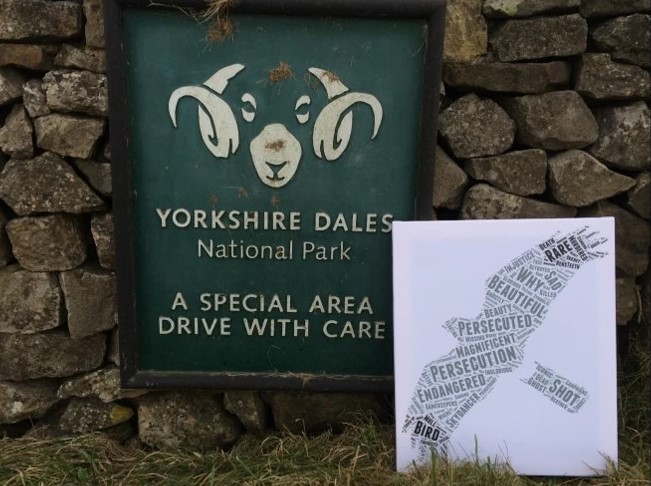


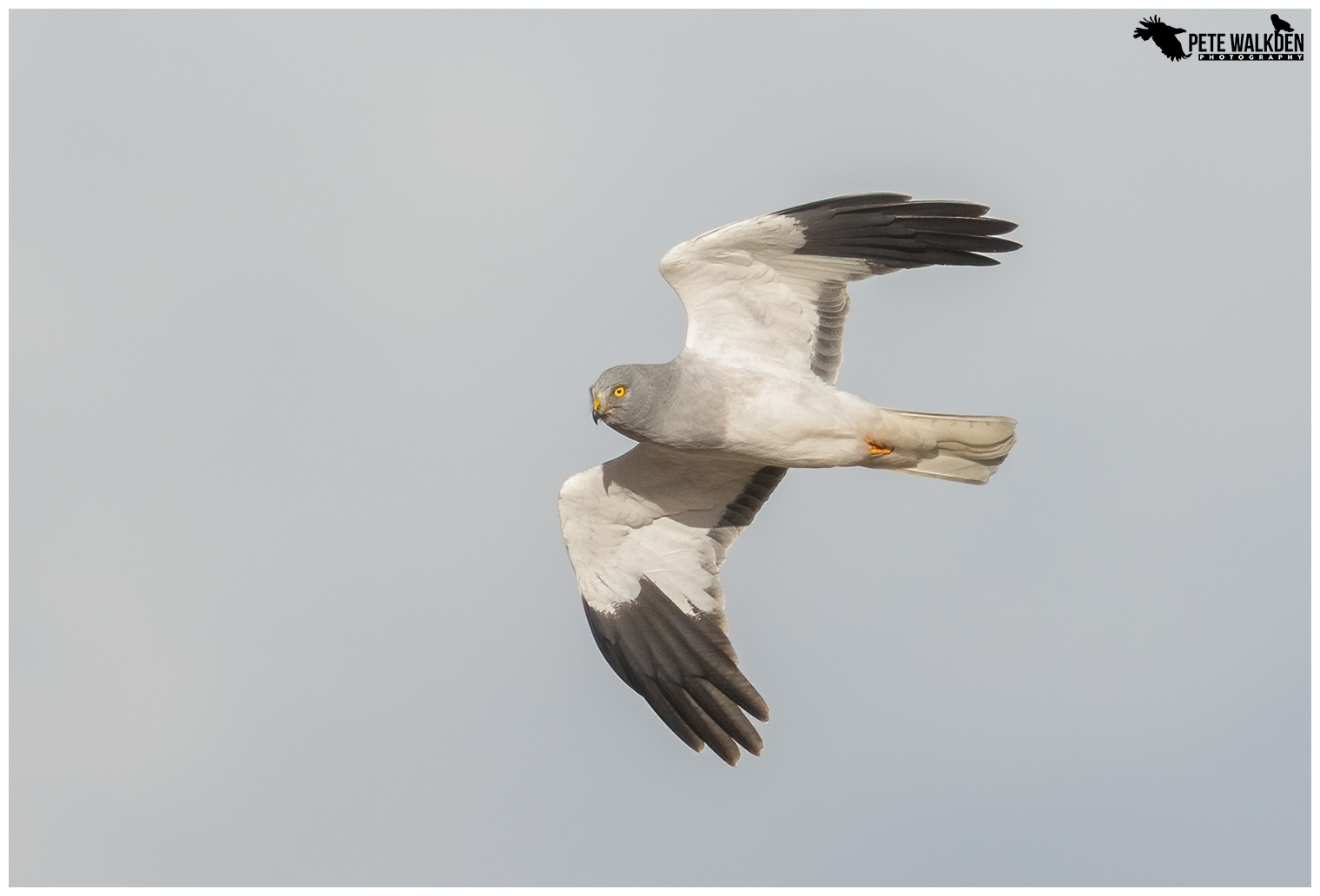
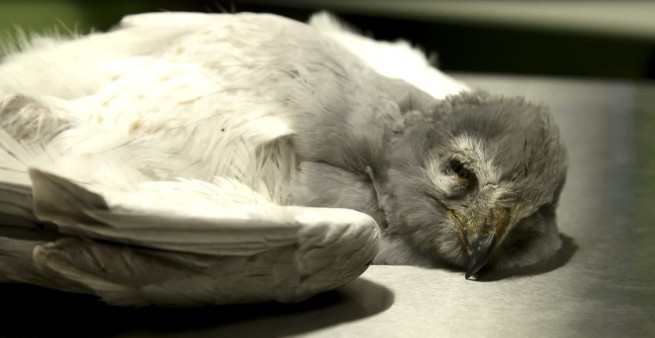
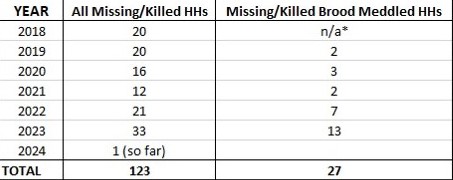
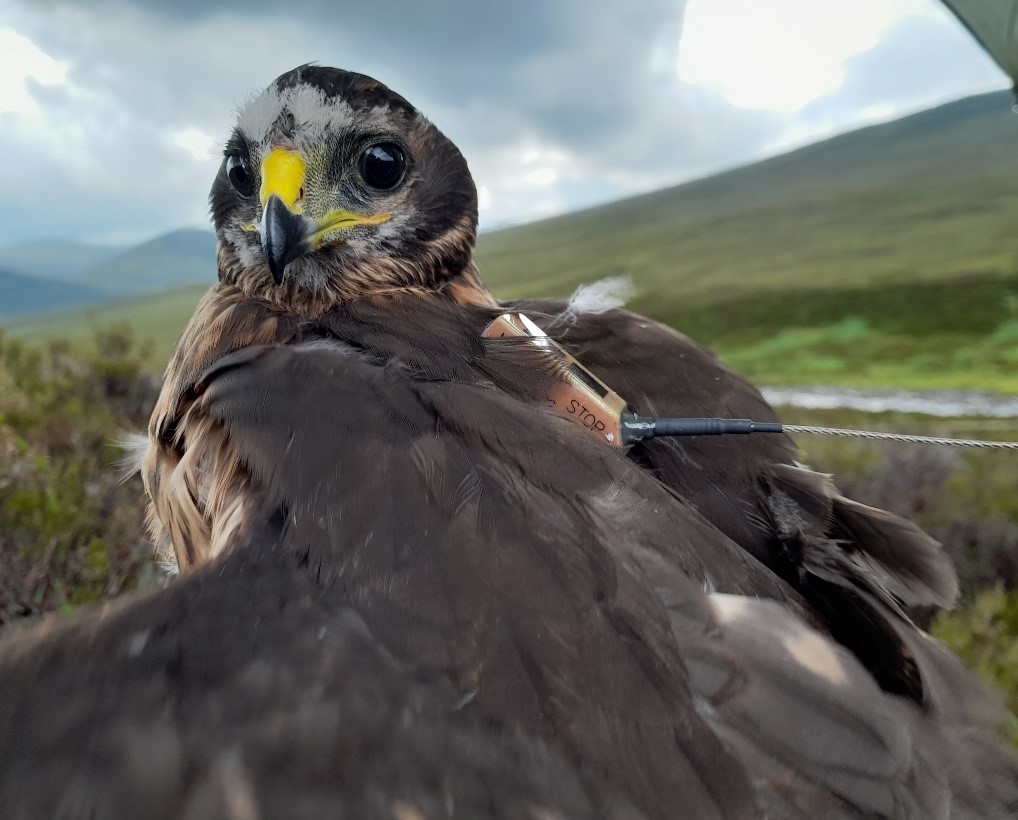

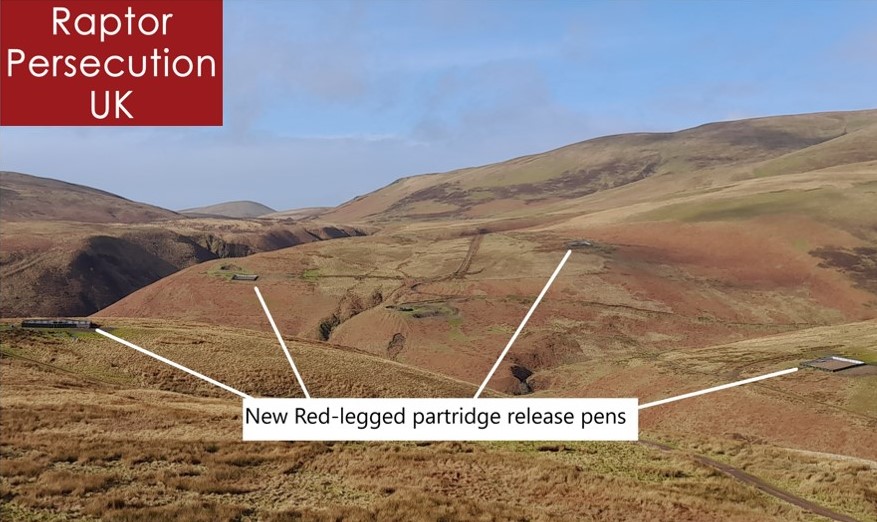
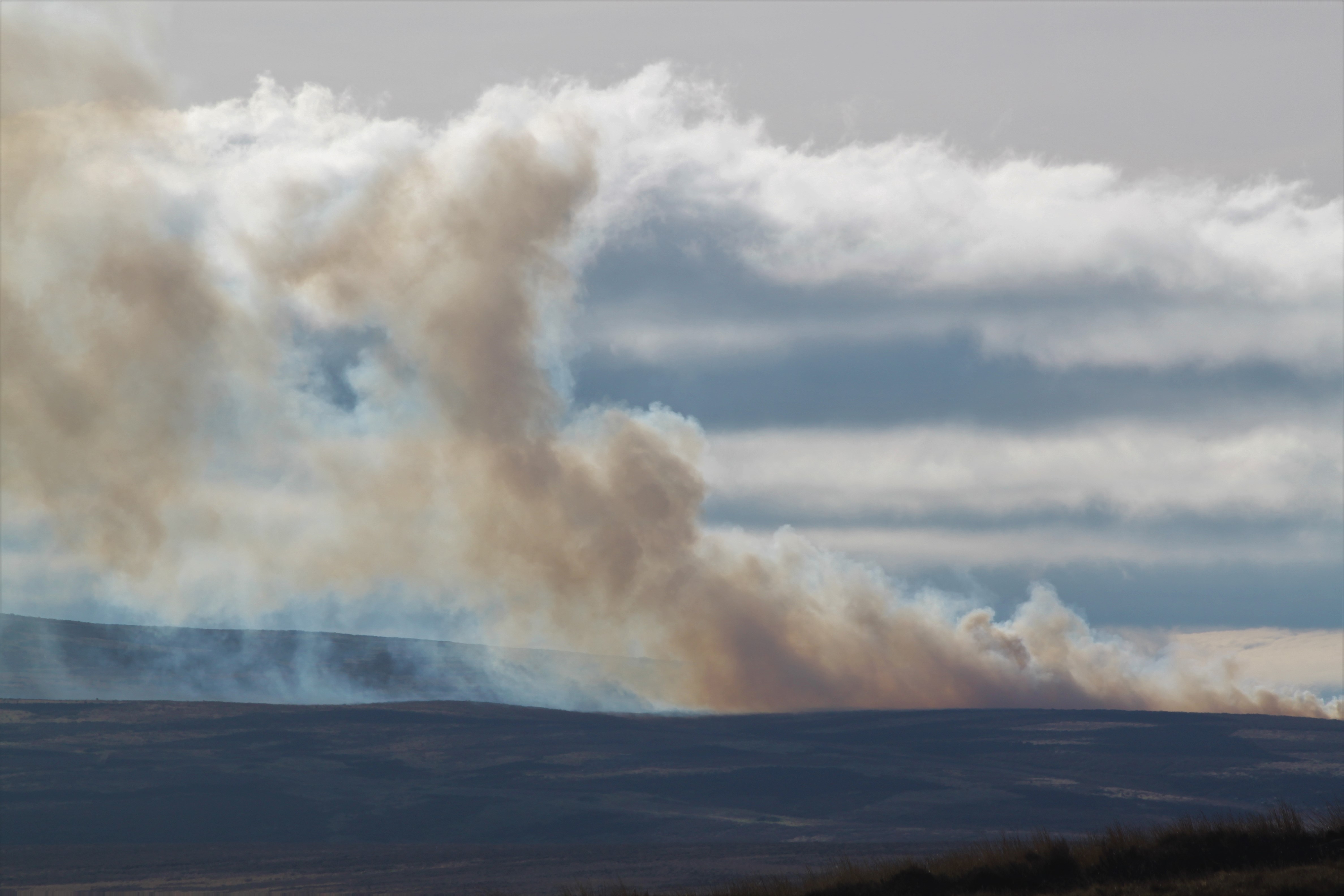


 Raptor Persecution UK