In the last week there have been two big news stories about the illegal persecution of birds of prey in Scotland.
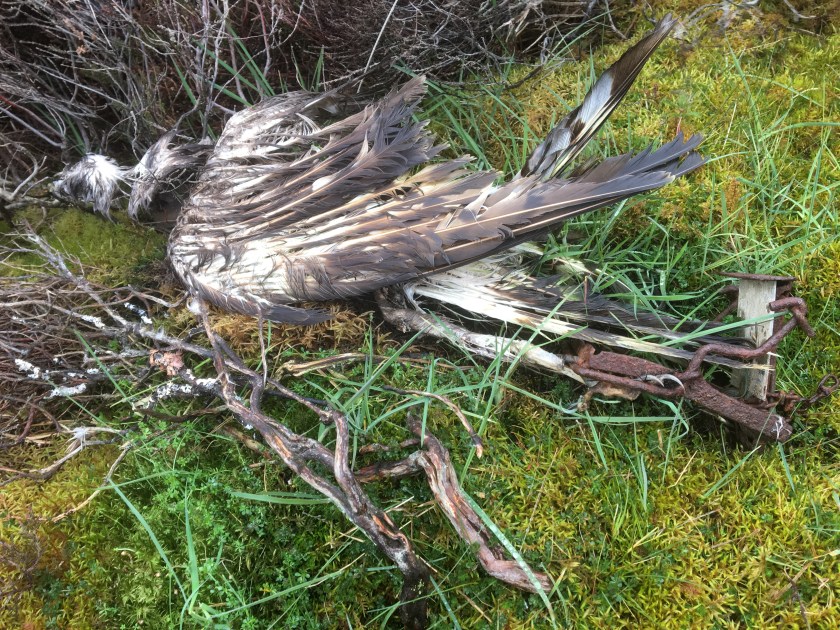
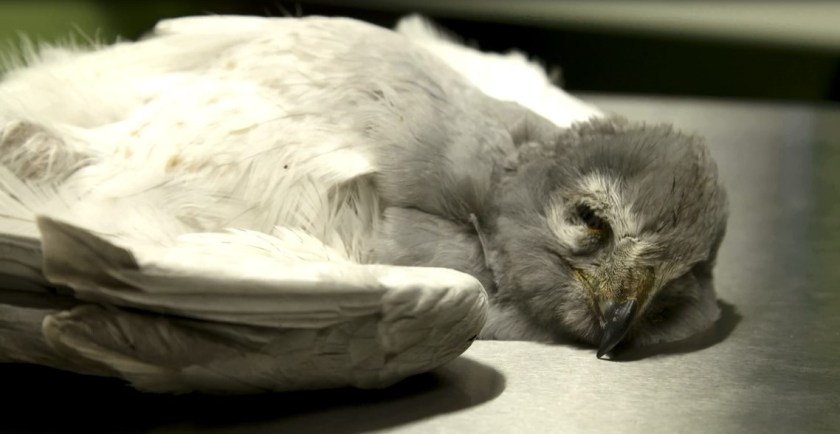
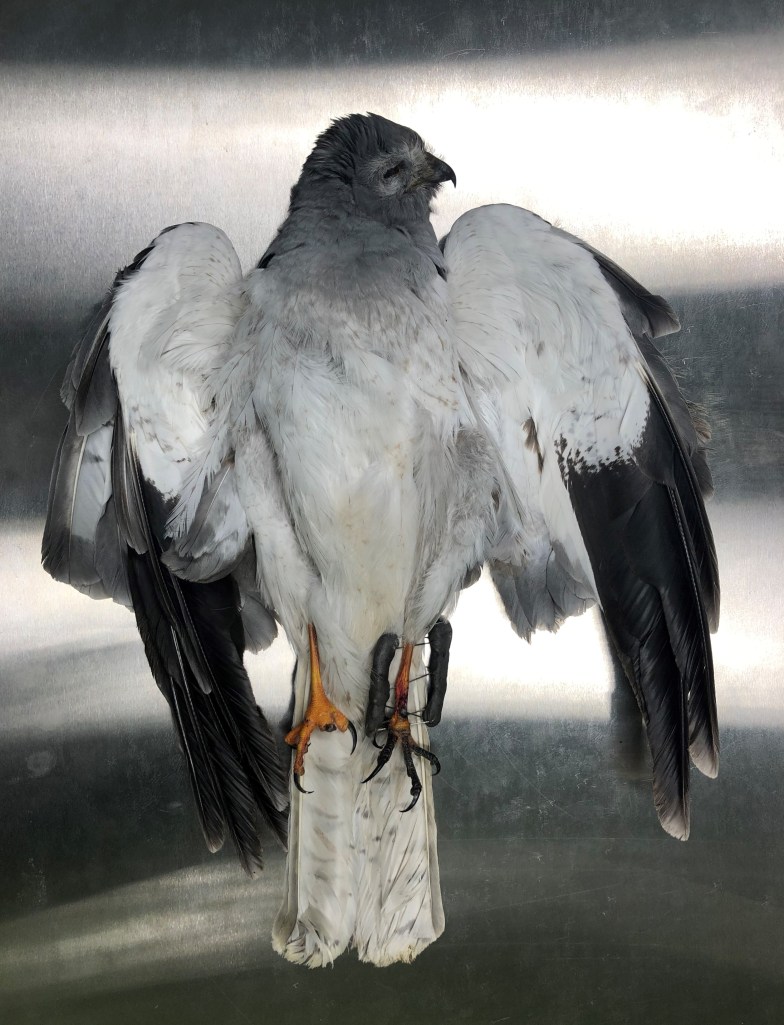
The first was the news that a satellite-tagged hen harrier called Rannoch was found dead on a grouse moor in the Strathbraan raven cull area of Perthshire, with an illegally-set spring trap attached to her leg (see here).
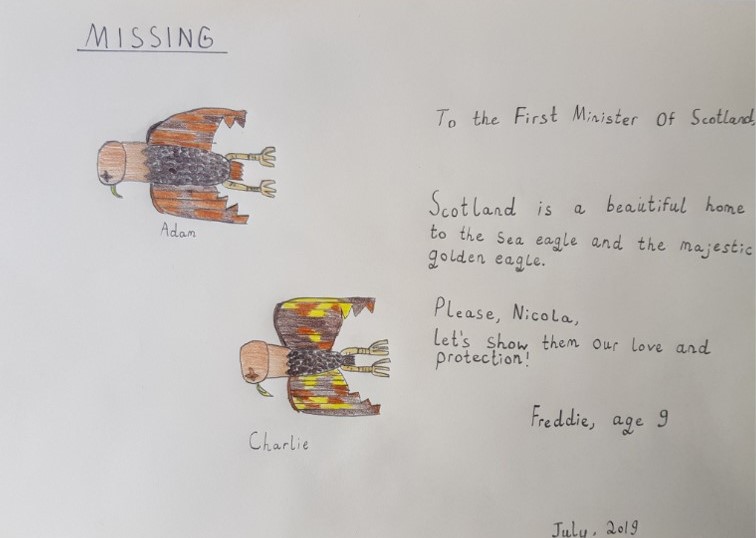
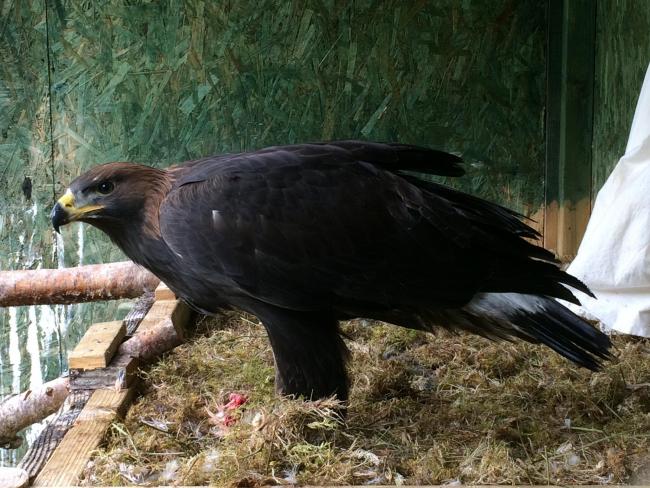
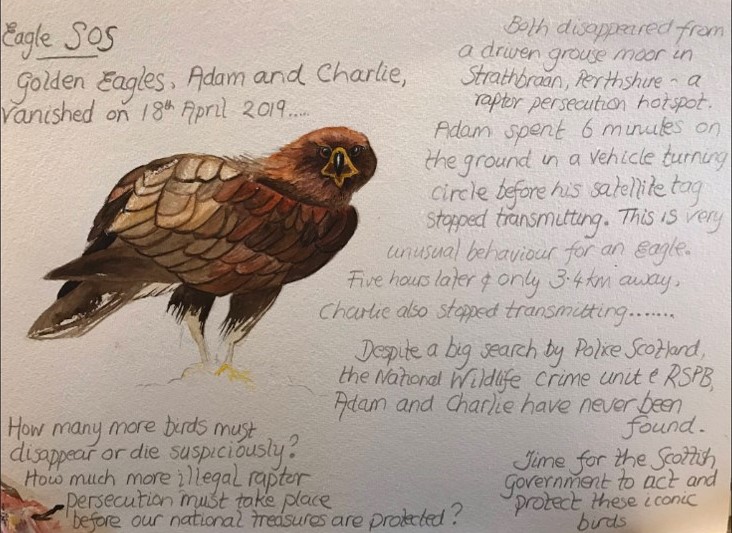
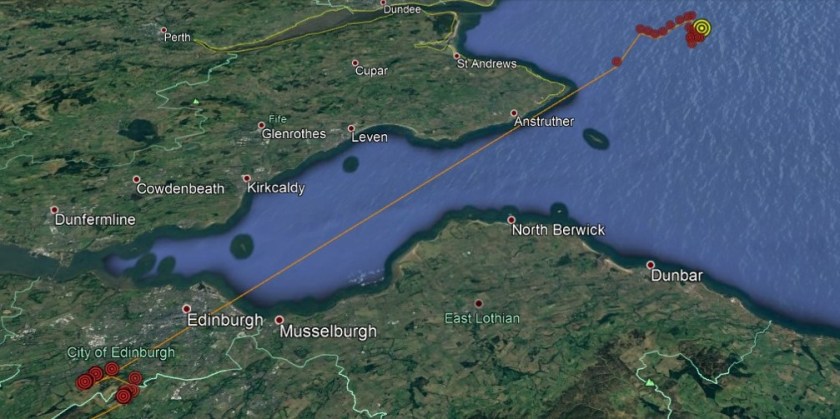
The second was the news of the suspicious disappearance (presumed dead) of satellite-tagged golden eagles Adam and Charlie, who vanished without explanation on the same morning from another grouse moor in the Strathbraan raven cull area (see here).
Both of these news items received massive media interest and coverage, particularly the two missing golden eagles. It was all over social media, mainstream newspapers and websites, radio shows and even a slot on ITN’s News at Ten.
The general public responded to these stories as any decent human being would – with disgust, horror and in some cases, shock that this sort of criminality, both suspected and confirmed, continues within our supposedly progressive society.
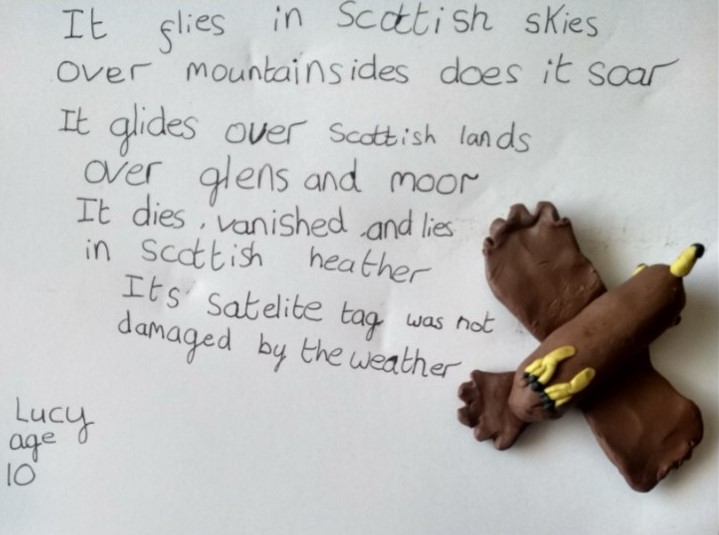
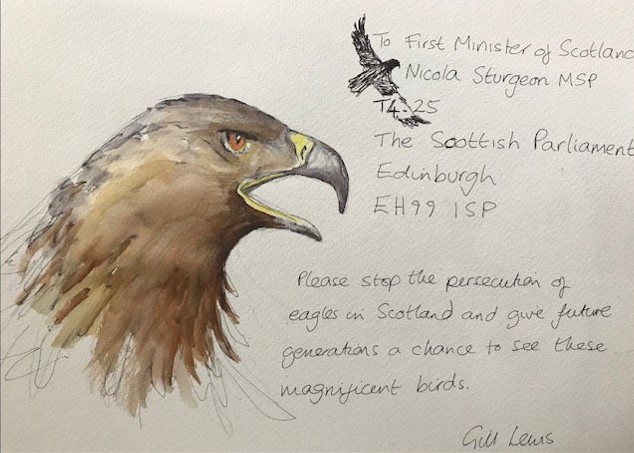
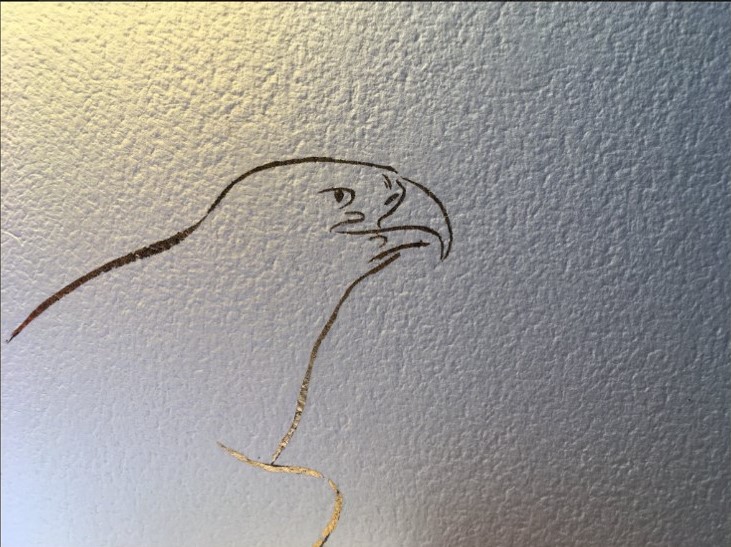
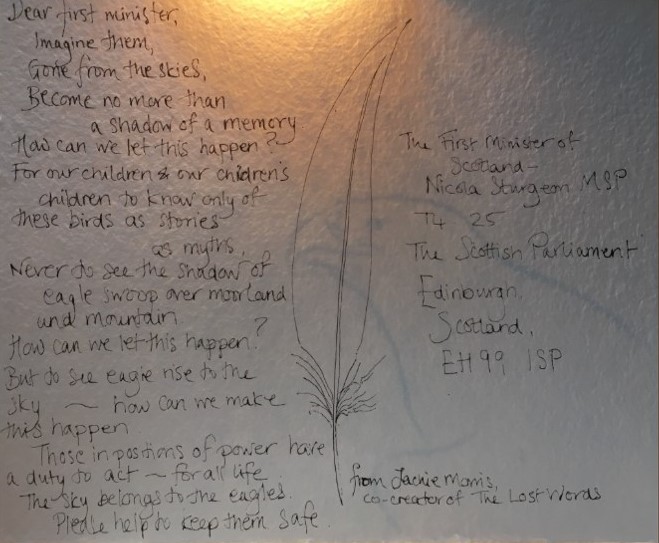
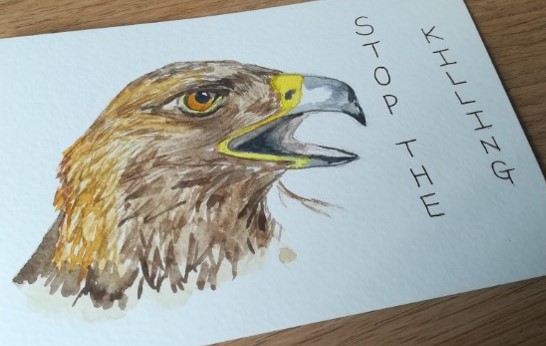
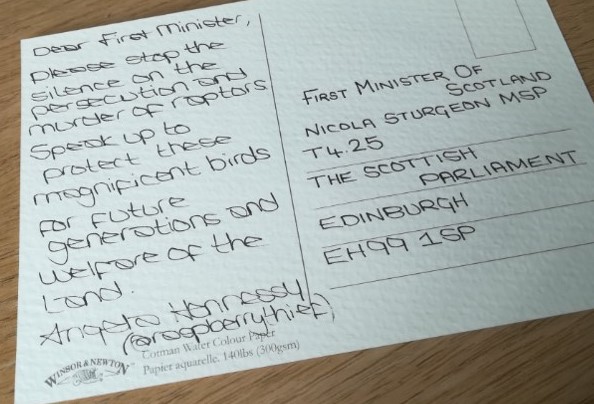
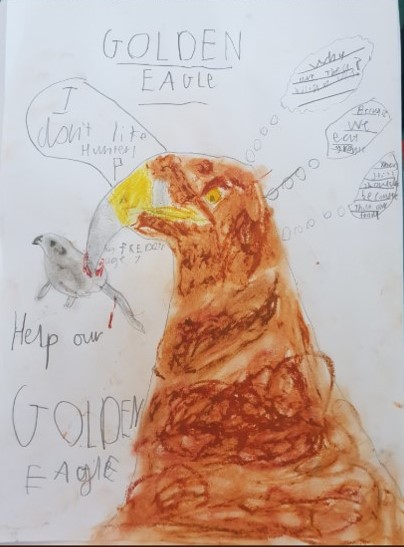
Young kids (and some adults) were sufficiently motivated to draw pictures of eagles, write poetry and even create clay models of dead eagles to send to First Minister Nicola Sturgeon:



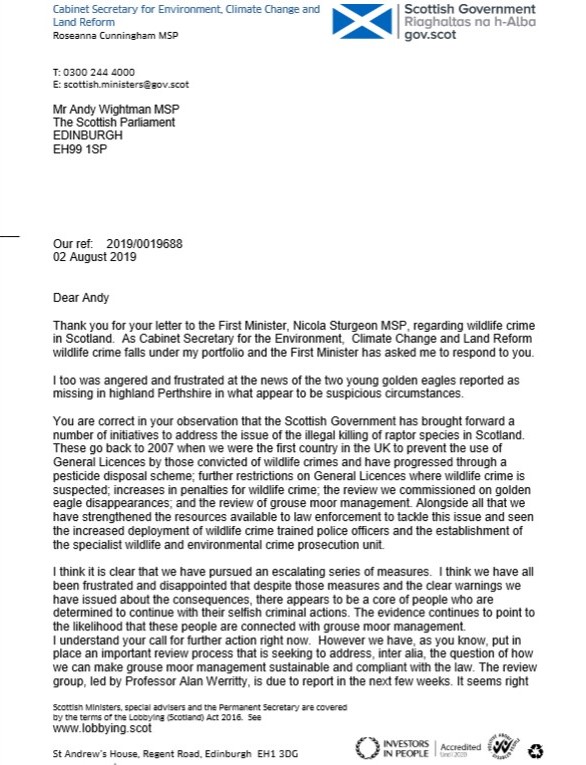
We know that many others have been sufficiently angered by the news that they’ve been motivated to follow MSP Andy Wightman’s lead and write to the First Minister, urging her to take action (firstminister@gov.scot).
How come then, with this outpouring of public anger, senior politicians in the Scottish Government, who all routinely use Twitter to engage about their work, have failed to say a single word about either case?
The First Minister, Nicola Sturgeon, has been silent.
The Environment Cabinet Secretary, Roseanna Cunningham, has been silent.
The Minister for Rural Affairs and the Natural Environment, Mairi Gougeon, has been silent.
What’s going on there, then? Should we interpret their collective silence as indifference? That seems pretty unlikely, given that all three politicians have spoken out strongly, passionately and convincingly in the recent past about illegal raptor persecution and their determination to bring it to an end.
So why haven’t they this time? Even the official Twitter channel of the Scottish Government covering the environment and rural economy (@GreenerScotland) has been silent. There was one quote about the two missing eagles, widely used in the media from an unnamed Government spokesman, which simply said:
“The disappearance of any bird of prey in suspicious circumstances is of concern and we would urge anyone with information to contact Police Scotland. ‘We are determined to protect birds of prey and have established an independent group to look at how we can ensure grouse moor management is sustainable and complies with the law“.
This was clearly a bog standard response to enquiries from journalists as we could find no formal statement on the Scottish Government’s website. We didn’t find any statement about the illegally-trapped dead hen harrier either.
It seems remarkable that a wide section of society, young and old, has expressed outrage on many different media platforms over the last week, and yet the three politicians who are key to making progress on this issue, have seemingly suppressed what we’d expect to be the normal human reaction to this news (i.e. expressions of anger, horror, determination for change etc) and instead appear to be toe-ing a party political line by saying absolutely nothing. At all.
The Government’s silence is deeply concerning.
Is it, we wonder, part of a strategy to manage expectations on the forthcoming Werritty Review? Will the Werritty Review fall short of expectations? Remember, Werritty was commissioned on the back of a Government-commissioned scientific review that showed satellite-tagged golden eagles were undoubtedly being killed on some Scottish grouse moors. We all expect Werritty’s review to address this issue head on and propose some tangible, meaningful actions to finally get these crimes under control. Are we going to be disappointed? (Expect an almighty firestorm if that is the case).
Why else might the Scottish Government remain silent, on such a high-profile and topical issue? This silence is the sort of response we’ve come to expect from Environment ministers in Westminster, who have shown nothing but wilful blindness to the extent of raptor persecution crimes in England for decades. This silence is not something we expect from the Scottish Government.
It’s worth remembering that the Scottish Parliament has just celebrated its 20th anniversary. Twenty years ago, when the Parliament was established, the then Secretary of State Donald Dewar described illegal raptor persecution in Scotland as “a national disgrace”. He also said:
“Although we are all aware of individual incidents of wildlife crime in Scotland, such as theft of eggs and shooting and poisoning of birds of prey, it is less well known that illegal persecution of some species, rather than the lack of suitable habitat, is the reason why in some areas the birds are scarce or non-existent. The government, and no doubt the Scottish Parliament will take all possible steps to eliminate persecution. The government is committed to strengthening protection for wildlife, and in due course the Scottish Parliament will consider proposals from the Partnership Against Wildlife Crime for stronger enforcement measures”.
If you’d like to write to the current First Minister and remind her of the importance of ensuring protection for golden eagles and other birds of prey on the grouse moors of Scotland, please consider sending a polite email to: firstminister@gov.scot
Thank you
[Hen harrier ‘Rannoch’ found dead on a grouse moor with an illegal trap clamped to her leg. Photo RSPB Scotland]












 Raptor Persecution UK