Two cases against two Scottish gamekeepers have been heard recently at Perth Sheriff Court:
David Campbell, head gamekeeper at Edradynate Estate, Perthshire, is charged with various offences relating to firearms and explosives (see here). His case has been continued for an intermediate diet on 26 July 2012. At that hearing it will be decided whether the case proceeds to trial on 20 August 2012. This is an interesting one for several reasons which will become clear in due course.
Jonathan Graham, apparently a gamekeeper at Glenlyon Estate, Perthshire, is charged with three offences under the Wildlife & Countryside Act (Section 5 (1) (b) relating to the prohibition of certain methods of killing or taking wild birds. The hearing was continued today until 27 June 2012. Those of you interested in the topical subject of crow cage traps (see here) might want to follow this case.
The trial of a Strathtay gamekeeper will take place in Perth in May 2012, where he will face charges of alleged firearms and explosives offences.
The charges, under both the Firearms Act and the Control of Explosives Regulations, relate to allegations of him keeping gunpowder in an unsafe manner in his home. He is accused of having a canister of the explosive without the proper certification, and of storing the gunpowder incorrectly (such that unauthorized persons could gain access to it). He is further charged with having 11 rounds of unsecured .243 ammunition. He has denied all the charges and a trial date was set during a hearing last Thursday (23 Feb 2012).
The name of the Perthshire sporting estate raided by Tayside Police earlier this month, following the discovery of poisoned buzzards and poisoned bait in March 2011, has been recently reported on the raptor study group website as Edradynate Estate.
Described by Tayside Police Wildlife Crime Officer Alan Stewart in 2005, “Edradynate Estate, which is owned by an absentee landlord from Hampshire, has probably the worst record in Scotland for poisoning incidents, going back more than a decade. In 14 separateincidents since 1998, 16 poisoned victims (nine buzzards, a cat, a tawny owl, two sparrowhawks, a common gull, a polecat and a crow) and 12 poisoned baits (rabbits, woodpigeons and a pheasant) have been found, with traces of the pesticides mevinphos, carbofuran and alphachloralose”.
His comments were made after the collapse of a trial concerning two gamekeepers from the estate, who were charged with various offences involving the alleged poisoning and trapping of birds of prey. The case was dropped by the Procurator Fiscal, reportedly because of the time taken for the case to be heard. Full story here: http://www.rspb.org.uk/Images/legaleagle43_tcm9-132966.pdf
Since his comments, there have been more discoveries of poisoned birds on this estate, and public denials in the media of any involvement by estate gamekeepers, who claim the dead birds must have been ‘planted’ by someone else. Nobody has ever been convicted for wildlife crime offences on this estate and still the poisoning continues. Let’s hope that Tayside Police are able to detect the perpetrator(s) of the most recent poisoning incident.
Interestingly, it is also reported on the raptor study group website that Edradynate Estate is believed to be a member of the SRPBA and that at least one gamekeeper is a self-confessed member of the SGA. This is difficult to verify though as, conveniently, neither group publicises the names of their members. Both of these groups have made many public statements about how they deplore illegal raptor persecution and how they are working hard to eradicate it. They are both also members of PAW Scotland. It was reported last year that the CEO of the SRPBA paid a visit to Edradynate Estate – perhaps to apply some much needed ‘peer pressure’. If he did, then he is to be congratulated for his efforts, although judging by recent events it would appear that peer pressure was unsuccessful. Or perhaps it was successful, and the latest deaths were attributable to those pesky carcass planters – you know, the ones who have never been seen or heard but who are managing to plant poisoned birds on sporting estates up and down the country…
Tayside Police have released a statement about the raid on a Scottish sporting estate that took place yesterday, following the discovery three weeks ago of two poisoned buzzards and poisoned bait. A 62 year old man was taken in for questioning but has been released pending further enquiries.
Police have raided a well-known sporting estate in Scotland and at least one man has been questioned at the police station. Further details cannot be reported just now but will be publicised in due course. Let’s just say this estate is no stranger to allegations of raptor persecution…let’s hope justice is finally served.
An un-named gamekeeper from the estate in Tayside where a poisoned red kite was found in July 2010 has denied all involvement and claims the dead bird was “planted“.
The self-proclaimed SGA member said: “There is something funny about this and I think someone else has killed this bird and planted it on my estate. Why they have done that, I don’t know“. This view will come as no surprise to the regular readers of this blog – it is the standard line that is heard so often from the SGA.
He went on: “Anybody who does this should be jailed because it’s not on and I have never done anything like this inmy life“.
Interesting that over the last 15 years, the following have all been found dead, confirmed poisoned, on this estate: 9 buzzards, 2 sparrowhawks, 2 crows, 1 gull, 1 tawny owl, 1 pole cat, 1 domestic cat, and now 1 red kite. In addition, 12 poisoned baits have been discovered there (see blog post Aug 27 2010). Whoever is doing the “planting” is managing to maintain a long-term campaign of illegal killing.
The location where the dead red kite was found in July (now confirmed to have been poisoned – see earlier blog below) was given by Tayside Police as “Strathtay, near Aberfeldy”, Perthshire. I mentioned a number of sporting estates in my earlier post that have their addresses in this area. I’ve since investigated further and look what I’ve found –
According to Tayside Police’s press release about the latest dead red kite, over the last 15 years the following have been found poisoned in the same area where the recent red kite was found dead – 9 buzzards, 2 sparrowhawks, 2 crows, 1 common gull, 1 tawny owl, 1 pole cat and 1 domestic cat. In addition, they say 12 poisoned baits have also been found.
Compare the above list of dead animals & poisoned baits with the following list of dead animals & poisoned baits, which was reported in the RSPB’s LegalEagle newsletter (January 2005, #43, page 3) – “In 14 separate incidents since 1998, 16 poisoned victims (9 buzzards, a cat, a tawny owl, 2 sparrowhawks, a common gull, a pole cat and a crow and 12 poisoned baits [rabbits, woodpigeons and a pheasant]) have been found, with traces of the pesticides mevinphos, carbofuran and alphachloralose“.
The 2005 RSPB report relates to the Edradynate Estate, which is situated in Strathtay, near Aberfeldy. Coincidence? You decide.
Nobody was convicted for the earlier alleged offences at Edradynate Estate thanks to the apparent chronic mishandling of the prosecution case. The Edradynate Estate head gamekeeper (aged 55) and underkeeper (22), both of Aberfeldy, were arrested in 2002 and charged with nine offences relating to the use of poisoned baits and also bird cruelty, including the use of spring traps. On 22 July 2004, two years after the original arrests and 13 court hearings later, the Fiscal dropped the case against them at Perth Sheriff Court. A spokeswoman for the Crown Office admitted the time taken to prepare the case for a trial had been a major factor in the decision to scrap it.
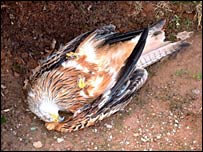
Tayside police have launched an investigation after yet another incident of illegal raptor poisoning. A red kite was found dead in the Strathtay area (near Aberfeldy, Perthshire) at the end of July, and government toxicology reports have confirmed the kite was poisoned.
According to Tayside police, 5 buzzards and a tawny owl met with the same fate in the same area last year. In addition, 9 buzzards, 2 sparrowhawks, 2 crows, 1 gull, 1 tawny owl, 1 pole cat and 1 domestic cat have also been found poisoned in the same region over the last 15 years.
According to the Scottish Raptor Study Groups website, a total of 12 poisoned baits have also been recovered from the same estate where the red kite was found dead.
Tayside Police’s Wildlife Crime Officer Alan Stewart had the following insight:
“There is no doubt that the scourge of poisoning wildlife in Scotland has decreased in general terms in recent years. However, there remain a number of ‘hotspots’ that blight our civilisation and our reputation worldwide“.
Alan Stewart
It’s an interesting perspective from someone closely involved with the PAW Scotland group and who really should know better. Has he not read the latest figures that were only published in August this year that demonstrate an increase in illegal wildlife poisoning events? The only thing that has decreased in recent years is probably Tayside Police’s track record of successful prosecutions for raptor persecution incidents.
It’s also interesting to note that once again, the name of the estate involved has not been made public, even though poisoned baits have been found there. There are a number of sporting estates in this area, and it could be any one of the following:
Or may be it’s another estate? Who knows. That’s reassuring for those of you who live in the area, whose children play in the area, whose pets walk in the area, and also for you visitors who come to our countryside to enjoy it, not to find dead raptors or have your dog/child poisoned while out on your holidays.

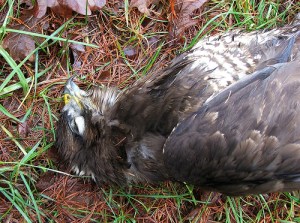 Tayside Police have released a statement about the raid on a Scottish sporting estate that took place yesterday, following the discovery three weeks ago of two poisoned buzzards and poisoned bait. A 62 year old man was taken in for questioning but has been released pending further enquiries.
 Police have raided a well-known sporting estate in Scotland and at least one man has been questioned at the police station. Further details cannot be reported just now but will be publicised in due course. Let’s just say this estate is no stranger to allegations of raptor persecution…let’s hope justice is finally served.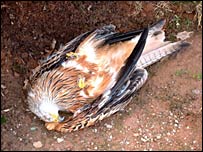
 Raptor Persecution UK