Buzzard dies from gunshot injuries

A buzzard has died after sustaining gunshot injuries in Norfolk last week.

The injured bird was taken to the Toll Barn Veterinary Centre in Norwich last week by Phoenix Bird of Prey Rescue, where an x-ray revealed three shot gun pellets embedded in its body. The vets attempted to operate but the buzzard didn’t survive.

Another victim added to Norfolk’s growing raptor persecution crime tally.

Photos by Phoenix Bird of Prey Rescue & Toll Barn Veterinary Centre

Buzzard shot Norfolk dec 2014

buzzard shot norfolk dec 2014 toll barn veterinary centre x ray

Ross-shire Massacre: 9 months on

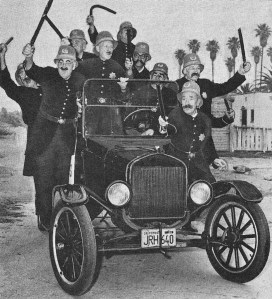
KeystoneCopsIt’s been nine months since 22 raptors (16 red kites + 6 buzzards) were illegally killed in a mass poisoning incident near Conon Bridge, Ross-shire.

Still no word from Police Scotland on the name of the ‘illegally held substance’ that was used to kill these birds.

Still no arrests.

Still no charges.

Still no prosecution.

Still no justice.

Police Scotland’s handling of this investigation continues to astound….

You may remember, back in October, some senior officers from Police Scotland gave evidence on this case to the Parliamentary Rural Affairs, Climate Change & Environment Committee (RACCE). The police were being questioned about their idiotic recent press release which had stated: “These birds were most likely not targeted deliberately but instead were the victims of pest control measures“.

We were particularly interested in what Assistant Chief Constable Malcolm Graham had to say to the RACCE about this press release:

We put out information into the public domain that we thought was going to clarify what we thought our best assessment was, lay behind the intent of the acts that we’re investigating, and from everything that we have done, in combination with a number of other agencies who are active in this field AND WHO SUPPORTED THE PRESS RELEASE THAT WE PUT OUT [Emphasis by RPS], we wanted to say that it didn’t appear that the activity had sought to deliberately target the birds that had been killed“.

We were intrigued about who these “other agencies” were that had supposedly “supported the press release that we put out” because, to be blunt, we didn’t believe ACC Malcolm Graham’s claim.

So in October we encouraged blog readers to email ACC Graham to ask him for clarification on the identity of these “other agencies“. There was no response for six weeks. So last week we encouraged blog readers to consider writing to the Information Commissioner to put in a formal complaint about Police Scotland’s refusal to respond. That prompted the following letter from Police Scotland, sent on 11th December 2014:

Dear XXXXX XXXXX

ACC Graham has asked me to reply to your email on his behalf.

I can confirm that a number of organisations both governmental and non-governmental have assisted the police in this enquiry from the outset. Significantly, both the RSPB Investigations Team and the SSPCA Special Investigations Unit have been involved and offered professional opinions at various times based on their experience of the the killing of birds of prey and the use and impact of poisons.

When drafting the press release these considered opinions along with those given by others were taken in to consideration. The press release reflected the belief at this time that the birds of prey were not the intended target of the illegal poison. However, as stated in the press release the illegal killing of the 16 poisoned birds remains a crime and therefore subject to a criminal investigation.

Regards,

Sergeant Andrew Mavin

Scottish Wildlife Crime Coordinator

Specialist Crime Division

Police Scotland

Glasgow West End Police Office

609-611 Dumbarton Road

Glasgow

G11 6HY

An interesting response, eh? We already know that RSPB Scotland didn’t support the press release (see here), and neither did Environment Minister Paul Wheelhouse (see here). The SSPCA didn’t respond to our queries so we don’t know whether they supported the release or not but we could take an educated guess.

While we wouldn’t go as far as to suggest that Police Scotland gave misleading evidence to a Parliamentary Committee, we would suggest that their evidence (specifically, their claim that “other agencies who supported the press release that we put out“) deserves further scrutiny and we’ll be writing to the RACCE about this.

Meanwhile, we await with interest to see whether the new Cabinet Secretary for Justice, Michael Matheson, responds to MSP Dave Thompson’s request for a review of the police handling of this investigation.

Previous blogs on the Ross-shire Massacre here

Scottish gamekeeper George Mutch: guilty on all 4 counts

This is an historic day in the battle against the raptor killers.

Scottish gamekeeper George Mutch, 48, of Kildrummy Estate, Aberdeenshire, has been found guilty on all four charges, including the illegal killing of a trapped goshawk, which he clubbed to death, and the taking of two other birds, a goshawk and a buzzard.

No-one will be surprised to learn that yet another gamekeeper has been convicted of illegally killing raptors; Mutch is the 28th gamekeeper to be convicted of wildlife crime in the last three years alone (see here). The big surprise in this case has been the Sheriff’s ruling that the covert video footage, filmed by RSPB Scotland, was admissible evidence. This alone was a significant ‘win’ for those of us who have been exasperated, for years, that this type of evidence has been consistently rejected by the Crown Office, thus allowing The Untouchables to be, well, untouchable. Especially when covert video surveillance has been consistently used in England to secure convictions in similar cases.

So what prompted the change of heart? Undoubtedly, the efforts of former Environment Minister Paul Wheelhouse, who said in July 2013 that he would be urging the Crown Office to consider the use of video footage in cases against those committing wildlife crime.

According to our journalist contacts, COPFS prosecutor Tom Dysart’s performance in court was dynamite, pressing for the admissibility of the video footage and then later shredding the evidence of defence witness Hugo Straker from the GWCT. He also then shredded the evidence of Mutch, resulting in the Sheriff saying that Mutch’s evidence was ‘not credible’ and that his explanation for killing the goshawk (because it was injured) was “a convenient lie”. We never thought we’d say this but Tom Dysart apparently played a blinder. Long may it continue.

The video nasty in this case, showing Mutch trapping and then clubbing the goshawk to death, can be viewed here. WARNING – CONTAINS DISTURBING IMAGES.

Sheriff McPartlin will pass sentence in January and has already said he is considering a custodial sentence. We’ll see.

Meanwhile, the SGA has put out a fascinating press statement. It turns out that Mutch was an SGA member and apparently “his membership of the SGA has been in suspension for some time, until the outcome of the case was known. Now that it is, he will no longer be a member of the SGA“.

That’s interesting. Mutch committed his crimes in 2012, but according to the SGA’s 2013 silent auction booklet, the SGA accepted a fundraising donation from Kildrummy Estate, with George Mutch listed as the contact:

SGA Silent Auction Booklet 2013 (see Lot #17)

So not only was the SGA still accepting donations from this estate the year after the crimes were committed, but it’s also apparent that Mutch was still employed by Kildrummy Estate after he’d committed those crimes. Fascinating.

The SGA’s statement continues:

On the separate, theoretical, issue of the use of covert video evidence, it is clear to us that it should not be acceptable for individuals from one particular profession to be under surveillance in their place of work, without their knowledge, and to have their right to liberty and privacy from such encroachment, removed.

If this is to be the direction of travel, it is not right for Scottish Government to deny people whose livelihoods come under pressure due to the activity of certain species or animals, recourse to a legal solution to solve that conflict.

Currently, there are no legal or scientific means by which people can protect their investments or jobs in situations exacerbated by conflicts with species. Scottish Government has never granted anyone from the game industry a licence to protect investments, which they have the power to do, although it does grant licences routinely to other industries. This, in our view, is a barrier to justice and does nothing to prevent wildlife crime.

In a society supposedly enlightened when it comes to tackling this issue, we believe this is untenable and we will be seeking talks with Scottish Government so that this anomaly is finally closed, removing once and for all the rationale for people to commit wildlife crime.”

So, the SGA doesn’t agree with the use of covert video footage to convict those within the gamekeeping industry of wildlife crime. Why ever not? Surely, they’d be thrilled to root out those individuals who are causing so much damage to the industry’s reputation? By their reaction, you’d be forgiven for thinking that that’s not the case at all. And as Mutch was an SGA member when he committed his crimes, what does that tell us about the SGA’s ability to provide adequate training for its members? They even admit that Mutch is the 5th SGA member in three years to have been convicted!

And then they go into the usual whine about how wildlife crime would stop if only the Government would issue licences to allow the killing of protected species, (although they don’t actually mention the word ‘killing’ – instead they say “licence to protect investments”). The bottom line is, if the leisure industry of killing millions of gamebirds is reliant on the killing of protected species then that industry has had its day.

This case has taken over two years to conclude. We had thought that because the crimes were committed in 2012, before the vicarious legislation was enacted (1st Jan 2013), that there wouldn’t be a vicarious liability prosecution because we didn’t think it could be applied retrospectively. However, one of our legal friends has since advised us that there still may be a vicarious liability prosecution as long as it’s lodged within the three-year time frame from the date the offence was committed (August 2012). So potentially then, if the Crown deems it appropriate and they get it in before August 2015, we could have another vicarious liability prosecution on the cards.

For now though, let’s just enjoy the successful conviction of another raptor-killing gamekeeper, and acknowledge the work of the people who got it to this stage. Huge congratulations to the RSPB Scotland Investigations Team, the SSPCA, Police Scotland, COPFS, Sheriff McPartlin and former Environment Minister Paul Wheelhouse. Real partnership working at its best.

Media coverage:

RSPB press release and video here

BBC news here

STV news here (this one is amusing!)

Reporting Scotland here [6.25 – 8.40] (this film only available for 24 hrs)

Herald here

George Mutch trial: sheriff rules video evidence admissible

Sheriff Noel McPartlin, presiding over the trial of gamekeeper George Mutch (Kildrummy Estate, Aberdeenshire) yesterday ruled that the RSPB’s video footage is admissible.

His ruling was based on his view that the footage in question was a by-product of a legitimate survey (in to the use of crow cage traps) rather than the camera being placed with the sole intention of filming someone committing a criminal act.

This ruling doesn’t mean that covert video footage will be acceptable evidence in all criminal proceedings; each case will have to be considered based on its specific circumstances. But in this trial at least, the video evidence has been ruled lawful.

That is a big result. More often than not, this sort of evidence has not been accepted in Scotland, although it is routinely accepted in England. Credit is due to the Fiscal, Tom Dysart, and especially to former Environment Minister Paul Wheelhouse for all the political pressure he piled on to the Crown regarding the use of video evidence in wildlife crime prosecutions.

After two days of legal wrangling and following Sheriff McPartlin’s decision, Mutch’s trial got underway ‘properly’ yesterday, i.e. the evidence (video) was shown in court.

One recording filmed on August 14th 2012 showed a goshawk being caught inside a Larsen trap, which had been set inside a pheasant pen. A live Jay was being used as the decoy bird [illegally – the General Licences do not allow a Jay to be used as a decoy species in a Larsen trap]. Mutch was filmed approaching the trap the next morning at around 6am.

Prosecution expert witness David Anderson, a Conservation Manager for the Forestry Commission, was asked to tell the court what he could see in the footage, which was filmed in misty conditions. He said the man appeared to pick up an object to pin down the bird. “Then I saw the man got the bird, pulled it out and dispatched it with a stick or whatever they had in their hand”.

Another recording showed Mutch walking in to a crow cage trap (also set inside a pheasant pen) and catching a goshawk that had been caught in the trap. The bird was placed (alive) inside a white sack and removed from the cage.

Mutch has denied all the charges against him.

The trial continues at Aberdeen Sheriff Court and hopefully it’ll conclude today.

George Mutch trial: Sheriff to rule on admissibility of video evidence

The sheriff presiding over the trial of Scottish gamekeeper George Mutch is due to rule today on the admissibility of covert video footage.

Mutch is accused of several offences relating to the alleged killing or injuring of two goshawks and a buzzard that had been caught inside traps in August 2012. He has denied the charges. The evidence against him is based on covert footage collected by RSPB Scotland.

Mutch’s trial began on Monday, after months of adjournments, but so far the trial has focused on whether the evidence is admissible. The defence advocate, Mark Moir QC, has argued that the footage is inadmissible because the RSPB has an agenda against the use of crow cage traps and didn’t have the landowner’s permission to film. The prosecution (Tom Dysart from COPFS!) has argued that the evidence should be deemed admissible because the RSPB were filming as part of a research study.

Sheriff Noel McPartlin is due to rule on the question of admissibility today. Whatever his decision, it will have significant ramifications for not only this trial but also for future potential prosecutions.

News articles on this trial here and here.

First vicarious liability prosecution: part 4

Criminal proceedings continued yesterday against Mr Ninian Robert Hathorn Johnston-Stewart in the first known vicarious liability prosecution under the WANE Act 2011.

Mr Johnston-Stewart, the landowner of Glasserton & Physgill Estates, is charged with being vicariously liable for the criminal actions of Glasserton gamekeeper Peter Bell, who was convicted in 2013 of laying poisoned bait which killed a buzzard (Carbofuran), and for possession of three banned pesticides (Carbofuran, Strychnine and Alphacloralose) (see here).

Yesterday’s intermediate diet was continued, with another intermediate diet scheduled for 23rd December 2014.

Previous blogs on this case here, here and here

Case against gamekeeper George Mutch: part 13

The criminal trial of Scottish gamekeeper George Mutch is set to re-start today.

Mutch, of Kildrummy Estate, Aberdeenshire, is accused of a series of offences relating to the capture and subsequent killing or injuring of a number of raptors, alleged to have taken place in August 2012. He has denied the charges.

This case has dragged on for over two years. Eventually a trial date was set for October 2014 but it was quickly adjourned after the defence QC argued that the presiding Sheriff shouldn’t hear the case as she was a member of the RSPB (see here).

Presumably there’ll be a different sheriff in court today; one with absolutely no connection whatsoever with game-shooting, eh?

Buzzard licence applicant gets High Court approval for judicial review

The following statement has been issued by the National Gamekeepers’ Organisation:

High Court Grants Gamekeeper Go-Ahead To Challenge Natural England

Tuesday 25th Nov 2014

A gamekeeper has been given permission by the High Court to proceed with a claim for Judicial Review against the Government’s wildlife licensing authority, Natural England (NE). The self-employed gamekeeper had applied for a licence to control buzzards attacking young pheasants on a small game shooting enterprise he runs for local farmers in Northumberland. NE acknowledged that the birds of prey were causing serious damage but refused to issue a licence under the well-established licensing process approved by Parliament for use in such circumstances.

The Honourable Mrs Justice Thirlwall DBE gave permission to proceed with the claim for Judicial Review on the basis that it was arguable NE had been inconsistent and unreasonable in refusing the licence. The case will now proceed to a full hearing which is likely to take place in the first half of next year.

Ricky McMorn, the self-employed gamekeeper seeking the buzzard control licence, may go out of business and lose his livelihood if a licence is not forthcoming. He said:

“This is a real David and Goliath situation. I am having to battle the might of the state in the form of Natural England to protect my birds and my job. They admit I’ve got a problem and agree that I have done everything I can but still they won’t give me a licence. It’s unfair and it’s wrong. Hundreds of other people get licences to kill protected birds every year.”

The Wildlife and Countryside Act 1981 protects all wild birds but it also allows for control licences to be granted for certain purposes. One of these is the prevention of serious damage to livestock including, specifically, gamebirds kept for the provision of shooting. Before any such licence can be granted by NE strict tests must be met – including demonstrating that the damage being caused is indeed serious and that there is no other satisfactory solution. Where these tests are met, however, a licence cannot be unreasonably withheld.

Whilst refusing this licence, in earlier considerations of the case NE has accepted that:

  • the damage being experienced is serious;
  • buzzards are the main cause of the pheasant deaths;
  • Mr McMorn has done all that can reasonably be expected of him in scaring off the buzzards and otherwise protecting his pheasants;
  • removing a small number of buzzards from the site would not compromise the species’ conservation status.

There are now over 300,000 buzzards in the UK and numbers are booming. The population has undergone a four-fold increase during the last forty years according to The State of UK Birds 2014, published on behalf of Natural England by the RSPB.

To prevent damage to fisheries, NE regularly issues licences under the same system to kill many thousands of cormorants each year – up to 20% of the UK population. Cormorant numbers peak at around 41,000 birds in the UK, compared to 300,000 buzzards.

NE also allows buzzards to be killed at UK airports and it has, in the recent past, allowed a free-range poultry farmer to trap and remove buzzards causing serious damage to his chickens. This is in sharp contrast to applications made by gamekeepers, where no licence to kill or remove buzzards has ever been granted.

Mr McMorn’s case is being supported by the National Gamekeepers’ Organisation (NGO), which believes strongly that the law and due process should always be followed. The NGO’s spokesman said:

“This case is about a gamekeeper who is trying to do the right thing within the law to address a real and serious threat to his livelihood. NE has a duty to administer licensing fairly, yet the facts speak for themselves. Extensive discussions with NE about solving our member’s problem and saving his job have got nowhere. It is time to let the High Court decide whether NE has been acting in accordance with the law.

“Fair and proper implementation of the longstanding licensing system is essential, not only to the wellbeing of the countryside and those who work there but also ultimately to its wildlife. If expanding predatory species become problematic but people are denied access to the existing legitimate solution, the risk of mavericks undertaking indiscriminate, illegal activity will never go away. We utterly condemn illegal persecution of birds of prey and it must stop.”

END

Previous blogs on this issue:

21 May 2012: Buzzard ‘management trial’ gets govt approval and £375K funding.

23 May 2012: RSPB response to DEFRA’s (illegal) buzzard trial.

24 May 2012: DEFRA responds to public outcry over Buzzard management trial.

30 May 2012: DEFRA backs down on Buzzard ‘management’ trial.

13 June 2012: #Buzzardgate aftermath.

10 January 2013: The buzzard blame game.

23 May 2013: Natural England issues licence to destroy buzzard eggs & nests to protect pheasants.

25 May 2013: New petition: SNH, do not licence buzzard culling in Scotland.

30 May 2013: Two important questions to ask about the buzzard licence applicant.

3 June 2013: Buzzard licencing: turning up the heat.

5 June 2013: Surely the buzzard licence applicant doesn’t have prior convictions for poison offences?

5 June 2013: Natural England says no to buzzard-killing licence.

20 June 2013: Hand in of buzzard petition today at Holyrood.

13 August 2013: Natural England claims release of buzzard licence info ‘not in public interest’.

26 September 2013: Buzzard licence applicant tries for four more licences.

1 October 2013: Why we don’t trust the National Gamekeepers’ Organisation.

Buzzard shot and left for dead

The ISPCA has been forced to euthanise a buzzard that had been found shot and badly injured in County Westmeath, Ireland.

They are appealing for information after a member of the public found the wounded buzzard in Castletown Geoghegan and took it to the ISPCA National Animal Centre in Longford. It was given immediate pain relief and was then transferred to the Kildare Animal Foundation for specialist treatment by a wildlife vet.

Unfortunately the bird’s wing had become gangrenous and had no chance of survival.

Buzzards are protected in Ireland under the Wildlife Act 1976 and it is illegal to take them from the wild, injure or kill them.

Dr Andrew Kelly of the ISPCA said: “Why such a beautiful bird would be targeted in this manner remains a mystery. This poor bird must have been in agony until it was found and given pain relief. Buzzards are magnificent birds and are an integral part of Ireland’s natural fauna. They feed on carrion and rodents such as rats so they pose no threat to farm animals or pets. 

Although they are found mostly in the north and east of Ireland, they have been recolonizing other parts of the country over the last few years. They are scarce in the midlands where this one was shot“.

Anyone with information is urged to contact either the ISPCA or the National Parks & Wildlife Service.

BZ Westneath 2014

BZ Westneath 2014 x ray

Ross-shire Massacre: MSP calls for review of police investigation

As the Ross-shire Massacre fiasco rolls into its eighth month, one MSP is making a stand.

Dave Thompson MSP (SNP: Skye, Lochaber and Badenoch) has called on Justice Secretary Kenny MacAskill to undertake a review in to the police handling of this investigation. Well done, that man!

The police investigation into one of the most high profile mass raptor poisoning crimes in decades has blundered along for far too long and is fully deserving of public scrutiny, as is the accompanying police media strategy. Rather than providing clear and timely information, their strategy has been to release a series of untimely, misleading and willfully ambiguous statements that have done anything but inform. Indeed, these statements have simply led to more and more outlandish speculation and a growing sense of frustration and anger. Given how keen Police Scotland are on “public accountability” (e.g. see here), they’ll no doubt welcome a review of their handling of this case.

Dave Thompson MSP is a member of the Scottish Parliament’s Rural Affairs, Climate Change and Environment (RACCE) Committee, who recently heard evidence from two senior Police Scotland representatives about the Ross-shire Massacre (see here). It seems he was as unimpressed with their answers as we were.

He said: “It would be useful if a full review of the investigation process was carried out. It would go a long way to allaying any fears the general public may have but also, in the interests of transparency, such a review would take away any lingering confusion about how these great birds of prey met their demise.

This is why I have written to Justice Secretary Kenny MacAskill to request that a review of the investigation process takes place and why I will be making sure the Lord Advocate is copied into any correspondence on the matter“.

Dave Thompson MSP formally opening the Tollie Red Kite feeding station in 2012, assisted by Alex Matheson (Brahan Estate) and George Campbell (RSPB Regional Director). [RSPB Scotland photo]

Dave Thompson MSP