Dog dies after consuming poisoned bait

dyfed_powysA dog has died after consuming a bait that had been laced with the banned pesticide, Aldicarb.

The dog was being exercised in a popular dog-walking area in the Tanat Valley in Powys, mid-Wales, in May. It suddenly became ill and died within minutes.

Toxicology results have now confirmed the dog had been killed from ingesting Aldicarb on the body of a black-winged bird believed to have been used as a poisoned bait, probably for targeting birds of prey. A red kite was found poisoned with Aldicarb less than a mile away in March 2013 and the police believe the two incidents are connected.

Police are appealing for information and warning dog-walkers in the area to be extra vigilant.

Article in the Shropshire Star here.

Sparrowhawk shot dead in Wrexham

SparhawkWrexhamThe BBC is reporting the fatal shooting of a kestrel in Wrexham, although judging by the photograph it appears the victim was a sparrowhawk, not a kestrel.

The critically injured bird was discovered by a member of the public on Thursday 29th August in Brynhyfryd, Johnstown and it died shortly afterwards.

The RSPCA Cymru are appealing for information. Tel: 0300 1234 999.

BBC News article here

Peregrine euthanised after being shot

A peregrine falcon has had to be euthanised after being found injured. The bird had been shot. The incident was reported to the police in Abergavenny in Monmouthshire, south Wales on Monday.

We don’t have any further details.

UPDATE: Gwent police are appealing for info. The bird was found in the Pandy, Abergavenny area. Call police on 101 with info, quoting ref 353 20/5/13.

Two dead buzzards found in suspicious circumstances in North Wales

Police in North Wales are investigating the discovery of two dead buzzards found at a nature reserve at Oakenholt, on the Dee Estuary near Flint Marsh.

The birds were found by a member of the public on Friday (5th April) and police suspect foul play, saying “It is highly likely they have been shot or poisoned“. The birds have been taken for post mortems and toxicology tests.

Well done to Sgt Rob Taylor, Wildlife Crime Officer for North Wales Police, who is warning the public not to touch dead birds and to keep their dogs away from carcasses in case poison has been used. Great to see a press release appear so quickly after the discovery of the birds.

Full details available here

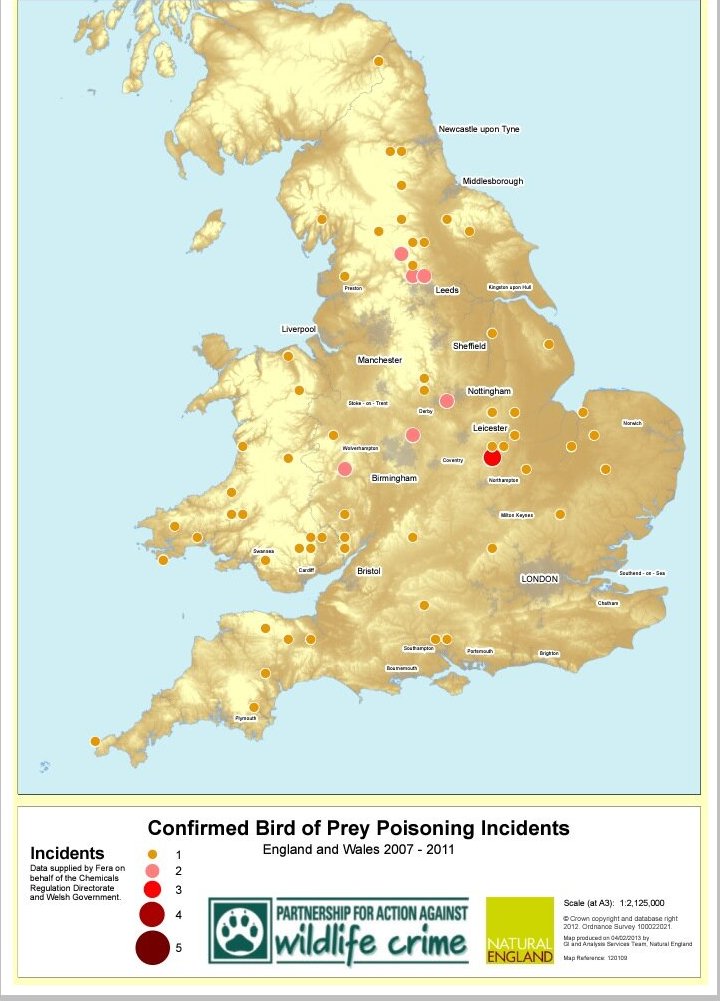
Raptor poisoning map England & Wales 2007-2011

A poisoning map of England of Wales has just been published by DEFRA, detailing confirmed poisoning incidents between 2007-2011.

This map is a welcome source of information, similar to the poisoning hotspot maps that have been produced for Scotland in previous years. What would be even better is the production of maps (for Scotland as well as England & Wales) that included other types of raptor persecution incidents, not just poisoning. But they might be a bit too embarrassing, eh?

To accompany the map, DEFRA has issued a press release here.

The National Gamekeepers Organisation has also released a press release (here). They tell us not to worry, poisoning is a ‘very rare crime’. Judging by this map, which don’t forget is just the tip of the iceberg – how many incidents go undetected? – poisoning is a lot more frequent than they would have us believe: 30 poisoned raptors in 2011 alone. Oh and they also tell us that “nearly all species now at or near their highest populations since UK records began“. Er, hen harriers, red kites, goshawks, golden eagles, white-tailed eagles, kestrels, peregrines……? Morons.

Poisoning map 2007-2011

Police investigate attempted peregrine poisoning

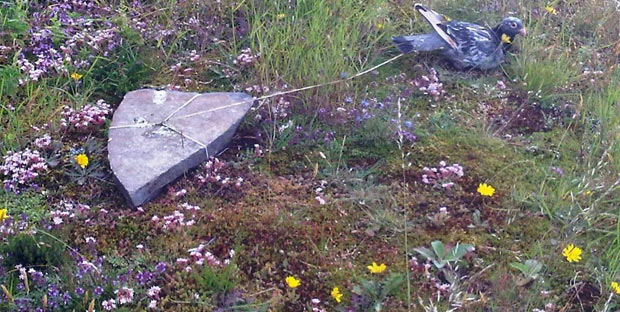
Police are investigating the attempted poisoning of peregrines after the discovery of a live pigeon, covered in poison, was found tethered to a rock at a quarry in North Wales.

Well done to Sgt Rob Taylor, the local Police Wildlife Crime Officer, for highlighting the incident and for warning the public about the danger to walkers and dogs.

The newspaper report suggests this isn’t the first tethered & poisoned pigeon to be used as live bait at this site.

News report in the North Wales Daily Post here

Police raid pigeon fanciers in England and Wales in peregrine persecution investigation

Yesterday saw a coordinated multi-agency raid on the homes of four pigeon fanciers during an investigation into alleged peregrine persecution.

The investigations took place in the following regions: Avon & Somerset, South Wales, Northumbria and the West Midlands. Police with search warrants were aided by investigators from the RSPB, RSPCA, Natural England and the Countryside Council for Wales. A 47 – year old man is reported to have been arrested at one of the locations in connection with evidence that was seized during the raid.

RSPB press release here

Let’s hope these raids end with a better result than a recent prosecution in Scotland, where an individual was charged with the alleged illegal use of a Larsen trap at a pigeon loft. Unfortunately, the case became time barred under Scottish law (meaning the prosecution evidence wasn’t presented in time) and therefore the case wasn’t heard in court.

Poisoned buzzard & ravens – appeal for info comes three months later

A news item posted today on the RSPB website reveals that a buzzard and two ravens were found dead in Monmouthshire in July. Tests reveal they had been poisoned by the banned pesticide Carbofuran. Two dead pigeons were also found which had been laced with an un-named pesticide and the news report suggests these were put out as illegal poisoned bait. Last year, two dead peregrines, poisoned with Carbofuran, were found at the same site (see here).

The article reports that Gwent Police, the Welsh Government and the RSPB are appealing for information. The RSPB is reported to be offering a £1,000 reward for information leading to a conviction.

Three months after the incident? What’s the point? Why is it that media reports about wildlife crime, and particularly illegal raptor persecution incidents, are now consistently delayed for several months? What other areas of crime are reported this way? If my house was burgled in July and I waited for three months before I reported it to the police, what do you think the chances would be of catching the burglar? About the same as catching the raptor poisoners, I reckon.

Talking of delayed reports…why is it that the 2011 SASA poisoning report, which is supposed to be updated every quarter, has not been updated since March 2011? Are we to believe that raptors are no longer systematically poisoned in Scotland because none have been handed in for analysis for the last seven months? If anyone feels like doing a Freedom of Information Request, this would seem to be a good place to start (FoI on SASA website here).

News story about the poisoned buzzard & ravens on RSPB website here

Jail for man convicted of persecuting raptors – not in Scotland, obviously

Take note, Scottish sheriffs. Here is an example of how to deal with a wildlife criminal who persecutes birds of prey.

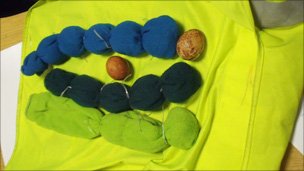
Today, convicted wildlife criminal Jeffrey Lendrum was sentenced to 2.5 years in prison by Judge Christopher Hodson at Warwick Crown Court, England. He had been arrested in May at Birmingham International Airport when he was found to have 14 peregrine eggs wrapped in socks and strapped to his body. The eggs had been stolen from four separate nests in South Wales. Investigators believe they were stolen to order for an Arab falconer in Dubai.

During sentencing, Judge Hodson said: “These were eggs you had removed from the wild in Wales and you would have reduced the number of these high-level endangered species in the wild, birds which enhance the attraction of the countryside to all. I quote the words of a Lord Justice of Appeal (Lord Justice Sedley) when he says, ‘environmental crime, if established, strikes not only at a locality and its population but in some measure to the planet and its future’. Nobody should be allowed to doubt its seriousness or to forget that one side of the environmental story is always untold‘. I adopt these words to express the gravity of what you did.”

The court was also told that Lendrum had previous convictions for similar offences in Zimbabwe and Canada. Of the 14 eggs stolen in this case, 12 chicks hatched and 11 survived. 7 of these were fostered into nests in southern Scotland and 4 were reared and released in England.

BBC news story: http://www.bbc.co.uk/news/uk-england-birmingham-11024315