DEFRA’s plans unchanged despite loss of 5 breeding hen harriers

In June, following the news that five breeding male hen harriers had ‘disappeared’ from active nests this year, one of our blog readers submitted an FoI to DEFRA to ask about the Westminster Government’s contingency plans to protect hen harriers and to deal with the criminals who continue to persecute hen harriers and other wildlife:

Sir/ Madam

I am making a Freedom of Information request regarding hen harriers/ illegal persecution of wildlife.

1) With the recent losses of five male birds in northern England, as published in Natural England’s press release (https://www.gov.uk/government/news/five-hen-harriers-have-now-disappeared-from-northern-england), what is the Government’s contingency plan(s) to prevent the species becoming extinct in the wild in England as a direct result of illegal persecution within the next 5 years, i.e. the duration of this Parliament?  If there are no contingency plans, why are there no contingency plans?

2) In a recent court case in Spain (see http://www.venenono.org/?p=2506 with an English summary available here:https://raptorpersecutionscotland.wordpress.com/2015/06/09/now-thats-a-deterrent/, the sanction imposed on an individual found guilty of a wildlife offence was considerably more severe compared with recent similar incidents in England.  Does the UK Government have any plans to introduce similar sanctions that would act as a meaningful deterrent to wildlife criminals?  If not, why not?

3) Does the Government consider the current sanctions available to Magistrates/ Judges sufficiently severe to act as a deterrent to wildlife criminals, within the context of those imposed in the aforementioned Spanish case?

4) As in Spain, is the Government seriously considering introducing ‘sniffer dogs’ able to detect the use of poisoned bait as described in the article published by Raptor Persecution Scotland? If not, why not?

Many thanks,

XXXXX XXXXX

Here is DEFRA’s response:

Dear XXXXX XXXXX

Thank you for your request of 11 June about the illegal persecution of hen harriers. I have been asked to reply.

We share your concerns regarding the recent losses of five hen harriers but are encouraged by the news of several nests this year, following on from four nests in 2014, with 16 fledglings. In 2013, for the first time in over 50 years, there were no known fledglings.

All wild birds are protected under the Wildlife and Countryside Act 1981, which implements the EC Wild Birds Directive in Great Britain. This provides a powerful framework for the conservation of wild birds, their eggs, nests and habitats. I can assure you that we are committed to ensuring the strict protection afforded to wild birds of prey under our wildlife legislation is effectively enforced. There is a robust legal framework for protecting such birds with strong penalties for offenders, which can include imprisonment.

Despite the protection afforded to birds of prey, it is clear that they continue to be persecuted. To address this, senior Government and enforcement officers in the UK identified raptor persecution as a National Wildlife Crime Priority. Raptor persecution is subject to a prevention, intelligence and enforcement plan led by a senior police officer. The National Wildlife Crime Unit, which is part-funded by Defra, monitors and gathers intelligence on illegal activities affecting birds of prey and provides assistance to police forces when required.

It should be noted that despite instances of poisoning and killing of birds of prey, populations of many species, such as the peregrine falcon, red kite and buzzard have increased. While a small minority is prepared to kill birds of prey and where possible these people are brought to justice, this demonstrates that the policies in place to conserve these species are working.

One of our most threatened birds of prey is the hen harrier and we take the decline in hen harrier populations in England very seriously. In August 2012 Defra established the Hen Harrier Sub-Group of the Uplands Stakeholder Forum whose members include representatives from Natural England, the Moorland Association, the National Gamekeepers’ Organisation, the Game and Wildlife Conservation Trust, National Parks UK and the RSPB.

All members of the Hen Harrier Sub-Group have a common interest to protect hen harriers.  They have made concerted efforts to engage and have produced a Joint Action Plan that contains a suite of actions intended to contribute to the recovery of the hen harrier population in England. The commitment shown by the differing organisations involved in the Sub-Group to help the recovery of one of our most iconic birds demonstrates a desire to bring about behavioural change amongst gamekeepers and confidence that this can be achieved through a package of complementary actions.

The Joint Action Plan includes three measures to stamp out illegal persecution, a trial toolkit comprising two measures for land owners to safely accommodate hen harriers on grouse moors and a measure to reintroduce them to suitable habitat in other parts of England. Defra officials are currently working with Sub-Group members to finalise the Plan.

As previously stated there are already strong penalties in place for people committing offences against birds of prey. You have asked if the Government intends to introduce tougher penalties for those convicted of wildlife crimes. I should first point out that Parliament is responsible for deciding the maximum penalties for offences. There are currently no plans to increase the penalties for offences against wildlife. Within the maximum limits, it is up to the court to decide the appropriate sentence in any case, having taken into account all the facts of the case.

We are aware that sniffer dogs are used in other countries, including Italy, Spain and Greece, to detect poisoned bait but are not aware that enforcement bodies in the UK have this resource or are considering it for the future. This would be a matter for individual Police forces to decide upon.

Yours sincerely,
Charlie Coombs
Customer Contact Unit

New sentencing powers for wildlife crime in England & Wales

cash pile 2Well this is good news!

The following article appears in the RSPB’s latest Legal Eagle newsletter:

New magistrates’ court powers to impose larger fines in environmental offences.

Magistrates’ courts now have the power to impose fines of an unlimited amount on individuals or organisations convicted in England and Wales for criminal offences, which would previously have attracted a fine capped at £5,000 or more. This change to the law came into force in March, and applies to many environmental offences.

This alteration has come about due to provisions in the Legal Aid, Sentencing and Punishment of Offenders (LASPO) Act 2012 coming into force on 12 March 2015.

This is a significant expansion of magistrates’ sentencing powers.

The new provisions apply to all “summary” offences (which are always heard by the magistrates’ courts) and also to “either way” offences when dealt with in the magistrates’ (rather than the Crown) court. They apply to all offences committed after 12 March 2015 where they would previously have attracted a fine capped at £5,000 or more.

Examples of offences affected are:

  • Wildlife offences contained in the Wildlife and Countryside Act 1981, the Conservation of Habitats and Species Regulations 2010 and the Protection of Badgers Act 1992. These summary offences, until 12 March 2015, attracted a fine capped at £5,000.
  • Wider environmental offences under the Environmental Permitting (England and Wales) Regulations 2010. These (mostly “either way”) offences previously imposed fines of up to £50,000 depending on the type and nature of the offence.

In both cases the former maximum sentencing caps have now been removed and fines that can be imposed by the magistrates’ court are unlimited.

The rationale behind the new provisions is to enable more proportionate fines to be imposed on “wealthy or corporate offenders or organisations” and to reduce the number of referrals to the Crown Court for sentencing, which can be time consuming and costly. Only time will tell whether, in the absence of the maximum cap, magistrates will still continue to impose lower fines than the Crown Court.

END

Excellent! Now all we need is to get the cases to court and for the magistrates to accept the evidence…

In related (sort of) news, Westminster MPs are to be given a free vote on changes to the fox hunting laws (see here and especially here). The Countryside Alliance is supporting this move (of course) and says, “These amendments [if approved] will bring the law in to line with Scotland…” Interesting. Does that mean we can expect to see the Countryside Alliance campaigning for the introduction of vicarious liability for raptor persecution offences in England and Wales ‘to bring the law in to line with Scotland’? No, thought not.

Shot peregrine found in County Durham has to be euthanised

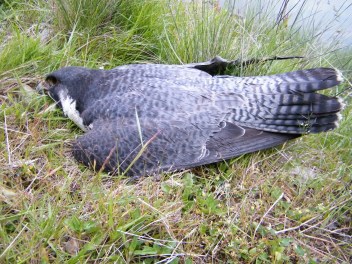
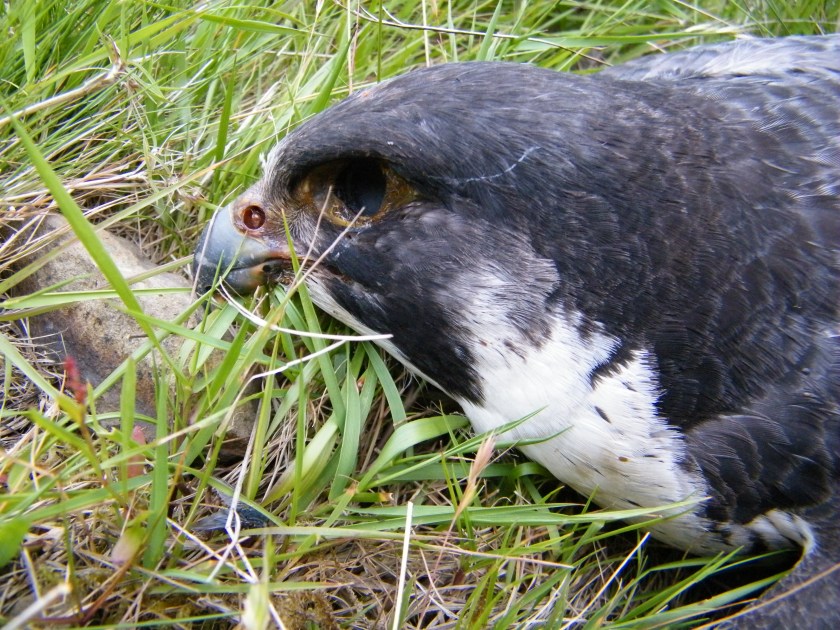
shot perg june 2015 durham_peregrinefalconjohnolleyThe Police and the RSPB are appealing for information following the discovery of a shot peregrine last month.

The bird was found, still alive, on 4th June at Castle Lake, Bishop Middleham, a local nature reserve managed by Durham Bird Club.

After a veterinary examination the male’s injuries were considered so severe it was decided to put him to sleep.

The RSPB is offering a £1,000 reward for information that leads to a successful conviction.

RSPB press release here

Photo of shot peregrine by John Olley

Trial against gamekeeper Neil Wainwright gets underway

The trial against Shropshire gamekeeper Neil Wainwright got underway on Tuesday.

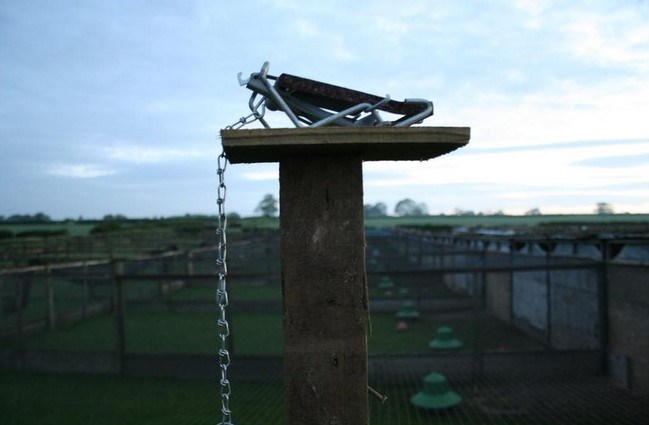
Wainwright, 55, of Norbury, Bishop’s Castle, is accused of baiting a Larsen trap with live quail to catch birds of prey. The offences are alleged to have taken place at Birch Hill Wood in Gatten, Stipperstones, in July 2014. Wainwright has denied these charges, but at an earlier hearing pled guilty to three other charges relating the storage of firearms, ammunition and poison (see here and here).

According to an article published yesterday in the Shropshire Star (see below), Wainwright’s defence is that he was using the Larsen to trap a mink, not birds of prey.

We always enjoy reading the far-fetched explanations of gamekeepers who have been accused of alleged wildlife crimes. Rarely plausible, they often push the boundaries of credibility. Recently-convicted Kildrummy Estate gamekeeper George Mutch’s explanation was a classic – he claimed he’d killed the goshawk he’d caught in his Larsen trap as a mercy mission because it was injured. The Sheriff in that case called it “a convenient lie”. Recently-convicted Swinton Estate gamekeeper Ryan Waite claimed the two illegal pole traps he’d set were for targeting squirrels, not raptors. Recently-convicted Stody Estate gamekeeper Allen Lambert claimed the 11 poisoned raptors found on his estate had been dumped there by someone with a vendetta against him.

It’s not just gamekeepers, either.

Following the discovery last month of 16 fox cubs found inside a barn in North Yorkshire in suspicious circumstances, Lord Middleton, a local landowner and hunstman reportedly suggested that the cubs ‘were being cared for by the Hunt for kind reasons’ (see here).

Wainwright’s trial will continue on 29th June 2015.

The Shropshire Star published an article yesterday about the first day of the trial although the article has now vanished from their website. Here’s a copy:

From Shropshire Star 17 June 2015

Neil Gordon Wainwright a gamekeeper used a metal Larsen trap designed to catch magpies, crows and jays he had baited with two live white quail to catch birds of prey at Birch Hill Wood in Gatten, near the Stiperstones, Shrewsbury, Magistrates Court were told by the RSPB. An inspector for the Royal Society for the Protection of Birds noticed the trap while walking on a public way and set up two covert cameras to record who came to attend to it.

Wainwright, 55, of Norbury, near Bishop’s Castle, denies charges of using a trap to kill or take a wild bird, possessing an article capable of being used to commit an offence, and failing to take steps to ensure that the needs of an animal were met.

The offences are said to have taken place between July 21 and 31 last year.

District judge Kevin Grego heard yesterday that an RSPB inspector had visited Birch Hill Wood on July 23 and believed that an offence was being committed.

Mr Richard Davenport, prosecuting, told the court that the inspector noticed that a Larsen trap had been baited with two white quails and set close to a pheasant release pen.

Howard Jones, RSPB inspector, said he had been walking on a public right of way when he saw the pheasant pen. He found the Larsen trap and then returned a day later to install the cameras.

Mr Jones said he and another inspector had checked the footage and over the course of several days the defendant was seen going to the trap.

At one point Wainwright was seen with a dead buzzard in his hands. The incidents were reported to the police and a warrant to search Wainwright’s home and outbuildings was carried out on August 5. Expert witness Dr Rodney Calvert, from Natural England and a specialist on trapping, said he had never known of a Larsen trap being used to catch anything other than crows or magpies.

Wainwright’s defence is that he was using the trap to catch mink and stoats which had been taking his game birds.

Dr Calvert said that using live quail as bait would not attract such animals but would be likely to attract wild birds.

Wainwright, who has several captive peregrine falcons and an owl at his home, said he had used the quail as bait “as an act of desperation”. He said he had been targeted by a mink and had decided to bait the trap to try and catch it.

The trial was adjourned until June 29 and will be heard at Telford Magistrates Court.

More media coverage of hen harrier persecution

It sounds like an odd thing to say, but something good has stemmed from the ‘disappearance’ of five breeding hen harrier males this year, and that’s the amount of media coverage generated by these incidents.

The national press has been all over these crimes (and yes, we are calling them crimes because you’d have to be either pretty dense and/or wilfully obstructive to claim that these ‘disappearances’ are the result of anything else) with plenty of column inches in the Guardian, Independent, Daily Mail and Express, as well as TV broadcasting on the BBC News and Channel 4 News. Social media has also been busy, with massive coverage on Twitter and Facebook in addition to constant coverage on several well-read personal blogs, all with a wide social reach.

Instrumental to all this media attention was the release of the information in the first place, and for that we have the RSPB to thank. As a result, the RSPB find themselves at the centre of (another) targeted slur campaign, funded by the industry with the most to lose in terms of public perception when news gets out about another ‘missing’ hen harrier in yet another area managed for driven grouse shooting. The funny part is, the more they smear the RSPB, the more that news editors will want to run the story, so the more people are going to hear about what’s going on.

Some may worry about what’s been written in some of the papers – the Daily Mail coverage was, well, pretty much what you’d expect from the Daily Mail (with it’s grouse moor-owning proprietor), but did that matter? Apparently not. The plight of the hen harrier has never been so high profile and never have so many people raised their voices in support of this species – it’s inconceivable that just a couple of years ago the hen harrier would have been voted the nation’s 9th favourite bird (as it was this week) – it would have been lucky to have made the Top 100, let alone the Top Ten. That’s pretty impressive, especially when you consider that the grassroots campaign in support of the hen harrier is still pretty young – it’s only really just got started.

There’s even more media coverage this weekend, with this article in the Independent. It doesn’t really tell us anything new, apart from learning that United Utilities had ‘banned’ the reporter from visiting the one remaining hen harrier nest in Bowland because the issue had become “too political”, whatever that means. But the content of the article isn’t really what’s interesting – what is interesting is that the Independent thought this issue newsworthy enough to send a journalist all the way from London to Cumbria to look at the now abandoned hen harrier nest on the Geltsdale Reserve. The accompanying text is largely irrelevant (although undoubtedly it will have been read by some people who were previously unaware of hen harrier persecution on driven grouse moors, so that’s good); it’s the fact that the story is being published in the mainstream media, again, that’s important.

Not only does extensive media coverage reach an ever-increasing audience, it also helps to build pressure on the authorities who are in a position to do something about these seemingly untouchable raptor killers, but so far have managed to do virtually nothing, or at least anything meaningful.

A few days ago the UK Government’s statutory nature conservation agency, Natural England, published a statement in response to the news that five breeding male hen harriers have ‘disappeared’. You can read it here. It tells us how ‘concerned’ they are, but other than that, it seems to be business as usual. More satellite-tagging to “provide even more detailed information on how birds move around the landscape and the factors currently limiting the population”.

That’ll be the same satellite tag information they’ve been collecting for the last eight years and have yet to publish in any detail.

Norfolk businessman puts up £5K reward to catch raptor persecutors

Mervyn Lambert NorfolkLast month somebody stole a clutch of eggs from a Marsh harrier nest in Norfolk (see here). Around the same time, eggs were also stolen from a Kestrel’s nest and a wagtail’s nest. Norfolk Constabulary are linking the three thefts.

In response, local businessman Mervyn Lambert is offering a £5,000 reward for information, adding to the other £2,000 already available (£1K from the Eastern Daily Press and £1K from the Hawk & Owl Trust).

However, Mr Lambert isn’t limiting his offer to these three crimes. “I’ll give £5,000 for any information, not only about stealing birds’ eggs but poisoning, trapping and shooting protected birds“.

Good stuff.

Further details in the Eastern Daily Press here.

Desperate days as 5th male hen harrier ‘disappears’

Another male hen harrier has ‘disappeared’ from an active nest – the 5th this year.

Three males vanished from nesting territories in Bowland in late April/early May (see here).

Another male vanished from its nesting territory on Geltsdale last week (see here).

And now the 5th – last seen on the United Utilities Estate in Bowland on 29th May (see here).

Is it shocking news? Yes, but not because we didn’t expect it. It’s shocking because the persecution of this species is so, so brazen.

It should now be clear (as if it hasn’t been for decades) that the people responsible, and the grouse-shooting industry that shields them, need to be brought to their knees.

We can all do that.

We must do that.

We will find a way to do that.

You forgot the biology

Well, well, well. The ‘campaign’ group You Forgot the Birds, headed up by that well known ornithological expert (ahem) Sir Ian Botham, is back.

You might remember them from last year, when they tried, unsuccessfully, to discredit the RSPB, resulting in widespread derision and the rejection of their complaints to the Charity Commission.

This time they’ve surpassed all expectations. They’re accusing the RSPB of ‘deliberately looking the other way’ while hen harriers die because they’re more interested in using the species as an ongoing ‘fundraising tool’.

This accusation is centred on the recent events in Bowland, Lancashire, where three male hen harriers, all with active nests, (un)mysteriously ‘disappeared’ (see here).

We have a copy of the group’s press release (thanks to the journalist who sent this). It reads (slightly edited) as follows:

You Forgot the Birds campaign.

The mysterious disappearance of endangered birds of prey in Lancashire has become a whodunnit with the RSPB implying that gamekeepers are to blame and the gamekeeper’s champion, Sir Ian Botham, saying that the RSPB is deliberately looking the wrong way – and has ulterior motives.

Embargo 00.01 Tuesday 19 May 2015

England’s hen harriers are close to extinction and the RSPB is too ideologically blinkered to do anything to help.  This is the view of Sir Ian Botham who is responding to the news that at the Bowland Estate in Lancashire, RSPB officials are watching abandoned eggs on hen harrier nests instead of transferring them into incubators.  The fledglings could then be released back into the wild.

“The RSPB uses hen harriers as a fundraising tool and is forever blaming gamekeepers for their low numbers” says Sir Ian Botham, “but the real culprits are the ‘sit on their hands and do nothing’ RSPB officials who keep blocking government attempts to help the birds recover.”

Under a Natural England licence the RSPB could save the eggs at Bowland.  Officials at Defra have proposed a similar scheme to increase hen harrier numbers on grouse moors but this has been obstructed by the RSPB.

“The RSPB are deckchair conservationists with binoculars who sit and watch failing nests. They campaign, they complain, they blame – but they are rubbish at conservation.  Year after year the RSPB fails to live up to its name and protect birds.  If you want to protect birds from predators you need gamekeepers not the RSPB” says Sir Ian.  Uncontrolled fox populations are a major problem for hen harriers.

His criticism came after the RSPB, without producing any evidence, blamed the disappearance of the hen harriers on wildlife crime and offered a £10,000 reward for a conviction.

Sir Ian in response is offering a £10,000 reward to the first conservation group which moves the abandoned eggs into an aviary and then releases the fledglings back into the wild.  A similar process has already successfully raised harrier numbers in France.

While there are more than 1,000 hen harriers in Scotland, in England the numbers remain pitifully low.  Last year there were only four successful nests south of the border – three of which were on grouse moors.

“No bird lover can accept this impasse.  The current situation is an embarrassment to both Defra and to Natural England and provides stark evidence that the RSPB puts ideology and fundraising far ahead of the birds it claims to protect,” says Sir Ian who is spokesman of the You Forgot The Birds campaign.

The RSPB receives more than £1m of grants from the EU and the Heritage Lottery Fund for its hen harrier programme and would risk not getting further grants if hen harrier numbers increased.

Defra officials want excess hen harrier chicks on grouse moors to be raised in aviaries so that bird numbers increase while allowing the moors to remain economic.  The highly respected Hawk and Owl Trust has offered to help implement the scheme.  However the RSPB continues to object to the plan and is putting pressure on the Trust to back down.

Contact

Ian Gregory xxxxx xxxxx

You Forgot The Birds   www.youforgotthebirds.com

Notes:

  1. The Scottish hen harrier population is 505 territorial pairs (Hayhow et al. 2010)
  2. The grouse industry suspects that the RSPB’s offer of a £10,000 reward over the Bowland Estate hen harriers is an attempt to deflect responsibility away from its failure to protect birds on land that it controls.
  3. The RSPB has not produced any evidence that the birds are dead. Nor has it explained why it thinks that they have not been taken by predators e.g. eagle owls, peregrine falcons or goshawks.
  4. If a gamekeeper was responsible for the birds disappearing then how was this not detected by the RSPB’s extensive network of people and remote cameras in Bowland?
  5. The RSPB has ‘previous’ for playing media games with hen harriers: for more than six months it delayed reporting the deaths of two hen harriers at a wind farm. (The RSPB campaigns for wind farms and has even built a turbine at its headquarters.)
  6. At Bowland a Natural England Licence would allow conservationists to use portable incubators, dummy eggs (in case the parents return) and supplementary feeding (to encourage females to remain when their partners have abandoned a nest). If the fledged birds were returned to the place where the eggs were taken from there would be no breach of IUCN guidelines.
  7. The You Forgot The Birds Campaign thinks that the RSPB is fearful that if it reverses its position on the Defra scheme, the resulting growth in hen harrier numbers would show how its years of opposition have been hugely damaging for this endangered species.
  8. The RSPB’s claim that unrestricted hen harrier numbers can co-exist with grouse moors is proving unfounded at the Langholm Project in Scotland.  This longstanding experiment, which is partly funded by the RSPB, uses “diversionary feeding” of hen harriers in an attempt to reduce their predation of grouse.  However grouse numbers on the moor remain so poor that there has not been one day’s shooting in seven years – this is not economically viable.
  9. The You Forgot The Birds Campaign is funded by the British grouse industry.

END

It’s hard to know where to begin, and to be honest, we can’t really be arsed to go through it sentence by sentence, but there are two points that are worthy of some attention.

1. The two hen harrier nests (with their eggs) were abandoned by the females at some point between 30th April (when both males ‘disappeared’) and 6th May, when the RSPB announced the news. Botham’s press release was embargoed until today (19th May). Botham is offering £10K to any conservation organisation who will take the eggs, incubate them, and then release the subsequent fledglings. It’s not clear how he thinks that eggs containing embryos that have been dead for between 13-19 days can now be successfully incubated. It’s biologically impossible.

He may well argue that had the RSPB intervened when the nests were first abandoned, the eggs could have been saved. Well, that’s potentially a biological possibility, although this scenario doesn’t take in to account the difficulty of knowing precisely when the nests were abandoned, and thus when to intervene. The nests were being closely observed and the people watching the nests will have seen the females leave. But at that stage, they wouldn’t have known whether the females had left temporarily (to find food for themselves in the absence of their male partners) and were coming back, or whether they’d abandoned the nests for good. Intervening at that early stage and removing the eggs could have been disastrous, not to mention illegal. By the time the nest observers realised the females weren’t returning, the eggs would have chilled and the embryos would already be dead.

However, that’s not what he’s arguing. His press statement is clearly written in the present tense – he seriously thinks that the eggs will still be viable, two weeks after they were abandoned. He’s either a deeply religious man with faith in the concept of resurrection (£10 grand for a miracle rebirth – what a bargain), or his understanding of biological principles is as strong as his Twitter account password. Perhaps he should change his nickname from Beefy to Mincey, as in ‘thick as….’

2. The second point worthy of mention is the final sentence in the ‘notes’ section of the press release:

The You Forgot The Birds Campaign is funded by the British grouse industry‘.

How interesting. But what is meant by ‘the British grouse industry’? A few individuals with a vested interest in grouse shooting, or an organisational body that represents those who own grouse moors? Mark Avery has attempted to find out the answer to that (here).

Whoever or whatever the ‘British grouse industry’ is, we owe them a debt of gratitude for choosing Mincey Botham as their spokesperson.

Article about this story in today’s Telegraph here.

Response from RSPB Conservation Director Martin Harper here

£1K reward offered after peregrine shot dead

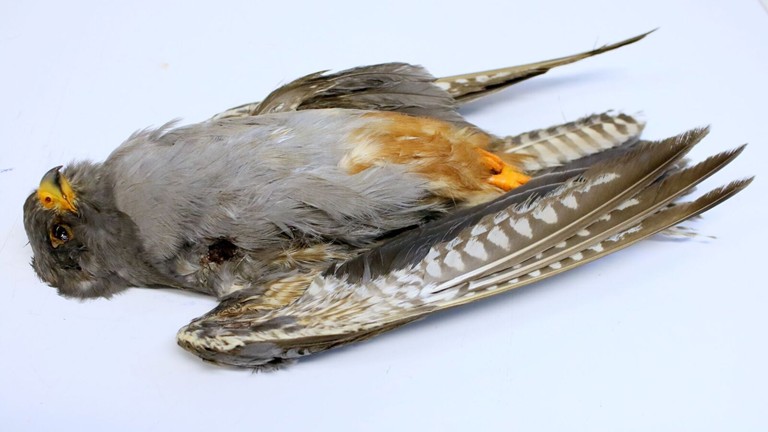
The RSPB is offering a £1,000 reward for information leading to the conviction of the person who shot a peregrine earlier this month.

The dead bird was discovered at an undisclosed location in north Staffordshire on 7th May 2015. The exact location hasn’t been revealed, to protect other birds that may be nesting near by.

Staffordshire Police are also appealing for information (Tel: 101 and cite Incident Number 200).

Article in the Stoke Sentinel here

Peregrine photo by Martin Eager

Police launch raptor crime awareness campaigns in Scotland, England & Wales

Police forces in England, Wales and Scotland have recently launched poster campaigns to raise awareness of crimes against birds of prey.

A couple of days ago, North Yorkshire Police announced their campaign against the illegal poisoning of raptors. They’ve produced a poster that will be distributed in rural areas including the Yorkshire Dales and the North York Moors; both of these areas are dominated by driven grouse moors and both areas are well known as raptor persecution hotspots. The posters will be displayed in National Park Centres and on parish council notice boards.

North York Police poisoning poster May 2015

Earlier this month, North Wales Police launched a campaign called Operation Raptor, aimed at targeting raptor poisoners in their region. This follows the poisoning of five peregrines last year and a suspected buzzard poisoning incident this year. The main peregrine poisoning suspects in the region are usually pigeon fanciers/racers.

Police Scotland launched their wildlife crime campaign in March (in collaboration with PAW Scotland), which involves raising awareness of all six national wildlife crime priorities, including raptor persecution.

These publicity campaigns are good to see. Excellent, in fact. However, the most important facet of tackling wildlife crime is not raising awareness (as important as that is), but what the police actually do in response to a reported wildlife crime. A recently published report on wildlife crime enforcement in Scotland revealed a catalogue of failures, including poor follow-up investigations and sometimes no follow-up at all (see here).

We’re watching with interest to see just how long it takes Police Scotland to publicise a number of raptor persecution crimes that have taken place within the last 12 months, especially those involving the use of banned poisons that have killed raptors on or very close to sporting estates with long histories of such crimes.