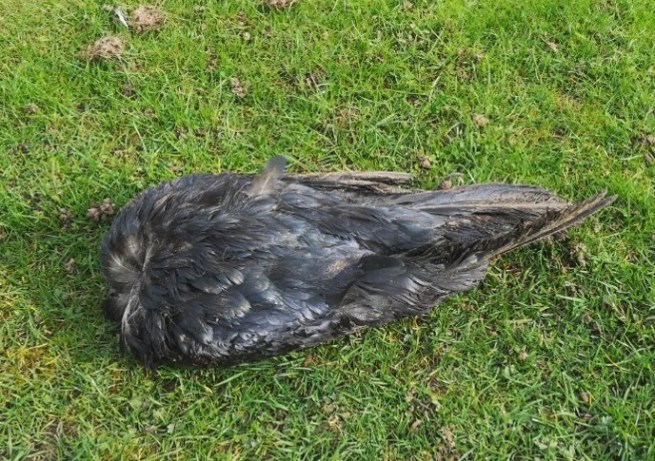
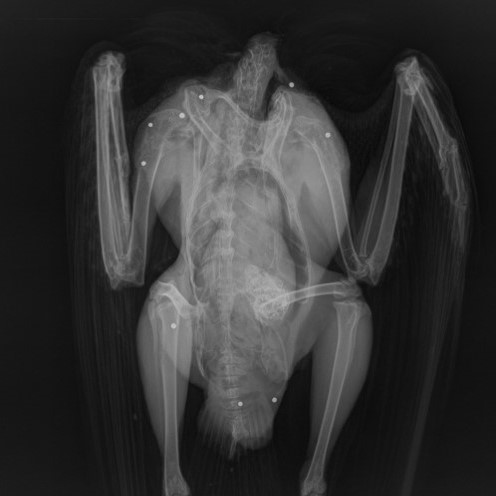
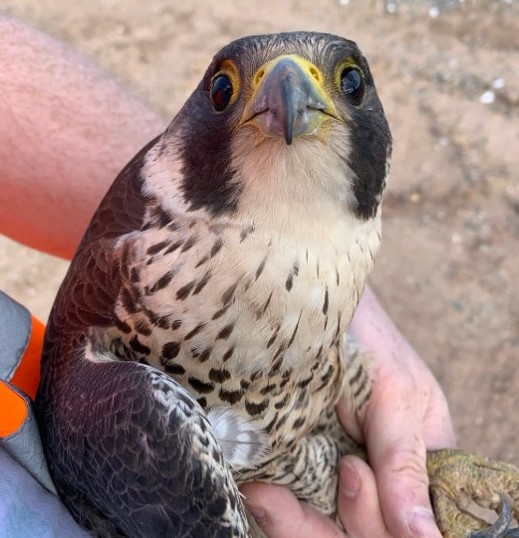
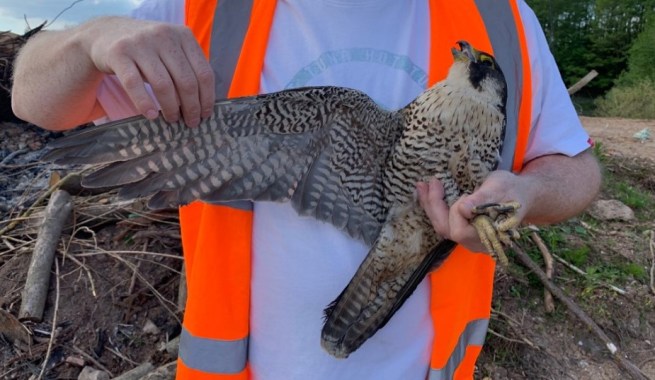
Peregrine nest on Peak District grouse moor fails in suspicious circumstances

The Peak District Raptor Monitoring Group (PDRMG) has already reported the failure of a peregrine nest in the Peak District National Park, and the breeding season’s only just got underway!

You can read the group’s report here.

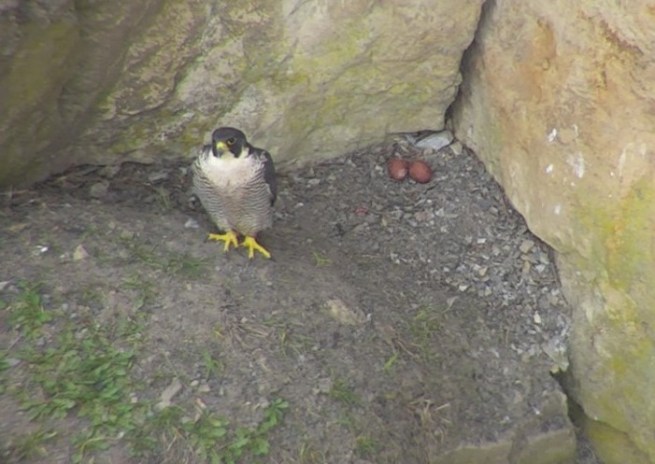
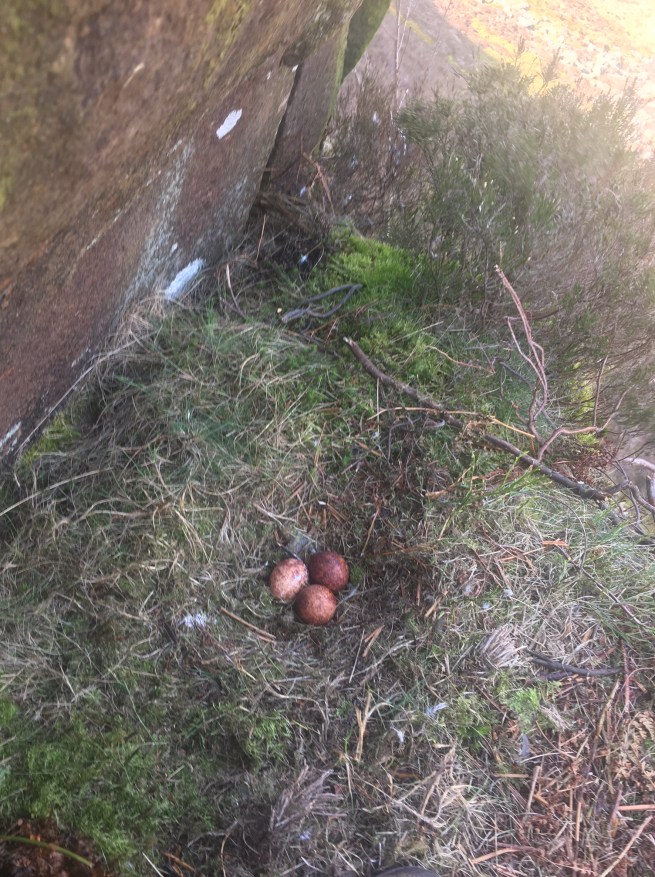
[Three abandoned peregrine eggs on the nest ledge, photo by Peak District Raptor Monitoring Group]

Of course, an abandoned nest is not a clear indicator that a wildlife crime has occurred and if viewed as an isolated incident, it could easily be argued that reporting this incident to the police is an over-reaction. Indeed, that’s exactly what we’d expect grouse shooting organisations to say. It’s what they do: play it down, make out that everything’s fine, that the persecution issue is “tiny and that there’s really nothing to worry about. And that’s a convincing argument, when viewing an incident like this in isolation.

However, incidents like this that happen on grouse moors in known wildlife crime hotspots (like the Peak District National Park) should never be viewed in isolation. Instead, they should be viewed as being part of a well-established pattern of failed peregrine breeding attempts in this region, and in every other region in northern England where grouse moors dominate the landscape.

We see it happen over and over and over again. In the Peak District, a so-called ‘partnership’ has consistently failed to address peregrine persecution (e.g. see here) and there have been several scientific papers making a direct link between grouse moor management and peregrine persecution here and across the UK, e.g. here, here, here, here.

It was only last month that we watched covert footage of a load of armed gamekeepers hiding close to a plastic peregrine decoy, on a grouse moor, er, in the Peak District (here).

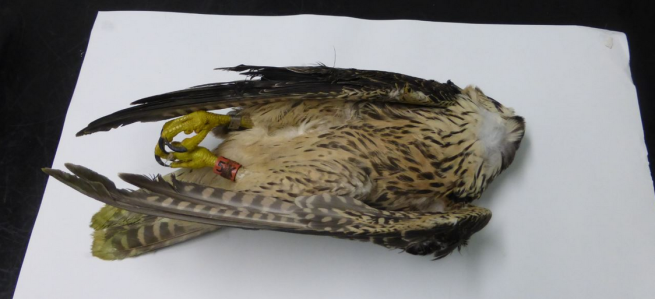
[This peregrine was found shot next to a grouse moor in the Peak District National Park in 2016. It didn’t survive. Photo by RSPB]

And yet still it continues.

The police are investigating the latest suspicious loss of two breeding adults but to be honest there’s not much they can do unless they happen to stumble across a couple of shot peregrine corpses stashed under someone’s driving seat or chucked in the back of a Landrover, but even then it would be virtually impossible to prove who’d killed them and the charge would be for the lesser crime of ‘possession’.

In the meantime, this case will be hotly disputed at so-called ‘partnership’ meetings, the grouse shooting reps will come up with 101 reasons why the breeding attempt might have failed and not one of those reasons will be the probability that someone linked to the grouse moor has killed the breeding adults.

When you hear the inevitable denials and protestations, its worth remembering what happened to the poor Bleasdale peregrines and the grouse shooting industry’s response (here & here) when the RSPB’s video evidence was ruled inadmissible and the trial collapsed.

Hats off to the peregrine fieldworkers in the uplands who volunteer to monitor these breeding attempts, year after year, knowing full well what is likely to happen. Fortunately for us they’re willing to document these failures so everybody can see the pattern for themselves.

BASC still in denial about extent of illegal raptor persecution

There was a feature on illegal raptor persecution in the Peak District National Park on the BBC’s Sunday Politics (East Midlands) programme a couple of days ago.

You can watch it on BBC iPlayer here (starts at 21:02; ends at 25:05; available for 27 days).

The film began with an interview with Tim Birch from Derbyshire Wildlife Trust, who explained that illegal raptor persecution in the Dark Peak area of the National Park is particularly bad, affecting hen harriers, goshawks and peregrines. The Derbyshire Wildlife Trust is calling for stronger enforcement action on the criminals responsible and for the introduction of vicarious liability, to hold the landowners to account.

The presenter then spoke about the recent scientific paper on hen harrier satellite data, published a couple of weeks ago. She said:

When it comes to hen harriers a recent study by Natural England found they were ten times more likely to die if they were near or on land used for shooting. Now this study concluded that illegal persecution is having a major impact on the conservation of these birds. But not everyone agrees with the data. Duncan Thomas represents the shooting community and believes questions need to be raised“.

The camera then cut to Duncan Thomas, ex-police wildlife crime cop in the Forest of Bowland and currently the British Association for Shooting & Conservation’s (BASC) northern director. Here’s how the interview went:

Duncan Thomas:You know, what we have to be really careful of is the data that’s coming from these tagging programmes and who controls that data. I’d like to see much more transparency in the whole tagging process for the benefit of everybody“.

Interviewer:These wildlife charities say that there is a direct connection when it comes to the decline in birds of prey populations here in the Peak District and illegal persecution“.

Duncan Thomas:There is a tiny amount of persecution occurring and what we have to do is to work closely with our conservation partners to eradicate that. BASC and the other shooting organisations have a zero tolerance for wildlife crime. Any body committing any crime will be expelled from the organisations, the police will remove their firearms and shotgun certificates and they won’t be able to work, you know. There is a zero tolerance for it. You know, let’s work together and take this issue forward“.

[Duncan Thomas, struggling to understand the definition of “tiny”]
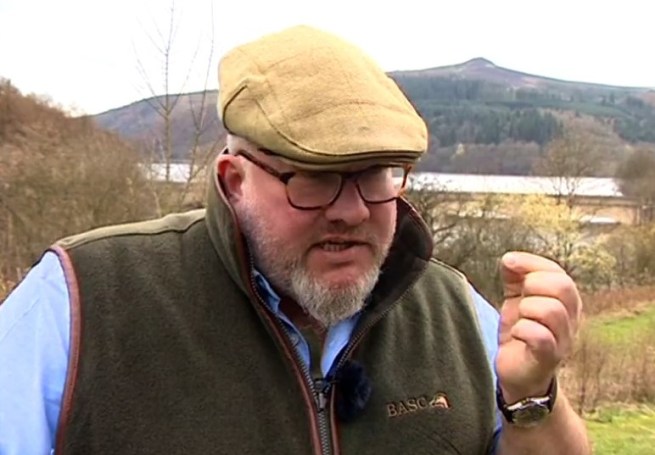
Given the extensive catalogue of evidence that demonstrates the appalling level of wildlife crime in the Peak District National Park, Duncan Thomas’ refusal to acknowledge it just makes him, and BASC, look ridiculous.

That evidence dates back at least 20 years and resulted in two damning summary reports published by the RSPB: Peak Malpractice (here) and then Peak Malpractice update (here).

Then came the Peak District National Park Bird of Prey Initiative in 2011, a so-called ‘partnership’ aimed at restoring raptor populations in the Dark Peak part of the Park. This Initiative has failed to deliver on every single target since then (see here and here) and is barely hanging by a thread (here).

Then last year a scientific paper published in the journal British Birds comprehensively linked the illegal killing of raptors with areas of land managed for driven grouse shooting in the National Park (see here). Here is a map from that paper showing the number of raptor persecution incidents against the backdrop of grouse moors (burned heather).
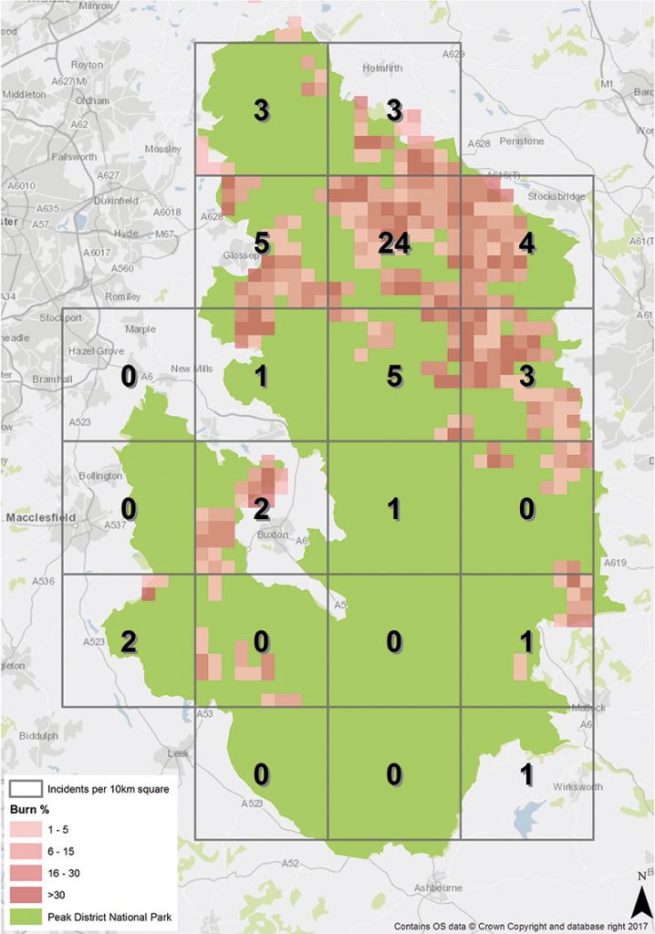
To suggest that the scale of raptor persecution in the Peak District is a “tiny amount“, even though it’s been shown repeatedly, for many years, to be having population-level effects on hen harriers, goshawks and peregrines, is either fatuously ignorant or wilfully blind.

Instead of acknowledging these widespread crimes, Duncan Thomas instead focused on trying to undermine the hen harrier satellite tag data which were collected by a Government agency, analysed by international scientists and published in an exceptionally high quality journal!

And it’s simply not true that the shooting organisations operate a zero tolerance policy for wildlife crime. If only they did, this issue would be resolved very quickly! For example, not one of them published a statement to condemn the shooting of Marsh harriers at a nest on Denton Moor nor issue an appeal for information to identify the armed men dressed as gamekeepers (here).

Instead, what we see repeatedly are shooting organisation representatives sneering and ridiculing the RSPB when covert video evidence has been ruled inadmissible in prosecutions for alleged raptor crime (Duncan Thomas has a track record of this – e.g. here), we see high-end barristers (often of QC status) brought in to defend the accused (who pays the legal fees, because they’ll be beyond the gamekeeper’s pocket?), and instead of expulsions from shooting organisations following a successful conviction we see statements of support (e.g. here).

On top of all that, we understand that BASC is accepting funds from several people who are also involved in the management of a number of estates notorious for both confirmed and alleged wildlife crimes. We’ll be exploring that relationship, also shared with GWCT, in another blog.

Does any of that look like zero tolerance to you?

Oh, and Duncan, about your idea of “working together“. That won’t happen when BASC and its fellow raptor persecution apologists boycott a meeting designed to, er, work together to tackle illegal raptor persecution.

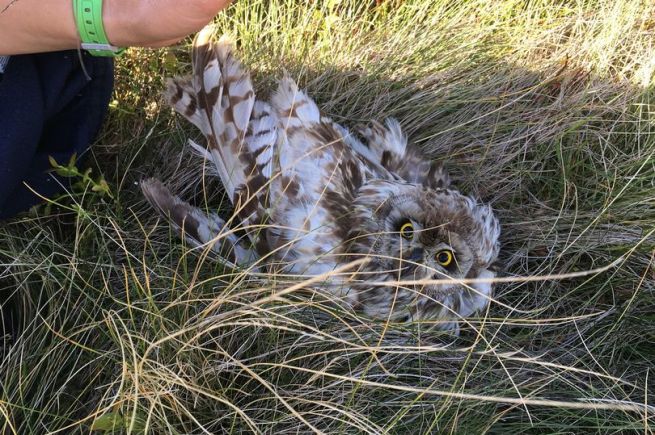
[Photo of a short-eared owl that was found shot in the Peak District National Park last year. A shot tawny owl was found stuffed in a drystone wall not far away. Photo via RSPB]

 

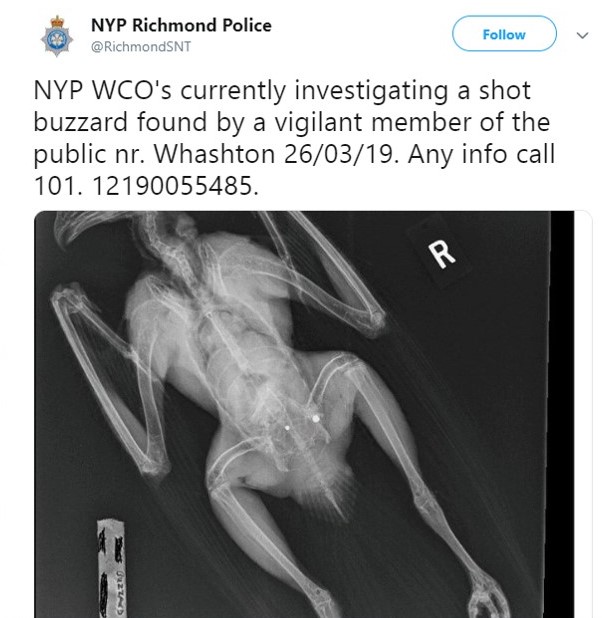
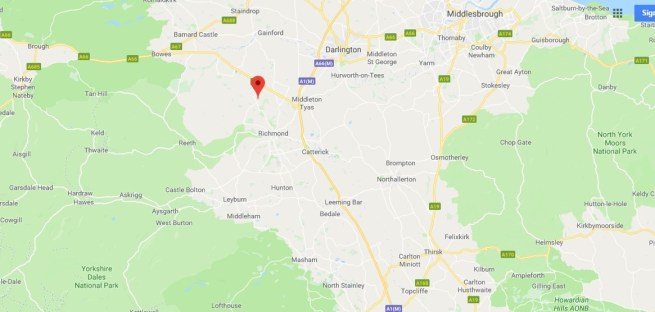
Shot buzzard found near Whashton, North Yorkshire: police appeal for info

North Yorkshire Police are appealing on Twitter for information about a shot buzzard that was found by a member of the public on Tuesday 26 March 2019 near Whashton.

There doesn’t appear to be any further detail available.

Anyone with information please call 101 and cite ref number #12190055485.

Don’t laugh, but gamekeepers claim to “care deeply” about protecting hen harriers!

It’s not quite April Fools’ Day but the National Gamekeepers’ Organisation thought it’d get in there early this year.

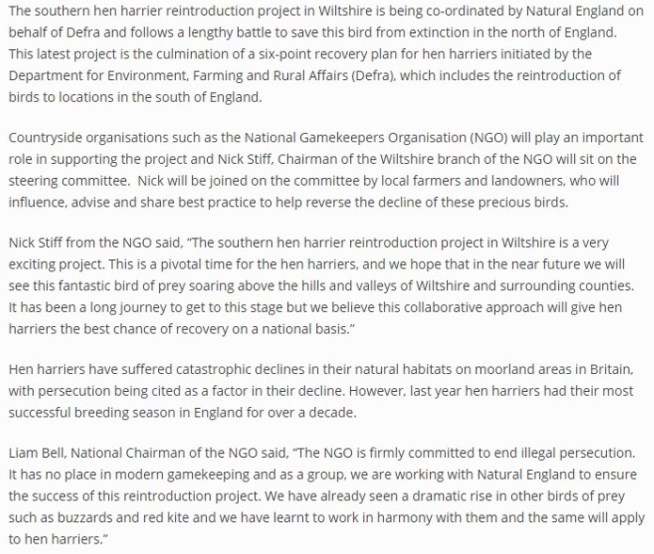
Just a week on from the publication of a scientific paper that demonstrated the catastrophic loss of satellite-tagged hen harriers was undeniably linked to land managed by gamekeepers for grouse shooting (see here), the National Gamekeepers’ Organisation (NGO) published this on its website:

Amazing, eh?

Remind us again, NGO – where was the last known location of the latest hen harrier to ‘disappear’ in suspicious circumstances? Ah yes, in Wiltshire, close to the proposed hen harrier reintroduction site and in an area heavily managed for pheasant and partridge shooting. And what did the NGO say about this bird’s disappearance? Ah yes, that it was “a set up” by the RSPB.

And remind us again, NGO – what examples do you have of the NGO “living in harmony with buzzards“? Ah yes, you supported a gamekeeper (who had a prior poison-related conviction) to get licences to kill buzzards to ‘protect’ his pheasants.

And remind us again, NGO – what was your most recent action on the RPPDG, the group that’s supposed to tackle illegal raptor persecution? Ah yes, it was to resign.

And please could you tell us, NGO, what is “Circus cyaneusto“?! Is this an imaginary harrier species, to match the gamekeepers’ imaginary devotion to hen harriers that we’re supposed to believe?

Not so much April Fools, more like deluded fools.

National Gamekeepers’ rep still in denial about extent of illegal raptor persecution

A couple of weeks ago we blogged about how Tim Weston, a Development Officer for the National Gamekeepers’ Organisation (NGO) had suggested that the suspicious disappearance of satellite-tagged hen harrier ‘Vulcan’ had been a “set-up” by the RSPB (see here).

At the same time, he argued that there was “zero wildlife crime” in the area where Vulcan vanished, even though the RSPB had already recorded 27 confirmed raptor persecution incidents since 2000, including 10 shot, 9 poisoned, 7 trapped and one nest destruction.

Tim’s not great with figures. Nor logic. In a letter he wrote for last week’s Countryman’s Weekly rag he suggests that as there are now fewer convictions for raptor persecution, it follows that there are fewer crimes. Good grief. Perhaps he missed the latest edition (2017) of the RSPB’s annual Birdcrime report, which says:

In 2017, there were 68 confirmed incidents of raptor persecution, but only four prosecutions relating to raptor crime. Of those, only one resulted in a conviction‘.

The main focus of Tim’s letter was on the NGO’s recent resignation (here, here and here) from the Raptor Persecution Priority Delivery Group (RPPDG), a group established to tackle illegal raptor persecution:

Check out that last paragraph:

Although the NGO has left the [RPPDG] group it is still doing the very best of educating and encouraging peer pressure to halt any any raptor persecution and the results speak for themselves”.

Indeed, Tim, “the results do speak for themselves” because two days after your letter was published we were able to read those results in a top quality scientific paper that revealed that 72% of satellite tagged hen harriers were either confirmed as illegally killed or disappeared in circumstances in which illegal killing was the only plausible explanation, most of them on or close to grouse moors. The research results also revealed that the likelihood of an individual hen harrier dying, or disappearing, was ten times higher within areas predominantly covered by grouse moor, compared to areas with no grouse moors.

Sorry Tim, no cigar for you, although you do appear to have won a knife, what with your letter being deemed the ‘star letter’ of last week’s rag (which gives everyone a pretty good idea about the quality of the other letters published in Countryman’s Weekly).

And what of the National Gamekeepers’ Organisation’s formal response to the hen harrier satellite tag paper? Was it any more convincing than Tim’s grasp of the extent of raptor persecution?

Not really. This is from the NGO’s website:

Who ever wrote this response for the National Gamekeepers’ Org didn’t quite manage to include the information that was central to the research findings: that, er, the illegal killing of hen harriers is intrinsically linked to the distribution of grouse moors across northern England, which is, er, where gamekeepers work.

Responses to hen harrier satellite tag paper: GWCT

The publication of the hen harrier satellite tag paper on Tuesday (here) that provided compelling evidence to highlight, yet again, the link between grouse moors and the illegal killing of hen harriers, has resulted in a flurry of responses from various individuals and organisations.

We’ve be looking at these responses in turn.

So far we’ve discussed the responses of Supt Nick Lyall (Chair, RPPDG) (here), BASC (here), Dr Therese Coffey (DEFRA Wildlife Minister) (here), Northern England Raptor Forum (here) and the Moorland Association (here).

This time we’re examining the response of the Game and Wildlife Conservation Trust (GWCT), a supposedly ‘independent’ charity that seems to attract a good deal of funding from, er, the grouse shooting industry.

GWCT posted a statement on its website in response to the devastating findings of the hen harrier satellite tag paper. Here it is:

You’ll notice that this GWCT response carefully avoids mentioning the headline figures from the paper – hen harriers are ten times more likely to be killed on grouse moors than any other habitat, and at least 72% of the hen harriers tagged by Natural England between 2006 – 2017 have either been confirmed to have been illegally killed on grouse moors or are highly likely to have been killed on grouse moors, with the researchers saying they can find no alternative, plausible, explanation.

We’re then told by GWCT that the illegal killing of hen harriers on grouse moors is “a diminishing problem” based on last year’s breeding results. Let’s just remind ourselves of those 2018 breeding results – only nine successful nests in England (where there is suitable habitat to support over 300 nests) and not one of those nine nests was situated on a privately-owned grouse moor (see here).

And what happened to the hen harrier chicks that did manage to fledge in 2018? A lot of them ‘disappeared’ in suspicious circumstances on, er, grouse moors:

The final paragraph of GWCT’s statement implies that habitat condition, weather, food supply and disturbance may explain the pattern of hen harriers deaths and disappearances on grouse moors. You’ll note that criminal gamekeepers armed with shotguns and illegal traps are not mentioned.

There was a time, long ago, when the GWCT was a respected, credible, science-based organisation. What happened?

Responses to hen harrier satellite tag paper: Moorland Association

The publication of the hen harrier satellite tag paper on Tuesday (here) that provided compelling evidence to highlight, yet again, the link between grouse moors and the illegal killing of hen harriers, has resulted in a flurry of responses from various individuals and organisations.

We’ll be looking at these responses in turn.

So far we’ve discussed the responses of Supt Nick Lyall (Chair, RPPDG) (here), BASC (here), Dr Therese Coffey (DEFRA Wildlife Minister) (here) and the Northern England Raptor Forum (here).

This time we’re examining the response of the Moorland Association, the lobby group for grouse moor owners in northern England.

The Moorland Association couldn’t be arsed to publish a statement on its website, nor to tweet about this important scientific publication nor to mention it on its Facebook page. Blimey, anyone would think that grouse moor owners aren’t at all bothered that hen harriers are ten times more likely to be killed on a grouse moor than anywhere else, or that 72% of satellite tagged hen harriers had either been confirmed or suspected of being illegally killed on grouse moors.

And let’s not forget, the Moorland Association is supposedly a willing ‘partner’ on the Raptor Persecution Priority Delivery Group (RPPDG), where it’s supposed to be using every opportunity to raise awareness about the illegal killing of birds of prey and stopping these crimes from being committed. Really impressive partnership work, eh?

We did find a quote from the Moorland Association’s Director, Amanda Anderson, in this brilliantly headlined article in The Independent (“Massive wildlife crime scene” is a Mark Avery quote from a couple of years ago).

Here’s Amanda quoted in The Independent article:

Amanda Anderson, director of the Moorland Association, which represents grouse moor owners and managers in England and Wales, said the study data, gathered between 2006 and 2017, was before a management scheme put in place as part of Defra’s hen harrier recovery plan.

She said keepers had engaged with tactics such as reporting and monitoring nests and roost sites, as well as reducing conflicts between the birds via feeding strategies.

Ms Anderson said that 2018, the first year of the brood management scheme, was “the most successful hen harrier breeding season in England for over a decade”, continuing: “We know from evidence gathered on the ground there are many areas on grouse moors where hen harriers – with or without satellite tags – are currently thriving.”

But she added: “We want to see more hen harriers on grouse moors. Persecution should not occur and must cease in order to give hen harriers the best chance of survival. Seventy per cent of hen harriers perish in their first year from natural causes. However, when a satellite tag fails unexpectedly, persecution may be a factor.

END

Wow. What’s that saying? More front than Blackpool?

It’s all ok, folks, no need to worry about the extraordinarily high percentage of ‘missing’ (presumed killed) hen harriers on grouse moors, because all that took place before DEFRA’s Hen Harrier Action Plan was put in place. Er, except that in the year after the paper’s data were gathered and the so-called Action Plan was in place (2018), at least 11 satellite-tagged hen harriers all ‘disappeared’ in suspicious circumstances, most of them either on or near a grouse moor, between the months of August and November. How do you explain that, Amanda?

[RPUK map showing the last known locations of 11 satellite-tagged hen harriers that ‘disappeared’ in suspicious circumstances between August – November 2018]

Also according to Amanda, ‘keepers had engaged with tactics such as reporting and monitoring nests and roost sites’. Ah, would that ‘monitoring’ of nest sites include the tactic of repeatedly driving up towards a nesting attempt on a quad bike, disturbing the birds so much that the nesting attempt was abandoned? There are certainly reports of that happening on one particular grouse moor (which was reported to the police).

And would that ‘monitoring’ of roost sites include the tactic of turning up with a gun and a couple of dogs at dusk, to walk around a roost site where three hen harriers had just gone to ground (see here)?

And where is this “evidence gathered on the ground” that shows “there are many areas on grouse moors where hen harriers – with or without satellite tags – are currently thriving”? Have those sites been reported to raptor fieldworkers from NERF, or the RSPB, or Natural England (all partners in the RPPDG), or is this yet another imaginary scene that Amanda’s viewed through her magical kitchen window?

Unfortunately for the Moorland Association, Amanda’s latest episode of propagandist nonsense is looking a lot like a rapidly disintegrating sand castle crumbling in the face of an overwhelming rising tide of evidence.

Responses to hen harrier satellite tag paper: Northern England Raptor Forum

The publication of the hen harrier satellite tag paper on Tuesday (here) that provided compelling evidence to highlight, yet again, the link between grouse moors and the illegal killing of hen harriers, has resulted in a flurry of responses from various individuals and organisations.

We’ll be looking at these responses in turn.

So far we’ve discussed the responses of Supt Nick Lyall (Chair, RPPDG) (here), BASC (here) and Dr Therese Coffey (DEFRA Wildlife Minister) (here).

This time we’re examining the response of the Northern England Raptor Forum (NERF).

NERF has published a statement on its blog – see here.

It’s a powerful commentary on what has amounted to 15 years of failed partnership working in attempts to get the grouse shooting industry to oust its hen harrier-killing criminals.

The sense of frustration at its failure is palpable.

The NERF statement is a must-read for all those who keep telling us we need to engage with conflict resolution approaches and if only we could all sit down around the same table and sip tea and eat Custard Creams everything will be fine. Read the statement and you’ll understand why it won’t.

The time for more talking with those who represent and shield the criminals has just about run out (for some it already has) but NERF is prepared for one more throw of the dice and is “investing a temendous amount of goodwill” in the apparently rejuvenated RPPDG under the leadership of Supt Nick Lyall.

Hats off to the NERF membership – these are ordinary men and women who voluntarily dedicate huge amounts of time and expertise to study, monitor and try to safeguard birds of prey across the north of England, despite the appalling criminality within the game shooting industry that is allowed to continue year after year after year with devastating impacts on individual and on populations of some raptors. Many would have thrown in the towel a long time ago to avoid the aggravation – thank god the NERF members didn’t.

Grouse shooting lease on wildlife crime grouse moor will not be renewed

The owner of Denton Moor, a company called NG Bailey, has announced it will not renew the grouse shooting lease to its current tenant following a spate of wildlife crime.

Denton Moor in the Nidderdale AONB in Yorkshire was where the RSPB filmed footage of several armed men, dressed as gamekeepers, shooting at a nesting Marsh harrier and removing eggs from the nest in May 2017 (see here). Despite good efforts from North Yorkshire Police, the armed men have not been identified.

[RPUK map showing the location of Denton Moor]

Last month gamekeeper Austin Hawke was convicted of wildlife crime on the same moor after a badger was found dead in a snare in May 2018 (see here).

Campaigners have been targeting NG Bailey for some time and the recent conviction of one of the shooting tenant’s gamekeepers seems to have been the last straw for the landowner.

David Hurcomb, Chief Exec said:

NG Bailey is aware of the prosecution of Austin Hawke, the gamekeeper who is employed by and works for the tenants. To clarify, Austin Hawke is not employed by Denton Park Estate. As a business, we find this behavior totally unacceptable and do not condone this type of conduct – it is not reflective of the company’s values or ethical practices. We have advised the tenants that under no circumstances will the lease be renewed when it expires”.

Excellent news. Although whether that means it’ll be leased to someone other than the current tenant remains to be seen. We’re not sure when the current lease expires.

The efforts of a wide range of people have led to this result, allowing campaigners to join up the dots and apply pressure. Well done to them all, including the RSPB Investigations team, North Yorkshire police, local raptor workers, the Crown Prosecution Service and local campaigners.

Well done also to David Hurcomb and his colleagues at NG Bailey – this is a very welcome decision.

Responses to hen harrier satellite tag paper: Wildlife Minister Dr Therese Coffey

The publication of the hen harrier satellite tag paper on Tuesday (here) that provided compelling evidence to highlight, yet again, the link between grouse moors and the illegal killing of hen harriers, has resulted in a flurry of responses from various individuals and organisations.

We’ll be looking at these responses in turn.

So far we’ve discussed the responses of Supt Nick Lyall (Chair, RPPDG) (here), and BASC (here).

This time we’re examining the response of the Parliamentary Under Secretary of State at DEFRA, Dr Therese Coffey.

Before anyone gets excited, no, Dr Coffey wasn’t sufficiently embarrassed nor energised by the research findings to make a proactive, stand-alone statement about such devastating results; come on, this is the resolutely wilfully blind Dr Coffey who’s best known to us for her disinterested, apathetic responses whenever the issue of illegal raptor persecution is raised.

However, the paper was mentioned in a Westminster Hall debate on wildlife crime yesterday, at which Dr Coffey attended and spoke. The debate was broad ranging and quite interesting on a number of fronts – no time to go in to those details here but you can watch proceedings on this archived video here or read the transcript here. Well worth your time to see which MPs are not only clued up, but also which ones care about various aspects of wildlife crime. Useful info to have when the current Government implodes and you’re back in the voting booth.

The bit we’re most interested in, obviously, is Dr Coffey’s response to the issue of illegal raptor persecution. Here is the relevant part of the transcript, cut from the link above:

Raptor persecution is one of the UK’s wildlife crime priorities. All wild birds are protected under the Wildlife and Countryside Act 1981, and there are strong penalties for those committing offences. In the five years up to 2017—the latest year for which data is available—there were 107 prosecutions for crimes against wild birds and 75 convictions. The police are leading efforts to prevent the persecution of birds of prey. I praise the work done by North Yorkshire police, particularly on Operation Owl, and I commend police and crime commissioner Julie Milligan in particular. She has been fundamental not only in that work, but in chairing the rural group of police and crime commissioners, she has also made hare coursing a key priority for work across a number of forces.

In addition to activity to disrupt and deter criminality, officers of the North Yorkshire police have worked to raise awareness about raptor persecution among local landowners and members of the public. Only through working in partnership with those living and working in rural communities can raptor persecution be combated. Despite instances of poisoning and killing of birds of prey, populations of many species, such as the peregrine, red kite and buzzard have increased. I fully recognise, however, that some species continue to cause concern.

The Government take the decline in the hen harrier population in England particularly seriously, and we are committed to securing the future of that iconic species. That is why we took the lead on the hen harrier action plan, which sets out what will be done to increase hen harrier numbers in England, including the trialling of brood management. In the recent judicial review into the lawfulness of Natural England’s decision to grant a licence for trials of hen harrier brood management, the claimants’ claims were dismissed. The proposed brood management scheme will continue. It seeks to manage the conflict between the conservation of hen harriers and the grouse shooting industry. That decision means the important work to protect and conserve the hen harrier can continue.

The hon. Member for Workington referred to an article that was published in a journal yesterday; I take that issue very seriously and will be seeking to meet the chair of the raptor persecution group, Superintendent Lyall, to go through it in detail. Although it is not for the Government to tell the police or the Crown Prosecution Service who they should be investigating and charging, we should take a proactive approach, particularly to stamp out the persecution of birds of prey“.

ENDS

It’s good to see Dr Coffey recognising and applauding the recent efforts of North Yorkshire Police and their Operation Owl initiative and it’s very good to hear that she plans to meet Supt Nick Lyall, Chair of the RPPDG.

But hang on a minute, haven’t the devastating results of a peer-reviewed scientific study just been published in a high-ranking journal, detailing one of the most pressing wildlife conservation issues in the UK – the persistent illegal killing of hen harriers on driven grouse moors in northern England? And Dr Coffey, our Wildlife Minister, has nothing specific to say about those results?

That’s shameful.

Yes, the Westminster Government absolutely should be taking a “proactive approach” to stamp out the persecution of birds of prey, but it hasn’t and it isn’t. It’s as simple as that.