Satellite-tagged hen harrier ‘Yarrow’ disappears in suspicious circumstances

Press release from RSPB (29th April 2021)

Another hen harrier disappears in suspicious circumstances

Yet another satellite-tagged hen harrier has disappeared in suspicious circumstances at a crucial time in the breeding season.

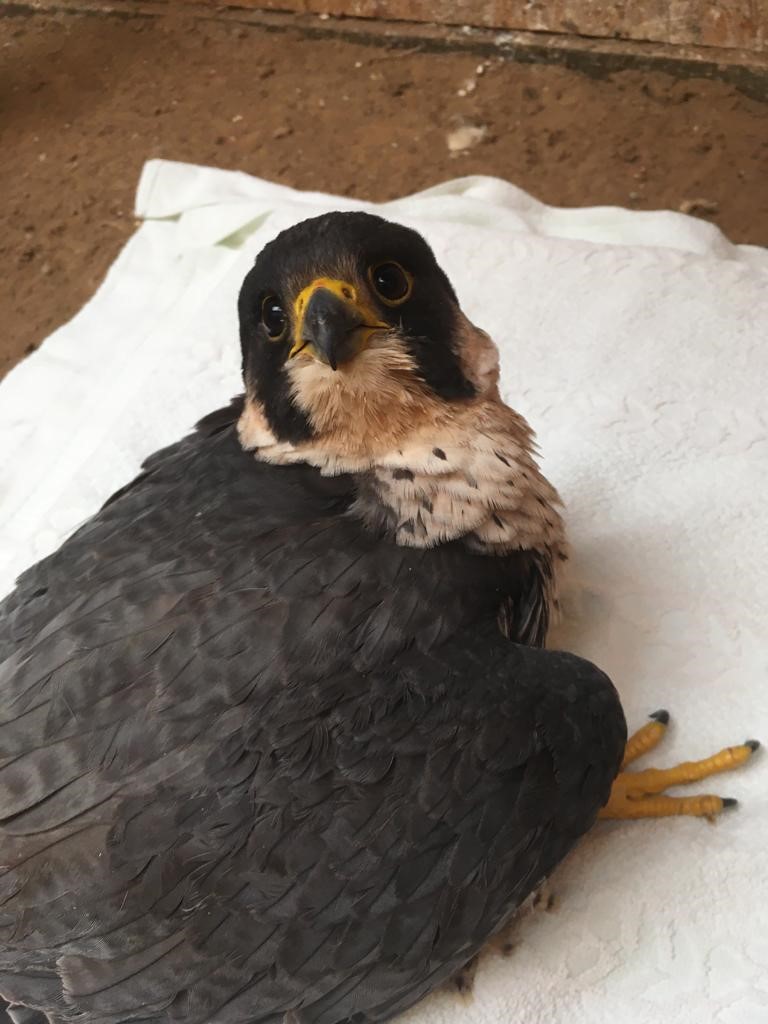
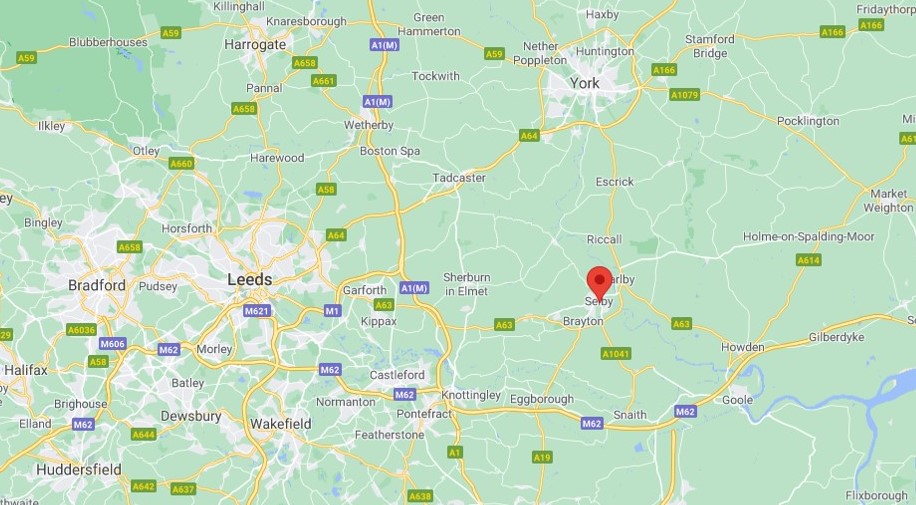
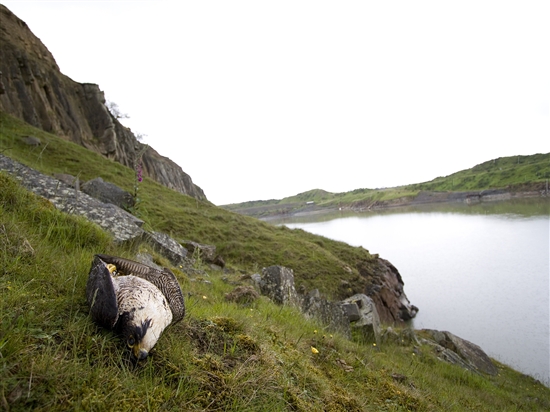
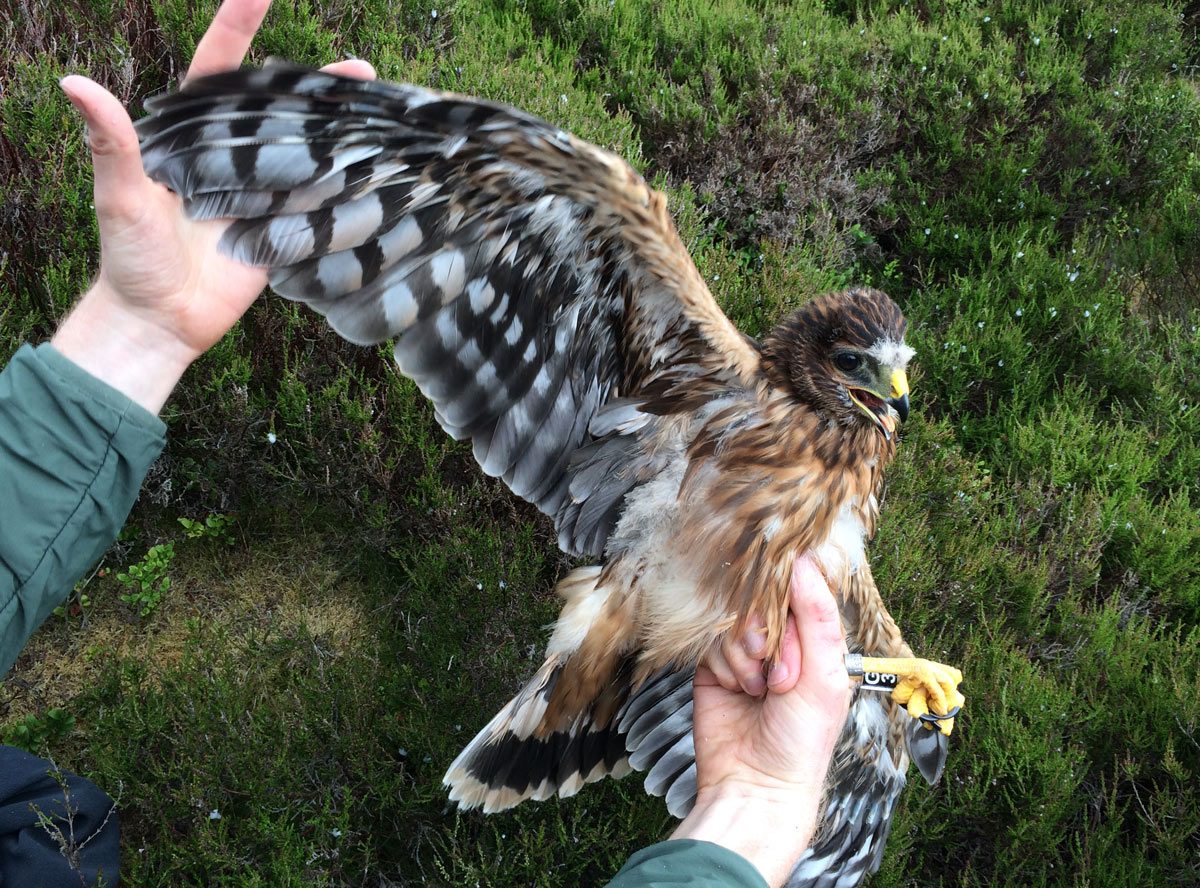
Yarrow, a female hen harrier, hatched in the Scottish Borders in summer 2020. She was fitted with a satellite tag, which provided scientists with regular updates on her whereabouts. But transmissions from her tag stopped suddenly and unexpectedly on 12 April 2021. Data showed her to be flying south-east that morning, from the North Pennines in the direction of the North York Moors. The tag’s final transmission came from Stockton-on-Tees, and Yarrow has not been heard from since. The matter has been reported to Cleveland Police.

[Hen harrier Yarrow being fitted with a satellite tag prior to fledging. Photo by RSPB]

Hen harriers are a red-listed species and their population in England is dangerously low. They are legally protected in the UK under the Wildlife and Countryside Act 1981, yet these majestic birds remain one of the most persecuted birds of prey in the UK and continue to be illegally killed, or disappear in suspicious circumstances, particularly in connection with land managed for driven grouse shooting.

Illegal killing is the most significant threat to the English hen harrier population. Twenty-four hen harrier nests were recorded in summer 2020, of which 19 successfully produced chicks. Yet there is enough habitat and prey to support 12 times that number.

The news comes only seven weeks after another harrier, Tarras, disappeared in similarly suspicious circumstances. Tarras was another Scottish bird from 2020 who moved south to the North Pennines AONB. Her tag’s last fix showed her to be roosting just off a grouse moor near Haltwhistle.

And in September 2020, a hen harrier named Dryad also vanished. Dryad’s last transmission also came from a grouse moor in North Yorkshire. All birds were searched for, but no bodies or tags were found.

Mark Thomas, RSPB Head of Investigations UK, said:

April is a crucial time for hen harriers as they pair up ready to nest and raise the next generation, and we had hoped for the same for Yarrow.

After her tag ‘checked in’ over Stockton-on-Tees, which turned out to be the last known location we received, we expected a further transmission the next day showing that Yarrow had reached the North Yorkshire Moors but that never came. Sadly, it is highly likely that Yarrow was killed and the tag destroyed in a matter of hours after its last fix was recorded, based on our extensive knowledge of these tags and the patterns of disappearance of hen harriers.

We are acutely aware of how difficult it is to come forward with information about a crime, especially in rural communities. If you know anything that may shed light on the disappearance of his young harrier, or know of anyone killing raptors in your area, you can call us in complete confidence on our Raptor Crime Hotline: 0300 999 0101. You are in control. And your call could help prevent more birds being illegally killed.”

To contact Cleveland Police about this crime, please call 101 and quote crime reference CVP-21-061647.

ENDS

Red kite believed to have been shot & hung from a tree

There is a disturbing news report this afternoon that a red kite has been shot dead and was hung from a tree in a Norfolk village.

According to the Eastern Daily Press, ‘Norfolk police were called to Swaffham Road in Cockley Cley on Friday, April 9, after someone reported a dead bird hanging from a tree.

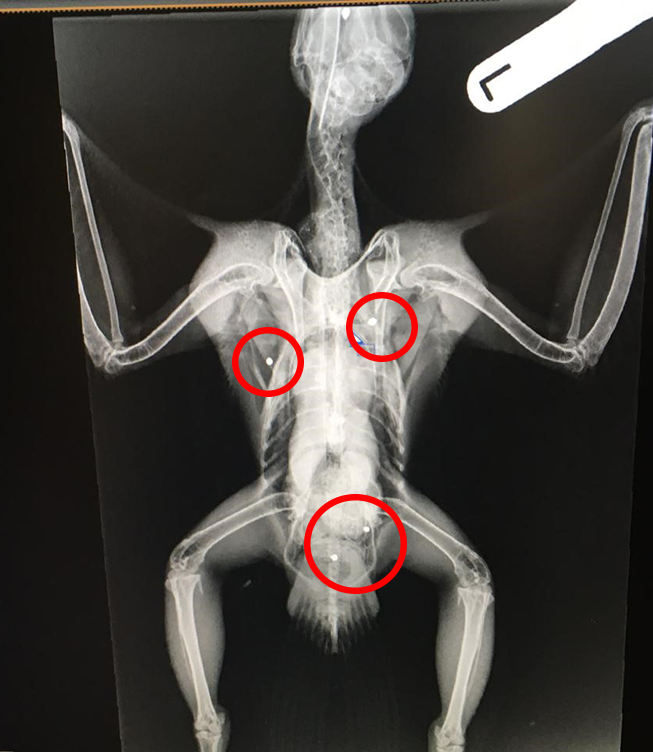
Police arrived on the scene to find a red kite, and an X-ray led to a vet finding shot dust around the right ulna and one of the legs being broken, police have said‘.

Given the date, location, species and the x-ray that was published in this article (that appears to have been lifted from here), I believe this red kite is the same one that Norfolk Constabulary tweeted about and I blogged about last week (see here) although there was no mention of it being hung in a tree.

Presumably this new information has been provided to the press by Norfolk Constabulary, although I still can’t find a press release on the police website. It’s really not good enough. Raptor persecution is a national wildlife crime priority and the bare minimum should be a press release from the police with what can be viewed as reliable detail for accurate reporting.

Other new information in the EDP article includes a named contact at Norfolk Constabulary – PC Chris Shelley.

If you have any information about this incident please contact PC Shelley on 101 quoting reference 36/25060/21 or contact Crimestoppers anonymously on 0800 555111.

This is the second report of a dead raptor found hung in a tree in recent weeks. Earlier this month Police Scotland were investigating an incident where a dead buzzard had been strung up in a tree, reportedly after dying of natural causes (here).

Police conduct another multi-agency raid after two buzzards confirmed poisoned in Teesdale

Press statement from Durham Constabulary (21 April 2021)

Operation targets raptor persecution

Officers have teamed up with partner agencies on a special operation to target raptor persecution.

Operation Sunbeam included members of the Barnard Castle Neighbourhood Policing Team, RSPB, Natural England and the National Wildlife Crime Unit who carried out searches at two properties in Teesdale this morning (April 21).

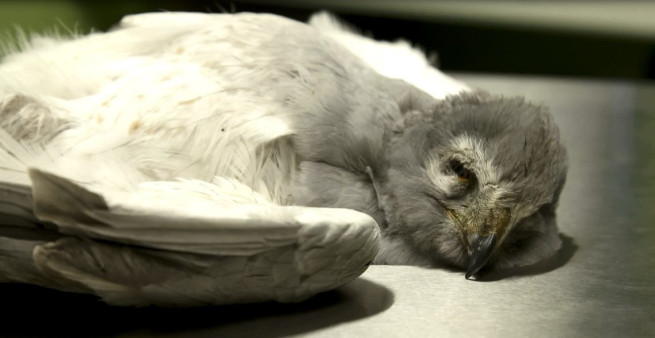
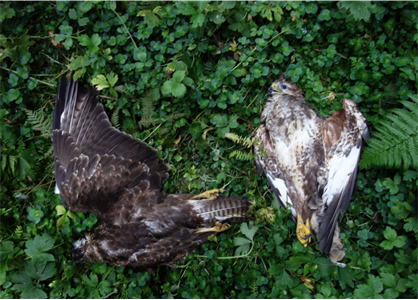
It follows an incident last year when two common buzzards were found dead in Teesdale woodland. Forensic tests indicate they were illegally poisoned with a banned pesticide.

[Two poisoned buzzards. Photo by RSPB]

After gathering all the information, the team searched the properties for any harmful substances and two men are now helping officers with their enquiries.

PC David Williamson, who led the operation, said: “We will always do everything we can to support our rural communities and work with partners to act on information received about alleged criminal activity.

The positive action taken this morning will continue and I would encourage anyone with information about this type of crime to get in touch.”  

[Genuine & credible partnership working. Photo from Durham Constabulary]

The action was part of the Health and Safety Executive’s Wildlife Incident Investigation Scheme which was makes enquiries into the death or illness of wildlife, pets and beneficial invertebrates that may have resulted from pesticide poisoning. 

Guy Shorrock, senior investigating officer for the RSPB, provided specialist advice on the subject.

He said: “The illegal killing of birds of prey is a serious national problem so we are delighted with the really well-prepared response from Durham Police, working with partner agencies.

We hope this sends a clear message that the illegal killing of birds of prey won’t be tolerated and action will be taken.”

Ian Guildford, investigative support officer for the National Wildlife Crime Unit added: “It was a very well organised response and great to see agencies coming together to tackle this type of issue.”

If you have any information call 101 or email PC Williamson at david.williamson@durham.police.uk

ENDS

This is brilliant and follows in the footsteps of three other recent multi-agency raids in response to raptor persecution crimes.

On 15th March 2021 there was a raid in Lincolnshire (see here), on 18th March a raid in Dorset (here), on 26th March a raid in Devon (see here) and now this raid in Teesdale.

It’s alarming that all four raids were triggered by the use of banned poisons to kill birds of prey and it’s also quite telling that these offences took place in counties spread across England. This is not a small, localised issue as the shooting industry would have us believe – this is widespread criminality and involves the use of banned poisons that have the capacity to kill anything that touches it, including humans.

Well done to all the partners involved – this is genuine and credible partnership working. Let’s hope their efforts are rewarded with successful prosecutions and convictions.

Lincolnshire Police provide update on investigation into poisoned red kite

On 15th March this year, the RSPB tweeted that there’d been a multi-agency raid on two properties in Lincolnshire in connection with the poisoning of a red kite in 2020. Lincolnshire Police, supported by the National Wildlife Crime Unit, Natural England and the RSPB’s Investigations team, reportedly seized substances that were sent off for toxicology (see here).

[Multi-agency partnership working in Lincolnshire in March 2021. Photo by RSPB]

Today, Lincolnshire Police have issued the following press statement:

Investigation launched into suspected bird poisoning

Last year a Red Kite was found dead by a member of the public on a piece of land in the Crowland area.

The bird was sent off for forensic toxicology tests through the government Wildlife Incident Investigation Scheme (WIIS). The result of this analysis has been returned to us and indicates that the bird was poisoned.

Following this result, Lincolnshire Police Wildlife Crime officers, along with partner agencies including the National Wildlife Crime Unit (NWCU), Natural England and the RSPB, have been involved in a detailed investigation and two searches have been carried out at addresses in the Crowland area under the Wildlife and Countryside Act 1981.

During these searches, items have been recovered which are believed to have been linked to this offence, including some suspected banned pesticides. Investigations are ongoing and two people have been identified in relation to this and they will be spoken with in due course. 

Detective Constable Aaron Flint, Officer in the case has said: “Raptor Persecution is one of the UK’s National wildlife crime priorities and is taken very seriously by Lincolnshire Police. These offences will always be dealt with expeditiously and robustly. Deliberate killing of birds of prey is an offence which I urge the public to report if they become aware of it.

I would like to add, that if a bird of prey is found dead and you believe it is suspicious it should be reported to the police immediately to allow an investigation into its death to commence. The bird may have been poisoned which poses obvious health and safety concerns if handled. Providing the police with the What3words location would be extremely useful when reporting an incident”.

Guy Shorrock, senior Investigations officer with the RSPB, added: “Though raptor persecution data for 2020 has not yet been collated, the number of online reports relating to confirmed incidents and police follow up action around the UK indicate this problem is clearly not going away

Lincolnshire police would like to remind the public that any offences or information they come across can be reported via 999 (for urgent matters) or 101 for other non-urgent matters or visit the Lincolnshire police website to report it online.

ENDS

This is good stuff from Lincolnshire Police. Strong partnership-working with specialist agencies for the follow-up raids and a clear statement about what the investigation is about and its current status.

Let’s hope these efforts result in a prosecution and conviction.

UPDATE 15th April 2023: Lincolnshire Police charge man after investigation into poisoned red kite (here)

Keith Tordoff, candidate for North Yorkshire Police & Crime Commissioner is raptor champion

Last week I blogged about how a coalition of organisations under the umbrella group Wildlife & Countryside LINK was asking Police and Crime Commissioner candidates to prioritise wildlife crime should they be elected on 6th May 2021 (see here).

The role of a Police and Crime Commissioner (PCC) has the potential to be hugely influential as to how local policing operates. The PCC has a number of statutory responsibilities including:

  • to secure an efficient and effective police for their area;
  • to appoint the Chief Constable, hold them to account for running the force, and if necessary dismiss them;
  • to set the police and crime objectives for their area through a police and crime plan;
  • to set the force budget and determine the precept;
  • to contribute to the national and international policing capabilities set out by the Home Secretary; and
  • to bring together community safety and criminal justice partners, to make sure local priorities are joined up.

In North Yorkshire, the UK’s undisputed raptor persecution capital, there’s a candidate that should appeal to blog readers in that county – Keith Tordoff (visit Keith’s website here).

Keith has a varied background, including serving for 20 years with West Yorkshire Police, and now runs the sweet shop in Pateley Bridge.

Blog readers may recognise him from the Channel 4 piece last year (6 min video here) about the rampant crimes against birds of prey that continue to be reported across North Yorkshire, including in Pateley Bridge in the Nidderdale Area of Outstanding Natural Beauty, with its proximity to several notorious driven grouse moors.

Keith was interviewed as one of a number of local businessmen who had put up a reward to find the criminals responsible for laying poisoned baits that killed a buzzard and a local family’s pet dog (see here). It wasn’t the first time he’d stepped up with a reward, either.

As a long-standing and outspoken critic of the raptor killers, Keith has suffered abuse such as eggs being thrown at his shop windows and death threat letters being pushed through his letterbox, but he continues to defy the local grouse moor criminals and has considerable support from other Pateley Bridge residents who are tired of having the town’s reputation tarnished as a raptor persecution hotspot. I have no doubt that if elected, he’d continue that effort right across North Yorkshire.

If you’re a North Yorkshire resident and you want to see police resources continue to be prioritised to help fight wildlife crime, and especially raptor persecution, Keith may be just the candidate you’re looking for on 6th May.

Shot red kite: was it found on the Salperton Park Estate?

Last Thursday, Gloucestershire Police tweeted about a red kite that had been found injured on 12th March 2021, ‘believed to have been shot close to Salperton Village’ in the Cotswolds.

Judging by the accompanying x-ray, the kite had suffered a catastrophic wing injury and it seems unlikely it would have been able to fly far from where it had been shot (see here).

Gareth Jones from the Glos Raptor Study Group later tweeted that the kite had been found on the Salperton Estate and that it was ‘not the first incident found on this estate either‘. Gareth gave a site reference (What3Words) of dictation.dangerously.enacted which is located close to All Saints Church on the Salperton Park Estate:

The Salperton Park Estate in the Cotswolds is reported to host ‘one of the country’s most celebrated partridge shoots‘ over 4,000 acres, and is listed on Mark Osborne’s William Powell sporting agency website as being one his ‘hand-picked estates’ (see here).

Today there is a media article in the Wiltshire & Gloucestershire Standard about the shot red kite, including a quote from the RSPB, but once again, the Salperton Park Estate is not mentioned as being the location where this injured red kite was reportedly discovered:

The article just states that the shot red kite was found ‘close to the village of Salperton’.

Was the red kite found on the Salperton Park Estate and if so, why is there such reluctance to state this fact? If it wasn’t found injured on the Salperton Park Estate then the police should be clarifying where it was picked up.

As the police are appealing for witnesses, surely it’d make sense to give as much locational detail as possible?

In addition, if local raptor worker Gareth Jones is to be believed (and I have no reason not to), if this is not the first incident reported from this estate then all the more reason to publicise it. It doesn’t automatically mean that an estate employee is responsible for the crimes because there are a significant number of tenants renting properties at Salperton Park – how many of those might have access to a shotgun would be for the police to determine as part of their investigation, especially if this location is turning in to a persecution hotspot.

UPDATE 20th April 2021: Further news on this on today’s Gloucestershire Live website (here). Article reproduced below in case it vanishes:

Bird of prey shot in Cotswolds village dies as police condemn ‘unacceptable crime’

A bird of prey that was shot in a Gloucestershire village has been euthanised as police condemn the “unacceptable crime”.

On Friday March 12, a member of the public discovered the Red Kite by the roadside in the Cotswold village of Salperton.

The bird was alive but unable to fly due to its severe injuries – it has suffered multiple bone fractures.

It was taken to the Vale Wildlife Hospital and, following an X-ray, it was discovered the bird had been hit with a shotgun.

It is believed it had been shot close to the village, as it would have been unable to fly or glide with its injuries. The bird had to be euthanised due to the severity of its injuries.

Gloucestershire Constabulary said it was an “unacceptable crime and one which will be dealt with robustly”.

PC Ash Weller from the Rural Crime Team said: “This is an unacceptable crime and one which will be dealt with robustly if the offender is identified”.

An X-ray of the bird revealed multiple bone fractures caused by the lead shot, therefore suggesting a shotgun was used.

“We are exploring all avenues as this could have been someone travelling through the area rather than someone local to the area.

“We are working closely with shooting and animal protection organisations, who are equally appalled by this act and are assisting us with our enquiries.”

An officer from the Royal Society for the Protection of Birds said the species had almost been driven to extinction in the 19th century and that the shooting of one was a “blow”.

Jenny Shelton, investigations liaison officer at the RSPB, said: “Red kites are a joy to encounter on a country walk, or even soaring over our homes, identified by their long, red wings and distinctive forked tail.

“We can’t take these birds for granted. only 40 years ago they were a rare sight having been driven almost to extinction in the UK the 19th century.

“To know that they are still being illegally killed is a blow to anyone who enjoys and values the natural world. All birds of prey are protected by law and if anyone has any information that might help with this police investigation, I urge you to come forward.”

ENDS

Norfolk Police appeal for information after discovery of dead kite, believed shot

Norfolk Police are appealing for information after the discovery of a dead red kite in the Cockley Cley area of Norfolk on Friday 9th April 2021.

An x-ray shows the kite has broken bones in its leg and wing. The police believe the kite has been shot.

Anyone with information please contact Norfolk Police on 101 and quote reference 36/25060/21.

I couldn’t find a press release about this incident on the Norfolk Police website.

[The x-ray of the dead red kite. I have added the red circles to highlight the injuries]

UPDATE 23rd April 2021: Red kite believed to have been shot and hung from a tree (here)

Red kite shot in Cotswolds

A red kite has been shot in the Cotswolds AONB close to the village of Salperton.

It was shot on 12th March 2021 and the Gloucester Police rural crime team has announced it on Twitter this evening, along with some x-rays of the kite showing shotgun pellets and a broken humerus.

Disappointingly, there isn’t any further detail available. I couldn’t find a crime reference number or a press release appealing for witnesses.

[UPDATE: Thanks to those who have pointed out that ‘inc 333 14/03’ in the police’s tweet is probably the crime reference number]

[UPDATE #2: Thanks to Gareth Jones from the Glos Raptor Group who has confirmed this red kite was found on the Salperton Estate. He thinks a press release is forthcoming]

UPDATE 19th April 2021: Shot red kite – was it found on the Salperton Park Estate? (here)

Emmerdale actor speaks out against grouse moor burning & raptor persecution

Hot on the heels of her last article on how burning Britain’s moorland is ‘an environmental disaster’ (here), the Daily Mirror’s Environment Editor, Nada Farhoud has a follow up article out today.

This time she interviews Emmerdale actor Nick Miles, who lives in the Yorkshire Dales National Park and has been a long-time supporter of conservation campaigns such as Hen Harrier Day.

Nick talks about his village ‘disappearing under a blanket of smoke’ when the gamekeepers have set the moors alight and how letters to his MP, Rishi Sunak, have fallen on deaf ears.

He also talks about how few red kites he sees in Upper Wharfdale (hardly surprising given its proximity to Nidderdale, where killing red kites on grouse moors is de rigueur) in comparison to Harewood, where Emmerdale is filmed and from where red kites were reintroduced and are doing well.

Read today’s article in the Mirror here (and watch out for the comedy input from Moorland Association Director Amanda Anderson).

Meanwhile in Scotland the fires also continue. I’ve been sent some horrific photographs that were taken in the Angus Glens two days ago – I’ll be publishing those later this weekend.

And here’s a photo sent in by another blog reader (thank you) taken yesterday in Manor Valley in the Borders:

It’s astonishing that not only is this burning still legal (although for how much longer remains to be seen) even though we’re in a climate and nature emergency, but that gamekeepers in Scotland can lawfully continue to set the moors alight until 15th April, and then with landowner’s permission can continue to light fires until 30th April.

Still, it’s a cracking wheeze for torching out hen harrier nests, peregrine breeding ledges and golden eagle eyries, which can then be explained away as ‘accidents’ (see here).

Pass the matches.

Gun, banned poisons & dead birds of prey seized in third multi-agency raid in England

Press release from Dorset Police (1st April 2021)

Officers and partners who executed a warrant at a rural property in East Dorset have seized pesticides, dead birds of prey and a firearm.

Dorset Police Wildlife Crime Officers have been working with the Police National Wildlife Crime Unit (NWCU), Natural England and the RSPB to investigate the alleged poisoning of a Red Kite, which was found dead in a field in north east Dorset in November 2020.

The bird of prey was recovered by police following the discovery by a member of the public and sent for forensic analysis at a specialist laboratory. The results of a post mortem examination subsequently indicated that it had been poisoned. 

On Thursday 18 March 2021 officers, accompanied by NWCU, Natural England and RSPB, attended an address in rural north east Dorset, having obtained a warrant and also exercised further powers under the Wildlife and Countryside Act 1981. 

A number of dead birds of prey and several pesticides, including banned substances, were located at the premises. A firearm was also recovered. 

[Photo by Guy Shorrock]

Police Constable Claire Dinsdale, Lead Wildlife Crime Officer for Dorset Police said: “This investigation is ongoing and no further information or comment can be made at this time regards this specific case

The national picture is that the persecution of birds of prey sadly continues in the UK. This is one of our six national priorities for wildlife crime, highlighted on the National Wildlife Crime Unit’s website https://www.nwcu.police.uk/. 

A great deal of work has already been done by police and partner organisations but still there are those who think they are above the law.  The deliberate killing of birds of prey will not be tolerated. We have had previous cases in Dorset of illegal shooting and trapping as well as poisoning. 

I would urge the public to be vigilant and report dead birds of prey to police. Clear evidence of a wildlife crime, such as an illegal trap, shooting or suspected poison bait should be reported immediately to police without delay. A ‘What Three Words’ location or grid reference is really useful.

If a dead bird of prey is located and you are not sure whether it is suspicious or not, still report it to police immediately. We can access assistance from vets to examine and x-ray birds and submit them for forensic testing, therefore ruling out natural causes. Police can access forensic funding for such wildlife crime cases. 

A wildlife crime in progress is a 999 call, an urgent suspicious finding needs to be called in on 101 immediately and for all other non-urgent reports you can email 101@dorset.pnn.police.uk or visit Dorset Police online https://www.dorset.police.uk/do-it-online/. 

If you have any information on the illegal killing of birds of prey or other types of wildlife crime, you can speak to police in confidence by emailing 101@dorset.pnn.police.uk. We do not act in a way that would identify the source of the information to the police.” 

ENDS

This is the third multi-agency raid that’s taken place in England in the space of a couple of weeks, in relation to the suspected persecution of birds of prey.

On 15th March 2021 there was a raid in Lincolnshire (see here), on 18th March this raid in Dorset, and on 26th March a raid in Devon (see here).

It’s alarming that all three raids were triggered by the use of poisons to kill birds of prey.

Well done to all the partners involved – let’s hope their efforts are rewarded with successful prosecutions and convictions.

UPDATE 1st January 2023: Gamekeeper due in court facing multiple charges of raptor persecution, poisons and firearms offences (here)