Multi-agency raid in Lincolnshire after suspected poisoning of three birds of prey

Press release from Lincolnshire Police (6th October 2022):

Bird of prey poisoned, Horncastle

Our Rural Crime Action Team (RCAT) are investigating the suspected poisoning of three birds of prey in the Belchford area of Horncastle. 

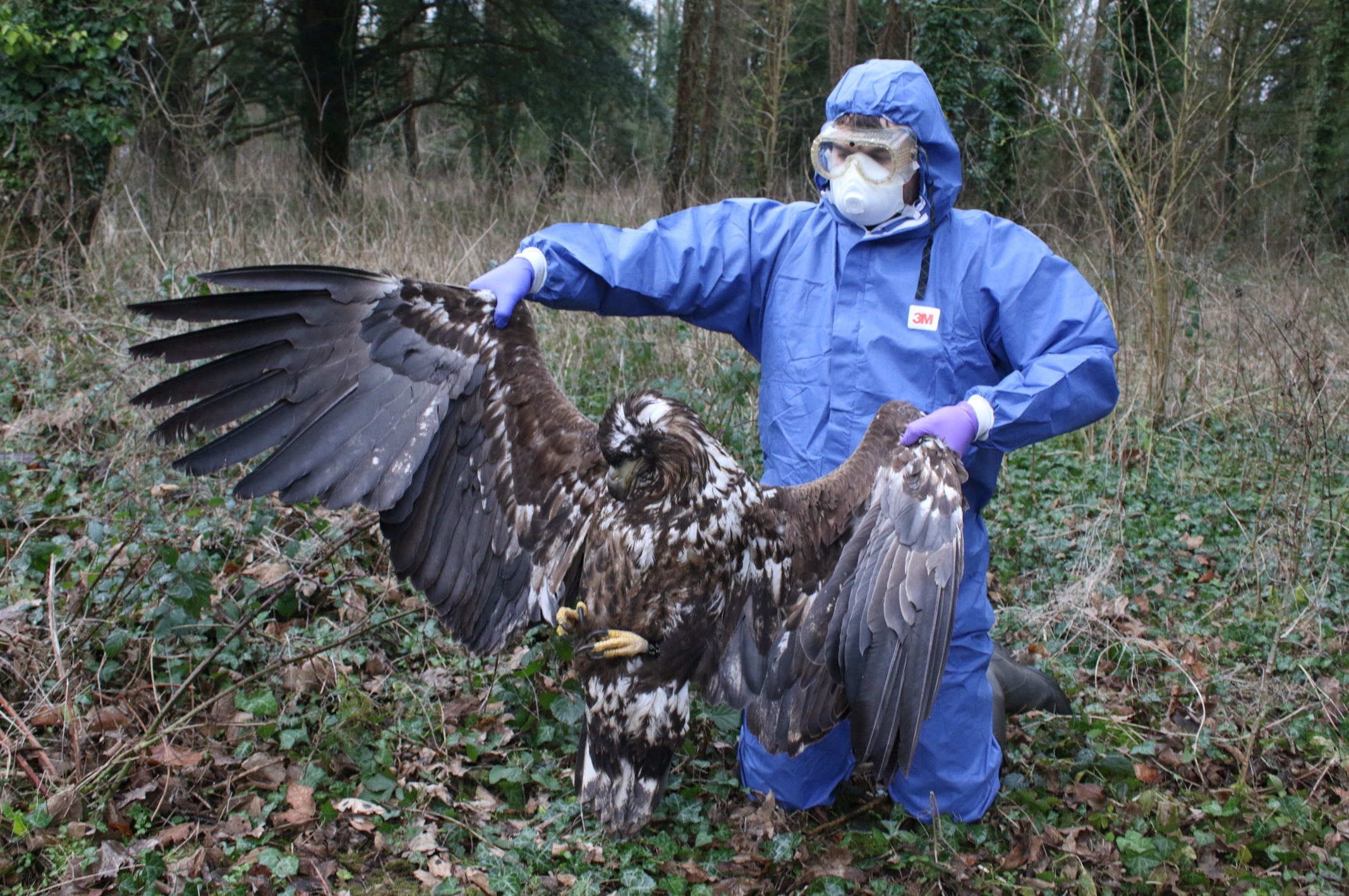
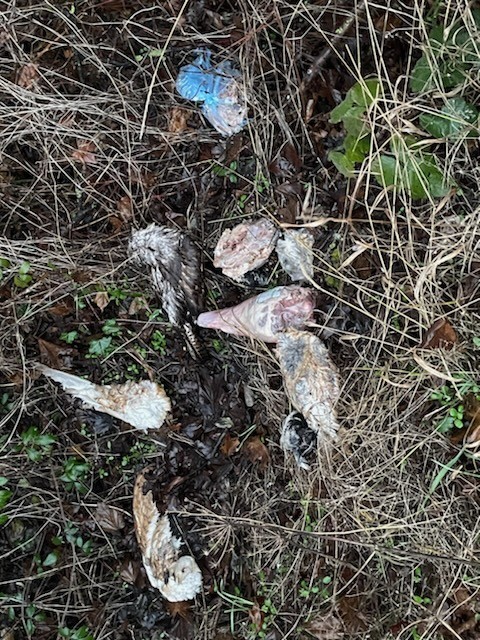
On 4 October, the team conducted multi agency searches in the area along with officers from the National Wildlife Crime Unit (NWCU), the RSPB and Natural England. During the searches we recovered various items which we believe are linked to the offences under investigation. The offences include the suspected poisoning of three birds, two Buzzards and one Red Kite. 

Inspector Jason Baxter, from Lincolnshire Special Operations Unit, said: “Lincolnshire police will not tolerate the persecution of our wildlife and any offences reported to us will be thoroughly and expeditiously investigated and offenders will be dealt with robustly.”

Investigations are ongoing and we have identified one male suspect who will be interviewed in due course.

Investigating officer, Detective Constable Aaron Flint said: “A number of Birds of Prey appear to have been poisoned in the Horncastle area.

We would appeal for anyone with any information to contact us.”

If any members of the public have information that could assist with the investigation please call 101, email force.control@lincs.police.uk or through crime stoppers. Please remember to quote incident number 22000367672.

ENDS

Well done Lincolnshire Police, Natural England, RSPB and the National Wildlife Crime Unit for yet another excellent example of partnership-working between specialist agencies, and especially for issuing a statement/appeal for information just two days after the raid. I hope some of the other regional police forces are taking note.

This latest multi-agency raid is the latest in a surge of similar investigations in response to raptor persecution crimes over the last couple of years, including a raid in Wiltshire on 23rd September 2020 (here), a raid in Suffolk on 18th January 2021 (here), a raid in January 2021 in Nottinghamshire (here), on 15th March 2021 another raid in Lincolnshire (see here), on 18th March 2021 a raid in Dorset (here), on 26th March 2021 a raid in Devon (see here), on 21st April 2021 a raid in Teesdale (here), on 2nd August 2021 a raid in Shropshire (here), on 12th August 2021 a raid in Herefordshire (here), on 14th September 2021 a raid in Norfolk (here), a raid in Wales in October 2021 (here) a raid in Humberside on 10th December 2021 (here), a raid in North Wales on 8th February 2022 (here), another raid in Suffolk on 22nd April 2022 (here), and another raid in Norfolk on 29th April 2022 (here).

The majority of these cases are ongoing, or have progressed to impending court hearings, but a few have concluded, resulting in the conviction of criminal gamekeepers. These include:

*The Nottinghamshire case (from January 2021) where gamekeeper John Orrey was sentenced in January 2022 for battering to death two buzzards he’d caught inside a trap (here);

*The Suffolk case (also from January 2021) where gamekeeper Shane Leech was convicted of firearms and pesticides offences in November 2021 after the discovery of a poisoned buzzard found close to pheasant-rearing pens in Lakenheath (here);

*The Wales case (from October 2021) where gamekeeper David Matthews was convicted in June 2022 for pesticide offences following the discovery of a poisoned red kite and a shot red kite at a pheasant release pen on the McAlpine Estate in Llanarmon Dyffryn Ceiriog, North Wales (see here);

*The Wiltshire case (from September 2020) where gamekeeper Archie Watson was convicted in June 2022 after the discovery of at least 15 dead buzzards and red kites were found dumped in a well on a pheasant shoot on Galteemore Farm in Beckhampton (here);

*The Norfolk case (from September 2021) where gamekeeper Matthew Stroud was convicted in October 2022 for the poisoning of at least five buzzards and a goshawk, amongst other offences, on a pheasant shoot at Weeting, near Thetford (here).

Conviction of gamekeeper Matthew Stroud: statement from Norfolk Constabulary

Following yesterday’s news that 46-year-old gamekeeper Matthew Stroud had been convicted, amongst other things, of shooting and poisoning at least five buzzards and a goshawk on a pheasant shoot in Norfolk (see here), Norfolk Constabulary has issued a press statement which provides a bit more detail about the case.

[One the buzzards that gamekeeper Matthew Stroud shot dead]

Press release from Norfolk Constabulary:

Gamekeeper admits killing birds of prey

A Weeting gamekeeper appeared in court today (Wednesday 5 October 2022) and admitted shooting and poisoning several birds of prey.

  • Three counts of using poisoned bait on or before 19 August 2021 and 14 September 2021.
  • Six counts of killing a Common Buzzard (a non-Schedule 1 wild bird) at Weeting between 10 August and 14 September 2021.
  • One count of intentionally killing a Northern Goshawk (a Schedule 1 wild bird) at Weeting on or about 10 August 2021.
  • One count of possessing a regulated substance – Strychnine Hydrochloride – without a licence on 14 September 2021.
  • One count of possessing 4 shotguns to kill a Schedule 1 wild bird on 14 September 2021.
  • One count of releasing 3,400 Common Pheasants into the wild between 1 June and 14 September 2021 contrary to the Wildlife and Countryside Act 1981.
  • One count of incorrectly storing a biocidal product – Rentokil Phostoxin – on 14 September 2021 contrary to the Health and Safety at Work Act 1974.

He received a 12-month Community Order and was ordered to do 200 hours of unpaid work, fined £692 and ordered to pay costs of £145, compensation of £288.72 and a victim surcharge of £95. The court also ordered the forfeiture and destruction of all Stroud’s firearms, mobile phones and any chemicals.

The court heard how the investigation started when RSPB officers found a young pheasant dead in Belvedere Wood, Weeting, on 19 August 2021. Tests later confirmed the pheasant had been poisoned with Strychnine Hydrochloride.

Further intelligence led Norfolk Police to execute a warrant at Stroud’s home, Belvedere Wood and Oisier Carr Wood on 14 September 2021 where the following discoveries were made:

  • Three dead buzzards were found at two release pens in Oisier Carr Wood. Tests later confirmed they had been shot.
  • Two pheasant carcasses with extremely high levels of Strychnine Hydrochloride and a poisoned Common Buzzard were found in Belvedere Wood – a Site of Special Scientific Interest because of its internationally important population of Stone Curlews
  • Two bottles of Strychnine Chloride were found in the glovebox of Stroud’s all-terrain vehicle, and a bottle of Phostoxin discovered by officers in a lean-too style shed attached to his house.

In addition, Stroud’s mobile phone contained photos of a dead Goshawk and five dead Common Buzzards. He later confessed to officers that all the photos were of birds he had killed.

PC Chris Shelley, Norfolk Constabulary’s Rural Crime Officer, said: “This investigation is one of the biggest cases of its kind that we have dealt with in Norfolk.

Stroud actions were dangerous and inhumane – he shot and poisoned birds of prey as he saw fit, and at will, because it suited him to do so. He also used a highly dangerous poison – one that has been banned in the UK for the last 15 years – indiscriminately, which could have had a disastrous effect on other local wildlife and showed a scant disregard for the safety of others.

We’re committed to working with all partners to tackle rural crime and have worked closely with colleagues from the RSPB, the National Wildlife Crime Unit and Natural England throughout this investigation. It is because of this close collaboration with them that we have been able to bring this case to court.

Tom Grose, RSPB Investigations Officer, said: “Laying poison baits out in the open is not only illegal but extremely dangerous and irresponsible. Baits like those being used present a deadly risk to any animal or person that might come across it.

It is particularly troubling that this was happening on an SPA, a designated area where wildlife and nature should have the highest legal protection.

We would like to thank Norfolk Police for leading such a thorough investigation, and to Natural England, the National Wildlife Crime Unit and Crown Prosecution Service for their support.”

Ashley Petchey of the Crown Prosecution Service said: “This was a case where Mr Stroud has, whilst in his position as a gamekeeper, killed wild birds by shooting and poisoning. He has also released non-native species into a SSSI.  

The scale of the offences in this case demonstrates the lengths people will go to in order to persecute raptors.   

The Crown take all cases of raptor persecution seriously and where the full code test is met, bring offenders to justice.”

ENDS

UPDATE 4th November 2022: RSPB Investigations Officer reflects on conviction of Norfolk raptor-killing gamekeeper Matthew Stroud (here)

Norfolk gamekeeper convicted after shooting & poisoning multiple birds of prey

Press release from the RSPB today (5th October 2022):

Gamekeeper escapes jail after killing birds of prey

*Six buzzards and a goshawk were found illegally killed on a gamebird shoot near Thetford, along with lethal poison baits.

*Gamekeeper Matthew Stroud pleads guilty to multiple offences

*The RSPB is increasingly concerned about raptor persecution linked to pheasant and partridge shoots, and the impact of large-scale gamebirds releases.

Today (5 October 2022) at Norwich Magistrates’ court, gamekeeper Matthew Stroud received a 200 hour community order and was fined £692 for offences connected with raptor persecution. Stroud was ordered to pay £145 costs, £288.72 compensation and a £95 victim surcharge.

[Convicted criminal gamekeeper Matthew Stroud and one of his victims, a shot buzzard. Photos via RSPB and Eastern Daily Press]

Offences included shooting five buzzards and one goshawk, the poisoning of another buzzard, the laying of poison baits and illegal possession of poisons including strychnine.

Stroud also became the first person convicted for the unauthorised release of gamebirds on a Special Protection Area (SPA) – an internationally important site for conservation under the Habitats Regulations.

[Another of Stroud’s victims – he shot this goshawk. Photo via RSPB]

[Two containers of the banned poison strychnine found in the glovebox of Stroud’s all-terrain vehicle]

Sentencing Stroud, Magistrates said that he was lucky to escape jail today.

The court heard from the defence that Stroud was under pressure to produce game birds for the shoot after two poor years, that he had taken no pleasure in killing the buzzards and that he should have been informed that the law had changed around pheasant releases.

This is one of many incidents of raptor persecution identified on lowland pheasant and partridge shoots, which the RSPB says is an area of increasing concern. There is also evidence that large-scale releases of pheasant and partridge for shooting is having a detrimental impact on native wildlife.

The RSPB Investigations team conducted lengthy enquiries on an area of land managed by Stroud for pheasant shooting at Fengate Farm in Weeting, within the Breckland SPA. Following a number of visits, on 19 August 2021 they discovered a pheasant carcass – later found to contain the banned toxic chemical strychnine. The use of a poison bait such as a pheasant, laced with pesticides, is one of the most common methods of illegally killing birds of prey.

A subsequent search with Norfolk Police and partners uncovered further poison baits plus shot and poisoned raptors. Stroud’s phone also contained the photo of a goshawk and several buzzards which he admitted to shooting. They also found the deadly banned poison strychnine and phostoxin, a dangerous fumigant which was stored improperly.

In 2021 it became illegal to release gamebirds on or adjacent to an SPA without a licence, which Stroud had not sought, making him the first person to be prosecuted and convicted for this offence.

In 2020, Wild Justice issued proceedings in the High Court challenging the annual release of millions of non-native pheasants and red-legged partridges into the countryside and their potential impact on sites designated for nature conservation. DEFRA conceded the case and introduced General Licence 43 in an attempt to ensure that the impacts of those birds on those sites would be regulated.

Mark Thomas Head of RSPB Investigations UK, said:

It is difficult not to be disappointed with the outcome today considering the significance of the offences and combined efforts of the agencies involved. Laying poison baits out in the open is not only illegal but extremely dangerous and irresponsible. Baits like those being used at Fengate Farm present a deadly risk to any animal or person that might come across it. It is particularly troubling that this was happening on an SPA, a designated area where wildlife and nature should have the highest legal protection.

The RSPB’s most recent Birdcrime report in 2020 made clear that raptor persecution is not just an issue confined to grouse shooting estates: it is increasingly correlated with pheasant and partridge shoots.”

Mark added: “We would like to thank Norfolk Police for leading such a thorough investigation, and to Natural England, the National Wildlife Crime Unit and Crown Prosecution Service for their support”.

Guilty pleas were entered to the following charges:

· Six charges in relation to killing of six different buzzards (five by shooting and one poisoned) during August and September 2021

· One charge in relation to killing a goshawk listed under schedule 1 of the Wildlife and Countryside act 1981 in August 2021

· Three charges in relation to laying poison baits in August and September 2021

· One charges in relation to the possession of the banned pesticide, strychnine in September 2021

· A charge in relation to a firearm being an item capable of committing an offence in September 2021

· A charge in relation to the usage of the chemical phostoxin in September 2021

· One charge in relation to releasing pheasants illegally during 2022

ENDS

UPDATE 6th October 2022: Conviction of gamekeeper Matthew Stroud – statement from Norfolk Constabulary (here)

UPDATE 4th November 2022: RSPB Investigations Officer reflects on conviction of Norfolk raptor-killing gamekeeper, Matthew Stroud (here)

Red kite reported shot in Essex – Police appeal for information

Essex Police’s Rural, Wildlife & Heritage Crime Team is appealing for information after a red kite was reportedly found shot in Stapleford Abbots in the Epping Forest.

The kite was found on 3rd September 2022 and is currently undergoing veterinary treatment for what are believed to be shotgun injuries.

No further details about this reported crime have been provided yet.

Anyone with any information that could assist the police investigation please call Essex Police on Tel. 101 or Crimestoppers on 0800 555 111 to provide information anonymously and in confidence. Please quote incident reference number: 42/232180/22.

Hen harrier persecution continues amid increased breeding success

There’s been quite a lot of news about hen harriers in the last couple of weeks as this year’s breeding figures have been announced: 119 chicks from 49 nests, 34 nests being successful (see Natural England press release here).

That is the highest number of chicks fledged in over a century, according to Natural England, but there are many questions still to be answered about these figures and as ever, Natural England isn’t being transparent with the results.

I’d like to know how many of the 49 nests were on privately-owned grouse moors. Not on tenanted grouse moors (e.g. like National Trust and water utility companies’ land) where tenants are now at risk of having their shooting leases withdrawn if persecution takes place, e.g. see here), not on RSPB reserves, or Forestry England land – but on actual privately owned moors managed for driven grouse shooting. I think it’s telling that this detail has not been provided.

13 of this year’s 119 chicks were ‘brood meddled’ from four nests at unknown locations in northern England – not very impressive considering 13 chicks successfully fledged from a single site, the Tarras Valley Nature Reserve, without any need for brood meddling.

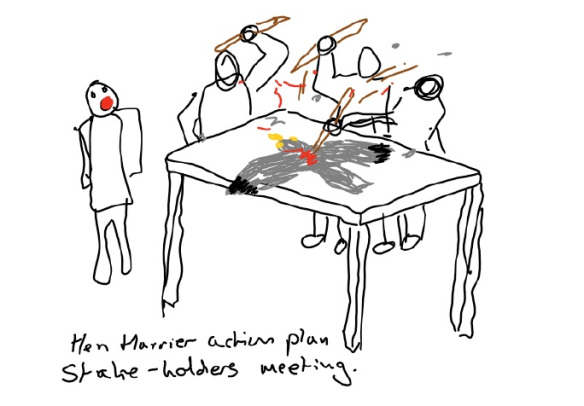
For new readers, hen harrier brood meddling is a conservation sham sanctioned by DEFRA as part of its ludicrous ‘Hen Harrier Action Plan‘ and carried out by Natural England (NE), in cahoots with the very industry responsible for the species’ catastrophic decline in England. For more background see here. Brood meddling is in place entirely as a result of the authorities failure to stop grouse moor managers from illegally killing this species. Instead of prosecuting these criminals, the Government has sanctioned the removal of the harriers from the grouse moors, to be reared in captivity and then released somewhere else to become targets for being killed on another grouse moor later in the year.

The hen harrier brood meddling conservation sham is a five-year trial, started in 2018 and is being used to assess whether grouse moor owners’ attitudes towards hen harriers will change. I look forward to reading the scientific committee’s report, but judging by the continued persecution of this species on driven grouse moors, it can hardly be described as a brilliant success. A brilliant wheeze, perhaps, from the point of view of the grouse moor owners who’ve had harriers legally and forcibly removed from their moors, but a conservation success? How can it be when the original cause of the species’ decline (illegal persecution) hasn’t been addressed and is ongoing?

We already know that since 2018 when the brood meddling trial began, at least 70 hen harriers have either been illegally killed or have ‘disappeared’ in suspicious circumstances, most of them on or close to driven grouse moors (see here). A scientific paper published in 2019, using the Government’s own data, demonstrated the unequivocal link between hen harrier persecution and driven grouse shooting (here).

And even in this latest press release from Natural England, we’re told that 15 hen harrier nests failed this year, “including failures subsequently investigated by the police“. How many were investigated? Where were they? How many were on privately-owned grouse moors? What were the outcomes of the police investigations? Why hasn’t there been any publicity about these suspected crimes?

The press release also reveals that since March this year, three more satellite-tagged hen harriers have ‘disappeared’, with at least two of them the subject of police investigations. Why hasn’t there been any publicity about these suspected crimes? I will update my list of dead/missing hen harriers shortly.

It continues to be a source of huge frustration that Natural England will go all-out promoting the ‘good news’ stories about hen harriers but never provides prominence to the ongoing cases of illegal persecution. I’m sure the £75k bung it’s received from the game-shooting industry has absolutely nothing to do with it.

I also note that Natural England’s press release says absolutely nothing about the unspeakable atrocity inflicted on hen harrier Asta, whose wings were torn off so her satellite tag could be fitted to a crow in an attempt to deceive the authorities that Asta was alive and well.

Changed attitudes? I don’t think so.

UPDATE 4th September 2022: Natural England utterly compromised on tackling hen harrier persecution (here)

Good news! Sidelined Dorset wildlife crime cop joins National Wildlife Crime Unit

Claire Dinsdale QPM, the wildlife crime officer who was leading on the Dorset eagle poisoning case until senior officers decided to close the investigation prematurely after what looked suspiciously like political interference (here), has left Dorset Police and has taken up a new role with the National Wildlife Crime Unit (NWCU).

This is really good news! Claire was held in very high regard by those involved in tackling wildlife crime and her dedication to the role saw her contributing thousands of hours of her own time, on top of her normal police duties, to gather evidence to identify suspects and increase the chances of them being charged. She was awarded the Queen’s Police Medal in 2020 for her efforts.

A twitter spat with local Conservative MP Chris Loder, followed by senior officers’ inexplicable decision to block the investigation into the poisoned eagle, led to Claire going on long-term sick leave in March this year.

I’m delighted to see her move to the NWCU where hopefully her contributions will be valued and supported.

Natural England accepts £75k bung for hen harriers from game-shooting organisation BASC

Earlier this year, Natural England, the so-called statutory regulator for conservation, and BASC, the British Association for Shooting (& Conservation) were boasting about a £75k donation made by BASC to Natural England to help finance ongoing hen harrier work.

I was interested in this arrangement, given that BASC is an organisation at the forefront of the game-shooting industry; an industry that has been responsible for the systematic persecution of the hen harrier for many, many years.

So I submitted an FoI to Natural England find out more.

Remember, last year BASC gave Natural England a £10k bung for hen harriers, on condition that Natural England didn’t say anything bad about BASC (see here).

Well, it seems this cosy arrangement is continuing, only this time with a bigger bung and the same condition that requires Natural England to refrain from saying anything bad about BASC:

You can read the full Memorandum of Agreement (MOA) here, as released to me via my FoI request:

It’s apparent from this document that the latest MOA was eventually signed in January 2022. However, other material released in response to my FoI request reveals that Natural England and BASC were discussing this MOA as far back as 27th May 2021 – just a few weeks after the disappearance of hen harrier Asta from a grouse moor in County Durham, whose wings had been ‘removed’ so that her satellite tag could be affixed to a carrion crow in an attempt to deceive Natural England that the tag was still functioning and thus hen harrier Asta was alive and well (see here).

Who, in their right mind, would sign up to a ‘partnership’ with a game-shooting organisation knowing what unspeakable atrocity had just been inflicted on hen harrier Asta? The latest in a long, long line of atrocities inflicted on our beleaguered hen harriers by members of this industry.

My view is that the £75k bung goes some way to explain Natural England’s reluctance to publicise this latest crime.

[Cartoon by Gill Lewis]

Hen harrier’s ‘wings removed’ & its satellite tag fitted to a crow in sick ploy to disguise the crime

In December 2021 I blogged about a disturbing incident I’d heard about concerning a young satellite-tagged hen harrier whose wings had been ripped off – whether that was done when she was still alive or after she’d been killed was not known (see here).

I understood the incident had happened approximately nine months earlier, in Spring 2021, and I asked Natural England to clarify. Natural England refused to comment in December 2021 (see here) and in March 2022 it issued a statement saying it was remaining silent on police orders as the investigation was ongoing (see here).

I had intended to blog further about this case before now, but it’s been complicated for a number of reasons that I can’t divulge and besides, I didn’t want to compromise the ongoing police investigation by revealing too much detail that might provide a defendant with an opportunity to escape justice.

I’ve now been advised that the police investigation has been closed and nobody is being prosecuted due to there being insufficient evidence to charge anyone, so here is the full, sickening story.

Hen harrier ‘Asta’ hatched at a nest site in Northumberland in 2020. By the end of her first winter, she had settled in County Durham for several months and had a defined home range on moorland just south of the A66. Incidentally, an area dominated by moorland managed for driven grouse shooting where a young brood meddled hen harrier ‘vanished’ without trace in 2019 (here) and where a Marsh harrier was found with gunshot injuries in 2011 (here).

In late March 2021 Asta’s satellite tag signal temporarily went offline before reappearing in early April. However, when it came back online the signal was coming from 29km to the south east in the lowlands, near to Arrathorne in Richmondshire. Prior to this move, Asta’s tag had rarely dropped below 400m but was now showing an altitude of approx 103m.

This odd behaviour and the erratic tag data raised the suspicions of the Natural England employee who was monitoring the tag data and a search was launched to find out what was going on.

Eventually the tag was found later in April 2021 but it was no longer attached to hen harrier Asta – it had been fitted to a carrion crow (which was dead when the fieldworkers found it).

I use the word ‘fitted’ deliberately. The police were brought in and they asked two expert, highly experienced satellite-tag practitioners (including one from Natural England) to examine the tag and its harness while it was still attached to the crow. They both concluded that the harness had been deliberately ‘fitted‘ to the crow; in other words, it wasn’t a case of the crow having become entangled in a discarded tag harness, it was “only human intervention that could have fitted it in the manner it was securely attached” [to the crow], according to the police officer I’ve been talking to.

But here’s the bit that makes my blood run cold. The two experts also concluded that the harness “could not have been removed from the harrier unless the wings had been removed, and the condition of the harness did not suggest that it had become damaged and been able to just fall off the hen harrier. The hen harrier could not remove the harness/tag itself“.

Obviously, without sufficient evidence to prosecute anyone we’ll never know the full grisly details of what happened to Asta, but we can make an educated guess.

She vanished from a known raptor persecution hotspot, in an area managed for driven grouse shooting – an industry with an acknowledged filthy history of persecuting birds of prey, and particularly hen harriers, as demonstrated by decades of prosecutions, convictions and endless scientific evidence (e.g. here).

We also know the lengths the raptor killers will go to disguise their barbaric crimes, from removing a satellite tag, wrapping it in lead sheeting (to block the signal) and dumping it in a river (here), to dumping a tag 15 miles offshore in the North Sea (here).

It is not implausible to surmise then that Asta was illegally killed and her tag fitted to a crow in the hope that the person monitoring the tag data would assume that nothing was amiss as the tag continued to transmit as the crow flew about the countryside.

This wouldn’t be the first time this has happened. I’m told a similar case apparently took place in Scotland several years ago when hen harriers were first being satellite-tagged by Roy Dennis.

Asta has not been found and let’s face it, she’s unlikely to be. Her mutilated, wingless corpse has probably been stamped into a peat bog or thrown into an incinerator, perhaps after ‘trophy‘ photographs had been taken.

I’ve been asked by the police not to divulge certain aspects of the investigation (so as not to compromise future investigations) and I’ll respect that request. I think it’s fair to say the investigation was rigorous, based on the information provided.

However, what I won’t respect is the police’s complete silence about this case. It’s been almost 18 months since it happened and there hasn’t been a peep. No statement, no public appeal for information, nothing. I don’t accept that issuing a statement or appeal, no matter how generalised, would have compromised the investigation.

I also won’t respect Natural England’s decision to remain silent. Natural England is supposed to be the regulator and is using public funds to pay for these satellite tags and staff time to monitor the data. It could easily have made a statement about this case, which is very much in the public interest, without compromising the police investigation.

In my view, saying nothing by hiding behind the excuse of a live police investigation is simply a convenient cover for Natural England not to have to admit that its hen harrier brood meddling trial is a conservation sham because hen harriers are still being brutalised by the industry with which NE has jumped in to bed (at least 70 hen harriers killed or ‘missing’ in suspicious circumstances just since 2018, most of them on driven grouse moors). Meanwhile, Natural England is happy to put its name to ludicrous propaganda being pumped out by the very industry responsible for bringing the hen harrier population to its knees.

I also noticed that in its summer 2021 update on its satellite-tagged hen harriers, Natural England stated that Asta’s tag was still transmitting in July 2021 and her status was listed as ‘alive’, when actually she was dead three months earlier:

What else is Natural England lying about?

What else is Natural England covering up?

And why on earth does it take a blogger to bring this horrific crime, a so-called national wildlife crime priority, to the public’s attention?

UPDATE 25th August 2022: Natural England accepts £75k bung for hen harriers from game-shooting organisation BASC (here)

UPDATE 4th September 2022: Natural England utterly compromised on tackling hen harrier persecution (here)

Goshawk nest attacked in Peak District National Park – Derbyshire Police appeal for information

An appeal for information by Derbyshire Police’s Rural Crime Team (21st August 2022):

‘Back in June this year a larch tree at Westend in the Upper Derwent Valley which was home to a pair of goshawks was found to have been interfered with. Sadly, the birds abandoned the site and it was discovered that the tree had drilled holes and bolts all the way up it which we believe to be evidence of how the nest had been accessed. A local ornithologist had confirmed the presence of eggs in the nest prior to all this but had then found the be no longer there.

[A goshawk nest, photo by Archant]

With help from Forestry England staff a forensic examination was carried out on the tree and items were submitted to the lab.

We are appealing to anyone who may be able to provide information to help with this enquiry.

Thank you‘.

ENDS

[Photo of the forensic examination of the goshawk’s nest tree. Photo by Derbyshire Police]

Goshawks in the Dark Peak area of the Peak District National Park have been the target of relentless illegal persecution for decades, along with a number of other raptor species including peregrine and hen harrier (the most recent incident reported earlier this summer – here).

The majority of these crimes have been linked to driven grouse shooting. For new blog readers, the following reports and scientific papers provide good background evidence:

GWCT disregards police investigation into alleged wildlife crime on Van Cutsem’s Norfolk estate

Last week I wrote about how former Cabinet Secretary Fergus Ewing MSP, the Scottish Gamekeepers Association, and landowners’ lobby group Scottish Land & Estates had shown complete disregard for the sanction imposed on Moy Estate after raptor persecution crimes had been recorded there (see here).

This week it’s the turn of the Game & Wildlife Conservation Trust (GWCT) to seemingly turn a blind eye.

Have a look at this event currently being promoted on GWCT’s website:

Regular readers will know that Hilborough House is the home of William van Cutsem. In May this year, police raided the estate after video footage emerged of alleged raptor persecution.

The footage, captured on a secret camera installed by the Hunt Investigation Team, appeared to show a crow cage trap in woodland alleged to be on the Hilborough Estate. The trap had been baited with live pigeons (this is an offence) and a young goshawk was attracted to the bait, entered the trap and then couldn’t escape. A masked man is then recorded entering the trap, pinning the goshawk to the side netting with a stick so he could grab the bird, and then removing it from the trap and walking away with it (also an offence). The goshawk’s fate is not shown.

As far as I’m aware, the police investigation is ongoing.

Mr Van Cutsem hasn’t commented publicly about this investigation although in a classic attempt at diversion, the Mail on Sunday ran a piece quoting ‘an unnamed source close to Mr van Cutsem’ who questioned the relationship between the Hunt Investigation Team and the RSPB:

What also is interesting is how close HIT works with the RSPB. It would be good to understand how a mainstream charity is working with a shady group’. 

Oh the irony!