Red kite found poisoned on Swinton Estate – North Yorkshire Police refuses to investigate

Last November I was reading an online article on the Teeside Live website about the Nidderdale Area of Outstanding Natural Beauty (AONB) in North Yorkshire being dubbed ‘the bird poisoning capital of the UK‘ (here).

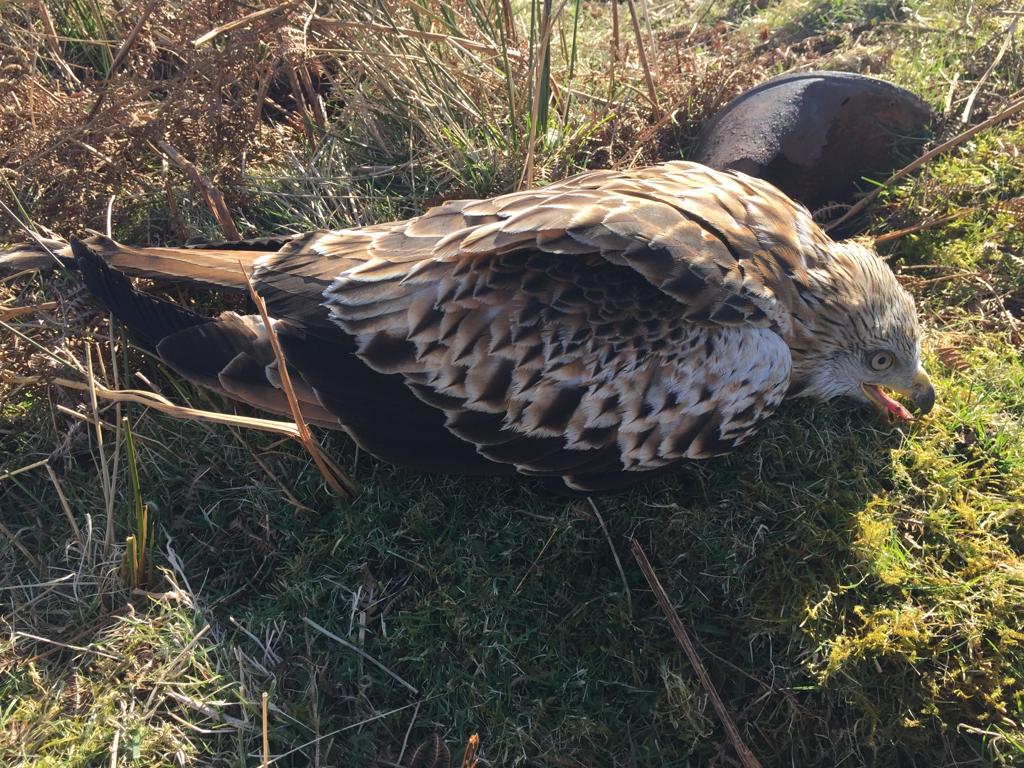
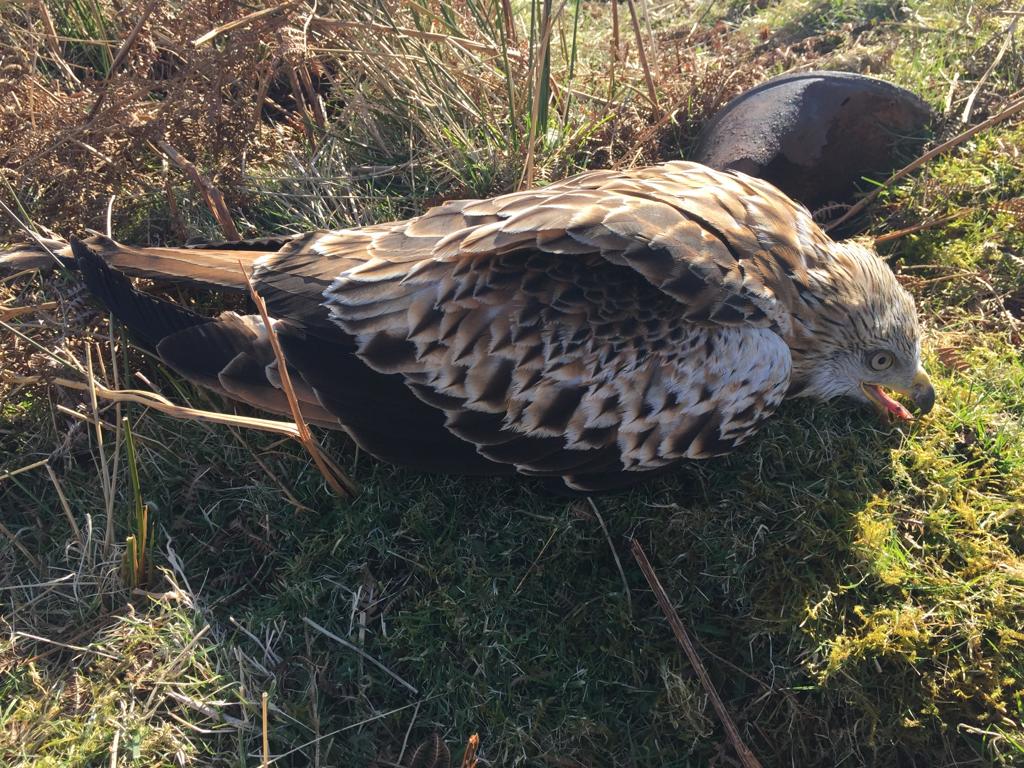
The article was illustrated with various photographs, including this image of a poisoned red kite that was reportedly found dead at Roundhill Reservoir, near Masham in 2021:

The given location caught my eye as I understand the Roundhill Reservoir is surrounded by the Swinton Estate, a notorious grouse-shooting estate that has been at the centre of police investigations into confirmed and alleged raptor persecution for years.

For example, this is the estate where hen harrier ‘Bowland Betty’ was found dead in 2012, later confirmed to have been shot (here & here) although it has never been established whether she was shot on or off the estate. It’s also where a Swinton Estate gamekeeper was convicted for twice setting an illegal pole trap in 2013 (here) and where another hen harrier, ‘River’, was found shot dead in 2019 (here). Around the same time as River’s demise, an unidentified gunman had been filmed with two dogs walking through a hen harrier roost on the estate (here). There have also been reports from local raptor workers of the ‘mysterious disappearances’ of many raptors on this estate for over a decade.

The owner of Swinton Estate is Mark Cunliffe-Lister, Earl of Swinton, who in 2020 became the new Chairman of the grouse moor owners’ lobby group, the Moorland Association (here). This is a high profile position and in recent years Mr Cunliffe-Lister’s estate has become somewhat of a poster child for DEFRA’s ludicrous hen harrier brood meddling trial, where the estate has championed the removal of some hen harrier chicks in return for permitting others to remain and to be diversionary fed by estate staff, although this hasn’t been without controversy either after it emerged that Natural England had appeared to ‘bend the rules’ in favour of estate activities (e.g. see here). Controversially, in 2021 a Guardian journalist described Swinton Estate as the ‘hen harrier’s friend’ (here), supported by a statement from Stephen Murphy (Natural England) about the estate’s head gamekeeper, “What he’s done for harriers, word’s can’t describe“. Murphy also claimed that hen harrier Bowland Betty had definitely been shot elsewhere and merely flew on to the estate to die – an unevidenced claim that was later amended in the article. Last year the estate won what was described as ‘a prestigious conservation award’ for its involvement in the hen harrier brood meddling trial (here).

So, back to that article I was reading in November 2022. I didn’t recall hearing about a poisoned red kite being found on the Swinton Estate in 2021 and I’m pretty sure I would have remembered, given the location, so I did some digging to make sure the poisoning had been confirmed and the location verified, just in case the journalist had cocked up (she’d already mistakenly described Nidderdale as a ‘village’ instead of a region so I couldn’t rely on her account of the poisoned red kite to be accurate).

The Nidderdale Area of Outstanding Natural Beauty (AONB), North Yorkshire
Roundhill Reservoir in the Nidderdale AONB

I found details about this crime on the HSE’s Wildlife Incident Investigation Scheme spreadsheet, which confirmed the kite had been found poisoned on a Right of Way footpath in November 2021. The poisons found in the kite’s stomach included Bendiocarb, Carbofuran, Chloralose and Isofenphos – this highly toxic combination has become known as the ‘Nidderdale Cocktail’ as it’s so frequently used to kill birds of prey in this region, especially red kites (e.g. see here, here, here).

The red star denotes the approximate location of the poisoned red kite found in November 2021, close to Roundhill Reservoir and surrounded by the grouse moors of Swinton Estate

However, I couldn’t find any media coverage of this crime, nor any police appeals for information, nor any warnings to the public about the continued use of poisons so dangerous that some of them have been banned for years. Given that a year had already passed since the poisoned kite was discovered, I found this puzzling. So I contacted North Yorkshire Police’s rural crime team and asked them about the status of the investigation:

Here’s the astonishing response I received:

This North Yorkshire Police Inspector admitted that this poisoned red kite “unfortunately slipped through the net” but then went on to justify the police’s decision not to investigate by accusing the RSPB of failing to notify the police about this incident when the poisoned kite was first picked up. He claimed the police only found out about it five months later, in April 2022, whilst chasing the lab for the results of another investigation.

His allegations about the RSPB aside (and which I’ll come to, below), I was still stunned that he thought that launching an investigation, and issuing a public appeal for information, let alone issue a warning to the public about the use of poisons in the countryside, wasn’t worthwhile due to the ‘passage of time’ (five months), especially given the location where the poisoned kite had been found.

A couple of years ago a previous North Yorkshire Police Inspector had issued a public appeal/warning, ten months after the discovery of another poisoned red kite in Nidderdale (see here), so it seemed to me that there was no reason not to issue one after a five month delay.

I wrote back to North Yorkshire Police asking for an explanation:

Apparently, it wasn’t up for debate. Here’s the response I received:

Meanwhile, I contacted the RSPB and put to them the allegations this Inspector had made, that the RSPB hadn’t notified the police about the discovery of this red kite. It turns out those allegations were utterly unfounded/untrue. The RSPB DID contact North Yorkshire Police, on the day the poisoned kite was discovered, and took instruction from the police about submitting the corpse for toxicology analysis. Furthermore, they had the email correspondence to prove it:

So what are we to make of North Yorkshire Police’s refusal to investigate a confirmed poisoning incident (a so-called national wildlife crime priority), on an estate with a long history of alleged wildlife crime, that has enjoyed recent adulation from Natural England staff and the media, that has played a significant role in the hen harrier brood meddling trial, and whose owner is a high profile representative of the grouse-shooting industry?

Does Mr Cunliffe-Lister even know about this poisoned kite being found on his estate? Given the Moorland Association’s claimed ‘zero tolerance’ of raptor persecution, and Mr Cunliffe-Lister’s widely-reported apparent welcoming of birds of prey on his estate, I’d have expected him to speak out and condemn this disgraceful poisoning incident, as any decent landowner would. It’d be interesting to know whether North Yorkshire Police have informed him, or not.

Whatever, North Yorkshire Police’s refusal to investigate this crime is wholly unacceptable. In the first instance, I’ll be writing a letter of complaint to the North Yorkshire Police, Fire and Crime Commissioner, Zoe Metcalfe.

In her Police and Crime Plan 2022-2025 (here), she details an objective of ‘an improved [police] response to crime in rural areas, especially wildlife crime...’ as this had been identified as a major concern for North Yorkshire residents in the recent PCC consultation.

UPDATE 23.30hrs: Natural England’s senior management team has a lovely day out…on Swinton Estate!! (see here).

Shot red kite found injured in Greenwich Park, London

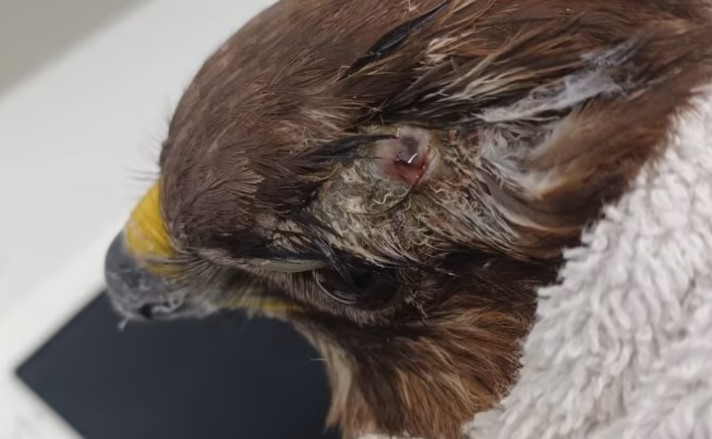
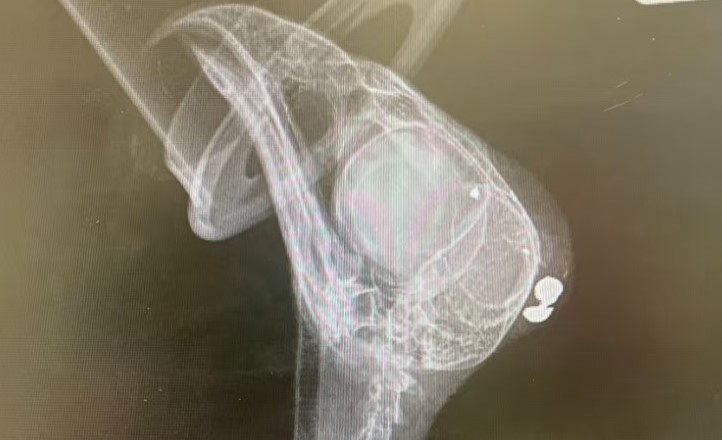
A shot red kite has been found injured after ‘falling from the sky’ at the Royal Observatory in Greenwich Park, south east London.

It is currently being treated at the South Essex Wildlife Hospital where x-rays revealed multiple shotgun pellets lodged in its body. It’s not clear where or when this kite was shot.

Staff at the wildlife hospital posted the following details and photos on social media yesterday evening:

UPDATE 13th February 2023, 10am: The person who found this injured kite has provided some more background to the circumstances:

Buzzard shot in Kent – Police appeal for information

Press statement from Kent Police (6 February 2023):

BUZZARD KILLED IN A VILLAGE NEAR MAIDSTONE

Kent Police’s Rural Task Force is investigating the shooting of a bird of prey in Otham, Maidstone.

At around 3.30pm on Friday 3 February 2023, a member of the public reported a buzzard had fallen into a garden in Otham Street after being shot.

It was taken to a veterinary surgery for treatment but had to be euthanised due to the extent of its injuries.

Buzzards are protected under the Wildlife and Countryside Act and officers are urging witnesses or anyone with information to contact them.

Police Sergeant Darren Walshaw said:

We are investigating this incident with colleagues from the RSPCA and suspect the bird was shot. We understand there were several people in the area at the time including walkers, residents in their gardens, and two people who were on the roof of a nearby property. We are urging anyone that can assist our enquiries to contact us“.

Witnesses should call 01622 604100, quoting Rural Task Force reference 16-23. You can also call Crimestoppers anonymously on 0800 555111 or complete the online form on the website.

ENDS

Shot buzzard in Essex succumbs to its injuries

The buzzard that was found shot in Colchester, Essex, earlier this month has unfortunately not survived its injuries.

It was found on 11th January 2023 near to Hardy’s Green and Heckford Bridge and was picked up by a member of the public.

The buzzard had suffered a broken wing and internal injuries and was being cared for by professionals at Colchester Owl Rescue. It succumbed to its injuries over the weekend.

Thanks to Essex Police’s Rural, Wildlife & Heritage Crime team for the update.

Essex Police’s investigation into the shooting of this buzzard is ongoing. If anyone has any information please contact Essex Police on Tel: 101, quoting incident reference # 42/13298/23.

The shot buzzard. Photo: Essex Police Wildlife Team & Colchester Owl Rescue
X-ray showing at least 3 shotgun pellets (highlighted by RPUK). Photo: Essex Police Wildlife Team & Colchester Owl Rescue

Hen harrier chicks stamped to death in nest: how the shooting industry manipulated the narrative

I’ve written many times about how the shooting industry is intent on manipulating the narrative surrounding the illegal killing of birds of prey. Whether that be by publishing blatant propaganda about the extent of these crimes, so distorted the truth is barely recognisable (e.g. here, here, here, here), or by simply choosing not to mention, let alone condemn, the ongoing criminal attacks on raptors by gamekeepers (e.g. see here, here, here). Sometimes there will be a condemnation but often it is quickly overridden by a sneering attempt to undermine the integrity and credibility of the investigators, usually the RSPB (e.g. see here and here).

Recently, this manipulation of the narrative around raptor persecution has manifested in attacks by the shooting industry on the police forces issuing appeals for information about suspected crimes (e.g. see here and here for two very recent examples).

Less obvious is the behind-the-scenes manipulation; the conversations that go on behind closed doors that the public rarely gets to see, usually within the so-called ‘partnerships’ such as the Peak District Bird of Prey Initiative (e.g. see here and here) or the national Raptor Persecution Priority Delivery Group (RPPDG – see here). This sly under-handedness only comes to light after freedom of information requests by those of us who are unwilling to believe a word the shooting industry says when it comes to illegal raptor persecution.

And this leads me to the latest example of how the narrative is being manipulated. This time it relates to the media put out by the Yorkshire Dales Bird of Prey Partnership (another sham group) about the brutal stamping to death of a nest of hen harrier chicks last summer on a grouse moor on Whernside in the Yorkshire Dales National Park. To recap the details of that horrific story, which for some strange reason only emerged six months later in December 2022, please see here.

Hen harrier chicks in a nest (not the nest at Whernside where the chicks were stamped on). Photo: Ian Newton

North Yorkshire Police issued an appeal for information about this crime on 14th December 2022 (see here). I want you to pay attention to the unequivocal words used by the police to describe this incident (underlined in red, below): that they suspected the nest of hen harrier chicks had been “deliberately destroyed by human activity“:

Prior to this appeal for information being published, the previous week North Yorkshire Police had sent a final draft to the Yorkshire Dales National Park Authority (YDNPA) so they wouldn’t be unsighted by the news when it was published. We know this because a Yorkshire Dales resident, who also follows this blog, submitted a freedom of information request to the YDNPA in December to ask about internal comms within the Yorkshire Dales Bird of Prey Partnership about this crime. Everything that follows is a result of that FoI (thank you to the blog reader!).

On 14th December 2022, just after North Yorkshire Police had published its appeal for information, Mark Sadler, Communications Manager at the YDNPA sent around a draft press release to the Yorkshire Dales Bird of Prey Partnership’s communications sub-group and asked if all the partners would sign up to it. Here is his draft press release (please pay close attention to the words I’ve underlined in red):

It’s a strong statement, unequivocal in its condemnation, just as North Yorkshire Police’s statement was.

Here is the email Mark sent around to the ‘Partnership’ sub-group:

The first ‘partner’ to respond to Mark’s draft statement was the Moorland Association (the grouse moor owners’ lobby group in England). Here’s its response:

The next partner to respond, shortly afterwards, was BASC:

Right on cue, the next ‘partner’ to respond was the National Gamekeepers Organisation, as follows:

You’ll note that all three ‘partners’ from the shooting industry are intent on watering down North Yorkshire Police’s statement, moving the focus away from the police’s assertion that the stamping and killing of the hen harrier chicks in their nest was “deliberate“, and instead suggesting that it was “apparently deliberate“. They also want to big up the increase in the number of breeding hen harriers in the Yorkshire Dales/Nidderdale area that has happened as a result of the ludicrous brood meddling trial, carefully omitting to mention the ongoing persecution of hen harriers (77 illegally killed or ‘missing’ since the brood meddling trial began in 2018, a number of them in the Yorkshire Dales/Nidderdale area – see here).

The fourth ‘partner’ to respond was the RSPB, as follows:

The RSPB’s response starts strongly but then caves in and accepts the ‘apparently deliberate‘ narrative because it thinks its more important that the Partnership issues a statement and it knows that without a conviction, the police’s assertion that it was a deliberate act is contestable, even though the police’s view is based on having full sight of all the evidence. The RSPB asks for ‘three further small amendments’ to the draft text but I don’t know what those entailed because they weren’t included in the FoI response.

Mark Sadler from the YDNP adjusts the draft statement to incorporate the manipulations requested by the shooting industry ‘partners’ and he sends the final version to North Yorkshire Police:

North Yorkshire Police responds to this with a very, very clear message, reinforcing the view that whoever disabled the nest camera and then inflicted horrific injuries to those young hen harriers by stamping them to death, did so deliberately:

Unfortunately there is no other plausible serious explanation for the injuries to all the 3 chicks and Natural England and the National Wildlife Crime Unit were all in agreement“:

Here is the Partnership’s final statement, which was published on the Yorkshire Dales National Park Authority’s website on 15th December 2022. The parts I’ve underlined in red are the changes made between this final version and the original draft version:

As you can see, the changes are subtle, but are significant. The shooting industry representatives have introduced an element of doubt about the intention of whoever stamped on those chicks, despite North Yorkshire Police’s position (and that of Natural England and the National Wildlife Crime Unit) that the stamping was deliberate with the intention of killing the hen harrier chicks.

The insertion of a statement about increased breeding success for hen harriers and ‘focused efforts in the area to rebuild the population‘ leave the uninformed reader non the wiser about the ongoing illegal persecution of this species on grouse moors in the Yorkshire Dales, Nidderdale and beyond.

What does this charade tell us about the Yorkshire Dales Bird of Prey Partnership? Nothing we didn’t already know – despite a few earnest members, it’s another sham overrun by ‘partners’ with a vested interest in playing down the extent of raptor persecution in the area. It’s quite obvious that publicity about these crimes is bad news for the shooting industry – it damages their reputation and will, sooner rather than later, lead to statutory reform of game shooting as is now happening in Scotland, in large part because the public has been made aware of what’s going on and has demanded the Government takes action.

National Gamekeepers Organisation is latest from shooting industry to attack police & RSPB for raptor crime reporting

Last week I blogged about how a major shooting industry organisation, BASC, had attacked Suffolk Police for what BASC perceived to be an ‘offensive’ police appeal for information about the shooting of five young goshawks found dead at the edge of woodland near Thetford (here).

BASC complained that the police’s appeal was “disparaging to the shooting community” simply because the police had asked the shooting community for help to identify the shot gun-wielding criminal(!). Astonishingly, BASC’s complaint resulted in the police’s tweet/appeal for information being deleted.

Later, Suffolk Police released a joint press release with the RSPB, which seemed to enrage BASC even further. Bizarrely, BASC wrote on a blog:

Can we assume the RSPB has more information on the matter than BASC as they were very quick yesterday to offer a £5,000 reward for information leading to conviction; shortly followed by a similar pledge from Wild Justice? It would be useful to know whether RSPB are complainants, victims, witnesses or have any other relationship with Suffolk Constabulary“.

I would argue that this is a cack-handed but sinister attempt by BASC to try and influence the narrative on raptor persecution crimes. If the police are too scared to publicise a raptor persecution incident or appeal for information about it, because they’re scared of a backlash from the industry who are, let’s not forget, responsible for 73% of convictions for raptor persecution crimes, then it’s job done for the shooting industry. No reports = no publicity = no bad press = no public pressure on politicians to tackle these relentless, systemic crimes.

And it’s not just BASC that appears to be at it. The National Gamekeepers Organisation (NGO) has recently written on its website its dissatisfaction with Lincolnshire Police and the RSPB about the reporting of raptor persecution offences in that county. It’s mostly about a recent incident where the remains of three barn owls, one tawny owl and one red kite were found dumped in a ditch (here), and the NGO incorrectly accuses RSPB Investigations Officer Howard Jones of ‘insinuating that a gamekeeper might be to blame for the Lincolnshire incident‘ in a BBC news article.

Actually, Howard Jones did no such thing, he was talking about raptor persecution crimes in general and he was simply stating facts – the “vast majority” of raptor persecution cases being dealt with by the courts involve gamekeepers. That is a factually accurate statement from Howard, however unpalatable/embarrassing that may be to the NGO. Neither the RSPB or Lincolnshire Police laid any blame on anybody after the discovery of those bird of prey remains in Lincolnshire – they simply said it was an ‘unusual’ case and were appealing for information (here).

The ridiculous NGO, though, has written on its website:

The NGO are in contact with DC Flint of Lincolnshire Police and are hoping to meet with him in the near future to discuss both this case and to highlight our concerns about the reporting surrounding this case“.   

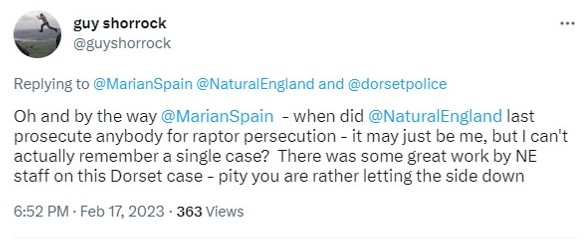
Meanwhile, the NGO has failed (refused?) to publicise the recent conviction of Dorset gamekeeper Paul Allen, who pleaded guilty to multiple wildlife, poisons and firearms offences after the discovery of six shot buzzards, the burnt remains of three more buzzards, and three different types of banned poisons on his pheasant shoot and a loaded shotgun found propped up behind his kitchen door with rounds of unlicensed ammunition in an out-building.

The NGO has also remained silent about the discovery of the five shot goshawks found dumped in Suffolk last week.

Like BASC, you’ll know that the NGO is a member of the Raptor Persecution Priority Delivery Group (RPPDG), a so-called partnership (it’s a sham) whose main objective is to help eradicate raptor persecution by highlighting these crimes and publicly condemning the criminals involved.

Long-term blog readers will know this attempted manipulation of the narrative by the game-shooting industry is nothing new and has been going on for years, mostly behind the scenes and only uncovered via Freedom of Information requests (e.g. see here and here).

I’ve just been sent yet another example of it, this time in the Yorkshire Dales National Park. More on that shortly…

Reward for info on who shot five goshawks has passed £14,000

The reward for information leading to the conviction of whoever shot five goshawks and dumped them in Suffolk last week (see here) has now passed £14,000.

The RSPB has provided £5,000, Wild Justice has provided £5,000, and Rare Bird Alert’s crowdfunder appeal has so far accrued over £4,000.

I haven’t seen any effort by any of the game-shooting organisations to contribute to the reward; most of them haven’t even drawn to their members’ attention the police appeal for information, let alone told them about the reward (apart from BASC, whose response was to wail, loudly, about how offensive it was for the police to ask the shooting community for help to identify a criminal with a shotgun, here)!

There may be coverage of BASC’s histrionics in The Guardian tomorrow.

If you’d like to contribute to the reward, please visit the crowdfunder here.

If you have any information about this appalling crime, please call Suffolk Police on 101 and quote crime reference 37/3027/23. Alternatively, you can provide anonymous information via the RSPB’s dedicated Raptor Crime Hotline on 0300 999 0101.

UPDATE 7th June 2023: Man charged in relation to five shot goshawks found dumped in a forest car park in January (here)

Buzzard found shot in Essex – police appeal for information

A buzzard has been found shot in Colchester, Essex. It is still alive and is undergoing treatment for its injuries.

It was found on 11th January 2023 near to Hardy’s Green and Heckford Bridge. Essex Police’s Rural, Wildlife & Heritage Crime Team has put out an appeal for information on Twitter:

The shot buzzard. Photo: Essex Police Wildlife Team & Colchester Owl Rescue
X-ray showing at least 3 shotgun pellets (highlighted by RPUK). Photo: Essex Police Wildlife Team & Colchester Owl Rescue

This isn’t the first raptor persecution crime in Essex and certainly won’t be the last. Previous crimes against birds of prey in this county in recent years include the shooting of red kites (e.g. here and here), the shooting of a hobby (here) and the shooting of buzzards (e.g. here, here and here).

If anyone has any information about this latest shot buzzard, please contact Essex Police on Tel: 101, quoting incident reference # 42/13298/23.

UPDATE 31st January 2023: Shot buzzard in Essex succumbs to its injuries (here)

Shooting industry ‘offended’ about being asked to help identify the person who shot five goshawks

At the beginning of this week, Suffolk Police put out an appeal on Twitter asking the shooting community to help identify the person who shot dead five young goshawks, which had been dumped at the edge of the King’s Forest near Thetford on Monday (see here).

The following day, Suffolk Police’s tweet was deleted without explanation. It soon became clear why – BASC, a prominent shooting organisation, had demanded it be removed because apparently it was offensive to ask the shooting community to help identify someone who had committed a crime with a shotgun! In a misjudged PR move, BASC even bragged about getting the police tweet removed:

I don’t think it’s disparaging in any way to ask the shooting community for help to solve a wildlife crime committed by someone with a shotgun. And let’s be honest, given the long history of goshawk persecution in the UK by members of the game-shooting industry, it’s perfectly logical to suspect that a member of that industry might be the perpetrator.

At this stage, Suffolk Police, quite rightly, hasn’t drawn any conclusions other than all five goshawks contained shotgun pellets (as revealed by x-ray).

My own view, for what it’s worth at this early stage of the investigation, is that the x-ray provided by the police shows that at least one of the dead goshawks had an enlarged crop, indicating that it had eaten recently. It’s not beyond the realms of possibly, or indeed probability, that these young goshawks had been enticed into a trap, over a period of time, by a decoy bird and then shot by whoever was operating the trap.

We know that goshawks are easily enticed into such traps (e.g. see here, here, here and here). We also know that many gamekeepers generally despise goshawks, due to their perceived threat to gamebirds; a view not helped by idiotic and inaccurate commentary about the species by senior members of the gamekeeping community including Alex Hogg, the Chairman of the Scottish Gamekeepers Association, who once wrote, “I strongly believe the goshawk never was indigenous to the United Kingdom and there is absolutely no hard evidence to suggest otherwise” (see here). Goshawk persecution is so rife in the UK, even inside some of our National Parks (e.g. see here and here) that the species has been identified as a ‘national wildlife crime priority’ by the National Wildlife Crime Unit.

Why were the dead goshawks dumped in a car park next to a public wood? Only the person who dumped them there can answer that, but again, it’s not the first time that illegally-killed goshawks have been placed to await discovery, as some kind of two-fingered salute by the killer(s).

For example, here is what happened to three young fledged goshawks from a nest in the Peak District National Park . The image below is an excerpt from the Peak Nest Watch 2010 end of season report, which can be downloaded here: peak_nestwatch_2010

Were the five shot goshawks found in Suffolk this week all from the same brood? DNA analysis can answer that. When were they shot and had the carcasses been frozen prior to being dumped? Again, forensic analyses will help. Until then, all we know is that a wildlife crime has been committed and Suffolk Police are to be congratulated for putting out an appeal for information within 24 hours of the shot birds being discovered.

I’ve seen other members of the shooting community make some ridiculous claims about this case over the last few days. One suggests that shotgun pellets ‘can easily be introduced into a carcass’, inferring that these birds weren’t shot at all but are the result of some kind of ‘set up’. He’s bonkers if he thinks anyone will believe that. Another former Head Gamekeeper, who routinely brags on social media about his supposed superior expertise on natural history, concluded that these were buzzards, not goshawks (he’s wrong, as usual) but even if he was right, it would still be a wildlife crime to shoot them. Bizarrely, the BASC Scotland twitter account ‘liked’ this post (thanks to blog reader Dr Rob Thomas @RobThomas14 for pointing this out):

Not content with forcing Suffolk Police to remove its original appeal for information on this case, BASC has now published an astonishing article on its website in an attempt to justify its action and also seems to be very cross about the £10,000 reward offered by the RSPB and Wild Justice. You can read the BASC article here.

[UPDATE: It appears that BASC’s blog is no longer available on its website. Fortunately it was screen-grabbed before it vanished, see below]

In my opinion, it’s staggering that BASC can so easily influence the narrative about raptor persecution crimes as it has done here, and it’s not the first time. I’ll be blogging shortly about another example that has recently come to light.

It’s also a little bit strange that BASC should feel offended about being asked to help find the criminal who shot these goshawks. BASC, you’ll recall, is a member of the Raptor Persecution Priority Delivery Group (RPPDG), the police-led ‘partnership’ designed to help tackle illegal bird of prey persecution in England & Wales. If BASC is so offended about the shooting industry being linked to raptor persecution, why on earth is it a member of the RPPDG?

Meanwhile, the crowdfunder to increase the £10,000 reward for information, launched by those decent people at Rare Bird Alert, is doing well. If you’d like to contribute, the crowdfunder page can be found here.

If you have any information about this appalling crime, please call Suffolk Police on 101 and quote crime reference 37/3027/23. Alternatively, to get in touch anonymously, call the RSPB’s dedicated Raptor Crime Hotline on 0300 999 0101.

UPDATE 7th June 2023: Man charged in relation to five shot goshawks found dumped in a forest car park in January (here)

UPDATE 29th June 2023: Gamekeeper Francis Addison receives suspended jail sentence in relation to five shot goshawks (here)

Crowdfunder launched to increase reward for information on five shot goshawks found in Suffolk

Further to the news that the RSPB and Wild Justice have put up a £10,000 reward for information leading to the conviction of the person who shot five young goshawks and dumped their bodies at the edge of The King’s Wood in Suffolk on Monday (see here), the bird news service Rare Bird Alert has launched a crowdfunder to increase the reward.

Here’s the wording of the crowdfunder, that went live earlier this morning:

On Monday 16th January 2023 officers from Suffolk Constabulary discovered the bodies of five dead Goshawks in Kings Forest, Suffolk.

Police have revealed that x-ray examination has shown all five birds had been shot. Further investigations are on-going.

A reward of £10,000 has been offered by the RSPB and Wild Justice for information leading to a conviction in connection with the birds.

Rare Bird Alert is setting up this appeal to increase that reward. If the reward is not paid out after a determinate period of time then it will be donated to the RSPB Investigations team for their continuing fight against raptor persecution.

We will not be silenced by those who kill birds of prey.

ENDS

Rare Bird Alert launched a similar fundraising appeal in 2015 after a rare Red-footed falcon was shot in Cambridgeshire (here), and that appeal raised over £2,700. It is hoped that this latest fundraiser provides the birding community with a constructive outlet for its anger at yet another appalling case of raptor persecution.

If you’d like to contribute, the crowdfunder page can be found here.