Further to the news today that the Scottish Government has launched a public consultation on its proposals for a grouse-shooting licensing scheme (here), REVIVE, the coalition for grouse moor reform, has cautiously welcomed the proposals.
The statement, published on REVIVE’s website (here) notes that ‘the consultation is the start of a process which will significantly change the way in which large areas of Scotland are managed, making it one of the biggest interventions in this area for generations’.
Campaign Manager Max Wiszniewski is quoted:
“We are pleased the Scottish Government has recognised the need to legislate the way in which Scotland’s grouse moors are managed. This is a woefully under-regulated industry which has been left to effectively wreak havoc on our countryside.
The proposed Bill will address the serious issues which over generations have been allowed to create a circle of destruction around huge areas of our land, managed for grouse which are then shot for entertainment.
While the REVIVE Coalition welcomes the consultation, we are disappointed the scope of the exercise isn’t wider. We look forward to working with the Government to bring forward a robust, and long overdue piece of legislation which has the potential to address all elements of the circle of destruction surrounding Scotland’s grouse moors.”
REVIVE will submit a considered response to the consultation, which closes on 14th December 2022.
The REVIVE coalition comprises the League Against Cruel Sports (Scotland), OneKind, Common Weal, Friends of the Earth (Scotland) and Raptor Persecution UK.
Today, the Scottish Government has launched a public consultation as the start of its commitment to introduce a licensing scheme for grouse moor management, following the publication of the Werritty Review in 2019, which was commissioned in 2017 after unequivocal evidence was published of the on-going illegal killing of golden eagles on some Scottish grouse moors.
That illegal killing continues, as evidenced by this young golden eagle recently found poisoned on a grouse moor in the Cairngorms National Park laying next to a dead mountain hare that had been used as the poisoned bait (photo by RSPB Scotland).
As is so often the case, nobody has been charged or prosecuted for this hideous wildlife crime, which is a fundamental reason why the Govt is introducing a licencing scheme, presumably as a means of sanctioning an estate (by withdrawing its licence) when evidence of wildlife crime is discovered. Without knowing the exact details of how the licensing scheme will operate, it’s impossible at this stage to predict its effectiveness. There are many sceptics, and I’m one of them, but I’m also certain that the status quo is untenable and so I view licensing as a step in the right direction, but definitely not the end of the road.
The Government’s licensing consultation preamble reads as follows:
‘A Stronger & More Resilient Scotland: The Programme for Government 2022-23 which was published on the 8 September 2022 committed to introducing the following Bill:
Wildlife Management (Grouse)
The Bill will implement the recommendations of the Werritty Reviewand introduce licensing for grouse moor management to ensure that the management of driven grouse moors and related activities is undertaken in an environmentally sustainable manner. The Bill will also include provisions to ban glue traps.
In November 2020, the Scottish Government published its response to the recommendations made by the Grouse Moor Management Group (“Werritty review”). That report was commissioned by the Scottish Government in response to a report from NatureScot (formerly Scottish Natural Heritage), published in May 2017, which found that around a third of satellite-tagged golden eagles in Scotland disappeared in suspicious circumstances, on or around grouse moors.
The Werritty review made over 40 recommendations regarding grouse moor management. The recommendations, which were accepted by the Scottish Government, seek to address raptor persecution and ensure that the management of grouse moors is undertaken in an environmentally sustainable manner.
As well as proposals relating to grouse moor management, this consultation also considers glue traps. A report from the Scottish Animal Welfare Commission, published on 23 March 2021 stated that
‘……the animal welfare issues connected with the use of glue traps would justify an immediate outright ban on their sale and use. This is our preferred recommendation‘.
This consultation is therefore seeking your views on the Scottish Government’s proposals on:
*Grouse moor licensing
*Muirburn
*Trapping (wildlife traps, glue traps, snares)
You can complete all the sections in the consultation or only those sections which are of interest/relevance to you’.
ENDS
The Government’s proposals for its grouse moor licensing scheme are laid out here:
I haven’t yet looked at the consultation paper so I can’t offer any comments or suggested responses yet but I will do very soon. The consultation will close on 14th December 2022.
The link to the consultation questionnaire can be found HERE.
UPDATE 26th October 2022: REVIVE coalition cautiously welcomes Scot Gov’s consultation on grouse moor licensing (here)
UPDATE 27th October 2022: Grouse shooting lobby quietly seething over proposed licensing scheme (here)
UPDATE 10th December 2022: Last chance to have your say on Scottish Government’s consultation on grouse moor reform (here)
I attended the UK Wildlife Crime Conference over the weekend, where law enforcers, statutory agencies and NGOs gather to hear the latest views, approaches, successes and challenges of combating wildlife crime in the UK.
A feature of this annual event is the WWF-sponsored awards given to those whose work deserves national recognition.
This year, I was delighted to see two of those awards being won by teams whose work has focused on tackling the illegal persecution of birds of prey.
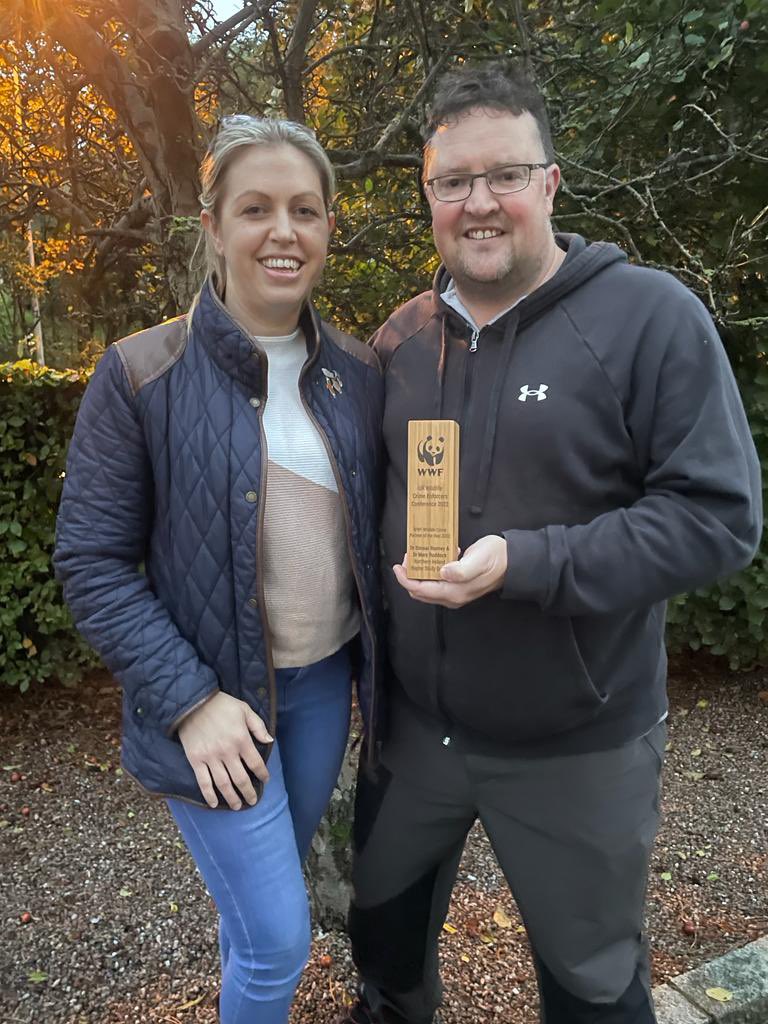
First up was Dr Eimear Rooney and Dr Marc Ruddock from the Northern Ireland Raptor Study Group, who won WWF Wildlife Crime Partner of the Year 2022:
To say their award was richly deserved is a massive understatement. I’ve watched them pour their hearts and souls into raptor conservation in Northern Ireland for many, many years and I can’t think of more deserving recipients.
Without their efforts, providing help, advice and training to an army of raptor monitoring volunteers, as well as doing their own fieldwork, as well as writing grant applications, as well as writing reports, as well as producing educational material, as well as fundraising, as well as hosting conferences, as well as political engagement, as well as engaging in multi-partner initiatives to tackle raptor persecution, often at the expense of spending time with their young families, and still managing to be the most upbeat and fun-loving people to be around, then raptors in Northern Ireland would be in a far more perilous state than they are currently.
I’m thrilled to see their efforts recognised at long last; well done Eimear & Marc!
The second team to win an award for its work tackling raptor persecution was a multi-agency team working on ‘Operation Tantallon’, which is a huge, ongoing investigation into the alleged theft and laundering of wild peregrines in Scotland and northern England.
This investigation team includes Police Scotland, Scottish SPCA, NWCU and SASA, with additional support from members of the Scottish Raptor Study Group. So far three people have been charged with offences, including a serving police officer (see here) and a part-time gamekeeper (here).
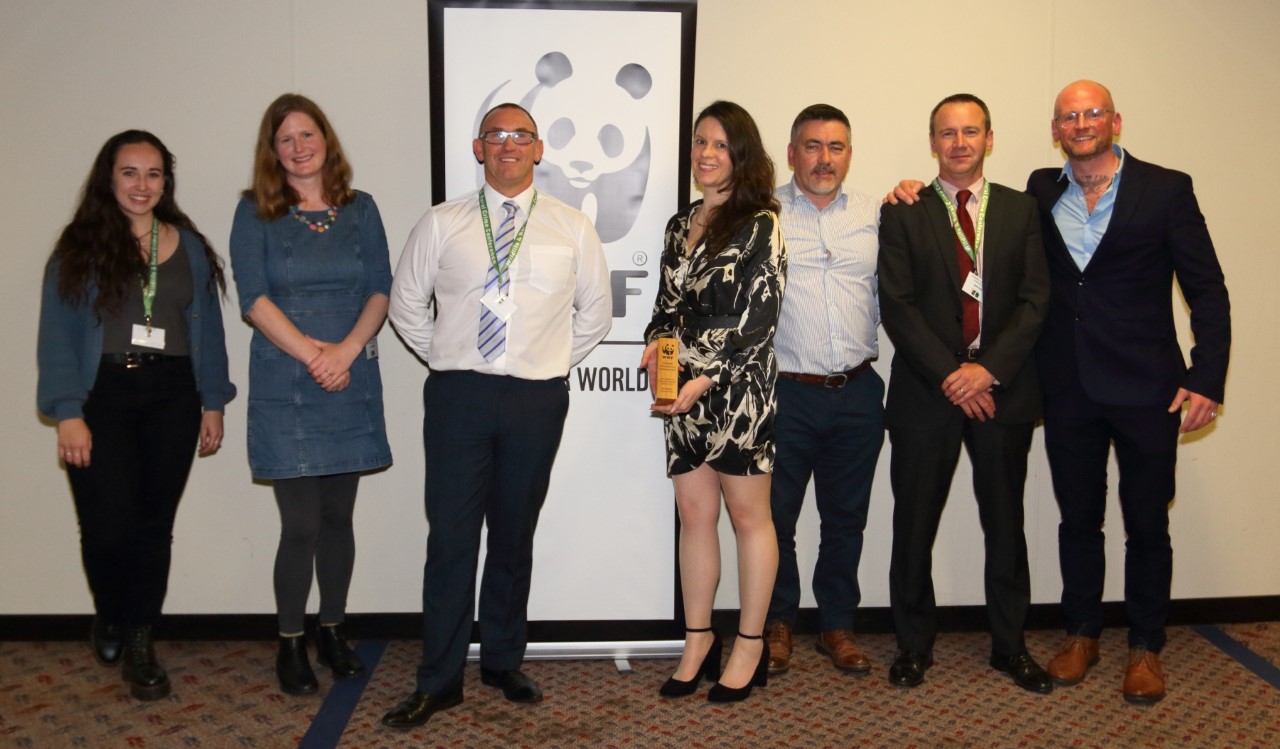
Members of Operation Tantallon received the Wildlife Crime Operation of the Year Award 2022 from Megan McCubbin (photo by Guy Shorrock):
The case is ongoing, the defendants are reportedly facing over 100 charges, and a wide range of investigative techniques have been deployed including surveillance, peregrine DNA analysis, searches under warrants, bankers warrants, cyber crime and the Proceeds of Crime Act.
The scale of this effort to bring a prosecution in a raptor persecution case is virtually unheard of in the UK and the ramifications, should the defendants be found guilty, will be huge. Further details of the case will be made available as the case progresses through the courts.
The dedication and determination of those involved in the multi-agency investigation has been outstanding and it’s good to see their hard work recognised. Well done, all!
UPDATE 16 December 2023: Part-time gamekeeper & son plead guilty to peregrine laundering charges; serving police officer cleared (here)
A legal challenge by conservation group Wild Justice has secured significant changes to General Licences issued for bird killing in Northern Ireland.
Last year, Northern Ireland’s Department of Agriculture, Environment and Rural Affairs (DAERA) was forced by Wild Justice to revoke its General Licences as they were unlawful. Interim licences have been in place since then whilst DAERA conducted a public consultation on revised licences, including questions about which species might be included and when the killing might take place.
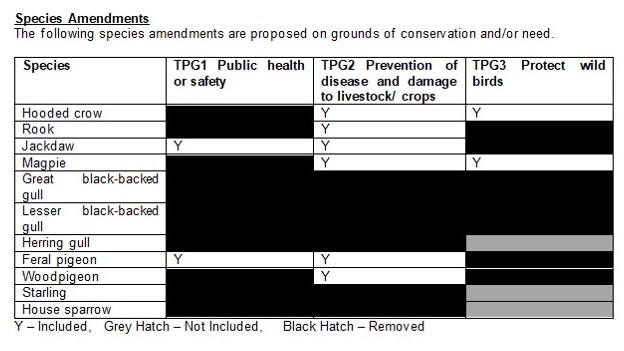
Yesterday, DAERA announced its proposed changes to the three General Licences associated with bird killing, which are expected to be in place by the end of this year. Several species have been removed altogether from the licences (e.g. house sparrow, starling, great black-backed gull, lesser black-backed gull, herring gull) and other species have been removed from specific licences (e.g. hooded crow, rook, magpie, woodpigeon from TPG1, the licence permitting birds to be killed for the purpose of public health or safety; rook, jackdaw, three gull species, feral and woodpigeon from TPG3, the licence permitting birds to be killed for the purpose of conserving wild birds).
The full proposed changes are tabled here (although note that the carrion crow has been omitted from the proposed list, presumably by accident):
Another significant and welcome change is that TPG3 will only be available during the breeding season (defined as between 1 March – 31 August inclusive).
Wild Justice has written a blog about these proposed changes – see here.
Environmental law firm Leigh Day, representing Wild Justice, has also written a press release, as follows:
Wild Justice is celebrating success in its legal challenge to Northern Ireland’s general licences for the killing of wild birds.
The Department of Agriculture, Environment and Rural Affairs (DAERA) has written to Wild Justice with a new limited list of birds to be covered by the general licences issued under the Wildlife (Northern Ireland) Order 1985. Wild Justice has been campaigning for species to be taken off the general licences. The list now provided by DAERA is significantly shorter than in the current licences, bringing Northern Ireland into closer alignment with general licences in England and Wales – where Wild Justice has previously successfully fought for greater restrictions in general licences for bird killings.
Birds affected by changes to the licences are Hooded Crow, Rook, Feral Pigeon, Great Black-backed Gull, Lesser Black-backed Gull, Jackdaw, Magpie, Rook, and Woodpigeon, Herring Gull, House Sparrow, and Starling. The position of Carrion Crow has yet to be confirmed by DAERA.
Following a legal campaign by Wild Justice, DAERA conceded last year that its general licences were unlawful and replaced them with interim licences pending a full consultation.
DAERA’s self-imposed deadline for a review of consultation responses and the issuing of new general licences was Monday 17 October.
Two days later it wrote to Wild Justice to confirm the licences would be in line with the changes that the environmental group had demanded to comply with legislation.
General Licence TGP/1/2021 – killing for the purpose of preserving public health or public safety
General Licence TGP/2/2021 – killing for the purpose of preventing the spread of disease and preventing serious damage to livestock, foodstuffs for livestock, crops, vegetables, fruit, growing timber and fisheries
General Licence TGP/3/2021 – killing for the purpose of conserving wild birds.
As a result of the challenge, TPG 1 now only covers the jackdaw and feral pigeon, TPG2 now covers hooded crow, rook, jackdaw, magpie, feral pigeon, woodpigeon, TPG3 covers only hooded crow and magpie.
Wild Justice, represented by Leigh Day acting through their agent Phoenix Law, first raised concerns with DAERA about its approach to general licences for bird killings in May 2019, following a successful legal challenge to Natural England’s 2019 general licences.
Wild Justice wrote again to DAERA regarding serious flaws in its 2020 general licences, and asked them to revise those due to be issued in September 2021.
After DAERA issued new licences in September 2021 on precisely the same terms as the 2020 licences, and without any evidence to support the birds species included, Wild Justice sent a formal pre-action protocol letter challenging DAERA’s decision.
Wild Justice, led by Dr Mark Avery, Dr Ruth Tingay and Chris Packham CBE, welcome the decision on new general licences.
“Our client welcomes confirmation from DAERA that the new general licences to be issued later this year will be substantially revised in line with what Wild Justice has sought. The changes are being made following Wild Justice’s successful legal challenge in last year. We hope these changes to licensing will significantly reduce the number of wild birds being unnecessarily killed”.
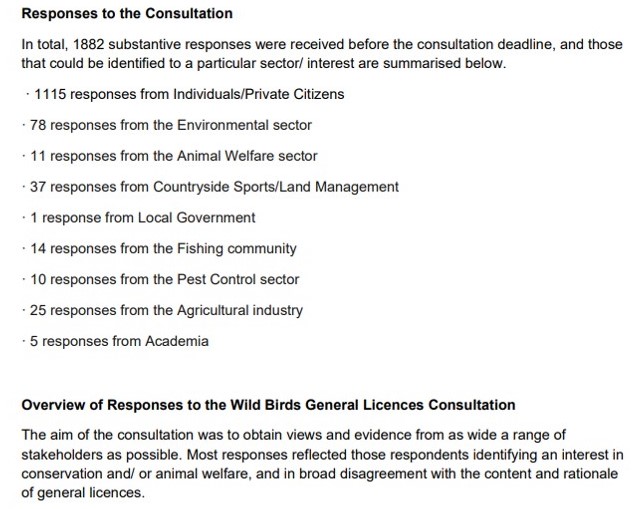
DAERA has also released summary information about its public consultation and it’s striking how many people interested in conservation and/or animal welfare wrote in support of changes to these three licences, in contrast to those interested in ‘countryside sports / land management’:
If you were one of those who responded to the public consultation, thank you and well done!
You might also be interested in this summary document released by DAERA, which provides a breakdown of the common responses to the consultation questions. Note how little evidence was provided by the ‘countryside sports / land management’ respondents who were trying to retain these species on their shooting lists:
The RSPB has announced it is to call for further regulation of gamebird shooting and wants better enforcement of existing rules.
The announcement was made at its AGM on 15th October 2022 and follows on from an internal review process first initiated in October 2019 (e.g. see here, here, here and here).
The ‘announcement’ itself has all been a bit strange. A few days prior to the AGM, Beccy Speight, the RSPB’s Chief Executive, sent emails to a wide number of ‘stakeholders’ in both the conservation and shooting sectors, giving them a heads-up about the imminent announcement. Here’s what she said:
I just wanted to bring you up to speed on an announcement we will be making at our AGM later this week.
As you know, in 2020 the RSPB set out that in the current nature crisis, it is imperative to reduce the negative impacts of the release of non-native gamebirds . And, given the urgency of the crisis, we said we would call for stronger regulation if there was no significant progress, initially within 18 months, and latterly by October 2022.
Having now completed this assessment, we have seen little progress (albeit that gamebird numbers released this year have gone down due to avian flu and resultant problems importing birds from France). There is a high degree of agreement between shooting and conservation organisations on what would constitute sustainable practices, but overall, there is a lack of evidence to show that this guidance is being followed and hence a lack of evidence for a reduction in negative impacts from gamebird releases.
Our concern is about large-scale shoots, and not small-scale farm shoots, where there is often a net benefit for native wildlife.
Given this lack of progress towards a more sustainable gamebird shooting industry over decades and minimal signs of positive change for the future,we have concluded that further regulation and better enforcement of existing rules will be required to deliver the changes necessary in the face of a nature and climate crisis.
This view is reinforced by evidence from other sectors on the widespread failure of voluntary approaches to deliver positive environmental change and is in line with the recommendations of a recent UN report, which recommended enhanced powers for authorities to use revokable licences for gamebird shooting where raptor persecution occurs. While there is still work to do on the detail of how additional regulation and enforcement can be used most effectively to deliver the changes we need to see, the direction of travel is clear.
This change in our policy will be announced at our 2022 AGM this Saturday, but we wanted to ensure you had advance sight of the announcement.
With all good wishes,
Beccy
‘Someone’ from the shooting industry leaked the content of this email prior to the AGM, resulting in the publication of a vicious misrepresentation of the RSPB’s position on a number of pro-shooting websites.
The rest of us waited for the announcement at the AGM and then anticipated that the RSPB would issue a formal public statement on which we could base our commentary.
However, that statement hasn’t been issued. Don’t ask me why – I don’t understand why such a big position change by the RSPB has been handled in such a low key way, especially as this is a subject on which the RSPB has been criticised in the past, with many in the conservation sector frustrated at what has been widely perceived as a lack of RSPB backbone.
Anyway, the mystery of the RSPB’s publicity machine aside, I’m delighted to see the RSPB finally reach a decision on this issue and look forward to hearing further details, i.e. what new regulations it thinks are needed (it has alluded in the past to licensing) and what measures it thinks will be effective to increase the enforcement of current regulations.
Predictably, the gamebird shooting industry has over-reacted to the RSPB’s new position and two organisations (BASC here and the National Gamekeepers Organisation here) have called it an ‘attack’ on shooting and gamekeeping, with BASC even laughingly claiming the RSPB’s three-year review ‘is not based on evidence’.
On the contrary, it’s based on very carefully (and cautiously) assessed evidence, as you’d expect from the RSPB.
Blog readers are encouraged to watch this video from Jeff Knott (in his new position of RSPB Director of Policy and Advocacy), annoyingly tucked away on an obscure YouTube channel instead of being given some serious prominence by the RSPB’s PR machine.
Jeff’s commentary is measured, well-balanced and provides a coherent explanation about why the RSPB has beefed up its position on the regulation of gamebird shooting:
There was a good column in The Scotsman yesterday, written by Dr Richard Dixon, a campaigner and consultant with 30 years of environmental campaigning experience, including as Director of both Friends of the Earth Scotland and WWF Scotland.
It’s reproduced here:
‘We are in a Climate Emergency. The recent reports from the United Nations’ Intergovernmental Panel on Climate Change tell us that the impacts of climate change are already happening earlier and to a greater degree than predicted. They say there is a narrow window in time to do everything we can to reduce greenhouse gas emissions.
Scotland’s peaty soils contain vast amounts of carbon. Around a fifth of Scotland’s land area is covered in soils rich in peat and these contain nearly two billion tonnes of carbon. That is 25 times the amount in all the trees, shrubs and other vegetation in the whole of the UK.
When peatland areas are in good condition they form new peat and lock in carbon from the atmosphere. But when they are degraded they release carbon dioxide and methane – a greenhouse gas nearly 40 times worse than carbon dioxide in causing climate change. Around 80 per cent of Scotland’s peaty soils are degraded in some way, so how we manage them and particularly how we try to help them recover is vitally important at a local, national and global scale.
There has been much argument about the climate impact of the management of peaty areas of intensive grouse moors, particularly the issue of muirburn – routinely burning off old growth on heather moorland. A new independent report for the Revive Coalition looks in detail at the evidence and finds that there is surprisingly little information, partly because these activities on grouse moors are hardly regulated at all. We do not even know how much of our upland areas are burnt each year. There is a voluntary code on muirburn but the report reveals that actual practice is often observed to be in breach of this code.
The shooting industry claims muirburn helps prevent wildfires, which are an increasing risk because of climate change and which increase climate emissions. Revive’s report concludes, despite the paucity of evidence, that stopping even well-controlled muirburn would likely not increase overall carbon emissions and stopping badly done muirburn would be beneficial to the carbon balance. A partial ban in England introduced last year was supposed to protect areas of deep peat but a Greenpeace investigation found that 40 of the 251 fires they looked at were on areas identified by Natural England as having deep peat.
With greater global scrutiny coming on the contribution of the management of peat-rich soils to climate change, and the Scottish Government’s commitment to introduce licensing for grouse moors, this new report should be an urgent spur to make sure minimising climate emissions from muirburn and other activities should be an essential part of the new licence proposals’.
ENDS
Richard’s commentary is based on a new independent report authored by Dr Helen Armstrong and commissioned by REVIVE, the coalition for grouse moor reform. You can read it here:
Last week I wrote about how REVIVE, the coalition for grouse moor reform, had held a successful fringe event at the SNP’s annual conference (here).
REVIVE was also at the Scottish Green’s conference, receiving an equal amount of support from delegates and the Minister. There’s now a write-up on the REVIVE website about both these events (see here).
As we await the imminent (I’m told!) release of the Scottish Government’s consultation on grouse moor licensing, the next few months will be critical for political engagement, both by campaign groups and the public alike.
The consultation will feed into draft legislation which will then be subject to debate and amendments as the draft bill progresses through Parliament during this session, as set out recently in the 2022-2023 Programme for Government (see here).
REVIVE will be at the forefront of engagement so if you’d like to be kept informed you can sign up for information and updates here.
Yesterday the Chief Veterinary Officers from England, Scotland and Wales declared an Avian Influenza Prevention Zone (AIPZ) across Great Britain to mitigate the risk of the disease spreading amongst poultry and captive birds.
As of midday on 17th October, it is now a legal requirement for all bird keepers in Great Britain to follow strict biosecurity measures to help protect their flocks from the threat of avian flu – details can be found in this press release from DEFRA.
The new rules require bird keepers with more than 500 birds to restrict access for non-essential people on their sites, workers will need to change clothing and footwear before entering bird enclosures and site vehicles will need to be cleaned and disinfected regularly to limit the risk of the disease spreading. Backyard owners with smaller numbers of poultry including chickens, ducks and geese must also take steps to limit the risk of the disease spreading to their animals.
Of course, these rules do not apply to gamekeepers in charge of millions of pheasants and red-legged partridges that have been reared and released for shooting. DEFRA ignored the RSPB’s request in August to call for a temporary halt on gamebird releases (here) and DEFRA has not imposed a restriction on gamebird shooting following yesterday’s declaration.
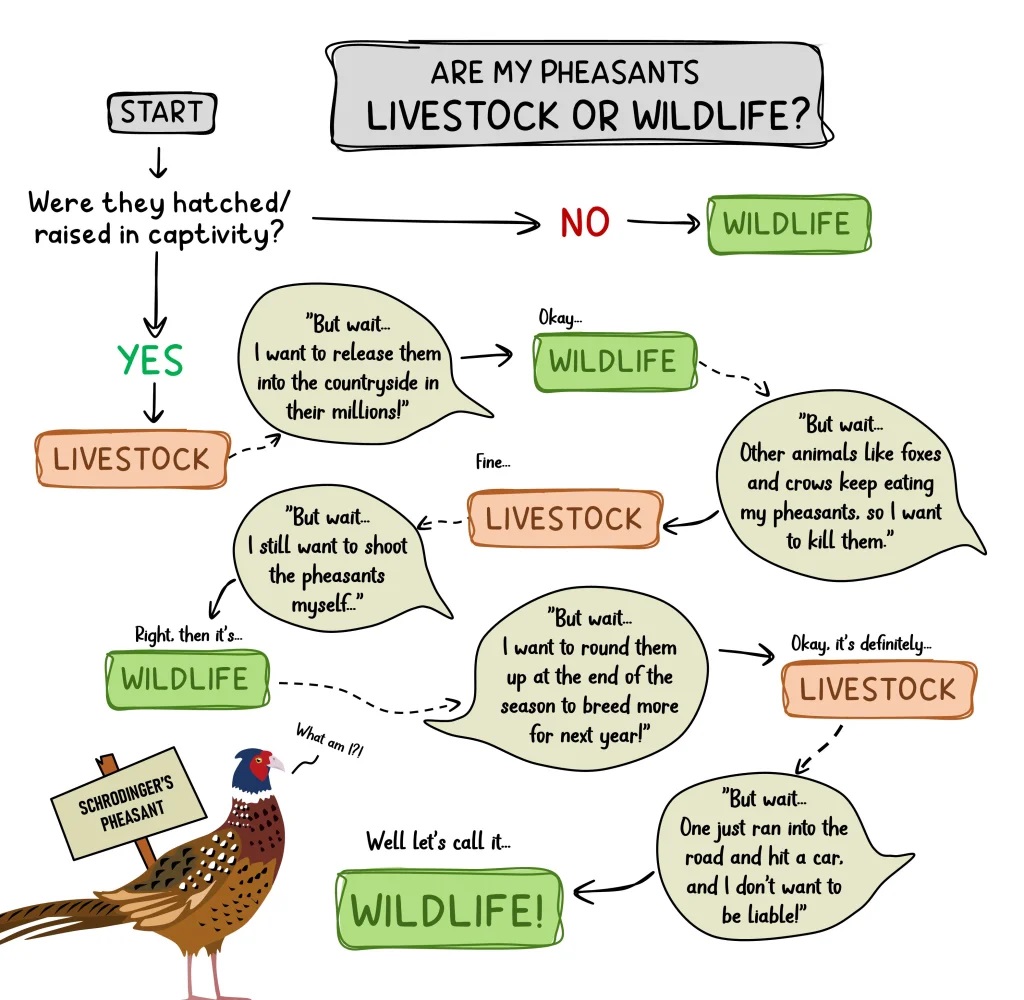
For those of you who followed Wild Justice’s recent legal challenge, you’ll know that the status of these birds as either ‘livestock’ or ‘wildlife’ is ridiculously interchangeable to suit the game shooters and once the birds (‘livestock’) have been released from their pens into the countryside, they suddenly become ‘wildlife’, until the end of the shooting season when the gamekeepers want to capture them again for breeding purposes and so the birds magically become ‘livestock’ again (see here and here).
I’ve read a few articles by commentators about yesterday’s announcement from DEFRA, asking why the new Avian Flu regulations don’t apply to the release of gamebirds. I think this question is irrelevant because the vast majority of gamebirds reared for shooting were released in July and August, in readiness for the opening of the shooting season on 1st September (red-legged partridge) and 1st October (pheasants). Having said that though, there have been reports in the past that some shoots release further stock during the shooting season to ‘replenish’ or replace the stock that has already been shot.
A more pertinent question, in my opinion, is how the declaration of Great Britain becoming an Avian Flu Prevention Zone will impact on the markets for shot gamebirds.
I can’t imagine many game dealers wanting to buy shot gamebirds from shoots where it is impossible to provide unequivocal evidence that the gamebirds weren’t infected with Avian Flu, no matter how many biosecurity measures a shoot operator may have in place. Indeed, for those game dealers who also export meat, they’re likely to lose their licence if they accept gamebirds on their premises that were shot in Prevention Zones.
‘Shoot managers must ensure they have appropriate arrangements in place for the sale or consumption of the anticipated bag in advance of all shoot days‘.
The Code of Good Shooting Practice is in effect, just advice. It has no legal standing and is unenforceable. It’s about as authoritative as the Green Cross Code. However, the game shooting industry often points to it as evidence that the industry is capable of self-regulation, even though there are endless examples of shoots and shooters breaching the code, not least the ongoing illegal killing of birds of prey on game shoots (see here), the ongoing non-compliance of using lead shot over wetlands (e.g. see here) and the regular dumping of shot gamebirds, e.g. in Cheshire, Scottish borders (here), Norfolk (here), Perthshire (here), Berkshire (here), North York Moors National Park (here) and some more in North York Moors National Park (here) and even more in North Yorkshire (here), Co. Derry (here), West Yorkshire (here), and again in West Yorkshire (here), N Wales (here), mid-Wales (here), Leicestershire (here), Lincolnshire (here), Somerset (here), Derbyshire’s Peak District National Park (here), Suffolk (here), Leicestershire again (here), Somerset again (here), Liverpool (here), even more in North Wales (here) even more in Wales, again (here), in Wiltshire (here) in Angus (here) and in Somerset again (here).
To be fair, there will be some sensible shoots who withdraw shoot days this year now the risk of Avian Flu has heightened, even though that will result in financial losses.
But you can bet your house that there will be plenty of others, the unscrupulous, selfish and greedy, who continue to host shoots to kill thousands of birds, without having made prior arrangement for the sale of those birds because it’s suddenly become very difficult to find anyone who’ll want them, and who will simply dump them in the countryside, a potential ticking time bomb of disease for any raptors and other scavengers who descend for an easy meal.
You may recall, back in August 2022, the Countryside Alliance launched its latest vindictive attack on Chris Packham and set up yet another petition calling for him to be gagged or sacked by the BBC; the latest move in a long-running and obsessive hate campaign against Chris by this bloodsport’s lobby group.
The latest attack was in response to Chris using his personal Twitter account to express his personal views (yes, shocker!) applauding the hunt saboteurs whose peaceful protest had stopped a grouse shoot in the Peak District attended by Ian Botham. The Countryside Alliance claimed Chris’s tweet breached the BBC’s guidelines on impartiality.
Bizarrely, the Countryside Alliance’s message of hate was promoted by two articles penned by The Telegraph‘s Environment Correspondent, who you might have thought had more pressing issues to focus on, like the climate and biodiversity crisis.
In September, the BBC responded to the Countryside Alliance’s complaint with this wonderfully chiding statement from a spokesperson:
“As we have said before, impartiality at the BBC is sacrosanct and we have established strong and clear guidelines for social media use.
And as a piece of context, Chris is not exclusive to the BBC, isn’t a factual journalist and isn’t speaking as a BBC presenter.”
Last Friday, no doubt emboldened by the news that a tweet by Gary Lineker had breached the BBC’s impartiality guidelines, the Countryside Alliance published an article on its website bragging that ‘over 6,400 people‘ had supported its petition against Chris and vowed ‘to continue to lobby the BBC‘.
What the Countryside Alliance article didn’t mention was the counter-petition set up in support of Chris. As of today, it has been signed by over 11,000 people who say that ‘Chris Packham shouldn’t be silenced by hunters‘.
Lovely.
That petition is still live so if you want to show your support for Chris, you can sign it here.
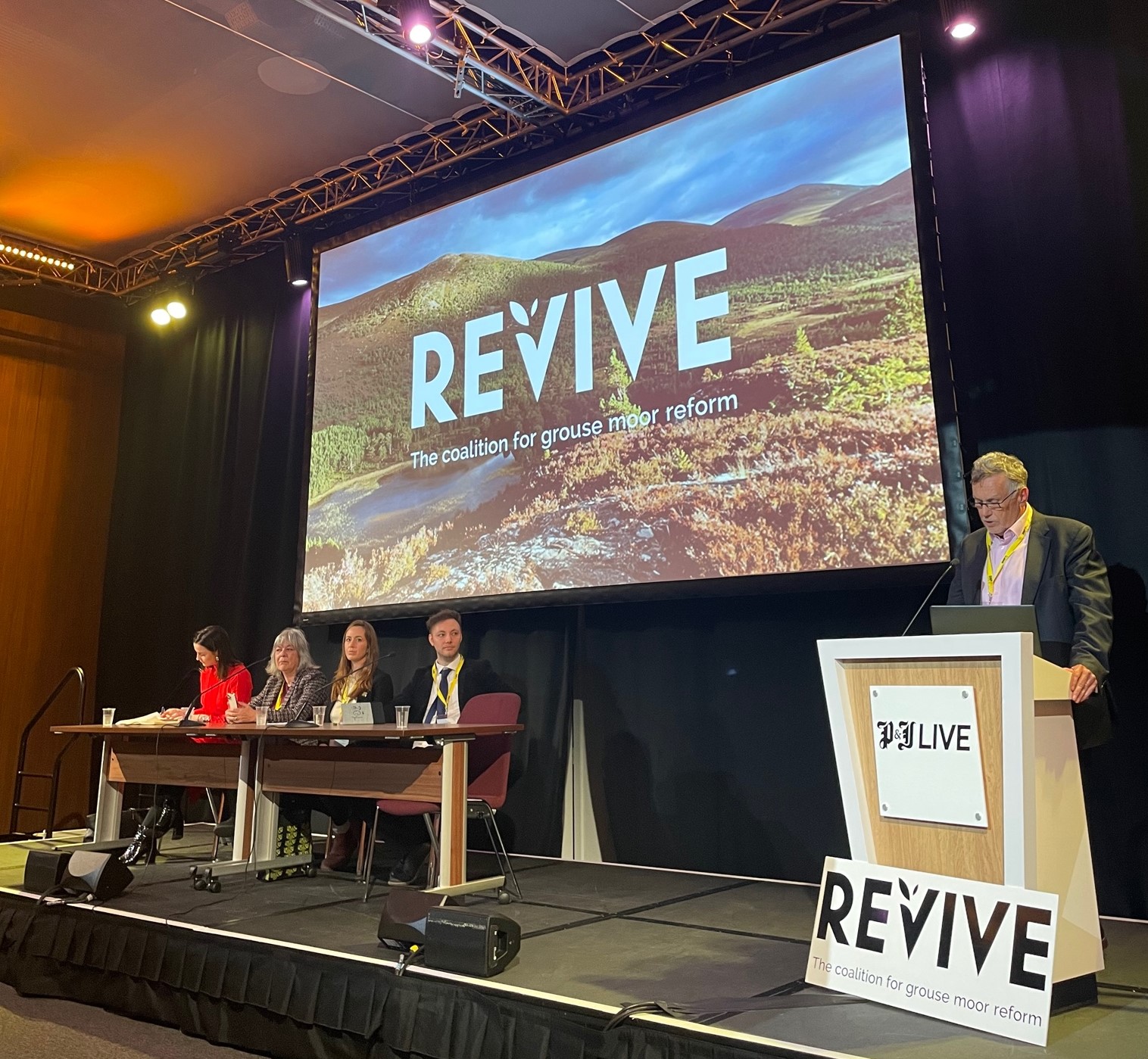
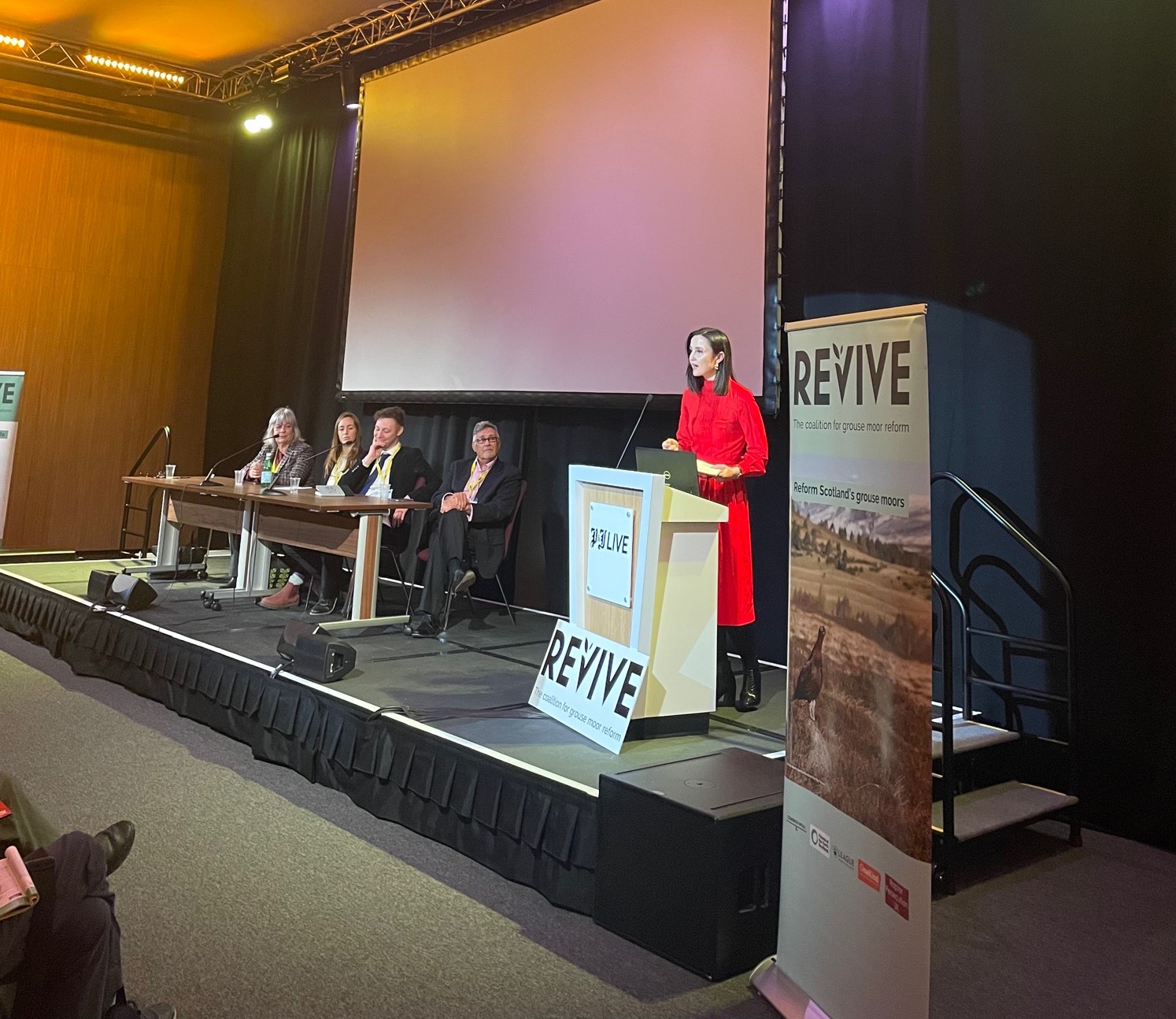
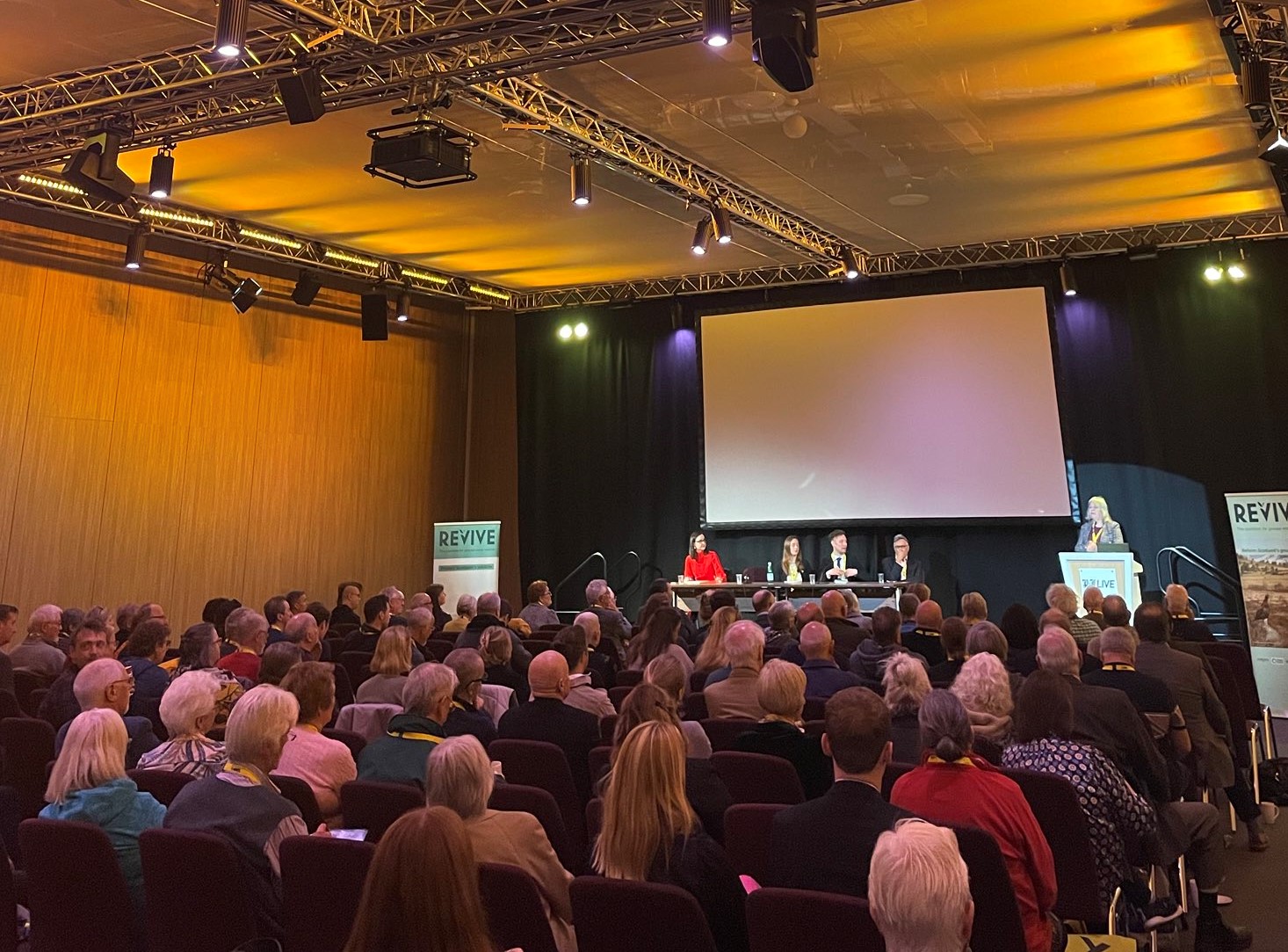
REVIVE, the coalition for grouse moor reform hosted another successful fringe event at the SNP’s Annual National Conference over the weekend, where the discussion centred on land reform and grouse moors.
Panellists included Scottish Environment Minister Màiri McAllan, Max Wiszniewski (Campaign Manager at REVIVE), Amanda Burgauer (Executive Director of Common Weal), Robbie Marsland (Director of the League Against Cruel Sports Scotland) and Mhairi Stewart (Policy Strategy Lead at the John Muir Trust).
A summary of the event will hopefully be published by REVIVE in due course but suffice to say, as before (here & here), there was considerable interest and strong support from SNP delegates.
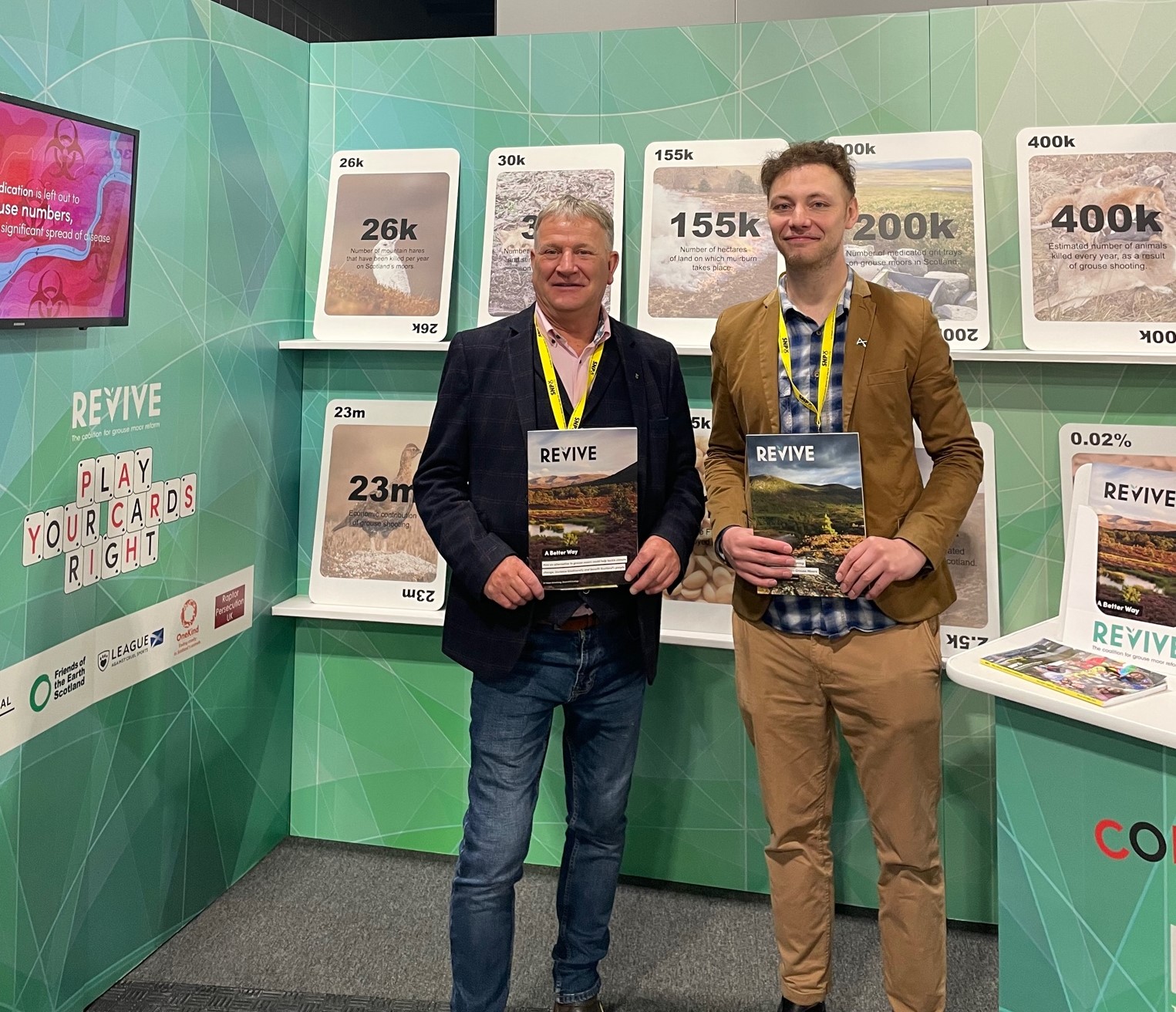
REVIVE’s ingenious ‘Play Your Cards Right‘ game was once more available for delegates to interact with, helping them to engage memorably with the coalition’s concerns about the various damaging aspects of driven grouse moor management.
MSP David Torrance (Kirkcaldy), here with Max Wiszniewski from REVIVE, was one of many to have a go:
The Scottish Government’s long-anticipated move to draw up an effective and enforceable licensing scheme for grouse shooting (see here) is set to begin shortly with the publishing of a public consultation document prior to the drafting of legislation which will be subject to debate and amendments as the draft bill progresses through Parliament during this session, as set out recently in the 2022-2023 Programme for Government (see here).
UPDATE 21st October 2022: REVIVE coalition for grouse moor reform well received by SNP and Scottish Greens conferences (here)






 Raptor Persecution UK