Goshawk found dead in suspicious circumstances on Chatsworth Estate

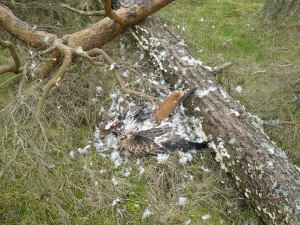
Goshawk Derbyshire spring trap April 2014The RSPB has posted a £1,000 reward for information that leads to a conviction following the discovery of a dead goshawk found in suspicious circumstances on Chatsworth Estate in Derbyshire.

The dead female bird was found on the estate by a member of the public on 2nd April. A post-mortem revealed the bird had two broken legs, and that both breaks were in the same place – injuries that are consistent with being caught in a spring trap.

The bird had been fitted with a leg ring, showing it had hatched in 2003 in the Peak District National Park, 15km to the north of Chatsworth.

Derbyshire Constabulary and the RSPB are appealing for information.

For full details, including quotes from the RSPB, Derbyshire Constabulary and a Chatsworth Estate representative, see the article on the Derbyshire Constabulary website here.

Peregrine shot in Devon as this year’s tally continues to rise

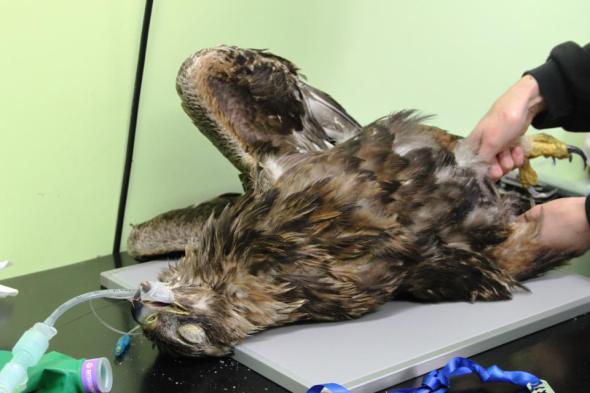
Perg shot seaton Devon May 2014A critically-injured peregrine was found at Seaton Beach in Devon on Bank Holiday Monday. The bird, soaked and unable to fly, was found by members of the public.

It was taken to a vets but had to be euthanized. Its injuries were consistent with a gunshot wound.

The police quickly issued an appeal for information (see here) and local birder Steve Waite has written about the incident on his blog (see here).

So here we are, another month, another reported raptor persecution crime to add to the year’s growing death toll:

Jan 2014: Shot buzzard, Norfolk.

Jan 2014: Dead bird (species unknown) & poisoned bait, South Lanarkshire.

Feb 2014: Shot buzzard, North Yorkshire.

Feb 2014: Shot buzzard, Norfolk.

Feb 2014: Shot sparrowhawk, Norfolk.

Feb 2014: Spring-trapped buzzard, West Yorkshire.

Feb 2014: Poisoned peregrine, South Lanarkshire.

Mar 2014: Shot peregrine, Dorset.

Mar-April 2014: Poisoned red kites (x 16) & buzzards (x 6), Ross-shire.

April 2014: Man arrested for alleged attempted raptor trapping, Aberdeenshire.

April 2014: Shot buzzard, North Yorkshire.

April 2014: Shot red kite, Northamptonshire.

April 2014: White-tailed eagle ‘disappears’ in suspicious circumstances, Aberdeenshire.

April 2014: Peregrine ‘illegally killed’, Stirlingshire.

May 2014: Shot peregrine, Devon.

Meanwhile, over in Northern Ireland a wildlife crime summit has learned that 90 raptors have been found poisoned there since 2006 – see here.

What we learned from today’s Parliamentary debate on raptor persecution

ScottishParliamentChamberEarlier today there was a debate in the Scottish Parliamentary Chamber about eradicating raptor persecution from Scotland. The debate stemmed from a motion lodged by Environment Minister Paul Wheelhouse (see here for details of that motion and several suggested amendments).

We very much welcome the Environment Minister’s action of bringing this topic to the attention of Parliament, although given the recent foul catalogue of current crimes against raptors, and the enormous public response to these on-going crimes, he had to be seen to be doing something.

The debate lasted for an hour and twenty minutes, beginning with an opening address from the Minister during which he expressed his “anger, revulsion and utter frustration” that these crimes continue in 21st Century Scotland. He ran through a list of previous measures brought in since 2007, some of which are still to be fully implemented. He said he understood the calls from some quarters for further measures to be introduced now, but insisted that more time was needed to allow these measures to take effect. Here’s one quote that we’ll be reminding him of in due course when we see the next inevitable incident, and the next, and the next:

If and when we judge it necessary, I am committed to taking further action. If that involves licensing certain types of businesses, then we will do so“.

He’s made this commitment before, on many occasions, and there are only so many times that he can make such a commitment before he will be forced to actually follow up his words with action.

During his opening speech he was questioned by Liam McArthur MSP about the alleged police response to the poisoned peregrine incident at Leadhills (see here for info on that incident). The Minister’s response:

We do believe proper procedures were followed“.

Really? How interesting. We look forward to reading the full written response that is now due about this incident following the emails that were sent to him by RPS blog readers in early April. [Incidentally, we haven’t yet received a response – if anyone else has, we’d be interested in reading it]. We’ll also be paying close attention to his written answers to the parliamentary questions that were raised about this issue by Claire Baker MSP and Liam McArthur MSP.

One significant point he made was that proceedings have commenced in the first vicarious liability case at Stranraer Sheriff Court. We believe this case relates to the Glasserton & Physgill Estates buzzard poisoning case in June last year, where gamekeeper and SGA member Peter Bell was convicted of several poisoning offences (see here). The news that this vicarious liability prosecution is going ahead is excellent news and we await the outcome with great interest.

There were a number of other MSPs who spoke during this debate, with many of them being strongly supportive of the consultation to increase the SSPCA’s investigatory powers, and a number of them expressing concerns about the ability of Police Scotland to prioritise wildlife crime.  Dennis Robertson MSP demonstrated a refreshingly sceptical view of the SGA and their claimed attempts to eradicate raptor persecution.

Talking of the SGA, their parliamentary cheerleader, Jamie McGrigor MSP, gave a rousing but wholly irrelevant speech about the SGA’s Year of the Wader project, and mentioned the SGA’s briefing document for today’s debate in which they apparently call for an investigation into the cause of wildlife crime, i.e. the old ‘too many’ raptors routine. Perhaps they mis-read the title of today’s debate as ‘Eradicating Raptors from Scotland’. At one point, Mr McGrigor announced:

Wildlife crime is being perpetrated by a very few individuals, rather than any sector of the Scottish countryside“.

Oh dear. He clearly needs to go back and look at the statistics of where the majority of raptor persecution incidents take place [on land managed for game-shooting] and the occupation/interests of the majority of those convicted for these crimes [gamekeepers].

Mr McGrigor also gave a surprising commentary on the possible cause of the Ross-shire Massacre, in which he suggested that the “hand-fed” (?!!) red kites at Tollie Red Kite feeding station may have been fed contaminated food. He did admit this was based purely on rumour but we were surprised that such speculation on a live police investigation would be allowed during a parliamentary debate.

The Environment Minister ended the debate by saying that he was looking into a poisons amnesty. In our view, a total waste of time and effort – it’s been done before with little, if any, effect. Besides, some of these poisons (e.g. Carbofuran) have been banned since 2001 – that’s 13 years ago – how many more chances are these criminals going to be given to comply with the law? The one saving grace of an amnesty is the potential for anyone found to be in possession of poisons AFTER the amnesty has passed would then face a more severe penalty. That’d be good, if only we could believe that a severe penalty would be handed down. The Minister did mention that there is currently an academic review being undertaken to review the penalties for wildlife crimes and the authors of that review are expected to report in December this year.

Video footage of the debate is available here for about a month [starts at 1:29; ends at 2:49].

The official transcript of the debate can be read here: Minutes of debate: eradicating raptor persecution 6 May 2014

Debate in Scottish Parliament today: eradicating raptor persecution from Scotland

ScottishParliamentChamberA debate will be held in Chamber today under the heading: Wildlife Crime, Eradicating Raptor Persecution from Scotland.

The debate will be shown live on Holyrood TV (link below) and for those who can’t watch it live, we’ll add the video archive in due course.

The debate stems from a Parliamentary Motion submitted by Environment Minister Paul Wheelhouse last week:

Motion S4M-09916: Paul Wheelhouse, South Scotland, Scottish National Party, Date Lodged: 01/05/2014

Wildlife Crime, Eradicating Raptor Persecution from Scotland

That the Parliament recognises the impact of wildlife crime in Scotland and the potential strain that this places on Scotland’s reputation; welcomes the Scottish Government’s determination to tackle wildlife crime in Scotland; supports the work of the Partnership for Action against Wildlife Crime; welcomes the introduction of vicarious liability in wildlife crime in 2011 and the announcement in July 2013 of the review of wildlife crime penalties, the introduction of restrictions on general licences and the enforcement work being taken forward by Police Scotland; unreservedly condemns the appalling poisoning incident in Ross-shire that has killed at least 20 red kites and buzzards; recognises that these birds are a critical part of Scotland’s biodiversity and a key element in the growing wildlife tourism sector; expresses concern about the very worrying disappearance of the first sea eagle chick born from the reintroduced sea eagles on the east coast; considers that an update on the fight against wildlife crime is now timely, and welcomes agencies redoubling efforts to work together to protect Scotland’s remarkable wildlife.

The Presiding Officer has accepted the following amendment to this motion from Claire Baker MSP, who is smart enough to recognise that congratulatory back-slapping isn’t enough and that more action needs to be taken:

Motion S4M-09916.3: Claire Baker, Mid Scotland and Fife, Scottish Labour, Date Lodged: 02/05/2014

Wildlife Crime, Eradicating Raptor Persecution from Scotland

As an amendment to motion S4M-09916 in the name of Paul Wheelhouse (Wildlife Crime, Eradicating Raptor Persecution from Scotland), leave out from first “welcomes” to “Police Scotland” and insert “believes that the commitment to tackle wildlife crime is shared across the Parliament; acknowledges the work undertaken by the Scottish Government and its relevant bodies and partners in working to tackle wildlife crime, including the review of wildlife crime penalties and the consultation for increased powers for the Scottish SPCA; however believes that the latest wildlife crimes show the urgent need for further action in Scotland; calls on the Scottish Government to conduct a study of licensing and game bird legislation in other countries with a view to working with other parties to review wildlife crime legislation in Scotland”.

There were two other amendments lodged. One came from Liam McArthur MSP calling for more measures to enable a robust pursuit of raptor-killing criminals:

Motion S4M-09916.2: Liam McArthur, Orkney Islands, Scottish Liberal Democrats, Date Lodged: 02/05/2014

Wildlife Crime, Eradicating Raptor Persecution from Scotland

As an amendment to motion S4M-09916 in the name of Paul Wheelhouse (Wildlife Crime, Eradicating Raptor Persecution from Scotland), insert at end “, and believes that Police Scotland and the Crown Office and Procurator Fiscal Service should work to ensure that this increased effort will lead to more resources for wildlife crime officers and specialist prosecutors to allow for cases of raptor persecution to be more robustly pursued“.

The second amendment was much more bizarre and came from Jamie McGrigor MSP, a long-time supporter of the Scottish Gamekeepers’ Association:

Motion S4M-09916.1: Jamie McGrigor, Highlands and Islands, Scottish Conservative and Unionist Party, Date Lodged: 02/05/2014

Wildlife Crime, Eradicating Raptor Persecution from Scotland

As an amendment to motion S4M-09916 in the name of Paul Wheelhouse (Wildlife Crime, Eradicating Raptor Persecution from Scotland), insert at end “, and further welcomes the Scottish Gamekeepers’ Association’s conservation project, the Year of the Wader, and NFU Scotland’s recently published Sea Eagle Action Plan“.

It’s not clear to us how either of these items are relevant to a debate on eradicating raptor persecution in Scotland.

To watch today’s live debate on Holyrood TV click here. [Session opens at 2pm but there are a number of items to get through before the wildlife crime debate begins].

UPDATE 23:00hrs: Click here to read our comments about today’s debate and to find the link to the archive footage.

Increased calls for jail sentences for raptor-killing criminals

RSPB Scotland and the Scottish Wildlife Trust are calling on the authorities to start imposing jail sentences on those convicted of killing birds of prey, and also to start using the option of prosecutions under vicarious liability legislation.

A prison term as a sentencing option is already in place – no new laws are required, just a willingness from the authorities to start using existing legislation to its full effect. To date, nobody has ever received a jail term for the persecution of raptors. The new measures for vicarious liability in relation to raptor crime came in to force on 1st January 2012 – over two years later and we’re still waiting to see the first case.

The Scotsman is running an article on this today (see here), and there was also an interesting radio debate on BBC Radio Scotland between RSPB Scotland’s Head of Investigations, Ian Thomson, and Scottish Land & Estates’ Moorland Group Director, Tim Baynes. The debate can be listened to here for another 7 days (starts at 50:36 and runs to 58:11).

Talking of vicarious liability, we’ll shortly be blogging about a presentation on this very subject that was given to the annual Police Wildlife Crime conference last week. The presenter was none other than David McKie, the defence lawyer for the Scottish Gamekeeper’s Association. An interesting choice of speaker, we thought, and we’ll be examining what he, and several other speakers, including the Environment Minister, had to say in due course.

Tomorrow there will be a debate in the Scottish Parliament called: Wildlife Crime, Eradicating Raptor Persecution from Scotland. More on this later…


Hen Harrier Day: 10th August 2014

Hen-Harrier-Day-2014cThe concept of Hen Harrier Day was inspired last year by Alan Tilmouth (you can read about it on his blog, here). And it was an inspired move – basically for conservationists to take back the so-called ‘Glorious 12th’ (the opening of the grouse- shooting season) and celebrate this beautiful bird that has virtually been ‘cleansed’ from the grouse moors of northern England (and most grouse moors in Scotland, too).

Last year, Hen Harrier Day was celebrated by hundreds of people using the #HenHarrier hash tag on Twitter and other social media. This year, the campaign is going to be even more visible with a series of planned public protests in the northern uplands.

The newly-formed campaign group Birders Against Wildlife Crime (BAWC – of whom Alan Tilmouth is a founding member) has joined forces with Mark Avery to organise four legal, peaceful and media-friendly public protests in four counties where grouse-shooting is a dominant force: Derbyshire, Yorkshire, Cumbria and Northumberland.

The date for the protests has been set as Sunday 10th August 2014. This date was chosen in preference to the inglorious 12th (which falls on a Tues this year) to enable more people to attend.

According to Mark Avery, so far over 200 people have emailed to say they’d like to be involved. This is a fantastic opportunity to make a lot of noise about a subject that has received relatively little media attention in relation to the severity of the situation. The Hen Harrier has virtually been wiped out as a breeding species from England, and is in serious decline in large areas of Scotland (predominantly those areas used for driven grouse shooting).

Enough is enough and it’s time to fight back.

For further information, check out the Hen Harrier Day campaign on the BAWC website here and read today’s BAWC blog with some background info about the campaign here

To express an interest in taking part and to receive updates about the protests, please email Mark Avery: mark@markavery.info

Ross-shire Massacre: frustration grows at lack of information

RK4The investigation into the mass poisoning of 22 birds of prey near Conon Bridge, Ross-shire in March is apparently continuing, although the police have been reluctant to provide much information since the well-publicised raids they carried out at various properties almost a month ago. The only news to emerge has been the ever-increasing death toll, currently standing at 16 red kites and 6 buzzards.

They’ve said that 12 of the dead birds have been confirmed as poisoned, but that information was given weeks ago – they still haven’t confirmed whether the other 10 birds were poisoned.

And nor have they released information about the poison(s) used to kill these birds. The purpose of withholding this information is not known – the police will probably say it’s a tactical approach, but the poisoner will know what was used and the poison itself will have been hidden away weeks ago. Even if a stash is now found, the chances of linking it directly to the Conon Bridge poisonings are zero because of the level of evidence required to secure a conviction. For example, unless the poisoner was seen placing the poisoned baits, and the birds were seen eating those poisoned baits, a strong evidential link cannot be established. The only possible conviction would be for a ‘possession’ offence, unless the poisoner actually admits to placing the poisoned baits, and that is hardly likely.

What’s frustrating is that here, yet again, we have an incident where deadly toxic poison(s) has been set out in the countryside, putting at risk any animal and human that comes in to contact with it, and yet the police don’t think the general public should be told what the poison is.

This lack of public information has even been picked up by a global listserv used by the health community. The following appeared on the listserv the day after the BBC announced that the current death toll had reached 22 birds:

The issue of this many birds of prey or carrion being found dead indeed smacks of a toxin. However, multiple articles all say the birds were poisoned and they are investigating. Their investigation has included DNA testing of meat to determine what type of meat was used. These investigators say they need to get insecticide tests performed, yet not a single article mentioned if that has been done or what the outcome was, or if the test was pending.

While this number of birds being found dead is of concern, and the number of avian deaths seems to be climbing, the lack of testing, and/or the lack of accurate reporting remains of equal or greater concern“.

Meanwhile, dog walkers in the area are now avoiding their usual routes for fear of being exposed to poison, according to an STV report (see here).

Also in this article is another interview with farmer Ewan MacDonald, whose farm properties were searched by police last month. Mr MacDonald continues to call for a ‘working group’ comprising police and local farmers “to find out what has caused this devastation“.

Ironically, at the end of the article is an interview with Environment Minister Paul Wheelhouse on the launch of a revised guide to the use of forensics in tackling wildlife crime. This latest edition is a very welcome tool, especially if it helps investigators to preserve crucial forensic evidence from the crime scene. But the irony comes from the statement made by the reporter at the end of the video:

“The message they’re [wildlife groups] getting today is that Scotland is a world leader in using science to bring those responsible [for wildlife crime] to justice“.

Er, no, Scotland is most definitely not a world leader in bringing wildlife criminals to justice, as evidenced by an embarrassing 7.3 conviction rate for raptor crime (see here) and 32 dead or ‘missing’ eagles over an 8-year period with zero prosecutions (see here). Scotland could be a world leader, if policing and enforcement measures matched the skills and expertise of the forensic scientists, but we’re still a long way from being able to claim anything of the sort.

Previous blogs on the Ross-shire Massacre here

Download the new Wildlife Crime Forensics Guide: Wildlife Crime Forensic Guide v2 2014

Buzzard shot dead in North Yorkshire

North Yorks Police logoNo surprise to learn that another buzzard has been shot dead in North Yorkshire, a county with one of the worst records for raptor persecution in the UK (e.g. see here).

The latest victim was found near Soar Spring Wood, between Wathgill Road and Reeth Road, Leyburn, on Easter Sunday. It was killed after being blasted with a shotgun.

North Yorks Police are appealing for info – see here.

The RSPB is suggesting that a clandestine campaign against buzzards is being carried out in the county and they’re calling for custodial sentences for anyone convicted of this offence (see here).

NFUS publishes its proposed sea eagle action plan

Back in January this year we blogged about how the National Farmers Union Scotland (NFUS) was calling on the government to introduce [unspecified] ‘control measures’ against white-tailed eagles (see here).

Several meetings later, the NFUS has now published its proposed ‘Sea Eagle Action Plan’. Some may consider this an ill-timed report given the public outrage at the recent mass poisoning of red kites and buzzards on farmland in Ross-shire, swiftly followed by the news that the first white-tailed eagle to fledge in East Scotland for ~200 years has mysteriously vanished in a well-known persecution hot-spot in Aberdeenshire. Still, it’s not the first time farmers have ignored public opinion – in January they dismissed the results of a poll (that they had organised) which showed that 92% of respondents were against control measures for sea eagles (see here), and then there was the badger cull…

Their latest proposed action plan has been published on the NFUS website. The first noticeable flaw is the photograph they’ve used to announce the publication: it most definitely isn’t a sea eagle! An inability to identify the species you’re accusing of killing thousands of lambs isn’t a good start.

NFUS Sea Eagle Action Plan

The action plan itself suggests several recommendations, and these are apparently based on the results of another NFUS survey recently completed by a small selection (103) of NFUS members. The survey results are fascinating.

66% of them claimed their farm business had been negatively affected by sea eagles although the report doesn’t provide any quantitative evidence to support those claims.

Respondents were asked whether it was adult or juvenile eagles that were having an impact – the results varied, although the report doesn’t provide any quantitative evidence to support the claims (and judging by the NFUS’ inability to distinguish between a golden and a white-tailed eagle, you have to question the credibility of these answers).

Bizarrely, the respondents were asked for their perceptions of the RSPB, SNH and FCS. Unsurprisingly, the RSPB and SNH weren’t looked upon favourably. It’s not clear why this question was included, other than to stir up some tension between the stakeholders.

The respondents were asked to document the scale of the impacts (i.e. how many lambs were lost per year to sea eagles) and here we have the first sign of some data, with a reported average of 40 lambs per year per negatively affected respondent. However, look a bit closer and you’ll see that these purported losses have been attributed to sea eagles without explaining how losses to other factors (such as weather, disease) were eliminated as the cause of death.

WTE Mike WatsonRespondents were then asked about the impact of sea eagles on other biodiversity. This is the point when you realise, if you hadn’t already, that this survey is nothing more than an outlet for some seriously ingrained prejudices dressed up to look like a scientific report. (It’s got graphs, it must be scientific, right?!).

According to the respondents, the negative effect of sea eagles on other biodiversity ranges from ‘very negative’, ‘negative’ [anyone care to elaborate on the criteria to distinguish between ‘very negative’ and ‘negative’?!], and ‘very positive’, while others ‘did not know’. One person said there was no impact. Unfortunately, the report doesn’t provide any quantitative data to support these claims although it does say that qualitative data (i.e. anecdotal remarks) were given at a couple of meetings and included reported impacts on golden eagles, mountain hares, lapwings, curlews, black grouse, otters and rabbits). Hmm. Recent scientific studies have shown that sea eagles in western Scotland are not impacting on golden eagles at nest sites (here) nor for food (see here). We’re not aware of any studies that have examined a perceived impact of sea eagles on mountain hares, lapwings, curlews, black grouse, otters or rabbits.

There’s another section on the impact of sea eagles on the farmers’ ’emotional well-being’ (see Annex 2 for responses) and a section on the ‘positive opportunities’ that the sea eagles provide (80% of the negatively impacted respondents didn’t think there were any).

And finally, the farmers were asked for other comments on sea eagles and the management scheme (see Annex 3). These included:

“I think S.N.H. and R.S.P.S. [sic] should be prosecuted for cruelty”;

“Have nothing positive to say about sea eagles whatsoever”;

“This is against my human rights to be subjected to such fear on a daily basis”;

“It is vital for individual businesses to be able to apply for a licence to shoot rogue birds”;

“Sea eagles numbers need to be reduced to a manageable level quickly or culled completely”;

“The situation is out of control in many places, far too many raptors and pine martens and heading for 100 ravens”;

“They should not be hear [sic]”;

“I have no problem with sea eagles”.

The report’s recommendations seem to boil down to the NFUS wanting SNH to publicly admit that sea eagles take live lambs (they’ve actually already done this in several of their reports, see below), wanting to get NFUS reps on the Sea Eagle Management Team (this is a group of senior scientists and sea eagle experts who have overseen the Reintroduction Projects), wanting SNH to make more money available for sheep management measures, and wanting the establishment of a long-term management plan for sea eagles to be put in place (they don’t actually specify what they mean by ‘management plan’ but you can probably guess).

SNH has already said ‘no’ to a sea eagle control scheme (see here). There have also been a number of government-funded studies looking at the impact of sea eagles on lambs (see here and here for the now infamous Gairloch study, and here for a study from Mull).

The government’s Sea Eagle Management Scheme (which provided payments to help sheep farmers reduce conflict with sea eagles) ended in summer 2013. According to the Environment Minister, a new scheme is expected to be launched in Spring 2014 following discussions with all stakeholders (see here).

Download the NFUS Sea Eagle Action Plan: NFUS Sea Eagle Action Plan March 2014

Sea Eagle photo by Mike Watson

32 eagles, 8 years, 0 prosecutions

In April 2012, we wrote an article called ’21 eagles, 6 years, 0 prosecutions’ (see here).

In September 2012, we updated it and called it ’26 eagles, 6 years, 0 prosecutions’ (see here).

In July 2013 we updated it again. This time, ’27 eagles, 7 years, 0 prosecutions’ (see here).

In December 2013 we had to do another update: ‘31 eagles, 7 years, 0 prosecutions’ (see here).

It’s now April 2014 and another ‘lost’ eagle means another update: ’32 eagles, 8 years, 0 prosecutions’.

28 of these 32 eagles have either been found dead or have ‘disappeared’ on Scottish grouse moors.

This article should provide some context the next time you hear someone (usually from the game-shooting industry or from the government) say that “We’re making real progress in the fight against raptor persecution”. So much ‘progress’ in fact that 24 of these eagles have been lost in the last 4 years. As this shameful list continues to grow, the Environment Minister is still insisting that more time is needed to see whether enforcement measures are working. How many more eagles need to be added to this catalogue of horror before he decides to act?

As before, a number of eagles included in this list (8 of them, to be precise) may not be dead. However, they are included here because their satellite tags unexpectedly stopped functioning (i.e. they’d been transmitting perfectly well up until the eagles’ last known location, often a known persecution hotspot). Two further satellite-tagged eagles (‘Angus’ and ‘Tom’) are not included in this list as although their transmitters stopped functioning, there had been recognisable problems with their tags prior to the final transmissions and so the benefit of the doubt has been applied.

Many of these listed eagles from recent years have only been discovered because the eagles were being satellite-tracked. Much kudos to the dedicated teams of fieldworkers who have put in hours and hours of skilled hard work to allow this to happen. Obviously there are many other eagles out there that have not been sat-tagged and on the balance of probability will have been killed at the hands of the game-shooting industry. 32 eagles in the last 8 years is the bare minimum. The number of prosecutions (zero) is indisputable.

MAY 2006: A dead adult golden eagle was found on the Dinnet & Kinord Estate, near Ballater, Aberdeenshire. Tests revealed it had been poisoned by the illegal pesticide Carbofuran. Grampian Police launched an investigation. Seven years and 11 months later, nobody has been prosecuted.

JUNE 2006: A dead golden eagle was found on Glen Feshie Estate in the Cairngorms. Tests revealed it had been poisoned by the illegal pesticide Carbofuran. Northern Constabulary launched an investigation. Seven years and 10 months later, nobody has been prosecuted.

AUGUST 2007: A dead adult female golden eagle was found on an estate near Peebles in the Borders. She was half of the last known breeding pair of golden eagles in the region. Tests revealed she had been poisoned by the illegal pesticide Carbofuran. Lothian & Borders Police launched an investigation. Six years and 8 months later, nobody has been prosecuted.

NOVEMBER 2007: Tayside Police received a detailed tip-off that a young male white-tailed eagle (known as ‘Bird N’) had allegedly been shot on a grouse moor estate in the Angus Glens. The timing and location included in the tip-off coincided with the timing and location of the last-known radio signal of this bird. Six years and 5 months later, the bird has not been seen again. With no carcass, an investigation isn’t possible.

MAY 2008: A one year old male white-tailed eagle hatched on Mull in 2007 and known as ‘White G’ was found dead on the Glenquoich Estate in the Angus Glens. Tests revealed he had been poisoned by an unusual concoction of pesticides that included Carbofuran, Bendiocarb and Isofenphos. A police search in the area also revealed a poisoned buzzard, a baited mountain hare and 32 pieces of poisoned venison baits placed on top of fence posts on the neighbouring Glenogil Estate. Laboratory tests revealed the baited mountain hare and the 32 poisoned venison baits contained the same unusual concoction of highly toxic chemicals that had killed the white-tailed eagle, ‘White G’. Five years and 11 months later, nobody has been prosecuted.

JUNE 2009: An adult golden eagle was found dead at Glen Orchy, Argyll, close to the West Highland Way. Tests revealed it had been poisoned by the illegal pesticide Carbofuran. Strathclyde Police launched a multi-agency investigation. Three years and 3 months later, estate employee Tom McKellar pled guilty to possession of Carbofuran stored in premises at Auch Estate, Bridge of Orchy and he was fined £1,200. Four years and 10 months on, nobody has been prosecuted for poisoning the golden eagle.

JULY 2009: A two year old female golden eagle known as ‘Alma’ was found dead on the Millden Estate in the Angus Glens. Tests revealed she had been poisoned by the illegal pesticide Carbofuran. Alma was a well-known eagle  – born on the Glen Feshie Estate in 2007, she was being satellite-tracked and her movements followed by the general public on the internet. Tayside Police launched an investigation. Four years and 9 months later, nobody has been prosecuted.

AUGUST 2009: A young white-tailed eagle was found dead on Glenogil Estate in the Angus Glens. Tests revealed it had been poisoned by the illegal pesticide Carbofuran. Tayside Police was criticized in the national press for not releasing a press statement about this incident until January 2010. Four years and 8 months later, nobody has been prosecuted.

MAY 2010: #1 of three dead golden eagles found on or close to Skibo Estate, Sutherland. Tests revealed they had been poisoned; two with Carbofuran and one with Aldicarb. Northern Constabulary launched a multi-agency investigation. One year later (May 2011), Sporting Manager Dean Barr pled guilty to possession of 10.5 kg of Carbofuran stored in premises at Skibo Estate. Three years and 11 months later, nobody has been prosecuted for poisoning this eagle.

MAY 2010: #2 of three dead golden eagles found on or close to Skibo Estate, Sutherland. Tests revealed they had been poisoned; two with Carbofuran and one with Aldicarb. Northern Constabulary launched a multi-agency investigation. One year later (May 2011), Sporting Manager Dean Barr pled guilty to possession of 10.5 kg of Carbofuran stored in premises at Skibo Estate. Three years and 11 months later, nobody has been prosecuted for poisoning this eagle.

MAY 2010: #3 of three dead golden eagles found on or close to Skibo Estate, Sutherland. Tests revealed they had been poisoned; two with Carbofuran and one with Aldicarb. Northern Constabulary launched a multi-agency investigation. One year later (May 2011), Sporting Manager Dean Barr pled guilty to possession of 10.5 kg of Carbofuran stored in premises at Skibo Estate. Three years and 11 months later, nobody has been prosecuted for poisoning this eagle.

JUNE 2010: #1: Leg rings with unique identification numbers that had previously been fitted to the legs of four young golden eagles in nests across Scotland were found in the possession of gamekeeper James Rolfe, during a multi-agency investigation into alleged raptor persecution at Moy Estate, near Inverness. It is not clear how he came to be in possession of the rings. The bodies of the eagles from which the rings had been removed were not found. No further action was taken in relation to the discovery.

JUNE 2010: #2: Leg rings with unique identification numbers that had previously been fitted to the legs of four young golden eagles in nests across Scotland were found in the possession of gamekeeper James Rolfe, during a multi-agency investigation into alleged raptor persecution at Moy Estate, near Inverness. It is not clear how he came to be in possession of the rings. The bodies of the eagles from which the rings had been removed were not found. No further action was taken in relation to the discovery.

JUNE 2010: #3: Leg rings with unique identification numbers that had previously been fitted to the legs of four young golden eagles in nests across Scotland were found in the possession of gamekeeper James Rolfe, during a multi-agency investigation into alleged raptor persecution at Moy Estate, near Inverness. It is not clear how he came to be in possession of the rings. The bodies of the eagles from which the rings had been removed were not found. No further action was taken in relation to the discovery.

JUNE 2010: #4: Leg rings with unique identification numbers that had previously been fitted to the legs of four young golden eagles in nests across Scotland were found in the possession of gamekeeper James Rolfe, during a multi-agency investigation into alleged raptor persecution at Moy Estate, near Inverness. It is not clear how he came to be in possession of the rings. The bodies of the eagles from which the rings had been removed were not found. No further action was taken in relation to the discovery.

JUNE 2010: A golden eagle was found dead on Farr & Kyllachy Estate, Inverness-shire. Tests revealed it had been poisoned by the illegal pesticide Carbofuran. Northern Constabulary apparently did not search the property until July 2011. Three years and 10 months later, nobody has been prosecuted.

JUNE 2010: A white-tailed eagle was found dead on Farr & Kyllachy Estate, Inverness-shire. Tests revealed it had been poisoned by the illegal pesticide Carbofuran. Northern Constabulary apparently did not search the property until July 2011. Three years and 10 months later, nobody has been prosecuted.

DECEMBER 2010: A decomposing carcass of a white-tailed eagle was found and photographed on Logie (Lochindorb) Estate, Morayshire. It was reported to Northern Constabulary. By the time the police arrived to collect it, the carcass had disappeared. The police said they couldn’t investigate further without the body.

FEBRUARY 2011: The signal from a young satellite-tracked golden eagle ( ‘Lee’, hatched in 2010) unexpectedly stopped transmitting after a final signal from the North Angus Glens. A technical malfunction or another mysterious ‘disappearance’?

MARCH 2011: The body of a young golden eagle was discovered on North Glenbuchat Estate, Aberdeenshire. Tests revealed it had been poisoned by the illegal pesticide Carbofuran. Grampian Police launched an investigation and raided the property in May 2011. A poisoned buzzard, a poisoned bait and a shot short-eared owl were found. Three years and 1 month later, nobody has been prosecuted.

APRIL 2011: The body of a white-tailed eagle was found at the base of cliffs on Skye. The person who discovered it (a professional medic) considered it to have been freshly shot with a rifle, decapitated with a sharp implement and thrown from the cliff top. He took photographs and alerted Northern Constabulary and RSPB. There was a delay of two weeks before the now probably decomposed carcass was collected. A post-mortem was inconclusive. This incident was not made public until one year later after a tip off to this blog. Three years later, nobody has been prosecuted.

SEPTEMBER 2011: The signal from a satellite-tracked young golden eagle (‘Strathy’, hatched in 2010) unexpectedly stopped transmitting after a final signal from an Aberdeenshire grouse moor. A technical malfunction or another mysterious ‘disappearance’?

MARCH 2012: The body of a young golden eagle being tracked by satellite was discovered in Lochaber. Tests revealed it had been poisoned with the banned pesticides Aldicarb and Bendiocarb. Information about this incident was not made public until three months later. Two years and 1 month later, nobody has been prosecuted.

MARCH 2012: The signal from a satellite-tracked young golden eagle (‘Angus 26′, hatched in 2011) unexpectedly stopped transmitting after a final signal from a grouse moor in the Angus Glens. This bird’s suspiciously damaged sat tag was found in the area. Two years and 1 month later, nobody has been prosecuted.

MAY 2012: The signal from a young satellite-tracked golden eagle (#32857) unexpectedly stopped transmitting when the bird was north-east of the Cairngorms National Park. A technical malfunction or another mysterious ‘disappearance’?

MAY 2012: The dead body of a young satellite-tracked golden eagle (hatched in 2011) was discovered near a lay-by in Aboyne, Aberdeenshire. The data from its satellite tag & the injuries the bird had when found (2 broken legs) suggested it had been caught in an illegal trap on a grouse moor in the Angus Glens and then removed, under cover of darkness, to be dumped in another area where it was left to die, probably a slow and agonising death. Information on this incident was not released until almost five months later, by the RSPB. It appears the police failed to properly investigate this incident as we understand that no search warrants were issued and no vehicles were searched. One year and 11 months later, nobody has been prosecuted.

OCTOBER 2012: An adult golden eagle was found shot and critically injured on grouse moor at Buccleuch Estate, near Wanlockhead, South Lanarkshire. The bird was rescued by the SSPCA and underwent surgery but it eventually succumbed to its injuries in April 2013. One year and 6 months later, nobody has been prosecuted.

MAY 2013: The signal from a two-year-old satellite tracked golden eagle (‘Angus 33′, hatched in 2011) unexpectedly stopped transmitting after its last signal from North Glenbuchat Estate in Aberdeenshire. A technical malfunction or another mysterious ‘disappearance’?

JUNE 2013: A dead golden eagle was found under power lines on an RSPB reserve on Oronsay. This bird had been shot although it is not known whether this was the cause of death or an historical injury.

JULY 2013: The signal from a young satellite tracked golden eagle (‘Cullen’, hatched 2010) unexpectedly stopped transmitting after its last signal in Aberdeenshire. A technical malfunction or another mysterious ‘disappearance’?

DECEMBER 2013: A two year old satellite tracked golden eagle (‘Fearnan’) was found dead on a grouse moor in the Angus Glens. Tests revealed he had been poisoned with the banned pesticide Carbofuran. Four months later, we are not aware of any pending prosecutions.

APRIL 2014: The signal from a young satellite tracked white-tailed eagle (the first fledged sea eagle chick in East Scotland in ~200 years) unexpectedly stopped transmitting after its last signal from the North Glenbuchat Estate in Aberdeenshire. Police raided the property a couple of weeks later. We are not aware of any pending prosecutions.

THE UNTOUCHABLES: 32; JUSTICE: 0

Wanlock Head GE Oct 2012