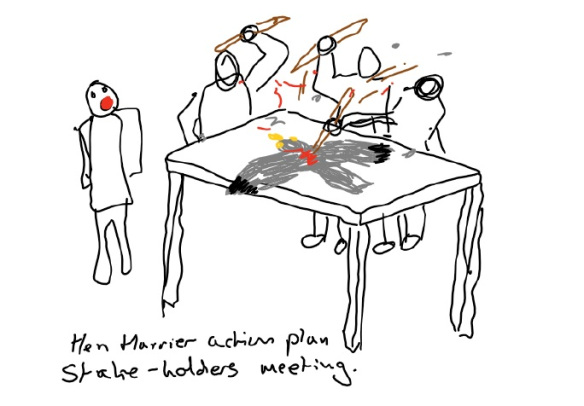
Earlier this month, Natural England announced its decision (here) to extend the insane hen harrier brood meddling trial beyond the five years (2018-2022 inclusive) it was originally intended to run.
For new blog readers, hen harrier brood meddling is a conservation sham sanctioned by DEFRA as part of its ludicrous ‘Hen Harrier Action Plan‘ and carried out by Natural England, in cahoots with the very industry responsible for the species’ catastrophic decline in England. In general terms, the plan involves the removal of hen harrier chicks and eggs from grouse moors, rear them in captivity, then release them back into the uplands just in time for the start of the grouse-shooting season where they’ll be illegally killed. It’s plainly bonkers. For more background see here.
An un-meddled hen harrier being reared in the wild. Photo: Laurie Campbell
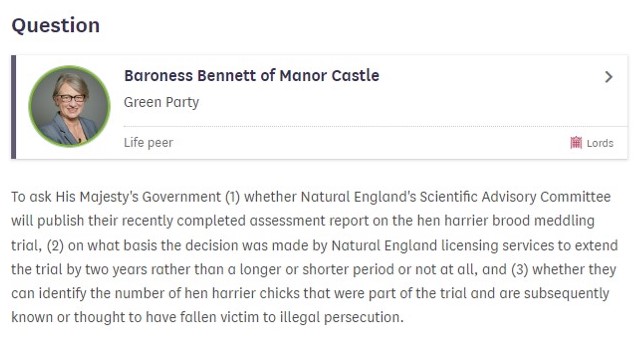
Following Natural England’s decision to extend the brood meddling trial, Natalie Bennett (Life peer, Green party) raised a number of pertinent questions in the House of Lords, as follows:
DEFRA Minister and grouse moor owner Lord Benyon responded last week with these answers:
The ‘overview’ of Natural England’s Scientific and Advisory Committee’s (NESAC) decision that Benyon points to is this blog, posted by Natural England on 16th March 2023. This ‘overview’ was already out of date when it was published because NE conveniently decided not to include the 2022 cohort of brood meddled hen harrier chicks – several of which were already confirmed as ‘missing’ by December 2022 (see here). Had they been included, NE’s graphs in that ‘overview’ blog wouldn’t look quite as favourable. Funny that.
You’ll note that what NE published was just an ‘overview’, and regular blog readers will know that in February 2023 I submitted an FoI request asking for a copy of the full NESAC report, only to be told by NE that there apparently wasn’t one (see here).
I’ve since submitted a further FoI request to determine if anybody at NE has produced a report, and if so, where is it? Surely someone has produced an assessment report, otherwise how on earth has NE assessed the application to extend the trial?! NE’s FoI response is due on 7th June 2023, although judging by NE’s continued obfuscation and lack of transparency (on which, more soon), I fully expect them to respond by telling me my information request is ‘complex’ and therefore they require a further 20 working days to complete the task. Let’s see.
I was pleased to see Benyon’s remark that ‘… all hen harriers are part of the trial…’. Good – that means that whoever is assessing the trial (assuming somebody is) will have to take in to account all of the 94 hen harriers (so far) that are confirmed ‘missing’ or illegally killed, most of them on or close to grouse moors, since the brood meddling trial began in 2018.
It was also interesting to note that Benyon admitted that of the 32 hen harrier chicks that have been brood meddled since the trial began, at least 16 of them are confirmed as ‘missing’. That’s half of them.
The brood meddling sham doesn’t sound quite as ‘successful’ now, does it?
And given the recent spate of vanishing hen harriers (see here, here and here), in addition to the publication of yet another scientific paper that confirms the ongoing and widespread illegal persecution of this species on many driven grouse moors (see here), I’d say Natural England looks to be in some trouble with its justification to extend the brood meddling trial.
In April 2023, Barry Nicolle, 67, a wildfowl collector from Dumfries & Galloway, pleaded guilty to 14 charges relating to the poisoning of red kites with banned pesticides, which included the placing of poisonous baits out in the countryside (see here and here).
This morning he was sentenced at Dumfries Sheriff Court and was given a monumentally inadequate community service order – to complete 216 hours of unpaid work within 12 months.
The RSPB has issued the following press release:
DUMFRIES-SHIRE MAN GIVEN COMMUNITY PAYBACK ORDER FOR ‘SERIOUS’ BIRD POISONING OFFENCES
A Dumfries and Galloway wildfowl collector was today (19 May 2023) sentenced to 216 hours of community payback at Dumfries Sheriff Court, after being convicted of multiple charges relating to the use of illegal poisons to target protected wildlife.
At a previous hearing, Barry Nicolle (67) plead guilty to 14 charges, including the illegal poisoning of five Red Kites and 10 Rooks, the placing of poison baits out in open countryside and the possession of banned pesticides.
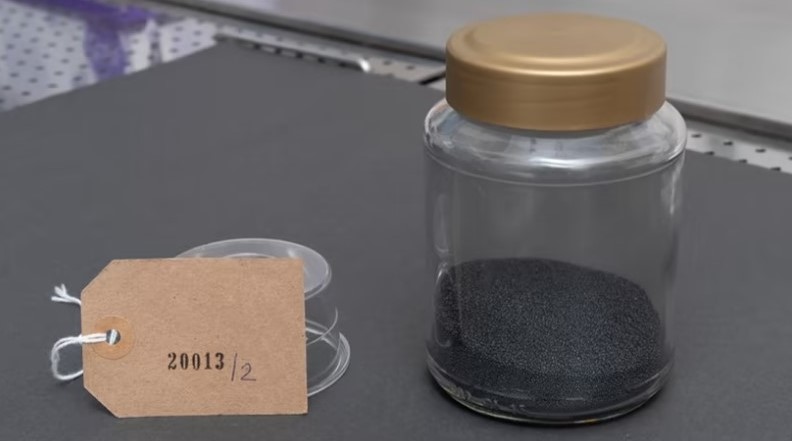
A container of the banned poison Aldicarb, found at Nicolle’s house. Photo: Crown Office
Speaking in court today, the Sherriff said the crimes were serious enough to cross the threshold for prison to be considered, however given that the individual had no previous convictions, in light of his age, and due to sentencing guidelines regarding custodial penalties of less than 12 months, a community order was served.
The case dates back to spring 2019, when several dead Red Kites were found by members of the public in the Springholm area, between Dumfries and Castle Douglas. Toxicology tests by the Science and Advice for Scottish Agriculture government laboratory revealed that all had died after consuming meat laced with poison. More victims were identified over the following months, including a number of Rooks found poisoned in the playground of the local primary school. One kite found killed was lying adjacent to the body of a Mandarin Duck used as a bait and found to have been laced with the same banned pesticide that killed the kite.
Mandarin Ducks are not a native species in Scotland, and the use of this exotic species as a bait drew Police Scotland’s attention to Nicolle who kept a large collection of exotic ducks and geese in an enclosure next to his house. During the execution of a search warrant at his premises in February 2020, police officers found quantities of aldicarb and bendiocarb, both illegal poisons, and both of which had been detected in the victims. Officers also found a Larsen trap being used illegally adjacent to Nicolle’s duck ponds. Nicolle was subsequently arrested and charged.
Ian Thomson, RSPB Scotland’s Head of Investigations, said: “We welcome today’s conviction of a Mr Nicolle for multiple offences linked to the illegal poisoning of Red Kites and Rooks around the village of Springholm. The placing of poison baits out in the open is illegal, dangerous and indiscriminate. It is exceedingly fortunate that Mr Nicolle’s repeated actions did not result in serious injury to a young child.
“The investigation of this case was an excellent example of partnership working. We would particularly like to thank Police Scotland, notably wildlife crime officer PC John Cowan, for their dogged determination to identify the perpetrator of these offences and to see them face justice, and to Procurators Fiscal from the Crown Office’s Wildlife and Environmental Crime Unit, for their diligent work in securing a conviction in such a complex case.”
Red Kites became extinct in Scotland in the 19th century due to persecution, but have been reintroduced in four areas, including Galloway. The reintroduction project here ran from 2001-04. Now, of an established Scottish population of around 450 pairs, Dumfries & Galloway contains about a third of these, making it the most important area of the country for these birds and their future conservation. In addition, the Galloway Red Kite Trail is a significant local tourist route, with over 100,000 visitors coming to the area to see the kites and contributing £8.2 million to the local economy between 2003-2015.
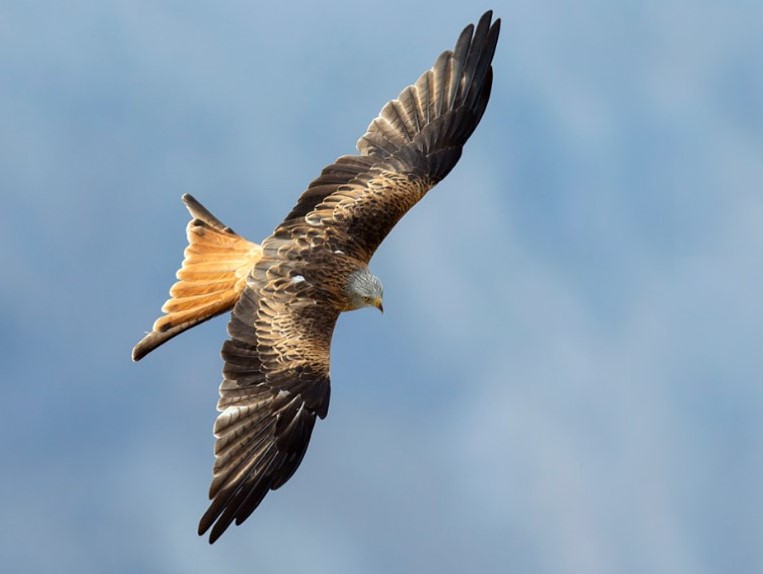
Red kite. Photo: Dick Forsman
Detective Inspector Dean Little, Senior Investigating Officer at Police Scotland, said: “Wildlife crime can be complex to investigate and difficult to prove in court. In this case local officers on the ground were able to promptly gather evidence and work with a number of partners who utilised specialist forensic methods to build a case against Nicolle.
“Scotland’s wildlife is one of its greatest attractions, which is especially true in our local area. Nicolle’s reckless use of illegal poison was not only selfish and damaging to the birds it killed, but also posed a risk to the environment and members of the public who came across them.
“I would like to thank the numerous partners who assisted in this case and members of the public who provided information and assisted police enquiries. Crimes against nature are not unpunishable and we welcome the sentencing today of Nicolle which shows our continued commitment to investigate wildlife crime and bring perpetrators to court.”
ENDS
Given the extent and seriousness of Nicolle’s crimes, I just can’t believe how lenient the Sheriff has been, although obviously he is constrained by sentencing guidelines.
It’s a complete replication of what happened when gamekeeper Alan Wilson was sentenced for his multiple offences at Longformacus in the Scottish Borders in 2019 (see here). Wilson also avoided jail, also avoided a fine and was just given a community payback order of 225 hours. It’s as though the Sheriffs in these cases are considering the offences as individual offences instead of looking at them as a cumulative pattern, which would easily then pass the custody threshold and exceed the 12 months limit.
Unfortunately, Nicolle committed his crimes prior to the enactment of the new Animals & Wildlife (Penalties, Protections & Powers) (Scotland) Act 2020; legislation that was introduced to increase the penalties available for certain wildlife crimes, including those under Section 1(1)(a) of the Wildlife & Countryside Act – ‘Intentionally, or recklessly, killing, injuring, or taking a wild bird‘.
Although, as we saw in a recent test case of this new legislation (the sentencing of a gamekeeper on Moy Estate for raptor-killing), it won’t necessarily lead to a significant punishment (see here).
I feel incredibly sorry for the multi-agency investigators in the latest case, who have clearly worked hard to bring a successful prosecution against Nicolle. In my opinion this pathetic sentence doesn’t reflect their efforts, doesn’t act as a deterrent for others, and certainly doesn’t reflect the seriousness of Nicolle’s crimes, which he knowingly committed, repeatedly, over a period of months.
Despite his conviction, this is a bad day for wildlife crime fighters.
UPDATE: The Crown Office has published the following statement, which provides a few more details:
MAN SENTENCED FOR POISONING WILD BIRDS
A 67-year-old waterfowl enthusiast has been sentenced for killing multiple birds of prey and other birds.
Barry Nicolle, who runs an exotic wildfowl breeding farm in Dumfries and Galloway, has been given a Community Payback Order and ordered to carry out 216 hours of unpaid work after pleading guilty at Dumfries Sheriff Court to the indiscriminate use of banned poisons, which killed five red kites and ten rooks.
This believed to be the first Scottish conviction in which multiple birds of prey have been killed with poison.
He also pled guilty to possession of several highly toxic pesticides, using a crow trap illegally and an air weapon licensing offence.
Between May 2019 and February 2020 Nicolle laced bait including mandarin duckling and a mallard duck with banned pesticides. He also placed poisoned bread on fence posts around his land which is about 150m (164 yards) from Springholm Primary School.
All of this was done to attract and kill scavengers in a bid to protect his own collection of exotic and ornamental waterfowl from a perceived threat.
Speaking after the sentencing, Fiona Caldwell, who leads on wildlife and environmental crime for the Crown Office and Procurator Fiscal Service (COPFS) said:
“Barry Nicolle’s actions led to the illegal killing of multiple Red Kite’s and Rooks.
“The laying of bait laced with poisons was shockingly irresponsible and Nicolle has shown an utter disregard for the wildlife laws which serve to protect these species.
“I would like to thank Police Scotland, RSPB Scotland, the Scottish SPCA, the SRUC Veterinary Investigation Centre and SASA for their part in investigating and gathering evidence of these repugnant offences.
“The law protects wild birds and those who seek to poison them or possess stocks of illegal poison can be assured that the Procurator Fiscal will continue to prosecute such cases and ensure that offenders face the consequences of their actions.”
The court heard that numerous reports of suspicious deaths of red kites in the Kirkpatrick Durham and Springholm areas were made to Police Scotland, RSPB and the Scottish SPCA Inspectors by members of the public.
Springholm is at the heart of the breeding red kite population’s range in South West Scotland making it a key area of the country for these birds and their future conservation.
Several red kite were found lying motionless on the ground in a distressed state and had to be euthanised. The ten poisoned rooks were found on the grounds of Springholm Primary School.
Subsequent post-mortem examinations by Scotland’s Rural College (SRUC) Veterinary Investigation Centre and toxicology analysis by the Science and Advice for Scottish Agriculture (SASA) Chemistry Branch established a pattern and cause of death linked to a banned Carbofuran based pesticide called Aldicarb.
All the deaths centred around Nicolle’s property and as a result of these enquiries police applied for and were granted a warrant to search Wickerty Snook.
On the morning of 4 February 2020 police wildlife officers, along with an RSPB investigator, a SASA scientist and others executed the warrant.
During the search of Nicolle’s home, the poisons Aldicarb, Bendiocarb and Phostoxin, which contains aluminium phosphide, were found.
Poisoned bait and traps, including an untagged and therefore illegal Larsen trap, were found on his land.
Further to the news from the RSPB earlier this month that 20 hen harriers had ‘disappeared’ on English grouse moors between April 2022 and April 2023 (see here), leading to my updated tally of illegally killed/missing hen harriers since 2018 (n = 92), I’ve since realised that I forgot to add one of the brood-meddled hen harriers that ‘disappeared’ in Dec 2022 (a female, #R2-F2-20, who vanished in Cumbria). She has now been added to the list, below.
And further to the news yesterday that another satellite-tagged hen harrier has ‘disappeared’ on a grouse moor in the Bowland AONB (see here), I also need to add this harrier to the list.
So now the running tally is 94 illegally killed / ‘missing’ hen harriers since 2018.
Here’s the blog I always write after every reported killing or suspicious disappearance…
For anyone who still wants to pretend that the grouse shooting industry isn’t responsible for the systematic extermination of hen harriers on grouse moors across the UK, here’s the latest catalogue of crime that suggests otherwise.
This male hen harrier died in 2019 after his leg was almost severed in an illegally set trap that had been placed next to his nest on a Scottish grouse moor (see here). Photo by Ruth Tingay
“They disappear in the same way political dissidents in authoritarian dictatorships have disappeared” (Stephen Barlow, 22 January 2021).
I’ve been compiling this list only since 2018 because that is the year that the grouse shooting industry ‘leaders’ would have us believe that the criminal persecution of hen harriers had stopped and that these birds were being welcomed back on to the UK’s grouse moors (see here).
This assertion was made shortly before the publication of a devastating new scientific paper that demonstrated that 72% of satellite-tagged hen harriers were confirmed or considered likely to have been illegally killed, and this was ten times more likely to occur over areas of land managed for grouse shooting relative to other land uses (see here). Incidentally, a further scientific paper published in 2023 by scientists at the RSPB, utilising even more recent data, echoed these results – see here).
2018 was also the year that Natural England issued a licence to begin a hen harrier brood meddling trial on grouse moors in northern England. For new blog readers, hen harrier brood meddling is a conservation sham sanctioned by DEFRA as part of its ludicrous ‘Hen Harrier Action Plan‘ and carried out by Natural England (NE), in cahoots with the very industry responsible for the species’ catastrophic decline in England. For more background see here.
Brood meddling has been described as a sort of ‘gentleman’s agreement’ by commentator Stephen Welch:
“I don’t get it, I thought the idea of that scheme was some kind of trade off – a gentleman’s agreement that the birds would be left in peace if they were moved from grouse moors at a certain density. It seems that one party is not keeping their side of the bargain“.
With at least 94 hen harriers gone since 2018, there is no question that the grouse shooting industry is simply taking the piss. Meanwhile, Natural England pretends that ‘partnership working’ is the way to go and DEFRA Ministers remain silent.
‘Partnership working’ according to Natural England appears to include authorising the removal of hen harrier chicks from a grouse moor already under investigation by the police for suspected raptor persecution (here) and accepting a £75k ‘donation’ from representatives of the grouse shooting industry that prevents Natural England from criticising them or the sham brood meddling trial (see here). This is in addition to a £10k ‘donation’ that Natural England accepted, under the same terms, in 2021 (here).
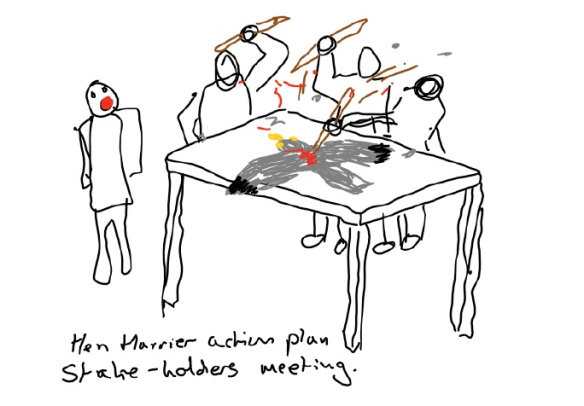
Cartoon by Gerard Hobley
So here’s the latest gruesome list. Note that the majority of these birds (but not all) were fitted with satellite tags. How many more [untagged] harriers have been killed?
February 2018: Hen harrier Saorsa ‘disappeared’ in the Angus Glens in Scotland (here). The Scottish Gamekeepers Association later published wholly inaccurate information claiming the bird had been re-sighted. The RSPB dismissed this as “completely false” (here).
5 February 2018: Hen harrier Marc ‘disappeared’ on a grouse moor in Durham (here).
9 February 2018: Hen harrier Aalin ‘disappeared’ on a grouse moor in Wales (here).
March 2018: Hen harrier Blue ‘disappeared’ in the Lake District National Park (here).
March 2018: Hen harrier Finn ‘disappeared’ near Moffat in Scotland (here).
18 April 2018: Hen harrier Lia ‘disappeared’ in Wales and her corpse was retrieved in a field in May 2018. Cause of death was unconfirmed but police treating death as suspicious (here).
8 August 2018: Hen harrier Hilma ‘disappeared’ on a grouse moor in Northumberland (here).
16 August 2018: Hen harrier Athena ‘disappeared’ on a grouse moor in Scotland (here).
26 August 2018: Hen Harrier Octavia ‘disappeared’ on a grouse moor in the Peak District National Park (here).
29 August 2018: Hen harrier Margot ‘disappeared’ on a grouse moor in Scotland (here).
29 August 2018: Hen Harrier Heulwen ‘disappeared’ on a grouse moor in Wales (here).
3 September 2018: Hen harrier Stelmaria ‘disappeared’ on a grouse moor in Scotland (here).
24 September 2018: Hen harrier Heather ‘disappeared’ on a grouse moor in Scotland (here).
2 October 2018: Hen harrier Mabel ‘disappeared’ on a grouse moor on the edge of the Yorkshire Dales National Park (here).
3 October 2018: Hen Harrier Thor ‘disappeared’ next to a grouse moor in Bowland, Lanacashire (here).
23 October 2018: Hen harrier Tom ‘disappeared’ in South Wales (here).
26 October 2018: Hen harrier Arthur ‘disappeared’ on a grouse moor in the North York Moors National Park (here).
1 November 2018: Hen harrier Barney ‘disappeared’ on Bodmin Moor (here).
10 November 2018: Hen harrier Rannoch ‘disappeared’ on a grouse moor in Scotland (here). Her corpse was found nearby in May 2019 – she’d been killed in an illegally-set spring trap (here).
14 November 2018: Hen harrier River ‘disappeared’ on a grouse moor in the Nidderdale AONB (here). Her corpse was found nearby in April 2019 – she’d been illegally shot (here).
16 January 2019: Hen harrier Vulcan ‘disappeared’ in Wiltshire close to Natural England’s proposed reintroduction site (here).
7 February 2019: Hen harrier Skylar ‘disappeared’ next to a grouse moor in South Lanarkshire (here).
22 April 2019: Hen harrier Marci ‘disappeared’ on a grouse moor in the Cairngorms National Park (here).
26 April 2019: Hen harrier Rain ‘disappeared’ on a grouse moor in Nairnshire (here).
11 May 2019: An untagged male hen harrier was caught in an illegally-set trap next to his nest on a grouse moor in South Lanarkshire. He didn’t survive (here).
7 June 2019: An untagged hen harrier was found dead on a grouse moor in Scotland. A post mortem stated the bird had died as a result of ‘penetrating trauma’ injuries and that this bird had previously been shot (here).
5 September 2019: Wildland Hen Harrier 1 ‘disappeared’ on a grouse moor nr Dalnaspidal on the edge of the Cairngorms National Park (here).
11 September 2019: Hen harrier Romario ‘disappeared’ on a grouse moor in the Cairngorms National Park (here).
14 September 2019: Hen harrier (Brood meddled in 2019, #183704) ‘disappeared’ in the North Pennines (here).
23 September 2019: Hen harrier (Brood meddled in 2019, #55149) ‘disappeared’ in North Pennines (here).
24 September 2019: Wildland Hen Harrier 2 ‘disappeared’ on a grouse moor at Invercauld in the Cairngorms National Park (here).
24 September 2019: Hen harrier Bronwyn ‘disappeared’ near a grouse moor in North Wales (here).
10 October 2019: Hen harrier Ada ‘disappeared’ on a grouse moor in the North Pennines AONB (here).
12 October 2019: Hen harrier Thistle ‘disappeared’ on a grouse moor in Sutherland (here).
18 October 2019: Member of the public reports the witnessed shooting of an untagged male hen harrier on White Syke Hill in North Yorkshire (here).
November 2019: Hen harrier Mary found illegally poisoned on a pheasant shoot in Ireland (here).
14 December 2019: Hen harrier Oscar ‘disappeared’ in Eskdalemuir, south Scotland (here).
January 2020: Members of the public report the witnessed shooting of a male hen harrier on Threshfield Moor in the Yorkshire Dales National Park (here).
23 March 2020: Hen harrier Rosie ‘disappeared’ at an undisclosed roost site in Northumberland (here).
1 April 2020: Hen harrier (Brood meddled in 2019, #183703) ‘disappeared’ in unnamed location, tag intermittent (here).
5 April 2020: Hen harrier Hoolie ‘disappeared’ on a grouse moor in the Cairngorms National Park (here)
8 April 2020: Hen harrier Marlin ‘disappeared’ on a grouse moor in the Cairngorms National Park (here).
19 May 2020: Hen harrier Fingal ‘disappeared’ on a grouse moor in the Lowther Hills, Scotland (here).
21 May 2020: Hen harrier (Brood meddled in 2019, #183701) ‘disappeared’ on a grouse moor in Cumbria shortly after returning from wintering in France (here).
27 May 2020: Hen harrier Silver ‘disappeared’ on a grouse moor on Leadhills Estate, Scotland (here).
2020: day/month unknown: Unnamed male hen harrier breeding on RSPB Geltsdale Reserve, Cumbria ‘disappeared’ while away hunting (here).
9 July 2020: Unnamed female hen harrier (#201118) ‘disappeared’ from an undisclosed site in Northumberland (here).
25 July 2020: Hen harrier Harriet ‘disappeared’ on a grouse moor in the Yorkshire Dales National Park (here).
14 August 2020: Hen harrier Solo ‘disappeared’ in confidential nest area in Lancashire (here).
7 September 2020: Hen harrier Dryad ‘disappeared’ on a grouse moor in the Yorkshire Dales National Park (here).
16 September 2020: Hen harrier Fortune ‘disappeared’ from an undisclosed roost site in Northumberland (here).
19 September 2020: Hen harrier Harold ‘disappeared’ on a grouse moor in the Yorkshire Dales National Park (here).
20 September 2020: Hen harrier (Brood meddled in 2020, #55152) ‘disappeared’ next to a grouse moor in North Yorkshire (here).
24 February 2021: Hen harrier Tarras ‘disappeared’ next to a grouse moor in Northumberland (here)
12th April 2021: Hen harrier Yarrow ‘disappeared’ near Stockton, County Durham (here).
18 May 2021: Adult male hen harrier ‘disappeared’ from its breeding attempt on RSPB Geltsdale Reserve, Cumbria whilst away hunting (here).
18 May 2021: Another adult male hen harrier ‘disappeared’ from its breeding attempt on RSPB Geltsdale Reserve, Cumbria whilst away hunting (here).
24 July 2021: Hen harrier Asta ‘disappeared’ at a ‘confidential site’ in the North Pennines (here). We learned 18 months later that her wings had been ripped off so her tag could be fitted to a crow in an attempt to cover up her death (here).
14th August 2021: Hen harrier Josephine ‘disappeared’ at a ‘confidential site’ in Northumberland (here).
17 September 2021: Hen harrier Reiver ‘disappeared’ in a grouse moor dominated region of Northumberland (here)
24 September 2021: Hen harrier (Brood meddled in 2021, R2-F-1-21) ‘disappeared’ in Northumberland (here).
15 November 2021: Hen harrier (brood meddled in 2020, #R2-F1-20) ‘disappeared’ at the edge of a grouse moor on Arkengarthdale Estate in the Yorkshire Dales National Park (here).
19 November 2021: Hen harrier Val ‘disappeared’ in the Lake District National Park in Cumbria (here).
19 November 2021: Hen harrier Percy ‘disappeared’ in Lothian, Scotland (here).
12 December 2021: Hen harrier Jasmine ‘disappeared’ on a grouse moor (High Rigg Moor on the Middlesmoor Estate) in the Nidderdale AONB in North Yorkshire (here).
9 January 2022: Hen harrier Ethel ‘disappeared’ in Northumberland (here).
26 January 2022: Hen harrier Amelia ‘disappeared’ in Bowland (here).
10 February 2022: An unnamed satellite-tagged hen harrier ‘disappeared’ in a grouse moor dominated area of the Peak District National Park (here). One year later it was revealed that the satellite tag/harness of this young male called ‘Anu’ had been deliberately cut off (see here).
12 April 2022: Hen harrier ‘Free’ (Tag ID 201121) ‘disappeared’ at a ‘confidential site’ in Cumbria (here). It later emerged he hadn’t disappeared, but his mutilated corpse was found on moorland in the Yorkshire Dales National Park. A post mortem revealed the cause of death was having his head twisted and pulled off. One leg had also been torn off whilst he was still alive (here).
April 2022: Hen harrier ‘Pegasus’ (tagged by the RSPB) ‘disappeared’ on a grouse moor at Birkdale in the Yorkshire Dales National Park (here).
May 2022: A male breeding hen harrier ‘disappeared’ from a National Trust-owned grouse moor in the Peak District National Park (here).
May 2022: Another breeding male hen harrier ‘disappeared’ from a National Trust-owned grouse moor in the Peak District National Park (here).
14 May 2022: Hen harrier ‘Harvey’ (Tag ID 213844) ‘disappeared’ from a ‘confidential site’ in the North Pennines (here).
20 June 2022: Hen harrier chick #1 stamped to death in nest on a grouse moor in the Yorkshire Dales National Park (here).
20 June 2022: Hen harrier chick #2 stamped to death in nest on a grouse moor in the Yorkshire Dales National Park (here).
20 June 2022: Hen harrier chick #3 stamped to death in nest on a grouse moor in the Yorkshire Dales National Park (here).
20 June 2022: Hen harrier chick #4 stamped to death in nest on a grouse moor in the Yorkshire Dales National Park (here).
17 August 2022: Hen harrier (brood meddled in 2022, #R1-M1-22) ‘disappeared’ on moorland in the Yorkshire Dales National Park (here).
September 2022: Hen harrier ‘Sullis’ (tagged by the RSPB) ‘disappeared’ on a grouse moor in Cumbria (here).
5 October 2022: Hen harrier (brood meddled in 2022, #R3-M2-22) ‘disappeared’ on moorland in the Yorkshire Dales National Park (here).
10 October 2022: Hen harrier ‘Sia’ ‘disappeared’ near Hamsterley Forest in the North Pennines (here).
October 2022: Hen harrier (brood meddled in 2021, #R1-F1-21) ‘disappeared’ in the North Sea off the North York Moors National Park (here).
December 2022: Hen harrier female (brood meddled in 2020, #R2-F2-20) ‘disappeared’ on moorland in Cumbria (here).
1 December 2022: Hen harrier male (brood meddled in 2021, #R1-M1-21) ‘disappeared’ on moorland in the Yorkshire Dales National Park (here).
14 December 2022: Hen harrier female (brood meddled in 2022, #R3-F1-22) ‘disappeared’ on moorland in the North Pennines AONB (here).
15 December 2022: Hen harrier female (brood meddled in 2022, #R2-F1-22) ‘disappeared’ on moorland in the Yorkshire Dales National Park (here).
March 2023: Unnamed male hen harrier (tagged by Natural England – details not yet released) ‘disappeared’ in North Yorkshire (here).
April 2023: Unnamed female hen harrier (tagged by Natural England – details not yet released) ‘disappeared’ in North Yorkshire (here).
April 2023: Hen harrier ‘Lagertha’ (tagged by RSPB) ‘disappeared’ in North Yorkshire (here).
April 2023: Hen harrier ‘Nicola’ (Tag ID 234078) ”disappeared’ in North Yorkshire (here).
April 2023: Untagged male hen harrier ‘disappeared’ from an active nest on RSPB Geltsdale Reserve in Cumbria (here).
April 2023: Another untagged male hen harrier ‘disappeared’ from an active nest on RSPB Geltsdale Reserve in Cumbria (here).
April 2023: Untagged male hen harrier ‘disappeared’ from an active nest in Durham (see here).
4/5 May 2023: Satellite-tagged hen harrier (ID not yet released) ‘disappeared’ from grouse moor in Bowland AONB in Lancashire (here).
To be continued…….
Not one of these 94 incidents has resulted in an arrest, let alone a prosecution. I had thought that when we reached 30 dead/missing hen harriers then the authorities might pretend to be interested and at least say a few words about this national scandal. We’ve now reached NINETY FOUR hen harriers, and still Govt ministers remain silent. They appear not to give a monkey’s. And yes, there are other things going on in the world, as always. That is not reason enough to ignore this blatant, brazen and systematic destruction of a supposedly protected species, being undertaken to satisfy the greed and bloodlust of a minority of society.
As many of you will know, DEFRA’s highly controversial (I would argue insane) hen harrier brood meddling scheme was initially approved to run for five years between 2018-2022, facilitated by Natural England.
For new blog readers, hen harrier brood meddling is a conservation sham sanctioned by DEFRA as part of its ludicrous ‘Hen Harrier Action Plan‘ and carried out by Natural England, in cahoots with the very industry responsible for the species’ catastrophic decline in England. In general terms, the plan involves the removal of hen harrier chicks and eggs from grouse moors, rear them in captivity, then release them back into the uplands just in time for the start of the grouse-shooting season where they’ll be illegally killed. It’s plainly bonkers. For more background see here.
An un-meddled hen harrier being reared in the wild. Photo: Laurie Campbell
The brood meddling sham has been hailed by those involved (e.g. Natural England and the Moorland Association) as delivering ‘real’ and ‘great’ progress because the number of breeding hen harriers has risen since the trial began.
However, the number of breeding hen harriers isn’t really the issue – its the ongoing illegal killing of hen harriers that’s the issue. It’s pointless pumping out more hen harrier chicks if they’re just going to get shot/trapped/have their wings ripped off/have their heads twisted and torn off by criminals within the grouse shooting industry once the young birds have been released.
The participants in the trial have been congratulating each other on the trial’s so-called ‘success’, whilst conveniently ignoring the fact that illegal persecution remains rampant – e.g. we know that at least 92 hen harriers are likely to have been killed since this ridiculous pantomime began in 2018 (see here).
One of the grouse-shooting estates involved in the brood meddling trial was even under police investigation for suspected raptor persecution during the trial (see here) and another grouse-shooting estate should have been under police investigation during the brood meddling trial following the discovery of a poisoned red kite on the estate but, shockingly, North Yorkshire Police refused to investigate (see here).
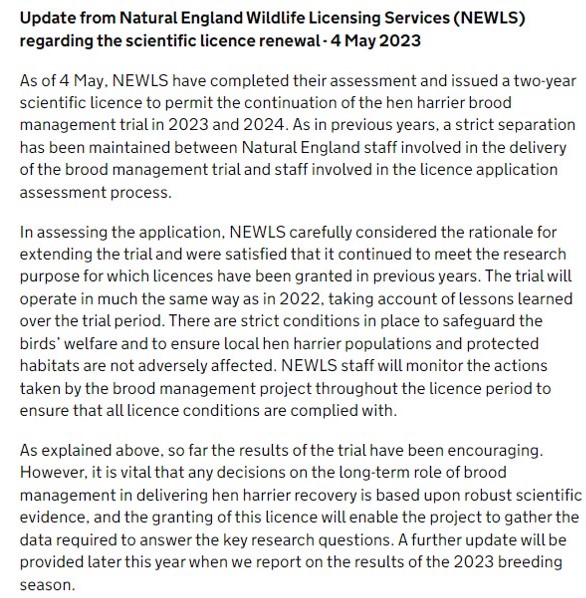
But instead of bringing this sham to an end last year, at the end of the initial five-year trial period, Natural England has announced that a new brood meddling licence has just been issued to extend the sham for at least a further two years (2023 and 2024 breeding seasons).
The announcement was made by Natural England here on 4th May 2023 and I’ve reproduced it below in case it disappears from the Govt website:
I find this decision to extend the brood meddling trial utterly beyond comprehension and earlier this year, when I knew an extension to the licence was being considered, I submitted an FoI to Natural England to try and understand the logic/rationale for continuing with an expensive trial that simply hasn’t delivered in terms of getting the grouse shooting industry to stop illegally killing hen harriers.
I asked three simple things:
For a copy of the most recent assessment report on the hen harrier brood meddling trial from Natural England’s Scientific Advisory Committee (NESAC);
For confirmation of the end date of the brood meddling trial;
For confirmation of when a final assessment report about the trial would be submitted to the NE Board.
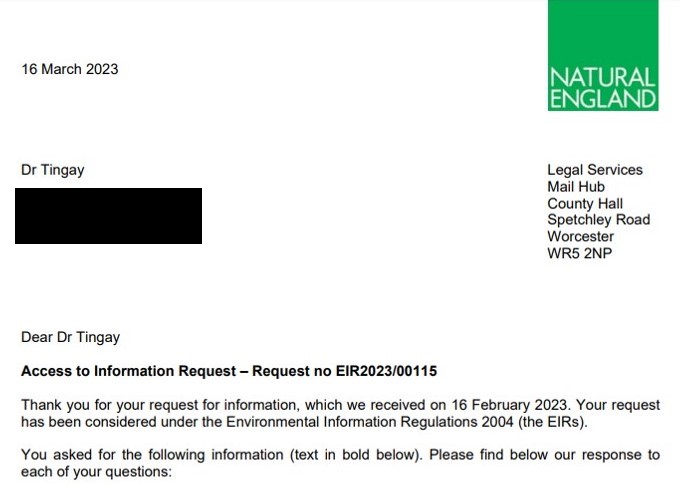
Here’s the response from Natural England on 16th March 2023:
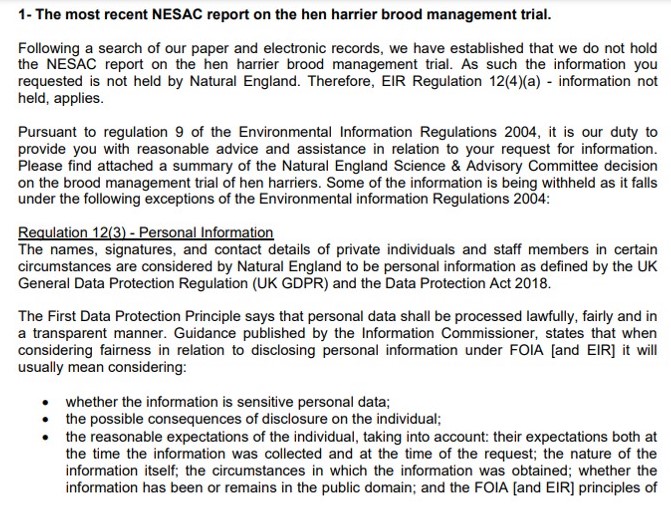
In relation to Q1, I was somewhat surprised to learn that NE ‘does not hold the NESAC report on the hen harrier brood management trial‘.
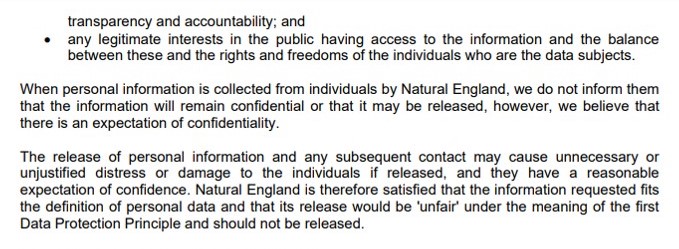
Eh? Does that mean the NESAC hasn’t produced an assessment/evaluation report? If it hasn’t, who has? I’ve since submitted a further FoI request to determine if anybody at NE has produced a report, and if so, where is it? Surely someone has produced an assessment report, otherwise how on earth has NE assessed the application to extend the trial?!
In lieu of not having an NESAC assessment report, NE did provide ‘a summary of the Natural England Scientific Advisory Committee decision on the brood management trial of hen harriers‘. That summary document, dated 18th January 2023, is provided here:
According to this document, the NESAC has advised the Natural England Board that a five-year extension to the hen harrier brood meddling trial ‘would be appropriate‘. Notably, the ‘full note’ mentioned at the beginning of the document (called Annex 1) was not released as part of NE’s response to my FoI.
In addition to asking NE for a copy of any assessment report on the hen harrier brood meddling trial, I have also submitted FoIs requesting a copy of the licence application for the 2023/24 licence extension and a copy of the actual licence.
Further information about the brood meddling trial has emerged through a separate FoI request I made about NE’s senior management team’s day trip to Swinton Estate (one of the brood meddling estates) in February this year (see here). I’ll be writing about those revelations shortly.
Further to the news on Friday that a previously unreported 20 hen harriers had ‘disappeared’ on English grouse moors between April 2022 and April 2023, in addition to another one whose mutilated corpse was found on a grouse moor (see here and here), I’ve now had the time to go through the latest list of reported victims and work out which ones had not previously been included on my running tally of dead/missing hen harriers since 2018.
You may recall (although admittedly, it is hard to keep up), just two weeks ago I reported that the running tally was 82 dead/missing hen harriers since 2018. I can now report the current total is 92.
Here’s the blog I always write after every reported killing or suspicious disappearance…
For anyone who still wants to pretend that the grouse shooting industry isn’t responsible for the systematic extermination of hen harriers on grouse moors across the UK, here’s the latest catalogue of crime that suggests otherwise.
This male hen harrier died in 2019 after his leg was almost severed in an illegally set trap that had been placed next to his nest on a Scottish grouse moor (see here). Photo by Ruth Tingay
“They disappear in the same way political dissidents in authoritarian dictatorships have disappeared” (Stephen Barlow, 22 January 2021).
Today the list has been updated to include the most recently reported victims, 10 young hen harriers (0f 20) that ‘disappeared’ in suspicious circumstances between April 2022 – April 2023, almost all of them on or close to grouse moors in northern England (see here).
I’ve been compiling this list only since 2018 because that is the year that the grouse shooting industry ‘leaders’ would have us believe that the criminal persecution of hen harriers had stopped and that these birds were being welcomed back on to the UK’s grouse moors (see here).
This assertion was made shortly before the publication of a devastating new scientific paper that demonstrated that 72% of satellite-tagged hen harriers were confirmed or considered likely to have been illegally killed, and this was ten times more likely to occur over areas of land managed for grouse shooting relative to other land uses (see here).
2018 was also the year that Natural England issued a licence to begin a hen harrier brood meddling trial on grouse moors in northern England. For new blog readers, hen harrier brood meddling is a conservation sham sanctioned by DEFRA as part of its ludicrous ‘Hen Harrier Action Plan‘ and carried out by Natural England (NE), in cahoots with the very industry responsible for the species’ catastrophic decline in England. For more background see here.
Brood meddling has been described as a sort of ‘gentleman’s agreement’ by commentator Stephen Welch:
“I don’t get it, I thought the idea of that scheme was some kind of trade off – a gentleman’s agreement that the birds would be left in peace if they were moved from grouse moors at a certain density. It seems that one party is not keeping their side of the bargain“.
With at least 92 hen harriers gone since 2018, there is no question that the grouse shooting industry is simply taking the piss. Meanwhile, Natural England pretends that ‘partnership working’ is the way to go and DEFRA Ministers remain silent.
‘Partnership working’ according to Natural England appears to include authorising the removal of hen harrier chicks from a grouse moor already under investigation by the police for suspected raptor persecution (here) and accepting a £75k ‘donation’ from representatives of the grouse shooting industry that prevents Natural England from criticising them or the sham brood meddling trial (see here). This is in addition to a £10k ‘donation’ that Natural England accepted, under the same terms, in 2021 (here).
Cartoon by Gerard Hobley
So here’s the latest gruesome list. Note that the majority of these birds (but not all) were fitted with satellite tags. How many more [untagged] harriers have been killed?
February 2018: Hen harrier Saorsa ‘disappeared’ in the Angus Glens in Scotland (here). The Scottish Gamekeepers Association later published wholly inaccurate information claiming the bird had been re-sighted. The RSPB dismissed this as “completely false” (here).
5 February 2018: Hen harrier Marc ‘disappeared’ on a grouse moor in Durham (here).
9 February 2018: Hen harrier Aalin ‘disappeared’ on a grouse moor in Wales (here).
March 2018: Hen harrier Blue ‘disappeared’ in the Lake District National Park (here).
March 2018: Hen harrier Finn ‘disappeared’ near Moffat in Scotland (here).
18 April 2018: Hen harrier Lia ‘disappeared’ in Wales and her corpse was retrieved in a field in May 2018. Cause of death was unconfirmed but police treating death as suspicious (here).
8 August 2018: Hen harrier Hilma ‘disappeared’ on a grouse moor in Northumberland (here).
16 August 2018: Hen harrier Athena ‘disappeared’ on a grouse moor in Scotland (here).
26 August 2018: Hen Harrier Octavia ‘disappeared’ on a grouse moor in the Peak District National Park (here).
29 August 2018: Hen harrier Margot ‘disappeared’ on a grouse moor in Scotland (here).
29 August 2018: Hen Harrier Heulwen ‘disappeared’ on a grouse moor in Wales (here).
3 September 2018: Hen harrier Stelmaria ‘disappeared’ on a grouse moor in Scotland (here).
24 September 2018: Hen harrier Heather ‘disappeared’ on a grouse moor in Scotland (here).
2 October 2018: Hen harrier Mabel ‘disappeared’ on a grouse moor on the edge of the Yorkshire Dales National Park (here).
3 October 2018: Hen Harrier Thor ‘disappeared’ next to a grouse moor in Bowland, Lanacashire (here).
23 October 2018: Hen harrier Tom ‘disappeared’ in South Wales (here).
26 October 2018: Hen harrier Arthur ‘disappeared’ on a grouse moor in the North York Moors National Park (here).
1 November 2018: Hen harrier Barney ‘disappeared’ on Bodmin Moor (here).
10 November 2018: Hen harrier Rannoch ‘disappeared’ on a grouse moor in Scotland (here). Her corpse was found nearby in May 2019 – she’d been killed in an illegally-set spring trap (here).
14 November 2018: Hen harrier River ‘disappeared’ on a grouse moor in the Nidderdale AONB (here). Her corpse was found nearby in April 2019 – she’d been illegally shot (here).
16 January 2019: Hen harrier Vulcan ‘disappeared’ in Wiltshire close to Natural England’s proposed reintroduction site (here).
7 February 2019: Hen harrier Skylar ‘disappeared’ next to a grouse moor in South Lanarkshire (here).
22 April 2019: Hen harrier Marci ‘disappeared’ on a grouse moor in the Cairngorms National Park (here).
26 April 2019: Hen harrier Rain ‘disappeared’ on a grouse moor in Nairnshire (here).
11 May 2019: An untagged male hen harrier was caught in an illegally-set trap next to his nest on a grouse moor in South Lanarkshire. He didn’t survive (here).
7 June 2019: An untagged hen harrier was found dead on a grouse moor in Scotland. A post mortem stated the bird had died as a result of ‘penetrating trauma’ injuries and that this bird had previously been shot (here).
5 September 2019: Wildland Hen Harrier 1 ‘disappeared’ on a grouse moor nr Dalnaspidal on the edge of the Cairngorms National Park (here).
11 September 2019: Hen harrier Romario ‘disappeared’ on a grouse moor in the Cairngorms National Park (here).
14 September 2019: Hen harrier (Brood meddled in 2019, #183704) ‘disappeared’ in the North Pennines (here).
23 September 2019: Hen harrier (Brood meddled in 2019, #55149) ‘disappeared’ in North Pennines (here).
24 September 2019: Wildland Hen Harrier 2 ‘disappeared’ on a grouse moor at Invercauld in the Cairngorms National Park (here).
24 September 2019: Hen harrier Bronwyn ‘disappeared’ near a grouse moor in North Wales (here).
10 October 2019: Hen harrier Ada ‘disappeared’ on a grouse moor in the North Pennines AONB (here).
12 October 2019: Hen harrier Thistle ‘disappeared’ on a grouse moor in Sutherland (here).
18 October 2019: Member of the public reports the witnessed shooting of an untagged male hen harrier on White Syke Hill in North Yorkshire (here).
November 2019: Hen harrier Mary found illegally poisoned on a pheasant shoot in Ireland (here).
14 December 2019: Hen harrier Oscar ‘disappeared’ in Eskdalemuir, south Scotland (here).
January 2020: Members of the public report the witnessed shooting of a male hen harrier on Threshfield Moor in the Yorkshire Dales National Park (here).
23 March 2020: Hen harrier Rosie ‘disappeared’ at an undisclosed roost site in Northumberland (here).
1 April 2020: Hen harrier (Brood meddled in 2019, #183703) ‘disappeared’ in unnamed location, tag intermittent (here).
5 April 2020: Hen harrier Hoolie ‘disappeared’ on a grouse moor in the Cairngorms National Park (here)
8 April 2020: Hen harrier Marlin ‘disappeared’ on a grouse moor in the Cairngorms National Park (here).
19 May 2020: Hen harrier Fingal ‘disappeared’ on a grouse moor in the Lowther Hills, Scotland (here).
21 May 2020: Hen harrier (Brood meddled in 2019, #183701) ‘disappeared’ on a grouse moor in Cumbria shortly after returning from wintering in France (here).
27 May 2020: Hen harrier Silver ‘disappeared’ on a grouse moor on Leadhills Estate, Scotland (here).
2020: day/month unknown: Unnamed male hen harrier breeding on RSPB Geltsdale Reserve, Cumbria ‘disappeared’ while away hunting (here).
9 July 2020: Unnamed female hen harrier (#201118) ‘disappeared’ from an undisclosed site in Northumberland (here).
25 July 2020: Hen harrier Harriet ‘disappeared’ on a grouse moor in the Yorkshire Dales National Park (here).
14 August 2020: Hen harrier Solo ‘disappeared’ in confidential nest area in Lancashire (here).
7 September 2020: Hen harrier Dryad ‘disappeared’ on a grouse moor in the Yorkshire Dales National Park (here).
16 September 2020: Hen harrier Fortune ‘disappeared’ from an undisclosed roost site in Northumberland (here).
19 September 2020: Hen harrier Harold ‘disappeared’ on a grouse moor in the Yorkshire Dales National Park (here).
20 September 2020: Hen harrier (Brood meddled in 2020, #55152) ‘disappeared’ next to a grouse moor in North Yorkshire (here).
24 February 2021: Hen harrier Tarras ‘disappeared’ next to a grouse moor in Northumberland (here)
12th April 2021: Hen harrier Yarrow ‘disappeared’ near Stockton, County Durham (here).
18 May 2021: Adult male hen harrier ‘disappeared’ from its breeding attempt on RSPB Geltsdale Reserve, Cumbria whilst away hunting (here).
18 May 2021: Another adult male hen harrier ‘disappeared’ from its breeding attempt on RSPB Geltsdale Reserve, Cumbria whilst away hunting (here).
24 July 2021: Hen harrier Asta ‘disappeared’ at a ‘confidential site’ in the North Pennines (here). We learned 18 months later that her wings had been ripped off so her tag could be fitted to a crow in an attempt to cover up her death (here).
14th August 2021: Hen harrier Josephine ‘disappeared’ at a ‘confidential site’ in Northumberland (here).
17 September 2021: Hen harrier Reiver ‘disappeared’ in a grouse moor dominated region of Northumberland (here)
24 September 2021: Hen harrier (Brood meddled in 2021, R2-F-1-21) ‘disappeared’ in Northumberland (here).
15 November 2021: Hen harrier (brood meddled in 2020, #R2-F1-20) ‘disappeared’ at the edge of a grouse moor on Arkengarthdale Estate in the Yorkshire Dales National Park (here).
19 November 2021: Hen harrier Val ‘disappeared’ in the Lake District National Park in Cumbria (here).
19 November 2021: Hen harrier Percy ‘disappeared’ in Lothian, Scotland (here).
12 December 2021: Hen harrier Jasmine ‘disappeared’ on a grouse moor (High Rigg Moor on the Middlesmoor Estate) in the Nidderdale AONB in North Yorkshire (here).
9 January 2022: Hen harrier Ethel ‘disappeared’ in Northumberland (here).
26 January 2022: Hen harrier Amelia ‘disappeared’ in Bowland (here).
10 February 2022: An unnamed satellite-tagged hen harrier ‘disappeared’ in a grouse moor dominated area of the Peak District National Park (here). One year later it was revealed that the satellite tag/harness of this young male called ‘Anu’ had been deliberately cut off (see here).
12 April 2022: Hen harrier ‘Free’ (Tag ID 201121) ‘disappeared’ at a ‘confidential site’ in Cumbria (here). It later emerged he hadn’t disappeared, but his mutilated corpse was found on moorland in the Yorkshire Dales National Park. A post mortem revealed the cause of death was having his head twisted and pulled off. One leg had also been torn off whilst he was still alive (here).
April 2022: Hen harrier ‘Pegasus’ (tagged by the RSPB) ‘disappeared’ on a grouse moor at Birkdale in the Yorkshire Dales National Park (here).
May 2022: A male breeding hen harrier ‘disappeared’ from a National Trust-owned grouse moor in the Peak District National Park (here).
May 2022: Another breeding male hen harrier ‘disappeared’ from a National Trust-owned grouse moor in the Peak District National Park (here).
14 May 2022: Hen harrier ‘Harvey’ (Tag ID 213844) ‘disappeared’ from a ‘confidential site’ in the North Pennines (here).
20 June 2022: Hen harrier chick #1 stamped to death in nest on a grouse moor in the Yorkshire Dales National Park (here).
20 June 2022: Hen harrier chick #2 stamped to death in nest on a grouse moor in the Yorkshire Dales National Park (here).
20 June 2022: Hen harrier chick #3 stamped to death in nest on a grouse moor in the Yorkshire Dales National Park (here).
20 June 2022: Hen harrier chick #4 stamped to death in nest on a grouse moor in the Yorkshire Dales National Park (here).
17 August 2022: Hen harrier (brood meddled in 2022, #R1-M1-22) ‘disappeared’ on moorland in the Yorkshire Dales National Park (here).
September 2022: Hen harrier ‘Sullis’ (tagged by the RSPB) ‘disappeared’ on a grouse moor in Cumbria (here).
5 October 2022: Hen harrier (brood meddled in 2022, #R3-M2-22) ‘disappeared’ on moorland in the Yorkshire Dales National Park (here).
10 October 2022: Hen harrier ‘Sia’ ‘disappeared’ near Hamsterley Forest in the North Pennines (here).
October 2022: Hen harrier (brood meddled in 2021, #R1-F1-21) ‘disappeared’ in the North Sea off the North York Moors National Park (here).
1 December 2022: Hen harrier male (brood meddled in 2021, #R1-M1-21) ‘disappeared’ on moorland in the Yorkshire Dales National Park (here).
14 December 2022: Hen harrier female (brood meddled in 2022, #R3-F1-22) ‘disappeared’ on moorland in the North Pennines AONB (here).
15 December 2022: Hen harrier female (brood meddled in 2022, #R2-F1-22) ‘disappeared’ on moorland in the Yorkshire Dales National Park (here).
March 2023: Unnamed male hen harrier (tagged by Natural England – details not yet released) ‘disappeared’ in North Yorkshire (here).
April 2023: Unnamed female hen harrier (tagged by Natural England – details not yet released) ‘disappeared’ in North Yorkshire (here).
April 2023: Hen harrier ‘Lagertha’ (tagged by RSPB) ‘disappeared’ in North Yorkshire (here).
April 2023: Hen harrier ‘Nicola’ (Tag ID 234078) ”disappeared’ in North Yorkshire (here).
April 2023: Untagged male hen harrier ‘disappeared’ from an active nest on RSPB Geltsdale Reserve in Cumbria (here).
April 2023: Another untagged male hen harrier ‘disappeared’ from an active nest on RSPB Geltsdale Reserve in Cumbria (here).
April 2023: Untagged male hen harrier ‘disappeared’ from an active nest in Durham (see here).
To be continued……..
Not one of these 92 incidents has resulted in an arrest, let alone a prosecution. I had thought that when we reached 30 dead/missing hen harriers then the authorities might pretend to be interested and at least say a few words about this national scandal. We’ve now reached NINETY TWO hen harriers, and still Govt ministers remain silent. They appear not to give a monkey’s. And yes, there are other things going on in the world, as always. That is not reason enough to ignore this blatant, brazen and systematic destruction of a supposedly protected species, being undertaken to satisfy the greed and bloodlust of a minority of society
For anyone who still wants to pretend that the grouse shooting industry isn’t responsible for the systematic extermination of hen harriers on grouse moors across the UK, here’s the latest catalogue of crime that suggests otherwise.
[This male hen harrier died in 2019 after his leg was almost severed in an illegally set trap that had been placed next to his nest on a Scottish grouse moor (see here). Photo by Ruth Tingay]
This is the blog I now publish after every reported killing or suspicious disappearance.
“They disappear in the same way political dissidents in authoritarian dictatorships have disappeared” (Stephen Barlow, 22 January 2021).
Today the list has been updated to include the most recently reported victims, five young hen harriers that ‘disappeared’ in suspicious circumstances between 17th Aug – 15th Dec 2022, four of them on moorland in the Yorkshire Dales National Park, one on moorland in the North Pennines AONB (see here).
I’ve been compiling this list only since 2018 because that is the year that the grouse shooting industry ‘leaders’ would have us believe that the criminal persecution of hen harriers had stopped and that these birds were being welcomed back on to the UK’s grouse moors (see here).
This assertion was made shortly before the publication of a devastating new scientific paper that demonstrated that 72% of satellite-tagged hen harriers were confirmed or considered likely to have been illegally killed, and this was ten times more likely to occur over areas of land managed for grouse shooting relative to other land uses (see here).
2018 was also the year that Natural England issued a licence to begin a hen harrier brood meddling trial on grouse moors in northern England. For new blog readers, hen harrier brood meddling is a conservation sham sanctioned by DEFRA as part of its ludicrous ‘Hen Harrier Action Plan‘ and carried out by Natural England (NE), in cahoots with the very industry responsible for the species’ catastrophic decline in England. For more background see here.
Brood meddling has been described as a sort of ‘gentleman’s agreement’ by commentator Stephen Welch:
“I don’t get it, I thought the idea of that scheme was some kind of trade off – a gentleman’s agreement that the birds would be left in peace if they were moved from grouse moors at a certain density. It seems that one party is not keeping their side of the bargain“.
With at least 82 hen harriers gone since 2018, I think it’s fair to say that the grouse shooting industry is simply taking the piss. Meanwhile, Natural England pretends that ‘partnership working’ is the way to go and DEFRA Ministers remain silent.
‘Partnership working’ according to Natural England appears to include authorising the removal of hen harrier chicks from a grouse moor already under investigation by the police for suspected raptor persecution (here) and accepting a £75k bung from representatives of the grouse shooting industry that prevents Natural England from criticising them or the sham brood meddling trial (see here). This is in addition to a £10k bung that Natural England accepted, under the same terms, in 2021 (here).
Cartoon by Gerard Hobley
So here’s the latest gruesome list. Note that the majority of these birds (but not all) were fitted with satellite tags. How many more [untagged] harriers have been killed?
February 2018: Hen harrier Saorsa ‘disappeared’ in the Angus Glens in Scotland (here). The Scottish Gamekeepers Association later published wholly inaccurate information claiming the bird had been re-sighted. The RSPB dismissed this as “completely false” (here).
5 February 2018: Hen harrier Marc ‘disappeared’ on a grouse moor in Durham (here).
9 February 2018: Hen harrier Aalin ‘disappeared’ on a grouse moor in Wales (here).
March 2018: Hen harrier Blue ‘disappeared’ in the Lake District National Park (here).
March 2018: Hen harrier Finn ‘disappeared’ near Moffat in Scotland (here).
18 April 2018: Hen harrier Lia ‘disappeared’ in Wales and her corpse was retrieved in a field in May 2018. Cause of death was unconfirmed but police treating death as suspicious (here).
8 August 2018: Hen harrier Hilma ‘disappeared’ on a grouse moor in Northumberland (here).
16 August 2018: Hen harrier Athena ‘disappeared’ on a grouse moor in Scotland (here).
26 August 2018: Hen Harrier Octavia ‘disappeared’ on a grouse moor in the Peak District National Park (here).
29 August 2018: Hen harrier Margot ‘disappeared’ on a grouse moor in Scotland (here).
29 August 2018: Hen Harrier Heulwen ‘disappeared’ on a grouse moor in Wales (here).
3 September 2018: Hen harrier Stelmaria ‘disappeared’ on a grouse moor in Scotland (here).
24 September 2018: Hen harrier Heather ‘disappeared’ on a grouse moor in Scotland (here).
2 October 2018: Hen harrier Mabel ‘disappeared’ on a grouse moor on the edge of the Yorkshire Dales National Park (here).
3 October 2018: Hen Harrier Thor ‘disappeared’ next to a grouse moor in Bowland, Lanacashire (here).
23 October 2018: Hen harrier Tom ‘disappeared’ in South Wales (here).
26 October 2018: Hen harrier Arthur ‘disappeared’ on a grouse moor in the North York Moors National Park (here).
1 November 2018: Hen harrier Barney ‘disappeared’ on Bodmin Moor (here).
10 November 2018: Hen harrier Rannoch ‘disappeared’ on a grouse moor in Scotland (here). Her corpse was found nearby in May 2019 – she’d been killed in an illegally-set spring trap (here).
14 November 2018: Hen harrier River ‘disappeared’ on a grouse moor in the Nidderdale AONB (here). Her corpse was found nearby in April 2019 – she’d been illegally shot (here).
16 January 2019: Hen harrier Vulcan ‘disappeared’ in Wiltshire close to Natural England’s proposed reintroduction site (here).
7 February 2019: Hen harrier Skylar ‘disappeared’ next to a grouse moor in South Lanarkshire (here).
22 April 2019: Hen harrier Marci ‘disappeared’ on a grouse moor in the Cairngorms National Park (here).
26 April 2019: Hen harrier Rain ‘disappeared’ on a grouse moor in Nairnshire (here).
11 May 2019: An untagged male hen harrier was caught in an illegally-set trap next to his nest on a grouse moor in South Lanarkshire. He didn’t survive (here).
7 June 2019: An untagged hen harrier was found dead on a grouse moor in Scotland. A post mortem stated the bird had died as a result of ‘penetrating trauma’ injuries and that this bird had previously been shot (here).
5 September 2019: Wildland Hen Harrier 1 ‘disappeared’ on a grouse moor nr Dalnaspidal on the edge of the Cairngorms National Park (here).
11 September 2019: Hen harrier Romario ‘disappeared’ on a grouse moor in the Cairngorms National Park (here).
14 September 2019: Hen harrier (Brood meddled in 2019, #183704) ‘disappeared’ in the North Pennines (here).
23 September 2019: Hen harrier (Brood meddled in 2019, #55149) ‘disappeared’ in North Pennines (here).
24 September 2019: Wildland Hen Harrier 2 ‘disappeared’ on a grouse moor at Invercauld in the Cairngorms National Park (here).
24 September 2019: Hen harrier Bronwyn ‘disappeared’ near a grouse moor in North Wales (here).
10 October 2019: Hen harrier Ada ‘disappeared’ on a grouse moor in the North Pennines AONB (here).
12 October 2019: Hen harrier Thistle ‘disappeared’ on a grouse moor in Sutherland (here).
18 October 2019: Member of the public reports the witnessed shooting of an untagged male hen harrier on White Syke Hill in North Yorkshire (here).
November 2019: Hen harrier Mary found illegally poisoned on a pheasant shoot in Ireland (here).
14 December 2019: Hen harrier Oscar ‘disappeared’ in Eskdalemuir, south Scotland (here).
January 2020: Members of the public report the witnessed shooting of a male hen harrier on Threshfield Moor in the Yorkshire Dales National Park (here).
23 March 2020: Hen harrier Rosie ‘disappeared’ at an undisclosed roost site in Northumberland (here).
1 April 2020: Hen harrier (Brood meddled in 2019, #183703) ‘disappeared’ in unnamed location, tag intermittent (here).
5 April 2020: Hen harrier Hoolie ‘disappeared’ on a grouse moor in the Cairngorms National Park (here)
8 April 2020: Hen harrier Marlin ‘disappeared’ on a grouse moor in the Cairngorms National Park (here).
19 May 2020: Hen harrier Fingal ‘disappeared’ on a grouse moor in the Lowther Hills, Scotland (here).
21 May 2020: Hen harrier (Brood meddled in 2019, #183701) ‘disappeared’ on a grouse moor in Cumbria shortly after returning from wintering in France (here).
27 May 2020: Hen harrier Silver ‘disappeared’ on a grouse moor on Leadhills Estate, Scotland (here).
2020: day/month unknown: Unnamed male hen harrier breeding on RSPB Geltsdale Reserve, Cumbria ‘disappeared’ while away hunting (here).
9 July 2020: Unnamed female hen harrier (#201118) ‘disappeared’ from an undisclosed site in Northumberland (here).
25 July 2020: Hen harrier Harriet ‘disappeared’ on a grouse moor in the Yorkshire Dales National Park (here).
14 August 2020: Hen harrier Solo ‘disappeared’ in confidential nest area in Lancashire (here).
7 September 2020: Hen harrier Dryad ‘disappeared’ on a grouse moor in the Yorkshire Dales National Park (here).
16 September 2020: Hen harrier Fortune ‘disappeared’ from an undisclosed roost site in Northumberland (here).
19 September 2020: Hen harrier Harold ‘disappeared’ on a grouse moor in the Yorkshire Dales National Park (here).
20 September 2020: Hen harrier (Brood meddled in 2020, #55152) ‘disappeared’ next to a grouse moor in North Yorkshire (here).
24 February 2021: Hen harrier Tarras ‘disappeared’ next to a grouse moor in Northumberland (here)
12th April 2021: Hen harrier Yarrow ‘disappeared’ near Stockton, County Durham (here).
18 May 2021: Adult male hen harrier ‘disappeared’ from its breeding attempt on RSPB Geltsdale Reserve, Cumbria whilst away hunting (here).
18 May 2021: Another adult male hen harrier ‘disappeared’ from its breeding attempt on RSPB Geltsdale Reserve, Cumbria whilst away hunting (here).
24 July 2021: Hen harrier Asta ‘disappeared’ at a ‘confidential site’ in the North Pennines (here). We learned 18 months later that her wings had been ripped off so her tag could be fitted to a crow in an attempt to cover up her death (here).
14th August 2021: Hen harrier Josephine ‘disappeared’ at a ‘confidential site’ in Northumberland (here).
17 September 2021: Hen harrier Reiver ‘disappeared’ in a grouse moor dominated region of Northumberland (here)
24 September 2021: Hen harrier (Brood meddled in 2021, R2-F-1-21) ‘disappeared’ in Northumberland (here).
15 November 2021: Hen harrier (brood meddled in 2020, #R2-F1-20) ‘disappeared’ at the edge of a grouse moor on Arkengarthdale Estate in the Yorkshire Dales National Park (here).
19 November 2021: Hen harrier Val ‘disappeared’ in the Lake District National Park in Cumbria (here).
19 November 2021: Hen harrier Percy ‘disappeared’ in Lothian, Scotland (here).
12 December 2021: Hen harrier Jasmine ‘disappeared’ on a grouse moor (High Rigg Moor on the Middlesmoor Estate) in the Nidderdale AONB in North Yorkshire (here).
9 January 2022: Hen harrier Ethel ‘disappeared’ in Northumberland (here).
26 January 2022: Hen harrier Amelia ‘disappeared’ in Bowland (here).
10 February 2022: An unnamed satellite-tagged hen harrier ‘disappeared’ in a grouse moor dominated area of the Peak District National Park (here). One year later it was revealed that the satellite tag/harness of this young male called ‘Anu’ had been deliberately cut off (see here).
12 April 2022: Hen harrier ‘Free’ (Tag ID 201121) ‘disappeared’ at a ‘confidential site’ in Cumbria (here).
May 2022: A male breeding hen harrier ‘disappeared’ from a National Trust-owned grouse moor in the Peak District National Park (here).
May 2022: Another breeding male hen harrier ‘disappeared’ from a National Trust-owned grouse moor in the Peak District National Park (here).
14 May 2022: Hen harrier ‘Harvey’ (Tag ID 213844) ‘disappeared’ from a ‘confidential site’ in the North Pennines (here).
20 June 2022: Hen harrier chick #1 stamped to death in nest on a grouse moor in the Yorkshire Dales National Park (here).
20 June 2022: Hen harrier chick #2 stamped to death in nest on a grouse moor in the Yorkshire Dales National Park (here).
20 June 2022: Hen harrier chick #3 stamped to death in nest on a grouse moor in the Yorkshire Dales National Park (here).
20 June 2022: Hen harrier chick #4 stamped to death in nest on a grouse moor in the Yorkshire Dales National Park (here).
17 August 2022: Hen harrier (brood meddled in 2022, #R1-M1-22) ‘disappeared’ on moorland in the Yorkshire Dales National Park (here).
5 October 2022: Hen harrier (brood meddled in 2022, #R3-M2-22) ‘disappeared’ on moorland in the Yorkshire Dales National Park (here).
10 October 2022: Hen harrier ‘Sia’ ‘disappeared’ near Hamsterley Forest in the North Pennines (here).
1 December 2022: Hen harrier (brood meddled in 2021, #R1-M1-21) ‘disappeared’ on moorland in the Yorkshire Dales National Park (here).
14 December 2022: Hen harrier (brood meddled in 2022, #R3-F1-22) ‘disappeared’ on moorland in the North Pennines AONB (here).
15 December 2022: Hen harrier (brood meddled in 2022, #R2-F1-22) ‘disappeared’ on moorland in the Yorkshire Dales National Park (here).
To be continued……..
Not one of these 82 incidents has resulted in an arrest, let alone a prosecution. I had thought that when we reached 30 dead/missing hen harriers then the authorities might pretend to be interested and at least say a few words about this national scandal. We’ve now reached EIGHTY TWO hen harriers, and still Govt ministers remain silent. They appear not to give a monkey’s. And yes, there are other things going on in the world, as always. That is not reason enough to ignore this blatant, brazen and systematic destruction of a supposedly protected species, being undertaken to satisfy the greed and bloodlust of a minority of society.
A poisoned red kite found in Lincolnshire in 2020 led to a multi-agency raid of two properties in March 2021 where suspected poisons were seized and sent for analysis (see here and here).
Last month, Lincolnshire Police issued the following statement in relation to this investigation:
‘A man has been charged with possession of an item for the purpose of killing a wild bird.
Jamie Harrison, aged 53, of Paulette Court, Spalding, has received a postal charge for possession of a poisonous substance for the purpose of killing a wild bird.
Harrison was interviewed after a warrant was executed in Spalding, in March 2021.
He is due to appear at Boston Magistrates’ Court, later this month.
Our Rural Crime Action Team was formed as part of Chief Constable Chris Haward’s pledge to provide a focus on targeting offences that affect our rural communities’.
No further details are available but I understand the next court hearing will be in June.
Well done to Lincolnshire Police’s Rural Crime Action Team and all the agencies involved in this investigation (NWCU, Natural England, RSPB).
As criminal proceedings are now underway, comments won’t be posted until the case concludes. Thanks for your understanding.
Further to yesterday’s breaking news (here) that wildfowl collector Barry Nicolle had pleaded guilty to multiple wildlife crimes relating to the illegal poisoning of red kites in south west Scotland, Police Scotland has issued the following statement:
Man convicted of killing 15 birds, including five red kites, in Dumfries & Galloway Area
A 67-year-old man has been convicted of killing raptors and other wild birds in the Stewarty area of Dumfries and Galloway between 2019 and 2020.
Barry Nicolle admitted numerous charges at Dumfries Sheriff Court today (Wednesday, 5 April, 2023). He is due to be sentenced on Friday, 19 May, 2023.
The charges related to the reckless use of illegal poison resulting in the deaths of 15 birds, including five red kites. They were recovered within a mile radius of Nicolle’s address, some just a few hundred yards from his property.
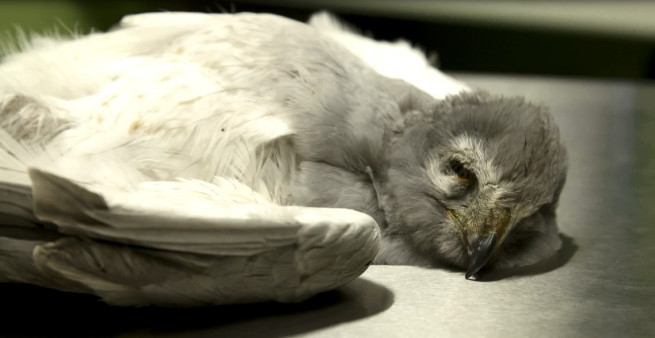
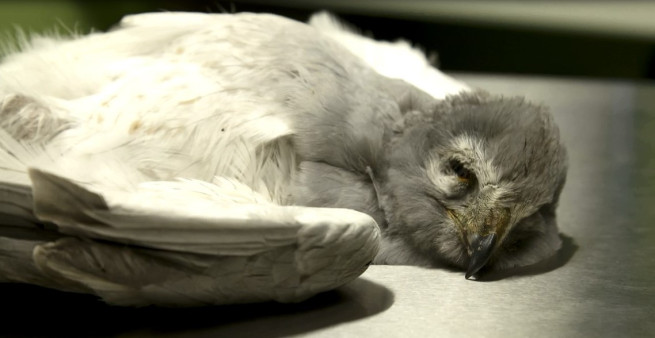
A poisoned red kite. Photographer: unknown
Robust policing work in conjunction with forensic science found these birds had not died naturally and had in fact been poisoned with banned substances, including Aldicarb and Bendiocarb.
Wildlife Officer, Police Constable John Cowan, said: “Extensive policing work involving a number of partners, along with forensic science, enabled us to build a case against Nicolle who had been killing protected birds over a number of years.
“Not only was there a risk to the rural environment, but also to members of the public handling poisoned birds some of which were found near a primary school.
“Police Scotland and the partners we work with treat all types of wildlife crime very seriously and this conviction is a strong message that those who poison wild and protected birds will be robustly investigated.
“I would also like to thank the public who provided information that assisted our enquiries. This is vital to our work in combatting wildlife crime.
“I would encourage anyone who comes across a protected dead bird or animal to report it to us. Likewise if you have information about wildlife crime please get in touch via 101.”
ENDS
UPDATE 19th May 2023: Monumentally inadequate sentence for Barry Nicolle, serial red kite poisoner in Dumfries & Galloway (here).
Barry Nicolle, a wildfowl collector in south west Scotland, has pleaded guilty to 14 charges this morning at Dumfries Sheriff Court in relation to the illegal poisoning of red kites in the area.
Red kite. Photo: Dick Forsman
Nicolle’s guilty pleas relate to the poisoning of four red kites, placing out poisoned baits, possession of illegal poisons and illegal trap use, according to Ian Thomson, Head of Investigations at RSPB Scotland.
Police Scotland led a multi-agency investigation, assisted by the RSPB, after a number of poisoned red kites were discovered in the area between 2018-2020 (see here, here, here and here for previous blogs).
Nicolle is due to be sentenced on 19th May 2023.
I expect full details of the case will be published post-sentencing.
UPDATE 6th April 2023: Police Scotland statement on conviction of red kite poisoner Barry Nicolle (here)
UPDATE 19th May 2023: Monumentally inadequate sentence for Barry Nicolle, serial red kite poisoner in Dumfries & Galloway (here).









 Raptor Persecution UK