Satellite-tagged hen harrier Fortune ‘disappears’ at roost site in Northumberland

Another hen harrier has gone ‘missing’, the third to be reported in the last 24hrs.

As with the two most recent reports (see here and here), this information has had to be dragged out of Natural England via a Freedom of Information request.

This time it’s a young female, optimistically named ‘Fortune’, who was tagged (#162150) on 15th June 2020 at a nest site in Northumberland (site 1). In August 2020 she was reportedly in Dumfries & Galloway but on 16th September her tag’s last known fix came from an undisclosed site in Northumberland, listed by Natural England as, ‘Site confidential important hen harrier roost’. She was wearing a tag with known reliability, in contrast to the tag worn by recently-disappeared hen harrier Harold.

There’s no further information.

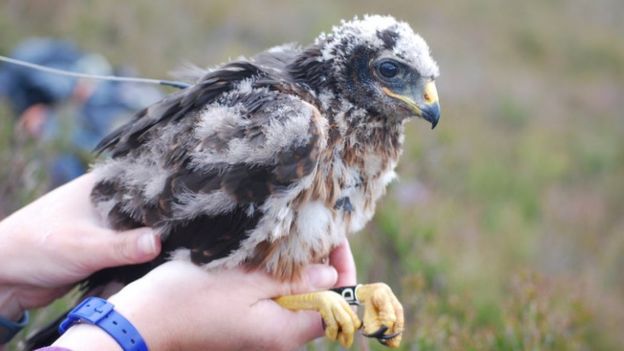
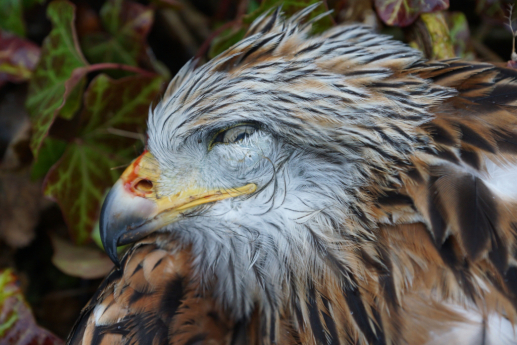
[A random photo of a young hen harrier by RSPB]

The illegal killing of hen harriers at winter roost sites has long been recognised by raptor fieldworkers as being of huge concern. In 2019 an armed man with dogs was filmed by the RSPB Investigations Team at an undisclosed roost site in Yorkshire (see here). The day before, satellite-tagged hen harrier ‘River’ vanished from the same roost site (here). Imagine that!

So that’s three satellite-tagged hen harriers that all vanished in September 2020, one next to a grouse moor in Yorkshire, one on a grouse moor in the Yorkshire Dales National Park, and one at an undisclosed roost site somewhere in Northumberland.

And they’re not the only ones – more details are yet to see the light of day.

Satellite-tagged hen harrier Harold ‘disappears’ on grouse moor in Yorkshire Dales National Park

Following yesterday’s news that one of the brood meddled hen harrier chicks had ‘vanished’ next to a grouse moor just beyond the boundary of the Yorkshire Dales National Park (see here), today I bring you news that another satellite-tagged hen harrier has vanished, this time on a grouse moor inside the Yorkshire Dales National Park.

This information has also come from a Freedom of Information request to Natural England.

Hen harrier ‘Harold’ was tagged (#57272) in the Yorkshire Dales on 4th June 2020. His tag’s last known fix came from a grouse moor at NY830036 on 19th September 2020.

Funnily enough, another young hen harrier called Dryad, tagged by the RSPB, was also reported ‘missing’ from the same place on 7th September 2020. Imagine that! (See here).

[Grouse moors rise above small villages and hamlets inside the Yorkshire Dales National Park. Photo by Ruth Tingay]

[The last known fix from Harold’s satellite tag at grid ref NY830036, surrounded by the burnt strips of the grouse moors]

There is a caveat with Harold’s disappearance. The tag that Natural England fitted was one of the tags that has previously been identified as being unreliable due to its limited functionality (see here for a discussion) and has since been removed from the brood meddling trial at the insistence of the scientific advisory group. So why the hell is Natural England still using this tag on other hen harriers?

You’ll have to draw your own conclusions about the fate of Harold. And why Natural England hasn’t deemed it worthy of any publicity, despite me asking about it in December (here) and despite its own extensive research that demonstrates how often these young hen harriers are suspected to be illegally killed on or close to grouse moors (see here).

Harold’s disappearance will be added to the ever-increasing list of missing or confirmed dead hen harriers since 2018 (currently standing at 46 after yesterday’s news). But it won’t be added just yet because there’s more bad news about satellite-tagged hen harriers still to come.

Standby.

UPDATE 14 January 2021: This blog has been picked up by the Yorkshire Post (here)

Another brood meddled hen harrier ‘disappears’ next to Yorkshire grouse moor

One of last year’s brood meddled hen harriers has ‘disappeared’ next to a Yorkshire grouse moor.

For new blog readers, hen harrier brood meddling is a conservation sham sanctioned by DEFRA as part of its ludicrous ‘Hen Harrier Action Plan‘ and carried out by Natural England (NE), in cahoots with the very industry responsible for the species’ catastrophic decline in England. For more background see here.

[Cartoon by Dr Gerard Hobley]

As you’ll recall, despite all five of the 2019 brood meddling cohort being ‘missing’ presumed dead, four of them in suspicious circumstances (see here), Natural England decided in 2020 that another load of chicks should be brood meddled to appease the grouse shooting lobby (see here). Those chicks, along with other, non-brood meddled chicks, were fitted with satellite tags.

In September we learned that four of the 2020 tagged cohort were already gone – one dead (likely predated) and three ‘missing’ (here), but none of these had been brood meddled.

Since then, Natural England hasn’t provided any updates and, since the autumn is peak hen harrier-killing season on grouse moors, I submitted an FoI to Natural England in December to find out what was going on, especially as there’d been rumours from fieldworkers that at least one tagged harrier had vanished in a notorious grouse shooting area in the Yorkshire Dales National Park.

Natural England has now responded and the news isn’t good, although it’ll come as absolutely no surprise whatsoever.

According to the information released by Natural England under FoI regs, a number of satellite tagged hen harriers have gone ‘missing’ since September 2020 – further blogs on these will follow shortly.

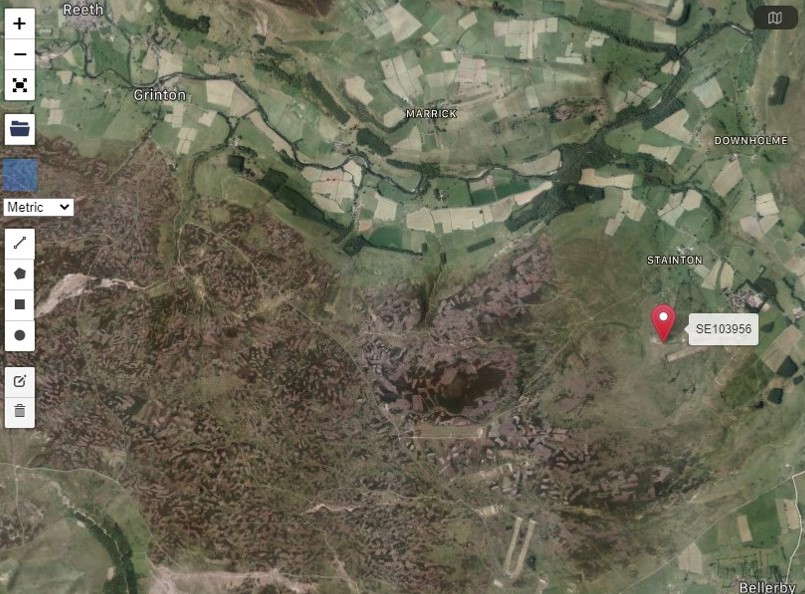
One of those missing is a brood-meddled hen harrier (Tag #55152) originally removed from a nest (BMR1) in North Yorkshire. He was tagged on 11 July 2020 and his tag’s last known fix was on 20th September 2020, right next to a grouse moor in North Yorkshire, grid reference SE103956.

[The last known fix of Tag #55152 on 20th September 2020]

There’s no further information available and I haven’t seen any appeal for information from North Yorkshire Police or Natural England.

The disappearance of this bird means that there are now 46 hen harriers ‘missing’ or confirmed illegally killed since 2018 (see here). I won’t update the victim list just yet because as mentioned above, there are others to add.

Standby.

As for the rest of the nine hen harriers brood meddled in 2020, according to Natural England six are still transmitting (as of December 2020), one died in captivity before release and one died of natural causes in October 2020 (Tag #55154).

The legal basis of hen harrier brood meddling has been challenged in the courts by both Mark Avery and the RSPB. An appeals hearing is due later this month (see here for details).

Buzzard with shotgun injuries found in localised persecution hotspot, East Yorkshire

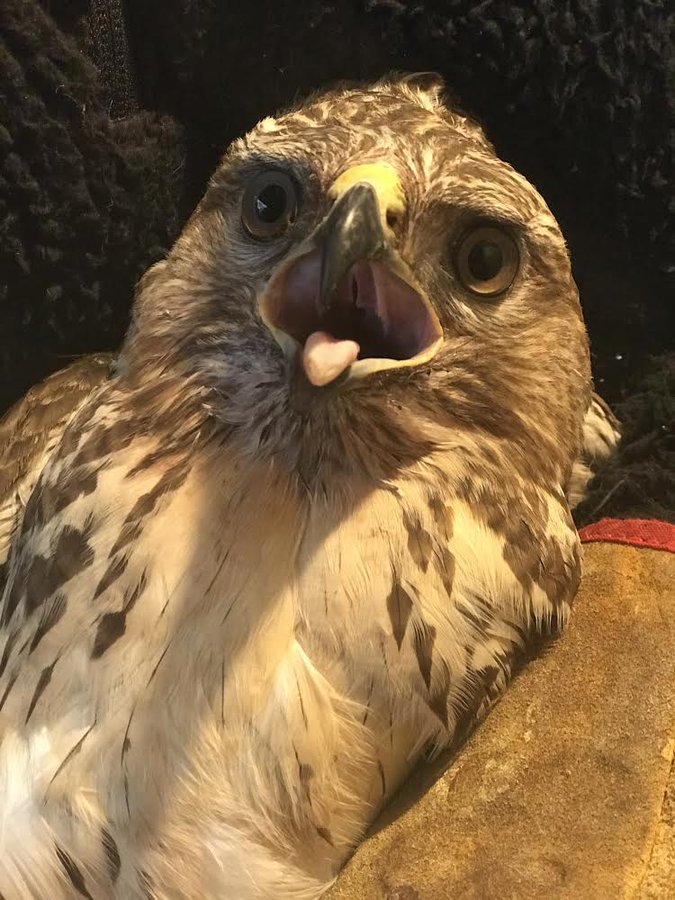
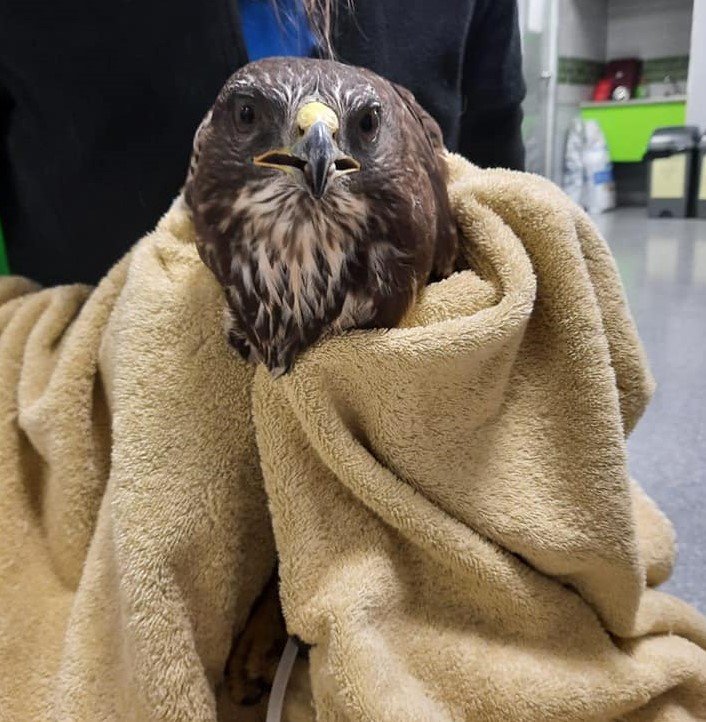
In early December an injured buzzard was found struggling by a member of the public in Sproatley, East Yorkshire.

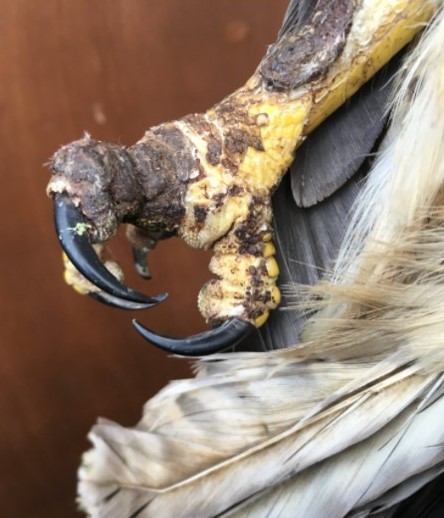
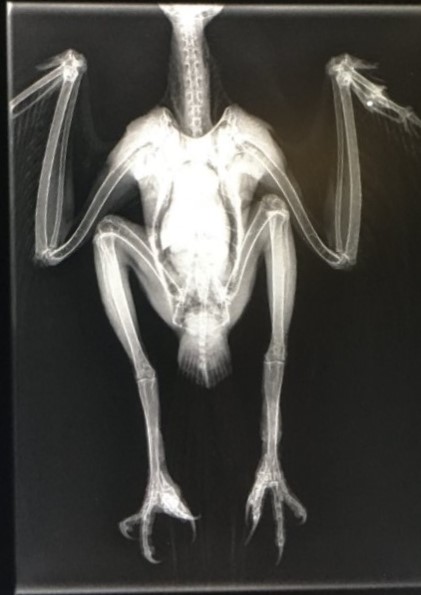
[All photos from Jean Thorpe]

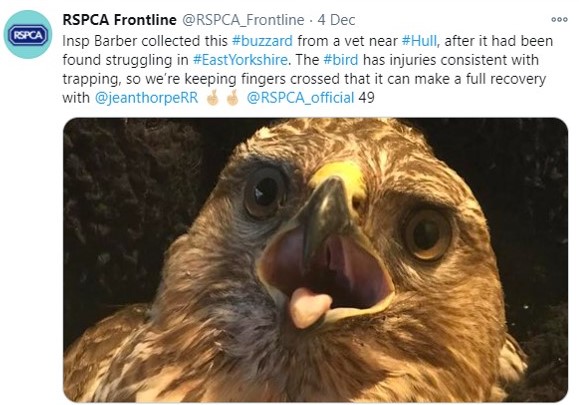
An RSPCA tweet on 4th December said the buzzard had injuries ‘consistent with trapping’ and the bird was transferred to the expert care of Jean Thorpe at Ryedale for rehabilitation.

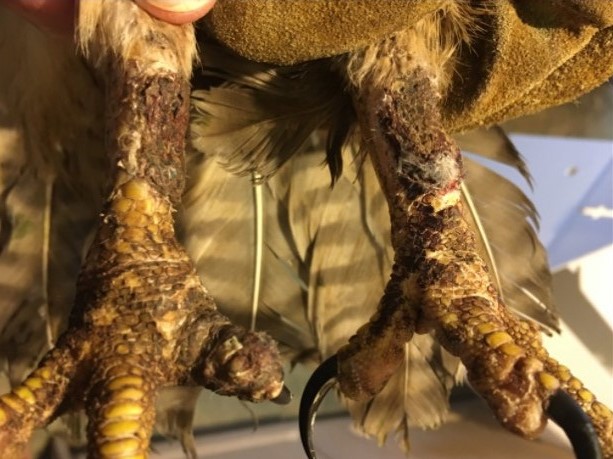
However, Jean examined the bird and didn’t believe its injuries were consistent with trapping, mainly because the scabbed injuries were restricted to the front of the bird’s shins and not the back of the legs. She also noticed a gangrenous talon and the rest of the foot was also badly infected.

Jean took the buzzard to a specialist avian vet and a decision was taken to euthanise the bird due to the extent of its injuries.

An x-ray revealed the bird had been shot with a shotgun but it’s not clear how old that injury was and whether it was connected to the foot injury.

The buzzard is being sent for a full post mortem and Humberside Police have been advised of the incident. If you have any information that could assist the investigation please contact the police on Tel 101 and ask for Police Wildlife Crime Officer Richard Fussey. It’s not known whether a crime reference number has been issued.

Interestingly, back in 2013 two buzzards were found shot and dumped in a ditch in Sproatley (see here). The RSPB offered a reward for information leading to a conviction but like most of these crimes, the perpetrator was never identified/prosecuted.

Buzzard shot & injured in County Kildare

Hot on the heels of a recent buzzard shooting reported in the Irish Republic just a couple of weeks ago (here), here’s another one.

The details are sketchy at the moment but this buzzard was found yesterday and is currently being cared for at the Kildare Animal Foundation Wildlife Unit.

It’s clear from the x-ray that someone shot this bird with a shotgun. The crime has been reported to the National Parks & Wildlife Service.

County Kildare sits in the middle of the league table for raptor persecution crimes recorded in the Irish Republic (see here).

Third buzzard found shot in Essex this year

Essex Police are investigating yet another shooting of a buzzard.

Details are sketchy at the moment but the buzzard is believed to have been shot overnight between 1st and 2nd December with ‘what is believed to be a shotgun’. There isn’t any information about whether the buzzard is alive or dead.

The offence is believed to have taken place on farmland near Blind Lane, Billericay, Essex CM12 9SN.

The police crime reference number is 42/1995748/20. Please contact the police on Tel 101 if you have information that can assist this criminal investigation. Thanks to Police Wildlife Crime Officer Jed Raven for the details.

This is the third buzzard to be reported shot in Essex this year – one was found in June (see here) and another in September (see here and here). A hobby was also shot in Essex in August this year (see here).

Hen harriers doing well on Mar Lodge Estate but what happens when they leave?

Back in 2016, the National Trust for Scotland (NTS) was celebrating the rare success of a hen harrier breeding attempt on the Mar Lodge Estate, the first such success for decades (see here).

[A young hen harrier fitted with a satellite tag on Mar Lodge Estate in 2016. Photo by Shaila Rao]

The NTS has just published an update on the return of hen harriers to Mar Lodge Estate, detailing further breeding successes in each year since (see here).

This is really, really encouraging news, but it’s only half of the story. Breeding success is meaningless if survival rates are low, and they are low, very low. The most recent national survey of hen harriers in Scotland, conducted in 2016, documented a 9% decline since the previous survey in 2010. It was the second successive decline in the Scottish hen harrier population revealed by national surveys, signalling a worrying trend. In the longer term, over a period of just 12 years, the number of breeding pairs had dropped by 27% in Scotland (see here). Illegal persecution connected to driven grouse moor management is widely acknowledged as being the most significant threat to this species’ conservation, not just in Scotland but across the UK (e.g. see here).

The NTS blog recognises this and states:

However, it’s not all good news. The success of hen harrier breeding at Mar Lodge Estate led to us being involved in the RSPB Hen Harrier Life Project and through this 14 harrier chicks from Mar Lodge Estate were satellite-tagged between 2016 and 2020. But of these 14 chicks, only one still survives in 2020 – a female named Tamara, who spends much of her time in Perthshire. Eight of the satellite tags stopped suddenly, with no trace of a bird or body found, raising suspicions of possible foul play‘.

Some of those young birds satellite-tagged at Mar Lodge didn’t even make it out of the Cairngorms National Park, ‘disappearing’ in suspicious circumstances on driven grouse moors – e.g. see here, here, here, here, here, joining a growing list of other sat-tagged hen harriers that have vanished or been found dead there (e.g. see here, here, here, here). Such is the extent of this issue, the Cairngorms National Park Authority has had to publish statements that illegal persecution continues to be a problem (e.g. see here).

Some of those young birds from the Mar Lodge Estate feature on the grim list of 45 hen harriers ‘missing’ or confirmed illegally killed in the UK since 2018 – see here. I’m led to believe that this list is now out of date (see here).

Poisoned red kite found dead on Scottish grouse moor – an interesting police investigation

Further to yesterday’s news from Police Scotland that a poisoned red kite had been found dead on a Scottish grouse moor at Moy (see here), news has emerged that this bird was also being satellite-tracked, which has implications for the police investigation and any potential sanction imposed on the estate as a result.

An article in today’s Strathspey and Badenoch Herald (here) published a photograph of the young kite with two of its siblings when they were fitted with satellite tags in 2019. The article also notes that this kite was from the first brood to fledge in the Cairngorms National Park, and the first successful brood in the Badenoch & Strathspey area since 1880 (thanks to blog reader Dave Pierce for posting this as a blog comment yesterday).

[The three red kite siblings, fitted with satellite tags, in the Cairngorms National Park. Photo Scottish Raptor Study Group]

It’s not often, these days, that a poisoned satellite-tagged raptor is found (although there are some notable exceptions, including this satellite-tagged white tailed eagle, found poisoned on a grouse moor in the Cairngorms National Park earlier this year).

Since satellite-tagging became more routine, poisoning offences have dropped considerably, presumably because the presence of a satellite tag increases the probability of crime detection. Instead, the shooting and trapping of raptors have become much more prevalent killing methods because the perpetrator has more control over the crime scene (and can thus remove evidence quickly). What we usually get with satellite-tagged raptors these days is a sudden and inexplicable ‘stop’ in the tracking data, and both the tag and the bird ‘disappear’, never to be seen again (well, only if the criminal has hidden the evidence of the crime properly, unlike in this recent case where a golden eagle’s satellite tag was discovered cut off and wrapped in lead [to block the signal] and dumped in a river).

So the discovery of this poisoned satellite-tagged red kite at Moy is unusual, but also very helpful. Depending on the type of tag and it’s ‘duty cycle’ (i.e. the frequency with which the tag had been programmed to collect and transmit data), information should be available to Police Scotland to inform them of the kite’s recent movements. For example, had it been on this grouse moor for several days (in which case the likelihood of it being poisoned there would seem high) or had it travelled in from a distance elsewhere shortly before dying, which might indicate it was poisoned elsewhere?

Much will also depend on the type of poison used (which hasn’t been disclosed) and the dose and the toxicity. We know from the Police press release yesterday that it was a banned poison (one of eight listed on the Possession of Pesticides (Scotland) Order 2005, which are Aldicarb, Alphachloralose, Aluminium phosphide,  Bendiocarb, Carbofuran, Mevinphos, Sodium cyanide and Strychnine) but some of these poisons are incredibly fast-acting and others are less so, which might also give clues to where the poison had been placed.

Information also hasn’t been released about whether a poisoned bait was found close to the poisoned red kite. Sometimes they are (especially if the poison used is fast-acting) but other times the bait is not present, which might suggest the bird was poisoned elsewhere and managed to fly some distance before succumbing to death.

In other cases bait has been found placed out on estate boundary fences – this has been a common ploy by some estates that aims to obfuscate a police investigation and point blame to an innocent, neighbouring estate where the poisoned bird may have been found dead.

For obvious reasons, the Police haven’t released much of the details because the criminal investigation is ongoing. However, it is these details that will inform the decision-making process at NatureScot (SNH rebranded) as to whether a General Licence restriction order should be imposed on Moy Estate after the discovery of this poisoned red kite.

As regular blog readers will know, General Licence restriction orders are pretty impotent because estates can simply circumnavigate them with applications for individual licences instead, but nevertheless, that’s not a reason for not imposing them where merited.

This’ll be an interesting case to follow.

UPDATE 22nd June 2022: General Licence restriction imposed on Moy, a grouse-shooting estate, after discovery of poisoned red kite (here)

Poisoned red kite found on Scottish grouse moor

Press release from Police Scotland (16th December 2020)

Appeal for information – poisoned bird of prey – Ruthven, Moy

Police Scotland has confirmed that a red kite found dead in the Ruthven area in October, had been poisoned with a banned pesticide.

[A poisoned red kite, photo by Marc Ruddock. NB: Not the poisoned red kite in this particular incident]

Further searches were carried out yesterday (15 December) with partner agency RSPB on hill ground near Meall a’ Bhreacraibh and Ruthven, Moy, in the northern Monadliath mountains.

No further poisoned raprtors or animals were identified.

Police Constable Daniel Sutherland, Highlands and Islands Wildlife crime Liaison officer, said:

Traces of a banned pesticide have been detected in a Red kite found in the area. This incident is sadly another example of where a bird of prey has been killed through ingestion of an illegally held poison.

I strongly urge anyone within the local and wider community to come forward with details on any information about this incident.”

Following consultation with the Scottish Government Rural Payments Directorate and the Science and Advice for Scottish Agriculture (SASA), Police Scotland requests members of the public and any dog walkers to be cautious when walking in the surrounding area and the immediate vicinity. 

Anybody who has information about this incident, banned pesticide possession or misuse, or other information relating to raptor persecution please contact Police Scotland on 101 or pass on information anonymously via Crimestoppers on 0800 555 111.

ENDS

This is a very good response from Police Scotland – a press release out the day after the police search and a clear warning to the public to be cautious in this area, especially if walking with dogs. The name of the banned poison isn’t given, probably for investigative purposes, but by telling the public it’s a banned poison we know it’s one of eight highly toxic pesticides (or perhaps a combination) listed on the Possession of Pesticides (Scotland) Order 2005, which are Aldicarb, Alphachloralose, Aluminium phosphide,  Bendiocarb, Carbofuran, Mevinphos, Sodium cyanide and Strychnine.

Now, about the location. According to Andy Wightman’s excellent Who Owns Scotland website, the area of land mentioned in the police press release is part of the Moy Estate in the northern Monadhliaths. Or at least it was when Andy compiled his data – it’s possible, of course, that there have since been boundary changes.

Regular blog readers will be familiar with the Moy area. Moy Estate was raided by police ten years ago after the discovery of poisoned bait and dead raptors and illegally set traps. A gamekeeper was later convicted of possession of a red kite after its bloodied corpse was found in the back of his vehicle. It had two broken legs and a head injury. A bloodied shinty stick was also found in the back of the vehicle.

The remains of two further red kites were discovered on the moor, including a severed red kite leg and some wing tags that had previously been fitted to a kite, all found buried in holes under some moss. A jar in one of the gamekeeper’s houses contained the leg rings of four young golden eagles – nobody could account for how they had ended up inside that jar. A live hen harrier was found caught by its leg in an illegally-set spring trap. It survived after being rescued by raptor workers.

No further charges were brought against anyone for any of the offences uncovered at Moy.

In 2016 Police Scotland issued an appeal for information following the discovery of disturbed and abandoned buzzard and goshawk nests in the Moy Forest. One goshawk and four buzzard nests were abandoned in suspicious circumstances, with some evidence of illegal disturbance. These nests were being monitored by staff from Forestry Enterprise Scotland. No charges were brought.

For previous blogs on Moy see here.

I would imagine, after this latest discovery, that Ministers in the Scottish Government who recently decided to press on with the introduction of a licensing scheme for grouse shooting estates, despite cries of ‘It’s unnecessary regulation!‘ and ‘It’s all so unfair!‘ from the shooting industry, can today feel vindicated that their decision was the right one.

They now need to get on with it and get it implemented ASAP, because this latest victim is evidence that raptor persecution continues, despite all the denials routinely chuntered out by the so-called leaders in the game shooting industry.

UPDATE 17 December 2020: Poisoned red kite found dead on Scottish grouse moor – an interesting police investigation (here)

Red kite killed in barbaric illegal trap on pheasant-shooting estate – no prosecution

A red kite suffered a brutal and agonizing death when it was caught in a barbaric illegal trap at a pheasant-release pen on an unnamed Berkshire shooting estate in August 2020.

A member of the public found the dead kite, hanging upside down with its legs caught in a pole trap, a cruel device that has been outlawed since 1904.

[Red kite hanging dead in an illegal pole trap on a Berkshire shooting estate. Photos via RSPB].

The member of the public reported the incident to the estate (please note – if you find something like this report it to the police and the RSPB, straight away). A gamekeeper was reportedly abusive and threatening in response.

The incident was reported to the RSPB a couple of days later, who contacted Thames Valley Police. Fortunately in this instance, senior estate officials had already reported the crime to the police and had instructed the gamekeeper to retrieve the dead kite and the illegal trap.

The gamekeeper was interviewed and denied setting the trap on his pheasant pen and claimed it was ‘a set-up’.

There appears to be insufficient evidence to progress a prosecution.

For further details of this horrific crime, and the ongoing difficulty of securing sufficient evidence for a prosecution, please see the RSPB Investigations Team’s blog here.