Blog

Police investigate suspicious death of tenth red kite in North Yorkshire

RKHarrogateNorth Yorkshire Police are investigating the suspicious death of yet another red kite – the tenth red kite to have been either shot or found dead in suspicious circumstances in North Yorkshire in the last few months.

The latest victim was found at Timble Ings near Harrogate, just a short distance from Blubberhouse Moor where another red kite was found shot and critically injured a few weeks ago (see here).

Although the cause of death of this latest red kite has not yet been established, it’s not difficult to see why North Yorkshire Police are treating it as suspicious at this stage. The eastern side of the Yorkshire Dales National Park and the adjoining Nidderdale AONB are notorious black spots for illegal raptor persecution, particularly for hen harriers (see here) and red kites (see here). The area is dominated by driven grouse moors.

Article on the latest dead red kite can be read in the Harrogate Advertiser here

UPDATE 5.30pm: North Yorkshire Police have now confirmed this red kite had been shot. Well done to them for putting out a quick statement and appeal for information (here).

E-petition to ban driven grouse shooting can be signed here

Mountain hare massacres on Scottish grouse moors: no planned monitoring

Last month we blogged about a series of Parliamentary questions and answers about mountain hare massacres on Scottish grouse moors and how these unregulated culls are, in our opinion, in breach of EU conservation legislation (here).

mountain-hare-cull-angus-glens-large-copy

Those Parliamentary questions had been lodged by Scottish Greens MSP Mark Ruskell. Now Alison Johnstone, a fellow Scottish Greens MSP, has lodged some more and the Government’s response to those questions is, frankly, shocking.

Question S5W-00222. Date lodged: 25/5/2016:

To ask the Scottish Government what it is doing to establish a working group to help plan the future arrangements for sustainable management of mountain hares.

Answered by Environment Cabinet Secretary Roseanna Cunningham 3/6/2016:

Under the auspices of Scotland’s Moorland Forum (which represents a range of stakeholders involved in moorland management, including the Scottish Government and Scottish Natural Heritage) it has been agreed that guidance on the management of mountain hare be produced by a selected sub-group of specialists and representatives from relevant interest groups. The inaugural meeting of this sub-group took place on 23 May 2016.

The sub-group will produce and publish interim best practice guidance in the autumn. This interim guidance will be updated after the anticipated publication (in 2017) of the findings from a study being undertaken by the James Hutton Institute, the Game and Wildlife Conservation Trust and Scottish Natural Heritage into the most appropriate methods of assessing mountain hare numbers.

The outputs of the study will be used to standardise the method of establishing mountain hare density in conjunction with the promotion of more cooperative working between estates, thus facilitating better informed decisions on sustainable hare management at regional scale.

Question S5W-00223. Date lodged: 25/5/2016:

To ask the Scottish Government what level of estate compliance Scottish Natural Heritage has recorded in relation to its 2014 position statement, ‘SNH-GWCT-SLE position on large-scale culls of mountain hares to reduce louping ill‘.

Answered by Environment Cabinet Secretary Roseanna Cunningham 3/6/2016:

The position statement issued by Scottish Natural Heritage, the Game and Wildlife Conservation Trust, and Scottish Land and Estates sets out a number of different recommendations relating to the management of mountain hares in Scotland. There are no formal arrangements for monitoring the extent to which the recommendations are being followed.

Question S5W-00224. Date lodged: 25/5/2016:

To ask the Scottish Government when SNH plans to require formal mountain hare cull returns from estates in order to inform future sustainable management practice for this species.

Answered by Environment Cabinet Secretary Roseanna Cunningham 8/6/2016:

There are no current plans to require mountain hare bag returns.

END

So ‘best practice guidance’ is to be produced in the autumn by a sub-group of the Moorland Forum. We don’t yet know which organisations have representatives on that sub-group but we can take a guess. One of them is bound to be Scottish Land & Estates – that’s the group that repeatedly says, without any supportive evidence, that widespread and indiscriminate culls are not having a detrimental effect on mountain hare populations.

And will that ‘best practice guidance’ follow the recommendations made in a recent independent review on sustainable moorland management which was submitted to SNH’s Scientific Advisory Committee in October 2015? One of the main recommendations made in that review was that the case for widespread and intensive culling of mountain hares in the interests of louping-ill control has not been made (see here). That should, technically, put a stop to mountain hare massacres on grouse moors. Why hasn’t it?

And what, exactly, is the point of producing best practice guidelines anyway? The estates involved in mountain hare massacres are not obliged to adhere to these ‘guidelines’, and, as we can see from the Government’s responses to the two other Parliamentary questions, there are no formal arrangements for monitoring estate compliance and nor are there any plans to require these estates to submit figures on how many hares they’ve massacred each year.

Why is that? How difficult is it to actually monitor estate compliance? If it is so very difficult, there is no point whatsoever in producing best practice guidelines for an industry with a reputation for long-term criminality. Guidelines can be ignored without suffering a penalty. Legislation can, and often is, ignored by many in this industry but at least there’s the (very slim) possibility of a penalty if they’re caught at it.

And what possible reason is there not to ask for annual cull figures from each estate? Why isn’t the Government demanding these figures? Surely they are obliged to do so in accordance with their obligations under the EU Habitats Directive? It can’t be that difficult for the estates to produce these figures. After all, they claim their culls are already ‘done in accordance with best practice’ and are ‘informed and balanced’ (see here). If they can make such claims then presumably they’ve already got the evidence to back them up? If they haven’t got the evidence then these claims should be treated with the contempt they deserve. It’s just another propaganda exercise to deflect attention from what’s actually going on on those grouse moors.

Hares_Lecht_25Feb2016 (2) - Copy

The Scottish Government’s lack of critical evaluation of this situation, their willingness to ignore the findings of an independent review, and their unwillingness to take any meaningful steps to prevent the ongoing extensive and indiscriminate slaughter of this so-called protected species at the hands of grouse moor managers is nothing short of disgraceful.

Has Raeshaw Estate lost Judicial Review re: General Licence restriction?

Regular blog readers will know we’ve been interested in the General Licence restrictions imposed by SNH on two grouse shooting estates for suspected raptor persecution crimes, see here and see overview of events to date here.

In April 2016, one of those estates, Raeshaw, near Heriot in the Scottish Borders, submitted an application for a judicial review of the process SNH used to implement the General Licence restriction.

While that application was underway, SNH put a temporary suspension on Raeshaw’s General Licence restriction (meaning the estate was now entitled to carry on trapping and killing wildlife under the terms of the General Licence), and in May 2016 SNH announced on its website that the temporary suspension would be in place ‘until further notice’:

Raeshaw SNH temp restriction again 20 May 2016

We just looked at SNH’s website again, and it now appears that the temporary suspension has been lifted and the General Licence restriction on Raeshaw Estate has now been reinstated:

SNHGL14June2016 - Copy

That’s interesting. Does that mean that Raeshaw Estate lost the judicial review against SNH’s procedures? Was there even a judicial review? Perhaps Raeshaw’s application for a judicial review was denied by the court?

It’s hard to know! We can’t find any statement about this, anywhere. No SNH press release, nothing. We tried to contact SNH’s media lead on wildlife crime but she’s away on leave until 5th July.

Marvellous.

It’s important to understand what happened in this case for several reasons. The public needs to know whether Raeshaw Estate is again banned, as it appears, from using certain types of traps, because then we’ll know whether those traps, if found, should be reported to the Police. You’d think SNH, as the agency that has implemented this General Licence restriction, would want to publicise this as much as possible to help with enforcement measures. It’ll be members of the public who play a crucial role in this because the Police can’t just turn up on Raeshaw ‘to have a look’ unless they have reason to suspect a crime has been committed e.g. if a passing hill walker has reported trap use on this estate.

It’s also important to understand what happened in this case because whatever did happen has huge implications for other future General Licence restrictions which SNH may choose to impose. If the judicial review failed because the court decided SNH’s procedures were fair, then this opens the floodgates and SNH can get on with imposing other General Licence restrictions that they may have been sitting on pending the result of the judicial review. If there wasn’t a judicial review because Raeshaw Estate’s application for one was rejected by the court, are there other legal options available to Raeshaw to contest the General Licence restriction? If there are other options, what are they and what impact will they have on SNH’s ability to impose further General Licence restrictions on other estates suspected of raptor persecution?

A bit of transparency from SNH wouldn’t go amiss here.

Emails to Andrew Bachell, SNH Director of Policy: Andrew.Bachell@snh.gov.uk

Vicarious liability prosecution: Andrew Duncan (Newlands Estate) part 6

Criminal proceedings continued on 3rd June against landowner Andrew Walter Bryce Duncan, who is alleged to be vicariously liable for the crimes committed by gamekeeper William (Billy) Dick in April 2014.

Gamekeeper Dick was convicted in August 2015 of killing a buzzard on the Newlands Estate, Dumfriesshire by striking it with rocks and repeatedly stamping on it (see here). Dick was sentenced in September 2015 and was given a £2000 fine (see here), although he is appealing his conviction.

Here’s a quick review of the proceedings against Andrew Duncan so far:

Hearing #1 (18th August 2015): Trial date set for 23rd Nov 2015, with an intermediate diet scheduled for 20th Oct 2015.

Hearing #2 (20th October 2015): Case adjourned. Nov trial date dumped. Notional diet hearing (where a trial date may be set) scheduled for 18th January 2016.

Hearing #3 (18th January 2016): Case adjourned. Another notional diet & debate scheduled for 11th March 2016.

Hearing #4 (11th March 2016): Case adjourned, pending the result of gamekeeper Billy Dick’s appeal. Another notional diet scheduled for 4th April 2016.

Hearing #5 (4th April 2016): Case adjourned, pending the result of gamekeeper Billy Dick’s appeal. Another notional diet scheduled for 3rd June 2016.

Hearing #6 (3rd June 2016): Case adjourned, pending the result of gamekeeper Billy Dick’s appeal. Another notional diet scheduled for 17th June 2016.

For those interested in gamekeeper Billy Dick’s appeal, we blogged about it here.

Vicarious liability in relation to the persecution of raptors in Scotland (where one person may potentially be legally responsible for the criminal actions of another person working under their supervision) came in to force four and a half years ago on 1st January 2012. To date there have been two successful convictions: one in December 2014 (see here) and one in December 2015 (see here).  One further case did not reach the prosecution stage due, we believe, to the difficulties associated with identifying the management structure on the estate where the crimes were committed (see here).

Scarey man on an Angus Glens grouse moor

SCAREY MAN - CopyHere’s another entry for the Mysterious Visiting Fairies’ Guide to Getting Rid of Hen Harriers on Grouse Moors.

Filmed on a grouse moor in the Angus Glens (that well-known ‘wildlife haven‘) last week, it’s really little wonder that hen harriers haven’t bred on these grouse moors since 2006.

This is a Scarey Man Birdscarer. Powered by a 12 volt battery it can be set to display every 18 minutes for 25 seconds. It emits a loud noise (siren) and can also be illuminated for night work.

Turn up the volume, sit back and enjoy the short video HERE


Grouse moor management bang out of order

There are lots of ways gamekeepers sorry, mysterious visiting fairies, can, and obviously do, get rid of pesky hen harriers from the grouse moors of upland England and Scotland.

Options available might include disturbing them with booming gas guns (here), or lying in wait with a decoy hen harrier (here), or setting illegal pole traps to catch them (here), or burning out their nests (here), or poisoning them (here), or catching them with baited spring traps on the ground (here), or stamping on their chicks (here), or shooting them (here), or removing their eggs/chicks as part of a government-sanctioned plan designed to appease grouse moor owners (here).

Here’s another method that can be included in the Mysterious Visiting Fairies’ Guide to Getting Rid of Hen Harriers on Grouse Moors. The following two photographs were taken on a grouse moor in the Angus Glens last week (thanks to the contributor who sent these):

bangers1 - Copy

bangers2 - Copy

This is a bird-scaring banger rope, draped around a gatepost. These banger ropes are designed to mimic the intermittent sound of a shotgun and are used for scaring birds from agricultural crops. You set fire to one end of the rope and as it burns, it’ll cause loud explosions as the flame reaches the banger units. Some ropes are designed to burn for six hours, setting fire to the explosives at 15 or 30 minute intervals. Other ropes are designed to burn through the night for up to 12 hours.

Obviously, it’s a really good idea to deploy these explosive banger ropes in areas where the public are likely to access (say, like on a gatepost), on land that is susceptible to wild fire (say, like a heather moor), and in areas where nesting birds (including gamebirds, waders and ground-nesting raptors) are trying to breed (say, like a driven grouse moor).

It seems like the mysterious visiting fairies think June is an ace time to deploy them on grouse moors because here are some more photographs taken on a North Yorkshire grouse moor just four days ago. This time the banger rope had been deployed inside a (wooden!) grouse butt and the remains were quite evident on the ground. The smell of burning still hung in the air.

Yorksbanger1 - Copy

Yorksbanger2 - Copy

Yorksbanger3 - Copy

Here’s a close up of the back and front of one of the tags found inside the butt, photographed when we got home. These were Portek banger ropes:

Tag1 - Copy

Tag2 - Copy

Hands off our Hen Harriers! Picnic rally 25 June 2016, North Yorkshire

HowMany (2)

Are you holding the date of 25 June, midday, for a picnic/rally on a grouse moor in North Yorkshire? We are.

We’re looking forward to it.

Apparently this picnic will be in a constituency which has more than 100 signatures on the e-petition to ban driven grouse shooting, is in a National Park, and is approx 40 mins drive from the A1.

But do you turn right or left off the A1?

WATCH THIS SPACE

YDNP Henry

NYMNP Henry

National Trust pulls grouse shooting lease in Peak District National Park

The National Trust has just gone from zero to hero in a move that will send shock waves throughout the grouse-shooting industry and will draw wide acclaim from conservationists.

You may remember at the end of April this year we published a video of an armed man, sitting next to a decoy hen harrier, on a grouse moor in the Peak District National Park (see here). This grouse moor was one of three owned by the National Trust within the National Park, and was leased to a previously unnamed shooting tenant (but see below).

Fake Hen Harrier (1) - Copy

In our opinion, this video depicted somebody lying in wait for a passing hen harrier to come in and mob the decoy bird, bringing the live bird in to close enough range to be shot.

Blog readers from here and from Mark Avery’s website (here) were encouraged to contact the National Trust and ask them what they thought was going on in this video and what they intended to do about it. We know that many of you did just that. The National Trust responded (here) and said they were launching an investigation after the police investigation had failed to make progress.

A couple of weeks later we contacted the National Trust again and asked for an update. We speculated whether they’d be bold or whether they’d bottle it (here). To be honest, we fully expected them to bottle it, as so many other organisations have done when it comes to standing up against the grouse-shooting industry.

We were wrong, and have never been so happy to be wrong! The National Trust has just issued the following statement, and what a statement it is, in every sense of the word:

National Trust Public Statement:

The National Trust has today given notice that the current shooting leases at Hope Woodlands and Park Hall in Derbyshire will end in April 2018.

The charity said it had taken the decision to exercise a break clause in the lease to end the relationship four years early.

Andy Beer, National Trust’s Director for the Midlands, said: “We have a clear vision for land management and wildlife restoration on the High Peak Moors, which was developed in full consultation with our tenants and other key stakeholders.

All our tenants have signed up to deliver to the vision and understand their responsibilities. We work very closely with our tenants and support, consult and discuss any issues relating to the plan on a regular basis.

However, in this case we have decided, after a meeting with the tenant, that we should revoke the lease four years early as it became clear that we could no longer have confidence that they were committed to the delivery of our vision for the land.

We have given the tenant 22 months’ notice and will start the process of looking for a replacement in 2017, when we will be happy to receive applications from partners who can demonstrate how moorland management and shooting can deliver great nature conservation in a way that is compatible with public access.

We remain committed to the High Peak Moors Vision. As with all our conservation aims, we review and evaluate progress periodically. When considering renewals of individual shooting leases in future we will take into careful account the extent to which our objectives have been met, in particular relating to increasing raptor populations.”

Jon Stewart, General Manager, Peak District National Trust

END

This is a ground-breaking move from the National Trust. It’s a huge decision! Basically the NT is saying that it will no longer tolerate the illegal persecution of raptors, whether suspected or actual, on land that it leases to grouse-shooting tenants. It also won’t tolerate the environmentally-devastating impacts of intensively managed driven grouse moors. Let’s hope the next tenant is someone who prefers the far less damaging ‘walked-up’ style of grouse shooting instead.

So finally, after all these years, we now have an organisation that is prepared to be bold and stand up against the previously untouchable grouse-shooting industry! And not just on this grouse moor, which, incidentally, is currently-but-not-for-much-longer managed by Mark Osborne, a name that has often cropped up on this blog and in other media (try Google if you don’t know who he is), but also on other NT-leased grouse moors. Look at that final sentence of the NT statement; if raptor populations are not allowed to recover on these driven grouse moors, tenants can expect their leases to also be pulled.

The NT deserves every plaudit coming its way for this decision and we’d encourage as many of you as possible to contact Jon Stewart and congratulate him and the NT on such a courageously pioneering move. Emails please to: Jon.Stewart@nationaltrust.org.uk 

Not everyone is happy with the NT’s decision, not least the Moorland Association (the representative body of grouse moor owners in England). The Moorland Association has issued the following statement in response to the NT’s news:

STATEMENT from Moorland Association chairman, Robert Benson:

The  Moorland Association is very sad that the National Trust has taken the decision to terminate a sporting lease early. This is the result of a breakdown in confidence in the current tenant’s commitment to the delivery of NT’s Vision and will take effect in April 2018.

We are, however, delighted that the NT has recognised the importance of grouse shooting to help deliver its High Peak Vision and is putting in place a new shooting tenant in order to deliver this.

The MA will do all it can to help this process.

END

What’s hilarious about this statement, apart from them being “very sad”, (remember their anagram? ‘A Sad Morons’ Coalition’) is the headline they’ve used on their website to announce their statement. It reads:

“National Trust supports grouse shooting on its land”.

If ever you needed a perfect example of the lengths the grouse-shooting industry will go to to spread idiotic propaganda and spin, this has to be it!

It’s also amusing to note that they’ve quoted the National Trust’s statement, but have conveniently ‘forgotten’ to include the last paragraph about how NT leases are unlikely to be renewed in future if there’s no sign of a recovery of raptor populations on those grouse moors.

Unlike the Moorland Association, we are, of course, VERY HAPPY with the NT’s news, and not least because it’s a clear demonstration of the influence public pressure can have. Without doubt, the NT’s decision has been made as a direct result of the public’s response to that video nasty filmed on NT land. Hats off to the two birdwatchers who had the wit to film what they were seeing, to the person who sent us that video and asked us to publish it, and to all of you who responded and contacted the National Trust to let them know how strongly you felt. This is a massive result and you all played a big part.

Onwards.

The e-petition to ban driven grouse shooting can be signed HERE

Media coverage

BBC news here

Mark Avery blog here

The ‘secrets of the Angus Glens’ that Countryfile forgot to mention

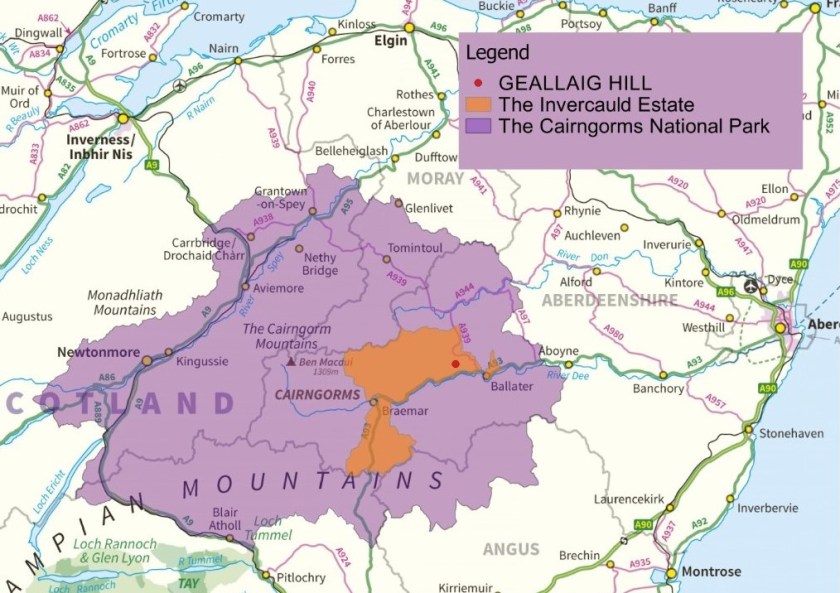
On Sunday evening, Countryfile included a piece about the grouse moors of Invermark Estate in the Angus Glens and how it was “a haven for wildlife”.

It can be viewed on iPlayer here for the next 28 days (starts at 22 mins in).

Inane, vacuous and unquestioning, this piece was heralded in previews as ‘uncovering the secrets of the glen’.

Invermark is only one of several grouse moor estates in the Angus Glens. Here are some secrets of the wider Angus Glens that weren’t mentioned on Countryfile:

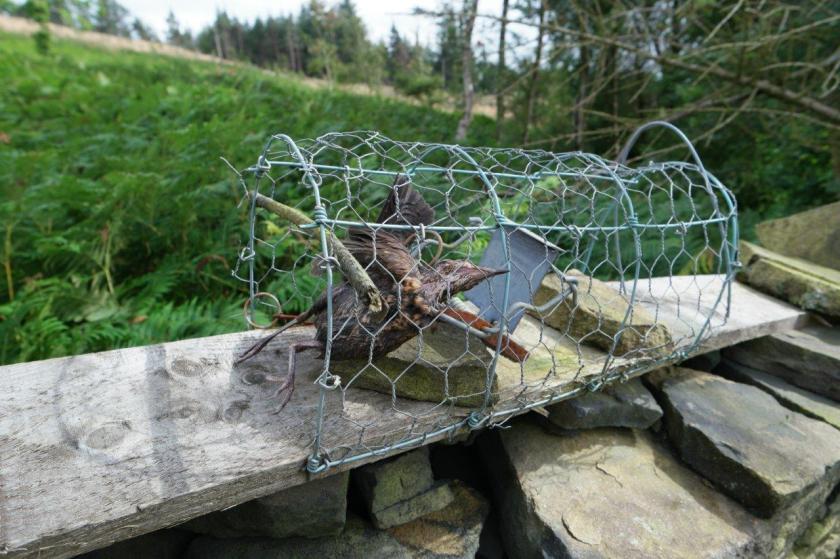
2004 May, near Edzell: long-eared owl and two short-eared owls starved to death in crow cage trap.  No prosecution.

2004 May, Invermark Estate: peregrine nest destroyed. No prosecution.

2006 March, Glenogil Estate: poisoned rabbit bait (Carbofuran). No prosecution.

2006 April, Easter Ogil: poisoned buzzard (Alphachloralose). No prosecution.

2006 April, Easter Ogil: poisoned tawny owl (Alphachloralose). No prosecution.

2006 May, Glenogil Estate: poisoned rabbit bait (Carbofuran). No prosecution.

2006 June, Glenogil Estate: poisoned woodpigeon bait (Carbofuran). No prosecution.

2006 June, Glenogil Estate: Traces of Carbofuran found in estate vehicles & on equipment during police search. No prosecution. Estate owner had £107k withdrawn from his farm subsidy payments. This was being appealed, but it is not known how this was resolved.

2006 July, Millden Estate; poisoned sheepdog (Lindane). No prosecution.

2007 November, Glenogil Estate: Disappearance of radio-tagged white-tailed eagle ‘Bird N’ coincides with tip off to police that bird allegedly been shot. No further transmissions or sightings of the bird.

2008 May, ‘Nr Noranside’: poisoned white-tailed eagle ‘White G’ (Carbofuran, Isophenfos, Bendiocarb). No prosecution.

2008 May, ‘Nr Noranside’: poisoned buzzard (Bendiocarb). No prosecution.

2008 May, ‘Nr Noranside’: poisoned mountain hare bait (Carbofuran, Isophenfos, Bendiocarb). No prosecution.

2008 May, Glenogil Estate: 32 x poisoned meat baits on fenceposts (Carbofuran, Isophenfos, Bendiocarb). No prosecution.

2008 October, ‘Glenogil Estate: poisoned meat bait on fencepost (Carbofuran). No prosecution.

2009 March, Glenogil Estate: poisoned buzzard (Carbofuran). No prosecution.

2009 March, Glenogil Estate: poisoned buzzard (Carbofuran). No prosecution.

2009 April, Millden Estate: poisoned buzzard (Alphachloralose). No prosecution.

2009 July, Millden Estate: poisoned golden eagle ‘Alma’ (Carbofuran). No prosecution.

2009 August, Glenogil Estate: poisoned white-tailed eagle “89” (Carbofuran). No prosecution.

2010 May, ‘Nr Noranside’: poisoned red kite (Carbofuran). No prosecution.

2010 September, Glenogil Estate: poisoned buzzard (Chloralose). No prosecution.

2010 October, Glenogil Estate: poisoned buzzard (Carbofuran). No prosecution.

2010 October, Glenogil Estate: poisoned pigeon bait (Carbofuran). No prosecution.

2010 October, Glenogil Estate: poisoned pigeon bait (Carbofuran). No prosecution.

2011 February, Airlie Estate: buzzard caught in illegal crow trap. (see below)

2011 March, Airlie Estate: 3 x buzzard caught in illegal crow trap. Prosecution (!) but dropped after statement from suspect given to SSPCA deemed inadmissible.

2011 April, Millden Estate: shot buzzard. No prosecution.

2012 April, ‘Nr Noranside’: Remains of buzzard found beside pheasant pen. Suspicious death.

2011 June, Rottal & Tarabuckle Estate: dead kestrel inside crow cage trap. No prosecution.

2012 February, ‘Nr Edzell’: spring-trapped buzzard. No prosecution.

2012 February, ‘Nr Bridgend’: remains of buzzard found under a rock. Suspicious death.

2012 May, Millden Estate: satellite-tagged golden eagle seemingly caught in spring trap, then apparently uplifted overnight and dumped on Deeside with two broken legs & left to die. No prosecution.

2012 May, Glen Esk: disappearance of sat-tagged red kite. No further transmissions or sightings of bird.

2013 January, Invermark Estate: white-tailed eagle nest tree felled. No prosecution.

2013 June, Glen Ogil: shot buzzard. No prosecution.

2013 July, Glen Moy: illegal hawk trap. No prosecution.

2013 September, nr Edzell: unset spring trap next to bait. No prosecution.

2013 November, Glen Lethnot: poisoned golden eagle ‘Fearnan’. No prosecution.

2014 August & September, Glenogil Estate: alleged snare offences. Prosecution of gamekeeper underway (currently ongoing).

2014 October, Nathro: shot buzzard. Prosecution? Unknown.

And some more secrets of the Angus Glens that weren’t mentioned:

No breeding hen harriers on the grouse moors of the Angus Glens since 2006 (see here).

Mountain hare massacre on the grouse moors of the Angus Glens (see here).

Angus Glens gamekeeper facing trial for alleged pole-trapping offences (see here).

Mark Avery has written an alternative and more accurate Countryfile script (see here) than the one that was aired on Sunday evening.

Plenty of people on social media have been asking when Countryfile will do a piece on illegal raptor persecution. To be fair, they did one in 2014 (we blogged about it here) and it was fairly well balanced, but this then begs the question why Countryfile researchers hadn’t done their homework for this latest episode.

Had they done so, here are some of the images they would have found from those ‘wildlife haven’ grouse moors of the Angus Glens. From the top down, an illegally poisoned golden eagle, another illegally poisoned golden eagle, an illegally poisoned white-tailed eagle, an illegally trapped golden eagle that was then dumped in a layby with two broken legs and left to die, the nest tree of a white-tailed eagle that was illegally chainsawed to the ground, and a pile of rotting shot mountain hares. The grouse moors of the Angus Glens a wildlife haven? Hardly. They’re notorious wildlife crime scenes.

Petition to ban driven grouse shooting here

Fearnan

alma

whiteg

deeside eagle

wtenesttree

mountain-hare-cull-angus-glens-large-copy

More raptor persecution at Moy

Moy chicksPolice Scotland has issued an appeal for information following the discovery of disturbed and abandoned buzzard and goshawk nests in the Moy Forest near Tomatin in the Scottish Highlands.

During May this year, one goshawk and four buzzard nests have been abandoned in suspicious circumstances, with some evidence of illegal disturbance. These nests were being monitored by staff from Forestry Enterprise Scotland.

Further details and an appeal for information here

This area is no stranger to illegal raptor persecution. In 2010, a 20-year old gamekeeper employed by Moy Estate was convicted for possession of a dead red kite that was found in the back of his vehicle. It had two broken legs and it’s head had been smashed in.

During the police raid on the grouse moors of Moy Estate, the following was also found:

  • The remains of a further two dead red kites.
  • A red kite’s severed leg, along with wing tags that had been fitted to a sateliite-tracked red kite, hidden in holes covered with moss.
  • Six baited spring traps illegally set in the open.
  • A trapped hen harrier (still alive) caught in an illegally set spring trap.
  • A poisoned bait.
  • Four leg rings previously fitted to golden eagle chicks found in the possession of a gamekeeper.

No charges were brought against anybody for these additional crimes.

Our previous blogs on Moy can be read here.

Moy is also home of the annual Highland Game Fair, regularly attended by certain MSPs, Scottish Land & Estates and the Scottish Gamekeepers’ Association to ‘celebrate’ the activities of the game-shooting industry.

The petition to ban driven grouse shooting can be found here