Blog

Hen Harrier brood management working group: what they’ve got planned

Hen harrierIn January 2016, DEFRA published its Hen Harrier (In)Action Plan (see here).

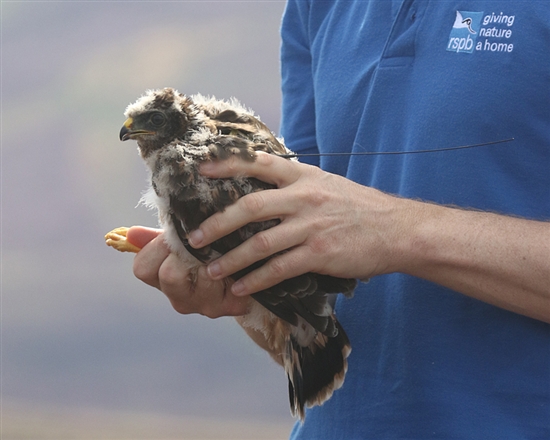
There are six ‘action’ points, including #6, a brood management (meddling) trial, where it is proposed to remove hen harrier eggs/chicks from driven grouse moors when breeding pairs have reached a certain density on that moor or on nearby moors, hatch and rear them in captivity, and then release them back to the uplands at fledging age.

At the time of publication, the actual details of this brood meddling scheme were very sketchy. Where would the trial take place? When would it start? Who would fund it? Who would be involved? Was it even legal, given the catastrophically low number of breeding hen harriers in England?

A working group was established to scope out the trial. Since then, very little information has reached the public domain. We learned from Amanda Anderson (Moorland Association) during the e-petition evidence session at Westminster that there were hopes brood meddling would begin during the 2017 breeding season, but that’s about all we’d heard.

Until now.

A series of FoIs have revealed what this working group has been up to.

The working group comprises various individuals and organisations: GWCT (Teresa Dent, Adam Smith), Hawk & Owl Trust (Philip Merricks, Phil Holms), Moorland Association (Amanda Anderson, Robert Benson), Natural England (Rob Cooke, Adrian Jowitt), Jemima Parry Jones (International Centre for Birds of Prey) and Steve Redpath (listed as an ‘independent academic’ although we note he has recently joined the Hawk & Owl Trust Board of Trustees).

The working group has met four times this year and has agreed on some details of the trial, and other details are still being assessed.

Here’s what we know so far:

  • The brood meddling trial area has yet to be established. The Moorland Association wants all its members’ grouse moors to be included but the licence for the trial will have to comply with various legislative instruments concerning wildlife and habitat.
  • Brood meddling will be triggered if the initial ‘ceiling density’ has been reached. For the purposes of this trial, the initial ceiling density is one pair of breeding hen harrier per 80 sq km or 20,000 acres, or a (straight line) distance between pairs of 10km or 6.3 miles.
  • Brood meddling will begin without the need for the English hen harrier population to reach a pre-determined level. In other words, even if there are only two hen harrier breeding attempts in 2017, and at least one of those breeding attempts is on a driven grouse moor and is within 10km of the other nest (even if the other nest is on an RSPB reserve) then the eggs/chicks of that grouse moor nest will be removed. (Absurd, we know).
  • Legal advice given to Natural England suggests there are no legal barriers to the brood meddling trial, despite the failed status of the hen harrier Special Protection Areas.
  • Brood meddling can only take place with landowner permission, regardless of whether the site lies within the licensed trial area. In other words, hen harrier nests on, say, RSPB reserves, cannot be touched unless the RSPB says it can.
  • The brood meddling trial is not dependent on the cessation of illegal persecution. So, even if the released captive bred birds (all satellite tagged) are found to have been bumped off post-release, the trial will continue for five years.
  • The practical aspect of brood meddling will be undertaken by the International Centre for Birds of Prey. The Natural England licence will be in this organisation’s name.
  • All hen harriers reared in captivity will be released back in to the uplands; they will not be used as the source birds for DEFRA’s proposed ‘reintroduction’ of hen harriers to southern England.
  • Possible release sites (not on “prime grouse moor”) for these captive-reared birds have been suggested in Northumbria, West Pennine Moors and Wensleydale. However, the group has since realised that any proposed release sites must not only have a willing landowner, but they must also meet stringent ecological criteria. Natural England is currently assessing various potential sites.
  • A social science study will run parallel with the practical brood meddling trial, to assess whether the attitudes of the grouse shooting lobby change towards hen harriers over the course of the trial. A proposal for this study has been submitted by Steve Redpath and Freya St John (Kent Uni).
  • Funding options for both the practical trial and the social science study are still under discussion.

Here are the official ‘notes’ from the brood meddling working group’s four meetings this year:

draft-note-1st-bm-meeting-29-march-2016

note-of-2nd-bm-meeting-5-may-2016

note-of-3rd-bm-meeting-27-june-2016

note-of-4th-bm-meeting-29-sept-2016

Further documents from this working group provide much more detail about certain aspects of the trial, including the practicalities of brood meddling and release and its estimated costs, the proposed social science study and its estimated costs, the ecological requirements of proposed release sites, and some interesting information about the proposed ‘reintroduction’ of hen harriers to southern England. We’ll publish these in due course.

Photograph of hen harrier nest by Mark Hamblin

UPDATE 15 Nov 2016: More brood meddling revelations (here)

UPDATE 16 Nov 2016: Brood meddling: the role of the International Centre for Birds of Prey (here)

Review of European gamebird hunting regulatory systems due to be published shortly

The Scottish Government’s long-awaited review of the systems used to regulate gamebird hunting in other European countries is due to be published ‘shortly’.

This review was first commissioned two and a half years ago by former Environment Minister Paul Wheelhouse, during a parliamentary debate on wildlife crime / raptor persecution, way back in May 2014 (see here).

Nothing happened.

Seventeen months later in December 2015, Claudia Beamish MSP lodged a parliamentary question about the lack of progress:

Question S4W-28992 (date lodged: 16/12/15):

To ask the Scottish Government when it will carry out the review of gamebird licensing and legislation agreed by Paul Wheelhouse in May 2014; who has been appointed to conduct the review, and when it expects the report to be published.

Answered by Aileen McLeod MSP (the then Environment Minister) 11/1/2016:

Tender documents were issued by Scottish Natural Heritage (SNH) on 11 December 2015, inviting bids from contractors to carry out the review of gamebird licensing and legislation in other European countries. The deadline for quotes to be submitted to SNH is 20 January 2016. We expect work on the review to commence in early 2016 and for the report to be published in autumn 2016.

Nothing appeared in the public domain so in August 2016 Claudia Beamish MSP submitted another parliamentary question:

Question S5W-02043 (date lodged: 18/8/16):

To ask the Scottish Government, further to the answer to question S4W-28992 by Aileen McLeod on 11 January 2016, on what date the gamebird licensing and legislation report will be published.

Answered by Roseanna Cunningham MSP (current Cabinet Secretary on Environment) 25/8/16:

Further to the answer to question S4W-28992 by Aileen McLeod on 11 January 2016, the review of gamebird licensing and legislation is currently being finalised and will be published in Autumn 2016.

Still nothing, so in October Mark Ruskell MSP lodged a parliamentary question:

Question S5W-04342 (date lodged 31/10/16):

To ask the Scottish Government when the Scottish Natural Heritage review of gamebird licensing systems in other European countries will be published.

Answered by Roseanna Cunningham MSP (Cabinet Secretary on Environment) 8/11/16:

The Scottish Government commissioned Scottish Natural Heritage to carry out a review of gamebird hunting in selected other countries. This is currently being finalised for submission to Scottish Ministers and we anticipate that it will be published shortly.

It is our understanding that the authors of this report submitted their findings to SNH six months ago, in May 2016. According to the parliamentary answers above, the report was being ‘finalised’ in August and was still being ‘finalised’ in November! Let’s hope that whatever ‘finalisations’ are being done (whatever that means), they are done quickly.

There is great anticipation amongst conservationists to see this report published. The findings are expected to demonstrate just how poorly regulated gamebird hunting is in Scotland in comparison to the more progressive policies implemented in other European countries. If that is what the report’s findings show, this will add considerable pressure on the Scottish Government to introduce a licensing scheme. This report, combined with the review on satellite tagged raptor data (due to be completed in March 2017) should make for a very interesting Spring period.

BBC Radio Scotland features 30 minute discussion on raptor persecution

BBC Radio Scotland’s Out of Doors programme this morning featured a 30 minute discussion about raptor persecution. The interviewees included Duncan Orr-Ewing (RSPB Scotland), Logan Steele (Scottish Raptor Study Group), Tim (Kim) Baynes (Scottish Moorland Group) and Derek Calder (Head Gamekeeper, Edinglassie Estate).

The programme’s presenter, Euan McIlwraith, said he wanted to ‘get under the skin’ of those on both sides of this issue, but to be honest, he didn’t really achieve that. It was basically the same old arguments, with the conservationists putting forward the scientific evidence of widespread and recurrent persecution that is having population-level effects on some species, and the grouse-shooting lobby denying that raptor persecution is still a problem.

McIlwraith suggested to both sides that they should be talking to one another, failing to understand that ‘talking’ has been done for decades and has been an abject failure.

One thing that was clear was Tim (Kim) Baynes’ dislike of the publicity generated by illegal persecution, and especially on social media. He argued that rather than the RSPB putting out press releases about these crimes, they should instead ‘come and talk to the estate, say look, we’ve got this problem, something’s happened, you know, can you talk to us, help us sort it out’. Yeah Tim, ‘cos asking suspected criminals, who know they won’t be brought to justice, to ‘help sort out’ crimes is a winning strategy.

If the grouse shooting lobby want the negative press to end, there’s an easy solution: stop killing raptors.

The programme is available on iPlayer for the next 29 days (listen here).

Satellite-tagged hen harrier Tarras ‘disappears’ in Peak District National Park

‘Tarras’, a young hen harrier from this year’s Langholm cohort, has ‘disappeared’ in the Peak District National Park.

tarras

The following statement has been issued on the Langholm blog:

We have concerns for ‘Tarras’ a young female Hen Harrier tagged by Stephen Murphy (Natural England) at Langholm this summer.

The transmitter on the juvenile Hen Harrier Tarras has not transmitted since the 23rd October. The area has been searched and nothing was found and no hen harriers were seen in the area.

The last known fix area is on land owned by United Utilities in the north Peak District.

Tarras flew south from Scotland in the last weeks of September, arriving in the Nottingham area on the 11th October. She then headed north through Staffordshire and was roosting in the Peak District, near to the last known fix area on 13th October.

Tarras’ transmission period (duty cycle) was regular until 23rd October; on 23rd October it ran a complete transmission period (e.g. no sudden cessation of data within the 10hr transmission period). The local weather in the days immediately after 23rd were damp and overcast so this can delay the recharge time. However, by 26th concerns were raised. We have some evidence that suggest this may be a tag failure and we are currently trying to gather more information to help us resolve this.

END

That final sentence is a bit strange, and is at odds with what has been reported about the tag’s last smooth-running duty cycle. It’s worth revisiting a comment about tag reliability made recently by experienced researcher Dr Raymond Klaassen, who has been using satellite tags to track the movements of Montagu’s Harriers:

“Technical failures generally are rare. We have recorded a few throughout the years (6% of all cases), however failures have always been preceded by irregular transmission periods and, most importantly, a drop in battery voltage (another parameter monitored by the transmitter). This makes it relatively straightforward to distinguish between a likely mortality event and a likely transmitter failure“.

So, given Tarras’ tag was not transmitting irregularly prior to her disappearance, what ‘evidence’ does Natural England have to ‘suggest this may have been a tag failure’?

It’s all a bit vague, isn’t it? A bit like the information put out about hen harrier Rowan who, according to Cumbria Police, was “likely to have been shot” in the Yorkshire Dales National Park.

We look forward to a timely update from Natural England about Tarras’ disappearance in the Peak District National Park.

UPDATE 16 March 2021: Interestingly, ‘Tarras’ is not listed on Natural England’s database of satellite-tagged hen harriers – why is that? See: https://www.gov.uk/government/publications/hen-harriers-tracking-programme-update/hen-harrier-annual-tracking-update

Scottish petitions committee to hear more evidence on licensing of gamebird hunting

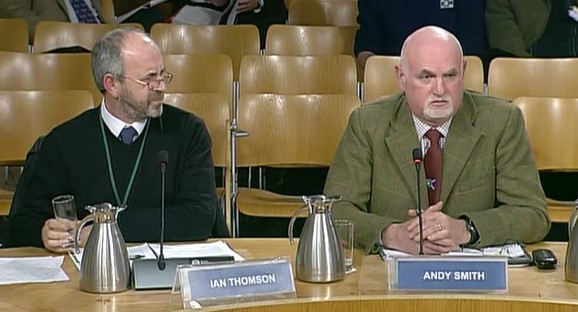
img_20161027_115416Two weeks ago, representatives from the Scottish Raptor Study Group and RSPB Scotland gave compelling evidence to the Scottish Parliament’s Petitions Committee, advocating the need for the licensing of gamebird hunting across Scotland (we blogged about it here).

Today, the Petitions Committee reconvened and discussed how they were going to move forward with this petition (see video here, starts at 1:05:43).

Having received further communication from the Scottish Moorland Group and BASC (see here), the Petitions Committee has now agreed to hear oral evidence from these two organisations before referring the petition on to the Environment, Climate Change and Land Reform Committee for further scrutiny.

The content of the latest letter from the Scottish Moorland Group (part of Scottish Land & Estates) and BASC is totally predictable, especially in light of their press statements issued immediately after the oral evidence given by the SRSG and RSPB Scotland. BASC accused the petitioners of making “inflammatory and far-fetched claims” (see here) and Scottish Land & Estates claimed that regulation was “unnecessary” (see here).

In their most recent letter, both organisations ask to be given the opportunity to tell the Committee about “the progress of existing regulatory measures and initiatives“. Ah, that’ll be the Heads up for Hen Harriers partnership-working sham (see here), the Wildlife Estates Scotland sham (two accredited estates [Invercauld & Newlands] have recently been at the centre of wildlife crime investigations), and the Partnership for Action against Wildlife Crime sham (e.g. see here and here). We can’t wait to hear the shameless propaganda being spewed forth in this evidence session!

On a related note, there is news about the Scottish Government’s review of gamebird licensing systems in Europe, which is expected to highlight just how unregulated gamebird shooting is in Scotland (and England/Wales) in comparison to regulation currently applied across Europe. More on that shortly….

Photograph of SRSG & RSPB Scotland petitioners at Holyrood, L-R: Patrick Stirling-Aird, Andrea Hudspeth, Logan Steele, Duncan Orr-Ewing

National survey reveals golden eagles still ‘missing’ from Eastern Highland grouse moors

The results of a national survey of golden eagle territories have revealed mixed fortunes for this iconic species.

The survey, undertaken in 2015 by licensed experts from the Scottish Raptor Study Group and the RSPB, was a follow up to the previous national survey, undertaken in 2003.

The recent survey shows an overall 15% increase in the golden eagle population, rising from 442 pairs to 508 pairs. This is very welcome news, especially as the golden eagle can now be considered to be in ‘favourable conservation status’ nationally (to reach this status at least 500 golden eagle territories should be occupied by pairs).

However, don’t be fooled. Whilst a favourable national conservation status sounds like everything’s going just fine for the golden eagle, it masks a more sinister picture of what’s taking place regionally.

As in 2003, golden eagles are still doing very well in western Scotland, and there have been recent improvements in parts of central Scotland (although the loss of eight young eagles in five years is a huge concern), but the population is still being suppressed in parts of eastern Scotland, just as it was in 2003.

In the 2015 survey, less than one third of the traditional ‘home ranges’ in this area were occupied by a pair of eagles and no eagles were recorded at all in over 30% of them, despite the fact that these should be very productive landscapes for these birds. Many of the vacant territories in this area are on ground managed intensively for driven grouse shooting and in recent years, four eagles fitted with satellite tags have been found illegally killed in the central and eastern Highlands (see here, here, here and here).

Let’s also not forget that the national golden eagle population should be over 700 breeding pairs. In that context, a 2015 national population of 508 pairs means that around 200 pairs are still ‘missing’.

We’ll look forward to reading the peer-reviewed paper about these survey results in due course because that should provide a far greater level of detail than the overview provided in today’s press release. For instance, we’ll particularly be looking at the age structure of the 2015 breeding population (assuming it’s been recorded). It’s well known that in recent years, in some areas, golden eagle breeding pairs have comprised adults and juveniles/sub-adults. That isn’t ‘normal’ for a healthy population and is actually indicative of a serious underlying problem. Breeding pairs should comprise two adults. Alarm bells should be ringing when you see a juvenile/sub-adult as part of a breeding pair because this suggests there are insufficient adults available to breed.

[Map shows the regional conservation status of the golden eagle (following the 2003 national survey): green = favourable; amber = unfavourable (marginal); red = unfavourable (definitive). Source: Golden Eagle Conservation Framework]

‘Species Champions’ Scottish parliamentary debate: a refreshing change

species-championFor those of you sickened and disheartened by recent political antics, here’s a refreshing change.

Yesterday there was a debate in the Scottish Parliament, introduced by Graeme Dey MSP. The motion of the debate was as follows:

That the Parliament welcomes the relaunch of the Species Champions initiative; understands that Scottish Environment LINK is asking MSPs to become species champions so that they can contribute to the conservation of “their” species in Parliament and help support action in the wider community; welcomes the at least 50 members from across all five parties in the Parliament who have already signed up to the initiative, and understands that, in order to help protect biodiversity in Angus South and across Scotland, Scottish Environment LINK hopes that those members who are yet to get involved will be able to do so.

If you’ve got a spare hour, the video footage of proceedings will certainly lift your spirits – watch it here.

It was a series of cross-party MSPs who have signed up to be ‘Species Champions‘, all standing up and giving 3 minute speeches about their ‘adopted’ species – their importance to Scotland’s biodiversity, what significant threats they face and what action has been taken to protect them. No selfish, greedy, twisted, vested interests on display here – just pure delight in celebrating some amazing plants and animals.

Several MSPs used their time to highlight the threat of persecution on driven grouse moors, including Mark Ruskell MSP (white-tailed eagle species champion, see video at 39.30 mins) and Mairi Evans MSP (hen harrier species champion, see video at 42.56 mins). Also of note was Alison Johnstone MSP, who is species champion for the brown hare but she also referenced the large scale and routine culling of mountain hares on driven grouse moors. She urged Environment Cabinet Secretary Roseanna Cunningham to consider using her powers to introduce a Nature Conservation Order to prohibit these culls within the boundary of the Cairngorms National Park. That’s an intriguing and creative suggestion and one we’ll come back to. You can watch Alison’s speech at 21.18 mins in.

The Species Champions initiative was launched in 2013 by Scottish Environment LINK. Yesterday’s debate was to highlight its re-launch under the new Parliament and to encourage more MSPs to get involved. Well done Graeme Dey MSP for introducing the debate and really well done to all those who took part with such enthusiasm. It has restored some of our faith that some politicians, at least, ‘get’ the importance of the environment and are prepared to stand up for it.

Hen Harrier Rowan ‘likely to have been shot’ in Yorkshire Dales National Park

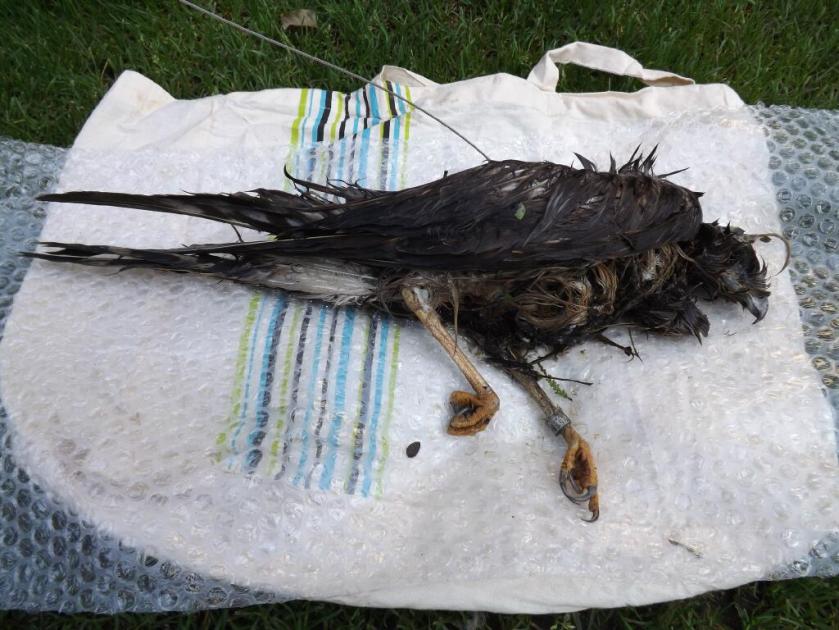
On 28 October 2016 we learned that one of this year’s young hen harriers had been found dead in Cumbria in suspicious circumstances (see blog here).

This was a hen harrier called Rowan, who had hatched at Langholm this summer and was one of two hen harriers being satellite-tracked by the Hawk & Owl Trust.

rowanhh

The press release from the Hawk & Owl Trust and Natural England had just said Rowan’s body had been found in Cumbria on 22 October 2016, and following a post mortem, details had been passed to the police.

Today, Cumbria Police have issued a press statement as follows:

Cumbria Police have opened an investigation into the death of a hen harrier.

The body of a male Hen Harrier was found in the Ravenstonedale area of the county on 22nd October 2016. A post-mortem examination funded by Natural England and carried out by the Zoological Society of London has established that the bird was likely to have been shot.

The hen harrier, called Rowan, was satellite tagged at the Langholm Project as part of a joint venture between Natural England and the Hawk and Owl Trust. The bird had recently flown in the Cumbria and North Yorkshire Dales area before being found at Ravenstonedale.

Hen Harriers are specially protected under the Wildlife and Countryside Act, and the Government has set raptor persecution as one of their wildlife crime action priorities.

There is huge pressure on the survival of the hen harrier in England particularly and projects such as this are working hard to assist with the bird’s survival. Cumbria Police are working alongside such organisations to progress this investigation.

Anyone with information is asked to contact police on 101 and ask to speak to PC 2059 Helen Branthwaite.

END

Ravenstonedale lies within the Yorkshire Dales National Park (the bit that was recently added in August 2016).

ravenstonedale

The statement that Rowan “was likely to have been shot” is a bit odd. It would have been useful for Cumbria Police to release a copy of the x-ray, as other police forces often do when appealing for information about shot birds. Perhaps there is justification for the vague statement about the cause of death, but then again, perhaps there isn’t. Did the post mortem report use the words ‘likely shot’? That would be an unusual phrase. Usually they say something like ‘injuries consistent with’ (being shot). There’s a big difference in interpretation. There’s a faint whiff of a cover up here. Not an overpowering stench, but definitely an aroma of something….

The reputation of the Yorkshire Dales National Park as a hell hole for hen harriers (and most other raptors) continues to grow. Hen harriers haven’t bred in this National Park since 2007 and young birds that visit don’t last very long either. Here are some YDNP hen harrier data (2007-2014) from Natural England we’ve blogged about before:

Female, tagged N England 26/6/07: last known location YDNP 5/10/07. Status: missing.

Female, tagged N England 16/7/09: last known location YDNP 27/9/09. Status: missing.

Male, tagged Bowland 29/6/09: last known location YDNP 17/8/09. Status: missing.

Female, tagged N England 29/6/10: last known location YDNP 25/11/10. Status: missing.

Female (Bowland Betty), tagged Bowland 22/6/11: last known location YDNP 5/7/12. Status: shot dead.

Female (Kristina), tagged N England 25/6/12: last known location YDNP 9/10/12. Status: missing.

Male (Thomas), tagged N England 4/9/12: last known location YDNP 4/9/12. Status: missing.

Male (Sid), tagged Langholm 21/9/14: last known location YDNP 21/9/14. Status: missing.

Female (Imogen), tagged N England 26/6/14: last known location YDNP 1/9/14. Status: missing.

Marsh harrier found shot on East Yorkshire sporting estate

On 7th September 2016 an adult female Marsh harrier was found with shotgun injuries next to a partridge release pen on an East Yorkshire sporting estate.

The bird was rescued and underwent surgery at Battle Flatts vets in North Yorkshire.

mh-theatre

mh-xray

After surgery the bird was sent to Jean Thorpe in Ryedale for a period of rehabilitation.

On 31 October 2016, Jean was able to release this bird back to the wild.

mh-release

mh-jean-1

mh-jean-2

A couple of things to mention here. This wildlife crime was uncovered nearly two months ago. We don’t know the circumstances of the bird’s discovery (e.g. Who found it? Who reported it?). We don’t know where or when it was shot, although looking at that x-ray it would be fair to assume the bird wouldn’t have been able to fly far from the location it was shot. We haven’t seen a Police press statement about this crime. Have they charged a suspect? If not, where’s the Police appeal for information? Are they still investigating? Isn’t wildlife crime supposed to be a police national priority? Pathetic.

On a more positive note, the work of Jean Thorpe at Ryedale Wildlife Rehabilitation continues to amaze us (and not forgetting the skill of vet Mark Naguib at Battle Flatts Veterinary Clinic). Jean’s efforts are the perfect antidote to watching those disgraceful braying Tory MPs on Monday evening. They’d do well to visit her for an hour and learn about decency and compassion. Of course, Jean is not the only raptor rehabber in the UK but, living in North Yorkshire, she sees more than her fair share of raptor persecution victims. We’ve said this before but we’ll say it again – Jean’s work is entirely voluntary. If you want to support her work, please consider making a donation here.

UPDATE 4 Nov 2016: North Yorkshire Police have finally issued an appeal for information here. They’ve carefully avoided naming the estate where this bird was found.

Dishonourable members

A one-word summary of Monday’s Westminster ‘debate’ on driven grouse shooting:

Dishonourable: adjective.

Bringing shame or disgrace on someone or something.

Synonyms: disgraceful, shameful, shameless, disreputable, discreditable, degrading, ignominious, ignoble, blameworthy, contemptible, despicable, reprehensible, shabby, shoddy, sordid, sorry, base, low, improper, unseemly, unworthy, unprincipled, unscrupulous, corrupt, untrustworthy, treacherous, perfidious, traitorous, villainous, shady, crooked, low-down, dirty, rotten.

Transcript of proceedings here

Video of proceedings here

The dissection of what was said (and more importantly, what wasn’t said) during this ‘debate’ will go on for some time and we’ll come back to that in due course. Discussions are already underway on our next move – rest assured, this is not the end. But for now, we just want to comment on the political process. Mark Avery has some initial thoughts on this here, and so do we.

petitionThe ability for members of the public to petition Westminster on issues that are of concern to them was set up quite recently. A Petitions Committee was established to consider e-petitions from the public as a way of getting items on to the political agenda. In a Government press release (here), Dr Therese Coffey MP, speaking as the Deputy Leader of the House, said:

The new Petitions Committee builds on the reforms of the last Parliament to improve public engagement with politics. This is the first time voters will be able to petition Parliament electronically through the Petitions Committee for action by the government on topical issues that really matter to people – and we will listen to what they have to say“. [Emphasis is ours].

In light of what has happened with ‘our’ petition calling for a ban on driven grouse shooting, here’s a more accurate description of the process:

‘Start a petition, base your case on overwhelming scientific evidence, work your arse off to get it past the 100,000 signature threshold, come along to Westminster where you can give evidence in front of a hostile panel of MPs, some of whom will have a clear conflict of interest. The Petitions Committee Chair will be inexplicably rude towards you and you’ll be giving evidence alongside an organisation that doesn’t even support the aim of your petition. The Committee will then hear from two further organisations that oppose your petition, and they will be allowed to include anecdotes about what they’ve seen from their kitchen window as the basis of their evidence. One of the MPs serving on the Petitions Committee will also be a senior employee of one of the opposing organisations who will feed easy questions to your opponents. The Petitions Committee will ignore the written evidence of over 200 people that has been submitted in support of your petition.

A couple of weeks later, a member of the Petitions Committee will introduce your petition for a debate in Westminster Hall. He will set the scene by admitting that he doesn’t understand the basis for the petition, make wild assumptions about the motivation of the 123,077 people who signed your petition, and provide to the house a biased and uninformed opinion of the topic. A ‘debate’ will then ensue, whereby MPs, many with clear vested interests in opposing your petition, will refer to you as the ‘perpetrator of the petition’ (implying that you are a criminal) and will use parliamentary privilege to accuse you of being a liar, of using ‘premeditated malice’ and of being ‘dishonest’. They will either ignore or willfully misinterpret every piece of scientific evidence that has been made available to them that supports your petition and instead will deny that there’s any problem that needs addressing. They will tell lies and they will question the intelligence of the petition signatories. There will be no quorum required for this ‘debate’. The respective Government Minister will sit through the ‘debate’ with complete disinterest other than using the time to check her phone and clear out the contents of her handbag. At the end she will stand up and deliver a prepared speech that will reveal the Government’s total indifference to the topic, its total dismissal of all relevant scientific evidence, and its total disrespect for the views of the 123,077 members of the public who signed your petition’.