Blog

Case against gamekeeper Stanley Gordon re: shot hen harrier, part 7

Criminal proceedings continued at Elgin Sheriff Court today against Scottish gamekeeper Stanley Gordon.

Mr Gordon, 60, of Cabrach, Moray, is facing a charge in connection with the alleged shooting of a hen harrier in June 2013.

Here’s a summary of what’s happened so far in this case:

Hearing #1 (19 May 2016): Case continued without plea until 16 June 2016.

Hearing #2 (16 June 2016): Case continued without plea until 14 July 2016.

Hearing #3 (14 July 2016): Case continued without plea until 11 August 2016.

Hearing #4 (11 August 2016): Case continued without plea until 1 September 2016.

Hearing #5 (1 September 2016): Mr Gordon enters a not guilty plea. A provisional trial date is set for 19 December 2016, with an intermediate diet set for 18 November 2016.

Hearing #6 (18 November 2016): Case adjourned for another intermediate diet on 2 December 2016.

Hearing #7 (2 December 2016). Provisional trial date of 19 December is dumped. Case adjourned for another intermediate diet on 10 February 2017.

Illegally-set traps on Invercauld Estate: not another cover up?

Cairngorms Invercauld - CopyIn July we blogged about the discovery in June of a critically-injured Common gull that had been found caught in two illegally-set spring traps on Invercauld Estate in the Cairngorms National Park (see here).

We also blogged about a bizarre press statement from Invercauld Estate (issued via the GWCT’s twitter feed) in which they denied any illegal activity had taken place or if it had, it was perhaps a set-up ‘intended to discredit the grouse industry‘ (see here).

We also blogged about the Scottish Gamekeepers’ Association’s response, which was an announcement that they would conduct their own enquiry before commenting further (see here).

We also blogged about Police Scotland’s view that a Common gull had been found caught in an illegally-set trap but ‘despite a thorough investigation‘, Police enquiries had failed to find further evidence to proceed with a potential prosecution and ‘there are at present no further investigative opportunities available‘ (see here).

In September, through a series of FoIs, we uncovered a very interesting letter, dated 27 July 2016 and written by Angus McNicol, who identified himself as the Estate Manager for Invercauld Estate. The letter was addressed to the Cabinet Secretary for the Environment, Roseanna Cunningham. A copy of the letter was also sent to the Cairngorms National Park Authority (CNPA). It was written, in our view, to reassure the Cabinet Secretary and the CNPA that Invercauld Estate takes wildlife crime very seriously and that they’d ‘taken action’ in this case. The specific action taken was unknown (to us) because that part of the letter had been redacted. We’ll come back to this.

Since then, it all went quiet, apart from a persistent rumour (we’ve been told this by five separate, well-informed sources) that a gamekeeper had been sacked as a result of this incident. This claim has also been made on the ParksWatchScotland blog (here), which says: ‘Unusually, the gamekeeper in this case has been dismissed, although he apparently has not been charged‘.

Hmm. Naturally, we wanted to find out if this rumour had any basis.

We knew that Grant Moir (CNPA Chief Executive) had asked for a meeting with Invercauld Estate and the sporting partner ‘to discuss the issue’ of the illegally-set traps – he had said so in a press statement in July (here). Perhaps the minutes from that meeting would reveal whether a gamekeeper had been sacked, so we asked, via FoI, for a copy of those minutes.

We received a response from the CNPA in mid-November which confirmed that two meetings had indeed taken place:

Meeting 1 (22 August 2016) with the following people present: Peter Argyle (CNPA Convener), Grant Moir (CNPA Chief Executive), Hamish Trench (CNPA Director of Conservation & Visitor Experience) and Invercauld Estate’s sporting partner from the Micras beat (his name was not given).

Meeting 2 (25 August 2016) with the following people present: Peter Argyle (CNPA Convener), Grant Moir (CNPA Chief Executive), Hamish Trench (CNPA Director of Conservation & Visitor Experience), the Chair of Trustees for Invercauld Estate (name not given) and the Manager for Invercauld Estate (name not given but presumably this was Angus McNicol, the author of the letter from Invercauld Estate to the Environment Cabinet Secretary).

According to the CNPA’s response to our FoI, ‘The purpose of both meetings was to discuss the recent incident and understand the actions taken by the estate and sporting partner. As a result of the meetings we will now be meeting with the other sporting partners on Invercauld Estate‘.

Interestingly, according to the CNPA, there isn’t a record of the minutes from either of these meetings.

So, we’re still none the wiser about whether a gamekeeper was sacked by Invercauld Estate, which brings us back to that redacted letter from Invercauld Estate to the Cabinet Secretary. Was the readacted part of that letter a statement from Invercauld Estate, saying that they’d sacked a gamekeeper as a result of this incident?

If so, that’s incredible. A wildlife crime took place on Invercauld Estate in June 2016 (that’s undeniable). Has Invercauld Estate identified a suspect and sacked him/her? And if so, does the Scottish Government know about it, does the Cairngorms National Park Authority know about it, and does the Scottish Gamekeepers’ Association know about it (given they were conducting their ‘own enquiry’ in to this incident back in July)?

The question then becomes, does Police Scotland know about it, and if so, will they be prosecuting? If not, why not?

Some transparency about this case wouldn’t go amiss.

‘More evidence required’ before mountain hare culls are regulated, says Cabinet Secretary

More parliamentary questions about the mass slaughter of mountain hares have been asked recently, thanks to Alison Johnstone MSP (Scottish Green Party).

We were particularly interested in this one:

Question S5W-04501: Alison Johnstone, Lothian, Scottish Green Party. Date lodged: 4/11/2016.

To ask the Scottish Government what measures it is taking to ensure that estates adhere to voluntary restraint on large culls of mountain hare, as called for by the joint position taken by Scottish Natural Heritage, the Game and Wildlife Conservation Trust and Scottish Land and Estates on large-scale culls of mountain hare to reduce louping ill, and what measures it is taking to monitor compliance with this policy.

Answered by Roseanna Cunningham (22/11/2016)

Scottish Natural Heritage is working with key stakeholders to improve transparency and understanding about the reasons why some moorland managers continue to wish to cull mountain hares and the numbers involved.

If evidence emerges that large-scale culls are continuing, the Scottish Government will consider the case for tightening regulation of this issue.

Dear god. ‘Working with stakeholders to improve transparency‘? Who’s she kidding, when the Convenor of the Cairngorms National Park Authority’s Planning Committee, Eleanor Mackintosh, is advising gamekeepers to hide the evidence of mountain hare culls, even though she denies it (see here) and the CNPA Convenor Peter Arygle denies it too (see here). How is hiding evidence improving transparency?!

We’ve been asking for transparency about the mass slaughter of mountain hares for some time. We asked some pretty simple questions back in March (see here) but so far, no response.

And why does the Scottish Government need more evidence anyway? Why isn’t the already-available evidence sufficient to show that large-scale culls are indeed continuing? And what type of evidence does the Scottish Government require before action is taken? Perhaps we should try the ‘I’ve seen it from my kitchen window‘ approach – seems to work in Westminster.

We’ve heard similar excuses about needing more evidence so many times before, usually in relation to an illegal raptor persecution case: e.g. ‘We won’t hesitate to take further action if deemed necessary’, but then when more evidence is produced, i.e. the corpse of yet another illegally-killed raptor, it’s never quite enough for the Government to deem that promised further action ‘necessary’. It’s just a never-ending cycle of ‘Next time we’ll do something’, until the next time comes and then the line is repeated, and then the next time and then the next time after that ad nauseam.

On the subject of what constitutes sufficient evidence, we’d recommend reading the latest article on the always thought-provoking ParksWatchScotland blog (see here). They’ve written an excellent piece called ‘What counts as evidence in our National Parks?’ in which they compare the frankly low grade ‘evidence’ recently used by the Scottish Government to introduce restrictive camping byelaws in the Loch Lomond & Trossachs National Park, with the high grade evidence of large-scale mountain hare culling that is seemingly insufficient to trigger the introduction of byelaws to prevent these mass culls in the Cairngorms National Park. The disproportionality is striking, as are the probable reasons behind it.

Birders’ Choice Awards 2016

Birdwatch magazine is once again hosting the annual Birders’ Choice Awards, now in its third year. These awards are designed to ‘celebrate the best – and condemn the worst – in birding and conservation’.

We were genuinely surprised, and flattered, to find ourselves nominated in the Conservation Hero of the Year category. Looking at the calibre of the four other nominees, it’s even more perplexing to figure out why we’re in there, and although we don’t expect to win we’re nevertheless grateful for the nomination because let’s be honest, who doesn’t like having their efforts recognised? So thank you, Birdwatch, for your support – it is much appreciated.

For us, although all are deserving, there is a clear stand-out nominee in this category (cough, Mark Avery, cough), as there is in the Campaign of the Year category (cough, Petition to ban driven grouse shooting, cough) and the Birds in the News category (cough, hen harrier, cough). The Guano Award for Environmental Harm is less clear cut but the badger cull probably edges it.

Whether you agree or disagree with our choices, you too can cast your vote because Birdwatch has made it very easy to participate. You can vote online here, but you’ll have to be quick as voting closes at midnight tonight. Winners will be announced in the January edition of Birdwatch magazine (on sale 22 December).

SSPCA powers: revisiting the role and powers of the water bailiffs

sspca logoMany of you will know that we’ve been following the glacial progress of the Scottish Government’s decision on whether the SSPCA should be given increased investigatory powers to help tackle wildlife crime, and particularly, illegal raptor persecution. Here’s an overview of how this ‘key priority’ has been (mis)handled so far.

Following the consultation, which ended over two years ago, we analysed some of the reasons that landowners and Police Scotland had put forward about why they thought the SSPCA should not receive increased powers. These included a lack of accountability, lack of training and competence, and a claim that increased powers would amount to ‘quasi-policing’. It turned out that the landowners and the police were being pretty hypocritical, given the substantial powers enjoyed by water bailiffs (employed by landowners to work in the landowners’ interests). These powers include the power of arrest, and yet water bailiffs have no public accountability and undergo minimal training (it’s important you read this to understand what we mean).

Malcolm Graham 2This hypocrisy was then picked up on by MSPs, who, during a Rural Affairs, Climate Change and Environment (RACCE) Committee hearing in November 2014, questioned the police about the role and powers of the water bailiff. During that session, Assistant Chief Constable Malcolm Graham made the following statement:

The powers that water bailiffs have and which were used in the past are no longer used routinely. We do not have experience of water bailiffs who think that they are in a position to apprehend people. They understand that both public perceptions and legal perspectives on people being brought into custody and detained have changed dramatically, and rightly so. The scrutiny that needs to be brought to bear when someone is going to be apprehended and not allowed to go about their business is far more rigorous than it was in the past. Our experience is that water bailiffs no longer use those powers; indeed, I can give no example from recent times of such use of powers coming to my attention“. (Full transcript available here).

Just read ACC Graham’s statement again, and remember this is a senior police officer giving evidence to a Parliamentary Committee.

And then head over to BBC iPlayer and watch episode 4 of The River, which was broadcast last night (available on iPlayer for 29 days). You’ll see a team of water bailiffs working on the River Tweed, looking for salmon poachers. And you’ll never guess what happens when they find some.

Hen harrier ‘reintroduction’ to southern England: an update

One of the six action points in DEFRA’s Hen Harrier Inaction Plan is to ‘reintroduce’ hen harriers to southern England:

hh-reintro

DEFRA’s HH Inaction Plan has been widely criticised by conservationists, with the main focus being on the brood meddling part. The proposed southern ‘reintroduction’ hasn’t received much attention, largely because the scoping project on which it is based is still unpublished – it’s hard to scrutinise something that’s being kept secret.

There had been concerns that chicks removed from the northern uplands as part of the brood meddling scheme would be used as the source birds for the southern ‘reintroduction’. This would have been unacceptable on a number of fronts, not least because it would be in breach of IUCN guidelines – you can’t source birds from a donor population if their removal would negatively affect the donor population. However, our recent FoI to Natural England has shown that those brood-meddled birds will be released back to the northern uplands, and not in to southern England (see here).

We’re now in a position to shed a bit more light on the proposed southern ‘reintroduction’ (it’s not actually a reintroduction because hen harriers are not extinct in southern England). Revealed through another FoI, the following update was provided by Adrian Jowitt (Natural England) to Paul Ballinger (DEFRA) on 23 September 2016:

Southern reintroduction: the main work undertaken over the last few months has been setting up and starting early conversations with stakeholders in the areas proposed. We have had discussions with landowners on Exmoor and in early October are going to meet with some key farmers and landowners in southern Wiltshire. The discussions have in the main been cautiously positive although there is still a way to go. We have also been exploring different funding routes and are starting to explore possible sources for chicks. We will also be considering whether we need to do any further habitat suitability checks beyond what was done for the original feasibility study and to that end will be carrying out some basic field visits with our hen harrier ecologist‘.

So, it looks like Exmoor may be a potential ‘reintroduction’ site, as well as somewhere in southern Wiltshire. That’s interesting.

exmoor

There has been at least one hen harrier breeding attempt in Wiltshire since 2002, although we don’t know the outcome. Here’s an image from a recent talk given by Natural England’s Stephen Murphy showing hen harrier breeding records between 2002-2015 (apologies for the poor quality photo – a reflection on us, not on the quality of Stephen’s slides):

hh-breeding-distribution

Wintering hen harriers are seen around Exmoor, albeit relatively infrequently – indeed, a satellite-tagged hen harrier from Bowland (2014 – ‘Burt’) is known to have visited Exmoor, because that’s where his last sat tag transmission came from, although in Burt’s case his ‘disappearance’ was thought to be as a result of a genuine tag failure rather than anything more sinister.

Exmoor, including Exmoor National Park, is well known for game shooting. This report from 2004 demonstrates just how much driven game shooting takes place there (predominantly pheasant & partridge) and how many gamekeepers work there. Perhaps that’s why Natural England’s discussions with landowners are described as being only ‘cautiously positive although there is still a way to go‘. If this ‘reintroduction’ is to go ahead, as Natural England appears to expect, these landowners MUST be on-side before any birds are released. It’ll be interesting to see how things develop on that score.

There are still huge question marks about this proposed ‘reintroduction’. Many of us are not entirely supportive because we believe the grouse shooting lobby and Natural England/DEFRA are using it as a way of diverting attention from the ongoing criminal persecution of hen harriers in the northern uplands. Releasing some birds in to southern England (assuming a source population can be found) will not stop the grouse moor managers from killing hen harriers in the northern uplands, the fundamental cause of this species’ decline in the first place.

You could argue that, theoretically at least, the southern England ‘reintroduction’, if successful, would increase the range and conservation status of English hen harriers, and it would also bolster the English population, increasing its resilience from population decline. That’s true. However, it’s also true that if hen harriers were not still being routinely killed in the north, their breeding range would increase naturally, their conservation status would improve, and the population’s resilience to decline would increase.

You could also argue that the estimated half-a-million quid (and the rest!) of taxpayers’ money that’ll be spent on this attention-diverting scheme would be better spent on improving enforcement measures so the hen harrier killers can finally be brought to justice.

Congratulations to multi-award winning Mull Eagle Watch!

Mull Eagle Watch is a community-based partnership offering visitors the chance to enjoy guided trips to see the reintroduced white-tailed eagles without disturbing them.

Starting in 2000 at Loch Frisa, the project has grown to become one of the UK’s best-known and loved wildlife tourism attractions, bringing in five million pounds to the island every year in tourism revenue. The project is run as a partnership between Forestry Commission Scotland, RSPB Scotland, Mull & Iona Community Trust, Police Scotland and SNH.

Already in receipt of a prestigious five star rating from VisitScotland and a gold rating from the Green Tourism Business Scheme, this month they’ve added two more top awards to their collection.

Earlier this month they won the Innovation in Tourism Award at the Highlands and Islands Tourism Awards (see here) and on Thursday evening they scooped first prize in the Nature Tourism category at the RSPB’s Nature of Scotland Awards, hosted by Chris Packham (see here).

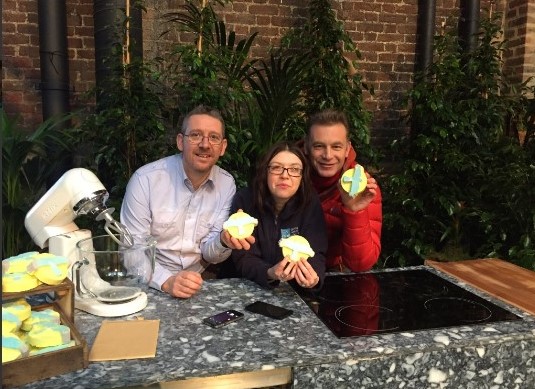
Here they are collecting their award from Chris (photo nicked off Twitter!)

mull-eagle-watch

As Chris said on Thursday evening, at a time when the persistent and widespread killing of raptors causes many to view Scotland (and the rest of the UK) as an international embarrassment, this enlightened project is a shining example of how birds of prey can bring environmental, social and economic benefits to rural communities. More of this, please.

Many congratulations and thanks to all involved.

Raptor persecution data withheld from Scot Gov’s latest annual wildlife crime report

wildlife-crime-review-2015The Scottish Government has today published its latest Annual Wildlife Crime Report – the 4th one since it became a statutory obligation under the Wildlife and Natural Environment (Scotland) Act 2011. The current report is entitled the ‘2015’ report, but it actually refers to wildlife crimes recorded from April 2014 to March 2015.

Just like last year (see here), this publication has been issued under a misleading headline, this time with the Government proclaiming a ‘Five year drop in wildlife crime’ (see Scot Gov press release here).

The report provides data on each of the national wildlife crime priority areas, including raptor persecution, but don’t bother wasting any time trying to draw conclusions from these data because it turns out, some has been withheld.

According to a press release by RSPB Scotland on today’s report (here), they say “With regard to raptor persecution incidents, we recognise that a number of confirmed victims of crime are not included in the report as police investigations continue“.

This withholding of data is becoming a regular feature of wildlife crime reporting in Scotland.  We blogged about it earlier this year when PAW Scotland published the ‘official’ 2015 raptor persecution report, with a load of information deliberately withheld (see here).

As we said then, what’s the point of publishing some of the data but keeping the rest secret? It completely undermines any confidence in the report’s findings and turns this annual reporting into a meaningless and farcical charade.

It’s not clear whether the raptor persecution data has been withheld by Police Scotland or by the Scottish Government, or by both. If this withheld information relates to confirmed victims of crime, as RSPB Scotland suggests, there’s absolutely no excuse to keep it secret from the public, especially as these crimes took place around two years ago. When can we expect these crimes to be made public? Next year? 2050? Never?

Let’s hope this issue is raised when the Scottish Parliament’s Environment, Climate Change & Land Reform (ECCLR) Committee comes to scrutinise the annual report as they have in previous years. Let’s also hope that this time, the ECCLR invites evidence from a wider circle of contributors, such as RSPB Scotland, SSPCA, Scottish Badgers etc, instead of just listening to the thoughts of Police Scotland, COPFS and the Environment Minister. That way we might get a better idea of the extent of wildlife crime rather than Police Scotland’s estimation of it, which is apparently based on a senior officer’s ‘feeling’ rather than on hard facts (see here).

Download the report here: wildlife-crime-in-scotland-2015-annual-report

Cairngorms National Park mountain hare cover up denied

Last week we blogged (here) about an extraordinary comment attributed to Eleanor Mackintosh, a Board member of the Cairngorms National Park Authority (CNPA). During a discussion with the Scottish Gamekeepers’ Association on 29 September 2016, Ms Mackintosh apparently suggested they use covers on the back of vehicles to hide the evidence of mountain hare culls rather than risk photographs being taken of piles of dead hares being transported on open-backed vehicles:

Naturally, most people would expect the CNPA to be clamping down on the mass slaughter of mountain hares on grouse moors within the National Park, not suggesting to gamekeepers that they instead just hide the evidence, so Ms Mackintosh’s comments didn’t go down too well. One of our blog readers, Andy Holden, wrote to Ms Mackintosh to express his disgust and she duly replied as follows:

Dear Mr Holden

Thank you for your recent email in relation to mountain hares in the Cairngorms National Park.

It is my opinion that what I said has been taken completely out of context I am very clear on, and whole heartedly support the CNPA current position on hare culls.

The Cairngorms National Park Authority is clear in its position on mountain hare culling. The CNPA does not support ‘hiding’ in any way the number of hares culled. On the contrary, our advice to land managers is to be more open about the number of hares culled. We recognise that culling hares is legal and that culls can be undertaken for a number of reasons. We do not support large scale culling and endorse the call for restraint made by SNH. We support the ongoing work to develop best practice in counting mountain hare numbers being developed by the James Hutton Institute and GWCT. In the meantime our advice to land managers is to set out clearly why culls are undertaken, share information on the numbers of hares culled and where possible to count hare numbers consistently while waiting for the recommendations on counting methodology from the current research.

The information you refer to is a note by the Scottish Gamekeepers Association of a meeting with CNPA to discuss a number of aspects of the recent National Park Partnership Plan consultation.

Regards

Eleanor Mackintosh

END

Interesting. So Ms Mackintosh doesn’t deny that she made the suggestion, but instead she claims her remarks were taken “completely out of context“. Really? By whom? Not by us – we posted the notes from the CNPA/SGA meeting exactly as they were presented in the FoI response (see photo above).

Perhaps she meant that the notes from the meeting (prepared by the SGA) hadn’t been written up accurately and had reported her comments ‘out of context’? That’s entirely possible, of course, but in this case it seems unlikely.

Why would we say that seems unlikely? Well, because the notes from the meeting, as prepared by the SGA, were emailed to the CNPA on 4 October 2016. The recipients of that email included Will Boyd Wallis (CNPA), Hamish Trench (CNPA), Mike Cottam (CNPA) and someone listed as ‘Eleanor’. Will, Hamish and Mike had all attended the meeting with the SGA, so we assume the person named as ‘Eleanor’ was Eleanor Mackintosh, who was also present at that meeting.

Later that same day, Hamish Trench (CNPA) sent an email back to the SGA (also copied to Will, Mike and ‘Eleanor’) acknowledging receipt of the notes but not accepting them as an accurate reflection of what was said during the meeting by him, Will and Mike. Hamish offered to amend the notes before they were circulated more widely.

On 6 October, Will Boyd Wallis (CNPA) sent an amended version of the notes back to the SGA, and copied in Hamish, Mike and ‘Eleanor’. In this amended version, Will had made several editorial changes to some of the comments, but did not amend the comments attributed to Eleanor. Presumably, as ‘Eleanor’ had been in receipt of all this correspondence, if she thought her comments had been placed ‘completely out of context’ here was the perfect opportunity for her to say so.

She didn’t.

You can read the correspondence between the SGA and CNPA here: cnpa-sga-mtg-29-sept-2016-amendment-of-notes

Now, maybe Ms Mackintosh was away, maybe her internet was down, maybe she didn’t see the notes until they were published on this blog.

Or, maybe, she did suggest that gamekeepers should hide dead mountain hares under covers and now she’s in the middle of a shit storm and she’s looking for a way out.

New PhD study to examine impact of medicated grit on moorland ecosystem

grit-box-rpuk2-copyExcellent news!

A PhD scholarship is on offer at Leeds University to examine the impact of the drug Flubendazole (the active ingredient in medicated grit) in grouse moor river catchments.

Medicated grit is routinely used by the grouse shooting industry to dose red grouse with high quantities of the worming drug Flubendazole. It’s being used so frequently that it has caused the natural cyclical red grouse population crashes to end, resulting in ridiculously high densities of red grouse available to shoot. These high densities of birds gathering at medicated grit boxes has led to the rapid spread of Cryptosporidiosis in recent years (see here).

There has been considerable concern about the unregulated use of this drug, its potential for reaching the human food chain, and its effect on sensitive moorland habitat. Last year we discovered that some grouse moor managers are using a new super-strength grit, at least 10 times the strength permitted for use in the UK, and that the Government’s statutory agency (Veterinary Medicines Directorate) wasn’t testing any samples because they ‘didn’t know where to find them’ (see here). The VMD promised to start testing in 2016 but so far, according to our enquiries, they’ve only managed to test four red grouse. That’s right, in the whole of the UK, they’ve tested four birds. Shockingly incompetent. We’ll wait until the end of the grouse shooting season (10 Dec) before asking for their full annual sampling results.

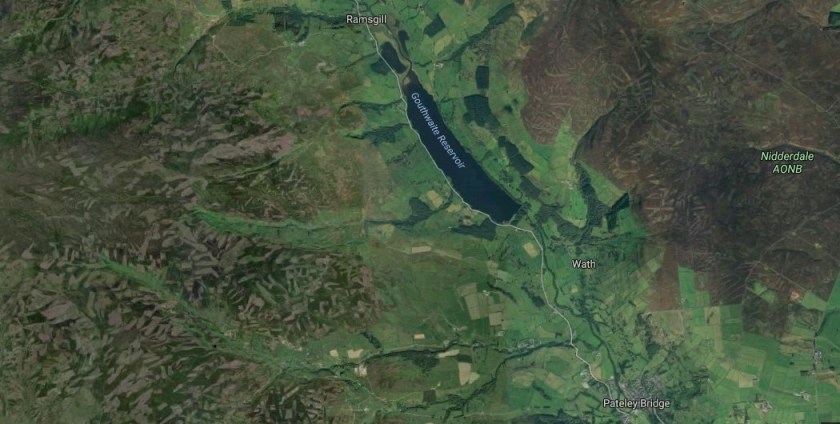
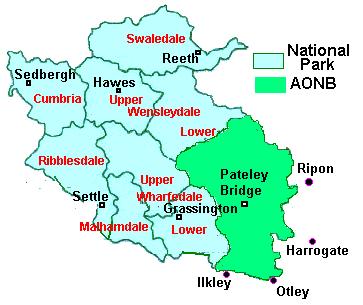
Preliminary research by academics at Leeds University has already found high concentrations of Flubendazole on grouse moors in the Nidderdale Area of Outstanding Natural Beauty (North Yorkshire). Quote: ‘Soil samples spread across three different grouse moors contained concentrations ranging between 150 and 850 µg kg-1 dry soil. This is of the same order of magnitude as peak concentrations of veterinary medicines found in agricultural soils following manure application (Kay et al., 2004). These agricultural concentrations are significant enough to have driven the development of policy to better manage the presence of veterinary medicines in the environment (EC, 2001) and it is expected that the proposed work would lead to further development of this policy, specifically risk assessment procedures, for moorlands‘.

This looks set to be a fascinating and important study and an excellent opportunity for a budding academic to make their mark.

The PhD will begin in October 2017. Full title: Analysis, occurrence and effects of Flubendazole in moorland river catchments (details here) under the supervision of Dr Paul Kay, Dr Richard Ansell and Professor Jeanette Rotchell. Deadline for applications is Monday 9 January 2017.

Photo: medicated grit tray with marker post on a Nidderdale grouse moor (RPUK)