Blog

Super computer needed to count this year’s English hen harrier nests

Here’s the tried and tested method that Natural England has deployed in recent years to count the number of hen harrier nests in England. In fact they’ve only needed one hand to complete the task.

This year, there are so many hen harrier nests, they’ve had to deploy a super computer to cope with the figures.

We know there must be loads and loads of nests, judging by the response we received from Natural England to a recent FoI request. In early July we asked NE the following simple questions:

  1. How many hen harrier breeding attempts in England are Natural England aware of in 2017, to date?
  2. How many of those were successful, to date?
  3. In which counties were the successful/unsuccessful nests?
  4. How many of those breeding attempts were on a driven grouse moor?

Today they responded and told us the information was being withheld for the time being. One of the reasons was a Public Interest Test, as follows:

Gosh! Soooooo many nests the data are having to be “quality assured and analysed” so as not to be misleading or inaccurate! We can hardly wait to see the results of such a challenging and complicated analysis.

Interesting to note that NE says the results “will be made available within the next month“. Will that be before or after Hen Harrier Day, which takes place in two and a half weeks?

SGA Chairman wonders why gamekeepers aren’t respected

We always look forward to the publication of Scottish Gamekeeper, the quarterly rag for members of the Scottish Gamekeepers’ Association. As you can imagine, it’s often stuffed full of bright intellectual commentary and an appreciation of birds with hooked beaks and sharp talons.

The latest edition landed on our doormat last week and as ever, its content didn’t disappoint. Looking at the cover, we were particularly keen to read Chairman Alex Hogg’s thoughts on ‘working people’ (he means gamekeepers) being fed up about being wrongly ‘tarred’.

As an aside, we were also intrigued to see the Partnership for Action against Wildlife Crime (PAW) logo displayed on the banner. As some of you will recall, the SGA recently spat the dummy and announced they’d no longer attend PAW Raptor Group meetings. So apparently you can be a member of PAW, and pick and choose your own terms of engagement. Marvellous.

Anyway, back to Chairman Hogg’s musings on life. Here’s his column:

Apart from having to point out to Chairman Hogg (not known for his grasp of factual accuracy) that, contrary to his claim, the hen harrier is red-listed precisely because of ‘poor management actions by gamekeepers’ in Scotland (and of course in England), what really intrigued us was his confusion about why gamekeepers are so maligned.

It’s a tricky one alright. Maybe, perhaps, we’re not entirely sure, but might it have something to do with the fact that of all those convicted for offences related to raptor persecution in Scotland between 1994-2014, 86% of them were gamekeepers? (Source: RSPB 2014 annual review)

Or that of all poison abuse incidents reported in Scotland between 2005-2014, 81% of them took place on land managed for grouse and pheasant shooting? (Source: RSPB 2014 annual review)

Chairman Hogg also uses his column to whip up a spot of scaremongering (as was regurgitated by a gamekeeper’s wife in the Mail on Sunday last weekend) about the introduction of game shoot licensing claiming that “law abiding people will be at the mercy of the extreme fringe that want nothing other than grouse shooting stopped. For them, the removal of a few licences (and a few gamekeepers and their families) is a means to an end; a stepping stone“.

Why is licensing such a difficult concept to understand? If you break the terms of the licence, you get penalised. If you abide by the terms of the licence, you won’t get penalised. It’s really pretty simple. Perhaps by using the term ‘extreme fringe‘ Chairman Hogg is suggesting that gamekeepers will be ‘set up’ or framed. Has there ever been a case of this happening, where a gamekeeper has been wrongly convicted by the action of somebody else? We can’t think of one. Members of the ‘extreme fringe’, whoever they might be, have no need to ‘set up’ gamekeepers because gamekeepers keep on breaking the law all by themselves, time and time and time again.

To be fair, Chairman Hogg does have a point about all gamekeepers being tarred by the same brush. The reason this happens is because it’s virtually impossible for observers to distinguish between the law-abiding gamekeepers and the criminal gamekeepers. Even industry leaders don’t differentiate, so why should we? The criminals within the ranks are repeatedly shielded and protected by the game-shooting industry, until the point of conviction. Once they’re convicted, the leading organisations within the industry are put under strong public pressure to react, (e.g. a membership expulsion), but this is a fairly recent phenomenon and it doesn’t always happen (e.g. see here) and actually we’re still waiting for the SGA (and Scottish Land & Estates and Wildlife Estates Scotland) to comment on the membership status of convicted gamekeeper William (Billy) Dick who committed offences on the Newlands Estate in Dumfriesshire. We’ll come back to this case soon.

However, as everybody knows, convictions for raptor persecution are as rare as hens teeth (especially when the Crown Office refuses to accept what appears to be clear cut evidence of alleged crimes) and so the SGA and others within the industry spend their time concocting the most fantastical explanations for what might have happened to the crime victims (e.g. see here, here, here, here) instead of focusing on the blindingly obvious suspects. That isn’t going to earn Chairman Hogg et al any respect, and will simply engender the commonly-held view that many (not all) gamekeepers are nothing more than irredeemably archaic luddites.

Here are some top tips for earning back some respect:

  1. Stop killing raptors
  2. Er
  3. That’s it

There’s nothing ‘draconian’ about licensing game shooting estates

There were a couple of articles published in the Scottish Mail on Sunday yesterday about the possibility (probability) of the introduction of game shoot licensing in Scotland.

The first article didn’t bring anything new to the story; it was just a re-hashed version of who’s said what since Cabinet Secretary Roseanna Cunningham announced a package of new measures to address the on-going problem of raptor persecution and unsustainable grouse moor management. Lord David Johnstone of Scottish Land & Estates talked about maintaining the status quo (i.e. no licensing scheme required), James Reynolds of RSPB Scotland talked about the necessity of introducing a licensing scheme because self-regulation by the grouse-shooting industry has failed, and an unnamed spokesman from the Scottish Gamekeepers’ Association talked about how licensing could have serious consequences for gamekeepers and their families. The two journalists who wrote the article described the Government’s proposed review as ‘the latest blow to landowners following draconian land reforms and the abolition of tax breaks’.

What ‘draconian land reforms’ are those, then? And why should multi-millionaire landowners, whose grouse moors are already subsidised by the public purse, be entitled to tax breaks?

Here’s a copy of the article, and for those who struggle to read it, here’s a PDF version so you can zoom in and increase the font size: MailonSunday1_July162017

The second article was a commentary column written by Carrieanne Conaghan, a gamekeeper’s wife who coordinates the ‘Speyside Moorland Group’ – one of several regional moorland groups closely affiliated with the Gift of Grouse propaganda campaign.

The headline begins: ‘As Draconian new land laws loom…’ These words probably weren’t Carrieanne’s but nevertheless, it’s clear from her commentary that estate licensing isn’t welcomed by gamekeepers because, she says, “For the vast majority of estates who have done nothing wrong and are resolute in their fight against wildlife crime, they would be penalised by strict new controls“.

Unfortunately she doesn’t explain why or how she things law-abiding estates would be “penalised by strict new controls“. The fact of the matter is, they wouldn’t be penalised at all, as the penalities would only be felt by those who continue to illegally kill protected raptors. And quite rightly so. Law-abiding gamekeepers, and their employers, have absolutely nothing to fear from the introduction of a licensing scheme, and you’d think they’d be welcoming it with open arms because if anything, it’ll protect them from being lumped in with the criminals.

Here’s the article and here it is as a PDF: MailOnSunday2_July162017

Carrieanne also claims that, “More worryingly, it [licensing] also brings the potential of gamekeepers losing their homes and livelihoods if a licence to operate was withdrawn“. This is just emotional scaremongering, probably encouraged by the same tosh spouted by SGA Chairman Alex Hogg earlier this year (see here). The only reason gamekeepers would potentially lose their homes and livelihoods would be if they’d broken the conditions of the licence and the subsequent withdrawal of that licence. That principle applies to everybody else in society whose activities are licensed. It’s the risk you run if, for example, you’re a professional driver and you commit road traffic offences leading to the loss of your driving licence. Why should gamekeepers be exempt from regulation when everyone else’s lives are governed by such rules?

Carrieanne claims that the licensing proposal has been brought about by “activists who object to the very existence of grouse moors, whether their opposition is based on a dislike of shooting or the ‘toffs’ who they believe are the only ones who participate“. Actually, the proposal was brought about by ordinary members of the public who are sick to the back teeth of criminal gamekeepers and their employers getting away with the illegal slaughter of protected wildlife, particularly on driven grouse moors.

Carrieanne claims that raptor persecution is “in decline” and that “tough new legislation has had a positive effect“. She also thinks, because her gamekeeper husband told her, that gamekeepers “desire to manage moorland for the interests of all species, whether it be grouse, ground-nesting birds, mountain hares or birds of prey“. Good grief.

She must have missed the Golden Eagle Satellite Tag Review, the findings of which were the final straw for Roseanna Cunningham and which led directly to the current proposition of a licensing scheme. She must also have missed the news that the hen harrier population continues to spiral downwards, thanks in large part to illegal persecution, and the news that peregrine populations continue to decline in areas dominated by driven grouse moors, and the news that the northern red kite population continues to suffer from the impact of illegal persecution on driven grouse moors, and the news that five prosecutions for alleged wildlife crime (all involving gamekeepers or their employers) have all been dropped in recent months, and the news that raptors continue to be illegally shot, even in recent weeks (see here, here) or illegally trapped (see here) on grouse moors up and down the country.

Did anyone see any gamekeepers or any moorland groups condemning these incidents? Where was their uproar? Where was their outrage? How many gamekeepers or members of moorland groups have provided information/intelligence to the police about any of these recent crimes? We’ll take an educated guess – none of them.

Carrieanne is right to be concerned about her family’s livelihood, but it’s not at risk from a licensing scheme, which is neither draconian or unnecessary; it’s actually a long overdue and pretty measured response to decades of criminality and unsustainable practices. Carrieanne’s livelihood is only at risk from those criminal gamekeepers and their employers who refuse to reform and continue to stick up two fingers to the law.

UPDATE 25 July 2017: SRSG response letter here

“The hen harrier…..this is a nasty bird of evil habits. It must be got rid of at all costs”

The hen harrier….this is a nasty bird of evil habits. It quarters the moor a few feet above the ground and pounces on grouse or chicks it catches unawares. It must be got rid of at all cost”.

This is a quote. You might think it’s attributable to Amanda Anderson (Director, Moorland Association). It’s not that far off her infamous quote last year:

If we let the harrier in, we will soon have nothing else. That is why we need this brood management plan“.

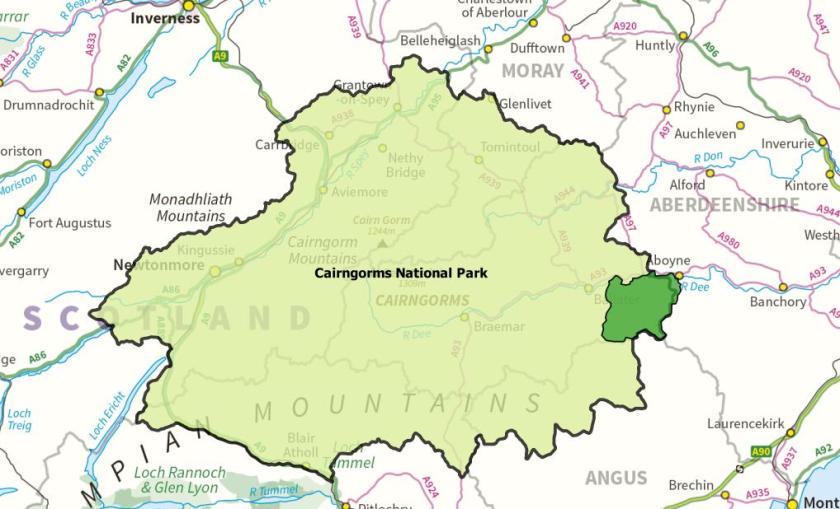
But our quote isn’t from Amanda. It’s from a book called Grouse: Shooting and Moor Management, first published in 1958 (er, four years after the Protection of Birds Act became law!) and written by Richard Waddington who had a grouse moor in what is now the eastern side of the Cairngorms National Park.

Obviously stuck in a Victorian time warp, another quote from the chapter called ‘Vermin on the Moor’:

Eagles can very easily be trapped…..They can also sometimes be shot. However, since they are vigorously protected throughout Scotland it is perhaps wisest to say nothing on this subject. But if you want a successful grouse shoot you must find some means of ridding yourself of eagles“.

[Thanks to the blog reader who drew this book to our attention, also quoted in Mark Avery’s book Inglorious].

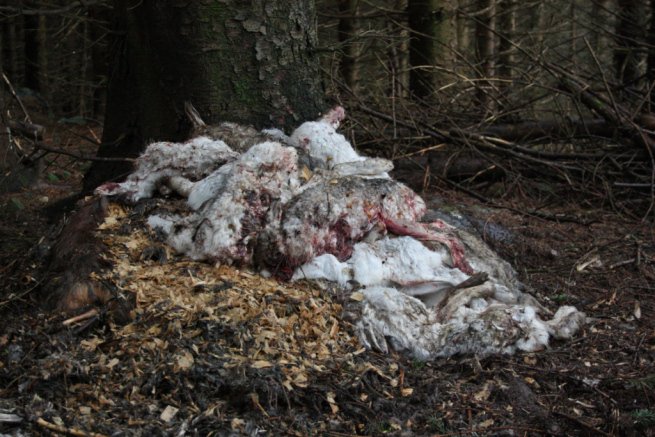
And here we are, well over half a century later, and not much has changed, has it? A number of grouse shooting estates are quite clearly still ‘ridding themselves of eagles’, including some on the eastern side of the Cairngorms National Park (see here), while breeding hen harriers have been eradicated from many Scottish grouse moors (see here) and virtually every English grouse moor (we heard there was a pair this year on a grouse moor in the Yorkshire Dales but apparently, we’re told, it ‘disappeared’. Presumably this will be confirmed by Natural England at some point. But then again…).

The fight back continues though. For the fourth successive year, Hen Harrier Day events will be happening throughout the UK over the weekend of 4-5 August (and an event on the Isle of Mull on 29 July 2017). Full details of each event can be found on the Hen Harrier Day website HERE

Find one near to you (or find a distant one and have a road trip) and turn up, join in and show your support. We’ll be at the Tayside event (along with other speakers) on Saturday 5 August and also at the Highland event on Sunday 6th. We look forward to seeing some of you.

Another gas gun on Broomhead Estate grouse moor, Peak District National Park

Regular blog readers will know we’ve been banging on about the use of propane-powered gas guns (bird scarers) on grouse moors for a couple of years.

For those who don’t know, propane gas guns are routinely used for scaring birds (e.g. pigeons, geese) from agricultural crops – they are set up to deliver an intermittent booming noise and the audible bangs can apparently reach volumes in excess of 150 decibels. According to the Purdue University website, 150 decibels is the equivalent noise produced by a jet taking off from 25 metres away and can result in eardrum rupture. That’s quite loud!

We, and others, have blogged about them being deployed on various grouse moors in Scotland and England, and our suspicion that they are being used to deter certain raptor species from settling for a breeding attempt, especially hen harriers.

Last year (May 2016) we blogged about a gas gun that had been photographed on the Barnside Moor, which is part of the Broomhead Estate in the Peak District National Park. This estate is owned by Ben Rimington Wilson, a spokesman (see here) for the grouse-shooting industry’s lobby group the Moorland Association.

The gas gun was positioned right on the edge of the area designated as a SSSI (Site of Special Scientific Interest) and an SPA (Special Protection Area), both designated in part for breeding bird populations, particularly short-eared owls, merlin and golden plover. As such, we believed the gas gun would require consent from Natural England as it would fall under the list of ‘operations likely to damage the special interest of the site’. However, at that time Natural England still hadn’t published its long-awaited guidance on gas gun use so that particular enquiry didn’t go very far.

Fast forward a year, and one of our blog readers has sent us some photographs (thank you) of another gas gun on this moor (photos taken this week) and this time the gas gun is placed in a different position from last year.

This year the gas gun is positioned well within the boundary of the SPA, the SAC (Special Area of Conservation) and the SSSI, as the following maps show:

What’s also different this year is we now have the ‘official guidance’ published by Natural England about gas gun use and whether the landowner has to apply for consent. According to the (not very impressive) flow chart that NE produced, it would appear that consent would be required for this particular gas gun as it sits well within the boundary of the SSSI:

At this stage we’re not suggesting that Mr Rimington-Wilson has acted unlawfully – he may well have applied for, and received, consent from Natural England. What we’re interested in finding out is DID he apply, and DID Natural England provide consent, and if so, on what grounds? How would Natural England ensure that the deployment of a gas gun would not disturb the breeding birds for which the site was designated for special protection?

Emails to: enquiries@naturalengland.org.uk

We’re also interested in finding out how many raptor species bred successfully on this moor this year. The Broomhead Estate is part of the Peak District Birds of Prey Initiative, a project that failed to deliver its five-year targets but was set to continue in 2015 with “renewed commitment” and “new rigour and energy” from project partners, according to the Peak District National Park Authority (see here). Now, as it’s still only July, it’s unlikely that the raptor breeding data for 2017 have been analysed and submitted yet, but nevertheless, it’s worth lodging an interest in these data and asking the PDNPA to forward those results as soon as they become available, which should be later this year.

Emails to Sarah Fowler, Chief Exec of the PDNPA: sarah.fowler@peakdistrict.gov.uk 

And while we’re on the subject of the Peak District National Park, the PDNPA is currently consulting on its Management Plan and wants to know your views. See Mark Avery’s blog today (here) for some helpful hints on which issues you might want to raise. The consultation ends at the end of this month.

UPDATE 24 July 2017: Natural England responds (see here)

Meet the raptor scientists: series of public talks in Scotland, Sept 2017

Here’s an unusual opportunity to listen to a number of raptor scientists talking about their research, with subsequent panel discussions and audience debate.

Day one will be held in Edinburgh (Friday 22 September 2017) at the Royal Botanic Garden Lecture Theatre. Tickets cost £20 and this includes refreshments and lunch. Here’s the programme:

Day two will be held in Dumfries & Galloway (Saturday 23 September 2017) at St John’s Town of Dalry Town Hall. Tickets cost £10 and this includes refreshements but a sandwich lunch is to be paid separately. Here’s the programme:

Booking is essential. Download the booking form here: Watson Birds events September 2017 Booking form

Eight Scottish osprey chicks translocated to Poole Harbour, Dorset

Some welcome conservation news for a change:

Press release from charity Birds of Poole Harbour:

Eight Osprey chicks from Scotland have safely arrived in Poole Harbour as part of a five-year translocation project, aimed at re-establishing this species on its former breeding grounds on the south coast of England.

The project which is being run by Birds of Poole Harbour, The Roy Dennis Wildlife Foundationand local wildlife technology company Wildlife Windows, was given the go-ahead this spring and it is hoped that over the next 4-5 years Ospreys will adopt Poole Harbour as their new home and recolonise the south coast. Osprey pass through Poole Harbour every year on migration, attracted by the abundance of fish such as Mullet and flatfish. In late August, the harbour can host up to six Ospreys as birds fatten up before their long migration down to west Africa.

Photo: three of the eight osprey chicks (photo by Roy Dennis)

Paul Morton from Birds of Poole Harbour said, We’re so pleased to see the chicks finally arrive in Poole Harbour. It’s been a long few months waiting for this moment, so to see them in the pens has made the whole project very real now. The public support we’ve received has been over-whelming and the offer of help from Storm restaurant has been key to making this part of the process run smoothly and efficiently“.

Pete Miles, owner of Storm restaurant and local fisherman added,  “It’s a real privilege to be involved in the project and to help the Osprey team out. Anything that helps promote and educate local environmental stories is always good news. We’ve already got all the facilities to prep fresh fish so it made sense to offer help, plus I’m really looking forward to seeing these birds out flying around the harbour in years to come whilst I’m out on my fishing boat”.

Roy Dennis said, “We are delighted that this exciting and important project is underway. Establishing a population of Ospreys on the south coast will restore the species to an area where it was once common and also help to link expanding populations in central England, Wales and northern France. We are moving the birds to the best possible location given the abundance of fish found in Poole Harbour and the plethora of potential nest sites in the surrounding area. I’m particularly excited about this project because I was born in the New Forest”.

Once the chicks look ready and strong enough to fly, the Osprey monitoring team will open the pens, allowing the chicks to take to the wing for the first time and explore their new area. It is expected that the young Ospreys will remain in the harbour for a further 3-5 weeks after release before they begin their long migration to West Africa. The released Osprey will then remain in Africa during the summer and winter of 2018 and won’t think about flying north to the UK until late spring 2019. It is hoped that the first breeding will take place around 2021.

ENDS

Photo of Poole Harbour by Michael Harpur

Police investigating footage of ‘gamekeepers’ shooting & snaring wildlife in Peak District National Park

The Mirror has just published an article entitled “Barbaric”: Wild animals trapped and shot in UK National Park to protect birds for shooting season and a by-line stating “Film taken in Peak District National Park shows gamekeepers shooting and trapping wild animals in a bid to stop them killing grouse as bird hunting season nears” (see here).

The article includes video footage and a number of photographs taken by a group called the Hunt Investigation Team. The video shows a masked man shooting off a snare around a badger’s neck (and the badger subsequently running off) and another masked man shooting dead a snared fox.

The video is graphic and makes for unpleasant viewing, but from what we can see, none of the filmed activity shows obvious illegal activity. Interesting, though, that the armed men are masked. That’d be quite a shock for any member of the public who happened to be walking in this National Park.

It is legal to snare foxes (as long as certain snaring conditions are met, and these conditions vary between England & Scotland) and then to shoot the snared fox. The snared fox in the video, which is obviously distressed, is dispatched quickly.

It is illegal to deliberately snare badgers, however, as snares are indiscriminate, badgers and other non-target species can often be caught by accident. When this happens, the badger must either be immediately released when found by the snare operator, or, if it is badly injured, it can be humanely killed. The masked man in the video uses his firearm to shoot through the snare and the badger is able to run free. The masked man makes no attempt to kill the badger, even though he had ample opportunity.

There are obvious welfare concerns about the badger being released with wire still around its neck, and by law, snares should not be set in areas where badgers are known to inhabit. The snare operator should be skilled at detecting badger signs and where seen, snares should not be set. Perhaps this is what the police are investigating? *see update at foot of blog

It’s also possible that there is further video evidence that has not been released to the media. One ominous photograph, that looks like it’s a screen grab from a video, shows a masked man approaching an apparently snared badger with a half-raised shovel. It’s impossible to judge from this photograph whether the masked man is about to use the shovel to protect himself as he frees the badger, or whether he is about to use the shovel to cave in the badger’s skull. Perhaps the full video sequence is more enlightening.

The Mirror article claims the two masked men are gamekeepers, working to protect grouse stocks. The ground that can be seen in the video doesn’t look like a grouse moor but of course this footage could have been filmed on land adjacent to a grouse moor. The name of the location has not been published. It’s highly likely that the two masked, armed men are gamekeepers, and perhaps the Hunt Investigation Team has further intelligence to support this. If they’re not gamekeepers, then the police will be investigating whether these two armed, masked men had landowner permission to be snaring and shooting wildlife here.

So although there may be more to this story than has been presented by the Mirror article, based on what’s been published this appears to show gamekeepers undertaking lawful gamekeeping activity. Nevertheless, it will be abhorrent to many, and probably an eye-opener to the average Mirror reader who perhaps is unaware that snaring is even legal in 21st Century Britain, and probably also unaware of the routine killing of wildlife that is allowed in this country all so a minority sector of society can shoot gamebirds for fun. That this is permitted within a National Park will also probably be shocking news to many. Good, this is exactly the sort of information that needs to be widely publicised.

UPDATE: Thanks to one of our Twitter followers for providing the following link to the Hunt Investigation Team website, which names the estate as the Moscar Estate (a known grouse-shooting estate within the Peak District National Park) and provides much more detail and further gruesome video evidence and commentary on what was filmed there earlier this spring. See HERE.

Natural England still refusing to release details of Hen Harrier brood meddling plans

Regular blog readers will know that we’ve taken a keen interest in DEFRA’s Hen Harrier Action Plan, which was published in January 2016.

We’ve been particularly interested in two of the six action points of this plan: brood meddling and the southern reintroduction.

On brood meddling, through a series of FoIs last year, we were able to find out what was being planned (here), a bit more about what was being planned (here), who was likely to be involved in the practicalities of brood meddling (here), and a bit about an even more bonkers social science survey that was to run parallel with the bonkers brood meddling scheme (here).

However, since November 2016, it all went a bit quiet so on 23 February 2017 we submitted another FoI asking for copies of all recent correspondence on brood meddling and the southern reintroduction. Natural England responded on 21 March 2017 telling us that information was being withheld “as it would prejudice the process of determining the licence application and potentially the quality of that licence”. They also told us, “The discussions are confidential up until the point the licence application has been determined. Once this has happened then details of the licence are available to the public”. 

We knew that this licence application was being submitted (by Natural England, to Natural England!) in either February or March 2017, so we left it a while before we submitted another FoI.

Our second FoI asking for information was submitted on 29 May 2017. Natural England responded on 31 May 2017 with this:

‘The application you refer to is still being determined. I’m afraid that we do not have an estimate of when it will be”.

We then learned, from reading the minutes of the Natural England Board meeting held on 22 March 2017 that the brood meddling licence application had been submitted (by Natural England, to Natural England!). We also learned that the Natural England Science Advisory Committee “needed to sanction the work behind the data” but that’s about all we’ve been able to find out.

So on 2 July 2017 we put in a third FoI to Natural England, again asking for copies of all correspondence relating to the brood meddling scheme. Last Thursday (6 July 2017) Natural England responded:

I can confirm that the licence application is still being determined and we do not have an estimate of when it will be“.

We’re finding this all quite hard to believe and suspect that Natural England is just using this as an excuse not to release any more information about their plans for brood meddling because they don’t like the criticism those plans have attracted. How would releasing notes from the brood meddling team meetings ‘prejudice the process of determining the licence application and potentially the quality of that licence‘? All this secrecy, over a highly controversial project, doesn’t inspire confidence.

On the southern reintroduction action point (although it’s not really a ‘reintroduction’ because harriers are still present in southern England), last year, again through a series of FoIs, we were able to find out about the feasibility/scoping report (here), the project group and its planned work timetable (here), potential funding options (here), Exmoor National Park as a proposed release site (here), Wiltshire as a proposed release site (here), and potential donor countries from where NE will source hen harriers (here).

Since the end of 2016, Natural England has refused to release any further information on the southern reintroduction, again, using the brood meddling licensing application to hide behind. We’ve now submitted another FoI (2 July 2017) asking for this information to be released, as this information has nothing to do with the brood meddling licence application and should therefore be available for scrutiny.

We do know, from the minutes of that NE Board meeting on 22 March 2017, that the NE Board has “considered the overall objective of the southern reintroduction and agreed this was to help relic upland populations in respect of the genetic diversity and the overall favourable conservation status of the species“.

So has the NE Board seen any scientific evidence that has assessed the genetic diversity of the UK hen harrier population and determined that its genetic diversity is in need of “help”? Have the potential donor populations been screened to assess their genetic diversity? And how will releasing hen harriers, that are likely to disperse to the uplands where this species is still routinely shot on sight, help the species achieve favourable conservation status?


Protest march to Downing Street, 12th August 2017

A coalition of wildlife campaigners will be marching to Downing Street on the Inglorious 12th August 2017 to protest about the on-going cruelty and criminality against badgers, foxes and hen harriers in the UK countryside.

Key issues of this protest include the Government’s ineffective and costly badger cull policy, strengthening rather than appealing the Hunting Act, raising awareness of barbaric fox-cub hunting, and calling for a ban on driven grouse shooting.

Supported by all the major wildlife protection charities (including Badger Trust, LACS, IFAW, Born Free), the march will begin at Cavendish Square at 1.30pm before heading down Regents St, Pall Mall, around Trafalgar Square and down Whitehall, ending at Richmond Terrace opposite Downing Street.

Speakers will include Chris Packham, Dominic Dyer, Mark Avery and others.