Blog

Shot buzzard found dead on Scottish sporting estate

Police Scotland are appealing for information after a dead buzzard was discovered on a Scottish sporting estate in the Highlands.

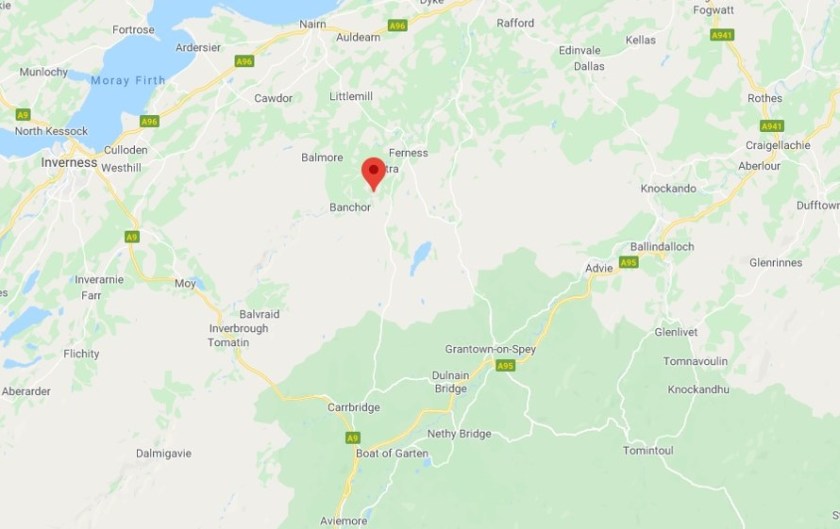
A member of the public discovered the corpse in woodland ‘in the Dulsie area’ on 15 March 2020 and a subsequent post-mortem revealed it had been shot.

An x-ray revealing the extent of the shot damage has not been released so it’s impossible to comment on the likelihood that the bird was shot close to where it was found or whether it had been able to travel some distance before succumbing to its injuries.

Police wildlife crime officer Constable Daniel Sutherland said: “Positive work is constantly ongoing in the Highlands in relation to raptor persecution so it is sad and disappointing to find another incident like this reported to us.

I am grateful to the member of the public who came across the bird and reporting it. Our enquiries to establish the full circumstances are ongoing.

Anyone with information is about this incident or may have seen anything suspicious in this area are asked to contact Police Scotland on 101 quoting reference NM502/20 or Crimestoppers on 0800 555 111 if you wish to remain anonymous.”

Yorkshire Water instructs grouse moor tenants to halt burning until further notice

First it was the fire chiefs, then some of the National Park authorities, and now Yorkshire Water, calling on grouse moor owners to stop setting fire to the heather during this time of national emergency.

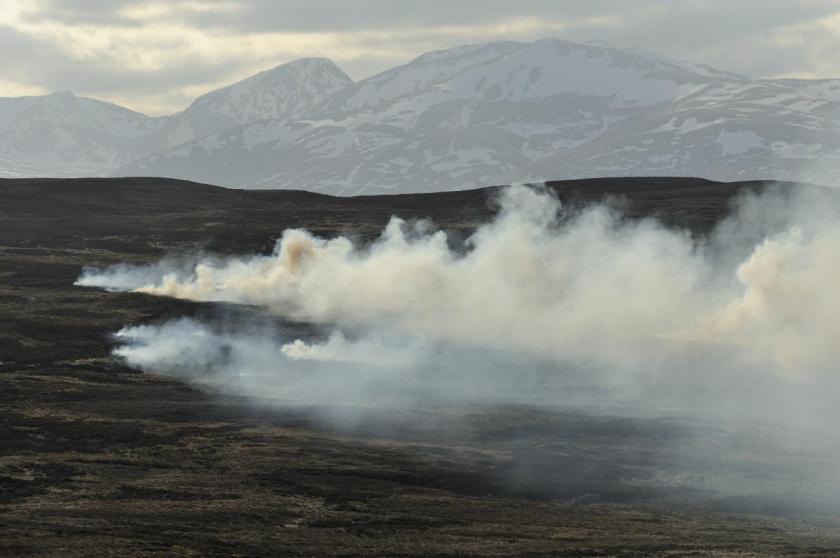
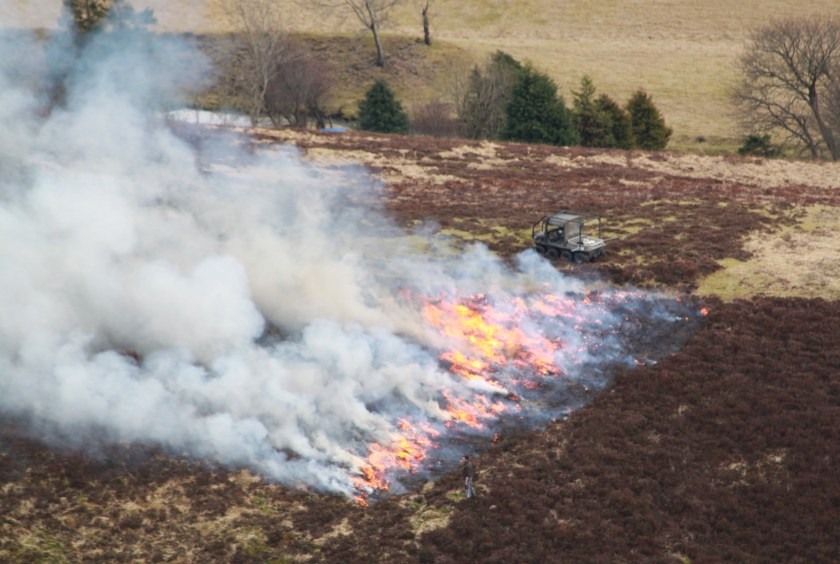
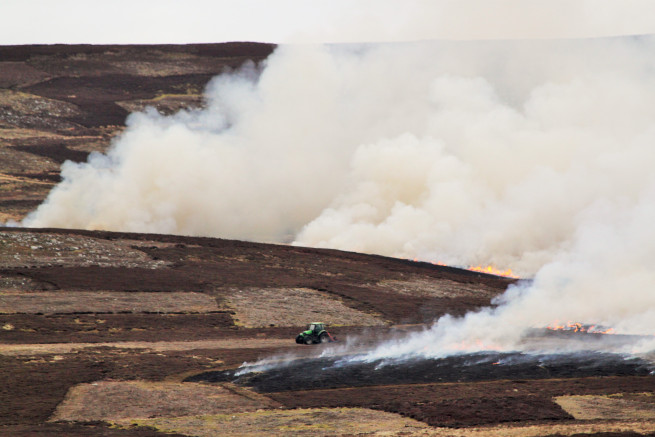
[The tell-tale pattern of heather burning on a grouse moor, undertaken solely to increase stocks of red grouse for shooting. Photo by Ruth Tingay]

Yorkshire Water has issued the following press statement today:

YORKSHIRE WATER TO HALT CONTROLLED BURNING ON THEIR LAND UNTIL FURTHER NOTICE

Yorkshire Water and United Utilities have asked their tenants and land managers to halt controlled burning on their land until further notice. Both water companies are significant landowners within their areas of operation, including owning moorland which is used to gather water for drinking water supplies and to help reduce the risk of flooding.

The instruction to cease any form of burning comes following requests from emergency services and local councils that landowners cease moorland burning. There are concerns that controlled burning increases the risk of unintentional wildfires, and that fumes from any form of fire may affect members of the public suffering from COVID-19.

Both Yorkshire Water and United Utilities are committed to ensuring that the emergency services staff dealing with the COVID-19 pandemic can focus on that work, rather than facing additional challenges that burning may bring. Both companies are asking that members of the public who intend to exercise in moorland areas in accordance with government guidance are aware that their actions can cause wildfires, and that they should behave responsibly to ensure that wildfires are avoided.

Richard Emmott, Director of Corporate Affairs said: “At this time of uncertainty all areas of society have a responsibility to ensure that our emergency services can focus on the key national priority, which is helping people affected by COVID-19 and halting its spread. We have therefore taken the decision to ask our tenants to cease burning until further notice.”

ENDS

Well done, Yorkshire Water.

Incidentally, if anyone has photographs of grouse moor burning that have been taken from today onwards, please send them in with details of where and when they were taken and we’ll publish them here. If you don’t want to be named as the photographer that’s fine, they can be published anonymously.

PLEASE NOTE: It’s important that if you witness smoke from a grouse moor fire that’s affecting the public highway, please report it to the police immediately, to give them the best opportunity of taking action.

Grouse moor owners urged to stop setting fire to the moors

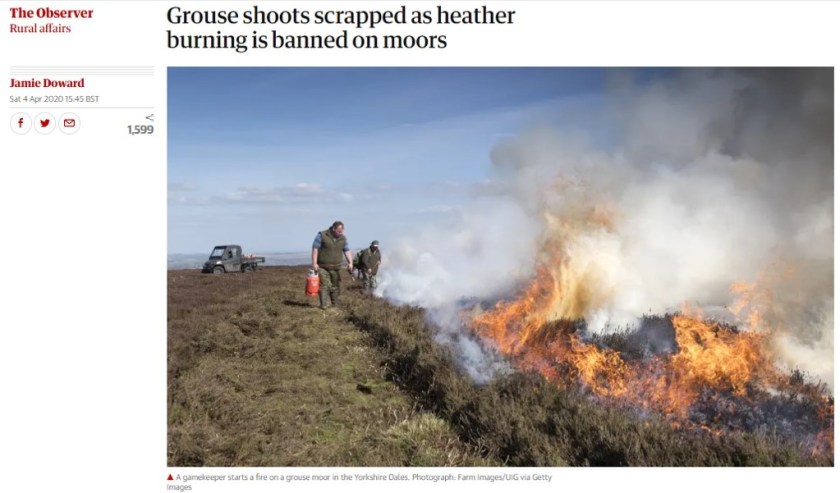
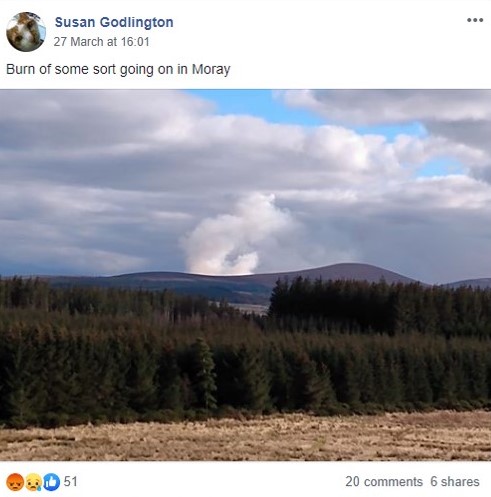
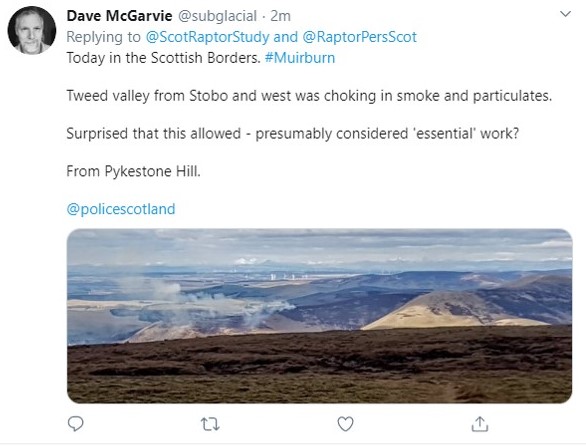
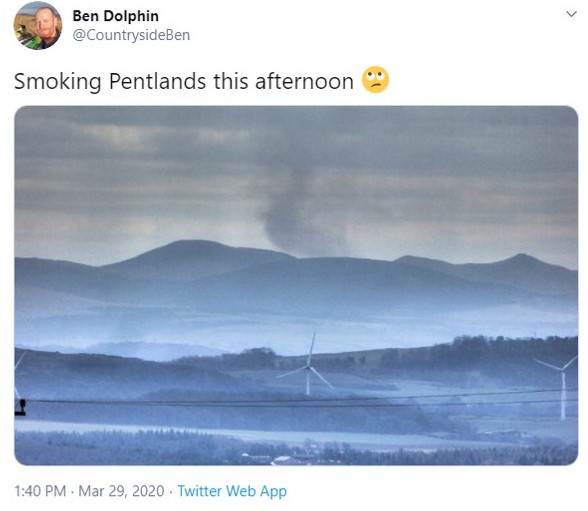
Gamekeepers have been busily setting fire to grouse moors throughout the UK uplands in recent days, despite the environmental destruction this causes, despite the climate change emergency, and perhaps most selfishly right now, despite the national/global Coronavirus crisis and the pressure this has placed on our emergency services.

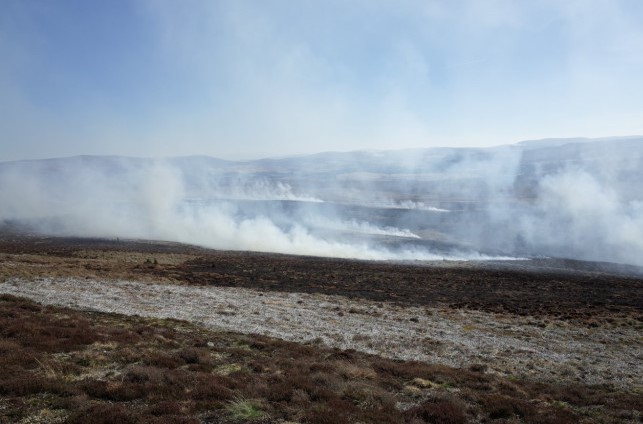
[A fire on Blubberhouse Moor last week in the Nidderdale Area of Outstanding Natural Beauty, North Yorkshire. Contributed photo]

Two days ago West Yorkshire Fire & Rescue Service called for an immediate ban on so-called ‘controlled’ grouse moor burning after one such fire turned in to a mile-long uncontrolled wildfire that required 20 fire engines and up to 100 firefighters to extinguish the flames (see here).

The Chief Executive of the Peak District National Park Authority has now published a statement calling for gamekeepers / grouse moor managers to stop the burning on the grouse moors of the National Park:

It’s interesting to note that, according to this statement, the Moorland Association has apparently ‘advised’ its members of the wildfire risks and is ‘supporting a suspension of heather burning and to use cutting instead’. Let’s see how many of those members accept this ‘advice’ and how many of them ignore it.

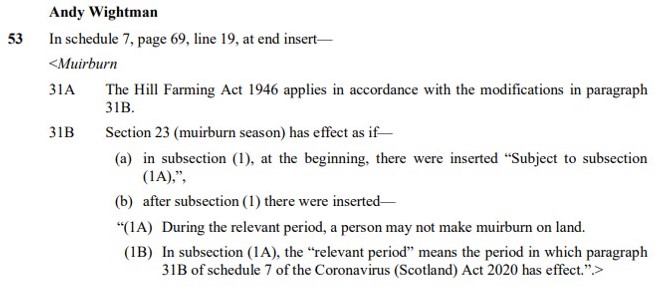
North of the border the landowners’ lobby group Scottish Land & Estates is also ‘urging’ its members to stop being so bloody stupid and has published a statement calling for an end to the burning:

This is welcome news, of course, although given the known dire consequences of muirburn there’s a strong case to be made (and is continuously being made by many environmentalists and conservationists) that they shouldn’t be burning heather moorland anyway, although if you read SLE’s statement you’d never guess that there was an issue and the only reason they’re calling for a cessation is to prevent further strain on public services:

Scottish Land & Estates is never one to miss an opportunity for propaganda, eh? Muirburn is not ‘strictly regulated’ as claimed – far from it! In Scotland it’s governed by the recently-revised Muirburn Code (Scotland’s Moorland Forum, 2017) which provides a combination of statutory requirements and good practice guidelines (and we all know how well this industry adheres to good practice guidelines!!). There is a burning season but apart from this, enforcement of the Muirburn Code is limited.

As for SLE’s claim that ‘the risk of fire getting out of control is very small’, well according to the Muirburn Code,

Fires escaping from muirburn are a major cause of wildfire in Scotland“.

In addition, the recent SNH-commissioned review of sustainable moorland management states:

Whilst large, intense wildfires can be destructive, many have no greater impact than prescribed burns (Clay et al 2010) and evidence suggests that over 50% of wildfires with known causes may themselves be caused by loss of control of prescribed burns“.

If you want to learn more about the environmental damage caused by muirburn in Scotland have a read of this summary report from Revive, the Coalition for Grouse Moor Reform.

Dorset Police investigate reported disturbance of nesting peregrines

There have been a few reports in the media (e.g. here and here) about climbers and a drone-user disturbing breeding peregrines this week on cliffs in Portland, Dorset. This is an offence under the Wildlife & Countryside Act.

[Photos by Weymouth & Dorset Police]

Apart from the fact that there’s supposed to be a lockdown, Police wildlife crime officers have stated that they will look to prosecute anybody ignoring the ‘clear signage’ to stay away from the nest sites between 1 March and 30 June:

These signs have been in place for years, initiated by local climbers keen to protect the peregrines (see here).

Buzzard & kestrel suspected poisoned in Derbyshire

Derbyshire Constabulary has published the following message on social media this evening:

Derbyshire Rural Crime Team is investigating after two birds of prey were found dead in the Ault Hucknall area of Chesterfield.

A Kestrel and a Buzzard were found on Monday 23 March. Initial investigations lead us to believe they have been poisoned rather than shot.

The birds have been recovered and an investigation launched.

Anyone with information is asked to contact the Rural Crime Team by emailing DRCT@derbyshire.police.uk quoting reference 20000159754.

You can also pass information anonymously to Crimestoppers by calling 0800 555 111 or visiting https://crimestoppers-uk.org/

ENDS

Well done to the police for a very speedy notification. Obviously the investigation is still in the early stages although the proximity of a plucked wood pigeon in these photos is probably a big clue.

UPDATE 3rd August 2020: Buzzard and kestrel confirmed illegally poisoned in Derbyshire (here)

Fire service calls for ban on grouse moor burning

Press statement from West Yorkshire Fire & Rescue Service (23 March 2020):

FIRE SERVICE CALLS FOR A STOP TO CONTROLLED BURNING ON THE MOORLAND AFTER MAJOR BLAZE BREAKS OUT

Firefighters from across West Yorkshire have been tackling a significant moorland blaze at Deer Hill Reservoir in Marsden today after an emergency call came in just before 12.30pm.

The incident has required 20 fire appliances from across West Yorkshire to attend with firefighters tackling a mile long fire-front.

It’s believed the fire started as a result of controlled burning which spread.

The Fire Service is now strongly urging landowners to cease controlled burning and for anyone using the moors to be extra vigilant not to start a fire accidentally.

[Photos by West Yorkshire Fire & Rescue Service]

Last year the Fire Service and partners launched the Be Moor Aware campaign and Bradford, Calderdale and Kirklees councils brought in Public Space Protection Orders banning barbecues on moorland and other open spaces.

Assistant Chief Fire Officer Nick Smith said: “We are disappointed to see what has happened today which could have so easily been avoided and we urge landowners to stop controlled burning with immediate effect. Controlled burning can easily spread and tackling the consequences takes up a huge amount of the Fire Service’s time and resources – moorland fires can quite literally go on for miles and days.

We are currently trying to focus our resources on supporting the national effort to respond to Coronavirus and this is unhelpful to us. We will be making every effort to contact landowners over the forthcoming days and to reiterate this message. These are unprecedented times and we require our resources to support communities and help the vulnerable rather than having firefighters tied up for days on the moors undertaking this kind of arduous work. It is not where we want to be focusing our energies at this time, which we are sure people will understand.

Members of the public who are going onto the moorland for some fresh air and a walk should also be extra vigilant not to start a fire accidentally. Alongside partners, we started a public awareness campaign last year, called Be Moor Aware, following widespread moorland fires across the region and all of our advice from that campaign still stands.

We trust that you will take this advice seriously not only to protect the moorland, but also to help protect your communities at this difficult time.”

ENDS

Of course, grouse moor burning is continuing apace across the UK uplands. Apart from the obvious and well-documented environmental damage caused by deliberately setting fire to heather moorlands (just to enable a ridiculously high density of red grouse that can then be shot), and the unnecessary additional burden on the fire & rescue service at a time of national crisis, it’s actually astonishing that such a selfish practice that reduces air quality is still permitted while the nation struggles against a deadly respiratory virus.

For media coverage about this particular fire:

West Yorkshire Fire & Rescue Service here

Yorkshire Live here

BBC news here

About Manchester here

Two hen harriers shot on two North Yorkshire grouse moors: shooting industry’s response

At the end of January 2020 several prominent organisations from the game-shooting industry (BASC, Moorland Assoc, National Gamekeepers Org, Countryside Alliance) and the Country Landowners Association made a huge thing about acknowledging 66-year-old wildlife protection legislation when they announced a professed ‘zero tolerance’ for the illegal killing of birds of prey (see here).

Since then police in North Yorkshire, the epicentre of UK raptor persecution, have issued two public statements (on 12th and 17th March) about the witnessed shooting of two male hen harriers, one on a grouse moor in the Bowland AONB (here) and one on a grouse moor in the Yorkshire Dales National Park (here). The illegal killing of hen harriers has been identified as a National Wildlife Crime Priority. This species is on its knees, thanks to criminals within the grouse shooting industry.

It was also revealed that, unusually, North Yorkshire Police had been able to make two arrests in relation to these reported crimes; this was welcome news and in both press releases the police asked the public to come forward with any further information as their inquiries continued.

[Conservationist Chris Packham holding the corpse of an illegally trapped hen harrier that was found on a grouse moor in Scotland last year. Photo by Ruth Tingay]

You might think, given the recently professed ‘zero tolerance’ of these offences, that police appeals for information about these two disturbing crimes reported on Yorkshire grouse moors would provide the perfect opportunity for the grouse-shooting industry to offer its full support to the investigations and to encourage members of the public to step forward with info, especially if there was concern about dangerous unidentified armed criminals running amok on privately-owned land, right?

Well apparently not. We’ve looked at the websites of the five organisations to search for statements and this is what we found:

BASC: nothing

Moorland Association: nothing

National Gamekeepers Organisation: nothing

Countryside Alliance: nothing

CLA: nothing

Ah, you may say, well they’re all too busy focusing on the coronavirus so haven’t had time to share information about illegal raptor persecution.

Well, that may have been a credible argument had we not found the National Gamekeepers Organisation and Countryside Alliance yesterday making urgent demands of DEFRA’s Secretary of State George Eustice to issue licences that permit gamekeepers to continue killing stoats and sidestep new restrictions (see here and here).

Meanwhile, with the hypocrisy knob turned up to high, BASC has been howling with moral indignation about the timing of Wild Justice’s decision to challenge the casual killing of birds in Wales (see here).

Zero tolerance of illegal raptor persecution? Yeah, right.

Wild Justice lodges more court papers – this time challenging casual bird killing in Wales

Wild Justice has launched it’s latest legal case, challenging what it argues is the unlawful casual killing of birds in Wales.

Full details on the Wild Justice blog here

If you’d like to support Wild Justice take this case through the courts, please visit the crowdfunder page here

Thank you


(Another) hen harrier shot on a grouse moor in Yorkshire Dales National Park – police arrest suspect

Just five days ago we blogged about the shooting of a male hen harrier on a grouse moor in the Bowland Area of Outstanding Natural Beauty, just across the boundary of the Yorkshire Dales National Park, that had been witnessed by a member of the public. Impressively, North Yorkshire Police arrested a suspect and he has been released pending further enquiries and forensic testing (see here).

Here we go again.

ANOTHER hen harrier has been shot on ANOTHER grouse moor, this time inside the Yorkshire Dales National Park and again it was witnessed by members of the public and again, North Yorkshire Police have arrested a suspect.

Here’s the police press release, published today (17 March 2020):

Two members of the public witness Hen Harrier being shot near Grassington

North Yorkshire Police are investigating the shooting of another Hen Harrier.

Two members of the public witnessed an incident which they believed was the shooting of a male Hen Harrier.

The incident occurred on Threshfield Moor at approximately 10.45hrs on Monday 27th January 2020.

North Yorkshire Police have been conducting enquiries and a man has been arrested in connection with this investigation.

Anyone with further information about this incident or who may have seen anything in the area shortly before the bird was shot, please call North Yorkshire Police on Tel 101 quoting reference # 12200015792.

If you wish to remain anonymous you can pass information to Crimestoppers on 0800 555 111.

This is the second incident of this type to take place in the last six months, with another hen harrier believed to have been shot in October 2019 near Keasden.

ENDS

Hang on a minute – Threshfield Moor? That rings a bell.

[RPUK map showing location of Threshfield Moor in the Yorkshire Dales National Park]

[Photo of the Threshfield grouse moor by Chris Heaton]

Ah yes, Threshfield Moor was reportedly the last known location of another male hen harrier, called John, who ‘disappeared’ in suspicious circumstances in October 2017 – see here.

The people believed to be the owners of Threshfield Moor are interesting and they have interesting connections – see here. Obviously they’ll be devastated to learn about the alleged illegal shooting of a hen harrier on their grouse moor and we’re sure will be doing everything they can to assist the police investigation.

Well done North Yorkshire Police – two arrests for two hen harrier shootings in the space of a few months – that’s really impressive work and the officers involved deserve much credit. There’s clearly some evidence to support reasonable suspicion of involvement because otherwise these arrests wouldn’t have been possible but whether there’s sufficient evidence to proceed to prosecution(s) remains to be seen. Whatever the outcome(s), these latest police investigations in to the alleged shooting of hen harriers on grouse moors expose the shooting industry’s desperate propaganda campaign for what it is and Natural England/DEFRA’s wilful blindness to the bleeding obvious.

So, grouse shooting industry, how’s that professed ‘zero tolerance‘ of illegal raptor persecution going?

So, Natural England /DEFRA, how that’s seriously flawed Hen Harrier (In)Action Plan working out?

Here’s a clue -let’s add the shooting of this latest hen harrier to the ever-expanding list of hen harriers (at least 31 now) believed to have been illegally killed since 2018, the year when grouse shooting industry reps would have us believe that hen harriers were welcomed back on the grouse moors:

February 2018: Hen harrier Saorsa ‘disappeared’ in the Angus Glens in Scotland (here). The Scottish Gamekeepers Association later published wholly inaccurate information claiming the bird had been re-sighted. The RSPB dismissed this as “completely false” (here).

5 February 2018: Hen harrier Marc ‘disappeared’ on a grouse moor in Durham (here)

9 February 2018: Hen harrier Aalin ‘disappeared’ on a grouse moor in Wales (here)

March 2018: Hen harrier Blue ‘disappeared’ in the Lake District National Park (here)

March 2018: Hen harrier Finn ‘disappeared’ near Moffat in Scotland (here)

18 April 2018: Hen harrier Lia ‘disappeared’ in Wales and her corpse was retrieved in a field in May 2018. Cause of death was unconfirmed but police treating death as suspicious (here)

8 August 2018: Hen harrier Hilma ‘disappeared’ on a grouse moor in Northumberland (here).

16 August 2018: Hen harrier Athena ‘disappeared’ on a grouse moor in Scotland (here)

26 August 2018: Hen Harrier Octavia ‘disappeared’ on a grouse moor in the Peak District National Park (here)

29 August 2018: Hen harrier Margot ‘disappeared’ on a grouse moor in Scotland (here)

29 August 2018: Hen Harrier Heulwen ‘disappeared’ on a grouse moor in Wales (here)

3 September 2018: Hen harrier Stelmaria ‘disappeared’ on a grouse moor in Scotland (here)

24 September 2018: Hen harrier Heather ‘disappeared’ on a grouse moor in Scotland (here)

2 October 2018: Hen harrier Mabel ‘disappeared’ on a grouse moor on the edge of the Yorkshire Dales National Park (here)

3 October 2018: Hen Harrier Thor ‘disappeared’ next to a grouse moor in Bowland, Lanacashire (here)

26 October 2018: Hen harrier Arthur ‘disappeared’ on a grouse moor in the North York Moors National Park (here)

10 November 2018: Hen harrier Rannoch ‘disappeared’ on a grouse moor in Scotland (here). Her corpse was found nearby in May 2019 – she’d been killed in an illegally-set spring trap (here).

14 November 2018: Hen harrier River ‘disappeared’ on a grouse moor in the Nidderdale AONB (here). Her corpse was found nearby in April 2019 – she’d been illegally shot (here).

16 January 2019: Hen harrier Vulcan ‘disappeared’ in Wiltshire close to Natural England’s proposed reintroduction site (here)

7 February 2019: Hen harrier Skylar ‘disappeared’ next to a grouse moor in South Lanarkshire (here)

22 April 2019: Hen harrier Marci ‘disappeared’ on a grouse moor in the Cairngorms National Park (here)

11 May 2019: A male hen harrier was caught in an illegally-set trap next to his nest on a grouse moor in South Lanarkshire. He didn’t survive (here)

7 June 2019: A hen harrier was found dead on a grouse moor in Scotland. A post mortem stated the bird had died as a result of ‘penetrating trauma’ injuries and that this bird had previously been shot (here)

11 September 2019: Hen harrier Romario ‘disappeared’ on a grouse moor in the Cairngorms National Park (here)

10 October 2019: Hen harrier Ada ‘disappeared’ on a grouse moor in the North Pennines AONB (here)

12 October 2019: Hen harrier Thistle ‘disappeared’ on a grouse moor in Sutherland (here)

18 October 2019: Member of the public reports the witnessed shooting of a male hen harrier on White Syke Hill in North Yorkshire (here)

November 2019: Hen harrier Mary found illegally poisoned on a pheasant shoot in Ireland (here)

January 2020: Members of the public report the witnessed shooting of a male hen harrier on Threshfield Moor in the Yorkshire Dales National Park (this post)

There are two more satellite-tagged hen harriers (Tony & Rain) that are reported either confirmed or suspected to have been illegally killed in the RSPB’s Hen Harrier LIFE Project Report but no further details are available.

And then there were last year’s brood meddled hen harrier chicks that have been reported ‘missing’ but as they’re carrying a new type of tag known to be unreliable it’s not known if they’ve been illegally killed or if they’re still ok. For the purposes of this mini-analysis we will discount these birds.

So that makes a total of at least 31 hen harriers that are known to have either ‘disappeared’ in suspicious circumstances or have been witnessed being shot or have been found illegally killed in the last two years. And still we’re expected to believe that everything’s perfect, that the grouse shooting industry is not riddled with armed criminals and that hen harriers are doing just fine, thriving even, according to the shooting industry’s propaganda.

Wilful blindness, writ large.

[This male hen harrier was found with his leg almost severed, trapped in an illegally-set spring trap on Leadhills Estate grouse moor in May 2019. He didn’t survive. Photo by Ruth Tingay]


General Licence restriction on Leadhills Estate: some fascinating details

In November 2019, Scottish Natural Heritage (SNH) imposed a three-year General Licence restriction on Leadhills Estate in South Lanarkshire following ‘clear evidence from Police Scotland that wildlife crimes had been committed on this estate’ (see here, here, and here).

Those alleged offences included the ‘illegal killing of a short-eared owl, two buzzards and three hen harriers’ that were ‘shot or caught in traps’ on Leadhills Estate since 1 January 2014 (when SNH was first given powers to impose a General Licence restriction). SNH had also claimed that ‘wild birds’ nests had also been disturbed’, although there was no further detail on this. The estate consistently denied responsibility.

[The shot short-eared owl that was found shoved under some heather on the Leadhills Estate grouse moor. Photo by RSPB Scotland]

In December 2019 Leadhills Estate appealed against SNH’s decision to impose the General Licence restriction (see here) but on 31 January 2020 SNH announced that it had rejected the estate’s appeal and the General Licence restriction still stood (see here).

We were really interested in the details of Leadhills Estate’s appeal so a freedom of information request was submitted to SNH to ask for the documents.

The information released by SNH in response is fascinating. Some material hasn’t been released due to what appear to be legitimate police concerns about the flow of intelligence about wildlife crime in the Leadhills area but what has been released provides a real insight to what goes on behind the scenes.

First up is an eight page rebuttal from Leadhills Estate’s lawyers about why it thinks SNH was “manifestly unfair” to impose the General Licence restriction.

Download it here: Leadhills Estate appeal against GL restriction decision

Next comes SNH’s six-page rejection of the estate’s appeal and the reasons for that rejection.

Download it here: SNH rejects Leadhills Estate appeal against GLrestriction

Prepare for some jaw-dropping correspondence from Leadhills Estate’s lawyers, including a discussion about how the raptor workers who found the hen harrier trapped by it’s leg in an illegally-set spring trap next to its nest last year ‘didn’t take steps to assist in the discovery of the suspect, which could have included placing a camera on the nest’.

Are they for real??!! Can you imagine the uproar, had those raptor workers placed a camera pointing at the nest and identified a suspect who was subsequently charged? We’ve all seen how that scenario plays out, with video evidence dismissed as ‘inadmissible’ and the game-shooting lobby leering about the court victory. That Leadhills Estate is now arguing that the failure of the raptor workers to install covert cameras is reason for the estate to avoid a penalty is simply astonishing, although the next time covert video evidence is challenged in a Scottish court it’ll be useful to be able to refer to this estate’s view that such action would be deemed reasonable. Apart from anything else though, those raptor workers were too busy trying to rescue that severely distressed hen harrier from an illegally-set trap:

[The illegally trapped hen harrier. Photo by Scottish Raptor Study Group]

Other gems to be found within this correspondence include the news that a container of an illegal pesticide (Carbosulfan) was found on Leadhills Estate in May 2019 and contributed to SNH’s decision to impose the General Licence restriction (this information has not previously been made public – why not?) and that during a police search of the estate (sometime in 2019 but the actual date has been redacted) the police seized some traps. The details of why those traps were seized has also been redacted but SNH write, ‘Although this in itself does not establish criminality it certainly adds weight to our “loss of confidence” [in the estate]’.

The Estate claims that the alleged impartiality of the witnesses should have some bearing on proceedings but SNH bats this away with ease, saying that the evidence on which the restriction decision was made was provided by Police Scotland and that the partiality of witnesses has not been identified as a significant factor of concern for the police, and thus not for SNH either.

It’s also amusing to see the estate claim ‘full cooperation’ by the estate with police enquiries. SNH points out that this so-called ‘full cooperation’ was actually largely limited to “no comment” interviews!

We don’t get to say this very often but hats off to SNH for treating the estate’s appeal with the disdain which, in our opinion, it thoroughly deserves.

Meanwhile, following SNH’s decision in January to uphold the General Licence restriction on Leadhills Estate due to ‘clear evidence’ of wildlife crime, we’re still waiting for Scottish Land & Estates (SLE) to respond to our enquiries about whether Leadhills Estate is still a member and whether Lord Hopetoun of Leadhills Estate is still Chairman of SLE’s Scottish Moorland Group.