
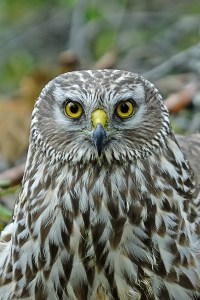
 Following yesterday’s report that Elaine Murray MSP had asked the Scottish Executive for information about the young hen harriers from the Langholm Moor Demonstration Project (see here), Environment Minister Stewart Stevenson has provided a response:
S4W-04336 Elaine Murray: To ask the Scottish Executive what information it has regarding the number of hen harriers that have been satellite tagged as part of the Langholm Moor Demonstration Project and what is known about the whereabouts of those birds.
Stewart Stevenson: In 2010, three hen harriers were satellite tagged as part of the Langholm Moor Demonstration Project. All three have now stopped transmitting. One tag was recovered at Langholm, with no trace of the bird. The other two birds were tracked through southern Scotland, south west England and France and Spain. No tags or birds have been found.
In 2011, three birds were satellite tagged and all have now stopped transmitting. Transmissions were last received from south of Carlisle, in the Moorfoot Hills and France. No tags or birds have been found and there are no indications of the cause of the lost signals.
The life expectancy of the satellite tags used is between a few months to around three years. While live, the tags provide valuable information on hen harrier range and dispersal.
(Link to parliamentary questions and answers here)
It’s a shame the Environment Minister didn’t elaborate further, although he was probably just reciting the information he’d been given, possibly from government advisors at SNH or maybe from Natural England, who are responsible for the satellite tag data from Langholm. Could the lack of transparency be because two of the locations (in the Moorfoot Hills and in the Northern Pennines to the south east of Carlisle) from where the last known signals were transmitted, just happen to be grouse moors? And not just any old grouse moors. One grouse moor with a long history of alleged raptor persecution (dead raptors and poisoned bait found on different occasions but no convictions) and one grouse moor with a head keeper and under keeper convicted of raptor persecution (pole trapping and inproper storage and use of a pesticide). One of these estates has already been named on the Raptor Politics website (see here and here).
Is it just an unfortunate coincidence that the signals from these two young hen harriers failed after they were tracked to these two moors? It could well be. But it’s very hard to be optimistic when we hear that the hen harrier in England is just four precious nests away from extinction (see here).
Perhaps one of these days the Langholm Project officials will deem us all worthy of knowing all the facts about this publicly-funded project, which would allow us all to draw our own conclusions instead of being spoon-fed a clearly sterilised version of events.
Perhaps you don’t want to wait for something that might never happen though. In which case, you can email the Natural England spokesperson for the Langholm Project (press officer Emma Lusby) and ask her yourself: emma.lusby@naturalengland.org.uk
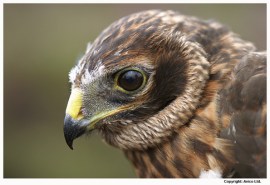 Elaine Murray MSP has put forward a question to the Scottish Executive concerning the whereabouts of the tagged hen harriers from the Langholm Moor Demonstration Project:
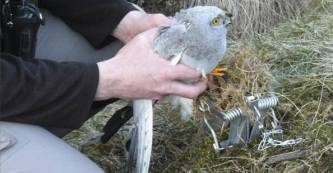 The RSPB has today issued a press release that says the hen harrier is the bird most likely to become extinct in England because of human pressure.
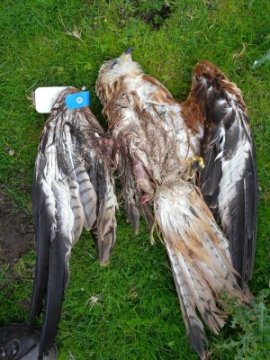 Further to the blog post in July 2011 about the arrest of a man in connection to the investigation of poisoned and shot red kites in Cumbria (see
 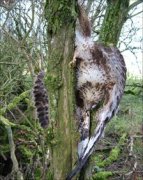 There’ll be some red faces at the SGA today. After all the proclamations of Alex Hogg, Chairman of the Scottish Gamekeepers Association, who is on record as saying, “Professional gamekeepers do not poison raptors” (see
  The SGA has issued a statement after today’s conviction, that says Whitefield’s membership will be suspended with immediate effect (see
 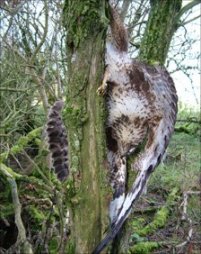 This case has been in the works for some time, first reported a year ago and then delayed for legal technicalities (see
 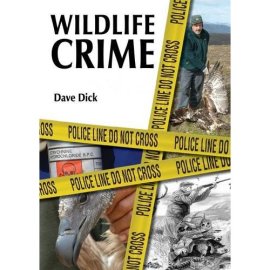 Watch out for this new book in the new year – it’s written by one of our regular contributors and will no doubt become a ‘must-read’ for many who follow this blog. The book will be released on 31 January 2012 but is available for pre-order now (check out the online book sellers).
