Our year in review: July-December 2015

JULY

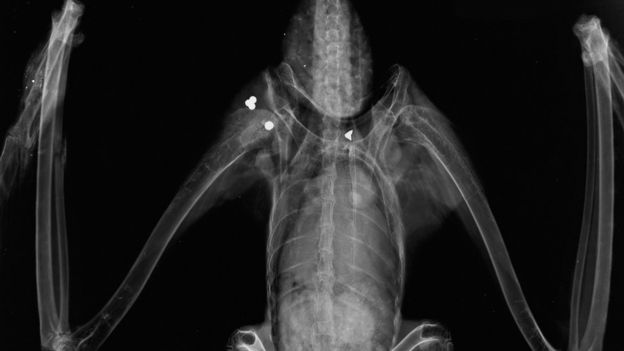
shot perg june 2015 durham_peregrinefalconjohnolleyThe Police and RSPB appealed for information after a male peregrine was found shot on a nature reserve in Co Durham last month. His injuries were so severe he had to be euthanised (here). A female red kite named ‘Fawkes’ was found shot dead in Co Down – the loss of this bird was a huge blow to the precarious reintroduction project in Northern Ireland (here).

The Scottish Environment Minister Dr Aileen McLeod presented the award to the SGA’s Young Gamekeeper of the Year and made an embarrassing speech about how the SGA is implementing best practice conservation (here). There was further embarrassment when one of her civil servants claimed that a Community Payback Order was a more effective deterrent for wildlife criminals than a custodial sentence (here).

The trial of a Shropshire gamekeeper, accused of mis-use of a Larsen trap baited with live quail, collapsed when the court ruled the RSPB’s video evidence ‘disproportionate’ because they didn’t have the landowner’s permission to film there. The gamekeeper, Neil Wainwright, did plead guilty to three other offences and was convicted for failing to properly store ammunition and failing to securely store a dangerous chemical (Phostoxin). He was fined a total of £500 and was ordered to pay £85 costs and a £30 surcharge (see here).

New sentencing powers were given to magistrates courts in England and Wales for wildlife crime, effectively lifting the cap from £5,000 and allowing magistrates to impose unlimited fines for offences that took place after 12th March 2015 (see here).

A series of stunning photographs appeared in the Guardian, showing the incredible work of the Scottish Raptor Study Group as they fitted satellite tags to young golden eagles in the Highlands (here).

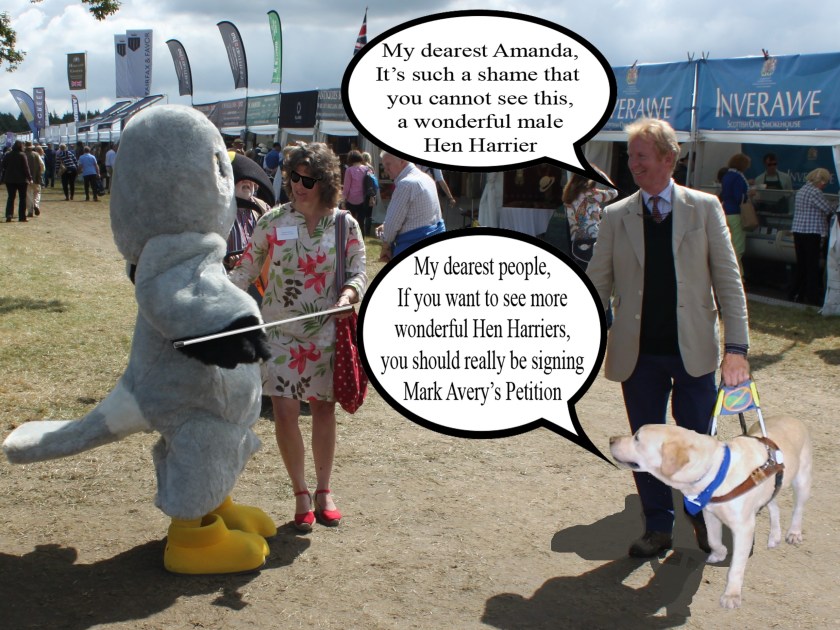
The issue of hen harrier persecution made it in to Private Eye (here) and also received wider publicity with the publication of Mark Avery’s book Inglorious, which we’d reviewed (here). DEFRA responded to an FoI from one of our readers and said that despite the ‘disappearance’ of five breeding male hen harriers this spring, they were still intent on pushing forward the (non)Joint Hen Harrier Action Plan, which includes brood meddling (here). For those of us sick of waiting for DEFRA to get to grips with tackling hen harrier persecution, Mark Avery launched his second e-petition calling for a ban on driven grouse shooting (here).

We learned that Iceland supermarkets planned to start selling old, frozen red grouse and we asked their CEO, Malcolm Walker, how this fitted in with Iceland’s stated corporate responsibility policy, including their supposed commitment to providing ‘ethically sourced food’, given that shot red grouse may contain poisonous lead, may be diseased with cryptosporidiosis, and may have been sourced from a grouse moor where illegal raptor persecution is common practice (here). Iceland responded but failed to adequately answer our questions, so we asked some more (here).

SNH’s CEO, Susan Davies, responded to questions we’d asked about SNH’s involvement in the Natural Larder campaign and their claims that red grouse were ‘healthy, natural and sustainable’. Her response (here) was as unconvincing as the one from Iceland, which shouldn’t have been a surprise because it’s virtually impossible to counter the fact that shot red grouse from driven grouse moors is unhealthy, unnatural and unsustainable.

There was a rumour that Marks and Spencer might be thinking about selling red grouse in their shops (here).

The Rural Payments Agency responded to our latest FoI request about whether the Stody Estate in Norfolk had received a subsidy penalty for the mass poisoning of raptors on their estate. This time they told us (here) that they were trying to determine whether there was a relationship between the convicted gamekeeper, Allen Lambert, and the subsidy recipient, Stody Estate (er, Lambert’s employer).

Police in Northern Ireland appealed for information after two peregrines were found shot dead in Co Armargh in May (here) and there was an entertaining debate (here) on Farming Today about banning driven grouse shooting. Mark Avery was pitted against Andrew Gilruth from the GWCT. GWCT still hadn’t learned that they need a scientific representative if they want to sound semi-credible.

Henry had a busy month visiting Bransdale Estate in North Yorkshire (here), the scene of a wildlife crime in Donside (here), Kildrummy Estate in Aberdeenshire (here), Perthshire (here), Nene Washes in Cambridgeshire (here), Walshaw Moor Estate (here), Balmoral (here), Tillypronie Estate in Aberdeenshire (here), Langholm Moor (here), Marks and Spencer (here), Scottish Raptor Study Group (here), Millden Estate in the Angus Glens (here), DEFRA offices in London (here), Countryside Alliance HQ in London (here) and a little village in Oxforshire called Milcombe (here).

AUGUST

Michael Harrison, a 70 year old poultry farmer in the Scottish Borders, was convicted for shooting a buzzard (he claimed he thought it was a crow). He was fined £600 (here).

Scottish gamekeeper William (Billy) Dick, 25, was convicted for killing a buzzard on the Newlands Estate in Dumfriesshire. Two witnesses had observed him striking the buzzard with rocks and then repeatedly stamping on the bird (see here). Sentencing due in September.

A gamekeeper from Glenogil Estate in the Angus Glens was charged with a series of alleged wildlife crimes (see here).

Some (more) lies about the RSPB were published in the Telegraph (which it later had to retract and apologise for), seemingly lifted straight from a YFTB press release (here), accusing the RSPB of failing to protect hen harrier nests in England. Natural England published a statement in response, proclaiming this year to have been the most successful for breeding hen harriers in five years. We wrote an article calling for some perspective on their view: six successful hen harrier nests in the whole of England was nothing to celebrate (here).

Marks and Spencer announced that they wouldn’t be selling red grouse in their shops this year (here).

The second annual Hen Harrier Day came and went, with events held in England and Scotland. One of the Scottish gatherings was held at Glen Turret reservoir in Perthshire. The neighbouring Glen Turret Estate used the event as an opportunity to spin some cynical propaganda, claiming that the protesters could have disturbed the young hen harriers they claimed to have on their estate (here). We were given reliable information that the known hen harrier nesting attempt on this estate had actually failed about a month previously but even if there had been harriers on the estate, the small group of folk chatting quietly by the reservoir were miles away and in no danger of disturbing anything, unlike the crowd of gamekeepers and beaters due to descend on the estate in a few days time to create as much noise as possible to drive red grouse towards the waiting guns in the shooting butts.

The SGA also seized the opportunity to spew out some (more) cynical propaganda and they published a ‘fact sheet’ that implied hen harriers didn’t need conservation action. Naturally, they missed out a few crucial facts (see here). As if that wasn’t embarrassing enough, SGA committee member Bert Burnett was caught out when he posted some vitriol on Facebook about wanting to set fire to the Hen Harrier Day protesters (see here). Remember, this is the organisation the Scottish Environment Minister rated so highly.

Annie Langholm harrier shot April 2015We learned that satellite-tagged hen harrier ‘Annie’, missing since March, had been found shot dead on a grouse moor in southern Scotland (here). Over 300 blog readers wrote to the Environment Minister to demand action against the raptor killers. She published an interim statement (here) which was predictably lame.

A buzzard was found shot dead in the Loch Lomond and Trossachs National Park (here) and a buzzard was found shot and severely injured close to a grouse moor in the Borders. It had to be euthanised (see here).

There was a controversial proposal to take golden eagle chicks from the Highlands and release them in southern Scotland to boost the almost-non-existent population in the Borders (see here) – a proposal we cautiously supported on the proviso that each eagle was satellite-tagged.

Police Scotland announced that more than 100 officers would receive ‘specialist training’ to tackle wildlife crime (here) and it was announced that a vicarious liability prosecution was underway against Andrew Duncan, who was alleged to be vicariously liable for the criminal actions of gamekeeper Billy Dick on the Newlands Estate in Dumfriesshire (here).

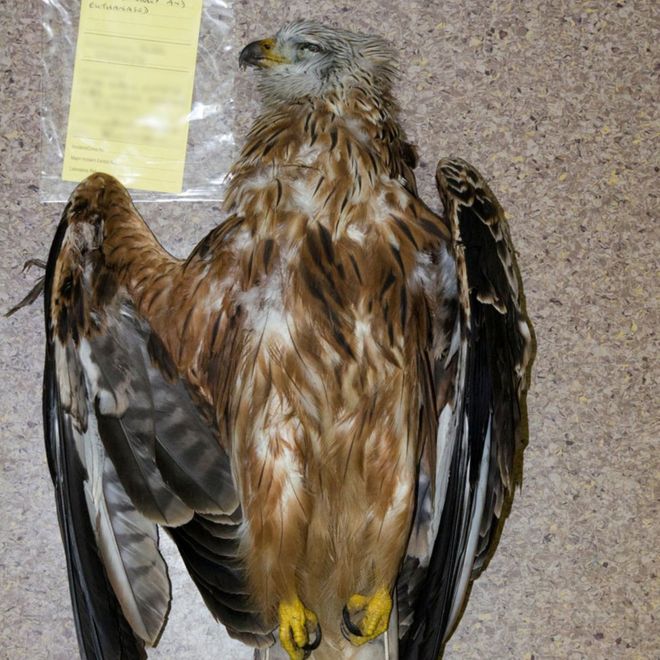
RSPB Scotland revealed that two red kites had been illegally killed in the Highlands; one had been shot and dumped on a railway line and the other had been discovered poisoned on Cawdor Estate. Both were killed in 2014 and Police Scotland had apparently ‘concluded their enquiries’ without mentioning either case in the press (see here).

SEPTEMBER

The Scottish Government’s public consultation on whether the SSPCA should be awarded increased powers to investigate more wildlife crimes closed one year ago. Still waiting for the Environment Minister to make a decision (see here).

Gamekeeper William (Billy) Dick, who was convicted last month of killing a buzzard on the Newlands Estate in Dumfriesshire, was sentenced – he received a £2,000 fine (see here). We were able to reveal (here) that the Newlands Estate is a member of Scottish Land & Estates and is also an accredited member of SLE’s Wildlife Estates Scotland initiative (membership requires adherence to best practice standards of animal welfare and, er, not to break the law).

The SGA tried (again) and failed (again) to smear the reputation of the RSPB by claiming the RSPB timed the press release about shot hen harrier ‘Annie’ to coincide with the start of the grouse shooting season (here). SGA Chairman Alex Hogg further demonstrated he had the intellectual capacity of a cabbage when he discussed the reasons he thought golden eagles weren’t doing very well in southern Scotland (here).

We asked both SNH and Natural England to provide urgent guidance on the use of gas gun bird scarers on grouse moors during the breeding season as it had become apparent they were being widely used (here). Both SNH (here) and NE (here) said they would review the issue.

The Environment Minister responded to the hundreds of emails she’d received following the death of hen harrier ‘Annie’ but her response completely missed the point we were trying to make (see here).

The Ross-shire Massacre reached its 18-month anniversary but there was still no progress on Police Scotland’s ‘investigation’ (see here).

We photographed some boxes of old, frozen red grouse being sold in Iceland supermarkets under the banner ‘Food you can Trust’ but sadly Iceland CEO Malcolm Walker hadn’t been able to get back to us to answer our questions about ethical food sourcing or on the levels of poisonous toxic lead contained in his products (here). Not food that we would trust at all.

NEVER-MIND-T-SHIRT-DESIGNThe Countryside Alliance and their new CEO Tim Bonner, (he with a nasty, gloating presence on Twitter), called for the BBC to sack Chris Packham for speaking out against hen harrier persecution and on animal welfare issues. A public petition in support of Chris quickly reached 80,000 signatures (see here). In Packham’s own style, ‘Never mind the bollocks, Bonner, where’s the hen harriers’?

Criminal proceedings continued against a Glenogil Estate gamekeeper accused of carrying out wildlife crimes (here) and we noticed that time was running out for a potential vicarious liability prosecution at Kildrummy Estate. The case would become time-barred in a few days so we asked the Crown Office whether they intended to prosecute anyone from Kildrummy (here).

We were told that a red kite had been found injured ‘near Tomatin’ (driven grouse moor country) but it later died and that ‘its injuries did not appear to have been as a result of natural causes’. In other words, it was illegally killed but Police Scotland didn’t want to tell anyone how it had been killed (see here).

Meanwhile the voluntary group Friends of Red Kites (FoRK) in north east England issued a press release about three poisoned red kites: one found next to a grouse moor in Co Durham (poisoned with banned Carbofuran) and two found near Gateshead (poisoned with banned Aldicarb). We speculated about why FoRK had issued the press release and not the Police or Natural England (see here).

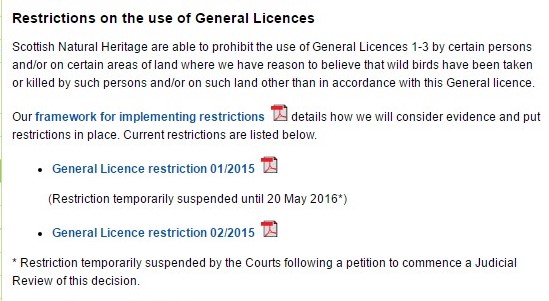
Our FoI request to SNH revealed that they had finally issued notices of intent to restrict the use of General Licences on two (currently unnamed) estates due to evidence provided by Police Scotland that raptor persecution crimes had been committed there (see here).

The grouse shooting industry re-launched its comical propaganda campaign called The Gift of Grouse, aimed at promoting the ‘benefits’ of driven grouse shooting. Unbelievably they used driven grouse moors in the Angus Glens as examples of good practice (see here)!

OCTOBER

The Scottish Government published its annual wildlife crime report for 2014 with misleading conclusions (here) and the case against the Glenogil gamekeeper continued in court (here).

Interim results were published from the 2014 National Peregrine Survey which showed that breeding peregrine numbers had decreased in many upland areas and remained stable or increased in lowland and coastal areas (here). This pattern was highlighted in a new scientific paper that showed a continuing decline of breeding peregrines on driven grouse moors in NE Scotland, particularly in the eastern part of the Cairngorms National Park (see here).

The League Against Cruel Sports published a new report reviewing the intensification and mis-management of grouse moors in Scotland (here) and the RSPB’s Hen Harrier Life+ Project introduced us to two young satellite-tagged hen harriers, ‘Holly’ and ‘Chance’ whose movement maps could be followed online by members of the public (here).

A beautifully-produced short film was released about the Ross-shire Massacre (here) and local MSP Dave Thompson asked again for a review of Police Scotland’s ‘investigation’ of this crime (here).

Another powerful deterrent sentence was handed down to a raptor poisoner in Spain. After laying out poisoned baits that killed six Spanish Imperial Eagles and a fox, the criminal received an 18 month prison sentence, a three year disqualification from hunting, and a massive fine of 259,762.62 Euros to be paid to the regional government as the estimated value of those six eagles (here).

In England, South Yorkshire Police and the National Wildlife Crime Unit appealed for information about the theft of a peregrine chick from a nest. The crime had taken place five months ago in May (here). Police in Co Durham appealed for information about two shot short-eared owls that had been stuffed inside a pot hole close to a grouse moor. That crime had taken place seven months ago in March (here).

A legal academic from Cambridge University raised some interesting questions about whether the vicarious liability legislation in Scotland was in contravention of the European Convention on Human Rights (here). The Crown Office confirmed that they were not pursuing a vicarious liability prosecution against anyone from Kildrummy Estate in Aberdeenshire because Police Scotland hadn’t reported anyone to them. We asked Police Scotland why not (see here). The vicarious liability prosecution against Andrew Duncan of Newlands Estate, Dumfriesshire continued in court but was further delayed as it was rumoured his gamekeeper, Billy Dick, was appealing his conviction for killing a buzzard (here).

The raptor conservation community bid a sad goodbye to long-term fieldworker and friend Mick Caroll (here).

A year on from the conviction of Stody Estate gamekeeper Allen Lambert for the mass poisoning of raptors, the Rural Payments Agency told us that they’d now notified Stody Estate that a cross compliance breach had occurred (here). It took them a year to work this out?! However, they still hadn’t told us whether a financial penalty had been applied and if so, how much? We sent another FoI to the RPA.

Medicated grit tray by Richard Webb LammermuirsAfter a series of FoIs over the summer months, we published an article on the red grouse/medicated grit scandal (here). It was jaw-dropping. We discovered that grouse moor managers had been using super-strength medicated grit, of at least ten times the licensed strength, to treat red grouse for parasitic worms. The use of the grit had been unregulated and un-monitored and the environmental effects of using such a high-persistence pharmaceutical drug in sensitive ecosystems was unknown. Red grouse that had been shot and had entered the human food chain had not been checked, ever, for residues of these drugs because the regulatory authority (DEFRA’s Veterinary Medicines Directorate) claimed they didn’t know where to find dead birds to test.

NOVEMBER

The National Audubon Society in North America featured a prominent article in its magazine on hen harrier persecution in the UK (see here). A young satellite-tagged hen harrier called ‘Holly’, one of the RSPB’s Hen Harrier Life+ Project’s birds, ‘died’ (see here).

A peregrine was found shot dead in Halifax, West Yorkshire (here) and West Mercia Police appealed for information about a poisoned peregrine in Shropshire that had been found five months ago in June (here).

George Allen, a 61 year-old Scottish gamekeeper, was convicted of snaring offences on Dunecht Estate in Aberdeenshire which had resulted in the horrific death of a badger. He was fined £600 (here).

SNH announced it had implemented General Licence restrictions on four (unnamed) estates in Scotland where evidence of raptor persecution crimes had been provided by Police Scotland. Thanks to Andy Wightman’s brilliant website Who Owns Scotland we were able to name the four estates as Raeshaw and Corsehope (Scottish Borders) and Burnfoot and Wester Cringate in Stirlingshire (see here). SNH later revealed some of the reasons why the restrictions had been put in place (here) but the estates disputed the evidence and said they would appeal the decision (here). Six days later SNH suspended the restrictions as the estates had lodged a legal appeal (here).

The findings of the judicial review against Natural England’s refusal to issue buzzard-killing licences was finally published – the High Court ruled that Natural England had acted unlawfully (see here). Expect to see an increase in buzzard-killing licence applications next year, including in Scotland, as even though the ruling was against Natural England, the same European and domestic licensing laws apply in Scotland.

Police Scotland explained (sort of) why nobody had been reported for a vicarious liability prosecution at Kildrummy Estate. As Andy Wightman had suggested, it was likely due to the difficulties of identification associated with land registered in an off-shore tax haven (see here).

We finally got confirmation from the Rural Payments Agency that Stody Estate had received a cross-compliance subsidy penalty after their gamekeeper had been convicted of the mass poisoning of raptors (here), and although there was still some confusion over the exact amount, it was a massive penalty (see here).

An important new report highlighted the extent of raptor persecution in Northern Ireland (here) and we learned that the five year bird of prey ‘initiative’ between landowners and conservationists in the Peak District National Park had failed to deliver any of its objectives (here).

In Scotland the Wildlife Crime Penalties Review report was finally published and included some impressive recommendations for tougher sentencing (see here), which now need the Environment Minister’s approval to move forward.

Police Scotland appealed for information after the discovery of a poisoned red kite in the Highlands (see here) and a rare red-footed falcon was found shot dead in Cambridgeshire (see here); Rare Bird Alert launched a crowdfunding appeal to increase the reward on offer from the RSPB for information leading to the criminal who’d killed it (see here).

Proceedings from the Oxford University Lead Symposium were published (here), highlighting, again, the risks of lead ammunition to human and environmental health. The RSPB published their annual Birdcrime report (2014) (here) – a shameful catalogue of raptor persecution crimes throughout the UK.

DECEMBER

Sporting agent Graham Christie (Dunmhor Sporting) became the second person convicted under vicarious liability legislation for raptor crime in Scotland. Christie was guilty of not adequately supervising the activities of his gamekeeper James O’Reilly who had used an illegal gin trap to kill a buzzard on the Cardross Estate in Stirlingshire. Christie was fined £3,200 (see here).

Yorkshire game farmer Michael Wood had his earlier conviction quashed for permitting the use of a pole trap at his pheasant-rearing facility (here). Wood’s two employees had earlier received police cautions for setting five (yes, five!) pole traps at the farm, so in effect, nobody has been punished for these crimes.

Police in Co Durham appealed for information after the discovery of a shot, dead peregrine at the edge of a grouse moor four months ago in August (see here).

ChemoIt was revealed that red grouse were being force-fed a chemotherapy drug used in the treatment of colon cancer, to combat parasitic worms in the birds (see here). Astonishingly, this drug has been administered during the grouse shooting season, increasing the chances of these drugged birds getting in to the human food chain without any official testing by government regulators. ‘Free chemotherapy when you eat red grouse!’ will be the next SNH slogan in their Natural Larder campaign. It was also revealed that the GWCT’s ‘best practice guidelines’ for medicating red grouse, in use since 2004, were actually illegal (here). Shocker!

Garry Dickson, a lecturer on the gamekeeping courses at Borders College, was caught out spouting anti-raptor rhetoric against goshawks on his Facebook page (here). If you ever wondered why goshawks are the victims of continued persecution by gamekeepers, look no further.

The Scottish Gamekeepers’ Association brought us some festive cheer with their mince (pork) pie lies about how well golden eagles are doing on grouse moors in Scotland, all unquestionably regurgitated by the BBC (see here). After complaints from us, the BBC article was edited to include a damning response from RSPB Scotland.

And finally, RSPB Scotland published an excellent 20-year review of raptor persecution crimes (here), which included an incredible tally of known victims: 779 raptors confirmed as illegally killed either by poisoning, shooting or trapping, including 458 buzzards, 104 red kites, 37 golden eagles, 30 hen harriers, 16 goshawks, and ten white-tailed eagles. How many victims do you think went undiscovered? 81% of known poisoning incidents took place on land managed for game shooting: 57% on grouse moors and 24% on lowland pheasant shoots. That says it all.

Thanks to everyone who has followed, supported and contributed to our blog in 2015 – it is greatly appreciated.

Our year in review: January – June 2015

It’s been another busy year for RPS. Here’s part one of our annual review covering January-June 2015.

JANUARY

We started the year looking at the face of ‘modern landownership’ in Scotland, which is supposed to be centred on the four pillars of an SLE charter that says landowners should be ‘open, inclusive, enabling and responsible’. What we found instead was a landowner being rude, arrogant, stupid and intolerant – see here.

We learned that the first landowner convicted under vicarious liability legislation had received a ‘high five figure’ deduction from his Single Farm Payment (see here), although we didn’t yet know the actual sum.

mountain-hare-cull-angus-glens-large - CopyThere were Parliamentary questions about what the Scottish Government was doing to protect mountain hares and a new petition calling on the Government to give hares improved protected status (here). Well-known conservationist Roy Dennis called the mass culling of mountain hares on Scottish grouse moors “disgraceful” (here).

We wrote a blog about the poor conservation status of hen harriers in Scotland (here) to counter the propaganda spewed out by the grouse-shooting industry that Scottish hen harriers are doing well. They’re really not.

Convicted Scottish gamekeeper George Mutch received the first ever custodial sentence for his raptor-killing crimes on the Kildrummy Estate in Aberdeenshire (see here). Our thoughts then turned to a potential vicarious liability prosecution and the difficulties the authorities might face when trying to identify the hierarchical managment structure above Mutch (see here).

SGA Chairman Alex Hogg told us (here) that gamekeepers were the “doctors and nurses of the countryside” (think Harold Shipman & Beverley Allitt) and an idiot from Trinity College, Dublin went on radio to talk about “horrible” raptors “becoming more aggressive” (see here). Meanwhile, Police in Northern Ireland conducted a series of raids on premises in raptor poisoning blackspots (here and here).

The Charity Commission completely rejected a complaint made by the Countryside Alliance that the RSPB’s 2013 Birdcrime Report had ‘mis-used data and made unfounded allegations’ (see here) and an article in the Daily Mail also tried (and failed) to discredit the RSPB’s work (here).

We were shocked to learn that the previously well-respected Hawk & Owl Trust had decided to promote a brood meddling scheme for hen harriers in England (see here) and we published a guest blog about the equally shameful political shenanigans affecting hen harriers in the Republic of Ireland (here).

Back in Scotland we discovered that the Scottish Government had ‘ignored’ 7,014 signatures on a petition calling for increased powers for the SSPCA by counting them all as a single vote (see here), and Environment Minister Dr Aileen McLeod headed to the Cairngorms National Park to talk about their on-going problem of raptor persecution (here).

We continued to press the Rural Payments Agency (RPA) for information about any subsidy removal for the Stody Estate in Norfolk, whose gamekeeper Allen Lambert had been convicted of the mass poisoning of raptors. The RPA responded by saying they ‘couldn’t provide any meaningful response’ (here).

A pro-shooting journalist wrote a column for the Scotsman in which he claimed that jailing raptor-killing gamekeepers ‘wasn’t the answer’ (see here) and we found out that Police Scotland’s ‘answer’ to solving the illegal poisoning of a red kite was just to keep very, very quiet about it (here).

FEBRUARY

Heather_dead_(Barry_ODonoghue_NPWS)February brought the news that a satellite-tracked hen harrier called ‘Heather’ had been found shot dead at a roost site in Co. Kerry, Ireland (see here). Chris Packham resigned from his Presidency of the Hawk & Owl Trust due to their promotion of a hen harrier brood meddling scheme (here) and Police Scotland refused to reveal the cause of death of a hen harrier found in Muirkirk eight months earlier (here).

We learned that the Conservative Party had an interesting bedfellow from the world of game-shooting (here) and a Tory candidate in North Yorkshire thought grouse shooting was ace (see here).

The criminal trial of a gamekeeper accused of the mis-use of a trap on the Bolton Hall Estate in North Yorkshire collapsed when the court held that the RSPB’s video evidence was inadmissible and that the only evidence they’d provided was photographic (here). Another gamekeeper, this time from Shropshire, faced trial after he denied baiting a Larsen trap with live quail (here).

The RSPB published a video showing four masked gunmen attacking a goshawk nest in the Cairngorms National Park (here) which amusingly coincided with a campaign by the Countryside Alliance calling for police to ‘unmask’ hunt sabs.

A game farm owner was convicted for permitting a pole trap to be used at his game-rearing facility in North Yorkshire (here), later quashed on appeal (see December review). We found out he had a string of previous wildlife crime convictions and a strong connection to the National Gamekeepers’ Organisation (here).

A new report, Natural Injustice, was published by Scottish Environment LINK which was described as ‘a damning indictment’ of wildlife crime enforcement in Scotland (here).

Police Scotland conducted a raid on a grouse moor in Stirlingshire following the discovery of a poisoned peregrine (here). The peregrine had been killed by Carbofuran, as had a red kite, found on the same estate last July.

The Scottish Government launched a three-month pesticide disposal scheme (here) aimed at allowing landowners and gamekeepers to hand in stocks of banned poisons without fear of punishment.

The RSPB offered a £1,000 reward for information about a buzzard that had been found with horrific leg injuries on the Sledmere Estate in Yorkshire (here).

MARCH

Blog growth 5 yrs - CopyWe celebrated our 5th birthday with over 1.25 million blog views (here). A shot peregrine was found dead outside the headquarters of Derbyshire Wildlife Trust (here) and we revealed that gamekeepers are rattled by the new campaign group Birders Against Wildlife Crime (here).

We learned that Ninian Johnston Stewart, the first landowner convicted under vicarious liability legislation in Scotland, had almost £66,000 removed from his Single Farm Payment as a penalty for the buzzard poisoning crime on his estate (see here). This was a great result but we called for greater publicity of these civil sanctions to act as a deterrent to others (here).

A shot buzzard found in Essex had to be euthanised due to the extent of its injuries (here), a kitten died from Carbofuran poisoning in Midlothian (here) but a shot kestrel in North Yorkshire was successfully rehabilitated and released by the amazing Jean Thorpe (here).

After years of trying, we finally got evidence (here) that the Leadhills (Hopetoun) Estate in South Lanarkshire is actually a member of Scottish Land & Estates, which is quite incredible given the long, long list of raptor persecution crimes that have been uncovered there and SLE’s position on the PAW Raptor Group and their repeated claims that raptor persecution won’t be tolerated.

The first anniversary of the Ross-shire Massacre came and went with no progress to report on the Police investigation (here). SLE’s Scottish Moorland Group published an article (here) about the ‘much-loved’ mountain hare and how culling was necessary, quoting the head gamekeeper from the infamous Glenogil Estate in the Angus Glens.

Michael Johnston was convicted of having the banned poison Strychnine in his vehicle (here) and the long-awaited trial of Scottish gamekeeper William Dick began at Dumfries Sheriff Court (here). Dick was accused of bludgeoning a buzzard with rocks and repeatedly stamping on it at the Newlands Estate in Dumfriesshire.

The Scottish Government published the latest annual poisoning maps which showed that the number of poisoned raptors found in Scotland in 2014 had quadrupled from the previous year (here).

A six-foot hen harrier called Henry was introduced to the world (here).

APRIL

Annie with her sat tagA satellite-tagged hen harrier called ‘Annie’ who’d hatched on the Langholm Estate in 2014, suddenly went missing in action in an area of South Lanarkshire (see here).

We finally found out that the hen harrier found dead in Muirkirk eleven months ago had been shot at the nest. Her cause of death had previously been withheld and was only revealed when we found it listed in a Government report (here).

Environment Minister Dr Aileen McLeod published an article in Holyrood magazine and stated that “the illegal poisoning of wildlife cannot, and will not, be tolerated in modern Scotland” (here).

Ten conservation organisations joined together calling on SNH to introduce an immediate three-year ban on the slaughter of mountain hares on Scottish grouse moors (here).

We found out that the SGA had received funds from an interesting donor (here) and the legendary conservationist Dick Balharry called traditional sporting estates “outdated and ludicrous” (here).

The mis-use of cage crow traps featured in an episode of Landward (here), a white-tailed eagle was found poisoned on the nest in SW Ireland (here) and we learned that the judicial review of Natural England’s decision to refuse buzzard-killing licences to a Northumberland gamekeeper was due to take place in the High Court in June (see here).

Henry the hen harrier took off on his UK tour in search of a mate, visiting the Derwent Valley (here), Salisbury Plain (here), Stonehenge (here), Dersingham Bog (here), Coronation Street (here), Stody Estate (here), Holkham Hall (here) and the North York Moors National Park (here).

MAY

Bird scarer 1 - CopyA breeding female buzzard died of shotgun injuries in the North York Moors National Park (here) and three male hen harriers ‘disappeared’ from active nest sites in Bowland (here).

We found out that the GWCT had an interesting bedfellow (here) and an interim report from the Scottish Government’s pesticide disposal scheme revealed that masses of banned poisons had been stockpiled around the country over the years (see here).

Robin Page treated Daily Mail readers to another of his anti-raptor rants (here), which was subsequently torn to shreds in the Guardian (here). Scotland’s Moorland Forum began a frightening new ‘study’ aimed at giving the views of people like Robin Page equal weight against peer-reviewed scientific literature on predation (see here).

Some marsh harrier eggs were stolen from a nest in Norfolk (here) and police forces in England, Scotland and Wales began a poster campaign to raise awareness of raptor persecution (here).

The RSPB offered a £1,000 reward for information leading to the conviction of whoever shot a peregrine in Staffordshire (here) and a red kite found caught in an illegally-set trap on a Scottish grouse moor had to be euthanised due to the extent of its injuries (here).

Ian Botham and You Forgot the Birds (YFTB) came back on the scene, still intent on slagging off the RSPB, this time blaming them for the ‘disappearance’ of the three male hen harriers in Bowland and accusing them (RSPB) of failing to incubate dead embryos – Beefy’s understanding of biological principles was clearly as strong as his Twitter password (not nearly strong enough). Interestingly, the YFTB press release revealed that YFTB was ‘funded by the British grouse industry’ (see here).

Botham gave us a further display of his ignorance when he penned an article for the Mail on Sunday. Once again he attacked the RSPB, this time accusing them of ‘constantly slurring gamekeepers as criminals’. Unfortunately he forgot that over 100 gamekeepers had been convicted of raptor persecution crimes since the 1990s (see here).

Scottish gamekeeper James O’Reilly was convicted at Stirling Sheriff Court for using an illegal gin trap to injure a buzzard on the Cardross Estate. He received a community payback order (see here).

Following claims from the game-shooting industry that there was widespread tampering of legal traps in the Scottish countryside, our FoI investigations revealed that actually, it wasn’t widespread at all (see here).

Also this month we published photographs of gas gun bird scarers that were being deployed on the grouse moors of Leadhills (Hopetoun) Estate in South Lanarkshire, bang in the middle of the hen harrier breeding season (see here).

Henry’s tour continued with visits to Snilesworth Estate in North Yorks (here), Lartington in Teesdale (here), Yorkshire Game (here), the Hawk & Owl Trust HQ in Norfolk (here), Yorkshire Dales National Park (here), Swinton Estate in North Yorks (here), Grinton Estate in North Yorks (here) and Abbeystead Estate in Bowland (here).

JUNE

Aim Click Collect June 2015These were desperate days as we learned that a 5th male hen harrier had ‘disappeared’ from an active nest in England (here), although it did lead to increased coverage of the hen harrier’s plight in the national press (here).

We learned that reintroduced white-tailed eagles were bringing in millions of pounds to rural Scottish communities from tourism, including £5 million each year to the Isle of Mull and £2.4 million to the Isle of Skye (here).

A Norfolk businessman put up a £5,000 reward for any information about the poisoning, trapping and shooting of protected birds (here). The trial of a Shropshire gamekeeper got underway – he was accused of using a Larsen trap, illegally baited with live quail, to capture birds of prey (see here).

Meanwhile in Spain, a farmer who had been found guilty of laying out poisoned baits that had killed 11 red kites and other species was sentenced to two years in prison, a two-year disqualification from farming and animal husbandry, a four-year disqualification from hunting, a fine of 90,270 Euros and an additional fine of 28,500 Euros that was to be used specifically to monitor red kites in the local areas for the next three years (see here). That’s what you call a deterrent.

The judicial review into Natural England’s refusal to issue buzzard-killing licences got underway in the High Court (here) and the SNP launched its controversial Land Reform Bill (here).

SNH showed its true colours when it launched a ridiculous ‘Natural Larder’ campaign, supported by the Environment Minister, to promote shot red grouse as ‘healthy, natural and sustainable’. On the contrary, we argued that red grouse are unhealthy, unnatural and unsustainably managed and that the driven grouse shooting industry has shocking environmental credentials. We encouraged blog readers to challenge SNH about why, as the country’s statutory conservation agency, it was promoting such an industry (see here).

Henry arrived in Scotland and visited Scottish Land & Estates (here), Scottish Ornithologists’ Club (here), he met a revolutionist (here), and visited grouse moors in the Lammermuirs (here), Moy Estate (here), Leadhills Estate (here), Perthshire (here), Cairngorms National Park (here) including these badlands (here), the wonderful Coignafearn Estate (here) and the not-so-wonderful Farr Estate (here).

Part two of our annual review to follow shortly….

New report reveals hundreds of raptors illegally killed on game-shooting estates in Scotland

RSPB persecution review 1994 2014Yesterday the RSPB published its latest figures on illegal raptor persecution in Scotland.

Rather than their usual annual review, this time they’ve produced a 20-year review covering the period 1994-2014. This is a really useful exercise as it puts the scale of (known) persecution in to perspective. It’s a sobering read.

A total of 779 birds of prey were confirmed to have been illegally killed during this period, either by poisoning, shooting or trapping. The known victims included 104 red kites, 37 golden eagles, 30 hen harriers, 16 goshawks, 10 white-tailed eagles and 458 buzzards.

In addition to these confirmed victims, a further 171 incidents are documented where poisoned baits and/or non-birds of prey victims were found, including 14 pet cats and 14 pet dogs, and then a further 134 incidents where no victim had been found but clear attempts to target raptors had been uncovered (e.g. illegally-set traps).

The report includes a map showing the landholdings of all known persecution incidents during this period. As ever, it’s pretty revealing, with a handful on the west coast but the vast majority in the uplands of central, eastern and southern Scotland – areas dominated by driven grouse shooting.

RSPB persecution review 1994 2014 map

Drilling down in to the detail, there’s a useful analysis of land-use type of confirmed poisoning incidents between 2005-2014 (219 incidents). A shocking (or not) 81% of confirmed poisoning incidents during this nine-year period were on land used for game-shooting: 57% on grouse moors and 24% on land managed for lowland pheasant shoots. This tells us a great deal about who is responsible for the vast majority of illegal raptor poisoning. Despite their continued denials and protestations, and their increasingly-desperate attempts to minimise the scale of these crimes (“it’s just a few rogues”, “it’s just a small minority”), this graphic exposes the criminality at the heart of the game-shooting industry:

RSPB persecution review 1994 2014 land use

Further damning evidence, which isn’t needed by most of us but for the benefit of those who are still in denial of the bleedin’ obvious, is this graph showing the occupations of those convicted of raptor persecution between 1994-2014. Surprise, surprise, 86% of them were gamekeepers:

RSPB persecution review 1994 2014 occupation

RSPB Scotland is to be commended for publishing this exceptionally detailed and meticulously-researched report. There are a number of things in it that are of particular interest to us and we’ll come back to those in due course. For now though, particular recognition should go to the Investigations team – they may be small in number but their contribution to exposing the disgraceful continuation of illegal raptor persecution in Scotland is enormous. They, and their colleagues south of the border, are worthy of high acclaim. If anybody reading this is in a position to recognise excellence in the field of raptor conservation, e.g. a nomination for an award, this team should be at the top of your list.

So, how has the Environment Minister, Dr Aileen McLeod, responded to such an embarrassing report? She said: “There is no doubt that the figures in this report make for uncomfortable reading, but we have made progress in recent years with the new vicarious liability provisions, the publication of the report from the Wildlife Crime Penalties Review Group, new measures implementing restrictions on the use of General Licences and earlier this year the Scottish Government funded pesticide disposal scheme that removed over 700kg of illegally held poisons in Scotland“.

We have made progress…” Hmm. Let’s have a look:

Vicarious liability – introduced almost 4 years ago and only two successful convictions to date. A slow (but good) start, but we need to see many more convictions.

Wildlife Crime Penalties Review – Commissioned over two years ago, published last month. An excellent report calling for tougher sanctions but we’re waiting to hear whether the Environment Minister will act on the recommendations. Can only be defined as ‘progress’ if she agrees to act.

General Licence restrictions – available to be used against landholdings where raptor crimes committed/suspected from 1st January 2014. So far, only two restrictions have been implemented and those only lasted for six days each before they were suspended as legal arguments continue. A slow start, and the legal challenges were to be expected, but can’t be defined as ‘progress’ unless the restrictions are fully implemented. There should also be a lot more of them.

Pesticide disposal scheme –  implemented this year and resulted in the removal of some illegally-held poisons. That is progress, although it is tinged with frustration that the game-shooting industry was given yet another chance to avoid justice as this scheme (the second of its kind) comes 14 years after the pesticides were originally banned. It’s also interesting to note in the RSPB’s report (page 18) that evidence suggests a number of individuals have retained their illegal stocks. This is supported by more poisoning incidents that have taken place this year, after the disposal scheme ended.

So some progress has been made (and almost entirely due to the efforts of Dr McLeod’s predecessor, Paul Wheelhouse) but it is glacially slow and, so far, has not stemmed the occurrence of illegal persecution, as the damning figures in this report show all too clearly. Much, much more can and needs to be done before we’ll be convinced that Dr McLeod is having any sort of impact. She has, though, announced that tenders have just been invited for a review of game licensing practices in other countries (to inform a possible decision of introducing licensing to game-shooting estates in Scotland), and that’s a good thing, but again, the research needs to be done and then a decision made, which probably won’t happen for a number of years if past performance is anything to go by. She’d find herself with a lot more support if she got on with announcing increased investigatory powers for the SSPCA – the public consultation closed 1 year and 3 months ago – and still we await her decision as the criminals continue their rampage. It’s not impressive at all.

And what of the response of the game-shooting industry itself? Some didn’t bother to publish a statement (Scottish Gamekeepers’ Association), which ironically tells us quite a lot, although they are quoted in an article by STV (see media coverage below) where they revert to type and simply deny the evidence and slag off the RSPB instead. And remember, the SGA is a fully-paid up member of the Partnership for Action Against Wildlife Crime (cough).

Scottish Land and Estates (SLE), another PAW partner, did manage to issue a statement, via their Scottish Moorland Group (see media coverage below). Again, it’s the usual lamentable denial, characterised beautifully by this statement from Director Tim (Kim) Baynes:

Bird of prey deaths……have fallen dramatically over the last five years in particular“.

Er, here are some persecution figures that Kim might want to re-punch in to his calculator:

2012 – 18 confirmed deaths

2013 – 28 confirmed deaths

2014 – 37 confirmed deaths

There’s also this statement:

Our condemnation of wildlife crime is unquivocal...” All very touching but how is that “condemnation” manifested in the real world? It’s been brought to our attention that the current head gamekeeper on a Scottish grouse shooting estate has a (spent) conviction for shooting dead a raptor when he worked on another Scottish grouse moor. How does a criminal with a conviction like that (spent or not) remain employed in the game-shooting industry, let alone get a senior position on another Scottish grouse moor? Was he one of the posse of moorland gamekeepers recently invited to Holyrood to mingle with, and be applauded by, a number of MSPs, as part of the Gift of Grouse propaganda campaign? Surely not…

Download the RSPB report here

Media coverage

RSPB press release here

Statement from Environment Minister Dr Aileen McLeod here

Scottish Moorland Group statement here

BBC news here

STV article here

BBC Radio Scotland (Newsdrive) interview with Ian Thomson, Head of Investigations RSPB Scotland here (starts at 21.50, available for 29 days)

Guardian article here (a mis-leading headline but nevertheless good to see coverage in this paper)

Golden eagles, the SGA, and porky pies

Fearnan Angus Glens Dec 2013The season of mince pies may be upon us but the SGA is feasting on a hefty pile of pork pies.

An article has appeared on the BBC news website today (see here) based on a claim by the SGA that grouse moors are good for golden eagles, and they justify this by saying their ‘survey’ (whatever that entailed) had found golden eagles nesting in 58 areas managed for grouse shooting.

This may sound familiar to some of you. They made a similar claim back in 2013 (see here), although that time they’d found 55 nesting pairs; a claim we took apart here and here. Rather than having to go over the same old ground, again, please read these previous two blogs on this.

To say that the SGA’s latest claim is disingenuous is putting it mildly. They’ve chosen some of their words wisely, by saying “areas managed for grouse shooting”. This, of course, includes both driven and walked up grouse moors. Had their ‘survey’ included only intensively managed driven grouse moors, their results would look quite different.

As we’ve said before, golden eagles do nest successfully on some driven grouse moors, but these tend to be the exception rather than the rule. The number of vacant, unoccupied breeding territories on driven grouse moors is a bit of a giveaway to the overall picture.

What’s also misleading about their latest figures is that they haven’t included any data about the age of those pairs attempting to breed in areas managed for grouse shooting. Perhaps this was a deliberate exclusion, or perhaps they didn’t collect those data. Why is the age of the birds important? Well, if one or both of the breeding pair just happens to be a juvenile, that’s also a strong indicator that all is not well with the local golden eagle population. We’ve explained this before (see here) but this bit is worth repeating:

‘According to several scientific studies, the occurrence of breeding subadult eagles should actually be used as an early-warning of potential population decline. The reason these Scottish golden eagles are attempting to breed at three years of age is because there is little or no competition for that vacant territory. Why is there little or no competition? Because one or both of the territorial adults have been killed and there are very few non-breeding adults (known as ‘floaters’) around to challenge for the territory. If the population was healthy, it would be these breeding-age floaters that would move in to the territory, not an immature three-year old bird.

An excellent study (Whitfield et al. 2004 – see below) has also demonstrated that subadult and mixed-age breeding golden eagle pairs in Scotland have lower breeding success than adult pairs – a result of inexperience and persecution, seeing as most golden eagle territories in Scotland with subadult breeders are in areas associated with illegal persecution’.

According to a presentation at this year’s recent SOC conference, there is evidence from a number of golden eagle territories on driven grouse moors in Perthshire that show either one or both of the pair attempting to breed is a juvenile. These closely-monitored sites (subject to long-term monitoring by experts from the Scottish Raptor Study Group) are showing an unusually high turnover rate of adult golden eagles. This situation is easily masked by superficial SGA claims that golden eagles are breeding there. To the unsuspecting reader, it will sound like all is rosy but to get to the actual truth you need to look a bit more closely.

Also included in today’s BBC article are the following statements:

“The SGA said numbers of golden eagles were recovering from declines in the 1960s caused by pesticides”

and

“It [the SGA] said the management of grouse moors had helped to increase Scotland’s population of the large raptors”.

This is contrary to decades of peer-reviewed science that shows unequivocally that golden eagle recovery is severely limited in areas managed for driven grouse shooting. It’s outrageous that the BBC website has published these statements without providing an opportunity for any organisation to contest their validity. These statements amount to lies and the BBC should not have published them.

If you’d like to complain to the BBC, and ask them to retract these statements, please contact them here (click on ‘make a complaint’) – http://www.bbc.co.uk/complaints/complain-online/

The photograph shows a dead golden eagle called ‘Fearnan’ who was found poisoned on a grouse moor in the Angus Glens in 2013.

UPDATE 5PM: The BBC article has now been updated with a quote from RSPB Scotland, who also dispute the SGA’s findings.

Duncan Orr-Ewing said: “We are not sure where the SGA have got their information, however, if correct their survey highlights only 53% occupancy  of known traditional golden eagle territories in the central and eastern Highlands, far below the natural carrying capacity and continues to indicate that the species is in unfavourable conservation status in this area“.

To read what else he had to say see updated BBC article here

GWCT’s ‘best practice guidelines’ for medicating red grouse are actually illegal

Well, well, well.

The Game & Wildlife Conservation Trust (GWCT), “the leading UK charity conducting conservation science to enhance the British countryside for public benefit” (their words, not ours), have been promoting ‘best practice guidelines’ that are actually illegal.

In an illuminating blog on Mark Avery’s website today (see here), Natural England has clarified the legal position of when, and how, wild red grouse may be caught and treated with anti-parasitic wormer drugs. This stemmed from questions that were raised in a previous blog on Mark’s site (see here) and also from questions we raised a few days ago (see here).

direct-dosing

Natural England has confirmed that red grouse may only be caught (in England) for direct dosing during the shooting season, and they may not be caught at night by using spotlights to dazzle (stun) the birds, nor may nets be used. NE categorically states that red grouse are not to be caught in the closed season (Dec 11 – August 11) for the purpose of medication.

Compare this with the GWCT’s ‘best practice guidelines’ for the direct dosing of red grouse: strongylosis-control-in-red-grouse_GCT 2004 which advises on the techniques that can be used for catching red grouse at night (spotlights and nets) and the timing of such captures, “through the winter months and into the early spring“.

Ooops.

The GWCT may argue that these ‘best practice guidelines’ were published way back in 2004, prior to NE publishing their official advice on this issue in 2012 (see here). That would be true, but their ‘best practice guidelines’ were still illegal practices in 2004 (didn’t they research the legalities before publishing their guidelines?) and these ‘best practice guidelines’ are still available on the GWCT website today (see here).

‘Best practice’ guidelines imply that the topic has been thoroughly researched and the subsequent advice is considered the most appropriate, and importantly, that it complies with the legislation. In this case, it doesn’t.

And that’s not all. The GWCT’s ‘best practice guidelines’ for the direct dosing of red grouse encourage grouse moor managers (gamekeepers) to mark the birds that have been treated. That makes sense, because gamekeepers will need to know whether a bird they’ve just caught has already received the drugs. However, the GWCT suggests that birds be marked with a ‘numbered wing tag or a numbered leg ring’. But anybody wanting to fit a leg ring to a wild bird in the UK must first be a qualified ringer with a permit from the BTO, which takes years of specialist training (see here). To fit a wing tag, the person must also have an endorsement on their ringer’s permit allowing them to attach ‘unconventional markers’ to a bird. How many gamekeepers do you think hold a BTO ringer’s permit AND a special endorsement for fitting wing tags? It would be easy to find out – all BTO licensed ringers are required to submit annual returns detailing the birds that have been ringed and if they don’t, their permits are not renewed. We could ask the BTO how many returns they’ve had for red grouse ringing and marking. And while we’re on the subject of permits, what sort of training/qualification is required for somebody to administer a controlled veterinary drug to a wild animal? Surely five years of vet school, no?

The more you look at the grouse shooting industry, the more you realise what they’ve been able to get away with without anybody scrutinising their activities. This industry uses the guise of ‘best practice’ guidelines to imply that they’re all working within the law, constantly re-appraising their methods to ensure that they’re meeting the high-standard regulations. It turns out that’s utter tosh, and the GWCT is at the forefront of it.

Ban driven grouse shooting – please sign here

The photograph (from the GWCT’s best practice guidelines document) shows a red grouse caught at night having an anti-parasitic wormer drug forced down its throat.

Educating the 21st Century gamekeeper – with 19th Century ignorance

We often hear (from the shooting industry) about how well qualified young gamekeepers are these days and how these young men & women are so much better informed than their predecessors. Two years ago there was a parliamentary motion put forward to recognise the need for ‘well-trained young gamekeepers’ and the value of responsible gamekeeping to Scotland’s economy and biodiversity (see here), and this year, the SGA’s Young Gamekeeper of the Year Award was presented by none other than the Environment Minister (see here).

SGA Chairman Alex Hogg has hailed the Scottish colleges involved (see here), and apparently all graduates must pass key tests in various areas and have an understanding of conservation.

Sounds good, right?

One of the colleges offering qualifications in gamekeeping is Borders College. They have a webpage headed: ‘Educating the 21st Century Gamekeeper’ (see here).

Imagine our surprise, then, when we were sent the following image, captured from Facebook two days ago:

Garry Dickson

In case you can’t read it, here is the comment written by Garry Dickson about protected native goshawks:

Aye, it’s a pity that here in Scotland they predate our native reds as well. SNH should extract the digit and allow keepers to control raptors as well as badgers. Our reds are hanging on by the skin of their teeth“.

Who’s Garry Dickson? He’s a lecturer on the gamekeeping course at Borders College.

Is this the sort of ill-informed, unsubstantiated nonsense he’s teaching to young gamekeeping students at Borders College? Mind you, if they don’t hear it from their lecturer they’ll probably hear it from the SGA – Alex Hogg shared his ignorance on goshawks a couple of years ago – see here.

It’s no surprise that the goshawk is listed as a wildlife crime priority species (because of the extent of persecution against it) if armies of young gamekeeping graduates are being let loose in the countryside after being taught such moronic 19th Century prejudice.

Free chemotherapy when you eat red grouse

Further to our expose earlier this year on the unregulated use of medicated grit to treat parasitic worms in red grouse and how this pharmaceutical drug could be getting in to the human food chain  (see here), this practice is now coming under further scrutiny, much to the annoyance of the GWCT.

Two guest blogs on Mark Avery’s blog (see here and here) provide reports from a recent GWCT grouse seminar where this topic was discussed.

It seems that in addition to the unregulated use of medicated grit on grouse moors across the UK uplands, the direct dosing of red grouse with another powerful drug has been a regular feature of grouse moor management for years, and the drug being used turns out to be one used in chemotherapy for victims of colon cancer.

You might expect that the use of this drug (Levamisole hydrochloride) would be closely monitored….but then again, if you’ve been following the medicated grit scandal, you probably won’t be surprised to learn that not only is its use un-monitored, but the statutory agencies (Natural England & SNH) actually permit its use during the grouse-shooting season.

That’s incredible! Legally, there should be a period of at least 28 days between the time the drug is administered (forced down the grouse’s throat with a tube) and the time that bird is available to be shot. This period allows for the drug to pass through the grouse and ‘disappear’ so that when the grouse is shot and it enters the human food chain, there should be no trace of the drug. So technically (legally), all medication should end by the middle of July, prior to the start of the grouse-shooting season on 12th August. But according to Natural England, medication can only legally be given DURING the grouse-shooting season! Eh? SNH also allows for grouse to be medicated during the shooting season.

So, if you eat red grouse not only might you find yourself eating poisonous toxic lead from the ammunition used to kill the bird, and an anti-parasitic wormer drug given to the grouse via medicated grit, but you might also get a free dose of chemotherapy! So much for the claims of red grouse being ‘healthy and natural’ to eat, as SNH and the Environment Minister told us earlier this year (see here and here).

It’s no wonder the Director of Research at GWCT, Professor Nick Sotherton, told the audience at the grouse seminar that he wanted to keep all this ‘under the radar’ so as not to alert the authorities. Ooops….

Peregrine shot dead at edge of grouse moor

A peregrine falcon has been found shot dead in County Durham.

It was discovered on the south east edge of Stang Forest on 23rd August 2015. A post mortem revealed it had been shot.

Stang Forest shot perg - Copy

It’s interesting to look at the land management around Stang Forest. Google maps shows it’s almost entirely surrounded by grouse moors. This shouldn’t come as a surprise to anybody, especially when we recently learned that peregrines are being wiped out on grouse moors across the UK (see here and here).

Durham Constabulary are appealing for information, four months later.

Article on Rare Bird Alert here

Stang Forest - Copy

Game farmer Michael Wood wins appeal against pole trap conviction

In February this year we blogged about the conviction of game farmer Michael Wood, who was found guilty of permitting the use of a pole trap at his game-rearing facility Westfield Farm in Cropton, North Yorkshire (see here).

Mr Wood’s conviction was based on the magistrate’s opinion that it was “inconceivable” that Wood had not known about the trap, as RSPB surveillance evidence outlined how he had driven past this exposed trap and also another (with the safety catch engaged) a short distance away. Wood had basically claimed it was getting too dark to be able to see the traps. His evidence was contradicted by his wife who outlined the things her husband was checking as he drove around the site.

However, Mr Wood appealed the verdict and the judicial bench at York Crown Court has now upheld his appeal because ‘the prosecution had failed to prove its case’ (see article in today’s Gazette & Herald here).

This is an interesting case. The most interesting feature (from our perspective) is that the RSPB’s surveillance evidence was deemed admissible. At the original trial the defence tried unsuccessfully to have this evidence excluded. At the appeal this was not even contested, neither this time were the actual light levels as shown by photographs taken by the RSPB. Unsurprisingly, Mr Wood’s wife did not give evidence at the appeal. So, it appears the admissibility of the RSPB evidence was NOT an issue at the Crown Court. Mr Wood’s appeal was successful because the prosecution were not able to convince the court that Wood had actually seen the trap, not that he’d been covertly observed driving close to the traps. That’s a very important distinction.

What’s also interesting about this case is that, following the day Wood was seen on site, the North Yorkshire Police, assisted by RSPB, seized a total of five illegal pole traps found set around the breeding facility. However, two employees only received a police caution in relation to these traps – they weren’t prosecuted for setting them. As they’d been cautioned, this infers that they’d admitted to setting them. Why weren’t they prosecuted for setting these illegal traps, if they’d admitted their guilt? In 2014 a gamekeeper on the Swinton Estate (also in North Yorkshire) was convicted of twice setting a pole trap (see here), so how did Mr Wood’s two employees escape prosecution when they’d set five pole traps between them?!

If you look at the position of the traps (see the photo and see the short video made by the RSPB Investigations team here), you can see how discreetly positioned they were. They must have been really easy to miss, eh?

pole-trap-1-of-5-westfield-game-farm-rspb

As we reported in February, Mr Wood has a current criminal conviction for wildlife offences. In 2011 he was successfully prosecuted for releasing thousands of pheasants (for shooting) on a site of special scientific interest when permission had only been granted to release 500 birds. It was argued the birds had caused ‘significant damage’ to the conservation area and Mr Wood and Yorks Sports Ltd (of which Mr Wood was a director) were each fined £20,000, plus £125,000 between them towards the prosecution costs, and they also had to pay a £145,000 defence bill (see here).

Sporting agent on Cardross Estate convicted in latest vicarious liability case

Press release from the Crown Office:

A self-employed game farmer has pled guilty to wildlife offences, leading to the second conviction in Scotland by vicarious liability for wildlife crime against wild birds.

At Stirling Sheriff Court, Graham Christie was fined a total of £3,200 after admitting his liability for the crimes committed by James O’Reilly, a gamekeeper employed by him.

O’Reilly was previously sentenced to a community payback order after pleading guilty to intentionally trapping and injuring a buzzard, using an illegal gin trap, contrary to the Wildlife and Countryside Act 1981. Despite veterinary treatment for the severe injury caused to its leg, the buzzard required to be euthanised as it would never be suitable for release back to the wild. The buzzard had been in good condition otherwise.

Graham Christie leased part of the Cardross Estate in Stirlingshire to use for his business, Dunmhor Shooting. He had employed O’Reilly as head game-keeper with responsibility for pest control on this part of the estate.

The offences were committed more than a year after the introduction of the vicarious liability legislation.

The law placed responsibility on Christie unless he could show that he took all reasonable steps and exercised all due diligence to prevent O’Reilly from committing the offences.

When asked by police how he was able to see what was going on ensure everything was done properly and professionally, Christie stated;

“Well I can only tell that by the amount of pheasants that were shown on a shoot day and that he was very good to be fair”.

Helen Nisbet, Head of the Wildlife and Environmental Crime Unit said:

“These offences were committed well after the vicarious liability offence was introduced and the accused had ample time in which to take advice and put appropriate measures in place.

“He failed in his responsibilities and as a result stands convicted of the killing of a wild bird using an illegal gin trap.

“Anyone who seeks to injure or kill wild birds and anyone who employs or engages the services of such persons without taking appropriate precautions to prevent these offences being committed can fully expect to be brought to account before the courts.”

Notes To Editors

1. Section 18A of the Wildlife and Countryside Act 1981, the vicarious liability provisions, came into force on the 1st January 2012. They were created in an attempt to tackle raptor persecution by encouraging landowners, employers, and those with responsibility in connection with shooting to be diligent and proactive in countering wildlife crime.

2. James O’Reilly previously pled guilty to:

Intentionally injuring and taking a wild bird (a buzzard) by setting a gin trap (otherwise known as a leg hold trap) on open ground baited by a deer carcase contrary to section 1(1)(a); and,

Setting in position a trap, namely a gin trap (otherwise known as a leg hold trap) being of such a nature and so placed as to be likely to cause bodily injury to any wild birds contrary to section 5(1)(a) of the Wildlife and Countryside Act 1981.

3. Section 18A(2) makes the accused guilty of the original offence and is liable to be punished accordingly.

4. Wildlife and environmental crime is a priority for COPFS. The development of specialist prosecutors and the creation of the COPFS Wildlife and Environment Crime Unit (WECU) have been significant steps forward in tackling wildlife crime. Our close working relationship with police wildlife crime officers and other specialist reporting agencies has permitted a collaborative building of expertise which has already shown impressive results. In serious cases, prosecutors work with wildlife investigators at an early stage to ensure that cases are prepared and presented to the highest standard.

WECU began operating from 15 August 2011.

END

Dunmhor Sporting LogoThis is good news, after the disappointment of the recent failure to prosecute another vicarious liability case on the Kildrummy Estate (see here). The penalty in this latest case (£3,200) is a considerable improvement on the pathetic £675 penalty given in the first successful vicarious liability case (see here), although it still falls far below what it could be and the fine itself is unlikely to act as any sort of deterrent to other would-be raptor killers. When you also consider the penalty handed to Christie’s gamekeeper for the original horrific offence (240 hours unpaid work – see here) it’s hard to get away from the sense that, although technically justice has prevailed in this case, the penalties do not reflect the seriousness of the crime. Whether the reputation of Christie’s sporting agency, Dunmhor Sporting, will suffer as a consequence of his criminal conviction remains to be seen although that would be hard to measure. Let’s hope Environment Minister Dr Aileen McLeod gets on with accepting the recommendations of the recent Willdife Crime Penalties Review group (see here), which include raising the penalty for this type of offence to fines of up to £40,000 and a 12 month custodial sentence. It’ll also be interesting to see whether SNH  decides to slap a General Licence Restriction Order on the Cardross Estate.

In the meantime, huge congratulations to Fiscal Kate Fleming for a successful prosecution and to all those involved with the initial investigation, especially the SSPCA.

Photo of Graham Christie from Press & Journal.

Media coverage

BBC news here

STV news here

Press & Journal here

RSPB Scotland here