Case against gamekeeper William Curr, Glenogil Estate: part 4

Criminal proceedings have continued against Glenogil Estate gamekeeper William Curr, who is accused of various snaring offences alleged to have taken place in the Angus Glens in August and September 2014.

An intermediate diet was called at Forfar Sheriff Court on 19th January 2016 and the provisional trial date of 9th February was dumped. There will now be a further intermediate diet on 12th April and a new provisional trial date has been set for 9th May 2016.

Previous blogs on this case here, here and here.

Reward doubled for info on peregrine poisoning at Clee Hill, Shropshire

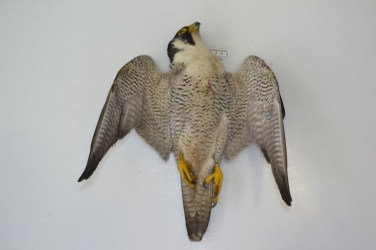
Peregrine male poisoned at Cleehill 2015 Shorrock1 cropThe reward for information leading to the arrest and conviction of the person(s) responsible for poisoning a peregrine at Clee Hill, Shropshire has been doubled.

The male peregrine was found dead in a quarry on 15th June 2015 (see here). This is a notorious raptor persecution blackspot: two peregrines were poisoned there in 2010 and another one in 2011. All four peregrines (including the latest victim) were poisoned with Diazinon.

A generous donor has contributed to the original reward offered by the Shropshire Peregrine Group and the RSPB, and the reward currently stands at £2000.

If you have any information about this crime please call the police on 101 quoting reference #6495 of 15/6/2015.

Photograph of the poisoned peregrine by Guy Shorrock.

Vicarious liability prosecution: Andrew Duncan (Newlands Estate) part 3

Criminal proceedings continued yesterday against Andrew Walter Bryce Duncan, who is alleged to be vicariously liable for the crimes committed by gamekeeper William (Billy) Dick in April 2014.

Gamekeeper Dick was convicted in August 2015 of killing a buzzard on the Newlands Estate, Dumfriesshire by striking it with rocks and repeatedly stamping on it (see here). Dick was sentenced in September 2015 and was given a £2000 fine (see here), although we understand he may be appealing his conviction.

Proceedings against Andrew Duncan, 71, who is believed to be responsible for the pheasant shoot on Newlands Estate, began in August 2015 and a provisional trial date was set for 23rd November 2015 (see here). However, at an intermediate diet hearing in October, the November trial date was dumped and a notional diet hearing was set for 18th January 2016 (see here).

A notional diet hearing is where an actual trial date may be set.

However, at yesterday’s hearing proceedings were adjourned again for another notional diet and a debate, to take place on 11th March 2016.

Vicarious liability in relation to the persecution of raptors in Scotland (where one person may potentially be legally responsible for the criminal actions of another person working under their supervision) came in to force four years ago, on 1st January 2012. To date there have been two successful convictions: one in December 2014 (see here) and one in December 2015 (see here).  One further case did not reach the prosecution stage due, we believe, to the difficulties associated with identifying the management structure on the estate where the crimes were committed (see here).

Appalling Police Scotland response to two suspected raptor crimes

BOPwildlifecrimeposter2015 - CopyRegular blog readers will know that we’ve frequently had cause to criticise Police Scotland’s response to suspected wildlife crimes that have been reported to them. Well, we’re about to do it again over their mishandling of two recently reported suspected wildlife crime incidents, one in Dumfries & Galloway and one in South Lanarkshire.

Before we get to the details of the latest fiascos, have a read of the following text that appeared in on page 32 of RSPB Scotland’s recently published 20-year review of raptor persecution:

After the initial finding or reporting of a potential wildlife crime incident, a rapid and properly-directed follow-up is essential to prevent any evidence being removed by the perpetrator, further wildlife falling victim to illegal poisons or traps, removal of victims by scavengers or decomposition of victims. Any of these factors can render obtaining forensic evidence or an accurate post-mortem impossible. In our experience, however, the speed and effectiveness of follow-up investigations and securing of evidence has been highly variable‘.

It is apparent, from the following two incidents, that Police Scotland is still failing to get the basics right.

Incident 1

A member of the public found a decomposing dead buzzard on a grouse moor in an area well-known for its history of raptor persecution. The corpse was found on Saturday 19th December 2015. It was reported to members of the local Raptor Study Group who went to the grid reference provided (just 150 yards from a main road) and confirmed it was indeed a dead buzzard. They reported it to Police Scotland on the morning of Monday 21st December and were told that an officer would attend to collect the corpse and send it for post mortem. Raptor workers went back to the site the next day (Tuesday 22nd) and the corpse was still there. They returned on Wednesday 23rd and the corpse was still there. They returned on Thursday 24th and the corpse was still there. They returned on Saturday 26th and the corpse was still there. They returned on Sunday 27th and the corpse was still there. They returned on Monday 28th December, one week after reporting it to the police, and the corpse had gone. Whether it had finally been collected by Police Scotland or whether it had been scavenged by an animal or removed by a gamekeeper, nobody knows.

Incident 2

On 28th December 2015 a member of the public found a freshly-dead buzzard in a wood, with no obvious cause of death. Previously, snares placed over the entrance of a badger sett had been found in this wood. The nearest grouse moor is approx 1.5 miles away. Because of the history of the location, the member of the public was suspicious and took the buzzard home and called Police Scotland on 101. The member of the public was told by the Police Scotland call operator that the police were unable to help. “In fact at one point he suggested that I take it to a vet or call the ‘RS bird people’. He said that the police could only help if they actually caught the offenders at the scene in which case they would be prosecuted for poaching“. Undeterred, the member of the public found an email address for the local police wildlife crime officer but got an out-of-office reply saying nobody was available until 17th January 2016. Fortunately, a local raptor worker was able to collect the corpse and got in touch with RSPB Scotland who organised for the bird to be sent for post mortem.

The Police Scotland response to both of these incidents was appalling. Now, it may well turn out that in both cases the birds died of natural causes and no crimes had been committed. However, it’s equally plausible, especially given the incident locations, that these birds had been killed illegally. The point is, it’s Police Scotland’s job to investigate these incidents and determine whether a crime has been committed. Their action (and inaction) in these two cases could have severely compromised the outcome.

You may remember a similar incident, not a million miles from these two locations, that happened in 2014. In that case, a dead peregrine had been found by a member of the public but Police Scotland again failed to attend the scene, saying it wasn’t a police matter (see here). The peregrine was collected by RSPB Scotland and the post mortem revealed it had been poisoned with the banned pesticide Carbofuran. Police Scotland’s failure to attend that incident caused quite a stir, with the story being covered in a national newspaper (here) and it also led to questions being asked in Parliament about Police Scotland’s failed response (see here). Police Scotland denied they’d done anything wrong!

In March last year, following the publication of a damning report on the police’s response to various types of wildlife crime incidents over several years, Police Scotland launched an all-singing-all-dancing Wildlife Crime Awareness Campaign, endorsed by the Environment Minister (see here). This campaign (which we welcomed – see here) focused on the six national wildlife crime priorities, including raptor persecution, and included the production of all sorts of campaign material (posters etc) designed to encourage members of the public to report suspected wildlife crimes. That’s all good, but what’s the point if Police Scotland then can’t get their act together to provide a professional response when members of the public report suspicious incidents?

Is it really so hard?

If they’re under-resourced, fine, then they should say so and should be supporting the move to increase the investigatory powers of the SSPCA, not trying to block it. Talking of which, when will Environment Minister Dr Aileen McLeod make a decision on the SSPCA’s powers? It’s now been 16 months since the public consultation closed. Getting to grips with wildlife crime is supposed to be a ‘key priority’ for the Scottish Government. In February, it’ll be five years since the consultation was first proposed!

Countryside Alliance (aka Leery lunatics on acid) think hen harriers doing just fine

image001 - CopyHere’s some more comedy gold from the Countryside Alliance (Leery lunatics on acid, for you anagram fans). The following letter was published in a recent (January) edition of Countryfile mag:

Hen harrier ups and downs

The article about raptors in November’s issue repeated the often made, but incorrect, claim that the poor breeding numbers of hen harriers in England are caused by activities of shooting estates. In reality, the hen harrier had disappeared from mainland Britain by the end of the 19th century, due to loss of habitat and persecution. Birds started to increase after the Second World War until the 1990s when the species again went into decline. Numbers are creeping up again and there has been a 300% year-on-year increase in nesting attempts for 2015 – many of which took place on grouse moors. While there are conflicts between hen harriers and shooting interests, it is simplistic and unhelpful to attribute their decline solely to gamekeepers. Hen harrier numbers are equally poor in areas where shooting does not take place but which are suitable for their breedingCharlotte Cooper, Head of Media Relations, Countryside Alliance.

It’s not the first time the Countryside Alliance has been in full-blown denial about the extent of hen harrier persecution on driven grouse moors (e.g. see here), and undoubtedly it won’t be the last.

The real reality (not the CA’s version of it) looks like this, this, thisthis, this, this etc etc. The persistent denial of what everyone else knows to be true (including the Westminster & Scottish governments), is yet another reason why DEFRA’s Hen Harrier Action Plan is set to fail. There are many other reasons too, and some of them have been described here.

The e-petition to ban driven grouse shooting closes this Thursday. So far, over 30,000 UK citizens have signed it. It’s a much more effective Action Plan than anything DEFRA and it’s grouse-shooting-hen-harrier-killing-mates have come up with. Please sign HERE

DEFRA finally publishes its Hen Harrier Action Plan

hh LAURIE CAMPBELLDEFRA has today published its long awaited Hen Harrier Action Plan.

As expected, the six ‘actions’ that apparently will contribute to the recovery of the hen harrier are as follows:

  1. Monitoring of hen harrier populations in England and the UK
  2. Diversionary feeding of hen harriers on grouse moors
  3. Analyse monitoring data and build intelligence picture
  4. Nest and winter roost site protection
  5. Reintroduce hen harriers to southern England
  6. Trial a brood management scheme

In its current format, the Action Plan provides a general overview and outline of all six actions. There’s very little detail available, which makes it a difficult plan to critique in full, but a few things did jump out.

Diversionary feeding has proven to be successful at deterring hen harriers from eating loads of red grouse at the Langholm Moor Demonstration Project. However, in this action plan grouse moor owners are only being ‘encouraged’ to use diversionary feeding as a course of ‘best practice’. That means that they are not obliged to implement diversionary feeding as a first course of action to reduce the conflict, which seems a bit odd.

Monitoring of hen harrier populations and the subsequent analysis of those data will continue, to ‘build the intelligence picture’. Nothing new there, and monitoring would continue with or without this action plan anyway. How those data will be used isn’t all that clear. The action plan states that a direct benefit will be ‘increased awareness of any hotspots of illegal activity and may allow better preventative measures to be taken at specific sites‘. That’s hardly inspiring. The hotspots are already well known (just look for the nearest driven grouse moor) and there’s not much that can be done if adult males are being killed away from the nest whilst they forage on neighbouring ground. We saw that last May with the ‘disappearance’ (killing) of five adult males.

Nest and winter roost site protection. Again, the nest sites (when the birds have been allowed to settle) are already well monitored and that would continue without this action plan. Protection of roost sites is much more problematic, especially when the harrier killers are armed with night vision and thermal imaging kit, and there isn’t any information about how this protection might be delivered.

The plan to reintroduce hen harriers to the lowlands of southern England needs much further scrutiny. At the moment the proposal is based on an unpublished feasibility report so it’s hard to comment on that. Nevertheless, the general principle of reintroducing the hen harrier is open to question. One of several IUCN criteria that have to be met before a reintroduction of any species can go ahead is that the cause of the species’ (local) extinction needs to have been both identified and rectified. If persecution of the hen harrier is the main reason for its absence in these areas, where’s the evidence that persecution has been addressed?

The final action point is undoubtedly the most controversial – a trial brood management (meddling) scheme. Brood management, in this context, means removing hen harrier eggs/chicks from driven grouse moors when hen harriers have reached a certain density on that moor (or on nearby moors) and rearing them in captivity and then releasing them at fledging age. We’ve blogged about this a lot, ever since the Hawk & Owl Trust announced almost a year ago that it was the way forward. It’s not an action we would support under any circumstances, no matter what the hen harrier population size is. In our view, it amounts to legalised persecution. If driven grouse shooting can’t exist without the need to remove hen harriers then it either needs to lower its expectations (bag size) or cease to exist.

Nevertheless, it’s interesting to read what this action plan says about the proposed brood meddling trial. It refers to a paper that was published last August (Elston, Spezia, Baines & Redpath: Working with stakeholders to reduce conflict – modelling the impact of varying hen harrier densities on red grouse populations). The action plan says brood meddling will be guided by hen harrier densities as determined in this paper. The generally accepted consensus is that once there are 70 breeding pairs of hen harriers in the English uplands, then brood meddling can be considered (depending on the density of hen harriers at a local scale). However, this calculation was made based on the cyclical boom and bust of red grouse populations. Not only have those natural grouse cycles now been eradicated (by the use of medicated grit – see here), but post-breeding densities of red grouse are currently higher than in previous years (an incredible mean density of 382 red grouse per km2, according to the GWCT – see here), which means that those moors can support a higher density of hen harriers. In real terms, this means the target density for hen harriers should be increased accordingly (i.e. there should be more than 70 breeding pairs before brood meddling is implemented).

Having said that, we’re not too concerned about the immediate onset of a brood meddling trial in England because we simply can’t see the driven grouse shooting industry tolerating 70 (+) pairs of breeding hen harriers. Last year there were six successful pairs in the whole of England – an area capable of supporting 300+ pairs. And that pathetic figure was a result of the driven grouse shooting industry supposedly ‘being on side’ and ‘fully supporting hen harrier conservation’!

Interestingly, Martin Harper (RSPB Conservation Director) has blogged about the launch of the action plan (here) and although he acknowledges it isn’t perfect, he says he welcomes it. Eh? The last we heard, the RSPB was still challenging the brood meddling aspect of the plan – what’s changed?

No doubt we’ll be blogging more about the action plan as the 2016 hen harrier breeding season pans out.

Download DEFRA’s Hen Harrier Action Plan here: DEFRA hen-harrier-action-plan-england-2016

No breeding hen harriers on Angus Glens grouse moors since 2006

hh LAURIE CAMPBELLWe were just doing a bit of background research on claims made by the grouse-shooting industry’s propaganda campaign website, The Gift of Grouse (more on that shortly) and we thought we’d share some startling figures.

The following data are from the Scottish Raptor Monitoring Scheme (SRMS) annual reports. The SRMS was established in the summer of 2002 (website here) and is currently a consortium of eight organisations who pool their data to provide information on raptor trends across Scotland (distribution, abundance, breeding success etc).

Here are their results on hen harrier monitoring in Angus from 2003-2014 (2015 data not yet available).

2014: 26 x HH home ranges checked; 0 occupied by breeding pairs.

2013: 23 x HH home ranges checked; 0 occupied by breeding pairs.

2012: 30 x HH home ranges checked; 0 occupied by breeding pairs.

2011: 31 x HH home ranges checked; 0 occupied by breeding pairs.

2010: 23 x HH home ranges checked; 0 occupied by breeding pairs.

2009: 1 x HH home range checked; 0 occupied by breeding pairs.

2008: 27 x HH home ranges checked; 2 occupied by breeding pairs; 0 fledglings.

2007: 15 x HH home ranges checked; 0 occupied by breeding pairs.

2006: 5 x HH home ranges checked; 5 occupied by breeding pairs; 1 pair fledged 3 young.

2005: 4 x HH home ranges checked: 4 occupied by breeding pairs; 2 pairs fledged total of 7 young.

2004: 5 x HH home ranges checked; 4 occupied by breeding pairs; 1 pair fledged 5 young.

2003: 5 x HH home ranges checked; 5 occupied by breeding pairs; 2 pairs fledged total of 7 young.

Pre-2003 data are unavailable (as the scheme only started in late 2002) but a comment next to the 2003 data is quite telling: “Noteworthy are the two pairs that successfully reared young on the grouse moors of Angus, the first for many years“.

So, despite comprehensive monitoring efforts since 2007 (with the exception of 2009 when only one known home range was checked), hen harriers have failed to breed successfully on the grouse moors of the Angus Glens since 2006.

Why is that?

And why hasn’t the Gift of Grouse campaign mentioned this on their website, on their social media accounts, in their press releases, or during the parliamentary receptions they’ve been enjoying at Holyrood where they’ve been feted as environmental champions by some pretty naive MSPs?

More raptor persecution uncovered in the Scottish Borders

We’re still working our way through RSPB Scotland’s recently published twenty-year review (see here) and what a fascinating read it’s proving to be. We’ve already blogged about two things that caught our eye (see here and here), and now here’s the third.

On page 14 of the report, the following has been written:

Lines 5, 6 and 7 of Table 4 describe the finding at one site, in an area intensively managed for driven grouse shooting, of a set crow trap, hidden within a small area of woodland, which was found to contain two feral pigeons indubitably being used as illegal lures to attract birds of prey. Under a tree, only a few metres away, were found the decomposed carcasses of four buzzards that had been shot, while a short distance from the crow trap a pigeon was found in a small circular cage, with four set spring traps set on the ground, hidden under moss, attached to the trap“.

Here’s a copy of Table 4, with lines 5, 6 and 7 highlighted:

Nr Heriot 2014

Also included in the report is a photograph of the pigeon inside a small cage with the four set spring traps hidden under moss:

Pigeon in trap Heriot 2014

So, according to the RSPB report, these offences were uncovered in May 2014 on a driven grouse moor in the Borders, with the location given as “nr Heriot“. Funny, we don’t remember seeing anything in the press about these crimes.

Hmm. Could these wildlife crimes be in any way related to SNH’s recent decision to serve a General Licence restriction order on parts of the Raeshaw Estate and Corsehope Estate (see here)? Both Raeshaw Estate and neighbouring Corsehope Estate can be described as being ‘nr Heriot’; indeed, the recorded property address for Raeshaw Estate is given as ‘Raeshaw House, Heriot, EH38 5YE’ (although the owner is only listed as Raeshaw Holdings Ltd., registered in the Channel Islands, natch), according to Andy Wightman’s excellent Who Owns Scotland website. And according to SNH, the General Licence restriction order on these two estates was served due to “issues about the illegal placement of traps” (see here). It’s possible that they’re connected, but it’s also possible that these crimes are unconnected with SNH’s General Licence restriction order on these two estates because Raeshaw isn’t the only grouse moor that could be described as being ‘nr Heriot’. Unfortunately, the (lack of) detail available in the public domain doesn’t allow us to be conclusive. Perhaps there’ll be some transparency once the legal arguments (see here) about the General Licence restrictions have concluded (which should happen fairly soon). Then again, perhaps there won’t.

If these crimes were not uncovered on either the Raeshaw or Corsehope Estates, we hope there’ll at least be a General Licence restriction order served on whichever grouse moor these traps were found because there’s been a clear breach of the General Licence rules – pigeons are not permitted as decoy birds in crow cage traps; set spring traps are not permitted out in the open; oh, and shooting buzzards is also illegal. There should also be a prosecution of course, but that’s highly improbable given the track record of non-prosecutions for raptor crimes uncovered in this part of the Borders.

There’s been a long history of raptor persecution “nr Heriot“, dating back to at least 2001. Here’s a list we’ve compiled of confirmed raptor persecution crimes, all listed within RSPB annual reports:

2001 May: poisoned buzzard (Carbofuran) “Heriot Dale”. No prosecution

2003 Feb: poisoned buzzard (Carbofuran) “Heriot”. No prosecution

2003 Mar: poisoned buzzard (Carbofuran) “Heriot”. No prosecution

2003 Apr: poisoned buzzard (Carbofuran) “Heriot”. No prosecution

2003 Nov: poisoned buzzard (Carbofuran) “Heriot”. No prosecution

2004 Feb: Carbofuran (possession for use) “Heriot”. No prosecution

2004 Feb: two poisoned buzzards (Carbofuran) “Heriot”. No prosecution

2004 Oct: poisoned buzzard (Carbofuran) “Heriot”. No prosecution

2005 Dec: poisoned buzzard & raven (Carbofuran) “Heriot”. No prosecution

2006 Sep: poisoned buzzard (Carbofuran) “Heriot”. No prosecution

2006 Oct: poisoned buzzard (Carbofuran) “Heriot”. No prosecution

2009 Mar: two poisoned buzzards (Carbofuran) “nr Heriot”. No prosecution

2009 Jun: poisoned red kite (Carbofuran) “nr Heriot”. No prosecution

2009 Jun: 4 x poisoned baits (2 x rabbits; 2 x pigeons) (Carbofuran) “nr Heriot”. No prosecution

2010 Nov: poisoned buzzard (Carbofuran) “nr Heriot”. No prosecution

2011 Jan: poisoned buzzard (Carbofuran) “nr Heriot” No prosecution

2013 Jun: shot + poisoned buzzard (Carbofuran) “nr Heriot”. No prosecution

2014 May: crow trap baited with two live pigeon decoys “nr Heriot”. Prosecution?

2014 May: four set spring traps beside live pigeon decoy “nr Heriot”. Prosecution?

2014 May: four shot buzzards “nr Heriot” Prosecution?

Not included in an RSPB annual report (because it happened this year): 2015 Jul: shot buzzard “found by side of road between Heriot and Innerleithen” according to media reports (see here). Prosecution?

Interestingly, also not included in the RSPB’s annual reports but reported by the Southern Reporter (here) and the Guardian (here), a police raid on Raeshaw Estate in 2004 uncovered nine dead birds of prey, including five barn owls, two buzzards, a kestrel and a tawny owl, described as being “poisoned or shot“. In addition, “a number of illegal poisons were discovered but no-one was ever prosecuted“. According to both these articles, during a further police raid on Raeshaw in 2009 ‘three injured hunting dogs were seized by the SSPCA on suspicion of involvement with badger baiting’. We don’t know whether that resulted in a prosecution.

Also not included in the above list is the sudden ‘disappearance’ of a young satellite-tagged hen harrier in October 2011. This bird had fledged from Langholm and it’s last known signal came from Raeshaw Estate. A search failed to find the body or the tag.

Fascinating stuff.

More raptor persecution uncovered in the Angus Glens

In the week before Christmas, RSPB Scotland published a 20-year review of crimes against birds of prey. We blogged about it (here) and mentioned that a few things within the report had caught our eye and that we’d come back to them. A few days ago we blogged about the first thing that had caught our attention (here). Here’s the second thing.

Take a look at Table 3: Confirmed incidents of persecution or attempted persecution (excluding poisoning) of birds of prey in Scotland, 2013.

Angus Glens persecution 2013

We already knew about the illegal felling of a white-tailed eagle’s nest tree on Invermark Estate in January 2013 – the first WTE breeding attempt in East Scotland in over a century – we’d blogged about it here. But we didn’t know about the shot buzzard at Glen Ogil (June 2013), the illegal hawk trap found in Glen Moy (July 2013) or the unset spring trap next to a bait near Edzell (September 2013).

Let’s add them to our list of things discovered in the Angus Glens since 2004:

2004 May, near Edzell: long-eared owl and two short-eared owls starved to death in crow cage trap.  No prosecution.

2004 May, Invermark Estate: peregrine nest destroyed. No prosecution.

2006 March, Glenogil Estate: poisoned rabbit bait (Carbofuran). No prosecution.

2006 April, Easter Ogil: poisoned buzzard (Alphachloralose). No prosecution.

2006 April, Easter Ogil: poisoned tawny owl (Alphachloralose). No prosecution.

2006 May, Glenogil Estate: poisoned rabbit bait (Carbofuran). No prosecution.

2006 June, Glenogil Estate: poisoned woodpigeon bait (Carbofuran). No prosecution.

2006 June, Glenogil Estate: Traces of Carbofuran found in estate vehicles & on equipment during police search. No prosecution. Estate owner had £107k withdrawn from his farm subsidy payments. This was being appealed, but it is not known how this was resolved.

2006 July, Millden Estate; poisoned sheepdog (Lindane). No prosecution.

2007 November, Glenogil Estate: Disappearance of radio-tagged white-tailed eagle ‘Bird N’ coincides with tip off to police that bird allegedly been shot. No further transmissions or sightings of the bird.

2008 May, ‘Nr Noranside’: poisoned white-tailed eagle ‘White G’ (Carbofuran, Isophenfos, Bendiocarb). No prosecution.

2008 May, ‘Nr Noranside’: poisoned buzzard (Bendiocarb). No prosecution.

2008 May, ‘Nr Noranside’: poisoned mountain hare bait (Carbofuran, Isophenfos, Bendiocarb). No prosecution.

2008 May, Glenogil Estate: 32 x poisoned meat baits on fenceposts (Carbofuran, Isophenfos, Bendiocarb). No prosecution.

2008 October, ‘Glenogil Estate: poisoned meat bait on fencepost (Carbofuran). No prosecution.

2009 March, Glenogil Estate: poisoned buzzard (Carbofuran). No prosecution.

2009 March, Glenogil Estate: poisoned buzzard (Carbofuran). No prosecution.

2009 April, Millden Estate: poisoned buzzard (Alphachloralose). No prosecution.

2009 July, Millden Estate: poisoned golden eagle ‘Alma’ (Carbofuran). No prosecution.

2009 August, Glenogil Estate: poisoned white-tailed eagle “89” (Carbofuran). No prosecution.

2010 May, ‘Nr Noranside’: poisoned red kite (Carbofuran). No prosecution.

2010 September, Glenogil Estate: poisoned buzzard (Chloralose). No prosecution.

2010 October, Glenogil Estate: poisoned buzzard (Carbofuran). No prosecution.

2010 October, Glenogil Estate: poisoned pigeon bait (Carbofuran). No prosecution.

2010 October, Glenogil Estate: poisoned pigeon bait (Carbofuran). No prosecution.

2011 February, Airlie Estate: buzzard caught in illegal crow trap. (see below)

2011 March, Airlie Estate: 3 x buzzard caught in illegal crow trap. Prosecution (!) but dropped after statement from suspect given to SSPCA deemed inadmissible.

2011 April, Millden Estate: shot buzzard. No prosecution.

2012 April, ‘Nr Noranside’: Remains of buzzard found beside pheasant pen. Suspicious death.

2011 June, Rottal & Tarabuckle Estate: dead kestrel inside crow cage trap. No prosecution.

2012 February, ‘Nr Edzell’: spring-trapped buzzard. No prosecution.

2012 February, ‘Nr Bridgend’: remains of buzzard found under a rock. Suspicious death.

2012 May, Millden Estate: satellite-tagged golden eagle seemingly caught in spring trap, then apparently uplifted overnight and dumped on Deeside with two broken legs & left to die. No prosecution.

2012 May, Glen Esk: disappearance of sat-tagged red kite. No further transmissions or sightings of bird.

2013 January, Invermark Estate: white-tailed eagle nest tree felled. No prosecution.

2013 June, Glen Ogil: shot buzzard. No prosecution.

2013 July, Glen Moy: illegal hawk trap. No prosecution.

2013 September, nr Edzell: unset spring trap next to bait. No prosecution.

2013 November, Glen Lethnot: poisoned golden eagle ‘Fearnan’. No prosecution.

2014 August & September, Glenogil Estate: alleged snare offences. Prosecution of gamekeeper underway (currently ongoing).

2014 October, Nathro: shot buzzard. Prosecution? Unknown.

What a magical place, those Angus Glens, eh? Well that’s what the Scottish Moorland Group (SMG) would have us all believe.

Gift of GrouseBack in November the SMG continued their spectacularly comical Gift of Grouse propaganda campaign, heavily promoted (and may be even funded?) by Scottish Land and Estates (we’ve blogged about this previously – see here) with the ‘publication’ of a ‘report’ based on the findings of three ‘wildlife audits’ on three driven grouse shooting estates: Invermark and Glenogil (both in the Angus Glens) and Glenturret in Perthshire. We were fascinated by this ‘report’, which was launched at a parliamentary reception at Holyrood hosted by Graeme Dey MSP (see here), which claimed to show

“…a useful insight into the range of conservations [sic] benefits delivered by high quality moorland management practices and techniques” (SMG).

However, when the SMG was asked to provide a copy of the ‘report’, those asking to see it were simply pointed in the direction of SMG’s ‘summary’ on the Gift of Grouse website (here). Why so coy? And how can such claims of ‘conservation benefit’ be so readily accepted by MSPs (and the newspapers that promoted the story) without proper scrutiny of the ‘report’? Can you imagine the furore from the game shooting industry if the RSPB made claims about raptor persecution on grouse moors without providing access to the data to back up such claims?

So, without having access to the ‘report’ (and thus the data), we’re just left with the SMG’s summary interpretation. Not ideal, but nevertheless still quite revealing.

Let’s start with the wildlife audit undertaken on Invermark Estate. This was conducted over a three month period (June-August 2015) by consultants from Taylor Wildlife, a company run by a gamekeeper’s daughter based in the Angus Glens. The SMG’s summary says that these ecologists “used a variety of techniques to record birds, butterflies, mammals and other species across 80 sqKM of upland habitats which are specifically managed for grouse“. Unfortunately the ‘variety of techniques’ used were not described as these would have been of great interest: breeding bird surveys usually comprise three visits, starting in March (recon visit to map out transects, record habitat data etc), a follow-up survey in the early part of the breeding season (April to mid-May) and a third visit at least four weeks later at the end of the breeding season (mid-May to end of June). We’d liked to have seen which ornithological surveys were being used by Taylor Wildlife in July and August. A good time for surveying butterflies, of course, but breeding birds??

Also recorded, according to SMG’s summary, were ’10 species of raptor’, although the summary didn’t explain whether these were breeding on Invermark or simply passing overhead. Hen harrier was included on the list which leads us to believe that raptors weren’t included in a breeding bird survey, as hen harriers are not known to have bred anywhere in the Angus Glens since 2006. Can’t think why.

Having said all that, Invermark is known as one of the better, less-intensively managed grouse moors in the Angus Glens, so species diversity would be expected to be relatively good, and to their credit, they do host successfully breeding golden eagles.

Now let’s look at the ‘survey’ undertaken on Glenogil Estate. This won’t take long. Apparently it was conducted by two visiting professors and a group of their students from Germany over a four day period (26-30 April 2015) in what is described as “bad weather conditions (cold and precipitation frequency with snow and hailstorm)“. Astonishingly, these visitors were able to “assess the populations of deer, mountain hares, rabbits and grouse and looked in detail at other bird populations“. Really? In four days of snow, rain and hail? What a remarkably brilliant team they must be. Or, their ‘survey’ results aren’t worth the paper they were scribbled on.

And finally, there’s the ‘survey’ from Glenturret Estate in Perthshire. This one was particularly interesting as the ‘survey’ didn’t take place in 2015; rather it was a “re-appraisal by the estate” of a survey undertaken in 2012. Hmm. We suspect that this survey was undertaken as part of ‘Operation Countrywatch’, a collaboration between the RSPB and various sporting estates in Perthshire, of which Glenturret was a member until 2013. Glenturret left the partnership in 2013, which coincided with the time they were invited to accept cameras on their hen harrier nest sites due to concern about repeated failed breeding attempts. The cause of the failures was a mystery and nest cameras might have shed some light. Sadly, the estate chose to leave the partnership before the cameras could be installed.

Quite why the estate chose to ‘re-appraise’ the 2012 report is also a bit of a mystery. Why not the more recent 2013 report? Could it possibly be something to do with the four failed hen harrier breeding attempts in 2013?

HH Nest 1: Courtship & food pass between pair, no further activity.

HH Nest 2: Failed at early chick stage, cause unknown.

HH Nest 3: Male making frustration nests, later copulation and food passes, no further activity.

HH Nest 4: Failed at egg stage, cause unknown.

The SMG’s summary report states that eight species of raptor were present in 2012, “all breeding”. Sadly the same can’t be said for 2015 – the nest site of a pair of golden eagles was burnt out (spontaneously combusted, natch) and according to our sources, the one known hen harrier breeding attempt failed and the entire nest just vanished! According to a laughable press release published in August to coincide with Hen Harrier Day (see here – it’s really well worth a read!), and also a quote from the Glenturret Estate head keeper that appears on the Gift of Grouse website, there were two pairs of breeding HH on Glenturret this year, producing three fledglings. It seems that the estate is counting a second HH nest that was actually on the march with a neighbouring estate – and again, according to our sources, that second nest also failed.

Who to believe, eh? If we believe Glenturret Estate, we’ll look forward to them agreeing to have nest cameras installed at their hen harrier sites in the 2016 season as part of SNH’s ‘Heads up for Hen Harriers’ project. They wouldn’t refuse, would they?

So, all in all then, a pretty unconvincing story from the Scottish Moorland Group, which might be a bit more convincing if they allowed their ‘report’ to be properly scrutinised. Until they do (which they won’t), it’s not unreasonable to question and challenge their claims about the ‘conservation benefit’ of driven grouse shooting on these estates.

Location of shot hen harrier revealed as Cabrach

In the week before Christmas, RSPB Scotland published a 20-year review of crimes against birds of prey. We blogged about it (here) and mentioned that a few things within the report had caught our eye and that we’d come back to them. Here’s the first of those things.

Cabrach shot HH 2013

Table 3 in the report (see above) included a listing for a hen harrier that had been shot in June 2013. We knew about this crime as it had previously been listed in the Scottish Government’s 2013 Annual Wildlife Crime Report, but this was the first time that a location had been given – Cabrach, in Moray.

Cabrach is a parish which is ‘almost entirely under the aegis of the Glenfiddich and Cabrach Estate’ according to this fascinating report (here) and has been at the centre of raptor persecution investigations for a very long time. In 1998, a joint RSPB and Police investigation recorded ten persecution incidents between February and May. These included the discovery of 24 poisoned baits (ten rabbits, six pigeons, six grouse and two hares) that had been laid out on the hill. Three illegal pole traps were also found on the estate as well as an owl with legs that had been smashed in a trap. A dead peregrine was also discovered in the back of the head gamekeeper’s Land Rover – tests revealed it had been poisoned with Carbofuran. The head gamekeeper was convicted (for possession of the dead peregrine) and fined £700 (see here) but prosecutions for the other offences were not forthcoming, presumably due to the difficulty of identifying an individual culprit.

In April 2006 another gamekeeper on this estate was filmed shooting two buzzards that had been caught inside a crow cage trap. After he’d shot them he hid them inside a nearby rabbit hole. He was convicted and fined a pathetic £200 (see here). What wasn’t mentioned in court was that the corpses of another eleven shot buzzards had been retrieved during the investigation from nearby rabbit holes. Here they are listed in the RSPB’s 2006 persecution report:

Cabrach 11 shot buzzards 2006

And so what of the hen harrier shooting in June 2013? We think that this is the crime for which a 58-year old man was reported to the Fiscal in January 2014 (see here) because the hen harrier shot at Cabrach was the only listed hen harrier persecution incident in the RSPB’s data for June 2013 (see top table above).

So, if the 58-year old man was reported to the Fiscal almost two years ago, time is now running out for a prosecution – this case will become time-barred in six months time (June 2016). Let’s hope the Crown is on top of it and that there’s good enough evidence to secure a conviction. It hasn’t been reported whether the 58 year-old man has any connection to the Glenfiddich and Cabrach Estate and so at this stage it shouldn’t be assumed that he has.