Scottish petitions committee to hear more evidence on licensing of gamebird hunting

img_20161027_115416Two weeks ago, representatives from the Scottish Raptor Study Group and RSPB Scotland gave compelling evidence to the Scottish Parliament’s Petitions Committee, advocating the need for the licensing of gamebird hunting across Scotland (we blogged about it here).

Today, the Petitions Committee reconvened and discussed how they were going to move forward with this petition (see video here, starts at 1:05:43).

Having received further communication from the Scottish Moorland Group and BASC (see here), the Petitions Committee has now agreed to hear oral evidence from these two organisations before referring the petition on to the Environment, Climate Change and Land Reform Committee for further scrutiny.

The content of the latest letter from the Scottish Moorland Group (part of Scottish Land & Estates) and BASC is totally predictable, especially in light of their press statements issued immediately after the oral evidence given by the SRSG and RSPB Scotland. BASC accused the petitioners of making “inflammatory and far-fetched claims” (see here) and Scottish Land & Estates claimed that regulation was “unnecessary” (see here).

In their most recent letter, both organisations ask to be given the opportunity to tell the Committee about “the progress of existing regulatory measures and initiatives“. Ah, that’ll be the Heads up for Hen Harriers partnership-working sham (see here), the Wildlife Estates Scotland sham (two accredited estates [Invercauld & Newlands] have recently been at the centre of wildlife crime investigations), and the Partnership for Action against Wildlife Crime sham (e.g. see here and here). We can’t wait to hear the shameless propaganda being spewed forth in this evidence session!

On a related note, there is news about the Scottish Government’s review of gamebird licensing systems in Europe, which is expected to highlight just how unregulated gamebird shooting is in Scotland (and England/Wales) in comparison to regulation currently applied across Europe. More on that shortly….

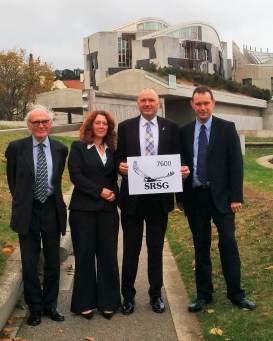
Photograph of SRSG & RSPB Scotland petitioners at Holyrood, L-R: Patrick Stirling-Aird, Andrea Hudspeth, Logan Steele, Duncan Orr-Ewing

National survey reveals golden eagles still ‘missing’ from Eastern Highland grouse moors

The results of a national survey of golden eagle territories have revealed mixed fortunes for this iconic species.

The survey, undertaken in 2015 by licensed experts from the Scottish Raptor Study Group and the RSPB, was a follow up to the previous national survey, undertaken in 2003.

The recent survey shows an overall 15% increase in the golden eagle population, rising from 442 pairs to 508 pairs. This is very welcome news, especially as the golden eagle can now be considered to be in ‘favourable conservation status’ nationally (to reach this status at least 500 golden eagle territories should be occupied by pairs).

However, don’t be fooled. Whilst a favourable national conservation status sounds like everything’s going just fine for the golden eagle, it masks a more sinister picture of what’s taking place regionally.

As in 2003, golden eagles are still doing very well in western Scotland, and there have been recent improvements in parts of central Scotland (although the loss of eight young eagles in five years is a huge concern), but the population is still being suppressed in parts of eastern Scotland, just as it was in 2003.

In the 2015 survey, less than one third of the traditional ‘home ranges’ in this area were occupied by a pair of eagles and no eagles were recorded at all in over 30% of them, despite the fact that these should be very productive landscapes for these birds. Many of the vacant territories in this area are on ground managed intensively for driven grouse shooting and in recent years, four eagles fitted with satellite tags have been found illegally killed in the central and eastern Highlands (see here, here, here and here).

Let’s also not forget that the national golden eagle population should be over 700 breeding pairs. In that context, a 2015 national population of 508 pairs means that around 200 pairs are still ‘missing’.

We’ll look forward to reading the peer-reviewed paper about these survey results in due course because that should provide a far greater level of detail than the overview provided in today’s press release. For instance, we’ll particularly be looking at the age structure of the 2015 breeding population (assuming it’s been recorded). It’s well known that in recent years, in some areas, golden eagle breeding pairs have comprised adults and juveniles/sub-adults. That isn’t ‘normal’ for a healthy population and is actually indicative of a serious underlying problem. Breeding pairs should comprise two adults. Alarm bells should be ringing when you see a juvenile/sub-adult as part of a breeding pair because this suggests there are insufficient adults available to breed.

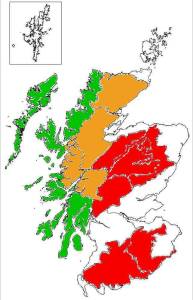
[Map shows the regional conservation status of the golden eagle (following the 2003 national survey): green = favourable; amber = unfavourable (marginal); red = unfavourable (definitive). Source: Golden Eagle Conservation Framework]

‘Species Champions’ Scottish parliamentary debate: a refreshing change

species-championFor those of you sickened and disheartened by recent political antics, here’s a refreshing change.

Yesterday there was a debate in the Scottish Parliament, introduced by Graeme Dey MSP. The motion of the debate was as follows:

That the Parliament welcomes the relaunch of the Species Champions initiative; understands that Scottish Environment LINK is asking MSPs to become species champions so that they can contribute to the conservation of “their” species in Parliament and help support action in the wider community; welcomes the at least 50 members from across all five parties in the Parliament who have already signed up to the initiative, and understands that, in order to help protect biodiversity in Angus South and across Scotland, Scottish Environment LINK hopes that those members who are yet to get involved will be able to do so.

If you’ve got a spare hour, the video footage of proceedings will certainly lift your spirits – watch it here.

It was a series of cross-party MSPs who have signed up to be ‘Species Champions‘, all standing up and giving 3 minute speeches about their ‘adopted’ species – their importance to Scotland’s biodiversity, what significant threats they face and what action has been taken to protect them. No selfish, greedy, twisted, vested interests on display here – just pure delight in celebrating some amazing plants and animals.

Several MSPs used their time to highlight the threat of persecution on driven grouse moors, including Mark Ruskell MSP (white-tailed eagle species champion, see video at 39.30 mins) and Mairi Evans MSP (hen harrier species champion, see video at 42.56 mins). Also of note was Alison Johnstone MSP, who is species champion for the brown hare but she also referenced the large scale and routine culling of mountain hares on driven grouse moors. She urged Environment Cabinet Secretary Roseanna Cunningham to consider using her powers to introduce a Nature Conservation Order to prohibit these culls within the boundary of the Cairngorms National Park. That’s an intriguing and creative suggestion and one we’ll come back to. You can watch Alison’s speech at 21.18 mins in.

The Species Champions initiative was launched in 2013 by Scottish Environment LINK. Yesterday’s debate was to highlight its re-launch under the new Parliament and to encourage more MSPs to get involved. Well done Graeme Dey MSP for introducing the debate and really well done to all those who took part with such enthusiasm. It has restored some of our faith that some politicians, at least, ‘get’ the importance of the environment and are prepared to stand up for it.

Hen Harrier Rowan ‘likely to have been shot’ in Yorkshire Dales National Park

On 28 October 2016 we learned that one of this year’s young hen harriers had been found dead in Cumbria in suspicious circumstances (see blog here).

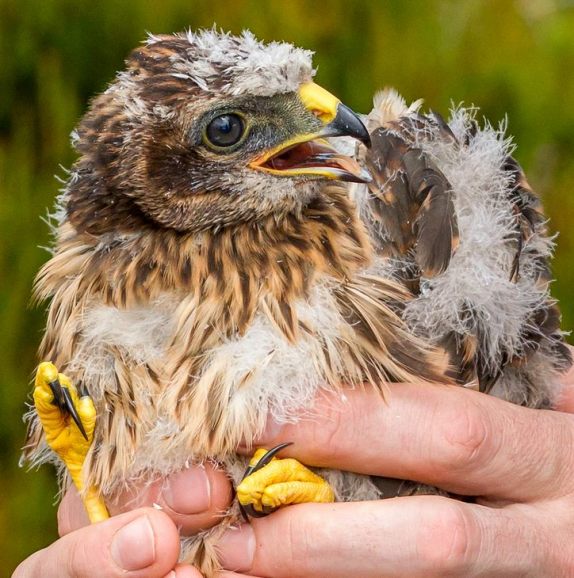
This was a hen harrier called Rowan, who had hatched at Langholm this summer and was one of two hen harriers being satellite-tracked by the Hawk & Owl Trust.

rowanhh

The press release from the Hawk & Owl Trust and Natural England had just said Rowan’s body had been found in Cumbria on 22 October 2016, and following a post mortem, details had been passed to the police.

Today, Cumbria Police have issued a press statement as follows:

Cumbria Police have opened an investigation into the death of a hen harrier.

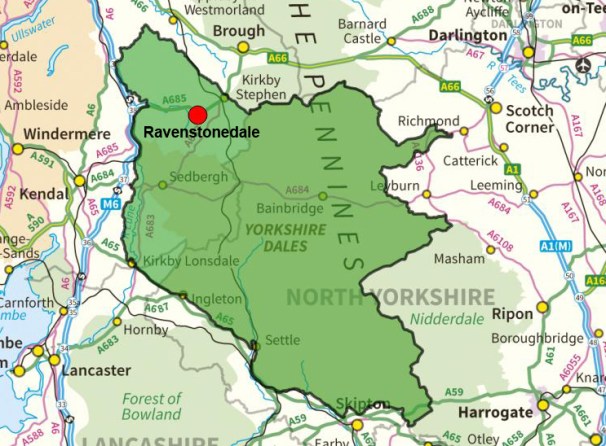
The body of a male Hen Harrier was found in the Ravenstonedale area of the county on 22nd October 2016. A post-mortem examination funded by Natural England and carried out by the Zoological Society of London has established that the bird was likely to have been shot.

The hen harrier, called Rowan, was satellite tagged at the Langholm Project as part of a joint venture between Natural England and the Hawk and Owl Trust. The bird had recently flown in the Cumbria and North Yorkshire Dales area before being found at Ravenstonedale.

Hen Harriers are specially protected under the Wildlife and Countryside Act, and the Government has set raptor persecution as one of their wildlife crime action priorities.

There is huge pressure on the survival of the hen harrier in England particularly and projects such as this are working hard to assist with the bird’s survival. Cumbria Police are working alongside such organisations to progress this investigation.

Anyone with information is asked to contact police on 101 and ask to speak to PC 2059 Helen Branthwaite.

END

Ravenstonedale lies within the Yorkshire Dales National Park (the bit that was recently added in August 2016).

ravenstonedale

The statement that Rowan “was likely to have been shot” is a bit odd. It would have been useful for Cumbria Police to release a copy of the x-ray, as other police forces often do when appealing for information about shot birds. Perhaps there is justification for the vague statement about the cause of death, but then again, perhaps there isn’t. Did the post mortem report use the words ‘likely shot’? That would be an unusual phrase. Usually they say something like ‘injuries consistent with’ (being shot). There’s a big difference in interpretation. There’s a faint whiff of a cover up here. Not an overpowering stench, but definitely an aroma of something….

The reputation of the Yorkshire Dales National Park as a hell hole for hen harriers (and most other raptors) continues to grow. Hen harriers haven’t bred in this National Park since 2007 and young birds that visit don’t last very long either. Here are some YDNP hen harrier data (2007-2014) from Natural England we’ve blogged about before:

Female, tagged N England 26/6/07: last known location YDNP 5/10/07. Status: missing.

Female, tagged N England 16/7/09: last known location YDNP 27/9/09. Status: missing.

Male, tagged Bowland 29/6/09: last known location YDNP 17/8/09. Status: missing.

Female, tagged N England 29/6/10: last known location YDNP 25/11/10. Status: missing.

Female (Bowland Betty), tagged Bowland 22/6/11: last known location YDNP 5/7/12. Status: shot dead.

Female (Kristina), tagged N England 25/6/12: last known location YDNP 9/10/12. Status: missing.

Male (Thomas), tagged N England 4/9/12: last known location YDNP 4/9/12. Status: missing.

Male (Sid), tagged Langholm 21/9/14: last known location YDNP 21/9/14. Status: missing.

Female (Imogen), tagged N England 26/6/14: last known location YDNP 1/9/14. Status: missing.

Marsh harrier found shot on East Yorkshire sporting estate

On 7th September 2016 an adult female Marsh harrier was found with shotgun injuries next to a partridge release pen on an East Yorkshire sporting estate.

The bird was rescued and underwent surgery at Battle Flatts vets in North Yorkshire.

mh-theatre

mh-xray

After surgery the bird was sent to Jean Thorpe in Ryedale for a period of rehabilitation.

On 31 October 2016, Jean was able to release this bird back to the wild.

mh-release

mh-jean-1

mh-jean-2

A couple of things to mention here. This wildlife crime was uncovered nearly two months ago. We don’t know the circumstances of the bird’s discovery (e.g. Who found it? Who reported it?). We don’t know where or when it was shot, although looking at that x-ray it would be fair to assume the bird wouldn’t have been able to fly far from the location it was shot. We haven’t seen a Police press statement about this crime. Have they charged a suspect? If not, where’s the Police appeal for information? Are they still investigating? Isn’t wildlife crime supposed to be a police national priority? Pathetic.

On a more positive note, the work of Jean Thorpe at Ryedale Wildlife Rehabilitation continues to amaze us (and not forgetting the skill of vet Mark Naguib at Battle Flatts Veterinary Clinic). Jean’s efforts are the perfect antidote to watching those disgraceful braying Tory MPs on Monday evening. They’d do well to visit her for an hour and learn about decency and compassion. Of course, Jean is not the only raptor rehabber in the UK but, living in North Yorkshire, she sees more than her fair share of raptor persecution victims. We’ve said this before but we’ll say it again – Jean’s work is entirely voluntary. If you want to support her work, please consider making a donation here.

UPDATE 4 Nov 2016: North Yorkshire Police have finally issued an appeal for information here. They’ve carefully avoided naming the estate where this bird was found.

Dishonourable members

A one-word summary of Monday’s Westminster ‘debate’ on driven grouse shooting:

Dishonourable: adjective.

Bringing shame or disgrace on someone or something.

Synonyms: disgraceful, shameful, shameless, disreputable, discreditable, degrading, ignominious, ignoble, blameworthy, contemptible, despicable, reprehensible, shabby, shoddy, sordid, sorry, base, low, improper, unseemly, unworthy, unprincipled, unscrupulous, corrupt, untrustworthy, treacherous, perfidious, traitorous, villainous, shady, crooked, low-down, dirty, rotten.

Transcript of proceedings here

Video of proceedings here

The dissection of what was said (and more importantly, what wasn’t said) during this ‘debate’ will go on for some time and we’ll come back to that in due course. Discussions are already underway on our next move – rest assured, this is not the end. But for now, we just want to comment on the political process. Mark Avery has some initial thoughts on this here, and so do we.
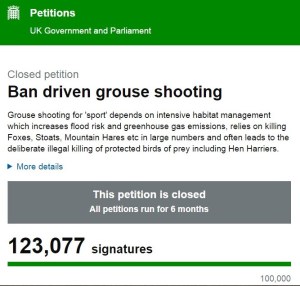
petitionThe ability for members of the public to petition Westminster on issues that are of concern to them was set up quite recently. A Petitions Committee was established to consider e-petitions from the public as a way of getting items on to the political agenda. In a Government press release (here), Dr Therese Coffey MP, speaking as the Deputy Leader of the House, said:

The new Petitions Committee builds on the reforms of the last Parliament to improve public engagement with politics. This is the first time voters will be able to petition Parliament electronically through the Petitions Committee for action by the government on topical issues that really matter to people – and we will listen to what they have to say“. [Emphasis is ours].

In light of what has happened with ‘our’ petition calling for a ban on driven grouse shooting, here’s a more accurate description of the process:

‘Start a petition, base your case on overwhelming scientific evidence, work your arse off to get it past the 100,000 signature threshold, come along to Westminster where you can give evidence in front of a hostile panel of MPs, some of whom will have a clear conflict of interest. The Petitions Committee Chair will be inexplicably rude towards you and you’ll be giving evidence alongside an organisation that doesn’t even support the aim of your petition. The Committee will then hear from two further organisations that oppose your petition, and they will be allowed to include anecdotes about what they’ve seen from their kitchen window as the basis of their evidence. One of the MPs serving on the Petitions Committee will also be a senior employee of one of the opposing organisations who will feed easy questions to your opponents. The Petitions Committee will ignore the written evidence of over 200 people that has been submitted in support of your petition.

A couple of weeks later, a member of the Petitions Committee will introduce your petition for a debate in Westminster Hall. He will set the scene by admitting that he doesn’t understand the basis for the petition, make wild assumptions about the motivation of the 123,077 people who signed your petition, and provide to the house a biased and uninformed opinion of the topic. A ‘debate’ will then ensue, whereby MPs, many with clear vested interests in opposing your petition, will refer to you as the ‘perpetrator of the petition’ (implying that you are a criminal) and will use parliamentary privilege to accuse you of being a liar, of using ‘premeditated malice’ and of being ‘dishonest’. They will either ignore or willfully misinterpret every piece of scientific evidence that has been made available to them that supports your petition and instead will deny that there’s any problem that needs addressing. They will tell lies and they will question the intelligence of the petition signatories. There will be no quorum required for this ‘debate’. The respective Government Minister will sit through the ‘debate’ with complete disinterest other than using the time to check her phone and clear out the contents of her handbag. At the end she will stand up and deliver a prepared speech that will reveal the Government’s total indifference to the topic, its total dismissal of all relevant scientific evidence, and its total disrespect for the views of the 123,077 members of the public who signed your petition’.

Today is a milestone, and there’s one man to thank

Today is a milestone. It’s the day that 123,077 members of the public forced members of Parliament to debate in Westminster the issue of driven grouse shooting.

That’s an incredible achievement, and although we’re not expecting to hear anything more than an establishment-led whitewash today, it’s just the beginning. Whatever the outcome this afternoon, we’re not going away. But more of that another time. Today is a day to celebrate how far we’ve come.

We wouldn’t have reached today’s milestone without the vision of one man – Mark Avery. Sure, today’s debate wouldn’t be happening if 100,000 people hadn’t signed a petition calling for a ban on driven grouse shooting, but those 100,000 people wouldn’t have signed if there wasn’t a petition to sign.

img_7368-copy

Mark started this campaign two years ago with his first petition. When that didn’t reach the required number of signatories, he launched another one. That petition did better than the first one, but was still way off where it needed to be. It didn’t help that the main environmental NGOs refused to support it. Most people would have given up at that stage, skulking away with their tail between their legs. Not Mark. He launched a third petition. That takes some balls.

This time, the petition roared past the finish line and then some! That didn’t happen by luck or by chance. It happened because a lot of people put in a huge amount of effort to promote it, and not least Mark. He’s one of the most hard-working and productive people we’ve met. He’s driven. And he’s driven this campaign, with quite brilliant strategic acumen, inspiring many of us along the way. Throughout it all he’s been subjected to vile, vitriolic personal abuse from some within the grouse-shooting industry but not once has he resorted to retaliatory invective. He’s retained his composure, his manners, his sense of humour and his integrity. That’s quite something.

Hats off to you, Mark, and thank you for all you’ve done. Today you shouldn’t have to buy a single drink (this is a one off – don’t get any ideas!). We’ll see you in London.

For those who can’t get to London, today’s debate can be watched on Parliamentary TV here (kick off at 4.15pm).

Photo: RPUK

Mossdale Estate under fire from local residents

We’re often told how ‘beneficial’ driven grouse shooting is to rural communities and how supportive local residents are of their nearby grouse shooting estate. There was plenty of testimony to this ‘rural idyll’ in the written evidence submitted to the Westminster Petitions Committee’s inquiry on grouse shooting. That’s hardly a surprise when some local residents will be directly employed by the estate  – it’s in their interest be supportive. But when those without employment links, but who are still entangled in this feudal system, dare not speak out against a powerful landowner for fear of potential repercussions, their silence may also be used as evidence of ‘support’.

However, some local communities are far from happy with this fictional romanticism of their lives and are beginning to voice their dissent. As land reform gains traction in Scotland we’ve already seen proposals for community buy-outs of grouse shooting land at Leadhills (part of the Hopetoun (Leadhills) Estate, see here and here) and at nearby Wanlockhead (part of Buccleuch Estates, see here and here), where local residents are keen to escape the clutches of feudalism and instead improve economic development and enhance tourism and leisure opportunities in their area.

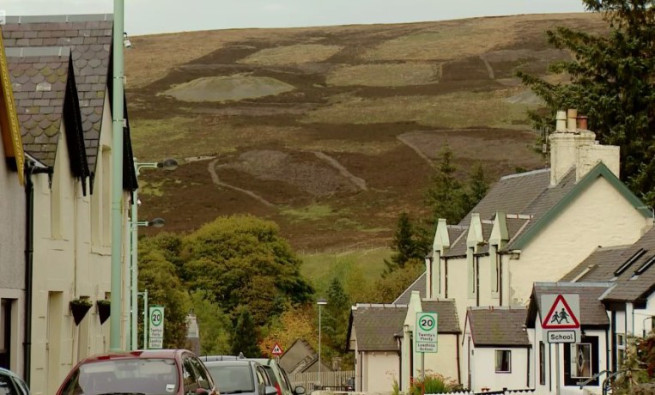
(Photo: Leadhills grouse moor looms large over the village)

leadhills-village-grouse-moor-from-landward-prog

Residents of the Calder Valley in West Yorkshire have long campaigned against the annual heather burning taking place on Walshaw Estate, which they believe has contributed to the catastrophic flooding of towns such as Hebden Bridge (see here and here).

And now residents living in the Yorkshire Dales National Park/Cumbria are beginning to raise their voices too. Remember the wildlife crimes uncovered at the Mossdale Estate in the Yorkshire Dales National Park in May this year, when a gamekeeper was filmed setting three pole traps on the grouse moor? The publicity surrounding those crimes (and the subsequent police cock up that saw the offender receive a caution instead of being prosecuted) appears to have acted as a catalyst and triggered a string of other complaints from local residents to the police about the alleged conduct of the Mossdale Estate landowner and his gamekeepers. The same complaints were lodged with David Butterworth, CEO of the Yorkshire Dales National Park Authority.

An FoI request has revealed local residents made the following allegations:

  • Firearms discharged across garden with children in;
  • Unattended firearms left on quads;
  • Firearms being discharged next to (? Across) A684;
  • Confrontation with gamekeepers and intimidation of residents

The full set of allegations can be read in this part of the response we received to an FoI made to the Yorkshire Dales National Park Authority: mossdale-complaint-local-residents

You’ll notice in the above correspondence that the residents also complained about the response they received from Cumbria Police. Since then (June 2016), further information has revealed that the Police eventually met with Mossdale Estate owner Edward Van Cutsem and his head gamekeeper on 22 September 2016 and they concluded that no offences had occurred.

There’s a lot more to this particular story than we’re able to publish at the moment but hopefully we’ll be able to in due course. Suffice to say, local residents are still VERY unhappy about the way their complaints were handled. Local MP Tim Farron has been consulted and it’ll be interesting to see whether he attends tomorrow’s Westminster debate on driven grouse shooting and speaks up for his constituents’ concerns.

Satellite-tagged hen harrier ‘Rowan’ found dead in suspicious circumstances

rowanhhAnother of this year’s young satellite-tagged hen harriers has been found dead.
This time it’s Rowan, a bird that hatched at Langholm and was being satellite-tracked by the Hawk & Owl Trust.

Here’s a joint statement put out by the Hawk & Owl Trust and Natural England:

The body of a juvenile, male hen harrier – named Rowan – was recovered in Cumbria on 22nd October. He was satellite tagged at the Langholm project in the Scottish borders, as part of a joint venture between Natural England and the Hawk and Owl Trust. Following an autopsy, Natural England has passed details to the police for investigation.

We are unable to make further comments or enter into discussion at this time as this may be prejudicial to ongoing investigations.

END

This press statement is clearly suggestive that criminal activity was responsible for the death of this hen harrier.

We look forward to further details about the cause of death and appeals for information from the Police in the very near future.

We especially look forward to the Hawk & Owl Trust announcing its withdrawal from the DEFRA Hen Harrier Action Plan on the grounds that one of its ‘immoveable provisos‘ for taking part has been broken (again).

UPDATE 7 November 2016: Hen Harrier Rowan ‘likely to have been shot’ in Yorkshire Dales National Park (see here)

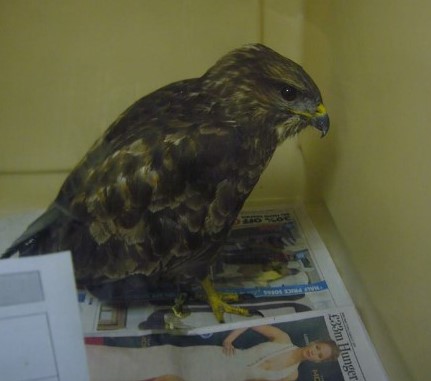
Buzzard with shotgun injuries found in Thirsk, North Yorkshire

A buzzard with shotgun injuries has been found in Thirsk, North Yorkshire, this week. It had a broken femur. The bird has undergone surgery and is currently in rehabilitation with the wonderful Jean Thorpe of Ryedale Wildlife Rehabilitation.

bz-thirsk-oct-2016shot

bz-thirsk-oct-2016-xray

A quote from Jean: “Amazing work once again by Mark Naguib of Battleflatts vets. The shot buzzard is stood square once again with shiny pins correcting the break. He looks so much better already. Long way to go yet but looking good so far“.

North Yorkshire Police have been informed.

North Yorkshire maintains its status as one of the worst places in the UK for the illegal killing of birds of prey. It’s a county where much of the landscape is dominated by grouse moors, particularly in the two National Parks: the North York Moors NP and the Yorkshire Dales NP, as well as a large number of pheasant and partridge shoots.

This year, other raptor persecution crimes uncovered in North Yorkshire have included several illegally spring-trapped buzzards, several shot buzzards, at least ten shot red kites, and a gamekeeper filmed setting three illegal pole traps on a grouse moor.