Our year in review: January – June 2016

This year has been the busiest ever for this blog with over 870,000 views, up from 556,000 views in 2015.

Here are some of the year’s highlights from January – June, with part two coming shortly.

JANUARY

We started the year analysing some data. We looked at RSPB Scotland’s recently published 20 year review of crimes against raptors and discovered a load of crimes in the Scottish Borders that had previously gone unreported (see here). We also looked at data published by the Scottish Raptor Monitoring Scheme and realised that there had been no breeding hen harriers recorded in the Angus Glens since 2006 (see here).

DEFRA published its Hen Harrier (In)Action Plan, which included its intention to begin brood meddling (see here). We weren’t too concerned about the onset of brood meddling because we believed (erroneously, as it turned out) that there would need to be a minimum of 70 breeding pairs before brood meddling would begin. How wrong we were. Disappointingly, Martin Harper of the RSPB said he welcomed the InAction Plan.

The Countryside Alliance kicked off another year of fantastical denial with an article in Countryfile magazine claiming that hen harriers were on the increase thanks to grouse moor management (see here). The fairy tales continued with more shameless spin-doctoring north of the border from the Gift of Grouse, who tried to portray raptor workers as the main stumbling block to tackling raptor persecution (see here).

Police Scotland came in for criticism over their responses to two suspected persecution incidents (see here) while a reward was doubled for information about a peregrine poisoning case in Shropshire (see here).

In the courts, proceedings continued in the vicarious liability prosecution against Andrew Duncan of the Newlands Estate in Dumfriesshire (see here) and in the case against a Glenogil Estate gamekeeper accused of alleged snaring offences in the Angus Glens (see here).

Mark Avery’s second e-petition to ban driven grouse shooting closed with just over 33,000 signatures (see here).

FEBRUARY

A new peer-reviewed scientific paper was published documenting the ‘catastrophic decline’ of hen harriers on the grouse moors of North East Scotland (see here). The paper was swiftly denounced by the Scottish Moorland Group as ‘deeply flawed’ with ‘a lamentable lack of evidence’, which was actually a very good description of the Scottish Moorland Group’s interpretation of the science (see here).

The General Licence restrictions on Raeshaw and Burnfoot Estates were reinstated in the latest on/off fiasco (see here) and it was confirmed that Raeshaw Estate was going for a Judicial Review of SNH’s decision to enact such restrictions (see here).

We blogged about the Scottish Parliament’s Rural Affairs, Climate Change & Environment Committee hearing that had taken place in January. Scotland’s chief wildlife crime cop, Assistant Chief Constable Malcolm Graham had once again used guesswork to assess the extent of wildlife crime in Scotland (see here) and members of Scottish Environment LINK later wrote to the RACCE committee to express ‘disquiet’ over other parts of Police Scotland’s evidence (see here). The Ross-shire Massacre was also discussed at the RACCE meeting with more questions asked about Police Scotland’s handling of the investigation (see here). The Committee also wrote to the Environment Minister Dr Aileen McLeod, urging her to get off the fence re: the decision to give increased investigatory powers to the SSPCA and pressed her for a decision on the recommendations of the Wildlife Crime Penalties Review (see here).

Derbyshire Constabulary launched an appeal for information five months after the discovery of a spring-trapped Osprey and a shot buzzard in the Peak District National Park (see here). The RSPCA launched an appeal for information after a pigeon was found in Lichfield with sharp hooks attached to its legs, believed to be used as a method of causing serious injury to any sparrowhawk or peregrine that might attack the pigeon (see here).

More photographs emerged of slaughtered mountain hares in the Angus Glens (see here). Head gamekeeper Simon Lester announced his resignation from the Langholm Moor Demonstration Project (here) and Environment Minister Dr Aileen McLeod announced her acceptance of the recommendations made in the Wildlife Crime Penalties Review (see here).

The (Mis)understanding Predation report was published, leading to the Scottish Gamekeepers’ Association inevitably suggesting a pilot study of removing buzzards ravens and badgers to ‘save curlews’ (see here).

MARCH

Environment Minister Dr Aileen McLeod said she hoped to announce the Government’s position on increased powers for the SSPCA “shortly” (see here).

We published a shocking photograph taken in the Cairngorms National Park of a truck-load of slaughtered mountain hares (see here), which led to widespread public revulsion. Balmoral Estate was also accused of participating in mountain hare massacres (see here). After complaints from the public about mountain hare culls in the National Park, the Cairngorms National Park Authority published a non-statement in response (see here) and the Scottish Moorland Group also tried (and failed) to defend this barbaric behaviour (see here).

There was further embarrassment for the Cairngorms National Park Authority when hen harrier ‘Lad’ was found dead, suspected shot (see here). The CNPA issued a lame statement in response (see here).

In other hen harrier news, it was announced that the Lush Skydancer bath bomb campaign had raised over £100K for more satellite tagging (see here), and the RSPB confused everyone with what looked like a statement saying there would be a ‘news black out’ on the 2016 hen harrier breeding season (see here), but clarifed shortly afterwards that there wouldn’t be a news black out (see here).

The two year-anniversary of the Ross-shire Massacre passed with no progress in the Police investigation (see here) and the Scottish Government published the ‘official’ persecution figures from 2015, showing a slight increase in reported crimes but with details of several crimes ‘withheld’ for unknown reasons (see here).

In the courts the Crown Office dropped the prosecution against a gamekeeper from Glenogil Estate for alleged snaring offences (see here) and the vicarious liability prosecution against Andrew Duncan (Newlands Estate) was continued, again (see here).

It was announced that the Langholm Moor Demonstration Project was winding down prematurely (see here), a new peer-reviewed scientific paper was published on the damning environmental impacts of driven grouse shooting (see here), and Mark Avery launched his third e-petition to ban driven grouse shooting (see here).

A new initiative to tackle illegal raptor persecution was launched in Northern Ireland (see here) and more horrific raptor persecution was uncovered in North Yorkshire (see here).

A review of some RSPB annual persecution reports revealed there had been a mass poisoning of raptors (red kites & buzzards) on an unnamed estate in Wales a couple of years ago and we suggested there had been a police cover up (see here) – an accusation that Powys Police denied (see here).

APRIL

The shot red kite reported in March was successfully rehabbed and released back to the wild in North Yorkshire by the remarkable Jean Thorpe (see here). However, raptor persecution crimes continued with a buzzard shot in East Yorkshire (here), a dead peregrine found in suspicious circumstances at a raptor persecution hotspot in Northern Ireland (here), a red kite shot dead in NE England (here), a red kite shot in Harrogate, North Yorkshire (here), a goshawk shot in the head in Gloucestershire (here), and two red kites shot in the Thames Valley (here).

There were calls in Scotland to have ravens added to the General Licence to allow the indiscriminate killing of this species, with some hilarious justification from Bert Burnett of the Scottish Gamekeepers’ Association (here).

In the courts, four pigeon men were convicted of poisoning sparrowhawks and peregrines in a landmark case in Ireland (here), we learned that Scottish gamekeeper Billy Dick was appealing his 2015 conviction for killing a buzzard (here), Angus Glens gamekeeper Craig Graham was charged with alleged pole-trapping offences (here), and the vicarious liability prosecution against Andrew Duncan (Newlands Estate) was continued, again (here). SNH suspended the General Licence restriction on Raeshaw Estate (again) while the Judicial Review got underway (here).

‘Respected’ journalist Magnus Linklater made up some rubbish about the Langholm Project (here) and the Scottish Moorland Group made up some rubbish about heather burning, claiming it was ‘the same as getting your hair cut’ (here). Ian Botham came back out of the woodwork to entertain us with another cock and bull diatribe against the RSPB (here).

Banning driven grouse shooting made it on to the political agenda in Scotland at a national hustings event in the run up to the May election (here) and an RSPB complaint about heather burning on an English grouse moor sparked the beginnings of European legal action (here).

We published a video, recorded by one of our blog readers in the Peak District National Park, showing an armed man on a grouse moor owned by the National Trust, sitting close to a decoy hen harrier (see here). The National Trust responded by launching a ‘full investigation’ (here), the Peak District National Park Authority responded by saying the content of the video was ‘alarming and suspicious’ (here) while the Moorland Association responded by denying there was anything to see in the video (here).

MAY

The buzzard that had been shot in East Yorkshire last month was successfully rehabbed and released back to the wild by Jean Thorpe (see here). A red kite was found shot and critically injured next to a grouse moor in North Yorkshire (here), two buzzards were found poisoned in two separate incidents in Northern Ireland (see here), a goshawk was found shot on an unnamed shooting estate in the Cairngorms National Park (here), a red kite was shot dead on its nest in West Yorkshire (here) and Police Scotland investigated the disappearance of two breeding peregrines from nest sites in Dumfries & Galloway (here).

In the courts a Scottish gamekeeper was fined for leaving a loaded gun out on a hillside (here), the Judicial Review of SNH’s decision to restrict the use of General Licences on Raeshaw Estate got underway (here), judgement was reserved in Scottish gamekeeper Billy Dick’s appeal against his 2015 conviction for killing a buzzard (here), a September trial date was set for Angus Glens gamekeeper Craig Graham accused of alleged pole-trapping offences (see here), a pigeon man in Cumbria was convicted of illegally storing Carbofuran (here), and Scottish gamekeeper Stanley Gordon was charged with the alleged shooting of a hen harrier on Cabrach Estate in 2013 (here).

Environment Minister Dr Aileen McLeod failed to secure re-election while land reform campaigner Andy Wightman joined the Scottish Parliament as an MSP for the Scottish Greens (here). The role of Environment Minister was given to Roseanna Cunningham MSP (again), although the position was now elevated to Cabinet Secretary status (see here).

There were parliamentary questions from Mark Ruskell MSP (Scottish Greens) on mountain hare slaughter (here) and wildlife crime (here). The new Cabinet Secretary was also asked about increased powers for the SSPCA, especially as a local council had just approved increased SSPCA powers for dealing with the illegal puppy trade (here). But to everyone’s frustration the Cab Sec gave a fairly non-committal response saying a ‘decision will be announced in due course’, whenever that might be (here).

Gas guns were photographed on a grouse moor in the Peak District National Park (here) and SNH gave some contradictory advice about the use of gas guns on grouse moors in Scotland (here).

The hysteria about about ravens grew in Scotland, aided by an astonishingly dodgy article published by the BBC (here), and talking of dodgy articles, Scottish Land & Estates were still in denial about raptor persecution (here).

We reported on the use of pesticide leg bands being attached to the legs of red grouse on the Cabrach Estate (here), a claim later denied (here).

A very funny video was published giving us all some much needed light relief (here).

JUNE

Police opened an investigation in to the suspicious death of a 10th red kite in North Yorkshire (here). Suspected persecution was reported from Moy Estate in the Monadhliaths (see here), a goshawk was suspected to have been shot in the Peak District National Park (here) and satellite-tagged hen harrier ‘Chance’ ‘disappeared’ on a South Lanarkshire grouse moor (here).

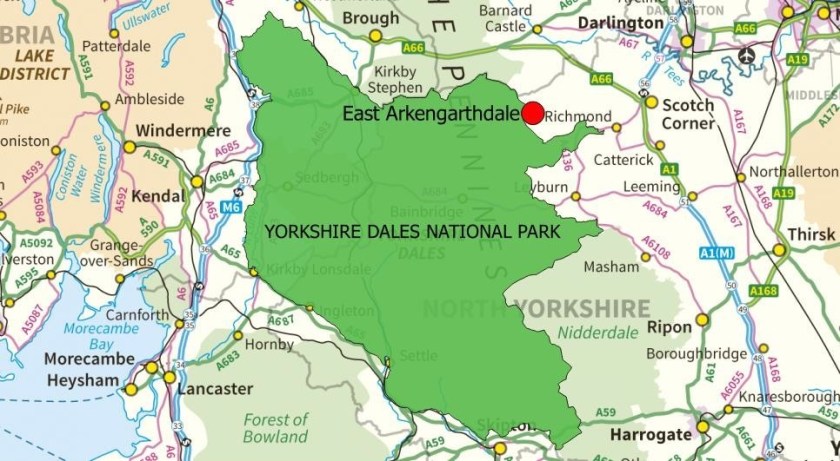
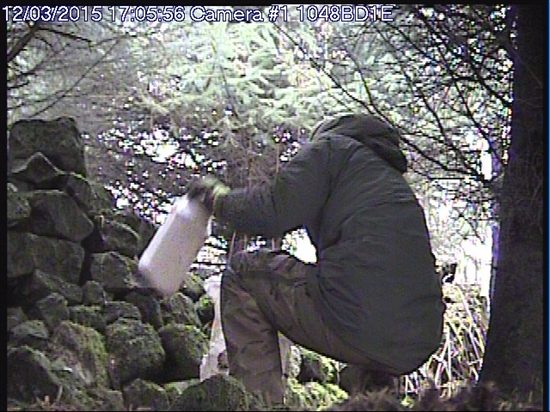
An RSPB Investigations team filmed a man setting pole traps on a grouse moor on Mossdale Estate in the Yorkshire Dales National Park (see here). It was later revealed the man was employed as a gamekeeper on the estate (see here). Instead of charging the gamekeeper for these offences, North Yorkshire Police decided let him off with a caution.  The Police tried to justify that decision but we challenged it after reviewing the guidelines that the Police are supposed to use (see here). A senior police officer agreed to investigate our complaint. Mossdale Estate ‘resigned’ from the Moorland Association (here), and it was clear from a leaked document that the Moorland Association was feeling the pressure of increased public scrutiny (here). We wondered whether the Hawk & Owl Trust would now pull out of the hen harrier brood meddling scheme seeing as one of their ‘immoveable provisos’ had now been breached (here).

In the courts, the vicarious liability prosecution against Andrew Duncan (Newlands Estate) was adjourned, again, twice (here, here) as was the case against Scottish gamekeeper Stanley Gordon, accused of the alleged shooting of a hen harrier on Cabrach Estate in 2013 (see here).

Natural England produced some pisspoor ‘guidance’ on the use of gas guns (here), while in the Angus Glens other disturbance techniques in use on grouse moors were revealed: inflatable scary man (here) and exploding banger ropes (here).

SNH reinstated the General Licence restriction on Raeshaw Estate (here, are you keeping up with this?) which was pretty pointless as they’d also issued individual licences that would allow the gamekeepers to carry on killing anyway (see here) and we learned that the Scottish Government had no plans to monitor mountain hare culling on grouse moors (here).

Martin Harper of the RSPB gave everyone a pathetically vague update on the status of this year’s breeding hen harriers in England, telling us there was ‘only a tiny handful’ (here).

After a few months of submitting FoIs to various agencies, we were able to reveal the location of the mass raptor poisoning in Wales as Glanusk Estate in the Brecon Beacons National Park (here).

The National Trust finally grew a pair and announced some very welcome news: they were pulling the lease on the grouse moor in the Peak District National Park where the armed man had been filmed sitting next to a hen harrier decoy (see here).

Part two of our year in review (July – December 2016) can be read here

Parliamentary reception for group promoting wildlife criminal

Yesterday we blogged about the launch of the Scottish Country Sports Tourism Group’s new initiative, Game for Growth, aimed at promoting the value of country sports to the Scottish economy (see here).

We mentioned that Andy Wightman MSP had lodged a Parliamentary Question asking whether public funds (via VisitScotland as part of the Game for Growth initiative) had been given to the owners or managers of landholdings where wildlife crime had taken place.

We also mentioned our surprise that the Scottish Country Sports Tourism Group’s website is promoting a sporting agent with a current conviction for raptor persecution.

What we didn’t mention was that the launch of the Game for Growth initiative took place at a prestigious parliamentary reception at Holyrood on 20 December 2016, with wide media coverage.

This parliamentary reception was hosted by Edward Mountain MSP (Conservative, Highlands & Islands) and included speeches from Malcolm Roughead, Chief Exec of VisitScotland, and Cabinet Secretary for Rural Economy & Connectivity, Fergus Ewing MSP.

The revelation that the Scottish Country Sports Tourism Group is actively promoting a convicted wildlife criminal will probably be a surprise to Edward Mountain MSP, and undoubtedly a source of deep embarrassment; he surely wouldn’t have hosted them had he known. It’s reasonable to assume he didn’t know because his expertise appears to be in fishing rather than gamebird hunting. Sustainable sport fishing does bring in millions to the rural economy and it isn’t underpinned by wildlife crime, so it’s easy to see why he would lend support to the Game for Growth initiative.

Unfortunately for Edward, as well as the sport fishing industry, the Gift of Grouse is also prominently involved with the Game for Growth initiative (check out that banner in the photo) and this isn’t the first parliamentary reception they’ve been involved with that has led to awkward questions being asked.

We await the Scottish Government’s response to Andy Wightman’s Parliamentary Questions about public funding for wildlife criminals with great interest.

Parliamentary Question: is public money being used to promote wildlife criminals in Scottish shooting sector?

scstg-logoLast week it was announced that the Scottish Country Sports Tourism Group (SCSTG) has plans to boost the value of game shooting, stalking and fishing to the rural economy by £30 million, via its new ‘Game for Growth’ strategy.

The Game for Growth strategy document can be read here: sctsg-game-for-growth-strategy-document-dec-2016

It’s a pretty turgid read, full of tedious marketing soundbites, but basically it sets out how the industry plans to promote Scottish country sports over the next four years to reach a wider national and international market. This will be achieved mostly, it seems, by claiming the industry is sustainable with fabulous conservation benefits and ignoring the vast environmental damage and wildlife crime associated with some activities within this sector.

visit-scotland-1Interestingly, VisitScotland (the national tourism agency linked to the Scottish Government) has apparently committed to boosting the country sports tourism sector and has announced a matched ‘Growth Fund’ to help SCSTG develop its marketing strategy and increase its online presence.

We’re not the only ones to raise an eyebrow at this. Andy Wightman MSP has lodged the following Parliamentary Question about it:

Question S5W-05930: Andy Wightman (Lothian, Scottish Green Party). Date lodged: 22/12/2016

To ask the Scottish Government whether it will provide a breakdown of the recipients of financial contributions from VisitScotland to the strategy, Game for Growth Strategy – Country Sports Tourism in Scotland 2016; what information it has regarding how each recipient will use this; what action it has taken to ensure that no money was provided to the owners or managers of landholdings on which crimes against wildlife have been committed; whether it will publish the strategy on its website, and what aspects of this it is supporting or plans to support with public money.

Expected answer date: 19/01/2017

These are legitimate questions, and especially when you take a closer look at the SCSTG website, which has been developed to connect potential visitors with various country sports providers across Scotland. For example, if you want to pay money to shoot mountain hares in Scotland, you can use the website’s search facility and a number of sporting agents/estates who offer this ‘sport’ will be highlighted.

We used the search facility to look for various ‘sporting’ opportunities and were very surprised to find that sporting agency Dunmhor Sporting was being promoted:

Why the surprise? Well, Graham Christie of Dunmhor Sporting was convicted in December last year of being vicariously liable for the criminal actions of his gamekeeper, who had used an illegal gin trap to catch and injure a buzzard on the Cardross Estate.

Why is the Scottish Country Sports Tourism Group promoting an agent who has a current conviction for wildlife crime? And why is VisitScotland providing match funding to an organisation that is promoting a convicted wildlife criminal?

Gamekeepers want sea eagles, kites, buzzards, sparrowhawks & ravens added to General Licences

Further to this morning’s blog about RSPB Scotland’s damning response to SNH’s General Licence consultation (see here), we said we’d write a separate blog about some of the other responses that SNH received.

SNH has now published all the responses, and they’re well worth a read: all-responses-to-snh-general-licence-consultation-2016

There are many organisations and individuals calling for ravens to be added to the General Licences (no surprise) and, yet again, there are a number of requests for buzzards and sparrowhawks to also be added, which would allow these species to be casually killed across Scotland without any monitoring or regulation, although some have suggested these raptors should be on ‘regional’ General Licences to limit the casual killing to a particular area. How thoughtful.

One of the reasons given for adding ravens and buzzards to the General Licences was this: “There are arguably too many of them around and they cloud the skies in our local area“.

Here’s a photograph of some ravens and buzzards clouding the skies:

Actually, this is a photograph (by Richard Barnes) of Dunlin flocking on the coast of North America but it could just as easily be a plague of swarming raptors over a Scottish grouse moor, if you happen to be a pathological raptor hater stuck with an 18th century attitude, that is.

Take a look at the consultation response from Garry MacLennan. Surely not the same Garry MacLennan, Head Gamekeeper at Invermark Estate? Aren’t raptors supposed to be ‘thriving’ there? Perhaps the headline should have read ‘Raptors are thriving on Scottish grouse moors and we want licences to kill them’.

Also have a look at the responses from Iain Hepburn (the same Iain Hepburn as the head gamekeeper at Dunmaglass Estate?), Duncan Mackenzie and Calum Kippen (the same Corrybrough Estate gamekeepers who attended the recent meeting between the Cairngorms National Park Authority & the Scottish Gamekeepers’ Association?). Aren’t these the gamekeepers who want licences to monitor and ring raptors? Don’t they see a bit of a conflict of interest there if they also want licences to kill these raptors?

Best of all though, is the response from Bert Burnett (presumably of the SGA). Bert suggests that ravens should be added to the General Licences and argues that regional general licences “could be rolled out for various species that may start to cause problems like sea eagles and kites etc“. Ah yes, that very serious problem of sea eagles mistaking small children for prey.

Of course, these calls for licences to cull raptors are nothing new. Scottish (and English) gamekeepers and land owners have been asking for these for 20 years (see here, here, here, here, here, here, here). So far, SNH has resisted but given Natural England’s recent capitulation on buzzard-killing licences, how much longer before we see the same in Scotland?

RSPB Scotland slams General Licence system as ‘cover for criminal destruction of raptors’

Earlier this year, SNH opened a consultation on the use of General Licences (GLs), in anticipation of updating the terms of use for their suite of 2017 GLs.

This wasn’t anything new. SNH regularly reviews the GLs, but, as has happened so many times before, this year SNH has yet again ignored the on-going conservation concerns about the use of these GLs.

We’ve blogged about the terms of the GLs many times, particularly in relation to the mis-use of traps that are authorised under the terms of the GLs (e.g. see here, here, here, here, here, here, here, here) and RSPB Scotland has been questioning the terms of GLs for over ten years (e.g. see here [pages 6-13] and here).

RSPB Scotland responded to this year’s GL consultation, repeating the same concerns as they had ten years ago. You can read their consultation response here: rspb_scotland_response_to-snh_2016_gl_consultation

(As an aside, SNH has now published all the responses to this year’s GL consultation but we’ll be blogging about that in another post).

A couple of weeks ago, SNH announced the changes it was making to the 2017 GLs and, surprise surprise, many of the concerns raised by RSPB Scotland and other conservation organisations have been totally ignored, again. You can read SNH’s announcement here: snh-ogl-consultation-response-letter-annexes-a-b-and-c

baited-clam1Amongst other things, SNH has decided to reinstate the use of meat bait inside clam traps (thus increasing the likelihood of catching birds of prey), and there is also a commitment to ‘explore new and responsive licensing solutions to prevent agricultural damage by ravens’. On-going concerns that have not been addressed include (but are not limited to) compliance (or not) with European environmental legislation; welfare concerns; poor trap design that allows indiscriminate species trapping; year-round use (as opposed to seasonal use); ineffective regulation of trap users; ineffective monitoring of trap use (i.e. number and species caught/killed); inability to identify an individual trap user; and the lovely get-out clause for any General Licence user with an unspent criminal conviction.

Justifiably, RSPB Scotland are pretty unimpressed, as well they should be, and they have issued a scathing press release about SNH’s failure to address long-term concerns, particularly in relation to the use of GLs as a cover for the illegal persecution of raptors. RSPB Scotland’s press release can be read here.

RSPB Scotland has also produced a video to highlight some of their concerns. Watch it here.

If you share RSPB Scotland’s concerns, and you agree that the current GL system is not fit for purpose, you can make your views known to SNH by emailing them at: licensing@snh.gov.uk

Deja vu

Yesterday we published a map. It showed part of the East Arkengarthdale Estate in North Yorkshire where an illegal cache of poisons had been discovered in 2014. Here’s the map again:

shaw-farm-map

Did anyone else get a sense of deja vu when looking at that map? Have a look at that forest block at the top of the map. That’s Stang Forest and it’s got quite a distinctive shape.

Now have a look at this map, which we published a year ago in December 2015:

stang-forest-copy

Why did we publish this map last year? Well, it was to illustrate an area where a peregrine had been found shot dead on 23 August 2015 ‘on the south east edge of Stang Forest’.

An interesting area, eh?

Stang Forest shot perg - Copy

Subsidy penalty for East Arkengarthdale Estate?

Ten days ago we blogged about the RSPB’s Investigations Team finding a buried poisons cache on the East Arkengarthdale Estate in North Yorkshire in 2014 (see here).

east-arkengarthdale

Incredibly, nobody was prosecuted for this illegal stash and, despite the best efforts of North Yorkshire Police, the gamekeeper who had admitted using the poisons cache had his firearms certificates returned.

We asked several organisations within the grouse shooting industry a number of questions about this case (see here) but so far, none of them have said a word about it (in public, at least). We’ll come back to this.

What we’re interested in now is whether the East Arkengarthdale Estate will be the focus of an investigation by DEFRA’s Rural Payments Agency. Did this estate receive any agricultural subsidies in 2014, if so under what scheme(s), and does having confirmation that an estate gamekeeper was using the poisons cache constitute a cross-compliance breach of any of these subsidy schemes, and if so, will the estate receive a subsidy penalty?

According to records at Companies House, East Arkengarthdale Ltd has two Directors: Eric Axel Lennart Torstenson and Mrs Anita Ingrid Linnea Torstenson.

A search of the CAP Payments website shows that EAL Torstenson received the following subsidies in 2014 and 2015:

torstenson-2014-cap-payments

torstenson-2015-cap-payments

These documents show that EAL Torstenson received agricultural subsidies (trading as) Shaw Farm.

According to this 2003 newsletter about a Black Grouse Recovery Project, “Shaw Farm in North Yorkshire is part of the East Arkengarthdale Sporting Estate“.

Here’s a map of Shaw Farm, to the west of Hurst Moor where the poisons cache was found:

shaw-farm-map

We’d like to draw the Rural Payments Agency’s attention to this case (because they have a duty to investigate anything that is drawn to their attention so by telling them about it they can’t later claim they didn’t know anything about it) and we’d like them to answer the following questions:

  1. Did the CAP subsidies received by Shaw Farm in 2014 cover the land where the poisons cache was discovered?
  2. If so, does having a poisons cache, administered by a gamekeeper, qualify as a cross-compliance breach?
  3. If so, will the Rural Payments Agency be applying a subsidy penalty?

Emails to: ruralpayments@defra.gsi.gov.uk

Satellite-tagged hen harrier ‘Beater’ is lost, presumed dead

Another of the 2016 cohort of satellite-tagged hen harriers has been reported as ‘lost’, presumed dead.

This time it’s a bird called ‘Beater’, a young male who hatched on the admirable Glen Feshie Estate in the Cairngorms National Park. According to the most recent blog update from Blanaid Denman (Project Manager, RSPB Hen Harrier Life Project):

Sadly, no data has been received from Beater since his tag last transmitted on 14th November. His last known location was on an area upland pasture in the central Scottish Borders. We have no information to suggest anything illegal has happened, the transmissions did not stop abruptly as in other recent cases, but we do now think it most likely that he has died” (read the full Skydancer blog here).

Photo of Beater shortly before fledging (photo by Ewan Weston)

The class of 2016 are not doing very well. In addition to Beater, here are some of the others that haven’t survived past November:

Hen harrier Elwood – ‘disappeared’ in the Monadhliaths just a few weeks after fledging.

Hen harrier Brian – ‘disappeared’ in the Cairngorms National Park just a few weeks after fledging.

Hen harrier Donald – missing in northern France, presumed dead.

Hen harrier Hermione – found dead on Mull, believed to have died from natural causes.

Hen harrier Rowan – found dead in Yorkshire Dales National Park. Cumbria Police said ‘likely to have been shot’. There is no ambiguity – this bird was shot (more on this soon).

Hen harrier Tarras – ‘disappeared’ in the Peak District National Park.

Also ‘lost’ this year were two birds from the 2014 cohort: Hen harrier Highlander ‘disappeared’ in Co Durham in April and Hen harrier Chance ‘disappeared’ in South Lanarkshire in May.

At least eight of the 2016 cohort are still alive (Aalin, Bonny, Carroll, DeeCee, Finn, Harriet, Wendy and Sorrel). Thanks to regular updates from Blanaid and her colleagues (thank you – much appreciated), these birds’ movements can be followed on the project website (here) with the exception of Sorrel, whose movements are being monitored on the Hawk & Owl Trust website (here). How many will make it to Xmas?

The gamekeeping myth of thriving raptors

courier2

There was a good letter published in The Courier a couple of days ago, in response to the Gift of Grouse propaganda that raptors are ‘thriving’ on grouse moors.

Sir, – A recent article by a game-keeping lobbyist painted a picture that all was well on our uplands and that birds of prey were thriving, especially on the Angus hills.

As a way of confirming this, keepers have been counting the number of flying raptors as a measure of this success.

Surely successful breeding birds of prey would be a better benchmark of their status?

I once had an osprey fly over my house but it does not nest in my garden.

Indeed, if it flies over some of the intensely keepered estates, especially on the eastern side of the Angus hills, they will have to keep flying.

Come April and May, the uplands here are host to numerous scarecrows, explosive gas guns, bird-scaring bangers and inflating figures attached to sirens.

Why?

Well, if you were a ground-nesting bird of prey like a hen harrier, all this racket would put you off breeding on the Angus hills; and they haven’t for 10 years.

Ironically, with the cacophony of noise ringing out night and day, you will see precious little else as curlew and golden plover, like the raptors, are forced to move on.

Recent truly scientific papers show that golden eagles, hen harriers and other raptors in the north-east Highlands are largely absent from these managed estates.

Indeed, hen harriers have suffered a catastrophic decline.

So concerned is the Scottish Government that Roseanna Cunningham, Cabinet Secretary for the environment, climate change and land reform, has commissioned a review regarding this.

The RSPB has derided this latest press release attempt at fooling the public as propaganda and make-believe.

The gamekeeping fraternity’s scientific report flies in the face of peer-reviewed scientific reports from Scottish National Heritage, the RSPB and others.

Perhaps not surprisingly, their scientific report is not in the public domain and so their outlandish claims cannot be verified.

David Mitchell.
6 Henry Street,
Kirriemuir.

END

Well done, David. Great to see blog readers spreading the word.

As a quick update, a summary scientific report of the bird surveys done at Invermark Estate in the Angus Glens has now been published. As expected, the report reveals that the grouse-shooting industry’s claims about ‘thriving’ raptors were not supported by the evidence, and the Gift of Grouse campaign had misled everyone (see here).

Scottish Justice Committee examines performance of Crown prosecutors in wildlife crime cases

copfs-logoThe Scottish Parliament’s Justice Committee is in the middle of an inquiry into the role and purpose of the Crown Office and Procurator Fiscal Service (COPFS).

This is a broad inquiry focusing on the core role of the COPFS and examining its effectiveness and efficiency, how well it works with stakeholders and the support it provides to witnesses and victims of crime.

As part of the inquiry, interested organisations were invited to submit written evidence. A full list of these submissions can be found here and we were pleased to see submissions from Scottish Badgers, RSPB Scotland and Scottish Environment LINK, all discussing their concerns about how wildlife crimes are handled. These three submissions can be read here:

written-submission-from-scottish-badgers

written-submission-from-rspb-scotland

written-submission-from-scottish-environment-link

All are well worth a read. The evidence from Scottish Badgers is particularly shocking. Here’s an example:

Our recent analyses of evidence averages 60 reports of badger incidents per quarter – of which 40 are confirmed badger crimes. This is in stark contrast to the 7 badger crimes recorded in police statistics in the year 2013/14, none of which were brought to prosecution‘.

Once again this calls in to question the veracity of the Scottish Government’s annual Wildlife Crime Report, which we’ve already criticised for its exclusion of a number of confirmed raptor persecution crimes (see here). The disparity between the annual crime figures recorded by Scottish Badgers and those recorded by Police Scotland is enormous, and again undermines any confidence that is to be had from the Government’s annual Wildlife Crime Report.

Natural Injustice 1 Feb 2015 cover - CopyAll three submissions to the Justice Committee share a common theme – there is repeated criticism of the chronic lack of communication and engagement from the Crown Office with organisations that have played key roles in wildlife crime investigations. This topic was further discussed during an oral evidence session to the Justice Committee on 29 November 2016. Ian Thomson (Head of Investigations at RSPB Scotland) was invited to speak to the Committee on behalf of Scottish Environment LINK. The video of this evidence session can be viewed here (starts at 11.15 mins) and the transcript of the evidence session can be read here (starts at page 6).

During this oral session, Ian talked at length about the Crown Office’s refusal to communicate, and the subsequent frustration and missed opportunities to learn that this silence engenders. Some members of the Justice Committee seemed pretty shocked by this, and the irony wasn’t lost on them when they were told the (former) Lord Advocate had steadfastly refused to meet with LINK members to discuss a 2015 report (‘Natural Injustice‘) that had flagged up the same communication failures.

Complaints about a lack of communication from the COPFS isn’t just limited to those groups involved with the investigation of wildlife crime. A number of other submissions from completely different sectors, including those involved with rape victims, restorative justice, victim support, and even the covener of a car rally, had also all raised the same point.

Let’s hope that the Justice Committee’s inquiry results in some recommendations to improve this on-going problem, and let’s also hope that the recommendation, if it comes, is not ignored like it was when it was previously made (in relation to the investigation of wildlife crime) in 2008 (see here).