Scottish Government dragging its feet on grouse moor management review

Following last week’s blog about how an announcement was imminent on the formation and composition of the independently-led grouse moor management review group, another deadline has been and gone.

As you’ll recall, Environment Cabinet Secretary Roseanna Cunningham announced this review on 31 May 2017, following the Scottish Raptor Study Group’s petition calling for game-shoot licensing as well as the publication of the Golden Eagle Satellite Tag Review, which demonstrated that almost a third of all satellite-tagged golden eagles in Scotland (41 of 131 eagles) had ‘disappeared’, many in suspicious circumstances on grouse moor estates with a track record of confirmed raptor persecution incidents.

In mid-September 2017 Roseanna told the Scottish Parliament,

Good progress is being made” and “I will announce further details shortly“.

In October 2017 the Scottish Parliament’s Environment Committee wrote to the Cab Sec asking for a progress report on the establishment of this group. Roseanna replied on 1 November 2017 and said,

I can inform you that I expect to announce the chair and members of the group within the next couple of weeks”.

It’s now 20th November and we’re still waiting for an announcement.

Where’s the sense of urgency? Nearly six months have passed. Just how difficult is it to put together a review group?

Come on, Scottish Government, stop dragging your feet and don’t undo the goodwill generated by the Cab Sec’s announcement back in May.

Hen harrier ‘missing’ on grouse moor in Yorkshire Dales National Park is ‘John’

Last month we blogged about yet another satellite-tagged hen harrier that had suspiciously ‘disappeared’ on a grouse moor in the Yorkshire Dales National Park (see here). We only knew about it because North Yorkshire Police mentioned it on Twitter and posted a few photographs from the search scene:

We made a general enquiry to Natural England and asked for further details (which hen harrier it was, where and when it was satellite-tagged, on which grouse moor it had ‘disappeared’ in the Yorkshire Dales National Park). Natural England refused to provide any detail, other than that ‘key stakeholders’ (i.e. the landowner!) had been notified. The landowner had probably been more than ‘notified’ – if Natural England was following the ridiculous ‘satellite tag protocol’, the landowner’s ‘permission’ would have been sought to conduct the police search! Honestly, you couldn’t make this stuff up.

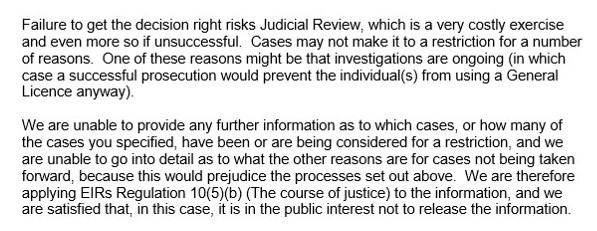
Anyway, back to the hen harrier. We weren’t happy that Natural England was withholding information on what was probably a publicly-funded satellite tag so we submitted a formal FoI to request this information. We managed to find out some details:

Why Natural England didn’t release this information when we first asked for it is anybody’s guess – just following its normal practice of putting obstacles in the way, hoping that we’d shuffle off and forget about it, probably.

Anyway, we now know that this missing hen harrier is ‘John’, who was tagged on 8 July 2016 in Northumberland. We blogged about John in February 2017 (see here) – he was the mystery hen harrier about which little was known. We still don’t know very much about him because Natural England has chosen to remain silent on his movements over the last 14 months [but see UPDATE below], although from the updated spreadsheet that Natural England published in September, we know that his tag was transmitting in September 2017 in Northumberland. See: hen-harrier-tracking-data-2002-onwards

We also know that Natural England realised John’s tag was no longer transmitting on 5 October 2017 and that North Yorkshire Police conducted a search for him ten days later (15 Oct 2017) on a grouse moor in the Yorkshire Dales National Park. What we still don’t know is the name of this grouse moor and whether North Yorks Police found any evidence such as a tag or a corpse.

We’ll be submitting an FoI to North Yorkshire Police to ask about this – it’ll be very interesting to see the response. North Yorkshire Police appear to have upped their game recently in terms of investigating suspected raptor persecution crimes – a very welcome and much-needed change of pace in England’s leading raptor-killing county. Let’s see how open they’ll be about this latest investigation.

Meanwhile, it’s time to update the list of what hapened to the satellite-tagged hen harrier class of 2016, which includes harriers tagged by Natural England and the RSPB:

Hen harrier Elwood – ‘disappeared’ in the Monadhliaths just a few weeks after fledging, presumed dead (Aug ’16).

Hen harrier Brian – ‘disappeared’ in the Cairngorms National Park just a few weeks after fledging, presumed dead (Aug ’16).

Hen harrier Donald – missing in northern France, presumed dead (Autumn ’16).

Hen harrier Hermione – found dead on Mull, believed to have died from natural causes (Sep ’16).

Hen harrier Rowan – found dead in Yorkshire Dales National Park. He’d been shot (Oct ’16).

Hen harrier Tarras – ‘disappeared’ in the Peak District National Park, presumed dead (Oct ’16).

Hen harrier Beater – missing in Scottish Borders, presumed dead (Nov ’16).

Hen harrier Bonny – ‘disappeared’ in the North Pennines, presumed dead (Dec ’16)

Hen harrier Mick – ‘disappeared’ in the Yorkshire Dales National Park, presumed dead (Dec ’16).

Hen harrier Carroll – found dead in Northumberland, PM revealed a parasitic disease & two shotgun pellets (Jan ’17).

Hen harrier John – ‘disappeared’ in the Yorkshire Dales National Park, presumed dead (Oct ’17)

Eleven down, six to go (Aalin, DeeCee, Finn, Harriet, Wendy, Sorrel).

UPDATE 20 November 2017: Thanks to the blog reader who pointed out that John had been recorded at Langholm in the summer of 2017, as mentioned in the hen harrier update on the Langholm Demonstration Project website on 28 June 2017 – here.

UPDATE 22 November 2017: Threshfield Moor named as missing hen harrier John’s last known location (here)

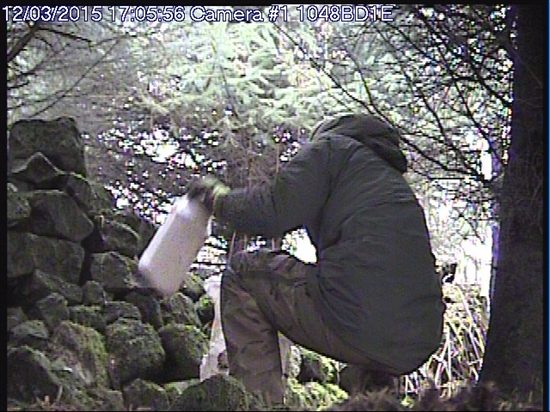
Police Scotland silent after armed masked men filmed at raptor nest in public forest

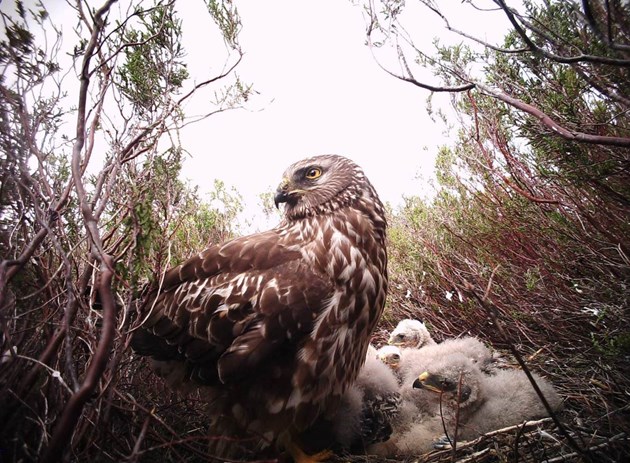
Forestry Commission Scotland staff routinely install cameras at the nests of several raptor species (e.g. goshawk, osprey, golden eagle, hen harrier, buzzard) to undertake dietary studies and to help identify individually-marked birds by their colour rings. If the cameras happen to film anything suspicious at these nests (e.g. unlicensed visits by armed criminals) the footage would be admissible in any subsequent prosecution because the cameras are placed with landowner permission and there are warning signs alerting visitors that cameras are in use in these public forests.

We submitted an FoI to Forest Enterprise Scotland to find out how many incidents of suspected disturbance had been filmed at raptor nests in Forestry Commission Scotland woodland this year.

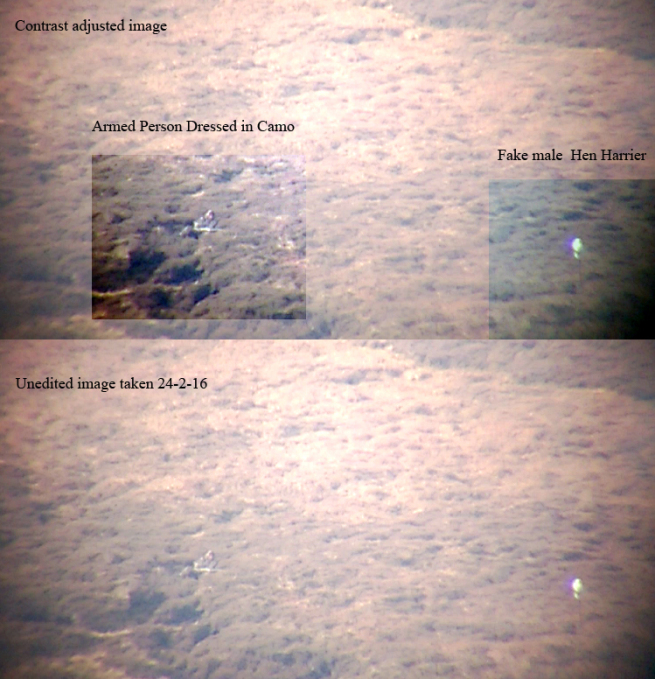
According to the FoI response, one incident was captured this year involving “two masked people within 30m of a [raptor] nest site, one carrying a firearm”.

FES refused to name the forest and also withheld details about the raptor species involved, because “the disclosure of this information would adversely affect the protection of the environment to which the information relates“. The incident was reported to Police Scotland.

So, in spring this year, an armed, masked gunman and a masked accomplice were filmed in a public forest near a raptor nest site, and it’s now November and we’ve heard absolutely nothing about it from Police Scotland.

Suspected disturbance of a raptor nest site is one thing, but being armed and masked in a public forest takes this to a whole other level.

Have Police Scotland identified the masked, armed gunman and his masked accomplice? If not, why hasn’t there been a public appeal for information?

Why hasn’t the camera footage been released?

Doesn’t Police Scotland think that the general public should be warned that an armed, masked gunman and a masked accomplice have been filmed wandering around in a public forest? What about warning dog walkers, cyclists, runners, birdwatchers, families on recreational visits, that they are at risk of bumping in to someone wearing a balaclava and brandishing a firearm? Isn’t this a serious threat to public safety?

It just beggars belief.

UPDATE 30 December 2017: Masked gunmen at goshawk nest in Moy Forest (here)

Concerns about toxic lead ammunition “nonsense” according to Botham

A few weeks ago Ian Botham featured in an article published by The Times, in which it was reported Botham had accused the RSPB of being “dishonest” (see here).

The Times article was apparently based on an interview that Botham had done with the Shooting Gazette. Thanks to one of our blog readers, we now have a PDF copy of that Shooting Gazette interview:

Shooting Gazette Nov 17 Ian Botham Article

It’s well worth a read to find out Botham’s views on what changes he would make to the RSPB and how the You Forgot the Birds campaign will “never stop“.

But the question and answer we were most interested in was this:

Shooting Gazette question: Are there any issues about shooting in the UK that concern you?

Botham’s answer:One of the things that needs to be looked at is the nonsense about lead [ammunition]. It’s been blown totally out of proportion“.

Unfortunately, Botham doesn’t identify which part of the vast expanse of scientific evidence about the danger of toxic lead to humans, wildlife & the environment he thinks is “nonsense”.

Perhaps its the findings of this eminent group of international scientific professors and researchers?

Perhaps its the findings of this eminent group of international scientific researchers?

Perhaps its the findings of this eminent group of scientific researchers?

Perhaps its the findings of the international scientific experts who contributed to the Oxford Lead Symposium?

Perhaps its the findings of the Lead Ammunition Group?

Perhaps its the advice of the Food Standards Agency?

Perhaps its the guidelines of Fareshare?

Perhaps its the findings of the European Food Safety Authority?

Hmm. Should we believe the evidence of hundreds of scientific experts, including The Lord Krebs kt, MA, DPhil, FRS, FMedSci, Hon DSc, or should we believe the opinion of the King of Bollocks?

It’s a tricky one.

Scot Gov’s grouse moor management review: Chair announcement imminent

It looks like the Scottish Government is about to announce the Chair and members of the much-anticipated independent review group that will be tasked with considering the environmental impacts of grouse moor management techniques and to recommend options for regulation, including licensing.

Back in October 2017, the Scottish Parliament’s Environment Committee agreed to write to Environment Cabinet Secretary Roseanna Cunningham to ask for an update on the establishment of this review group, which had first been announced on 31 May 2017. They asked her to respond by 10 November 2017.

Last Friday (10 Nov), the following letter was published on the Environment Committee’s website:

The Cabinet Secretary told the Committee, “I can inform you that I expect to announce the chair and members of the group within the next couple of weeks“. We groaned a little bit, thinking we’d have to wait until late November for this announcement, but then we noticed the date of Roseanna’s letter: 1 November 2017.

That means we can expect this announcement either today (13th) or tomorrow (14th), if she keeps to her word.

UPDATE: 20 November 2017: Scottish Government dragging its feet on grouse moor management review (here)

More crayons than credibility at GWCT HQ

The Game & Wildlife Conservation Trust (GWCT) has responded to the publication of the RSPB’s 2016 Birdcrime report with an extraordinary blog, attributed to Director of Communications, Andrew Gilruth.

Read it here.

Someone’s been busy with the crayons, creating a bizarre graph showing the number of incidents reported to the RSPB, but totally ignoring the main graph in the Birdcrime report which shows an increasing long-term trend in the number of confirmed raptor persecution incidents.

GWCT graph:

Actual graph from RSPB’s Birdcrime report:

And clearly, Andrew was so busy with his colouring crayons that he lost concentration for a while and mis-read the number of confirmed incidents of bird of prey persecution in 2016 (which was 81) and instead wrote, “The RSPB report reveals that there were 46 confirmed incidents involving birds of prey & owls last year“.

He then goes on to misrepresent the objectives of the Langholm Project (and is taken to task by the RSPB’s Duncan Orr-Ewing in the comments section below the blog) and then talks about how GWCT is working to understand “what management approaches, including additional licensed management, would lead to less crime“. What he means by ‘additional licensed management’ probably isn’t the introduction of a regulatory system to licence game shoots; he’s probably talking about getting licences that would allow gamekeepers to kill raptors, which has been a long-held ambition of the GWCT (e.g. see here)

We shouldn’t really be surprised by the GWCT’s response to the Birdcrime report; GWCT has, in our opinion, moved so far away from being a recognisably credible and respected scientific organisation that we don’t expect anything but spin these days. However, this latest response just serves to isolate the GWCT even further, especially with the recent outpouring of condemnation of illegal raptor persecution from authorities like the Yorkshire Dales National Park Authority (here), Nidderdale AONB (here), Peak District National Park Authority (here) and the Forest of Bowland AONB (here). Even the British Association of Shooting & Conservation (BASC) has acknowledged that raptor persecution is game-shooting industry-driven problem (here), which leaves GWCT lagging well behind.

Still, credit where it’s due, the GWCT is helping the economy by maintaining jobs in the crayon manufactoring industry.

Buzzard shot in Barnsley: South Yorks Police abandons case, RSPB appeals for info

RSPB press statement:

Buzzard shot in Barnsley sparks investigation

A buzzard found illegally shot in a wood near Barnsley has prompted concern by the RSPB and police.

A local birder saw the bird fall out of a tree in Warren Wood, Stainborough on 9 August and reported it to the RSPB’s Investigations unit (crime@rspb.org.uk). An RSPB investigator recovered the bird and it was taken for an X-ray. The X-ray identified a broken wing and a shotgun pellet lodged in the wing, which was deemed to have caused the break.

The wound was thought to be several days old and had become infected, so sadly the bird had to be euthanized.

It is illegal to intentionally kill or harm any bird of prey, which are protected under the Wildlife and Countryside Act 1981. To kill or injure one is a criminal offence and could result in an unlimited fine or up to six months in jail.

The incident was reported to police immediately, and last week the RSPB was informed that the enquiry had concluded with no prosecution. The RSPB is now appealing to the public for information.

The RSPB’s recent Birdcrime report, published on 1 November 2017, revealed that the illegal shooting, trapping and poisoning of birds of prey is a big problem in Yorkshire. Last year the RSPB received reports of 153 incidents of wild bird crime in the North England Region: this was 33% of the total incidents for the UK and the highest number for any region. 10 of these occurred in South Yorkshire, and many more are suspected to have taken place unseen and undetected. The report also revealed that there were no prosecutions for bird of prey persecution in the whole of 2016.

David Hunt, RSPB Investigations Officer, recovered the body.

David said: “It is sickening to think that this bird was deliberately shot. Seeing a buzzard soaring high in the sky or picking up worms from a freshly-turned field is part of the joy of a walk in the countryside. However majestic birds like these are, more often than people realise, being intentionally and brutally killed in Yorkshire, and is a cause for local concern. This is not the first time I have been called out to a case like this and unfortunately it is often very hard to find out who is responsible. If you do have information, please come forward.”

The RSPB is offering a £1,000 reward for information that leads to a successful conviction. If you have any information relating to this incident, call South Yorkshire Police on 101 quoting reference number 617 10082017.

ENDS

Warren Wood, where the injured buzzard was found is within the grounds of Stainborough Park and Wentworth Castle. Warren Wood forms part of Broom Royd Wood (see point 8 on this map) where visitors are encouraged to “visit in spring for a beautiful display of bluebells“.

Wentworth Castle and its parkland was open to the public but now appears to have closed to visitors, according to the website.

What’s really interesting about this case though is how South Yorkshire Police have responded to it. The RSPB press statement says the “incident was reported to the police immediately“, which presumably means on 9th August 2017 when the bird was found. And yet now South Yorkshire Police have told the RSPB that the enquiry has concluded and there’ll be no prosecution.

So how come South Yorkshire Police didn’t launch a public appeal for information back in August? How come the Police enquiry ‘has concluded’ without asking for the public’s help to identify a suspect? That’s pathetic, and only serves to highlight the importance of reporting suspected raptor persecution crimes to the RSPB as well as to the Police. Had the RSPB not been informed about this particular crime, we’d all be none the wiser and the crime probably wouldn’t have made it on to the ‘official’ list of reported wildlife crimes.

Well done RSPB for keeping the public informed.

UPDATE 14.50hrs:

South Yorkshire Police haven’t got a clue. This has just appeared on Twitter:

Chair of Bowland AONB condemns illegal raptor persecution

Following the recent publication of the RSPB’s 2016 Birdcrime report, it has been very encouraging to see a steady stream of public statements of condemnation of illegal raptor persecution from various organisations that previously have been pretty quiet on the subject, unless prodded with a large stick. This is indicative of increased public awareness of the issue, and subsequent public pressure demanding change.

First there was the Yorkshire Dales National Park Authority (here), then the Chair of the Nidderdale Area of Outstanding Natural Beauty (AONB) (here), then the Peak District National Park Authority (here), and now the Chair of the Forest of Bowland AONB has joined in:

Statement on Persecution of Birds of Prey

7 November 2017

The Forest of Bowland AONB is an important area for the birds of prey that we associate with the English uplands, such as hen harrier, peregrine, merlin and short-eared owls.  However, the RSPB Birdcrime Report 2016 published last week highlights how some of these iconic species continue to be the subject of illegal acts of persecution throughout much of England and particularly the northern uplands.

The Chair of the Forest of Bowland AONB Joint Advisory Committee, County Councillor Albert Atkinson stated:

“It is particularly concerning to the Committee that these acts of illegal persecution continue; badly affecting the populations of birds of prey that are synonymous with the Forest of Bowland. These acts undoubtedly have an impact on the reputation of Bowland as an ‘Area of Outstanding Natural Beauty’.   The Committee unreservedly condemns all illegal persecution of birds of prey.  The AONB will continue to work closely with landowners, the police, RSPB and Natural England to help protect and conserve birds of prey across the area.”

If you wish to report any crimes against wild birds, we would suggest contacting the police by calling 101.

ENDS

We don’t remember ever seeing a public statement on this issue from the Forest of Bowland AONB, despite this being an area notorious for illegal raptor persecution.

Bowland AONB sign, as adapted by Mark Avery

And yes, we have been critical of the actual content of some of these recent public statements (e.g. see here and here), but we’re not going to criticise the intention behind the statements, nor the fact that these statements have been published on these organisations’ respective websites. By announcing these statements on the National Park and AONB websites, the messages of condemnation will reach a wide audience, including many who may previously have been unaware that illegal raptor persecution was even a ‘thing’, let alone a ‘thing’ going on inside these supposedly protected areas.

Well done, Cllr Albert Atkinson of the Forest of Bowland AONB. There’s still a LOT more to do at Bowland, and it will need more than just words, but this is an excellent start.

Peak District National Park Authority responds to RSPB’s 2016 Birdcrime report

The Peak District National Park Authority has issued a statement in reponse to the publication of the RSPB’s 2016 Birdcrime report.

Sarah Fowler, chief executive of the Peak District National Park, said: “Killing birds of prey is illegal. I am appalled by the persecution of any protected species, no matter what the circumstances.

The RSPB’s latest Birdcrime report brings the plight of birds of prey to the fore. It shows what we are up against in trying to reverse the fortunes of birds of prey. I welcome the recent acknowledgement from shooting organisations that the killing of raptors to protect game birds is part of the problem. It is – and it is damaging to their interests. I welcome and wholeheartedly support their condemnation of such activity.

Being able to watch birds of prey in the Peak District National Park should be part of everyone’s experience.

We have been working with landowners, gamekeepers and partners since 2011 to remedy the situation locally but it is clear from the results that much more needs to be done.

This year peregrines have failed to breed in the Dark Peak for the first time since they recolonised in 1984 and persecution of these incredible birds has been a factor in this. This has to change.

It is incredibly difficult to catch someone in the act or to collect evidence and make a case for prosecution. I appeal to all users of the countryside to help us bring persecution to an end by reporting anything you feel is suspicious to the police. The best hope we have is for law-abiding people within the game bird industry calling out those who operate outside the law.

The Peak District Birds of Prey Initiative will shortly be publishing a report documenting the fortunes of key birds of prey alongside confirmed or suspected incidents of persecution in the moorland areas of the Peak District during 2016 and 2017. On the back of this report, I will look for a renewed commitment from moorland owners and managers in the Peak District to work with us to reverse the fortunes of birds of prey – and a strengthening of this commitment. We cannot achieve this on our own.”

Anyone with information to report about wildlife crime should contact Derbyshire Police on 101 or Crimestoppers on 0800 555111.

ENDS

Photo of an osprey found in the Peak District National Park in September 2015. It had two broken legs and succumbed to these injuries soon after being found. The post-mortem stated its injuries were consistent with being caught in a spring trap (Photo by RSPB)

It’s good to see strong condemnation of continued illegal raptor persecution from the Peak District National Park Authority, although, coming a week after the publication of the Birdcrime report it does have a whiff of ‘Oh God, everyone else has commented, we’d better say something too’. Nevertheless, better late than never.

We also appreciate Sarah Fowler’s acknowledgement that the 7-year-long Peak District Bird of Prey Initiative has been a complete and utter failure. She didn’t actually say that – she said, “It is clear from the results that much more needs to be done“, and, with the imminent publication of the Initiative’s 2016 and 2017 annual reports, she said “I will look for a renewed commitment from moorland owners and managers in the Peak District to work with us to reverse the fortunes of birds of prey – and a strengthening of this commitment“.

Hang on. Wasn’t ‘renewed commitment’ from project partners promised in 2015 when the Initiative’s five-year targets had all failed to be met? Ah yes, so it was. And yet, despite that ‘renewed commitment’ we’ve seen continued evidence of illegal raptor persecution within the National Park and now we learn that “This year peregrines have failed to breed in the Dark Peak for the first time since they recolonised in 1984 and persecution of these incredible birds has been a factor in this“.

We don’t want ‘renewed commitment’ from so-called project partners. It’s meaningless bollocks that nobody believes anymore. We’re sick of hearing it and sick of statutory agencies using it to pretend that everything’s going to be ok.

The Peak District National Park Authority needs to start calling out these grouse moor owners, managers and agents, by name, instead of shielding them and their criminal activities within this charade of partnership-working.

General Licence restriction – the Raeshaw Estate fiasco continues…

Good grief. Just when you thought this pantomime couldn’t get any more ridiculous….

As many of you will know, Raeshaw Estate in the Scottish Borders was one of the first in Scotland to be subjected to a General Licence restriction, issued in 2015, based on clear police evidence that wildlife crimes had been committed although there was insufficient evidence to prosecute any individual (see here). The estate contested the legality of SNH’s decision and this was seen as a test case, which went to Judicial Review in 2016. In March this year, the Court of Session upheld SNH’s decision and the General Licence restriction was considered lawful (here).

Here is a map showing the location of Raeshaw Estate, near Heriot in south Scotland (estate boundary details sourced from Andy Wightman’s Who Owns Scotland website).

For background, there’s been a long history of raptor persecution “nr Heriot“, dating back to at least 2001. Here’s a list we’ve compiled of confirmed raptor persecution crimes, listed in RSPB annual reports and / or the press:

2001 May: poisoned buzzard (Carbofuran) “Heriot Dale”. No prosecution

2003 Feb: poisoned buzzard (Carbofuran) “Heriot”. No prosecution

2003 Mar: poisoned buzzard (Carbofuran) “Heriot”. No prosecution

2003 Apr: poisoned buzzard (Carbofuran) “Heriot”. No prosecution

2003 Nov: poisoned buzzard (Carbofuran) “Heriot”. No prosecution

2004 Feb: Carbofuran (possession for use) “Heriot”. No prosecution

2004 Feb: two poisoned buzzards (Carbofuran) “Heriot”. No prosecution

2004 Oct: poisoned buzzard (Carbofuran) “Heriot”. No prosecution

2005 Dec: poisoned buzzard & raven (Carbofuran) “Heriot”. No prosecution

2006 Sep: poisoned buzzard (Carbofuran) “Heriot”. No prosecution

2006 Oct: poisoned buzzard (Carbofuran) “Heriot”. No prosecution

2009 Mar: two poisoned buzzards (Carbofuran) “nr Heriot”. No prosecution

2009 Jun: poisoned red kite (Carbofuran) “nr Heriot”. No prosecution

2009 Jun: 4 x poisoned baits (2 x rabbits; 2 x pigeons) (Carbofuran) “nr Heriot”. No prosecution

2010 Nov: poisoned buzzard (Carbofuran) “nr Heriot”. No prosecution

2011 Jan: poisoned buzzard (Carbofuran) “nr Heriot” No prosecution

2013 Jun: shot + poisoned buzzard (Carbofuran) “nr Heriot”. No prosecution

2014 May: crow trap baited with two live pigeon decoys “nr Heriot”. No prosecution (but General Licence restriction applied in Nov 2015)

2014 May: four set spring traps beside live pigeon decoy “nr Heriot”. No prosecution (but General Licence restriction applied in Nov 2015)

2014 May: four shot buzzards “nr Heriot” No prosecution

2015 Jul: shot buzzard “found by side of road between Heriot and Innerleithen” according to media reports (see here). No prosecution

Interestingly, also not included in the RSPB’s annual reports but reported by the Southern Reporter (here) and the Guardian (here), a police raid on Raeshaw Estate in 2004 uncovered nine dead birds of prey, including five barn owls, two buzzards, a kestrel and a tawny owl, described as being “poisoned or shot“. In addition, “a number of illegal poisons were discovered but no-one was ever prosecuted“. According to both these articles, during a further police raid on Raeshaw Estate in 2009 ‘three injured hunting dogs were seized by the SSPCA on suspicion of involvement with badger baiting’. We don’t know whether that resulted in a prosecution.

Also not included in the above list is the sudden ‘disappearance’ of a young satellite-tagged hen harrier in October 2011. This bird had fledged from Langholm and it’s last known signal came from Raeshaw Estate. A search failed to find the body or the tag.

Raeshaw Estate (photo by RPUK)

Once the General Licence restriction was in place in 2015, Raeshaw Estate applied for, and was granted, a number of individual licences, allowing them to continue to carry out various ‘management’ activities (killing corvids and other so-called ‘pest’ species) but under closer scrutiny than they would have been subjected to under the General Licence. We know that between July and August 2016, at least 1,000 birds (294 rooks, 706 jackdaws) were lawfully killed under the auspices of these individual licences (see here). It looked like business as usual for this grouse-shooting estate, even with a General Licence restriction in place.

In 2017 Raeshaw Estate successfully applied for more individual licences that would allow them to continue this lawful wildlife-killing spree. However, in May 2017 after a spot check on the estate by SNH staff, SNH announced it had revoked an individual licence on Raeshaw Estate following the discovery that the terms of the individual licence had allegedly been breached (see here). SNH also reported suspected wildlife crimes to Police Scotland; we await news on this.

Good, we thought. The General Licence restriction was still in place (until Nov 2018) and now the individual licence had been revoked, so we assumed, naively, that Raeshaw Estate would no longer be permitted to kill wild birds during this period.

How wrong we were.

In early October 2017 we submitted an FoI to SNH to ask a series of questions about this issue. Amongst other things, we wanted to know for how long the individual licence had been revoked, and we also wanted to know whether the Estate’s General Licence restriction would be extended beyond the initial three-year period (Nov 2015-Nov 2018) given that further alleged breaches, and suspected wildlife crimes, had been discovered. SNH’s framework for dealing with General Licence restrictions explicitly states that a restriction may be extended in these circumstances:

Where, during a period of restriction, new evidence is received by SNH which provides reason to believe that wild birds have been killed and / or taken, there is intention to do so, other than in accordance with the terms of a Licence and the Licensing manager considers that the existing restriction should be extended, the Licensing Manager will recommend to the Wildlife Operations Manager that the existing restriction be extended“.

Well, guess what? Raeshaw Estate’s original General Licence restriction has NOT been extended – why the hell not?

And even more jaw-dropping, it turns out that even though SNH has revoked one individual licence, Raeshaw Estate can simply apply for another one, and another one, and another one, ad infinitum!!!

Here’s SNH’s response to our FoI:

How on earth is this allowed to go on?

It could be argued that SNH is simply following the General Restriction framework guidelines (in terms of considering further individual licence applications), and we have some sympathy with that, but, presumably SNH was involved in the drafting of these guidelines and even if they hadn’t noticed this glaring loophole at the time of drafting, it’s surely apparent now and SNH should be pushing for an urgent revision. And it does not explain why SNH has not extended Raeshaw Estate’s original General Licence restriction. If SNH has identified alleged breaches that were considered sufficient evidence to result in a revocation of an individual licence, why are these alleged breaches not considered sufficient evidence to extend the original General Licence restriction, as per the SNH guidelines?

It could also be argued that even though Raeshaw Estate is allowed to apply for as many individual licences as it likes (despite these repeated alleged licence breaches and alleged wildlife crimes), SNH may refuse to grant any more. We do know, from correspondence between Raeshaw Estate’s lawyer and SNH, released as part of our FoI resonse, that Raeshaw Estate was planning to submit another individual licence application “for 3 cage traps in order to control rooks in particular which were spoiling feeders for pheasants“. We have submitted another FoI to determine whether SNH has granted any further individual licences, even though there is yet another on-going criminal police investigation in to alleged wildlife crimes on this estate.

Watch this space.