SNH claims ‘not in public interest’ to explain decisions on General Licence restrictions

The ability for Scottish Natural Heritage (SNH) to impose a General Licence (GL) restriction order on land where there is evidence of raptor persecution taking place came in to force on 1 January 2014. This measure, based on a civil burden of proof, was introduced by then Environment Minister Paul Wheelhouse in response to the continuing difficulties of meeting a criminal burden of proof to facilitate a criminal prosecution.

Four years on, SNH has only imposed four GL restrictions. The first two were imposed in November 2015 (one for Raeshaw & Corsehope Estates in the Borders and one for Burnfoot & Wester Cringate Estates in Stirlingshire). Then there was a temporary halt for almost two years as Raeshaw & Corsehope Estates made a legal challenge which resulted in a judicial review in January 2017. The court’s decision was announced in March 2017 and SNH was found to have acted properly and lawfully. Since that decision was announced in March 2017, SNH has imposed two more GL restrictions: one for Edradynate Estate in Perthshire in September 2017 and one for an unnamed mystery gamekeeper in Aberdeenshire in September 2017.

In early October 2017 we submitted an FoI request to SNH to find out how many more cases were currently under consideration for a GL restriction. We were pretty shocked with the response:

“At the time of your request, no General Licence restrictions were under consideration”.

This surprised us as we knew of at least nine other cases that would potentially qualify for a GL restriction. Those nine cases were as follows:

Newlands Estate, Dumfriesshire. Gamekeeper William (Billy) Dick was convicted in 2015 for killing a buzzard on the estate in April 2014. He had thrown rocks at it and then stamped on it. The estate owner, Andrew Duncan, was prosecuted for alleged vicarious liability but then the Crown Office dropped the prosecution in April 2017, saying it wasn’t in the public interest to proceed (see here).

Brewlands Estate, Angus Glens. A gamekeeper was prosecuted for the alleged repeated setting of a pole trap on this estate between 9-17 July 2015. The Crown Office dropped the prosecution case in April 2017 because the video evidence was deemed inadmissible (see here). Another gamekeeper on this estate thought this result was hilarious.

Unnamed pheasant-shooting estate, Lanarkshire. In September 2015 a set pole trap was discovered on a bench directly outside a pheasant-rearing pen on an unnamed estate. Police Scotland apparently dropped the case, for unknown reasons.

Gamekeeper in Ayrshire. In May 2016 a named gamekeeper was charged after allegedly being caught using gin traps on a neighbouring farm of the estate on which he was employed. The Crown Office dropped the prosecution in March 2017 after reportedly ‘getting the dates wrong on its paperwork’ (see here).

Invercauld Estate, Aberdeenshire. In June 2016, walkers discovered a number of illegally-set spring traps staked out on a grouse moor. Two of the traps had caught a Common Gull by the legs. The bird had to be euthanised. There was no prosecution. ‘Some action’ was taken by the estate but whatever this action was it has remained a closely-guarded secret between the estate, the Cairngorms National Park Authority and the Scottish Government (see here).

Glendye Estate, Aberdeenshire. In January 2017 a number of illegally-set spring traps were discovered on a grouse moor on this estate. The Estate Factor and gamekeeper reportedly removed the traps and denied all knowledge of who had set them (see here). According to Police Scotland, there was insufficient evidence for a prosecution.

Leadhills Estate, South Lanarkshire. On 4th May 2017, witnesses observed the alleged shooting and killing of a hen harrier on this estate. Police Scotland appealed for information (see here & here). As far as we’re aware, there are no impending prosecutions.

Leadhills Estate, South Lanarkshire. On 31 May 2017, witnesses observed the shooting and killing of a short-eared owl on this estate. The corpse was retrieved and sent for a post-mortem. Police Scotland appealed for information. As far as we’re aware, there are no impending prosecutions.

Unnamed grouse shooting estate, Monadhliaths. On 7 June 2017, a member of the public found a buzzard caught in an illegally-set spring trap that had been staked out on an unnamed grouse moor in the Monadliaths. The buzzard was released. Police Scotland appealed for information. Inspector Mike Middlehurst of Police Scotland commented, “Unfortunately, there are some who continue to deliberately target birds of prey; there is nothing accidental in the setup of these traps“. As far as we’re aware, there are no impending prosecutions.

In late October 2017 we submitted another FoI to SNH to ask about these specific cases, to find out if any were under consideration for a GL restriction and if not, why not.

SNH has now responded as follows:

Part of this response makes sense, but part of it makes no sense at all.

As we’ve said on this blog before, it’s perfectly right and understandable that if SNH is actively considering a GL restriction for a particular estate or individual, then those details should not be published until the decision to impose a GL restriction has been made and the estate/individual has had a chance to appeal that decision. We fully accept that position. [And we note that according to the above response, SNH is now actively considering two cases for a potential GL restriction, although we don’t know whether those two cases are included in our list of nine potential cases. Time will tell].

However, if a decision has been made NOT to impose a GL restriction, for whatever reason, we do not accept, as SNH claims, that publishing that information would ‘prejudice the process’. How could it, if the decision has already been made?

We also don’t accept, as SNH claims, that ‘it is in the public interest not to release the information’. How can this lack of transparency possibly be in the public interest?

Defining what is meant by ‘public interest’ is a tricky thing to do. This article from The Guardian in 2012 provides an excellent overview from the perspective of various journalists and explains that it can be more of a philosophical interpretation rather than a definition set out by statute. However, the Press Complaints Commission defines it as ‘including but not confined to detecting and exposing crime, or serious impropriety; protecting public health and safety and preventing the public from being misled by an action or statement of an individual or organisation‘.

In the nine cases we’ve listed above, information about the crimes that were allegedly committed are already in the public domain, so it’s difficult for us to understand that if SNH has made a decision NOT to consider a GL restriction in any of those cases, why SNH believes it to be in the public interest NOT to explain those decisions.

We’ll be appealing SNH’s decision to withhold this information from the public.

High risk of eating contaminated red grouse after inadequate safety checks

Intensive grouse moor management not only has catastrophic consequences for the environment (and especially for raptors), but the end product carries serious public health risks, too.

A couple of years ago we wrote a blog about the use of medicated grit to dose red grouse with a parasitic wormer drug called Flubendazole.

There is a statutory requirement to remove veterinary drug residues from food destined for human consumption no later than 28 days before the food is available for sale.

We’d learned that the use of medicated grit on grouse moors was largely unregulated (surprise!), that some grouse moor managers were using a super-strength drug that was 10 times, and sometimes 20 times, the strength permitted for use in the UK, and, most incredibly, that the Government’s statutory agency (Veterinary Medicines Directorate (VMD)) responsible for monitoring meat to ensure harmful drugs are not entering the human food chain, had not ever tested a single red grouse for residues of Flubendazole because, staff said, they didn’t know where to find dead red grouse (see here).

Photo of a medicated grit tray on a Yorkshire grouse moor, by Ruth Tingay

Prompted by our investigation, the VMD said it would begin to screen recently shot red grouse for veterinary drug residues in 2016, but that VMD staff wouldn’t visit grouse moors to examine whether medicated grit had been withdrawn within the statutory 28-day period because that was beyond their remit. Instead, they would rely on the grouse moor managers to act within the law (ha!).

We followed up on the new testing regime and in 2016 we learned that the VMD had managed to screen a pathetic total of six (yes, six!) red grouse in the whole of the UK (4 in England, 2 in Scotland), out of a conservatively estimated 700,000 shot birds.

Last month, at the end of the 2017 grouse shooting season, we asked the VMD how many red grouse they’d managed to test for veterinary residues in 2017. Here’s their response:

Are they taking the piss? Eight red grouse tested in the whole of the UK? That’s hardly reassuring for consumers, is it?

And once again, the VMD claims not to know the origin of the birds it tested. Talk about incompetent. What if one of those birds had tested positive for residues of Flubendazole? The VMD wouldn’t have been able to take follow-up action because they wouldn’t have known the name of the grouse moor on which the bird had been shot!

So, yet another reason not to risk your health by eating potentially contaminated red grouse. Not only might it contain unknown quantities of the anti-parasitic worming drug Flubendazole, it might also contain:

  • Excessive amounts of toxic poisonous lead (over 100 times the lead levels that would be legal for other meat – see here)
  • Unknown quantities of the veterinary drug Levamisole hydrochloride (also used in chemotherapy treatment for humans with colon cancer – see here)
  • Unknown quantities of the pesticide Permethrin (used topically to treat scabies and pubic lice; probably not that great to ingest – see here)
  • There’s also a high risk the grouse will be diseased with Cryptosporidiosis (see here).

Two shot red grouse ready for cooking, yum yum. Photo by Ruth Tingay

Time for the filthy grouse shooting industry to be better regulated? God, it’s well overdue. You can sign this new petition calling for the introduction of a licensing scheme for driven grouse moors, here.

If you think licensing wouldn’t go far enough, you can also sign this new petition calling for a total ban on driven grouse shooting, here.

These two petitions apply only to England. The Scottish Government is way ahead of the Westminster Government on this issue and an independent review of grouse moor management practices has just begun, and many of us anticipate that it will result in the almost inevitable conclusion that licensing needs to be introduced. We know the review group will be examining the use of medicated grit as part of its remit, and we expect the group to find these latest results from the VMD’s inadequate testing regime to be of great interest.

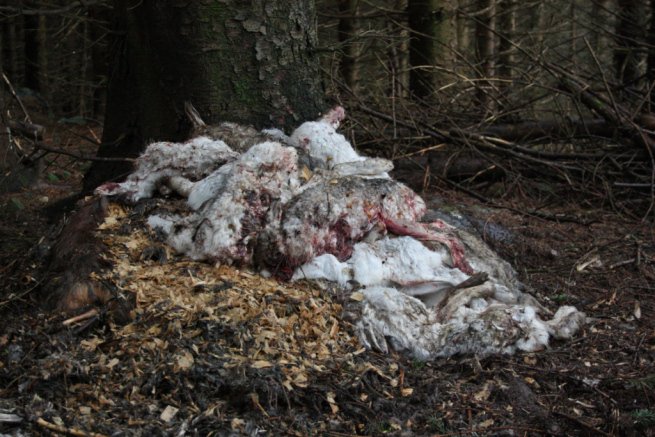
More shot pheasants dumped in North York Moors National Park

A couple of days ago we blogged about an article in the Gazette & Herald that showed sackfuls of shot pheasants that had been dumped in woodland in the North York Moors National Park (see here).

Here are some of the photographs the newspaper didn’t publish, presumably as they’re too grim. Thanks to the blog reader who sent them to us.

Welcome to the National Park!

Masked gunmen at goshawk nest in Moy Forest

The following article was published today in the Press & Journal:

For regular blog readers, this is a story we ran in November 2017 (here) when we’d found out through an FoI that a masked gunman and an associate had been caught on camera near a raptor nest at an undisclosed public forest in Scotland.

We were pretty shocked that Police Scotland had kept silent about this incident and, given public safety concerns, we encouraged blog readers to write to their local MSPs to ask questions about the (mis)handling of this case (here).

We also asked Justice Secretary Michael Matheson and the Minister for Community Safety & Legal Affairs, Annabelle Ewing, about this issue but neither bothered to respond.

Police Scotland did respond to some of our blog readers requests for information (see here) but refused to discuss the details or reveal the location. However, several local MSPs did commit to taking this up with the Police on behalf of their constituents.

At least one of those MSPs was as good as his word and we’ve recently received copies of correspondence between him and his constituents, which we’ll blog about early in the New Year.

For now, it is apparent that this political intervention has resulted in Police Scotland issuing an appeal for information (only 8 months too late) and revealing the location as Moy Forest, a site well known for being targeted by raptor killers.

Nobody will be surprised to learn that the land around Moy Forest is managed for intensive driven grouse shooting.

Well done to those blog readers who chased up this story, well done to those MSPs who followed up with the Police, and well done to Kieran Beattie at the P&J for taking it to press. But it’s pretty pathetic that we all had to go to such lengths to get Police Scotland to react. Not good enough.

There’s a lot more to talk about in relation to this incident and we’ll be returning to it in the New Year….

Teenage conservationists have pro-shooting MPs running scared

In November 2017, a small group of conservationists was invited to visit 10 Downing Street for a conversation about their environmental concerns with Sir John Randall, Theresa May’s recently appointed special advisor on the environment.

There’s nothing unusual about that. Conservationists routinely meet with advisors, MPs and Ministers to discuss such issues. But this was no ordinary group. It comprised a bunch of committed and environmentally aware teenagers, as follows:

Findlay Wilde, aged 15, schoolboy.

Jordan Havell, aged 16, schoolboy.

Josie Hewitt, aged 19, first year ecology student at University of East Anglia.

Georgia Locock, aged 18, first year ecology and economics student at University of York.

Incredibly, and hilariously, the discussion at this meeting, and subsequent correspondence between Sir John Randall and schoolboy Fin Wilde, has resulted in a number of pro-hunting/shooting MPs accusing Ministers of ‘plotting war on fieldsports’!

This was the headline for an article in yesterday’s edition of The Telegraph, heralded as an ‘exclusive’, no less:

The furore seems to have stemmed from somebody reading Fin Wilde’s most excellent blog (here) where he wrote about the meeting at Number 10 and shared some of his later non-confidential correspondence with Sir John.

If you actually read Fin’s blog, and the comments made by Sir John, you’ll see nothing there to suggest a ‘war’ on fieldsports, just a series of concerns held by most reasonable-thinking members of society and a desire for the game shooting industry to clean up its act.

Sir John shared many of Fin’s concerns, including the continued illegal killing of birds of prey on driven grouse moors, other environmentally damaging practices associated with intensively managed driven grouse moors, the need to increase sentences for wildlife crime, the removal of firearms certificates for those convicted of wildlife crime, the problems associated with the industrialisation of some pheasant shoots, the continued use of lead ammunition, educating children about climate change, the impact of Brexit on environmental legislation, and the continued single use of plastics.

You’d think that MPs would welcome such thoughtful contributions from a group of teenagers who care enough about the environment to stand up and exercise their democratic right to voice their concerns, wouldn’t you? These are engaged and motivated youngsters who are a credit to society.

But no! A number of (unnamed) MPs are apparently up in arms, feeling threatened and apparently feeling ‘privately appalled’ by it all!

What are they actually saying here? That they don’t think firearms certificates should be removed from convicted criminals? That the illegal killing of raptors on grouse moors doesn’t need to stop? That the use of lead ammunition doesn’t pose a serious health and environmental threat?

We were particularly taken aback that the Telegraph article noted that Georgia Locock ‘has marched in protest against grouse shooting‘. So what? Why mention it? Are they trying to portray Georgia as some sort of militant extremist whose views should be taken with a pinch of salt? They couldn’t be further from the truth.

It’s a shame the Telegraph article didn’t mention the pro-shooting MPs who were recently photographed smiling at a parliamentary reception held for the Moorland Association with a number of gamekeepers in attendance, one of whom has a criminal conviction for, er, wildlife crime on a driven grouse moor.

Well done Fin, Jordan, Josie & Georgia – keep going, you’re doing a terrific job.

UPDATE 4 January 2018: In response, Fin Wilde has written a brilliant open letter to the Telegraph’s Chief Political Correspondent, Christopher Hope. Read it here.

Significant spread of disease on intensively-managed driven grouse moors

Two new peer-reviewed papers from the GWCT confirm the significant spread of a disease in red grouse on intensively managed driven grouse moors, transmitted through the unregulated use of communal medicated grit trays.

The disease, respiratory cryptosporidiosis (also known as ‘Bulgy Eye’) has been, until recently, almost entirely associated with captive poultry flocks that have been kept at high density, usually for breeding purposes. It was first detected in wild red grouse in 2010 and since then has spread rapidly and has affected high density red grouse on half of the 150 grouse moors in northern England and has also been recorded in Scotland, although the extent of its spread in Scotland appears to be a well-kept secret. Perhaps we’ll learn more through the Scottish Government’s review of grouse moor management practices, particularly as one of the review group’s special advisors is Adam Smith from the GWCT.

We’ve known about the spread of this disease for a couple of years, and learned a great deal from a GWCT-led grouse moor seminar in 2015 where the preliminary research findings were presented (see here). The latest publications confirm the findings, although it’s worth bearing in mind the disease may well have spread further since these studies were conducted (2013-2015).

The first of the new papers was published in November 2017 and confirms that communal medicated grit trays distributed across grouse moors act as a reservoir for disease transmission via the faecal droppings of grouse visiting the trays:

Baines, D., Giles, M. & Richardson, M. (2017). Microscopic and Molecular Tracing of Cryptosporidium Oocysts: Identifying a Possible Reservoir of Infection in Red Grouse. Pathogens 6: 57.

This paper is open access which means we’re allowed to share it in full:

Crypto_Identifying infection reservoirs_red grouse_Baines et al2017

A typical grit tray contaminated with grouse faecal droppings on a Scottish grouse moor, photo by Ruth Tingay

The second paper has recently been accepted by the British Ornithologists Union journal Ibis and details the impact of Bulgy Eye on red grouse populations and highlights the economic loss this may cause to the driven grouse shooting industry:

Baines, D., Allison, H., Duff, J.P., Fuller, H., Newborn, D. and Richardson, M. (2017). Lethal and sub-lethal impacts of respiratory cryptosporidiosis on Red Grouse, a wild gamebird of economic importance. Ibis: accepted online 26 December 2017.

Unfortunately this paper is not open access so we’re only permitted to share the abstract (although we have read the full paper):

The significant spread of this disease is entirely of the grouse-shooting industry’s own making. If they weren’t so keen on cramming as many red grouse as possible on to their driven grouse moors (sometimes up to x 100 the natural density) and then using medicated grit to prevent the natural strongyle worm-induced grouse population crashes every few years (which they have successfully achieved), then Bulgy Eye should never have been a problem.

The question now is, what, if anything, are they going to do about it?

Presumably they’ll do something, if not in the interests of animal welfare or conservation, then certainly in the interest of stifling the economic losses caused by the widespread prevalence of this disease.

In the concluding remarks of the second paper, Baines et al say: “…. a general reduction in grouse densities, brought about through either de-intensified management, increased shooting rates or both may need to be carefully considered“.

May need to be considered? Good grief, you’ve got a disease epidemic on your hands, all of your own making, and you say these proposals may need to be considered?

We’d say the industry needs to do something pretty damn quickly, and the immediate removal of communal medicated grit trays should be right up there as the first obvious step.

Hundreds of shot pheasants dumped in sacks in North York Moors National Park

An article in yesterday’s Gazette & Herald reports how hundreds of shot pheasants have been dumped in sacks near Helmsley, in the North York Moors National Park.

The article (here) says a local rambler first found four sacks of dead gamebirds in Hawnby Road on 26 November 2017. The rambler returned to the site last week and reportedly found several hundred more dead pheasants piled up in heaps.

According to a quote attributed to Liam Stokes of the Countryside Alliance, “It is worth pointing out that these birds all appear to have been breasted – the breast meat has been removed. Of course the rest of the carcass should have been disposed of appropriately, but it does appear that the meat from these birds has in fact entered the food chain“.

Amazing how Liam can see that “all these birds appear to have been breasted”. Can he see inside the sacks? Has he examined every one of these hundreds of dumped birds? Or is he in fact just trying to exert some serious damage limitation because he knows how politically damaging these images are for the game shooting industry?

It’s not the first time shot gamebirds have been dumped as waste in the countryside – as we’ve seen before hereherehere. Indeed, it’s a growing problem for the game shooting industry, as we blogged about just last month (see here).

It’s bad enough that an estimated 50 million non-native pheasants and red-legged partridge are released, unregulated, in to the countryside every year (yes, that’s 50 million EVERY YEAR) for so-called sport shooting, including inside our national parks, but then to just dump them as a waste product is a PR disaster for an industry under increasing scrutiny for its environmentally damaging activities.

Have a read of this article written by Charles Nodder of the National Gamekeepers Organisation who revealed in July that even though many shoots are struggling to get their shot birds in to the food chain, they are still releasing (and shooting) more and more and more every year.

Responsible? No.

Sustainable? No.

In dire need of regulation? Yes.

UPDATE 31 December 2017: More shot pheasants dumped in North York Moors National Park (here)

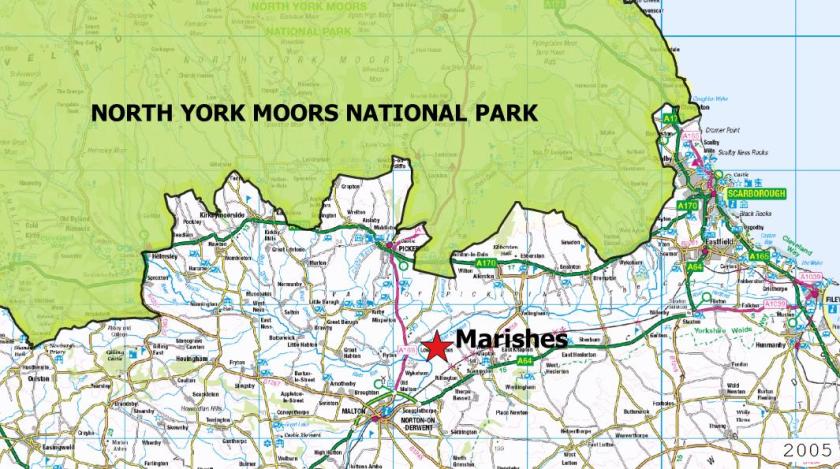
Kestrel found with shotgun injuries in Malton, North Yorkshire

Yet another illegally persecuted raptor in North Yorkshire, the raptor-killing capital of the UK.

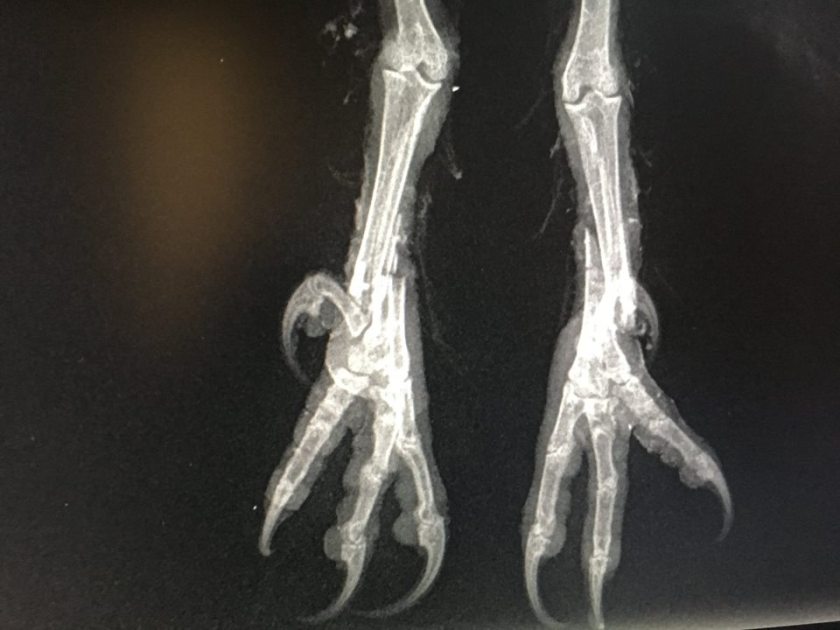
This kestrel was picked up on Christmas Day with shotgun injuries to its wing.

The bird was found close to Amotherby crossroads on Amotherby Lane, Malton, North Yorkshire. An x-ray by Mark Naguib of Battle Flatts Veterinary Clinic revealed the extent of its injuries and the bird is now in the care of the wonderful Jean Thorpe of Ryedale Wildlife Rehabilitation. (Please, consider making a donation HERE to help Jean’s outstanding voluntary work).

If you were in the area and heard a shot on Christmas Eve or Christmas Day, please contact police wildlife crime officer PC Jez Walmsley at Malton Police Station on 101.


‘Closer cooperation to protect hen harriers’ – what does that mean, exactly?

Further to a recent article published in The National where Hen Harrier Species Champion Mairi Gougeon MSP calls for ‘closer cooperation’ between conservationists and the game shooting industry ‘to protect hen harriers’ (see here), this deserves more comment.

We’ve given this some thought over the Xmas break and frankly, it’s a bloody affront to imply that conservationists are somehow partly responsible for the continuing decline of the hen harrier population.

Here’s what the driven grouse shooting industry does for hen harriers:

Illegally shoots them; illegally traps and bludgeons them to death; illegally poisons them; illegally burns out nest sites; illegally stamps on eggs & chicks; illegally uses dogs to kill chicks & then blames it on fox predation; sets illegal spring traps; sets illegal pole traps; waits at known roost sites & uses thermal imaging to detect & then shoot roosting birds; deploys gas guns at the onset of the breeding season to disturb; ignites banger ropes at the onset of the breeding season to disturb; deploys inflatable scarecrows with sirens at the onset of the breeding season to disturb; consistently denies the extent of illegal persecution; accuses conservationists of exaggerating the persecution data; blames disappearances on imaginary windfarms, faulty sat tags & disturbance by fieldworkers; uses fake partnerships to portray an image of conservation action; pays a PR company to put false and malicious propaganda in right-wing newspapers; claims not to know who the criminals are; gives ‘no comment’ interviews & creates a wall of silence in police investigations; accuses conservationists of planting evidence.

Here’s what conservationists do for hen harriers:

Nest monitoring; roost monitoring; nest protection schemes; ringing; satellite-tagging; surveying; data collection; data analysis; report writing; scientific paper writing; public engagement e.g. RSPB Skydancer, Hen Harrier Day; report suspected wildlife crimes; campaign for stronger law enforcement; campaign for industry regulation; raise public awareness of illegal persecution.

Conservationists are NOT the problem here. Conservationists are not the ones systematically and illegally killing this species whenever it turns up or attempts to breed on intensively managed driven grouse moors and nor are conservationists the ones engaged in a perpetual cover-up of what is essentially serious organised crime.

What did Mairi Gougeon mean then, by calling for ‘closer cooperation’? The only part of her quote that gave any indication of what she meant was this:

“At the same time we cannot tar all estates with the same brush. We must acknowledge the positive steps some estates and gamekeepers are taking to promote the species“.

That’s easily resolved. We don’t tar all estates with the same brush and we do acknowledge the positive steps some estates and gamekeepers are taking to encourage and safeguard nesting hen harriers, but as far as we’re aware, not one of those estates is actively managed for intensive driven grouse shooting. You show us one that is and we’ll sing its praises from the rooftops. So far, we only have the word of the driven grouse shooting industry that these estates exist, but we don’t and won’t believe them until we’re shown the evidence.

So what other avenues does that leave open for ‘closer cooperation’? None. Are we going to stop campaigning? No. Are we going to stop pushing Govt for some sort of state-regulatory control of driven grouse moors? No. Are we going to stop highlighting hen harrier persecution crimes? No. Are we going to stop satellite tagging? No. Are we going to stop pushing for better law enforcement? No. Are we going to stop asking for public accountability when prosecutors drop clear-cut criminal proceedings without explanation? No. Are we going to stop calling out the grouse shooting industry’s ludicrous propagandist claims? No. Are we going to stop reporting suspected wildlife crimes to the police? No. Are we going to stop lobbying MPs and MSPs to take more action on raptor persecution? No. Are we going to stop talking about illegal hen harrier persecution? No. Are we going to stand by and watch the hen harrier population plunge further in to decline? No.

Are we going to ‘cooperate’ with hen harrier-killing criminals?

Not a chance.

MSP urges closer cooperation to protect hen harriers – a futile request while illegal raptor killing continues

Following the recent news that yet another hen harrier has been found dead in suspicious circumstances (here), Hen Harrier Species Champion Mairi Gougeon MSP has taken the opportunity to call for conservationists to work in closer cooperation with the game shooting industry.

Here’s an article in yesterday’s edition of The National:

MSP MAIRI GOUGEON URGES CLOSER COOPERATION TO PROTECT HEN HARRIERS

SCOTLAND’S big landowners have backed an SNP MSP’s call for all sides to work together to end persecution of hen harriers.

Species champion Mairi Gougeon spoke out after Police Scotland launched a probe this week into the death of a hen harrier found with “unexplained injuries” near Dunoon in Argyll.

The Angus North and Mearns MSP urged all sides of the debate on raptor persecution to come together to find a long-term way to help the hen harrier flourish.

The death of the satellite-tagged bird, named Kathy, is one of a number of high-profile cases involving hen harrier.

Earlier this year a bird was reportedly shot in Leadhills, while satellite-tagged Calluna went missing near Braemar, Aberdeenshire, and a four-year court case over the alleged shooting of a harrier on Cabrach Estate in Moray was dismissed.

A recent survey showed a 27 per cent fall in Scotland’s hen harrier population – down to 460 pairs – since 2004. Illegal persecution of the bird is thought to be a major factor in its decline. It has been suggested some estate staff kill the birds to protect game-bird species such as grouse.

Heads Up for Harriers is an initiative from the Scottish Government’s Partnership for Action against Wildlife Crime to get land managers to protect harriers.

More than 20 of Scotland’s estates have signed up for the project. It reported its highest number of fledged young hen harriers, 37, in 2017, and Gougeon is keen to do more to bridge the gap between estates and conservationists.

Gougeon said: “I’m under no illusions about how contentious this issue is. I know it won’t be resolved overnight but I take my role as a species champion very seriously.

One of the main reasons why the hen harrier population hasn’t flourished is the fact there has been illegal persecution of this species over a long period.

Almost half of Scotland is capable of supporting a hen harrier population. There are a number of ongoing projects – including Heads Up for Harriers – geared towards trying to sustain and grow the population in the future.

Heads Up for Harriers is not without its critics and may not be an immediate panacea but it is a promising step in the right direction.

More estates need to sign up to the project before we can assess whether or not it is successful.

We also need to look at other potential solutions such as diversionary feeding.

We need to take every available measure to crack down on the serious crime committed against raptors and to tackle the illegal persecution that takes place.

At the same time we cannot tar all estates with the same brush. We must acknowledge the positive steps some estates and gamekeepers are taking to promote the species.

We need conservation groups and shooting interests to set aside their natural distrust and to try to work together“.

‘Species Champion’ MSPs agree to provide political support for Scotland’s wildlife, under a scheme organised by environment groups.

Tim Baynes of landowners’ group Scottish Land and Estates said: “We are committed to playing our part in helping to restore this iconic species.

We support Mairi Gougeon’s call for greater co-operation and collaboration and look forward to working with other organisations with the same objective at heart.

We are concerned about the fate of the hen harrier found near Dunoon.

This bird has been found in area which is heavily afforested and a long way from any grouse moor. We echo the police appeal for information.”

ENDS

Photo of satellite-tagged hen harrier ‘Annie‘, found shot dead on a Scottish grouse moor in 2015, shortly after the Heads Up for Hen Harriers Project began [photo by RSPB Scotland].

Full credit to Mairi for being quick off the mark and using her position to reiterate in the national press that, “One of the main reasons why the hen harrier population hasn’t flourished is the fact there has been illegal persecution of this species over a long period”. That’s exactly what the Hen Harrier Species Champion needs to be saying and we applaud her for doing so.

But this idea that ‘conservationists need to be working closer with the gameshooting industry to tackle illegal raptor persecution and then everything will get better’ is indicative that Mairi is new to this game – and she is. That’s not her fault and she’s taking the position that every other reasonable person takes when they first join this ‘debate’ – that of thinking that if only both ‘sides’ would sit and talk/cooperate then this whole sorry mess could be resolved. Mark Avery wrote a detailed blog about this earlier in the year (see here), and although it’s slanted towards ineffective long-term talking in England, the same applies to Scotland.

The bottom line is that as long as one ‘partner’ (or in this case, many partners) continues to deny the extent of illegal persecution (e.g. see here) even when the evidence continues to mount that the illegal killing continues, then that ‘partnership’ is doomed to fail.

In the case of hen harriers in Scotland, the so-called Heads up for Harriers ‘partnership’ has been a scam right from the start – we’ve blogged about it a lot (e.g. see hereherehereherehere, here) and only recently this view was aired in Parliament by MSP Andy Wightman (see here). We are currently pursuing an FoI with SNH to expose what we believe is a very serious political cover up about this project (see here) – more on this in the new year.

And all the time this ‘partnership’ has been running, hen harriers have continued to be killed.

Conservationists are tired of the rhetoric, tired of the propaganda, tired of the lies, tired of the ineffective judicial system and tired beyond belief of the never-ending illegal killing.

For hen harriers to start recovering in Scotland (and in England), no amount of ‘closer cooperation’ between conservationists and the game shooting industry will ever work. Only one thing will work – and that is for the raptor killers to stop their criminal activities. And as they can’t (or won’t) do it after 60+ years of self-regulation, then they only have themselves to blame as the strength of public disgust brings about enforced political change.

Have a read of the first comment under the article in The National – nobody’s fooled by this scam anymore and no amount of Xmas goodwill is going to change that:

Bruce Anderson: Scotland’s big landowners have signed up for this because it is just the latest in a long line of window dressing ‘partnerships’ which provide cover and a veneer of respectability for the routine criminal destruction of protected wildlife across nearly all Scottish grouse moors. Mari Gougeon has done some very good work championing hen harriers but she is naive if she thinks that ‘working together’ with Tim Baynes and the grouse industry will have any effect on the organised crime and big money that have left huge ares of Scotland devoid of hen harriers and other protected raptors.

UPDATE 27 December 2017: ‘Closer cooperation to protect hen harriers’ – what does that mean, exactly? (here)