Operation Easter: 24 years of stopping egg thieves & egg collectors

Press release from the National Wildlife Crime Unit (NWCU)

Wild birds are nesting and the national campaign to protect them across the UK is underway.

Egg thieves will go to any lengths to raid the nests of rare wild birds but Operation EASTER is determined to stop them in their tracks.

Operation EASTER was developed in Scotland 24 years ago.  The operation is now facilitated by the National Wildlife Crime Unit (NWCU) in conjunction with UK police forces and partner agencies.  The operation targets egg thieves by sharing intelligence across the UK to support enforcement action.

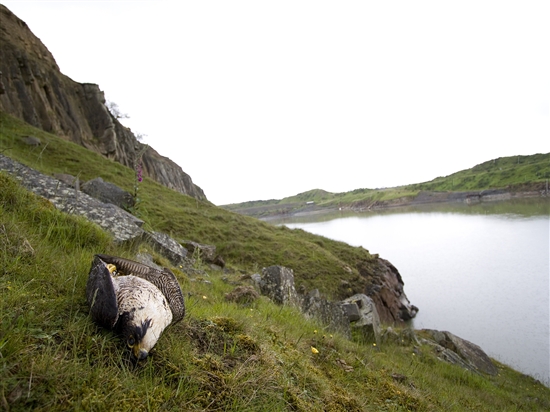
[Peregrine eggs area particular target. Nestcam photo by Nick Mooney]

In recent years the operation has also been expanded to cover some emerging trends of criminal behaviour – the illegal taking of raptor eggs or chicks to launder into falconry; the online trade in eggs and the disturbance of nests for photography.

The taking of wild bird eggs is a serious crime yet it remains the pastime of some determined individuals.  Whole clutches of eggs can be taken from some of the UK’s rarest birds with potentially devastating impacts. The eggs are stored in secret collections. 

Chief Inspector Kevin Kelly (Head of the NWCU) says: “Operation Easter is a yearly event that is engrained within wildlife crime Policing. This year we have given the operation some much needed emphasis, focusing our efforts onto assisting Police Wildlife Crime Officers on the front line.

The NWCU collates and disseminates the information that identifies the hotspot areas where the crimes are likely to be committed and we work with Police officers and partners to ensure these areas of interest are given the attention they deserve, to protect the future of our wild birds. We have a number of skilled and dedicated Police Wildlife Crime Officers across the UK who have adopted this operation and will work with us to reduce criminality, and for this, I thank them greatly“.

If you have any information on egg thieves, or those who disturb rare nesting birds without a license, you should contact your local police by dialing 101 – ask to speak to a wildlife crime officer if possible. Nesting will be in full swing by April so please contact the police if you see anyone acting suspiciously around nesting birds.

Information can also be passed in confidence to Crimestoppers via 0800 555 111.

ENDS

African bird breeding in abundance on Scottish grouse moor, apparently

Whenever the grouse moor owners’ lobby group Scottish Land & Estates (SLE) says anything about grouse moors, it’s best to take it with a skipful of salt.

Their reputation for talking nonsense (I’m being kind) is legendary (e.g. see here, here, here, here, here, here, here, here, here etc).

I really don’t know how they got this so badly wrong but it made me laugh, especially when the grouse shooting industry spends so much of its time claiming to be experts on waders:

[From SLE’s quarterly rag, Spring 2021]

The GWCT employee who did the survey may well have recorded ‘an abundance of lapwings’ on Ballogie Estate in Aberdeenshire but I’m pretty certain she didn’t record any spur-winged lapwing/plovers as illustrated in this article.

It’s a distinctive bird, difficult to misidentify or confuse with any other species, and it breeds in Africa and parts of the Middle East/southern Med. I’m not sure it’s ever been sighted in Scotland, let alone bred ‘in abundance’ on a Scottish grouse moor…

SLE’s ornithological expertise is about as convincing as BASC’s (here and here), You Forgot the Birds (here), National Farmers Union Scotland (here) and the Angus Glens Moorland Group (here).

Another multi-agency raid following illegal poisoning of a buzzard

News of another multi-agency raid yesterday, involving Devon & Cornwall Police, Natural England, National Wildlife Crime Unit and RSPB Investigations, as a follow on from the discovery of a poisoned buzzard in 2020.

Brilliant partnership working again, after news of a similar raid in Lincolnshire a couple of weeks ago following the illegal poisoning of a red kite (here).

[Photo by RSPB Investigations]

UPDATE 30 January 2024: Prominent Devon gamebird breeder due in court to face multiple charges after discovery of poisoned baits & poisoned buzzard (here).

UPDATE 9 February 2024: Prosecution continues against Ashley Game Farm Director Christopher Hodgson after discovery of poisoned buzzard, baits & other pesticide offences (here).

UPDATE 28 May 2024: Devon gamebird breeder guilty of using banned pesticide Carbofuran (here).

UPDATE 20 July 2024: Poisoned buzzard leads to discovery of multiple pesticide offences – Ashley Game Farm & Director Christopher Hodgson fined £40,000+ (here)

Natural England’s shady approach to IUCN guidelines on hen harrier reintroduction

Earlier this week I blogged about how Natural England had been planning, in secret, to start a captive breeding programme for hen harriers, with the intention of releasing the progeny in to southern England as a way of boosting the UK hen harrier population, which has been in decline for years thanks to the ongoing illegal killing of this species (see here).

The proposed reintroduction isn’t news – this has been on the cards since 2016 when DEFRA published its ludicrous Hen Harrier Action Plan (and when Natural England was caught out claiming spurious justifications for the reintroduction – see here) – but the captive breeding element is new, and is a direct result of potential donor countries in Europe refusing to donate harriers to a country that clearly can’t look after the ones its already got.

And although the captive breeding element is highly questionable from an ethical standpoint, it’s still not the main issue here. The main issue has always been, and remains to be, the concept of releasing hen harriers in one part of the country as a massive distraction from dealing with the scandalous level of persecution still inflicted on this species in other parts of the country (namely on driven grouse moors).

[An illegally killed hen harrier. Photo by Ruth Tingay]

Reintroduction projects need to meet all sorts of criteria before they can go ahead and DEFRA advises project managers consult the International Union for the Conservation of Nature (IUCN) Guidelines for Reintroductions and other Conservation Translocations as part of their preparation.

These IUCN guidelines are built on decades of conservation knowledge and experience and provide a ‘route map’ for achieving a successful reintroduction. One of the fundamental principles of these guidelines is deciding when a translocation/reintroduction is an acceptable option. Key to this is:

There should generally be strong evidence that the threat(s) that caused any previous extinction have been correctly identified and removed or sufficiently reduced‘.

Now, in the case of the UK hen harrier population, which is in long-term decline according to the most recent national survey conducted in 2016 (see here), it is widely accepted that illegal persecution continues to be the main threat to survival, limiting the species’ distribution and abundance in Scotland, Northern Ireland, Wales and England.

So the threat has been ‘correctly identified’, as per the IUCN guidelines. It’s indisputable (unless you’re a spokesperson from the very industry that’s responsible for this organised criminality). There are more scientific papers identifying and confirming the threat as there are breeding pairs of hen harriers in England – including the most recent research, co-authored by Natural England staff, which demonstrated the ongoing, widespread illegal killing of hen harriers on British grouse moors (here).

But has the ‘correctly identified’ threat been ‘removed or sufficiently reduced’ for Natural England to proceed with its reintroduction plans? Well, that’s where it all gets a bit shady, in my opinion.

Natural England has been downplaying the persecution issue for a couple of years, particularly when its staff members have been trying to persuade potential donor countries that persecution really isn’t an issue in southern England (e.g. see here and here), although the RSPB has vigorously disputed this claim:

And of course there’s also been the suspicious disappearance of a satellite-tagged hen harrier called Vulcan (here) (which according to an employee of the National Gamekeepers Organisation was likely a ‘set up’ by the RSPB (here!), and then there’s the recent and on-going police investigation into alleged bird of prey persecution nearby (see here).

So it was interesting to see a copy of Natural England’s Hen Harrier Southern Reintroduction IUCN Assessment, dated January 2020, and released to me last week as part of a bundle of documents released under a Freedom of Information request, to understand just how Natural England is attempting to explain away the real and present threat of persecution.

Here is the document:

First of all, Natural England is pointing to two datasets of confirmed raptor persecution incidents to show that persecution is an issue in counties far away from the proposed release site in Wiltshire.

The first dataset cited (published by DEFRA on behalf of the Raptor Persecution Priority Delivery Group, RPPDG) has been widely criticised as being inaccurate and out of date (see here) and is unsupported by two members of the RPPDG: the Northern England Raptor Forum (here) and by the RSPB (here).

The second dataset is much more reliable, as it’s compiled using rigorous scientific quantification by the RSPB, but even then, it only includes confirmed raptor persecution incidents, i.e. where there is a corpse and supportive evidence to identify the cause of death (e.g. x-ray, toxicology report). The database cited by Natural England does NOT include ‘probable’ or ‘possible’ raptor persecution incidents. So, for example, the vast majority of the 52 hen harriers known to have been killed or have disappeared in suspicious circumstances since 2018 (here) would NOT be included in this database of confirmed incidents because many of them, without a corpse or satellite tag, would have to be classified as being ‘probable’ persecution incidents. It’s ironic that these incidents would be excluded, given it was Natural England’s own commissioned research findings that identified missing satellite-tagged hen harriers as most likely to have been illegally killed on or near grouse moors (here).

So not only is Natural England being highly selective in the datasets it has chosen to support this claim that persecution isn’t an issue in southern England, the other main claim made in its IUCN assessment is that hen harriers released in the south of England won’t travel north to the deadly grouse moors of northern England, Wales and Scotland. Here is the claim:

This is an astonishing claim to make. Obviously, I was interested in the reference that Natural England cited to support such a claim: (NE 2019a). However, when I looked up the reference I found it refers to Natural England’s intermittently-updated summary table of the fates of tagged hen harriers (here).

This table doesn’t support Natural England’s claims at all! If anything, it shows that young hen harriers wander widely during dispersal, throughout the UK, so there is no supportive evidence whatsoever to suggest the incidence levels of hen harriers released in southern England roaming into northern upland areas (persecution hotspots) ‘will be low’. What complete nonsense this is!

The fact is, nobody knows what those released hen harriers will do, but if they follow the behaviour of other young dispersing hen harriers they will wander widely and will be at significant risk of being killed if they go anywhere near a driven grouse moor. I wouldn’t fancy their chances if they turned up at some commercial pheasant and partridge drives either, given the persecution suffered on some shooting estates by Montagu’s and Marsh harriers.

It’s no wonder Natural England has wanted to keep its plans under wraps – this is shady stuff indeed.

Langholm Moor community buyout officially completed

Press release from the Langholm Initiative (26th March 2021)

South of Scotland’s biggest community buyout completes

The South of Scotland’s largest community buyout has been legally completed following one of the most ambitious community fundraising campaigns ever seen and paving the way for the creation of a vast new nature reserve in Dumfries and Galloway.

The landmark agreement of £3.8 million for 5,200 acres of land and six residential properties was reached between The Langholm Initiative charity and Buccleuch last October, after the community of Langholm’s six-month fundraising drive reached its target in the final two days.

With the transfer of ownership finalised, the community now owns the land for the first time in its history. Work is to begin immediately on creating the Tarras Valley Nature Reserve to help tackle climate breakdown, restore nature, and support community regeneration.

[Langholm Moor. Photo by David Lintern]

Margaret Pool, Chair of The Langholm Initiative, said: “Together we’ve achieved something which once seemed impossible, and today we can celebrate as a new era begins for this special land with which our community has such a deep and long-standing connection.

Our sincere, heartfelt thanks go to so many people for making this historic moment for Langholm happen – including the generous donors and tireless volunteers, and to Buccleuch for being so supportive and positive in their approach.” 

Benny Higgins, Executive Chairman of Buccleuch, said: “To have concluded the sale to the community is a fantastic achievement, and a great example of what can be achieved when communities and businesses like Buccleuch engage openly with one another and work to a common goal. This was achieved by goodwill and working together, following voluntarily all the relevant guidance and protocols.

We look forward to seeing the plans for the area coming to life over the coming months, and wish The Langholm Initiative all the very best with this.

Buccleuch has been reducing the footprint of its landholdings in the last decade and, having sold approximately 30,000 acres of land in this period to farmers and community organisations, we will continue to reinvest revenue from land sales into a variety of business projects across the farming, forestry, renewable energy, and leisure and hospitality sectors.

The Langholm Initiative has set up Tarras Valley Nature Reserve for the day-to-day running of the ambitious new venture, and is currently recruiting two new members of staff who will oversee the landscape-scale nature-restoration project.

Globally important peatlands and ancient woods will be restored, native woodlands established, and a haven ensured for wildlife including rare hen harriers, the UK’s most persecuted bird of prey. Plans for community regeneration include new nature-based tourism opportunities.

Discussions are continuing between The Langholm Initiative and Buccleuch over another 5,300 acres of land the community wishes to buy, and which could double the size of the new nature reserve.

After the launch of the community’s fundraising drive last May, The Langholm Initiative had until 31 October to raise the funds for the deal, to avoid the withdrawal of a £1m offer from the Scottish Land Fund. At times the project appeared to be seriously at risk.

Other major funders supporting the project are South of Scotland Enterprise, John Muir Trust, The Carman Family Foundation, Garfield Weston Foundation and The Bently Foundation. 

The charity’s public crowdfunder, supported by nearly 4,000 people from around the world, reached its £200,000 target after a surge of over £50,000 in donations during its final week, including £24,000 on one day alone.

In the final 48 hours, with the community still some £150,000 short of the total funds needed, The Woodland Trust agreed to contribute £200,000 – taking The Langholm Initiative over the line.

Leading charities that have supported the buyout include Borders Forest Trust, Rewilding Britain, RSPB Scotland, Scottish Wildlife Trust, and Trees for Life.

The Langholm Initiative now aims to show how community ownership can be a catalyst for regeneration with the environment at its heart, and hopes its success will inspire other communities in Scotland and across the UK. 

The Langholm Initiative, formed in 1994 as one of south Scotland’s first development trusts, facilitates projects making a lasting difference to the local area and people. See langholminitiative.org.uk.

ENDS

Another kestrel shot dead in West Yorkshire

West Yorkshire Police have published a statement on Twitter this afternoon about a kestrel that was shot dead ‘at some point last week’.

The Leeds Wildlife & Rural Crime team say the bird was shot at the junction of Leeds Road and Park Lane, Allerton Bywater. There isn’t any further information about the type of weapon used (e.g. shotgun, airgun).

Anyone with information is asked to contact the police on Tel 101 and quote crime reference #13210148679.

This kestrel is at least the fourth to be shot in West Yorkshire this year alone – in January 2021 it was reported that three kestrels had been shot dead in the first two weeks of the New Year (see here).

Last October another kestrel was found shot dead in West Yorkshire (see here).

Natural England ignores ongoing raptor persecution & now plans to captive breed hen harriers for release!

Do you remember DEFRA’s ludicrous Hen Harrier Action Plan, published in 2016 and responsible for hen harrier brood meddling – the conservation sham sanctioned by DEFRA and carried out by Natural England, in cahoots with the very industry responsible for the species’ catastrophic decline in England? (For more background see here).

Well the conservation sham has just been extended, this time to the proposed ‘reintroduction’ of hen harriers to southern England, also part of the ridiculous Hen Harrier Action Plan.

[A brilliantly apt cartoon by Gerard Hobley]

The so-called southern reintroduction has been on the cards since 2016 when the ‘Action Plan’ was first published, to be used as a massive distraction from the ongoing illegal killing of hen harriers on British grouse moors. But Natural England has had terrible trouble trying to persuade conservationists in Spain and France to donate hen harriers, especially given the UK’s appalling raptor persecution record – even though Natural England staff have been caught out trying to play this down on a number of occasions (e.g. see here).

Hmm. What to do? What to do? Ah, how about, we ask some other countries for some donor stock (countries that we haven’t tried yet, like Finland, Sweden, Norway) so we can release their birds in to southern England (and we won’t mention the suspicious disappearance of a hen harrier in the proposed release area), and how about we also take some chicks from nests in England and keep them in captivity forever and use their chicks to release in to the wild, and call it a ‘conservation breeding programme’ (cos we did it with peregrines last year, remember?), and then why don’t we also take some un-releasable hen harriers from rehab centres in France and Spain and use them as breeding stock as well so we’ll have more young hen harriers to chuck out in to the countryside whilst we all sit with our fingers and toes crossed that they don’t venture anywhere near a grouse moor? (And we’ll keep quiet about the ongoing raptor persecution crimes being uncovered near the proposed release site, including this one).

Yeah! And we can pay our old mate Jemima Parry Jones and the International Centre for Birds of Prey (ICBP) at Newent, Glos to do all this ‘conservation breeding’ – they’re not gonna turn down a big pay out, just as they’re getting paid for doing the hen harrier brood meddling. Yeah! £350K should do it….it’s tax payers money but there’s no need to tell anyone about it, we’ll just keep it quiet in case those pesky conservationists find out, see through our propaganda and try to take a legal challenge against us.

Think this is all a bit far-fetched? Well have a look at the following documents, released last week as part of a larger bundle under Freedom of Information requests that Natural England has sat on since January. It’s worth paying particular attention to Natural England’s options appraisal (the 2nd document), undertaken last year during lockdown. Abandoning the whole ridiculous idea of releasing hen harriers in to a country where they are systematically and illegally killed by a large part of the driven grouse shooting industry (52 hen harriers known to have gone since 2018) was apparently not an option due to the ‘reputational risk’ to DEFRA and Natural England if they pulled out.

That should be the least of their worries. Make no mistake, if there is an opportunity for a legal challenge against this insane plan, it will be taken.

More soon.

Here are some of the documents to look at:

UPDATE 25th March 2021: This news article led to a story being published in the environmental journal the Ends Report (here).

UPDATE 26th March 2021: Natural England’s shady approach to IUCN guidelines on hen harrier reintroduction (here)

Westminster finally agrees to consider lead ammunition ban

DEFRA press release (23 March 2021)

Plans announced to phase out lead ammunition in bid to protect wildlife

  • Government sets out the restriction work to be carried out in the first year of UK REACH, the UK’s new chemical regime
  • Evidence shows lead ammunition harms the environment, wildlife and people
  • Consultation will seek public’s views on restriction proposals

Lead ammunition could be phased out under government plans to help protect wildlife and nature, Environment Minister Rebecca Pow announced today (23 March).

A large volume of lead ammunition is discharged every year over the countryside, causing harm to the environment, wildlife and people. The government is now considering a ban under the UK’s new chemical regulation system – UK
REACH
– and has requested an official review of the evidence to begin today with a public consultation in due course.

Research by the Wildfowl and Wetlands Trust (here) shows that between 50,000 to 100,000 wildfowl die in the UK each year due ingesting lead from used pellets. Despite being highly toxic, wildfowl often mistake the pellets for food. A further 200,000 to 400,000 birds suffer welfare or health impacts, and animals that predate on wildfowl can also suffer.

Lead ammunition can also find its way into the wider environment and the food chain, posing a risk to people if they eat contaminated game birds. Studies have also found that lead poisoning caused lowered immune systems in wild birds, potentially aiding the spread of diseases such as avian influenza (bird flu).

Environment Minister Rebecca Pow said:

Addressing the impacts of lead ammunition will mark a significant step forward in helping to protect wildlife, people, and the environment.

This is a welcome development for our new chemicals framework, and will help ensure a sustainable relationship between shooting and conservation“.

The announcement today has been welcomed by environmental organisations.

Dr Julia Newth, Ecosystem Health & Social Dimensions Manager at the Wildfowl and Wetlands Trust (WWT), said:

Conservationists, including WWT, shooting organisations and game meat retailers have recognised the toxic risks from lead ammunition to people and the environment. Regulation of its use in all shooting, wherever this may happen, is very much needed as soon as possible to protect human and animal health and to enable us to move towards a greener and safer future“.

Shooting organisations are also supportive of transitioning away from the use of lead ammunition and are working with government to bring this about.

The Environment Agency, together with the Health and Safety Executive, will now start a two-year process to review the evidence, conduct a public consultation and propose options for restrictions.

Now we have left the EU we are able to make our own laws. UK REACH allows decisions to be made on the regulation of chemicals based on the best available scientific evidence, ensuring chemicals remain safely used and managed.

ENDS

This is a complete U-turn for the Westminster Government, who, for years, have ignored the best scientific evidence that they should have used to protect humans, wildlife and the environment, but chose instead to support the shooting industry’s refusal to get rid of toxic lead ammunition (e.g. see here and here).

Why the change of direction? They must have seen the writing on the wall.

Just as many of the shooting industry’s organisations did last year when they announced, after years and years and years of defending their position of firing poison in to food, that they were going to support a ‘voluntary ban’ on the use of toxic lead ammunition and wanted to see it phased out within five years. The industry leaders had decided to jump before they were pushed, although many of their members were furious with this u-turn.

However, this ‘voluntary’ approach by the rest of the industry just wasn’t convincing. A lot of us were sceptical because (a) we rarely trust anything the shooting industry tells us; (b) previous ‘voluntary bans’ by the industry on a number of issues have been unsuccessful (e.g. see herehere and here); (c) the ongoing failure of the shooting industry to comply with current regulations on many issues, including the use of lead ammunition over wetlands (here), means there should be absolutely zero confidence in its ability and/or willingness to stick to any notional voluntary ban; (d) the Scottish Gamekeepers Association refused to sign up to the proposed five-year transition period because they believe there is insufficient evidence to support the claim that poison can have damaging impacts on humans, wildlife and the environment (here); and (e) in the very same year that nine shooting organisations committed to the five-year transition, BASC announced it was set to fight a proposed EU ban on the use of lead ammunition on wetlands (see here).

A scientific paper published last month, one year in to the so-called ‘voluntary transition’, supported our scepticism when it demonstrated that of 180 pheasant carcasses bought from across the UK and scientifically examined, 179 had been shot with lead ammunition (see here). Not much evidence of transitioning there.

The ‘letter of the week’ in this week’s Shooting Times provides some insight in to the mindset of the shooters. They know that shooting poison in to the environment isn’t ‘the right thing to do’ but they’re going to continue to do it so they’re not left out of pocket and for the price of some lead ammunition, sod humans, wildlife and the environment in the process:

It’s not clear to me why the Government has suddenly done a u-turn, although I’m glad it has. But why on earth is it embarking on a two-year process to ‘review the evidence, conduct a public consultation and propose options for restrictions’? We don’t need two years of more time-wasting. The evidence has been done to death – just look at the amount of science here – another two year’s worth is not going to change the fact that poison is bad for humans to eat and bad for wildlife to eat and shouldn’t be sprayed around the countryside. And why the need for a public consultation? Lead ammunition is poisonous – for us and for wildlife. Who in their right mind is going to argue against getting rid of it?

And is the Government going to impose a ban after its two years of time-wasting? If it does, it’d better make sure that ban is enforced because three separate scientific studies have already shown that compliance with the ban on using lead ammunition over wetlands is appallingly low. These three studies showed that compliance with the regulations was 32% (2001-2), 30% (2008-9 and 2009-10) and 18-23% (2013-14)  – see here.

This is an industry that cannot be trusted, being regulated by a Government that cannot be trusted. Not a great combo for those of us who want to see lead ammunition gone for good without any further delay.

Plans to reintroduce Ospreys to Suffolk

Conservationists have drawn up plans to reintroduce Ospreys to Suffolk.

The Suffolk Wildlife Trust has teamed with experts from the Roy Dennis Wildlife Foundation and the Leicestershire and Wildlife Trust, who were behind the reintroduction of Ospreys to Rutland Water in the late 1990s. The Roy Dennis Wildlife Foundation is also a lead player in the reintroduction of Ospreys to Poole Harbour and White-tailed eagles to the Isle of Wight.

Assuming the project gets the go-ahead from Natural England, the five-year plan is to move up to eight juvenile ospreys per year to Suffolk from the Rutland Water area in the East Midlands where a healthy population is now established.

The team has just completed a public consultation and is now preparing to submit a licence application to Natural England.

For more details about the proposal, please visit the Osprey project page at the Suffolk Wildlife Trust website here

Online protest tomorrow about ongoing raptor persecution on Scottish grouse moors

Tomorrow (Friday 19 March 2021) is the online protest organised by the Scottish Gamekeepers Association (SGA) and seven regional moorland groups, who represent grouse shooting estates and their gamekeepers across Scotland.

This is the protest that the SGA has been threatening since November when the Scottish Government had finally had enough with the decades of criminality in the grouse-shooting industry and promised to bring in a grouse moor licensing scheme as soon as possible (see here).

The protest has been named the Rural Workers Protest in an attempt to garner more support from other industries and will be using the hashtag #RWP21 on social media.

It’s still not clear what the SGA et al are protesting about, other than progress and modernisation, although I keep reading that they’re not being listened to, which is an interesting concept given the tv coverage and media column inches they’ve had this last week, as well as the vocal support of a number of MSPs and their ‘friend in Parliament‘, Cabinet Secretary Fergus Ewing.

We do know that Alex isn’t happy about the drink driving laws being applied in rural areas because it ‘affected social cohesion in the countryside’, according to the speech he read out at the SGA AGM a couple of weeks ago. That’s an interesting position given the display of empties lining the walls in the bothy from which Alex was speaking.

What, you don’t remember seeing them? Well that’s maybe because someone might have angled the camera to make sure they were carefully obscured. Compare and contrast these two photos….. the first one was a screengrab from the actual AGM. The second photo, from the SGA’s facebook page, shows a slightly different camera angle from the day before when Alex and his team were preparing the scene.

It’s also interesting that Scotland’s seven regional moorland groups are co-hosting the event, especially when grouse moors in five of those seven regions have been in the last three years, or currently are, under police investigation for alleged raptor persecution crimes (grouse moors in the regions covered by the Angus Glens Moorland Group, Grampian Moorland Group, Tomatin Moorland Group, Tayside & Central Moorland Group and the Southern Uplands Moorland Group). Do you think tomorrow’s protesters will be shouting about the illegal killing of birds of prey, on their grouse moors, right under their noses but apparently without any of them seeing anything suspicious? Or will they be arguing for getting licences to kill birds of prey, as we know that’s what the SGA has been campaigning for for years.

Not to worry. A number of us will be joining the online protest tomorrow, not to complain about modernisation or progress, nor to call for licences to be issued to kill raptors so more gamebirds can be produced for the guns. No, we’ll be there to protest about the ongoing illegal killing of birds of prey, on grouse moors, in Scotland. We’ll also be using the #RWP21 hashtag and we’ll be sharing information and photos with the general public who may not previously have been aware of what is going on. Join us if you can.

[This young white-tailed eagle was found dead on a grouse moor inside the Cairngorms National Park in April last year. It had been poisoned to death with a banned substance. Nobody has been prosecuted for this crime. Photo by Police Scotland]