Sea eagles bringing in £millions to local economies

Re-introduced white-tailed eagles (also known as sea eagles) are bringing in £millions of pounds to local rural economies in Scotland.

40 years after the start of the sea eagle reintroduction project in Scotland, a significant milestone has been reached with the 100th breeding pair (see here).

Sea eagle tourism on the Isle of Mull brings in an additional £5 million each year (see here). Now a new RSPB report shows that the sea eagles on the Isle of Skye are generating an additional £2.4 million (see here).

Over in the Irish Republic (where the sea eagle reintroduction project only started in 2007), the small but growing eagle population is also attracting thousands of tourists (see here).

It’s heartening to see that despite the efforts of some (e.g. see here, here, here, here), these eagles are fighting back and, in a world where nature seems to be judged on its monetary value, they’re giving back, too.

Photo by Mike Watson

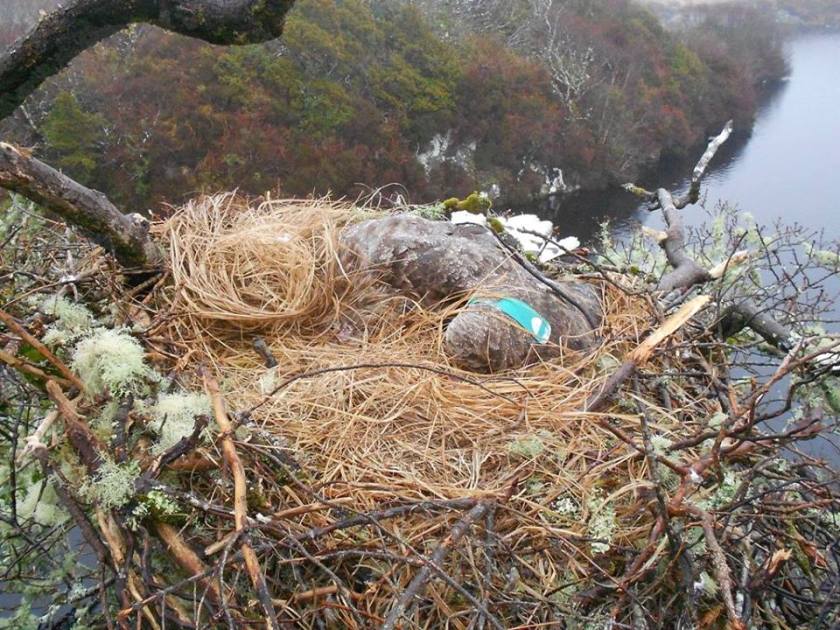
White-tailed eagle found poisoned on nest

WTEpoisoned Connemara April 2015

Press release from Golden Eagle Trust:

A White-tailed Eagle has been found dead in its nest at Connemara in south-west Ireland. The six year old female eagle was discovered on 1st April by Conservation Ranger Dermot Breen and recovered by a team from the National Parks & Wildlife Service on 2nd April. Subsequent post-mortem at the Regional Veterinary Laboratory in Athlone and toxicology analysis at the State Laboratory, Celbridge revealed the bird had been poisoned.

The female White-tailed Eagle was released in Killarney National Park in 2009 as part of a reintroduction programme for the species managed by the Golden Eagle Trust in partnership with the National Parks & Wildlife Service. The female eagle settled in the Roundstone area of Connemara in 2012 where she paired up with a male. In 2014 the pair laid eggs at a nest in a remote site but the eggs failed to hatch chicks successfully. Both birds were on the point of nesting again this year at the same nest when tragedy struck. Indeed the post-mortem found the female to contain two developing eggs, so this female was within a few days of laying eggs.

The loss of this breeding female comes as a serious blow to the reintroduction project. White-tailed Eagles reach maturity and begin breeding at about 5 years of age. Seven pairs laid eggs in nests in the wild in 2014, with one nest near Mountshannon, Co. Clare, successfully fledging chicks in 2013 and 2014. It was hoped that the Connemara pair would be one of a number of successful nests in Ireland in 2015. The loss of a breeding adult has been found to lead to the desertion of breeding sites with potentially serious implications for the long-term viability of the reintroduced population.

This is the 13th confirmed poisoning of a White-tailed Eagle in Ireland since the reintroduction project began in 2007. The use of poisons to control foxes and crows has been banned since 2010 but the illegal use of such substances remains a huge threat to wildlife including birds of prey which consume carrion. Over the five years of the release phase of the project 100 young eagles were collected from nests in Norway and released in Killarney National Park, Co. Kerry. Thirty one of the released eagles have since been recovered dead with illegal poisoning by far and away the greatest threat to the recovery of this once native eagle to Ireland. Despite these losses the number of pairs in the wild rose to 14 in 2014 with most birds now mature enough to breed.

This is a very disheartening incident as the killing of this breeding female has effectively put an end to any breeding attempt of this incredible species in West Galway for at least another five years” said NPWS Conservation ranger Dermot Breen. “To see the female lying dead on her nest was a very sad and sickening sight especially with the knowledge that she would have been due to lay two eggs. Historically up to 14 pairs were known to have bred in the Connemara region up 1838. Connemara lost its White-tailed Eagles shortly after this with the introduction of poison. It’s deeply frustrating to see history repeating itself. I’ve encountered no negative feedback from any local farmers with regard to the presence of the eagles over the last three years. Many landowners would ask how the eagles were doing and would tell me if they had been lucky enough to see them in the locality. The loss of this female is also a great loss to tourism in the area. Connemara is world renowned for being an area of unspoilt beauty. Unfortunately this illegal and irresponsible action is likely to tarnish Connemara’s green image, an area that relies heavily on tourism”.

Although all losses impact the project, the loss of this female is very difficult to take”, said Dr Allan Mee, Project Manager with the Golden Eagle Trust. “She and her mate had been resident in Connemara for the last four years and it was only a matter of time before they produced chicks. It is likely the nest site they chose had been used by White-tailed Eagles in historical times, so losing this pair is devastating. Although the male may remain on his territory for some time, to date we have found that the loss of a breeding adult results in birds deserting the area and remaining some years before they find a mate again. The female’s mate is one of our satellite tagged eagles (male Star) who has travelled the length and breadth of Ireland several times before settling in Connemara. It’s tragic to see him lose his mate just on the point of nesting”.

Over the years we have endured too many losses to illegal and indiscriminate poisoning. We have tried to address this by raising awareness both of the law and the threat posed by poisons to wildlife and farm dogs. While we believe our awareness efforts have been productive it is clear that some individuals are still resorting to using poisons on meat baits such as dead livestock. While their target may be foxes and crows we know to our cost the devastation this causes to our rare and protected birds of prey. We have to continue to get the word out there that this practice is no longer acceptable. We hope that all farmers and farming organisations will rightly condemn this practice which has no place in today’s supposedly more enlightened environment”.

IMAGE COPYRIGHT: DERMOT BREEN, NPWS

Number of poisoned raptors in Scotland more than quadrupled in 2014

Persecution map 2010 to 2014 - CopyThe Scottish Government has today released the annual poisoning and persecution maps relating to crimes against raptors in 2014.

The accompanying press release is a careful study in damage limitation. We can’t blame them – it must be a constant source of embarrassment for them that raptor persecution continues with virtual impunity so of course they’re going to put out a statement that showcases the positives (there aren’t that many) and plays down the negatives (there are many).

The basic premise of their press release is that reported raptor crimes (incidents) have dropped from 23 in 2013 to 19 in 2014. Sounds like progress, eh? But wait – what if you look at the actual number of persecuted raptors – that tells a completely different story!

Let’s ignore the different types of persecution crimes (e.g. shooting, trapping, disturbance) for a minute and just start with poisoning. Here are the Government’s official number of reported poisoning incidents for the last three years:

2014: 6

2013: 6

2012: 3

So on the face of it, no change from last year and still double the number of reported incidents in 2012. But now let’s look at the number of reported individual raptors that were poisoned over those three years:

2014: 27 (17 x red kite; 7 x buzzard; 1 x peregrine; 2 x unknown because Police Scotland hasn’t released the data)

2013: 6 (1 x red kite; 4 x buzzard; 1 x golden eagle – data from Scot Gov annual report on wildlife crime)

2012: 3 (2 x buzzard; 1 x golden eagle – data from Scot Gov annual report on wildlife crime)

That’s quite an increase, isn’t it? Three reported in 2012, 6 in 2013 and a whopping 27 reported in 2014. Does that sound like raptor poisoning in Scotland is in decline? Nope, it shows that the number of poisoned raptors actually quadrupled in 2014.

However, the Government doesn’t agree that 27 raptors were poisoned in 2014. According to their data, only 16 raptors were poisoned in the Ross-shire Massacre (12 red kites + 4 buzzards). They seem to have conveniently forgotten that 22 dead birds were found, not 16. Even Environment Minister Aileen McLeod ignores the ‘missing six’ and just refers to the poisoned 16 in today’s press release! Sure, there may only be toxicology reports for 16 of those victims – we don’t know the cause of death for the remaining six victims because Police Scotland hasn’t bothered to tell us. But surely they and the Scottish Government aren’t trying to convince us that the remaining six victims (four red kites + two buzzards) weren’t poisoned at all, but that they all just happened to die of natural causes at the same time and in the same fields as the other 16 poisoned birds? Come on. Why try and diminish the extent of such an appalling crime?

And, once again, the poisoning maps exclude other crimes where bait was discovered but with no apparent raptor victim. We know of at least one of these incidents that occurred in 2014 – a poisoned rook found in January close to a poisoned rabbit bait and a poisoned hare bait (Carbofuran & Chloralose) (here). Why doesn’t this count?

Now let’s have a look at the other types of raptor persecution crimes reported in 2014. These include shooting, trapping and disturbance. According to the Government’s data released today, there were 8 reported shootings, 2 reported trapping offences, 1 reported disturbance incident and 2 listed as ‘other’.

Interestingly, they’ve excluded incidents where satellite-tagged raptors have (un)mysteriously disappeared in known persecution hotspot areas, such as the young white-tailed eagle (see here) and several others that Police Scotland has so far chosen to keep under wraps.

They’ve also excluded incidents where illegally-set traps have been found but without an apparent raptor victim. Again, the police have chosen to keep these under wraps. Why don’t those count?

So let’s now look at the Government’s ‘official’ three-year figures for all types of raptor persecution incidents in Scotland (including poisoning, shooting, trapping, disturbance, and ‘other’):

2014: 19

2013: 23

2012: 13

As we said at the beginning, on a superficial level it appears that reported raptor persecution incidents have declined since 2013, although we now know that the Government has excluded several known incidents, and we also know that these are only the reported crimes – many more will have occurred but weren’t detected. But let’s have a look at the number of known raptor victims during that three-year period:

2014: 40

2013: 23

2012: 13

That’s pretty clear then. Illegal raptor persecution continued in 2014 and the number of (known) victims rose considerably from the previous year and the year before that.

What an utter disgrace.

Scottish Government press release here

Scottish Government’s persecution maps and background data can be downloaded here:

Scottish Gov background raptor persecution data (released 31 Mar 2015)

RSPB responds to sea eagle diet nonsense

Last week we blogged about the ridiculous article written by Auslan Cramb that was published in the Telegraph, claiming that sea eagles eat more lamb than fish (see here).

Now Richard Evans, Senior Conservation Policy Officer for RSPB Scotland, has written a brilliantly scathing response to the article. You can read it here.

Sea eagles demonised, again

It seems barely a month goes by without someone trying to demonise white-tailed eagles in Scotland.

This time it’s the handiwork of Telegraph ‘journalist’ Auslan Cramb, with an article headlined:

Sea eagles eat more lamb than fish, despite their name, according to research.

We really shouldn’t be surprised that this scaremongering drivel has been churned out by Cramb. He’s the same ‘journalist’ who in October falsely claimed that ‘Wind turbines have killed more birds of prey than persecution this year‘ – a claim we demonstrated was false here.

His latest claim is based on the results of a series of photographs that were taken at a white-tailed eagle’s nest in Argyll between January and July this year. Yes, that’s right, footage from a single nest, filmed during a single period. Hardly representative, is it?

According to SNH, this eagle pair brought in 117 prey items to the nest. 67 of these (57%) were unidentifiable. Of the items that were identifiable, 21 items were mammals, 14 were birds, 7 were fish and ‘8 or 9’ were lambs.

So this camera at this particular eagle’s nest, during this particular period, filmed one or two more lambs than fish. Does that justify the scaremongering headline that sea eagles eat more lamb than fish? Hardly. But then a headline such as ‘Pair of sea eagles enjoy a varied, generalist diet’ isn’t really what the raptor killers want the public to believe, is it?

The article also fails to explain that these ‘8 or 9’ lambs could well have been taken as carrion (i.e. the lambs were already dead and the eagles simply scavenged the carcasses).

To try and pass these results off as a conclusive scientific study is pure desperation. It’s what’s known as ‘utter bollocks’ in scientific terms. Trying to determine raptor diet using a single method (such as nest camera footage) is a well-known problem that is beset with bias. There are numerous methods of obtaining such data (e.g. analysis of regurgitated pellets, analysis of prey remains, camera footage) and considerable research has shown that a combination of methods should be used, rather than a single one. The additional issue of using a sample size of one (nest) is just laughable. It is also well known that the diet of individual eagle pairs can vary across years in western Scotland, as reported by sea eagle experts Mike Madders and Mick Marquiss in 2003.

The most recent, properly conducted, scientific study on white-tailed eagle diet in western Scotland was published in 2013. That study included the analysis of pellet and prey remains from 16 sea eagle nests on Skye, Mull, Lewis and Harris, over an eight year period. The study found that 49.6% of the eagles’ diet comprised seabirds, 19.2% sheep, 13.4% lagomorphs and 6.1% fish. However, the authors acknowledged that the estimation of fish in the eagles’ diet was probably under-estimated due to the methods of dietary analysis that they used.

The purpose of installing the camera at the Argyll eagle pair’s nest was part of an on-going effort to understand the conflict between sea eagles and farming/crofting interests in western Scotland. This is a long-standing and controversial issue that we’ve blogged about a lot (here is an example). It would appear that if farmers/crofters want to deter sea eagles there’s a simple solution – attach a small black plastic box to the lamb’s neck (about the size of a matchbox). Why? Because a load of lambs were radio tagged during an earlier study into alleged lamb-killing eagles and the results showed that not one single lamb was killed by an eagle. The crofters claimed the eagles had been ‘put off’ because of the radio collars/tags. (They also claimed that the eagles had been given supplementary food during the study period, and that some eagles had been ‘bird-napped’ to remove them from the study area!).

UPDATE 22nd December 2014: RSPB Scotland responds to this idiotic Telegraph article here

Killing with impunity: Birdcrime 2013 published

Birdcrime 2013The RSPB has published its latest annual report on crimes against birds in the UK in 2013.

Their press release here.

The killing goes on, with impunity.

76 individual birds & other animals were confirmed illegally poisoned in 2013. This is more than double the figure from 2012 (29 confirmed victims).

Poisoning victims in 2013 included 30 buzzards, 20 red kites, 1 golden eagle and 1 white-tailed eagle.

68 confirmed incidents involved the shooting or destruction of birds of prey. Victims included two hen harriers, two marsh harriers and 5 peregrines.

These are just the confirmed incidents. A total of 338 incidents were reported to the RSPB in 2013, with North Yorkshire once again being the worst location. There’s also a worrying number of incidents from Powys in South Wales, seemingly relating to poisoned baits.

Birdcrime 2013 is a thoroughly depressing read. The RSPB calls on the shooting industry, again, to clean up its act. Judging by the contents of this report, that’s a seemingly futile request.

Well done and thanks to the RSPB for not only compiling these thorough statistics but importantly, for sharing them in the public domain.

Download Birdcrime 2013: Birdcrime 2013

Hen harrier Bowland Betty, found shot dead on a grouse moor in North Yorkshire. (Photo by Natural England).

Bowland Betty

Cairngorms National Park Authority wants ‘action’ against raptor persecution

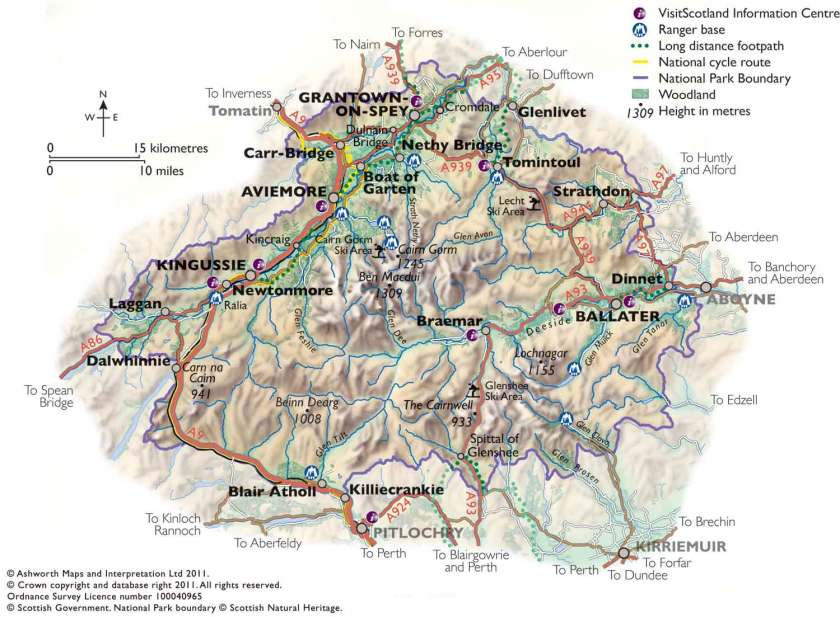
Duncan BrydenThe Convenor of the Cairngorms National Park Authority (CPNA), Duncan Bryden, has written to the Environment Minister to tell him that continued incidents of raptor persecution and ‘disappearing birds’ in the eastern side of the Cairngorms National Park “threatens to undermine the reputation of the National Park as a high quality wildlife tourism destination“.

He has asked for the Minister to attend a meeting of stakeholders in the Eastern Cairngorms (including RSPB Scotland and, er, Scottish Land & Estates) to discuss ways to address this on-going issue.

That’ll be interesting, seeing as though SLE continue to deny the extent of the problem (e.g. see here) and only last year gave membership to the ranks of SLE to the North Glenbuchat Estate – a grouse moor in the National Park that has been at the centre of wildlife crime investigations for years, most recently following the ‘disappearance’ in April of the first fledged white-tailed eagle in eastern Scotland for 200 years – it’s final signal reportedly came from North Glenbuchat estate (see here). The eagle is presumed dead but it’s body has not been recovered, just like the bodies of three other young satellite tagged eagles that ‘disappeared’ in the area in recent years. The body of a fifth eagle was found on North Glenbuchat Estate in 2011 – it had been poisoned with Carbofuran. As had a poisoned buzzard, also found in 2011, as well as a poisoned bait. A dead short-eared owl was also found in 2011 – it had been shot and stuffed under a rock.

Good luck to the CNPA in trying to oust the raptor-killing criminals from the National Park and well done Duncan Bryden for taking a stand.

Download: CNPA letter to Paul Wheelhouse May2014

Download: Paul Wheelhouse response to CNPA

CNP map


New sea eagle ‘management plan’ on the cards

In January this year, the National Farmers’ Union (Scotland) called for ‘action’ against Scottish sea eagles, and although they weren’t explicit about what that ‘action’ might be, they did mention [unspecified] ‘control measures’ (see here).

SNH responded quite strongly by saying ‘no’ to control measures (see here).

In February, a former Crofting Commission rep said that “Nothing short of complete eradication will do” and that sea eagles “should be absolutely destroyed” (see here).

In May, NFUS launched its ‘Sea Eagle Action Plan’, which laid out the usual unsubstantiated accusations that sea eagles are responsible for a loss of biodiversity and have detrimental effects on golden eagles, mountain hares, lapwings, curlews, black grouse, otters and rabbits, and of course, sheep farming. For a species that they claimed to know so much about, it was quite surprising to see the front cover of their report – it was apparent they couldn’t even tell the difference between a golden and a white-tailed eagle (see here).

A couple of days ago, it was reported (sensibly here and here but with a hysteria-mongering headline here) that NFUS and SNH had signed a joint accord to work towards a new ‘Sea Eagle Management Scheme’. This will include a new scheme to start in Spring 2015 to compensate farmers and crofters for loss of stock to eagles (a continuation of a previous scheme) subject to funding approval, and the development of a new sea eagle ‘action plan’ to be published by September 2016 and implemented by March 2017.

Whilst it’s encouraging that NFUS and SNH have agreed to work cooperatively, we can’t help but be suspicious of the term ‘management scheme’. What does that mean, exactly? We often hear the term ‘well-managed grouse moor’ used to describe practices that include the systematic eradication of all predators, just so there are more grouse for the guns to kill. That’s not our definition of ‘well-managed’. The term ‘management’ was also used by DEFRA when it tried to implement its controversial ‘Buzzard Management Scheme’ a couple of years ago – in that case, ‘management’ meant removing buzzards so that there were more pheasants for the guns to kill.

Hmm. Hopefully the NFUS and SNH are not planning on ‘removing’ sea eagles as a ‘management’ strategy (the NFUS has previously suggested this could be an option). At least for now, the NFUS has stated that ‘management’ in this case does not mean shooting the eagles (see the BBC report).

The BBC’s report on the new accord does reveal some of the proposed management strategies. One of them is this:

‘Contractors will also be available, free of charge, to record incidents of eagle predation and to offer advice on how to scare away the birds’.

That doesn’t seem to have been thought through very well. The sea eagle  has extra special protection as it’s listed on Schedule 1A of the Wildlife & Countryside Act 1981 (as amended) – that means it is an offence to intentionally or recklessly harass this species at any time of year, not just when it’s close to or on its nest (see here). The NFUS and SNH will need to be very careful indeed if they’re planning on ‘scaring away’ sea eagles.

Thankfully, not everyone shares the NFUS’ view of sea eagles. The Mull Eagle Watch Project (based around the island’s thriving sea eagle population) has just been awarded VisitScotland’s prestigious 5 star Wildlife Experience rating for the third year running (see here). Congratulations to all involved.

White-tailed eagle photo by Mike Watson

Enough is enough

SOCThe latest edition of the Scottish Ornithologists’ Club journal, Scottish Birds, dropped through the letterbox the other day. It contains an interesting article from Ian Thomson, Head of Investigations at RSPB Scotland:

Raptor Persecution in Scotland: July 2014 update

The last article on the illegal killing of birds of prey in Scotland written for Scottish Birds (33:1) appeared at the beginning of 2013, a year designated “The Year of Natural Scotland” by the Scottish Government.

The year had dawned with some optimism. For the fourth consecutive year, we had seen detected cases of illegal poisoning decline, and although, again it is important to reiterate that these only represent what was actually found, the apparent reduction in these indiscriminate crimes was welcomed universally. In saying that, yet again, a Golden Eagle was one of the victims, with a satellite-tagged bird found dead in Lochaber in March. But, the year ended with the news that a young pair of White-tailed Eagles from the east Scotland re-introduction scheme had built a nest in an Angus glen, the first breeding attempt in the east of the country for a hundred years.

Within days of the New Year beginning, however, it was discovered that the tree had been deliberately felled, and the nest destroyed. Realism returned quickly. A police investigation was launched. The site was five miles from the nearest public vehicle access. The tree felled was the only one in the whole plantation. Full cooperation from the estate where the nest was felled was assured. Surely it would be easy to identify the culprit?

No. The police requests for information were met with “no comment” responses across the board, from all those employed in the area concerned. While the right to decline to answer questions is enshrined in Scots Law, few would agree that this amounts to “full cooperation”. But, with no suspect identified, that would ostensibly mean the end of the investigation.

Of course, this sad example was not the first time this has happened. Indeed, when it comes to the persecution of raptors, no-one ever seems prepared to say a word that may assist in the identification of the perpetrator.

In late May 2013, two members of the public witnessed the organised “hunt” of a pair of hen harriers that had just started nest-building on an Aberdeenshire estate. For almost three hours, two armed men stalked the protected raptors, guided to where they were perched or flying by a third man, communicating with those on the hill by radio. As darkness fell, four shots rang out, and the men were seen and heard celebrating the killing of the male harrier.

Of course, the killer did not leave the body lying around to be found, but at least there were the two other individuals he was with, fully aware that he had committed the crime. Again the police investigated; again, nobody was prepared to identify the criminal. Again, a raptor killer escaped justice.

This latest case was one of several, including the killing of another harrier, the poisoning of a red kite and shooting of another; and the shooting of four buzzards in other incidents, which led to the Scottish Government Minister for the Environment and Climate Change, Paul Wheelhouse MSP, to announce further measures to combat these crimes. This included a review of sentences given for convicted wildlife criminals, and instructing Scottish Natural Heritage to implement a means of restricting the use of General Licences (a legislative tool that allows an “authorised person” to kill certain species under specific circumstances eg. allows a gamekeeper to shoot a carrion crow, that would otherwise be protected).

It is perhaps ironic, that just a few weeks earlier, the SOC had been part of a delegation that met with the Minister to handover a petition, officially endorsed by the Club, that contained almost 23,000 names, collected in just over two weeks, calling on him to ensure that Buzzards continued to have full legal protection, and to resist calls made by some in the game-shooting sector to allow licences to control them.

Sadly, despite the Minister’s robust comments, this did not seem to deter those who seem intent on continuing to kill some of our rarest protected birds with further shootings of a red kite and several buzzards. But, on a positive note, a second pair of white-tailed eagles did manage to breed in the east of Scotland, successfully fledging a male chick.

Unfortunately, The Year of Natural Scotland ended, as inauspiciously as it had began, with the poisoning of yet another golden eagle in the Angus glens, just the latest incident of a litany of recent raptor persecution cases in this area.

2014 has been no better, with the massacre of birds of prey on the Black Isle grabbing a great deal of media attention. Twenty-two dead raptors – six buzzards and sixteen red kites – were found dead in a small area of farmland near Conon Bridge. Thus far, fifteen of these have been confirmed to have been the victims of poisoning as a result of consuming bait laced with a banned pesticide.

This incident, quite rightly, attracted universal condemnation, lead to the establishment of a reward fund and resulted in an unprecedented public demonstration in Inverness town centre. But, it is important to put this case into context. It was highly unusual in that it was on lowland farmland, close to a town and in an area frequently and easily accessed by members of the public.

The vast majority of raptor persecution incidents still happen away from the public gaze, in upland areas where visitors are few and where the chances of evidence of the crimes being found is very slim. These incidents may not be seen, the bodies may not be found, but the evidence is clear time and time again – large swathes of Scotland’s uplands managed intensively for driven grouse shooting continue to see virtually no raptors breeding successfully.

It is for this reason that RSPB Scotland is now calling for a robust system of licencing for grouse moors. The grouse-shooting industry has had decades to put its house in order, but has singularly failed to demonstrate that it can operate in harmony with protected birds of prey. Licenses should have sanctions for wrongdoers, with repeat offenders losing their license and thus the right to shoot all gamebirds for set periods. Estates that do practise sustainable management, and obey the law should have nothing to fear.

The one light that had shone from the gloom of 2013 was that first white-tailed eagle chick to fly from a nest in east Scotland for 200 years. It thrived and survived the challenges of its first winter. But that light too was extinguished, when the satellite-tagged bird “disappeared” on a grouse moor in upper Donside. At the same location, four tagged golden eagles have similarly vanished. The only eagle body recovered confirmed it had died due to illegal poisoning.

Enough is enough.

Full reference: Thomson, I. (2014). Raptor persecution in Scotland: July 2014 update. Scottish Birds 34(3): 232-233.

East Scotland sea eagle chick fledges: what fate awaits this one?

For the second consecutive year, a young white-tailed eagle has successfully fledged from a nest in east Scotland.

His sibling, who hatched in 2013, un-mysteriously ‘disappeared’ earlier this year in a notorious raptor persecution blackspot in the Cairngorms National Park (see here and here). He was the first sea eagle to fledge in east Scotland in over 200 years but he didn’t even survive to see his first birthday. His satellite transmitter went silent after he’d visited a driven grouse moor where previously a head gamekeeper had been convicted of poisoning offences (2006), a poisoned golden eagle had been found in 2011 (no prosecution), a poisoned buzzard had been found in 2011 (no prosecution), poisoned bait had been discovered in 2011 (no prosecution) and a short-eared owl had been found in 2011 that had been shot and shoved underneath a rock (no prosecution). The police raided the estate in April this year but found no trace of the eagle.

He might not have been the first sea eagle to fledge in Scotland in over 200 years if another east Scotland pair had not had their nest tree felled by someone with a chainsaw (see here – no prosecution).

The BBC is running an article on this year’s fledgling (see here) and includes a telling remark from RSPB Scotland saying they hoped the young bird would avoid areas where birds of prey have been poisoned or trapped. In other words, steer clear of driven grouse moors.

He’s got at least five years in which to run the gauntlet before he becomes mature enough to breed – we don’t rate his chances much.

Go west, kid, go west.

wtse fife 2014 ian francis