Even more innocent victims caught in traps set on grouse moors

About a week ago we blogged about the deaths of some birds in some traps that had been set on some grouse moors.

Some of the traps had been set legally, but still caught and killed an innocent Dipper (here) whereas other traps had been set illegally and had caught and killed an innocent tawny owl, as reported by the RSPB Investigations Team (here).

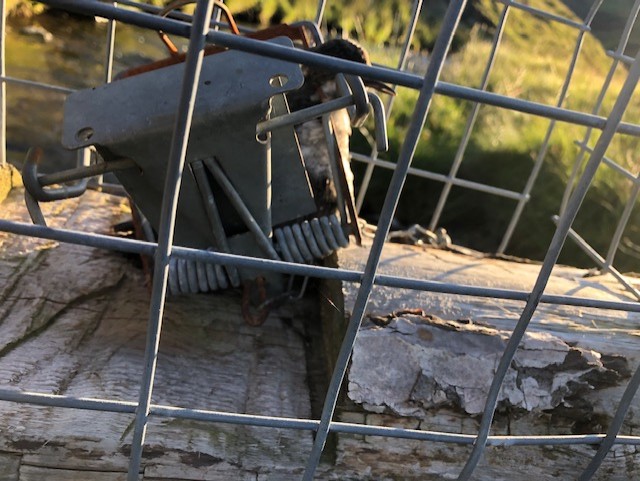
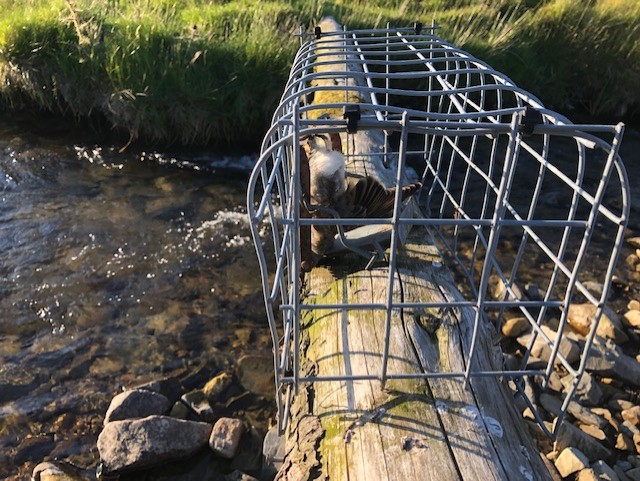
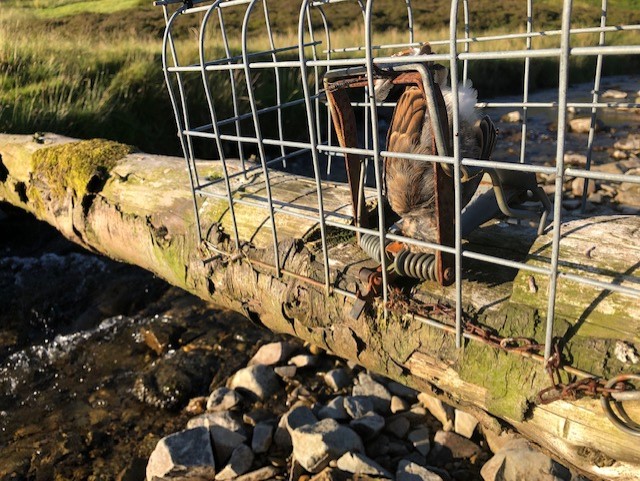
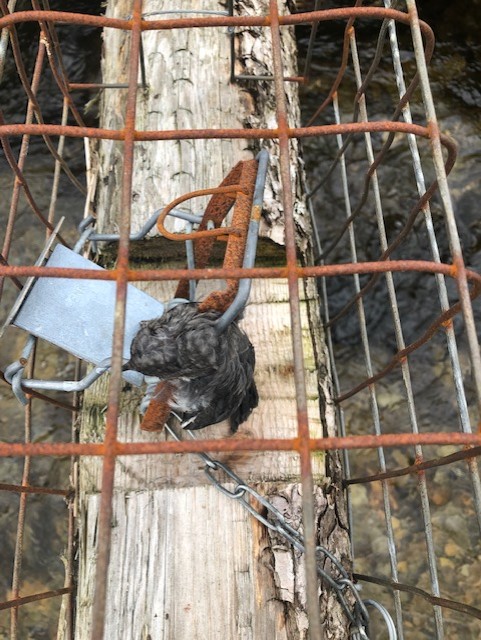
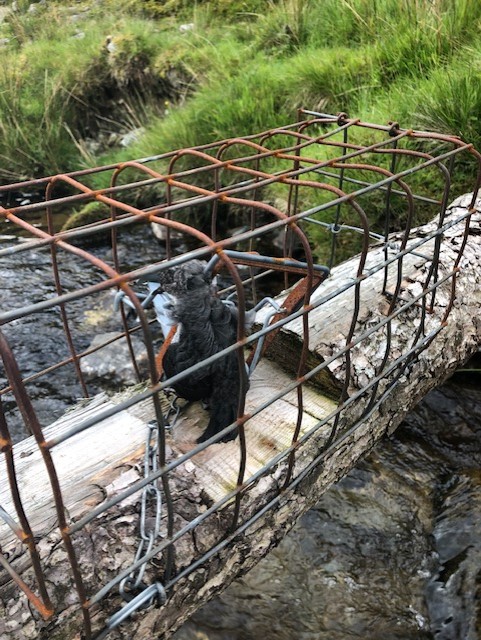
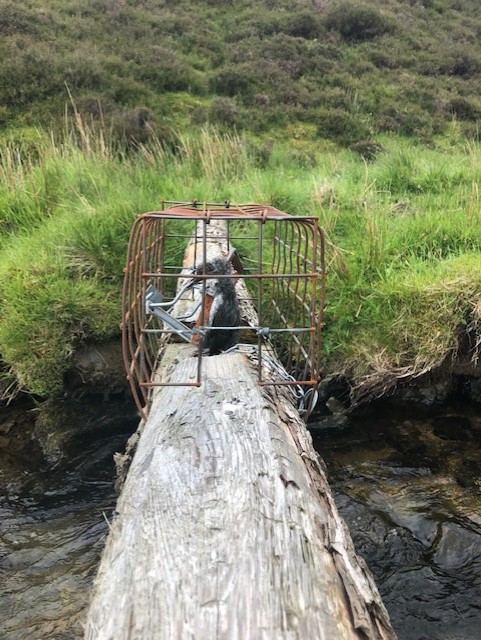
Yesterday, we were sent more images of some different traps that had caught yet more innocent victims. These traps were photographed on the Leadhills (Hopetoun) Estate in South Lanarkshire, and although the traps appear to have been set legally (i.e. the trap has been placed inside a tunnel and the entry holes have been restricted), they have still caught and killed another innocent Dipper and a Wheatear.

As we wrote last week, even though the traps in these photographs appear to have been legally set, and the trap operator has abided by the law, the traps have still caused the deaths of these native species but nobody will be held to account. These deaths are considered acceptable collateral damage, the price our native wildlife has to suffer to enable over-privileged members of the establishment the opportunity to blast to death thousands of game birds later in the year.

There is no legal requirement for grouse shooting estates to monitor, record or report these deaths. The Scottish and Westminster Governments and their statutory conservation advisory agencies (SNH and Natural England) have no clue about how many of these deaths take place on grouse moors each day/week/month/year.

Imagine if we all were setting out traps like this in our back gardens, routinely killing native wildlife without being held to account.

Imagine if you saw these traps set out in your town, killing blackbirds and song thrushes and robins every single day.

For how long do you think we’d get away with it? (Not that anyone with an ounce of decency would want to get away with it).

Now think about how long the grouse shooting industry has been able to get away with this without being challenged/stopped.

Young hen harrier suffers horrific death in illegal trap on Strathbraan grouse moor

RSPB press release (27 June 2019)

YOUNG HEN HARRIER KILLED BY ILLEGAL TRAP ON PERTHSHIRE GROUSE MOOR

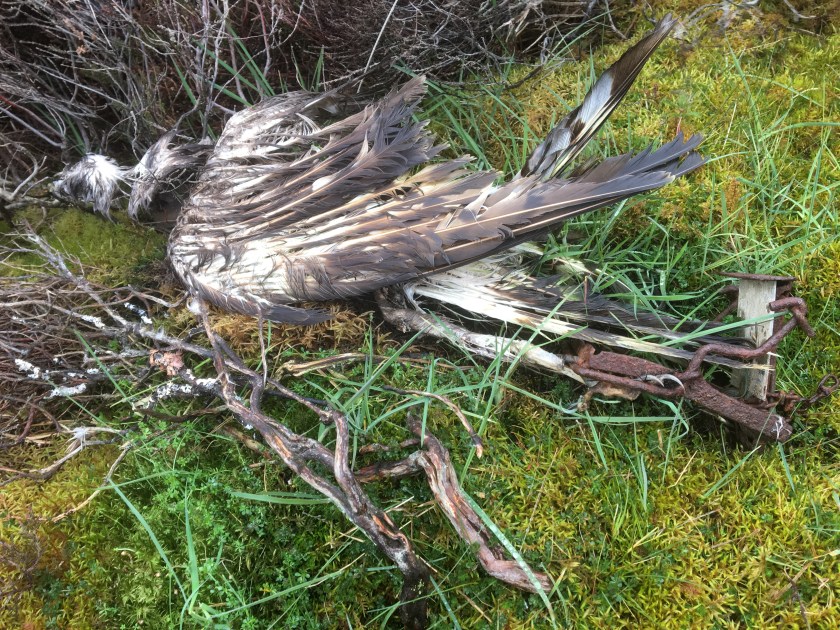
A satellite tagged hen harrier has been illegally killed on a Perthshire grouse moor. The remains of the young female, named Rannoch, were found by RSPB Scotland in May caught in a spring trap which had been set in the open, not permitted by law.

The post mortem report from SRUC veterinary laboratory said: “The bird was trapped by the left leg in a spring trap at time of death. Death will have been due to a combination of shock and blood loss if it died quickly or to exposure and dehydration/starvation if it died slowly. Either way the bird will have experienced significant unnecessary suffering.”

[Hen harrier Rannoch’s remains in an illegal trap on a Strathbraan grouse moor. Photos by RSPB Scotland]

Rannoch was satellite tagged by RSPB’s Hen Harrier LIFE project in July 2017. Her tag data movements were followed closely by RSPB Scotland until 10th November 2018 when she stopped moving in an area of moorland between Aberfeldy and Crieff. The solar powered tag battery drained before accurate location data could be gathered allowing her to be found, but after coming online again in May 2019 enough information was provided to locate her remains. A recent study showed that 72% of tagged British hen harriers are confirmed or considered very likely to have been illegally killed.

Dr Cathleen Thomas, Project Manager for the RSPB’s Hen Harrier LIFE project, said: “We are absolutely devastated that Rannoch has been a victim of crime; the life of this beautiful bird was cut short in the most horrific way due to human actions. Satellite tagging has revealed the amazing journeys made by hen harriers but also uncovers how their journeys end.

Often the birds disappear with their tags suddenly ceasing to function as perpetrators go to great lengths to hide the evidence of their crimes; Rannoch’s death in a spring trap is evidence of one way in which these birds are being killed. In terms of their population size, hen harriers are the most persecuted bird of prey in the UK, and their population is now perilously low, so every loss we suffer impacts the continued survival of the species.”

Ian Thomson, Head of Investigations Scotland, said: “This latest killing of a hen harrier is truly appalling. The actions of the individual who set this trap were both reckless and indiscriminate, and showed a complete disregard for both the law and the welfare of local wildlife. Sadly, the catalogue of criminal killing of tagged hen harriers and other birds of prey continues unabated; we know many others are illegally killed and going undetected, so her death is part of the tip of the iceberg of the true level of criminality.

At a time when our hen harrier population is in sharp decline, we repeat our call on the Scottish Government to take urgent action to regulate driven grouse shooting through a licensing scheme, with sanctions to remove licences to shoot on land where the public authorities are satisfied that illegal activities are occurring”.

Rannoch was one of two chicks who fledged from a Perthshire nest in an area owned and managed by Forestry and Land Scotland in July 2017. Her tag was fitted in partnership with local members of the Tayside Raptor Study Group and Forestry and Land Scotland, who monitored the nest together.

[Hen harrier ‘Rannoch’ being fitted with her satellite tag in 2017. Photo by Brian Etheridge]

The tag data showed Rannoch spent most of her time in Perthshire before she stopped moving on 10th November 2018. As the tag had continued to function after she stopped moving, rather than coming to an abrupt halt, it was assumed that she had died of natural causes. The tag briefly transmitted more data in January this year, and again in May for longer, as the battery recharged in the spring sunlight. The second time more accurate location data was transmitted, allowing RSPB Scotland to finally recover Rannoch’s remains. When RSPB Scotland found Rannoch her leg was caught in a spring trap. Her body was recovered and delivered to the SRUC veterinary laboratory for a post mortem, and Police Scotland were notified.

Logan Steele, a member of the Tayside Raptor Study Group, which monitors hen harriers in the area said: “Rannoch and her sibling were the first birds to fledge from this site in ten years so I was very angry to hear she had died caught in an illegal trap. With so few hen harriers left in this part of Perthshire it is particularly worrying that this bird will not return to breed.”

Anyone with information about this crime or other bird of prey illegal persecution is urged to contact Police Scotland on 101, or the RSPB’s confidential raptor crime hotline on 0300 999 0101.

ENDS

The RSPB press release does not name the grouse moor where Rannoch’s remains were found but just says it was ‘in an area of moorland between Aberfeldy and Crieff’.

This is clearly within the boundary of the Strathbraan raven cull area, where in 2018 SNH issued a licence to local gamekeepers permitting them to kill 69 ravens ‘just to see what happened’. A legal challenge to that licensing decision was successfully made by the Scottish Raptor Study Group and one of their concerns had been that the Strathbraan raven cull area was a known raptor persecution hotspot with a long history of poisonings, illegally-trapped birds and the suspicious disappearances of at least six satellite-tagged eagles.

[RPUK map showing boundary of Strathbraan raven cull area (yellow line) and significant areas of moorland managed for driven grouse shooting (outlined in white). Hen Harrier Rannoch’s corpse was found on one of these moorlands]

Hen Harrier Rannoch’s name will now be added to the ever-increasing list of persecuted satellite tagged hen harriers on British grouse moors, although unusually this time we’re not dealing with a missing corpse and a missing tag that has suddenly and inexplicably stopped working.

No, this time there is no escaping the brutal, barbaric reality of her miserable death. The criminality is writ large, for all to see.

How will the authorities respond this time? Complete silence, as we’ve come to expect every time a raptor persecution crime is reported in the press? We won’t let the Scottish Government off the hook so easily this time.

Wilful blindness will no longer be tolerated.

This weekend, the Scottish Parliament will be celebrating its 20 year anniversary. Twenty years ago, the then Secretary of State Donald Dewar famously described illegal raptor persecution as “a national disgrace” and committed the Scottish Parliament to take “all possible steps to eliminate [raptor] persecution“.

It’s time for the Scottish Government to honour that commitment.

Please send an email of protest to Cabinet Secretary Roseanna Cunningham: cabsececclr@gov.scot Your email needs to be firm but polite. There can be no more prevarication on dealing with these crimes and the Scottish Government needs to understand the strength of feeling about its continued failure to bring the criminals to justice and end these vile actions.

Thank you.

UPDATE 26th January 2022: Lochan Estate penalised after discovery of illegally-killed hen harrier on grouse moor (here)

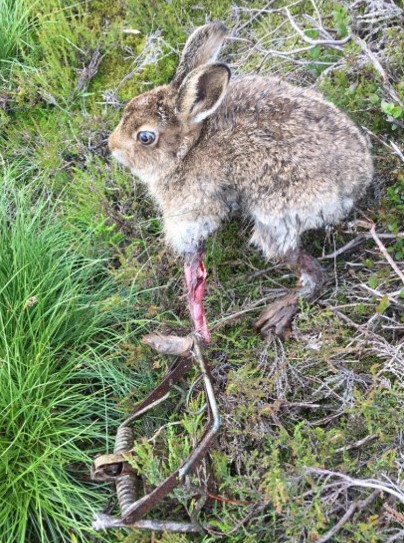
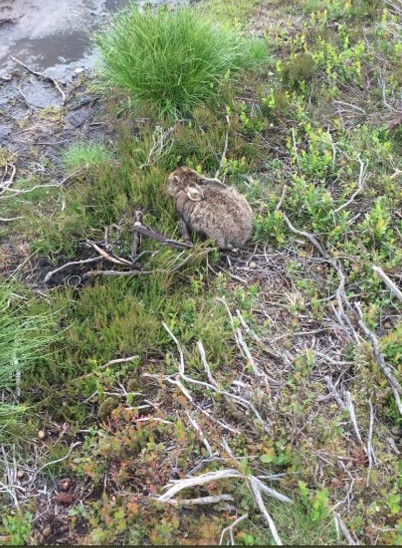
Trap causes horrific suffering on grouse moor in Peak District National Park

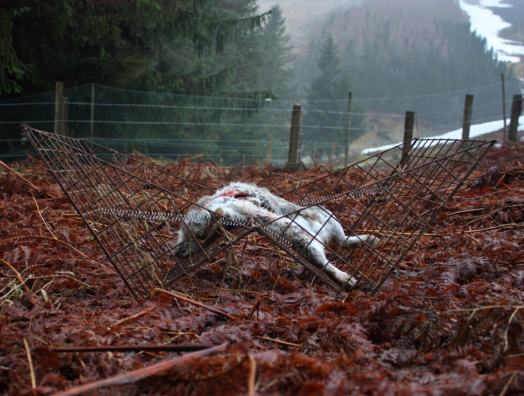
A member of the public stumbled across a gruesome scene this morning on a grouse moor in the Peak District National Park.

@PatHeath2 posted the following images on twitter:

The photographs, reported to be from a grouse moor on the north eastern side of the National Park, have understandably caused widespread disgust and anger.

It’s not clear from the photographs or the accompanying commentary whether this is an illegally-set trap i.e. it had been deliberately pegged out on open ground instead of being placed inside a natural or artificial tunnel or whether the trap had somehow become dislodged from its original [legal] setting inside a tunnel.

Either way, this animal’s suffering is sickeningly and indisputably brutal.

It’s yet another pitiful victim of the savagery that is driven grouse moor management.

And all inside the Peak District National Park; an area where you might reasonably expect wildlife to be protected, respected and cherished. It isn’t, of course, in this or in any of the other UK National Parks where grouse moor management dominates the landscape and where wildlife is simply treated as either a commodity or an inconvenience, to be dispensed with without a second thought.

The photographer has been urged to report this incident to South Yorkshire Police so the circumstances of the trap-setting can be investigated. Unfortunately this particular police force does not have a strong track record when it comes to investigating suspected wildlife crimes e.g. see here and here, despite this area being a well-known wildlife crime hotspot.

More innocent victims caught in traps set on grouse moors

This morning we received the following images from a blog reader showing a young Dipper that had been crushed to death inside a spring trap set across a stream on the Leadhills (Hopetoun) Estate, a grouse shooting estate in South Lanarkshire.

This particular trap looks to be legally-set to catch species such as stoats and weasels. Although there are strong ethical and welfare concerns about the use of these traps to kill these species (and especially the complete lack of monitoring and reporting) what has happened here is perfectly legal. As per the regulations, the trap is covered by an artificial tunnel and the entry holes at both ends have been restricted to reduce the opportunity for non-target species to enter the tunnel and be caught in the trap.

Clearly, the entrances were insufficiently restricted to prevent this bird entering and being killed, but that is in no way a reflection of bad practice by the estate – the trap operator has followed the rules.

There is no legal requirement for grouse shooting estates to monitor, record or report these deaths. The Scottish Government and its statutory conservation advisory agency (SNH) has no clue about how many of these deaths take place on grouse moors each day/week/month/year.

We’ve blogged about this issue many times before. Sometimes it’s obvious that a trap has been set illegally (i.e. when it hasn’t been placed inside a tunnel) and sometimes it’s less obvious but still illegal, for example when little or no effort has been made to restrict the tunnel entrances.

The RSPB has also had concerns about this issue and today has written a blog (here) and released a video (see below) about a number of cases of what appear to be illegally-set traps on various grouse moors in North Yorkshire, South Yorkshire and Bowland, all found this year. The RSPB blog highlights what it says are ongoing inconsistencies in how different police forces respond to such crimes and their subsequent decisions about enforcement action/inaction.

SNH announces consultation on General Licences

Scottish Natural Heritage (SNH) has announced it is to launch a public consultation on the General Licences later this summer.

[The use of traps like this one are ‘regulated’ under the General Licences but that ‘regulation’ is rarely enforced]

Here’s the SNH press release:

SNH to launch General Licence Consultation

A 12-week consultation about General Licences will take place later this year, Scottish Natural Heritage (SNH) announced today.

A General Licence is a type of species licence that allows users to control wild birds or destroy their nests, for reasons such as preventing serious damage to crops, protecting public health, and guarding air safety when flocks of birds are liable to get in flight paths.

Robbie Kernahan, SNH’s Head of National Operations, said: “We want to ensure that General Licences in Scotland are clear, proportionate and fit-for-purpose. In light of the complicated situation in England with General Licences right now, we have decided to bring forward our consultation which had been scheduled for 2020.

Our General Licences cover relatively common situations – such as preventing agricultural damage and protecting public health and safety – when there’s unlikely to be any conservation impact on a species. They avoid the need for people to apply for individual licences for these specific situations. As with any licence, we need to ensure that General Licences strike the appropriate balance between species conservation and a range of other legitimate interests.

We would like to reassure those who are currently operating under General Licences in Scotland that these remain in place, allowing those who comply with the conditions to continue to use them.”

The consultation will ask stakeholders for their views about how General Licences work in practice, what they should cover, and how they are worded.

ENDS

This proposed review and public consultation of the General Licences is no surprise given the recent situation with similar General Licences in England which Natural England has had to admit are unlawful, after a legal challenge by Wild Justice.

And whilst the proposed SNH review and consultation is to be welcomed, long-term blog readers will know we’ve been here many times before (e.g. see herehereherehere, here and here) and although SNH has responded to some criticisms in the past by making some minor amendments, most of the requests for reform have fallen on deaf ears.

General Licences are still considered to be a light-touch form of regulation for the killing of wild birds and there are MANY areas of improvement still needed, not only to address the principle that lethal control of birds should be a last resort, but also to close the loopholes being routinely exploited by raptor-killing criminals. If calls for reform are ignored again, without justification, SNH may well find itself facing another legal challenge.

We look forward to the launch of the consultation later in the year and we’ll be encouraging as many people as possible to submit a response.

UPDATE 5pm: RSPB Scotland has issued a strong statement welcoming the review in light of some of the current General Licences being “not fit for purpose”. Spot on.

Illegal trap user escapes trial after prosecution shambles

Here’s another example of another raptor persecution case collapsing.

This was published in the latest edition of Legal Eagle (#87), the RSPB Investigation Team’s newsletter:

It’s so frustrating. Yes, the CPS is massively under-resourced and struggling to cope with far more serious crimes than this, so even more justification, then, for the need for a specialist wildlife crime unit to investigate and then prosecute alleged offenders.

Who’d pay for that? Licence the entire game shooting industry, which is the industry responsible for the vast majority of raptor persecution crimes, and it’d raise millions. Sorted.

New satellite tag to detect illegal killing of golden eagles in Cairngorms National Park, eagle-killing hotspot

Press release from Cairngorms National Park Authority (23 March 2019)

Cutting edge technology to provide new insight into lives of Scotland’s golden eagles

An innovative new type of satellite tag has been designed to provide a boost to understanding raptor movements and behaviour, as well as help understand the fate of birds which die in the Cairngorms National Park and more widely across Scotland.

Over the next 18 months some young Golden Eagles in and around the Cairngorms National Park will be fitted with a novel ‘Raptor Tracker’ tag, as part of a trial which will provide key information on movements and behaviour, such as whether a bird is feeding or resting. Most importantly, it will provide an instant fix on any birds which die.

Tags in current use are limited in what information they can provide on the exact location of any bird which dies.  This new tag uses the ‘geostationary Iridium’ satellite network and ensures that signal information is always available. Crucially, it has been developed with multiple sensors; these immediately send a ‘distress’ signal, with an exact location, back to base if unusual behaviour is detected. This early warning system has the added benefit of helping to rapidly identify and recover birds which have died.

[An illegally killed satellite-tagged golden eagle, believed to have been trapped on a grouse moor in the Angus Glens resulting in its legs almost being severed, and then dumped in a layby several km away, inside the Cairngorms National Park, where it was left to die an horrific death. Photo by RSPB]

Environment Secretary Roseanna Cunningham said: This is great news for improving our understanding of eagle behaviours, and in the fight against wildlife crime. The tags should make a real difference in deterring would-be criminals, as well as playing a key role in establishing exactly what happened, should any of these magnificent birds of prey disappear or die in unusual circumstances.”

Grant Moir, CEO of the Cairngorms National Park Authority (CNPA) said: “Raptor conservation and tackling wildlife crime is one of the aims of the recently launched Cairngorms Nature Action Plan 2019-2023. This is an exciting breakthrough in the technology around raptor conservation, understanding the birds and combatting wildlife crime.”

Robbie Kernahan, Head of Wildlife Management, of Scottish Natural Heritage (SNH) added: “This exciting new technology will give us new information on the movements of these iconic birds. This should also be a significant deterrent to anyone thinking of persecuting raptors, as we will have detailed information on birds’ movements in the minutes leading up to their death.”

Charlie Everitt, UK National Wildlife Crime Unit commented: “This new tag is a significant step forward in using technology to research further the intriguing ranging behaviour of Golden eagles. However, the implications for preventing wildlife crime and as an aid to enforcement are also very apparent. I look forward to the trial and working closely with colleagues in CNPA and SNH.“

Phil Atkinson, Head of International Research, BTO said: “BTO has been developing new tagging technologies for several years, working to increase the quality and type of information collected. These new ‘Raptor Tracker’ tags have the potential to reveal new aspects of Golden Eagle behaviour, providing fascinating insights into their lives. We are looking forward to the trial and what it reveals.”

The CNPA and SNH have been working on this for over two years, and for the last six months the British Trust for Ornithology has been involved in developing the new tag. The tags will be placed on birds over the next 18 months to trial them. Changes can be made to the tags remotely to ensure that they are working optimally.

If the trial proves successful, the organisations will look at putting these on more Golden Eagles and also the potential miniaturisation of the technology to allow similar tagging of Hen Harriers and other species.

END

Some of what has been written in this press release is absolute nonsense, in terms of the limitations of some of the highly sophisticated satellite tags currently deployed on golden eagles. However, to focus on that would detract from the bigger picture of what is being proposed, and that’s far more important to discuss.

The development of a tag that can potentially send what amounts to a distress signal from the exact location and at the exact time the tagged eagle is being illegally killed is to be warmly welcomed. If this tag works as the manufacturers claim it will, it will provide wildlife crime investigators with high quality evidence of the precise location of the crime, which currently can only be inferred from tag data depending on the tag’s ‘duty cycle’, which determines when it’s programmed to transmit data to the tag operator (this can vary between a matter of hours and a number of days, depending on tag type). That would be a seriously good development.

What it wouldn’t do is to identify the individual criminal, especially if the crime took place on a large grouse moor estate where multiple gamekeepers are employed (which is where most of the golden eagle killing in Scotland has taken place). In those situations, the wildlife crime investigation wouldn’t get any further than the current situation we see playing out so often today –  that is, the body and the tag removed from the scene and destroyed, “no comment” interviews from all suspects and no way for the police to identify the actual individual responsible. Without that identification, a prosecution cannot proceed.

That’s not to say that the estate would get off scot free though, as they currently do. Conservationists have been arguing that the pattern of evidence from the current raptor satellite tags that suddenly and inexplicably ‘disappear’ should be sufficient evidence for SNH to impose General Licence restrictions on the offending estates. For some reason (unexplained, as far as we can tell), this has not been happening, even though the Environment Cabinet Secretary acknowledges the significance of the data pattern (see her editorial in the Government’s annual wildlife crime report). However, if this new tag can do what is claimed it can do, there’s no question that that information should be accepted by SNH and sanctions should be applied to the estate involved.

It’s great that this tag will be trialled in and around the Cairngorms National Park, given that some of the more intensively-managed grouse moors in and at the edge of the Park are well-known golden eagle-killing hotspots, as shown in this map derived from data provided in the golden eagle satellite tag review in 2017. It’s interesting that none of the people quoted in the press release mentioned this fact!

It is though, very pleasing indeed to see such senior figureheads recognise that the deployment of satellite tags on threatened raptor species is an acceptable and important conservation tool and a helpful investigative tool for detecting wildlife crime. It seems the concerted campaign by several meat heads in the gamekeeping world, which has included disgraceful personal attacks and smears on the integrity of those who fit satellite tags, has fallen on deaf ears.

We look forward to hearing about the field trials on this new tag in due course. Well done to all involved.

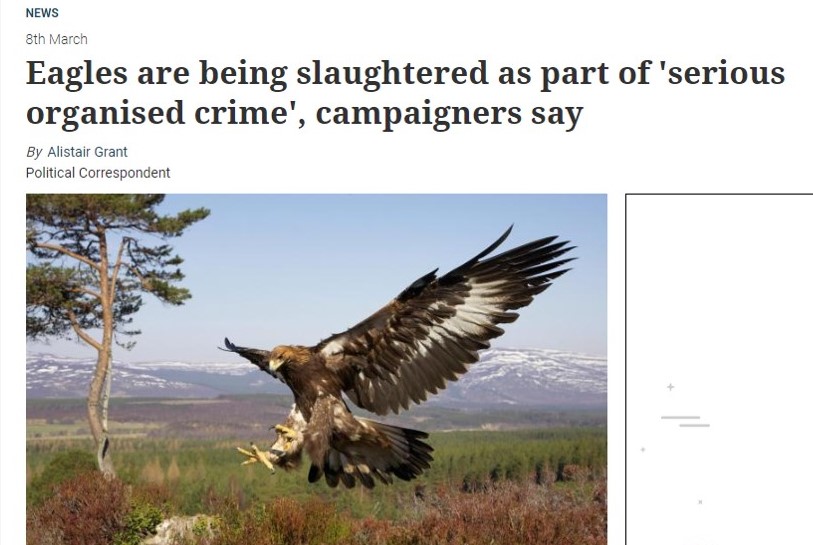
‘Eagles are being slaughtered as part of serious organised crime’

Revive, the coalition for grouse moor reform held its first ever fringe event at a party political conference yesterday, at the Scottish Labour conference in Dundee.

The event was chaired by Claudia Beamish MSP and three speakers from Revive joined the panel (Dr Ruth Tingay of RPUK, Max Wiszniewski, Revive Campaign Manager, and Dr Craig Dalzell, Head of Policy & Research at Common Weal) with another coalition member (Dr Richard Dixon, Director of Friends of the Earth Scotland) in the audience.

[Photo by Louise Robertson]

Each speaker gave a ten minute presentation followed by approx 20 minutes of questions from the floor.

It was brilliant to see a number of journalists in the audience, resulting in some good coverage in the papers today.

The Herald focused on the illegal persecution of golden eagles and hen harriers on or close to driven grouse moors and journalist Alistair Grant got the message loud and clear that, in our opinion, the extent of this persecution on many driven grouse moors is such that it amounts to serious organised crime. [Definition by the National Crime Agency: ‘Serious crime planned, coordinated and conducted by people working together on a contuining basis. Their motivation is often, but not always, financial gain‘]

Here’s the text from The Herald article:

GOLDEN eagles and other protected birds of prey are being illegally slaughtered in what amounts to “serious organised crime”, a leading expert has said.

Dr Ruth Tingay of Raptor Persecution UK said birds are being killed on or near grouse moors across Scotland before the evidence is then removed to avoid prosecution.

She spoke out during a fringe meeting at the Scottish Labour conference in Dundee.

Claudia Beamish MSP, the party’s environment spokeswoman, said it backed strict new rules for estate owners – including a total ban on the use of lead shot and the large-scale cull of mountain hares.

She said: “In order for grouse moors to continue, if indeed they do, there needs to be very robust licensing.”

Labour delegates heard grouse moors cover almost a fifth of Scotland, with estates handed more than £300,000 a year in public subsidies.

Revive, a coalition of organisations calling for change, insisted estates should be stripped of this cash as part of a crackdown aimed at encouraging radical land reform.

It said the intensive land management associated with driven grouse shooting causes environmental damage.

Meanwhile, there is evidence scores of birds have been illegally killed on or near estates, it said.

Dr Tingay, a leading raptor ecologist, said: “My argument is that what we are seeing here – not just with golden eagles but with other birds of prey, particularly hen harriers, which are also persecuted on driven grouse moors – is serious organised crime.

If the Government accepted this, we would see a lot more resources coming in to deal with this issue.”

She said some estimates suggest 50 eagles a year are disappearing.

Revive is made up of Raptor Persecution UK, Friends of the Earth Scotland, animal charity Onekind, the League Against Cruel Sports Scotland and think tank Common Weal.

Craig Dalzell, head of policy and research at Common Weal, said estates should be opened up to other uses.

He said grouse moors in Scotland had an annual economic impact of £32 million and were responsible for around 2,640 jobs.

In comparison, forestry boasts an annual economic impact of £973m and creates 26,000 jobs, he said.

ENDS

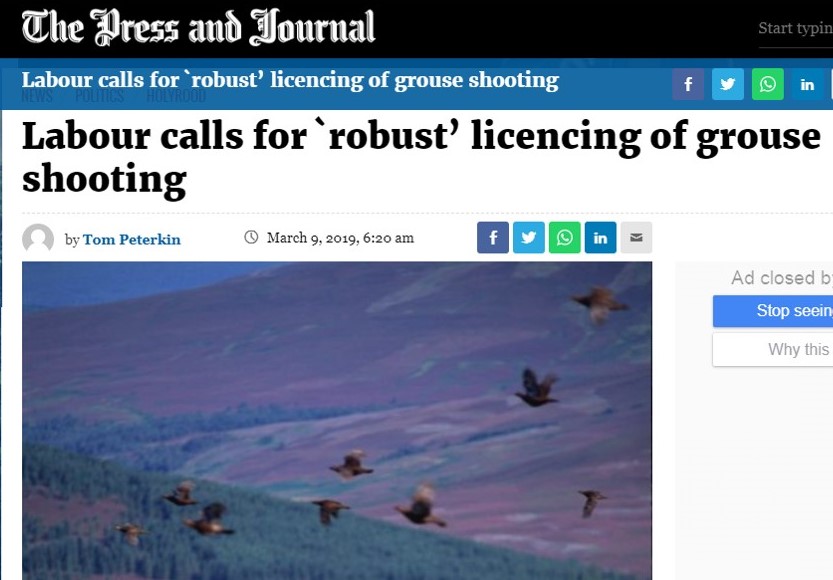
The Press & Journal also covered this fringe event and journalist Tom Peterkin headlined with this:

Here’s the text of the P&J article:

Labour has said there should be robust licencing of grouse shooting amid claims that illegal wildlife killing on sporting estates amounted to “serious organised crime”.

The call was made by Shadow Environment Secretary Claudia Beamish at a Labour conference fringe meeting where she cast doubt on the survival of the pastime in the long-term.

The meeting was hosted by Revive, an organisation campaigning for the reform of the country sport and whose agenda includes stripping grouse moor landowners of public subsidies.

Speaking at the meeting, Ms Beamish said it would be “valid” for a licencing system to take into account issues raised by Revive.

Ms Beamish said: “I think that in order for grouse moors to continue – if indeed they do – there needs to be very robust licencing and robust monitoring.”

Ms Beamish made her remarks after campaigners claimed grouse moors only supported 3,000 jobs on an average salary of £11,500 despite accounting for almost one fifth of Scottish land.

Ruth Tiingay of Raptor Persecution UK, drew attention to golden eagles killed on Scottish moors, arguing it was “serious organised crime”.

Max Wiszniewski of Revive said his organisation was “not going for a ban” on grouse shooting “however understandable that would be”.

Rather Revive’s focus was to reform it as much as possible, including an end to government subsidies, heather burning limits, a lead ammunition ban, a ban on snares and more action against wildlife crime.

He said: “The question may come about if the industry can’t survive after the necessary reforms, it possibly has to reflect on itself.”

ENDS

This was a very worthwhile event. Revive signed up more supporters to its pledge for grouse moor reform (you can sign online here if you haven’t already done so), it was an opportunity to interact with a number of politicians who were keen to learn more about the Revive campaign and the media was interested in what we had to say.

Well done to Max (Revive Campaign Manager) for organising this event and many thanks to Claudia Beamish MSP for her interest and support.

Revive will be at other party political conferences later this year.

Buzzard & hobby found with horrific spring trap injuries on Isle of Wight

Police press release (4 Dec 2018):

POLICE INVESTIGATION LAUNCHED AFTER BIRDS OF PREY KILLED BY ILLEGAL TRAPS ON ISLE OF WIGHT

Two protected birds of prey, likely to have been caught in illegal spring traps, suffered ‘horrific and traumatic’ injuries.

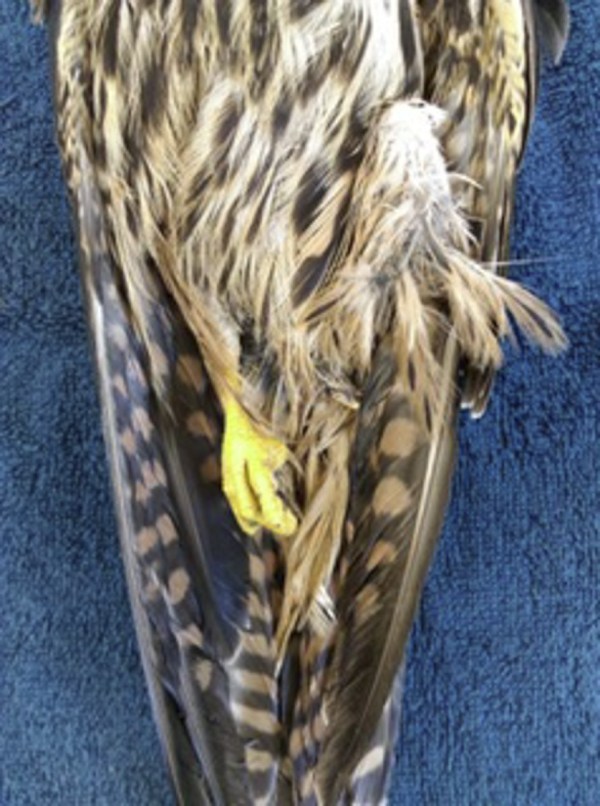
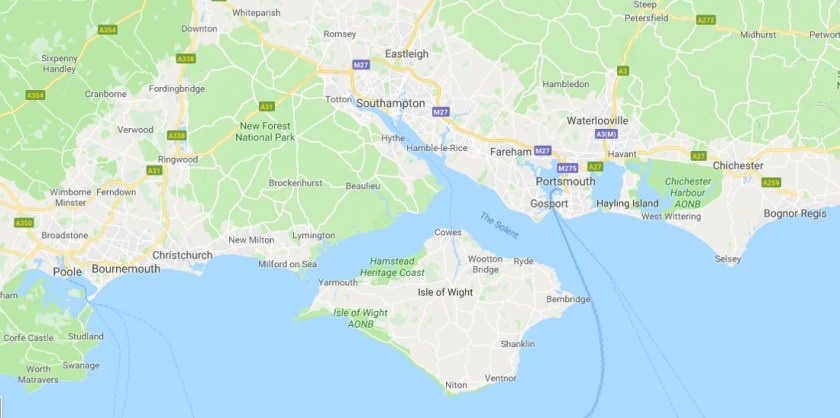
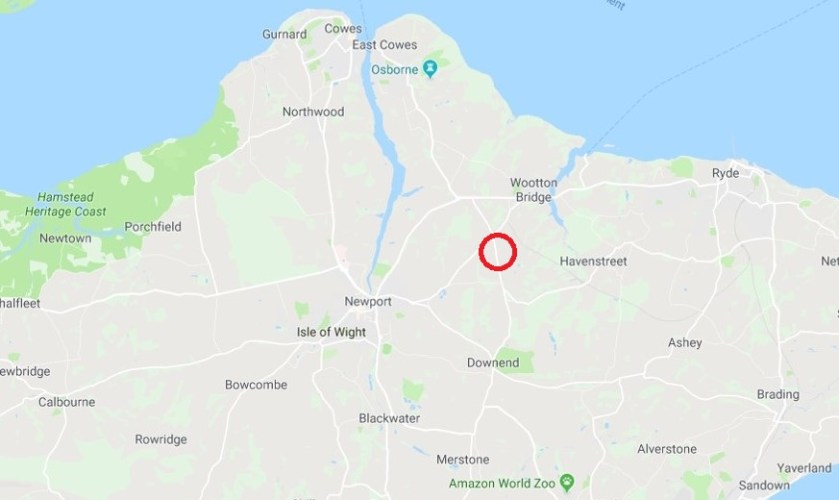
A joint investigation has been launched by Isle of Wight Police and the RSPB after the birds, a buzzard and a hobby, were found with severed legs in woodland at Littletown, near Briddlesford.

The buzzard was found dead, with a missing foot, on March 14. The hobby — a small falcon similar to a kestrel – was found alive, also with its foot missing, on September 23. It was taken to the RSPCA and put down.

[The buzzard with a severed foot]

[The hobby with a severed foot, photo by RSPCA]

The RSPB said today (Tuesday) the birds were likely to have been illegally trapped.

The birds, a hobby and a buzzard, were found with horrific injuries. Both had lost a foot as a result of becoming caught in a spring trap,” said a spokesperson.

Police were alerted and the birds were sent for post-mortem examinations. The report concluded: ‘Both birds suffered traumatic amputations of one lower limb consistent with the affected leg being caught and held in a spring trap.’

All wild birds are protected by law under the Wildlife and Countryside Act 1981 which makes it an offence to intentionally harm them. Anyone found to have done so faces an unlimited fine with up to six months in jail.

Jenny Shelton, from the RSPB’s investigations unit, said: “Spring traps are sometimes used to catch and kill vermin, and are legal if placed in a tunnel, with a restricted entrance, for this purpose. However spring traps set out in the open are illegal, and pose a huge danger to wildlife. 

We have had numerous reports over the years of birds of prey being deliberately caught in these brutal devices. Birds of prey are incredible creatures and it’s devastating that the lives of these two birds have ended in this way. We are grateful to the people who reported these birds. If you find an injured bird of prey, or come across a metal trap set out in the open or on a pole, call the police on 101 immediately.”

PC Tim Campany, from the Country Watch team, said: “We are working closely with our colleagues from the RSPB to establish what happened. One line of enquiry is that the birds may have been caught and held in a spring-type trap.

This is illegal and is a barbaric method of trapping. It leaves the bird, once freed from the trap, unable to land and feed and it will eventually die of starvation.

Raptor persecution is a priority of the National Wildlife Crime Unit and will not be tolerated.

I would urge anyone with information on suspicious vehicles, persons, or traps located in the Bridlesford area to call us now.”

Anyone with information should call Isle of Wight Police on 101, quoting the reference 44180374840.

ENDS

Illegal raptor persecution is a national wildlife crime priority, so why the hell has it taken nine months for the news of this buzzard to emerge, and two and a half months for the hobby? What’s the point of appealing for information so long after the events?

It’s just not good enough.

These incidents will also cast a shadow on the proposed reintroduction of white-tailed eagles to the Isle of Wight.

Illegal gin trap found set near Nairn, Highlands

Police Scotland has issued a statement about the discovery of an illegal gin trap found set near Nairn in the Highlands:

ILLEGAL GIN TRAP FOUND NEAR NAIRN (30 Nov 2018)

Police in Nairn have issued a warning about the use of illegal traps following the discovery of one set near the town.

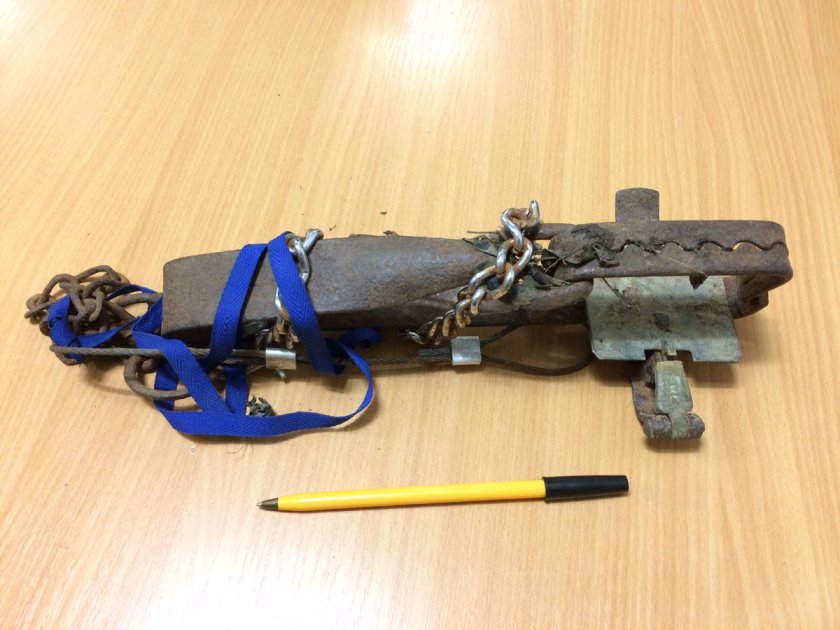
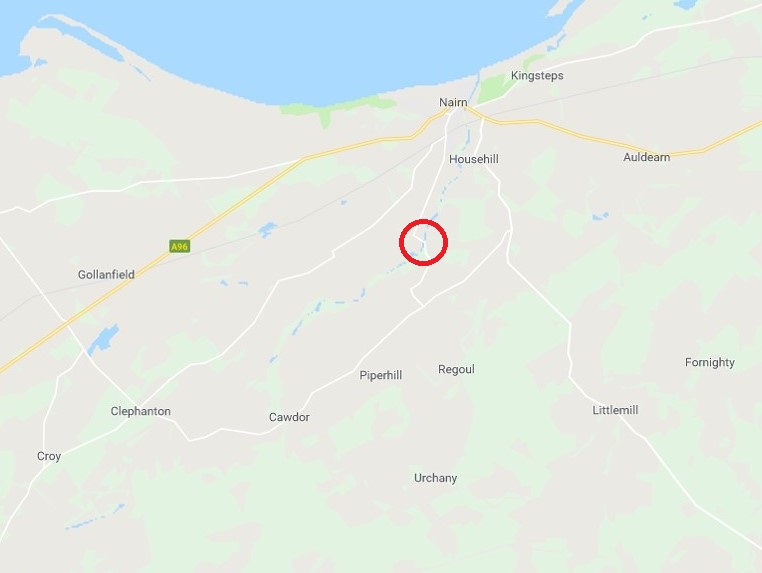
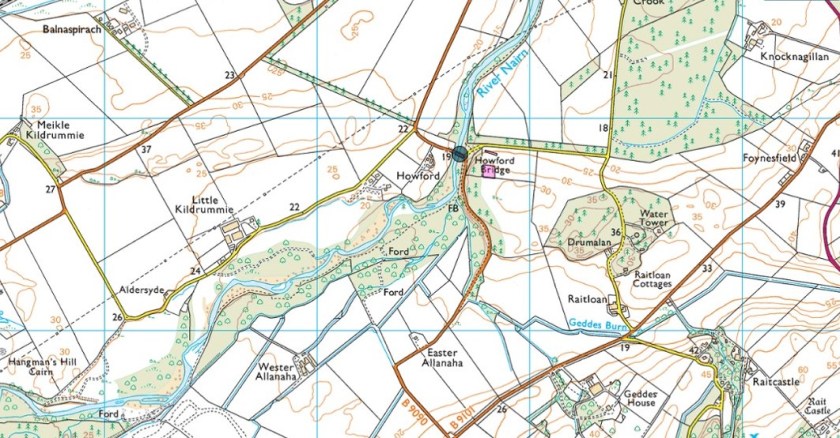
The illegal gin trap, although rusty, was fully functioning and was discovered by a member of the public on the afternoon of Wednesday, November 28 near Howford Bridge a few miles south of the town.

Nothing had been caught in the trap and the device has since been recovered by officers.

[Photo of the gin trap from Police Scotland]

[RPUK maps showing location of Howford Bridge, south of Nairn]

Wildlife liaison officer Constable Jonathan Clarke said: “Gin traps have been illegal for many years and are entirely indiscriminate. This device could have caused serious injury to a wild animal, a pet or even a person if they been caught in it.

Setting a trap such as this is a criminal act, as is possessing something like with the intention of using it.

Setting one in an area close to the river which is popular with dog walkers is extremely reckless and it is fortunate that this was discovered before anything or anyone was injured.

No further traps have been found but I would urge the public to be vigilant when walking in the area.

If anyone does find a trap then please do not try to deal with it on your own but carefully note the location and report it to police immediately.

Enquiries into this trap are ongoing and I would urge anyone with information to contact police on 101, using reference NM3269/18, or call Crimestoppers on 0800 555 111.”

ENDS

Well done Police Scotland for a very fast response to remove the trap and for an equally speedy public alert.

It’s shocking to see these traps still in use. Gin traps have been banned in England since 1958 and banned in Scotland since 1971, and yet still they’re being used to target wildlife.

It’s not clear which species was being targeted in this latest case but previously we’ve seen gamekeepers using them to trap buzzards (gamekeeper convicted in 2015 (here) and his boss convicted for vicarious liability (here) and earlier this year a red kite was trapped resulting in horrific injuries (here)).