Grouse shooting industry response to police appeals re: missing hen harriers

Earlier this week North Yorkshire Police put out a public appeal for information regarding satellite-tagged hen harrier ‘John’, missing in suspicious circumstances and whose last known location was Threshfield Moor, a grouse moor in the Yorkshire Dales National Park.

We also saw a public appeal for information from Northumbria Police and the RSPB regarding satellite-tagged hen harrier ‘Manu’, also missing in suspicious circumstances and whose last known location was Blenkinsopp Common in the North Pennines.

We’ve just looked at the News sections of several organisations websites, all of whom are partners in the Raptor Persecution Priority Delivery Group (RPPDG: whose remit includes ‘providing publicity about raptor persecution to build trust and transparency’). Here’s what we found:

Moorland Association – NOTHING

National Gamekeepers Organisation – NOTHING

Countryside Alliance – NOTHING

British Association for Shooting & Conservation – NOTHING

No statements, no urging their members to come forward with any information they might have, no appeals to the public, not even a cut & paste job of the police appeals for information. Absolutely nothing.

It’s the same deafening silence we heard in August when North Yorkshire Police appealed for information about the attempted shooting of nesting marsh harriers and the theft of their eggs on a grouse moor in the Nidderdale AONB, and the same deafening silence that followed the news of a poisons cache buried on another North Yorkshire grouse moor (see here).

Their silence tells us all we need to know.

Scottish Government announces Grouse moor management review group

Back in May 2017, Cabinet Secretary Roseanna Cunningham announced an intention to set up an independently-led group to review grouse moor management practices, and to advise on the introduction of an estate shoot licensing scheme. This was mainly in response to the publication of the Golden Eagle Satellite Tag Review, which found that almost one third of sat-tagged golden eagles had disappeared in highly suspicious circsumstances on intensively managed driven-grouse moors. But make no mistake, this was also in response to increased public pressure from the SRSG’s petition calling for game shoot licensing and also in response to increasing public anger about the continuing illegal persecution of birds of prey on driven grouse moors.

[Photo: Conservationist Roy Dennis with dead golden eagle ‘Alma’ – one of Roy’s first satellite-tagged eagles that was found illegally poisoned on an Angus Glens grouse moor]

Finally, almost six months after that first announcement, the Scottish Government has just released the news about who will serve on this review group.

Here’s the Scottish Government press statement:

New group to focus on sustainability of driven-grouse moors.

Membership of an independent group to ensure grouse moor management practices are sustainable and legally compliant has been confirmed.

The new group will be led by Professor Alan Werrity, who previously chaired a Scottish Natural Heritage review into sustainable moorland management. It includes scientists, moorland managers, regulatory experts and advisers from SNH, Scottish Wildlife Trust, the Game and Wildlife Conservation Trust and the Scottish Environmental Protection Agency.

The group has been set up in response to SNH research that found almost a third of golden eagles being tracked by satellite died in suspicious circumstances and that the majority of cases were where land is intensively managed for driven grouse shooting.

The group will look at the environmental impact of grouse moor management practices such as muirburn, the use of medicated grit and mountain hare culls and advise on the option of licensing grouse shooting businesses.

Environment Secretary Roseanna Cunningham said:

We have been clear that the continued killing of protected species of birds of prey damages the reputation of law-abiding gamekeepers, landowners and the country as a whole.

This new group will look at what we can do to balance our commitment to tackling wildlife crime with grouse moor management practices, so it continues to contribute to our rural economy, while being sustainable and compliant with the law.

The group membership reflects the complex nature and wide range of issues that need to be considered and I look forward to hearing their advice in due course.”

Professor Werrity said:

This is truly challenging work given the traditions underlying moorland management and the concerns coming to light over some mal-practices.

My earlier work chairing the SNH Moorland review also sought to reconcile nature conservation interests with promoting the rural economy. I will be taking an evidence-based approach, and for this we have the right mixture of experience, expertise and knowledge on the group to get to grips with the subject. I look forward to getting started on this review. ”

Background

Read the Golden Eagle Satellite Tag Review

The confirmed membership of the group includes Professor Alan Werrity FRSE, Professor Ian Newton OBE, FRS, FRSE, Professor Alison Hester FSB, (Professor Colin Reid FRSA – see update below) and moorland managers Alexander Jameson BLE MRICS FAAV and Mark Oddy MRICS CEnV MIAagrM.

[Update 28 Nov 2017: Law professor joins grouse moor management review group, here ]

Dr Calum Macdonald (SEPA), Professor Des Thompson (SNH), Dr Adam Smith (GWCT Scotland) and Susan Davies (SWT) will be specialist advisers to the group.

ENDS

Here is the response from RSPB Scotland to today’s announcement:

RSPB Scotland welcomes announcement of grouse moor enquiry

RSPB Scotland has welcomed today’s announcement by the Scottish Government on the grouse moor enquiry panel. Duncan Orr-Ewing, Head of Species and Land Management for RSPB Scotland said: “We very much welcome the announcement of this enquiry and of the independent panel. We look forward to giving evidence to the panel in due course.

The remit of the panel includes consideration as to how grouse moors can be managed sustainably and within the law. There are significant public concerns about how grouse moors are currently being managed in Scotland, including clear evidence gathered over decades of the illegal killing of birds of prey.

In recent years these concerns have broadened to encompass wider grouse moor management practices, as commercialisation has taken place, with an emphasis on producing very large and unsustainable grouse numbers for sport shooting. These practices include muirburn on peatland habitats which are important as carbon stores for combating climate change, the culling of mountain hares and the medication of ‘wild’ red grouse, both designed to prevent grouse diseases and artificially boost grouse bags.

We support the introduction of an effective licensing system for driven grouse shooting, with sanctions including the removal of such licences where illegal practices are confirmed. A licensing system could be supported by a statutory Code of Practice setting out clear management standards to protect public interests and prevent bad management practices. These kind of licensing systems are common place in other European countries and equally support legitimate and well run shooting enterprises.”

ENDS

[Photo: the typical landscape of an intensively-managed driven grouse moor in Scotland. Photo by Ruth Tingay]

Here is the response from the Scottish Raptor Study Group to today’s announcement:

Scottish Raptor Study Group warmly welcomes today’s announcement by the Scottish Government on the grouse moor enquiry panel.

Patrick Stirling Aird, Secretary of the Scottish Raptor Study Group said, “We are delighted that the membership of the panel has been announced and look forward to providing evidence when called upon to do so“.

The public have increasing concerns around the way in which grouse moors are being operated with a substantial body of science proving beyond all doubt the widespread and illegal persecution of birds of prey on many such moors.

We support the introduction of licensing for driven grouse shooting with enforceable sanctions where illegal practices are confirmed. Such a licensing scheme could incorporate a statutory code of practice which helps to protect the public interest and to prevent bad management practices. This concept is widespread in Europe and elsewhere and works well with legitimate shooting interests.

ENDS

Here are our first thoughts.

Hallelujah! The panel has finally been announced and presumably its work will now get underway, although notice there is no mention of timescales in the Scottish Government’s statement. That’s not too much of a concern right now – as Roseanna mentions, this work will be complex and it’s in everyone’s interests that it is done thoroughly, so we probably shouldn’t expect any output until at least 2019.

This panel has some serious intellectual heavy weights (Chair, Professor Werrity, and panel members Professors Newton and Hester). All three are at the top of their respective fields and have been for years; their academic achievements and scientific authority are undisputed. We are delighted to see these three involved, especially given Professor Werrity’s intention for having an “evidence-based approach” to the review. Excellent.

The other two panel members (Mr Jameson and Mr Oddy) are a bit of a surprise, to be honest. We didn’t expect to see anybody with such obvious vested interests be part of what had been described as an independently-led review group. Nevertheless, there is probably good reason for having them on board, not least to get buy-in to the review from the game-shooting sector. We know very little about Mr Jameson and only a little bit about Mr Oddy – he’s the chap who, when working for Buccleuch Estates on the Langholm Moor Demonstration Project, suggested that lethal control of buzzards should be a considered option…..but his suggestion was based on no scientific evidence whatsoever, in fact it was the exact opposite of what the science was showing. Hmm.

All in all, just like RSPB Scotland and the Scottish Raptor Study Group, we very much welcome today’s announcement. It is the next step on the road to what many see as the inevitable introduction of an estate licensing scheme in Scotland. We look forward to giving evidence, if invited to do so.

UPDATE 28 November 2017: Law professor joins grouse moor management review group (here)

UPDATE 24 April 2018: Grouse Moor Management Review Group: 1st meeting report (here)

New report reveals widespread raptor persecution in Northern Ireland

The Partnership for Action against Wildlife Crime Northern Ireland (PAW NI) has today published its latest report on bird of prey persecution 2015-2016.

The report reveals that there were five confirmed illegal persecution incidents reported in 2015 and a further six in 2016, involving the killing of 12 protected birds of prey in Northern Ireland (6 x buzzards, 5 x peregrines, 1 x sparrowhawk). As with every other annual raptor persecution report these figures are probably just the tip of the iceberg.

The report’s lead author, Dr Eimear Rooney (Raptor Officer for the Northern Ireland Raptor Study Group) commented: “This latest persecution report helps us all to understand the scale and distribution of the problem. It is particularly shocking to see new areas appear on the hot-spot maps, showing the issue of raptor persecution to be widespread. It is heart-breaking to think of the deaths of these protected birds but it is particularly shocking to see the continued usage of highly toxic Carbofuran. The PAW NI group will continue to take action to tackle raptor persecution and it is encouraging to see all the partners proactively working together on this report.”

Hotspot map of confirmed incidents of raptor persecution, and poisoned baits & wildlife, reported in Northern Ireland from January 2009-December 2016.

Download the PAW NI report here

Read the PAW NI press release here

On the subject of illegal raptor persecution in Northern Ireland, a 13-year old boy named Dara MacAnulty is doing a 45km sponsored trek in January 2018 to help raise funds for a new raptor satellite-tagging project in Northern Ireland.

Dara is a pretty special young man, passionate about the environment, especially raptors, and he has an exceptional talent for expressing his thoughts – have a read of his blog and you’ll be constantly questioning how a thirteen year old can possibly write so well!

Dara’s fundraising project is off to a good start but he needs more support. If you’ve got a few quid to spare, please consider supporting his efforts HERE. Thanks.

Hen harrier ‘missing’ on grouse moor in Yorkshire Dales National Park is ‘John’

Last month we blogged about yet another satellite-tagged hen harrier that had suspiciously ‘disappeared’ on a grouse moor in the Yorkshire Dales National Park (see here). We only knew about it because North Yorkshire Police mentioned it on Twitter and posted a few photographs from the search scene:

We made a general enquiry to Natural England and asked for further details (which hen harrier it was, where and when it was satellite-tagged, on which grouse moor it had ‘disappeared’ in the Yorkshire Dales National Park). Natural England refused to provide any detail, other than that ‘key stakeholders’ (i.e. the landowner!) had been notified. The landowner had probably been more than ‘notified’ – if Natural England was following the ridiculous ‘satellite tag protocol’, the landowner’s ‘permission’ would have been sought to conduct the police search! Honestly, you couldn’t make this stuff up.

Anyway, back to the hen harrier. We weren’t happy that Natural England was withholding information on what was probably a publicly-funded satellite tag so we submitted a formal FoI to request this information. We managed to find out some details:

Why Natural England didn’t release this information when we first asked for it is anybody’s guess – just following its normal practice of putting obstacles in the way, hoping that we’d shuffle off and forget about it, probably.

Anyway, we now know that this missing hen harrier is ‘John’, who was tagged on 8 July 2016 in Northumberland. We blogged about John in February 2017 (see here) – he was the mystery hen harrier about which little was known. We still don’t know very much about him because Natural England has chosen to remain silent on his movements over the last 14 months [but see UPDATE below], although from the updated spreadsheet that Natural England published in September, we know that his tag was transmitting in September 2017 in Northumberland. See: hen-harrier-tracking-data-2002-onwards

We also know that Natural England realised John’s tag was no longer transmitting on 5 October 2017 and that North Yorkshire Police conducted a search for him ten days later (15 Oct 2017) on a grouse moor in the Yorkshire Dales National Park. What we still don’t know is the name of this grouse moor and whether North Yorks Police found any evidence such as a tag or a corpse.

We’ll be submitting an FoI to North Yorkshire Police to ask about this – it’ll be very interesting to see the response. North Yorkshire Police appear to have upped their game recently in terms of investigating suspected raptor persecution crimes – a very welcome and much-needed change of pace in England’s leading raptor-killing county. Let’s see how open they’ll be about this latest investigation.

Meanwhile, it’s time to update the list of what hapened to the satellite-tagged hen harrier class of 2016, which includes harriers tagged by Natural England and the RSPB:

Hen harrier Elwood – ‘disappeared’ in the Monadhliaths just a few weeks after fledging, presumed dead (Aug ’16).

Hen harrier Brian – ‘disappeared’ in the Cairngorms National Park just a few weeks after fledging, presumed dead (Aug ’16).

Hen harrier Donald – missing in northern France, presumed dead (Autumn ’16).

Hen harrier Hermione – found dead on Mull, believed to have died from natural causes (Sep ’16).

Hen harrier Rowan – found dead in Yorkshire Dales National Park. He’d been shot (Oct ’16).

Hen harrier Tarras – ‘disappeared’ in the Peak District National Park, presumed dead (Oct ’16).

Hen harrier Beater – missing in Scottish Borders, presumed dead (Nov ’16).

Hen harrier Bonny – ‘disappeared’ in the North Pennines, presumed dead (Dec ’16)

Hen harrier Mick – ‘disappeared’ in the Yorkshire Dales National Park, presumed dead (Dec ’16).

Hen harrier Carroll – found dead in Northumberland, PM revealed a parasitic disease & two shotgun pellets (Jan ’17).

Hen harrier John – ‘disappeared’ in the Yorkshire Dales National Park, presumed dead (Oct ’17)

Eleven down, six to go (Aalin, DeeCee, Finn, Harriet, Wendy, Sorrel).

UPDATE 20 November 2017: Thanks to the blog reader who pointed out that John had been recorded at Langholm in the summer of 2017, as mentioned in the hen harrier update on the Langholm Demonstration Project website on 28 June 2017 – here.

UPDATE 22 November 2017: Threshfield Moor named as missing hen harrier John’s last known location (here)

Buzzard shot in Barnsley: South Yorks Police abandons case, RSPB appeals for info

RSPB press statement:

Buzzard shot in Barnsley sparks investigation

A buzzard found illegally shot in a wood near Barnsley has prompted concern by the RSPB and police.

A local birder saw the bird fall out of a tree in Warren Wood, Stainborough on 9 August and reported it to the RSPB’s Investigations unit (crime@rspb.org.uk). An RSPB investigator recovered the bird and it was taken for an X-ray. The X-ray identified a broken wing and a shotgun pellet lodged in the wing, which was deemed to have caused the break.

The wound was thought to be several days old and had become infected, so sadly the bird had to be euthanized.

It is illegal to intentionally kill or harm any bird of prey, which are protected under the Wildlife and Countryside Act 1981. To kill or injure one is a criminal offence and could result in an unlimited fine or up to six months in jail.

The incident was reported to police immediately, and last week the RSPB was informed that the enquiry had concluded with no prosecution. The RSPB is now appealing to the public for information.

The RSPB’s recent Birdcrime report, published on 1 November 2017, revealed that the illegal shooting, trapping and poisoning of birds of prey is a big problem in Yorkshire. Last year the RSPB received reports of 153 incidents of wild bird crime in the North England Region: this was 33% of the total incidents for the UK and the highest number for any region. 10 of these occurred in South Yorkshire, and many more are suspected to have taken place unseen and undetected. The report also revealed that there were no prosecutions for bird of prey persecution in the whole of 2016.

David Hunt, RSPB Investigations Officer, recovered the body.

David said: “It is sickening to think that this bird was deliberately shot. Seeing a buzzard soaring high in the sky or picking up worms from a freshly-turned field is part of the joy of a walk in the countryside. However majestic birds like these are, more often than people realise, being intentionally and brutally killed in Yorkshire, and is a cause for local concern. This is not the first time I have been called out to a case like this and unfortunately it is often very hard to find out who is responsible. If you do have information, please come forward.”

The RSPB is offering a £1,000 reward for information that leads to a successful conviction. If you have any information relating to this incident, call South Yorkshire Police on 101 quoting reference number 617 10082017.

ENDS

Warren Wood, where the injured buzzard was found is within the grounds of Stainborough Park and Wentworth Castle. Warren Wood forms part of Broom Royd Wood (see point 8 on this map) where visitors are encouraged to “visit in spring for a beautiful display of bluebells“.

Wentworth Castle and its parkland was open to the public but now appears to have closed to visitors, according to the website.

What’s really interesting about this case though is how South Yorkshire Police have responded to it. The RSPB press statement says the “incident was reported to the police immediately“, which presumably means on 9th August 2017 when the bird was found. And yet now South Yorkshire Police have told the RSPB that the enquiry has concluded and there’ll be no prosecution.

So how come South Yorkshire Police didn’t launch a public appeal for information back in August? How come the Police enquiry ‘has concluded’ without asking for the public’s help to identify a suspect? That’s pathetic, and only serves to highlight the importance of reporting suspected raptor persecution crimes to the RSPB as well as to the Police. Had the RSPB not been informed about this particular crime, we’d all be none the wiser and the crime probably wouldn’t have made it on to the ‘official’ list of reported wildlife crimes.

Well done RSPB for keeping the public informed.

UPDATE 14.50hrs:

South Yorkshire Police haven’t got a clue. This has just appeared on Twitter:

Chair of Nidderdale AONB condemns illegal raptor persecution

Don’t ever underestimate the power of public pressure.

You know that big solid wall of silence we’re all so used to looking at every time a raptor crime is discovered and reported? It looks like it’s finally beginning to crumble.

The latest to speak out, spontaneously (i.e. without prompting), about the continued illegal killing of birds of prey is the Chair of the Nidderdale Area of Outstanding Natural Beauty’s Joint Advisory Committee, Councillor Nigel Simms:

He’s obviously taken a lead from the spontaneous statement made by the neighbouring Yorkshire Dales National Park Authority yesterday.

The publication of this statement from the Nidderdale AONB is really, really welcome. The Nidderdale AONB in North Yorkshire is notorious as a raptor persecution hotspot and has been for many years. We’ve lost count of the number of red kites that never make it out of this particular hell hole, although the RSPB has been keeping track – 22 poisoned or shot in the last ten years, and that’s only the ones that were found.

Nidderdale red kite persecution incidents 2007-2017, map by RSPB:

Illegally-killed red kite (photo Marc Ruddock):

We also know that hen harriers rarely get out of Nidderdale alive – unfortunately we can’t show you a detailed map because Natural England wants to keep the details a secret. Natural England is supposed to protect hen harriers but it’s clearly more interested in protecting the reputations of criminal landowners and gamekeepers. Anyway, here’s a photo of an illegally-killed satellite-tagged hen harrier – something you might see if you visit Nidderdale AONB, assuming you get to it before the gamekeeper who shot it:

It’s interesting to see that these crimes are “starting to have a damaging effect on tourism businesses“, according to Cllr Simms. Good, not for the businesses affected, obviously, but good that it will drive increased local pressure to bring these crimes to an end.

Cllr Simms’ comment that illegal raptor persecution “undermines the work of law-abiding landowners and gamekeepers who are actively working alongside us to improve prospects for all forms of wildlife in the AONB” is slightly odd. Which law-abiding landowners and gamekeepers are those? Presumably not anyone involved with any of the aforementioned red kite killings or hen harrier disappearances, nor, presumably, anybody involved with the attempted shooting of a nesting marsh harrier and the removal of its eggs, as filmed on a Nidderdale AONB grouse moor by the RSPB earlier this year?

There’s much work to do in this AONB but this very public condemnation of illegal raptor persecution from the Chair of the AONB Advisory Committee is encouraging. Well done, Cllr Nigel Simms.

Now, who’s next to speak out and bring that wall of silence crashing down?

Police appeal for info after sparrowhawk found shot dead in East Yorkshire

Humberside Police are appealing for information after the discovery of a dead sparrowhawk ‘with injuries consistent with being shot with a shotgun’.

It is suspected to have been killed on or around 16th October 2017 near to the quarry and Boyes Lane in Keyingham, East Yorkshire.

Anyone with information is asked to contact Humberside Police on 101, quoting ref # 175 17/10/17.

Yet another buzzard found shot in North Yorkshire

The reputation of North Yorkshire as a raptor persecution hotspot is well known. Here’s yet another victim to add to the long, long list….

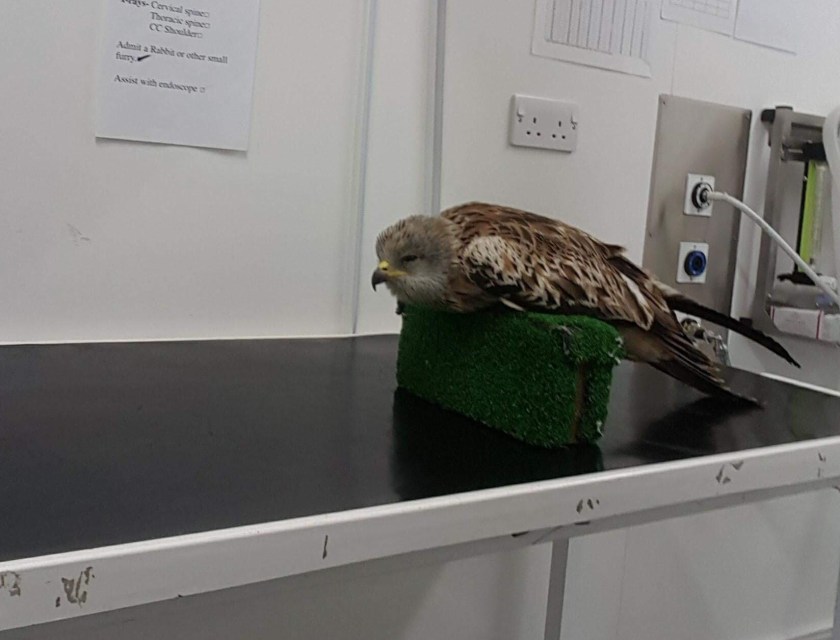
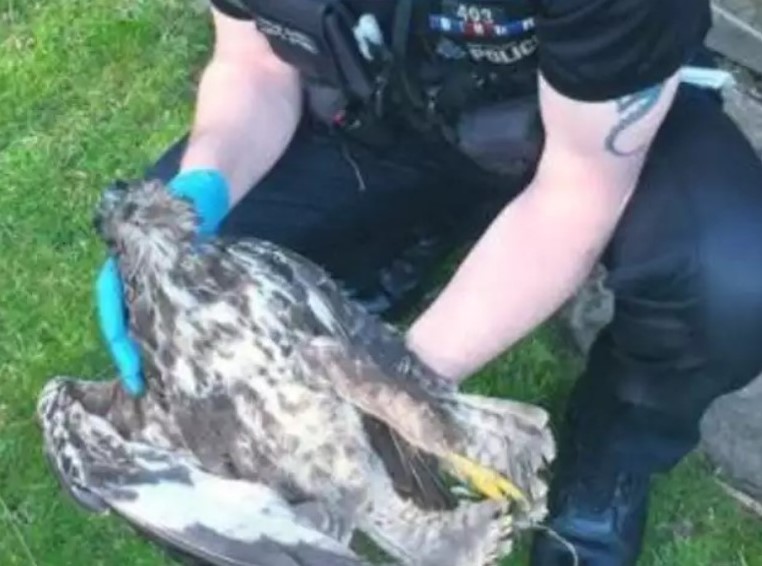
This buzzard was found injured at Dunnington (a village to the east of York) on 29 September 2017. It was taken to the vets where an x-ray revealed shotgun pellets lodged in the bird’s head and wing. Based on the extent of its injuries, the bird was euthanised.

Anybody with information about this crime, please contact PC Jez Walmsley at Malton Police Station (Tel. 101).

Images courtesy of Jean Thorpe.

Peregrine found shot in Cambridge

Police are appealing for information after the discovery of a shot peregrine on the outskirts of Cambridge.

The young bird was discovered injured on 18 September 2017 and was reported to the Raptor Foundation. A veterinary x-ray revealed a pellet from an air rifle lodged in its shoulder and a metal fragment also lodged in its wing, preventing the bird from flying. Vets believe the bird could have been shot up to 10-14 days earlier based on its low weight.

Information from the peregrine’s leg ring revealed this bird fledged from a nest on the outskirts of Cambridge earlier this year.

The peregrine is currently receiving expert care at the Raptor Foundation but it’s not yet known whether it will recover sufficiently to be released back to the wild.

PC Alun Bradshaw of Cambridgeshire Police is urging anyone with information to come forward. Tel 101 and use incident reference number CF0539270917.

Media coverage:

Cambridge Independent News here

BBC News here

RSPB Investigations blog here

ITV news here

Raptor persecution in Peak District National Park – BBC 1 this evening

Tonight’s BBC’s Inside Out programme will feature an investigation in to raptor persecution that’s taking place in the Peak District National Park.

This is a regional programme (BBC East Midlands) starting at 7.30pm but will be available on iPlayer shortly afterwards (see here).

To coincide with this programme, the Derbyshire Wildlife Trust has today called the low number of raptors in the National Park “a national disgrace” and blamed activities relating to the driven grouse shooting industry (see BBC news article here).

The article also mentions the footage that we published in April 2016 appearing to show an armed man sitting close to a hen harrier decoy on a National Trust-leased grouse moor within the National Park. This resulted in the National Trust terminating the grouse shooting lease four years early and searching for a new tenant. The National Trust has come under increasing public pressure not to lease the moor for grouse shooting and the campaigners are expected to be included in tonight’s Inside Out programme.

Part of the Peak District National Park (mostly the grouse moors of the Dark Peak area) has been recognised as a raptor persecution hotspot for many years (e.g. see RSPB ‘Peak Malpractice‘ reports here and here). As a result of the ongoing concerns, in 2011 the National Park began hosting a Bird of Prey Initiative where ‘partners’ are supposed to have been ‘collaborating’ to increase bird of prey populations. It has failed miserably. In 2015 it was announced that none of the project targets had been met (here) but that the Iniative was going to continue with “renewed commitment” and “new rigour and energy“. Strangely, we haven’t heard any more results from this so-called partnership initiative since then, although Rhodri Thomas, an ecologist with the Peak District National Park Authority gave a very honest presentation at the Sheffield raptor conference in September 2016. His opening words were:

Has the Initiative worked? Well, we’ve not met the targets that we’d set for 2015, we’ve not met them by a fairly substantial amount in some cases, so I think the answer from that point of view is a fairly clear no“.

Meanwhile, cases of confirmed illegal raptor persecution have continued to emerge (e.g. a shot peregrine that was found critically injured next to a Peak District grouse moor in September 2016. It didn’t survive its injuries).

Don’t forget – BBC 1 (East Midlands) Inside Out tonight at 7.30pm.

Sticking with the Peak District National Park and alleged wildlife crime, did anyone see yesterday’s news that the Crown Prosecution Service has decided there will no charges relating to the alleged snaring of badgers that was filmed by the Hunt Investigation Team on the Moscar Estate earlier this year? Interesting.

Also of interest, to us, was the name of the spokesman for Moscar Estate who was cited in the article: Ian Gregory. Surely not the same Ian Gregory of You Forgot the Birds notoriety?