SNH wilfully blind to threat of persecution of golden eagles in south Scotland

The project to translocate golden eagles from the Scottish Highlands to south Scotland has finally got underway this year, with news out today that three eagles have been successfully released this year.

There’s an article about it on BBC Scotland (here) including some video footage.

Unbelievably, Professor Des Thompson, Principal Advisor for Biodiversity and Science at SNH, is quoted in both in the video and in the article as follows:

This is the icon of wild Scotland. We are on the threshold of giving something very exciting back to the south of Scotland. Scotland has just over 500 pairs, just two to four breeding pairs in the south of Scotland where they are really struggling.

Young golden eagles are heavily persecuted. A third of them have been killed either through shooting or poisoning.

Down here in the south of Scotland we’ve been able to reassure ourselves persecution is not an issue. It’s just a small fragmented population that needs this helping hand from us. We have been overwhelmed by the support we are getting from landowners and we are reassured these birds are going to be welcome“.

Did he actually just say that? “We’ve been able to reassure ourselves persecution is not an issue“. What, you mean in the same way that SNH reassured itself that the scientific justification for the Strahbraan raven cull was sound?

You couldn’t make this up. Has he switched jobs and is now representing Scottish Land & Estates? He might as well be as this is exactly the line they were trying to spin several years ago (see here).

The south of Scotland is well known for the illegal persecution of raptors, including golden eagles. Only this year a young satellite-tagged golden eagle (Fred) ‘disappeared’ in the Pentland Hills in highly suspicious circumstances (here) in an area where previously a merlin nest had been shot out and breeding ravens had also ‘disappeared’.

[Golden eagle Fred, by Ruth Tingay]

Then there’s Raeshaw Estate, currently operating under a General Licence restriction and an Individual Licence restriction, due to evidence of alleged ongoing raptor persecution (here); there’s a forthcoming prosecution of a gamekeeper in the Borders for a long list of alleged wildlife crime (here); there’s the land managed for driven grouse shooting in South Lanarkshire (close to the golden eagle translocation area) where over 50 confirmed reported incidents of dead raptors and poisoned baits have been recorded since 2003, including a shot golden eagle in 2012 (it didn’t survive, here), the reported shooting of a short-eared owl in 2017 (here), the reported shooting of a hen harrier in 2017 (here), and the reported shooting of a buzzard in 2018 (here); and then there’s been at least four raptor poisonings in south Scotland this year alone (here).

But don’t worry, folks, despite all evidence to the contrary, Professor Thompson is “reassured” that raptor persecution won’t be an issue for these young golden eagles.

Here’s a map from the 2008 Golden Eagle Conservation Framework showing the conservation status of golden eagles in Scotland (red = unfavourable conservation status), overlaid with ten years of raptor persecution data (all species, 2005-2015) gleaned from ‘official’ persecution maps. It doesn’t include data from the last three years. Does it look to you like raptor persecution isn’t an issue in southern Scotland?

We’ve blogged about the South Scotland Golden Eagle Project several times over the years (e.g. here, here, here) and we still have mixed feelings about it. On the one hand the south Scotland golden eagle population is in dire straits, and has been for some time, and urgently needs a boost. Translocating eagles from other parts of the Scottish range seems a decent strategy.

However, fundamental to translocation and reintroduction projects is the need to identify and resolve the underlying cause(s) of the species’ decline in that area. The authorities have not come anywhere near to resolving this issue, either in south Scotland or beyond. The chances remain high that these young eagles will be killed. Having said that, they’re just as likely to be illegally killed further north in Scotland so in that sense, moving them a few hundred km south probably won’t make much difference to their chance of being illegally killed.

At least these three young eagles have been satellite-tagged so their movements can be followed. The question is, if/when each eagle goes off the radar in suspicious circumstances, who will decide whether this news is suppressed or publicised?

We’ll be taking a close interest.

Case against grouse moor gamekeeper Timothy Cowin: part 4

Criminal proceedings continued last Monday (6 August 2018) against grouse moor gamekeeper Timothy Cowin, who is accused of a series of alleged wildlife crimes, including the shooting of two short-eared owls in April 2017 at Whernside, Cumbria in the Yorkshire Dales National Park. It is further alleged he was in possession of items (a shotgun and an electronic calling device) capable of being used to kill wild birds.

Since court proceedings against Mr Cowin began six months ago, this case has been dragged around a number of magistrates courts in the NW of England. It’s been quite astonishing:

The first court hearing took place at Lancaster Magistrates Court on 27 February 2018.

[Lancaster Magistrates Court, photo by Ruth Tingay]

Mr Cowin’s solicitor, Michael Kenyon, requested an adjournment and no plea was entered. The defence also requested that the case be heard by a District Judge instead of a panel of magistrates (a District Judge is legally-qualified, usually a former solicitor or barrister, whereas magistrates are non-legally qualified volunteers who depend on a qualified legal advisor in the court to direct them on the relevant law). The defence’s request was granted.

The next court hearing took place at Preston Magistrates Court on 16 March 2018 for a case management hearing in front of District Judge Goodwin (the same judge who presided over the Bleasdale peregrine case).

[Preston Magistrates Court, photo by Ruth Tingay]

This was a farcical hearing that we blogged about at the time (see here). No plea was entered by the defendant and his solicitor argued that the case should be thrown out on legal technicalities because he claimed some of the witness statements were incorrectly dated and some of the procedural paperwork was “defective in its wording”.

The case was adjourned and District Judge Goodwin suggested the case be moved to Blackpool to be heard by another District Judge (DJ Chalk) as DJ Goodwin thought she might be away and didn’t want to delay future proceedings.

The case duly moved to Blackpool Magistrates Court and was due to be heard there on 11 May 2018. However, the case was adjourned again.

[Blackpool Magistrates Court, photo by Ruth Tingay]

The case was scheduled to continue at Blackpool Magistrates Court on 16 July 2018. However, the DJ was unwell so the hearing was cancelled a few days earlier. The court admin managed to get this information to the defence team in time but failed to notify the prosecution team, who all duly turned up in Blackpool only to be told the case wasn’t running that day after all!

Later in July, according to a court clerk, District Judge Chalk appears to have reviewed the legal arguments in private chambers at Carlisle Magistrates Court.

A further case hearing was scheduled for 6 August 2018, this time at Barrow-in-Furness Magistrates Court. This hearing did go ahead and legal argument was finally heard. District Judge Chalk apparently ruled in favour of the Crown Prosecution Service.

After the District Judge’s ruling in favour of the CPS, the defendant entered a not guilty plea. The next court hearing is expected to take place later this month, possibly back in Blackpool.

Moorland Association’s response to peregrine persecution on Bleasdale grouse moor

The Moorland Association’s response to the RSPB video published on Wednesday is an interesting read.

For new blog readers, the Moorland Association is a lobby group representing the interests of grouse moor owners in England.

Here’s the video again, for those who might have missed it, showing an unidentified individual attending a peregrine nest site where an adult male peregrine had been caught in a spring trap on the nest ledge, and where it thrashed around for over ten hours in a desperate attempt to escape before finally being removed by the unidentified individual. We believe this nest site to have been located on a grouse moor on the Bleasdale Estate in Bowland in April 2016 and that the video footage published by the RSPB related to the prosecution of a Bleasdale Estate gamekeeper – a case that collapsed in April this year due to a series of legal technicalities.

Here’s the Moorland Association’s statement in response to the publication of this video nasty:

The opening line is astonishing: “The suffering of the Peregrine in the RSPB blog is barbaric and abhorrent“.

The peregrine didn’t suffer “in the RSPB blog”, it suffered at its nest site on a driven grouse moor.

A more sincere and accurate Moorland Association statement might have looked like this: “The suffering of the Peregrine in the illegally-set trap that was positioned at the Peregrine’s nest site on a grouse moor on the Bleasdale Estate, a Moorland Association member, is barbaric and abhorrent“.

The rest of the Moorland Association’s statement deflects attention away from the peregrine’s suffering as a result of this crime and instead focuses on trying to undermine the integrity and credibility of the RSPB, as we’ve come to expect.

Not only did the Moorland Association ignore the fact this peregrine suffered on a driven grouse moor (the words ‘grouse moor’ don’t appear anywhere in the MA’s statement!), but it also carefully sidestepped the fact that the grouse moor in question was, at least at the time this footage (and the peregrine) was captured, a Moorland Association member.

How do we know that? Well, as we blogged back in April 2018 when the court case collapsed (see here), in April 2016 when the alleged offences took place, the owner of the Bleasdale Estate was one Jeremy Duckworth, who also happened to be a Director and Regional Representative of the Moorland Association. Here’s a screengrab from the Moorland Association website in 2016:

Strangely, according to documents lodged at Companies House, Mr Duckworth resigned his Directorship of the Moorland Association in September 2016. There are many different reasons why people resign from Directorships but it’s interesting to note that the timing of Jeremy Duckworth’s resignation coincided with the early stages of the police investigation in to the alleged offences on his grouse moor – obviously nothing to do with damage limitation and purely and simply coincidental, of course:

We wonder whether the Bleasdale Estate is a still a member of the Moorland Association?

We wonder whether the Moorland Association is concerned that an unidentified camouflaged individual was able to repeatedly visit this peregrine nest site on the grouse moor of a Moorland Association member and inflict what looks like unimaginable cruelty to this peregrine?

We wonder whether the Moorland Association is concerned that an unidentified armed individual was able to visit this peregrine nest site and fire four shots as another adult peregrine flew from the nest?

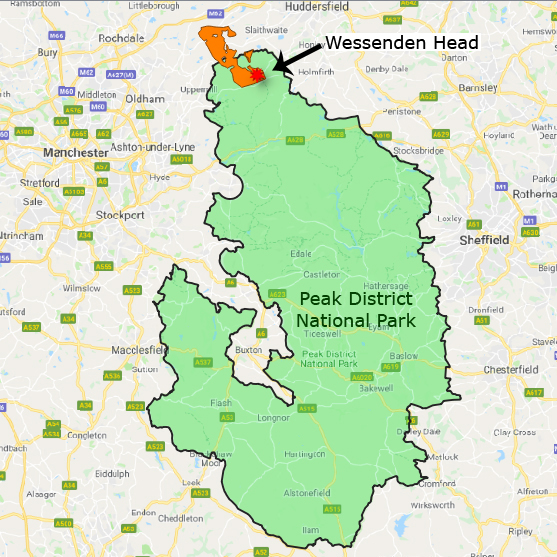
We wonder whether the Moorland Association is concerned about the widespread, systematic persecution of peregrines on driven grouse moors in England, as evidenced by an increasing number of scientific papers (here, here, here)? Incidentally, this last paper, ‘Raptor Persecution in the Peak District National Park’ by Melling et al was published by British Birds in May 2018 but the full paper was only available to BB subscribers. British Birds has now kindly published this paper in full so everyone can read it – see here).

We wonder whether the Moorland Association still expects to be considered a genuine partner in the fight against the illegal persecution of raptors on driven grouse moors when it seems to take every opportunity to attack the RSPB’s Investigations Team instead of those responsible for enabling and carrying out these barbaric crimes?

[Photo of an illegally-killed peregrine found next to a driven grouse moor, photo by RSPB]

Peregrine persecution on a grouse moor: Bleasdale video footage finally released

In April this year, a high profile prosecution case for alleged raptor persecution collapsed after covertly-filmed video evidence was deemed inadmissible.

The prosecution was being brought against a gamekeeper from the Bleasdale Estate in Bowland, who had been charged with a string of wildlife offences including the alleged killing of two peregrines in April 2016.

We had followed this case since September 2017, attended each court hearing, and blogged in detail after the case collapsed on a series of technicalities earlier this year (e.g. see here, here, here, here).

The details, as described in court, of what had happened to those two peregrines, were horrific. It was alleged that the adult female peregrine had been shot whilst leaving her nest and the adult male had been caught by the leg in a spring trap that had been set on the nest ledge, where he struggled to escape, in vain, for over ten hours, before being shoved in a bag by an unidentified man and removed from the site.

We’ve been waiting for the RSPB to publish this video footage ever since the case collapsed and the accused walked free. We understand there have been some legal issues about publishing the video and although we don’t know the details, it’s probably a safe bet to guess that some influential people from the grouse shooting industry have probably been working hard to ensure this footage never sees the light of day.

Today the RSPB has released video footage of peregrine persecution in Bowland and although the Bleasdale Estate is carefully not mentioned, it’s quite obvious from the dates cited and the video images that what is being shown in this footage fits the description of what allegedly happened to those two Bleasdale peregrines as desribed to the court earlier this spring.

The RSPB has published a blog describing the circumstances of this footage (here).

Watch the video here but beware, it contains graphic content:

Ater you’ve watched it, think about why nobody has been successfully prosecuted for these crimes.

And then think about why nobody will ever be prosecuted for these crimes.

And then think about why these crimes continue to be committed on grouse moors in 21st Century Britain.

And then think about what you can do to help bring it to an end.

Change must come, but it will only come if people stand up and demand it.

See you at a Hen Harrier Day event this weekend.

UPDATE 10 August 2018: Moorland Association’s response to peregrine persecution on Bleasdale grouse moor (here)

Red kite shot near Corby, Northants

The following article appeared in the Northamptonshire Telegraph on Tuesday 31 July 2018:

POLICE ARE APPEALING FOR WITNESSES AFTER A RED KITE WAS SHOT AND INJURED

The bird of prey is being seen to by a local vet after being shot and injured yesterday (Monday).

The shooting took place in the area of Deene park and Fineshade.

A neighbourhood alert posted by Northants Police about the incident said: “Please be aware it is an offence to injure or kill these birds.”

Anyone who witnessed the shooting, saw anyone that looked suspicious or saw any suspicious vehicles in the area at the time is asked to call Northamptonshire Police on 101.

ENDS

We’ve been unable to find any further detail about this case – there’s no official appeal for information on the Northamptonshire Police website.

UPDATE 13.50hrs: We’ve now been informed this kite was handed in to the Forestry Commission office at Fineshade Wood on THURSDAY 19th JULY (not Mon 30th July as previously thought). It was rescued by a member of the public.

Quote from the Raptor Foundation: “I have taken charge of a red kite that has been shot, with three shotgun pellets, in the leg, shoulder and ear. The leg and shoulder pellets are not really an issue governing the birds potential release as they are below joints. The pellet in the ear is lodged in the bony part of the skull and is causing the bird problems with balance. The vet and I both agree the bird could not be released back with the pellet still inside. We have been treating for infection and pain relief and the bird is making steady improvements. It was unable to stand on admission, but is now mobile along the floor to some degree. The vet is looking to operate later this week“.

[Photo of the shot red kite, by Raptor Foundation]

Satellite-tagged hen harrier Lia found dead in suspicious circumstances

The RSPB has reported the suspicious death of yet another satellite-tagged hen harrier.

‘Lia’ was tagged at a nest in north Wales in 2017 and after fledging she spent a bit of time in the Brecon Beacons National Park before a brief sojourn to Somerset, and then had returned to settle in mid-Wales.

[Photo of Lia by Guy Anderson]

In May this year the engineering data from her tag indicated she was dead and the RSPB located her decomposed corpse in a sheep field near the village of Tylwch, south of Llanidloes, an area with an apparent history of illegal raptor persecution.

[Location map from RSPB]:

Lia’s corpse was sent to the Zoological Society of London for a post mortem. Unfortunately a cause of death couldn’t be established but the vets did detect a fractured tail feather.

[Photo of fractured tail feather, via RSPB]:

ZSL’s post mortem report stated that fractures of this type “have previously been found in a hen harrier proven to have been shot with ammunition (Hopkins et al 2015). No other signs of shooting were detected in this bird“.

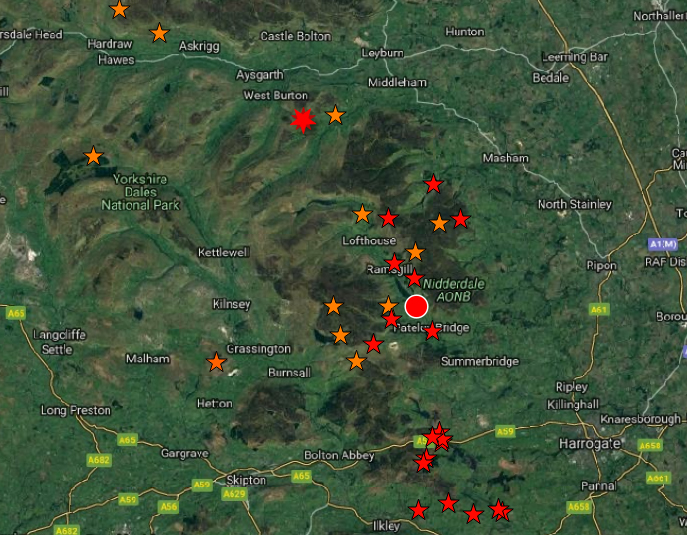
The Hopkins et al (2015) paper related to a pioneering forensic examination of Bowland Betty (a hen harrier found shot on a Swinton Estate grouse moor in Yorkshire’s Nidderdale AONB in 2012) that detected a tiny fragment of lead which confirmed she had been shot, confounding the protests of the Countryside Alliance.

Although Lia’s cause of death was inconclusive, Dyfed Powys Police have been treating it as suspicious and are investigating.

For further details of Lia’s demise, please read the RSPB’s latest Skydancer blog here

Red kite found shot in Yorkshire Dales National Park

Press release from North Yorkshire Police (23 July 2018):

APPEAL FOR INFORMATION AFTER RED KITE FOUND DEAD IN THE YORKSHIRE DALES

Police are appealing for information after a red kite was found dead in the Yorkshire Dales.

The bird was found on Thursday 12 July 2018, at Barden, near to the popular area known as the Strid. Enquiries are ongoing to establish the cause of death.

Sergeant Kevin Kelly, wildlife crime lead for North Yorkshire Police, said: “We have commenced an investigation and aim to establish the circumstances leading to the bird’s death.

It is key to examine whether the bird has flown to the location injured and subsequently died or whether it has been shot near to where it was found. A detailed pathology report will assist us in establishing this.

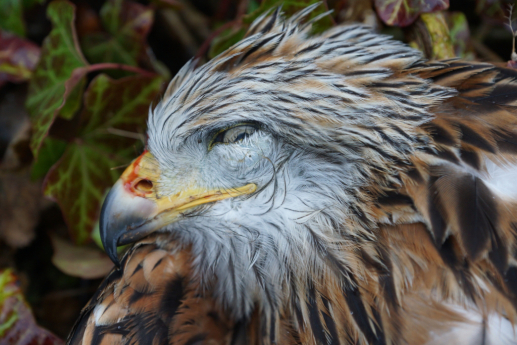
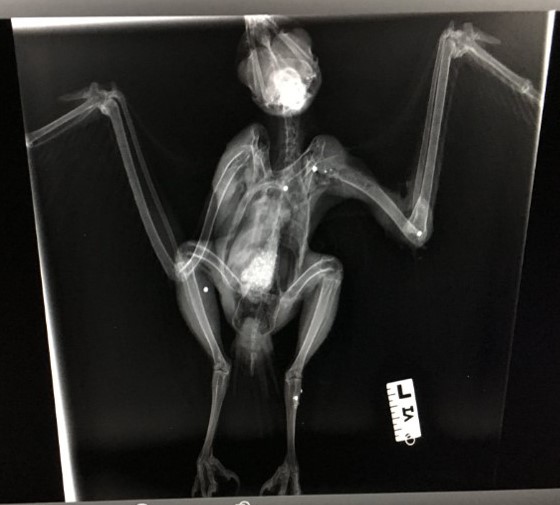
What we know at this time is that a triage x-ray shows a small piece of shot inside the bird. This will be recovered and forensically tested. We will be working with partner agencies and the Bolton Abbey Estate to establish the facts that will assist an effective investigation.

[Photo of the shot red kite via North Yorkshire Police]

Doug Simpson, Yorkshire Red Kite Co-ordinator, said: “This latest incident brings the total confirmed Yorkshire red kite illegal persecution victims up to 42 since releases began in 1999, thirteen of these birds having been shot.

It is sickening that a small minority of people appear intent on breaking the law by targeting these birds, which have become an integral part of our beautiful North Yorkshire countryside.

Benedict Heyes, from the Bolton Abbey Estate, said: “We were disappointed to be notified by a member of the public that they had found a dead red kite on the Bolton Abbey Estate.

Red kites and other birds of prey are often seen at Bolton Abbey and are enjoyed by many visitors to the Estate. The Estate alerted the authorities and would ask that anyone who has any knowledge or information in relation to the death of this bird to contact North Yorkshire Police, so as to assist them in their investigation.”

Sonya Wiggins, who coordinates Yorkshire Dales Moorland Group, said: “We have been made aware of this incident and fully support a police investigation. At Yorkshire Dales Moorland Group we believe in good practice and accountability, we work closely with the local police and other agencies to tackle wildlife crime.

Killing wild birds is unacceptable and we would ask for anyone with any information to contact the police.”

Anyone with any information is asked to contact North Yorkshire Police on 101, select option 2 and ask for Sgt Kevin Kelly, or email kevin.kelly@northyorkshire.pnn.police.uk

Please quote reference number 12180131874 when passing information.

ENDS

Buzzard shot dead in Dorset

RSPB press release (23 July 2018):

DEAD BIRDS OF PREY FOUND IN DORSET

A shot buzzard and dead barn owl spark concerns of a local persecution problem

Dorset Police and the RSPB are appealing for information after a dead buzzard and a dead barn owl were found near Melplash, Dorset in May 2018.

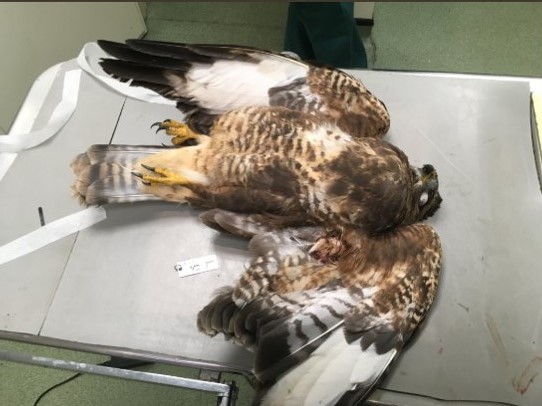
[Photo of the shot buzzard via RSPB]

The buzzard was taken to a nearby vets, where an X-ray revealed the presence of a piece of shot in the bird’s skull, which is believed to be the cause of death. A barn owl was also found dead in suspicious circumstances under its nest box, though the body was too decomposed to determine cause of death. Sadly there are also previous reports of another dead barn owl and a number of dead buzzards in this area, though the bodies were not recovered for testing.

Local enquiries by Dorset Police have not uncovered any leads so far, and they are appealing to the public for information.

Birds of prey and owls are protected by law under the Wildlife and Countryside Act 1981 which makes it an offence to intentionally harm them. Anyone found to have shot or killed these birds faces an unlimited fine and/or up to six months in jail.

Tony Whitehead from RSPB South West Regional Office said: “The deliberate persecution of birds of prey is not only brutal but illegal. Raptors are an essential part of a healthy ecosystem, not to mention a glorious sight to see. We are grateful to the member of the public who took the trouble to report these incidents and we urge anyone with information to come forward.”

The illegal persecution of birds of prey is a widespread and unrelenting problem which continues to affect the conservation status of some raptor species in the UK. As a result, the RSPB has set up a confidential ‘Raptor Crime Hotline’ to give whistleblowers a chance to speak out in confidence and help end this culture of criminality.

Claire Dinsdale of Dorset Police’s Rural Crime Team said: “Raptor persecution is one of the UK Wildlife Crime Priorities which includes poisoning, shooting, trapping, habitat destruction and nest destruction or disturbance. There is a clear responsibility with legitimate firearm users to accurately identify the species before any shot is taken. It is totally unacceptable to act outside the law and shoot these protected birds. I would urge anyone with any information to speak to us or the RSPB in confidence.”

If you have any information relating to this incident, please call Dorset Police online in confidence at www.dorset.police.uk/do-it-online and quote reference 55180073229. Or contact the RSPB’s confidential Raptor Crime Hotline on 0300 999 0101.

If you find a wild bird which you suspect has been illegally killed, contact RSPB investigations on 01767 680551 or fill in the online form here.

ENDS

Salisbury peregrine ‘Peter’ – shot last year, Dad this year

A good news story!

Last year we blogged about a peregrine that had been found shot in Hampshire. His colour ring (Blue GX) identified him as ‘Peter’, one of the chicks that successfully fledged from Salisbury Cathedral in 2014. He’d suffered a fractured wing from the gunshot fragments.

Peter spent a few months in the care of the Hawk Conservancy Trust in Andover where he received specialist veterinary attention and rehabilitation that allowed him to be released back to the wild several months later (see here).

[Photo of Peter’s release by James Fisher]

This year, thanks to his colour ring, Peter has been recorded nesting at a quarry in Hampshire. This breeding attempt has resulted in two successfully fledged chicks. Full details here on the Salisbury Cathedral website.

What a fantastic outcome for all those involved with his rescue and rehabilitation. Well done and thank you!

[Digiscoped photo of Peter at the quarry, by Keith Betton]

Red kite shot dead in Kent

Back in May there was a report (and several photographs) on social media of a dead red kite that had been found on 9th May 2018 by a member of the public, “10-12ft up in a bush” at Woodchurch, Kent.

We believe this was reported to Natural England who eventually arranged for the corpse to go for a post mortem.

A few days ago there was an update from the member of the public, again on social media, who said this:

Re: red kite I discovered at Woodchurch in May and retrieved. The District Officer phoned today and confirmed the bird had been shot. So sad, they are holding on to the bird and investigating“.

We don’t have any further information.

Thanks to the blog reader who drew our attention to this case.

[Photo of the shot red kite by Ian Stewart]