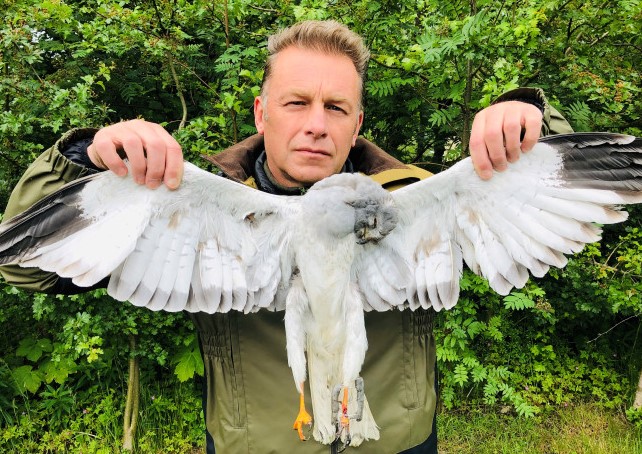
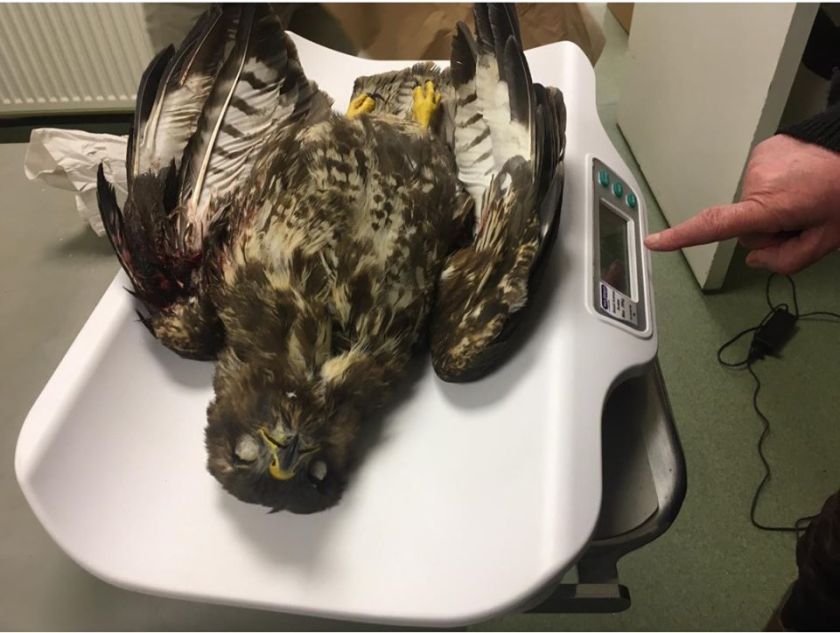
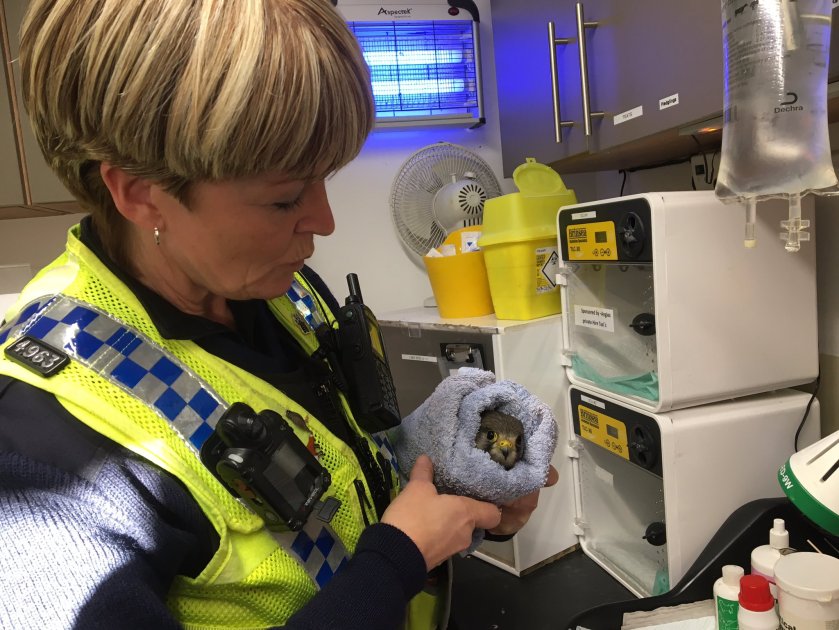
Peregrine found injured at a West Midlands quarry had been shot

The West Midlands Ringing Group is reporting a shot male peregrine found injured at a quarry:

From Twitter today:

@RingersWmYesterday we had a call from a quarry to say that there was an injured peregrine on site. We arrived on site and along with @RSPCA_official we assessed the situation and were able to catch the young male within a few minutes. The bird is now at hospital having its wing assessed.

[Photos from West Midlands Ringing Group]

From @RingersWmPeregrine update. Unfortunately the young male we helped rescue yesterday has been found to have been shot and has two pellets stuck in its wing, which has healed over but is infected. Awaiting a decision from the vet tomorrow on the likely outcome. Sad times. Will keep u updated.

ENDS

Peregrine found suspected shot at Elton Reservoir in Bury

The RSPCA is appealing for information after the discovery of a dead peregrine at Elton Reservoir in Bury, Greater Manchester.

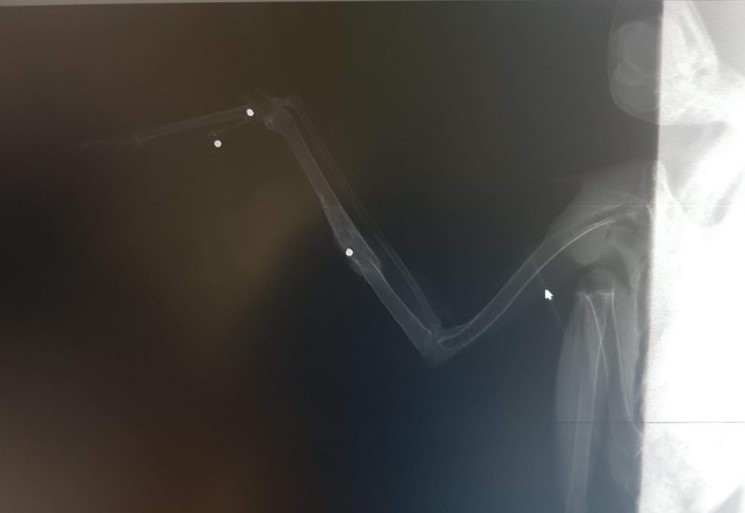
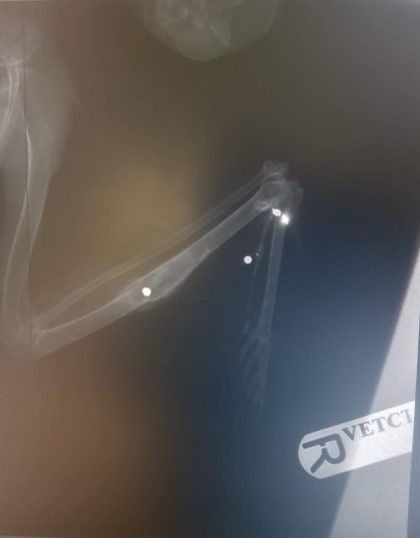
The bird was found by a member of the public on 7 May 2019, already quite extensively scavenged. Local media coverage claims that an x-ray demonstrates the bird was shot with an air rifle (e.g. here). To be honest, the x-ray isn’t very clear – it’s been taken from a side view rather than with the wings splayed, and this has distorted the radiograph. There may be shotgun pellets in the right wing but a further x-ray and/or post mortem would prove conclusive.

If anyone has any information about this incident please contact the RSPCA appeals line on 0300 123 8018.

Injured goshawk found in Peak District National Park had previously been shot

This has been reported a bit messily but essentially the bottom line is that an x-ray of an injured goshawk found in the Peak District National Park last winter has revealed it had been previously shot.

The bird, initially mistaken as a peregrine, was first reported injured by a Derbyshire Police Wildlife Crime Officer on social media in November 2018:

According to this news report, the x-ray didn’t reveal any problems and the cause of the bird’s wing injury was unknown. Although according to this blog from the Peak District Raptor Monitoring Group, the x-ray showed a small piece of shot, but with no entry or exit wound this was determined to have been the result of an earlier shooting at an unknown time and location.

Last week Derbyshire Police provided a further update on social media, six months on:

As we’ve previously reported (e.g. here), goshawks (and several other raptor species, especially peregrines and hen harriers) have been struggling in the Dark Peak area of the Peak District National Park for several decades due to on-going illegal persecution.

Police investigate shooting of two goshawks in Scottish Borders

From Peeblesshire News, 26/4/19:

INVESTIGATION INTO SHOOTING OF RARE BIRDS

Police are appealing for information after the illegal shooting of rare birds of prey in the Borders.

On February 14, a member of the public discovered a dead goshawk on land near Abbey Saint Bathens, Duns, and reported the matter to the RSPB.

Forensic analysis of the bird was undertaken, and it was established that it had been shot.

Police were then contacted on Thursday, April 25.

The news comes after the shooting of another goshawk in the Peebles area on March 2.

Inquiries into both shootings are ongoing and anyone with information is asked to come forward.

Wildlife Crime Co-Ordinator, Constable Steven Irvine, said: “Inquiry was already underway into the shooting of the goshawk in March and we are now conducting inquiries into the earlier shooting of the bird in February. These birds are a protected species and unlawfully killing them is a very serious offence. Anyone who can assist with these investigations should contact police immediately.”

Ian Thomson, RSPB Scotland’s Head of Investigations said “Goshawks are one of Scotland’s rarest breeding raptors, with only about 150 breeding pairs. Despite the fact that most of their diet consists of crows, woodpigeons and rabbits, species that are perceived as pests by some farmers and gamekeepers, cases of illegal persecution against this species are not uncommon, depriving people of the opportunity to see this charismatic and spectacular bird of prey.

We join with the police in asking that if anyone has information about this crime, or other raptor persecution incidents, they contact Police Scotland.”

ENDS

Well, well, well. More illegal raptor persecution in the Scottish Borders.

You know the place – it’s where SNH have been “able to reassure ourselves persecution is not an issue” (see here).

UPDATE 17.15hrs: This story is now on the BBC news website and provides further information about the second shot goshawk, saying it was found dead by a dog walker near Eddleston Quarry on 2 March.

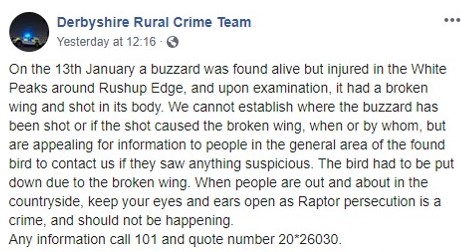
West Yorkshire Police appeal for info after buzzard found shot dead

West Yorkshire Police are appealing for information after the discovery of a shot buzzard in the Oulton area of Leeds.

The buzzard was found dead.

No further details have been publicised.

If you have any information please contact the police on 101 (ref# 13190200712) or Crimestoppers on 0800 555 111 or the RSPB’s Raptor Crime Hotline on 0300 999 0101.

Northants police appeal for information after buzzard found shot

Police are appealing for information following the discovery of an illegally shot buzzard in east Northamptonshire.

The injured buzzard was found off Shelton Road, near Hargrave, on 25 March 2019.

The bird was caught and taken to a vet, where an x-ray confirmed it had been shot. The buzzard is now recovering in the care of a local wildlife charity.

It is a criminal offence to shoot birds of prey, including buzzards.

Witnesses to the shooting or anyone with information about the incident are asked to contact rural crime team officer PC Chloe Gillies by calling 101, or Crimestoppers in confidence on 0800 555111.

ENDS

Scottish gamekeeper Alan Wilson accused of 12 wildlife crimes

Further to previous blogs on the prosecution of Scottish gamekeeper Alan Wilson for alleged wildlife crimes in the Scottish Borders (see here, here here and here) further details have emerged about the charges he faces.

From the Peebleshire News (12/4/19) (and with thanks to the blog reader who sent us a copy):

WILDLIFE CHARGES

A gamekeeper has been accused of 12 wildlife offences at Jedburgh Sheriff Court. Alan Wilson, 60, is charged with shooting two goshawks, four buzzards, a peregrine falcon, three badgers and an otter at Henlaw Wood, Longformacus, between March 2016 and May 2017.

He also faces charges of using a snare likely to cause partial suspension of animal or drowning, failing to produce snaring records within 21 days when requested to do so by police and no certificate for an air weapon.

Wilson, of xxxxx xxxxx xxxxx pleaded not guilty to all 12 charges and a trial date was set for June 13 with an intermediate hearing on May 27.

ENDS

Please note: we will not be accepting comments on this news item until legal proceedings have concluded. Thanks.

Shot buzzard found near Whashton, North Yorkshire: police appeal for info

North Yorkshire Police are appealing on Twitter for information about a shot buzzard that was found by a member of the public on Tuesday 26 March 2019 near Whashton.

There doesn’t appear to be any further detail available.

Anyone with information please call 101 and cite ref number #12190055485.

New satellite tag to detect illegal killing of golden eagles in Cairngorms National Park, eagle-killing hotspot

Press release from Cairngorms National Park Authority (23 March 2019)

Cutting edge technology to provide new insight into lives of Scotland’s golden eagles

An innovative new type of satellite tag has been designed to provide a boost to understanding raptor movements and behaviour, as well as help understand the fate of birds which die in the Cairngorms National Park and more widely across Scotland.

Over the next 18 months some young Golden Eagles in and around the Cairngorms National Park will be fitted with a novel ‘Raptor Tracker’ tag, as part of a trial which will provide key information on movements and behaviour, such as whether a bird is feeding or resting. Most importantly, it will provide an instant fix on any birds which die.

Tags in current use are limited in what information they can provide on the exact location of any bird which dies.  This new tag uses the ‘geostationary Iridium’ satellite network and ensures that signal information is always available. Crucially, it has been developed with multiple sensors; these immediately send a ‘distress’ signal, with an exact location, back to base if unusual behaviour is detected. This early warning system has the added benefit of helping to rapidly identify and recover birds which have died.

[An illegally killed satellite-tagged golden eagle, believed to have been trapped on a grouse moor in the Angus Glens resulting in its legs almost being severed, and then dumped in a layby several km away, inside the Cairngorms National Park, where it was left to die an horrific death. Photo by RSPB]

Environment Secretary Roseanna Cunningham said: This is great news for improving our understanding of eagle behaviours, and in the fight against wildlife crime. The tags should make a real difference in deterring would-be criminals, as well as playing a key role in establishing exactly what happened, should any of these magnificent birds of prey disappear or die in unusual circumstances.”

Grant Moir, CEO of the Cairngorms National Park Authority (CNPA) said: “Raptor conservation and tackling wildlife crime is one of the aims of the recently launched Cairngorms Nature Action Plan 2019-2023. This is an exciting breakthrough in the technology around raptor conservation, understanding the birds and combatting wildlife crime.”

Robbie Kernahan, Head of Wildlife Management, of Scottish Natural Heritage (SNH) added: “This exciting new technology will give us new information on the movements of these iconic birds. This should also be a significant deterrent to anyone thinking of persecuting raptors, as we will have detailed information on birds’ movements in the minutes leading up to their death.”

Charlie Everitt, UK National Wildlife Crime Unit commented: “This new tag is a significant step forward in using technology to research further the intriguing ranging behaviour of Golden eagles. However, the implications for preventing wildlife crime and as an aid to enforcement are also very apparent. I look forward to the trial and working closely with colleagues in CNPA and SNH.“

Phil Atkinson, Head of International Research, BTO said: “BTO has been developing new tagging technologies for several years, working to increase the quality and type of information collected. These new ‘Raptor Tracker’ tags have the potential to reveal new aspects of Golden Eagle behaviour, providing fascinating insights into their lives. We are looking forward to the trial and what it reveals.”

The CNPA and SNH have been working on this for over two years, and for the last six months the British Trust for Ornithology has been involved in developing the new tag. The tags will be placed on birds over the next 18 months to trial them. Changes can be made to the tags remotely to ensure that they are working optimally.

If the trial proves successful, the organisations will look at putting these on more Golden Eagles and also the potential miniaturisation of the technology to allow similar tagging of Hen Harriers and other species.

END

Some of what has been written in this press release is absolute nonsense, in terms of the limitations of some of the highly sophisticated satellite tags currently deployed on golden eagles. However, to focus on that would detract from the bigger picture of what is being proposed, and that’s far more important to discuss.

The development of a tag that can potentially send what amounts to a distress signal from the exact location and at the exact time the tagged eagle is being illegally killed is to be warmly welcomed. If this tag works as the manufacturers claim it will, it will provide wildlife crime investigators with high quality evidence of the precise location of the crime, which currently can only be inferred from tag data depending on the tag’s ‘duty cycle’, which determines when it’s programmed to transmit data to the tag operator (this can vary between a matter of hours and a number of days, depending on tag type). That would be a seriously good development.

What it wouldn’t do is to identify the individual criminal, especially if the crime took place on a large grouse moor estate where multiple gamekeepers are employed (which is where most of the golden eagle killing in Scotland has taken place). In those situations, the wildlife crime investigation wouldn’t get any further than the current situation we see playing out so often today –  that is, the body and the tag removed from the scene and destroyed, “no comment” interviews from all suspects and no way for the police to identify the actual individual responsible. Without that identification, a prosecution cannot proceed.

That’s not to say that the estate would get off scot free though, as they currently do. Conservationists have been arguing that the pattern of evidence from the current raptor satellite tags that suddenly and inexplicably ‘disappear’ should be sufficient evidence for SNH to impose General Licence restrictions on the offending estates. For some reason (unexplained, as far as we can tell), this has not been happening, even though the Environment Cabinet Secretary acknowledges the significance of the data pattern (see her editorial in the Government’s annual wildlife crime report). However, if this new tag can do what is claimed it can do, there’s no question that that information should be accepted by SNH and sanctions should be applied to the estate involved.

It’s great that this tag will be trialled in and around the Cairngorms National Park, given that some of the more intensively-managed grouse moors in and at the edge of the Park are well-known golden eagle-killing hotspots, as shown in this map derived from data provided in the golden eagle satellite tag review in 2017. It’s interesting that none of the people quoted in the press release mentioned this fact!

It is though, very pleasing indeed to see such senior figureheads recognise that the deployment of satellite tags on threatened raptor species is an acceptable and important conservation tool and a helpful investigative tool for detecting wildlife crime. It seems the concerted campaign by several meat heads in the gamekeeping world, which has included disgraceful personal attacks and smears on the integrity of those who fit satellite tags, has fallen on deaf ears.

We look forward to hearing about the field trials on this new tag in due course. Well done to all involved.

Grouse shooting lease on wildlife crime grouse moor will not be renewed

The owner of Denton Moor, a company called NG Bailey, has announced it will not renew the grouse shooting lease to its current tenant following a spate of wildlife crime.

Denton Moor in the Nidderdale AONB in Yorkshire was where the RSPB filmed footage of several armed men, dressed as gamekeepers, shooting at a nesting Marsh harrier and removing eggs from the nest in May 2017 (see here). Despite good efforts from North Yorkshire Police, the armed men have not been identified.

[RPUK map showing the location of Denton Moor]

Last month gamekeeper Austin Hawke was convicted of wildlife crime on the same moor after a badger was found dead in a snare in May 2018 (see here).

Campaigners have been targeting NG Bailey for some time and the recent conviction of one of the shooting tenant’s gamekeepers seems to have been the last straw for the landowner.

David Hurcomb, Chief Exec said:

NG Bailey is aware of the prosecution of Austin Hawke, the gamekeeper who is employed by and works for the tenants. To clarify, Austin Hawke is not employed by Denton Park Estate. As a business, we find this behavior totally unacceptable and do not condone this type of conduct – it is not reflective of the company’s values or ethical practices. We have advised the tenants that under no circumstances will the lease be renewed when it expires”.

Excellent news. Although whether that means it’ll be leased to someone other than the current tenant remains to be seen. We’re not sure when the current lease expires.

The efforts of a wide range of people have led to this result, allowing campaigners to join up the dots and apply pressure. Well done to them all, including the RSPB Investigations team, North Yorkshire police, local raptor workers, the Crown Prosecution Service and local campaigners.

Well done also to David Hurcomb and his colleagues at NG Bailey – this is a very welcome decision.