Hen harrier found shot & two others ‘disappear’, all on Scottish grouse moors

Press release from RSPB Scotland (9 December 2019)

Hen harrier found dead while two others disappear in suspicious circumstances

RSPB Scotland is appealing for information following the discovery of the body of a hen harrier found to have been shot and the sudden disappearances of two young satellite tagged hen harriers.

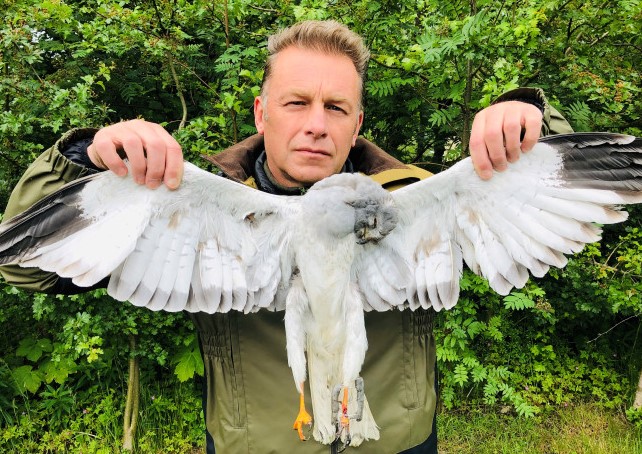
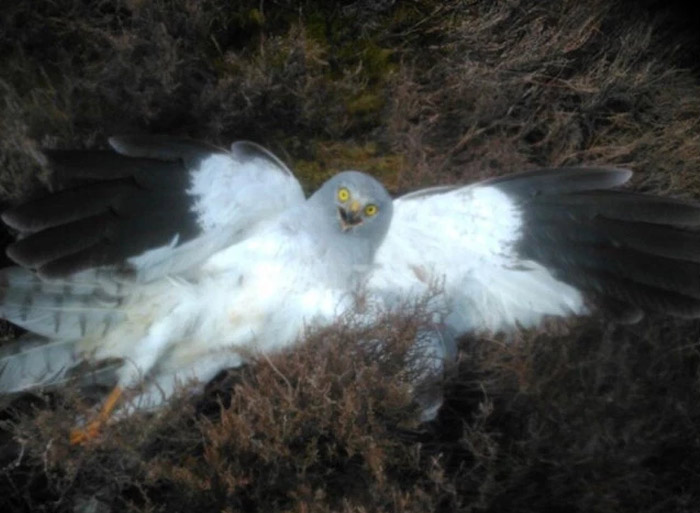
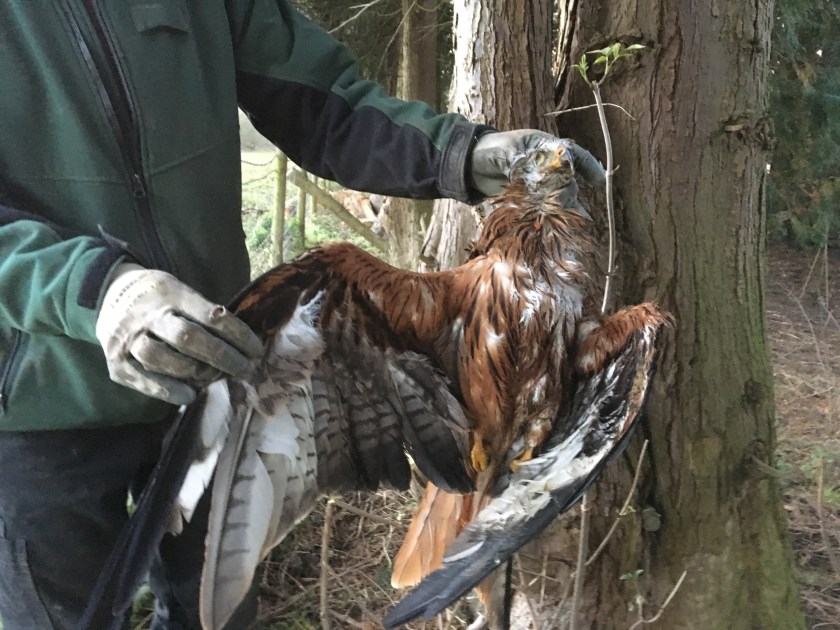
A member of the public found the dead female bird on a grouse moor on the Dumfries-shire/South Lanarkshire boundary near the village of Wanlockhead on 7 June 2019. A post mortem examination of the body by SRUC vets confirmed that the bird had died as a result of “penetrating trauma” injuries of unknown cause, with shooting a possibility. The examination also showed that the bird had previously been shot, with a shotgun pellet recovered from the left breast muscle. An investigation by Police Scotland has not identified a suspect for the bird’s shooting.

The birds who have disappeared in suspicious circumstances were fitted with satellite tags under licence by the RSPB’s Hen Harrier LIFE project team this summer while they were still in the nest. Romario, a young male, fledged from a nest on National Trust for Scotland’s Mar Lodge Estate, while Thistle, a young female, was tagged on an estate in Easter Ross.

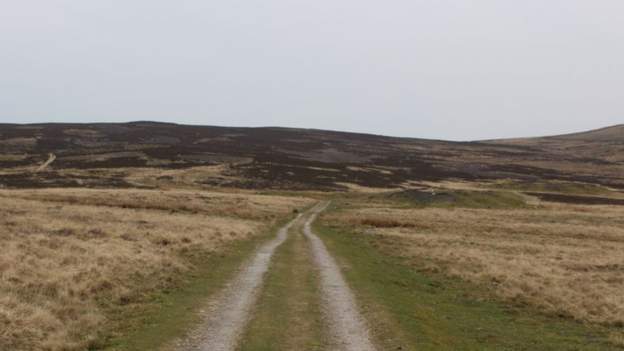
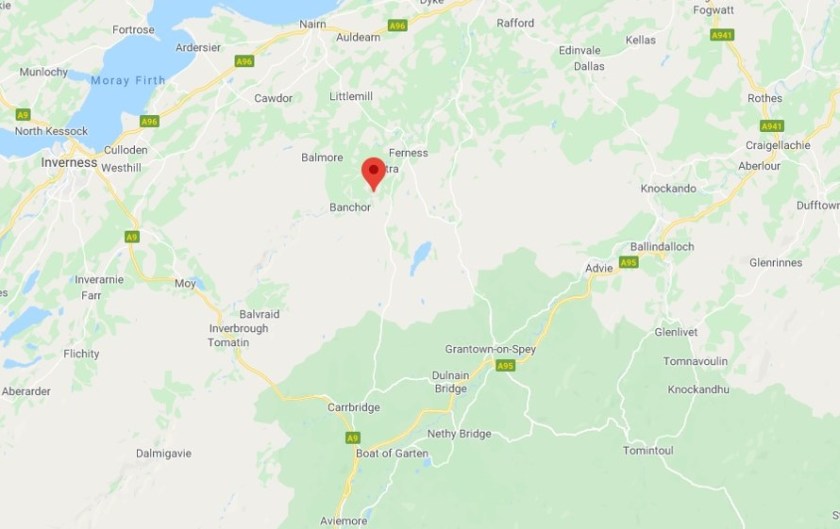
Romario was last recorded on 11 September on a grouse moor between Tomintoul and Grantown-on-Spey, while the last transmission from Thistle’s tag was received on 12 October, from another grouse moor, in east Sutherland. Satellite tags are highly reliable, so sudden stops in transmission give immediate cause for concern.

Since the birds fledged the tags had been tracking their movements as they set out on their own. Romario had made his way slowly north, spending time in western Aberdeenshire, before moving into Moray. Thistle, who had been named by the children of Sunnyside Primary School in Glasgow, headed west to into Strathoykel for almost a month before journeys to the east and north of here. She then returned to Strathoykel, before again heading east prior to her disappearance.

This appeal for information follows the suspicious disappearance of another Scottish harrier tagged by the project being investigated by Northumbria Police – Ada hatched and was tagged in the Scottish Borders this summer and was last recorded in the North Pennines in England, an area known for bird of prey persecution. When she first fledged she had spent some time in lowland East Lothian before heading south; her tag’s last transmission was on 10 October in a grouse moor area near Allendale in Northumberland. RSPB England issued an appeal for information about her last month.

Despite laws to protect them, hen harriers remain one of the UK’s rarest and most persecuted birds of prey. From satellite tagging data they are known to be ten times more likely to be illegally killed over grouse moors where the land is managed specifically to raise artificially high numbers of red grouse, which are then shot, than any other land use.

Studies suggest there are only around 575 pairs of hen harrier remaining in the whole of the UK and Isle of Man. The vast majority of these pairs – 460 – are in Scotland, making the population here crucial to the future of this species in the UK.

Dr Cathleen Thomas, RSPB’s Hen Harrier LIFE Project Manager said: “We’re devastated to have lost more young birds in suspicious circumstances. The UK’s hen harrier population is in such a precarious position it means that every bird really does count and to have these ones disappear at such a young age is really concerning. Sadly, incidents such as this have become common place for our project with tagged hen harriers disappearing at alarming regularity every year, and it’s really worrying that a young female bird has been shot.”

Duncan Orr-Ewing, Head of Species and Land Management at RSPB Scotland said: “The project satellite tags don’t stop transmitting if a bird dies of natural causes. To have them go offline suddenly and without warning strongly suggests the hen harriers have been the victims of crime, as in the case of the shot bird. Scotland is leading the way in the UK in terms of legislation to tackle bird of prey persecution, but continuing incidents such as this show that existing measures are not enough. There needs to be robust regulation of driven grouse shooting if crimes against some of this country’s incredible wildlife are to be brought to an end.”

If anyone can provide information about these incidents or any illegal persecution of birds of prey, please contact Police Scotland on 101, or call the RSPB’s confidential raptor crime hotline on 0300 999 0101.

ENDS

SNH explains decision to impose General Licence restriction on Leadhills Estate

Further to last week’s news that Scottish Natural Heritage (SNH) has finally imposed a three-year General Licence restriction on the Leadhills Estate in South Lanarkshire (see here and here), there is now an explanation, of sorts, from SNH on the decision to issue the restriction notice.

It wasn’t just one alleged incident of illegal raptor persecution that triggered this sanction, but a series of them.

Well done to journalist Charlie Parker at The Times (Scotland) for getting the information.

According to Charlie’s article, SNH’s decision was based on “clear evidence” of the ‘illegal killing of a short-eared owl, two buzzards and three hen harriers’ that were ‘shot or caught in traps’ on Leadhills Estate since 1 January 2014 (when SNH was given the power to impose a General Licence restriction on estates or individuals in Scotland). SNH has also claimed that ‘wild birds’ nests have also been disturbed’, although there is no further detail on this.

An unnamed SNH spokesperson is quoted in the article as follows:

The police have investigated each of these cases and while it is very clear that offences have been committed, as is often the case with these types of crime it hasn’t been possible to gather the evidence to identify the person responsible.

There is also similar historic evidence of incidents on this property pre-dating the incidents, although SNH’s decision is based on incidents which occurred since January 1, 2014“.

Most of the incidents listed by SNH have been well publicised –

However, the alleged incident relating to a third hen harrier is less clear. SNH may be referring to the discovery in 2015 of a satellite-tagged hen harrier called Annie who had been shot, although her corpse was found on a neighbouring estate, not on Leadhills Estate. Or, perhaps there is another alleged incident relating to the shooting or trapping of a hen harrier on Leadhills Estate that has yet to be publicised? Time will tell.

There are two more quotes in The Times article that are worth a mention. First, one from Ian Thomson (Head of Investigations, RSPB Scotland) who said Leadhills Estate had a “long and appalling history” of confirmed raptor persecution incidents and,

While this sanction is positive news, it is becoming increasingly clear that the threat of such a penalty is no deterrent to those whose sole motivation is the maximising of grouse numbers. Until sporting estates face the potential removal of the right to shoot, we do not believe there is a sufficient deterrent to those who continue to slaughter our birds of prey.

Meanwhile, an unnamed spokesperson for Leadhills Estate is quoted as follows:

The decision to restrict the general licence does make clear it is not inferring any criminal activity on the part of the estate. The estate condemns all forms of wildlife crime and all employees and agents of the estate are in no doubt as to their responsibilities“.

It’s our understanding that the General Licence restriction ‘does not infer any responsibility for the commission of crimes on any individuals‘ This is the exact wording from SNH’s restriction notice (see here). This statement is not the same as the one being claimed by Leadhills Estate, which argues that the restriction ‘is not inferring any criminal activity on the part of the estate’.

This sounds like real twilight zone material. SNH is holding the estate to account by imposing a sanction for alleged wildlife crimes because there is insufficient evidence to attribute the activity to an individual estate employee and the estate is saying that SNH’s decision to impose the sanction doesn’t infer any responsibility on the estate. Er….

All clear?

More to come on the Leadhills Estate case soon…


General Licence restriction at Leadhills Estate: welcome to the Twilight Zone

Earlier this week it was announced that Scottish Natural Heritage (SNH) had finally imposed a three-year General Licence restriction on Leadhills Estate in South Lanarkshire ‘on the basis of evidence provided by Police Scotland of wildlife crime against birds’ (see here).

Before we proceed any further you should be aware that you are now entering the twilight zone, suspended somewhere between reality and fantasy.

[Leadhills Estate, photo by Ruth Tingay]

We’re in that bonkers scenario where despite Police Scotland providing “clear evidence that wildlife crimes have been committed on this property” (according to Nick Halfhide of SNH), the imposition of the General Licence restriction “does not infer responsibility for the commission of crimes on any individuals“. This leaves us on wafer-thin legal ice, not able to state what to us is the bleedin’ obvious for fear of a defamation claim, even though the original intention of Scottish Ministers was to use a General Licence restriction as a “reputational driver“.

General Licence restrictions have been available to SNH (although rarely used) since 1 January 2014, introduced by then Environment Minister Paul Wheelhouse in response to continuing difficulties securing criminal prosecutions for those people still killing birds of prey. Paul instructed SNH to withdraw the use of General Licences (available for legal predator control) on land where crimes against raptors are believed to have taken place but where there was insufficient evidence to instigate criminal proceedings. The decision to withdraw the licence is based on a civil standard of proof which relates to the balance of probability as opposed to the higher standard of proof required for a criminal conviction.

A General Licence restriction is not without its limitations, and has even been described as farcical, particularly as estates can simply apply for an individual licence instead which allows them to continue predator control activities but under slightly closer scrutiny.

The Leadhills Estate and the surrounding area has been at the centre of wildlife crime investigations for decades. According to RSPB Scotland there have been over 60 confirmed raptor persecution incidents uncovered here, but only two successful prosecutions: a gamekeeper convicted for shooting a short-eared owl in 2004 and a gamekeeper convicted for laying poisoned baits out on the moor in 2009.

There have been a number of reported wildlife crimes here in recent years but because SNH isn’t keen on transparency, we don’t know which ones triggered the decision to impose the General Licence restriction. Was it the alleged witnessed shooting of a hen harrier in May 2017; the alleged witnessed shooting of a short-eared owl just a few weeks later and whose body was recovered; the discovery of a buzzard in 2018 that was found to have been shot twice; the filmed buzzard that according to the RSPB was likely killed in a crow trap in January 2019, or was it the discovery of a male hen harrier in May 2019 whose leg was almost severed by an illegally-set trap next to its nest?

We do know, from SNH’s press statement, that SNH believes “there is clear evidence that wildlife crimes have been committed on this property……” which sounds like multiple incidents have informed SNH’s decision to impose the restriction:

And because this is the twilight zone we also need to draw to your attention the Estate’s outright denials of any involvement in any of these alleged crimes – we particularly liked this one, in response to the illegally-trapped hen harrier earlier this year. Bless those little gamekeepers, finding it “very difficult” to cope with repeated crimes carried out by ‘unknown third parties’.

It’s probably just kids in stolen vehicles, right? Riding around the estate in 4 x 4s or on quad bikes, firing shotguns at protected wildlife. Let’s face it, who else would have vehicular access, firearms and a motive for wanting to kill birds of prey? Nope, nobody that we can think of.

Here is a copy of SNH’s restriction notice for Leadhills Estate, for the record:

We’ve got a lot more to say about this particular General Licence restriction but we’ll have to come back to it, hopefully within a few days. There are all sorts of interesting aspects to explore……

UPDATE 2 December 2019: SNH explains decision to impose General Licence restriction on Leadhills Estate (here)

Buzzard shot & wounded in Co Tyrone

From the Belfast Telegraph (14/11/19):

BIRD OF PREY FOUND SHOT THREE TIMES ON MEND, SAY OMAGH VETS

A bird of prey is recovering after being shot three times in Co Tyrone.

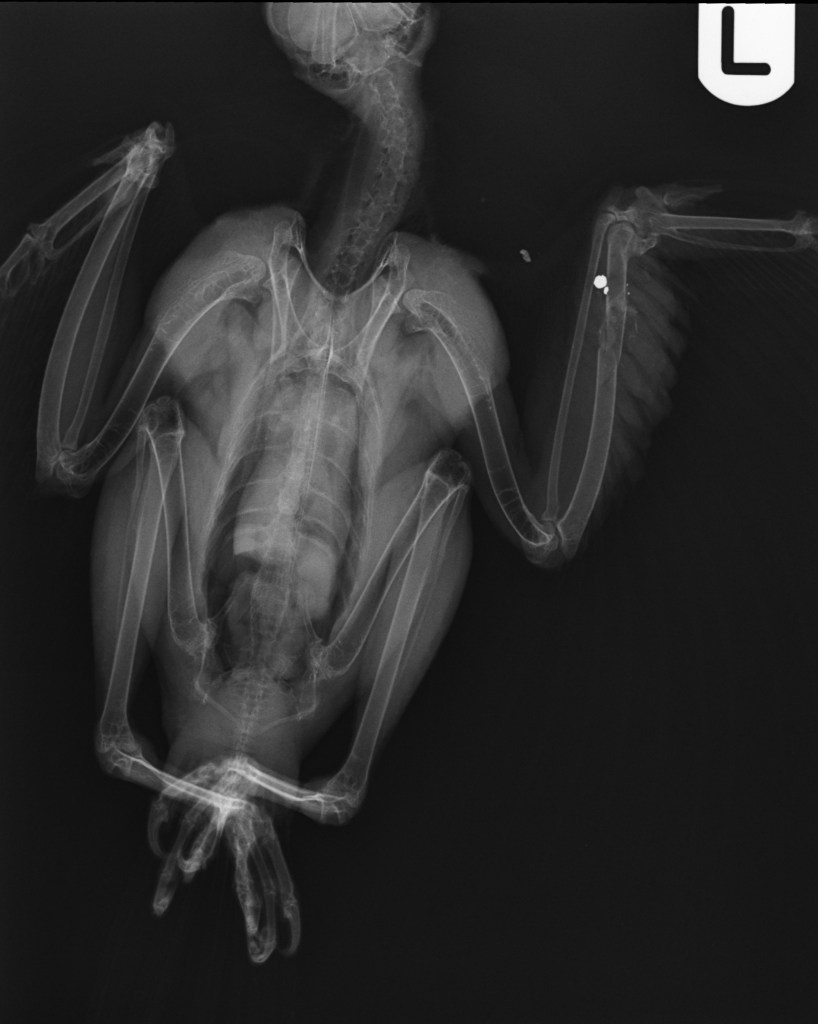
X-rays performed by Omagh practice Corry & O’Hare Vets revealed that the buzzard had received a fractured bone following the attack in Newtownstewart.

Three round pellets were also found lodged in various parts of the female bird’s body.

It is unclear whether or not the buzzard – a species afforded the highest level of wildlife protection – was shot deliberately.

As it is illegal to hunt protected birds, the incident has been reported to the PSNI.

The penalty for committing a wildlife crime in Northern Ireland – including shooting, poisoning, trapping and nest destruction of a bird of prey – is a fine of up to £5,000 and a six-month custodial sentence.

Louise O’Hare from Corry & O’Hare Vets said the injured bird was brought to them last week after being found unable to fly by a member of the public.

ENDS

It’s good that this shooting has been reported in the media but the quality of reporting is pretty poor. If those ‘three round pellets’ found in the buzzard’s body were shotgun pellets it’s likely the bird was hit once and sprayed with shot, not ‘shot three times’. And does it matter whether the buzzard was targeted deliberately or not? If it wasn’t, then shooting it was reckless and is still an offence.

Last week the Partnership for Action Against Wildlife Crime in Northern Ireland published a ten-year review of raptor persecution (2009-2018) which highlighted buzzards as the most frequently reported victims (followed by red kite then peregrine). Technology such as satellite tags and nest cameras are now being deployed in an attempt to crack down on the criminals. You can follow this project on the Hawk Eyes website (here) and read our commentary on it here.

Raptor persecution in Northern Ireland: ten year review and new strategies to tackle these crimes

Press release from the Partnership for Action Against Wildlife Crime Northern Ireland (PAW NI):

Birds of prey to be safeguarded by new technology

Satellite tracking devices are to be fitted onto birds of prey and nesting site surveillance installed, in the latest fight against wildlife crime.

‘Hawk-Eyes’, an advanced technology project, is being launched by the Partnership for Action Against Wildlife Crime Northern Ireland (PAW NI), alongside their ‘10 Years of Persecution’ Report.

The report reveals that from 2009-18, there were a total of 72 incidents of confirmed raptor persecution in Northern Ireland, resulting in the death or injury of 66 birds of prey and the destruction of two nesting sites.

Department of Agriculture, Environment and Rural Affairs (DAERA) Wildlife Officer Dr Jon Lees said buzzards and red kites are amongst the most common victims of persecution: “Sadly, a small proportion of our population still seem to think it’s ok to destroy these magnificent birds at the expense of the environment and the rest of the community.

“Raptors such as buzzards, red kites, peregrine falcons and Sparrowhawks, have been illegally targeted right across Northern Ireland to such an extent some areas are at risk of losing their natural top predators,” explained Dr Lees.

The methods these criminals use, such as poisoned bait, are often highly dangerous, putting livestock, pets and people at risk. These offenders care little for people’s safety. We rely heavily on the vigilance of the public to report these crimes and any evidence to the police or Crimestoppers,” Dr Lees added.

The “Hawk-Eyes” project, is funded and supported by the Department of Justice, – Assets Recovery Community Scheme (ARCS) and run through PAW NI, which brings together government Departments, PSNI and other enforcement agencies, environmental organisations, animal welfare groups and country sports associations with the common goal of combating wildlife crime through publicity, education and campaigning.

Some of the birds’ tracking information will be publicly available on the project website at http://wildlifecrimeni-hawkeyes.com, which will allow people to help protect these special birds by reporting such crimes.

PAW NI encourages people across Northern Ireland to be vigilant. If anyone sees or knows of any wildlife crime, report it to the PSNI by calling 101 or, in an emergency, 999. Crime can be reported anonymously to Crimestoppers on 0800 555 111.

ENDS

The ten year review report (2009-2018) can be downloaded here: PAW NI Raptor Persecution Report 2009 – 2018

The use of technology (nest cameras and satellite tags) in the Hawk Eyes project is very interesting, especially as it’s being funded by the Department of Justice’s Assets Recovery Community Scheme, where proceeds of crimes are distributed to help community projects. It would be great to see this approach repeated in England, Scotland and Wales.

Of most interest to us is that these tags are being deployed primarily to aid the detection of wildlife crime. Typically, up until now the main reason for deploying satellite tags has been as part of an ecological research project – the subsequent detection of wildlife crime hotspots (through the discovery of poisoned/shot/trapped sat tagged birds or the suspicious disappearance of tagged birds) has been a by-product of that research and not its primary aim. This is a very clear change of approach from the PAW NI and its also very pleasing to see that the police are key partners in it. Good stuff.

Will the use of satellite tag technology help to identify the criminals as well as the hotspots? Quite possibly. It doesn’t work in England, Scotland or Wales where there are large game shooting estates and where evidence can be quickly destroyed with relative ease (no witnesses around and thousands of acres in which to hide corpses/tags) and where multiple gamekeepers can hide in the crowd (a prosecution isn’t possible unless an individual suspect is identified) but the situation in Northern Ireland is quite different.

Raptor killing in Northern Ireland isn’t such an ‘organised crime’ as it is in the rest of the UK because there are very few large game shooting estates. It seems to be more localised and opportunistic in Northern Ireland, so the perpetrators aren’t so clued up on how to avoid detection. The deterrent effect of simply knowing that these birds might be tagged may also be significant in Northern Ireland because the raptor killers there won’t have wealthy employers prepared to fork out thousands of pounds for legal defence as they do on the game shooting estates in England and Scotland. The risk of getting caught and being afraid of the consequences might just do the trick in Northern Ireland.

Well done and good luck to the PAW NI team – a lot of people will be watching this project with interest.

Is SNH about to impose a General Licence restriction on Leadhills Estate?

Last week RSPB Scotland published a blog called ‘Why vicarious liability is failing to have an impact in Scotland‘.

Written by Duncan Orr-Ewing, Head of Species & Land Management, it’s the latest in a series, following on from the excellent blog challenging the Scottish Gamekeepers’ ignorance on satellite tags, written by Ian Thomson, Head of Investigations at RSPB Scotland.

Duncan’s blog is well worth a read. It questions the Crown Office’s recent decision not to prosecute anyone for alleged vicarious liability following the conviction of Scottish gamekeeper Alan Wilson for a series of barbaric wildlife crimes on the Longformacus Estate in the Scottish Borders.

It also considers the potential benefits of having the threat of a vicarious liability prosecution, and how this may have driven down the use of illegal poisons as a method of killing raptors, but been replaced by shooting and trapping methods which are much harder to detect.

The really interesting part of the blog, as far as we’re concerned, is the section on the Leadhills Estate in South Lanarkshire. Blog readers will recall this is where a male hen harrier was found with an almost severed leg caught in an illegally-set spring trap next to his nest earlier this summer. Despite the heroic efforts of a number of experts, he didn’t survive. The estate denied all knowledge and responsibility and nobody has been charged.

[The trapped hen harrier found on Leadhills Estate. Photo by Scottish Raptor Study Group]

Regular blog readers will know this poor hen harrier is not the only victim reported from the Leadhills Estate. The list is long and goes back more than a decade (e.g. scroll down this page). Duncan’s blog discusses some of the most recent incidents including the witnessed shooting of a hen harrier in May 2017; the witnessed shooting of a short-eared owl just a few weeks later and whose body was recovered; the discovery of a buzzard in 2018 that was found to have been shot twice; and the filmed buzzard that according to the RSPB was likely killed in a crow trap in January 2019.

Nobody has been charged for any of the above, but significantly, Duncan’s blog says this:

“We are advised that only now is an Open General Licence restriction, another sanction in the public authority wildlife crime “toolbox”, to be imposed here”.

SNH has had the power to impose General Licence restrictions since 1 January 2014. This was instigated by former Environment Minister Paul Wheelhouse in response to continuing difficulties of securing criminal prosecutions and was an instruction to SNH to withdraw the use of the General Licence (available for legal predator control) on land where crimes against raptors are believed to have taken place but where there is insufficient evidence to instigate criminal proceedings. The decision to withdraw the licence is based on the civil standard of proof which relates to the balance of probability as opposed to the higher standard of proof required for a criminal conviction.

This measure is not without its limitations, particularly as estates can simply apply for an individual licence instead which allows them to continue predator control activities but under slightly closer scrutiny.

SNH has only imposed four such restrictions since 2014 – a pathetically small figure when we are aware of at least a dozen other cases where a restriction should have been applied. SNH has claimed it is ‘not in the public interest‘ to explain those failures.

We’ve looked on the SNH website to see whether Leadhills Estate has been listed as having a General Licence restriction imposed (SNH does publicise the details when it imposes the restriction) but so far Leadhills Estate is not named. Potentially the estate has been notified and is currently in the period where it may challenge SNH’s decision, as per the framework for a General Licence restriction.

Watch this space.

UPDATE 26 November 2019: SNH imposes General Licence restriction on Leadhills Estate (here)

Buzzard shot dead in North Yorkshire

Appeal for information from North Yorkshire Police (11 October 2019):

APPEAL FOR INFORMATION AFTER BUZZARD FOUND SHOT NEAR SHERBURN IN ELMET

North Yorkshire Police is appealing for information after a dead buzzard was found by a member of the public at 11.45am on 3 October on a footpath close to Hagg lane near Sherburn in Elmet.

The bird was recovered and taken to a local vets to be x-rayed which revealed it contained what appeared to be eight pieces of shot.

A spokesperson for North Yorkshire Police said: “This is sadly yet another example of the unacceptable bird of prey persecution which blights our region. Killing wild birds is an offence under the Wildlife and Countryside Act and we are committed to putting a stop to this deplorable crime.”

North Yorkshire Police have carried out extensive enquiries in the local area. Officers are appealing for anyone with any information, or who may have witnessed anything taking place in relation to this bird to call 101 quoting ref: 12190183166

ENDS


North Yorkshire Police appeal for info after Marsh Harrier found shot nr Scarborough

North Yorkshire Police have issued the following appeal for information:

Police appeal after an injured marsh harrier was found near Scarborough

8 October 2019

Police are appealing for information after an injured marsh harrier was found near Scarborough.

The bird was found at 4pm on Sunday 18 August 2019 by a member of the public in a stubble field close to the village of Hutton Buscel near Scarborough.

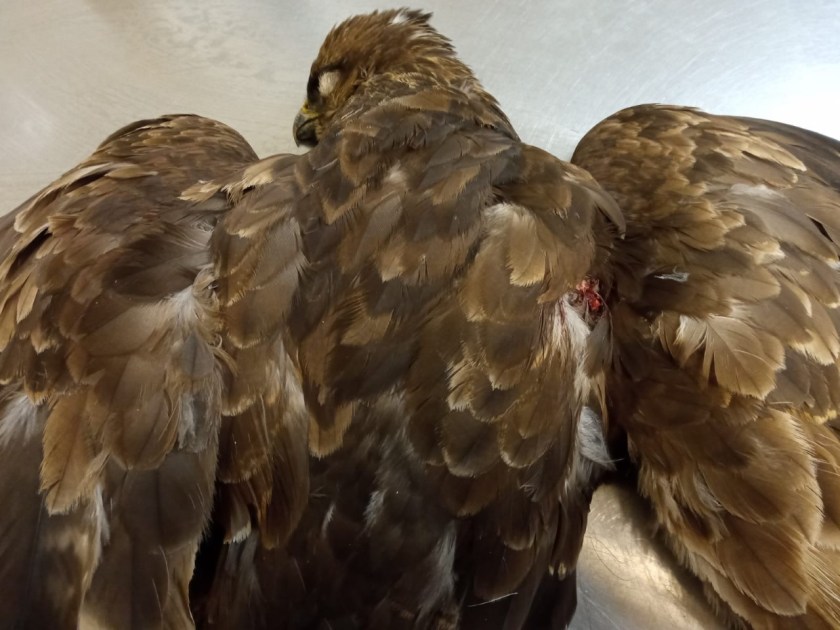
It was taken to local wildlife rehabilitator Jean Thorpe for care, and was subsequently taken to a veterinary practice for examination. The marsh harrier was found to have a broken left wing with a shotgun pellet lodged next to the fracture, which shows the bird had been subjected to persecution.

[Photo from Lower Derwent Valley National Nature Reserve, where it was subsequently released after being helped by Jean Thorpe and veterinary specialists at Battle Flatts Veterinary Clinic]

A spokesperson for North Yorkshire Police said: “Sadly, North Yorkshire is the UK’s worst hotspot for confirmed cases of bird of prey persecution. This magnificent bird has been very fortunate to survive, largely thanks to the dedication and care given by Jean Thorpe, but is yet another example of a wildlife crime having taken place against our birds of prey.”

North Yorkshire Police have carried out extensive enquiries in the Hutton Buscel area. Officers are appealing for anyone with any information, or who may have witnessed anything taking place in relation to this bird, to contact PC Mark Atkinson at Malton Police Station by dialling 101, quoting reference number 12190155625.

ENDS

We believe this Marsh harrier is the one we blogged about on 18 September 2019 (here), having been found injured on a game-shooting estate near Scarborough in August, rescued, rehabbed and then released.

It’s not the first time a Marsh harrier has been found targeted on a game-shooting estate in Yorkshire. This one was found with shotgun injuries next to a partridge release pen on an East Yorkshire sporting estate in 2016 and this breeding pair was shot at and had their eggs removed by men dressed as gamekeepers on a grouse moor in North Yorkshire in 2017.

In 2017/2018 Amanda Anderson (Moorland Association) denied that her members were interested in obtaining licences permitting them to kill Marsh harriers but several witnesses said otherwise.

Pre-Werritty propaganda from grouse shooting industry

As we all continue to wait for the publication of Professor Werritty’s report on driven grouse shooting, the usual suspects have been busy putting together a damage limitation programme to save their sorry necks.

An ‘informal alliance’ has been created under the banner of RELM (Rural Environment Land Management) ‘to help co-ordinate and streamline responses and communications ahead of the publication of the final report‘ and its first offering is this briefing document for MSPs which was distributed by Scottish Land & Estates a couple of weeks ago:

Here’s the intro blurb:

Grouse moor management has been the subject of much attention during the summer period across a range of issues such as the environment and species conservation, satellite tagging and wildlife crime, mountain hares and the start of the season on August 12.

With the Scottish Government’s review into grouse moor management due to be published shortly, rural organisations wished to provide the following update to parliamentarians. We would be pleased to provide additional detail where required.

Ah, how thoughtful. Amusingly, several MSPs have sent us a copy of this briefing document with comments along the lines of ‘You might want to say a few things about this’.

We’re grateful to those MSPs because yes, we do want to say a few things about the document’s contents and we wouldn’t otherwise have had an opportunity had they not shared the briefing with us.

We’re not posting the full briefing document here, yet. Instead we intend to blog about different aspects of it in turn.

Today we’re looking at the page entitled ‘Wildlife Crime’ and its five paragraphs of propaganda:

Propaganda paragraph 1:

Yes, significant media attention does remain focused on wildlife crime, and particularly illegal raptor persecution because everyone else finds it abhorrent and can’t understand why it still goes on and why the grouse shooting industry continues to shield the criminals involved. It’d be interesting to know what, exactly, these five organisations have done to crack down on raptor persecution as part of their claimed ‘full commitment to improving prevention, detection and prosecution’.

Propaganda paragraph 2:

No surprises here. This is a blatant attempt, yet again, to discredit the RSPB’s annual Birdcrime Report which was published a couple of weeks ago and showed that confirmed raptor persecution crimes in Scotland in 2018 had doubled from those recorded in 2017. These cases included a peregrine poisoned in the Pentland Hills, near Edinburgh; a buzzard found to have been shot twice, in South Lanarkshire; a buzzard caught in an illegal trap, in Inverness-shire; and a hen harrier caught in a spring trap in Perthshire. All of these incidents occurred on, or close to, land being managed intensively for driven grouse shooting.

With this level of relentless criminality, it’s no wonder the grouse shooting industry apologists want to infer that the RSPB’s data are ‘unofficial’. Fine. We’ll come back to this later this autumn when the Government publishes its annual wildlife crime report, which we know will include all of the confirmed incidents already reported by the RSPB.

Propaganda paragraph 3:

This is perhaps the most cynical of attempts to downplay the disgusting reality of the criminality still being committed on some driven grouse moors. And the first sentence of paragraph 3 is actually a lie. Not being pursued by Police Scotland? Er, ALL the cases of alleged raptor persecution that have been reported from grouse moors over the last few months are still considered to be live criminal investigations by the Police, according to the investigations officer we spoke to yesterday.

So, the satellite-tagged hen harrier that was found dead on a grouse moor in Strathbraan with an illegal spring trap clamped to its leg – it’s still the subject of a criminal investigation by the police.

The two satellite-tagged golden eagles (Adam and Charlie) that ‘disappeared’ in suspicious circumstances on another grouse moor in Strathbraan, on the same morning as each other – they’re still the subject of a criminal investigation by the police (as are several other alleged offences uncovered during the police search).

The hen harrier that was found caught by its leg in a spring trap that had been set illegally next to its nest on a grouse moor in South Lanarkshire – it’s still the subject of a criminal investigation by the police.

The buzzard that was caught inside a legal cage trap on the same South Lanarkshire grouse moor but was then allegedly beaten to death by someone arriving on a quad bike after dark and using a key to open the padlocked door of the cage – it’s still the subject of a criminal investigation by the police.

The young golden eagle that was photographed flying around in the Cairngorms National Park with an illegal trap clamped to its leg – it’s still the subject of a criminal investigation by the police.

And as for the claim that estates have issued ‘unprecedented and emphatic rebuttals’ – er, there’s nothing unprecedented about that! Estates have always denied any involvement in any of the wildlife crimes that have been uncovered on their land – it’s what they do!

Propaganda paragraph 4:

Ah yes, convicted gamekeeper Alan Wilson, dubbed by the press as ‘Scotland’s worst wildlife killer‘. Yet again, the link between Wilson’s filthy criminal activity uncovered at Henlaw Wood and driven grouse shooting is kept well hidden. Yes, the Longformacus Estate was managed for low ground pheasant shooting but it was also managed for driven grouse shooting – a fact that Scottish Land & Estates doesn’t like to mention!

And speaking of Scottish Land & Estates and it’s so-called ‘full commitment’ to tackling wildlife crime, it still hasn’t said whether the Longformacus Estate was a member at the time these crimes were committed and if so, whether that membership has now been terminated? We asked SLE this question on 22 August 2019. Still waiting for an answer….

Propaganda paragraph 5:

Of course they continue to call for tougher penalties – how can they not? But they know as well as we do that the severity of the penalty is utterly irrelevant if the perpetrators of these crimes can’t even be identified, let alone prosecuted.

And as long as evidence continues to be destroyed and employers continue to shield their criminal employees by instructing them to give ‘no comment’ interviews to the police, nothing will change.

Fortunately, there are more and more savvy MSPs in the Scottish Parliament who have seen through the greenwash and know exactly what’s going on. If you think your MSP isn’t one of those, it’d be worth dropping them an email with a link to this blog.

Damning report highlights illegal killing of birds of prey on Nidderdale AONB grouse moors

The Nidderdale Area of Outstanding Natural Beauty (AONB) is an absolute hell hole for many birds of prey.

[Photo: Ruth Tingay]

This is no secret. The illegal killing of raptors on the grouse moors of this AONB has been documented and reported on for years, by the RSPB and by this blog. The area is notorious amongst raptor conservationists for the number of hen harriers that ‘disappear’ in suspicious circumstances (that’s a euphemism for ‘they have been killed’) and the number of red kite corpses that have been found either shot or poisoned, or sometimes both.

It’s a gaping black hole on the breeding distribution maps of many raptor species and despite this being a so-called protected area, in the words of Mark Avery it’s actually a massive wildlife crime scene.

Here’s a map we produced a while ago showing the boundary of the Nidderdale AONB (yellow line), illegally killed red kites (red dots), missing satellite-tagged hen harriers (orange stars), shot hen harrier Bowland Betty (red star), shot hen harrier River (red triangle, which we now know should be closer to the red star on the Swinton Estate).

Nidderdale AONB lies directly east of the Yorkshire Dales National Park, another raptor persecution hell hole. Last year, the Park Authority responded to public concerns about the killing of raptors on grouse moors by producing an evidence report on the scale of the problem. As we wrote at the time, ‘This report, which is very well written and referenced, is a significant move. There’s no attempt to deny or hide or obfuscate the facts, as we’ve seen so often before. It is a clear description of what’s been happening in this National Park and places grouse moor management at the centre of it all. It’s well worth a read‘.

Fast forward a year and now the Nidderdale AONB has done exactly the same:

You can download the report here: BoP-in-NiddAONB-Evidence-Report-FINAL-Sept-2019

It’s another well-written, fully-referenced report and there’s no hint of denial or obfuscation. It is particularly pleasing to see the use of RSPB persecution data, not just the inaccurate, out of date, watered-down RPPDG data that some pro-shooting organisations rely upon to minimise the perceived scale of the problem. Once again, the report’s conclusion is that grouse moor management is in the frame.

Well done to the author(s) of this report and well done to the Nidderdale AONB for having the balls to publish it.