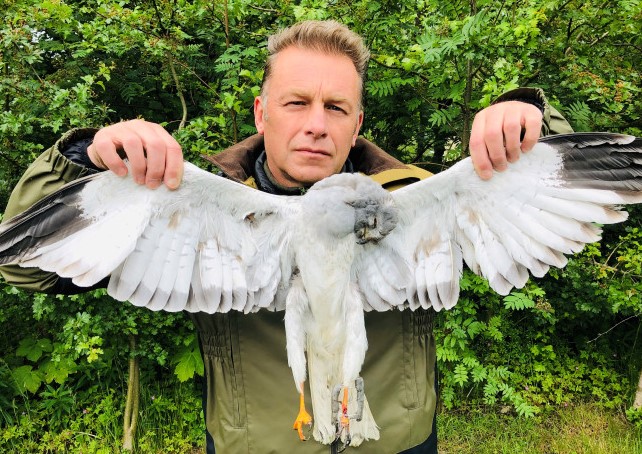
It’s getting to that time of year when the grouse shooting industry pumps out its patently misleading propaganda relating to hen harrier conservation in the UK. The aim is to hoodwink the public in to believing that the industry loves hen harriers and is doing all it can to protect and nurture the tiny remnant breeding population (but conveniently forgetting to mention that the breeding population is only in such dire straits because the grouse shooting industry has been ruthless in its maniacal intolerance of this supposedly protected species).
And the industry’s pursuit of the hen harrier is not simply ‘historical’ or indicative of past behaviour, as some would have us believe. It is on-going, it is current, and it is relentless.

To illustrate this fact, we intend to keep a running tally of all the hen harriers that we know (because most of these victims had been fitted with a satellite tag) to have either ‘disappeared’ in suspicious circumstances or have been confirmed as being illegally killed since 2018.
Why only since 2018 when we know that hen harriers have been a persecution target for years and years and years? Well, 2018 is the year that the grouse shooting industry ‘leaders’ would have us believe that the criminal persecution of hen harriers had stopped and that these birds were being welcomed back on to the UK’s grouse moors (see here).
This assertion was made shortly before the publication of a devastating new scientific paper that demonstrated that 72% of satellite-tagged Hen Harriers were confirmed or considered likely to have been illegally killed, and this was ten times more likely to occur over areas of land managed for grouse shooting relative to other land uses (see here).
We only started compiling this list of dead / missing hen harriers two weeks ago when we learned that all five of last year’s brood meddled hen harrier chicks were ‘missing’, presumed dead (see here). Having just learned yesterday that two more satellite-tagged hen harriers have ‘disappeared’ in suspicious circumstances on grouse moors in the Cairngorms National Park during the Coronvirus lockdown (see here), it’s time to update the death list, which now stands at 39. Nobody has been prosecuted for any of these cases. We have every expectation that this list will be updated again in the near future.
For now, here are the 39:
February 2018: Hen harrier Saorsa ‘disappeared’ in the Angus Glens in Scotland (here). The Scottish Gamekeepers Association later published wholly inaccurate information claiming the bird had been re-sighted. The RSPB dismissed this as “completely false” (here).
5 February 2018: Hen harrier Marc ‘disappeared’ on a grouse moor in Durham (here)
9 February 2018: Hen harrier Aalin ‘disappeared’ on a grouse moor in Wales (here)
March 2018: Hen harrier Blue ‘disappeared’ in the Lake District National Park (here)
March 2018: Hen harrier Finn ‘disappeared’ near Moffat in Scotland (here)
18 April 2018: Hen harrier Lia ‘disappeared’ in Wales and her corpse was retrieved in a field in May 2018. Cause of death was unconfirmed but police treating death as suspicious (here)
8 August 2018: Hen harrier Hilma ‘disappeared’ on a grouse moor in Northumberland (here).
16 August 2018: Hen harrier Athena ‘disappeared’ on a grouse moor in Scotland (here)
26 August 2018: Hen Harrier Octavia ‘disappeared’ on a grouse moor in the Peak District National Park (here)
29 August 2018: Hen harrier Margot ‘disappeared’ on a grouse moor in Scotland (here)
29 August 2018: Hen Harrier Heulwen ‘disappeared’ on a grouse moor in Wales (here)
3 September 2018: Hen harrier Stelmaria ‘disappeared’ on a grouse moor in Scotland (here)
24 September 2018: Hen harrier Heather ‘disappeared’ on a grouse moor in Scotland (here)
2 October 2018: Hen harrier Mabel ‘disappeared’ on a grouse moor on the edge of the Yorkshire Dales National Park (here)
3 October 2018: Hen Harrier Thor ‘disappeared’ next to a grouse moor in Bowland, Lanacashire (here)
26 October 2018: Hen harrier Arthur ‘disappeared’ on a grouse moor in the North York Moors National Park (here)
10 November 2018: Hen harrier Rannoch ‘disappeared’ on a grouse moor in Scotland (here). Her corpse was found nearby in May 2019 – she’d been killed in an illegally-set spring trap (here).
14 November 2018: Hen harrier River ‘disappeared’ on a grouse moor in the Nidderdale AONB (here). Her corpse was found nearby in April 2019 – she’d been illegally shot (here).
16 January 2019: Hen harrier Vulcan ‘disappeared’ in Wiltshire close to Natural England’s proposed reintroduction site (here)
7 February 2019: Hen harrier Skylar ‘disappeared’ next to a grouse moor in South Lanarkshire (here)
22 April 2019: Hen harrier Marci ‘disappeared’ on a grouse moor in the Cairngorms National Park (here)
11 May 2019: An untagged male hen harrier was caught in an illegally-set trap next to his nest on a grouse moor in South Lanarkshire. He didn’t survive (here)
7 June 2019: An untagged hen harrier was found dead on a grouse moor in Scotland. A post mortem stated the bird had died as a result of ‘penetrating trauma’ injuries and that this bird had previously been shot (here)
5 September 2019: Wildland Hen Harrier 1 ‘disappeared’ on a grouse moor nr Dalnaspidal on the edge of the Cairngorms National Park (here)
11 September 2019: Hen harrier Romario ‘disappeared’ on a grouse moor in the Cairngorms National Park (here)
14 September 2019: Hen harrier (Brood meddled in 2019, #183704) ‘disappeared’ in North Pennines (here)
23 September 2019: Hen harrier (Brood meddled in 2019, #55149) ‘disappeared’ in North Pennines (here)
24 September 2019: Wildland Hen Harrier 2 ‘disappeared’ on a grouse moor at Invercauld in the Cairngorms National Park (here)
10 October 2019: Hen harrier Ada ‘disappeared’ on a grouse moor in the North Pennines AONB (here)
12 October 2019: Hen harrier Thistle ‘disappeared’ on a grouse moor in Sutherland (here)
18 October 2019: Member of the public reports the witnessed shooting of an untagged male hen harrier on White Syke Hill in North Yorkshire (here)
November 2019: Hen harrier Mary found illegally poisoned on a pheasant shoot in Ireland (here)
January 2020: Members of the public report the witnessed shooting of a male hen harrier on Threshfield Moor in the Yorkshire Dales National Park (here)
1 April 2020: Hen harrier (Brood meddled in 2019, #183703) ‘disappeared’ in unnamed location, tag intermittent (here)
5 April 2020: Hen harrier Hoolie ‘disappeared’ on a grouse moor in the Cairngorms National Park (here)
8 April 2020: Hen harrier Marlin ‘disappeared’ on a grouse moor in the Cairngorms National Park (here)
21 May 2020: Hen harrier (Brood meddled in 2019, #183701) ‘disappeared’ on a grouse moor in Cumbria shortly after returning from wintering in France (here)
To be continued……..
Anybody still wondering why the grouse shooting industry wants us to stop fitting satellite tags?






 Raptor Persecution UK