For new readers, this is proposed new legislation to regulate grouse shooting and its associated management practices by way of licensing schemes, introduced because of the continued illegal persecution of birds of prey on many Scottish grouse moors.
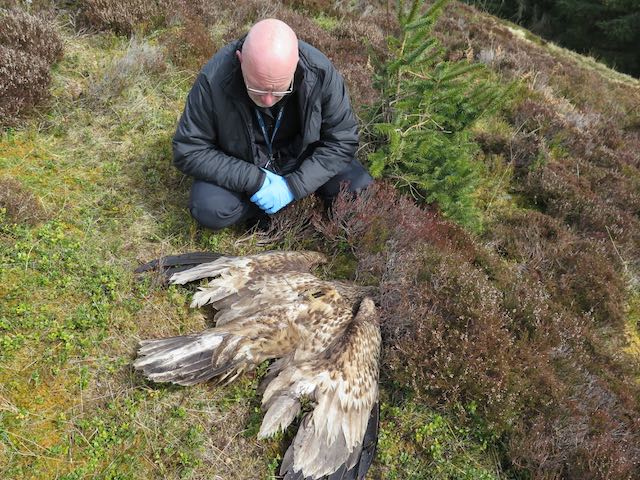
A police officer examines the corpse of a young White-tailed eagle, found illegally poisoned on a grouse moor in the Cairngorms National Park. Photo: Police Scotland
The Wildlife Management & Muirburn Bill, introduced in March 2023, has been examined and critiqued by the Rural Affairs & Islands Committee over the last year and after a number of amendments has now reached the final stage (Stage 3) of its progression through the Parliament.
Conservationists are generally satisfied with the Bill as it currently stands. It’s not perfect by any means, but it represents a significant shift away from the previous situation of driven grouse shooting being a largely unregulated hotbed of wildlife crime, animal suffering and environmental damage, where those committing offences were rarely held to account and the few who were only suffered minimal consequences.
The new legislation will introduce a licensing scheme for all grouse shooting in Scotland and where there’s sufficient evidence of unlawful activity (e.g. the poisoning, shooting or trapping of birds of prey) the licence can be revoked to prevent any further grouse shooting on that area of land. Crucially, the evidence will be assessed on the civil burden of proof (i.e. the balance of probability) rather than the criminal burden of proof (i.e. beyond reasonable doubt).
Muirburn will only be permitted under licence and not on peatlands where the peat depth is greater than 40cm. The muirburn season will end on 31st March instead of running through April as it currently does.
Grouse shooting and muirburn will both be covered by two new statutory codes of practice. Breaches of the code may result in the revocation of the relevant licence.
The SSPCA will be given increased investigatory powers to allow them to help with enforcement measures against wildlife crime alongside their current powers for enforcing animal welfare legislation.
Wildlife trap users will be licensed and all must first complete training for each trap type they intend to use. All snares (including so-called ‘humane cable restraints’) will be banned.
This is all looking very good. However, it’s not over the line yet. Further amendments to the Bill at Stage 3 may be lodged up until Tues 12th March and then some of those amendments will be selected for debate by the whole Parliament on Tues 19th, followed by a final vote on the Bill before it’s sent for royal assent.
Those further potential amendments have yet to be published but we expect to see them later next week. Of particular concern is a suggestion by BASC (British Association for Shooting & Conservation) that the Minister (Jim Fairlie MSP) may be considering a U-turn on the snare ban. This is what appeared on a recent BASC blog that was updating its members on the progression of the Bill after Stage 2:
A U-turn on the proposed snaring ban at Stage 3 would seem unlikely given the Government’s strong position shown at Stage 2 on implementing the ban, but BASC clearly seem to think that it’s a possibility.
With this in mind, I’d encourage all blog readers in Scotland to write to your respective MSPs to encourage them to support the Wildlife Management & Muirburn Bill as it currently stands and let them know how important it is that no U-turns are undertaken on the snaring ban.
Tell them how long you’ve been waiting for these new measures to be introduced and that you welcome and support the Government’s plans to finally bring some meaningful regulation to the grouse-shooting industry.
You can find the names of your MSPs by entering your postcode here.
Thank you.
UPDATE 14th March 2024: BASC throws a wobbler as Minister Jim Fairlie stands firm on Wildlife Management & Muirburn Bill (here)
The Scottish Parliament’s Rural Affairs & Islands Committee met again on Wednesday 21st February to undertake its second day of consideration of the Stage 2 amendments of the Wildlife Management (grouse moor reform) Bill.
For new readers, this is proposed new legislation to regulate grouse shooting and its associated management practices by way of licensing schemes, introduced because of the continued illegal persecution of birds of prey on many Scottish grouse moors.
A report on what happened during the first day of consideration that took place two weeks ago can be found here.
Newly appointed Agriculture Minister Jim Fairlie MSP was in the hot seat. Screengrab from Scottish Parliament TV, 21 Feb 2024
Two separate sessions were required on Wednesday (one in the morning and one in the evening) to get through all the amendments, bringing Stage 2 of this Bill to a close.
Newly-appointed Agriculture Minister Jim Fairlie MSP led the Government’s response, taking over from Gillian Martin MSP whose Ministerial responsibilities have been moved elsewhere after the recent mini-reshuffle.
There were two other new faces on the Committee – Emma Harper MSP (SNP) who replaces former Committee member Jim Fairlie, and Elena Whitham MSP (SNP) who replaces former Committee member Karen Adam MSP who left after taking on commitments on a different Committee.
Other MSPs in attendance were Edward Mountain MSP (Conservative), Jamie Halco Johnstone MSP (Conservative, representing Stephen Kerr MSP) and Colin Smyth MSP (Labour), none of whom were eligible to vote on the Stage 2 amendments but who were present to speak to amendments they had lodged.
Wednesday’s two sessions were straight forward and once again there weren’t any big surprises with Committee members mostly voting along party lines, which meant that the numerous wrecking amendments put forward by the Conservatives, designed to weaken the Bill, were not supported by the majority. It also meant that various amendments put forward by Colin Smyth MSP (Labour), designed to strengthen the Bill, were also unsupported by the majority. Overall, the Bill passed Stage 2 pretty much in the format that the Government had introduced it, which is what had been anticipated.
I won’t go through the amendments one by one because there were too many. For those interested in proceedings the archive video of the two meetings are linked below, as is the meeting transcript.
The big ‘wins’ from our perspective were as follows:
There was majority support for Ministers to be given the power to add additional gamebird species to the licence if there is evidence that wildlife crime, such as raptor persecution, is taking place to facilitate the management of gamebirds such as pheasants and red-legged partridge. Ministers will have the authority to take evidence, consult and then vote on adding those species to the licence at a later date, if deemed appropriate.
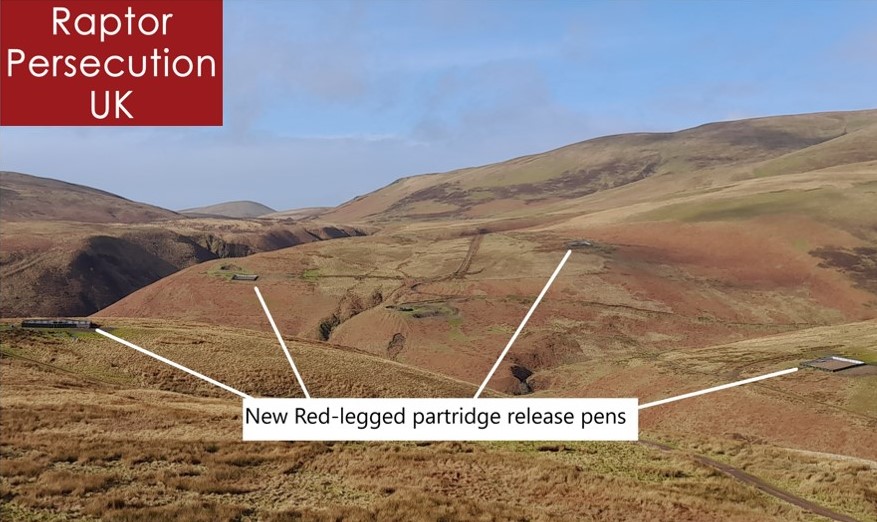
This is a very important amendment especially given the recent trend in the release of red-legged partridge on grouse moors where shooting red grouse is no longer a viable commercial activity. Red-legged partridge and/or pheasants may be used by some grouse shooting estates as an alternative quarry if their licence for shooting red grouse has been revoked so having the power to include these additional species on the licence will close the loophole that some grouse moor managers may have sought to exploit in order to continue killing raptors without consequence. Amendments seeking to exclude this provision were lodged by Conservatives Edward Mountain and Rachael Hamilton but they were not supported.
Red-legged partridge pens placed on a moor in south Scotland
There was support for an amendment that provides a requirement for the use of medicated grit to be included in the Code of Practice being developed to support the new legislation. This is a timely amendment given the research published last week by the League Against Cruel Sports and Wild Justice that demonstrated widespread bad practice and the complete lack of monitoring of medicated grit use (see here).
REVIVE, the coalition for grouse moor reform has just released a campaign video to highlight those findings:
The details of what requirements will be made in the Code of Practice in relation to the use of medicated grit are still to be determined but the Government’s support for medicated grit use to be included is very good news indeed, especially when some grouse shooting organisations have been arguing against its inclusion.
The Minister discussed his intention to introduce a requirement in the Bill to undertake monitoring and reporting of raptor populations – specifically golden eagle, hen harrier and peregrine, species identified in the Werritty Review as being significantly impacted by raptor persecution crimes on grouse moors.
This monitoring would provide a key measure of success (or failure) of the Bill to tackle raptor persecution, which is one of its primary objectives, and whether the new legislation has been effective in this respect. The Minister said he would return to this issue at Stage 3 after discussions with NatureScot and the Scottish Raptor Study Group about the resources required to undertake monitoring and reporting. Rachael Hamilton lodged an amendment that called for a limit on the reporting of some raptor persecution incidents – she wanted to only include crimes that had been proven by conviction. In other words, to exclude incidents described as ‘suspicious’ such as those relating to the suspicious disappearance of satellite-tagged raptors on grouse moors. Her amendment was not supported.
One of the most significant ‘wins’ came from the majority vote to support the introduction of additional powers for the Scottish SPCA to allow them to investigate offences under the Wildlife & Countryside Act – an extension of their current powers to investigate offences under the Animal Health & Welfare Act. As regular blog readers will know, this issue has been kicked down the road repeatedly by the Scottish Government over a 13-year period (see here for timeline) so getting support after so long is particularly satisfying.
Of course there were the usual inaccurate and non-sensical objections from the Conservatives, with Edward Mountain claiming this “would give powers to people who have never had such powers before” and “It should be the police, not other people, who implement the law” and “It would give powers to third parties who I do not believe are qualified or have the legal training to exercise such powers“.
These continued claims about the SSPCA’s supposed inexperience and inability to investigate wildlife crime are laughable, given that they’re already an official specialist reporting agency to the Crown Office so know all about due process, they already work in partnership with Police Scotland and other agencies in raptor persecution investigations, and through their skill, experience and expertise routinely bring some of the most sadistic wildlife-abusers to justice, including badger baiters such as the recent case against a depraved gamekeeper employed on the Millden Estate in the Angus Glens (here). Edward Mountain should be thanking the Scottish SPCA for its tireless and often challenging work, and its willingness to undertake even more of it under this new legislation at no cost to the tax payer. Seriously, who would want to oppose the addition of more expert professionals to bring the wildlife criminals to justice?
Another big win came via Kate Forbes’s amendment to see the closing of the muirburn season brought forward to 31st March. Currently, gamekeepers can burn heather up until 15th April, and in some cases even to the 30th April where landowner discretion allows. This late season burning overlaps with the breeding season of various moorland bird species, and when that breeding season is predicted to get earlier in response to climate change it’s obviously idiotic to allow burning to continue during that period, just on the precautionary principle alone.
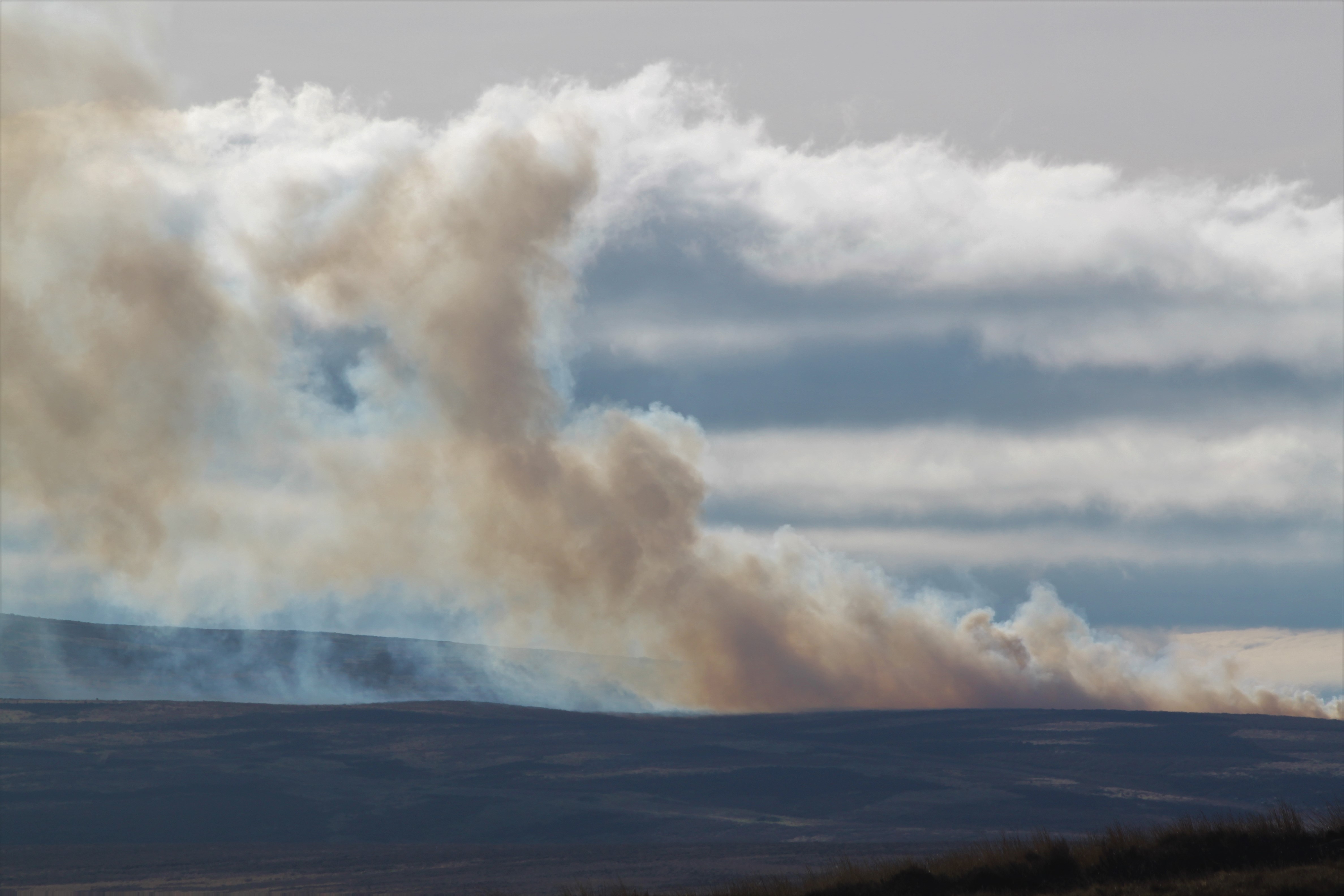
Grouse moor muirburn. Photo: Ruth Tingay
The 31st March was seen as a compromise as Conservatives Edward Mountain and Rachael Hamilton wanted burning to be permitted until 30th April whereas Green MSP Ariane Burgess suggested 15th March. There will be powers in the Bill to allow Ministers to review the 31st March cut off date to take account of future research findings.
Given that the majority of muirburn in Scotland currently takes place in April, the grouse shooting industry will not be at all happy with this new restriction. They’ve lobbied hard against it, including taking the newly-appointed Minister Jim Fairlie out to visit a muirburn site at the beginning of the week, but their lobbying influence is clearly not as powerful as they like to suggest it is.
They do have some influence, of course. Bizarrely, Kate Forbes found support amongst the Committee for another, related amendment, which will allow the beginning of the muirburn season to start two weeks earlier (i.e. 15th September as opposed to the current start date of 1st October). There is no justification for this other than to appease the grouse shooters by not shortening the overall muirburn season. In a climate emergency, this is bonkers. It suggests that the Scottish Government thinks that burning the moors to facilitate excessively large numbers of red grouse for a few selfish people to shoot for fun is more important than the global climate crisis. Actually it does more than suggest it – the Scottish Government was clear in its argument against Colin Smyth’s amendment (#143) that it thinks muirburn is acceptable for the sole purpose of maintaining & increasing red grouse so they can be shot for ‘sport’.
Although how much muirburn will actually take place in September remains to be seen – the heather will still be green-ish so won’t burn well and grouse shooting will be well underway so gamekeepers may have limited time to run around lighting fires. Let’s see.
A ‘sort-of’ win came with the acceptance of a change to the definition of ‘peatland’ as being ‘land where the soil has a layer of peat with a thickness of more than 40 centimetres’ (where “peat” means soil which has an organic content of more than 60%). The current definition of peatland in the Muirburn Code is peat with at least 50 centimetres depth, so dropping this down to 40cm is obviously good news as it means a larger area of peatland will now be protected (landowners will not be issued a licence to undertake muirburn for the purpose of grouse moor management where the peat depth is 40cm or greater). Edward Mountain’s amendment to increase the definition of peatland to 60cm peat depth, and Rachael Hamilton’s amendment for it to remain at 50cm, were unsupported. The Bill will also include a provision for Ministers to keep the definition of peatland under review as further research emerges.
The new peatland definition of 40cm peat depth will probably have a significant impact on the management practices of many grouse moors, particularly in Eastern Scotland where new research has shown a widespread disregard by grouse moor managers for the Muirburn Code restriction of burning on peatland with a 50cm depth (see here). The difference going forward will be that if they disregard the new 40cm depth restriction it will lead to the revocation of their muirburn licence. Having a serious consequence like that should encourage behavioural compliance (again, let’s see!).
I’ve described this one as a ‘sort-of’ win because although the change in definition is welcome (and long overdue), it could have gone so much further. The new definition of peatland could have been lowered to 30cm depth in line with the UK Peatland Strategy‘s definition (also followed by many countries internationally). Or, the definition of peatland could have removed the artificial construct of any peat depth altogether, as eloquently argued by Green MSP Ariane Burgess. There’s a very strong argument against using peat depth as a valid definition of peatland, to properly protect all peatland, including critically important shallow peatland, as explained recently in an excellent guest blog (here). However, the Minister didn’t support this approach.
Other amendments that passed during Wednesday’s sessions included a decision that falconers will not need to apply for a licence to hunt red grouse – that seems reasonable given the low number of people engaged in this sport and the lack of associated raptor persecution offences linked to it.
There was also a decision that grouse moor licences should be issued for a five-year period instead of the one-year period originally suggested in the Bill. The grouse shooting industry wanted a ten-year licence but five years was seen as more suitable to provide oversight and review capability by the regulating authority. In essence, the length of the licensing period is pretty inconsequential to us because the most important aspect is that the regulator (NatureScot) will still have the capacity to suspend or revoke a grouse moor management licence at any time during that five period if offences occur.
So, Stage 2 of the Bill is now complete and it moves on to the final Stage 3. This is when further amendments can be lodged and some will be selected (by the Presiding Officer) for a debate by the whole Parliament in the main chamber. Until Stage 3 is complete we won’t know for sure how strong this Bill is but it’s reasonable to think that there won’t be any catastrophic changes given the dominant voting power of the SNP and Greens. A date hasn’t yet been set for the Stage 3 debate but it is anticipated that it’ll take place in March.
After that, the development of the various Codes of Practice designed to support the new legislation will pick up speed and the details of those will take on great significance. A watchful eye will be kept on these to ensure that they are robust and fit for purpose.
Here is a copy of the Bill as amended after Stage 2:
The Scottish Parliament’s Rural Affairs & Islands Committee will continue its Stage 2 consideration of the Wildlife Management & Muirburn Bill this Wednesday and there will probably be a new Minister taking it forward.
For new readers, this is proposed new legislation to regulate grouse shooting and its associated management practices by way of licensing schemes, introduced because of the continued illegal persecution of birds of prey on many Scottish grouse moors.
A grouse shooting butt on a Scottish grouse moor. Photo: Ruth Tingay
So far the Bill has been ably led by Environment & Energy Minister Gillian Martin MSP but after a Cabinet mini-reshuffle earlier this month, it appears that Gillian Martin’s portfolio will no longer cover the Environment (her new title is now Minister for Energy, Just Transition and Fair Work).
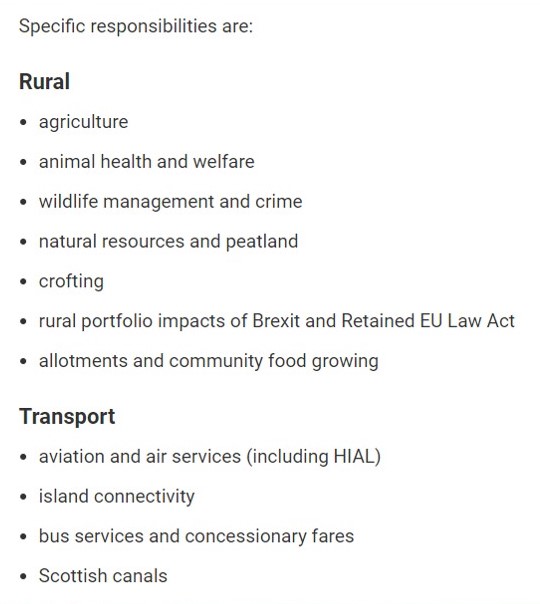
Instead, this Bill will now be led by newly-appointed Agriculture & Connectivity Minister, Jim Fairlie MSP, whose relevant portfolio responsibilities include wildlife management and crime, animal health & welfare, and natural resources and peatland.
Strangely, the word ‘Environment’ now does not feature in the title of any Scottish Minister.
I say he’ll ‘probably’ be taking it forward at Wednesday’s session – but that all depends on whether the Scottish Parliament formally approves his appointment as a new Minister and whether an unelected bloke in a crown formally approves it too, all before Wednesday morning.
It’s not ideal to have this level of Ministerial disruption at Stage 2 of the Bill but the good news is that Jim Fairlie has been serving on the Rural Affairs & Islands Committee and so is fully conversant with the Bill’s detail. Perhaps most importantly, he also fundamentally understands why there’s a need for this particular Bill to be passed, as he demonstrated two weeks ago when responding to fellow Committee member Rachael Hamilton’s ridiculous pronouncement that “there’s no connectionbetween raptor persecution and grouse moors” (see here for Jim Fairlie’s reaction).
Of course, now he’s a Minister, Jim Fairlie is no longer permitted to serve on any Committee and his name has been removed from the Committee list. Interestingly, SNP MSP Karen Adam’s name has also disappeared from the list. I don’t know why that is. It’ll be interesting to see who is brought in to replace these two SNP members.
It’ll also be interesting to see how Jim Fairlie steers this Bill as the leading Minister. It’s anticipated that like his predecessor, there won’t be many surprises and he’ll stick to the Government line and not accept many amendments unless they’re Government-backed, but let’s see.
The stage 2 scrutiny of the Bill must be completed by the Committee on Wednesday 21st February. However, as the pace was so slow at the last meeting (a meeting that had already been delayed for two weeks thanks to the Convenor), the Committee will now have to undertake two separate sessions to finish in time. The first session is expected to begin at 11am on Wednesday, after the Committee has considered some other business, and is expected to end at around 12.45pm. There will then be a further session on Wednesday evening, beginning at 6pm.
The morning session will begin by completing amendments on the Bill’s section on the use of wildlife traps (picking up where it left off during the first session two weeks ago) and will then move on to amendments relating to the issues of licensing grouse moor management (including increased powers for the SSPCA) and licensing muirburn. These issues are expected to be the most contentious because, if voted through, many of these licensing conditions will introduce a level of regulation that grouse moor managers simply aren’t used to, and won’t like having to adhere to. Conservationists will welcome the regulations that many of us consider to be necessary and long, long, long overdue.
Predictably, there are a number of amendments, mostly submitted by Conservative MSPs Edward Mountain, Rachael Hamilton and Stephen Kerr, that seek to weaken the Government’s proposed licencing conditions. They’re entitled to submit those, of course, and there are other amendments from the likes of Colin Smyth (Labour), John Mason (SNP) and Ariane Burgess (Greens) that seek to strengthen the terms of the licences. Here is the marshalled list that the Committee will debate on Wednesday:
As ever, these sessions can be watched live on Scottish Parliament TV and there’ll be an archive video and transcripts available after the sessions, which I’ll add here when available.
I’ll also try and write an overview of Wednesday’s proceedings once Stage 2 is complete. You can read my overview of what happened in the previous session here.
Grouse moor managers have been using medicated grit for many years to prevent the natural cyclical population crashes in Red Grouse caused by the parasitic strongyle worm.
This natural regulation of the wild populations was inconvenient for those who seek to produce an artificially high number of birds for so-called ‘sport’ shooting so the use of medicated grit was introduced to prevent these population crashes.
However, aside from the questionable ethical issue of drugging wild birds for ‘sport’, questions have also been raised about the ineffectual regulation and monitoring of its use (see here for a blog I wrote about it way back in 2015).
Grit trays with marker posts can be seen on many moors managed for Red Grouse shooting. Photo: Ruth Tingay
The drug currently used in medicated grit is Flubendazole, and it’s toxic. So toxic in fact that there is a statutory requirement for grouse moor managers to remove the grit 28 days prior to shooting any Red Grouse to ensure that it doesn’t enter the human food chain. We know from previous enquiries that the UK agency responsible for monitoring this adherence to the law is pathetic, to say the least. We also know that this agency (the Veterinary Medicines Directorate) does not visit grouse moors to test grit piles to determine whether its medicated or not. Nobody’s checking, and the grouse moor managers will know this.
Well all that is about to change. Conservation campaign group Wild Justice has teamed up with the League Against Cruel Sports (Scotland) to fund the development of a novel lab test to detect the presence of Flubendazole on grit samples.
This novel test has now been trialled by the League Against Cruel Sports who collected grit samples from a number of moors across Scotland and their findings suggest widespread mis-use of the drug.
Here is a briefing note that details these findings:
Last week Wild Justice and the League Against Cruel Sports met with officials from the Scottish Government and NatureScot to discuss these findings and to ask for improved regulation.
Officials assured the campaigners that although the approval of medication to dose wild birds is a reserved issue to the Westminster Government, the use of medicated grit will be subject to greater regulation in Scotland under the new Codes of Practice being drawn up to support the Wildlife Management & Muirburn Bill.
This is an important step. Firstly, I’d heard rumours that some grouse shooting organisations who serve on the grouse moor Code of Practice working group had been trying to exclude the use of medicated grit from scrutiny and regulation. It’s good to hear that it most definitely will be included.
Secondly, it’s worth remembering that any breach of any of the Codes of Practice could result in an estate’s grouse shooting licence being revoked. Now, obviously it will depend on the detail of the Codes of Practice as to what will be deemed to be a code breach – the devil is always in the detail.
But those details should include a requirement for all medicated grit users to provide the regulator (NatureScot) with a copy of their veterinary prescription (currently unsighted); a requirement that the grit is not administered in a way that it can leach into the environment (currently, it can – see above briefing report); a requirement that when the medicated grit is withdrawn it is disposed of as toxic waste (currently, it isn’t); and a provision that allows NatureScot to randomly field test grit samples on grouse moors to ensure the medicated grit has been withdrawn within the statutory time limit (currently, nobody checks). The development of the novel lab test should help facilitate this.
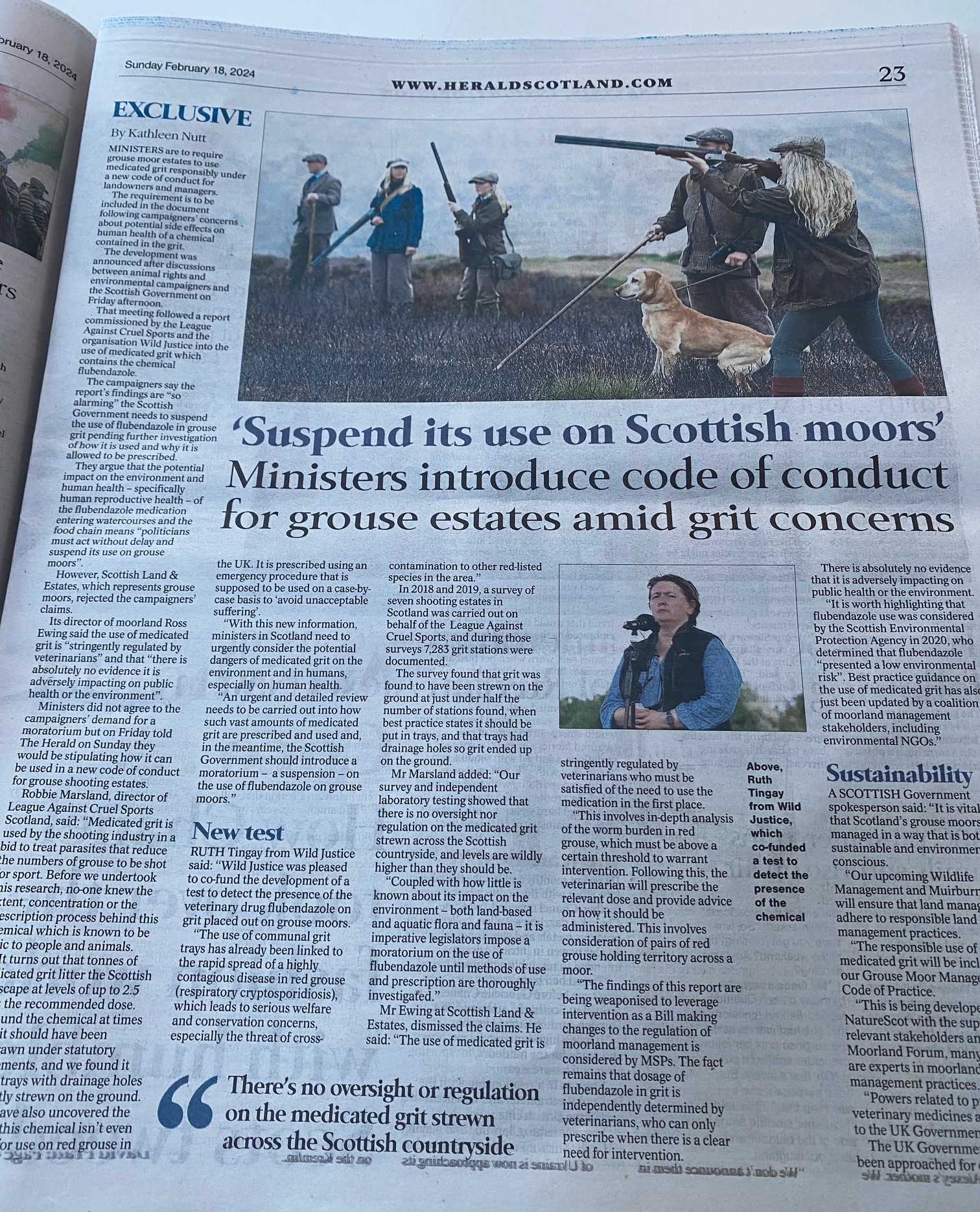
Some of you may have seen an exclusive in The Herald yesterday about this subject – it’s here, but behind a paywall.
Here’s a photo that someone sent to me of the hard copy, where most of the text is visible:
For new readers, this is proposed new legislation to regulate grouse shooting and its associated management practices by way of licensing schemes, introduced because of the continued illegal persecution of birds of prey on many Scottish grouse moors.
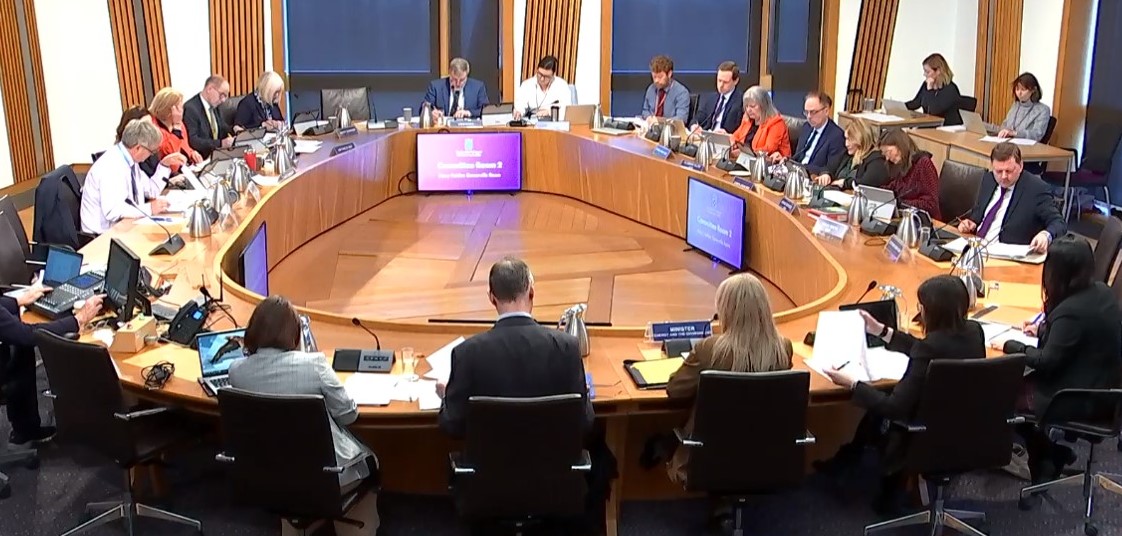
Rural Affairs & Islands Committee, 7 February 2024. Screengrab from Scottish Parliament TV.
The Committee was joined by Environment Minister Gillian Martin MSP and some of her civil servants, and there were other MSPs in attendance (Edward Mountain MSP (Conservative), Stephen Kerr MSP (Conservative), Colin Smyth MSP (Labour) and John Mason MSP (SNP), none of whom were eligible to vote on the Stage 2 amendments but who were present to speak to amendments they have lodged.
There weren’t any big surprises in this first session and it soon became clear that Committee members were voting along party lines.
The Committee dealt with glue traps (nothing to do with grouse moor management but included in the Bill as a sort of related topic in terms of wildlife management) and then got into the nitty gritty of wildlife traps. There are still a few amendments to deal with on wildlife traps at the start of the next session but then it’ll move on to the big issues of grouse moor management and muirburn.
I won’t go through each amendment in turn because I’d be here for hours and besides, those interested will be able to read the transcript when it’s published in the next few days [update – now published at foot of this blog], but I will highlight some of the big decisions made at yesterday’s session.
The main ‘win’ from our perspective was the Minister’s decision to ban all snares on welfare grounds, including the cynically rebranded so-called ‘humane cable restraints‘ (rebranded to make them sound less archaic). The grouse shooting industry’s aggressive campaign to try and have ‘humane cable restraints’ exempted from the ban has failed miserably. Only two Committee members opposed the amendment for a ban – the two Tories, Finlay Carson and Rachael Hamilton. It was a pattern that was repeated throughout the proceedings.
Incidentally, as an aside, I keep reading arguments from the game shooting industry to justify the continued use of ‘humane cable restraints’ because they’re used by researchers and conservationists to trap wildlife, notably foxes, for example to fit radio collars, and the foxes are subsequently released unharmed. Therefore, they argue, ‘humane cable restraints’ are fine to use. What they don’t explain is for how long those foxes are ‘held’ in the ‘humane cable restraint’ (snare) – I’d wager that it’s not for up to 24 hours without access to food, water or shelter (the permitted time a fox can currently be held in a snare in Scotland until this Bill passes). No self-respecting scientific ethics committee would support a research application on that basis.
Another big ‘win’ was an amendment lodged by Karen Adam MSP (SNP) who successfully argued that offences committed under the Animal Health & Welfare (Scotland) Act 2006 should be considered as relevant for a potential suspension or revocation of a wildlife trapping licence (and also for a grouse moor management licence, although that part won’t be considered until the second session). This is a really important amendment because it means that when, for example, someone has been convicted of, say, the sadistic crime of badger-baiting (like the recent conviction of depraved Millden Estate gamekeeper Rhys Davies employed on a grouse moor in the Angus Glens), that person should not be considered fit to hold a trapping or grouse moor management licence. I was astonished (but not really) to see that Tories Finlay Carson and Rachael Hamilton opposed this amendment.
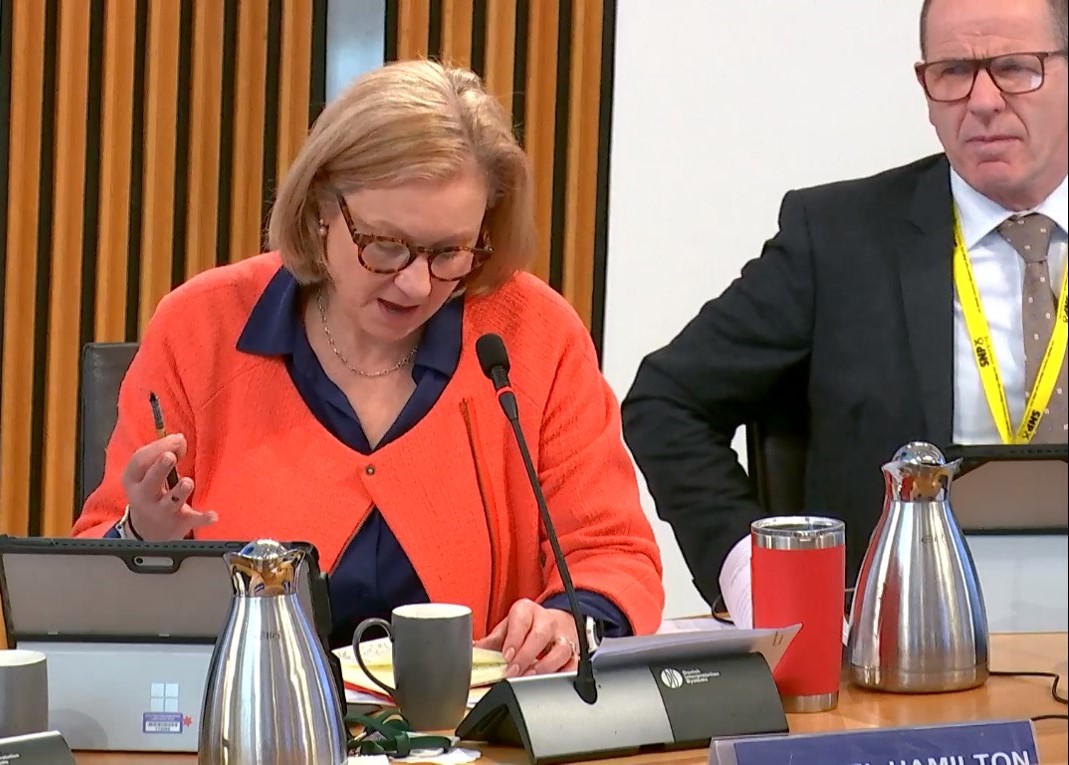
On the issue of full cost recovery for trap licences (i.e. that trap licence applicants should have to pay a fee to cover NatureScot’s administration of the licensing scheme, an amendment lodged by John Mason MSP (SNP)), Rachael Hamilton had lodged a counter amendment to remove this provision. The ensuing debate was hilarious, and Rachael’s argument was muddled and frankly, idiotic. She berated John Mason:
“He [John Mason] also should not, with respect, castigate assertions that illegal behaviours have been related to rural stakeholders“
She then went on a politicking spree, accusing the Scottish Government of “kow-towing” to another party (the Scottish Greens) as part of the Bute House Agreement (the shared policy agreement between the Scottish Greens and the SNP) but by this stage, Jim Fairlie MSP (SNP) had heard enough. He spoke to her directly, barely suppressing his exasperation:
“By the stakeholders’ own acceptance, this Bill was brought forward as a result of raptor persecution, which has been going on for decades, and the fact that there are going to be consequential wildlife benefits of bringing in this Bill does not necessitate the fact that the public purse should pay for it. Now I’m not saying one way or another how or where I’m going to vote on this at this moment in time, but to sit here today, you’re almost, sorry, the Member is almost trying to say that this has been brought forward as a result of the Bute House Agreement on the drive of the Greens. No, it’s not. It’s been brought forward because raptor persecution has been happening in this country, for decades, and the landowners who were responsible, or whose employees were responsible, did not shut it down. So I’m afraid I’ll be supporting the landowners and the rural workers more than most, but on this point I’m afraid I fundamentally disagree with you“.
Jim Fairlie’s facial expression when listening to Rachael Hamilton said it all.
Rachael Hamilton responded:
“Well, thank you to Jim Fairlie for that intervention. I mean of course, the whole objective is to ensure that we get those people who are operating illegally and that is the most important part of this Bill, but there’s no connection between raptor persecution and grouse moors. There are other reasons for persecution and those reasons would be predation, intraguild predation, the habitat etc, so we can agree to disagree on that“.
Eh?? After all the evidence presented to this Committee on the absolutely unequivocal link between grouse moor management and illegal raptor persecution, Rachael Hamilton is STILL denying the link exists, at this late stage of the Bill??! That’s either wilful blindness or embarrassing stupidity. And then describing the ‘reasons for persecution’ as being ‘intraguild predation’ and ‘habitat’ – it’s just mumbo jumbo.
Unsurprisingly, Rachael’s amendment was not supported by other Committee members (apart from Finlay Carson).
However, the issue of full cost recovery for trap licences was not resolved during this session because the Minister stated that her colleague, Biodiversity Minister Lorna Slater MSP, had recently (in January) commissioned a formal review of all species licensing undertaken by NatureScot, which will include assessing the potential for full cost recovery of licences. The review/report is expected within six months. I don’t know how that will impact on the progression of this Bill, given the Government’s stated intention to see the Bill passed before summer recess.
Conservative MSP Edward Mountain’s amendment suggesting that the withdrawal of wildlife trap licences should be based on the criminal burden of proof rather than the civil burden of proof was not supported. Neither was his amendment calling for an exemption from requiring a trapping licence if an applicant was (a) born before 31st December 1983 AND (b) had been using traps for 10 years consecutively. To be fair to him, although I thought his amendments were unsupportable, he did argue coherently and politely without the barbed sniping that was evident from some of his Conservative colleagues.
Labour MSP Colin Smyth didn’t find much support for his amendments on trap licensing, including a proposed condition that a trap licence shouldn’t be issued if its primary purpose was to manage the number of wild birds (Red Grouse) available for sport shooting. His arguments were passionate and eloquent and based on REVIVE’s campaign against ‘Killing to Kill‘ but he accused the Tories of making false claims about the impact of his amendments (it was argued that the amendments would effectively introduce a ban on grouse shooting) – they wouldn’t, and Colin announced his intention to press these amendments again at Stage 3.
The Minister’s amendment to create a specific offence of interfering with a lawfully set trap was approved, with an important caveat, ‘unless a person has reasonable cause to do so’. I’m guessing that a ‘reasonable cause’ may include concern about the immediate welfare of a trapped animal in distress, although a recent case in England based on those grounds led to the prosecution of a person who had released two highly distressed non-target species (a hare and a deer) from snares on the Duke of Norfolk’s estate in West Sussex. The person was subsequently found not guilty on all charges (see here). I may come back to that case in another blog because it’s interesting on a number of levels.
I note with some amusement that several grouse shooting organisations are trumpeting what they perceived as ‘a significant victory’ yesterday after the Minister removed a provision in the Bill that would have allowed the suspension of a trapping licence on the basis that a police investigation had started (into alleged trapping offences). Some of you may recall the Stage 1 discussions during the evidence sessions about the definition of an ‘investigation’ and when an ‘investigation’ could be deemed to have started (e.g. When someone reports an alleged offence? Or when the police issue a crime number? etc). It was a painful process that didn’t actually provide much clarity, even from the police, so for the purposes of having a water-tight Bill I think it was reasonable for this provision to be removed.
But is it a ‘significant victory’ as the grouse industry is claiming? I don’t think so. I think what the removal of this provision actually does is provide the police and NatureScot with a far less prescriptive regime and instead allows them more discretion when making an assessment of whether an offence has been committed and therefore whether a licence suspension or revocation is appropriate. That seems like a bit of an own goal by the grouse shooting industry, but if they want to declare it a victory, in what looks like a desperate attempt to appease their members amidst what is otherwise a catastrophic Bill for them (in their view), then good luck to them.
It’s been anticipated that the Committee will require two sessions to consider all the amendments at Stage 2 of this Bill, although judging by the pace of yesterday’s session I’d be surprised if they get through it all on time. The second session will take place on the morning of 21 February 2024.
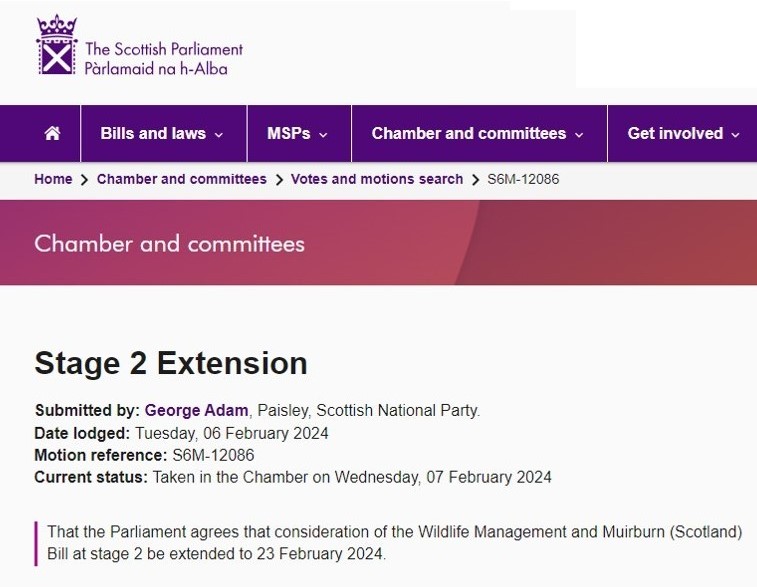
The Scottish Parliament has agreed to extend consideration of Stage 2 to 23rd February 2024 so if they don’t manage to finish on the morning of the 21st there’s a small window in which to potentially squeeze a further session:
You can watch yesterday’s proceedings on a video archived on Scottish Parliament TV (here) and I’ll post the transcript when it becomes available (usually a few days after the meeting).
Three conservation organisations held a parliamentary reception at Holyrood yesterday to brief MSPs ahead of the forthcoming Stage 2 of the Wildlife Management & Muirburn (Scotland) Bill.
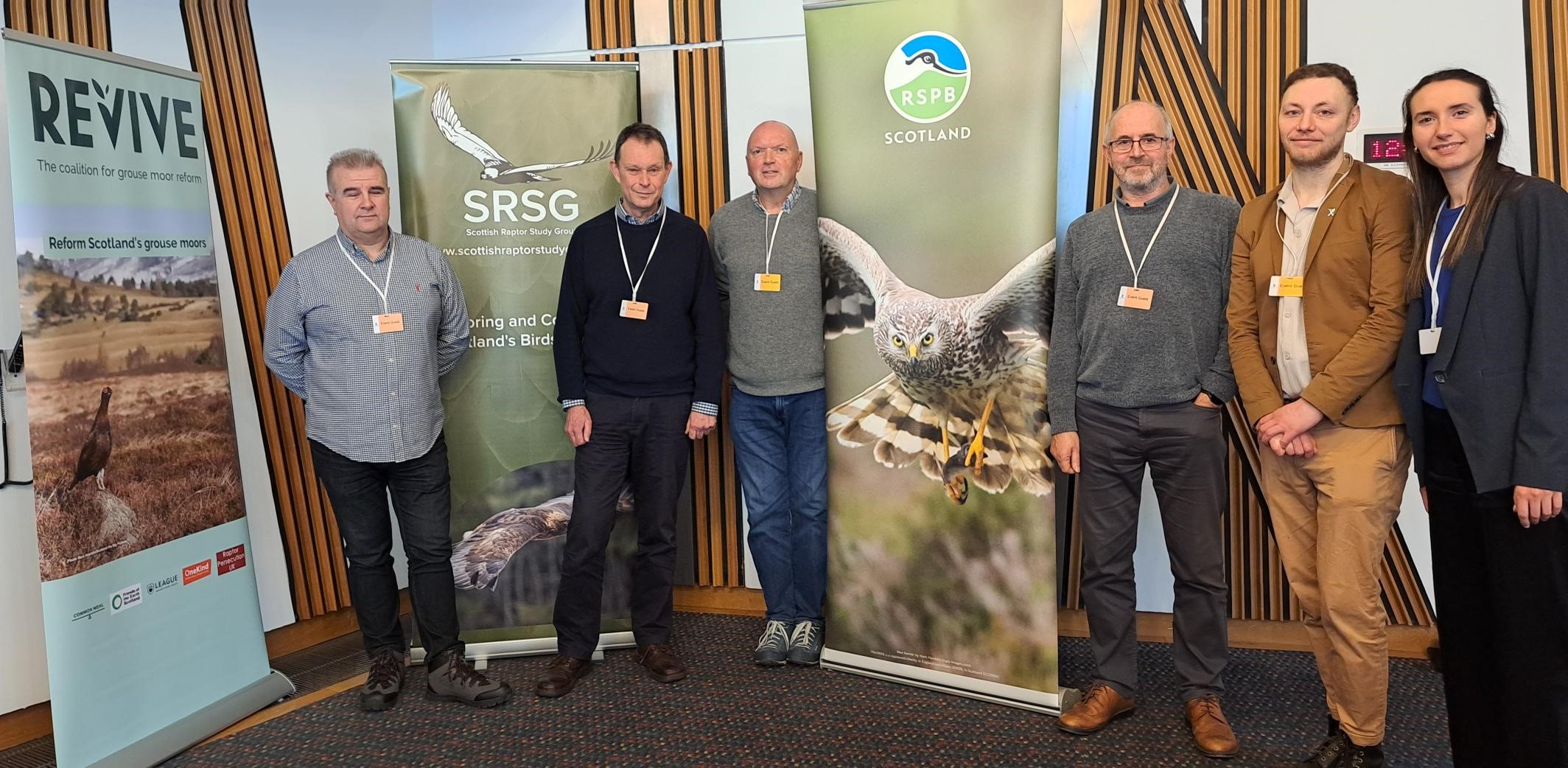
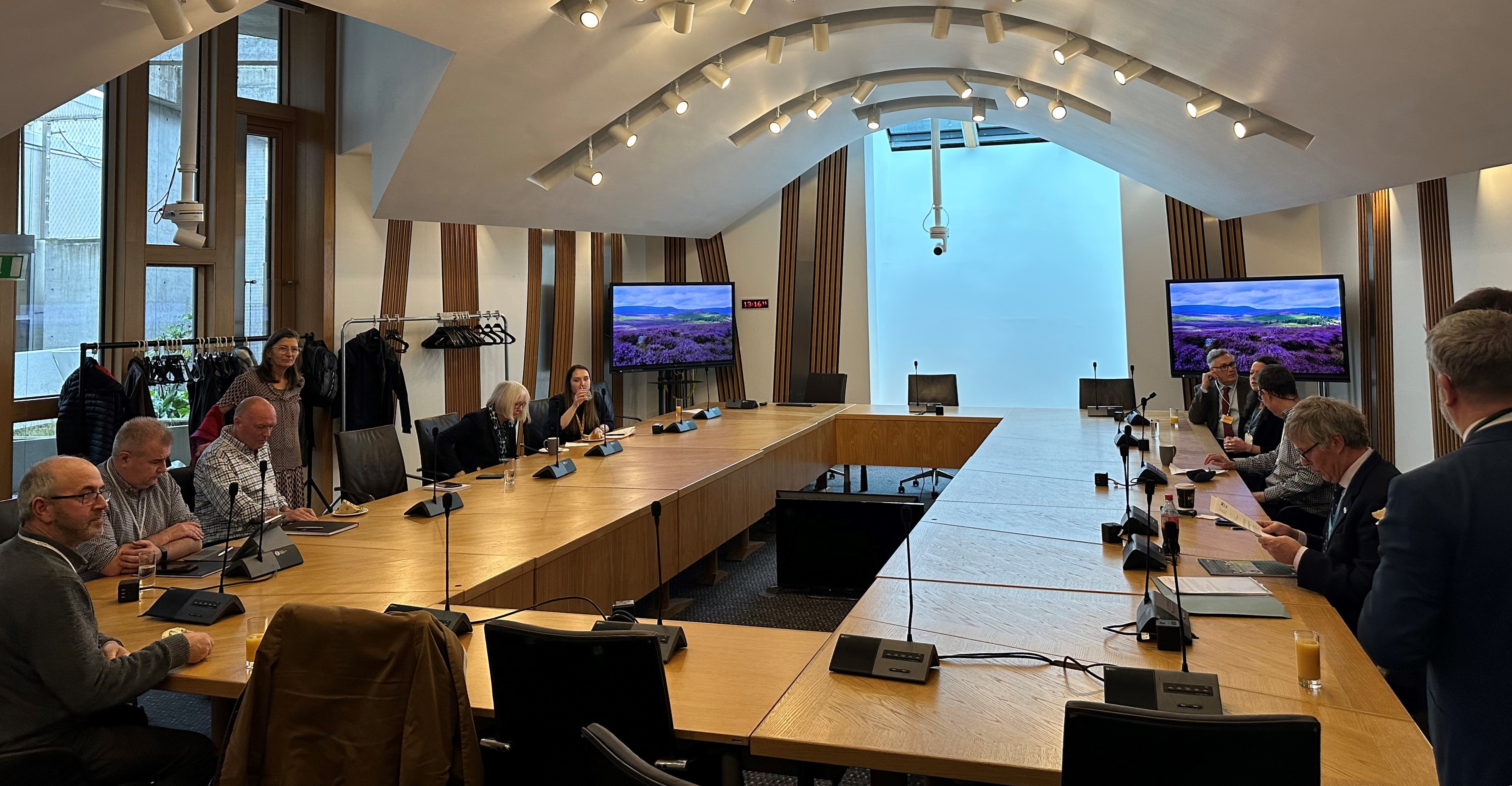
Members of the Scottish Raptor Study Group, RSPB Scotland and REVIVE, the coalition for grouse moor reform, were joined by many members of the Rural Affairs & Islands Committee (the Committee tasked with voting on the Bill’s Stage 2 amendments) and a few other MSPs also attended.
Representatives from SRSG, RSPB & REVIVE. Photo by REVIVE
Productive round-table discussion. Photo by REVIVE
The timing of this reception was fortuitous, thanks to Rural Affairs Committee Convenor Finlay Carson suddenly deciding on the eve of the Committee’s planned session to delay the consideration of the Stage 2 amendments by two weeks (see here and here). This provided an opportunity for conservationists to further brief MSPs on various issues relating to the Bill, ahead of the Committee’s session which is now scheduled to begin next week.
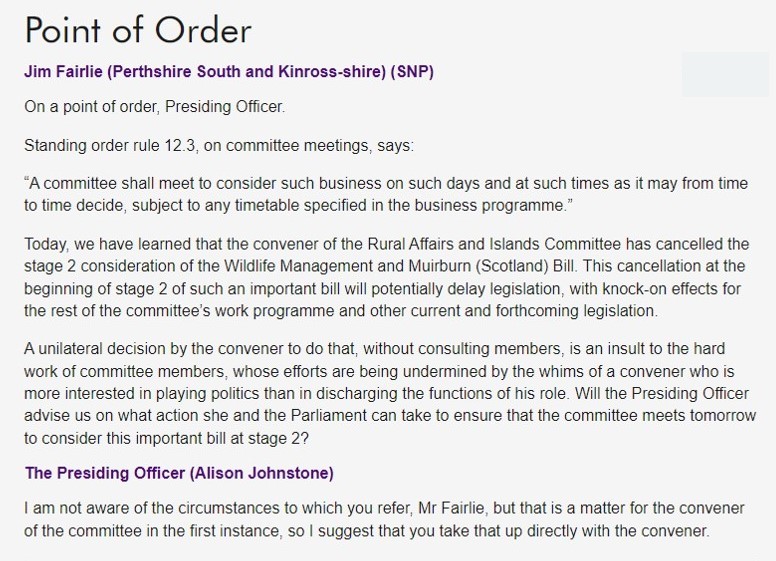
Interestingly, the fall-out from Finlay Carson’s decision to delay proceedings resulted in Committee member Jim Fairlie MSP (SNP) raising a point of order about it with the Parliament’s Presiding Officer (Alison Johnstone) on the day that Mr Carson made his decision (23 Jan 2024). From Alison’s response, it seems that Committee Convenors have a disproportionate yet legitimate level of power which allows them to thwart the will of Parliament. It’s quite an eye-opener:
Another consequence of Finlay Carson’s decision to delay proceedings is that MSPs were allowed an extended period of time in which to lodge amendments to the Bill at Stage 2. I note that Conservative MSPs Edward Mountain and Rachael Hamilton took advantage of that (legitimately) and have lodged further amendments to those they’d already lodged.
I haven’t been through these with a fine-toothed comb because I haven’t had the time, but I did note that Edward Mountain has lodged a further amendment suggesting that the withdrawal of wildlife trap licences should be based on the criminal burden of proof rather than the civil burden of proof (the Bill currently proposes a civil burden of proof which is an easier threshold to meet). Interesting, but not surprising.
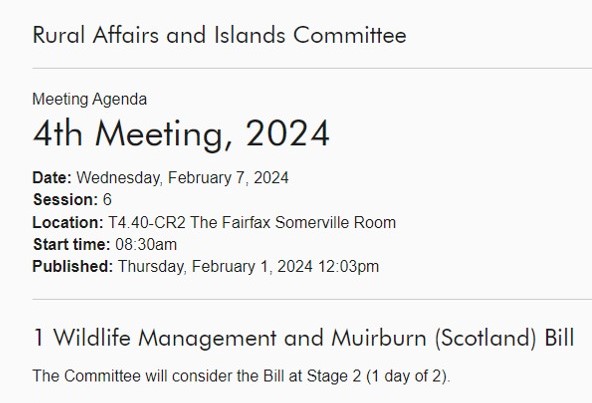
The Rural Affairs & Islands Committee will begin its consideration of the Stage 2 amendments next Wednesday (7 February 2024). It will be one of two sessions (the date of the second session has yet to be announced) and will begin at 08.30hrs; earlier than the usual 9am start and probably a reflection of how many amendments there are to be considered.
It’s expected that the session will be available to watch live on Scottish Parliament TV, as usual.
If I have time I’ll write further about the specific Stage 2 amendments prior to the first Committee meeting next week.
The Wildlife Management & Muirburn (Scotland) Bill, currently at Stage 2 of its progression through the Scottish Parliament, makes a provision that when assessing whether to issue a grouse shooting and/or muirburn licence the relevant authority (in this case, NatureScot) must consider whether the licence applicant is complying with the relevant new codes of practice.
These new codes of practice, designed to support the new legislation, are anticipated to include detailed guidance on issues such as the use of wildlife traps, medicated grit, muirburn specifications etc and to clarify what will be a statutory requirement and what will be considered guidance as ‘best practice’.
Under the leadership of NatureScot, two working groups have been established to draft these new codes of practice – one group for general grouse shoot management and one group for muirburn. The terms of the new codes will be thrashed out by these groups.
Minister for Environment Gillian Martin MSP has recently written to the Rural Affairs & Islands Committee to provide an update on the formation of these two working groups and the progress they’ve made so far. Here’s her letter:
I was amused by the Minister’s claim that ‘there is broad agreement amongst the members of each Group as to what should be included in the Codes‘.
Really?
Given the organisations involved in the working groups (see the annex at the end of the Minister’s letter), I’d be utterly amazed if there is ‘broad agreement’ about anything!
All the usual suspects from the grouse shooting world are there (BASC, Countryside Alliance, GWCT, Scottish Land & Estates, Scottish Gamekeepers and the Regional Moorland Groups (which are basically subgroups of the SGA and SLE)) and many of them have been vocally opposed to the Bill since it was first introduced last year (e.g. see here).
Are we really expected to believe that they’re now working in harmony with pro-Bill groups such as the RSPB, the Scottish Raptor Study Group, Scottish Wildlife Trust and Cairngorms National Park Authority without making any attempt to water down the terms of the new codes?
Further to yesterday’s blog about the suddenly-announced two week delay to the Rural Affairs Committee’s deliberations over the Stage 2 amendments of the Wildlife Management & Muirburn Bill (here), an explanation for this delay has now been provided.
And it’s pretty unconvincing, to be honest.
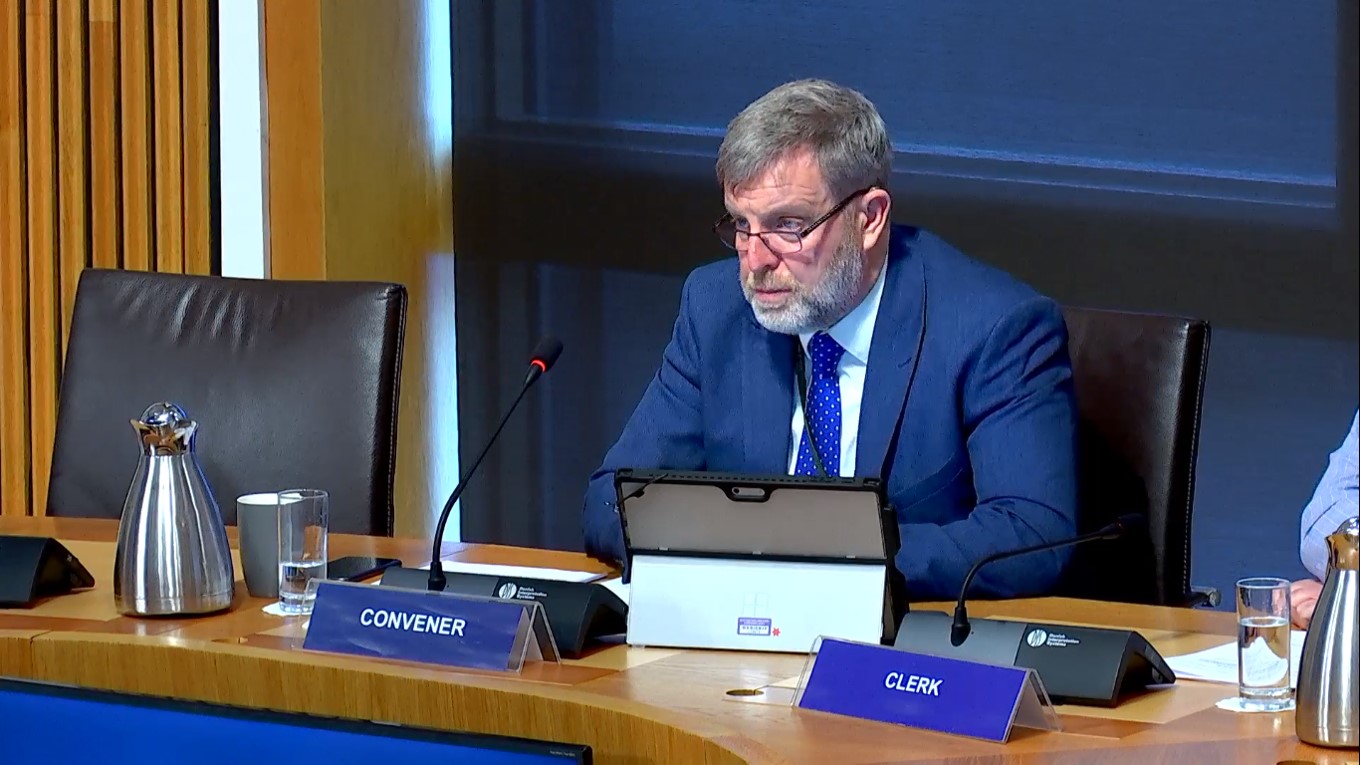
The Convenor of the Rural Affairs & Islands Committee, Finlay Carson MSP (Scottish Conservatives) opened this morning’s meeting by explaining to Committee members that he’d taken the decision to defer due to ‘the weather’.
He felt that as one or two Committee members weren’t able to attend in person, he didn’t want to risk running a hybrid meeting (where members who couldn’t attend in person could attend online) because of the ‘challenges and risks’ that would bring to proceedings.
Committee Convenor Finlay Carson MSP explaining his decision this morning. Screengrab from Scottish Parliament TV.
This explanation was seen as unsatisfactory by two SNP Committee members, Alasdair Allan MSP and Jim Fairlie MSP, who spoke about how hybrid meetings had become common practice since Covid, and indeed that other Committees have managed to handle Stage 2 proceedings perfectly well using this system.
Both SNP members chose their words carefully and clearly wanted it on record that the decision to defer for two weeks was not made by the Committee, but by Finlay Carson alone, as is his prerogative as Convenor. Indeed, both SNP members said the decision had come as a surprise to them and registered their dissatisfaction with the decision.
Alasdair Allan asked for the decision to be taken to a vote by the whole Committee:
“Can I suggest we move to a vote on whether we revert to the original agenda or not?“
Finlay Carson replied:
“That’s not competent. Thank you. We’ll move on…“
That was the end of the discussion and proceedings moved on to an entirely different topic.
If you want to watch this four minute discussion you can see it on the Rural Affairs Committee’s slot on Parliamentary TV (here), starts at 9.06am.
It was interesting to note that as far as I could see, just two Committee members weren’t present at the meeting – Beatrice Wishart MSP (Liberal Democrats & Deputy Convenor of this Committee) and Rachael Hamilton MSP (Scottish Conservatives).
Rural Affairs & Islands Committee attendees this morning
Beatrice Wishart hasn’t played an especially prominent role in this Bill’s proceedings to date but blood sports enthusiast Rachael Hamilton has, and, like her fellow Conservative MSP Finlay Carson, has not been reticent about expressing her fundamental objection to the general principles of the Bill. Indeed, I’d argue she’s been one of the Bill’s fiercest critics (as is her right), at least on this Committee.
Hmm.
Was this huge disruption to Parliamentary proceedings triggered by Rachael’s unavailability? I do wonder.
The good news about this two-week delay is that next week, REVIVE, the Scottish Raptor Study Group and the RSPB are holding a joint reception in the Scottish Parliament which will provide an excellent, and timely, opportunity for MSPs to receive further briefings from those of us who support this Bill and who want some of the more potentially damaging amendments voted down.
Earlier this evening I blogged about a two week deferral of voting on the Stage 2 amendments of the Wildlife Management & Muirburn Bill (here).
This deferral decision was made at very short notice and no reason was given for it.
As the evening’s worn on, I’ve heard from a number of people inside the Scottish Parliament who have indicated that political shenanigans may be at play.
To protect confidences I’m not at liberty to say any more at the moment, other than you might want to watch the proceedings of the Rural Affairs & Islands Committee tomorrow morning at 9am (this is the Committee that was due to begin its considerations of the Stage 2 amendments tomorrow). The meeting’s current agenda is here.
The Stage 2 amendments may be returned to the agenda tomorrow morning, or if not, it may become clear why they’ve been removed from tomorrow’s agenda…
Regardless of whether or not deliberations begin tomorrow, it’s quite clear that the Committee’s consideration of the Stage 2 amendments will need to take place over a number of sessions/weeks given the number of lodged amendments so far.
As it stands at the moment (Stage 2 amendments not due to even begin to be considered until 7 February), this goes against a Parliamentary motion passed just last week, ‘That the Parliament agrees that consideration of the Wildlife Management and Muirburn (Scotland) Bill at stage 2 be completed by 9 February 2024‘.
The Rural Affairs & Islands Committee opens for business at 9am tomorrow (Weds 24 Jan) and should be available for viewing on Scottish Parliament TV (here).
UPDATE 24 January 2024: Decision to defer Wildlife Management Bill Stage 2 amendments unconvincingly based on ‘weather’ (here)
Just before Christmas a new scientific paper was published by experts from Leeds University, revealing that burning on deep peat is widespread on many Scottish grouse moors, and that, surprise surprise, land managers were ignoring the new (voluntary) Muirburn Code which suggests burning on peatland should be avoided (see here).
Muirburn on an Aberdeenshire grouse moor in 2022. Photo by RPUK blog reader
Today, one of the study’s authors, Dominick Spracklen, Professor of Biosphere-Atmosphere Interactions at the University of Leeds has written an easy-to-understand blog about the study to help the public (and I daresay politicians engaging with the Wildlife Management & Muirburn Bill) understand the importance of minimising the extent of these peatland fires.









 Raptor Persecution UK