Does this bird remind you of the Nazis?

Fearnan2This isn’t a spoof, although you would be forgiven for thinking it was.

A Tory MSP today attacked the RSPB’s petition to have the golden eagle formally recognised as our national bird because apparently this species is symbolic of the Nazis.

You really couldn’t make this up.

When Duncan Orr-Ewing (RSPB Scotland) and wildlife cameraman Gordon Buchanan were preparing for possible questions at today’s petition hearing at Holyrood, they probably never envisaged such a bizarre, aggressive and frankly absurd attack from Jackson Carlaw MSP, a member of the Public Petitions Committee. They handled it remarkably well.

Carlaw, who bears a striking similarity to Jim Davidson in more ways than one, is a member of the Scottish Conservative and Unionist Party, representing West Scotland (see here).

We’re still waiting for the video of today’s proceedings to be published but when it is, we’ll add a link here so you can watch it yourself.

Meanwhile, just google ‘Jackson Carlaw eagle’ to get a flavour of how the press are reporting it.

The petition itself will now lead to a public consultation in due course.

UPDATE 29th JANUARY 2014: THE VIDEO IS NOW AVAILABLE TO WATCH FOR ONE MONTH. VIEW IT HERE!

Golden eagle as Scotland’s national bird: petition hearing today

Fearnan2Back in November 2013, the golden eagle was voted the nation’s favourite wild animal by a landslide majority (see here).

Shortly afterwards, RSPB Scotland launched an on-line petition to have the golden eagle formally recognised as Scotland’s national bird (see here).

The petition (#PE01500) collected 1,836 signatures and was lodged with the Scottish Parliament on 7th December 2013 (see here).

Today, the Scottish Parliament’s Public Petitions Committee will take evidence in support of the petition from RSPB Scotland and from wildlife cameraman Gordon Buchanan.

You can watch these proceedings live on Scottish Parliament TV at 09.30hrs by clicking this link.

For those of you unable to watch the live proceedings, we’ll add a link to the archive video when it becomes available (usually within 24 hours of being filmed). This archive video will be available to view for one month. Check back to this post later to find the link.

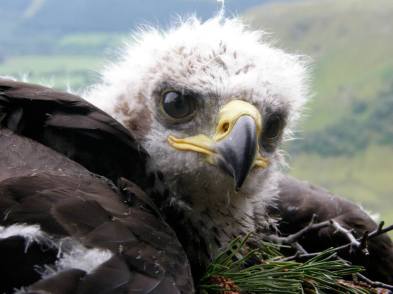
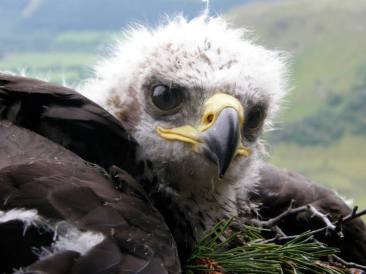
Photo: Golden eagle Fearnan before he left the safety of his nest. Found poisoned on a grouse moor before reaching his 3rd birthday and a week before this petition was submitted to parliament. Photo by Keith Brockie.

UPDATE 29th JANUARY 2014: See here to find out what happened during this hearing. Unbelievable!

MSP wants review of legislation concerning game management

Claire Baker MSPTen days ago we blogged about a new parliamentary motion (see here) that had been lodged by MSP James Dornan, concerning the illegal poisoning of golden eagle Fearnan, found dead on an Angus grouse moor in early December.

Yesterday, an amendment to that motion was made by MSP Claire Baker, calling for sufficient police and COPFS resources to address raptor persecution.

She also called for a review of the laws that cover game management to assess whether further measures could be taken against the criminals within the game management industry.

The original motion, along with the amendment, can be viewed here.

Well done, Claire Baker MSP. Hmm, the first step on the road to estate licensing? It’s long overdue.

Talking of long overdue (although technically he has until 31st Jan so it’s not overdue, it just feels like a very long time), has anyone yet had any response from the Environment Minister regarding the illegal poisoning of golden eagle Fearnan? We understand that hundreds of people bombarded his inbox just before Xmas, and indeed over the Xmas break, following the news of Fearnan’s death (see here). We’re looking forward to hearing what he has to say…or more to the point, what he intends to do.

Fearnan Angus Glens Dec 2013

Parliamentary motion about poisoned golden eagle Fearnan

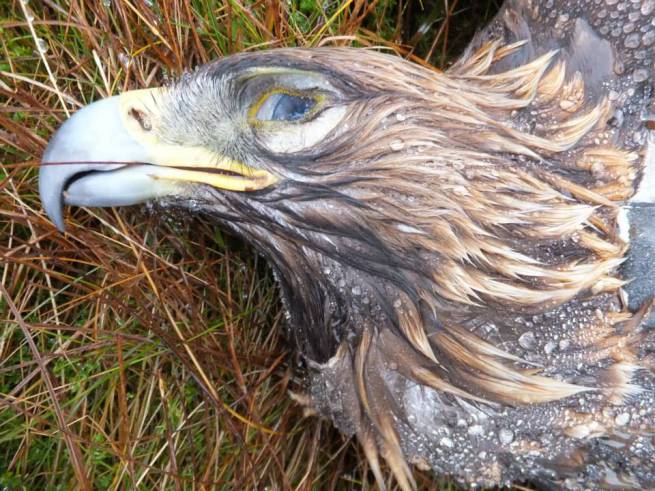
Fearnan Angus Glens Dec 2013The Scottish Parliament is taking note of the illegal killing of golden eagle Fearnan, who was found poisoned on an Angus grouse moor in December.

The following parliamentary motion has been lodged:

Motion S4M-08715: James Dornan, Glasgow Cathcart, Scottish National Party, Date Lodged: 07/01/2014

No Place for Wildlife Crime

That the Parliament notes the poisoning of the golden eagle named Fearnan and believes that the killing of birds of prey has no place in modern Scotland; believes that the golden eagle population is of national interest, as demonstrated by a recent poll in which the species was voted the country’s favourite animal; supports efforts by Police Scotland to bring wildlife criminals to justice, and commends the Scottish Government’s commitment to end raptor persecution.

Supported by: Joan McAlpine, Stuart McMillan, Chic Brodie, Adam Ingram, Christina McKelvie, Mike MacKenzie, Bill Kidd, Patrick Harvie, Kenneth Gibson, David Torrance, Aileen McLeod, Colin Keir, John WilsonR, Roderick Campbell, Nigel Don, Dennis Robertson, Liam McArthur, Colin Beattie, Fiona McLeod, John Finnie, Jean Urquhart, Rob Gibson, Richard Lyle, Christine Grahame, Graeme Dey, Maureen Watt, Kevin Stewart, Sandra White, Mark McDonald

What’s significant about this motion is not necessarily that one has been lodged – there was a similar motion lodged in 2012 by Nigel Don MSP following the discovery of the now infamous dead ‘Deeside Eagle’ (see here), with an amendment to that motion made by Claudia Beamish MSP following the shooting of a golden eagle in South Lanarkshire (see here).

James Dornan MSPThe significance of this latest motion is that it’s been lodged by an MSP that doesn’t live in the region where Fearnan was killed and isn’t especially well-known for addressing raptor persecution issues – James Dornan MSP, representing  Glasgow Cathcart. We view this as an important indication that the raptor persecution issue is being brought to the attention of people who may previously have been unaware.

Well done, James Dornan. Let’s see how many more MSPs sign up to support this motion. Has yours signed?

Environment Minister faces more questions on tackling wildlife crime

Environment Minister Paul Wheelhouse is facing a busy few weeks as he comes under increasing pressure, not just from the public but also from politicians, about the problems of effectively addressing wildlife crime in Scotland.

Back in his office today after the Xmas break, he will have been met with a backlogged barrage of emails concerning the poisoned golden eagle ‘Fearnan’ (see here), in addition to complaints about the latest ridiculous police appeal for information concerning the dead buzzard “that had not died of natural causes” (see here).

Today, MSP Christine Grahame (SNP Midlothian South, Tweeddale & Lauderdale) lodged the following question in parliament:

Question S4T-00552: To ask the Scottish Government, in light of the recent discovery of six badger carcasses near Peebles, whether it is content with Police Scotland’s resource allocation for detecting and preventing wildlife crimes.

This question is due to be heard in Chamber tomorrow (7th Jan 2014).

The badger incident she refers to was reported on the BBC website on Saturday 4th January 2014 (see here). The appeal for information made by Police Scotland was in stark contrast to the appeal for information they put out about the dead buzzard “that had not died of natural causes“.

The badger appeal came out less than 24 hours after the six skinned badger carcasses had been discovered; the buzzard appeal didn’t come out until 25 days after the carcass had been found.

The badger appeal provided a vivid description of what state the badgers were in when found (i.e. skinned). The buzzard appeal just said the bird “had not died of natural causes“.

The badger appeal gave a precise location of where the victims had been found, including their position (‘east banking’) on a named road (‘Bonnington Road’) that led to a named farm (‘Bonnington Farm’). The location provided in the buzzard appeal was given as ‘near the village of Tomatin’, with no indication of scale.

The badger appeal even gave a precise time of when the carcasses were discovered. The buzzard appeal did not.

You couldn’t get two more different appeals for information. One (the badger appeal) was timely, detailed and informative. The other was anything but.

sspca_badgeChristine Grahame’s question is bang on the money. It’ll be interesting to see how Wheelhouse responds. Perhaps he’ll mention the long-promised public consultation on increasing the powers of the SSPCA to allow them to investigate more wildlife crime than they are currently allowed.

We have blogged A LOT about this promised consultation. The consultation was first suggested by former MSP Peter Peacock as an amendment during the WANE Bill debates, way back in February 2011. The then Environment Minister Roseanna Cunningham rejected it as an amendment but suggested a consultation was in order.

Seven months later in September 2011, MSP Elaine Murray lodged a motion that further powers for the SSPCA should be considered. In November 2011, Elaine Murray MSP formalised the question in a P&Q session and the next Environment Minister, Stewart Stevenson, then promised that the consultation would happen in the first half of 2012. Nothing happened.

In September 2012 we asked Paul Wheelhouse, as the new Environment Minister, when the consultation would take place. The response, in October 2012, was:

The consultation has been delayed by resource pressures but will be brought forward in the near future”.

Nothing happened, so nine months later in July 2013 we asked again. In August 2013, this was the response:

We regret that resource pressures did further delay the public consultation on the extension of SSPCA powers. However, I can confirm that the consultation document will be published later this year“.

The end of 2013 came and went, and still nothing.

So, nearly three years after Scottish Ministers committed to undertaking this consultation, where is it?

Questions to Mr Wheelhouse at the usual address: ministerforenvironment@scotland.gsi.gov.uk

SNH still licensing mountain hare culls

Last month a leading upland ecologist claimed that Scottish landowners were causing ‘massive declines’ of mountain hares on grouse moors around Deeside, Aberdeenshire and blamed SNH for failing in its statutory duty to protect this species (see here).

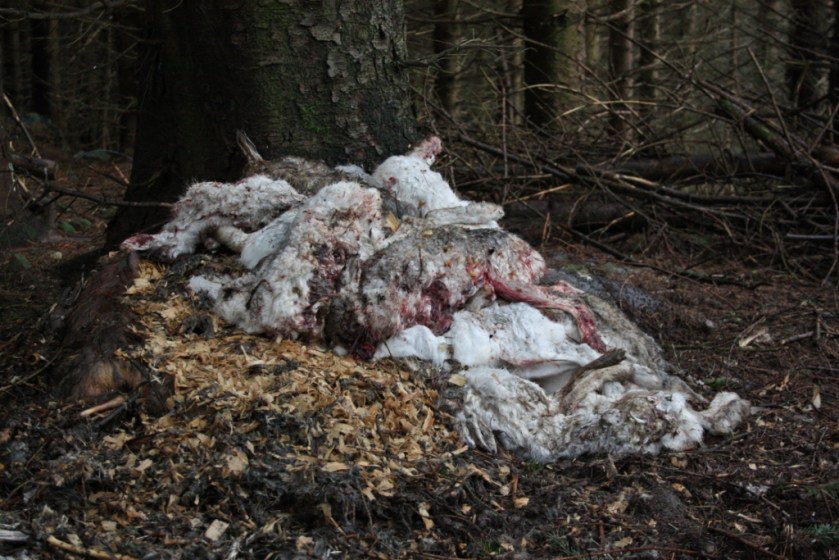
We followed up that article with some gruesome photographs showing piles of culled mountain hares left to rot on another grouse moor, this time in the Angus Glens (see here). Unregulated mountain hare culling, it seemed, was widespread.

We encouraged blog readers to contact SNH to ask them about what we thought was their long-term failure to implement an effective monitoring scheme to protect mountain hare populations. SNH responded with their usual let’s-buy-ourselves-some-time line that ‘further research was forthcoming’.

Around the same time, MSP Alison Johnstone lodged a series of parliamentary questions about mountain hare culling and how it affected mountain hare populations (see here).

Environment Minister Paul Wheelhouse has now responded to those questions (his answers presumably provided by SNH, the licensing authority). The bottom line is, SNH is still issuing licenses to allow the killing of mountain hares in the closed season, even though they admit that they are still unable to assess mountain hare abundance and therefore cannot possibly know what sort of impact, if any, these culls are having on the conservation status of the species. Quite remarkable. Where’s the precautionary principle?

Here are the parliamentary questions and answers:

Question S4W-18470: Alison Johnstone, Lothian, Scottish Green Party, Date Lodged: 19/11/2013

To ask the Scottish Government what information it holds (a) on the health of mountain hare populations and (b) that is relevant to assessing whether mountain hare are in a favourable conservation status.

Answered by Paul Wheelhouse (04/12/2013):

The National Gamebag Census data for mountain hare compiled by the Game and Wildlife Conservation Trust shows no significant trend in the data between 1961 and 2009, despite marked cyclical fluctuations which are known to exist in around half of mountain hare populations.

A questionnaire survey commissioned by Scottish Natural Heritage (SNH) in 2006-07 (SNH Commissioned Report 278) concluded that there was no evidence of an overall change in the distribution of mountain hares when compared to a similar study in mid 1990s. However, there may have been localised declines and possibly extinctions, undetectable at the 10km scale at which the data were collected and analysed.

The findings of this report provide SNH with an impression of the overall range of the species and some information on the numbers controlled, but SNH need more detailed information on hare abundance before it can be in a position to make a reliable assessment of the impact that culling is having on the population as a whole. To this end, SNH commissioned a study in 2008 into developing improved monitoring methods (Commissioned Report 444), but unfortunately, due to two severe winters hampering the fieldwork, the results did not provide SNH with the statistical relationship needed to progress this work. SNH therefore propose to develop a further programme of research, with the intention to commencing further fieldwork later in 2014. The exact detail of this work programme is still to be agreed.

Question S4W-18471: Alison Johnstone, Lothian, Scottish Green Party, Date Lodged: 19/11/2013

To ask the Scottish Government what conservation action is planned to protect mountain hare populations.

Answered by Paul Wheelhouse (04/12/2013):

In order to properly inform licence applications and to have a better understanding of the effects of culling on hare populations, a cost-effective and easily-applied method of reliably estimating hare numbers is required. This is the immediate priority and, once developed, will enable better monitoring schemes to be developed, and provision of information on population status will be improved also. Such data would then be used to inform future management decisions concerning the species, as necessary.

Question S4W-18472: Alison Johnstone, Lothian, Scottish Green Party, Date Lodged: 19/11/2013

To ask the Scottish Government what information it holds on the number of mountain hare that are culled annually and the impact of this on golden eagles (a) dispersing from, (b) likely to be recruited to or (c) nesting in natura sites for which golden eagles are a designated interest.

Answered by Paul Wheelhouse (03/12/2013):

The Scottish Natural Heritage (SNH) Commissioned Report 278 indicated that a total of 24,529 mountain hares were harvested in 2006-07 across 90 sporting estates (of these, 11,906 were reported to have been taken by 26 estates). This represents 7% of the 1995 published Scottish population estimate of 350,000 and is subject to a 50% margin of error.

SNH Commissioned Report 278 on the distribution of Mountain Hare in Scotland shows hares present in all or part of the Special Protection Areas (SPAs) designated for golden eagles.

The Report also indicates that the vast majority of hare control occurs in the central and eastern Highlands. In these areas, Report 278 suggests that there is a mixed picture of hare distributional change between 1995-96 and 2006-07 with no clear pattern of decline. The 2006-07 data are the most recent SNH holds.

(a) Golden eagles take several years to reach breeding age and juvenile birds disperse from their parent’s breeding territory and range over the Highlands and islands to varying degrees i.e. the young birds are not tied to the SPAs.

As breeding adult birds are territorial, these young birds mainly use areas of suitable habitat that does not form part of a territorial range. Some of the areas these birds will be using will be areas where hare control is being carried out. SNH Report 278 indicates that more hares are controlled from September to February, although levels of hares removed for tick control are fairly similar across the year.

(b) Young golden eagles often return and try to settle close to where they were born although some settle elsewhere. The SPAs therefore are reliant on the wider golden eagle population to support recruitment. Only a proportion of the young eagles survive to reach breeding age and it is unknown what, if any, effect the reductions in hare numbers will have on recruitment.

(c) Live prey is of key importance for chick development and successful breeding. As with (a) and (b) there is a potential impact through reducing available prey and/or requiring the birds to prey more on grouse.

Question S4W-18473: Alison Johnstone, Lothian, Scottish Green Party, Date Lodged: 19/11/2013

To ask the Scottish Government what information it holds on a link between the culling of mountain hare and the incidence of (a) louping ill or (b) other diseases transmitted by sheep ticks or other hare parasites to red grouse.

Answered by Paul Wheelhouse (03/12/2013):

The scientific evidence on this subject has been reviewed in a 2009 paper in the Journal of Applied Ecology “Culling wildlife hosts to control disease: mountain hares, red grouse and louping ill virus” by A Harrison et al.- see http://onlinelibrary.wiley.com/doi/10.1111/j.1365-2664.2010.01834.x/abstract.

The authors conclude that there is no compelling evidence base to suggest culling mountain hares might increase red grouse densities.

Question S4W-18474: Alison Johnstone, Lothian, Scottish Green Party, Date Lodged: 19/11/2013

To ask the Scottish Government how it controls the culling of mountain hare.

Answered by Paul Wheelhouse (04/12/2013):

Mountain hare are protected by a close season during which no culling can be carried out by any method except under licence granted by Scottish Natural Heritage (SNH). Mountain hare are also covered by Regulation 41 of The Conservation (Natural Habitats, &c.) Regulations 1994 which prohibits the use of certain methods of taking or killing wild animals, including the use of traps which are non-selective according to their principle or their condition of use. The use of such traps can be licensed by SNH. The use of such traps is not permissible under the terms of a general licence but can be licenced by SNH.

Question S4W-18475: Alison Johnstone, Lothian, Scottish Green Party, Date Lodged: 19/11/2013

To ask the Scottish Government how many applications it has (a) received and (b) granted for the culling of mountain hare since 2011, broken down by (i) year, (ii) purpose and (iii) area.

Answered by Paul Wheelhouse (03/12/2013):

Licences are required to control mountain hares at any time using certain otherwise prohibited means, or to kill them by any method during the “closed season”. Scottish Natural Heritage (SNH) is the licensing authority.

SNH received one application for the control of mountain hare by snaring in 2011. SNH granted that licence in 2012 and it has been amended twice. The licence was granted for the purpose of preventing serious damage to woodland.

SNH received five applications for the control of mountain hare in 2012. Two of these applications were refused. All of the remaining three were to shoot hares out-of-season and for preventing serious damage to woodland. One was in Highland, one in Moray and one in Aberdeenshire.

SNH received three applications for the control of mountain hare in 2013. Two of these were applications to renew licences issued in 2012 (one in Moray and one in Aberdeenshire). The remaining application was for another site in Moray, and again was for the purpose of preventing serious damage to woodland. Licences were granted for all three, and all three relating to shooting hares out-of-season.

MH1

So long, Sheriff Drummond

One of the most influential figures in the world of Scottish wildlife crime enforcement, and particularly in relation to raptor persecution, has finally retired. There are some who will be delighted with this news, others not so much.

Sheriff Kevin Drummond QC left office this week after 13 years in the Sheriff courts of the Scottish Borders. In addition, he’d played a significant role on various PAW Scotland committees, including Chair of the Legislation, Regulation and Guidance Sub Group (see here), and was a member of the high-level PAW Scotland Executive Group (see here). He was also heavily involved in the provision of ‘mock trials’ as part of a training programme for police wildlife crime officers and procurators fiscal to help prepare them for dealing with wildlife crime trials. Prior to being appointed Sheriff, he had worked as a leading defence QC whose clients included gamekeepers accused of wildlife crimes. His own reported hobbies include shooting and fishing (see here).

An article in the Selkirk Advertiser reporting his retirement (see here) describes the Sheriff as ‘well-respected’, ‘fair and consistent’ and ‘kind and approachable’. We’d agree with ‘consistent’ at least. In a number of cases over which Sheriff Drummond presided around 2006-2007 there was opportunity to sentence the convicted gamekeepers in his court to jail time – a provision that had at the time been recently introduced in an attempt to crack down on raptor persecution. Disappointingly, Sheriff Drummond decided that community service orders were adequate punishments for these convicted poisoners, including one case that had been described by one RSPB investigator as ‘the worst he had seen in 20 years’. This reluctance to send convicted poisoners to jail is still very much in evidence in Sheriff courts right across Scotland – there still hasn’t been a single one.

Sheriff Drummond held strong views against the introduction of vicarious liability – his visibly agitated performance in front of the WANE bill committee in 2010 was quite a display – and he also strongly opposed the concept of increasing the investigatory powers of SSPCA inspectors to allow them to take on raptor persecution cases (e.g. see here).

There were calls for the Sheriff’s dismissal from the PAW Scotland group following another of his outbursts at the Police Wildlife Crime Conference in 2010 when a wildlife investigator asked whether there should be tougher sentences for wildlife criminals. Sheriff Drummond’s reported response, “Get a life“, was met with ‘shock and bewilderment’ by conference delegates but was later defended by then Environment Minister Roseanna Cunningham (see here).

Many years earlier RSPB Investigator Dave Dick also found himself on the receiving end of one of the Sheriff’s seemingly characteristic tantrums. Here’s an excerpt from Dave’s 2012 book, Wildlife Crime: The Making of an Investigations Officer:

Thursday 20 June 1991. Jedburgh Sheriff Court and Jimmy [a gamekeeper] has got himself a QC – or more correctly, Jimmy’s boss, a wealthy Austrian banker, has got Jimmy a QC. Kevin Drummond, QC, who walks into the Fiscal’s office just before the trial is due to start, where I am having a last-minute conference as was the normal, efficient practice by 1991. Kevin announces that he is going to win this case because Section 19 of the 1981 Act does not permit a constable to enter land and search for evidence. The Fiscal may have been used to this robust, even arrogant approach but I wasn’t and in my naivety, combined with experience of Section 19 in court, I blurted out, “Do you really think that’s what Parliament thought, when they drew this up?” The resulting angry out-burst (‘You may be very good at what you do out there, Mr Dick, but in here, I’m in charge!’) was my first sight of an apparent lack of control which I have since witnessed many times“.

It is without question that Sheriff Drummond has had considerable influence on the approach taken to tackling wildlife crime in Scotland, at both a strategic governmental level as well as on the front-line level in court. That influence has been welcomed by some, while exasperating others.

Today is his 70th birthday and we wish him a long and enjoyable retirement – here’s hoping he doesn’t ‘do a Dysart‘ – we’re all hoping for the start of a new era.

Environment Minister responds to our questions about his ‘further measures’ to tackle raptor persecution

On July 1st, Environment Minister Paul Wheelhouse laid out his ‘further measures’ to tackle the on-going problem of raptor persecution (here).

Whilst we welcomed his intentions, we wanted further clarification about these ‘further measures’ as well as some updates on previously-promised measures, so on July 2nd we posed five clear questions to him (see here).

This week, one of our blog readers received the following response from Wheelhouse’s wildlife crime policy officer:

Question 1:

Please can you clarify whether the Lord Advocate has instructed COPFS to accept covert video footage as admissible evidence in prosecutions for alleged raptor persecution incidents?

Answer:

The Lord Advocate has instructed the specialist prosecutors in the Wildlife and Environmental Crime Unit to work with Police Scotland to ensure that law enforcement utilises all investigative tools at their disposal in the fight against wildlife crime including tools such as video surveillance equipment where justified and appropriate.

Before instituting any prosecution, the Procurator Fiscal must be satisfied that there is sufficient admissible evidence to justify doing so. Established rules of evidence determine whether a court can take into account certain types of evidence including third party video evidence. If evidence does not comply with these rules, it is inadmissible and the court may not take it into account. In considering any case for prosecution, the Procurator Fiscal will assess, having regard to the particular facts and circumstances of any evidence and the manner in which it was obtained, whether the court will allow it to be considered. For example, the court may refuse to take account of evidence that has been obtained improperly, irregularly or unlawfully.

Our assessment:

It’s hard to know if the Lord Advocate’s instruction will make a blind bit of difference. Covert video evidence is routinely accepted as admissible evidence in England. It has, also, been previously accepted in Scotland, albeit rarely. More often than not, COPFS rejects it and we’re never provided with a transparent answer about why it was rejected. We’ve struggled to understand the legal reasoning behind these repeat rejections, especially when, as we understand it, the decision to accept or reject evidence should be made by the court (the Sheriff), not COPFS. We’ll just have to wait and see how covert video surveillance is treated in any future cases….and it’s quite likely we won’t have long to wait.

Question 2:

Please can you clarify the timescale for SNH’s review for introducing potential restrictions on the use of General Licences in areas where they have good reason to believe crimes against wild birds have been committed? In other words, when can we expect the review to be completed? Also, will their review be made publicly available?

Answer:

Officials are currently discussing with Scottish Natural Heritage how they will carry out the work to examine how and in what circumstances they can restrict the use of General Licences to trap and shoot wild birds on land where they have good reason to believe that crimes against wild birds have taken place. Timescales for completing the work are still to be concluded, but we would expect any new arrangements to be in place for next year and will ensure that we keep stakeholders in PAW Scotland informed of progress. SNH will be clear to all users of General Licences when and in what circumstances their use will be restricted or prohibited.

Our assessment:

This seems a perfectly reasonable explanation. We look forward to watching the developments.

Question 3:

Please can you advise whether there will be a prosecution under the new vicarious liability legislation following the recent conviction of gamekeeper Peter Bell, found guilty of poisoning offences on the Glasserton and Physgill Estates? If you don’t know the answer (which would be surprising, given that you said in March 2013 that you would be “keeping an eye on this particular area [i.e. vicarious liability] with interest”, please can you provide the contact details of someone who can answer the question?

Answer:

It would be inappropriate to comment further on this case as police enquiries have not yet concluded.

Our assessment:

Not very impressed, but as this case is probably the first of its kind to be considered under the new vicarious liability legislation, we don’t have any benchmark to be able to compare the timescales involved. It’s been 8 months since the crimes were committed (December 2012). Is it reasonable to expect Police Scotland to still be conducting enquiries or is this another fob-off to delay telling us that no charges will be brought under VL legislation? If they are still making enquiries, let’s hope they’re making a better job on this case than they did on this one! We’ll keep asking questions about this case every so often so it can’t just be swept quietly under the carpet.

Question 4:

Please can you tell us the status of the Scottish Government’s first annual report (2012) into wildlife crime? As you know, under the Wildlife and Natural Environment (Scotland) Act 2011, there is now a requirement (under section 26B) that ‘Scottish Ministers must, after the end of each calendar year, lay before the Scottish Parliament a report on offences relating to wildlife’. You mentioned in March 2013 that your policy officials ‘are currently working on’ this report. When can we expect this report to be available?

Answer:

Section 26B of the Wildlife and Countryside Act 1981 requires Scottish Ministers, after the end of each calendar year, to lay before the Scottish Parliament an annual report on wildlife crime. We will of course comply with that requirement and it is in preparation. Details about the laying of the report, including the timing, will be given to the Parliament in the first instance in accordance with established parliamentary protocol. We will, of course, ensure that the report publication is communicated to stakeholders and Parliament.

Our assessment:

It’s taking a very long time for this report to be published. We’ll keep asking about it.

Question 5:

Please can you tell us when, exactly, will you open the consultation regarding the increase of SSPCA powers to broaden the range of their work investigating wildlife crime? As you know, this consultation was first suggested by former MSP Peter Peacock as an amendment during the WANE Act debates, way back in February 2011. The then Environment Minister Roseanna Cunningham rejected it as an amendment but suggested a consultation was in order. Seven months later in September 2011, MSP Elaine Murray lodged a motion that further powers for the SSPCA should be considered. In November 2011, Elaine Murray MSP formalised the question in a P&Q session and the next Environment Minister, Stewart Stevenson, then promised that the consultation would happen in the first half of 2012. Nothing happened so in September 2012 we asked you, as the new Environment Minister, when the consultation would take place. In response to one of our blog readers in October 2012 your policy officer said: “The consultation has been delayed by resource pressures but will be brought forward in the near future”. Nine months later and we’re in July 2013 – almost 2.5 years after Scottish Ministers committed to undertaking the consultation. Where is it?

Answer:

We regret that resource pressures did further delay the public consultation on the extension of SSPCA powers. However, I can confirm that the consultation document will be published later this year.

Our assessment:

As far as we’re concerned, this consultation, if it does actually appear this year, could be a game-changer. Forget bringing in new legislation to tackle raptor persecution – we don’t need it. The legislation is all there – it just needs to be enforced. The enforcement process begins with a criminal investigation. Do we have complete confidence in Police Scotland to effectively and efficiently undertake these investigations? Based on their past performance, that has to be a resounding NO, with just a handful of exceptions. Do we have confidence in the SSPCA to undertake these investigations? If we judge them on their track record for successful prosecutions under animal welfare legislation, then YES, we do. We also know that certain organisations associated with the game-shooting industry do not support these extended powers for the SSPCA – they argue that criminal investigations should be carried out by the police. Funny that, because they support extended powers for water bailiffs – is that because the water bailiffs are often acting in the interests of landowners and gamekeepers (e.g. when tackling poachers)? Do they not support extended powers for the SSPCA because they know that with an extra 75+ highly-trained officers on the ground then the chances of raptor persecution crimes being uncovered become greater? You’d think, given that the game-shooting industry claims to be all for stamping out raptor crime, that they’d welcome the SSPCA with open arms.  We’ll be watching closely for this consultation to finally emerge and you can expect a great deal of blogging about it when it is published.

Questions for the Environment Minister

Following yesterday’s announcement by Environment Minister Paul Wheelhouse on his proposed further measures to tackle the illegal persecution of Scottish raptors (here), we’d like to follow up by asking him for some clarifications on the latest measures, and for some updates on previously-promised measures. If you want to cut and paste these questions and send them yourself, or adapt them in your own letter, or simply cut and paste this blog’s URL to your own letter, please feel free. His email address appears at the foot of this page.

Question 1.

Please can you clarify whether the Lord Advocate has instructed COPFS to accept covert video footage as admissible evidence in prosecutions for alleged raptor persecution incidents?

Question 2.

Please can you clarify the timescale for SNH’s review for introducing potential restrictions on the use of General Licences in areas where they have good reason to believe crimes against wild birds have been committed? In other words, when can we expect the review to be completed? Also, will their review be made publicly available?

Question 3.

Please can you advise whether there will be a prosecution under the new vicarious liability legislation following the recent conviction of gamekeeper Peter Bell, found guilty of poisoning offences on the Glasserton and Physgill Estates (here)? If you don’t know the answer (which would be surprising, given that you said in March 2013 that you would be “keeping an eye on this particular area [i.e. vicarious liability] with interest“, see here), please can you provide the contact details of someone who can answer the question?

Question 4.

Please can you tell us the status of the Scottish Government’s first annual report (2012) into wildlife crime? As you know, under the Wildlife and Natural Environment (Scotland) Act 2011, there is a now a requirement (under section 26B) that ‘Scottish Ministers must, after the end of each calendar year, lay before the Scottish Parliament a report on offences relating to wildlife’ (see here for copy of the WANE Act 2011). You mentioned in March 2013 that your policy officials ‘are currently working on’ this report (see here). When can we expect this report to be available?

Question 5.

Please can you tell us when, exactly, will you open the consultation regarding the increase of SSPCA powers to broaden the range of their work  investigating wildlife crime? As you know, this consultation was first suggested by former MSP Peter Peacock as an amendment during the WANE Act debates, way back in February 2011. The then Environment Minister Roseanna Cunningham rejected it as an amendment but suggested a consultation was in order (see here). Seven months later in September 2011, MSP Elaine Murray lodged a motion that further powers for the SSPCA should be considered (see here). In November 2011, Elaine Murray MSP formalised the question in a P&Q session and the next Environment Minister, Stewart Stevenson, then promised that the consultation would happen in the first half of 2012 (see here). Nothing happened so in September 2012 we asked you, as the new Environment Minister, when the consultation would take place (see here). In response to one of our blog readers in October 2012 your policy officer said: “The consultation has been delayed by resource pressures but will be brought forward in the near future“. Nine months later and we’re in July 2013 – almost 2.5 years after Scottish Ministers committed to undertaking the consultation. Where is it?

Email: ministerforenvironment@scotland.gsi.gov.uk

Environment Minister announces ‘further measures’ to tackle raptor persecution

The Environment Minister Paul Wheelhouse has today announced what he calls ‘further measures’ to tackle the on-going problem of illegal raptor persecution in Scotland. Here is his statement in full:

Since I took on responsibility for this portfolio, I have been clear that one of my priorities is to bear down on the illegal persecution of raptors that continues to blight the Scottish countryside and tarnish Scotland’s reputation.  These outdated, barbaric and criminal practices put at risk the conservation status of some of our most magnificent wildlife.  They also harm our reputation as a country which values its environment and wildlife and undermine the growing tourism sector that is built on that reputation.

We have achieved much since 2007. We have a robust legal framework that protects birds of prey and their nests, including the new vicarious liability provisions.  We have dedicated resources in Police Scotland and the Crown Office and Procurator Fiscal Service (COPFS).  We are leading the way in the UK in the development of wildlife crime forensics work, and we continue to work at building a broad-based alliance through the Partnership for Action Against Wildlife Crime (PAW Scotland).  

In 2012 we saw a very welcome reduction in poisoning cases.  However a number of recent reports, some of which are in the public domain and some of which are still subject to police enquiries, suggest that there is still a problem with the use of poison as well as cases involving illegal trapping and shooting.  I have decided therefore that the time is right to bring forward some further measures which I hope will deter those involved in illegal activities. 

Wildlife crime, and raptor persecution in particular, often takes place in remote locations or in the dark of night.  By its very surreptitious nature, the likelihood of being seen by a member of the public who can report the matter to the authorities is small.

I have spoken with the Lord Advocate, who maintains a close personal interest in all wildlife crime.  We are both keen to maximise the opportunity for offences to be detected and offenders to be tracked down.

The Lord Advocate has instructed the specialist prosecutors in the Wildlife and Environmental Crime Unit to work with Police Scotland to ensure that law enforcement utilises all investigative tools at their disposal in the fight against wildlife crime.

This work will take place within the National Wildlife Crime Co-Ordinating Forum – a group attended by police Wildlife Crime Liaison Officers from across Scotland and the police’s full-time Scottish Wildlife Crime Co-Ordinator, as well as senior police officers, the National Wildlife Crime Unit, Scottish Government officials and the specialist prosecutors from the Wildlife and Environment Crime Unit within COPFS.

Secondly, in my capacity as Chair of PAW Scotland, I intend to establish a group to carry out a review and report to me on how wildlife crime is treated within the criminal justice system, including examining whether the penalties available for wildlife crime properly reflect the seriousness of the damage caused to vulnerable wildlife and fragile habitats and ecosystems.  

Thirdly, I will be asking Scottish Natural Heritage in their capacity as the authority for licensing decisions under section 16 of the Wildlife and Countryside Act to examine how and in what circumstances they can restrict the use of General Licences to trap and shoot wild birds on land where they have good reason to believe that crimes against wild birds have taken place.  These General Licences allow the holders to carry out actions that would otherwise be unlawful if undertaken, without any reference to SNH.  We regard the use of General Licences as a privilege that should not be extended in circumstances where there is evidence that their use may be facilitating illegal activities. 

In putting together these measures I have sought to focus only on those individuals and businesses where there are very good reasons to believe they are involved in illegal practices.  I am very keen to avoid anything that places an unfair burden on the majority of shooting businesses that are law-abiding and responsible members of the rural community.  I should also say that I think it is important that wildlife crime is treated in exactly the same way as other types of crime. This means information about cases should be handled in the same way as in other types of crime and that the police and prosecutors are allowed the time and space to carry out whatever investigations they believe to be necessary according to their own professional judgement. We should not descend into allowing trial by leak and accusation. There is a responsibility on us all to avoid that. 

In conclusion I wish to reiterate that eradicating raptor persecution in Scotland remains a high priority for the Scottish Government.  It is not however the sole responsibility of the Scottish Government.  Law enforcement clearly has a key role to play and I am confident that we are ratcheting up the pressure on those committing acts of illegal persecution. However,  everyone involved in the Scottish countryside, and in particular those involved with shooting, should make abundantly clear their disapproval to the minority whose actions are tarnishing the reputation of Scotland’s country sports”.

So, this is the much anticipated ‘action’ against illegal raptor persecution that’s been promised since last autumn when Paul Wheelhouse was appointed. Whilst we welcome his willingness to engage with the issue (in stark comparison to his English counterpart who won’t even admit there’s a problem), we see these latest measures as tiny baby steps in the right direction, and not the decisive hefty stamp that could have been delivered.

The first four paragraphs of his statement are just introductory comments with the usual rhetoric, such as, “We have achieved much since 2007”. Actually, we haven’t. Raptors are still being illegally killed on land managed for game-shooting and more often than not the criminal(s) involved are not being prosecuted. In the few instances where they are prosecuted, there is evidence of extensive plea-bargaining resulting in convictions only for the minor offences, not for the major crimes.

In 2012 we saw a very welcome reduction in poisoning cases. No, we didn’t. What we saw was a reduction in the number of reported poisoning cases; that’s a very important distinction. Members of the game-shooting industry (and government, it seems) have made much of this claim, using it as an example of how the industry is cleaning up its act. They won’t be able to make the claim for much longer – we understand that there have been several poisoning incidents already in 2013 and we’re only half-way through the year. Naturally, once again the public haven’t (yet) been informed about these poisonings even though they took place several months ago. We’ll come back to this issue.

The first ‘new’ measure that Wheelhouse is introducing is this:“The Lord Advocate has instructed the specialist prosecutors in the Wildlife and Environmental Crime Unit to work with Police Scotland to ensure that law enforcement utilises all investigative tools at their disposal in the fight against wildlife crime.

This is interesting, particularly because it immediately follows this paragraph:

Wildlife crime, and raptor persecution in particular, often takes place in remote locations or in the dark of night.  By its very surreptitious nature, the likelihood of being seen by a member of the public who can report the matter to the authorities is small.

Does this mean that prosecutors in Scotland are being told by the Lord Advocate that they should now accept covert video surveillance as admissible evidence? If this is the case then it would be a very welcome step indeed. Covert film footage is routinely accepted as admissible evidence in England, but in Scotland it continues to be blocked by the Crown Office prosecutors. Why? We don’t know – we’ve never heard a satisfactory explanation. If our assumption is correct (and of course it may not be) and covert footage is to be accepted, then Wheelhouse deserves a good deal of credit for this single measure. We’ll be watching this potential development with great interest.

His second measure is to establish (yet another) group within the framework of PAW Scotland, “to carry out a review and report to me on how wildlife crime is treated within the criminal justice system, including examining whether the penalties available for wildlife crime properly reflect the seriousness of the damage caused to vulnerable wildlife and fragile habitats and ecosystemsWe’re not so impressed with this plan; it seems to be reinventing the wheel. A similar review was carried out in 2008 (Natural Justice 2008) following the poisoning of the last remaining breeding female golden eagle in the Scottish Borders in 2007. That review made many recommendations to improve the efficiency of detecting and prosecuting wildlife crime in Scotland, some of which have since been implemented but many have not. It would perhaps have been a good opportunity for Wheelhouse to critically evaluate the implementation of those recommendations made five years ago, rather than start off the process again from scratch, which just leads to further delays in addressing the actual problem.

The third and final new measure is what we would call a fig-leaf approach to tackling illegal raptor persecution. Wheelhouse says: “I will be asking Scottish Natural Heritage in their capacity as the authority for licensing decisions under section 16 of the Wildlife and Countryside Act to examine how and in what circumstances they can restrict the use of General Licences to trap and shoot wild birds on land where they have good reason to believe that crimes against wild birds have taken place.  These General Licences allow the holders to carry out actions that would otherwise be unlawful if undertaken, without any reference to SNH.  We regard the use of General Licences as a privilege that should not be extended in circumstances where there is evidence that their use may be facilitating illegal activities

At a superficial level, a restriction on the use of the General Licence sounds like a positive action. But let’s just think about the practicalities. First of all, Wheelhouse suggests that the General Licence may be restricted where SNH have “good reason to believe that crimes against wild birds have taken place”. That sounds like SNH would require a lower burden of proof to show that crimes against wild birds have taken place than say, for example, a criminal conviction. In real terms, how would that work? What would constitute ‘good reason’? The discovery of a poisoned or shot bird on a particular piece of land? In legal terms that’s not enough evidence for a conviction because the estate in question could legitimately argue (no matter how implausible) that the dead bird had been planted by someone with a grudge against them, or that the bird had been poisoned/shot elsewhere and just happened to fly on to their estate where it finally succumbed to its injuries. We can be certain that if SNH tried to use such evidence as giving them ‘good reason to believe that crimes against wild birds have taken place’ they would face a strong legal challenge by the estate’s lawyers. So then we’re back to the current situation whereby a conviction in a court of law is the only acceptable proof that the crime was committed by someone associated with the estate where the dead bird was found and those convictions are, as we all know, almost as rare as rocking horse shit.

But even if SNH could use a lower burden of proof as reason to believe a crime had been committed, there would still be difficulties. The use of General Licences is barely monitored or enforced due to the high volume of people operating under their terms. By their very nature, a General Licence is not actually issued to an individual – you don’t have to apply to use one and there isn’t even a competency test that you must first pass – it’s an open ‘licence’ that anyone can use to carry out what would otherwise be unlawful activities, such as the killing of so-called ‘pest species’ such as crows. We occasionally see a prosecution for an offence relating to a General Licence, e.g. when the operator of a crow cage trap has failed to meet the licence’s terms and conditions, but these prosecutions are rare and incidental. No statutory authority is regularly monitoring the use of General Licences (e.g. SNH don’t do it, the police don’t do it)  – we don’t even know how many people are operating under the General Licences because the operators are not required to submit annual returns. So, if SNH did ‘restrict the use’ of a General Licence on a particular piece of land, who would be enforcing that restriction? How would we know whether a restriction was in place? Would the location and name of the estate be published? For how long would the restriction be in place? What would be the penalty if an estate was found to be flouting the restriction?

All in all, this proposed new measure has glaring loopholes that in practical terms would be very difficult to close. It’s hugely disappointing that the Minister has taken this route instead of another option that is already available to him in the provisions of the Wildlife & Countryside Act – that is, the ability to enforce a (temporary) ‘closed season’ on the hunting of a particular game bird species in a particular area (or in this case, a specific estate). For example, in exceptional circumstances a Minister can impose a temporary moratorium on shooting specific species during periods of prolonged severe weather. The authority to impose such restrictions is already there in the legislation – it wouldn’t require the lengthy drafting of new legislation – if he wanted to enforce a temporary ban on, say, driven grouse shooting on a particular moor, he could do so. This measure would fit with his approach of only targeting the criminals, not the ‘law-abiding majority’ (his words, not ours) so why isn’t he pursuing it? Just another missed opportunity.

One final point about the Minister’s statement – the bit in his penultimate paragraph where he says this:

I should also say that I think it is important that wildlife crime is treated in exactly the same way as other types of crime. This means information about cases should be handled in the same way as in other types of crime and that the police and prosecutors are allowed the time and space to carry out whatever investigations they believe to be necessary according to their own professional judgement. We should not descend into allowing trial by leak and accusation. There is a responsibility on us all to avoid that

We whole-heartedly agree that wildlife crime should be treated in exactly the same way as other types of crime. This means that these crimes should be properly publicised in the media, just as other crimes are, and especially when they involve the discovery of potentially-fatal poisons that put the general public at significant risk. We hold very strong opinions on this and are adamant that it is not in the public interest for the police to keep these crimes hidden from view for months on end. Until we see an end to this ridiculous culture of silence we’ll continue to blog about these crimes with a measured, accurate and responsible approach.

We’ll be blogging later this week with some specific questions for Paul Wheelhouse….

Scottish Land & Estate’s response to the announcement here.

RSPB Scotland’s response here.

Scottish Gamekeepers’ Association response here.

BASC Scotland’s response here.