Increased calls for jail sentences for raptor-killing criminals

RSPB Scotland and the Scottish Wildlife Trust are calling on the authorities to start imposing jail sentences on those convicted of killing birds of prey, and also to start using the option of prosecutions under vicarious liability legislation.

A prison term as a sentencing option is already in place – no new laws are required, just a willingness from the authorities to start using existing legislation to its full effect. To date, nobody has ever received a jail term for the persecution of raptors. The new measures for vicarious liability in relation to raptor crime came in to force on 1st January 2012 – over two years later and we’re still waiting to see the first case.

The Scotsman is running an article on this today (see here), and there was also an interesting radio debate on BBC Radio Scotland between RSPB Scotland’s Head of Investigations, Ian Thomson, and Scottish Land & Estates’ Moorland Group Director, Tim Baynes. The debate can be listened to here for another 7 days (starts at 50:36 and runs to 58:11).

Talking of vicarious liability, we’ll shortly be blogging about a presentation on this very subject that was given to the annual Police Wildlife Crime conference last week. The presenter was none other than David McKie, the defence lawyer for the Scottish Gamekeeper’s Association. An interesting choice of speaker, we thought, and we’ll be examining what he, and several other speakers, including the Environment Minister, had to say in due course.

Tomorrow there will be a debate in the Scottish Parliament called: Wildlife Crime, Eradicating Raptor Persecution from Scotland. More on this later…


More parliamentary questions asked about raptor persecution in Scotland

Claire Baker MSP 2Last week we blogged about MSP Liam McArthur’s parliamentary questions about raptor persecution in Scotland, posed after our articles on the alleged police response to the poisoned peregrine found at Leadhills (see here).
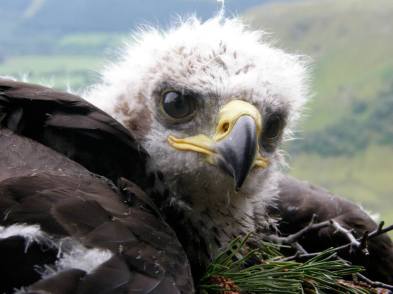
It seems he’s not the only MSP paying attention to this blog.

Claire Baker MSP (Scottish Labour’s Shadow Cabinet Secretary for Rural Affairs & the Environment, and MSP for Mid Scotland & Fife) has also been asking some pointed parliamentary questions:

Question S4W-20654: Claire Baker, Mid Scotland and Fife, Scottish Labour, Date Lodged: 08/04/2014.

To ask the Scottish Government what steps it plans to take in response to the illegal killing of birds of prey in addition to its consultation on the powers of the Scottish SPCA.

Current Status: Expected Answer date 07/05/2014

Question S4W-20655: Claire Baker, Mid Scotland and Fife, Scottish Labour, Date Lodged: 08/04/2014.

To ask the Scottish Government, in light of the Minister for Environment and Climate Change’s comment in his letter to the chief executive of Scottish Land & Estates dated 26 February 2014 [which we revealed in an FOI here] that “despite all our efforts, there remains an element of sporting managers and owners who continue to flout the law and defy public opinion”, whether it will conduct a review of the licensing and other arrangements for regulating game bird shooting in other countries, with a view to implementing stronger management and regulation.

Current Status: Expected Answer date 07/05/2014

Question S4W-20656: Claire Baker, Mid Scotland and Fife, Scottish Labour, Date Lodged: 08/04/2014.

To ask the Scottish Government what recent discussions the (a) Cabinet Secretary for Justice and (b) Minister for Environment and Climate Change has had with the Chief Constable regarding resources and training for wildlife crime officers.

Current Status: Expected Answer date 07/05/2014

Not only has she been asking parliamentary questions, she’s also been writing to the Environment Minister specifically about raptor persecution (see here), and last week she used her opening address at the SEPA and SRUC conference on land use and sustainable development to highlight the Ross-shire Massacre and state that “there can be no more excuses from landowners and the Government” (see here).

The Environment Minister is coming under increasing attack for what many see as an abject failure to deal with raptor persecution, particularly that associated with game-shooting estates. We suggested on Twitter this weekend that the Scottish Government is too obsessed with the Independence Referendum to care/notice the on-going rise in raptor crime. Paul Wheelhouse has hit back this morning with a series of tweets, including:

“It [raptor persecution] stains our reputation and I promise you this is not being ignored by me or Scottish Government”

and

“We’re being robust and if new measures don’t improve, will go further”

and

“Hope to have a parliamentary debate in near future”.

UPDATE 16th MAY 2014: Answers to Claire Baker’s parliamentary questions here.

SNH refuses to recommend golden eagle as national bird

Fearnan2Last month, the Scottish Parliament’s Public Petitions Committee took oral evidence on the petition to designate the golden eagle as Scotland’s National Bird.

Evidence in support of the petition was provided by Duncan Orr-Ewing (RSPB Scotland) and wildlife cameraman Gordon Buchanan. The hearing descended into farce when Tory MSP committee member Jackson Carlaw suggested that the eagle was an unsuitable candidate as it was symbolic of the Nazi regime (see our blog here).

The hearing was available to watch on Scottish Parliament TV but for those who missed it, you can read the official report here: Public Petitions Committee official report 28 Jan 2014

The hearing ended with the Petitions Committee agreeing to seek written advice from key organisations including the Scottish Raptor Study Group and SNH.

That written advice has now been submitted.

SNH advice: SNH response to petition 1500 Feb 19 2014

SRSG advice: SRSG response to petition 1500 Feb 23 2014

SNH, the Government’s statutory conservation agency, has refused to recommend the golden eagle to be Scotland’s National Bird. They say it is a contender, but suggest that other species are also worthy of consideration, such as the Scottish crossbill, crested tit, various sea birds, golden plover, curlew, osprey, white-tailed eagle, and wait for it….the red grouse.

Yeah, brilliant suggestion – let’s have the red grouse, a species that is intensively managed on an industrial scale (kept at artificially high densities and repeatedly dosed with toxic medications) across wide swathes of the Central, Eastern and Southern uplands at the expense of every predator with teeth, claws or a hooked beak. Predators that are ruthlessly and systematically killed, both legally and illegally, just so some grouse moor owner can impress his cronies with a large ‘bag’ of dead red grouse.

In stark comparison, the Scottish Raptor Study Group expressly supports the designation of the golden eagle as Scotland’s National Bird and makes clear that this designation would go some way to reducing the current illegal persecution of this species.

SNH (who quite tellingly didn’t once mention persecution in their response) has missed an important opportunity to promote the conservation of the golden eagle and send out a clear message to those who continue to poison, trap and shoot this species as part of grouse-management activities. They have actually sent out a message, just not one that’s fitting of a conservation agency that knows, through its own commissioned research, that this species needs all the help it can get.

The next stage of the petition process will likely be a public consultation. We’ll post links in due course.

Photo of young golden eagle ‘Fearnan‘ taken in his Perthshire nest by Keith Brockie. Two years later (Dec 2013) he was found dead on an Angus grouse moor. He had been illegally poisoned.

Link between grouse moors & raptor persecution based on ‘ill-informed rumours’, apparently

Fearnan Angus Glens Dec 2013Last month a letter written by Logan Steele was published in the Scotsman, urging the government to introduce a licensing system for grouse shooting estates (see here).

This came on the back of the news that the Scottish Raptor Study Group and RSPB Scotland had written to the Environment Minister to call for estate licensing (see here) following the discovery of poisoned golden eagle ‘Fearnan’, found dead on an Angus grouse moor in December 2013 – the latest in a very long line of victims.

This month, the Scotsman published a response letter, penned by Tim Baynes, the Director of Scottish Land & Estates Moorland Group (a group chaired by Lord Hopetoun [Leadhills Estate] and comprising moorland owners and representatives of GWCT and the SGA – see here).

It’s perhaps then of little surprise to read the content of Mr Baynes’ letter – read it here. Basically, Mr Baynes is suggesting that Logan Steele’s assertions of a strong link between grouse moor management and the illegal persecution of raptors is ‘probably based on ill-informed rumours’.

GE Cons FrThose ‘ill-informed rumours’ no doubt include the following peer-reviewed scientific publications, some dating back over ten years (so the results have been available for a long time), which have all shown a direct link between driven grouse moor management and raptor persecution (and this list is by no means exhaustive – it’s just the ones we have to hand):

Etheridge et al (1997). The effects of illegal killing and destruction of nests by humans on the population dynamics of the hen harrier in Scotland. Journal Applied Ecology 34: 1081-1105.

Stott (1998). Hen harrier breeding success on English grouse moors. British Birds 91: 107-108.

Green & Etheridge (1999). Breeding success of the hen harrier in relation to the distribution of grouse moors & the red fox. Journal Applied Ecology 36: 472-483.

Whitfield et al (2003). The association of grouse moors in Scotland with the illegal use of poisons to control predators. Biological Conservation 114: 157-163.

Hardey et al (2003). Variation in breeding success of inland peregrine falcon in three regions of Scotland 1991-2000. In Thompson et al [Eds] Birds of Prey in a Changing Environment. SNH.

Whitfield et al (2004). The effects of persecution on age of breeding and territory occupation in golden eagles in Scotland. Biological Conservation 118: 249-259.

Whitfield et al (2004). Modelling the effects of persecution on the population dynamics of golden eagles in Scotland. Biological Conservation 118: 319-333.

Whitfield et al (2007). Factors constraining the distribution of golden eagles in Scotland. Bird Study 54: 199-211.

Whitfield et al (2008). A Conservation Framework for Golden Eagles: Implications for their Conservation & Management in Scotland. SNH.

Summers et al (2010). Changes in hen harrier numbers in relation to grouse moor management. In Thompson et al [Eds] Birds of Prey in a Changing Environment. SNH.

Redpath et al (2010). People and nature in conflict: can we reconcile hen harrier conservation and game management? In Baxter & Galbraith [Eds] Species Management: Challenges and Solutions for the 21st Century. SNH.

Smart et al (2010). Illegal killing slows population recovery of a reintroduced raptor of high conservation concern – the red kite. Biological Conservation 143: 1278-1286.

McMillan (2011). Raptor persecution on a large Perthshire estate: a historical study. Scottish Birds 31: 195-205.

Amar et al (2012). Linking nest histories, remotely sensed land use data and wildlife crime records to explore the impact of grouse moor management on peregrine falcon populations. Biological Conservation 145: 86-94.

Watson (2013). Golden eagle colonisation of grouse moors in north-east Scotland during the Second World War. Scottish Birds 33: 31-33.

Those ‘ill-informed rumours’ must also include all the reported incidents of illegally-killed or illegally-injured birds of prey that have been discovered on grouse moors over the last few decades (see here for a list of reported persecution incidents in the Angus Glens and here for a list of reported persecution incidents in South Lanarkshire).  These lists relate to reported incidents from grouse moors at Glenogil, Invermark, Millden, Airlie and Leadhills but don’t include other grouse moors in other parts of the country where illegally-killed raptors have been discovered, such as Farr & Kyllachy, Moy, Skibo, Cawdor, Corrybrough, Glenbuchat, Cabrach, Raeshaw, Invercauld, Glenlochy, Dinnet & Kinord, Glenfeshie, Dunecht, Strathspey and Glenturret, for example. And again, this list is by no means exhaustive.

Mr Baynes is being disingenuous at best to point to the  fact that two months on from the illegal death of Fearnan there is no evidence to link the crime to anyone on a grouse moor. While his assertion is technically correct, it is not an indication that anyone on a grouse moor was NOT responsible. Viewing one incident in isolation is also misleading – and the results of this police ‘investigation’ are more reflective of ineffective policing than anything else – there are many many examples of this ineptitude and include police actions such as delayed appeals for information (often up to 4-6 months after the discovery of a crime against raptors), issuing cryptic police statements about the type of crime and its location, arriving at scenes of crime in highly visible marked police vehicles instead of a covert entry, and failing to undertake timely follow-up searches of associated land, vehicles and buildings to search for evidence. This police ineptitude, followed by plea bargaining and failures to accept evidence by the Fiscals, means that few of the incidents listed above have resulted in a prosecution (although there are some notable exceptions including convictions of gamekeepers at Skibo, Moy, Dinnet & Kinord, Invercauld and Leadhills).

Added to this mix is the legal advice given to gamekeepers should they find themselves at the centre of a police investigation. This legal advice undoubtedly thwarts any attempt by the police to investigate an alleged raptor persecution crime. This from the SGA to their members:

Accordingly, it is the advice normally given by solicitors to clients that they need make no reply to any allegation and that they should not in fact give any further information than their name, address and date of birth in answer to any police questions“.

This advice is technically correct but is it what the public would expect from an organisation that is purportedly committed to partnership working to stamp out illegal raptor persecution?

We would suggest that Mr Baynes takes some time to read the above peer-reviewed scientific publications that demonstrate a clear and unequivocal link between driven grouse moor management and the illegal persecution of raptors, as well as taking the time to read up on the many reported incidents of raptor persecution on grouse moors, before he writes any more embarrassingly ignorant statements of denial in the national press.

Environment Minister dismisses calls for more action against raptor killers

Fearnan Angus Glens Dec 2013Over recent weeks we’ve blogged about the increased calls on the Scottish Government to do more in the fight against raptor persecution.

First there were the hundreds of emails sent by the general public following the discovery of poisoned golden eagle Fearnan, found dead on an Angus grouse moor in December (see here). This was followed by a parliamentary motion condemning the illegal killing of birds of prey in Scotland (see here), closely followed with an amendment calling for sufficient resources to tackle raptor persecution and a review of game management legislation to assess whether further measures could be introduced (see here). Shortly afterwards came calls from the RSPB, the Scottish Raptor Study Group and the Scottish Ornithologists’ Club for estate licensing to be introduced (see here and here).

This was a prime opportunity for our Environment Minister, Paul Wheelhouse, to take advantage of such overwhelming public backing and really put his money where his mouth is. Instead, we got this, his generic response sent out by his aide towards the end of January:

Dear Sir or Madam,

Thank you for your recent letter to the Minister for Environment and Climate Change, Mr Paul Wheelhouse. I have been asked to respond.

Mr Wheelhouse was appalled to hear that the young golden eagle Fearnan had been illegally poisoned in Angus. This was particularly disappointing coming as it did at the end of the Year of Natural Scotland, which had seen the golden eagle voted as Scotland’s favourite of the ‘Big Five’ species in an exercise conducted by Scottish Natural Heritage. While it is entirely understandable that there is a strong public interest in knowing more about the case, the Minister hopes you will understand that as there is a live and ongoing police investigation, it would be inappropriate for Scottish Ministers to comment further.

Clearly this has focused the attention of all who care about our wildlife on raptor persecution issues more generally. In recent years we have made some progress in reducing the number of raptor poisonings – down to three in 2012, but at the time of publication the Minister made it abundantly clear there would be no room for complacency, given the risk of a change to other forms of persecution. However, while the final numbers for 2013 have not yet been published, it does appear that there was an increase in confirmed poisonings. There were also a number of illegal shooting and trapping incidents involving raptors last year.

Mr Wheelhouse believes that these crimes have only served to reinforce the need for the new measures he announced in July 2013. These new measures were:

  • Scottish Natural Heritage to restrict the use of General Licences on holdings of land where there is reason to believe that wildlife crime has taken place. The 2014 General Licenses now contain an enabling paragraph making it clear to users that SNH can act where they believe it is appropriate to do so.
  • A review of the penalties associated with wildlife crime. The aim here is to ensure that the penalties for these offences are an adequate deterrent and that they properly reflect the damage that can be caused to ecosystems. The Minister will shortly announce further detail on the nature and scope of this review.
  • To encourage the use of the full range of investigative techniques at their disposal by Police Scotland, to identify and bring to justice the criminals responsible for wildlife crimes in Scotland, a measure fully and publicly supported by the Lord Advocate. A number of meetings have taken place involving the Lord Advocate in ensuring this is delivered.

Tackling raptor persecution remains a key priority for the Scottish Government and we will monitor the impact of these new measures. We believe there is a strong legal framework in place in Scotland. The key now to defeating wildlife crime is effective and robust enforcement action and we will work hard to ensure support and encouragement for those involved in law enforcement to put an end to this blight on Scotland’s reputation. Yours sincerely,

Karen Hunter

Wildlife Crime Policy Officer

Paul-Wheelhouse-MSP So here we have a situation where the Minister actually admits that the measures are not working (he acknowledges an increase in the reported poisoning figures from 2012-2013) but claims ‘we have made some progress’. Let’s just be clear – no, we haven’t made any progress. Raptor persecution continues on land used for game-shooting, just as it has for decades, and most of the criminals are still getting away with it without any fear of being prosecuted, with just a handful of exceptions. How that can be dressed up as ‘progress’ is unfathomable.

Wheelhouse still claims that the latest measures need to be given time to take effect (see here for his comments to the BBC two weeks ago). One of the measures he’s talking about is the introduction of vicarious liability. VL was introduced from 1st January 2012 – that’s more than two years ago – and still there hasn’t been a single prosecution. A more recent measure is one he suggested last July that has just come in to effect (as of Jan 1st) – the power given to SNH to restrict the use of general licenses on land where they suspect illegal persecution has taken place. Can anyone actually see landowner-loving SNH enforcing this restriction? Time will tell – and given that we’ve already had the first reported illegal poisoning incident this year (see here) it’ll be a good test. We’re not holding our breath.

For how much longer does Wheelhouse expect us to stand by and watch as our raptors are poisoned, trapped, shot and bludgeoned to death while he’s still dicking around saying ‘we need more time, more time’? Conveniently, he hasn’t actually stipulated a time frame.

We don’t need more time at all. NOW is the time to get hold of these filthy criminals and he’d find he has the support of thousands of people if only he had the guts to do what he knows is needed.

Ironically, he also told the BBC this: “Robust and effective law enforcement is the next step in the continued efforts made here in Scotland to tackle ongoing crime“.

He knows fine well that the most effective and robust law enforcement will come by increasing the investigatory powers of the SSPCA. We’ve been waiting for three years now for the promised public consultation on this important issue – here’s the timeline:

Feb 2011: The consultation was first suggested by former MSP Peter Peacock as an amendment during the WANE Bill debates. The then Environment Minister Roseanna Cunningham rejected it as an amendment but suggested a consultation was in order.

Sept 2011: Seven months later MSP Elaine Murray lodged a parliamentary motion that further powers for the SSPCA should be considered.

Nov 2011: Elaine Murray MSP formalised the question in a P&Q session and the next Environment Minister, Stewart Stevenson, then promised that the consultation would happen in the first half of 2012.

Sept 2012: 9 months later and nothing had happened so we asked Paul Wheelhouse, as the new Environment Minister, when the consultation would take place. The response, in October 2012, was:

 “The consultation has been delayed by resource pressures but will be brought forward in the near future”.

 July 2013: 10 months later and still no sign so we asked the Environment Minister again. In August 2013, this was the response:

 “We regret that resource pressures did further delay the public consultation on the extension of SSPCA powers. However, I can confirm that the consultation document will be published later this year”.

Sept 2013: At a meeting of the PAW Executive Group, Wheelhouse said this:

The consultation on new powers for the SSPCA will be published in October 2013“.

Jan 2014: In response to one of our blog readers who wrote to the Minister to ask why the consultation had not yet been published:

We very much regret that resource pressures have caused further delays to the consultation to gain views on the extension of SSPCA powers. It will be published in the near future“.

Does anyone still believe that tackling raptor persecution is a Scottish Government ‘key priority’?

Does this bird remind you of the Nazis?

Fearnan2This isn’t a spoof, although you would be forgiven for thinking it was.
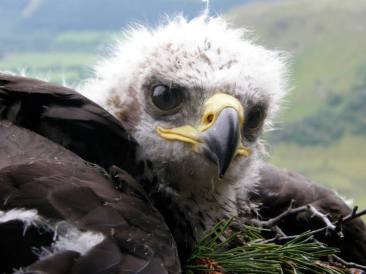
A Tory MSP today attacked the RSPB’s petition to have the golden eagle formally recognised as our national bird because apparently this species is symbolic of the Nazis.

You really couldn’t make this up.

When Duncan Orr-Ewing (RSPB Scotland) and wildlife cameraman Gordon Buchanan were preparing for possible questions at today’s petition hearing at Holyrood, they probably never envisaged such a bizarre, aggressive and frankly absurd attack from Jackson Carlaw MSP, a member of the Public Petitions Committee. They handled it remarkably well.

Carlaw, who bears a striking similarity to Jim Davidson in more ways than one, is a member of the Scottish Conservative and Unionist Party, representing West Scotland (see here).

We’re still waiting for the video of today’s proceedings to be published but when it is, we’ll add a link here so you can watch it yourself.

Meanwhile, just google ‘Jackson Carlaw eagle’ to get a flavour of how the press are reporting it.

The petition itself will now lead to a public consultation in due course.

UPDATE 29th JANUARY 2014: THE VIDEO IS NOW AVAILABLE TO WATCH FOR ONE MONTH. VIEW IT HERE!

Golden eagle as Scotland’s national bird: petition hearing today

Fearnan2Back in November 2013, the golden eagle was voted the nation’s favourite wild animal by a landslide majority (see here).

Shortly afterwards, RSPB Scotland launched an on-line petition to have the golden eagle formally recognised as Scotland’s national bird (see here).

The petition (#PE01500) collected 1,836 signatures and was lodged with the Scottish Parliament on 7th December 2013 (see here).

Today, the Scottish Parliament’s Public Petitions Committee will take evidence in support of the petition from RSPB Scotland and from wildlife cameraman Gordon Buchanan.

You can watch these proceedings live on Scottish Parliament TV at 09.30hrs by clicking this link.

For those of you unable to watch the live proceedings, we’ll add a link to the archive video when it becomes available (usually within 24 hours of being filmed). This archive video will be available to view for one month. Check back to this post later to find the link.

Photo: Golden eagle Fearnan before he left the safety of his nest. Found poisoned on a grouse moor before reaching his 3rd birthday and a week before this petition was submitted to parliament. Photo by Keith Brockie.

UPDATE 29th JANUARY 2014: See here to find out what happened during this hearing. Unbelievable!

MSP wants review of legislation concerning game management

Claire Baker MSPTen days ago we blogged about a new parliamentary motion (see here) that had been lodged by MSP James Dornan, concerning the illegal poisoning of golden eagle Fearnan, found dead on an Angus grouse moor in early December.
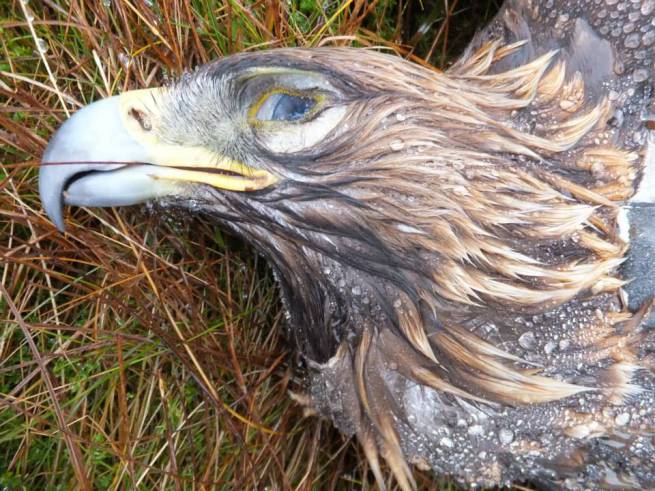
Yesterday, an amendment to that motion was made by MSP Claire Baker, calling for sufficient police and COPFS resources to address raptor persecution.

She also called for a review of the laws that cover game management to assess whether further measures could be taken against the criminals within the game management industry.

The original motion, along with the amendment, can be viewed here.

Well done, Claire Baker MSP. Hmm, the first step on the road to estate licensing? It’s long overdue.

Talking of long overdue (although technically he has until 31st Jan so it’s not overdue, it just feels like a very long time), has anyone yet had any response from the Environment Minister regarding the illegal poisoning of golden eagle Fearnan? We understand that hundreds of people bombarded his inbox just before Xmas, and indeed over the Xmas break, following the news of Fearnan’s death (see here). We’re looking forward to hearing what he has to say…or more to the point, what he intends to do.

Fearnan Angus Glens Dec 2013

Parliamentary motion about poisoned golden eagle Fearnan

Fearnan Angus Glens Dec 2013The Scottish Parliament is taking note of the illegal killing of golden eagle Fearnan, who was found poisoned on an Angus grouse moor in December.

The following parliamentary motion has been lodged:

Motion S4M-08715: James Dornan, Glasgow Cathcart, Scottish National Party, Date Lodged: 07/01/2014

No Place for Wildlife Crime

That the Parliament notes the poisoning of the golden eagle named Fearnan and believes that the killing of birds of prey has no place in modern Scotland; believes that the golden eagle population is of national interest, as demonstrated by a recent poll in which the species was voted the country’s favourite animal; supports efforts by Police Scotland to bring wildlife criminals to justice, and commends the Scottish Government’s commitment to end raptor persecution.

Supported by: Joan McAlpine, Stuart McMillan, Chic Brodie, Adam Ingram, Christina McKelvie, Mike MacKenzie, Bill Kidd, Patrick Harvie, Kenneth Gibson, David Torrance, Aileen McLeod, Colin Keir, John WilsonR, Roderick Campbell, Nigel Don, Dennis Robertson, Liam McArthur, Colin Beattie, Fiona McLeod, John Finnie, Jean Urquhart, Rob Gibson, Richard Lyle, Christine Grahame, Graeme Dey, Maureen Watt, Kevin Stewart, Sandra White, Mark McDonald

What’s significant about this motion is not necessarily that one has been lodged – there was a similar motion lodged in 2012 by Nigel Don MSP following the discovery of the now infamous dead ‘Deeside Eagle’ (see here), with an amendment to that motion made by Claudia Beamish MSP following the shooting of a golden eagle in South Lanarkshire (see here).

James Dornan MSPThe significance of this latest motion is that it’s been lodged by an MSP that doesn’t live in the region where Fearnan was killed and isn’t especially well-known for addressing raptor persecution issues – James Dornan MSP, representing  Glasgow Cathcart. We view this as an important indication that the raptor persecution issue is being brought to the attention of people who may previously have been unaware.

Well done, James Dornan. Let’s see how many more MSPs sign up to support this motion. Has yours signed?

Environment Minister faces more questions on tackling wildlife crime

Environment Minister Paul Wheelhouse is facing a busy few weeks as he comes under increasing pressure, not just from the public but also from politicians, about the problems of effectively addressing wildlife crime in Scotland.

Back in his office today after the Xmas break, he will have been met with a backlogged barrage of emails concerning the poisoned golden eagle ‘Fearnan’ (see here), in addition to complaints about the latest ridiculous police appeal for information concerning the dead buzzard “that had not died of natural causes” (see here).

Today, MSP Christine Grahame (SNP Midlothian South, Tweeddale & Lauderdale) lodged the following question in parliament:

Question S4T-00552: To ask the Scottish Government, in light of the recent discovery of six badger carcasses near Peebles, whether it is content with Police Scotland’s resource allocation for detecting and preventing wildlife crimes.

This question is due to be heard in Chamber tomorrow (7th Jan 2014).

The badger incident she refers to was reported on the BBC website on Saturday 4th January 2014 (see here). The appeal for information made by Police Scotland was in stark contrast to the appeal for information they put out about the dead buzzard “that had not died of natural causes“.

The badger appeal came out less than 24 hours after the six skinned badger carcasses had been discovered; the buzzard appeal didn’t come out until 25 days after the carcass had been found.

The badger appeal provided a vivid description of what state the badgers were in when found (i.e. skinned). The buzzard appeal just said the bird “had not died of natural causes“.

The badger appeal gave a precise location of where the victims had been found, including their position (‘east banking’) on a named road (‘Bonnington Road’) that led to a named farm (‘Bonnington Farm’). The location provided in the buzzard appeal was given as ‘near the village of Tomatin’, with no indication of scale.

The badger appeal even gave a precise time of when the carcasses were discovered. The buzzard appeal did not.

You couldn’t get two more different appeals for information. One (the badger appeal) was timely, detailed and informative. The other was anything but.

sspca_badgeChristine Grahame’s question is bang on the money. It’ll be interesting to see how Wheelhouse responds. Perhaps he’ll mention the long-promised public consultation on increasing the powers of the SSPCA to allow them to investigate more wildlife crime than they are currently allowed.

We have blogged A LOT about this promised consultation. The consultation was first suggested by former MSP Peter Peacock as an amendment during the WANE Bill debates, way back in February 2011. The then Environment Minister Roseanna Cunningham rejected it as an amendment but suggested a consultation was in order.

Seven months later in September 2011, MSP Elaine Murray lodged a motion that further powers for the SSPCA should be considered. In November 2011, Elaine Murray MSP formalised the question in a P&Q session and the next Environment Minister, Stewart Stevenson, then promised that the consultation would happen in the first half of 2012. Nothing happened.

In September 2012 we asked Paul Wheelhouse, as the new Environment Minister, when the consultation would take place. The response, in October 2012, was:

The consultation has been delayed by resource pressures but will be brought forward in the near future”.

Nothing happened, so nine months later in July 2013 we asked again. In August 2013, this was the response:

We regret that resource pressures did further delay the public consultation on the extension of SSPCA powers. However, I can confirm that the consultation document will be published later this year“.

The end of 2013 came and went, and still nothing.

So, nearly three years after Scottish Ministers committed to undertaking this consultation, where is it?

Questions to Mr Wheelhouse at the usual address: ministerforenvironment@scotland.gsi.gov.uk