Pre-Werritty propaganda from grouse shooting industry

As we all continue to wait for the publication of Professor Werritty’s report on driven grouse shooting, the usual suspects have been busy putting together a damage limitation programme to save their sorry necks.

An ‘informal alliance’ has been created under the banner of RELM (Rural Environment Land Management) ‘to help co-ordinate and streamline responses and communications ahead of the publication of the final report‘ and its first offering is this briefing document for MSPs which was distributed by Scottish Land & Estates a couple of weeks ago:
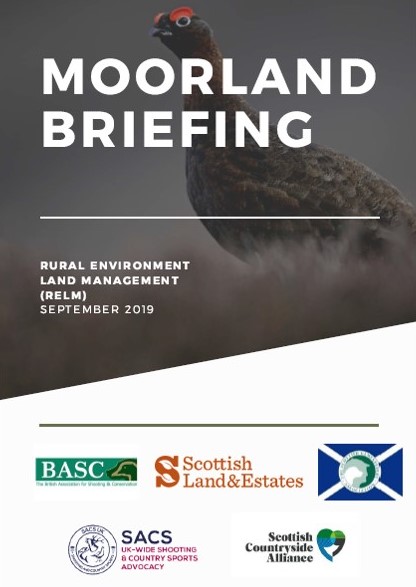
Here’s the intro blurb:

Grouse moor management has been the subject of much attention during the summer period across a range of issues such as the environment and species conservation, satellite tagging and wildlife crime, mountain hares and the start of the season on August 12.

With the Scottish Government’s review into grouse moor management due to be published shortly, rural organisations wished to provide the following update to parliamentarians. We would be pleased to provide additional detail where required.

Ah, how thoughtful. Amusingly, several MSPs have sent us a copy of this briefing document with comments along the lines of ‘You might want to say a few things about this’.

We’re grateful to those MSPs because yes, we do want to say a few things about the document’s contents and we wouldn’t otherwise have had an opportunity had they not shared the briefing with us.

We’re not posting the full briefing document here, yet. Instead we intend to blog about different aspects of it in turn.

Today we’re looking at the page entitled ‘Wildlife Crime’ and its five paragraphs of propaganda:

Propaganda paragraph 1:
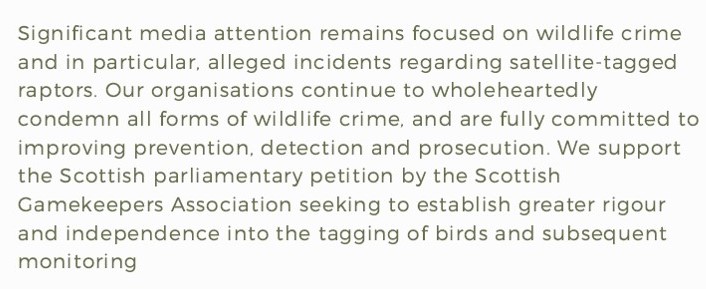
Yes, significant media attention does remain focused on wildlife crime, and particularly illegal raptor persecution because everyone else finds it abhorrent and can’t understand why it still goes on and why the grouse shooting industry continues to shield the criminals involved. It’d be interesting to know what, exactly, these five organisations have done to crack down on raptor persecution as part of their claimed ‘full commitment to improving prevention, detection and prosecution’.

Propaganda paragraph 2:
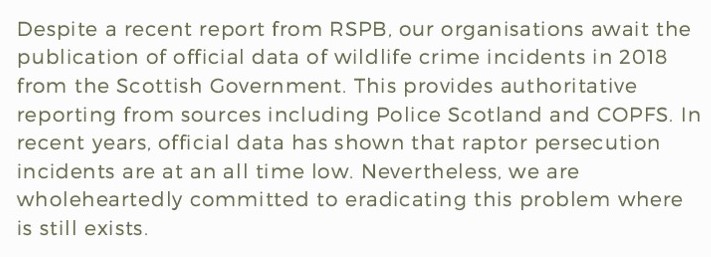
No surprises here. This is a blatant attempt, yet again, to discredit the RSPB’s annual Birdcrime Report which was published a couple of weeks ago and showed that confirmed raptor persecution crimes in Scotland in 2018 had doubled from those recorded in 2017. These cases included a peregrine poisoned in the Pentland Hills, near Edinburgh; a buzzard found to have been shot twice, in South Lanarkshire; a buzzard caught in an illegal trap, in Inverness-shire; and a hen harrier caught in a spring trap in Perthshire. All of these incidents occurred on, or close to, land being managed intensively for driven grouse shooting.

With this level of relentless criminality, it’s no wonder the grouse shooting industry apologists want to infer that the RSPB’s data are ‘unofficial’. Fine. We’ll come back to this later this autumn when the Government publishes its annual wildlife crime report, which we know will include all of the confirmed incidents already reported by the RSPB.

Propaganda paragraph 3:
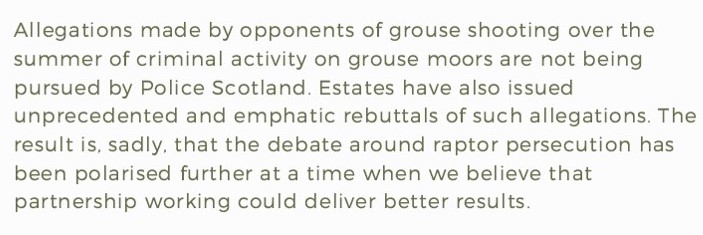
This is perhaps the most cynical of attempts to downplay the disgusting reality of the criminality still being committed on some driven grouse moors. And the first sentence of paragraph 3 is actually a lie. Not being pursued by Police Scotland? Er, ALL the cases of alleged raptor persecution that have been reported from grouse moors over the last few months are still considered to be live criminal investigations by the Police, according to the investigations officer we spoke to yesterday.

So, the satellite-tagged hen harrier that was found dead on a grouse moor in Strathbraan with an illegal spring trap clamped to its leg – it’s still the subject of a criminal investigation by the police.

The two satellite-tagged golden eagles (Adam and Charlie) that ‘disappeared’ in suspicious circumstances on another grouse moor in Strathbraan, on the same morning as each other – they’re still the subject of a criminal investigation by the police (as are several other alleged offences uncovered during the police search).

The hen harrier that was found caught by its leg in a spring trap that had been set illegally next to its nest on a grouse moor in South Lanarkshire – it’s still the subject of a criminal investigation by the police.

The buzzard that was caught inside a legal cage trap on the same South Lanarkshire grouse moor but was then allegedly beaten to death by someone arriving on a quad bike after dark and using a key to open the padlocked door of the cage – it’s still the subject of a criminal investigation by the police.

The young golden eagle that was photographed flying around in the Cairngorms National Park with an illegal trap clamped to its leg – it’s still the subject of a criminal investigation by the police.

And as for the claim that estates have issued ‘unprecedented and emphatic rebuttals’ – er, there’s nothing unprecedented about that! Estates have always denied any involvement in any of the wildlife crimes that have been uncovered on their land – it’s what they do!

Propaganda paragraph 4:
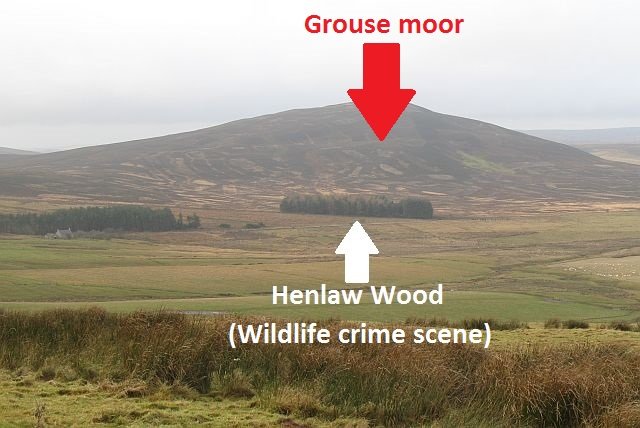
Ah yes, convicted gamekeeper Alan Wilson, dubbed by the press as ‘Scotland’s worst wildlife killer‘. Yet again, the link between Wilson’s filthy criminal activity uncovered at Henlaw Wood and driven grouse shooting is kept well hidden. Yes, the Longformacus Estate was managed for low ground pheasant shooting but it was also managed for driven grouse shooting – a fact that Scottish Land & Estates doesn’t like to mention!
And speaking of Scottish Land & Estates and it’s so-called ‘full commitment’ to tackling wildlife crime, it still hasn’t said whether the Longformacus Estate was a member at the time these crimes were committed and if so, whether that membership has now been terminated? We asked SLE this question on 22 August 2019. Still waiting for an answer….

Propaganda paragraph 5:
Of course they continue to call for tougher penalties – how can they not? But they know as well as we do that the severity of the penalty is utterly irrelevant if the perpetrators of these crimes can’t even be identified, let alone prosecuted.

And as long as evidence continues to be destroyed and employers continue to shield their criminal employees by instructing them to give ‘no comment’ interviews to the police, nothing will change.

Fortunately, there are more and more savvy MSPs in the Scottish Parliament who have seen through the greenwash and know exactly what’s going on. If you think your MSP isn’t one of those, it’d be worth dropping them an email with a link to this blog.

No vicarious liability prosecution for Longformacus Estate

Ten days ago Scottish gamekeeper Alan Wilson was sentenced for a catalogue of wildlife crime offences, including possession of the banned poison Carbofuran and the shooting of protected raptors, badgers and an otter on the Longformacus Estate in the Scottish Borders (see here).

[Criminal gamekeeper Alan Wilson, photo by Daily Record]

Very early on in this case we were aware that two individuals had been charged in relation to the crimes uncovered at Longformacus Estate (see here) and it was rumoured that the second man was facing a charge of alleged vicarious liability for Wilson’s crimes, although we were unable to verify this.

As a quick re-cap, vicarious liability was a measure introduced by the Scottish Government on 1 January 2012 as a direct and specific response to ongoing illegal raptor persecution, whereby somebody (e.g. a landowner or a sporting agent) may be held responsible for the criminal actions of an employee – see here for a more detailed explanation.

Following Wilson’s conviction and then subsequent sentencing earlier this month, we were keen to find out whether the Crown Office was now pursuing a charge of alleged vicarious liability against any individual associated with the management of Longformacus Estate. Last week we wrote to the Crown Office for clarification and this is the response received yesterday:

So, here we are yet again.

No prosecution for anyone associated with the management of Longformacus Estate where gamekeeper Alan Wilson was able to commit crime after crime after crime after crime, apparently without his boss(es) noticing.

For a defence of a charge of alleged vicarious liability, the gamekeeper’s boss(es) would need to show that (a) s/he/they did not know the offence was being committed; AND (b) that s/he/they took all reasonable steps AND exercised all due diligence to prevent the offence(s) being committed. Without knowing the full facts and circumstances of this case it is impossible for us to judge whether the Crown Office’s decision not to pursue a charge was sensible, but it has to be said that given the extent and duration of Wilson’s criminal activities, it would have been very interesting indeed to have heard his bosses’ interpretation and explanation of ‘all due diligence’.

We’ll probably never know why the Crown Office chose not to proceed – it is under no obligation to offer any explanation to the public. However, this latest decision really shouldn’t come as any surprise to anybody – remember, this is the same Crown Office that dropped five prosecutions for alleged raptor persecution in quick succession in 2017 (see here), even including several cases where RSPB video footage had captured the crimes on camera! Those decisions not to proceed with prosecutions hailed the start of what has now become complete exasperation at the authorities’ failure to take on many cases linked to wildlife crime on game-shooting estates.

The Crown’s decision not to pursue criminal proceedings in relation to the crimes committed at Longformacus Estate also further entrenches the view that vicarious liability as a measure for tackling ongoing raptor persecution is a resounding failure. Introduced seven and a half years ago on 1 Jan 2012, only two successful prosecutions have been secured: one in Dec 2014 (here) and one in Dec 2015 (here). A third case in Oct 2015 was dropped because the authorities couldn’t identify the estate’s management structure (here) and a fourth case was abandoned in April 2017 because the Crown said ‘it wasn’t in the public interest to continue’ (here).

Who thinks that two successful cases in 7.5 years is a measure of success? Perhaps if raptor persecution crimes weren’t still being committed then vicarious liability might have been viewed as a success in terms of its deterrent value but it’s quite clear, given the ongoing reports of persecution, that landowners and sporting agents are probably increasingly confident of evading prosecution and the Crown’s decision on the Longformacus Estate will only strengthen that view.

The question now is, for how many more years do we have to sit and watch the pathetic failure of vicarious liability as a measure to combat raptor persecution? The Scottish Government can no longer rely on this as an indication of its commitment to tackling these crimes. Sure, when introduced in 2012 it was done in good faith and with the best of intentions but it is quite clear for all to see that, for whatever reason, it isn’t working, and the Scottish Government needs to acknowledge this failure and find out why it’s failing and get it fixed.

It’s not just convicted gamekeeper Alan Wilson sticking up two fingers to our law-abiding society.

The topic of vicarious liability was raised at the recent SNP Conference Fringe meeting on grouse moor reform (here) as well as the Revive Coalition’s conference in Perth (here) and caused quite a stir amongst delegates and panellists at both events. It’s an issue we’re likely to follow up with several interested MSPs.

Meanwhile, Chris Packham’s petition calling for a ban on driven grouse shooting is doing exceptionally well, just two weeks after launching. It has now attracted over 81,000 signatures but is likely to fall if it doesn’t reach 100,000 signatures by Sept 9th, thanks to the current shenanigans at Westminster (if Parliament is suspended all unfinished business, including live petitions, will fall). If you haven’t yet signed, please do so HERE. Thank you.


Scottish Gamekeepers Association fails to influence the criminals within its membership

Gamekeeper Alan Wilson, 61, sentenced yesterday for his appalling crimes against protected raptors and mammals on the Longformacus Estate in the Borders (here) was a member of the Scottish Gamekeepers Association (SGA).

As an SGA member, Wilson cannot possibly claim that he wasn’t aware of the laws protecting birds of prey and mammals such as badgers and otters, nor that the deadly poison he had in his possession, Carbofuran, has been banned for approx 14 years, because although the SGA can be viewed as a bunch of raptor-hating Victorian throwbacks who lobby to have birds of prey added to the lists of ‘vermin’ that can be killed with impunity (e.g. see here), it has always made it clear that the illegal killing of these species is unacceptable. It wants to kill raptors, yes, to stop them interfering with game bird stocks, but acknowledges that so far, this is still unlawful unless the Scottish Government decides to issue licences to kill birds of prey.

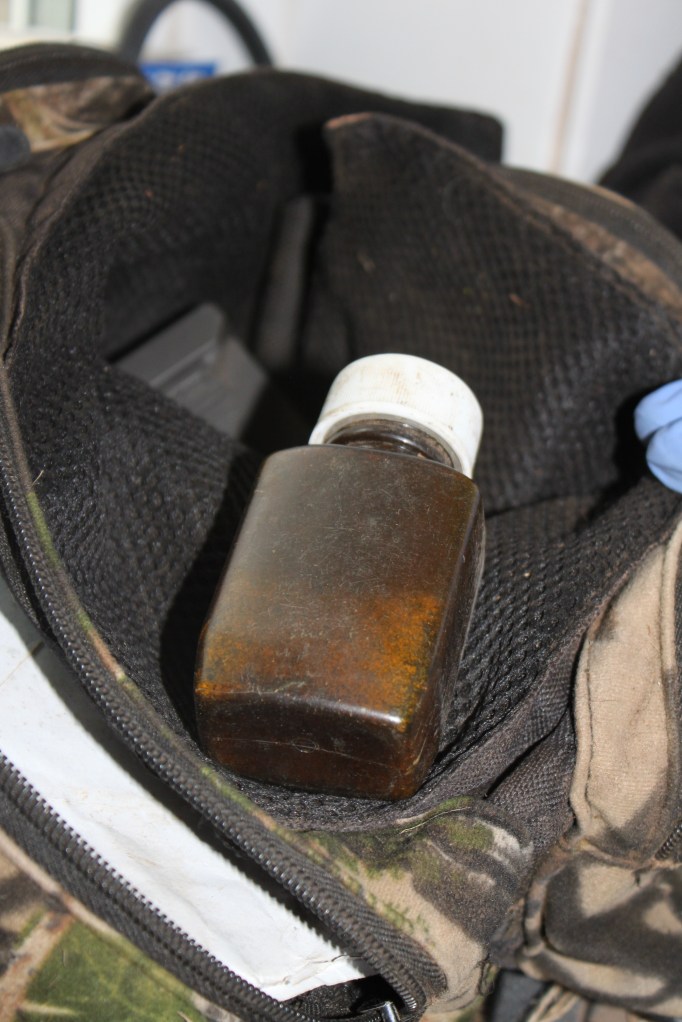
Wilson carried what looks to be his SGA member’s log book in the same bag as he kept one of his bottles of Carbofuran.

Here’s his bag, with the bottle of Carbofuran in the front pouch [SSPCA photo]

Here’s the small bottle of Carbofuran (remember only a few granules are enough to kill a human) [SSPCA photo]

Here’s his SGA member’s log book, contained in the side pouch [photo SSPCA]

The irony of this is not lost on us.

The SGA issued a statement yesterday, after months of refusing to say anything, confirming that Wilson was indeed a member and his membership has now been terminated. Expelling criminals from within its ranks is a relatively recent endeavour by the SGA (in the last five or so years) and undoubtedly is a result of public and political pressure. The organisation has to at least make an effort to appear civilised and expelling criminal members is one way of doing this.

It begs the question, though, how many more criminals are hiding in plain sight within the SGA’s membership? It’s worth bearing in mind that, despite the industry’s claims, gamekeeping is not a profession in the sense that potential candidates don’t have to pass a formal qualification process to enter the ‘profession’ (although increasingly they do need to be certified in certain areas of their work) and absolutely anybody can become a member of the SGA unless, it seems, you have a recent conviction for wildlife crime. There’s no independent register of gamekeepers and nor is there a professional body to whom members of the public can complain about a gamekeeper’s behaviour or conduct, which when you think about it is pretty odd, given the job mostly involves killing things. Those responsible for caring for animals have to be highly qualified and are answerable to their professional bodies (e.g. vets) and yet those who kill animals for a living can do so without any professional oversight.

It’s pretty clear from the criminal activities of SGA member Alan Wilson that the SGA had absolutely no influence or control over his behaviour whatsoever. Did the SGA know about Wilson’s crimes? It seems unlikely, given the risk he posed to the SGA’s reputation.

So how many more Alan Wilsons are out there, fully-signed-up members of the SGA but with a huge appetite for killing protected wildlife with impunity?

How can the SGA possibly claim that gamekeepers are law-abiding members of society (e.g. see here) when the SGA hasn’t actually got a clue what its members are up to?

We won’t know, of course, until the next time. And there will be a next time, and another one, and another one, and another one….

Meanwhile, the SGA will be kept busy on a damage limitation exercise for the next few months trying to counter the media coverage of Wilson’s atrocities:


Monumentally inadequate sentence for convicted Scottish gamekeeper Alan Wilson

In July this year, Scottish gamekeeper Alan Wilson, then 60, pleaded guilty to nine of 12 charges of wildlife crime at Henlaw Wood on Longformacus Estate in the Borders (see here).

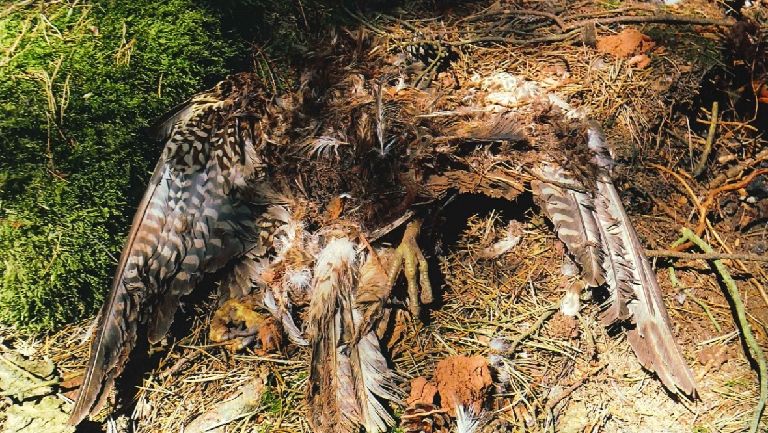
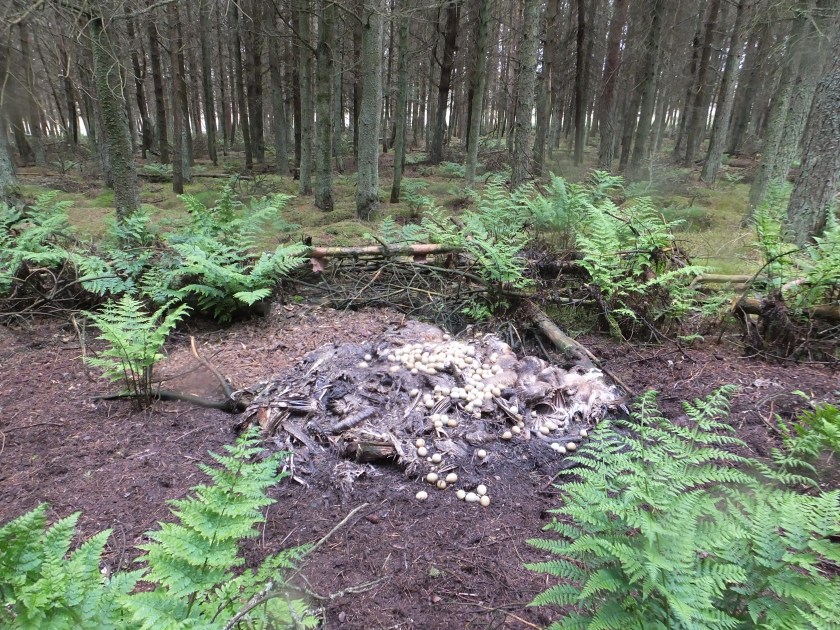
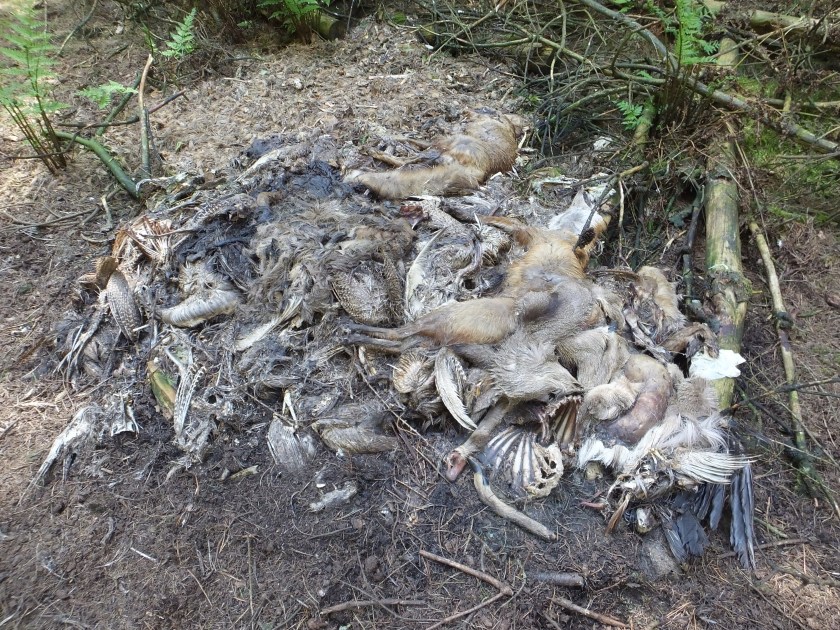
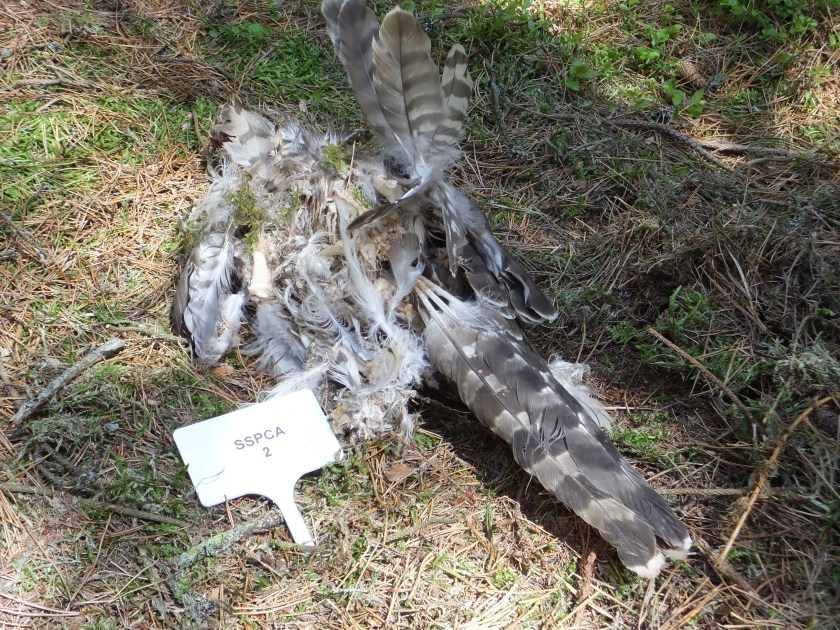
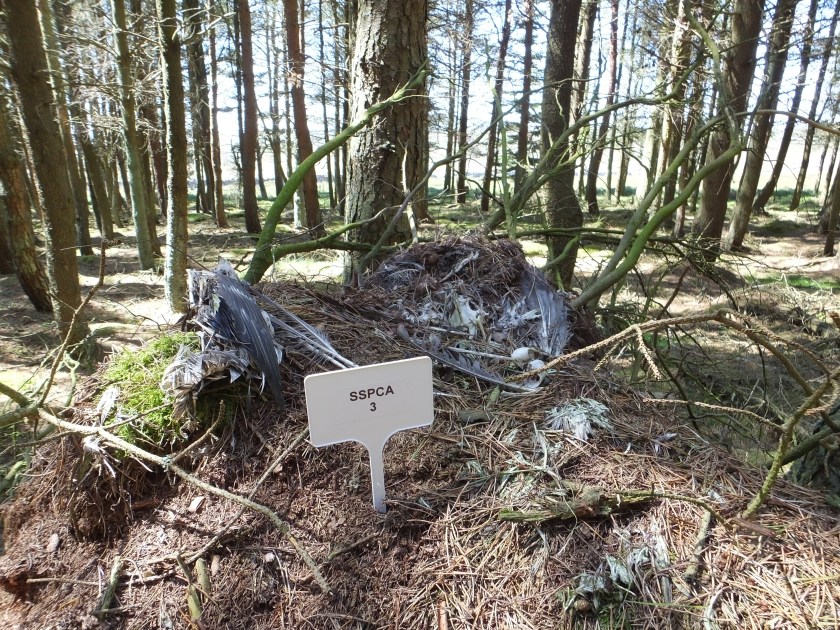
Wilson’s crimes included the shooting and killing of two goshawks at Henlaw Wood between March 2016 and May 2017, three buzzards, three badgers and an otter. He also pleaded guilty to charges of setting 23 illegal snares and possession of two bottles of the highly toxic (and banned pesticide) Carbofuran (see here).

[SSPCA photos]

Following Wilson’s guilty plea, the Sheriff adjourned sentencing for a few weeks to allow reports to be submitted.

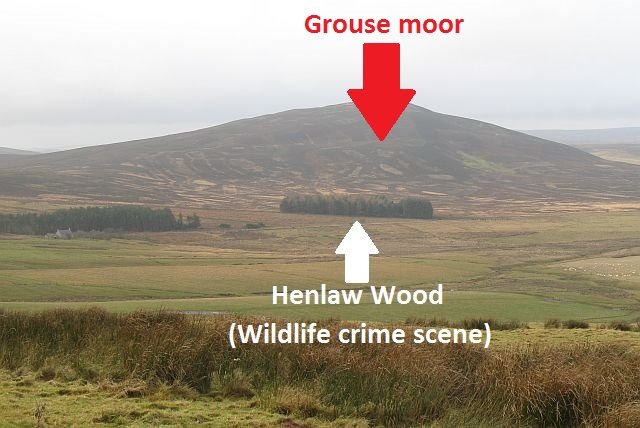
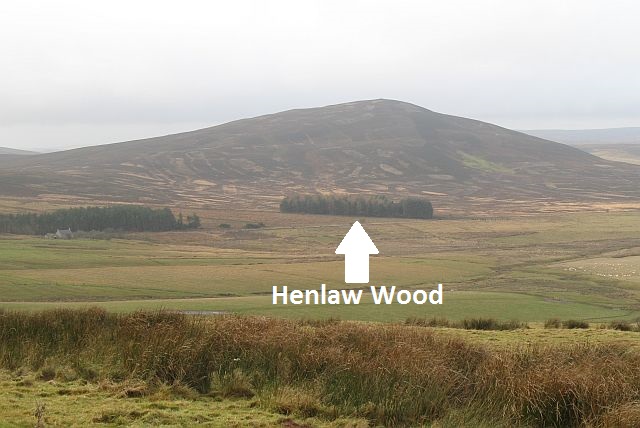
Soon after his conviction, Scottish Land & Estates issued a statement of condemnation and claimed the Longformacus Estate was being managed for low ground pheasant shooting but in its desperation to avoid any bad publicity of grouse moor management, completely failed to mention that part of the estate was also managed as a grouse moor. Here’s a photograph of Henlaw Wood (now felled) and its proximity to the grouse moor:

[Original photo by Richard Webb; additional text by RPUK]

Alan Wilson, now 61, was sentenced at Jedburgh Sheriff Court this afternoon. Astonishingly (or not!), despite his litany of violent crimes against protected raptors and mammals which easily passed the threshold for a custodial sentence, Wilson has dodged jail, has dodged a fine, and instead has been issued with a 10-month curfew and an instruction to carry out 225 hours of unpaid work as part of a Community Payback Scheme. His firearms and other equipment was confiscated (it’s not clear for how long).

This monumentally inadequate sentence is in no way a reflection of the severity or extent of Wilson’s crimes, nor does it offer a suitable deterrent for other would-be offenders. According to this article in the Guardian by Sev Carrell, Sheriff Peter Paterson acknowledged that Wilson’s offending warranted a custodial sentence but said that as the Wildlife & Countryside Act only allowed sentences of up to six months, and Scottish Ministers had recently introduced a presumption against jailing offenders for less than 12 months, he felt he had no choice but to impose a different sentence.

This doesn’t make sense to us. Sure, the W&CA does, currently, impose a limit of six months but that’s six months per offence, so in Wilson’s case, where he had pleaded guilty to multiple offences, this would have amounted to much more than one six-month sentence and so in our opinion, he should have received a custodial sentence. We don’t know if this sentence will be appealed by the Crown Office – it must first be satisfied that the sentence was unduly lenient (e.g. see here). We’ll have to wait and see.

What is absolutely crystal clear is that the Scottish Government needs to get on and implement the penalty increases for wildlife crimes that it agreed to do way back in 2016.

This is Wilson’s second conviction in relation to offences at Longformacus Estate: in February 2018 he was sentenced to a £400 fine and disqualified from keeping birds of prey for ten years after he was convicted of animal welfare offences in relation to an Eagle Owl he had kept in appalling conditions (see here).

We don’t know whether Wilson’s employer (which may be a landowner or a sporting agent) will face a charge of alleged vicarious liability. We know that two individuals were originally charged with alleged offences at Longformacus Estate (e.g. see here) but we don’t yet have any more details. We will be following up on this and will report here if there is news. [Please note: if you are commenting on this aspect of the crimes at Longformacus Estate, remember there is a potential defence to any allegation of vicarious liability – Wilson’s employer is not automatically guilty just because he was Wilson’s employer].

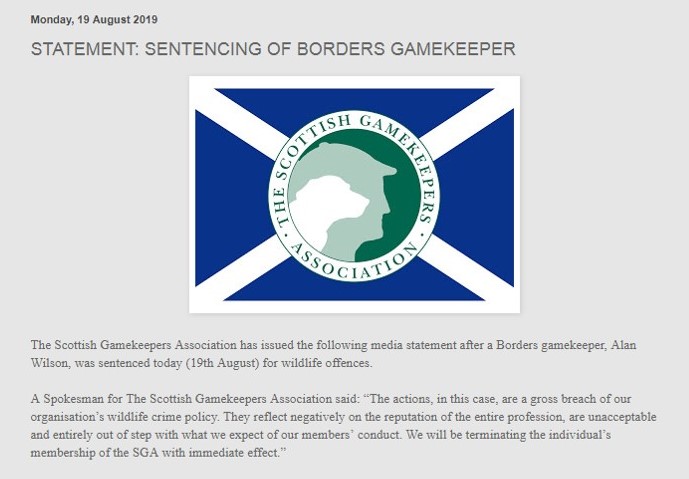
Interestingly, the Scottish Gamekeepers Association has, after months of refusing to comment, now finally admitted that Wilson was indeed an SGA member when he committed these wildlife crimes. Here is the SGA statement posted today:

We’ll be discussing Wilson’s SGA membership in a later post.

It is not clear to us whether the Longformacus Estate is a member of Scottish Land & Estates. So far SLE hasn’t issued a statement about today’s sentencing. Instead, it’s website is leading with an article with the unfortunate headline, ‘Making it Happen’.

More on this soon.

It only remains to acknowledge the huge efforts of all those involved in detecting, investigating and prosecuting this case. This successful conviction was the result of genuine partnership working between the League Against Cruel Sports, Scottish SPCA, RSPB Scotland, Police Scotland and the Crown Office, along with experts from the Scottish Raptor Study Group, SASA, and veterinary pathologists from Scottish Agricultural College. Well done and thanks to all those involved in exposing this filthy criminal activity on yet another grouse moor.

Wildlife crime is endemic on many grouse moors. We see it over and over again and we also see the offenders escape justice time and time again. If you’d like to help bring it to an end, please consider signing this new petition calling for a ban on driven grouse shooting – PLEASE SIGN HERE

UPDATE 30 August 2019: No vicarious liability prosecution for Longformacus Estate (here).

How has the game-shooting industry reacted to conviction of Scottish gamekeeper Alan Wilson?

We’ve been watching with interest how the game-shooting industry has reacted to the news that Scottish gamekeeper Alan Wilson has pleaded guilty to nine wildlife crimes on the Longformacus Estate in south Scotland.

We are especially interested to find out whether (a) Wilson is/was a member of the Scottish Gamekeepers Association when he committed his crimes against protected wildlife and if so, whether he’s been booted out, and (b) whether the Longformacus Estate is/was a member of Scottish Land & Estates when these wildlife crimes took place, and if so, whether the estate has since been booted out.

It turns out that both the SGA and SLE are being a bit coy about this information.

First up, here’s the full statement from the SGA in response to Wilson’s guilty plea for multiple criminal offences:

It’s not very impressive, even though it took the SGA 24 hours to come up with it!

No mention, then, of the exceptionally high number of wildlife crimes.

No mention, then, of the number of protected species that had been shot illegally, including birds of prey, badgers and an otter.

No mention, then, of the 23 illegally set snares.

No mention, then, of the two containers of a highly toxic and banned poison (Carbofuan) that had been found.

And no mention, then, that it was a Scottish gamekeeper who was responsible for this disgraceful litany of wildlife crimes.

Moving on, here’s what Scottish Land & Estates posted:

It’s a bit of an odd choice of photograph to illustrate the piece – that’s Lord David Johnstone, Chairman of SLE; it’s not criminal gamekeeper Alan Wilson. You might have thought SLE would choose an image of one of the protected species that had been illegally shot, or a poison skull & crossbones, or perhaps even an image of the location, a bit like this one:

[Photo by Richard Webb]

Ah, but hang on a minute, using a photo like this one to illustrate SLE’s statement wouldn’t have worked because look, what’s that behind the wood? Is it the tell-tale strip muirburn indicative of a grouse moor?

Ah, that’s a bit awkward seeing as SLE’s statement doesn’t mention grouse moor management, only low ground pheasant shooting – perhaps a deliberate omission? Surely not.

To be fair, the hill in the background is part of a neighbouring estate (Kettleshiel Farm), although if you look at a satellite image of the area it’s pretty clear that there’s also strip muirburn on Longformacus Estate, right up to the edge of Henlaw Wood where all those shot protected species were uncovered: [UPDATE 9pm: According to a comment from Professor Ian Poxton, all the land shown in the above and below photos, including the grouse moor hill, belonged to Longformacus Estate at least up to a couple of years ago – see comments section for more details]:

So it looks very much like there is a combination of both low ground pheasant shooting and grouse moor management on Longformacus Estate – how odd that SLE would appear to want to only mention the pheasant shooting and not the grouse moor management.

Actually, it’s not odd at all – they tried the same trick when golden eagle Fred ‘disappeared’ in suspicious circumstances next to a grouse moor in the Pentland Hills just outside Edinburgh, playing down the prevalence of grouse moor management in the area.

Hmm, can’t begin to imagine why SLE might want grouse moor management out of the spotlight.

Anyway, back to SLE’s statement – at least it includes the fact that a gamekeeper has been convicted of wildlife crime – that’s a definite improvement on the SGA’s pathetic statement, but rather tellingly, SLE’s statement doesn’t mention whether Longformacus Estate is a member of SLE but does seem to want to demonstrate support for the estate. How interesting.

As we’ve said previously, as we understand it there is an ongoing police investigation in to whether gamekeeper Alan Wilson’s employer may face a potential charge of alleged vicarious liability, but we don’t know any more detail. We don’t even know if that would be the landowner or whether there’s a ‘middle-man’ involved such as a sporting agent.

We’ll have to wait and see, although it’s interesting to note that back in August 2018, Police Scotland issued a statement that said two men had been charged in relation to this case (see here).

Scottish Gamekeepers Association’s smear campaign re: golden eagle Fred is defamatory shambles

On Monday (1 July), the Scottish Gamekeepers Association (SGA) published a statement on its website in response to the news that golden eagles Adam and Charlie had ‘disappeared’ in suspicious circumstances on a grouse moor in the Strathbraan raven cull area in Perthshire.

It was an astonishingly ill-judged response. It didn’t mention the loss of these two eagles – let alone condemn what looked to be yet another suspicious incident, identical to the loss of so many other sat-tagged eagles on grouse moors. Instead, it focused on the supposed ‘need’ for ‘independent scrutiny’ of satellite tag data (conveniently ignoring the fact that the police now routinely analyse the data of all sat-tagged raptors that have been reported as missing in suspicious circumstances).

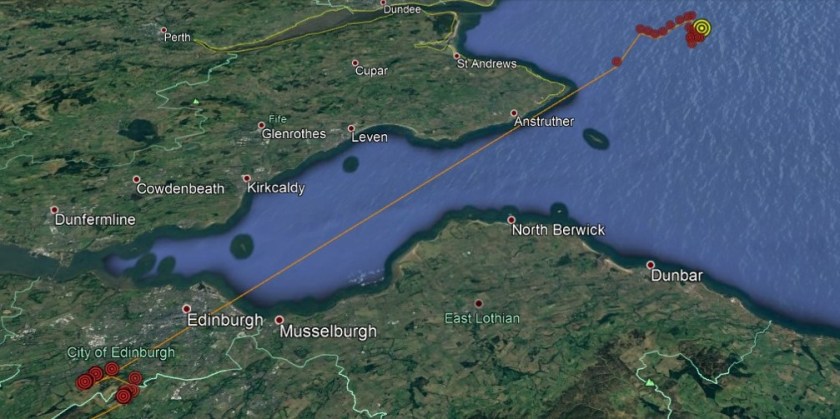
To support its argument, the SGA highlight the disappearance of Fred, one of our sat-tagged golden eagles who vanished from the Pentland Hills just outside Edinburgh in January 2018 and whose tag then sent data from the North Sea, several days later, before finally stopping.

According to the SGA, and some of their clueless members/supporters on social media, we apparently withheld some tag data from Police Scotland. Their ‘evidence’ (ahem) to support this claim seems to be centred on two things:

  1. The fact that two videos were filmed by our team on the same day but published several weeks apart; and
  2. An FoI response from Police Scotland in response to some poorly structured questions.

Here’s part of the SGA’s post on the ‘need’ for independent sat tag monitoring:

And here is a copy of the Freedom of Information response from Police Scotland, also posted on the SGA’s website:

It appears the SGA have even persuaded their ‘legal advisors’ to show this ‘evidence’ to the police.

Good grief. Unsurprisingly, the police haven’t come knocking and here’s why (probably) –

Yes, we did film two videos on the same day, and published them weeks apart. So what? We’ve never tried to deny that, but much has been made of it over the past 18 months, much to our amusement and bemusement. Our time is valuable, our schedules are tight, we had our film crew in place, why not make the most of that situation and film as much as we could in one day, instead of having to organise another filming day sometime later?

What the SGA don’t know is that yes, at that time we had the additional meta data (that showed Fred’s tag pinging against various telephone masts on its route from the Pentlands to the North Sea) but we were still working out what those data actually meant (it’s not the type of data we were familiar with) and we filmed several versions of what we thought the data were showing us at that time. We were still taking advice from a number of independent experts for some weeks afterwards, including the police, and when we were happy that we understood the data and the limitations of the data parameters, that was the version that was published several weeks later, with the full support of the police.

The SGA thinks that Police Scotland received Fred’s tag data from us on 26 January (because that is what is implied in the Police’s FoI response). However, that is absolutely not the case, and is simply a reflection of the poorly constructed FoI question. Fred’s suspicious disappearance was reported to Police Scotland on 26 January, yes, but they did not ask to see Fred’s tag data at that time. Presumably because they had every confidence in us as legitimate, well-regarded researchers not to question our report that Fred’s disappearance was highly suspicious, along with the backing of experienced tag data analysts at RSPB Scotland. Let’s face it – if you look at the map showing Fred’s movements in the Pentlands and then several days later he’s suddenly 10 miles offshore in the North Sea, you don’t need to be a golden eagle expert or to look at raw data to know that something isn’t quite right. The police launched an immediate search in the Pentlands (and, for the record, worked admirably for the duration of this investigation).

The tag data and meta data were eventually requested by Police Scotland during a phone call on 19th February. It wasn’t clear why it was only then that the data were being requested but we suspected pressure was being placed on the police by, let’s call them ‘external forces’. The data request was fine by us. It was agreed that it would be good for us to meet and go through the data together, including the meta data files. The earliest date that was mutually convenient for us all was one week later on Monday 26 February. We met, discussed the data and agreed that it would be better for the police to have a copy of the original raw data files directly from the tag manufacturer, rather than our files, just to avoid any accusations that we may have tampered with the files (unfounded accusations which were, of course, doing the rounds on social media by those seeking to discredit us and to distract attention from the circumstances of Fred’s disappearance – those ‘external forces’ again).

Incidentally, it was at this time that SGA Director Bert Burnett claimed on social media that we’d fabricated the whole incident with Fred (and thus perverted the course of justice), and made another claim that Chris Packham had refused to turn over the tag data to the police. Quite astonishing (and defamatory) accusations based on no evidence whatsoever. Nothing new there, then.

Immediately after our meeting with the police to discuss the tag data we contacted the tag manufacturer, gave permission for our data to be shared with the police, put the two parties in touch with one another and the original raw data files were sent to the police on 1 March (as accurately stated in the police’s FoI response).

Where the SGA’s logic completely falls down is this. Why on earth would we want to withhold evidence (the meta data) from the police, especially when we believed that evidence supported our earlier suspicions that Fred had been killed in the Pentlands and then his tag (and perhaps Fred too) was transported by road to North Berwick and dumped in the North Sea?

Sorry, SGA, your desperate attempts to smear and discredit us can be seen for exactly what they, and you, are. Pathetic.

Next.

Scottish Gamekeepers Association’s pity party in response to failed Strathbraan raven cull bid

At the beginning of May we blogged about how SNH had rejected a 2019 application for a raven cull licence in the Strathbraan area of Perthshire (see here).

This decision followed last year’s fiasco when SNH had issued a raven cull licence for Strathbraan, on what we considered to be false pretences, and which was eventually withdrawn after a legal challenge by the Scottish Raptor Study Group.

A subsequent analysis by SNH’s own Scientific Advisory Committee found the ‘study’ (designed by GWCT) to be ‘completely inadequate’, ‘seriously flawed’ and said ‘it will fail to provide any meaningful scientific evidence’.

In response to SNH’s 2019 licensing decision, the Scottish Gamekeepers Association (SGA) has today decided it’s going to have a massive pity party. It’s written a seven-page invitation to anyone that might want to attend: SGAs open letter_Strathbraan raven cull_May2019

This open letter has apparently been sent to MSPs and also to a number of news desks.

Many thanks to journalist Ilona Amos for allowing us a right of reply in this article published in The Scotsman this afternoon.

Sorry to ruin your pity party with a few home truths, SGA. Actually, we’re not sorry at all. The gratuitous slaughter of wildlife that takes place every day on game bird shooting estates throughout the UK is obscene. That predator-hating gamekeepers should ever be given a licence to kill even more wildlife, on the pretext of it being ‘scientific research’, in an area identified as a wildlife crime hotspot, is beyond comprehension.

More on the SGA’s “completely false” claim that hen harrier Saorsa has been re-sighted

Last Friday we blogged about how the Scottish Gamekeepers Association (SGA) had published a statement claiming that a satellite-tagged hen harrier (‘Saorsa’) had been “re-sighted in Perthshire” after the RSPB reported it as having disappeared in suspicious circumstances from the Angus Glens last year.

RSPB Scotland issued a statement in response which said the SGA’s claim was “completely false” (here).

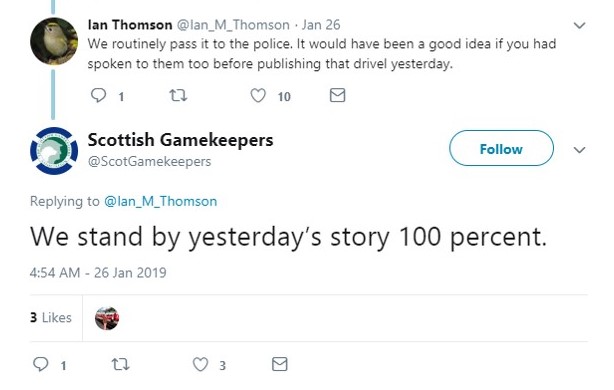
Despite being told “there isn’t a shred of evidence to support the claim that it [Saorsa] has reappeared“, the following day the SGA was still promoting its fake news on Twitter:

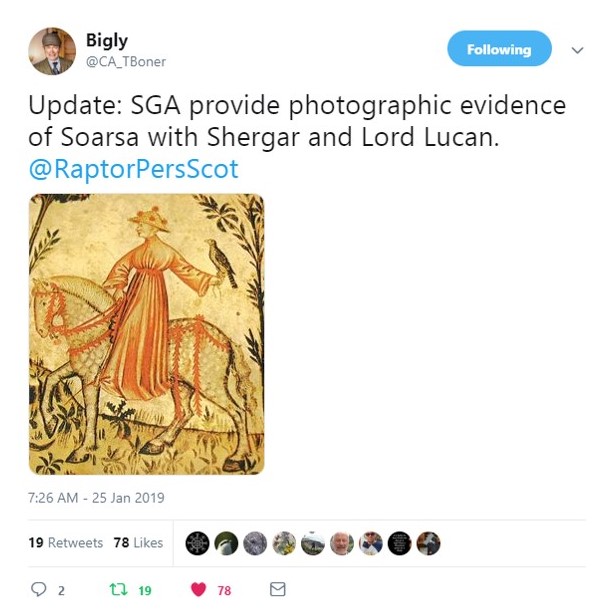
Other Twitter users offered equally conclusive evidence that Saorsa was alive and well, along with Shergar:

It’s also worth revisiting the SGA’s statement made when Saorsa was first reported missing last year, especially an extraordinary claim made by Bert Burnett of the SGA, who suggested that the RSPB had peverted the course of justice by finding Saorsa’s body and ‘secreting it away because it had died of natural causes’ (here).

On last Friday’s blog we said we’d return to the SGA’s latest press release about Saorsa to discuss some of the other inaccurate claims made about the satellite-tagging process. Many of the myths have been dealt with before, on this blog and elsewhere, and yet still the SGA churns out this guff, either too stupid to grasp the basics or deliberately trying to discredit the technology that’s revealing so much about the widespread extent of illegal raptor persecution.

So, here’s the SGA’s original press release (Friday 25 January 2019) and our commentary in italics:

GAMEKEEPERS SEEK ACCOUNTABILITY OVER SATELLITE TAGGED RAPTORS

Scotland’s gamekeepers are calling for accountability regarding satellite tags fitted to wildlife.

The call comes after The Scottish Gamekeepers Association learned that a tagged Hen Harrier, reported as disappearing ‘suspiciously’ in Angus last May, was re-sighted in Perthshire afterwards, according to investigators.

[RPUK: Nope, she hasn’t been “re-sighted” since she vanished in the notorious Angus Glens in Feb 2018].

Anti-grouse moor campaigners who owned the tag’s data publicly blamed the grouse industry, urging Scottish Government to license the sector.

[RPUK: Nope, the RSPB are not “anti-grouse moor campaigners”, they are simply calling for the regulation of grouse moor management. And nope, when Saorsa disappeared the RSPB did not “publicly blame the grouse industry” – the SGA has fabricated this claim – you can read the RSPB’s press statement about Saorsa’s disappearance in Feb 2018 here and you won’t find a single word of accusation against anyone or any industry].

However, no media statements were issued to correct the accusations, leaving local estate employees living with the burden of criminal suspicion.

[RPUK: No media statements were issued (by the RSPB) because, er, Saorsa is still missing from the Angus Glens. And again, to repeat ourselves, the RSPB did not make a single accusation against any industry, estate or estate employee when reporting Saorsa’s disappearance].

The SGA has also learned of a sea eagle currently flying around Grampian with a tag dangling from its body, potentially endangering its welfare.

[RPUK: Are we seriously expected to believe that the SGA is concerned over a sea eagle’s welfare?!! Isn’t this the group that has repeatedly lobbied for licences to enable the legal killing of this and other raptor species in Scotland? Ah yes, here. And isn’t this the group that’s lobbied the Scottish Government in abject hysteria about sea eagles potentially eating babies? Ah yes, here and here. And hasn’t this species been relentlessly persecuted on Scottish grouse moors, notably the victim of illegal poisoning (e.g. here), as well as having its nest tree illegally felled on an Angus grouse moor? Ah yes, here].

The female sea eagle, pegged with yellow wing markings and the letter ‘E’, has been spotted by concerned land managers.

In recent times, four golden eagles have also been independently photographed in the Angus glens with displaced tags; one clearly hanging from a bird’s neck.

Another eagle was observed in Perthshire last week with the bird’s feathers completely obscuring the tag; something manufacturers acknowledge will distort readings.

[RPUK: If a tag’s solar panel has been covered by a feather the tag won’t charge and the steady decline in battery voltage will be revealed in the tag’s engineering data. This means the tag operator can correctly identify battery drainage as the cause of the loss of data rather than the sudden and unexpected loss of data that is caused when someone kills the eagle and destroys the tag and hides the evidence of the crime].

Gamekeepers believe tags are now being deployed by campaigners as political weapons, aware there is no independent scrutiny.

[RPUK: Gamekeepers believe many things, such as white-tailed eagles being a threat to babies and toddlers, but it doesn’t mean there’s any truth in that belief. The SGA needs to read up on the strict regulations governing the deployment of satellite tags in the UK, which includes researchers quite rightly having to provide a proposal to the licensing authority that includes the detailed scientific justification for fitting a tag. Anybody seeking permission to fit tags as “a political weapon” will be laughed out of the door by the, er, independent scientific committee that scrutinises every single application].

Whilst the SGA is not advocating a ban, they believe Scottish Government must act to make fitting and monitoring of the devices accountable.

[RPUK: See above response]

An FOI to Scottish Natural Heritage by SGA revealed that the heritage body currently holds no information from satellite tags in Scotland, despite hundreds being operational.

Similarly, tag reliability cannot be independently verified as there is no duty for tag owners to disclose information regarding malfunction.

[RPUK: Incorrect. There is actually a duty for tag operators to report on tag status. In addition, concientious researchers are publishing data on tag malfunctions to enable tag manufacturers to constantly update and overcome any technical glitches in tag design. In addition, in the interest of transparency details of golden eagle tag malfunction were made publicly available in the Scottish Government-commissioned review in 2017. The number of tags known to have malfunctioned were insignifcant in relation to the number of tags that suddenly stopped and then vanished in suspicious circumstances, the vast majority of those occurring on driven grouse moors].

“At the moment, satellite tags are like the wild west,” said SGA Chairman Alex Hogg. “Anyone with funding can buy one, have it fitted to a protected bird, and retain its data. They can then release interpretations to the media, if the tag stops. We saw this with the choreographed ‘Fred the Eagle’ case near Edinburgh, which remains unexplained despite a concerted attempt to finger a grouse moor.

[RPUK: Incorrect. See above response on the rigorous licensing regulations for tag deployment in the UK. As for golden eagle Fred, we reported that he disappeared in suspicious circumstances right next to a grouse moor, in an area where other raptor persecution crimes had been discovered, just like all the other sat-tagged golden eagles that have disappeared in almost identical circumstances. We did not, at any time, accuse the grouse moor owner or his employees of any involvement. The SGA didn’t like the reports, which incidentally were all published with police approval, because Chris Packham’s involvement in the reports created a media storm. Too bad, the SGA had better get used to that – watch this space].

“Although tag fitters are approved, we have seen basic ‘granny knots’ used to fit tags and we have just heard of two tagged Harriers in Perthshire being killed by foxes within three days, with only one tag and body recovered. A tagged adult Harrier lost on National Trust ground this year was never found, neither was its tag, and a predated youngster was only discovered by chance. These are stories the public never hear and it is a shame they have to come out behind a veil of secrecy.

[RPUK: Could Alex Hogg explain how the SGA has been close enough to a sat-tagged raptor to identify a supposed ‘granny knot’? (The skilled fieldworkers who fit sat tags have had a long laugh about the depth of ignorance revealed by that claim, by the way). And as for Hogg’s claim that the public ‘never hear’ of tagged raptors dying from natural causes (it’s hardly news, Alex), perhaps he should pay more attention to RSPB blogs – here’s one from just a few weeks ago which, again in the interest of transparency, details, er, the natural deaths of several tagged hen harriers, but again these natural losses are heavily outnumbered by those that have vanished in suspicious circumstances on driven grouse moors].

“Despite claims these devices are almost infallible, failure rates and unexplained loss are high and there have been numerous examples of lost birds turning up alive or birds re-appearing miles or days from last tag signals.

[RPUK: These tags have a high rate of proven reliability but of course there will be a few exceptions to the rule  – nobody has ever denied that. The point is, these ARE exceptions to the rule and no matter how hard the SGA tries to deny it, the suspicious clustering of ‘missing’ tagged raptors, as repeatedly shown in the 2017 golden eagle sat tag review, is overwhelming evidence of continued widespread illegal persecution. We expect a similar pattern when the English hen harrier satellite tag data analysis is finally published (any time now?) and when the Scottish hen harrier satellite tag data analysis is finally published (hopefully soon). It’s strange that the SGA isn’t clamouring for these studies to be published].

“If this information was held independently, all this could be scrutinised transparently by experts and the relevant authorities could act accordingly.”

[RPUK: Er, the golden eagle sat tag data WERE scrutinised transparently by independent experts, and the relevant authority (Scot Gov) DID act accordingly by instigating a comprehensive review of grouse moor management and asking for recommended options for regulation, including estate licensing! Has Alex been smoking something?]

Late last year the SGA commissioned a legal opinion of SNH’s report into the fates of satellite tagged golden eagles, a paper which sparked the present review of grouse shooting.

[RPUK: Ah yes, the legal opinion that everybody dismissed, including the Scottish Government, not least because it was written by a lawyer with no scientific expertise].

The opinion, authored by QC Ronald Clancy, made a strong case for independent scrutiny of tags as the report relied entirely on manufacturer data for its conclusions.

“The present tagging system gives rise to accusation but no prosecutions.

“If tags are to be used to identify crime then the information must be held independently so it may lead to court action.

“If independent data monitoring makes things more difficult for people committing wildlife crime, that surely is in everyone’s interest,” added SGA Chairman Alex Hogg.

ENDS

It’s quite clear that the game-shooting industry, and especially the SGA, has spent considerable time and effort in recent years trying to undermine the satellite-tagging of raptors, either by launching disgusting personal & abusive attacks against those involved in the projects, or by arguing that raptor satellite-tagging should be banned because it’s ‘cruel’ and the tag data serve no purpose other than to try and entrap gamekeepers, or by claiming the raptors have been killed by imaginary windfarms, or by claiming conservationists have killed the raptors to set up gamekeepers, or by misapplying scientific results from failed saltwater turtle tags in the Indian Ocean to golden eagles in Scotland in the hope that nobody would notice! The industry knows how incriminating these raptor sat tag data are and so is desperately trying to do everything in its power to corrode public and political confidence in (a) the tag data and (b) the justification for fitting sat tags to raptors.

Fortunately, Scottish Environment Minister Roseanna Cunningham is no fool and neither is the public. Every time another satellite-tagged raptor disappears in suspicious circumstances, another nail gets hammered in to the coffin.

“They can hide the tags. They can hide the bodies. But they can’t hide the pattern“ (Dr Hugh Webster).

UPDATE 30 January 2019: A sketch from Mr Carbo

SGA’s claims about hen harrier Saorsa “completely false”, says RSPB

Further to our lunchtime blog (here) about the Scottish Gamekeepers Association fabricating a story about a supposed “re-sighting” of a satellite-tagged hen harrier (Saorsa) who disappeared in suspicious circumstances in the Angus Glens in February 2018, the RSPB has just issued the following press statement:

Ian Thomson, RSPB Scotland’s Head of Investigations said; “The SGA’s claims about the hen harrier “Saorsa” are completely false and are totally at odds with what the police have informed us today. This bird has been missing since February 2018, when it was reported to the police. There isn’t a shred of evidence to support the claim that it has reappeared, and its tag has not transmitted any data since the date of it vanishing in suspicious circumstances.

The SGA has refused to attend meetings of the Partnership for Action Against Wildlife Crime since the publication of the Scottish Government’s review of satellite tagging in May 2017, and has consistently refused to accept the findings of that review. Their repeated baseless attempts to discredit proven technology and question the reputations of respected scientists and Scottish Government reports are entirely due to the fact that the use of this technology is shining an increasingly bright light on the widespread criminality associated with intensive grouse moor management.”

ENDS

[Hen harrier Saorsa has not been since since she disappeared in suspicious circumstances in the Angus Glens in Feb 2018. Photo by Brian Etheridge]

UPDATE 28 January 2019: More on the SGA’s “completely false” claim that hen harrier Saorsa has been re-sighted (here)

SGA fabricates ‘news’ on missing sat-tagged hen harrier Saorsa

The Scottish Gamekeepers Association has issued a press release today claiming that a satellite-tagged hen harrier (named Saorsa) that disappeared in suspicious circumstances in the Angus Glens last yearwas re-sighted in Perthshire“.

This is a complete fabrication. We’ve spoken to the RSPB (who tagged this harrier) and they’ve confirmed that Saorsa remains ‘missing in suspicious circumstances’ with no reports of either a “re-sighting” or further data from her tag since it stopped working, suddenly and inexplicably, in February 2018 in the notorious Angus Glens. We expect the RSPB will be issuing a press statement to this effect in due course.

[UPDATE 25 Jan 2019: SGA’s claims about hen harrier Saorosa “completely false”, says RPSB (here)]

Later today we’ll be posting the SGA’s press statement in full and taking it apart line by line. As you might expect, it contains many inaccuracies (which is a generous way of saying malicious falsehoods) about the process of satellite-tagging raptors in Scotland and is designed to undermine and discredit the vast amount of damaging evidence these tags provide about the ongoing criminal destruction of birds of prey on Scottish grouse moors.

For now, this blog is a placeholder for those members of the press who have asked us for a comment about Saorsa’s supposed resurrection.

More shortly…..

[Photo of Saorsa as a nestling, by Brian Etheridge]

UPDATE 28 January 2019: More on the SGA’s “completely false” claim that hen harrier Saorsa has been re-sighted (here)