There’s nothing ‘draconian’ about licensing game shooting estates

There were a couple of articles published in the Scottish Mail on Sunday yesterday about the possibility (probability) of the introduction of game shoot licensing in Scotland.

The first article didn’t bring anything new to the story; it was just a re-hashed version of who’s said what since Cabinet Secretary Roseanna Cunningham announced a package of new measures to address the on-going problem of raptor persecution and unsustainable grouse moor management. Lord David Johnstone of Scottish Land & Estates talked about maintaining the status quo (i.e. no licensing scheme required), James Reynolds of RSPB Scotland talked about the necessity of introducing a licensing scheme because self-regulation by the grouse-shooting industry has failed, and an unnamed spokesman from the Scottish Gamekeepers’ Association talked about how licensing could have serious consequences for gamekeepers and their families. The two journalists who wrote the article described the Government’s proposed review as ‘the latest blow to landowners following draconian land reforms and the abolition of tax breaks’.

What ‘draconian land reforms’ are those, then? And why should multi-millionaire landowners, whose grouse moors are already subsidised by the public purse, be entitled to tax breaks?

Here’s a copy of the article, and for those who struggle to read it, here’s a PDF version so you can zoom in and increase the font size: MailonSunday1_July162017

The second article was a commentary column written by Carrieanne Conaghan, a gamekeeper’s wife who coordinates the ‘Speyside Moorland Group’ – one of several regional moorland groups closely affiliated with the Gift of Grouse propaganda campaign.

The headline begins: ‘As Draconian new land laws loom…’ These words probably weren’t Carrieanne’s but nevertheless, it’s clear from her commentary that estate licensing isn’t welcomed by gamekeepers because, she says, “For the vast majority of estates who have done nothing wrong and are resolute in their fight against wildlife crime, they would be penalised by strict new controls“.

Unfortunately she doesn’t explain why or how she things law-abiding estates would be “penalised by strict new controls“. The fact of the matter is, they wouldn’t be penalised at all, as the penalities would only be felt by those who continue to illegally kill protected raptors. And quite rightly so. Law-abiding gamekeepers, and their employers, have absolutely nothing to fear from the introduction of a licensing scheme, and you’d think they’d be welcoming it with open arms because if anything, it’ll protect them from being lumped in with the criminals.

Here’s the article and here it is as a PDF: MailOnSunday2_July162017

Carrieanne also claims that, “More worryingly, it [licensing] also brings the potential of gamekeepers losing their homes and livelihoods if a licence to operate was withdrawn“. This is just emotional scaremongering, probably encouraged by the same tosh spouted by SGA Chairman Alex Hogg earlier this year (see here). The only reason gamekeepers would potentially lose their homes and livelihoods would be if they’d broken the conditions of the licence and the subsequent withdrawal of that licence. That principle applies to everybody else in society whose activities are licensed. It’s the risk you run if, for example, you’re a professional driver and you commit road traffic offences leading to the loss of your driving licence. Why should gamekeepers be exempt from regulation when everyone else’s lives are governed by such rules?

Carrieanne claims that the licensing proposal has been brought about by “activists who object to the very existence of grouse moors, whether their opposition is based on a dislike of shooting or the ‘toffs’ who they believe are the only ones who participate“. Actually, the proposal was brought about by ordinary members of the public who are sick to the back teeth of criminal gamekeepers and their employers getting away with the illegal slaughter of protected wildlife, particularly on driven grouse moors.

Carrieanne claims that raptor persecution is “in decline” and that “tough new legislation has had a positive effect“. She also thinks, because her gamekeeper husband told her, that gamekeepers “desire to manage moorland for the interests of all species, whether it be grouse, ground-nesting birds, mountain hares or birds of prey“. Good grief.

She must have missed the Golden Eagle Satellite Tag Review, the findings of which were the final straw for Roseanna Cunningham and which led directly to the current proposition of a licensing scheme. She must also have missed the news that the hen harrier population continues to spiral downwards, thanks in large part to illegal persecution, and the news that peregrine populations continue to decline in areas dominated by driven grouse moors, and the news that the northern red kite population continues to suffer from the impact of illegal persecution on driven grouse moors, and the news that five prosecutions for alleged wildlife crime (all involving gamekeepers or their employers) have all been dropped in recent months, and the news that raptors continue to be illegally shot, even in recent weeks (see here, here) or illegally trapped (see here) on grouse moors up and down the country.

Did anyone see any gamekeepers or any moorland groups condemning these incidents? Where was their uproar? Where was their outrage? How many gamekeepers or members of moorland groups have provided information/intelligence to the police about any of these recent crimes? We’ll take an educated guess – none of them.

Carrieanne is right to be concerned about her family’s livelihood, but it’s not at risk from a licensing scheme, which is neither draconian or unnecessary; it’s actually a long overdue and pretty measured response to decades of criminality and unsustainable practices. Carrieanne’s livelihood is only at risk from those criminal gamekeepers and their employers who refuse to reform and continue to stick up two fingers to the law.

UPDATE 25 July 2017: SRSG response letter here

“Fiercest critic” yet to be fierce or critical

Back in January this year we wrote a blog about Conservative MSP Edward Mountain (Highlands & Islands) who had written a guest article for the Scottish Gamekeepers’ Association’s quarterly rag.

In that article, Mr Mountain wrote this:

I believe that challenging the ‘spectre’ [of land management reform] is vital, if the very countryside we all value and love is to be maintained. The way to do this is by standing tall and laying out a stall, for all to see the benefits positive management has to offer. The problem is that every time it looks like the right story is being delivered another case of wildlife crime comes to light. If there is any chance of moving forward we must stop these idiots, who believe illegally killing raptors is acceptable.

I therefore would urge all organisations that represent country folk to stand up and let people know all the good work that is being done for conservation. At the same time, they also need to vilify those that break the law.

Over the next 4.5 years I look forward to working with the SGA and I will do all I can to defend the values you and your members believe in. However, I must also say that I will be the fiercest critic of those that jeopardise these values by breaking the law‘.

Since January we’ve waited with anticipation to see this “fiercest critic” in action but we haven’t heard a peep from him on the subject of illegal raptor persecution, not even after the publication of the golden eagle satellite tag review which showed that one of the six significant clusters of suspicious eagle ‘disappearances’ was within his constituency (the grouse moors of the Monadhliaths to the west of the Cairngorms National Park).

So a couple of days ago, when Police Scotland announced an investigation in to the illegal shooting of a short-eared owl on the Leadhills Estate, we thought we’d ask Mr Mountain on Twitter for a ‘fiercely critical’ response. Instead we got this:

Watching carefully need the evidence“.

When we asked him why 50 recorded wildlife crime offences over a 14 year period wasn’t enough evidence, he said:

I will react when I have clear and legal proof to do so before would be irresponsible“.

So not so much the “fiercest critic”, but more the meekest observer.

If any of you are attending the Scottish Game Fair this weekend, you can probably catch Mr Mountain for a chat. He’ll definitely be there tomorrow (Friday), presenting the SGA’s Young Gamekeeper of the Year Award.

Scottish Gamekeepers’ Association’s response to eagle satellite tag review

We’re slowly making our way through the recently published Golden Eagle Satellite Tag Review.

What an incredible piece of research! It goes far deeper than answering the simple question, ‘Is there a pattern of suspicious activity surrounding the ‘disappearance’ of many satellite tagged golden eagles?‘ (Answer: an unequivocal YES). The authors, Dr Phil Whitfield & Dr Alan Fielding, deserve much credit not only for their forensic analysis and clarity of presentation, but also for the extent of their review, demolishing long-held myths about the supposed unreliability of satellite tags, the supposed harmful effect of satellite tagging golden eagles (at an individual and population level), and the notion that wind farms are responsible for the ‘disappearance’ of many satellite-tagged golden eagles in Scotland. If you have the time to read beyond the headlines in this review, you’ll be rewarded with some really useful information that exposes the grouse shooting industry’s interminable denial about what’s been going on, some of which we discuss below.

Last Wednesday, the day the review was published, the Scottish Gamekeepers’ Association responded with this official statement:

Statement (in full, as given to media early today): SNH Report into missing tagged eagles

A Spokesman for the Scottish Gamekeepers Association said: “Losing, on average, 4 tagged eagles per year across Scotland is totally unacceptable. The illegal killing of any eagle is condemned wholeheartedly by the SGA and all law abiding gamekeepers.

Although this study assimilates 12 years of evidence and makes difficult reading, it does acknowledge recent improvements in some grouse moors areas previously associated with suspected persecution. This change has contributed to the overall betterment of the golden eagle’s conservation status, as recently reported.

That said, problems clearly still exist in some hotspot areas and, in our view, this can only be tackled by all partners having access to the same telemetry data in order to arrive at shared and targeted solutions. If this had been happening over the past decade, there is a high likelihood these problems could have been tackled satisfactorily before now.

The SGA does not believe the report adequately tackles the threat wind farms pose to raptor species as there is a significant amount of published data from other countries which show a negative correlation between bird survival and turbine strike.

However, that is not an attempt in any way to detract from the report’s findings“.

END

The SGA says the report “made difficult reading“. It’s apparent, from their official statement, that the report also made for difficult comprehension (for them). They refer to recent improvements in some grouse moor areas which led to the golden eagle’s national conservation status changing from ‘unfavourable’ (largely due to illegal persecution) to ‘favourable’, as we blogged about here. However, what the SGA has conveniently forgotten to mention is the following statement from the golden eagle satellite tag review:

We also expect that there may have been some recovery in some parts of the central and eastern Highland regions where the species’ conservation status was previously unfavourable due largely to illegal persecution. These regions, however, still yield evidence of continued illegal persecution in parts, and so we would not expect recovery to the full capability of breeding birds being evident‘.

In other words, the recent improvements in some areas do not off-set the continued illegal persecution that is, quote, “still hampering overall recovery from historic, widespread persecution“.

The SGA does acknowledge that “problems still clearly exist in some hotspot areas” but then claim that “this can only be tackled by all partners having access to the same telemetry data in order to arrive at shared and targeted solutions. If this had been happening over the past decade, there is a high likelihood these problems could have been tackled satisfactorily before now”.

Eh? Are they suggesting that before the publication of this review, they were totally unaware of where these hotspot areas were? Talk about disingenuous. They’ve been made fully aware, for many years, of where these persecution hotspots are (some intensively managed grouse moors in the Monadhliaths, eastern Cairngorms, Angus Glens and parts of north Perthshire), through their participation in the PAW Scotland Raptor Group and also from widespread media coverage every time a sat tagged raptor has ‘disappeared’ or every time a raptor has been found illegally poisoned, shot or trapped in these, and other areas. Their feigned ignorance is ludicrous.

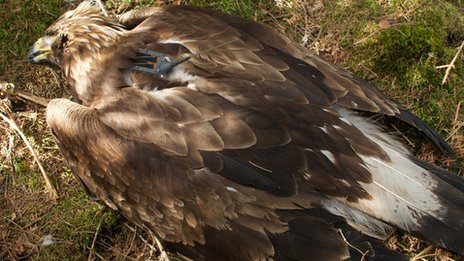
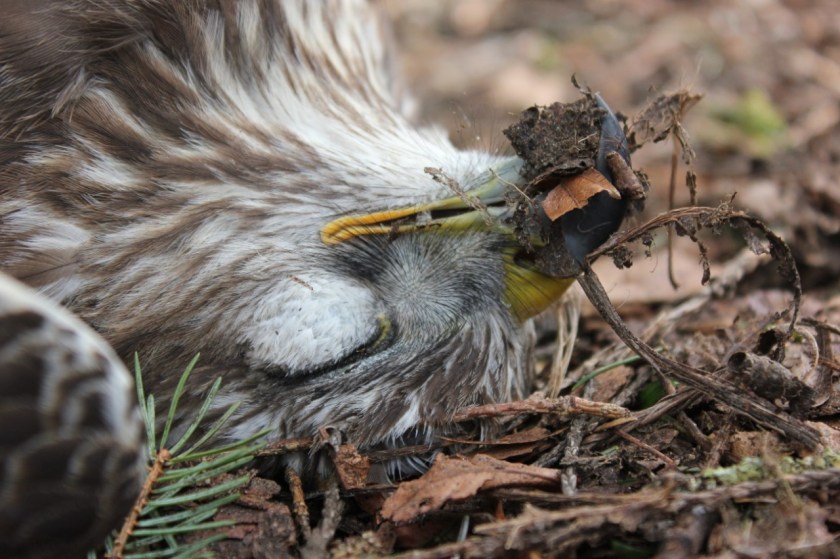
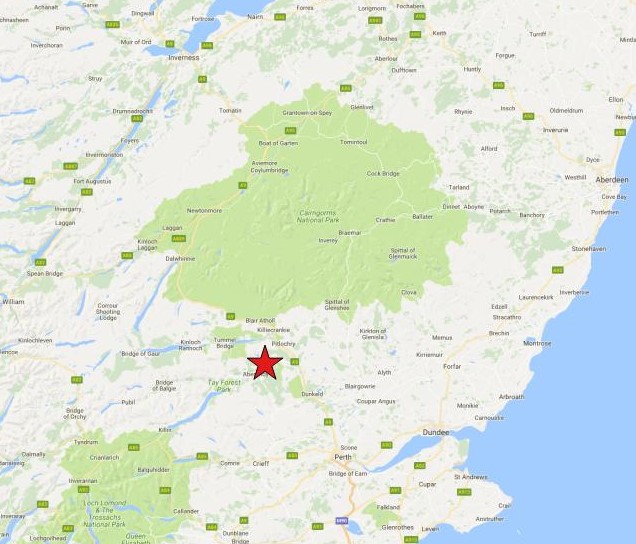
They argue that if they’d had access to the sat tag data, the illegal killing “could have been tackled satisfactorily before now“. How? By telling gamekeepers on the ground which tagged eagles are in the area so don’t shoot those ones? It’s worth remembering how the SGA reacted when they were given access to detailed information about one tagged golden eagle, that was illegally trapped on a grouse moor in the Angus Glens, suffering two broken legs as a consequence (both almost severed, according to the Golden Eagle Sat Tag Review), and then was moved, while still alive, in the middle of the night to be dumped in a lay by on Deeside 15km away and left to suffer an excruciating and miserable death (see here). Did the SGA accept the findings of the independent expert veterinary pathologist and come down like a tonne of bricks on the estate? No, they concocted the most outlandish explanation for what might have happened to that eagle and then slagged off the RSPB for suggesting a crime might have taken place (see here). If that’s the SGA’s idea of ‘tackling the problem satisfactorily’ then it’s no wonder the illegal killing continues.

Photo of the ‘Deeside’ golden eagle (RSPB)

This sat tag review has validated the long-held concerns of conservationists that parts of the grouse shooting industry are out of control, aided and abetted by the blind-eye turning of industry representatives, and this example is just one of many that shows the industry’s inability to self-regulate and why licensing is now very much on the cards.

The SGA’s response to the satellite tag review then comes back to one of their old favourites, wind farms. Not for the first time have wind farms been cited as being a more serious threat to Scottish raptors than illegal persecution (a myth we’ve debunked at least twice, see here and here). In the SGA’s latest statement it says:

The SGA does not believe the report adequately tackles the threat wind farms pose to raptor species as there is a significant amount of published data from other countries which show a negative correlation between bird survival and turbine strike”.

Dear God. Do they not understand that the potential collision risk of a wind farm will be calculated on innumerable variables (e.g. topography, altitude, wind speed, wind farm size, turbine size, species behaviour, etc etc etc) so just because a wind farm in one country has proven disastrous for some raptor species, it doesn’t then mean that all wind farms, wherever they are sited, are going to have the same negative impact. Of course there are issues, and these are well documented, but had the SGA bothered to read the in depth chapter on wind farms in this sat tag review, they’d have realised that wind farms have been ruled out for causing the ‘disappearance’ of so many satellite-tagged golden eagles. And not ruled out on a whim, but ruled out based on almost half a million location ‘fixes’ of 112 tagged eagles.

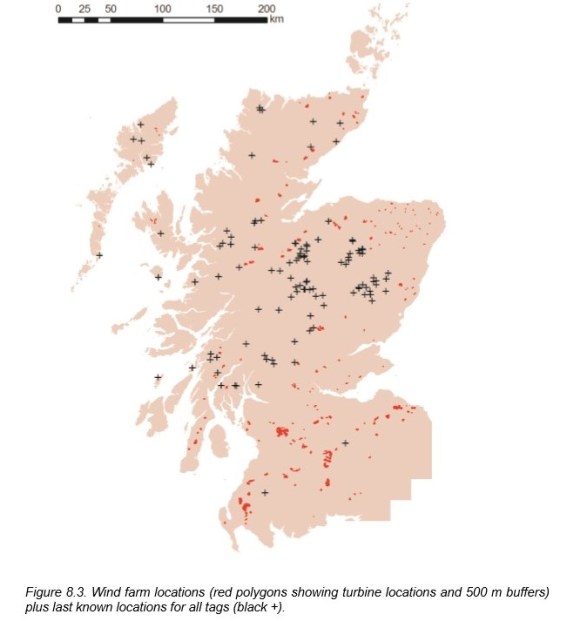
In fact, the review has more than adequately tackled the threat of wind farms to golden eagles in Scotland, and in addition to the review’s headline that ‘Wind farms were not associated with any recorded golden eagle deaths‘ the report also includes some startling revelations. Here are some direct quotes:

  • No ‘stopped no malfunction’ last fixes [i.e. abruptly ‘disappearing’ eagles] were within 1 km of an operational wind farm [see map below]. It is difficult to envisage a situation whereby a trauma sufficient to suddenly destroy a tag would allow a bird to travel afterwards for more than 1 km.
  • Moreover, records of tagged eagles close to wind farms were rare with only 0.005% of 360,711 fixes being within 150 m of an operational turbine. This indicated that even the risk of collision with a turbine blade was miniscule. Furthermore, it would add no support to a notion that technicians visiting turbines were discovering and then ‘covering up’ victims of collision, including moving dead birds away from the wind farm before, or then, curtailing the operation of the tag.
  • Overall, there was no evidence that wind farms were a direct or indirect agent of anthropogenic influence on the sudden tag failures of many young golden eagles. The reverse was more evidentially likely – that young golden eagles appeared to avoid operational wind farms.
  • Addressing the frequently heard accusation that wind farm technicians are removing and thereby ‘covering up’ the deaths of raptors that have been struck by a turbine blade, the report says: In Scotland this possibility seems remote given that: a) on incentive, the continued operation of no wind farm in Scotland is conditional on operational monitoring feedback in planning; b) technicians are not employed directly by the developer and are contracted independently by the turbine manufacturer and according to the projected lifespan of the wind farm; c) independent checks on reporting fatalities can be conducted at several wind farms by other contractors, and at least some developers (P. Robson pers. comm.) further blind-check these in staged exercises due to additional baseline legal requirements on environmental liability reporting; and d) many dead birds of prey (including tagged birds) have been routinely recorded incidentally by technical engineers and reported through several channels (e.g. Sansom et al. 2016, Urquhart & Whitfield 2016). In other words there are several checks and balances in Scotland to circumvent the possibility that carcasses of dead birds of prey would not be reported at wind farms and not disposed of once discovered (and even when relatively few birds will have been tagged). Nevertheless, our analyses were grounded to consider such a possibility; however remote.
  • Interestingly, and by contrast, from the many data sources we have received and examined, we are not aware of dead tagged raptors having being reported by managers or employees of game bird shooting estates in Scotland.

So, after trying to muddy the water with commentary about the potential impact of wind farms, even though the review has clearly shown wind farms are not implicated in the ‘disappearance’ of over 40 satellite-tagged golden eagles, the SGA’s official response to the sat tag review concludes with the line:

However, that is not an attempt in any way to detract from the report’s findings”. 

Really? That’s exactly what it looks like to us.

Presumably, then, now the SGA has been made fully aware of where the persecution hotspots are (certain grouse moors in the Angus Glens, Monadhliaths, eastern Cairngorms and north Perthshire), not to mention the other well-known persecution hotspots that didn’t feature in this golden eagle report (e.g. certain grouse moors in the Moorfoots, Lammermuirs and Lowther Hills), we can now expect to see the SGA setting up some ‘targeted solutions’ in these areas? Can’t wait.

Game-shooting industry issues joint statement on licensing proposals

Following this morning’s fantastic news that the Scottish Parliament’s Environment Committee has voted to recommend further exploration of a licensing system for driven grouse shooting, the game-shooting industry has issued a joint statement:

“We are disappointed that the committee voted narrowly in favour of a course of action which includes examining the possibility of a licensing scheme for game shooting in Scotland as a method of tackling wildlife crime, particularly at a time when the level of wildlife crime – according to government statistics – is at a historically low level.

“It is widely acknowledged across the political spectrum that only a tiny minority of people engage in wildlife crime and further regulation will impact on communities where game shooting is of vital social, economic and environmental importance. It was also demonstrated throughout the committee’s evidence sessions that licensing is not a definitive solution, with intolerable instances of crimes against birds of prey still existing in European countries with a licensing system in place.

“We are heartened by the fact that members of the committee today recognised the shooting community’s set of proposals which, if taken forward, could have a significant impact in helping to eradicate wildlife crime for good. That is the objective we all want to achieve and we believe that a potent combination of punishment and prevention is the most effective way forward. Significant progress has been made and this should be built upon.

“We have urged the government to adopt tougher penalties for those found guilty of wildlife crime, as outlined in the Poustie report. We would also like to see a formal due diligence package created for shoots accompanied by a new warning sanction for shoots under suspicion – a measure that would be developed under a strengthened PAWS partnership with more local focus.

“We look forward to discussing our set of proposals with the Cabinet Secretary at the earliest opportunity in the hope of devising a workable set of proposals that will hopefully deal with this issue once and for all.”

Scottish Land & Estates

Scottish Gamekeepers Association

BASC Scotland

The Scottish Association for Country Sports

The Scottish Countryside Alliance

The Scottish Moorland Group [Ed: which is actually part of Scottish Land & Estates]

ENDS

What’s fascinating about this response is that it has been prompted, not by the news of yet another poisoned, trapped or shot raptor being found on a game-shooting estate, nor the disappearance of yet another satellite tagged raptor on a game-shooting estate, nor the discovery of yet another poisoned bait on a game-shooting estate, nor the discovery of yet another illegally-set trap on a game-shooting estate, but in response to the now very real threat of a licensing system being introduced to regulate game-bird shooting.

Isn’t that interesting? That tells us an awful lot about the sincerity behind the industry’s set of proposed ideas for reform, which, as we said yesterday, merely seek to maintain the status quo. If the industry was actually serious about tackling raptor persecution, it would have done a hell of a lot more, a long time ago. It would have spoken out each and every time one of the above crimes was discovered, but instead, it has denied, obfuscated, shielded and defended its criminals and criticised the RSPB at every given opportunity. But now, faced with enforced regulation, the industry is trying to be seen to be as conciliatory as possible to reduce the severity of what’s coming its way.

But even with this latest statement, the industry can’t resist spinning the facts. Raptor persecution is not “at a historically low level” – far from it. It might appear to be that way because the criminals have become better at hiding the evidence, hence a decreasing ‘body count’, but the endless scientific reports, papers and surveys continue to point in one direction and one direction only – there are many within the industry who are still ‘at it’. There is zero prospect of the industry cleaning up its own act if it refuses to accept the extent of the criminality.

The statement also says that “further regulation will impact on communities where game shooting is of vital social, economic and environmental importance“. If the industry introduces sustainable management practices and stops breaking the law, it shouldn’t have any negative impact on local communities and might even draw in more tourists, and thus their money, resulting in a positive impact for local businesses. It’s pretty simple really.

The statement also says, “We are heartened by the fact that members of the committee today recognised the shooting community’s set of proposals which, if taken forward, could have a significant impact in helping to eradicate wildlife crime for good”. An important word is missing from this statement. Only SOME committee members recognised the shooting community’s set of proposals (three Tories and an SNP MSP), not the whole committee as the industry’s statement suggests. In fact, Mark Ruskell went out of his way to dismiss the industry’s new set of proposals and at the end of the meeting, when Convener Graeme Dey asked whether the Committee wanted to include the proposals in his letter to the Cabinet Secretary, Mark Ruskell again made it very clear that the Committee should not “endorse” the proposals but should merely “note” them.

Unlike the game-shooting industry, we are very encouraged by today’s decision, notwithstanding our concerns about how a licensing system would be monitored and enforced. However, today’s decision is very much a long-term plan. What we want and what we expect to see from the Cabinet Secretary over the last few weeks of this Parliamentary session is also a short-term plan, to run parallel with the licensing proposal. We need to see something that will clamp down with immediate effect on the worst offenders within the industry. We all know who they are, as does the industry, as do the Police, as does the Government. These criminals cannot be allowed to continue their lawlessness while we await the findings of a licensing inquiry, which will take months, if not years.

UPDATE 26 May 2017: Wildlife conservationists issue joint statement on licensing proposals (here)

Alleged buzzard poisoning Edradynate Estate: Crown rejects police plea to prosecute

In recent weeks the Crown Office & Procurator Fiscal Service (the Scottish equivalent of the Crown Prosecution Service) has abandoned three prosecutions for alleged raptor persecution: the shooting of a hen harrier on the Cabrach Estate (here), the setting of a pole trap on the Brewlands Estate (here) and the vicarious liability of a landowner whose gamekeeper was convicted of killing a buzzard on Newlands Estate (here).

The abandonment of all three cases, without a full explanation from the Crown Office, has caused widespread frustration, anger and concern.

Well guess what? Now there’s a fourth case.

In an article in this morning’s Sunday Herald, journalist Rob Edwards reveals that the Crown Office has refused a plea from Police Scotland to bring proceedings against a gamekeeper on Edradynate Estate in Perthshire in relation to the alleged poisoning of three buzzards (photo RPUK).

The details of this case are sparse. We do know that two poisoned buzzards were discovered close to the estate in March 2015 and that both tested positive for poison, according to the Government’s pesticide testing unit, SASA (although the name of the poison has been withheld). We also know that the police later conducted a raid on the estate although we don’t know what evidence was uncovered. Perhaps this was when the third buzzard was found? Presumably though, if Police Scotland has since pleaded with the Crown Office to pursue a prosecution, we can assume that the police believed there to be sufficient evidence to charge somebody. Surprise, surprise, the Crown Office has not provided an explanation for its decision not to proceed.

UPDATE 22 May 2017: Further details about this case have emerged from an article Rob Edwards has published this morning on The Ferret website –

The Procurator Fiscal received a report concerning a 66-year-old man, in relation to alleged incidents between 18 March and 4 June 2015,” said a Crown Office spokesman.

Following full and careful consideration of the facts and circumstances of the case, including the available admissible evidence, the Procurator Fiscal decided that there should be no proceedings taken at this time. The Crown reserves the right to proceed in the future should further evidence become available.”

Edradynate Estate has been at the centre of investigations for alleged wildlife crime for a very, very long time. In 2002, the estate’s Head gamekeeper and underkeeper were arrested and charged with nine offences relating to the use of poisoned baits and also bird cruelty, including the use of spring traps. However, on 22 July 2004, two years after the original arrests and 13 court hearings later, the Crown Office dropped the case (sound familiar?). A COPFS spokeswoman later admitted that the time taken to prepare the case had been a major factor in the decision to scrap it (see here).

In July 2010, a poisoned red kite was discovered. An un-named gamekeeper from the estate (who said he was a member of the Scottish Gamekeepers’ Association) claimed the bird had been ‘planted’. It also emerged that in addition to the poisoned red kite, over the previous 15 years, 9 buzzards, 2 sparrowhawks, 2 crows, 1 gull, 1 tawny owl, 1 pole cat, and 1 domestic cat, had all been found poisoned in the area. Twelve poisoned baits (Carbofuran, Mevinphos and Alphachloralose) had also been discovered (see here). Nobody was prosecuted for any of this.

In March 2011, two poisoned buzzards, two poisoned crows, and two Carbofuran-laced pheasant baits were discovered. A gamekeeper was taken for questioning but he was later released without charge (here).

In February 2012 an Edradynate Estate gamekeeper was charged with a number of alleged firearms and explosives offences (see here). However, in September 2012 the Crown deserted the case without providing an explanation (see here). Gosh, this is becoming quite a habit, isn’t it?

In March 2014, we revealed that Michael Campbell, the owner of Edradynate Estate, had made a generous donation to the Scottish Gamekeepers’ Association. We also published some astonishing commentary about the Estate written by the (now former) Tayside Police Wildlife Crime Officer, Alan Stewart (see here). This really is worth a read – it’s quite an eye-opener.

In April 2015, we revealed that Michael Campbell had made another hefty donation to the SGA (see here). Surely the SGA was aware of the long history of allegations made against this estate? Perhaps they didn’t care. As there hadn’t been a single conviction they could conveniently ignore the allegations and continue to accept the donations and continue to sit around the table at PAW meetings claiming to be doing all they could to eradicate raptor persecution.

And so now there’s yet another allegation to add to this catalogue of alleged criminality on Edradynate Estate. Ironically, the most recent alleged buzzard poisonings were discovered just a few weeks after the launch of the Scottish Government’s poison disposal scheme designed to rid Scotland of the poisons that had already been banned over ten years earlier. Yet another example of political pandering to criminal gamekeepers.

According to Rob Edwards’ article, the suspect in the most recent case has since left the estate. Interestingly, early last year we came across this advert for a new Head gamekeeper: Edradynate head keeper advert Check out the bit where it says “Nothing less than 40% returns will be expected”. Clearly there is pressure on the new keeper to deliver lots of game birds for shooting.

Edradynate Estate was recently featured in the Fieldsports magazine, with a detailed description [Update 2026: this link has since been removed by the magazine – you can find a cached copy of it here] of what happens on a shoot day. The author was there before the new head gamekeeper was employed. At the end of the article is a list of ‘guns’ (other people who were shooting that day). The name Robert Douglas-Miller jumped out at us. Surely not the same Robbie Douglas-Miller (owner of the Hopes Estate in the Lammermuirs) who runs the Wildlife Estates Scotland project for Scottish Land & Estates? What was he doing there given the long history of alleged raptor crimes uncovered on this estate? No, it must be a different Robert Douglas-Miller because a representative of Scottish Land & Estates, another PAW partner, wouldn’t be shooting on an estate that has repeatedly been described as being ‘among the worst in Scotland for wildlife crime‘, right?

So, let’s wrap this up. The Crown Office has previously dropped two prosecutions against gamekeepers on Edradynate Estate, and now has refused to begin a third prosecution for reasons that have not been made public.

This is the fourth prosecution for alleged raptor persecution that the Crown Office has dropped in the last month. We can’t seriously be expected to believe there’s nothing here to be concerned about?

Let’s see what response the Crown Office provides to the Scottish Parliament’s Environment Committee, who today have written to the COPFS to find out what the hell is going on.

And let’s hope SNH is paying attention and will be considering this estate for a potential General Licence restriction order.

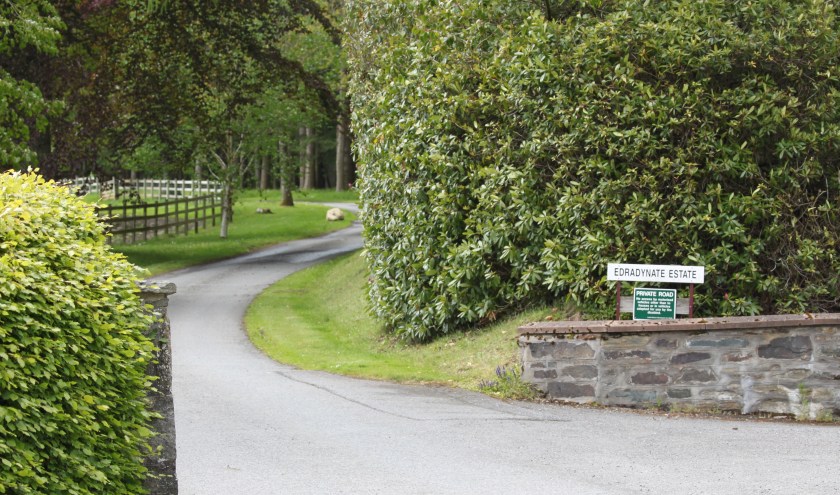
Photo of Edradynate Estate driveway by RPUK

Scottish Gamekeepers’ Association spits the dummy

According to an article in today’s Sunday Herald, the Scottish Gamekeepers’ Association (SGA) has thrown a hissy fit and is refusing to attend meetings of the Partnership for Action against Wildlife Crime (PAW) because the SGA ‘doesn’t trust’ wildlife campaigners.

Apparently the SGA hasn’t left PAW, but will not attend any more meetings until methods of partnership working have been reviewed.

An unidentified SGA spokesperson is quoted: “If the trust element is lacking, it makes it hard to sit around the table in a constructive way so hopefully these matters can be resolved“.

Ian Thomson of RSPB Scotland said the RSPB had tried for years to work collaboratively with the SGA to prevent raptor persecution, but “regrettably their approach has been to deny that these crimes are taking place, despite overwhelming evidence to the contrary“.

The SGA’s idea of partnership-working to decrease the number of raptor persecution crimes seems to have consisted of slagging off other PAW partners and making wild, unsubstantiated claims about who might be responsible for raptor crimes. In 2012 they suggested that Raptor Study Group members could be laundering eggs and chicks on the lucrative black market (see here). In 2015, SGA committee member Bert Burnett talked about setting fire to a group of peaceful campaigners at a Hen Harrier Day event (see here). Earlier this year, SGA Chairman Alex Hogg accused Raptor Study Group members of “driving [gamekeepers’] wives, children and grandchildren from their homes” (see here) and Bert Burnett accused Raptor Study Group members of causing raptors to desert their nests (see here). Just a couple of weeks ago (2 May 2017), Bert Burnett was on Facebook calling for landowners and gamekeepers to report licensed Raptor Study Group fieldworkers to the police if they hadn’t asked permission to access raptor nests (NB: there is no legal requirement for fieldworkers to ask for landowner’s ‘permission’ to visit open access land):

We would argue that the reason for the SGA’s refusal to attend PAW meetings is probably more to do with the impending publication of the raptor satellite tag review. The findings of this review are expected to be damning, showing that the vast majority of satellite-tagged raptors have either ‘disappeared’ or have been killed on land managed for driven grouse shooting. We suggest that the SGA has run away from its PAW responsibilities because the conversation at the subsequent PAW meeting that will discuss this review would throw up some very awkward questions. Very awkward indeed.

Good riddance to the SGA, as far as we’re concerned. Their only solution to solving human – wildlife conflict seems to be ‘kill it’. We’ve long argued that this particular partnership is nothing more than a sham, used by certain organisations to proclaim to the outside world that progress is being made when actually all that is happening is obfuscation and denial. Perhaps now with the SGA gone the remaining active participants of PAW can get on with making some real headway at these meetings.

Evidence session: petition to introduce gamebird hunting licensing

Last week the Scottish Parliament’s Environment, Climate Change & Land Reform (ECCLR) Committee held an evidence session as part of their consideration of the Scottish Raptor Study Group’s petition calling for the introduction of state-regulated licensing for all game bird hunting in Scotland.

The archived video of the session can be viewed here

The official transcript can be read here: ECCLR transcript gamebird shooting licensing 18 April 2017

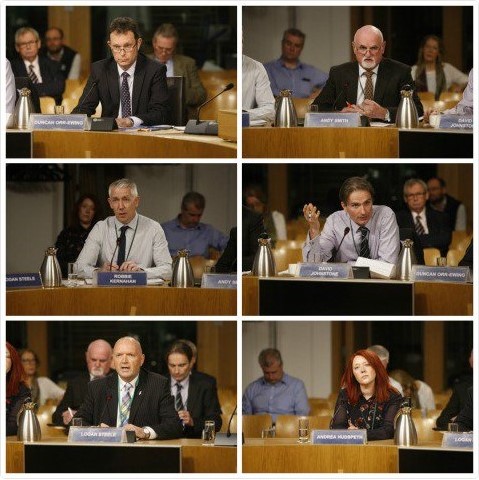
The evidence session was split in to two parts. The first part comprised evidence from the petitioners (Logan Steele & Andrea Hudspeth from the SRSG) and the second part comprised a panel of ‘stakeholders’ including Logan Steele, Duncan Orr-Ewing (RSPB Scotland), Robbie Kernahan (SNH), Andy Smith (Scottish Gamekeepers’ Assoc) and Lord David Johnstone (Scottish Land & Estates). (Photos from ECCLR webpage).

We’re not going to go through the transcript line by line because that would be tedious, but instead we wanted to comment on a few observations.

Unlike the evidence session held at Westminster last autumn, this was a civilised, unbiased hearing. That may be because, unlike the Westminster Environment Committee, none of the ECCLR Committee have a direct conflict of interest in the subject nor receive payment from any of the organisations represented by the witnesses. The Convenor of the ECCLR Committee (Graeme Dey MSP) was far more professional than his inexplicably rude Westminster counterpart, and although Mr Dey is known to support the propagandist Gift of Grouse campaign, his management of this evidence session was reasonably balanced and fair.

In the first part of the session, Logan and Andrea gave measured, thoughtful evidence about the continuing issue of illegal raptor persecution, supported by decades of scientific monitoring and peer-reviewed science. These two witnesses deserve much kudos. They are ‘ordinary’ members of the public, so exasperated by the failure of successive Governments to sort out this problem that they’ve been moved to exercise their right through the democratic process of petitioning the country’s decision-makers. As a result, they’ve been vilified on social media, exposed to a barrage of personal abuse from certain individuals within the game shooting sector, and yet here they were again, calmly and adeptly stating their case. We all owe them a massive vote of thanks.

The performance of the other witnesses was mixed. Andy Smith (SGA) is doubtless well intentioned but his ability to engage in the actual discussion is limited. He clearly had a list of points he wanted to get across, but blurting them out whenever he had an opportunity to speak, instead of listening to the question that was posed and reacting to that, didn’t help his cause.

Robbie Kernahan (SNH) didn’t say too much, and most of what he said was fairly standard SNH-speak (i.e. fence sitting), although he did make an important opening statement that should add some gravitas to the Committee’s future deliberations:

Generally, in Scotland, we have quite a positive message about the recovery of raptor populations from those all-time lows. It is certainly a national picture. However, that is not to say that there are not issues. Certainly, some of the concerns about the intensification of moorland management prompted our scientific advisory committee to have a review two years ago. Without wanting to go through that chapter and verse, I can say that there is no doubt that the on-going issue of raptor persecution is inhibiting the recovery of populations in some parts of the country“.

The evidence provided by Duncan Orr-Ewing (RSPB) and David Johnstone (SLE) was perhaps the most interesting. Duncan spoke with authority about the extent of illegal raptor persecution, saying the RSPB “thinks the situation is as bad as it has ever been“, while David flatly denied this, pointing to the annual ‘body count’ as his supporting evidence but completely ignoring the long-term population data, as published in peer-reviewed scientific papers. When asked by the Convener whether there was a possibility that culprits might now be better at hiding the evidence, in part pressured by measures such as the threat of vicarious liability, David’s response was “No“. No? Really? No possibility of that happening at all? Come on.

What made David’s response even more incredible (in the literal sense) was that SLE, as members of the PAW Scotland Raptor Group, have been made aware of the recent flow of scientific papers (e.g. on red kite, golden eagle, hen harrier, peregrine), all clearly showing population-level impacts of illegal raptor persecution, and as PAW partners, are supposed to have been advising their members accordingly. So how come the Chairman of SLE hasn’t been informed?

And on the subject of ‘possibilities’, much was made of the possibility of estates being ‘set up’ (i.e. someone planting evidence) if a licensing system was introduced. Both Logan and Duncan accepted that this was a possibility and they were right to do so. Of course it is a possibility, although on previous experience, the probability of it happening seems quite low.

In January 2012, just after the introduction of vicarious liability, David Johnstone was cited as saying there was a risk of estates being set up in response to the new vicarious liability measure. Five years on, there hasn’t, as far as we are aware, been a single case of an estate being ‘set up’.

Similarly, in November 2013, the then Environment Minister Paul Wheelhouse was asked during a Parliamentary Committee whether estates being ‘set up’ was a legitimate concern for landowners and gamekeepers. Wheelhouse responded that yes, it was a possibility, but that there wasn’t currently any evidence to support such claims, although a new study on trap interference was due to assess the issue. The results of that study showed that the illegal tampering of traps was not as widespread as the gameshooting industry had claimed (see here) and when it had happened, the interference mostly related to trap ‘damage’ (rendering the trap inoperable) as opposed to setting an illegal trap to infer a guilty responsibility on the estate.

There was quite a lot of discussion about what a licensing system might look like, and it was argued by Logan and Duncan that it should be based on the civil burden of proof (much like the policy used for General Licence restrictions) and that this should be a tiered approach, so that a number of incidents would be required before a licensing penalty was applied. David Johnstone was totally opposed to this, saying that the use of the civil burden of proof would be too much of a business risk. There was quite an amusing discussion about this between him and Committee member Mark Ruskell MSP, who argued that if the business was already fully compliant with the law, as David claimed, then the risk should be very low.

All in all, it was a useful evidence session and the ECCLR Committee will be hard pressed to justify not taking things further. The Committee now has to consider the evidence presented and decide on its next move. We may well have to wait until after 8 June to find out what that move might be, because thanks to the forthcoming General Election, no political or sensitive announcements or decisions are permitted during election purdah.

A few sandwiches short of a picnic

As we mentioned yesterday, some individuals within the game shooting industry have recently been doing their level best to discredit the work of raptor fieldworkers, and particularly anything associated with tagging raptors, be it leg rings, wing tags or satellite tags. As usual, their level best falls way short of the mark.

Some of it amounts to libel (so we won’t be discussing that here as legal action is being considered), some of it is quite disturbing (distributing images of children without parental consent and without any attempts to pixelate faces) and some of it is either a complete fabrication or a gross distortion of the truth. All of it is being done as a crude and cynical attempt to undermine the findings of the forthcoming raptor satellite tag review, which we anticipate will provide damning evidence of the extent of satellite tagged raptors that ‘disappear’ on Scottish grouse moors.

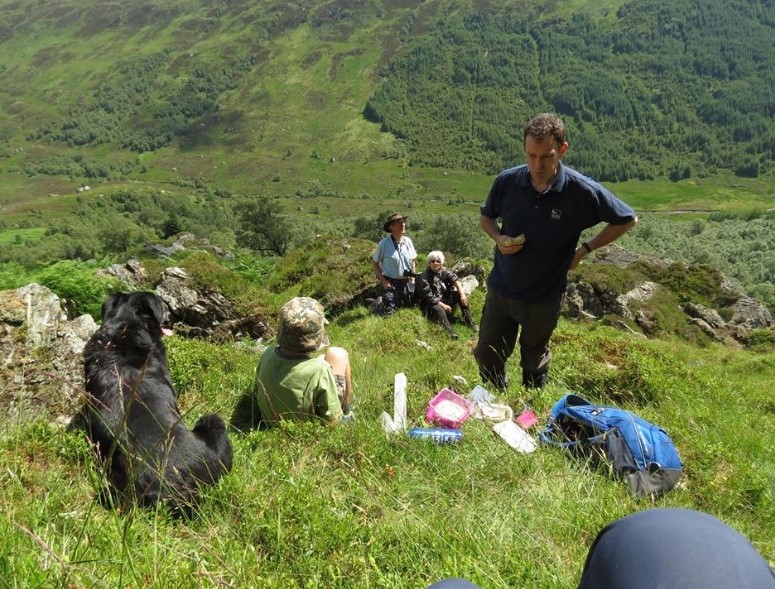
Here’s a good example of some of the propaganda being peddled by the game shooting industry. This photograph has been repeatedly posted on Facebook and other social media platforms as an example of ‘bad practice’ at a raptor tagging event. It shows a group of people at an eagle nest site in Perthshire in 2014. According to Bert Burnett of the Scottish Gamekeepers’ Association, who has posted this image several times, these people, including Duncan Orr-Ewing of RSPB Scotland, are “having a picnic underneath an eagle nest” for several hours and thus by implication are causing unnecessary disturbance at the site and causing the adult birds to desert.

What’s actually happening here is a group of people, including four licensed experts and their invited guests, have climbed to an eagle nest site and while the climbers have gone to retrieve the eaglet from the nest so its satellite tag can be fitted in safety on the ground, Duncan is eating a sandwich. That’s it. It’s a few sandwiches short of a picnic, or is that just Bert?

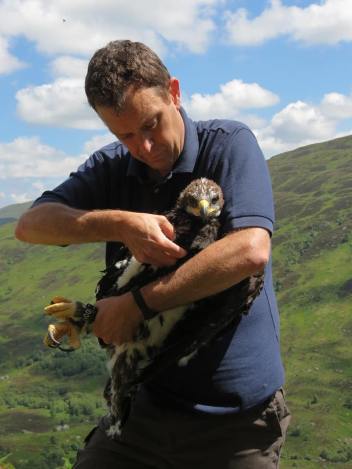
Another photograph that Bert has circulated was also taken at this site on the same day. It shows Duncan quite rightly checking the fit of the young eagle’s sat tag harness before the bird is put back in its nest.

This photograph elicited all sorts of comments on social media, with suggestions that sat tagging golden eagles is harmful to the birds, that it’s detrimental to their survival and one person even claiming that “they [the raptor fieldworkers] are a far greater threat to birds than any shooting interests“.

He posted another photograph (which we won’t post here for legal reasons) that shows a woman and her son on the nest ledge after the eagle had been returned to its nest. Bert said this about it: “What happens to birds after tagging is very questionable. Allowing your families and friends to climb up intae the nest just for photo shoots is totally out of order and shows no concern for the birds future welfare“. On a later post he also claimed the woman had been “hoisted in to the nest“. What the photo actually shows is a Schedule 1 licence holder and her son who have just climbed to the nest to return the eagle after tagging. It’s probably hard for Bert to comprehend that a woman might actually be a Schedule 1 licence holder and that she’d be capable of climbing to the nest without being “hoisted in” (surely her breasts would get in the way?) but when your mindset is firmly stuck in the 18th century then it’s probably no surprise at all.

As for Bert’s comment, “What happens to birds after tagging is very questionable“, well, it’s not questionable in this case. This eagle was satellite tagged in Perthshire in 2014. The bird fledged successfully and its movements were tracked until 2016 when its tag signal suddenly stopped transmitting and the eagle ‘disappeared’ on a grouse moor in Perthshire. We’d respectfully suggest that this eagle’s disappearance (probable death) was not caused by Duncan eating a sandwich at its natal site two years earlier nor by it being put back in to the nest by a woman, but was more than likely caused by illegal poisoning, illegal trapping or illegal shooting on or near a grouse moor in the Highlands.

A week ago, Bert again posted the photograph of Duncan eating a sandwich and he wrote the following on his Facebook page:

Once again, Bert hasn’t checked his facts. This eagle territory has NOT been deserted since Duncan and his colleagues safely fitted the satellite tag to the young eagle in 2014. On the contrary, the breeding pair has remained on territory and produced chicks every year since. In fact last year’s chick, ‘Freya’, was seen by millions of viewers as she was filmed being satellite tagged for the BBC’s SpringWatch programme!

Now, we can take the mick out of Bert all day and as long as he continues to spout nonsense we’ll continue to call him out – it’s actually quite enjoyable and he’s helping our cause no end. But there’s a darker side to what’s going on, with the targeted harassment of certain named individuals, and we’ll be blogging about that shortly.

In the meantime, have a look at a blog written by Duncan today (see here) for a more serious view on raptor tagging procedures and also check out this statement from the BTO which details the stringent requirements that must be met before anyone gets a licence to ring and tag birds in the UK: Overview of BTO Ringing Scheme training and licensing procedure

UPDATE 30th September 2020: The eagle’s satellite tag found in the river: poetic injustice (here)

Environment Secretary’s message to Scottish gamekeepers re: raptor persecution

roseanna-cunninghamLast week, Environment Cabinet Secretary Roseanna Cunningham gave a speech at the Scottish Raptor Study Group’s annual conference, where she described, with feeling, her ‘contempt‘ for the continued illegal persecution of birds of prey (see here).

Her speech was warmly welcomed by those in the audience and many were hoping she would deliver the same message when she spoke at the Scottish Gamekeepers’ Association AGM, six days later on 3 March.

It seems as though she did. According to this article in the Courier, her speech to the SGA was similarly-worded and hopefully it was delivered with the same strength of feeling she gave at the SRSG conference.

Here are some quotes from her SGA speech:

Not only are you valuable eyes and ears in the Scottish countryside, but you are stakeholders in the Partnership for Action Against Wildlife Crime, with a vital role to play.”

We also need to continue to work together to change attitudes and every person in this room can help“.

The successful reintroductions of red kite and white-tailed eagle, and the recent 15% increase – which is in real terms a recovery – in golden eagle numbers, from the results of the last national survey – is welcome progress“.

For many people seeing these magnificent birds is a rare event. Many of you here today are in the fortunate position of seeing them regularly and I envy you that“.

Unhappily however the illegal killing of raptors is still with us“.

I have no patience at all with old fashioned attitudes towards these birds that linger on in this day and age. We all have to abide by the law, and must do so every day“.

I have no truck with any excuse that raptors damage driven grouse shooting interests – such damage is a business risk that grouse moor owners have to live with, and manage for – and this has to be done within the law“.

I note and welcome your chairman Alex Hogg’s reiteration of the pledge to ensure SGA members only consider legal routes to conflict resolution and he has made it clear that those committing wildlife crime will be removed from the SGA.

Although it looks like she didn’t go as far as directly pointing the finger at the SGA, it is to be hoped that the sub-text was clear enough to have some people squirming in their seats.

As several commentators have mentioned on this blog, although the Environment Secretary’s words were welcome, we have heard them all before, not only from her but also from three previous Environment Ministers, and yet raptor persecution continues. For now though, we’re cautiously giving Roseanna Cunningham the benefit of the doubt.

Yes, her words to the SGA are a big improvement on the words her predecessor gave to the SGA (see here) and yes, she’s bought herself and the Scottish Government a bit more time with these two speeches, but society’s patience is not limitless. We expect to see further measures enacted, and soon. There will be a lot of attention placed on the Cabinet Secretary’s response to the recently-published game bird licensing review, the forthcoming review of satellite tagged raptors, and the decision on whether to give increased investigatory powers to the SSPCA.

There’ll also be a great deal of attention paid this year to whether SNH grants licences to gamekeepers allowing them to kill protected raptors and if so, on what grounds? Roseanna has been clear that any perceived damage by raptors to grouse moor management should be a ‘business risk’ that has to be ‘managed within the law’. The SGA will no doubt argue that applying for licences to kill raptors would be ‘managing the business risk within the law’ and technically, they’d be correct, in as much as the provision is there to apply for such licences but whether protecting artificially high numbers of game birds is justification for legally killing protected raptors, especially when illegal raptor persecution continues, is an argument that will dominate MSPs’ inboxes if licences are given this year.

Interesting times ahead.

Scottish Gamekeepers chairman attacks Raptor Study Group

hogg-shiteAlex Hogg, Chairman of the Scottish Gamekeepers’ Association, has a long track record of talking out of his backside.

Previous missives directly attributable to the SGA’s esteemed leader have included lines such as, “Professional gamekeepers do not poison raptors” (here), “It is unfair to accuse gamekeepers of wildlife crime” (here), “In the last ten years we have stamped out poisoning” (here), “We kill animals because probably we’re the doctors and nurses of the countryside” (here) and, when asked whether gamekeepers are involved in the poisoning, shooting and trapping of raptors: “No they aren’t. We would dispute that” (here).

In the latest edition of the Shooting Times, he accuses the Scottish Raptor Study Group of ‘driving [gamekeepers’] wives, children and grandchildren from their homes‘. Here’s part of the article to provide the context to his claim:

One of the reasons the SGA was set up was to stop the police raiding our houses without proper evidence of wrongdoing. Wives and children were being subjected to dawn raids, houses were being pulled to pieces; in some cases children’s cough mixture was confiscated in case poison was being hidden in the bottle.

Hopefully these bad old days are gone. The SGA has worked extremely hard with our members to drive the poisoning incidents almost off the map. We have been very successful and last year it looks as if we had only two incidents of poisoning that involved a raptor. If the police had these results in any other form of crime it would be in all the news media for months.

Still, all we hear from the RSPB is that this can only be the tip of the iceberg. The Scottish Raptor Study Group, along with the RSPB, has launched a petition calling for the licensing of Scottish shooting estates. This group has been publicly funded since inception and has taken access on estates for years without even having to inform the keeper or landowner. In this regard it is unaccountable as it can log whatever it wishes, with little or no checks or balances on the process or the effects of its monitoring.

It seems strange that a group lacking in accountability is calling for shoots to be licensed. We will not stand by and allow double standards to drive wives, children and grandchildren from their homes. Everybody who works and lives in the countryside must now be wary that compliance with such organisations, sadly, is compliance with people who are attacking our jobs and way of life. It should never have got to this stage.

If the SGA had not been formed 20 years ago, what we live for would have been swallowed up by different government bodies. Some people hate the truth, but we will always tell it. It is that honesty which has gained us the respect that we have’.

ENDS

It seems that Alex hasn’t read the Scottish Moorland Group’s recently proposed ‘four point plan‘ for eradicating illegal raptor persecution, as presented to the Scottish Parliament’s Environment Committee last December. Point four was, “We would very much like to see greater cooperation between ourselves, the Raptor Study Groups and the RSPB“. Oops.

A few other points for Alex to consider:

  1. The police are not allowed to raid houses on a whim. They first have to apply for a search warrant from a Sheriff (via the Crown Office) and this will only be granted if there are reasonable grounds to assume that evidence of criminal activity may be uncovered during a search.
  2. It’s no surprise if children’s cough mixture has been confiscated during a raid. It has not been uncommon to find illegal poison stored in everyday household containers (particularly coffee jars!) and on at least one search a banned, highly toxic poison was found in a container on a shelf within a child’s reach.
  3. Raptor persecution has not stopped. Poisoning reports may have dropped, but other methods (particularly shooting and trapping) have not. Stop pretending otherwise.
  4. Members of the Scottish Raptor Study Group, just like every other member of the public, are entitled to access land without having to inform the keeper or landowner. Get over it.
  5. Members of the Scottish Raptor Study Group are individually licensed to visit the nests of Schedule 1 birds. They are accountable for their actions as they have to submit data returns to the Government’s licensing authority on an annual basis as a condition of the licence. If you want to discuss unaccountability, contrast this licensing regime with that of gamekeepers, who are not individually licensed and do not have to submit annual returns detailing any of their activities, which mostly involves killing wildlife.
  6. It’s not clear to us how launching a petition calling for a licensing scheme for gamebird shooting is going to ‘drive wives, children and grandchildren from their homes’. What will drive them from their homes is if gamekeepers get caught illegally killing raptors and lose their jobs (and tied house) as a result of a conviction.
  7. The SGA is supposedly a partner organisation in the Partnership Against Wildlife Crime (PAW), and notably, the PAW Raptor Group. Quite how publicly slagging off and warning SGA members to be wary of cooperating with another PAW partner (the Scottish Raptor Study Group) is evidence of good partnership working is beyond us. Perhaps the SGA will be asked to explain this at the next PAW Raptor Group meeting.

Alex’s article also touched on some other issues, including how the SGA is this year going to push for the Scottish Government to issue licences to ‘control’ (kill) protected species such as badgers, buzzards and ravens. He mentions that Environment Cabinet Secretary Roseanna Cunningham will be a guest speaker at the SGA’s annual conference in March and how staff members from SNH’s licensing team will also be in attendance to answer questions about this issue.

Interestingly, this subject was raised during Roseanna Cunningham’s address to the Scottish Raptor Study Group’s annual conference last Saturday. If she tells the SGA conference what she told the SRSG conference, there’ll be tears at bedtime for Alex and his wildlife-killing colleagues. (We’ll be blogging about the Cabinet Secretary’s speech to SRSG members in the next day or so, highlighting several points she made about raptor persecution and her full endorsement and gratitude for the “dedicated high quality fieldwork” of the SRSG).

Here is a copy of the Shooting Times article in full: alex-hogg-article_shooting-times_23feb2017