The Yorkshire Dales National Park Authority (YDNPA) held a Board meeting earlier this week to discuss proposals for determining several ‘priority species’ that need additional help to thrive within the National Park.
The draft list includes a number of raptor species, including hen harrier, red kite and peregrine. There is a long and well-documented history of the persecution of all three species within the Yorkshire Dales National Park and the neighbouring Nidderdale AONB in areas dominated by driven grouse moors (e.g. see here and here) so it’s no surprise to see these three species highlighted as needing additional conservation measures.
Photo by Ruth Tingay
The YDNPA meeting on 13th December started with a presentation by Dr Tony Serjeant, the Senior Wildlife Conservation Officer, outlining the Authority’s proposals and then Board members were invited to comment and ask questions of YDNPA staff, prior to a vote.
The comments of two Board members, Councillor Yvonne Peacock and farmer Allen Kirkbride, were astounding. And I mean absolutely gob-smacking in the extent of their ignorance. That these two individuals should be considered competent to serve on the YDNPA Board to discuss matters of environmental significance is extremely worrying. I don’t doubt that they have important experience and expertise in some other areas, but their ecological illiteracy is just embarrassing.
Some of the comments were picked up and published in an article on the website Richmondshire Today (here) but it’s worth listening to them in full and in the context of the wider discussion. Fortunately, the YDNPA records its meetings and an audio recording of this particular discussion can be heard here.
First up was Councillor Yvonne Peacock, speaking about the inclusion of the house sparrow on the list of potential priority species (recording starts at 23.25 mins):
“We’ve got the house sparrow there, and yet we’ve got these great big sparrowhawks that take every garden bird imaginable, no doubt the house sparrow as well. How do we actively, you know, preserve these birds when we have like a conflict in, well the Government’s law I should say, I just find that it is so difficult, so, that’s probably my ignorance, but it’s just a question really”.
Then we had Wensleydale farmer Allen Kirkbride, responding to Tony Serjeant’s comment that raptor persecution in the National Park needs to end, and highlighting that although red kites have been seen prospecting and flying over the National Park, there still aren’t any records of breeding attempts (recording starts at 34.23 mins):
“Hen harriers, John, is it true that there’s certain [inaudible] they breed them and let, er, I think there was four hen harriers, and let them go [Ed: I presume he means hen harrier brood meddling]. The story is that two of them were later traced to the south of Spain, another one to the south of England, and another one disappeared. The thing is about letting these birds of prey go, especially hen harriers, it’s not natural country for them, we’ve never had hen harriers up here. You can introduce them but obviously they don’t want to stay. It’s fine making, you know, a lot of noise about hen harriers but they don’t, you know, you can let them go but if they don’t want to stay they won’t stay.
Earlier this year, red kites, we did have round us up to eight and it was quite a sight, but they’ve all flown off elsewhere and you know, I don’t, you know, they say all this PR, somebody’s [inaudible] with them, I don’t think they are, I just don’t think they want to stay around this area ‘cos it’s not natural area for them, and they just fly away, on, you know, to their own accord”.
Christ on a bike! Can somebody please educate Mr Kirkbride about hen harrier dispersal strategies? And about the extent of raptor persecution inside the Yorkshire Dales National Park. Ironically, this Board meeting took place one day before North Yorkshire Police issued the appeal for information about four hen harrier chicks that had been stamped to death in their nest, on a grouse moor, inside the National Park.
All credit to Dr Tony Serjeant, who managed to respond to both Board members without any hint of frustration. There were strong similarities to the Cairngorms National Park Authority Board meeting I blogged about last year (see here) where CNPA staff had to deal with some near-hysteria Board members’ responses when they learned that tackling intensive gamebird management was in the Park’s plan.
Tony Serjeant also told Mr Kirkbride that hen harriers were currently breeding in the YDNP but he only had figures from about two years ago. He said he couldn’t provide details of the current status of hen harriers in the Yorkshire Dales National Park because “Natural England seems to be rather reticent in letting us have the latest [hen harrier] figures for what’s going on, and that’s a little bit disappointing“.
Perhaps Natural England only provides data to organisations that have ‘donated‘ some cash??
Anyway, the outcome of the YDNPA Board meeting was that the approach taken to identify the priority species was approved by the Board and a final list will be published in June 2023 (see YDNPA press release here).
Forestry and Land Scotland (FLS) has granted a controversial licence permitting Moy Estate gamekeepers, and others from the Three Straths Fox Control Association, to hunt and kill foxes on Scotland’s national forest estate, partly for the benefit of privately-owned grouse shooting estates, including Moy Estate.
This is the same Moy Estate that has been at the centre of police investigations into alleged raptor persecution crimes for over a decade (e.g. see here) and is currently serving a three-year General Licence restriction, imposed by NatureScot, after evidence of wildlife crime (raptor persecution) was again uncovered on the estate.
This is a map I produced a few years ago showing reported raptor persecution incidents in the region between 2005-2016. There have been many more since.
Wildlife campaigners are understandably furious about this decision, not least because FLS’s own experts strongly advised against it due to, amongst other things, the potential for illegal activity.
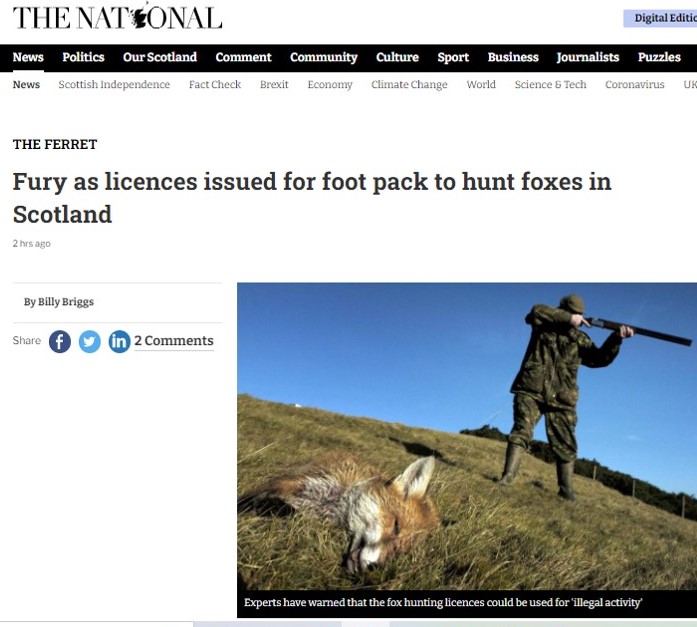
Journalist Billy Briggs has written an excellent article, based on Freedom of Information responses I received this autumn. His article is published today by The Ferret (here, behind a pay wall) and also here in The National, as follows:
LICENCES for a foot pack to kill foxes were issued by Forestry and Land Scotland despite strong objections from internal experts who feared there was potential for “illegal activity” and protected species such as badgers to be disturbed.
A foot pack – in contrast to traditional fox hunting with riders on horses – is where a huntsman, accompanied by colleagues acting as beaters, uses hounds to chase foxes out from cover to then be shot.
Critics who want hunting with packs of dogs banned in Scotland are urging Scottish Government ministers to outlaw foot packs as well as mounted hunts.
The Ferret previously revealed that foxes were being chased by hounds and shot by foot packs in forests used by the public.
Our investigation prompted angry responses from wildlife groups who have condemned Forestry and Land Scotland (FLS) once again for issuing more licences. FLS is responsible for managing and promoting Scotland’s national forest estate.
A freedom of information request was submitted to FLS by campaign group, Raptor Persecution. The reply revealed internal discussions at FLS in September and October after Three Straths Fox Control Association (Three Straths) applied for licences for fox control in the south Inverness area.
The documents, passed to The Ferret, showed that FLS experts strongly advised against the foot pack being allowed to hunt.
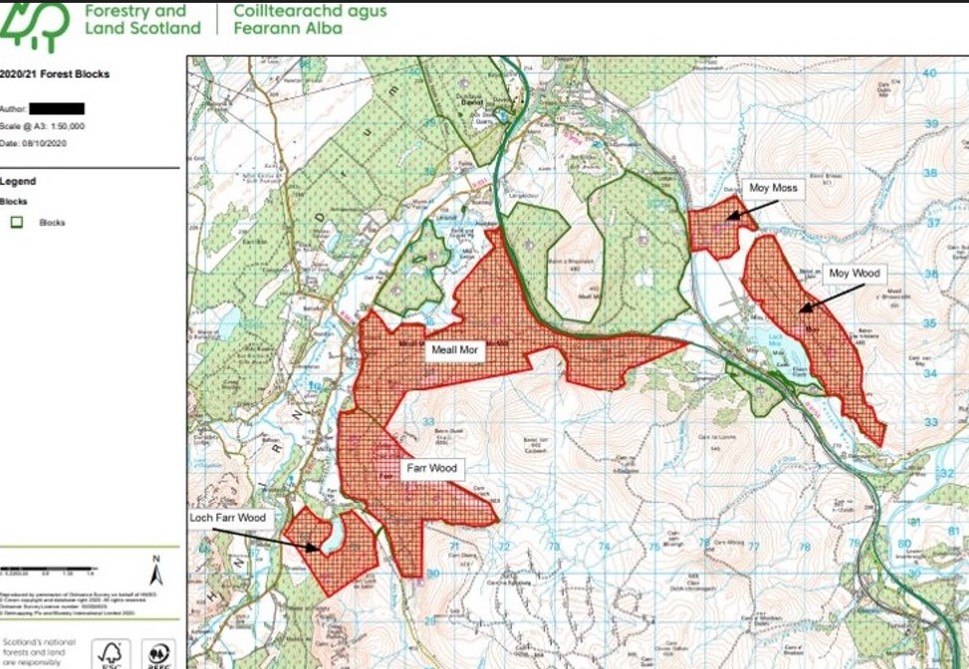
Map showing the woodland where FLS has permitted the hunting & killing of foxes during the 2022-2023 season. Released to RPUK under FoI.
The licences were issued, however, prompting condemnation by critics. They included the League Against Cruel Sports Scotland which said it was “quite staggering” FLS granted permission in the face of “vehement concerns” by its own staff.
In reply, FLS said it appreciates that fox control is a “contentious issue” but under existing legislation the activity is legal in Scotland and “closely regulated”.
Three Straths told The Ferret it always adheres to the law to “ensure public safety and to avoid non-target species”, adding that it provides a “public service at no cost to the public purse”.
The licence application said Three Straths represented a “number of sporting estates” seeking to hunt foxes on the Moy, Farr, and Dalmagarry estates. Each hunt would typically involve 30 people including local gamekeepers, 20 to 30 guns, 15 hounds and a huntsman.
The hounds are used to flush the fox from cover to a line of waiting guns where the animal is shot.
The foot packs are overseen by a wildlife team at FLS, but some staff still opposed Three Straths’ application.
Internal documents revealed one person wrote: “As a minimum we should request a protocol for how the operators (the foot pack) will deal with encounters with protected species. This was asked for at the last permission request but I have not yet seen it. As discussed before, without this I feel the activity cannot be done without potentially disturbing legally protected species and could lead to an illegal activity.”
They added: “As this is a known activity any disturbance could be classed as reckless under the law and would constitute an offence. FLS as the landowners would also be liable for allowing the activity to take place. Given the risks, lack of mitigation information and lack of rationale for why the activity is needed, I would strongly advise it is not allowed.”
Another expert — a species ecologist — also objected and wrote: “As I [sic] have pointed out several times previously, fox ‘control’ at this time of year has no impact on fox density the following spring. This is a matter of scientific fact. If the intention is to reduce (assumed) fox impacts on the shootable ‘surplus’ of grouse in 2020, it is a pointless exercise.”
They added: “Furthermore, I am not aware of any evidence that these foxes actually eat game birds on adjacent estates. To sanction this controversial activity without any evidence of an actual problem is inadvisable. For the record, and for the reasons I have listed in previous communications, I reiterate my advice that we should not give permission for this activity.”
It was also noted that internal concerns had been raised in previous years regarding requests by Three Straths to hunt, which were “not adequately addressed”.
Staff also pointed out that foxes are “part of the forest ecosystem” and “we should not be unsustainably removing any native species”. They said: “As we have no idea of the current population (no surveys have been undertaken) then effectively this could extirpate foxes on our land. We know foxes play a valuable role in keeping populations of other predators in check and in reducing rabbit and hare populations, thereby reducing damage to restock sites.”
Concerns were also raised over public safety and “verbal assurances” given by Three Straths that hounds would only chase foxes. There was a “real risk” that a bolting fox could go down the entrance to a protected species den or sett to escape the dogs, it was noted, and people firing guns on a badger sett “would be a disturbance in itself”.
Dr Ruth Tingay, of Raptor Persecution, who submitted the freedom of information request, pointed out that Moy Estate is currently serving a three-year general licence restriction, imposed by NatureScot, for wildlife crimes against birds. Moy Estate reportedly said it was extremely disappointed by the decision and would be considering an appeal. [Ed: Moy Estate has already lost its appeal against the General Licence restriction – see here].
Tingay said: “The rationale behind the restriction is that NatureScot can no longer trust Moy Estate to comply with the terms of the general licences after evidence of raptor persecution was provided by Police Scotland.
“So why on earth has FLS entrusted Moy Estate to comply with the terms of a licensed fox hunt, in a public forest, with what looks like minimal oversight and scrutiny? Don’t these licensing agencies talk to one another?”
Bob Elliot, director of the animal welfare charity, OneKind, argued that FLS fox control policy should reflect the views of the Scottish public who “overwhelmingly do not support fox hunting”.
He added: “It is incredibly disappointing to see that once again, despite several serious objections raised internally by Forestry and Land Scotland staff, FLS has granted permission to allow foot packs to kill foxes in Scotland’s public forests this winter.
“We know from our previous freedom of information requests to FLS that many of the concerns raised by FLS staff, including the non-necessity of fox hunting foot packs, the importance of foxes to the ecosystem, and the threat to other wild animals, have in fact been raised before.”
His views were echoed by Robbie Marsland, director of the League Against Cruel Sports Scotland, who said it was “quite staggering that despite vehement concerns” the licenses were issued.
He added: “The situation at FLS is yet another reason why it is imperative the new Hunting with Dogs Bill passes through parliament in the most robust form possible, ensuring hunting with dogs is really banned in Scotland once and for all.
“The existing legislation is so full of loopholes it isn’t worth the paper it’s written on and time and time again we’re seeing those who wish to hunt wild mammals with dogs for fun, simply ignoring the fact this activity is supposed to be illegal.”
A spokesperson for Forestry and Land Scotland said that in “all aspects” of its land management activities it has a duty to “follow the law and existing policies” when considering requests. “Only if there was a change in law and Scottish Government policy would we be in a position to review our procedures,” the spokesperson continued.
‘ORDINARILY FLS only controls foxes to meet specific conservation interests. However, we also appreciate that neighbouring land managers’ priorities might differ from our own and will assist where it is deemed appropriate. We continue to have our own staff monitor fox control activities.”
A spokesperson for Three Straths accused FLS experts of having a “personal bias” against predator control, adding that none of the objectors had come out with the foot pack to witness a hunt for themselves, despite being asked.
“We always have FLS staff out with us on days we are in the forest and in the 25 years I have been involved, not one of them has raised any complaint about our practices,” said the spokesperson. “On the point about controlling foxes at the time of year we do, making no difference. That is nonsense, areas where foxes are controlled all year round have a far smaller fox population and ground nesting birds breed far more successfully because of the control.
“We also used to hunt into the spring and summer on FLS land which did do a lot of good but we were stopped by the same ecologist who quotes that we are hunting at the wrong time of year now. His comment about no evidence to suggest foxes eat ground nesting birds just goes to show how far removed from reality some of these people can be.”
The spokesperson continued and said Three Straths controls foxes for the “good of all ground nesting birds”, not just game birds. “Many of these species are in dire straights [sic] at the moment and need all the help to survive they can get,” they added.
“Upland sporting estates are their last stronghold and their last chance of survival.”
A Scottish Land & Estates spokesperson said: “The predation of wild birds such as capercaillie, black grouse, curlew, golden plover, grey partridge, lapwing and oystercatcher continues to be a huge problem, with widespread declines in populations of these birds across Scotland since the 1960s.
“The control of foxes, alongside other predators such as crows and pine martens, is important in improving the breeding success of these birds. Predator control takes place when it is deemed necessary and in accordance with regulations.”
The Hunting With Dogs (Scotland) Bill – published in February and currently going through the Scottish Parliament – seeks to replace a widely criticised 2002 law which aimed to ban fox hunting in Scotland.
Both Farr Estate and Dalmagarry Estate were asked to comment. We were unable to contact Moy Estate directly so made an indirect approach through Three Straths.
ENDS
This isn’t the first time that a licence permitting fox hunting in public forests around Moy has been a source of controversy. Last year, Freedom of Information requests to FLS by campaigners from animal welfare charity OneKind revealed that FLS staff suspected that gamekeepers were visiting the forests to look for fox dens to block up, which also happened to be beside Schedule 1 raptor nests, some of which have been repeatedly attacked in previous years (see here).
And of course it’s not just FLS turning a blind eye to wildlife crimes uncovered on and around Moy Estate (e.g. see here, here, here).
Further to yesterday’s blog about the discovery of a poisoned Red Kite, found in close proximity to a poisoned bait (a Lapwing) on Dava Moor in May 2021 (see here), there has been a development.
In yesterday’s blog I mentioned that I was curious about why, 19 months after the crime was discovered, there hadn’t been a General Licence restriction imposed on this grouse moor.
I’ve been in touch with NatureScot about this and they’ve confirmed that they didn’t know the investigation had concluded but now that they do know that, they’ll be contacting Police Scotland and requesting the documentation on this case, which NatureScot will consider under the General Licence Restriction Framework to see whether the threshold for a restriction notice has been met.
Excellent news, well done NatureScot.
Given the lengthy procedure involved under the Framework, including giving the landowner/shoot operator an opportunity to provide a defence, we won’t hear about the decision until well into the New Year.
UPDATE 17th January 2023: Police Scotland confirm red kite found poisoned on grouse moor had been killed with banned pesticide (here)
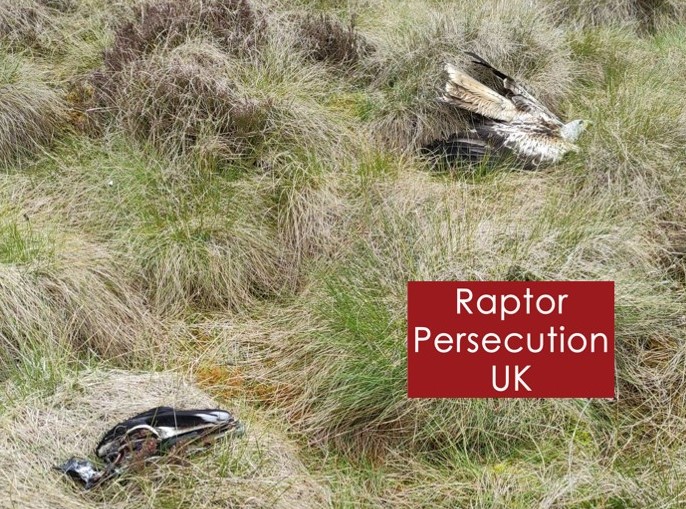
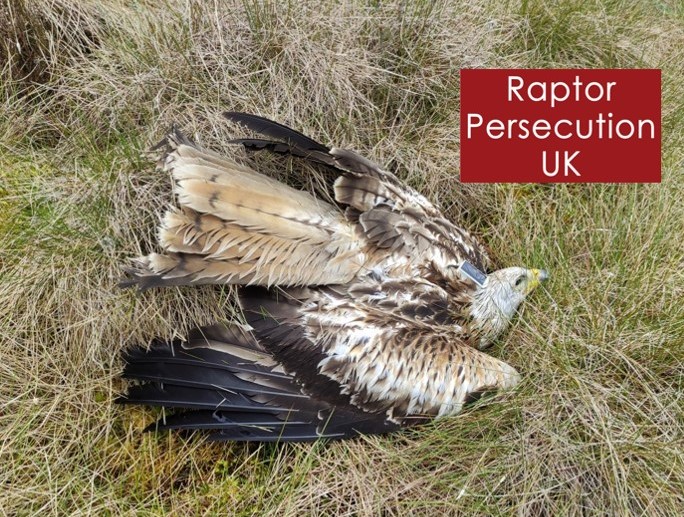
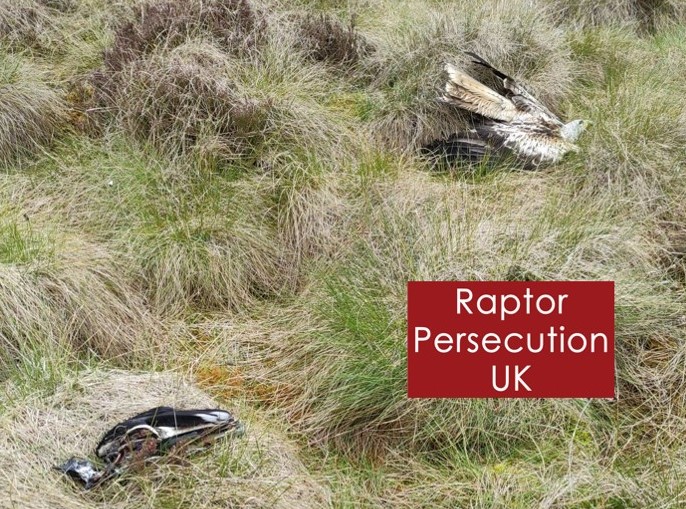
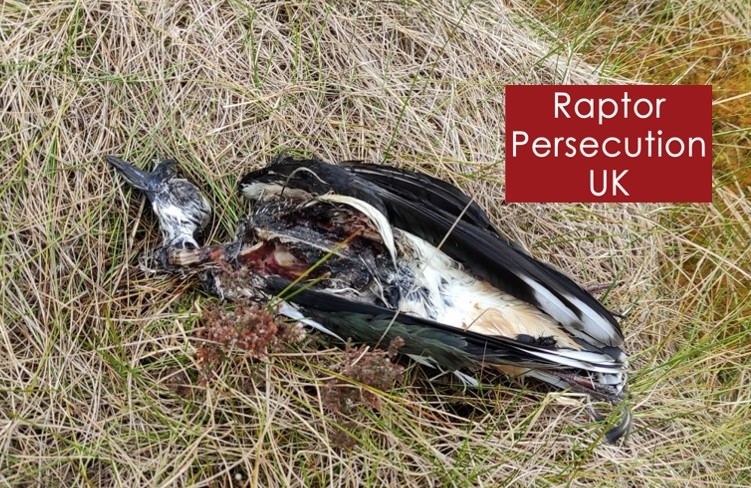
A young satellite-tagged Red Kite has been found poisoned on a Scottish grouse moor, lying next to a poisoned bait, in this case, a Lapwing, whose corpse had been cut open to entice any passing predator and to allow for easy access to the poison.
This gruesome discovery was made by a member of the public on 20th May 2021 on Dava Moor, just beyond the boundary of the Cairngorms National Park.
The Red Kite had hatched in a nest near Grantown on Spey in 2020. This nest was only the second to be located in Badenoch & Strathspey; the first pair at nearby Cromdale disappeared after just one successful breeding season. That only two nests have been located in Badenoch & Strathspey, 32 years after the start of the re-introduction of red kites to the Black Isle, speaks volumes of the ongoing illegal persecution in this region, as noted in a scientific study published in 2016 (here).
Police Scotland attended the scene of the poisoning and collected the Red Kite and the Lapwing for toxicology analysis. They also conducted a search of the grouse moor the following week. Toxicology tests confirmed the presence of poison in both the Kite and the Lapwing.
Sixteen months later in September 2022, Police Scotland notified the member of the public that ‘enquiries are complete, nobody has been charged and the case is now closed‘.
So where was the Police Scotland press release about this serious wildlife crime?
Where was the appeal for information about this serious wildlife crime?
Why has the name of the poison been withheld? Given the proximity of the poisoned Red Kite to the poisoned bait, we can assume it was a fast-acting, highly toxic poison, dangerous to humans as well as to wildlife. Was it one of the eight poisons (Aldicarb, Alphachloralose, Aluminium phosphide, Bendiocarb, Carbofuran, Mevinphos and Sodium cyanide and Strychnine) banned under the Possession of Pesticides (Scotland) Order 2005, so dangerous it’s even an offence to be in possession of these chemicals, let alone to place them out on a bait in the open countryside?
Where was the warning to both locals and visitors to the area from Police Scotland about this serious threat to public safety?
Who benefits from this secrecy? Not the public, that’s for sure, and not wildlife.
Police Scotland has form for withholding information about raptor persecution crimes (e.g. see here, here, here, here). It’s noticeable that yet again, in the RSPB’s latest Birdcrime Report (2021), Police Scotland is the only force (with the exception of Dorset Police – on which more shortly) to withhold details of crimes that took place over a year ago.
I don’t know who’s making these decisions – I doubt very much it’s the wildlife crime officers on the ground, most of whom these days are undertaking prompt and rigorous investigations – but somewhere up the chain of command a decision appears to have been made to keep these serious crimes under wraps. Why is that?
I don’t understand the rationale at all. Certainly, in the early stages of an investigation it often pays for details to be withheld so as not to compromise searches etc. But sixteen months after the crime is discovered? It doesn’t make sense, and all it does is undermine public confidence.
I’d also like to know why a General Licence restriction hasn’t been imposed on Dava Moor. I understand from conversations with locals that somebody other than the landowner may be responsible for the ‘sporting management’ of Dava Moor. I’ve been told who that is by a number of people but have been unable to verify it so I’m not publishing it here. Nevertheless, at least two General Licence restrictions have previously been applied on landholdings that were ‘managed’ by someone other than the landowner so that shouldn’t be a barrier to imposing a restriction in this case.
And this isn’t the only illegal poisoning incident that Police Scotland are withholding from the public…more shortly.
UPDATE 6th December 2022: General Licence restriction to be considered on grouse moor where poisoned red kite and bait found (here)
UPDATE 2nd January 2023: Raven poisoned with banned chemicals – Police Scotland withhold information (here)
UPDATE 17th January 2023: Police Scotland confirm red kite found poisoned on grouse moor had been killed with banned pesticide (here)
I attended the UK Wildlife Crime Conference over the weekend, where law enforcers, statutory agencies and NGOs gather to hear the latest views, approaches, successes and challenges of combating wildlife crime in the UK.
A feature of this annual event is the WWF-sponsored awards given to those whose work deserves national recognition.
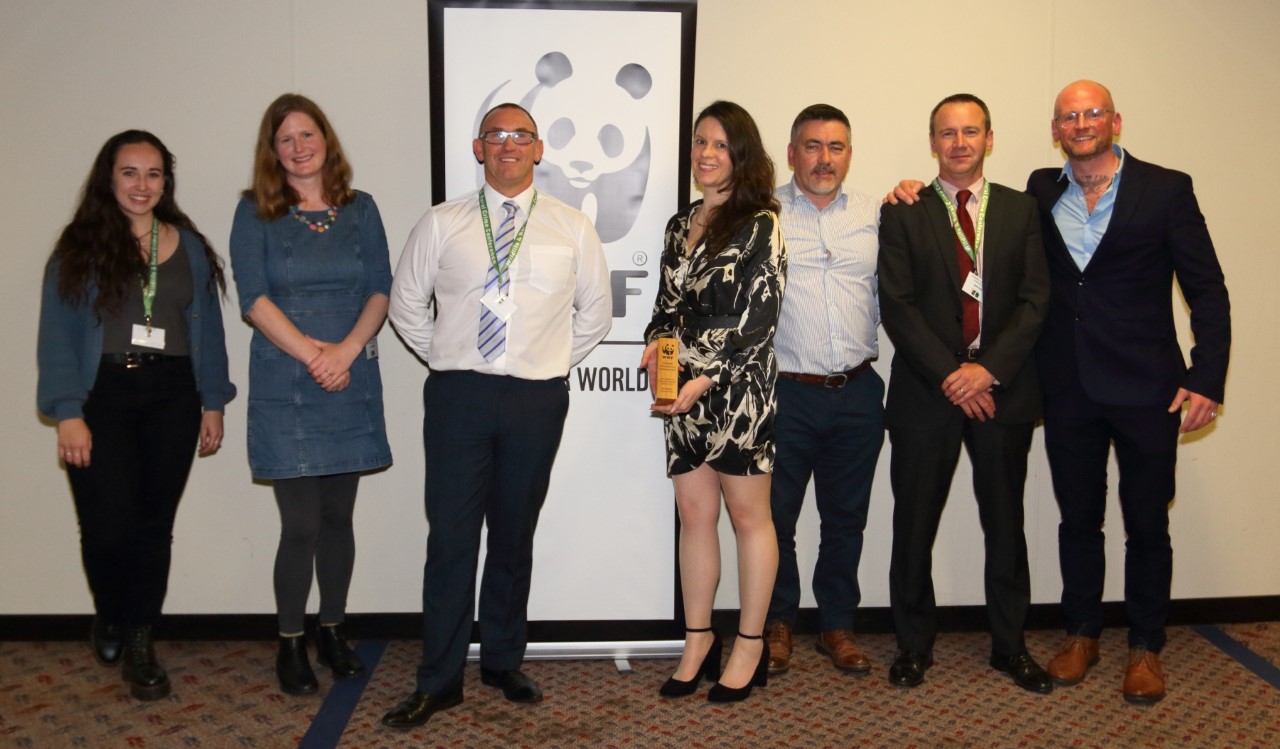
This year, I was delighted to see two of those awards being won by teams whose work has focused on tackling the illegal persecution of birds of prey.
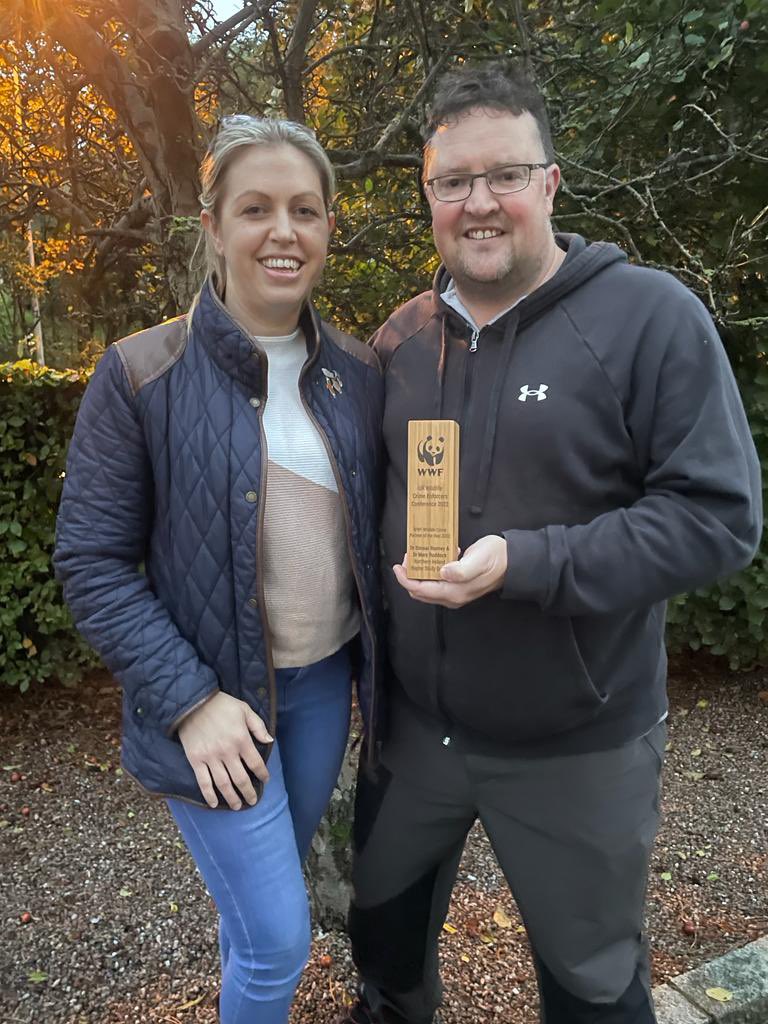
First up was Dr Eimear Rooney and Dr Marc Ruddock from the Northern Ireland Raptor Study Group, who won WWF Wildlife Crime Partner of the Year 2022:
To say their award was richly deserved is a massive understatement. I’ve watched them pour their hearts and souls into raptor conservation in Northern Ireland for many, many years and I can’t think of more deserving recipients.
Without their efforts, providing help, advice and training to an army of raptor monitoring volunteers, as well as doing their own fieldwork, as well as writing grant applications, as well as writing reports, as well as producing educational material, as well as fundraising, as well as hosting conferences, as well as political engagement, as well as engaging in multi-partner initiatives to tackle raptor persecution, often at the expense of spending time with their young families, and still managing to be the most upbeat and fun-loving people to be around, then raptors in Northern Ireland would be in a far more perilous state than they are currently.
I’m thrilled to see their efforts recognised at long last; well done Eimear & Marc!
The second team to win an award for its work tackling raptor persecution was a multi-agency team working on ‘Operation Tantallon’, which is a huge, ongoing investigation into the alleged theft and laundering of wild peregrines in Scotland and northern England.
This investigation team includes Police Scotland, Scottish SPCA, NWCU and SASA, with additional support from members of the Scottish Raptor Study Group. So far three people have been charged with offences, including a serving police officer (see here) and a part-time gamekeeper (here).
Members of Operation Tantallon received the Wildlife Crime Operation of the Year Award 2022 from Megan McCubbin (photo by Guy Shorrock):
The case is ongoing, the defendants are reportedly facing over 100 charges, and a wide range of investigative techniques have been deployed including surveillance, peregrine DNA analysis, searches under warrants, bankers warrants, cyber crime and the Proceeds of Crime Act.
The scale of this effort to bring a prosecution in a raptor persecution case is virtually unheard of in the UK and the ramifications, should the defendants be found guilty, will be huge. Further details of the case will be made available as the case progresses through the courts.
The dedication and determination of those involved in the multi-agency investigation has been outstanding and it’s good to see their hard work recognised. Well done, all!
UPDATE 16 December 2023: Part-time gamekeeper & son plead guilty to peregrine laundering charges; serving police officer cleared (here)
Press release from Lincolnshire Police (6th October 2022):
Bird of prey poisoned, Horncastle
Our Rural Crime Action Team (RCAT) are investigating the suspected poisoning of three birds of prey in the Belchford area of Horncastle.
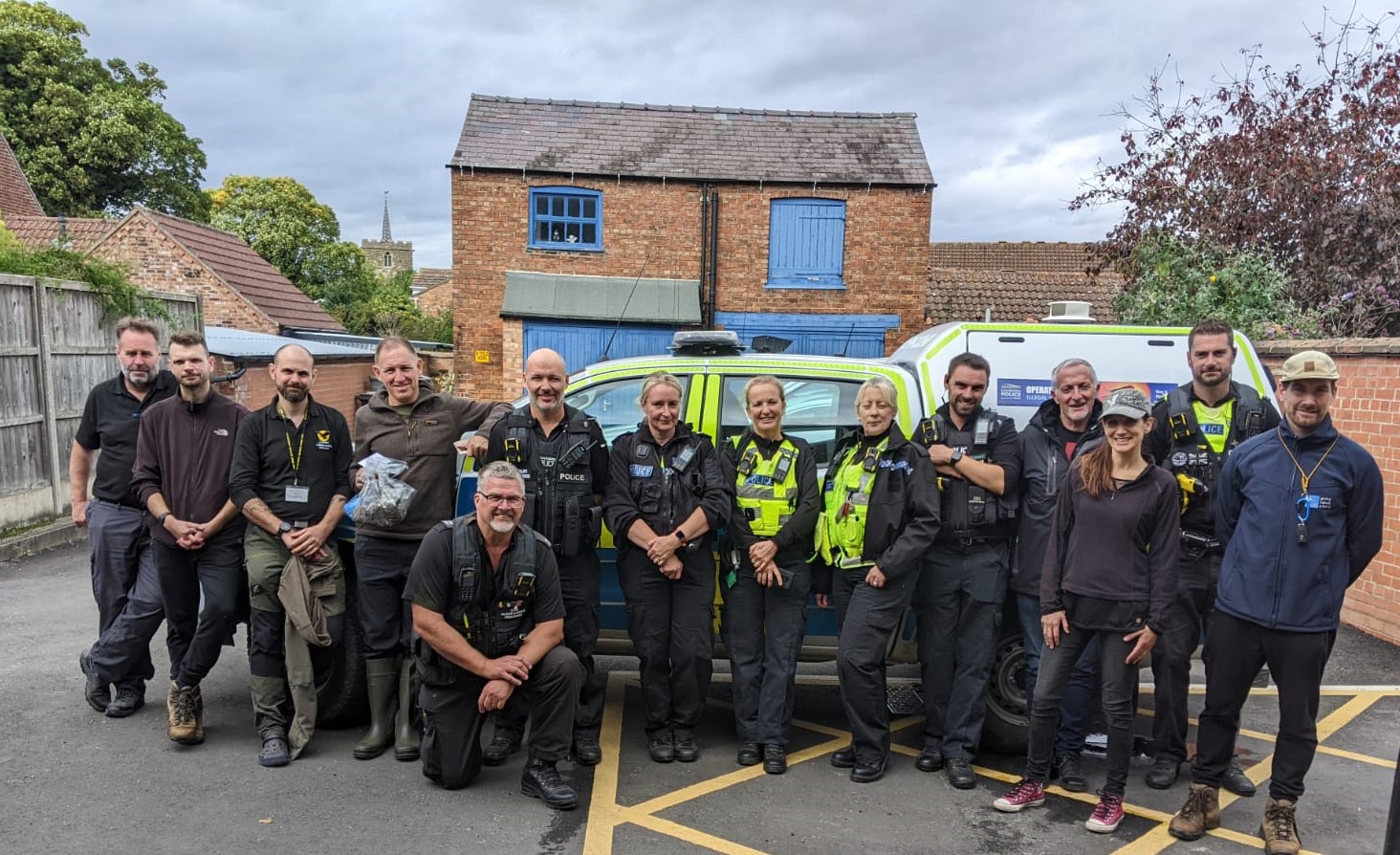
On 4 October, the team conducted multi agency searches in the area along with officers from the National Wildlife Crime Unit (NWCU), the RSPB and Natural England. During the searches we recovered various items which we believe are linked to the offences under investigation. The offences include the suspected poisoning of three birds, two Buzzards and one Red Kite.
Inspector Jason Baxter, from Lincolnshire Special Operations Unit, said: “Lincolnshire police will not tolerate the persecution of our wildlife and any offences reported to us will be thoroughly and expeditiously investigated and offenders will be dealt with robustly.”
Investigations are ongoing and we have identified one male suspect who will be interviewed in due course.
Investigating officer, Detective Constable Aaron Flint said: “A number of Birds of Prey appear to have been poisoned in the Horncastle area.
“We would appeal for anyone with any information to contact us.”
If any members of the public have information that could assist with the investigation please call 101, email force.control@lincs.police.uk or through crime stoppers. Please remember to quote incident number 22000367672.
ENDS
Well done Lincolnshire Police, Natural England, RSPB and the National Wildlife Crime Unit for yet another excellent example of partnership-working between specialist agencies, and especially for issuing a statement/appeal for information just two days after the raid. I hope some of the other regional police forces are taking note.
This latest multi-agency raid is the latest in a surge of similar investigations in response to raptor persecution crimes over the last couple of years, including a raid in Wiltshire on 23rd September 2020 (here), a raid in Suffolk on 18th January 2021 (here), a raid in January 2021 in Nottinghamshire (here), on 15th March 2021 another raid in Lincolnshire (see here), on 18th March 2021 a raid in Dorset (here), on 26th March 2021 a raid in Devon (see here), on 21st April 2021 a raid in Teesdale (here), on 2nd August 2021 a raid in Shropshire (here), on 12th August 2021 a raid in Herefordshire (here), on 14th September 2021 a raid in Norfolk (here), a raid in Wales in October 2021 (here) a raid in Humberside on 10th December 2021 (here), a raid in North Wales on 8th February 2022 (here), another raid in Suffolk on 22nd April 2022 (here), and another raid in Norfolk on 29th April 2022 (here).
The majority of these cases are ongoing, or have progressed to impending court hearings, but a few have concluded, resulting in the conviction of criminal gamekeepers. These include:
*The Nottinghamshire case (from January 2021) where gamekeeper John Orrey was sentenced in January 2022 for battering to death two buzzards he’d caught inside a trap (here);
*The Suffolk case (also from January 2021) where gamekeeper Shane Leech was convicted of firearms and pesticides offences in November 2021 after the discovery of a poisoned buzzard found close to pheasant-rearing pens in Lakenheath (here);
*The Wales case (from October 2021) where gamekeeper David Matthews was convicted in June 2022 for pesticide offences following the discovery of a poisoned red kite and a shot red kite at a pheasant release pen on the McAlpine Estate in Llanarmon Dyffryn Ceiriog, North Wales (see here);
*The Wiltshire case (from September 2020) where gamekeeper Archie Watson was convicted in June 2022 after the discovery of at least 15 dead buzzards and red kites were found dumped in a well on a pheasant shoot on Galteemore Farm in Beckhampton (here);
*The Norfolk case (from September 2021) where gamekeeper Matthew Stroud was convicted in October 2022 for the poisoning of at least five buzzards and a goshawk, amongst other offences, on a pheasant shoot at Weeting, near Thetford (here).
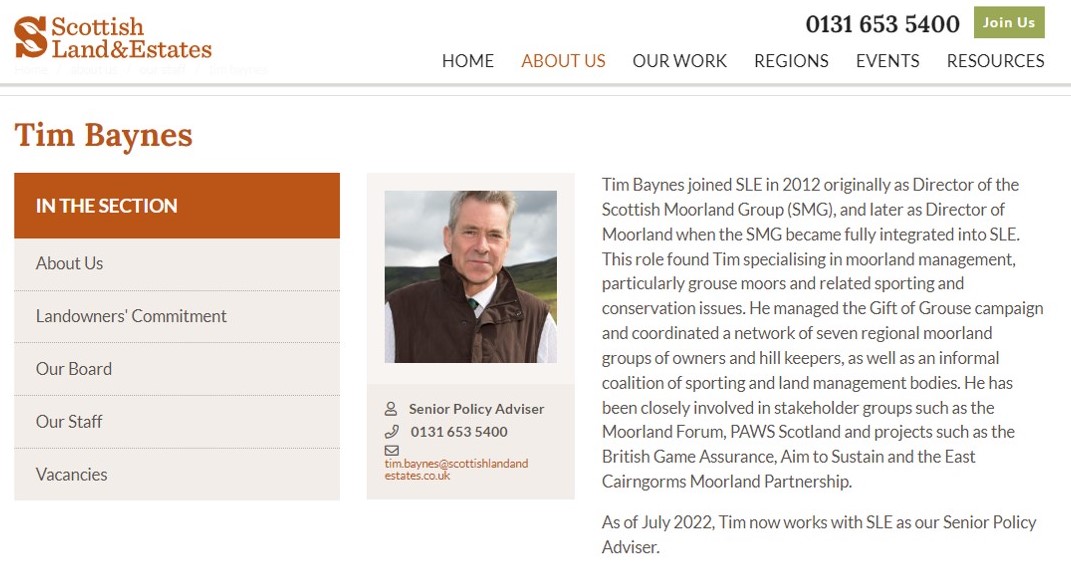
In the last blog post where I wrote about the nine shot birds of prey found wrapped in bags on Millden Estate and just over the estate boundary, I included a quote from Tim Baynes of Scottish Land & Estates, who had written the following in a comment piece for The Field, published in August 2022:
“Raptor persecution has been the stick with which grouse moors were beaten for two decades, but the past five years have seen a sea change. In Scotland, recorded crimes have effectively ceased on grouse moors, and raptors of all species have been increasing“.
I said I’d publish his outrageous comment piece in full, so here it is:
I really shouldn’t be surprised that The Field published this nonsense – that particular shooting industry rag has a track record of publishing patently inaccurate comment pieces (e.g. see here).
And I’m definitely not surprised that the author of this latest gibberish is Tim Baynes – his lengthy track record speaks for itself (for a small selection of the masses of examples see here, here, here, here, here, here, here, here).
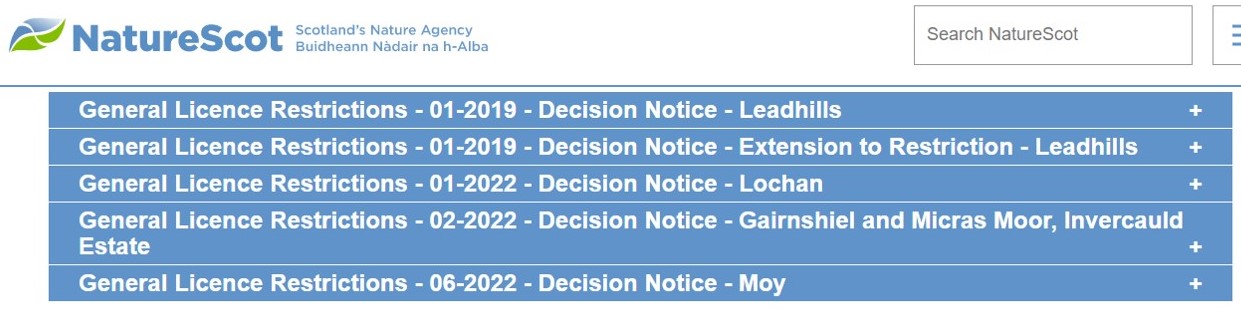
Needless to say, his latest claim that raptor persecution on Scottish grouse moors has “effectively ceased” is demonstrably untrue. You’ve only got to read my last blog post to understand this. If that doesn’t convince you, have a look at the General Licence restrictions currently imposed on grouse moor estates after Police Scotland found ‘clear evidence of raptor persecution’ – Leadhills Estate (here), Lochan Estate (here), Leadhills Estate [again] (here), Invercauld Estate (here), and Moy Estate (here).
And if you still need convincing, have a read of the Scottish Government’s Environment Minister’s statement in 2020 when she announced that there could be no further delay to the introduction of a grouse moor licensing scheme because:
“…despite our many attempts to address this issue, every year birds of prey continue to be killed or disappear in suspicious circumstances on or around grouse moors“.
Perhaps Tim Baynes’ perpetual denial of the bleedin’ obvious explains why he is no longer employed as ‘Director of Moorland’ at Scottish Land & Estates:
Essex Police’s Rural, Wildlife & Heritage Crime Team is appealing for information after a red kite was reportedly found shot in Stapleford Abbots in the Epping Forest.
The kite was found on 3rd September 2022 and is currently undergoing veterinary treatment for what are believed to be shotgun injuries.
No further details about this reported crime have been provided yet.
Anyone with any information that could assist the police investigation please call Essex Police on Tel. 101 or Crimestoppers on 0800 555 111 to provide information anonymously and in confidence. Please quote incident reference number: 42/232180/22.
Moy Estate in the Scottish Highlands has lost its appeal against a General Licence restriction that was imposed on the estate in June 2022 (see here) after Police Scotland provided the licensing authority (NatureScot) with evidence of wildlife crime against birds of prey on the estate, notably the discovery of a poisoned red kite in 2020 and ‘incidents in relation to trapping offences’.
[RPUK map showing Moy Estate boundary, based on information provided by Andy Wightman’s website, Who Owns Scotland]
Regular blog readers will know that the three-year General Licence restriction on Moy Estate took effect on 21st June 2022, prohibiting the use of General Licences 01, 02 and 03 on the estate until 21st June 2025.
However, the estate appealed the restriction (as is permitted by NatureScot’s restriction process) in July and the official ‘restriction notice’ was temporarily removed from NatureScot’s website whilst the appeal was underway.
It’s all a massive farce, of course, because the estate has already had one opportunity to appeal the decision, as part of the formal restriction process. I.E. NatureScot has to provide a written ‘notification’ to an estate when a restriction has been recommended, but before the final decision has been made. The estate then has 14 days to respond (appeal) and explain why the restriction is unwarranted. On receipt of that appeal, Naturescot makes its final decision and if it’s decided to go ahead and impose the General Licence restriction, then the estate is given ANOTHER opportunity to appeal the decision within 14 days.
I don’t have the details of Moy Estate’s appeal(s) because when I asked for similar documents relating to an appeal by Leadhills Estate against its second General Licence restriction last year, NatureScot came under pressure from the solicitor representing the estate who argued that the information was ‘of a sensitive nature and disclosure into the public domain ‘may prejudice the right to any future proceedings’. NatureScot upheld that view and refused to disclose the details of the appeal (see here). Given that the same solicitor is believed to be representing Moy Estate, I haven’t wasted my time by applying for the details, although I’d suggest, given the hilarious appeal that Leadhills Estate made against its first GL restriction (see here) that the real reason for withholding the information of any similar appeals is to avoid the embarrassment of having the laughable appeal letter torn to shreds by public scrutiny.
No matter really, because it’s NatureScot’s response to the appeal that’s really of interest, and in this case, Moy Estate’s appeal has failed and as of last week, the official restriction notice is back on public view on NatureScot’s website:
There’ll be more news from Moy next month when a man appears in court to face charges concerning the alleged shooting of a sparrowhawk.
Here’s another senior MSP who decided to disregard the three-year sanction imposed in June this year on Moy Estate after Police Scotland provided evidence to demonstrate wildlife crime had taken place on the estate, notably the discovery of a poisoned red kite and incidents related to alleged trapping offences, although the estate has long been recognised as a raptor persecution hotspot (e.g. see here, scroll down to below the press release).
Sir Edward Mountain, 4th Baronet, the Scottish Conservative’s Deputy Chief Whip, attended Moy Game Fair earlier this month to present prizes on behalf of BASC:
So that’s now two senior MSPs (former Cabinet Secretary Fergus Ewing MSP was the other one), the Scottish Gamekeepers Association, Scottish Land & Estates, and BASC who all seem to have a very strange approach to the notion of ‘zero tolerance’ of raptor persecution.
Some of you might remember Ed Mountain claiming, in 2017, that he’d be “the fiercest critic” of anyone killing raptors. It was a claim he made in a guest article he wrote for the Scottish Gamekeepers Association’s quarterly rag. Here’s a reminder of what he wrote:
‘I believe that challenging the ‘spectre’ [of land management reform] is vital, if the very countryside we all value and love is to be maintained. The way to do this is by standing tall and laying out a stall, for all to see the benefits positive management has to offer. The problem is that every time it looks like the right story is being delivered another case of wildlife crime comes to light. If there is any chance of moving forward we must stop these idiots, who believe illegally killing raptors is acceptable.
I therefore would urge all organisations that represent country folk to stand up and let people know all the good work that is being done for conservation. At the same time, they also need to vilify those that break the law.
Over the next 4.5 years I look forward to working with the SGA and I will do all I can to defend the values you and your members believe in. However, I must also say that I will be the fiercest critic of those that jeopardise these values by breaking the law‘.
I asked at the time whether he’d put these strong words into action, but just a few months later he seemed reticent (see here).
This year he had the perfect opportunity to stand by his stated commitment against raptor persecution and boycott the Moy Estate. His actions, and those of his shooting industry mates, speak volumes.